Tags
Bilbo, Bree, Fantasy, The Bridge of Strongbows, The Green Dragon, The Hobbit, The Lord of the Rings, the Sphinx, the Three Farthing Stone, the-great-east-road, Tolkien, travel-in-middle-earth, trolls
Welcome, as always, dear readers.
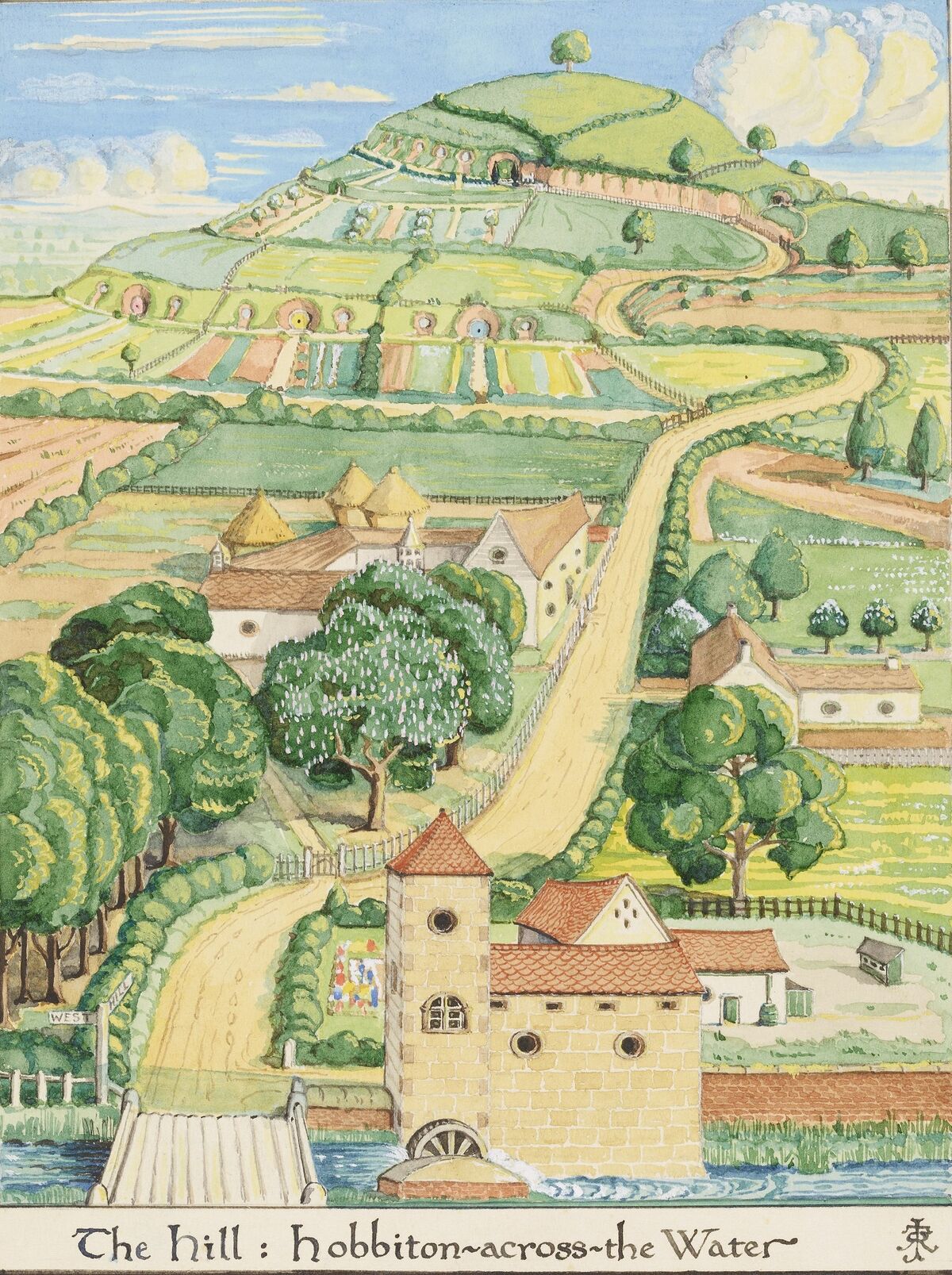
For me, one of the great pleasures of The Hobbit and The Lord of the Rings is that they are both so wonderfully imagined. Consider the beginning of The Hobbit, for example, where the opening could just have been the bare line “In a hole in the ground there lived a hobbit.” Instead, it continues:
“Not a nasty, dirty, wet hole, filled with the ends of worms and an oozy smell, nor yet a dry, bare, sandy hole with nothing in it to sit down on or to eat: it was a hobbit-hole, and that means comfort.”

(JRRT)
And even this is not enough, as it continues:
“It had a perfectly round door like a porthole, painted green, with a shiny yellow brass knob in the exact middle.”
And it will go on for an entire paragraph beyond that sentence, listing rooms and even explaining why some are preferred.
Even with so much detail, I sometimes find myself wanting more—often more of the outside world. In this posting, then, I thought that we might take a trip to Bree and spend some time sightseeing as we go. Via the Great East Road, this is about 100 of our miles (160 km), according to the very useful website of Becky Burkheart (which you can visit here: https://www.beckyburkheart.com/traveltimesinmiddleearth ).
Why Bree? To quote The Lord of the Rings:
“It was not yet forgotten that there had been a time when there was much coming and going between the Shire and Bree.” (The Fellowship of the Ring, Book One, Chapter 9, “At the Sign of the Prancing Pony”)
If we use both The Hobbit and The Lord of the Rings together, however, we’ll soon encounter some difficulties, as we shall see.

Our starting point for Bilbo is the Green Dragon Inn, in Bywater.

(Christopher Tolkien)
Tolkien doesn’t describe the inn, but, using a real inn, we might imagine the Green Dragon as looking something like this–

(This is the White Lion in Barthomley, in Cheshire, built in 1614. You can read more about it and about Barthomley here: https://drive.google.com/file/d/1oeQEpGsXlN1A_4T8nOhUwpggDA_pEFTM/view )
Just to the south of Bywater is the spot where the Hobbiton road meets the Great East Road. Again, Tolkien gives us no description, but there may be a hint as to this road in the original grant of the Shire by Argeleb II in TA1601:
“For it was in the one thousand six hundred and first year of the Third Age that the Fallohide brothers, Marcho and Blanco, set out from Bree; and having obtained permission from the high king at Fornost, they crossed the brown river Baranduin with a great following of Hobbits. They passed over the Bridge of Strongbows, that had been built in the days of the power of the North Kingdom, and they took all the land beyond to dwell in, between the river and the Far Downs. All that was demanded of them was that they should keep the Great Bridge in repair, and all other bridges and roads, speed the king’s messengers, and acknowledge his lordship.” (The Lord of the Rings, Prologue I, “Concerning Hobbits”)
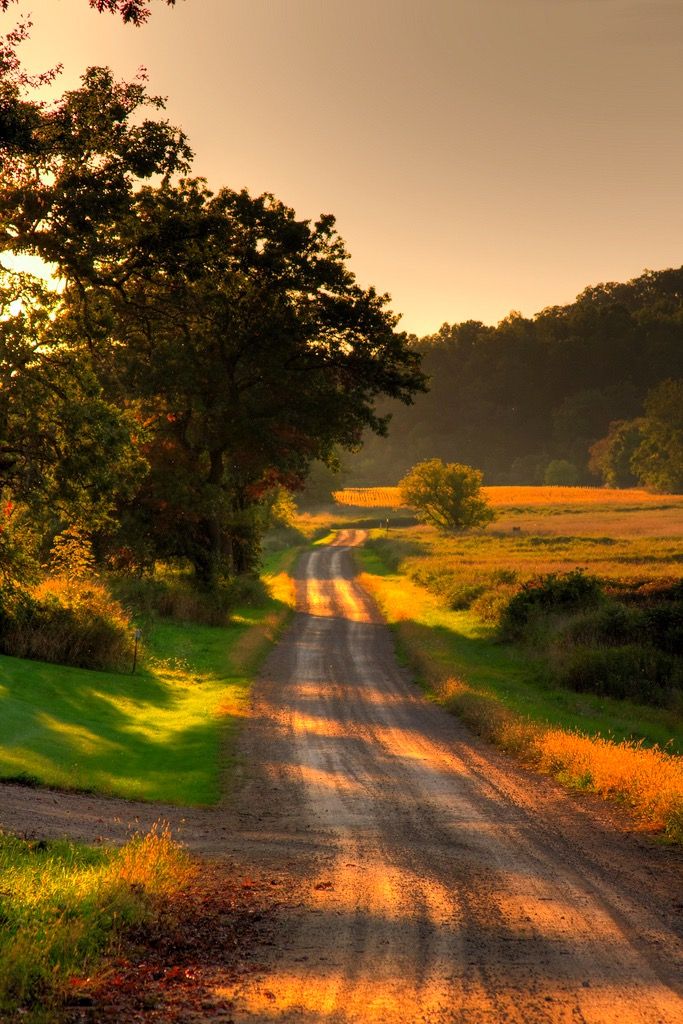
We’ll cross the bridge a little later in our journey, but we might start with the road. That it’s sometimes called “the Great East Road” suggests that it’s more than a dirt path.
Could Tolkien have been thinking of the bits of surviving Roman road which crisscross England? Most are now buried under modern roads, but, here and there some are still available on the surface, as here—
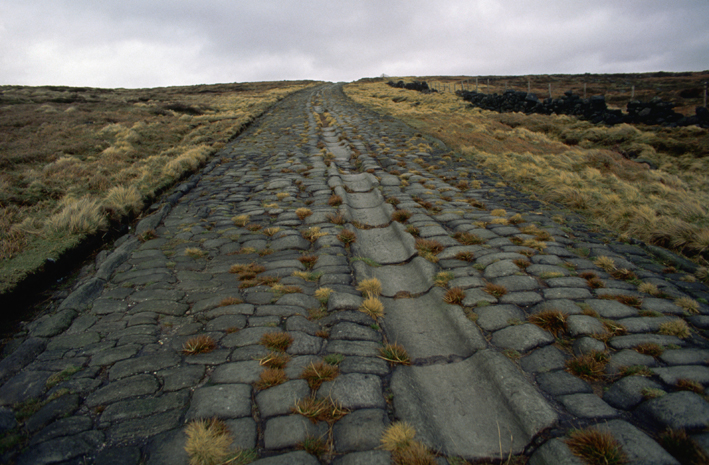
and perhaps we can use this as a model. As an ancient stone road, it would certainly fit in with the ancient stone Bridge, as we’ll see.
Just beyond the spot where the lesser road meets the greater, we see marked on our map, the “Three Farthing Stone”. A “farthing” is a “four-thing”—that is, a quarter, and it marks the spot where three of the quarters, the four farthings, of the Shire meet. This appears to be modeled on the “Four Shire Stone” in our Middle-earth

which you can read about here: https://thirdeyetraveller.com/four-shire-stone-tolkien/ )
And, from here, we head eastwards—and meet our first difficulty. Here’s the description in The Hobbit—
“At first they had passed through hobbit-lands, a wide respectable country inhabited by decent folk, with good roads, an inn or two, and now and then a dwarf or a farmer ambling by on business.”
That fits our Shire map: we might be traveling through Frogmorton and Whitfurrows, villages which might look like this—
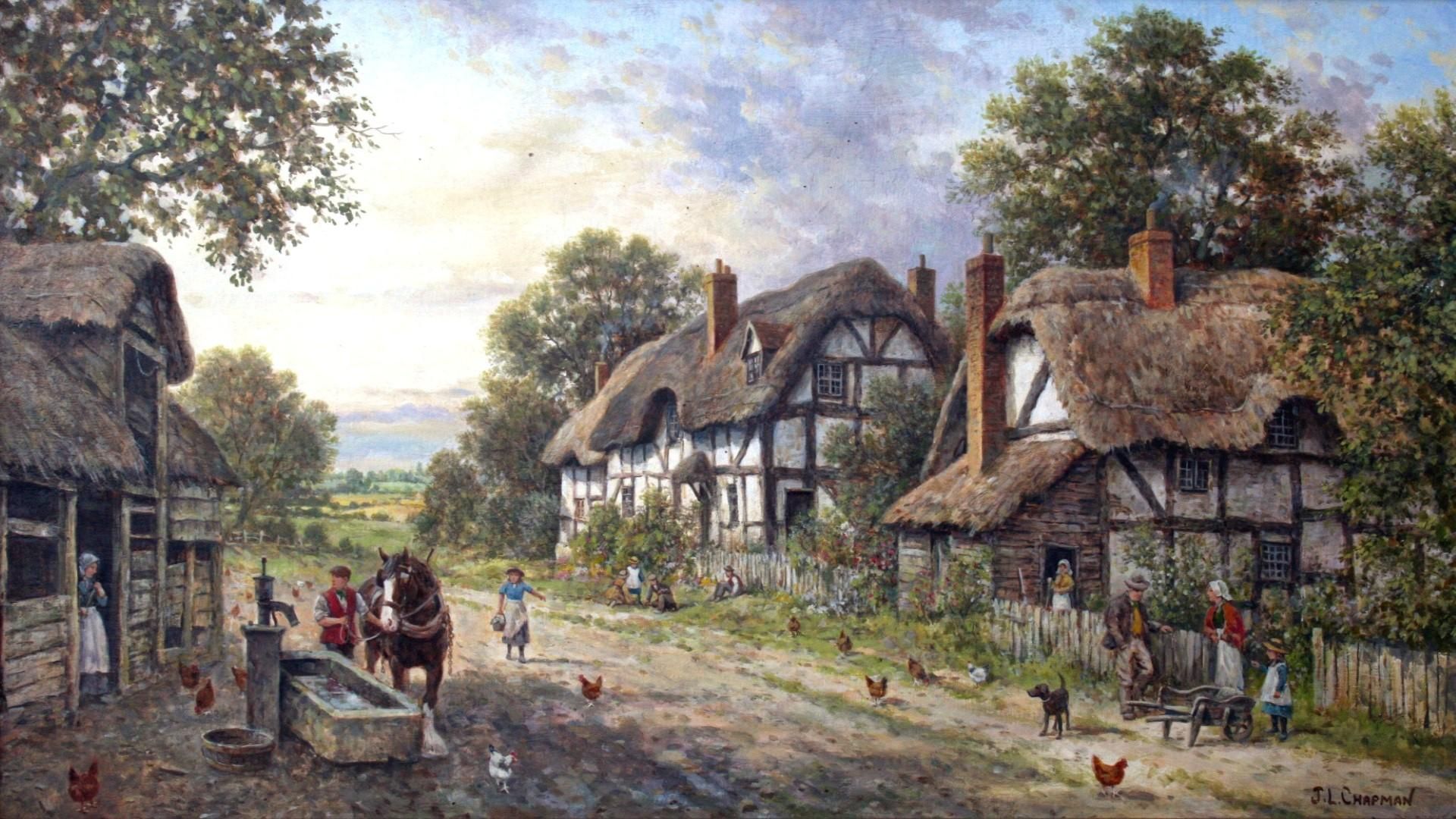
but then there’s—
“Then they came to lands where people spoke strangely, and sang songs Bilbo had never heard before. Now they had gone on far into the Lone-lands, where there were no people left, no inns, and the roads grew steadily worse. Not far ahead were dreary hills, rising higher and higher, dark with trees. On some of them were old castles with an evil look, as if they had been built by wicked people.” (The Hobbit, Chapter 2, “Roast Mutton”)
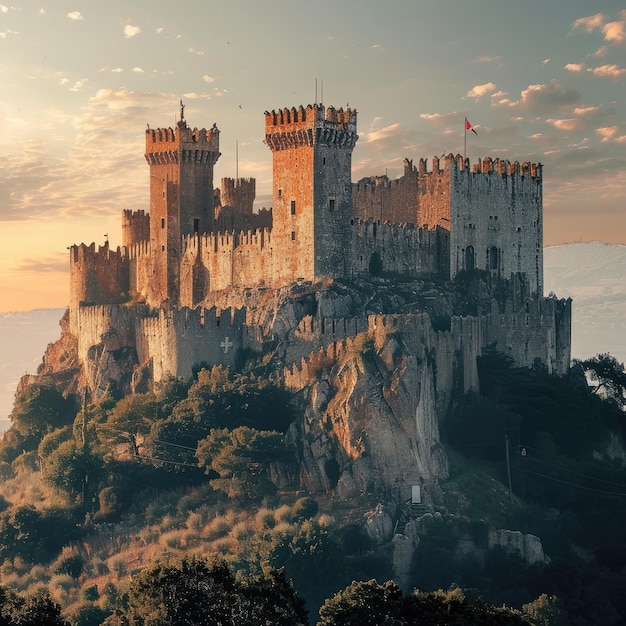
The bridge is just ahead, but “dreary hills”? “old castles”?
And you can really see the difference here between the two books. Tolkien had yet to discover much of the East Farthing and was simply penciling in something which we might think of as “travel filler”, to indicate that the expedition was riding eastwards, but the trip was already becoming more difficult.
And then we come to the (here unnamed) bridge:
“Fortunately the road went over an ancient stone bridge, for the river, swollen with the rains, came rushing down from the hills and mountains in the north.”
As this is the first bridge mentioned, I’m going to assume that this is the “Bridge of Strongbows/Great Bridge” mentioned in Argeleb II’s grant to the original hobbit settlers.

(This is the Roman Pont Julien in southeastern France—over a bit drier patch than described in the book. For more on this ancient bridge, see: https://en.wikipedia.org/wiki/Pont_Julien )
Once over this bridge, we’re in a different world. We reach another river:
“Then one of the ponies took fright at nothing and bolted. He got into the river before they could catch him…”
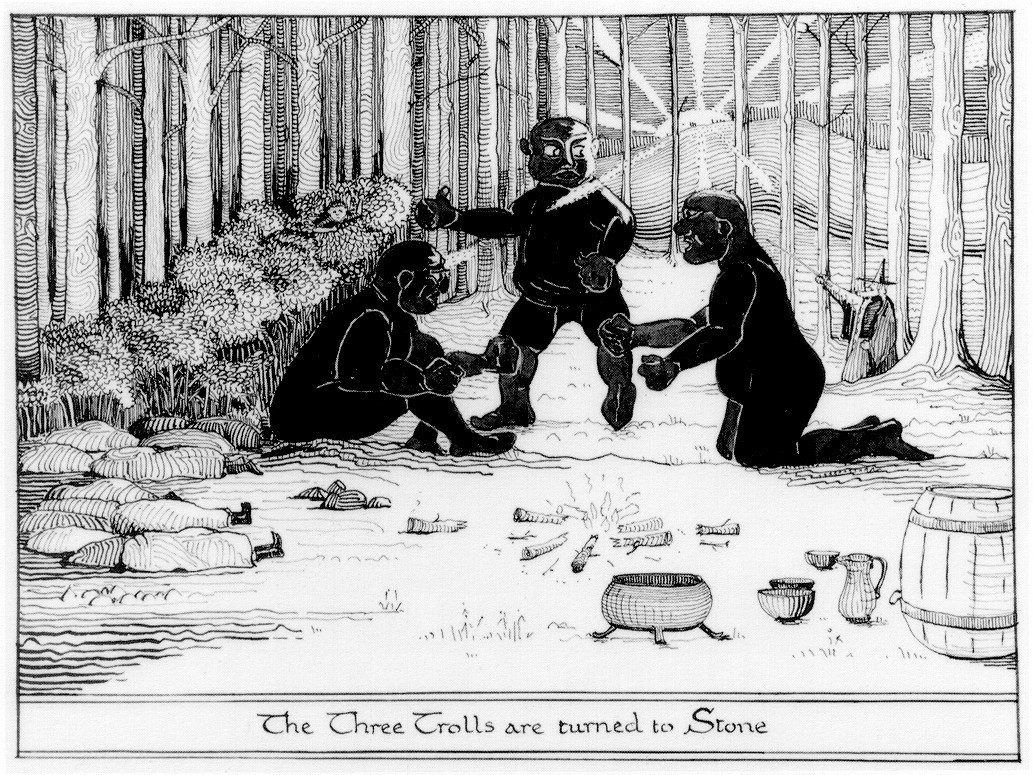
Then, attempting to camp in the rain, Bilbo and the dwarves spot a fire, go to it, and find trolls.
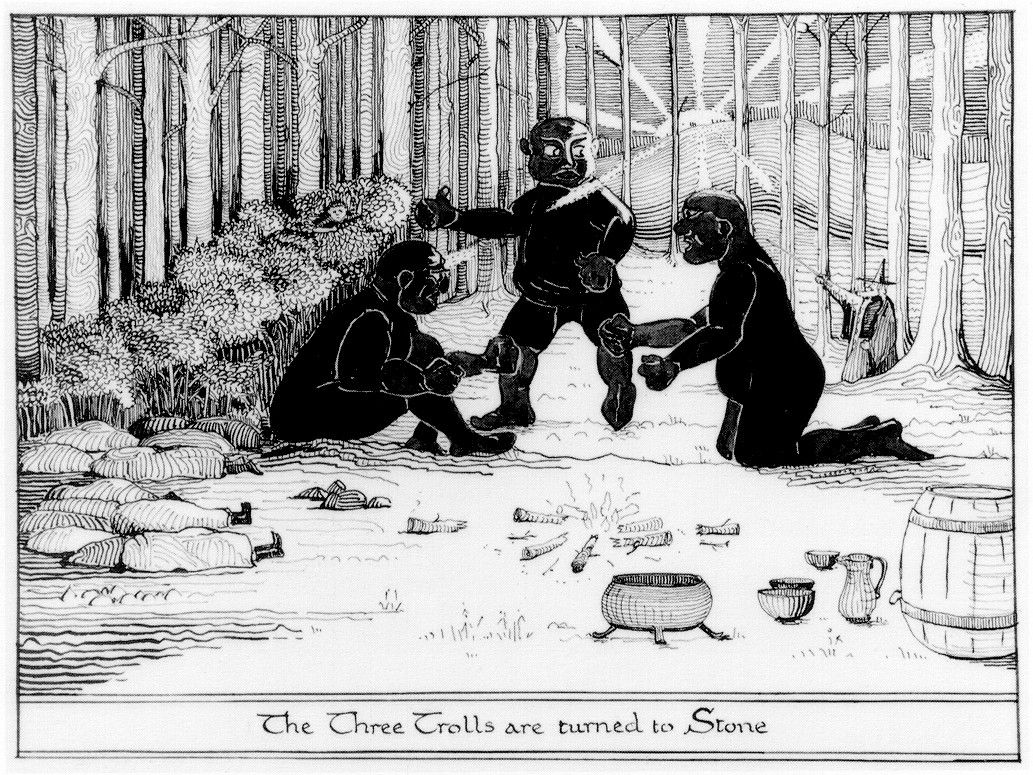
(JRRT)
With the trolls dealt with by Gandalf, we move on to Rivendell–

(JRRT)
and suddenly we realize that: there’s no Bree!
It’s at the crossroads of the Great East Road and what the locals call “the Greenway”, the old north/south road, now long overgrown,
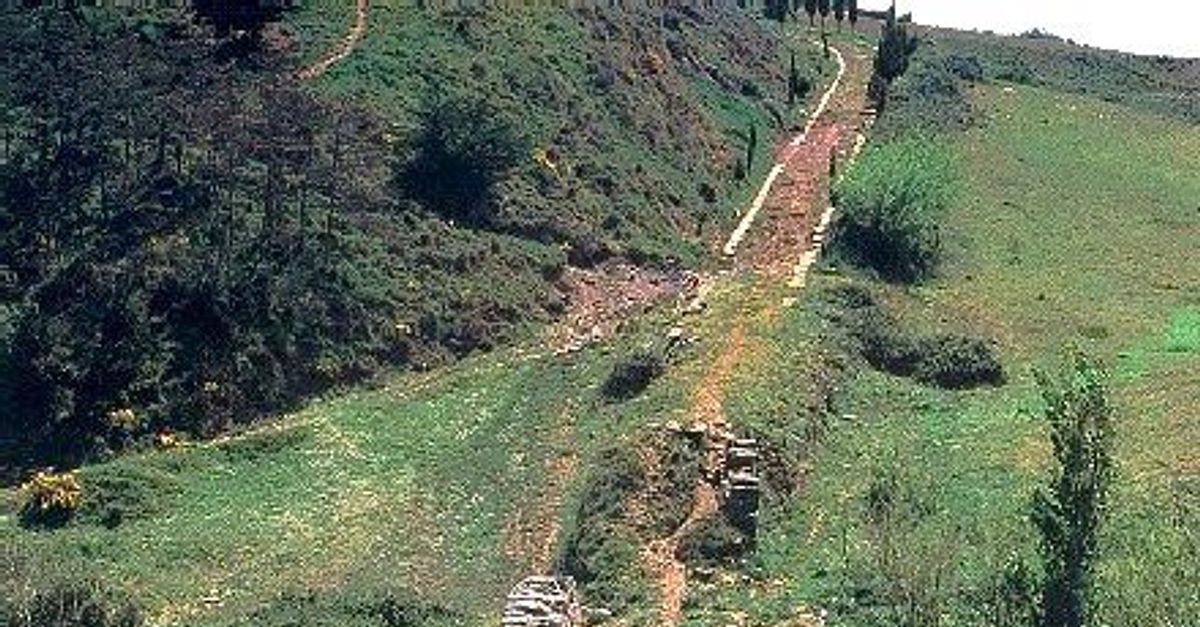
but, somehow, Bilbo and the dwarves have not encountered it. The reason is clear, of course: just as the Tolkien of The Hobbit had yet to discover the East Farthing, so, too, he had yet to discover Breeland.
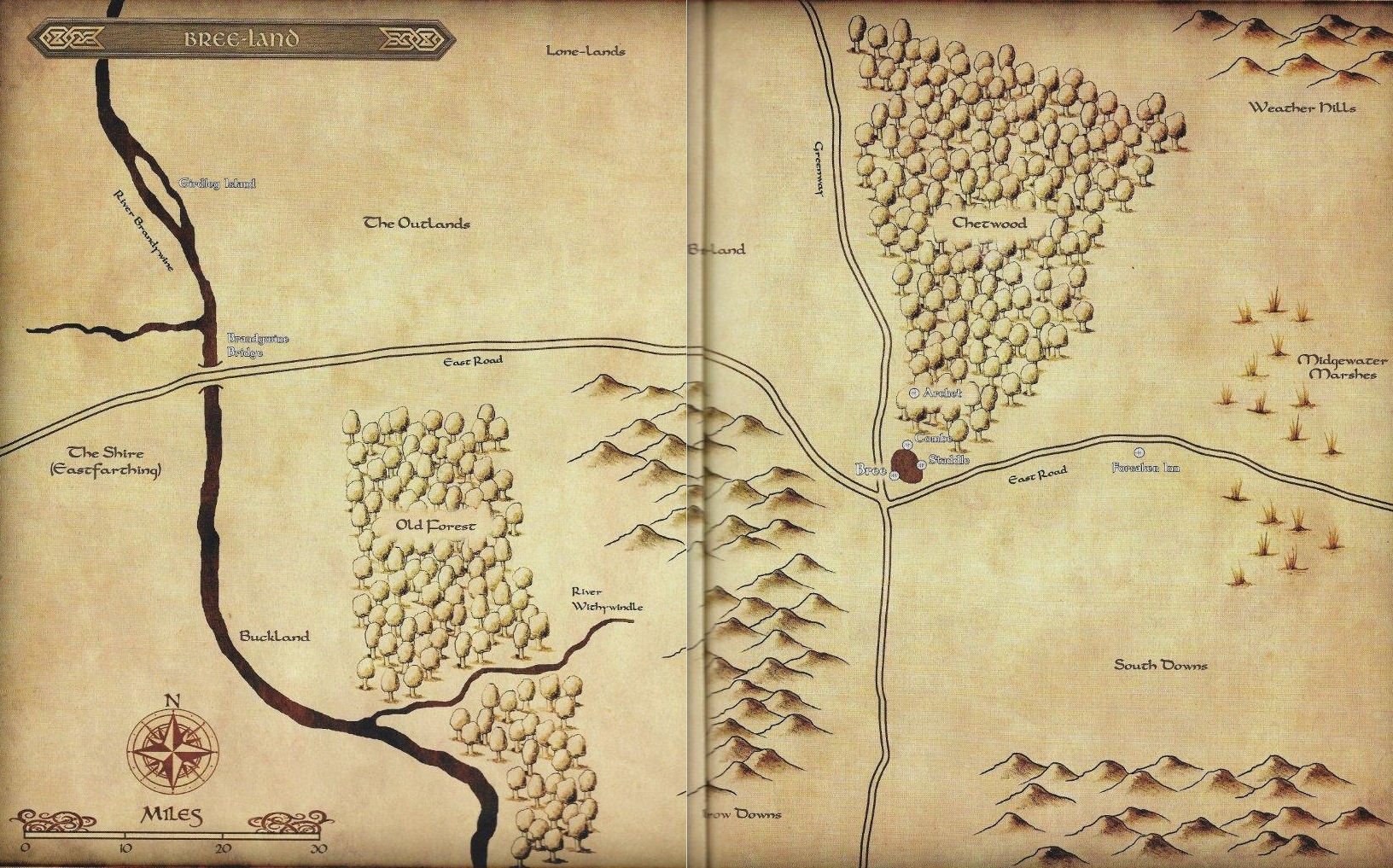
So, it looks like we have to turn around, back to the Green Dragon, stop for a pint, as any hobbit would,

and try again—in “To Bree (Part 2”).
As always, thanks for reading.
Stay well,
When approaching a crossroads, be prepared for anything—especially monsters with questions–

And remember that, as always, there’s
MTCIDC
O


























 doubtfulsea