• About

doubtfulsea

~ adventure fantasy

Tag Archives: The One Ring

Evil Twin?

22 Wednesday Jun 2016

Posted by Ollamh in Films and Music, J.R.R. Tolkien, Narrative Methods, Villains

≈ Leave a comment

Tags

Bilbo, Deagol, Edgar Allen Poe, Frodo, Gandalf, Gollum, Isildur, Lon Chaney Sr., London After Midnight, Peter Jackson, Pity, Smeagol, The Lord of the Rings, The One Ring, The Phantom of the Opera, The Shadow of the Past, Tolkien, twins, William Wilson

Dear Readers,

Welcome, as always.

In Edgar Allen Poe’s short story, “William Wilson”, (1839) the protagonist is haunted by a double—not a genetic twin, but a kind of look-alike opposite—who acts upon the behavior of the debauched original. (He eventually murders the “twin”, only to discover that, in a sense, he’s murdered himself.)

Edgar_Allan_Poe_daguerreotype_crop.png

In this posting, we want to think about a relationship which, born in The Hobbit, grows over time until it, too, appears almost to be a pair of mirror opposites—who sometimes exchange their roles…

” ‘Gollum!’ cried Frodo. ‘Gollum? Do you mean that this is the very Gollum-creature that Bilbo met? How loathsome!’ ” (The Lord of the Rings, Book 1, The Fellowship of the Ring, Chapter Two, “The Shadow of the Past”).

This is the moment in which Gandalf is beginning to explain the history of the Ring, first to Frodo, and then, in more detail, in the Council of Elrond.
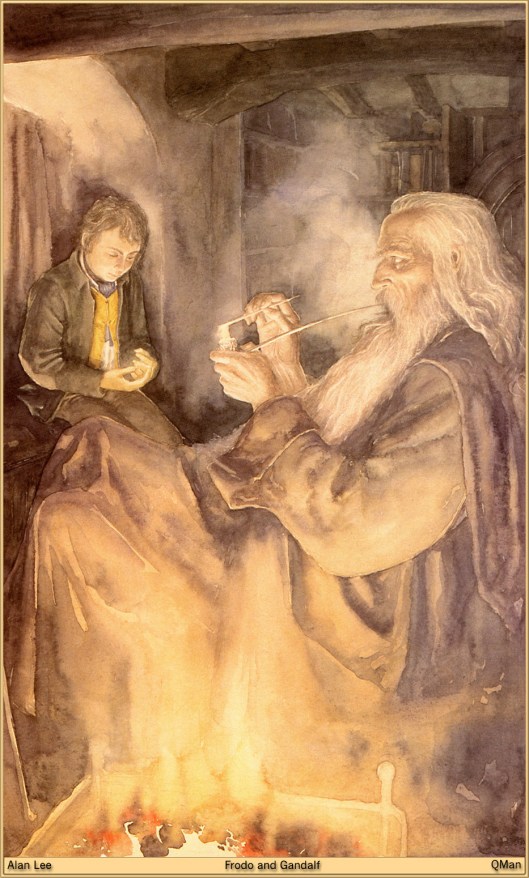
lee-lotr_Frodo_and_Gandalf.jpg

When Gandalf reveals that a major force in that history has been Gollum, Frodo is both surprised and appalled.

Gandalf is not. In fact, he shows a kind of sympathy for Gollum which flickers throughout the whole of The Lord of the Rings and which might be best described as pity. When later in this chapter Frodo exclaims, “What a pity that Bilbo did not stab the creature when he had the chance”, Gandalf replies:

” ‘Pity? It was Pity that stayed his hand. Pity, and Mercy: not to strike without need. And he has been well rewarded, Frodo. Be sure that he took so little hurt from the evil, and escaped in the end, because he began his ownership of the Ring so. With Pity.’ ” (The Lord of the Rings, Book 1, The Fellowship of the Ring, Chapter Two, “The Shadow of the Past”).

This, of course, is in contrast to what happened when Gollum found the Ring– because, in fact, he didn’t, and he murdered his friend Deagol, who did.

Sauron, we are told, has put much of his power—and himself—into the Ring. That power is often talked about in The Lord of the Rings, but it seems abstract—power to do what? One aspect of Sauron’s personality—a deep greed—is easily seen, however, reflected in how the Ring brings out that same feeling in others, even to the point of violence. Yet, as Gandalf says:

” ‘The murder of Deagol haunted Gollum, and he had made up a defence, repeating it to his “Precious” over and over again, as he gnawed bones in the dark, until he almost believed it.’ ” (The Lord of the Rings, Book 1, The Fellowship of the Ring, Chapter Two, “The Shadow of the Past”).

[Is there a hint of cannibalism here? When we first meet Gollum, the narrator says of him: “He liked meat too. Goblin he thought good, when he could get it…” (The Hobbit, “Riddles in the Dark”) Whose bones might Smeagol have gnawed first?

“No one ever found out what had become of Deagol; he was murdered far from home, and his body was cunningly hidden.” ]

We might wonder, thinking of “William Wilson”, if Smeagol and Deagol were, in a sense, twins?

“He had a friend called Deagol, of similar sort, sharper-eyed but not so quick and strong.” (The Lord of the Rings, Book 1, The Fellowship of the Ring, Chapter Two, “The Shadow of the Past”)

And Smeagol’s torment has as much to do with the symbolic killing of the “good” self as it does the murder of a friend?
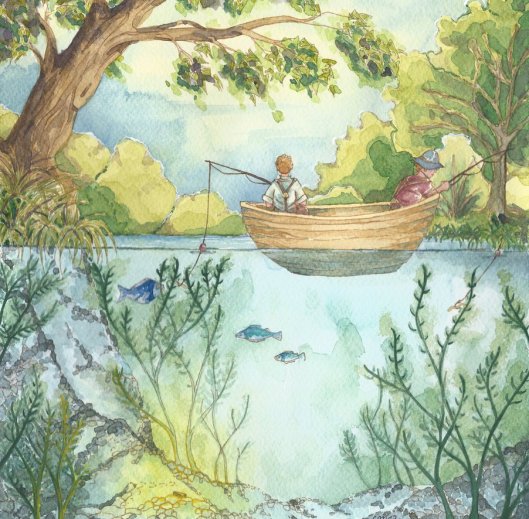
smeagol_und_deagol_by_williweissfuss-d7053ux.jpg

Smeagol and Deagol by Williweissfuss

There may be a moral element here, as well, and it’s interesting to think that, although infected with Sauron’s greed, this potential for knowing right from wrong remains, at least temporarily, in Gollum, making him lie to himself and to others about how he acquired the ring.  Bilbo must have felt this, too, even if he gained the Ring through non-violent means, this need for self-justification. And so he lies, but, to someone with a deeper knowledge, such behavior is all-too-transparent, as Gandalf says:

“Then I heard Bilbo’s strange story of how he had ‘won’ it, and I could not believe it. When I at last got the truth out of him, I saw at once that he had been trying to put his claim to the ring beyond doubt. Much like Gollum with his ‘birthday-present’. The lies were too much alike for my comfort.” (The Lord of the Rings, Book 1, The Fellowship of the Ring, Chapter Two, “The Shadow of the Past”).

Gandalf has seen the lie, but he has also seen something else, a kind of pattern in that lying and a worrying link between the liars, which he expresses in his response to Frodo’s disgust at the thought of Gollum with the Ring:

“ ‘I think that it is a sad story,’ said the wizard, ‘and it might have happened to others, even to some hobbits that I have known.’ “ (The Lord of the Rings, Book 1, The Fellowship of the Ring, Chapter 2, “The Shadow of the Past”)

Gandalf has also seen a deeper similarity between the two. When Frodo says that he can’t believe that Gollum has any connection with hobbits, Gandalf says:

“ ‘It is true all the same…About their origins, at any rate, I know more than hobbits do themselves. And even Bilbo’s story suggests the kinship. There was a great deal in the background of their minds and memories that was very similar. They understood one another remarkably well, very much better than a hobbit would understand, say, a Dwarf, or an Orc, or even an Elf. Think of the riddles they both knew, for one thing.’ “ (The Lord of the Rings, Book 1, The Fellowship of the Ring, Chapter 2, “The Shadow of the Past”)

Alan Lee - The Hobbit - 19 - Riddles in the dark.jpg

Alan Lee, “Riddles in the Dark”

This connection is not just with Bilbo—Frodo, too, appears to share it, as we see later in the story:

“For a moment it appeared to Sam that his master had grown and Gollum had shrunk: a tall stern shadow, a mighty lord who hid his brightness in grey cloud, and at his feet a little whining dog. Yet the two were in some way akin and not alien: they could reach one another’s minds.” (The Lord of the Rings, Book 4, The Two Towers, Chapter 1, “The Taming of Smeagol”)

But this is the behavior of a hobbit as the “good” twin, when he has the Ring and believes himself in control. Below it always lurks Sauron’s greed, and it can bring the “bad” twin to the surface very easily, as Frodo imagines when Bilbo says:

“ ‘Have you got it here?’ he asked in a whisper. ‘I can’t help feeling curious, you know, after all I’ve heard. I should very much like just to peep at it again.’

‘Yes, I’ve got it,’ answered Frodo, feeling a strange reluctance. ‘It looks just the same as it ever did.’

‘Well, I should just like to see it for a moment,’ said Bilbo.

When he had dressed, Frodo found that while he slept the Ring had been hung about his neck on a new chain, light but strong. Slowly he drew it out. Bilbo put out his hand. But Frodo quickly drew back the Ring. To his distress and amazement he found that he was no longer looking at Bilbo; a shadow seemed to have fallen between them, and through it he found himself eyeing a little wrinkled creature with a hungry face and bony groping hands. He felt a desire to strike him.” (The Lord of the Rings, Book 2, The Fellowship of the Ring, Chapter 1, “Many Meetings”)

846d4cbb658e2420258640c4bda7319b
Lon-Chaney-in-London-After-Midnight-2

[Here we have included a second image which is, to our eyes, strikingly like the first. This is a picture of Lon Chaney, Sr., as Inspector Edward C. Burke of Scotland Yard, in the lost 1927 silent film London After Midnight. Chaney was a remarkable frightening presence on-screen, doing his own make-up, as in the 1925 The Phantom of the Opera, based upon Gaston Leroux’s 1910 novel of the same title—]
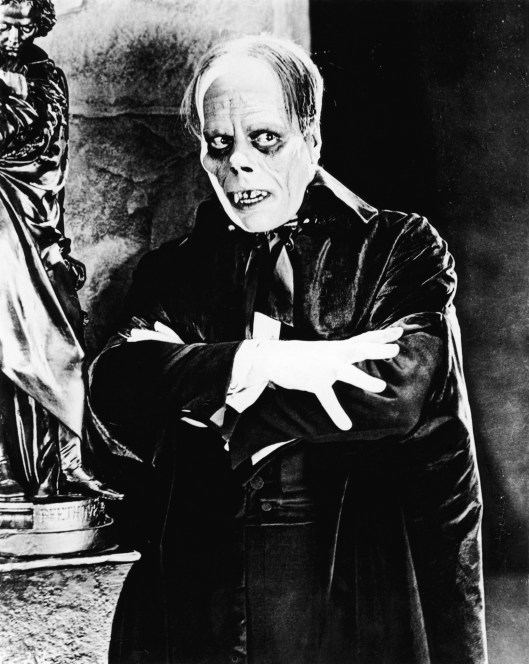
ChaneyPhantomoftheOpera

Of course, one might ask here, was this really Bilbo Frodo was seeing through that shadow, or was it Sauron’s greed, distorting Frodo’s vision? Certainly, this happens again, when in “The Tower of Cirith Ungol”, Sam offers to carry the Ring and Frodo thought that:

“Sam had changed before his very eyes into an orc again, leering and pawing at his treasure, a foul little creature with greedy eyes and slobbering mouth.” (The Lord of the Rings, Book 6, The Return of the King, Chapter One, “The Tower of Cirith Ungol”)

And then, just at the moment before the Ring’s final destruction, it’s Frodo who changes before Sam’s eyes:

“Then Frodo stirred and spoke in a clear voice, indeed with a voice clearer and more powerful than Sam had ever heard him use, and it rose above the throb and turmoil of Mount Doom, ringing in the roof and walls.

‘I have come,’ he said. ‘But I do not choose now to do what I came to do. I will not do this deed. The Ring is mine!’ “ (The Lord of the Rings, Book 6, The Return of the King, Chapter Three, “Mount Doom”)

At this moment, it seems horribly appropriate that he put on the Ring and disappear, as the Frodo who has gone through such terrible hardship has disappeared, replaced not by Gollum as twin, but, it seems, by Isildur, who, when urged by Cirdan and Elrond, that the Ring “should have been cast then into Orodruin’s fire nigh at hand where it was made”, refused, saying “This I will have as weregild for my father, and my brother…” (The Lord of the Rings, Book 2, The Fellowship of the Ring, Chapter Two, “The Council of Elrond”)

But Gollum does appear and fulfills Gandalf’s near-prophecy to Frodo of long before:

“…he is bound up with the fate of the Ring. My heart tells me that he has some part to play yet, for good or ill, before the end; and when that comes, the pity of Bilbo may rule the fate of many—yours not least.” (The Lord of the Rings, Book 1, The Fellowship of the Ring, Chapter Two, “The Shadow of the Past”)

Removing the Ring by removing the finger, Gollum continues the image of Isildur, who had done the same to Sauron to gain the Ring, and, at the same time, he releases Frodo from its spell, even as he falls to his death in the fires of Mount Doom. At the same time, Gollum also breaks the image of twins—and, unlike William Wilson, with the Ring gone and the bond, Frodo is maimed, but whole—and alone.

Thanks, as ever, for reading.

MTCIDC

CD
The Ring in Question

02 Wednesday Mar 2016

Posted by Ollamh in Artists and Illustrators, Fairy Tales and Myths, Imaginary History, J.R.R. Tolkien, Literary History, Narrative Methods

≈ Leave a comment

Tags

Alan Lee, Allen and Unwin, Angus McBride, casting, forging, Home Alone, literary belief, literary theory, The Lord of the Rings, The One Ring, Tolkien

Dear Readers,

Recently, one of us came up with an interesting question about our friend JRRT and the One Ring: how would such a small thing with such power have been made? In The Silmarillion, Tolkien, as he so often does, has an answer for this:

“And much of the strength and will of Sauron passed into that One Ring… and Sauron forged it in the Mountain of Fire in the Land of Shadow” (The Silmarillion, 287-288).

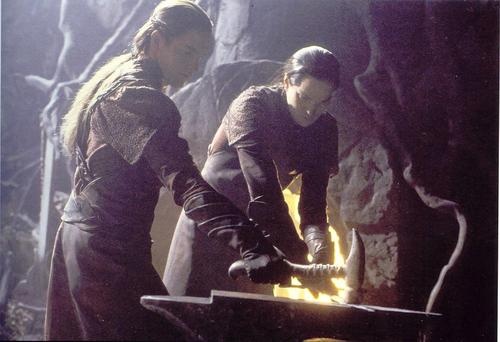
In the histories of Middle-earth, Sauron is said to have “made” and “forged” the One Ring—JRRT uses both words more than once in his letters, LOTR, and The Silmarillion, and this has led us to another question: how would the Ring have been forged? We did a little research, and found that the typical process of forging is (according to the ever-useful wiki page on the subject) a manufacturing process using compressive forces, such as a hammer, to shape metal in a particular way. If Sauron “forged” the One Ring in the fires of Mount Doom, it’s safe to assume that he used the process of “hot forging”, where the metal is heated in a forge (or in this case, very hot fires of a volcano). The last two items of wiki’s “commonly forged” list are weapons and jewelry—both on the list of Middle-earth’s most wanted Christmas gifts of 3018—and we’ve seen weapon-forging before:

6c735f9774332ccb9c7580b226a0f4fc

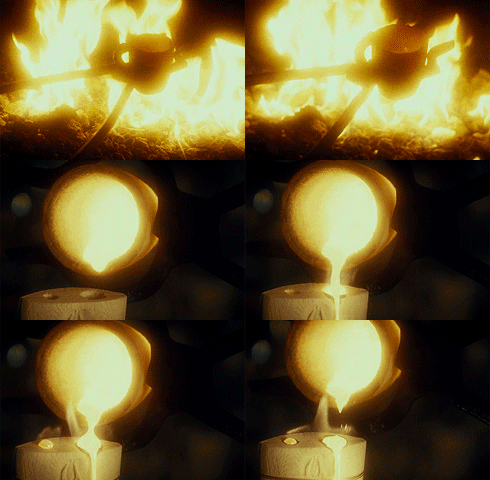
But rings are usually cast, using a mold and molten metal. Peter Jackson’s prologue to The Fellowship of the Ring acknowledges this, although the Ring is still said to have been “forged”:

tumblr_inline_nsok14xlI41sfc6si_500

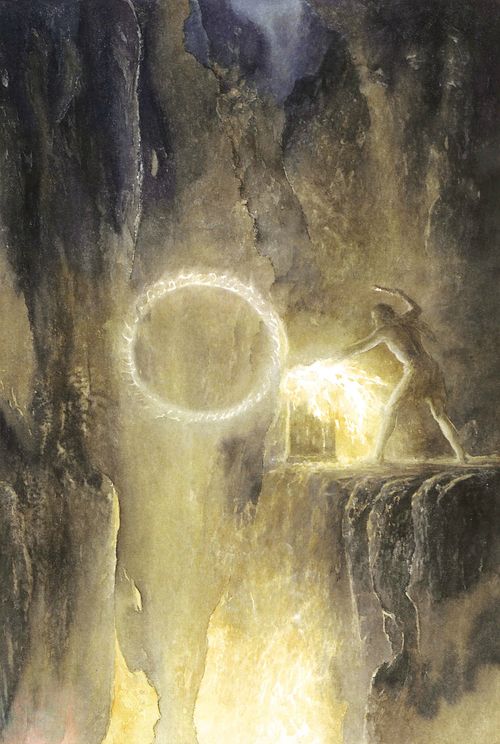
But, in the illustrations of Tolkien illustrators Alan Lee

ea7f4b46a0e0f9fc7e00d1a5aca2eb30

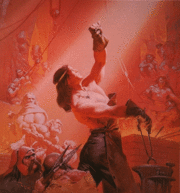
And Angus McBride

180px-Angus_McBride_-_Celebrimbor

This detail—perhaps even an error on Tolkien’s part—has been overlooked. Is it that the artists have made the same error, or are they simply letting it go in favor of the story?

From here, we can ask several questions: what material was the Ring made of? Where did he get the material? How did Sauron make it a magic ring? How did he get the Black Speech/Elvish inscription onto the Ring?

While there may be one or several answers to these questions, we wonder just how far into detail we’re meant to go—and how far JRRT means for us to go. He created a world so intricate that his work has been named a “legendarium”, and in several previous postings, we’ve discussed details of Middle-earth, such as trade and coinage. Could the man who took such care to design Middle-earth’s moon phases have answers to these questions—or should he?

(And here, for those who know the movie Home Alone, we hope not to sound like the little boy from across the street who asks the van driver endless, empty questions!)

The concept of the One Ring begins in Gollum’s cave in The Hobbit. At that point, it was only a magic ring, serving the purpose of a plot device: JRRT had not yet planned a sequel to The Hobbit. In fact, the magic ring was not yet the One Ring in Tolkien’s stories until after JRRT published the book.

Tolkien said himself of the matter in his Letters:

“The Hobbit… was quite independently conceived: I did not know as I began it that it belonged.”(Letters, 145)

And, of the Ring:

“Rayner has, of course, spotted a weakness (inevitable): the linking. … But I don’t feel worried by the discovery that the ring was more serious than appeared… the weakness is Gollum, and his action in offering the ring as a present.” (Letters, 121)

This was a response to publishers Allen and Unwin; Rayner (Unwin’s son) had read the story and commented to the author:

“…. Converting the original Ring into this new and powerful instrument takes some explaining away and Gandalf is hard put to it to find reasons for many of the original Hobbit’s actions…” (letters, 120)

Nowhere in his criticism does Rayner ask what the Ring was made of, how Sauron had made the Elvish script, or how it would have been either forged or cast, and neither does JRRT in his answer; their focus is placed upon converting the magic ring into the One Ring, and using the Ring as a crucial plot element in both The Hobbit and The Lord of the Rings. Tolkien writes in another letter:

“The magic ring was the one obvious thing in The Hobbit that could be connected with my mythology. To be the burden of a large story it had to be of supreme importance. I then linked it with the (originally) quite casual reference to the Necromancer…” (Letters, 346)

Although Tolkien’s work provides a great richness of material to discuss, question, and write about, we suppose that we can forgive JRRT for this small detail. Then again, when JRRT gives us so much, when should we stop asking questions or expecting answers? As we’ve found in writing these postings, JRRT seems to have an inexhaustible amount of material, although even he sets limits to the interpretation of his work; in fact, these “hidden meanings” annoyed him:

“I am honoured by the interest that many readers have taken in the nomenclature of The Lord of the Rings… But I remain puzzled, and indeed sometimes irritated, by many of the guesses at the ‘sources’ of the nomenclature, and theories or fancies concerning hidden meanings… many of them seem to show ignorance or disregard of the clues and information which are provided in notes, renderings, and in the Appendices” (Letters, 379-380).

We don’t believe that this was meant to be a discouragement. Instead, it is a pointing by the author towards the extra material meant to help his readers to understand and study what Tolkien says he wishes he’s achieved: “the ‘literary belief’ in the story as historical” (Letters, 279).

But this leaves us at another crossroads.

If the answers aren’t to be found there, however, should we stop?   We’ve said that we’re haunted by the image from Home Alone:   if we persist, should we be cast in Home Alone 4 as two kids, pestering the English academic with “So how was this Ring really made, mister? Is it really made of gold? Is it really powerful? How powerful? For how long?”

Or should we leave those details about the Ring as they are, accepting that it’s a magic ring forged in the fires of Mount Doom by Sauron—without interrupting JRRT to ask too many questions about details which aren’t essential to the story, believing that it is more important that he masterfully took a simple plot element—a magic ring—and focused on converting it into the crucial element of Frodo’s quest in The Lord of the Rings.

As always, we ask: what do you think, Dear Readers?

Thanks for reading,

MTCIDC,

CD


The Doubtful Sea Series Facebook Page

The Doubtful Sea Series Facebook Page

  • Ollamh

Categories

  • Artists and Illustrators
  • Economics in Middle-earth
  • Fairy Tales and Myths
  • Films and Music
  • Games
  • Heroes
  • Imaginary History
  • J.R.R. Tolkien
  • Language
  • Literary History
  • Maps
  • Medieval Russia
  • Military History
  • Military History of Middle-earth
  • Narnia
  • Narrative Methods
  • Poetry
  • Research
  • Star Wars
  • Terra Australis
  • The Rohirrim
  • Theatre and Performance
  • Tolkien
  • Uncategorized
  • Villains
  • Writing as Collaborators
Follow doubtfulsea on WordPress.com

Across the Doubtful Sea

Recent Postings

  • A Moon disfigured December 17, 2025
  • On the Roads Again—Once More December 10, 2025
  • (Not) Crossing Bridges December 3, 2025
  • On the Road(s) Again—Again November 26, 2025
  • On the Road(s) Again November 19, 2025
  • To Bree (Part 2) November 12, 2025
  • To Bree (Part 1) November 5, 2025
  • A Plague o’ Both—No, o’ All Your Houses! October 29, 2025
  • It’s in Writing (2:  I’st a Prologue, or a Poesie for a Ring?) October 22, 2025

Blog Statistics

  • 103,213 Views

Posting Archive

  • December 2025 (3)
  • November 2025 (4)
  • October 2025 (5)
  • September 2025 (4)
  • August 2025 (4)
  • July 2025 (5)
  • June 2025 (4)
  • May 2025 (4)
  • April 2025 (5)
  • March 2025 (4)
  • February 2025 (4)
  • January 2025 (5)
  • December 2024 (4)
  • November 2024 (4)
  • October 2024 (5)
  • September 2024 (4)
  • August 2024 (4)
  • July 2024 (5)
  • June 2024 (4)
  • May 2024 (5)
  • April 2024 (4)
  • March 2024 (4)
  • February 2024 (4)
  • January 2024 (5)
  • December 2023 (4)
  • November 2023 (5)
  • October 2023 (4)
  • September 2023 (4)
  • August 2023 (5)
  • July 2023 (4)
  • June 2023 (4)
  • May 2023 (5)
  • April 2023 (4)
  • March 2023 (5)
  • February 2023 (4)
  • January 2023 (4)
  • December 2022 (4)
  • November 2022 (5)
  • October 2022 (4)
  • September 2022 (4)
  • August 2022 (5)
  • July 2022 (4)
  • June 2022 (5)
  • May 2022 (4)
  • April 2022 (4)
  • March 2022 (5)
  • February 2022 (4)
  • January 2022 (4)
  • December 2021 (5)
  • November 2021 (4)
  • October 2021 (4)
  • September 2021 (5)
  • August 2021 (4)
  • July 2021 (4)
  • June 2021 (5)
  • May 2021 (4)
  • April 2021 (4)
  • March 2021 (5)
  • February 2021 (4)
  • January 2021 (4)
  • December 2020 (5)
  • November 2020 (4)
  • October 2020 (4)
  • September 2020 (5)
  • August 2020 (4)
  • July 2020 (5)
  • June 2020 (4)
  • May 2020 (4)
  • April 2020 (5)
  • March 2020 (4)
  • February 2020 (4)
  • January 2020 (6)
  • December 2019 (4)
  • November 2019 (4)
  • October 2019 (5)
  • September 2019 (4)
  • August 2019 (4)
  • July 2019 (5)
  • June 2019 (4)
  • May 2019 (5)
  • April 2019 (4)
  • March 2019 (4)
  • February 2019 (4)
  • January 2019 (5)
  • December 2018 (4)
  • November 2018 (4)
  • October 2018 (5)
  • September 2018 (4)
  • August 2018 (5)
  • July 2018 (4)
  • June 2018 (4)
  • May 2018 (5)
  • April 2018 (4)
  • March 2018 (4)
  • February 2018 (4)
  • January 2018 (5)
  • December 2017 (4)
  • November 2017 (4)
  • October 2017 (4)
  • September 2017 (4)
  • August 2017 (5)
  • July 2017 (4)
  • June 2017 (4)
  • May 2017 (5)
  • April 2017 (4)
  • March 2017 (5)
  • February 2017 (4)
  • January 2017 (4)
  • December 2016 (4)
  • November 2016 (5)
  • October 2016 (6)
  • September 2016 (5)
  • August 2016 (5)
  • July 2016 (5)
  • June 2016 (5)
  • May 2016 (4)
  • April 2016 (4)
  • March 2016 (5)
  • February 2016 (4)
  • January 2016 (4)
  • December 2015 (5)
  • November 2015 (5)
  • October 2015 (4)
  • September 2015 (5)
  • August 2015 (4)
  • July 2015 (5)
  • June 2015 (5)
  • May 2015 (4)
  • April 2015 (3)
  • March 2015 (4)
  • February 2015 (4)
  • January 2015 (4)
  • December 2014 (5)
  • November 2014 (4)
  • October 2014 (6)
  • September 2014 (1)

Blog at WordPress.com.

  • Subscribe Subscribed
    • doubtfulsea
    • Join 78 other subscribers
    • Already have a WordPress.com account? Log in now.
    • doubtfulsea
    • Subscribe Subscribed
    • Sign up
    • Log in
    • Report this content
    • View site in Reader
    • Manage subscriptions
    • Collapse this bar
 

Loading Comments...