• About

doubtfulsea

~ adventure fantasy

Tag Archives: The Great Wall

Beacons or Wills of the Wisp?

16 Wednesday Mar 2016

Posted by Ollamh in Imaginary History, J.R.R. Tolkien, Literary History, Military History, Military History of Middle-earth, Narrative Methods

≈ 2 Comments

Tags

Adventure, Agamemnon, Beacons, British Royal Government, Byzantines, film changes, Lays of Ancient Rome, Minas Tirith, Mulan, Peter Jackson, Spanish Armada, The Great Wall, The Lord of the Rings, Thomas Babington Macaulay, Tolkien

Dear Readers,

Welcome, as always. We begin this posting with something which puzzled us when we last read The Lord of the Rings.

Gandalf and Pippin are on their nonstop ride to Minas Tirith.
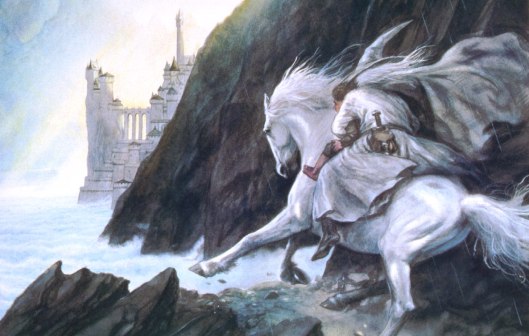
gandalfpippin.jpg

Then—

“There was silence again for a while. Then, ‘What is that? Cried Pippin suddenly, clutching at Gandalf’s cloak. ‘Look! Fire, red fire! Are there dragons in this land? Look, there is another!’

For an answer Gandalf cried aloud to his horse. ‘On, Shadowfax! We must hasten. Time is short. See the beacons of Gondor are alight, called for aid. War is kindled. See, there is the fire on Amon Din, and flame on Eilenach; and there they go speeding west: Nardol, Erelas, Min-Rimmon, Calenhad, and the Halifirien on the borders of Rohan.’ ” (The Return of the King, Chapter 1, “Minas Tirith”)

beaconsofgondor.gif

Beacons as a means of rapid communication occurs often, both in western literature and in history.

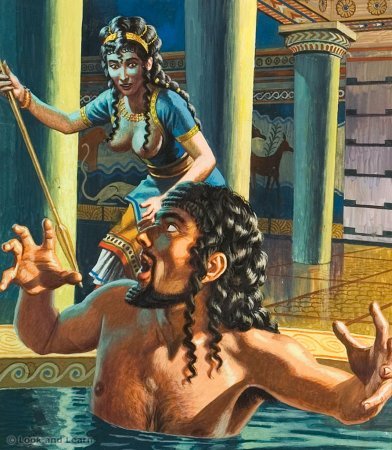
In Aeschylus’ Agamemnon (458BC), for example, Clytemnestra has a famous (and rather lengthy) speech in which she describes the beacons which alert Mycenae that Troy has been captured—alerting her to begin her plot to kill her husband and take over with her BF, Aegisthus.
clytaga.jpg

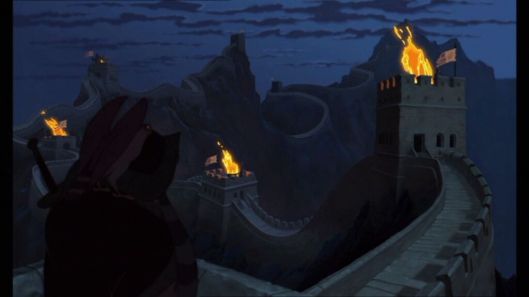
The towers along the Great Wall in China were used as beacon stations, as in Mulan.
mulan-wall-of-china


In the 9th century AD, the Byzantines had developed a system of beacons to warn them of invasion by their neighbors to the east.

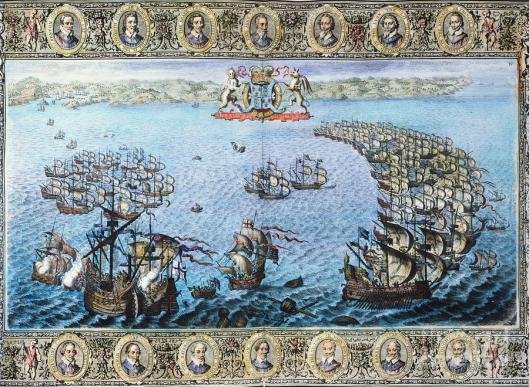
If you read the Tolkien sites, you see a fair amount more on beacons, in particular, those set up by the British royal government along the southern shore of England in the 1580s to act as an early warning system to alert the country to the Spanish armada.


spanisharmada.jpg

Tolkien would have known the story of these either from studying English history in his early schooling, or from reading “The Armada”, a well-known poem by Thomas Babington Macaulay first published in his Lays of Ancient Rome (1842).

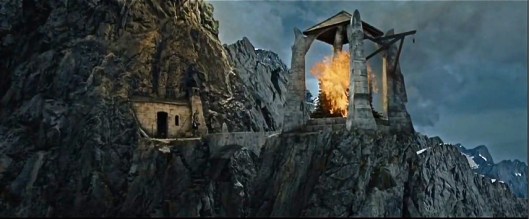
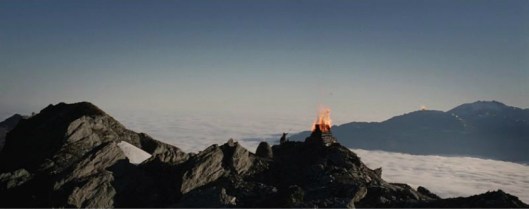
In Jackson’s The Return of the King, Denethor has been stubborn about not lighting the beacons to alert Rohan that Gondor has need of it. Pippin climbs up the outside of the rock face where the beacon is and, while the guards are distracted, he lights the beacon which, in turn, sets off the whole series.
mtbeacon.jpg

beaconsgondor.jpg

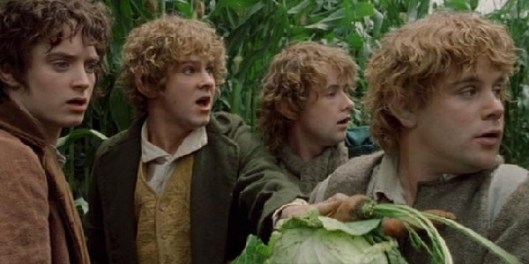
This is not the first or last time one sees changes made in the story—what, for example, are Merry and Pippin doing in a cornfield (that is, a field of maize—do we know that maize even grows in Middle Earth) when Pippin has actually been with Frodo and Sam from the time they left Hobbiton?
05_corn.jpg

In past postings, we have sometimes commented upon the changes made to the story by the scriptwriters—especially the changes to The Hobbit, which have done so much to take the story away from the author’s intent entirely, to the point where, in the third film, Bilbo, the main character, is reduced to something like Third Spear-Carrier from the Left, when the story becomes something like The Tragical Historie of Thorin, Sometime King Under the Mountain. When questioned about this, the scriptwriters, in general, have always made the same reply: “film is different from print” (although, in interviews, they sometimes become more aggressive, once even suggesting that those who disagree with their approach don’t understand the books).

In this posting, however, we intend to follow a different path, trying to understand why the change was made and how it might or might not benefit the narrative.

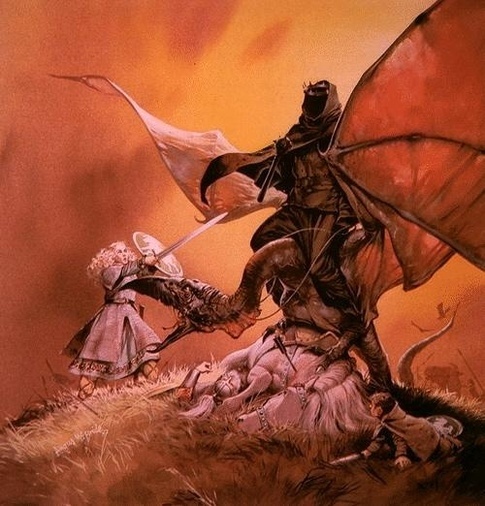
To a degree, the film has followed its source, in that Gandalf has taken Pippin with him on the ride to Minas Tirith, but Pippin’s role, from that point on in the book, becomes more that of observer than active participant. This is in contrast to Merry, who rides into the battle on the Pelennor and helps Eowyn destroy the Chief Nazgul.
eowynnazgul.jpg

We can imagine, then, that the scriptwriters, who have brought the two Hobbits so far, have decided to give Pippin another moment of action, as a kind of balance: if Merry fights a Nazgul, Pippin can do a little rock-climbing and alert the Rohirrim.

If you, readers, don’t know it, there is very useful area on the site www.theonering.com, called “Film Changes”. This particular change does not appear there, one presumes because, as the site says, their text was based upon a scripts still in the midst of production, but the structure of the area is very useful. It provides a summary title for each change, then there is this:

Film:

Book:

Pro:

Con:

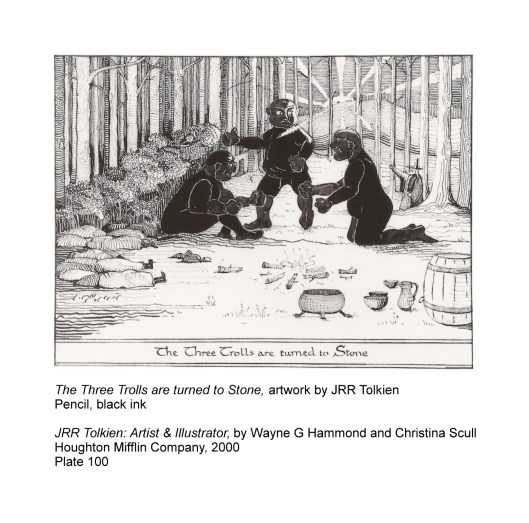
It’s interesting to see how more-or-less neutral in tone this is. The writer shows the contrasts, suggests why the change, and then explains why this is not necessarily a change for the better, but there is none of the hostility we sometimes see on-line, one way or the other, and, if you’re a regular reader of blogs and websites, we’re sure you’ve seen that hostility. It’s one of the least attractive, but widespread features of the internet and it’s a pity that certain of these commentators couldn’t be delayed till dawn would overtake them and send them the way of Tom, Bert, and William in The Hobbit!
img__Art-The_Three_Trolls_are_Turned_to_Stone,_by_JRRT.jpg

[Tolkien’s trees, by the way, always remind us of the work of the Danish illustrator, Kay Nielsen (1886-1957), which we presume JRRT had seen–at least his illustrations for East of the Sun, West of the Moon (1914).

kaynielsen.jpg

We have already provided you with the first two sections: the film has Pippin touch off a beacon after reaching Minas Tirith; in the book, Pippin sees the beacons alight, one after the other, as he and Gandalf ride towards Minas Tirith.

We presume that the Pro would be something like:

  1. provides a balance between the two Hobbits who are so closely linked throughout the story
  2. adds to the drama and underlines Denethor’s less-than-full-commitment—as depicted in the films—to defending Gondor to the end
  3. adds a bit of visual spectacle, seeing the beacons light up, one after another

And the Con?

  1. not in the original—and, as we always wonder, how far can you change things before you forfeit your claim that it’s “JRR Tolkien’s The Lord of the Rings” you’ve filmed?
  2. Denethor is actually much more active and aggressive in his stance in the original, not being willing to give up anything without a fight until the near-fatal wounding of Faramir (and a late-night séance with the palantir)—the beacons have already been lit because he’s attempting to gather all of the forces he can to defend Gondor
  3. in fact, the beacons are not on snowy mountain peaks in the original, but on reachable hilltops, just as are the sites for the beacons used to alert southern England of the approach of the Spanish armada in 1588, as in this fine photo by David Bellamy.

Thorncombe_Beacon_02.jpg

So, it might be a striking visual effect, but, as in #1, this isn’t quite what JRRT had in mind.

What do you think, dear readers? A justifiable change?

Thanks, as always, for reading.

MTCIDC

CD
 

Where Did It Go– And Why?

17 Wednesday Jun 2015

Posted by Ollamh in J.R.R. Tolkien, Military History, Military History of Middle-earth

≈ Leave a comment

Tags

Arbeia, Boromir, Cavalry, Denethor, England, Faramir, Film, Gondor, Hadrian's Wall, Helm's Deep, Iliad, Minas Tirith, Offa's Dyke, Osgiliath, Pelennor, Peter Jackson, Rammas Echor, Script, The Great Wall, The Lord of the Rings, Tolkien, Wansdyke

Dear Readers,

Welcome, as always!

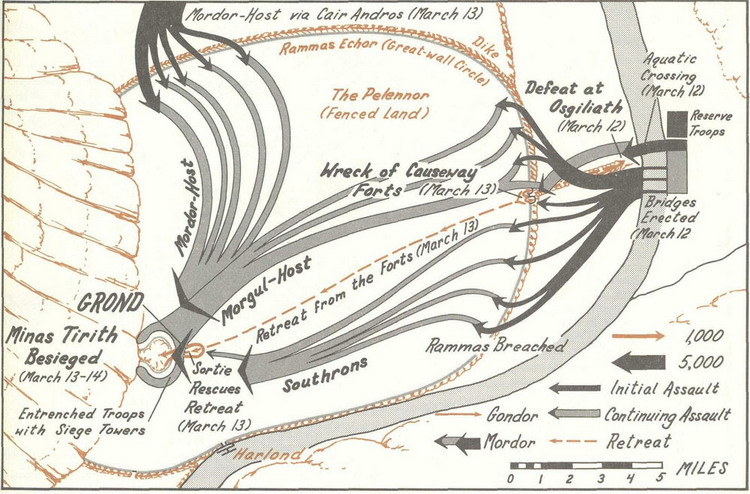
     In this post, we want to consider the Rammas Echor, which, in the original, had holes blown in it by the invading army of Sauron, but was demolished completely by the script writers for Peter Jackson’s LOTR.

The%20Siege%20of%20Minas%20Tirith

     We first meet it when Gandalf and Pippin, in their rapid journey to Minas Tirith, are briefly stopped at what appears to be a sally port in it (rather than a major gate, as Shadowfax is said to have “passed through a narrow gate in the wall” 749). Gandalf briefly trades remarks with an officer named Ingold (who appears briefly later in the story to report that the northern section has fallen, 821) before he and Pippin continue their journey.

     It is described thus:

   “Gandalf passed now into the wide land beyond the Rammas Echor. So the men of Gondor called the out-wall that they had built with great labour, after Ithilien fell under the shadow of their Enemy. For ten leagues [about 30 miles in the English system—about 48 km in the metric] or more it ran from the mountains’ feet and so back again, enclosing in its fence the fields of the Pelennor: fair and fertile townlands on the long slopes and terraces falling to the deep levels of the Anduin. At its furthest point from the Great Gate of the City, north-eastward, the wall was four leagues [12 miles—about 19 km] distant, and there from a frowning bank it overlooked the long flats beside the river, and men had made it high and strong; for at that point, upon a walled causeway, the road came in from the fords and bridges of Osgiliath and passed through a guarded gate between embattled towers… “ 750.

     With so much of Tolkien, one can find illustrations from the usual artists—the Hildebrandts, Howe, Nasmith, and Lee—but for this particular—and important—architectural feature, we haven’t discovered—so far—a single illustration.

     It’s made of stone and has evidently not been well-maintained: “Many tall men heavily cloaked stood beside him [Shadowfax], and behind them in the mist loomed a wall of stone. Partly ruinous it seemed, but already before the night was passed the sound of hurried labour clould be heard: beat of hammers, clink of trowels, and the creak of wheels.” 748 And, as mentioned above, it has gates, but, beyond that, what does it look like?

     England has a long history of long walls. There are the surviving earthen walls and ditches of the Dark Ages or early medieval Offa’s Dyke

Offa's_Dyke_near_Yew_Tree_Farm_-_geograph_org_uk_-_450420

1990s, Near Knighton, Wales, UK --- Offa's Dyke near Knighton in Wales. The dyke was created by Offa the King of Mercia from 757 to 796 AD and roughly formed the boundary between England and Wales. --- Image by © Homer Sykes/CORBIS

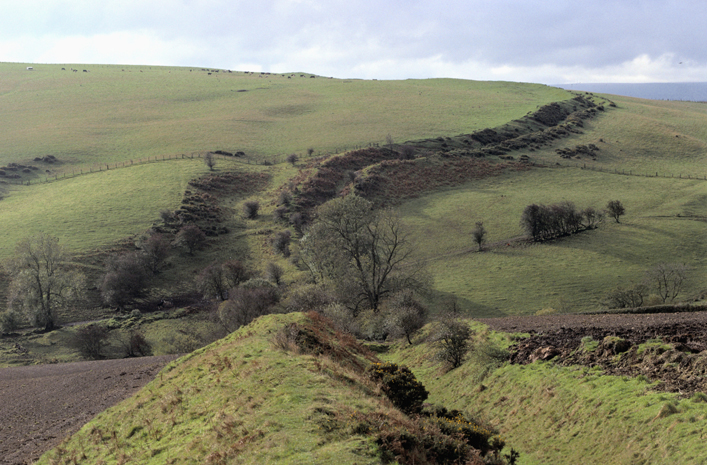
and Wansdyke

wansdyke

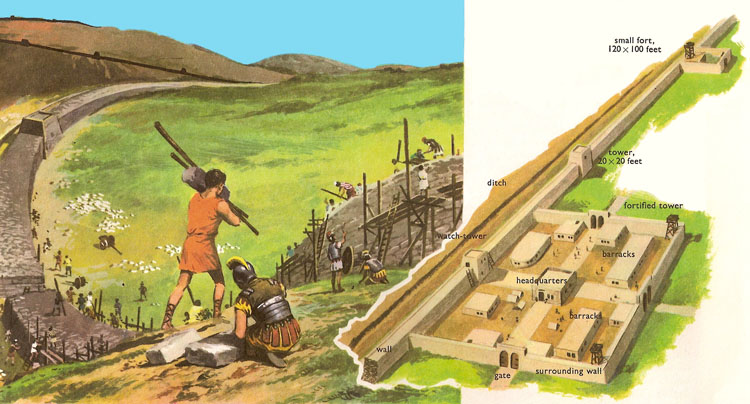
and, of course, the well-known 2nd –century AD work, Hadrian’s Wall, with its surviving stone work and its elaborate series of mile castles, gates, and supporting forts and camps.

Hadrians_Wall Hadrian's Wall phase 1 Central sector

   We might also cast further afield and in time. In Book 7 of the Iliad, the Greeks dig a ditch, fill it with sharpened stakes, and build a stone wall behind it to protect their ships from Trojan attack.

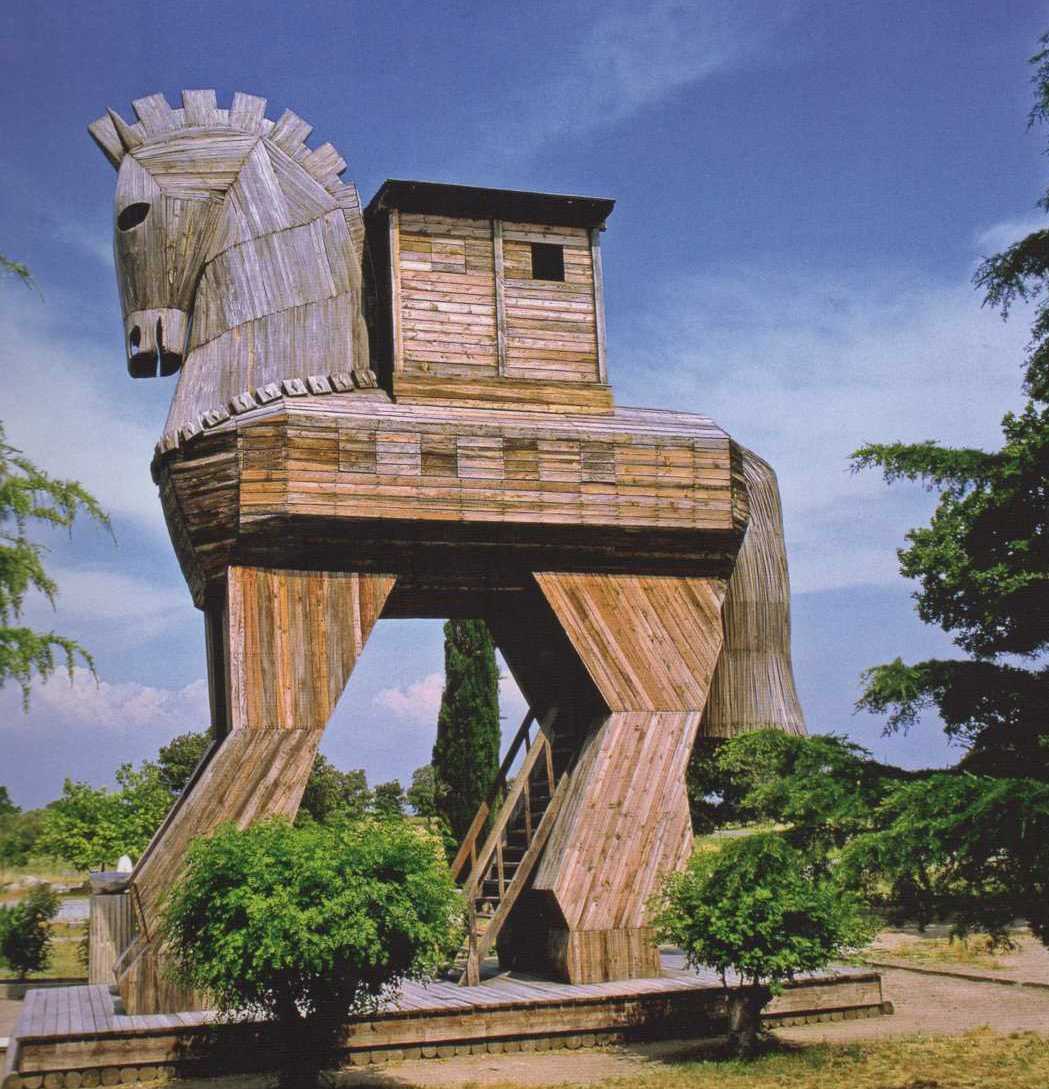
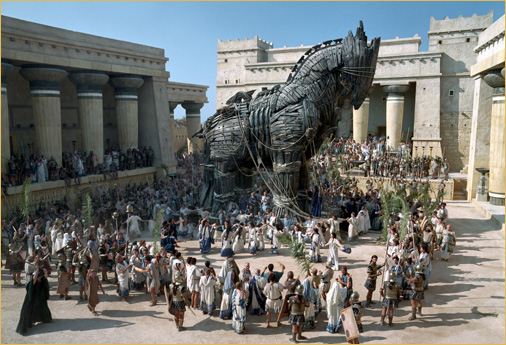
[We can’t find an image of that, but here’s a picture of one of our favorite features of today’s Truva/Hisalik, just to remind you of a later feature of the Trojan War—along with a still from the 2004 Brad Pitt film, known to those of us who love Homer for its rather casual attitude towards the traditional story.]

617-5-horse1

trojan-horse%20troy%20the%20movie

And how can we fail to mention the Great Wall of China?

thegreatwall_rcv

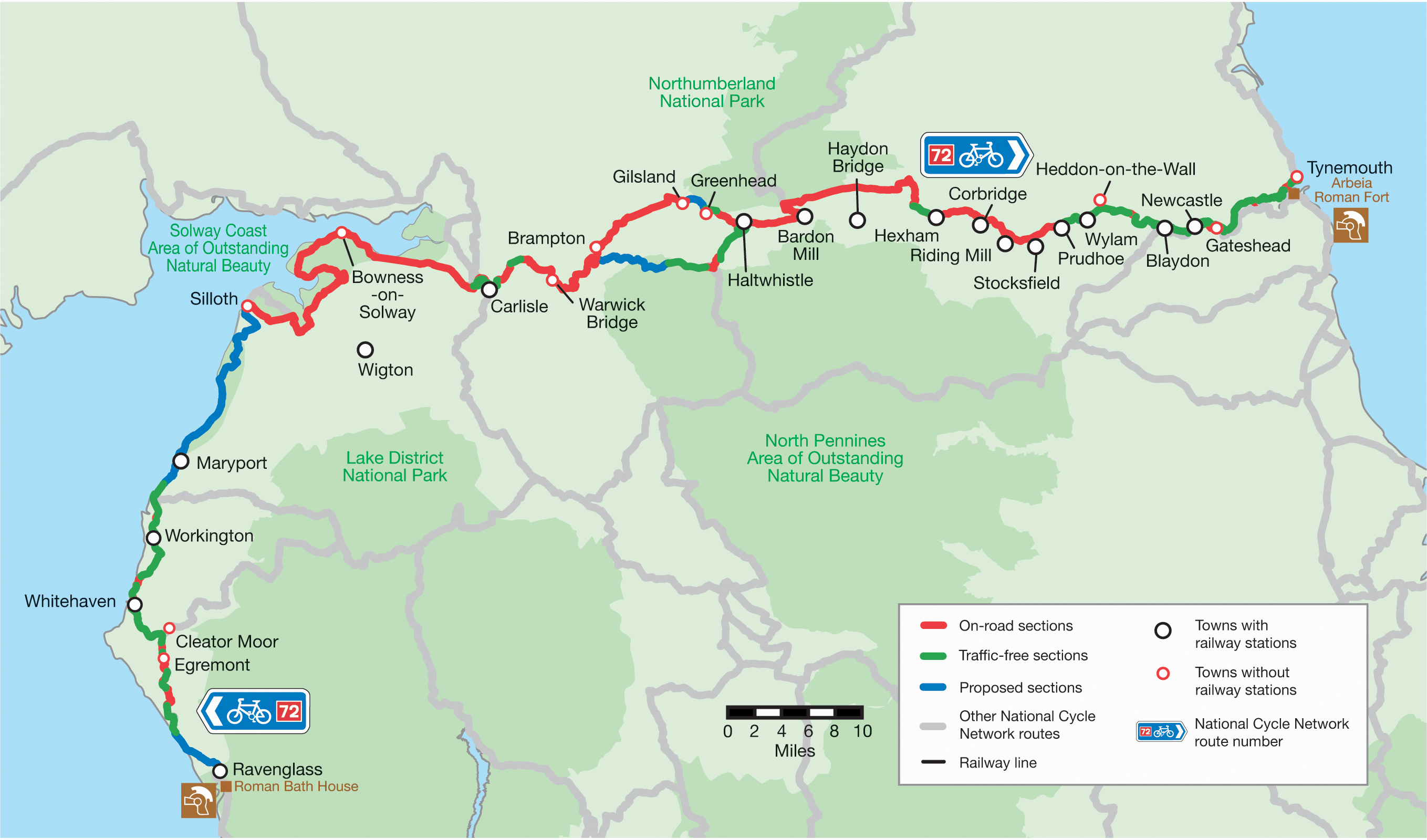
     For us, Hadrian’s Wall might do, with its stretch of stonework across the entire width of England (73 miles, 117.5 kilometres).

map-hadrians-wall

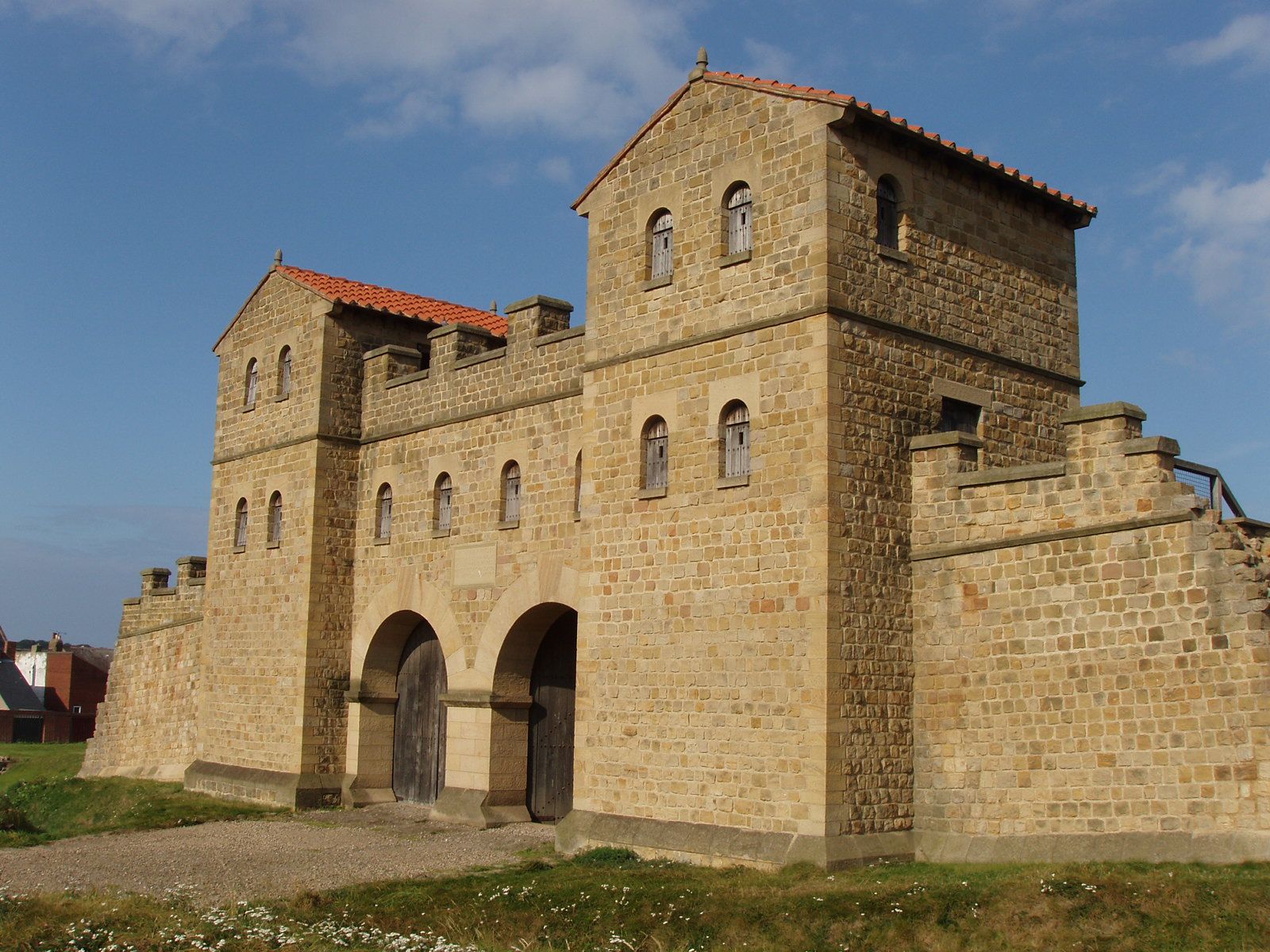
It even has the requisite main gate, which will be defended by Faramir.

This is actually from the Roman fort of Arbeia, South Shields—a great site—but it gives you an idea of what something a little grander—after all, it connected the Pelennor with Osgiliath—might look like.

F00638REW

     That event, however, is in The Lord of the Rings, where Faramir maintains his reputation as a brave and far-sighted commander, as Beregond says to Pippin:

     “But things may change when Faramir returns. He is bold, more bold than many deem; for in these days men are slow to believe that a captain can be wise and learned in the scrolls of lore and song, as he is, and yet a man of hardihood and swift judgement in the field.” 766

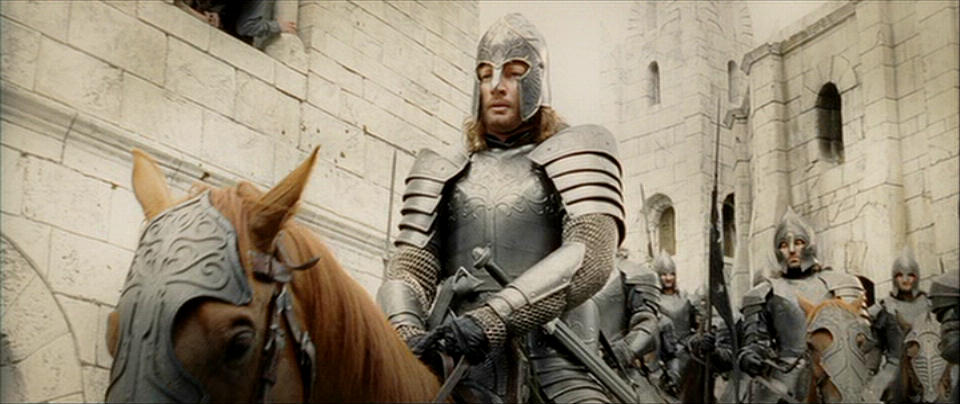
FaramirCaptainGondor

     In the film, it is quite a different matter. There is no Rammas Echor and Faramir, in contrast, is badly wounded in a cavalry charge against the walls of Osgiliath while his father, Denethor, has a rather messy and all-too-symbolic lunch.

maxresdefault

gondorianerritt-cb182208

gifdenethoreating

     What has happened here? First, no intelligent—maybe even foolish—commander would attack a stone wall with cavalry, and we know that Faramir is, indeed, intelligent. Second, what has happened to the Rammas, where Faramir actually had been just before he fell, commanding the rearguard?

     First, we would suggest that the script writers took their cue from the final scene between father and son, in which Faramir, already told by his father that his father had preferred his elder son, Boromir, volunteers to direct the defense of Osgiliath:

“But at length Faramir said: ‘I do not oppose your wil, sire. Since you are robbed of Boromir, I will go and do what I can in his stead—if you command it.’

     ‘I do so,’ said Denethor.

     “Then farewell!’ said Faramir. ‘But if I should return, think better of me!’

     ‘That depends upon the manner of your return,’ said Denethor.

     Gandalf it was that last spoke to Faramir ere he rode east. ‘Do not throw your life away rashly or in bitterness,’ he said. ‘You will be needed here, for other things than war. Your father loves you, Faramir, and will remember it ere the end. Farewell!’” 816-817

     To them, this might have indicated that Faramir—who had clearly been Gandalf’s pupil, as his father has said:

“See, you have spoken skillfully, as ever; but I, have I not seen your eyes fixed on Mithrandir, seeking whether you said well or too much? He has long had your heart in his keeping.” 812

does not listen to his tutor and deliberately sets out to get himself killed. In the text, however, Faramir is actually acting responsibly, fighting in the rearguard of the retreating detachment driven from the Rammas:

“Even as the Nazgul had swerved aside from the onset of the White Rider, there came flying a deadly dart, and Faramir, as he held at bay a mounted champion of Harad, had fallen to the earth.” 821

     (And we might add that Prince Imrahil, who brings the wounded Faramir back, says, “Your son has returned, lord, after great deeds…” 821, which, of course, could easily be understood to be ironic and is perhaps meant to be so on the part of Imrahil, considering Fararmir’s last words to his father and Denethor’s reply.)

     Thus, we see Faramir’s wounding completely changed, but what about the wall he had been defending?

     When one reads through the various chat sights, there was once a considerable amount of discussion about the Rammas Echor, but all was speculation, it seems, as we were unable to find anything said by the writers themselves. In the text, instead of concentrating on the main gate, Sauron’s engineers detonate explosions to each side and the troops then pour through the breaches to take the defenders in flank. This could be seen as a repetition of a similar earlier event at Helm’s Deep, in which Saruman’s forces blew a hole in the defenses.

blowingupthewallathelmsdeep

     As well, we think that, for the director, the big visual attraction was the attack on Minas Tirith. This means that it could simply have been a matter of where to spend time—and/or possibly money—and so the Rammas was sacrificed. If the decision had already been made to change—we will say misinterpret– the story of Faramir, simplifying it drastically and shifting the focus (just think of that dripping mouth!), then the choice to discard this defense would have been an easy one.

     So, suppose you were script writer or director, what would you have done, dear readers?

     Thanks, as always, for reading (and, we hope, speculating).

     MTCIDC

     CD

The Doubtful Sea Series Facebook Page

The Doubtful Sea Series Facebook Page

  • Ollamh

Categories

  • Artists and Illustrators
  • Economics in Middle-earth
  • Fairy Tales and Myths
  • Films and Music
  • Games
  • Heroes
  • Imaginary History
  • J.R.R. Tolkien
  • Language
  • Literary History
  • Maps
  • Medieval Russia
  • Military History
  • Military History of Middle-earth
  • Narnia
  • Narrative Methods
  • Poetry
  • Research
  • Star Wars
  • Terra Australis
  • The Rohirrim
  • Theatre and Performance
  • Tolkien
  • Uncategorized
  • Villains
  • Writing as Collaborators
Follow doubtfulsea on WordPress.com

Across the Doubtful Sea

Recent Postings

  • A Moon disfigured December 17, 2025
  • On the Roads Again—Once More December 10, 2025
  • (Not) Crossing Bridges December 3, 2025
  • On the Road(s) Again—Again November 26, 2025
  • On the Road(s) Again November 19, 2025
  • To Bree (Part 2) November 12, 2025
  • To Bree (Part 1) November 5, 2025
  • A Plague o’ Both—No, o’ All Your Houses! October 29, 2025
  • It’s in Writing (2:  I’st a Prologue, or a Poesie for a Ring?) October 22, 2025

Blog Statistics

  • 103,215 Views

Posting Archive

  • December 2025 (3)
  • November 2025 (4)
  • October 2025 (5)
  • September 2025 (4)
  • August 2025 (4)
  • July 2025 (5)
  • June 2025 (4)
  • May 2025 (4)
  • April 2025 (5)
  • March 2025 (4)
  • February 2025 (4)
  • January 2025 (5)
  • December 2024 (4)
  • November 2024 (4)
  • October 2024 (5)
  • September 2024 (4)
  • August 2024 (4)
  • July 2024 (5)
  • June 2024 (4)
  • May 2024 (5)
  • April 2024 (4)
  • March 2024 (4)
  • February 2024 (4)
  • January 2024 (5)
  • December 2023 (4)
  • November 2023 (5)
  • October 2023 (4)
  • September 2023 (4)
  • August 2023 (5)
  • July 2023 (4)
  • June 2023 (4)
  • May 2023 (5)
  • April 2023 (4)
  • March 2023 (5)
  • February 2023 (4)
  • January 2023 (4)
  • December 2022 (4)
  • November 2022 (5)
  • October 2022 (4)
  • September 2022 (4)
  • August 2022 (5)
  • July 2022 (4)
  • June 2022 (5)
  • May 2022 (4)
  • April 2022 (4)
  • March 2022 (5)
  • February 2022 (4)
  • January 2022 (4)
  • December 2021 (5)
  • November 2021 (4)
  • October 2021 (4)
  • September 2021 (5)
  • August 2021 (4)
  • July 2021 (4)
  • June 2021 (5)
  • May 2021 (4)
  • April 2021 (4)
  • March 2021 (5)
  • February 2021 (4)
  • January 2021 (4)
  • December 2020 (5)
  • November 2020 (4)
  • October 2020 (4)
  • September 2020 (5)
  • August 2020 (4)
  • July 2020 (5)
  • June 2020 (4)
  • May 2020 (4)
  • April 2020 (5)
  • March 2020 (4)
  • February 2020 (4)
  • January 2020 (6)
  • December 2019 (4)
  • November 2019 (4)
  • October 2019 (5)
  • September 2019 (4)
  • August 2019 (4)
  • July 2019 (5)
  • June 2019 (4)
  • May 2019 (5)
  • April 2019 (4)
  • March 2019 (4)
  • February 2019 (4)
  • January 2019 (5)
  • December 2018 (4)
  • November 2018 (4)
  • October 2018 (5)
  • September 2018 (4)
  • August 2018 (5)
  • July 2018 (4)
  • June 2018 (4)
  • May 2018 (5)
  • April 2018 (4)
  • March 2018 (4)
  • February 2018 (4)
  • January 2018 (5)
  • December 2017 (4)
  • November 2017 (4)
  • October 2017 (4)
  • September 2017 (4)
  • August 2017 (5)
  • July 2017 (4)
  • June 2017 (4)
  • May 2017 (5)
  • April 2017 (4)
  • March 2017 (5)
  • February 2017 (4)
  • January 2017 (4)
  • December 2016 (4)
  • November 2016 (5)
  • October 2016 (6)
  • September 2016 (5)
  • August 2016 (5)
  • July 2016 (5)
  • June 2016 (5)
  • May 2016 (4)
  • April 2016 (4)
  • March 2016 (5)
  • February 2016 (4)
  • January 2016 (4)
  • December 2015 (5)
  • November 2015 (5)
  • October 2015 (4)
  • September 2015 (5)
  • August 2015 (4)
  • July 2015 (5)
  • June 2015 (5)
  • May 2015 (4)
  • April 2015 (3)
  • March 2015 (4)
  • February 2015 (4)
  • January 2015 (4)
  • December 2014 (5)
  • November 2014 (4)
  • October 2014 (6)
  • September 2014 (1)

Blog at WordPress.com.

  • Subscribe Subscribed
    • doubtfulsea
    • Join 78 other subscribers
    • Already have a WordPress.com account? Log in now.
    • doubtfulsea
    • Subscribe Subscribed
    • Sign up
    • Log in
    • Report this content
    • View site in Reader
    • Manage subscriptions
    • Collapse this bar
 

Loading Comments...