• About

doubtfulsea

~ adventure fantasy

Tag Archives: Tea

Tea Time

12 Wednesday Mar 2025

Posted by Ollamh in Uncategorized

≈ Leave a comment

Tags

Alice, camellias, Dwarves, Tea, The Hobbit

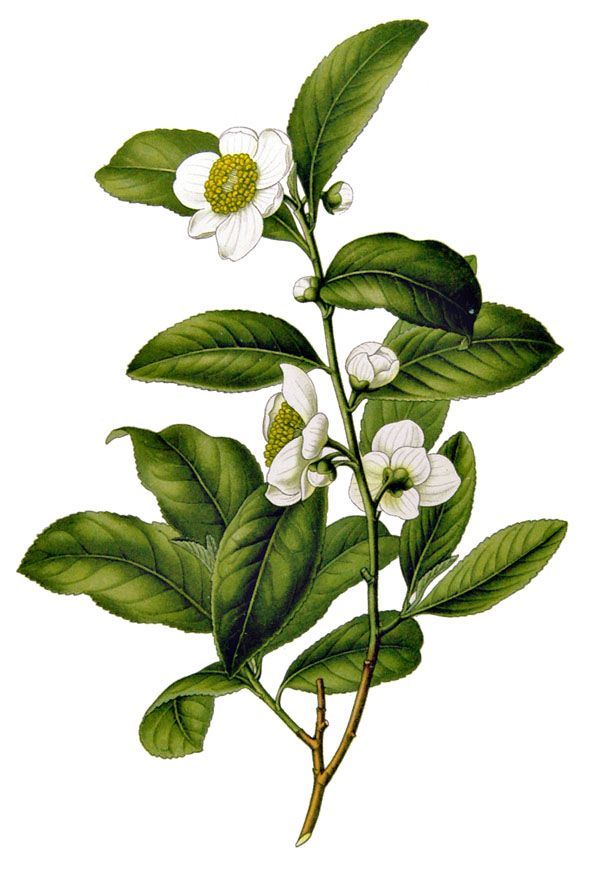
This is camellia sinensis

and, without it, two literary moments might never have appeared:  one zany (or weird, depending upon your taste for such things) scene, and one scene crucial to the whole fabric of the piece.

The genus is clearly very talented, producing, on the one hand, camellias, with their beautiful flowers, like this—

(this is by Clara Maria Pope and comes from Samuel Curtis’ A Monograph on the Genus Camellia, 1819)

and, on the other, this—

The history of drinking the latter stretches back farther in Chinese history than is probably ever datable (you can read about it here:  https://en.wikipedia.org/wiki/History_of_tea ), but we’ll join it when it arrives as a popular beverage in England.   That early history begins, in fact,  with coffee.

In 1652, the valet of an English Levant (Middle-Eastern) merchant, Pascua Rosee, opened what is thought to be the first coffee house in London.  It was a success and soon coffee houses became popular hangouts for those with the time and money for the then-exotic drink.
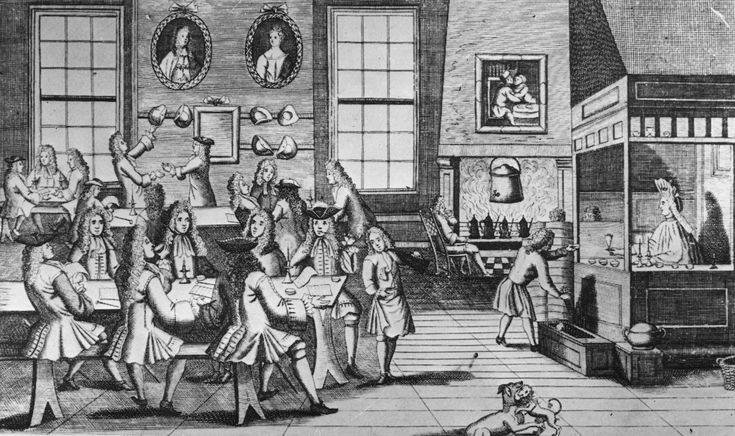
Rosee even advertized it as a kind of health-drink.

(Note the “scientific” tone of this handbill.)

In 1657, Thomas Garway (also spelled “Garraway”) began selling tea at his coffee house, later producing his own handbill on his new product.

How it spread from a London venue and eventually became a “national institution” is really about society and its influence, beginning with the wife of Charles II, Catherine of Branganza, 1638-1705,

who was already drinking tea, probably because the Portuguese had, from the early 16th century, been trading in China.  As tea was initially expensive, it remained in the hands (and mouths) of the upper classes, in part because it was taxed, almost from its beginnings.  As happened here in colonial America, this led to smuggling, but, in contrast to American violent protests,

this, in turn, led to pressure by British tea merchants upon Parliament and the tax was lowered and lowered and, in time, tea became a common (non-alcoholic) drink, even becoming part of the Temperance (anti-alcohol) Movement.  (for a good survey of all this, see:  http://www.tea.co.uk/page.php?id=98 )

As for “tea” as a kind of meal, there is a rather comic story of its invention by Anna Maria Russell, the 7th Duchess of Bedford, which you can read here:  https://www.britishmuseum.org/blog/tea-rific-history-victorian-afternoon-tea  She claimed to have created afternoon tea about 1840, but, in fact, “tea” as a meal stretches back into the 18th century, as you can read here:  https://en.wikipedia.org/wiki/Tea_(meal)   Afternoon tea, as practiced by the wealthier classes, could be quite a spread, as you’ll read,

but it could also be simply a sort of late afternoon break, about 4, and I wonder if that must be the time of our first literary moment.

(Arthur Rackham)

“THERE was a table set out under a tree in front of the house, and the March Hare and the Hatter were having tea at it: a Dormouse was sitting between them, fast asleep, and the other two were using it as a cushion resting their elbows on it, and talking over its head. ‘Very uncomfortable for the Dormouse,’ thought Alice; ‘only as it’s asleep, I suppose it doesn’t mind.’ “  (Alice’s Adventures in Wonderland, Chapter VII, “A Mad Tea-Party”)

(A dormouse is a kind of mouse, as the name suggests, but I suspect that Carroll, with his keen ear for language, was also hearing “dormeuse”—French for a feminine “sleeper”)

The oddness of it is that, with a long, set table, there are only three participants, until Alice arrives and the Hatter and Hare then both shout “No room!  No room!”

“Mad as a hatter” and “mad as a March hare” are old expressions for being less-than-sane, but there is an odd sane answer for the long, set table.  It seems that, for a rather complex reason, local time has stopped, as the Hatter explains, adding:

“‘It’s always six o’clock now.’

A bright idea came into Alice’s head. ‘Is that the reason so many tea-things are put out here?’ she asked.

‘Yes, that’s it,’ said the Hatter with a sigh: ‘it’s always tea-time, and we’ve no time to wash the things between whiles.’

‘Then you keep moving round, I suppose?’ said Alice.

‘Exactly so,’ said the Hatter:  ‘as the things get used up.’

‘But what happens when you come to the beginning again?’ Alice ventured to ask.”

But, like so many questions in Wonderland, this is never answered.

Afternoon tea is, customarily, at 4pm, suggesting that, in fact, the Hatter and Hare really don’t dirty the dishes because, if it’s always 6pm, tea is long over and therefore they may never actually have it, which is a very Carrollian way of thinking.  (Alice, however, helps herself to tea and bread and butter, but perhaps this is because, of the three (or four, counting the dormouse), she is the only sane—and perhaps real?—one.)

Our second literary moment begins with an actual invitation to tea—after all, Alice simply sat down, which the March Hare suggests was very rude.  But was it really meant?

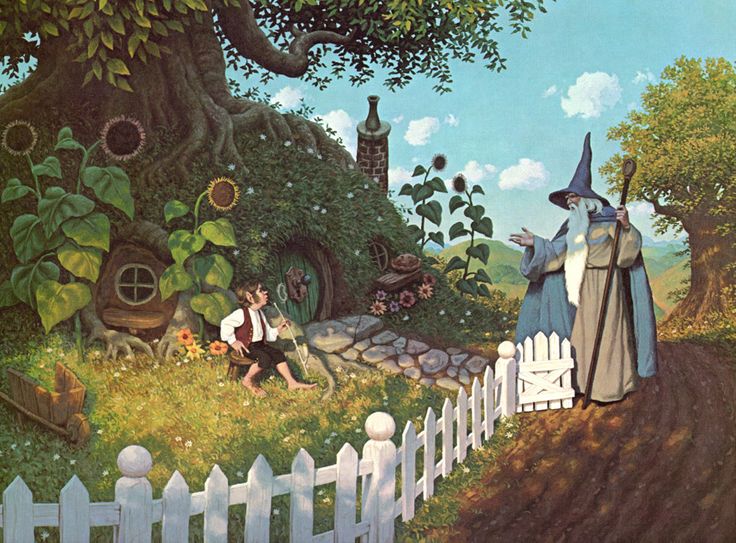
“ ‘Sorry!  I don’t want any adventures, thank you.  Not today.  Good morning!  But please come to tea-any time you like!  Why not come tomorrow?  Come tomorrow!  Good bye!’

With that the hobbit turned and scuttled inside his round green door, and shut it as quickly as he dared, not to seem rude.”  (The Hobbit, Chapter 1, “An Unexpected Party”)
(the Hildebrandts)

We know what happens next, of course:  the next day, not only Gandalf, but a whole troop of dwarves arrive and the quiet tea for two quickly becomes a boisterous—not afternoon tea (as we know from Chapter 18 that Bilbo sees tea as the traditional 4pm and serves cake)–but what’s called “high tea” or “meat tea” , and which, in older days, might have been dinner for working class people.

(the Hildebrandts again)

Meat tea, as its name suggests, is more than bread and butter or cake (you can read about it here:  https://en.wikipedia.org/wiki/Tea_(meal)#High_tea  )—and that’s exactly what the dwarves—and Gandalf– demand, from “mince-pies and cheese” to “cold chicken and pickles”, but, interestingly, tea itself quickly disappears as coffee, red wine, and ale are called for, so what began as a simple invitation—and one meant to avoid adventure—itself becomes a culinary adventure, but, for that tea originally offered, would there ever have been any adventure at all?

And, remembering where tea came from in our Middle-earth, where do you suppose Bilbo’s may have come from?

Thanks, as always, for reading.

Stay well,

Enjoy this pixilated version of the tea party from Disney’s Alice , 1951:  https://www.youtube.com/watch?v=5KDwE6MjfmQ  (warning:  if you’re a purist, this will not be—dare I say it?—your cup of tea)

And remember that there’s always

MTCIDC

O
Bilbo’s Shopping List

12 Wednesday Oct 2016

Posted by Ollamh in Economics in Middle-earth, Imaginary History, J.R.R. Tolkien, Narrative Methods

≈ Leave a comment

Tags

ale, An Unexpected Party, anachronism, apple-tart, barley fields, biscuit, cheese, coffee, cold chicken, eggs, food, hop garden, Isengard, Longbottom Leaf, mince-pies, pickles, pork-pie, porter, raspberry jam, red wine, salad, scones, seed cake, Tea, The Green Dragon, The Lord of the Rings, The Shire, Tolkien, Tomatoes, vineyard, Wensleydale, wheat fields

Dear Readers, welcome as always.

We were having tea the other day when an earlier—and much more elaborate—tea came to mind and we began to consider the economics (as you’ve seen us do in earlier postings on other elements of Middle-earth) of Bilbo’s larder, about which Bilbo remarks that Gandalf, “Seems to know as much about the inside…as I do myself!” (The Hobbit, Chapter 1, “An Unexpected Party”—and a footnote here. “Party”, in older British and American English, can also mean “person”, so JRRT is having fun with party = “event” and party = “person”—or, to Bilbo’s astonishment and dismay, “persons”–both meanings unexpected. We might add that that title may have yet another meaning for the future in that Bilbo, because of that party/event, becomes, in time, a party/person who he would never expect himself to be.)

Here’s the list of what Gandalf and the Dwarves demand of Bilbo:

Drinks:

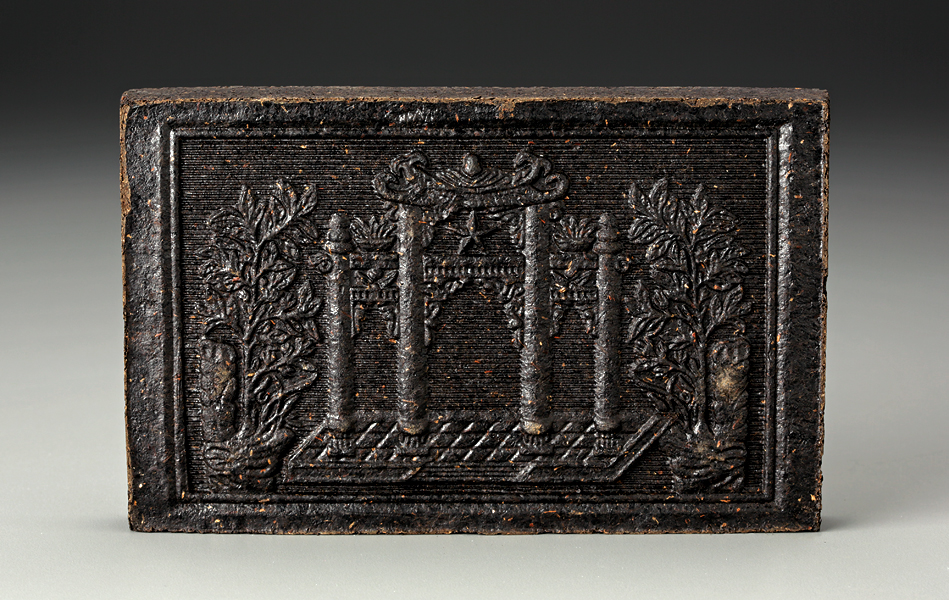
tea,

yunnan-tea-brick.jpg

coffee,

coffee

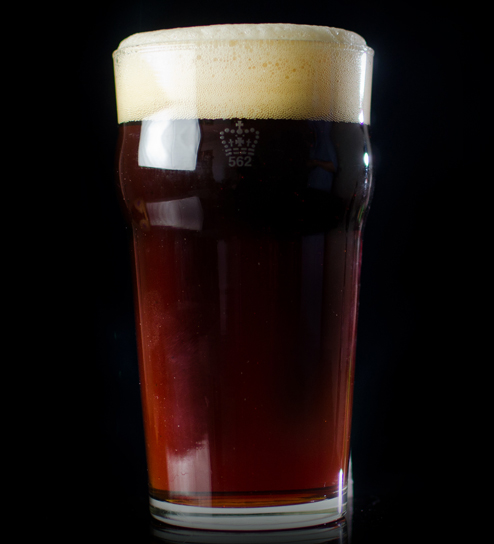
ale,

english-style-dark-mildale

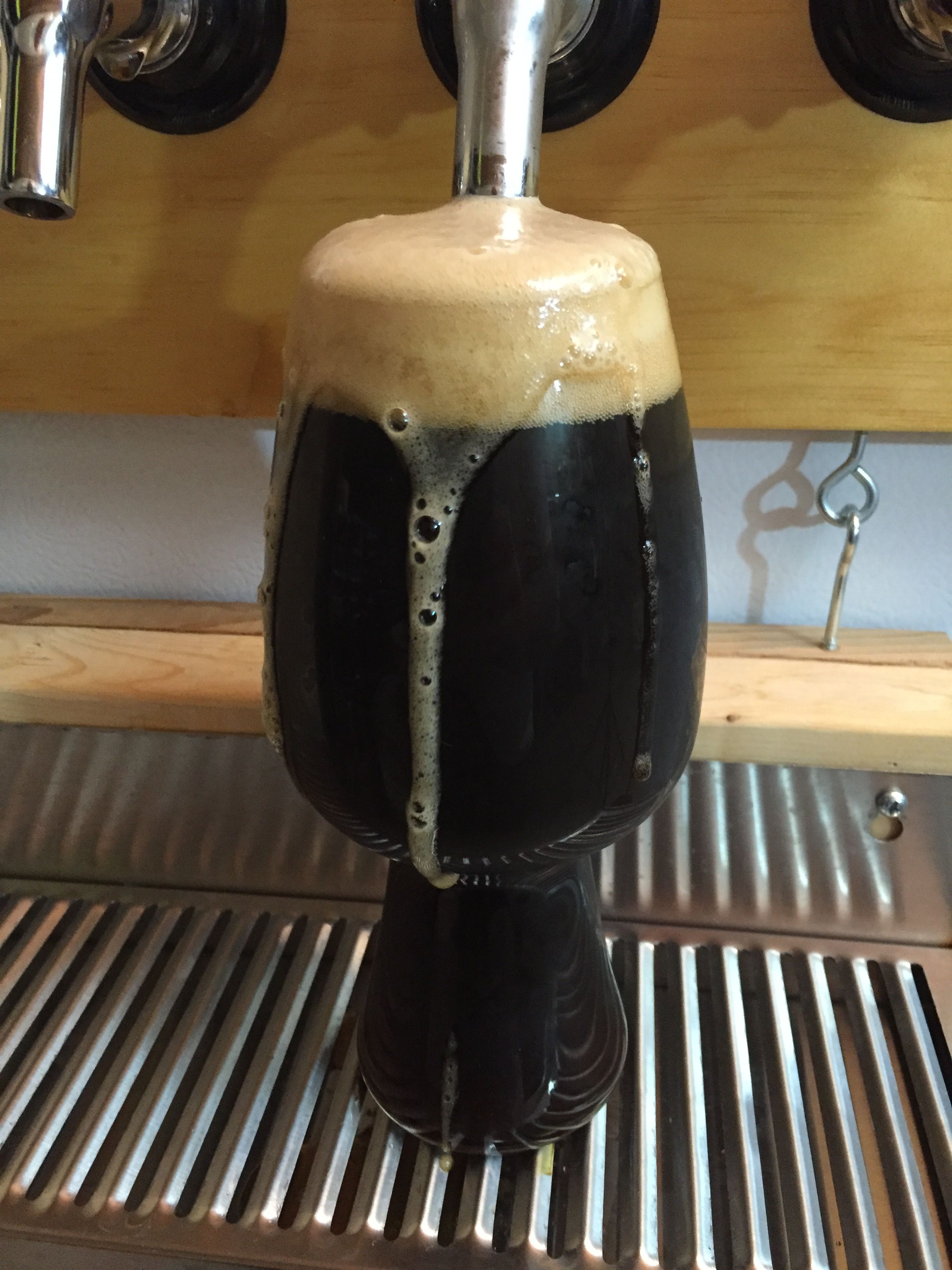
porter,

porter

and red wine

red wine

Food:

seed cake,

Caraway_seed_cake

scones,

recipe_irish_scone_1

raspberry jam,

raspberryjam

apple-tart,

appletart

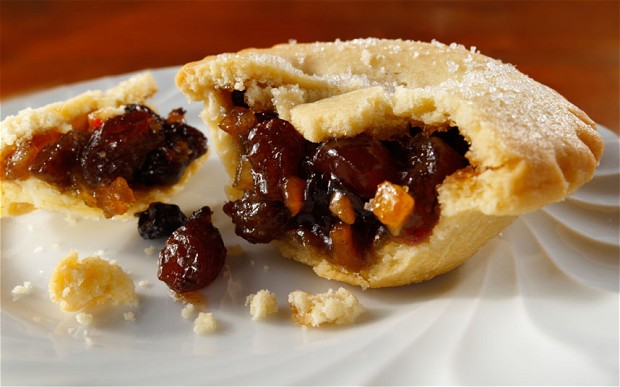
mince-pies,

mince-pie_2739967b

cheese, (Wallace and Gromit’s favorite, Wensleydale)

544494-eat-wensleydale-cheese-on-its-own

pork-pie,

Pork-Pie

salad,

early-spring-salad-beets-celeriac-fennel-21

eggs,

hardboiledegg

chicken,

coldroastchicken

[tomatoes—more about these in a moment],

red-tomato-meteorite

pickles,

iStock_000013582794Large_cucumber_pickles

[biscuit—i.e., cookie, in the US—which Bilbo nibbles, while looking on]

hobnob

We know there are farms in the Shire—think of Farmer Cotton (who, in contrast to the completely anachronistic corn in P. Jackson’s film, actually grows turnips—see The Fellowship of the Ring, Book 1, Chapter 4, “A Short Cut to Mushrooms”), but Bilbo certainly doesn’t farm, although he appears to have a vegetable garden (something “old Holman”, then Hamfast (“Gaffer”) Gamgee, looks after—see The Fellowship of the Ring, Book 1, Chapter 1, “A Long-Expected Party”). He might grow raspberry bushes, the makings of a salad (although, since it’s April, there won’t be such an extensive set of possibilities for the ingredients as later in the spring and early summer), and cucumber for pickles there, but there are a number of items which would require both wide fields and animal husbandry.

For example, the cake of seed cake, as well as scones, the tart, the pie of mince-pie and the pie of pork-pie (not to mention what mostly makes a biscuit/cookie) would all require flour—which would mean having wheat fields.

Wheat-field-at-the-sunset

There is a mill for grinding corn (UK for the US “wheat”)—Tolkien depicts it, as well as mentioning it. (If you look closely at the land in front of The Hill, you can also see what are clearly both plowed fields and, a little closer to the mill, haystacks.)

millfieldsbehind

The apple of apple-tart would, of course, require apples—which require apple trees, something Bilbo doesn’t seem to have. He also has no chickens for meat or eggs, goats/sheep/cows for cheese, or pigs for pork-pie. Add to this no hop garden

hop

or barley fields

barleyfield

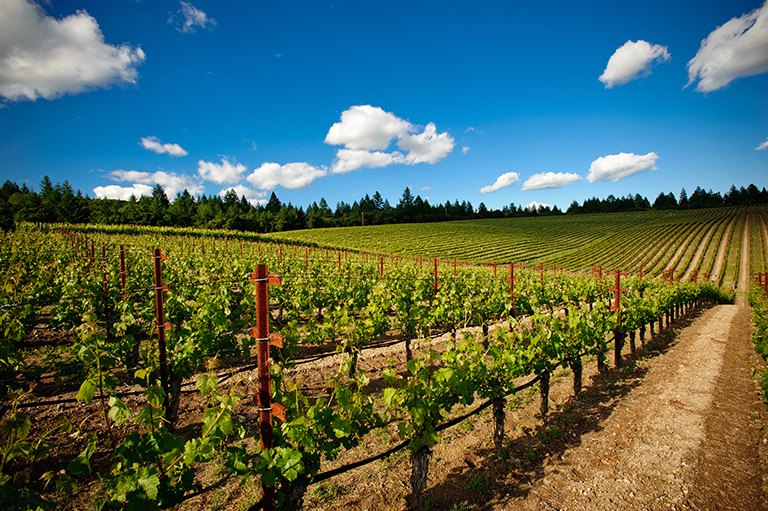
to provide the materials for ale or porter, not to mention a vineyard for that red wine which Gandalf has asked for.

Vineyard_BBS_1515_768px

That being the case, we are left to wonder where such things come from. Initially, they come from the storerooms (“larders”), of which Bilbo appears to have several. Certain things could be stored for lengths of time there: dry tea and coffee beans, ale, porter, and wine, in bottles or barrels (both exist in Middle-earth). Flour could be kept in containers and things like raspberry jam and pickles could be preserved in jars. Meats could be dried or salted, but Gandalf says, “Bring out the cold chicken and pickles,” meaning that the chicken has been freshly killed and cooked.

Beyond storage in Bag End, we must assume that anything more complex than raspberries or pickles (or taters, we’re reminded by Sam) has been bought and brought from somewhere else—the same places, we imagine, which supply The Ivy Bush and The Green Dragon, for example. Someone, for instance, makes, barrels, sells, and ships the beer Merry and Pippin consume in the ruins of Isengard and someone grows, dries, sells, and ships the Longbottom Leaf which they smoke.

merryandpippinisengard

All such commerce is complicated, requiring not only growers, but makers of containers, and shippers. Who are these hobbits? And add to this, are there markets? Shops of any sort? And where are they? Bilbo loses buttons escaping from the goblins under the Misty Mountains. Who made them? Where? How did Bilbo get them? (And, for an even bigger—and maybe really more obvious–question: who makes the parchment and ink for Bilbo to keep diaries? Who binds the eventual books?)

As we come to the end of this posting, we want to turn back to something we mentioned much earlier. In the 1937 The Hobbit, Gandalf asked for cold chicken—and tomatoes. In the 1966 Ballentine edition, these tomatoes have been replaced with pickles. We presume that Tolkien, keeping to his idea of The Shire—and Middle-earth in general—being medieval-ish, the New World tomato was out of place. It is interesting, however, to see that Bilbo serves the dwarves both tea and coffee. If by “tea”, Chinese tea is meant, we are left with another anachronism, as we are with coffee, tea have been introduced to Britain in the mid-17th century and coffee at more or less the same time.

And then there’s the problem of taters…

As always, thanks for reading!

MTCIDC

CD

Rare Good Ballast

15 Wednesday Jun 2016

Posted by Ollamh in J.R.R. Tolkien, Narrative Methods

≈ Leave a comment

Tags

Ballast, Chunu, Coney, Cuzco, Fish and Chips, Gollum, Green Eggs and Ham, Inca Empire, King James I, Machu Picchu, Potatoes, Sir Walter Raleigh, Smeagol, Spanish Explorers, Taters, Tea, The Hobbit, The Lord of the Rings, Tobacco, Tobias Hume, Tolkien

Welcome, dear readers, to our latest posting. This one is based upon a word, but that word leads us to an interesting question: when you make a new world, do you intend to include anything from your own? Or do things just sort of slip in?

The word is “taters”, as in “I’d give a lot for a half dozen taters.” (The Lord of the Rings, Book 4, Chapter 4, “Of Herbs and Stewed Rabbit”)

(And a footnote–if you’re an American, you say that “erbs”, but, if you’re from the UK, you say it “Herbs”.)

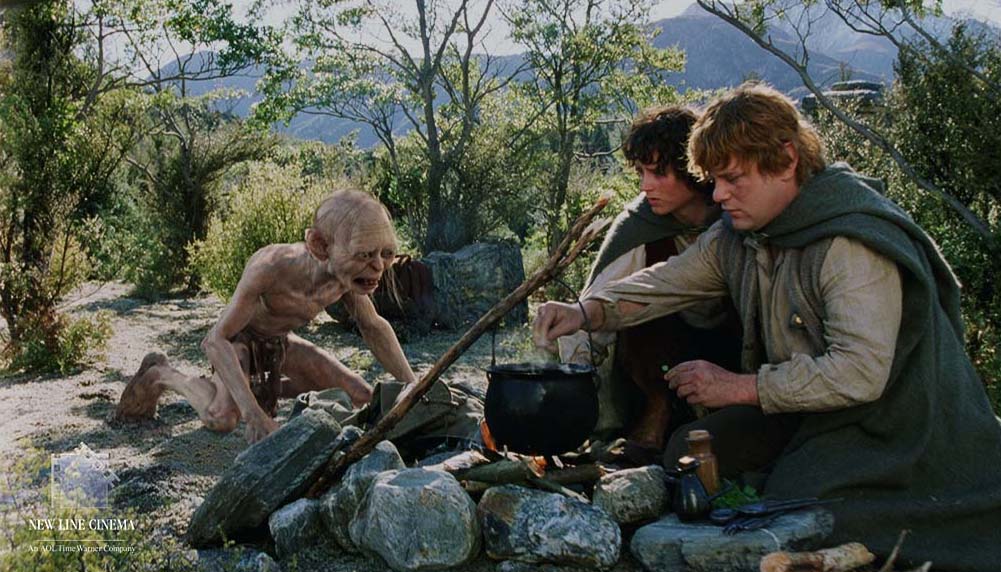
It’s Sam, of course, trying to create a little domesticity while he and Frodo live rough on the trek south from the Morannon.

Gollum+Frode+Sam.jpg

At Sam’s request, Gollum has gone hunting and has returned with a pair of wild (European) rabbits, or coneys. (“Coney” is a worn-down form of the Latin word cuniculus, “rabbit”, through Old French, the source of so many Latin-based English words.)

rabbit3.jpg

Gollum, who has long forgotten about cooking (although one presumes that, in his distant life among his fellow proto-Hobbits, he wore clothes, lived in a house—or a hobbit hole–and ate bread), is convinced that Sam is going to ruin his catch.

“ ‘Stew the rabbits!’ squealed Gollum in dismay. ‘Spoil beautiful meat Smeagol saved for you, poor hungry Smeagol! What for? What for, silly hobbit? They are young, they are tender, they are nice. Eat them, eat them!’ “

(And here we can hear Sam-I-am from Dr. Seuss’ Green Eggs and Ham, “Would you? Could you/In a car?/Eat them! Eat them!/Here they are.”)

GEH

Along with the coneys, Sam would like something more, “taters”, much to Gollum’s puzzlement:

“Smeagol won’t grub for roots and carrotses and—taters. What’s taters, precious, eh, what’s taters?”

And Sam spells it out:

“Po-ta-toes…The Gaffer’s delight, and rare good ballast for an empty belly. But you won’t find any, so you needn’t look.”

Most readers would know immediately what Sam meant when he said, “Po-ta-toes”, but how about “ballast?”

In a way, it may be odd that Sam would know this word, as it comes from the world of ocean-going ships and Sam has never been closer to bigger water than the Brandywine—and that only near the beginning of The Lord of the Rings.

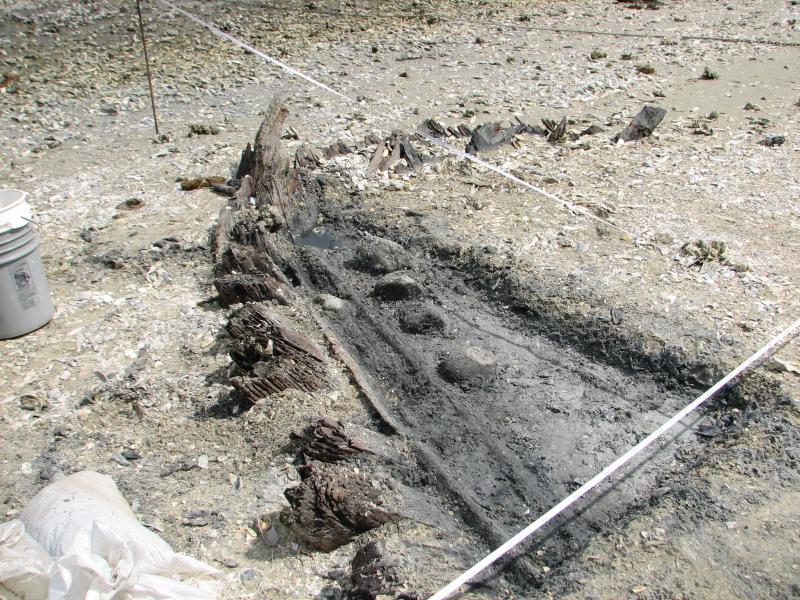
Ballast is the weight put into the deepest hold of a ship to keep it balanced in the water—especially when it’s empty of cargo. It’s commonly stone and it’s very useful now for underwater archaeologists, since the stone, if it remains in place after a ship sinks, can show the outline of a hull.

ships-stone-ballasts

ballastinsitu

So “rare good ballast for an empty belly” gives us the image of a Gaffer kept upright and balanced, moving with potatoes inside him.

Sam has also said, “But you won’t find any, so you needn’t look”: why not?

In our world, before the 16th century, potatoes were only available in South America, in particular in the Inca empire.

This was an elaborate patchwork of smaller peoples controlled by a military group with a capital at Cuzco.

Inca_MainMap3_sg

A Neolithic civilization, they were master architects, as may be seen in the remains of the Temple of the Sun, in the capital—

qoricancha

and in what is believed to be a summer palace, at Machu Picchu.

fondo-machu-picchu

With a king and an army

incanwarriors

they controlled much of the west coast of South America from 1438 to 1533, when Spanish invaders destroyed them and their world.

conquestofincas

A major food source was potatoes and there were many varieties available—and there still are, more than 1000—

Potatoes_Peruvian_varieties

In fact, the Inca even learned how to freeze-dry them to preserve them, a method called chunu.

Chunu

No one knows for sure when potatoes first came to Europe. It is imagined that Spaniards coming back from the New World would have brought them. In the English tradition, it was Sir Walter Raleigh who introduced them.

SirWalterRaleigh

They were then cultivated and rapidly became a major European food source, but they are not a native species and don’t grow wild—leading us to imagine that that’s what Sam is saying: Sam and Frodo and Gollum are in the wilderness and potatoes only grow where they’re planted—suggesting that, in Middle-earth, they are also an import—but from where?

(This reminds us of that moment in the Jackson film, where Sam and Frodo bump into Merry and Pippin in a corn—that is, maize–field. JRRT never mentions maize which, in European history, is also a New World import. This only makes us further wonder what the script writers thought they were doing in removing Pippin and Merry from their proper place in the story…)

There is more of this sort of thing, of course—Hobbits have teatime—we can suppose that it’s something herbal, but real teatime only appeared in England after the regular importation of tea to England from China in the mid-17th century. (For those familiar with it, there is a funny Horrible Histories episode which shows the introduction of tea in Stuart times when, according to the story, people had been refreshing themselves previously with cups of hot water.)

6a00d8341c84c753ef0147e02eab6c970b-300wi

And then there’s tobacco. It’s called that in The Hobbit, but it’s “pipe weed” in The Lord of the Rings. Tobacco is one more import in our world—brought to Europe in the 16th century. Here’s the first known image of someone actually smoking (from 1595).

Chute_tobacco.1595

It quickly became so popular that controversy over it, ranging from Tobias Hume’s ( 1579?-1645 ) love song to it, “Tobacco, Tobacco, sing sweetly for Tobacco” (from The First Part of Ayres or the Musicall Humours, No. 3, 1605—you can see the text and score if you Google “Tobias Hume” at IMSLP) to James the First’s condemnation of it, A Counterblaste to Tobacco (1604), which you can actually read if you Google “A Counterblaste to Tobacco”.

When JRRT was revising The Hobbit for its republication in 1966, he made a number of changes to the text, but some things remained, such as teatime, and even the image of a railroad train—“At may never return he began to feel a shriek coming up inside, and very soon it burst out like the whistle of an engine coming out of a tunnel.”

Douglas Anderson argues, in Note 35 of Chapter 1 of The Annotated Hobbit, that, in the case of the railroad, “This usage need not be viewed as an anachronism, for Tolkien as narrator was telling this story to his children in the early 1930s, and they lived in a world where railway trains were an important feature of life.” (The Annotated Hobbit, 47-48.) This is never really stated, in fact, in the Hobbit text, but the tone of the narration—which JRRT came to dislike—would suggest something of the sort. As for The Lord of the Rings, we have no explanation. Some items are never explained, they’re just there.

And, of course, there’s this:

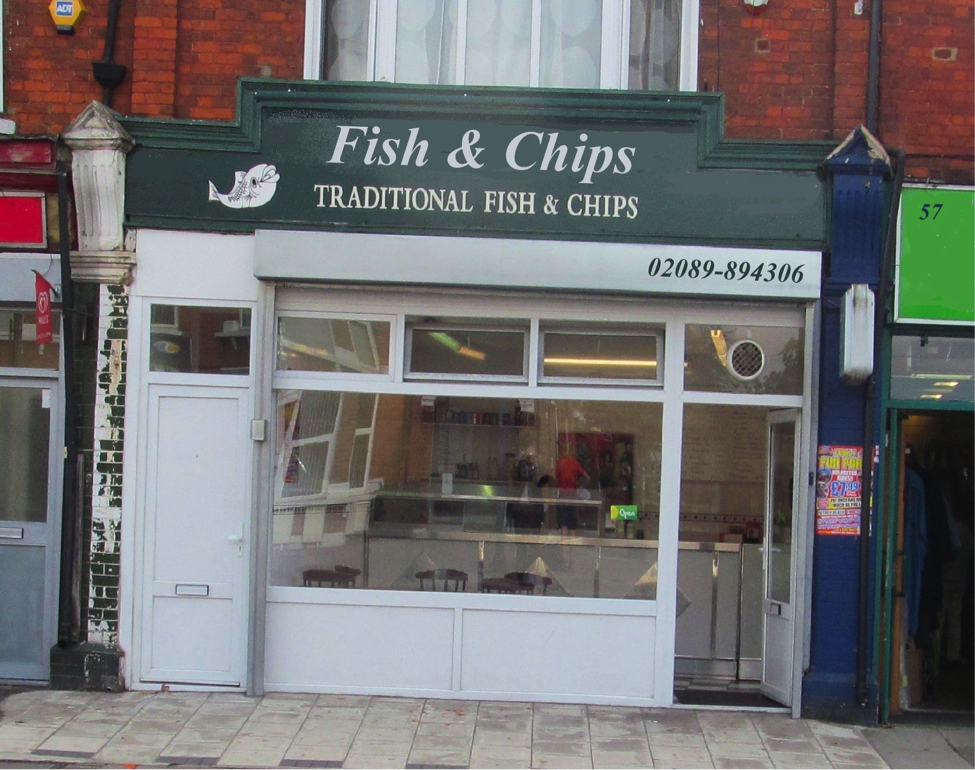
“I’ll cook you some taters one of these days. I will: fried fish and chips served by S. Gamgee.”

fish-and-chips

FishAndChips

Perhaps this is in Hobbiton? Bywater? Michel Delving?

Thanks, as always, for reading.

MTCIDC

CD

The Doubtful Sea Series Facebook Page

The Doubtful Sea Series Facebook Page

  • Ollamh

Categories

  • Artists and Illustrators
  • Economics in Middle-earth
  • Fairy Tales and Myths
  • Films and Music
  • Games
  • Heroes
  • Imaginary History
  • J.R.R. Tolkien
  • Language
  • Literary History
  • Maps
  • Medieval Russia
  • Military History
  • Military History of Middle-earth
  • Narnia
  • Narrative Methods
  • Poetry
  • Research
  • Star Wars
  • Terra Australis
  • The Rohirrim
  • Theatre and Performance
  • Tolkien
  • Uncategorized
  • Villains
  • Writing as Collaborators
Follow doubtfulsea on WordPress.com

Across the Doubtful Sea

Recent Postings

  • A Moon disfigured December 17, 2025
  • On the Roads Again—Once More December 10, 2025
  • (Not) Crossing Bridges December 3, 2025
  • On the Road(s) Again—Again November 26, 2025
  • On the Road(s) Again November 19, 2025
  • To Bree (Part 2) November 12, 2025
  • To Bree (Part 1) November 5, 2025
  • A Plague o’ Both—No, o’ All Your Houses! October 29, 2025
  • It’s in Writing (2:  I’st a Prologue, or a Poesie for a Ring?) October 22, 2025

Blog Statistics

  • 103,226 Views

Posting Archive

  • December 2025 (3)
  • November 2025 (4)
  • October 2025 (5)
  • September 2025 (4)
  • August 2025 (4)
  • July 2025 (5)
  • June 2025 (4)
  • May 2025 (4)
  • April 2025 (5)
  • March 2025 (4)
  • February 2025 (4)
  • January 2025 (5)
  • December 2024 (4)
  • November 2024 (4)
  • October 2024 (5)
  • September 2024 (4)
  • August 2024 (4)
  • July 2024 (5)
  • June 2024 (4)
  • May 2024 (5)
  • April 2024 (4)
  • March 2024 (4)
  • February 2024 (4)
  • January 2024 (5)
  • December 2023 (4)
  • November 2023 (5)
  • October 2023 (4)
  • September 2023 (4)
  • August 2023 (5)
  • July 2023 (4)
  • June 2023 (4)
  • May 2023 (5)
  • April 2023 (4)
  • March 2023 (5)
  • February 2023 (4)
  • January 2023 (4)
  • December 2022 (4)
  • November 2022 (5)
  • October 2022 (4)
  • September 2022 (4)
  • August 2022 (5)
  • July 2022 (4)
  • June 2022 (5)
  • May 2022 (4)
  • April 2022 (4)
  • March 2022 (5)
  • February 2022 (4)
  • January 2022 (4)
  • December 2021 (5)
  • November 2021 (4)
  • October 2021 (4)
  • September 2021 (5)
  • August 2021 (4)
  • July 2021 (4)
  • June 2021 (5)
  • May 2021 (4)
  • April 2021 (4)
  • March 2021 (5)
  • February 2021 (4)
  • January 2021 (4)
  • December 2020 (5)
  • November 2020 (4)
  • October 2020 (4)
  • September 2020 (5)
  • August 2020 (4)
  • July 2020 (5)
  • June 2020 (4)
  • May 2020 (4)
  • April 2020 (5)
  • March 2020 (4)
  • February 2020 (4)
  • January 2020 (6)
  • December 2019 (4)
  • November 2019 (4)
  • October 2019 (5)
  • September 2019 (4)
  • August 2019 (4)
  • July 2019 (5)
  • June 2019 (4)
  • May 2019 (5)
  • April 2019 (4)
  • March 2019 (4)
  • February 2019 (4)
  • January 2019 (5)
  • December 2018 (4)
  • November 2018 (4)
  • October 2018 (5)
  • September 2018 (4)
  • August 2018 (5)
  • July 2018 (4)
  • June 2018 (4)
  • May 2018 (5)
  • April 2018 (4)
  • March 2018 (4)
  • February 2018 (4)
  • January 2018 (5)
  • December 2017 (4)
  • November 2017 (4)
  • October 2017 (4)
  • September 2017 (4)
  • August 2017 (5)
  • July 2017 (4)
  • June 2017 (4)
  • May 2017 (5)
  • April 2017 (4)
  • March 2017 (5)
  • February 2017 (4)
  • January 2017 (4)
  • December 2016 (4)
  • November 2016 (5)
  • October 2016 (6)
  • September 2016 (5)
  • August 2016 (5)
  • July 2016 (5)
  • June 2016 (5)
  • May 2016 (4)
  • April 2016 (4)
  • March 2016 (5)
  • February 2016 (4)
  • January 2016 (4)
  • December 2015 (5)
  • November 2015 (5)
  • October 2015 (4)
  • September 2015 (5)
  • August 2015 (4)
  • July 2015 (5)
  • June 2015 (5)
  • May 2015 (4)
  • April 2015 (3)
  • March 2015 (4)
  • February 2015 (4)
  • January 2015 (4)
  • December 2014 (5)
  • November 2014 (4)
  • October 2014 (6)
  • September 2014 (1)

Blog at WordPress.com.

  • Subscribe Subscribed
    • doubtfulsea
    • Join 78 other subscribers
    • Already have a WordPress.com account? Log in now.
    • doubtfulsea
    • Subscribe Subscribed
    • Sign up
    • Log in
    • Report this content
    • View site in Reader
    • Manage subscriptions
    • Collapse this bar
 

Loading Comments...