• About

doubtfulsea

~ adventure fantasy

Tag Archives: Sheriff of Nottingham

Henchmen and Minions

30 Wednesday Oct 2019

Posted by Ollamh in Films and Music, J.R.R. Tolkien, Narrative Methods, Villains

≈ Leave a comment

Tags

A History of Scotland, Albrecht Duerer, Alexandre Dumas, Cardinal Richelieu, Droids, druid, Emperor Palpatine, Flying Monkeys, gangster, Henchmen, Mignon, Neil Oliver, Odysseus, Orcs, Robin Hood, Saint Columba, Saruman, Sauron, Sheriff of Nottingham, Telemachus, The Lord of the Rings, The Three Musketeers, The Wizard of Oz, Tolkien, Winkie Guards


Welcome, dear readers, as ever.

A henchman was originally a hengestman, from hengest “horse/stallion” + man “man”—in other words, a groom, a servant who takes care of horses.

image1groom.jpg

Although the word began with the meaning of “groom”, it has certainly changed over time and now it suggests something like “ thuggish follower”—like these gangster henchmen.

image2henchmen.jpg

The word minion comes from the Old French word mignon, “a (little) darling”, but its meaning has also changed–even more than henchmen, now indicating a kind of low-level person who simply follows orders, which the peasants in this picture by Albrecht Duerer make us think of.

image3thugs.jpg

These words originally came to mind while we were watching the first episode of Neil Oliver’s excellent BBC series A History of Scotland. (Smart writing and wonderful photography.)

image4oliver.jpg

In the episode, a scene was reenacted, in which Saint Columba (521-597AD)

image5columba.jpg

faces off against a Pictish druid.

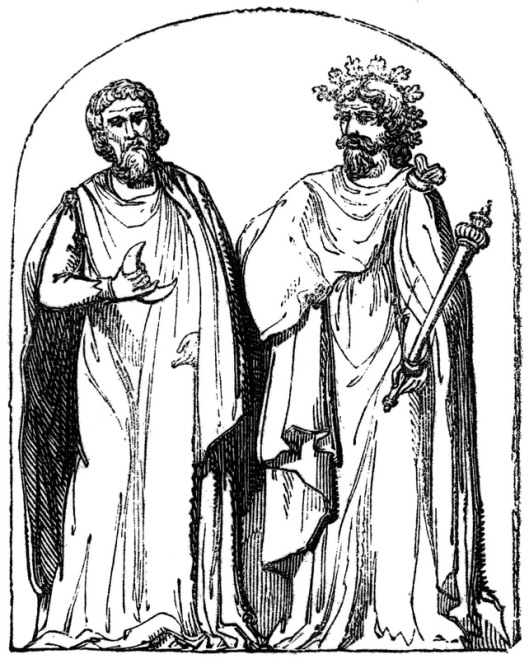
image6druids.PNG

(This is the closest we can come to an image of a druid. As far as we know, there are, in fact, no surviving images of the learned class of the Celtic world, just often very imaginative illustrations with little or no factual basis.)

In Adomnan’s (c.624-704AD) Life of Columba, Book II, Chapter XXXIV, Columba struggles to free a slave being held by the druid, Broichan.

image7struggle.JPG

The saint wins, of course, but what struck us about this story—and in this DVD depiction—was that it was a one-on-one contest: neither man called upon backup—something which one might especially expect from the antagonist of the story, as in so many. After all, we thought, just think of villains in all kinds of stories—

The Sheriff of Nottingham has his henchmen ready to try to capture Robin Hood at the famous archery contest.

image8not.jpg

image9arch.jpg

Or, if you prefer—

image10disney.png

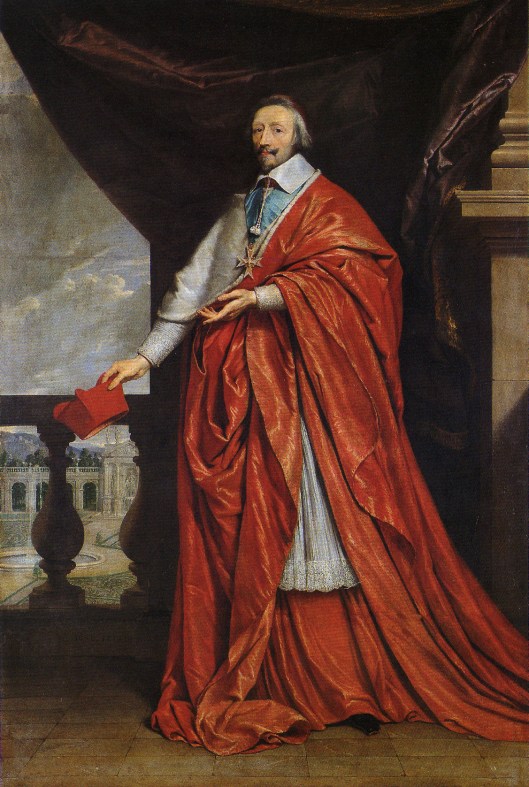
The evil Cardinal Richelieu

image11acard.jpg

has his guards

image11guards.jpg

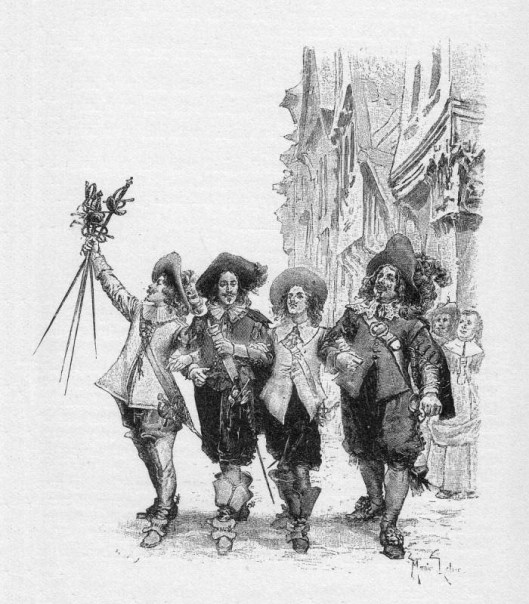
to fight the musketeers

image12three.jpg

image13musk.jpg

in Alexandre Dumas’ The Three Musketeers.

image14dumas.jpg

The Wicked Witch of the West

image15witch.jpg

has two sets of henchmen: the flying monkeys

image16witch.jpg

which have been the terror of many childhoods, in our experience, and the Winkie Guards,

image17witch.jpg

whose drum beat and deep chant always made us a little nervous when we were little (not to mention their skin color and odd noses).

image18witch.jpg

Here’s a LINK, in case you’ve forgotten what they were like.

In a more modern story, the Separatists have so many droids,
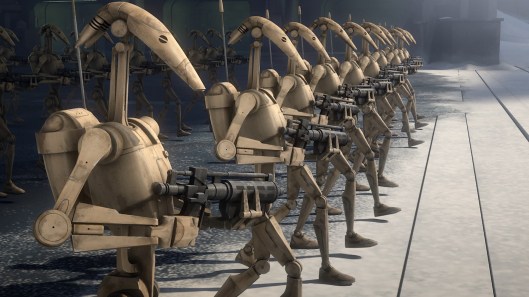
image19droids.jpg

as Emperor Palpatine has so many stormtroopers.
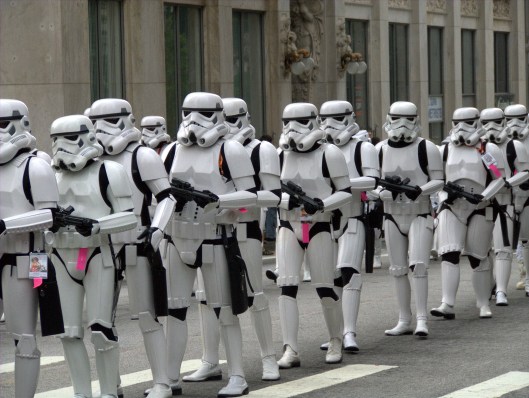
image20troopers.jpg

And, of course, Saruman

image21saruman.jpg

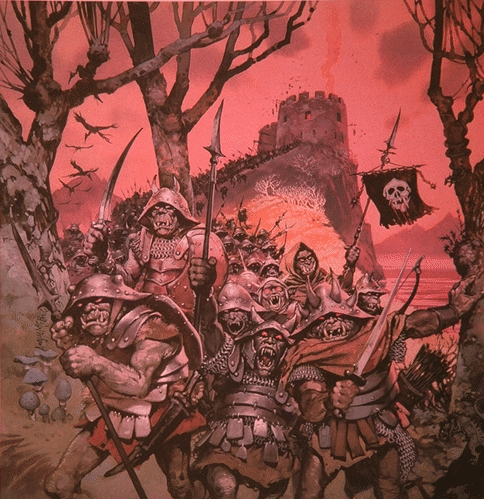
has so many orcs

image22orcs.gif

as, along with all of his human minions, does Sauron.

image23orcs.jpg

We can imagine several reasons for such overwhelming force in these stories. For the protagonist/s, the more of the enemy there are, the more impressive their defeat, as when Odysseus faces so many suitors (over a hundred) with only his son, Telemachus, and a couple of servants to help him.
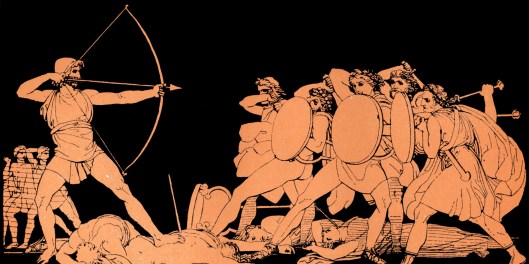
image24suitors.jpg

(And Athena, of course!)

image25suitors.jpg

For the antagonist/s, there is the sense that they are so powerful that they have only to command and vast numbers of henchmen will do their bidding.
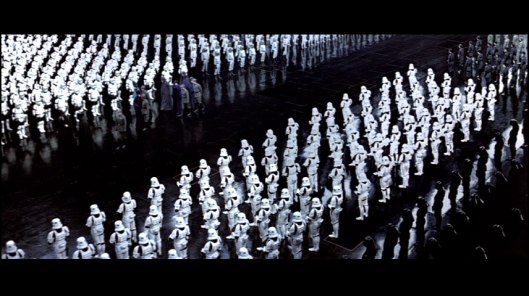
image26hench.jpg

At the same time, we wonder if, underneath all of that force, there is a basic insecurity, a feeling that “my power by itself is really not enough—I can’t do this alone”? After all, it’s not the Sheriff of Nottingham who faces Robin Hood in the 1938 film,
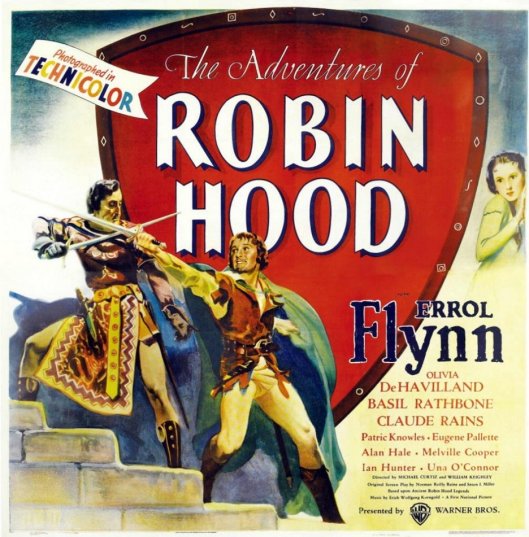
image27poster.jpg

but the secondary character, Guy of Gisborne (played by Basil Rathbone, who was the first great film Sherlock Holmes).
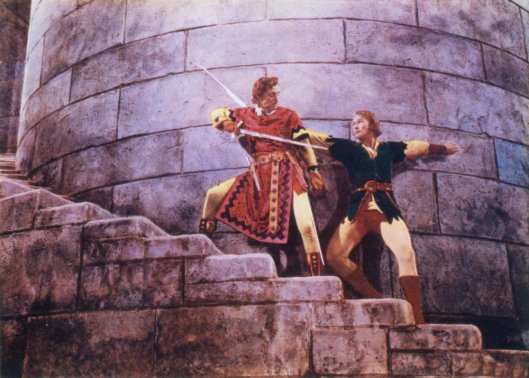
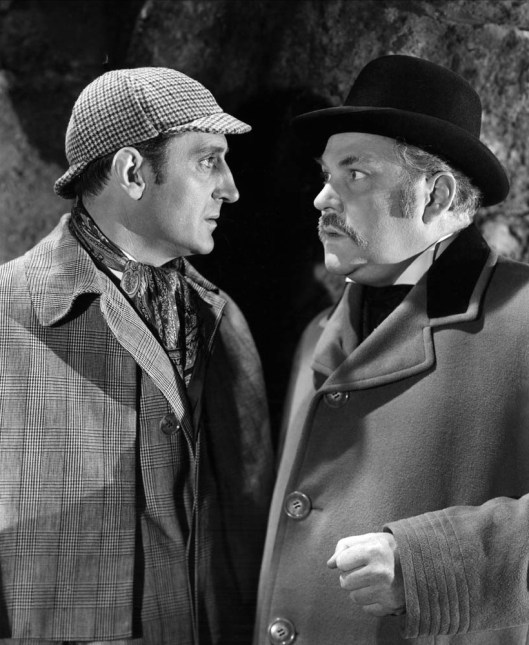
image28rathbone.jpg

image29holmes.jpg

The Wicked Witch of the West relies upon her monkeys and her guards and Saruman and Sauron upon their armies and none ever faces an opponent alone: for that matter, we never even see Sauron except as a shadow at his fall.

And perhaps that underlying insecurity has some roots in reality: the only antagonist who actually confronts the protagonist is a little too sure of himself and of his major henchman and we all know what happens next…

image30darth.jpg


As always, thanks for reading and

MTCIDC, dear readers!

CD

Bordering (.2: Blackmail, Battle, and Song)

05 Wednesday Apr 2017

Posted by Ollamh in Literary History, Maps, Military History

≈ Leave a comment

Tags

A Gest of Robyn Hode, Angus McBride, Ballads, Border Reivers, Carlisle Castle, Child Ballad, Connacht, Cuchulain, Cuchulain of Muirthemne, England, Ewan McColl, Faroe Islands, Francis James Child, Irish Iron Age, Johnnie of Breadisley, Kinmont Willie Armstrong, Loeg, Marches, Medb, Peggy Seeger, ring dance, Robin Hood, Scotland, Scott of Buccleuch, Sheriff of Nottingham, Sherwood Forest, skiparin, Tain Bo Cualnge, The Cattle Raid of Cooley, The English and Scottish Popular Ballads, The Tale of MacDatho's Pig, Ulster, West March of the Shire

Welcome, dear readers, as ever.

This is a continuation of our last, on borders. In that post, we began with the West March of the Shire, then talked about the idea of marches—militarized border areas—and wardens—overseers of such. Our focus was upon the border between Scotland and England and, in particular, in the very troubled 16th century.

image1bordermap.JPG

The danger, in this world, was from reivers,

image2borderreivers.jpg

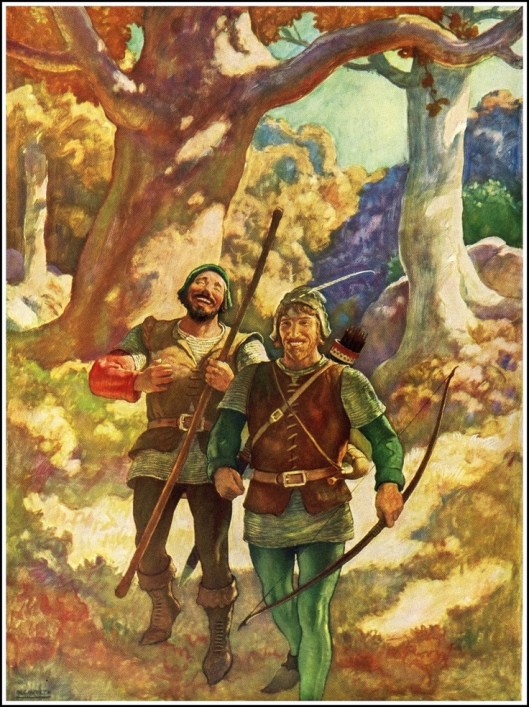
a kind of border bandit, but a more complex figure than, for example, Robin Hood.

image3robinhoodwyeth.jpg

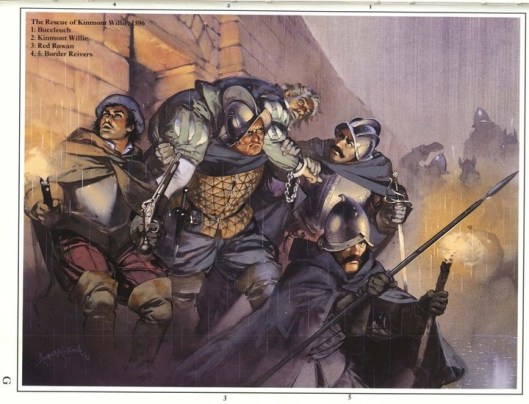
In the Marches of Scotland and England, unlike Robin vs the Sheriff of Nottingham in Sherwood, who the heroes and villains were wasn’t always clear. England and Scotland were often at war throughout the later Middle Ages and into the Renaissance and, when not openly at war, continued to skirmish with each other. War and skirmishing brought financial problems to both sides—raids could ruin a farm or even a village on either side of the border– and there was also a certain level of vendetta—families always being bound to avenge a murdered kinsman—or rescue a living one, as we see here Scott of Buccleuch (said something like “buk-LOO”) rescuing Kinmont Willie Armstrong from imprisonment by the English in Carlisle Castle in 1596. Willie had been taken prisoner illegally during a “truce day” and Scott was the official representing Scotland on that day—so, as we said, the differences between heroes and villains aren’t always so obvious in this twilight world.

image4kinmontw.jpg

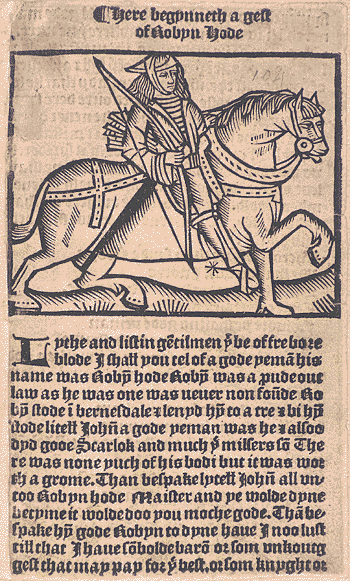
One thing reivers have in common with R. Hood, however, is that both are the subject of legends and songs. One of the first collections of those songs is A Gest of Robyn Hode, printed between 1492 and 1534.

image5gest.jpg

A common form of song is the ballad. For those not familiar with the form, a ballad is a narrative poem commonly in couplets (2 rhymed lines—sometimes with a refrain—a line repeated throughout the poem—after each couplet) or in quatrains (4 lines, often rhyming on the 2nd and 4th line).

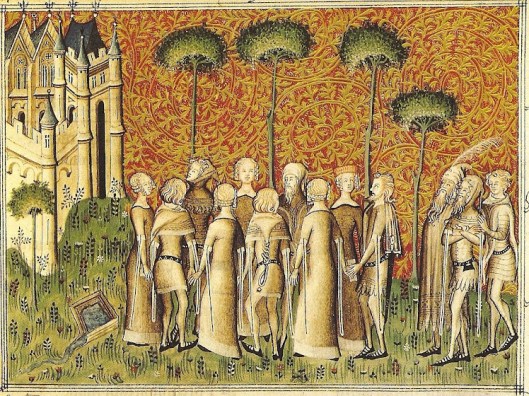
From the word, which appears to be related to the Romance language ballare/bailar/ballet, “to dance/a dance”, we might imagine that, originally, it was a song to which one danced and there are medieval illustrations of such—

image6carol.jpg

This appears to be a ring dance and, in fact, resembles the ring dance and song of the Faroe Islands, where there is a central figure, a skiparin, (“captain”—just like English “skipper”) who sings a verse and all of the dancers join in on the chorus of kvaedi, or ballads.

imaage7ringdance.jpg

The circle on such a dance/song can expand to the point where it looks more like a snake dance—as this link from a recent performance shows.

An easy example of the quatrain form of ballad might be the opening of “Johnnie of Breadisley” (Child 114):

Johnny rose on a May mornin’,

Called for water to wash his hands,

Saying loose to me my twa grey dogs

Wha’ lie bound in iron chains.

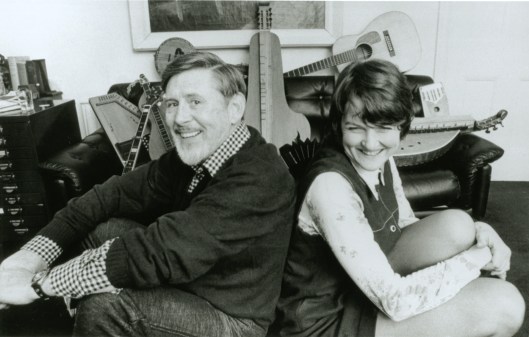
We did this from memory, it being one of the first ballads we memorized years ago. If it’s compared with the standard ballad text—that’s from Francis J. Child’s The English and Scottish Popular Ballads (1882-1898), we’re sure you’ll find that, without even knowing it, we’ve made little changes, turning it into a variant—which always happens when songs are learned by ear. (You can also see that rhyme can be very loose—sometimes only assonance, but it’s clearly less important than telling the story.) Our version came from one sung by the famous Scots folk singer/composer, Ewan McColl, shown here with Peggy Seeger, his equally-famous wife and fellow artist.

image8mccoll.jpg

You can hear his version on YouTube here.

Child

image9child

was a professor at Harvard who spent most of his adult scholarly life searching out traditional ballads and a version of his massive collection—305 ballads, with many variants—is available (based upon early editions) at the wonderful Sacred Texts. (If you are interested in adventure/fantasy/mythology and you don’t know this site, spend some time browsing it—you will be impressed.)

The border between Scotland and England wasn’t the only place in the UK which spawned heroic stories, however. During the Irish Iron Age, two of Ireland’s five provinces, Ulster and Connacht, were imagined to be constantly at war and raids across the border formed the basis or background of all kinds of tales, the most elaborate being the Tain Bo Cualnge (Tahn Boh KOO-al-nyeh)—“The Cattle Raid of Cooley”. In this story—a kind of prose epic, with occasional short verse inserts—Medb (Mi-YEDTH), the queen of Connacht, has decided that she must have a famous bull, owned by someone in Ulster. At the time, the warriors of Ulster are under a geis (gesh), a kind of magical prohibition, which keeps them from defending the province, which leaves only one—their best, in fact—the 17-year-old Cuchulain (Koo-HOO-lun), with his charioteer, Loeg (loig) to delay the Connachtmen. Here’s a rather over-the-top illustration by one of our favorite military artists, Angus McBride, of the pair rocketing towards the enemy.

image10cc.jpg

If you would like to read a translation of the Tain, here’s a link to a really useful website, which juxtaposes the Old Irish and English (and includes, as a bonus, another great story—and the first one we read in Old Irish—the Tale of MacDatho’s Pig). If you would like to read more Old Irish Stories about Ulster and Connacht, there is Lady Gregory’s Cuchulain of Muirthemne (1902). It’s available at Sacred Texts. (And a note here: Old Irish literature has a very plain-spoken way of talking about body functions, among other things, and early translators, like Lady Gregory, quietly removed or softened such things. On the whole, however, the basic stories are there—and they’re free!)

Among those stories, we find a very different idea about otherworlds—not the fairly-strict western classical one that there is a clearly-marked border between this world and the next, but something looser and therefore spookier and we want to talk about this in our next (and mention a favorite YA author and his treatment of the subject, as well).

Thanks, as always, for reading.

MTCIDC

CD

Villainous Thoughts 1

16 Thursday Apr 2015

Posted by Ollamh in Narrative Methods, Villains

≈ Leave a comment

Tags

Cruella de Vil, Ebenezer Balfour, Gollum, Jafar, Prince John, Robin Hood, Sauron, Sheriff of Nottingham, Villains

Dear Readers,

Welcome! 

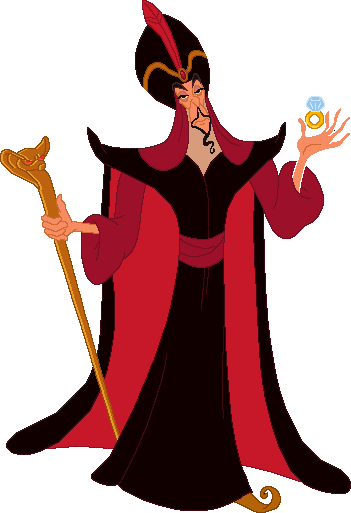
     Is an adventure possible without a villain? Not an “antagonist”—that’s for serious essays on subjects like “the nature of evil”—but someone tall and devious, like Jafar

 Jafar

or stumpy and seedy like Uncle Ebenezer in Kidnapped

 kidnapped-balfour-and-uncle

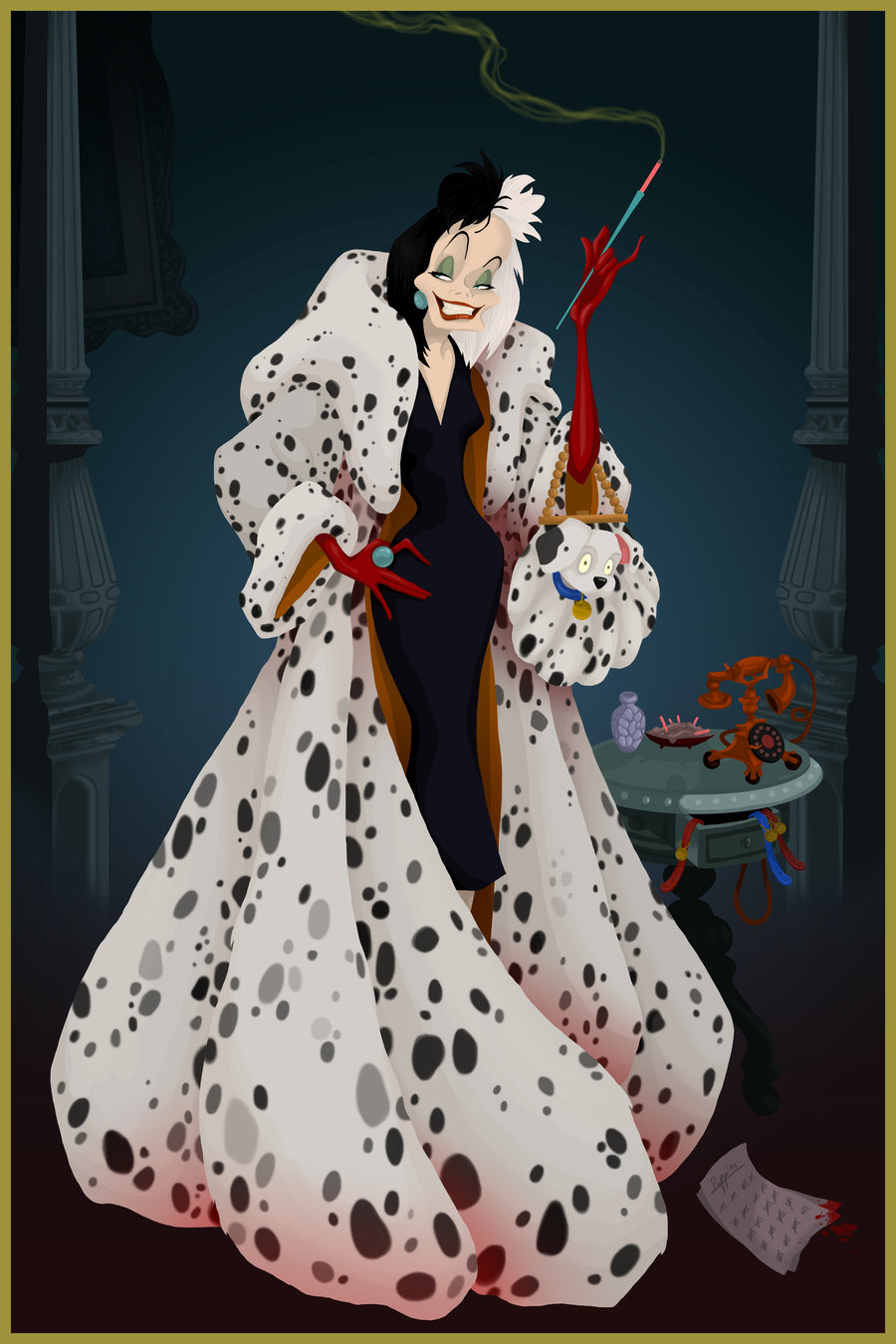
or skinny and smoky, like Cruella de Vil.

 cruella__s_coat_by_justin_mctwisp-d4tqil3 

Whatever the figure, on the one hand, he/she provides the kind of friction which can set a story in motion and keep it there. On the other, villains can add a certain stature to a story. When the villain is an oaf, the story is in danger of being, or becoming, oafish. The Hobbit with only the stone trolls,

 lee09

for example, would quickly become something out of Monty Python’s gumbies, at best.

 gumbies

An ancient and smooth-talking dragon makes the story bigger and gives it more weight.

 hildebrandtSmaug

(To see how a quiet and amiable dragon affects a story, see Kenneth Grahame’s “The Reluctant Dragon” from Dream Days (1898—available for free at Gutenberg)

 Reluctant%20Dragon%201

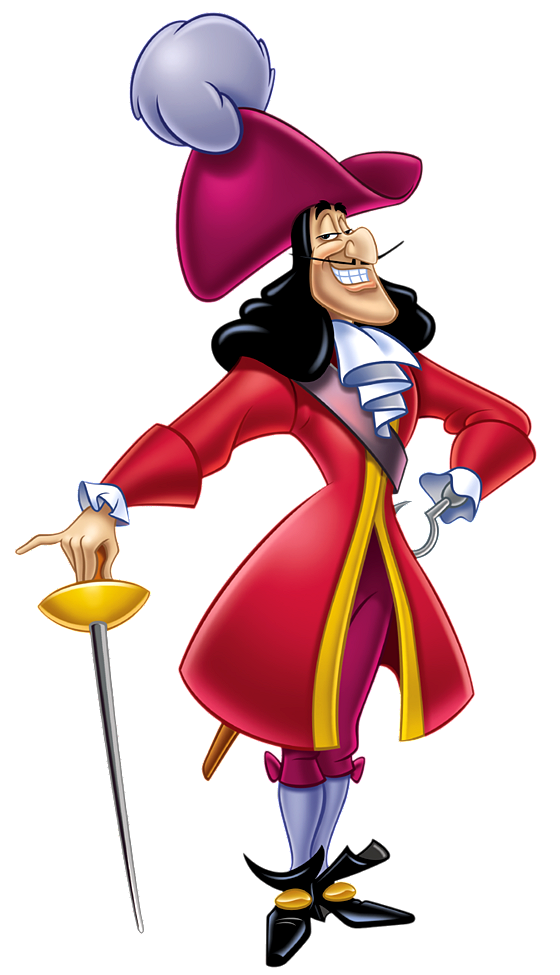
An elegant villain can make a story more elegant, as Captain Hook would insist.

 CaptHook-PP

As a way of testing this premise, imagine a Lord of the Rings in which the main villain is Gollum. It might be entertaining, but how much smaller the drama than that which we see as grand, in part because of the size and menace of the villain.

 illustration-d-Alan-Lee-The-Hobbit-

(A note: while we have shown you the various villains we’ve mentioned so far, when it comes to Sauron, we’re stuck. We know that he is embodied in some form and that he was once “comely” (that is, good to look at) and he was of a size to fight Gil-Galad & Co., but, otherwise, it’s hard to know quite what to show: certainly not the searchlight from the Jackson films. His and his writers’ difficulty is obvious: how do you make what, in the books, is more a kind of watching, brooding evil feeling than a form (with the exception of that eye) into something visible?   We don’t believe, however, that their choice was successful, but, in fact, diminished the menace. We intend to discuss further the idea of “the invisible villain”, however, in a further part of this series.)

     What adds to the power of a villain is a certain primal nature: this is someone driven to be who he/she is because of what she/he wants—and the converse is true: what he/she wants can define who he/she is. What is Cruella, for instance, apart from her lust for a fur coat made from Dalmatians?

     In the case of Robin Hood, even if we had never heard him say a word, we would know what Prince John wants—that word “Prince” might serve as giveaway. He wants to be King John.

Adventures-of-Robin-Hood-02 

It perfectly suits his ambitions that his brother, Richard, the real king of England, is being held for ransom in Austria. It’s even an opportunity to look pious—you’re rescuing your brother with that huge sum of money—when, in reality, you’re simply increasing your own revenues. And your chief collector (in the tradition), the Sheriff of Nottingham, is thus nothing but a function in the story of John: the actual hand in the people’s purse, but he’s doing it for the sake of his master.

(Here’s the Sheriff—both images from the classic Errol Flynn 1938 The Adventures of Robin Hood.)

09-melville-coopersheriff 

As long as Richard doesn’t return, there will be John (and his—quite literal—extension, the Sheriff). And thus he is what we might call an open-ended villain, someone who can be employed again and again to apply the friction. This fits perfectly with his role in the Robin Hood stories as, unlike a novel, with its elaborate built-in sense and need of resolution brought about by the author, the original Robin Hood stories were folktales and folksongs—brief, their initial goal a short narrative from set-up to resolution. Villains here could be reused, their resolution not necessarily requiring their complete destruction. This can also have the side benefit of allowing singers/tellers to give villains a sense of depth from the number of experiences (usually very bad ones!) with the hero they have. The urge towards development of this sort, both for villain and hero, might, in fact, be a reason for A Gest of Robyn Hode, a collection of Robin Hood stories roughly made into one long tale and printed somewhere between 1492 and 1534. (For more, see the useful Wiki site.)

A-Gest-of-Robin-Hood

     The opposite of a character like Prince John would be what we might call a terminal villain. He/she appears and the story’s action begins. With his/her disappearance, the story, effectively, ends, even if there’s a coda: once Darth Vader/Anakin tosses the Emperor over the railing, what’s left but funerals, ghostly reunions, and fireworks? And, even if you clone the Emperor for a rematch, the original has been eliminated and his complex and long-developing relationship with his star pupil, Vader, has been resolved.

     This is, of course, only the beginning of our discussion of villains. Next, we want to ask, faintly echoing Freud, “What do villains want?”

Thanks, as ever, for reading and, as always, we welcome questions and comments!

MTCIDC

CD

The Doubtful Sea Series Facebook Page

The Doubtful Sea Series Facebook Page

  • Ollamh

Categories

  • Artists and Illustrators
  • Economics in Middle-earth
  • Fairy Tales and Myths
  • Films and Music
  • Games
  • Heroes
  • Imaginary History
  • J.R.R. Tolkien
  • Language
  • Literary History
  • Maps
  • Medieval Russia
  • Military History
  • Military History of Middle-earth
  • Narnia
  • Narrative Methods
  • Poetry
  • Research
  • Star Wars
  • Terra Australis
  • The Rohirrim
  • Theatre and Performance
  • Tolkien
  • Uncategorized
  • Villains
  • Writing as Collaborators
Follow doubtfulsea on WordPress.com

Across the Doubtful Sea

Recent Postings

  • A Moon disfigured December 17, 2025
  • On the Roads Again—Once More December 10, 2025
  • (Not) Crossing Bridges December 3, 2025
  • On the Road(s) Again—Again November 26, 2025
  • On the Road(s) Again November 19, 2025
  • To Bree (Part 2) November 12, 2025
  • To Bree (Part 1) November 5, 2025
  • A Plague o’ Both—No, o’ All Your Houses! October 29, 2025
  • It’s in Writing (2:  I’st a Prologue, or a Poesie for a Ring?) October 22, 2025

Blog Statistics

  • 103,211 Views

Posting Archive

  • December 2025 (3)
  • November 2025 (4)
  • October 2025 (5)
  • September 2025 (4)
  • August 2025 (4)
  • July 2025 (5)
  • June 2025 (4)
  • May 2025 (4)
  • April 2025 (5)
  • March 2025 (4)
  • February 2025 (4)
  • January 2025 (5)
  • December 2024 (4)
  • November 2024 (4)
  • October 2024 (5)
  • September 2024 (4)
  • August 2024 (4)
  • July 2024 (5)
  • June 2024 (4)
  • May 2024 (5)
  • April 2024 (4)
  • March 2024 (4)
  • February 2024 (4)
  • January 2024 (5)
  • December 2023 (4)
  • November 2023 (5)
  • October 2023 (4)
  • September 2023 (4)
  • August 2023 (5)
  • July 2023 (4)
  • June 2023 (4)
  • May 2023 (5)
  • April 2023 (4)
  • March 2023 (5)
  • February 2023 (4)
  • January 2023 (4)
  • December 2022 (4)
  • November 2022 (5)
  • October 2022 (4)
  • September 2022 (4)
  • August 2022 (5)
  • July 2022 (4)
  • June 2022 (5)
  • May 2022 (4)
  • April 2022 (4)
  • March 2022 (5)
  • February 2022 (4)
  • January 2022 (4)
  • December 2021 (5)
  • November 2021 (4)
  • October 2021 (4)
  • September 2021 (5)
  • August 2021 (4)
  • July 2021 (4)
  • June 2021 (5)
  • May 2021 (4)
  • April 2021 (4)
  • March 2021 (5)
  • February 2021 (4)
  • January 2021 (4)
  • December 2020 (5)
  • November 2020 (4)
  • October 2020 (4)
  • September 2020 (5)
  • August 2020 (4)
  • July 2020 (5)
  • June 2020 (4)
  • May 2020 (4)
  • April 2020 (5)
  • March 2020 (4)
  • February 2020 (4)
  • January 2020 (6)
  • December 2019 (4)
  • November 2019 (4)
  • October 2019 (5)
  • September 2019 (4)
  • August 2019 (4)
  • July 2019 (5)
  • June 2019 (4)
  • May 2019 (5)
  • April 2019 (4)
  • March 2019 (4)
  • February 2019 (4)
  • January 2019 (5)
  • December 2018 (4)
  • November 2018 (4)
  • October 2018 (5)
  • September 2018 (4)
  • August 2018 (5)
  • July 2018 (4)
  • June 2018 (4)
  • May 2018 (5)
  • April 2018 (4)
  • March 2018 (4)
  • February 2018 (4)
  • January 2018 (5)
  • December 2017 (4)
  • November 2017 (4)
  • October 2017 (4)
  • September 2017 (4)
  • August 2017 (5)
  • July 2017 (4)
  • June 2017 (4)
  • May 2017 (5)
  • April 2017 (4)
  • March 2017 (5)
  • February 2017 (4)
  • January 2017 (4)
  • December 2016 (4)
  • November 2016 (5)
  • October 2016 (6)
  • September 2016 (5)
  • August 2016 (5)
  • July 2016 (5)
  • June 2016 (5)
  • May 2016 (4)
  • April 2016 (4)
  • March 2016 (5)
  • February 2016 (4)
  • January 2016 (4)
  • December 2015 (5)
  • November 2015 (5)
  • October 2015 (4)
  • September 2015 (5)
  • August 2015 (4)
  • July 2015 (5)
  • June 2015 (5)
  • May 2015 (4)
  • April 2015 (3)
  • March 2015 (4)
  • February 2015 (4)
  • January 2015 (4)
  • December 2014 (5)
  • November 2014 (4)
  • October 2014 (6)
  • September 2014 (1)

Blog at WordPress.com.

  • Subscribe Subscribed
    • doubtfulsea
    • Join 78 other subscribers
    • Already have a WordPress.com account? Log in now.
    • doubtfulsea
    • Subscribe Subscribed
    • Sign up
    • Log in
    • Report this content
    • View site in Reader
    • Manage subscriptions
    • Collapse this bar
 

Loading Comments...