• About

doubtfulsea

~ adventure fantasy

Tag Archives: Fireworks

Runing Things

13 Wednesday Aug 2025

Posted by Ollamh in J.R.R. Tolkien, Language, Tolkien

≈ Leave a comment

Tags

Anglo-Frisian Runes, Balin, Bryggen, divination, Fireworks, Futhark, Futhorc, Gandalf, Harys Dalvi, Kylver Stone, Moria, Robwords, runes, Tacitus, The Lord of the Rings, Thror's Map, Tolkien, Vimose comb

Welcome, as ever, dear readers.

It is a grim moment, in The Lord of the Rings when the company, making its way through the complexity of Moria in near-darkness, save for Gandalf’s staff, reaches this—

“Their feet disturbed a deep dust upon the floor, and stumbled among things lying in the doorway whose shapes they could not at first make out.  The chamber was lit by a wide shaft high in the further eastern wall; it slanted upwards and, far above, a small square patch of blue sky could be seen.  The light of the shaft fell directly on a table in the middle of the room:  a single oblong block, about two feet high, upon which was laid a great slab of white stone.
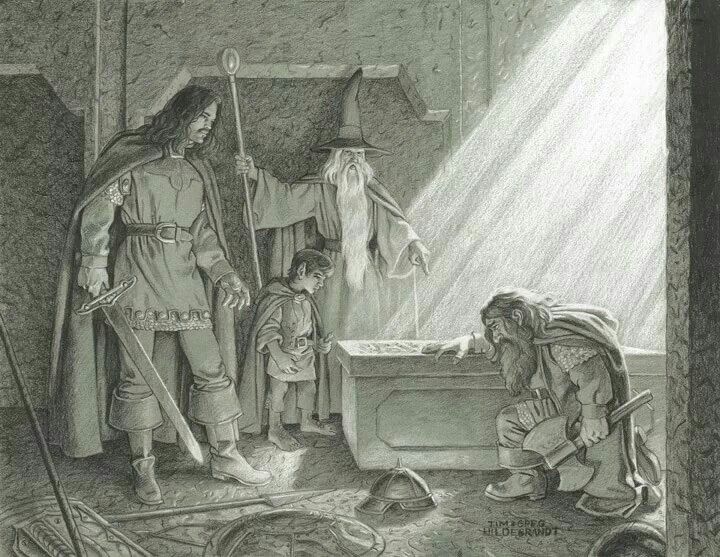
(the Hildebrandts)

‘It looks like a tomb,’ muttered Frodo, and bent forwards with a curious sense of foreboding, to look more closely at it.  Gandalf came quickly to his side.  On the slab runes were deeply graven:

‘These are Daeron’s Runes, such as were used of old in Moria,’ said Gandalf.  ‘Here it is written in the tongues of Men and Dwarves:

BALIN SON OF FUNDIN

LORD OF MORIA ‘.”  (The Lord of the Rings, Book Two, Chapter 4, “A Journey in the Dark”)

Even if you’re not an expert in early western writing systems, you’ve probably encountered runes before.  They appear to be a Germanic invention, with their first known outside mention thought to be in P. Cornelius Tacitus’ (c.56-c.120 AD) essay on some northern tribes, Germania, where this passage is cited.

“[10] Auspicia sortesque ut qui maxime observant: sortium consuetudo simplex. Virgam frugiferae arbori decisam in surculos amputant eosque notis quibusdam discretos super candidam vestem temere ac fortuito spargunt. Mox, si publice consultetur, sacerdos civitatis, sin privatim, ipse pater familiae, precatus deos caelumque suspiciens ter singulos tollit, sublatos secundum impressam ante notam interpretatur.”

“[the Germans] pay very close attention to auspices and lot-drawing:  the practice of lot-drawing is simple.  They split a branch cut from a fruit tree into splinters and scatter those, marked out with certain signs, on a white robe casually and randomly.  Then a priest of the settlement, if it may be the public consulting of an oracle, but if private, the father of a family himself, having prayed to the gods and raising his eyes to the sky, draws three [splinters] one at a time [and] interprets those drawn according to the mark stamped upon [them] previously.”

(Tactius, Germania, Section 10—my translation.  If you’d like to read the whole text, here’s a useful Victorian translation:  https://archive.org/details/tacitusagricolag00taciiala/page/62/mode/2up )

We don’t know where Tacitus got his information from, but he lived at about the same time as one of the earliest currently-known runic inscriptions, the “Vimose comb”, dated to about 160AD,

(There seem to be two guesses at to what the inscription says—transliterated, it appears to read “harja”, meaning either the obvious “comb” or the less obvious “warrior”.  For more on this and other early rune-marked artifacts, see:  https://en.wikipedia.org/wiki/Vimose_inscriptions and https://en.natmus.dk/historical-knowledge/denmark/prehistoric-period-until-1050-ad/the-early-iron-age/the-weapon-deposit-from-vimose/the-offerings-in-vimose/   Until they sold out, you could even get a bone replica of the comb here:  https://norseimports.com/products/vimose-comb )

so the notae, “marks”, he mentioned could, indeed, be early runes.

We’ve seen runes three times before in the book, each time related to Gandalf and the first letter of his name in runes–
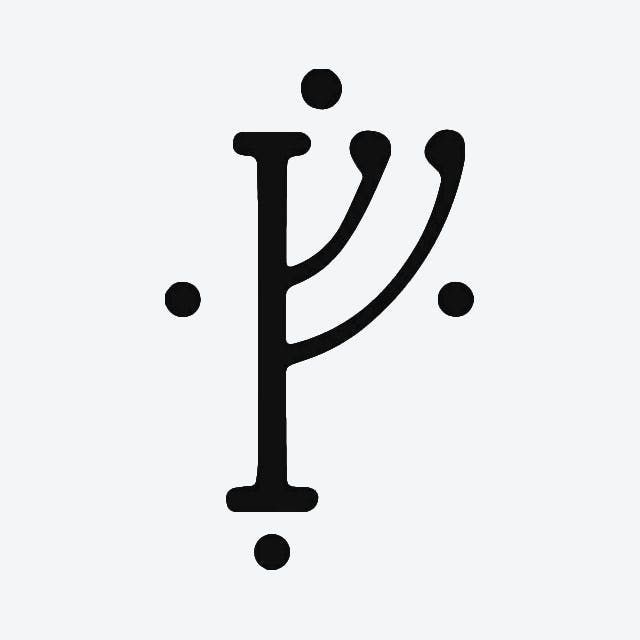
The first is a jolly appearance:
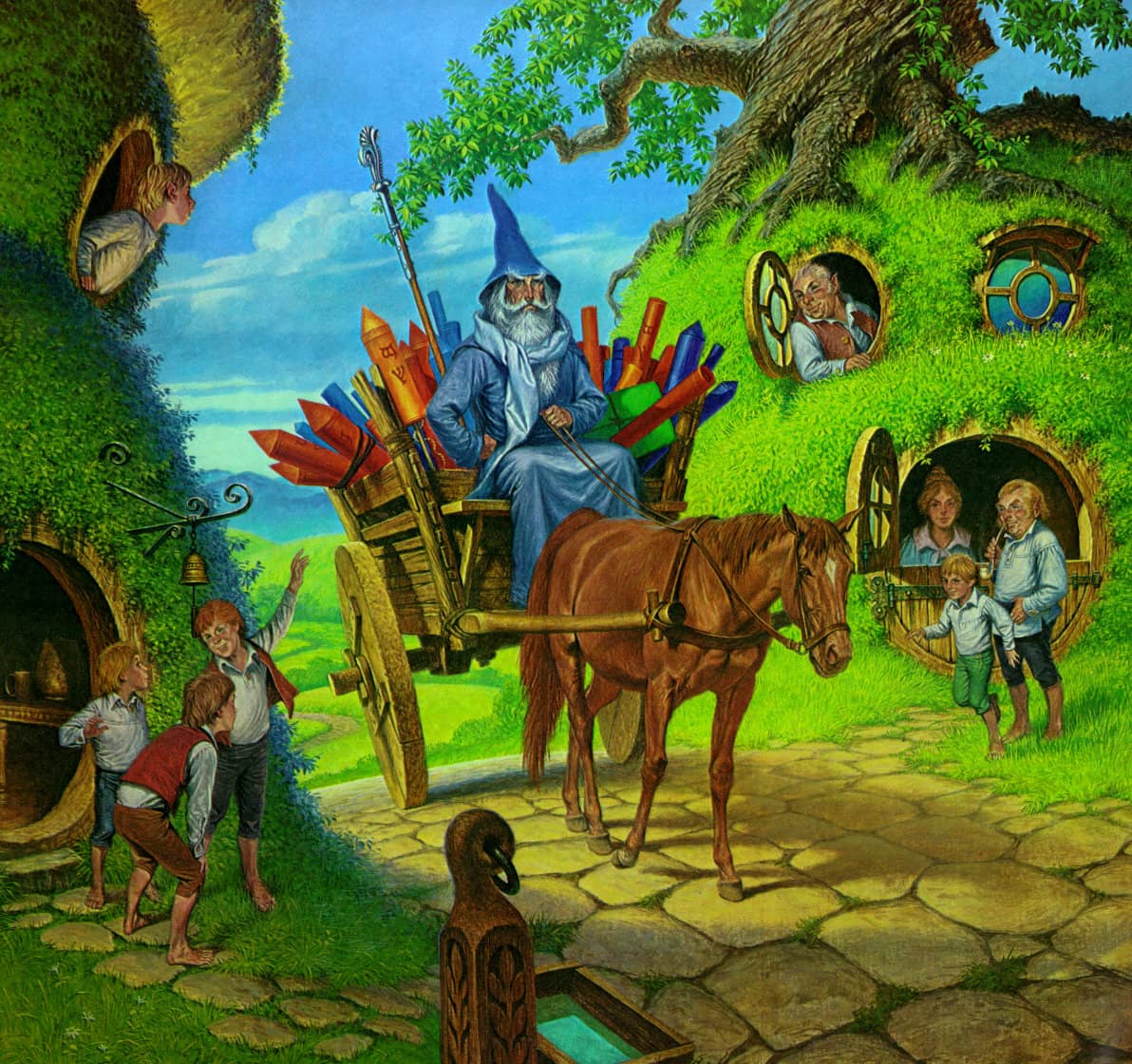
(Darrell K. Sweet, who died, unfortunately, in 2011, but you can see his archived website here:  https://web.archive.org/web/20110131141507/http://www.sweetartwork.com/DKSmainPage.html and read a little more about this very talented illustrator here:  https://en.wikipedia.org/wiki/Darrell_K._Sweet And I couldn’t resist adding this knowledgeable appreciation of his work:  https://blackgate.com/2022/04/17/an-adventure-to-be-had-a-journey-through-the-art-of-darrell-k-sweet/ )

“At the end of the second week in September a cart came in through Bywater from the direction of Brandywine Bridge in broad daylight.  An old man was driving it all alone…It had a cargo of fireworks…At Bilbo’s front door the old man began to unload:  there were great bundles of fireworks of all sorts and shapes, each labeled with a large red G [runic letter] and the elf-rune [see the image above].” (The Fellowship of the Ring, Book One, Chapter 1, “A Long-Expected Party”)

The second is not, being Gandalf’s much-delayed letter to Frodo, still at the Prancing Pony in Bree, instead of being delivered 3 months before to the Shire, meant to alert Frodo to the possibility that he won’t meet them, with some consolation that Strider might appear. (The Fellowship of the Ring, Book One, Chapter 10, “Strider”)

(the Hildebrandts)

And the third is only guessed at as seeming to be a sign from Gandalf on Weathertop:

“ ‘The stroke on the left might be a G-rune with thin branches,’ said Strider.  ‘It might be a sign left by Gandalf, though one cannot be sure…I should say…that they stood for G3, and were a sign that Gandalf was here on October the third:  that is three days ago now.  It would also show that he was in a hurry and danger was at hand, so he had no time or did not dare to write anything longer or plainer.  If that is so, we must be wary.’ “ (The Fellowship of the Ring, Book One, Chapter 11, “A Knife in the Dark”)
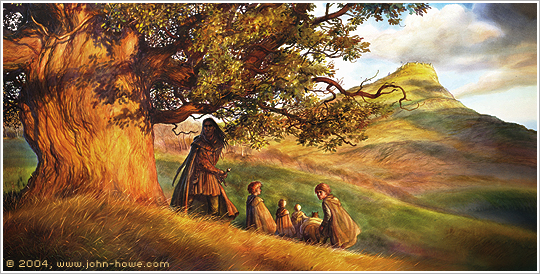
(John Howe)

In our Middle-earth, there are several iterations of runes, with the melodious (modern) names of “Futhark”(Elder and Younger) and “Futhorc”, which get those names, as the word “alphabet” does, from putting together a collection of the first letters of the series in a standard order.  Here’s the Elder Futhark—

It’s easy to see why the letters might be shaped as they were, appearing to be relatively easy to inscribe on things with a knife.  (Or a chisel for the stone inscriptions?)
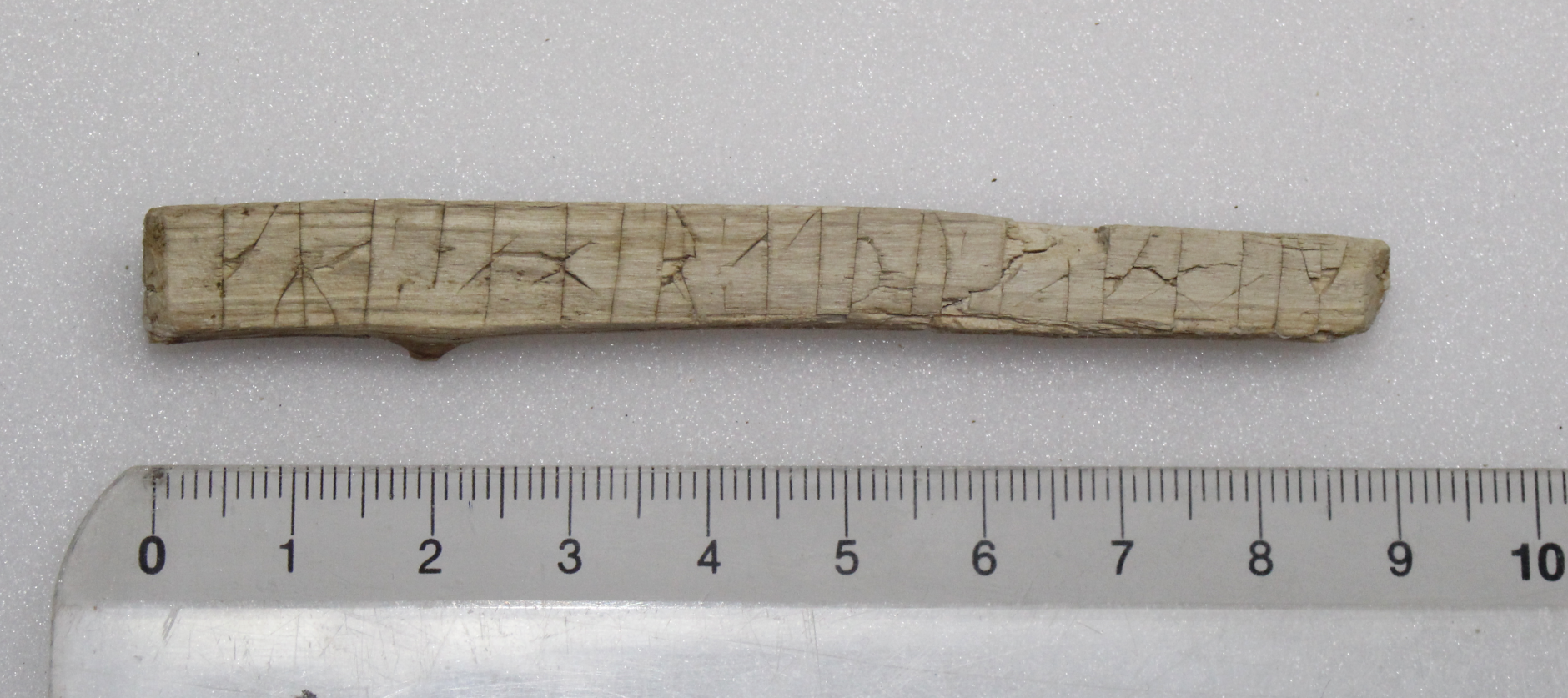
(a 12th-century AD inscription on wood from Bryggen in Norway—one of 670 inscriptions on wood or bone found at the site since 1955—for more see:  https://en.wikipedia.org/wiki/Bryggen_inscriptions  and https://en.wikipedia.org/wiki/Bryggen One of the many amazing things about this second piece is that it underlines just how sophisticated trade could be in northern Europe in the Middle Ages.)
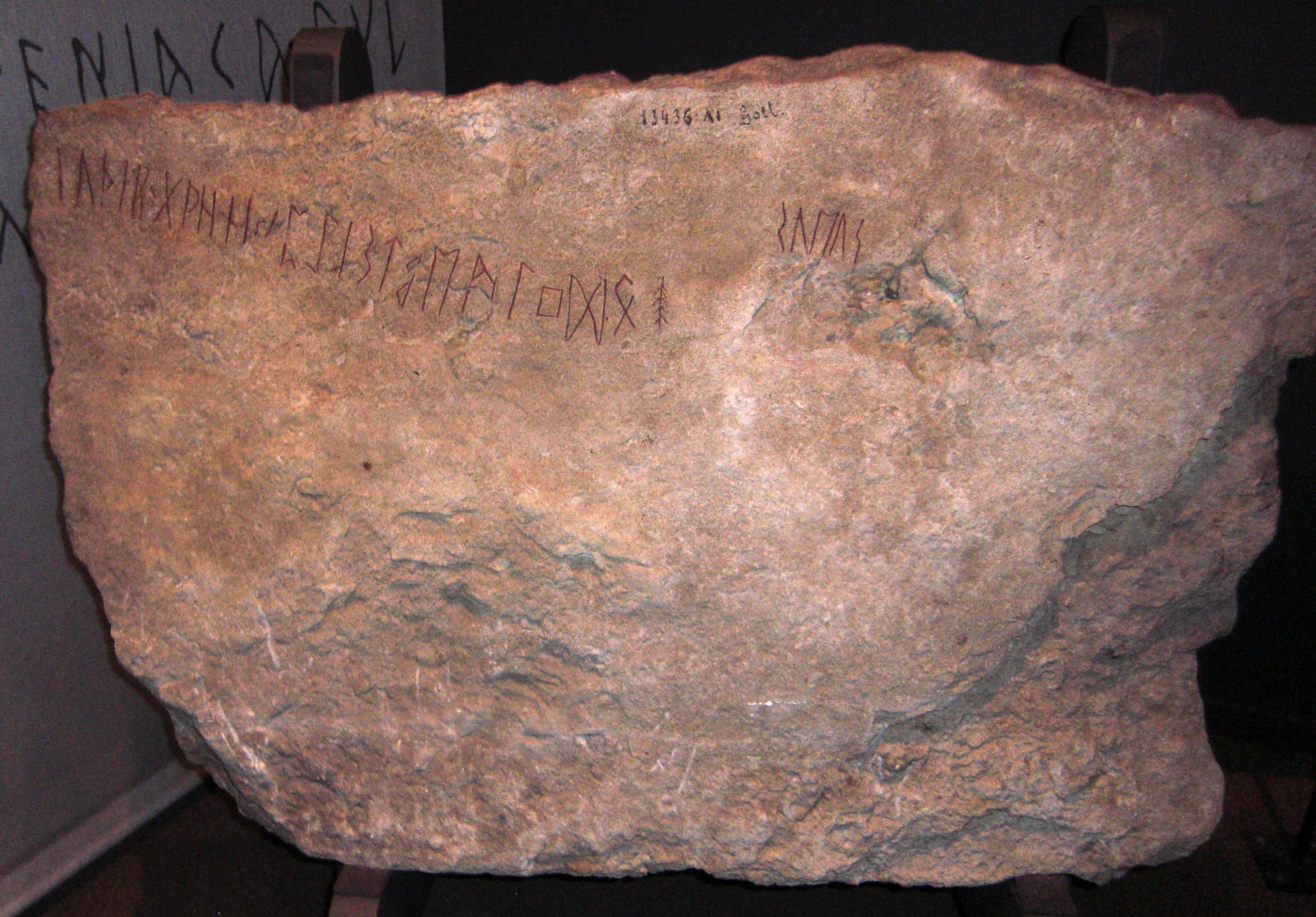
(This is the Kylver Stone from Gotland, Sweden, c.400AD, which lists the Elder Futhark letters.  For more, see:  https://en.wikipedia.org/wiki/Kylver_Stone and you can see from the translation of the runes where “Futhark” came from. )

Tolkien’s own runes, as he tells us, are derived from what are sometimes called the “Anglo-Saxon” or “Anglo-Frisian” Futhorc:

“There is the matter of the Runes.  Those used by Thorin and Co., for special purposes, were comprised of an alphabet of thirty-two letters (full list on application), similar to, but not identical, with the runes of Anglo-Saxon inscriptions.”  (letter to the editor of The Observer, published there 20 February, 1938, Letters, 42)

We can then imagine that this is what must appear as the “moon letters” on Thror’s map—
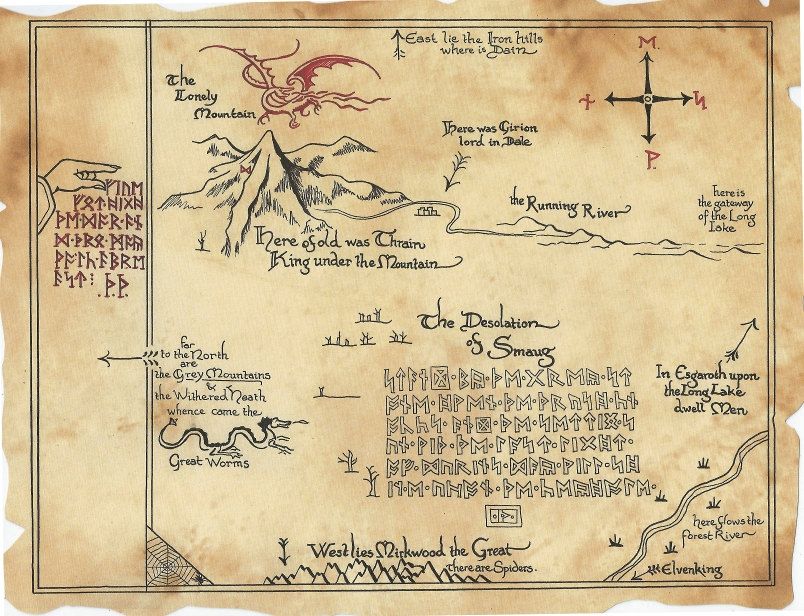
 

And this brings me to my final point.

In my last, in connection with the conlang (constructed language) toki pona, I mentioned the internet site Robwords, one of my favorite places for information and discussion about languages, primarily English, German, and French, but with some surprises (see last week’s “Simple Words” for more).

(This is Rob Watts, of Robwords)

One of those surprises was toki pona, but, in another, Rob made the suggestion that the Roman alphabet, in which I’m writing this posting, was rotten for the English language, being adapted from the Greek alphabet (in turn adapted from the Phoenician alphabet) via the Etruscan alphabet,
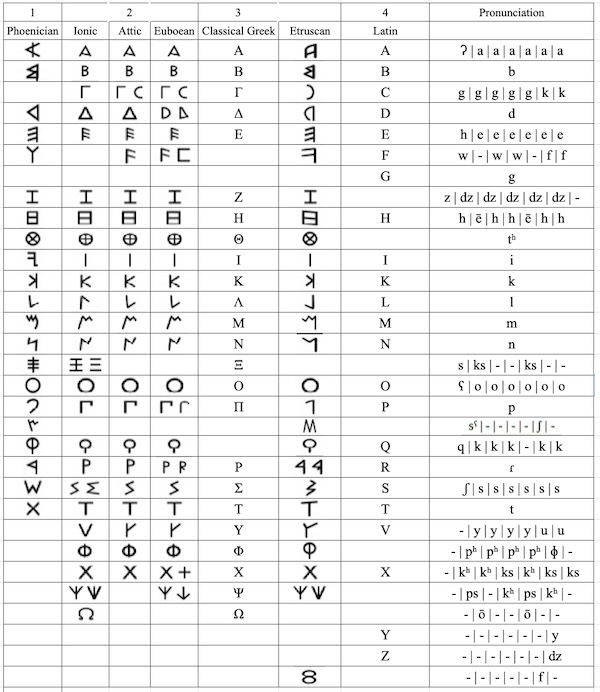
and lacking letters for certain common English sounds like “th” and “sh” and “ng”.

In his playful way, he suggested that we’d be better off with the runic system, and specifically that Anglo-Saxon version, aka Futhorc.
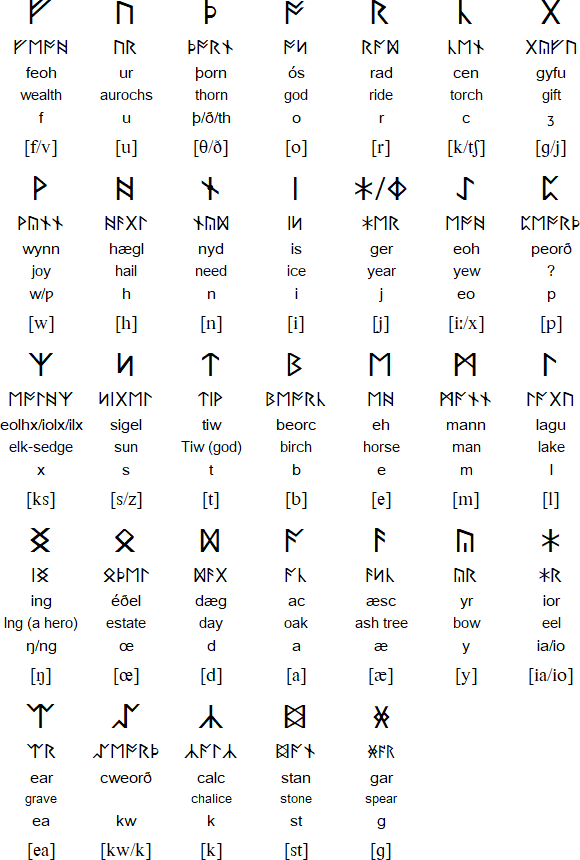
 To prove his point, he cites something familiar to Tolkien readers—

and then proceeds to translate it, showing that it’s not in the language of the dwarves, as one might expect from a dwarvish map, but English (or, if you prefer, “the Common Speech”).
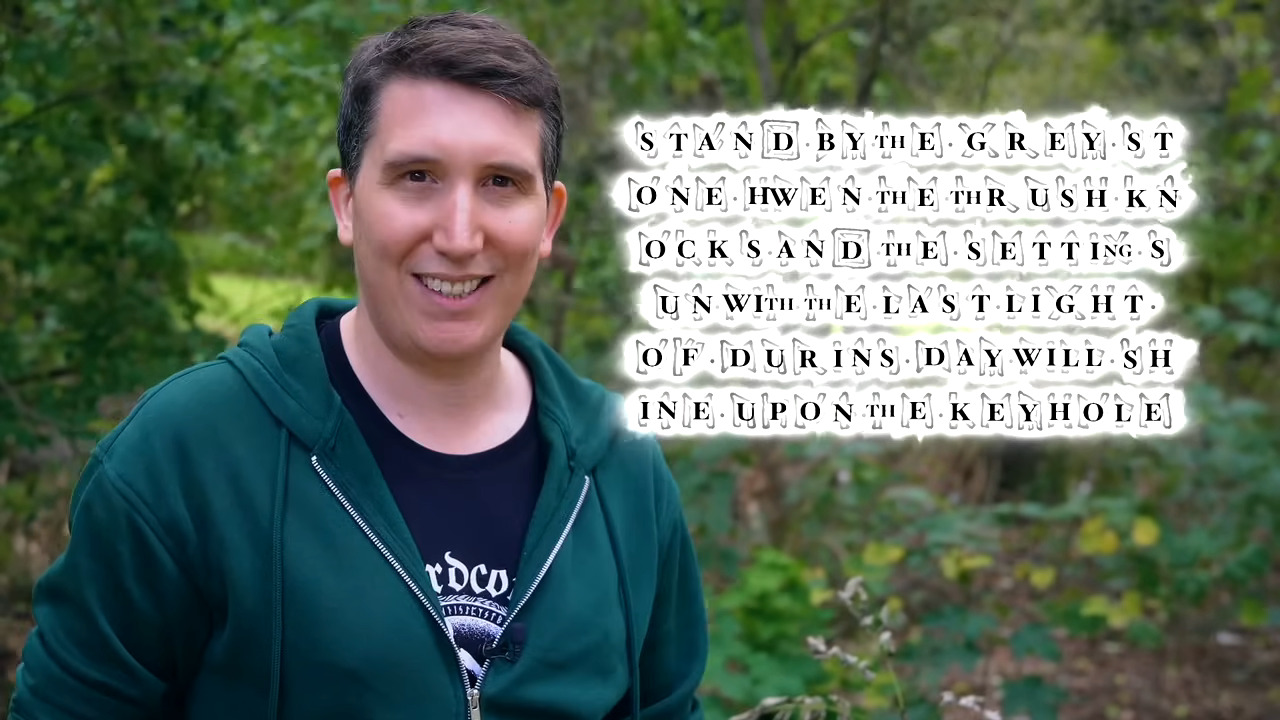
Watch the video, then, and see if you agree with Rob: https://www.youtube.com/watch?v=4npuVmGxXuk

And, if you’d like to try your hand at using the runes, here’s something to help—it’s a link to Harys Dalvi’s Old English runic keyboard:  https://www.harysdalvi.com/futhorc/  Harys Dalvi’s website is full of really interesting language and computer stuff and just plain fun:  https://www.harysdalvi.com/

Thanks, as always, for reading,

(ᚦᚫᛝᚳᛋ᛫ᚫᛋ᛫ᚫᛚᚹᛠᛋ᛫ᚠᚪᚱ᛫ᚱᛁᛁᛞᛁᛝ)

Stay well,

(ᛥᛠ᛫ᚹᛖᛚ)

Try runisizing today,

(ᛏᚱᚫᛁ᛫ᚱᚢᚾᛁᛋᛁᛋᛁᛝ᛫ᛏᚣᛞᛠ)

And remember that, as always, there’s

ᛗᚪᚱ᛫ᛏᚣ᛫ᚳᚢᛗ᛫ᛁᚾ᛫ᛞᚣ᛫ᚳᚣᚱᛋ

O

PS

At “wikiHow” there’s a pronunciation guide and a rather New Age interpretation of the Elder Futhark’s runes.  It’s fun, but, as it sits to the left of such “How” guides as “telekinesis”, and “reading palms”, I myself would stick to the pronunciations!  https://www.wikihow.com/Elder-Futhark-Runes 

PPS

And how could I resist listing this:  https://runicstudies.org/ the website for the American Association for Runic Studies?  If you get hooked on runes—and I think that that would be quite easy to do, especially after playing on Harys’ website—this site has links in all directions.

Gun Control?

08 Wednesday May 2019

Posted by Ollamh in J.R.R. Tolkien, Military History

≈ Leave a comment

Tags

anachronism, Dettingen, Fireworks, Gandalf, George Frederich Haendel, gunpowder, guns, Helm's Deep, kettle drums, King George II, Millemete Manuscript, petard, Rammas Echor, The Hobbit, The Lord of the Rings, The War of Austrian Succession, Tolkien

Welcome, dear readers, as always—and with our apology if you googled “gun control” and are a bit puzzled as to what has turned up (this often happens with us, making us wonder how googling images of “Saruman” suddenly produces a picture of sardines).

It’s our last posting which got us into this.  We had spotted another anachronism in The Hobbit (clarinets) and had written about it, but then, as a teaser, had concluded with another, referring to Beorn’s joining the Battle of the Five Armies:  “The roar of his voice was like drums and guns…” (Chapter 18, “The Return Journey”)

“Guns” had, of course, stood out.  Some time ago, we had written about Saruman’s use of some sort of explosive at Helm’s Deep

image1hd.jpg

as well as the destruction by a similar force of portions of the causeway forts of the Rammas Echor, of which no one has seemingly produced an illustration.

image2rammas.gif

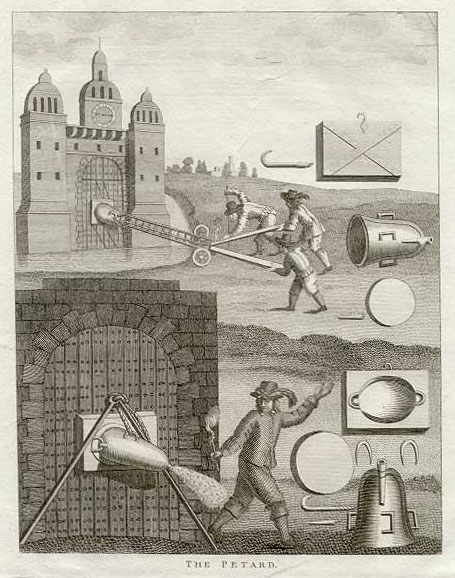
Whatever this force was, it only seems to be used in siegework, suggesting things like a petard

image3petard.jpg

an explosive device used to blow holes in gates and doors.

Guns, however, do not appear in any form in Tolkien’s world—except here.  Of course, when one thinks about it, there isn’t much of a step from using a blast to destroy a door to funneling that force to propel a missile—as we first see in the Millemete Manuscript of 1326-1327.

image4millemete.jpg

This doesn’t appear to be portable, but the basic object is simply a tube on a stick, easy to make, easy to carry

image5handgonne


and certainly late medieval people had them and employed them,

image6handgonnes.jpg

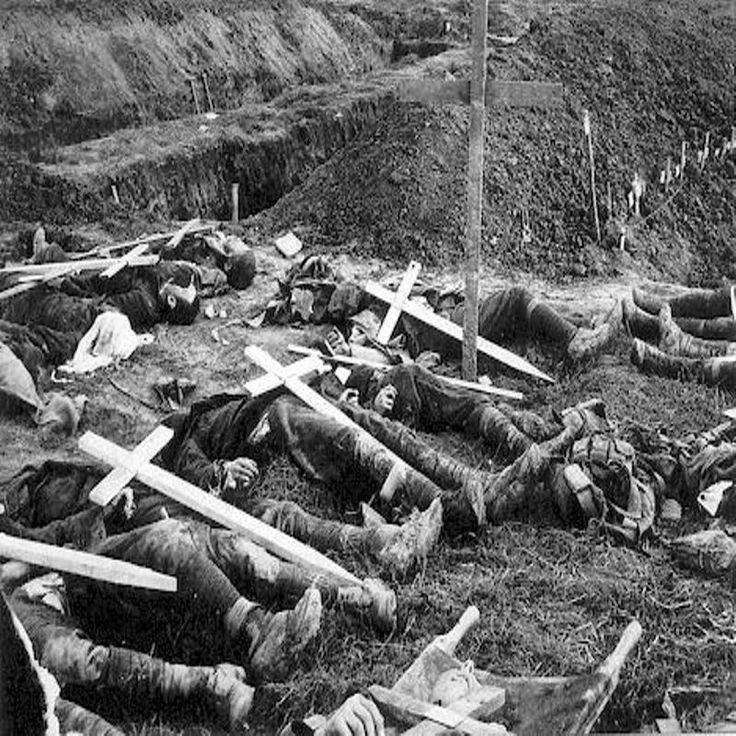
so, presumably, they might have appeared in Middle-earth (we once wrote a “what-if” posting on the subject).  Why not?  As JRRT introduced explosives, that seems to provide an opening, but we wonder if he had seen all too often and all too clearly the effect of thousands upon thousands of gunpowder weapons on real people in 1916 and, somehow, the idea of lances and swords seemed more appealing—or, at least, more “heroic”.

image7dead.jpg

image8knights.jpg

But the quotation was “like drums and guns”.

As we pointed out in our last, drums certainly appear in The Lord of the Rings—there is that disturbing reference to “drums, drums in the deep” in The Fellowship of the Ring, Book Two, Chapter 5, “The Bridge of Khazad-dum”, for example.  But what about “the roar of his voice was like drums and guns”?

When we thought about this, we asked ourselves, what would this actually sound like?  A possible answer appeared from 1749.

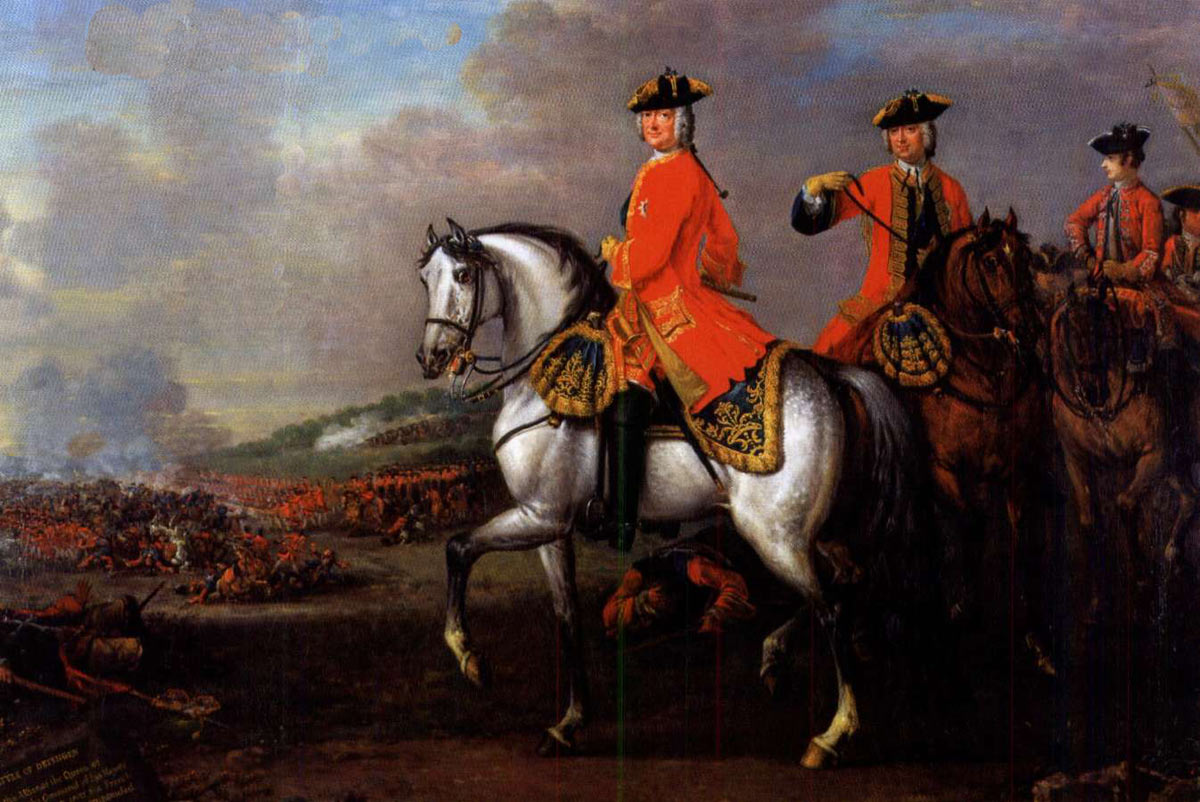
In 1749, George II of England

image9george2.jpg

had been one of the winners of what would become known as “The War of the Austrian Succession” (1740-1748).

image10geo2.jpg

He was definitely in a party mood, so he decided to throw a giant fireworks celebration in London.  To provide the soundtrack, he commissioned George Frederick Haendel (say that “HEN-del”, not as people commonly mispronounce it, “HAHN-del”) (1685-1759).

image11gfh.jpg

George was the last English king actually to see battle, at Dettingen, in 1743,

image12dettingen.jpgimage13dettingen.jpg

and wasn’t interested in anything sweet and soft, with lots of violins.

image14violinist.jpg

Instead, he wanted bangs and booms, starting with kettle drums.

image15kettledrums.jpg

Then he hired someone to design a giant framework for the fireworks,

image16frame.jpg

and threw in 101 cannon, just to make sure that it wasn’t too quiet.

image17guns.jpg

And, on the evening of 27 April, 1749, perhaps as many as 12,000 people (London had perhaps between 600,000 and 700,000 people in 1750) stood around the Green Park to watch.

image18fireworks.jpg

Here’s a LINK, if you’d like to hear the music (you’ll have to supply your own cannon and fireworks).

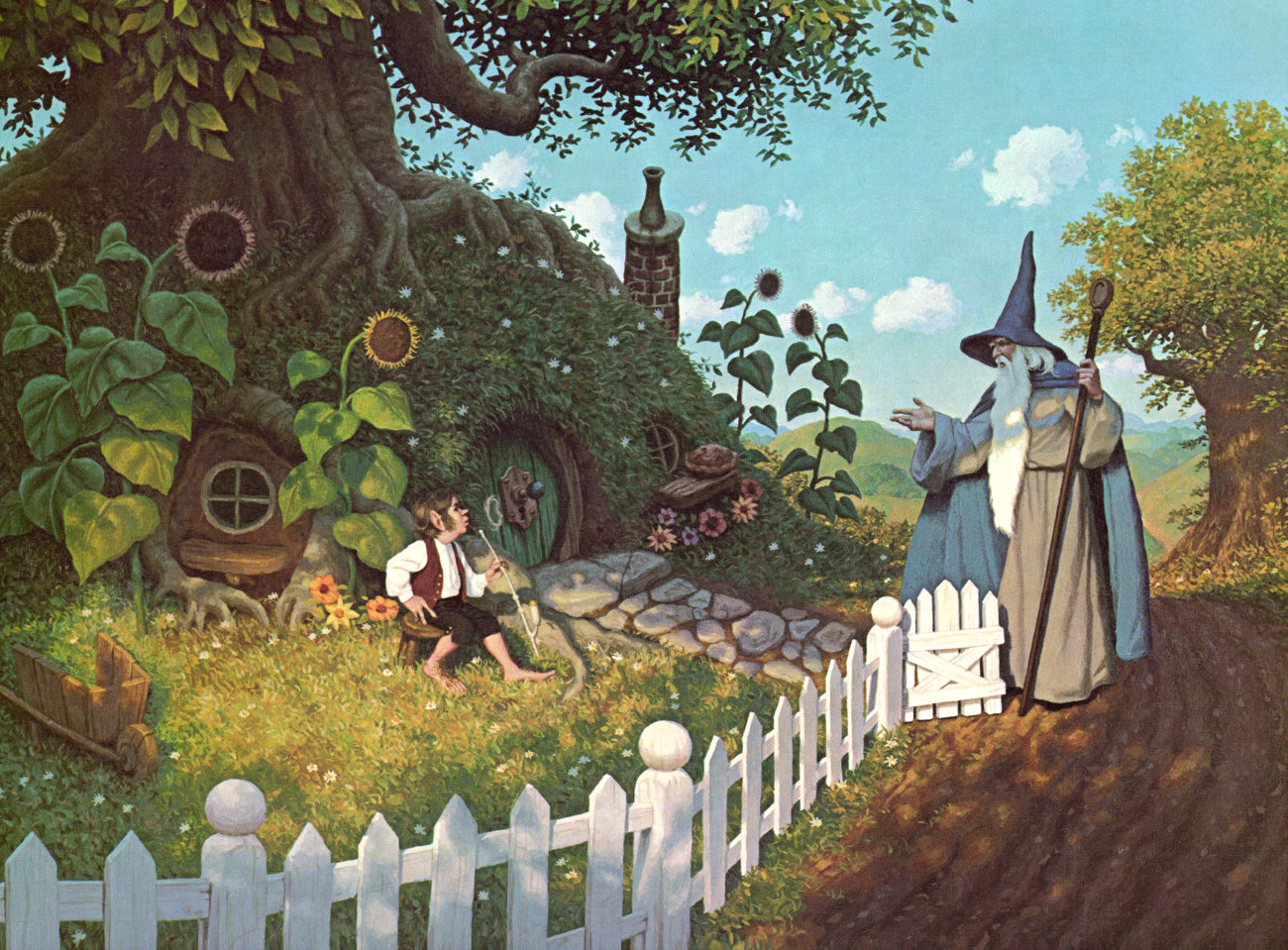
But fireworks brings us back to Tolkien, doesn’t it?  When Gandalf first appears to Bilbo in the first chapter of The Hobbit,

image19bilgan.jpg

it seems that almost all that Bilbo knows about Gandalf is his fireworks:

“Not the man that used to make such particularly excellent fireworks!  I remember those!  Old Took used to have them on Midsummer’s Eve.  Splendid!  They used to go up like great lilies and snapdragons and laburnums of fire and hang in the twilight all evening!”  (Chapter One, “An Unexpected Party”)

And, when Gandalf reappears in the Shire, to celebrate Bilbo and Frodo’s joint birthday, what does he bring?

image20gandalf.jpg

Thanks, as ever, for reading (and listening).

MTCIDC

CD

Boom

18 Wednesday Apr 2018

Posted by Ollamh in J.R.R. Tolkien

≈ Leave a comment

Tags

A Long-Expected Party, A Midsummer Night's Dream, Backarapper, Benwell Fireworks, cracker, Elizabethan entertainment, Fireworks, fountain, Gandalf, Kenilworth Castle, Pain's Imperial Fireworks, Queen Elizabeth, Robert Dudley, Robert Langham, Roman Candles, Shakespeare, Sparkler, squib, The Fellowship of the Ring, The Hobbit, The Lord of the Rings, thunderclap, Tolkien, torch

Welcome, dear readers, as always.

When Gandalf first arrives at Bilbo’s door “in the quiet of the world, when there was less noise and more green”, Bilbo’s memories of him are hardly those of someone aware who Gandalf really is:

“Gandalf, Gandalf!  Good gracious me!  Not the wandering wizard that gave Old Took a pair of magic diamond studs that fastened themselves and never came undone till ordered?  Not the fellow who used to tell such wonderful tales at parties, about dragons and goblins and giants and the rescue of princesses and the unexpected luck of widows’ sons?  Not the man that used to make such particularly excellent fireworks!”  (The Hobbit, Chapter 1, “An Unexpected Party”)

And it’s the fireworks in particular which made a strong impression:

“I remember those!  Old Took used to have them on Midsummer’s Eve.  Splendid!  They used to go up like great lilies and snapdragons and laburnums of fire and hang in the twilight all evening!”

[Here, by the way are the three flowers he mentions, in case, like us, you live in a climate where such things won’t appear for months yet!]

image1lily.jpg

image2snapdragons.JPG

image3laburnums.jpeg

And, although he alludes to an edgier side of Gandalf (“Not the Gandalf who was responsible for so many quiet lads and lasses going off into the Blue for mad adventures?”), he concludes as if Gandalf were merely some sort of superior tradesman:

“I beg your pardon, but I had no idea you were still in business!”

Gandalf is patient, however, only replying:

“Where else should I be?… All the same I am pleased to find that you remember something about me.  You seem to remember my fireworks kindly, at any rate, and that is not without hope…”

Perhaps the idea of linking Gandalf and fireworks is pardonable, however, when we see how, after being associated with them at the beginning of The Hobbit, he appears at the opening of The Lord of the Rings actually bringing fireworks to Hobbiton:

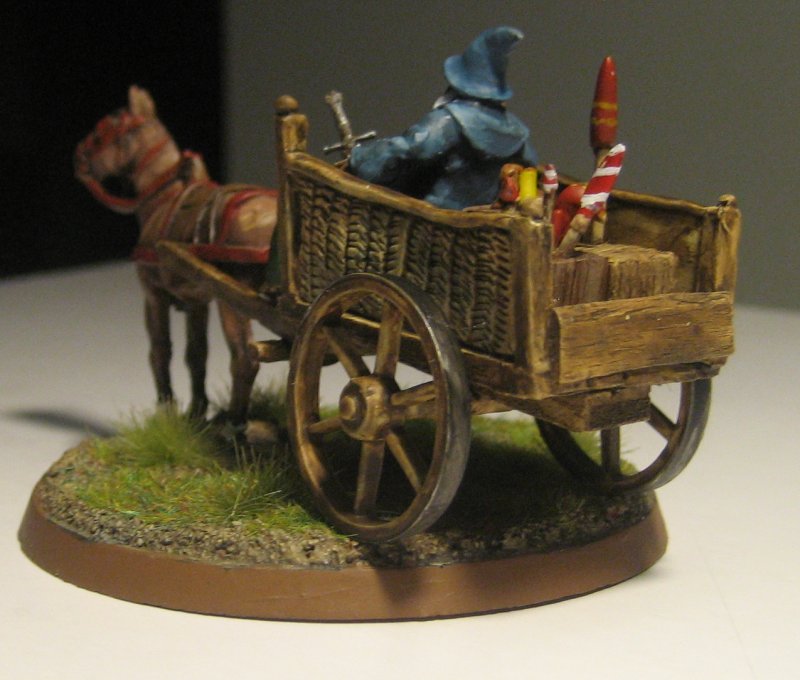
“At the end of the second week in September a cart came in through Bywater from the direction of Brandywine Bridge in broad daylight.  An old man was driving it all alone.  He wore a tall pointed blue hat, a long grey cloak, and a silver scarf.  He had a long white beard and bushy eyebrows that stuck out beyond the brim of his hat.  Small hobbit-children ran after the cart all through Hobbiton and right up the hill.  It had a cargo of fireworks, as they rightly guessed.  At Bilbo’s front door the old man began to unload:  there were great bundles of fireworks of all sorts and shapes, each labeled with a large red G…and the elf-rune…” (The Fellowship of the Ring, Book One, Chapter 1, “A Long-expected Party)

image4cart.jpg

(This is from a site called “Llama’s War of the Ring”, which has all sorts of interesting figures and conversions—here’s a LINK.)

Those great bundles turned into spectacular entertainment at the joint birthday party:

“The fireworks were by Gandalf:  they were not only brought by him, but designed and made by him; and the special effects, set pieces, and flights of rockets were let off by him.  But there was also a generous distribution of squibs, crackers, backarappers, sparklers, torches, dwarf-candles, elf-fountains, goblin-barkers and thunderclaps.  They were all superb.  The art of Gandalf improved with age.”

We ourselves enjoy fireworks, and, for the sake of our readers who might not be familiar with some of the types mentioned, we add here a few images—although some, like “dwarf-candles, elf-fountains, goblin-barkers” no longer seem to be available.

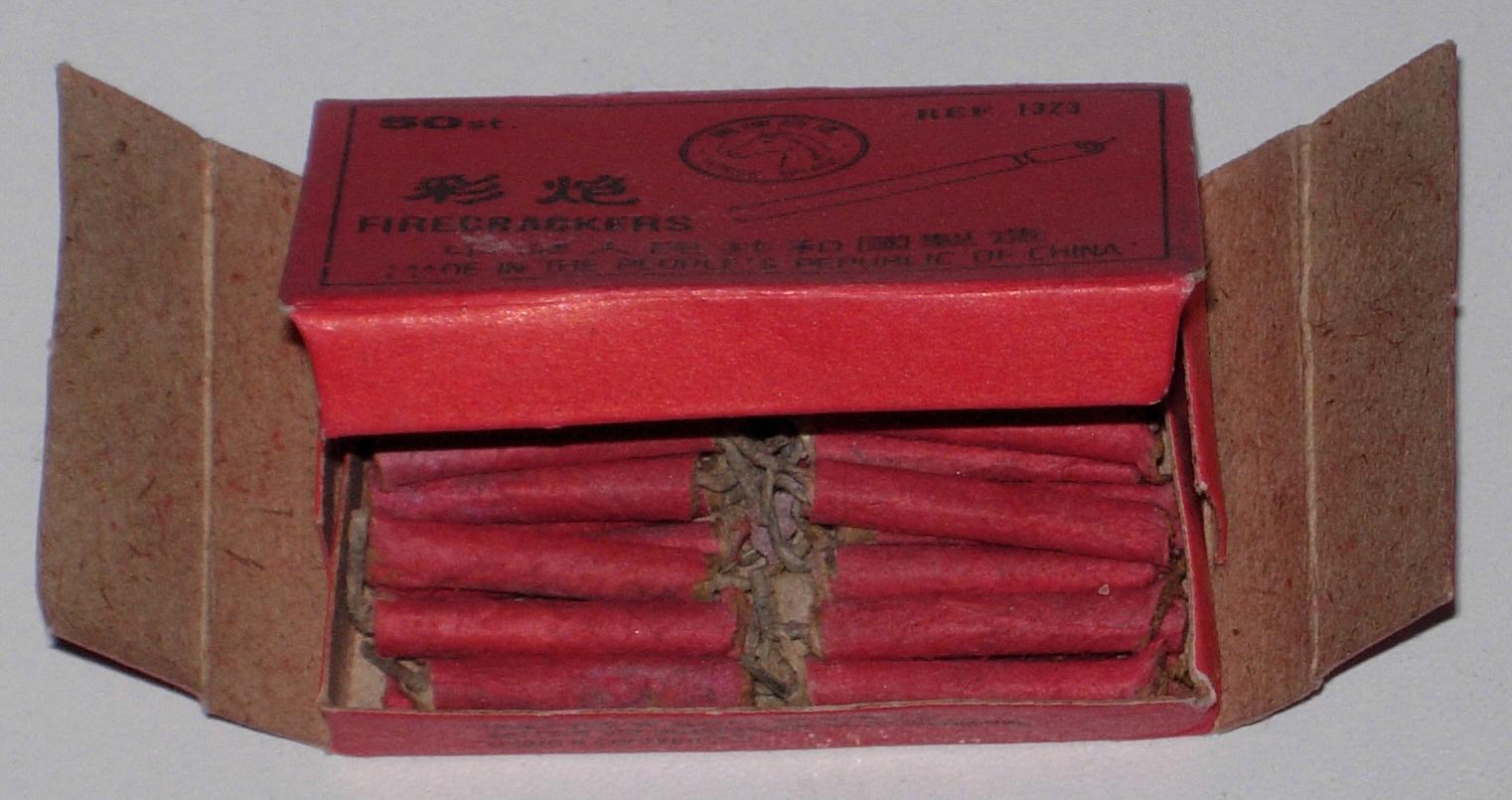
A squib is a small firecracker, like these.

image5squibs.jpg

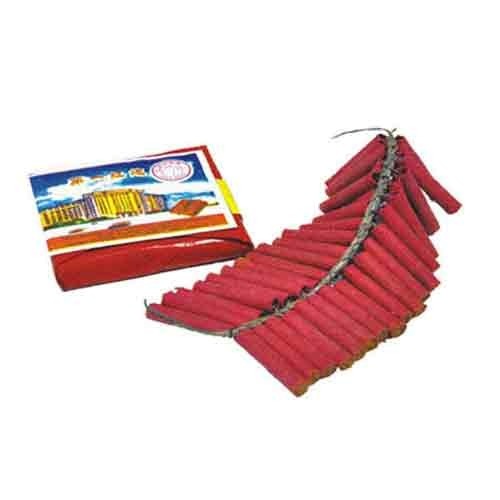
Crackers seem to come in sets.

image6firecrackers.jpg

Backarappers—we don’t have an image, but here’s a definition (and it sounds like the previous image):

“A firework made from multiple firecrackers folded together so that they will explode one after another”.  (from G.F. Northall’s Warwickshire Word-book, 1896)

Sparklers are metal rods or bamboo sticks whose upper part has what is called “pyrotechnic composition”—which means something which shoots out sparks when it’s lit.

image7sparkler.jpeg

Torches may be these—which, when lighted, change color as they burn down (or so the manufacturer’s description says).

image8torch.png

Although there are no “dwarf-candles”, there are Roman Candles.  These are built in stages and, as the fire burns down, they shoot out star-patterns—as you can see.

image9romancandle.jpg

There are no “elf-fountains”, either, but there are fountains and they look like this—

image10fountain.jpeg

Finally, we can date a “thunderclap”, made by Benwell, back to this advertisement from about 1950,

image11benwell.jpg

but we wouldn’t be surprised if Pain’s (not the best name for fireworks, we would say!) carried them, as they have something called “Laburnum Blossoms” in this 1903 listing

image12pains.jpg

Gandalf’s productions were clearly quite spectacular—which was undoubtedly why Bilbo remembers them:

“There were rockets like a flight of scintillating birds singing with sweet voices.  There were green trees with trunks of dark smoke:  their leaves opened like a whole spring unfolding in a moment, and their shining branches dropped glowing flowers down upon the astonished hobbits, disappearing with a sweet scene just before they touched their upturned faces.  There were fountains of butterflies that flew glittering into the trees; there were pillars of coloured fires that rose and turned into eagles, or sailing ships, or a phalanx of flying swans; there was a red thunderstorm and a shower of yellow rain; there was a forest of silver spears that sprang suddenly into the air with a yell like an embattled army, and came down again into the Water with a hiss like a hundred hot snakes.”

And then there was the finale.  Pain’s, in that 1903 listing, could make claims to baskets of elaborate pyrotechnics, but this?

“And there was also one last surprise, in honour of Bilbo, and it startled the hobbits exceedingly, as Gandalf intended.  The lights went out.  A great smoke went up.  It shaped itself like a mountain seen in the distance, and began to glow at the summit.  It spouted green and scarlet flames.  Out flew a red-golden dragon—not life-size, but terribly life-like:  fire came from his jaws, his eyes glared down; there was a roar and he whizzed three times over the heads of the crowd.  They all ducked, and many fell flat on their faces.  The dragon passed like an express train, turned a somersault, and burst over Bywater with a deafening explosion.”

In Shakespeare’s A Midsummer Night’s Dream, the fairy king, Oberon, says to his spirit-servant, Puck, these rather mysterious lines:

“My gentle Puck, come hither.  Thou rememberest

Since once I sat upon a promontory

And heard a mermaid on a dolphin’s back

Uttering such dulcet and harmonious breath

That the rude sea grew civil at her song

And certain stars shot madly from their spheres

To hear the mermaid’s music?”

(Act 2, Scene 1)

In 1575, Queen Elizabeth I

image14queene1.jpg

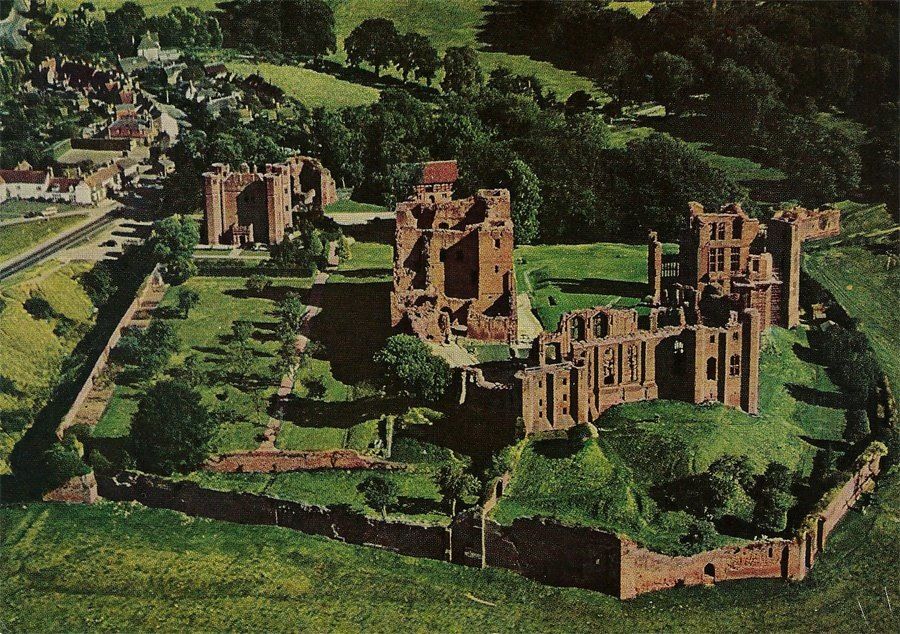
visited Kenilworth Castle,image15kenilworth.jpg

the home of Robert Dudley, the Earl of Leicester,

image16dudley.jpg

and a close friend (and maybe more).  To entertain her, Dudley spent thousands of pounds.

image17sovereign.jpg

(This is actually a gold sovereign—worth 20 shillings—that is, a pound, but there were no actual pound coins till after 1583.)

Among the entertainments was a big fireworks display (as well as at least one mermaid—see the LINK here for Robert Langham/Laneham’s contemporary “letter” in which he describes these entertainments in detail) and some scholars have theorized that those falling stars mentioned by Oberon are, in fact, Shakespeare’s boyhood memory of having seen the fireworks display (and the mermaid).  Kenilworth is only 14 miles from Stratford and Shakespeare was 11 and living at home—we presume—at that time, so we can imagine that this is possibility.  We know that JRRT had seen fireworks shows as a boy—as he tells us in a letter to Donald Swann, 29 February, 1968 (Letters, 390)—but we wonder:  did he ever, in those early years, see Goblin-barkers, or a red-golden dragon?

Thanks, as ever, for reading.

MTCIDC

CD

ps

We almost forgot–in case you’d like to make your own fireworks (definitely not recommended–and definitely illegal in some places!), here’s an 1878 manual on the subject.


The Doubtful Sea Series Facebook Page

The Doubtful Sea Series Facebook Page

  • Ollamh

Categories

  • Artists and Illustrators
  • Economics in Middle-earth
  • Fairy Tales and Myths
  • Films and Music
  • Games
  • Heroes
  • Imaginary History
  • J.R.R. Tolkien
  • Language
  • Literary History
  • Maps
  • Medieval Russia
  • Military History
  • Military History of Middle-earth
  • Narnia
  • Narrative Methods
  • Poetry
  • Research
  • Star Wars
  • Terra Australis
  • The Rohirrim
  • Theatre and Performance
  • Tolkien
  • Uncategorized
  • Villains
  • Writing as Collaborators
Follow doubtfulsea on WordPress.com

Across the Doubtful Sea

Recent Postings

  • Through a glass… January 7, 2026
  • Heffalumps? December 31, 2025
  • We Three Kings December 24, 2025
  • A Moon disfigured December 17, 2025
  • On the Roads Again—Once More December 10, 2025
  • (Not) Crossing Bridges December 3, 2025
  • On the Road(s) Again—Again November 26, 2025
  • On the Road(s) Again November 19, 2025
  • To Bree (Part 2) November 12, 2025

Blog Statistics

  • 104,098 Views

Posting Archive

  • January 2026 (1)
  • December 2025 (5)
  • November 2025 (4)
  • October 2025 (5)
  • September 2025 (4)
  • August 2025 (4)
  • July 2025 (5)
  • June 2025 (4)
  • May 2025 (4)
  • April 2025 (5)
  • March 2025 (4)
  • February 2025 (4)
  • January 2025 (5)
  • December 2024 (4)
  • November 2024 (4)
  • October 2024 (5)
  • September 2024 (4)
  • August 2024 (4)
  • July 2024 (5)
  • June 2024 (4)
  • May 2024 (5)
  • April 2024 (4)
  • March 2024 (4)
  • February 2024 (4)
  • January 2024 (5)
  • December 2023 (4)
  • November 2023 (5)
  • October 2023 (4)
  • September 2023 (4)
  • August 2023 (5)
  • July 2023 (4)
  • June 2023 (4)
  • May 2023 (5)
  • April 2023 (4)
  • March 2023 (5)
  • February 2023 (4)
  • January 2023 (4)
  • December 2022 (4)
  • November 2022 (5)
  • October 2022 (4)
  • September 2022 (4)
  • August 2022 (5)
  • July 2022 (4)
  • June 2022 (5)
  • May 2022 (4)
  • April 2022 (4)
  • March 2022 (5)
  • February 2022 (4)
  • January 2022 (4)
  • December 2021 (5)
  • November 2021 (4)
  • October 2021 (4)
  • September 2021 (5)
  • August 2021 (4)
  • July 2021 (4)
  • June 2021 (5)
  • May 2021 (4)
  • April 2021 (4)
  • March 2021 (5)
  • February 2021 (4)
  • January 2021 (4)
  • December 2020 (5)
  • November 2020 (4)
  • October 2020 (4)
  • September 2020 (5)
  • August 2020 (4)
  • July 2020 (5)
  • June 2020 (4)
  • May 2020 (4)
  • April 2020 (5)
  • March 2020 (4)
  • February 2020 (4)
  • January 2020 (6)
  • December 2019 (4)
  • November 2019 (4)
  • October 2019 (5)
  • September 2019 (4)
  • August 2019 (4)
  • July 2019 (5)
  • June 2019 (4)
  • May 2019 (5)
  • April 2019 (4)
  • March 2019 (4)
  • February 2019 (4)
  • January 2019 (5)
  • December 2018 (4)
  • November 2018 (4)
  • October 2018 (5)
  • September 2018 (4)
  • August 2018 (5)
  • July 2018 (4)
  • June 2018 (4)
  • May 2018 (5)
  • April 2018 (4)
  • March 2018 (4)
  • February 2018 (4)
  • January 2018 (5)
  • December 2017 (4)
  • November 2017 (4)
  • October 2017 (4)
  • September 2017 (4)
  • August 2017 (5)
  • July 2017 (4)
  • June 2017 (4)
  • May 2017 (5)
  • April 2017 (4)
  • March 2017 (5)
  • February 2017 (4)
  • January 2017 (4)
  • December 2016 (4)
  • November 2016 (5)
  • October 2016 (6)
  • September 2016 (5)
  • August 2016 (5)
  • July 2016 (5)
  • June 2016 (5)
  • May 2016 (4)
  • April 2016 (4)
  • March 2016 (5)
  • February 2016 (4)
  • January 2016 (4)
  • December 2015 (5)
  • November 2015 (5)
  • October 2015 (4)
  • September 2015 (5)
  • August 2015 (4)
  • July 2015 (5)
  • June 2015 (5)
  • May 2015 (4)
  • April 2015 (3)
  • March 2015 (4)
  • February 2015 (4)
  • January 2015 (4)
  • December 2014 (5)
  • November 2014 (4)
  • October 2014 (6)
  • September 2014 (1)

Blog at WordPress.com.

  • Subscribe Subscribed
    • doubtfulsea
    • Join 78 other subscribers
    • Already have a WordPress.com account? Log in now.
    • doubtfulsea
    • Subscribe Subscribed
    • Sign up
    • Log in
    • Report this content
    • View site in Reader
    • Manage subscriptions
    • Collapse this bar
 

Loading Comments...