• About

doubtfulsea

~ adventure fantasy

Tag Archives: Andrew Lang

Hair Today

30 Wednesday Apr 2025

Posted by Ollamh in Uncategorized

≈ Leave a comment

Tags

Andrew Lang, Basile, d'Urfey, de-caumont, fairy-tales, friederich-schulz, Gingerbread, Grimm Brothers, Munchkins, Pentamerone, Persinette, Petrosinella, rampion, Rapunzel, Rock Parsley, Romeo and Juliet, Seurat, Shahnameh, Tolkien

As always, dear readers, welcome.

I often pass by a very unusual house, one which I would find hard to describe—perhaps something the Munchkins might build,

combined with a gingerbread house,

in the spotty colors and patterns of a Seurat pointillismist painting.
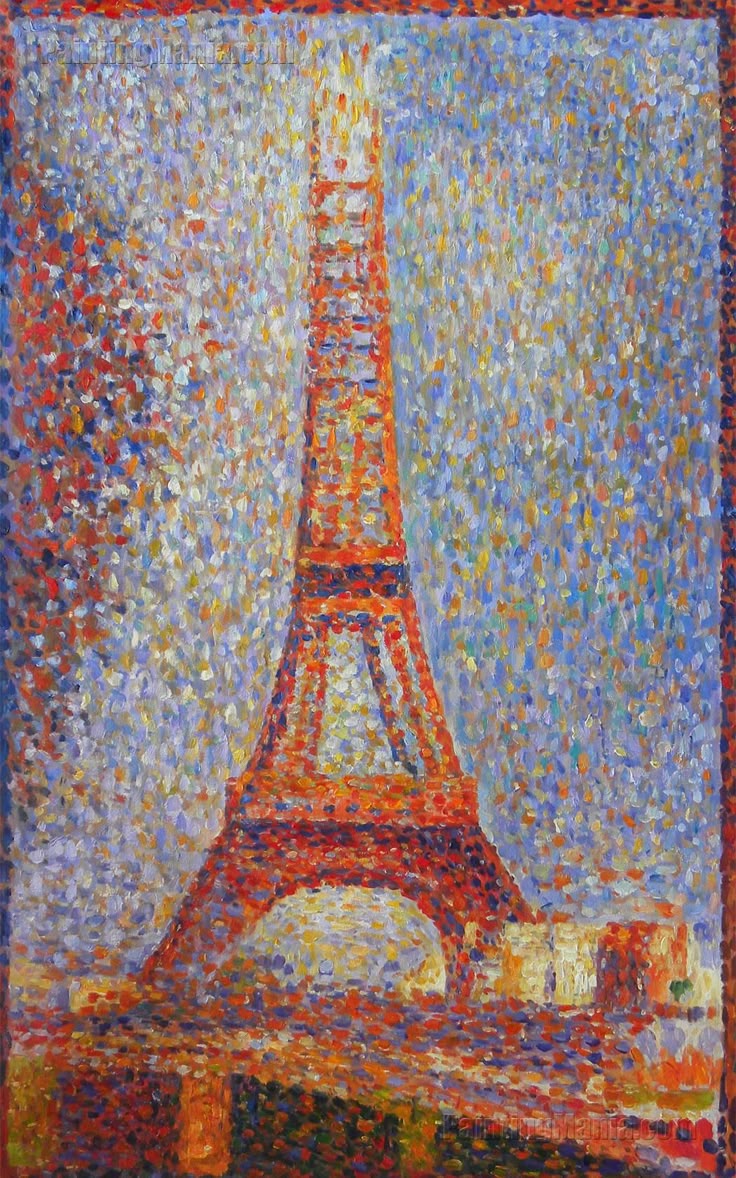
(Seurat, “La Tour Eiffel” , 1889—if you like the look of this, see:  https://www.georgesseurat.net/  for lots more—and, for more about this painting:  https://artincontext.org/the-eiffel-tower-by-georges-seurat/ )

All of that might make you slam on the brakes and drive as slowly as possible past, but there’s an added detail—for the past year, there has been a ladder propped from the ground to a closed window on the second floor.  It’s not anything exotic, just a plain aluminum extension ladder.

When I first spotted it, I probably thought:  fixing a storm window or painting trim and didn’t think about it again. 

But, after seeing it for a year, and remembering what the house looks like, I began to consider other possibilities—and I’m sure that, with that combination, you’re considering them, too. 

Dismissing fire drills, it struck me that, as the house has a fairy tale look, it must have something to do with such stories,

First, ir could be something Romeo and Julietesque—but, instead of standing under her balcony

and then scaling it,
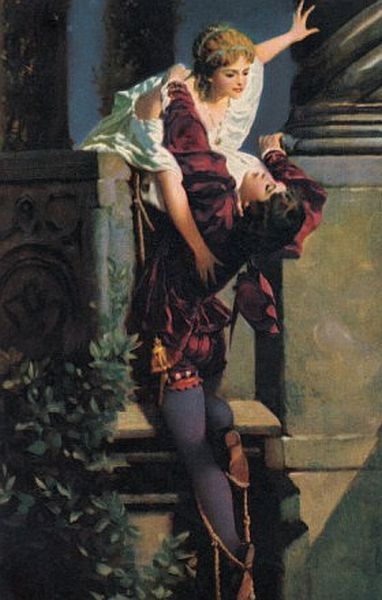
Romeo stopped by the local hardware store and properly equipped himself.    (They eloped, as planned, this time, without the tragic ending, where everyone’s been stabbed or poisoned.)

Or—not Romeo and Juliet, but Rapunzel and her (fill in name here—“Charming” being a common place-holder) Prince, who is, for a change, a little more considerate than the usual prince in the story..

After all, have you ever had your hair pulled?  Granted, if you’ve got fifteen feet or more of it—but wait—let’s go back a bit.

(Although, in an interesting variant of this theme, from Ferdowsi’s  10th/11th-century epic poem “Shahnameh”, a prince, Zal, when offered a princess, Rudaba’s,, hair as a means of escalade, takes a lariat from a retainer, instead.  See:  https://archive.org/details/shahnama01firduoft/page/270/mode/2up  )

It all seems to begin with a late Renaissance story collection, Giambattista Basile’s (1583-1632 )
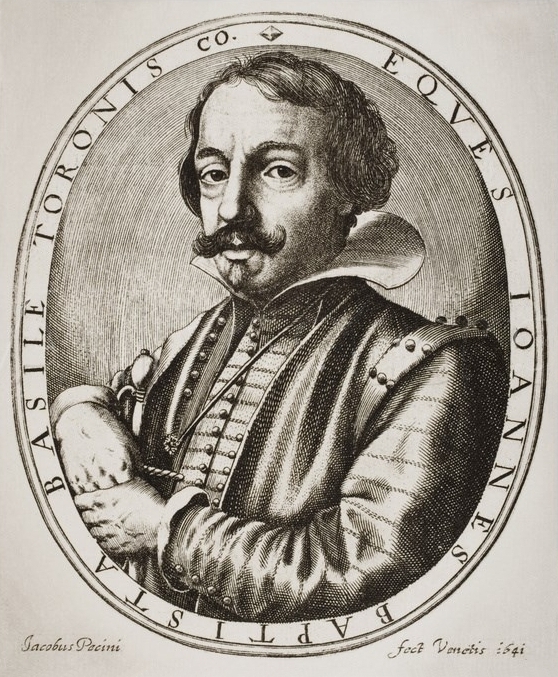
 Pentamerone.

(so far the earliest printing I can find—as you can see, it’s dated 1749—but it gives away a secret:  Giambattista Basile was actually Gian Alesio Abbattutis—although “abbattuto” in modern Italian means “depressed”—so was his work, like Thomas d’Urfey’s subtitle to his “Wit and Mirth”—“ or Pills to Purge Melancholy”,  an eventual 6-volume collection of poems and songs, published between 1698 and 1720, an attempt to relieve despair?  You can see all six of d’Urfey’s volumes here:  https://archive.org/details/imslp-and-mirth-or-pills-to-purge-melancholy-durfey-thomas/PMLP144559-Vol._1/page/n5/mode/2up  Don’t be confused by the spelling of the subtitle of the Basile, by the way:  this is the southern Italian/Sicilian spelling of “conto”—“story”, so it means “the story of stories”, meaning “the very best of stories” .)

published posthumously by his sister, Adriana, in two volumes, in 1634 and 1636.

Its title means something like “Five Days” and the title comes from the framing story—which you can read about here:  https://en.wikipedia.org/wiki/Pentamerone  In sum, ten story-tellers are hired each to tell one story a day for five days, making a total of fifty stories.

The first story on the second day is “Petrosinella”—“Parsley”, the title coming from the name of the main character.  (The modern Italian word is “prezzemolo” so I’m assuming that this is dialectal/archaic or both.  Pliny, in his Natural History, Book XX, Chapter 47, mentions “petroselinon”—the Latin form being “petroselinum”—“rock (petra) parsley”, so I’m guessing that “Petrosinella” is what is called a metathetic form, where part of the word has been transposed with another, like “calvary” for “cavalry”.  Maybe also confused with the Italian diminutive ending “-ella”, as if the meaning is “Little Parsley”.  If you’d like to read what Pliny has to say about it—including being useful for snake bite, see:   https://www.perseus.tufts.edu/hopper/text?doc=Perseus%3Atext%3A1999.02.0137%3Abook%3D20%3Achapter%3D47 )

A brief summary of the plot:

A pregnant woman repeatedly visits the garden of an orca (ogress—now, however, a killer whale—not what Basile had in mind, I’m sure)) to steal parsley,   The ogress catches her, but lets her go on condition that the ogress  gets the child.  Sounds familiar, doesn’t it?  Eventually, she gets the child, whom she puts into a tower with only one high window and visits her by using the girl’s hair.

And, if you know “Rapunzel”, you know what happens next—prince, etc—but then the story becomes quite different, with Petrosinella and the prince escaping and the ogress eventually being killed.  (Here’s the whole story for you in  J.E. Taylor’s  1847 translation in a 1911 illustrated reprinting:  https://archive.org/details/31383047427094/page/82/mode/2up )

Well, until the later part of the story, this looks more or less familiar, but, if this is the Rapunzel story, why is the main character called “Parsley”?

For that, we need to move to its next incarnation, “Persinette”, by Charlotte-Rose de Caumont de la Force, who published her version of the story, which she claimed was original, in a volume the title of which suggests that she had, in fact, read Basile:  Les Contes des Contes (1698), making a slight change by pluralizing that first story in Basile’s subtitle, not to mention the fact that her heroine is named “Little Parsley” (“Persinette”—although one might expect “Persilette”, as the French word for parsley is “persil”).

A major difference between this and Basile’s text is that de Caumont’s is much more elaborate—including the detail that parsley was not available at that time and that the Fairy (no longer an ogress) has had to have it imported from India!  Much of the basic story we read in Basile is there—the hair, the tower, but more has been added, beginning with it being Persinette’s father-to-be who steals the parsley, rather than her mother, the fact that the Fairy causes the tower to appear by magic, that, finding Persinette to be pregnant, the Fairy isolates her in a cottage by the sea, that Persinette has twins there, that the Fairy tricks the prince, who leaps from the tower and is blinded—so much more of which fits in with the familiar Rapunzel story.  (Here’s a summary:  https://en.wikipedia.org/wiki/Persinette  but, for the complete story, so far I’ve only managed to find a 1785 French version, which, if you have some French—with 18th-century spelling conventions—you can read here:  https://en.wikipedia.org/wiki/Persinette )

But, although there are lots more familiar details here, we’re still in the land of parsley—how did we move  to “rapunzel”—which isn’t parsley, but something called “rampion”?

This is an edible plant, once commonly grown and eaten, but now seems to have lost its popularity (for more, see here:  https://botanical.com/botanical/mgmh/r/rampio03.html  And a more scientific description here:  https://www.missouribotanicalgarden.org/PlantFinder/PlantFinderDetails.aspx?taxonid=278824 )

The answer to the question of name change is:  we move from Italian to French to German, as rampion replaces parsley in Friedrich Schulz’ 1790 collection Kleine Romane, “Little Novels”, in which he included his translation of de Caumont (available here in a transcription from the Fraktur (old German script) of the original:  https://babel.hathitrust.org/cgi/ssd?id=chi.81388905;page=ssd;view=plaintext;seq=281;num=271#seq281  and pages beyond–I’ve done a quick survey of the text, which sticks  pretty closely to the French—except for that “rapunzel”, which is noted to be a rare plant, just as the parsley is in de Caumont, although the Fairy doesn’t get it from India.) 

This, in turn, was used by the Grimm brothers in the first edition of Kinder und Hausmaerchen (something like “Children’s and Domestic Wonder-tales”) in 1812.

But one more but—how does the story come into English?

The first “translation” of the Grimm brothers’ work is the two volumes by Edgar Taylor, published in 1823 and 1826.

This is, in fact, only a selection, and doesn’t include “Rapunzel”, possibly because of Rapunzel’s pregnancy out of wedlock.  As far as I can currently determine, the first English translation to include the story is the Edward H. Wehnert Household Stories, 1853, in two volumes, “Rapunzel” being in the first, and you can read it here:  https://archive.org/details/householdstorie01grimgoog/page/n6/mode/2up?view=theater

From there we can move to  Margaret Hunt’s 1884 translation in 2 volumes (here:  https://archive.org/details/grimmshouseholdt01grim/page/n3/mode/2up?view=theater  for volume 1 and here:  https://archive.org/details/grimmshouseholdt2grim/page/n7/mode/2up for volume 2.  This translation is noted in particular as it includes the Grimms’ editiorial notes, the first edition to do so.)

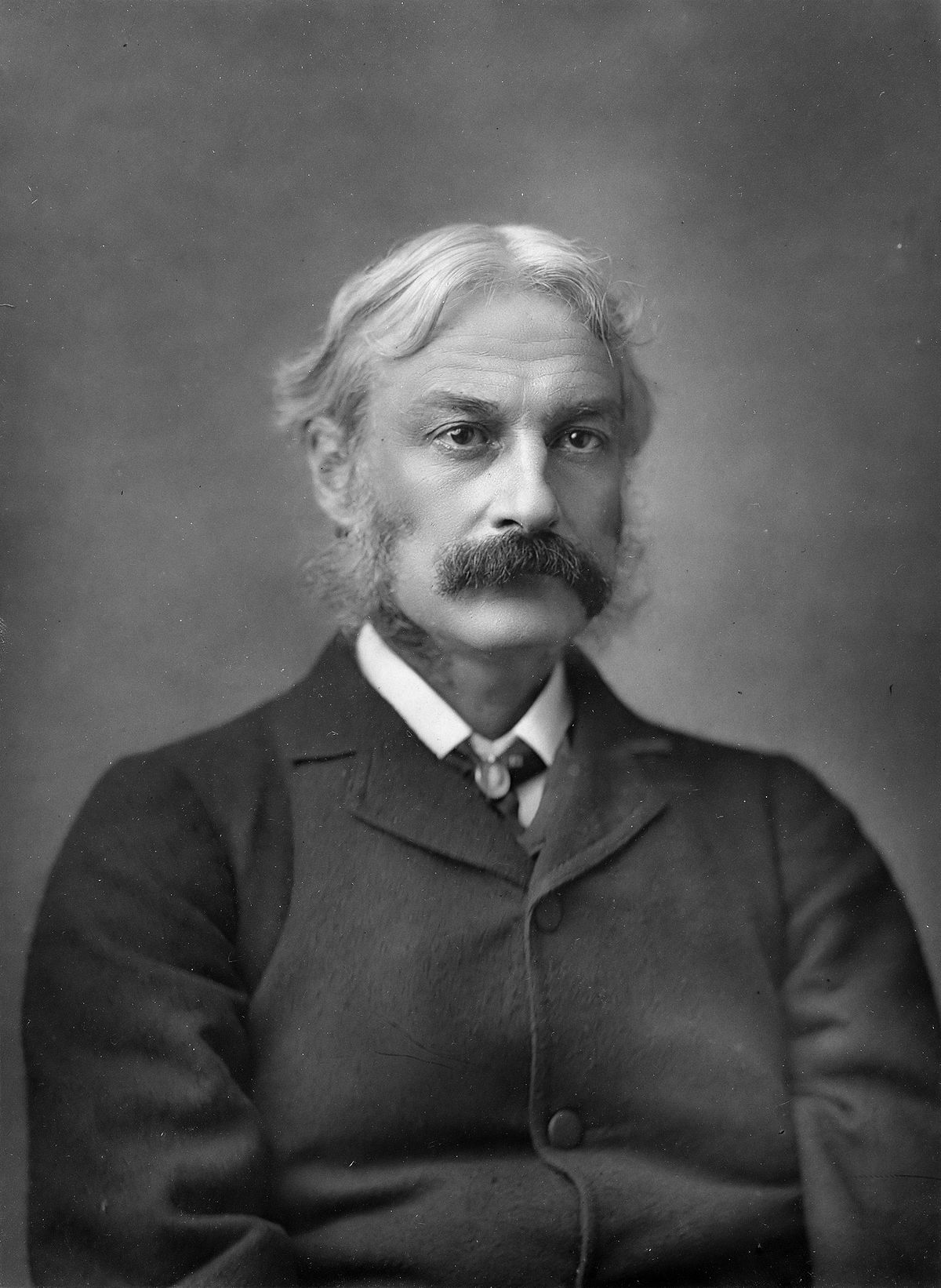
And, interesting–this edition had an introduction by Andrew Lang, who then included it in his 1890 The Red Fairy Book (https://www.gutenberg.org/files/540/540-h/540-h.htm ), where JRRT probably read it, as we know he knew other stories from the volume.

So, why is that ladder there?  An updated fairy tale?   Or just an absent-minded repairman?  I’d prefer to think the former, although, in comparison with that long column of golden hair in the old stories

an aluminum extension ladder seems awfully drab.

Thanks, as ever, for reading.

Stay well,

If you’re acrophobic, best to seek adventure among dwarves,

And remember that, as always, there’s

MTCIDC

O

PS

The change from “parsley” to “rampion”—and even which plant is “rampion”—has been the subject of scholarly discussion.  See:   https://writinginmargins.weebly.com/home/what-is-the-plant-in-rapunzel  .Edward Taylor, in his 1846 collection, The Fairy Ring, even decided that either name was inappropriate for his British readers and changed her name to “Violet”!  You can read his version here:  https://babel.hathitrust.org/cgi/ssd?id=uc1.31158001207546;page=ssd;view=plaintext;seq=367;num=321#seq367  

PPS

If you would like to compare various English translations, from 1823 to 1927, see:  https://archive.org/details/householdstorie01grimgoog/page/n6/mode/2up?view=theate
Shadowy

11 Wednesday Sep 2019

Posted by Ollamh in Fairy Tales and Myths, J.R.R. Tolkien, Literary History

≈ Leave a comment

Tags

A Child's Garden of Verses, Adelbert von Chamisso, Andrew Lang, Ausgabe des Fortunatus, Charles Perrault, Fortunatus' fortune-bag, Histoires ou Contes du Temps Passe, J.M. Barrie, Le Petit Poucet, Lord Dunsany, Peter Pan, Peter Schlemihl, Peter Schlemihls Wundersame Geschichte, Robert Louis Stevenson, seven-league boots, Shadow, Siglo de Oro, Sortes Tolkienses, The Charwoman's Shadow, The Grey Fairy Book, The Lord of the Rings, Tolkien

Welcome, dear readers, as always.

We were practicing our sortes tolkienses (one way of finding a topic—by simply slipping a finger into The Lord of the Rings and opening it at that page—it’s not 100% useful, but sometimes…) and came upon the title of Chapter 2 of Book One of The Fellowship of the Ring:  “The Shadow of the Past”.

In the context of the chapter, we see that that shadow is cast by the history of the Ring itself and also by its maker, Sauron.  That, in turn, set us off on thinking about literary shadows…

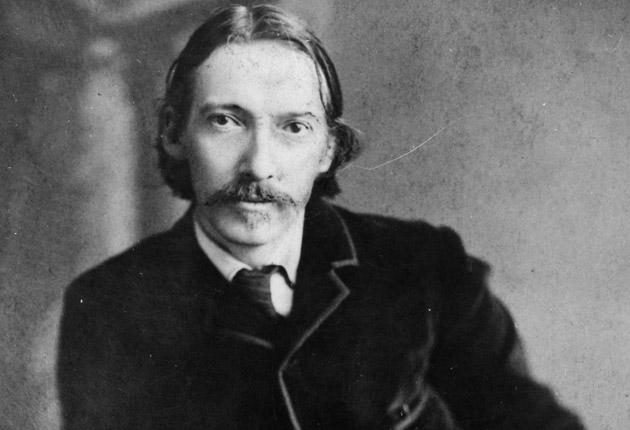
In 1885, Robert Louis Stevenson (1850-1894)

image1rls.jpg

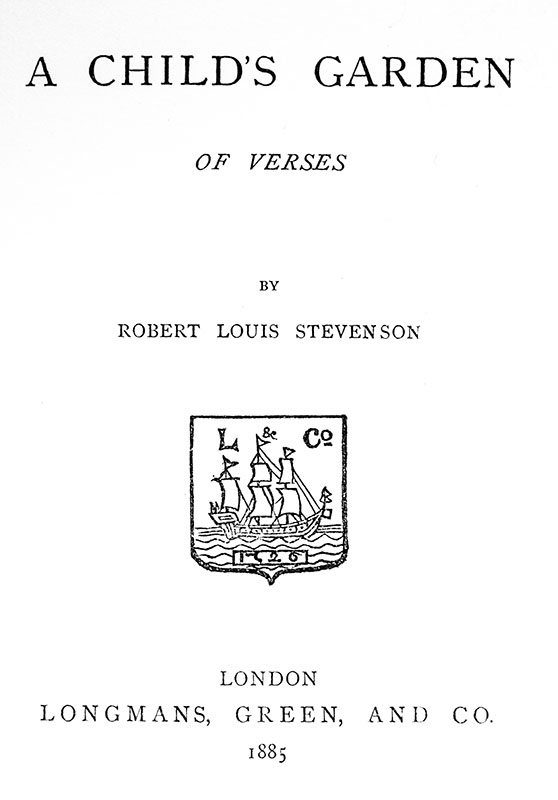
published a collection of poems.

image2achilds.jpg

Poem #19 (if you count the dedication, which is, in fact, a poem) begins:

“I have a little shadow that goes in and out with me,

And what can be the use of him is more than I can see.”

[If you would like your own copy of this volume, follow this LINK.]

In fact, in literature, its use is both visible—and invisible.

In psychology, the shadow is metaphorical, being used to symbolize an unconscious part of the personality.  [For more on this, see this LINK.]

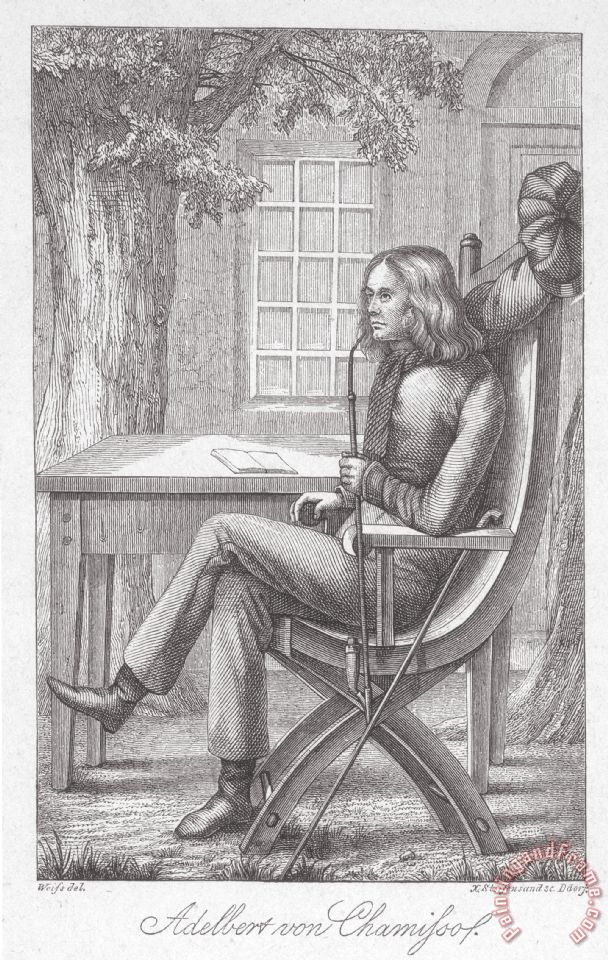
And, visibly—but also invisibly—the shadow as physical object can represent something more, as we find in perhaps the first modern literary use of the shadow in Adelbert von Chamisso’s (1781-1838)

image3avonc.jpg

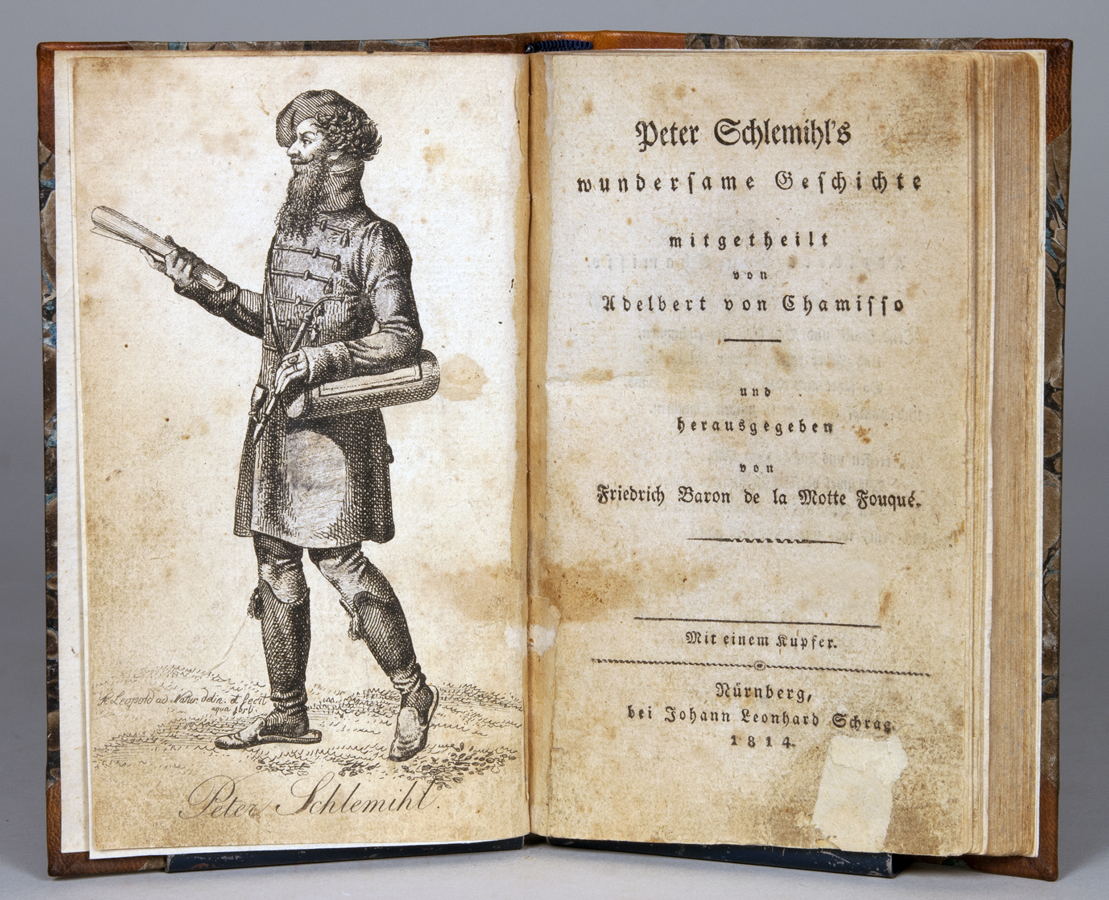
novella (a short novel), Peter Schlemihls Wundersame Geschichte (1814), “Peter Schlemihl’s Amazing Story”.

image4ps.jpg

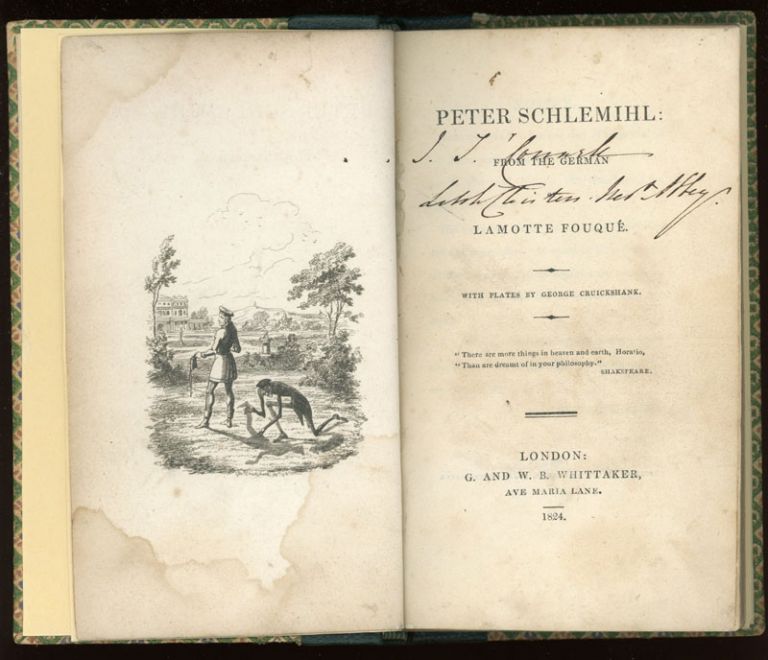
Here’s the first English translation, from 1824.

image5firsteng.jpg

In the story, the protagonist, Peter Schlemihl, meets a strange man, who can pull anything out of his pocket—and we mean anything.  As Schlemihl reports:

“If my mind was confused, nay terrified, with these proceedings, how was I overpowered when the next-breathed wish brought from his pocket three riding horses.  I tell you, three great and noble steeds, with saddles and appurtenances!  Imagine for a moment, I pray you, three saddled horses from the same pocket which had before produced a pocket-book, a telescope, an ornamented carpet twenty paces long and ten broad, a pleasure-tent of the same size, with bars and iron-work!”

(This is from the 3rd edition (1861) of that first English translation.)

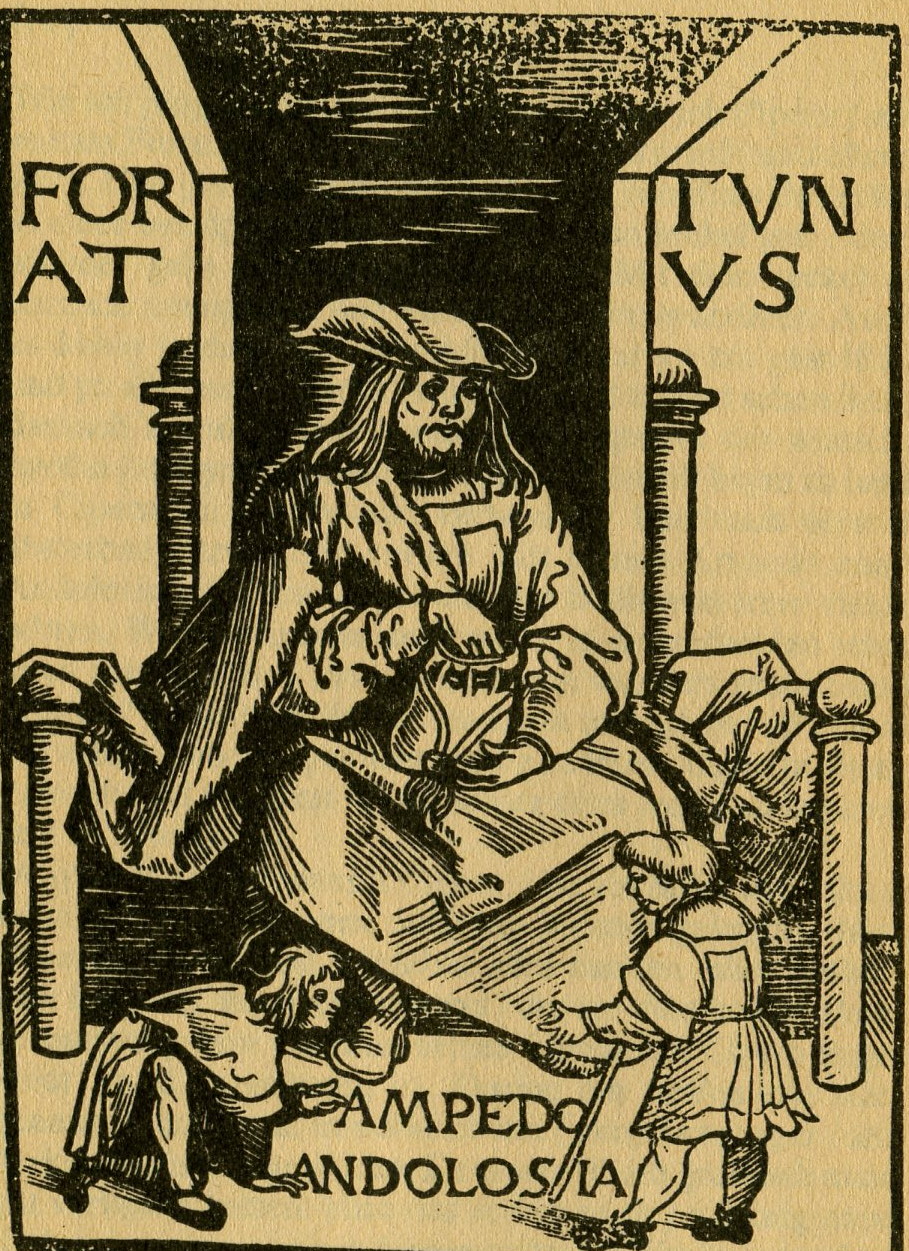
Impressed, Schlemihl is quickly persuaded to make a trade.  The strange man offers him a magic purse, which he calls “Fortunatus’ fortune-bag”.  This object is based on an old story which seems to appear for the first time in 1509 as Ausgabe des Fortunatus (the “Edition/Issue of Fortunatus”?), in which Fortunatus (as you’ll probably guess, the name means “Lucky”) has both a wishing cap and this bag.  Here’s the title page of that first edition.

image6fort


[If you would like to read one version of the Fortunatus story, here is a link to it from Andrew Lang’s The Grey Fairy Book (1900).]

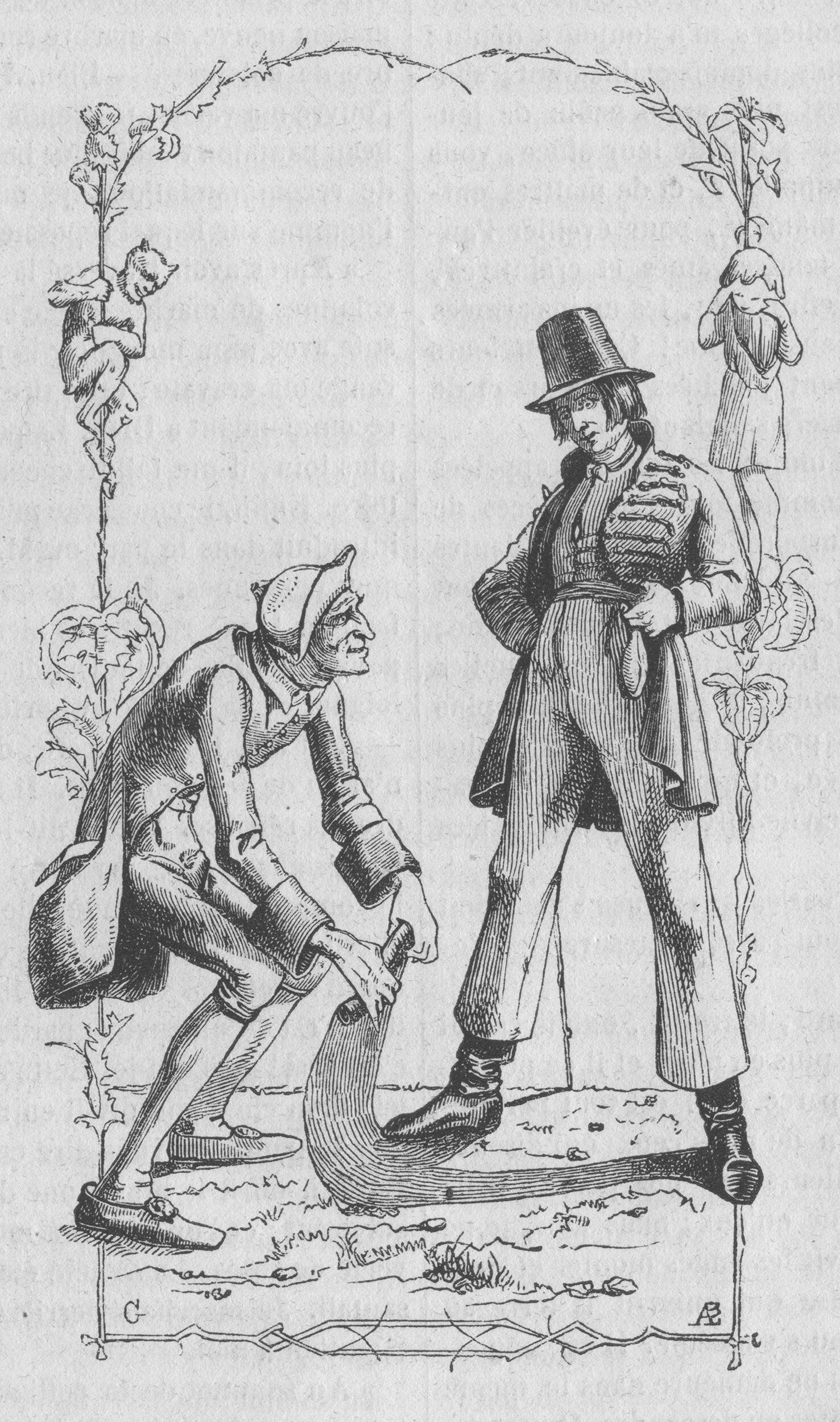
The purse will always produce ten gold coins when one puts a hand inside, guaranteeing a steady means of wealth for the owner.  In return for this, Schlemihl hands over–his shadow.

image7ps.jpg

This seems an odd trade, but having a magic bag which acts as an endless bank account is certainly no less strange.  Not to be too literal-minded, but beyond the idea that a shadow is a tradable item, it makes us wonder, however:  what could a shadow be made of that it can be removed and collected?

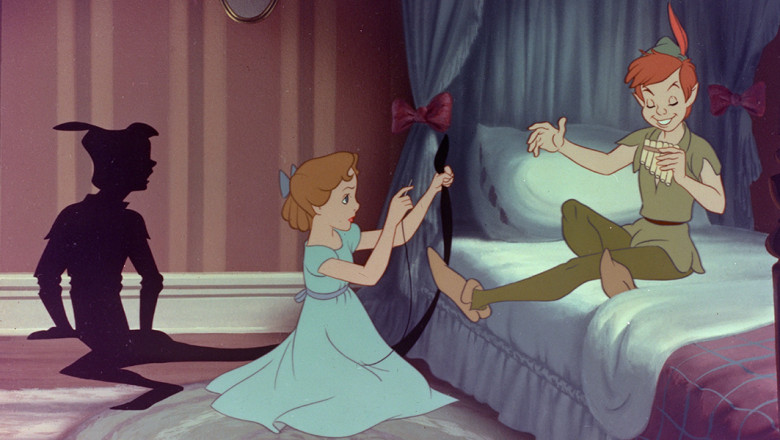
At the beginning of Peter Pan (1904), Peter has lost his shadow and Wendy reattaches it by sewing it on, as if it were simply mobile black cloth and perhaps this is how we might think about it as a physical object, at least for shadow stories.

image8asewing.jpg

Although he is pleased with the money, Schlemihl soon realizes the real price he has paid:  when people see that he has no shadow, they avoid him in anything from disgust to horror, which ruins his ability to live anywhere and even to marry the girl he wishes.  The shadow, then, is more than cloth:  it is part of a person’s identity.  If you cast no shadow, you are not quite human.  The real price of the shadow is even higher, however, as Schlemihl learns when the strange man (who is obviously Satan in human form) returns to offer a second bargain:  the Devil will return his shadow in return for his soul.

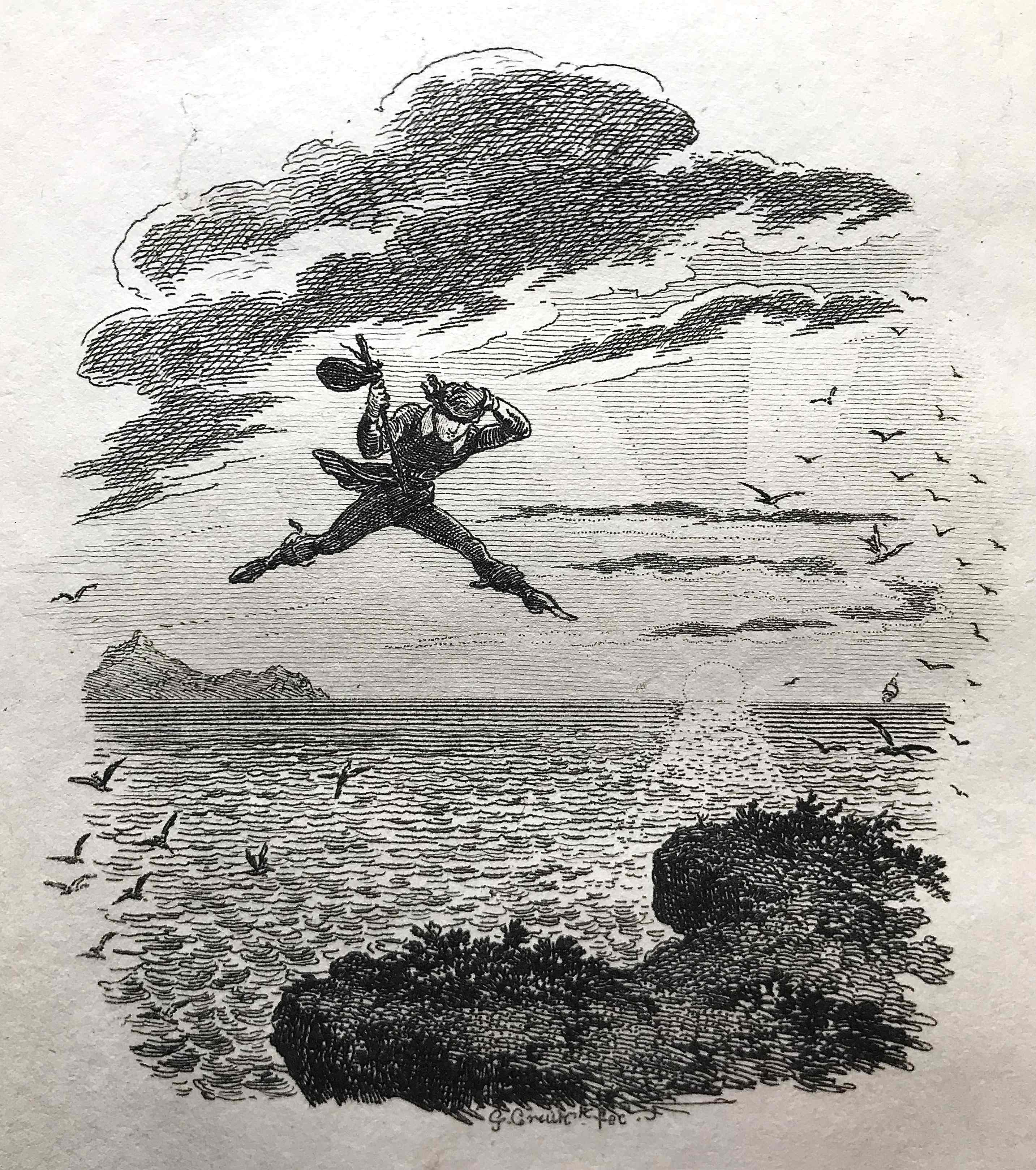
It’s clear that here Schlemihl has learned his lesson, refusing this offer several times and finally throwing away the “fortune-bag”.  Although he may believe that he is done with magic, magic is not yet done with him, however.  With some of the few coins remaining to him, by accident (or so it seems), he buys a pair of seven-league boots.  (A “league”, classically, is about three miles, so, when he puts them on, each step he takes is at least twenty-one miles.)

image8seven


This element of the story, in turn, is also based on something in another older story, which appears in Charles Perrault’s (1628-1703)

image9perrault.jpg

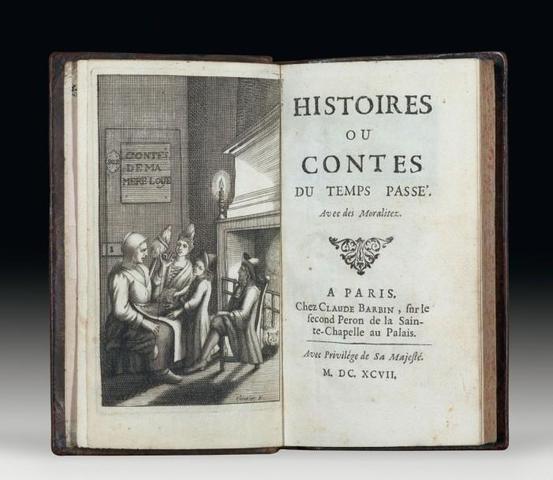
1697 collection, Histoires ou Contes du Temps Passe,

image10histoires.jpg

“Le Petit Poucet” (maybe “Thumblet”?).  In this story, a character steals a pair of these boots from a pursuing ogre, allowing the thief to cover great distances with every stride.

[If you’d like to read this story, here’s a LINK from a 1901 translation.]

With these boots, Schlemihl never regains his shadow, but eventually gains a peaceful existence studying the natural world (which, in fact, von Chamisso did, as well, becoming a well-known naturalist later in life).

[Here’s a LINK to a translation of the story by Michael Haldane.]

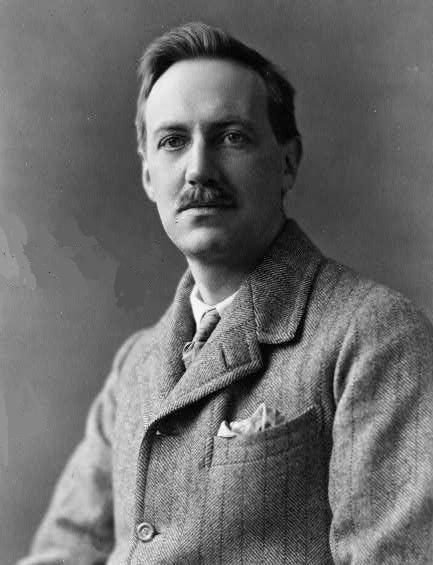
More than a century later, the early modern fantasy writer, Lord Dunsany (1878-1957)

image11ld.jpg

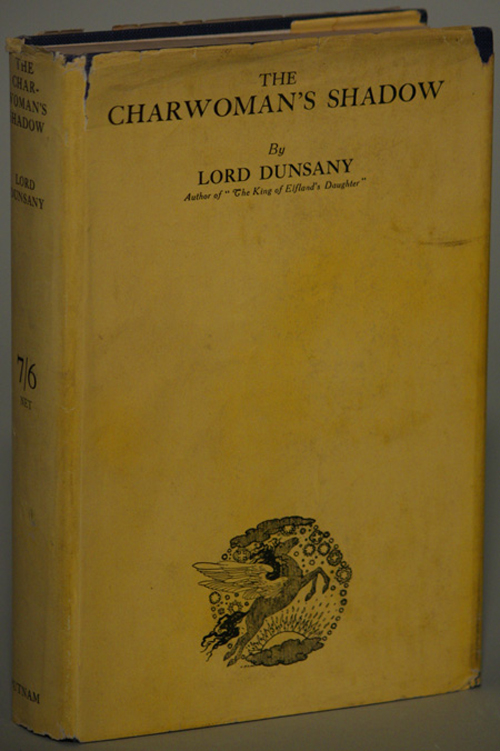
reused the idea of buying or trading shadows in his 1926 novel, The Charwoman’s Shadow.

image12char.jpg

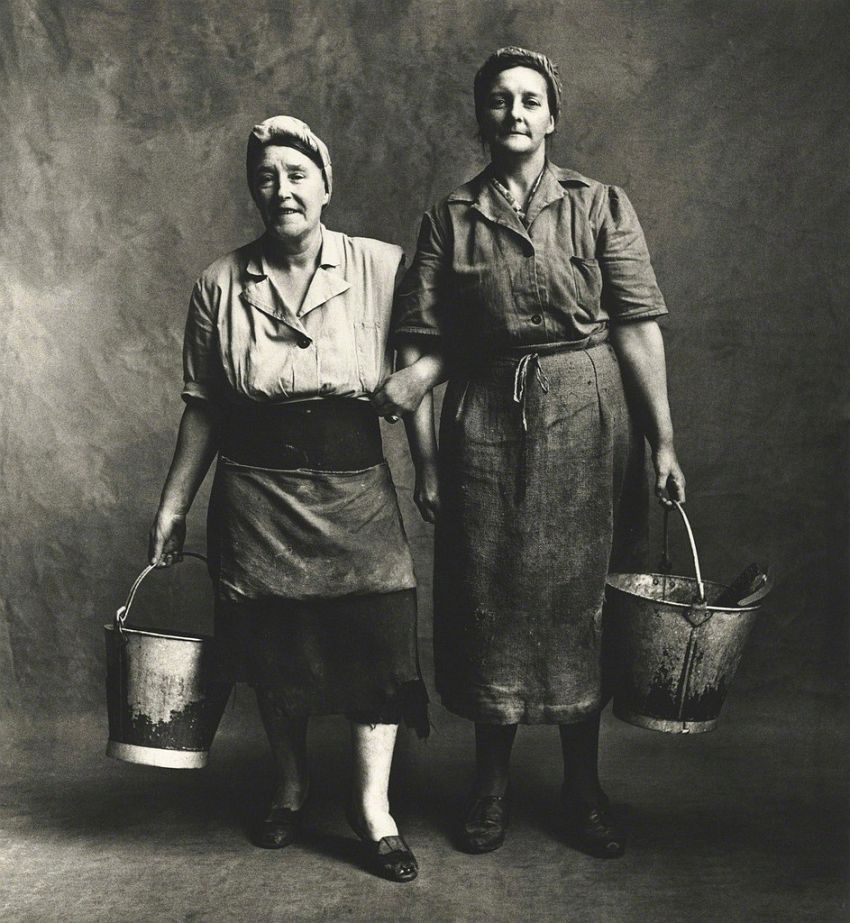
A charwoman, or, simply, “char” (“char” is the same as “chore”, meaning “a task”), in the UK means a kind of cleaning woman.

image13chars.jpg

When it comes to fantasies, the idea that this may be about the shadow not of a princess, or at least a lady in distress, but of an ordinary cleaning lady, is immediately intriguing, but the charwoman isn’t really the main character.  That’s Ramon, the son of an impoverished Spanish nobleman.

To earn money for his sister’s dowry, as well as to find a profession, Ramon apprentices himself to a wizard who deals, among other things, in shadows.  As payment for his learning, Ramon uses his shadow—but, just like Peter Schlemihl before him, quickly comes to regret it.  The charwoman works in the wizard’s house and, as Ramon slowly learns spells, he also learns her story and what has happened to her since she traded away her shadow long before.

In a moment of chivalry (the story takes place in Spain in what’s called the Siglo de Oro, the “Golden Century”—the early 16th to the later 17th centuries–when wealth from the New World made Spain a world power, as well as a leader in the arts), Ramon promises to rescue the Charwoman’s shadow for her.  In the house of a wizard, you can imagine that this won’t be easy, but, eventually, and through ingenuity, he does so, only to discover that—but you should really read the story for yourself.

[Unfortunately, as this book was published in 1926, it’s still under copyright here in the US, so we can’t offer our usual LINK, but we can offer you Peter and Wendy (1911), the novel version of Barrie’s 1904 play—LINK.]

In contrast to shadows which can be traded or lost, what’s interesting to us about Sauron’s shadow is that it’s no more than a suggestion of the appearance of its owner, who, although he casts that shadow over all of Middle-earth, never appears physically in the novel.  The Nazgul—shadowy figures themselves—represent him, but Sauron himself is never more than a shadow and, in fact, when he is eventually destroyed, it’s his shadow we see broken and swept away:

“And as the Captains gazed south to the Land of Mordor, it seemed to them that, black against the pall of cloud, there rose a huge shape of shadow, impenetrable, lightning-crowned, filling all the sky.  Enormous it reared above the world, and stretched out towards them a vast threatening hand, terrible but impotent:  for even as it leaned over them, a great wind took it, and it was all blown away, and passed; and then a hush fell.”  (The Return of the King, Book Six, Chapter 4, “The Field of Cormallen”)

That “little shadow”, then, certainly has more uses than the child in Stevenson’s poem will ever see.

Thanks, as ever, for reading.

MTCIDC

CD

Ring Composition

09 Wednesday Jan 2019

Posted by Ollamh in Fairy Tales and Myths, J.R.R. Tolkien, Literary History, Narrative Methods

≈ Leave a comment

Tags

Alberich, Andrew Lang, Andvari, Anglo-Saxon, Annatar, Der Ring des Nibelungen, Fafnir, Fairy Books, Goetterdaemmerung, Halvor, Heroic literature, Hildebrandts, Midgard Serpent, Norse Folktales, Old English, Otter, Red Fairy Book, Richard Wagner, Ring, Sauron, Sigurd, Sir George Webbe Dasent, Soria Moria Castle, The Lord of the Rings, The Ring of the Nibelung, The Silmarillion, Tolkien, Widsith

Welcome, as always, dear readers.

The title of this essay is derived from a technique in heroic literature, in which, in some way, the story/song ends, more or less where it began, just like a ring—or the Midgard Serpent, which encircles the earth in Norse mythology.

image1jormungandr.jpg

Thinking about ring composition made us think, of course, about the Ring

image2ring.jpg

and to ask ourselves a question about the composition of The Lord of the Rings:  where did the idea of a powerful ring come from?

There has been a lot of scholarly work about what influenced JRRT, some of which he himself agreed with, some he did not.  For instance, the suggestion that Richard Wagner’s  (1813-1883)

image3wagner.jpg

huge 4-opera cycle, Der Ring des Nibelungen,   “The Ring of the Nibelung” (1848-1874)

image4ring.jpg

might have provided a spark was vigorously dismissed by Tolkien—although, to our minds, there is a certain similarity—the ring of the title is a magical one, after all, whose power would allow the owner to rule the world—but it’s accursed and only brings unhappiness—or worse– to anyone who possesses it.  And yet characters in the four operas which make up the cycle struggle over its possession.   There, however, the similarity ends.  The maker of the ring isn’t a semi-divine figure who’s attempting to rebuild his kingdom through a combination of his magical powers and his political abilities, but, rather, a dwarf, named Alberich, who has stolen the gold from which the ring is made from the Rhine Maidens, and, in return, Alberich must give up love, which he renounces.

image5alberich.JPG

He soon loses the ring and there is no parallel with the Shire, or with hobbits:  this is a world with gods and heroes, all larger-than-life, and Sam, in particular, would feel very out of place here.  Just contrast the Hildebrandts’ Frodo and Sam meeting Faramir with this children’s theatre character sheet depicting the figures from the last of the four operas, Goetterdaemmerung, “The Gods’ Twilight”.

image6samandfrodo.jpg

image7toy.jpg

We would suggest that a stronger influence might be found in JRRT’s interest in Old English literature.  In that literature, Anglo-Saxon kings and lords are known as “ring-givers” and “gold-givers”,

image8king.jpg

image9armring.jpg

image10ring.jpg

who reward their followers—as well as singers—with precious decorations–as the poet in the poem called Widsith tells us:

Likewise I was among the Eatula with Ælfwine,
he had the lightest hand of all mankind, as I have heard,
to perform his praises, the most generous in the sharing of rings,
the bright bracelets, the child of Eadwine. (68-74)

(translation by Prof. Aaron K. Hostetter of Rutgers University, Camden—here’s a LINK so that you can read the whole poem—and much more—at his website—he has a wonderful project to translate a mass of Old English literature and has done a great deal to make it all accessible in one place.  As for Widsith, there’s a very useful Wiki article, if you’re interested.  Here’s a LINK to it.)

Whereas there might be some distant influence in the making of a powerful ring in Wagner’s operas, the giving of rings makes us think of Sauron, when he reappears in the Second Age.  At that time, he comes in the guise of “Annatar”, “Lord of Gifts” and, to gain power over the Elves, encourages them to make rings, all the while creating his own to overpower and master them.  As his power grows, he collects all of the rings he can (he never succeeds in getting the last three Elven rings) and doles them out, like those Anglo-Saxon kings and lords, to attempt to control dwarves and men, as well:

“But Sauron gathered into his hands all the remaining Rings of Power; and he dealt them out to the other peoples of Middle-earth, hoping thus to bring under his sway all those that desired secret power beyond the measure of their kind.” (The Silmarillion, 288)

The theme in both Wagner and The Silmarillion is that of supernatural control through what appears to be a rather ordinary object, a ring, something which, when Bilbo first finds it, is described as nothing more than “a tiny ring of cold metal” (The Hobbit, Chapter 5, “Riddles in the Dark”).  Tolkien may have been influenced by its appearance in opera, and more likely, by the use of rings in Old English, but there is an older possibility:

“Outside school-room hours his mother gave him plenty of story-books…The Arthurian legends also excited him.  But most of all he found delight in the Fairy Books of Andrew Lang, especially the Red Fairy Book, for tucked away in its closing pages was the best story he had ever read.  This was the tale of Sigurd who slew the dragon Fafnir:  a strange and powerful tale set in the nameless North.” (Carpenter, J.R.R. Tolkien, A Biography, 31)

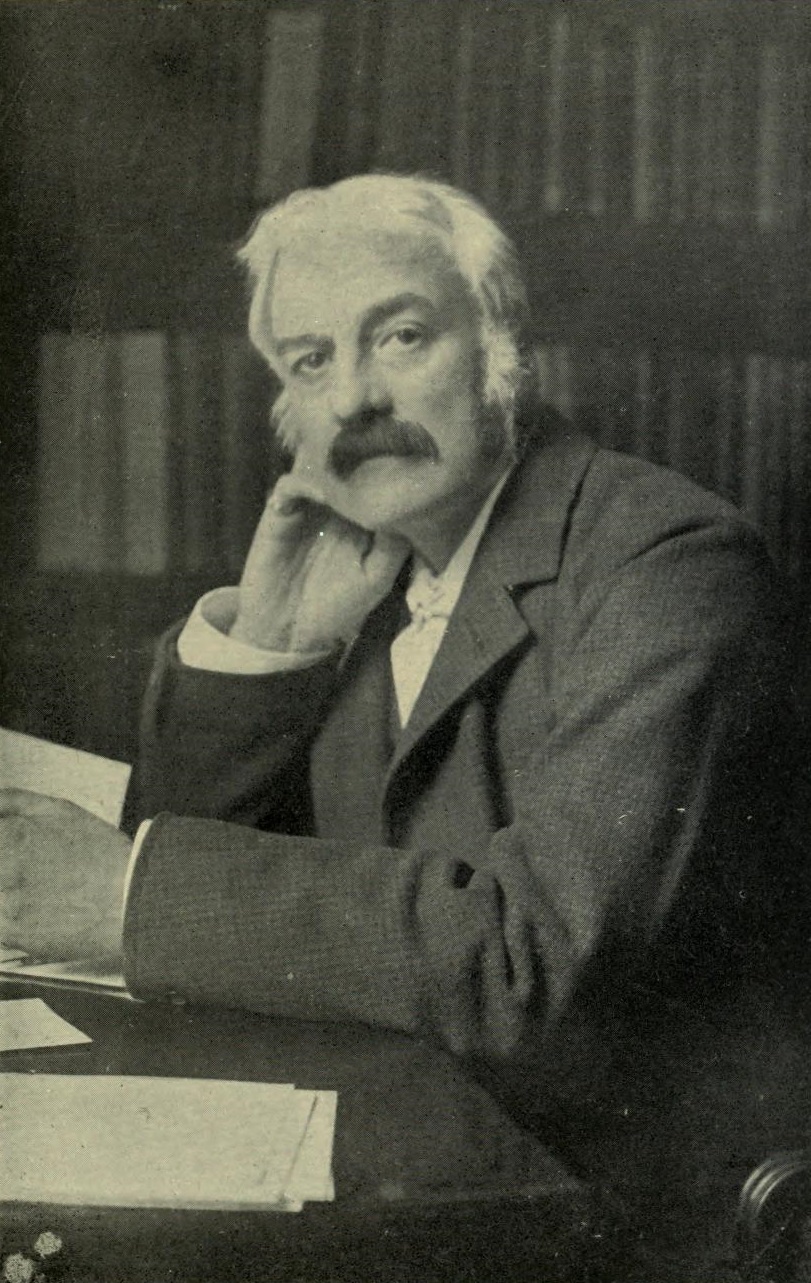
Andrew Lang (1844-1912),

image11lang.jpg

who might be considered a perfect example of the Victorian literary figure, having  written novels, poems, criticism, travelogues, and early anthropological works, had also begun publishing a series of collections of stories for children, each one of the series being bound in a different color.

image12fairybooks.jpg

His wife, Leonora Blanche Alleyne (1851-1933), did most of the editing after the initial volumes, publishing, in all, a dozen volumes between 1889 and 1910.  The Red Fairy Book (1890) was the second in the series

image13rfb.jpg

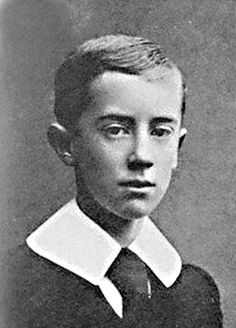
and it was in this volume that a little boy

image14jrrt.jpg

first discovered dragons—and perhaps magic rings, as well, as in the story of Sigurd, we find:

“Now there was at that time a dwarf called Andvari, who lived in a pool beneath a waterfall, and there he had hidden a great hoard of gold. And one day Otter had been fishing there, and had killed a salmon and eaten it, and was sleeping, like an otter, on a stone. Then someone came by, and threw a stone at the otter and killed it, and flayed off the skin, and took it to the house of Otter’s father. Then he knew his son was dead, and to punish the person who had killed him he said he must have the Otter’s skin filled with gold, and covered all over with red gold, or it should go worse with him. Then the person who had killed Otter went down and caught the Dwarf who owned all the treasure and took it from him.

Only one ring was left, which the Dwarf wore, and even that was taken from him.

Then the poor Dwarf was very angry, and he prayed that the gold might never bring any but bad luck to all the men who might own it, for ever.” (Lang, editor, “The Story of Sigurd”)

And this is not the only ring to be found in The Red Fairy Book.

In the “Draft of a letter to ‘Mr. Rang’ ”, dated by Tolkien as “Aug. 1967”, JRRT has this to say about the origin of the name Moria:

“In fact this first appeared in The Hobbit chap.1.  It was there, as I remember, a casual ‘echo’ of Soria Moria Castle in one of the Scandinavian tales translated by Dasent.  (The tale had no interest for me:  I had already forgotten it and have never since looked at it…)” (Letters, 384)

The “Dasent” mentioned here is Sir George Webbe Dasent (1817-1896), lawyer, civil servant, and sometime professor of English Literature and Modern History at King’s College, London, who, in 1859, had published Popular Tales from the Norse, a translation from the Norwegian of a series of pamphlets and books by Asbjornsen and Moe under the general title “Norske Folkeeventyr” (“Norse Folktales”), published between 1841 and 1871.   By the third edition (1888), Dasent had added, among other works, a story entitled “Soria Moria Castle”.  Tolkien may have seen any one of the several different editions of this work as an adult, but, as a child, he would have first read “Soria Moria Castle” in the same Red Fairy Book in which he had encountered Sigurd and the dragon.  (Here’s a LINK to the Lang if you would like to see the two stories as JRRT would have.)

Beyond the title and its hint of Dwarfish mines, however, there is also a magic ring to be found in this story, given to the hero, Halvor, by three princesses whom he has rescued from trolls:

“Then they dressed him so splendidly that he was like a King’s son; and they put a ring on his finger, and it was one which would enable him to go there and back again by wishing, but they told him that he must not throw it away, or name their names; for if he did, all his magnificence would be at an end, and then he would never see them more.” (“Soria Moria Castle”)

JRRT was born in 1893.  We don’t know exactly when his mother may have handed him Lang’s collection, but it was in childhood, according to his own recollection.  Thus, the Ring—disguised as a ring—may have entered his life long before he heard an opera, or studied an earlier form of his native language.

The Lord of the Rings has a ring in its composition and we began this posting with talk of ring composition, but now we’re going to conclude by breaking loose from that ring by suggesting that perhaps that was the ultimate purpose in the original choice of the Ring for JRRT:  to symbolize completion not by circling back, but by the breaking of a seemingly unbreakable circle.  Sauron, once the servant of Melkor, but having great power of his own, has used that power not only to return and return through the ages from defeat, but to fashion a master ring, one which controls all others, giving him even more strength.  At the same time, it had required such strength to make such a ring that, at its destruction:
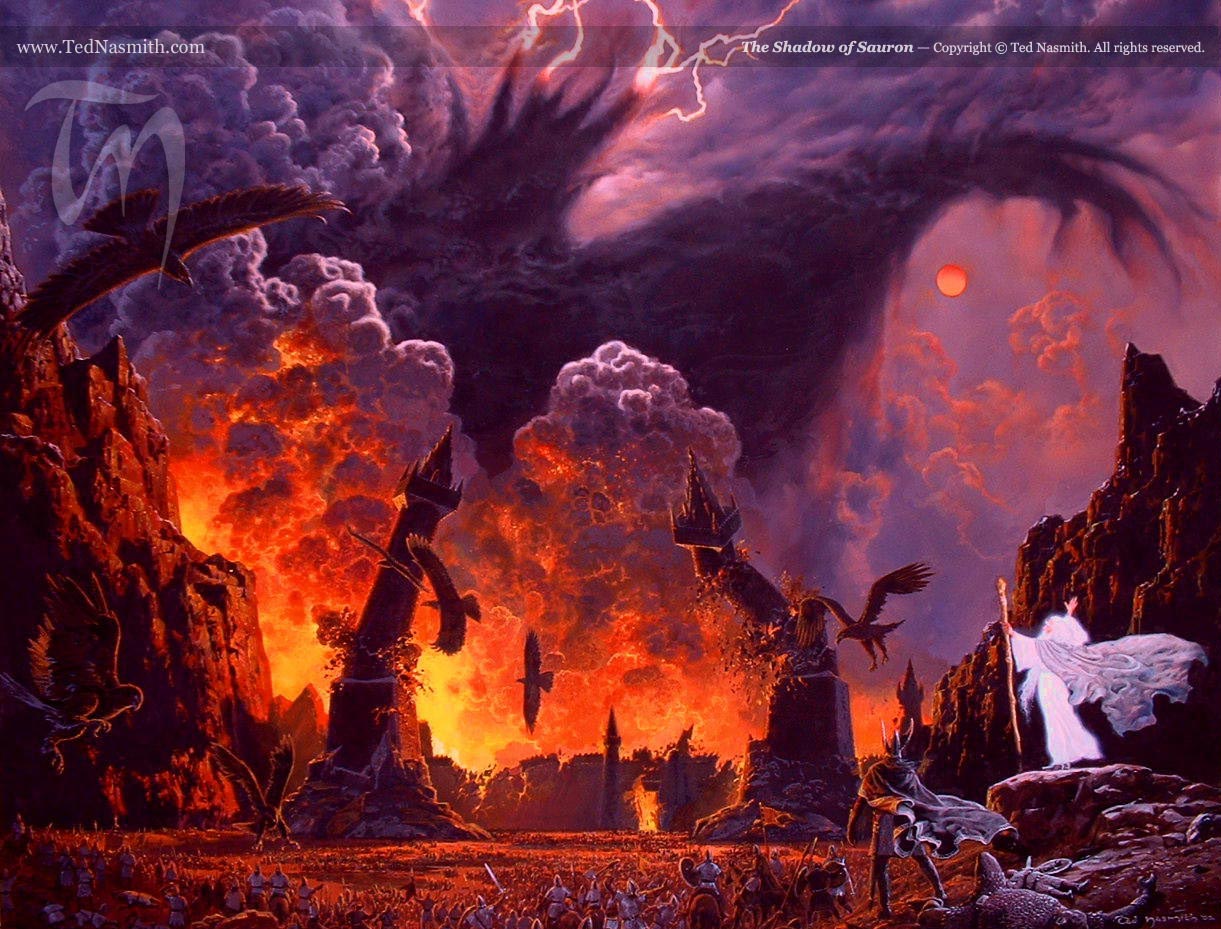
“ ‘The realm of Sauron is ended!’ said Gandalf. ‘The Ring-bearer has fulfilled his Quest.’  And as the Captains gazed south to the Land of Mordor, it seemed to them that, black against the pall of cloud, there rose a huge shape of shadow, impenetrable, lightning-crowned, filling all the sky.  Enormous it reared above the world, and stretched out towards them a vast, threatening hand, terrible but impotent:  for even as it leaned over them, a great wind took it, and it was all blown away, and passed; and then a hush fell.” (The Return of the King, Book Six, Chapter 4, “The Field of Cormallen”)

image15end.jpg

(Another wonderful illustration by one of our favorite Tolkien illustrators, Ted Nasmith)

As Gandalf has said of the Ring:

“If it is destroyed, then he will fall, and his fall will be so low that none can foresee his arising ever again. For he will lose the best part of the strength that was native to him in his beginning, and all that was made or begun with that power will crumble, and he will be maimed for ever, becoming a mere spirit of malice that gnaws itself in the shadows, but cannot again grow or take shape. And so a great evil of this world will be removed.” (The Return of the King, Book Five, Chapter 9, “The Last Debate”)

Thus, after the Ring was destroyed, so was the ring of Sauron’s return in age after age, bringing about what we might then call “ring de-composition”and the story ends not where it began, but going towards old places—the Grey Havens and beyond—for some, and new places—the Fourth Age—for others.

Thanks, as ever, for reading.

MTCIDC

CD

ps

Can we resist saying one thing more?  JRRT couldn’t—but was he thinking of a teaser for a sequel when Gandalf added to what he’d said above:

“Other evils there are that may come; for Sauron is himself but a servant or emissary.”?

Middle-under-earth

04 Wednesday Apr 2018

Posted by Ollamh in Artists and Illustrators, Heroes, J.R.R. Tolkien, Literary History, Narrative Methods

≈ Leave a comment

Tags

Alan Lee, Andrew Lang, Barrow-downs, Beowulf, cyclops, Dragons, George Macdonald, Goblin Feet, Goblins, Great War, Grendel, Grendel's Mother, John Howe, monsters, Polyphemus, Sir Gawain and the Green Knight, Smaug, Storia Moria Castle, Tales of Troy and Greece, The Hobbit, The Lord of the Rings, The Princess and the Goblin, The Red Book of Animal Stories, The Red Fairy Book, Tolkien, trenches, tumulus

As always, dear readers, welcome!

One of us is currently teaching The Hobbit and, is always seems to be the case when we are teaching an old friend, we are struck by something new.  In this case, it’s the idea of “what lurks beneath” and where it might come from.

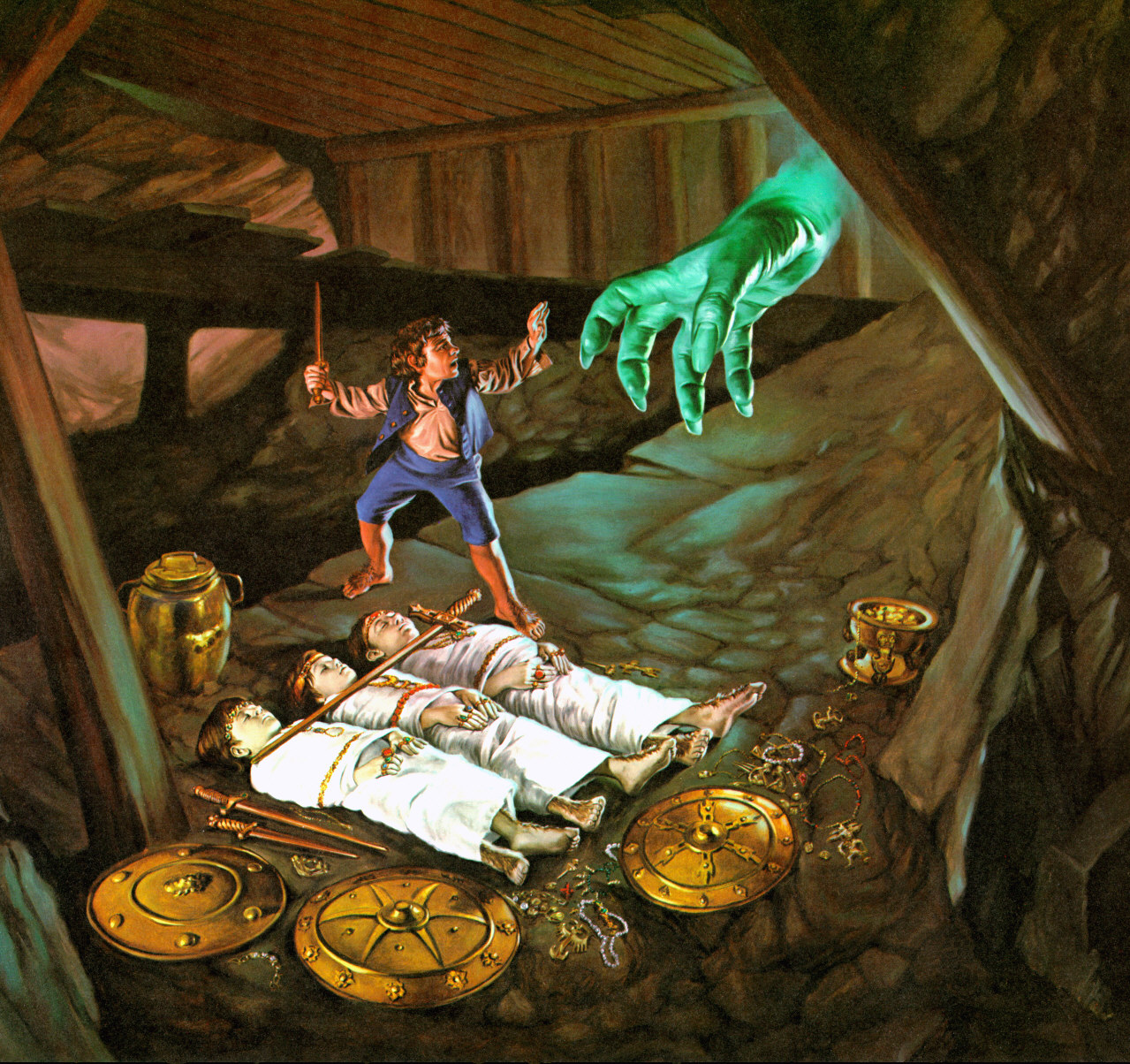
What occurred to us now was that, virtually every time there is trouble for Bilbo and the dwarves, it is strongly linked with caves and hollowed-out places:  trolls who came out of a cave (“Roast Mutton”), goblins who live in caves (“Over Hill and Under Hill”), Gollum (“Riddles in the Dark”), hostile elves (“Flies and Spiders” and “Barrels Out of Bond”), and, of course, Smaug (“On the Doorstep”, “Inside Information”, and “Not At Home”).  Only the wargs, the overgrown spiders, and the men of Lake-town in the Battle of the Five Armies have above-ground origins, as, after all, the other forces—goblins, elves, and even Iron Hills dwarves (we assume), have subterranean dwellings.

We knew that JRRT thought to become a classicist early in his academic career and we can imagine right away that one influence upon him for this underground menace would have been Polyphemus the Cyclops, who, after all, lives in a cave.

image1cyclops.jpg

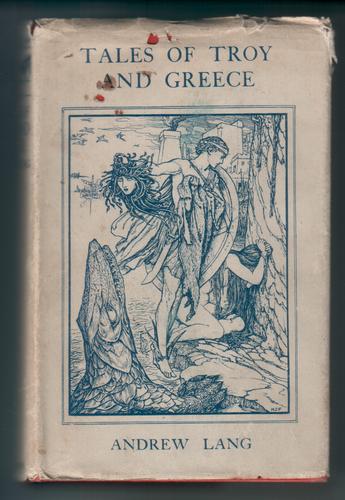
Before he read that part of Odysseus’ story in Greek, he might have seen it in Andrew Lang’s 1907 Tales of Troy and Greece—

image2alang.jpg

image3lang.jpg

Tolkien tells us that, as a child, he had read other Lang works and a story in one, The Red Fairy Book (1890), might even have influenced some Middle-earth geography, from “Storia Moria Castle”.

image4redfairybook.jpeg

image5leemoria.jpg

Another childhood favorite (although he appears to have changed his mind later in life) were the fantasy novels of George Macdonald

image6gmacd.jpg

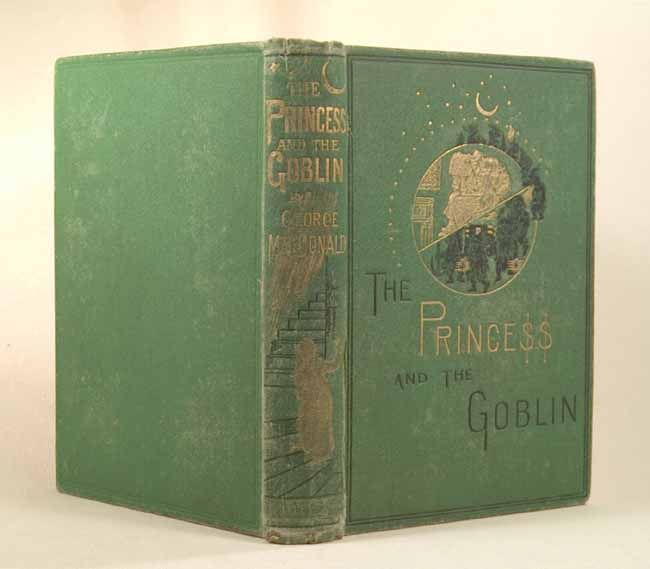
and his The Princess and the Goblin (1872),

image7princess.jpg

as its title suggests, is full of goblins and their underground world.  These goblins are powerful, but have one fatal flaw—tender feet—which JRRT said that he never believed (see Letters, 178)—although Tolkien’s first published poem was entitled “Goblin Feet” (Oxford Poetry 1915).

Beyond possible childhood reading, there is his career focus, which includes two other potential underground influences.

First, there is Beowulf.  Grendel, the monster in this poem,

image8grendel.jpg

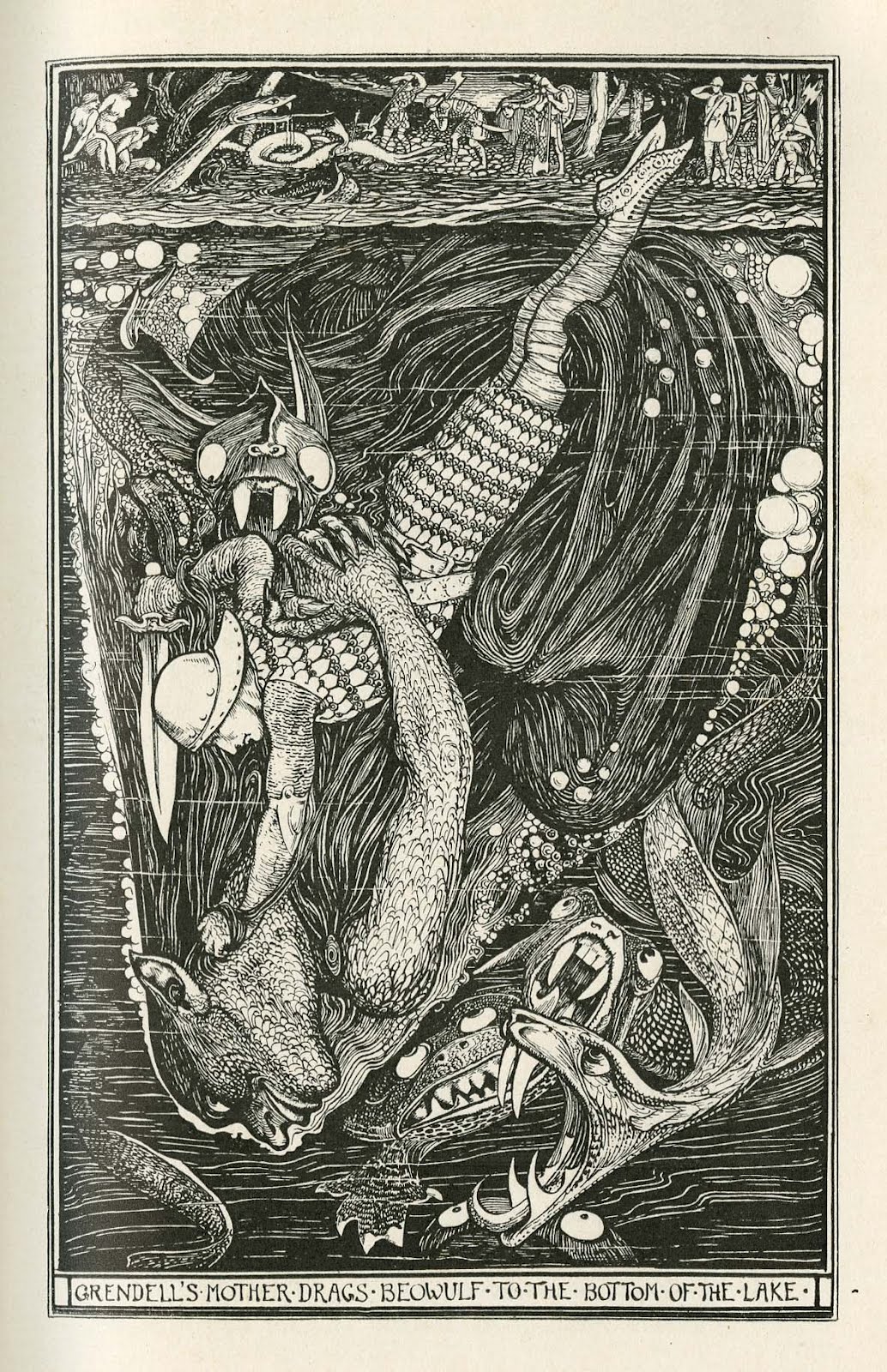
lives in a cave at the bottom of a pool with his mother and, in the second part of his monster-slaying, Beowulf has to dive into that pool to deal with her.image9beowulfandmama.jpg

This illustration comes from another Andrew Lang book, The Red Book of Animal Stories (1899).

image10redbook.jpg

(The picture of Grendel is by Brian Froud.  We found it on the website of K.T.Katzmann, I Write Monsters.  Here’s a LINK.)

Then, of course, there’s that dragon, against whom Beowulf fights and dies—and which is the direct ancestor of another famous and familiar dragon…

image11dragonandhoard.jpg

We are told that it lives in an abandoned tumulus—that is, an ancient grave mound, like this one.

image12tumulus.png

(This is, in fact, a famous Neolithic burial at Gavrinis, in Brittany.)

JRRT worked in Middle English, as well as Old English, and here we find one more possible source in his own edition (with E.V. Gordon) of the 14th-century poem Sir Gawain and the Green Knight.

image13tolkgord.JPG

The Green Knight who challenges King Arthur’s court to a mutual head-chopping contest, is said, in the fourth part of the poem,  to inhabit a “green chapel” and to appear out of a hole when Sir Gawain, who has accepted the challenge and cut off the Green Knight’s head, makes his appearance there to fulfill his half of the contest.

image14sirg.jpg

This chapel has sounded like a tumulus to generations of scholars and here’s John Howe’s 2003 illustration, complete with chapel as tumulus (not to mention a very large green man).

image15johnhowe.png

Tumuli also make their appearance, of course, in The Lord of the Rings, when Frodo and his party go astray on the Barrow Downs.

image16barrowwight.jpg

We can’t finish this posting without at least suggesting one more source, something even more personal than JRRT’s scholarly work:  his experiences in the Great War.

image17lt.jpg

By the time Tolkien entered the service in France, the Western Front was, basically, a 500-mile trench, from Switzerland to the North Sea.

image18trenches.gif

Much of the entrenching was simply deep, reinforced ditching.

image19trenches.jpg

But some—particularly on the German side—could be elaborate, even built with stone or concrete, and set far enough into the ground as to be almost impervious to bombardment.

image21bunker.jpg

And we imagine that, with all of that earlier literary work in his mind, JRRT might have faced such defenses wondering whether what was inside them would be Germans

image22trenchclearing.jpg

or something much worse.

image23smaug.jpg

And did this haunt his later writing as much as the Great War haunted the minds of soldiers all over the world?

Thanks, as ever, for reading!

MTCIDC

CD

JRRT: Editorial Comment

22 Wednesday Apr 2015

Posted by Ollamh in J.R.R. Tolkien, Narrative Methods

≈ 2 Comments

Tags

Andrew Lang, de Montesquieu, Hawthorne, Hobbit, Persian Letters, The Lord of the Rings, The Scarlet Letter, Tolkien, William Morris

Dear Readers,

Welcome, as always. We had intended to go on with our discussion of villains, which looks like it will form a series, but we were distracted for a moment by the following– so more on villains to come. 

“This book is largely concerned with Hobbits, and from its pages, a reader may discover much of their character and a little of their history. Further information will also be found in the selection from The Red Book of Westmarch, that has already been published, under the title of The Hobbit.” 

So begins The Lord of the Rings, a novel. But a novel which pretends not to be a novel at all, but, rather, an edited version of a true history of someplace and sometime else: Middle-earth, the Third Age.

It’s hardly a new ploy, to pretend to be only presenting something already written by others. Often, it’s done to deflect attention from the sensitive matter within the novel: de Montesquieu’s criticism of France in Persian Letters or Hawthorne’s use of the theme of adultery in The Scarlet Letter. 

The adventures in The Lord of the Rings, or, for that matter, The Hobbit, are hardly controversial, however, so why go through this pretense, we wondered?

As we thought about and discussed this, we came up with a whole series of possible reasons– and none of them necessarily excludes any of the others. 

First, and perhaps most obvious, was that being an editor and translator formed a major part of what JRRT did in his academic life. What would seem more natural? 

Second, he lived in the academic world of Oxford, among academic friends, who formed a large part of his initial readership, and who themselves could be editors and translators. 

Third, based in part on one and two above, it fits into Tolkien’s and the Inklings’ desire to produce more of what they liked to read: an adventure, but in the guise of a “scholarly” work, yet one wholly invented.

Fourth, unlike real scholarly work, this one was not bound– and never would be– by the limits of available knowledge. There is only one Beowulf manuscript, after all. Because the only bounds placed upon the “research” for The Hobbit and The Lord of the Rings were the limits of the author’s imagination, this material was, potentially, endless, and every point within could be infinitely expanded, as we see in the twelve volume edited by Christopher Tolkien. One might imagine that JRRT, frustrated at how little Old English verse there was, felt enormously freed– and, should there be criticism, well, at one level at least, he had no need to respond, not being the author. 

This leads, in turn, to a less comfortable idea: suppose JRRT wasn’t completely at ease with his own creation. After all, he was a professor who was spending a great deal of his time and energy fabricating a fictional world rather than doing research and writing about literary/linguistic activities in the actual world of academia. Could this have been a kind of subconscious defense– I am doing scholarship– see? 

And then there’s reason five, which one might see as informing, at some level, all of the others. JRRT had been drawn, from childhood, towards stories from Lang’s Fairy Books through the prose and poetry of William Morris. He was also an active literary scholar. By playing editor and creating a second scholarly shell around the primary adventure, he could neatly combine the two halves of his life into one and, in the process, produce works which please reader and scholar alike– and combined. 

As always, we ask for your opinion. 

Thanks for reading!

MTCIDC,

CD

The Doubtful Sea Series Facebook Page

The Doubtful Sea Series Facebook Page

  • Ollamh

Categories

  • Artists and Illustrators
  • Economics in Middle-earth
  • Fairy Tales and Myths
  • Films and Music
  • Games
  • Heroes
  • Imaginary History
  • J.R.R. Tolkien
  • Language
  • Literary History
  • Maps
  • Medieval Russia
  • Military History
  • Military History of Middle-earth
  • Narnia
  • Narrative Methods
  • Poetry
  • Research
  • Star Wars
  • Terra Australis
  • The Rohirrim
  • Theatre and Performance
  • Tolkien
  • Uncategorized
  • Villains
  • Writing as Collaborators
Follow doubtfulsea on WordPress.com

Across the Doubtful Sea

Recent Postings

  • Through a glass… January 7, 2026
  • Heffalumps? December 31, 2025
  • We Three Kings December 24, 2025
  • A Moon disfigured December 17, 2025
  • On the Roads Again—Once More December 10, 2025
  • (Not) Crossing Bridges December 3, 2025
  • On the Road(s) Again—Again November 26, 2025
  • On the Road(s) Again November 19, 2025
  • To Bree (Part 2) November 12, 2025

Blog Statistics

  • 104,101 Views

Posting Archive

  • January 2026 (1)
  • December 2025 (5)
  • November 2025 (4)
  • October 2025 (5)
  • September 2025 (4)
  • August 2025 (4)
  • July 2025 (5)
  • June 2025 (4)
  • May 2025 (4)
  • April 2025 (5)
  • March 2025 (4)
  • February 2025 (4)
  • January 2025 (5)
  • December 2024 (4)
  • November 2024 (4)
  • October 2024 (5)
  • September 2024 (4)
  • August 2024 (4)
  • July 2024 (5)
  • June 2024 (4)
  • May 2024 (5)
  • April 2024 (4)
  • March 2024 (4)
  • February 2024 (4)
  • January 2024 (5)
  • December 2023 (4)
  • November 2023 (5)
  • October 2023 (4)
  • September 2023 (4)
  • August 2023 (5)
  • July 2023 (4)
  • June 2023 (4)
  • May 2023 (5)
  • April 2023 (4)
  • March 2023 (5)
  • February 2023 (4)
  • January 2023 (4)
  • December 2022 (4)
  • November 2022 (5)
  • October 2022 (4)
  • September 2022 (4)
  • August 2022 (5)
  • July 2022 (4)
  • June 2022 (5)
  • May 2022 (4)
  • April 2022 (4)
  • March 2022 (5)
  • February 2022 (4)
  • January 2022 (4)
  • December 2021 (5)
  • November 2021 (4)
  • October 2021 (4)
  • September 2021 (5)
  • August 2021 (4)
  • July 2021 (4)
  • June 2021 (5)
  • May 2021 (4)
  • April 2021 (4)
  • March 2021 (5)
  • February 2021 (4)
  • January 2021 (4)
  • December 2020 (5)
  • November 2020 (4)
  • October 2020 (4)
  • September 2020 (5)
  • August 2020 (4)
  • July 2020 (5)
  • June 2020 (4)
  • May 2020 (4)
  • April 2020 (5)
  • March 2020 (4)
  • February 2020 (4)
  • January 2020 (6)
  • December 2019 (4)
  • November 2019 (4)
  • October 2019 (5)
  • September 2019 (4)
  • August 2019 (4)
  • July 2019 (5)
  • June 2019 (4)
  • May 2019 (5)
  • April 2019 (4)
  • March 2019 (4)
  • February 2019 (4)
  • January 2019 (5)
  • December 2018 (4)
  • November 2018 (4)
  • October 2018 (5)
  • September 2018 (4)
  • August 2018 (5)
  • July 2018 (4)
  • June 2018 (4)
  • May 2018 (5)
  • April 2018 (4)
  • March 2018 (4)
  • February 2018 (4)
  • January 2018 (5)
  • December 2017 (4)
  • November 2017 (4)
  • October 2017 (4)
  • September 2017 (4)
  • August 2017 (5)
  • July 2017 (4)
  • June 2017 (4)
  • May 2017 (5)
  • April 2017 (4)
  • March 2017 (5)
  • February 2017 (4)
  • January 2017 (4)
  • December 2016 (4)
  • November 2016 (5)
  • October 2016 (6)
  • September 2016 (5)
  • August 2016 (5)
  • July 2016 (5)
  • June 2016 (5)
  • May 2016 (4)
  • April 2016 (4)
  • March 2016 (5)
  • February 2016 (4)
  • January 2016 (4)
  • December 2015 (5)
  • November 2015 (5)
  • October 2015 (4)
  • September 2015 (5)
  • August 2015 (4)
  • July 2015 (5)
  • June 2015 (5)
  • May 2015 (4)
  • April 2015 (3)
  • March 2015 (4)
  • February 2015 (4)
  • January 2015 (4)
  • December 2014 (5)
  • November 2014 (4)
  • October 2014 (6)
  • September 2014 (1)

Blog at WordPress.com.

  • Subscribe Subscribed
    • doubtfulsea
    • Join 78 other subscribers
    • Already have a WordPress.com account? Log in now.
    • doubtfulsea
    • Subscribe Subscribed
    • Sign up
    • Log in
    • Report this content
    • View site in Reader
    • Manage subscriptions
    • Collapse this bar
 

Loading Comments...