• About

doubtfulsea

~ adventure fantasy

Tag Archives: trench warfare

Metatextual

16 Wednesday Oct 2019

Posted by Ollamh in Heroes, J.R.R. Tolkien, Military History, Narrative Methods

≈ Leave a comment

Tags

Beowulf, Game of Thrones, Great War, Great War Posters, Metatextual, Propaganda Posters, Samwise Gamgee, Story, The Lord of the Rings, Tolkien, trench warfare, Writing, WWI

Welcome, dear readers, as always—and don’t be weirded-out by the hyperliterary title.  We’ve been thinking about an odd moment in The Lord of the Rings, a moment when two of the main characters seem to possess the ability, at least for that moment, to step away from the story, and to see themselves as characters, which is one way in which metatextuality, meaning “outside the text”, works.  (For a useful definition, see this LINK.)

It’s a passage in The Two Towers, Book Four, Chapter 8, “The Stairs of Cirith Ungol”.  Sam and Frodo are pausing before Gollum leads them through a passageway which will bring them into Mordor.  They have a meal, then talk about where they’re about to go and Sam says:

“…And we shouldn’t be here at all, if we’d known more about it before we started.  But I suppose it’s often that way.  The brave things in the old tales and songs, Mr. Frodo:  adventures, as I used to call them.  I used to think that they were things the wonderful folk of the stories went out and looked for, because they wanted them, because they were exciting and life was a bit dull, a kind of sport, as you might say.”

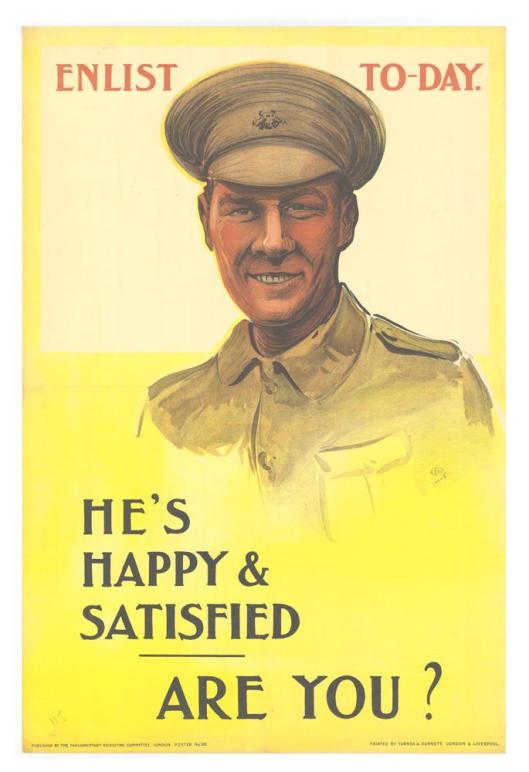
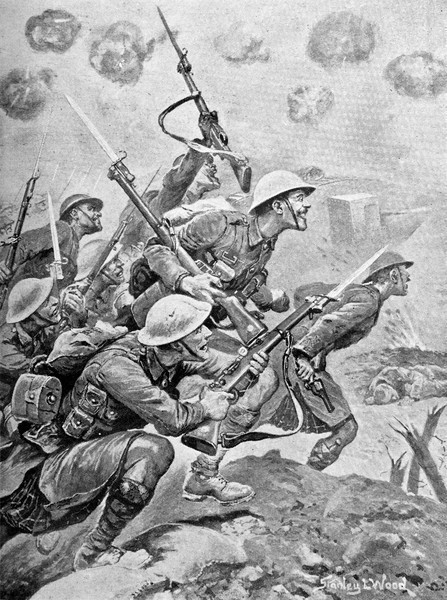
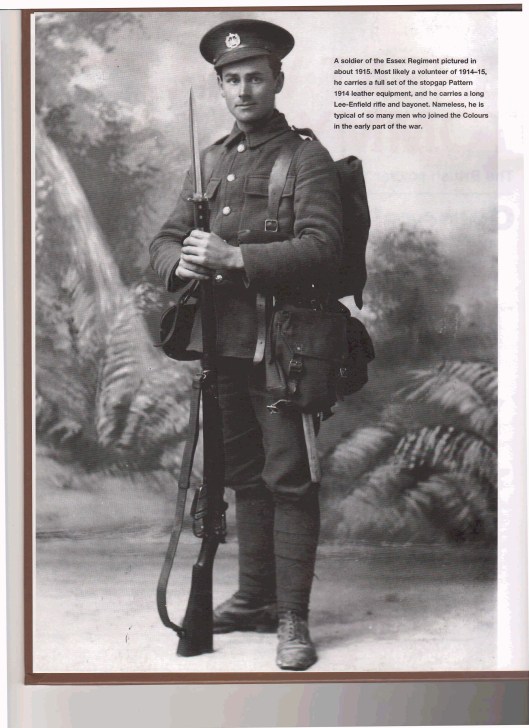
Because Tolkien was writing this after the Great War, we might imagine that, at one level, he’s reflecting upon the war fever which captured Great Britain in the early days of the conflict, with its recruiting posters and popular art depictions like these—
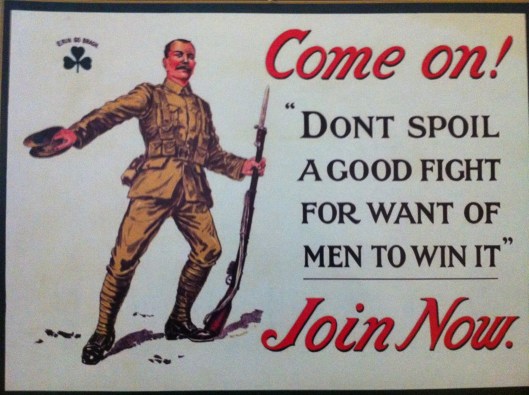
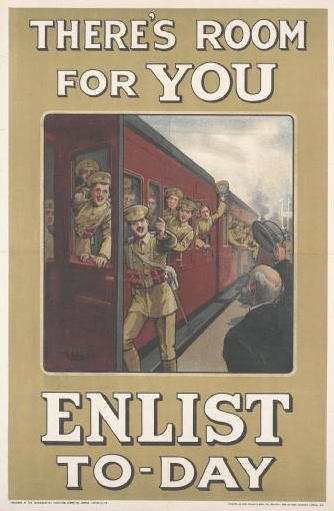
image1poster.jpgimage2poster.png

image3poster.jpg

image3a.jpgimage4acharge.jpg

and its masses of volunteers crowding recruitment offices.

image4recruit.jpg

This was all before the grim reality of trench warfare
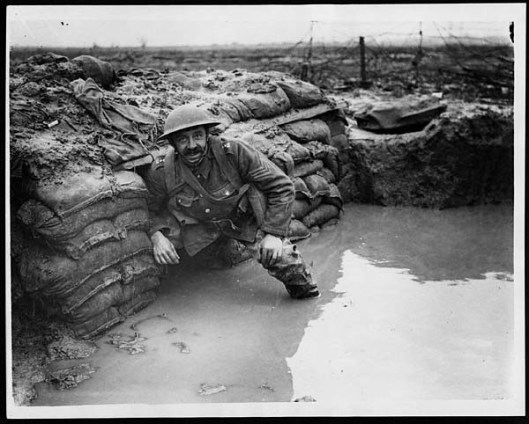
image5trench.jpg

and casualties beyond anyone’s pre-war comprehension
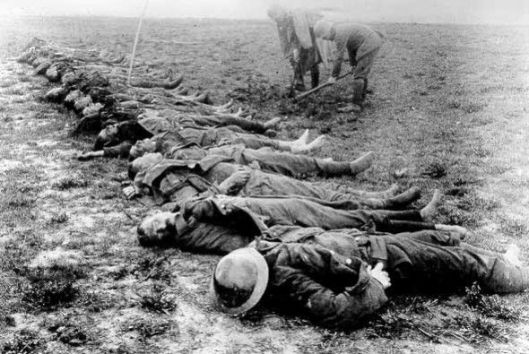
image6casualties.jpg

dampened that early enthusiasm, leading to a realistic cynicism mostly quietly expressed,

image7sword.png

although soldiers could sometimes express their opinion of the war vocally—see this LINK for some of that vocalizing.

What Sam says next seems to agree with this:

“But that’s not the way of it with the tales that really mattered, or the ones that stay in the mind.  Folk seem to have been just landed in them, usually—their paths were laid that way, as you put it.”

So, “adventures” now, to Sam, are no longer “a kind of sport” which “wonderful folk” seek out, but rather something which just happens to people—in fact, people like Sam and Frodo.  And, just like Sam and Frodo, “…I expect they had lots of chances, like us, of turning back, only they didn’t.”

The consequences of rejecting those chances are obvious:  “And if they had, we shouldn’t know, because they’d have been forgotten.  We hear about those as just went on…”

And Sam’s sense of the consequences of “just going on” is very realistic:  “—and not all to a good end, mind you; at least not to what folk inside a story and not outside it call a good end.  You know, coming home, and finding things all right, though not quite the same—like old Mr. Bilbo.  But those aren’t always the best tales to hear, though they may be the best tales to get landed in!”

So far, then, we might see this as the clear thinking of someone who believed in those 1914 posters and came to learn otherwise.  Sam continues, however, and here’s where that metatextuality comes in:

“I wonder what sort of tale we’ve fallen into?”

We know that Sam has long been fascinated by tales of elves and dragons.  As Gaffer Gamgee says:

“Crazy about stories of the old days, he is, and he listens to all of Mr. Bilbo’s tales.  Mr. Bilbo has learned him his letters…”  (The Fellowship of the Ring, Book One, Chapter 1, “A Long-Expected Party”)

The Gaffer’s last remark suggests that not only has Sam heard tales, but he may even have read them.  We think that it should be no surprise, then, that, when put into a situation far beyond the usual, Sam might believe that it’s not just daily life, but, in fact, a “tale”.  And so he asks, “…what sort…?”

To which Frodo replies:

“I wonder…But I don’t know.  And that’s the way of a real tale.  Take any one that you’re fond of.  You may know, or guess, what kind of tale it is, happy-ending or sad-ending, but the people in it don’t know.  And you don’t want them to.”

In Sam and Frodo’s case, they clearly don’t and can’t know, but, although they don’t know their fate (although we think that Frodo has an idea, saying “Our part will end later—or sooner.”), they both believe that they are in a tale, as Sam says:

“Still I wonder if we shall ever be put into songs or tales.  We’re in one, of course; but I mean put into words, you know, told by the fireside, or read out of a great big book with red and black letters, years and years afterwards.”

This is ironic, of course, as we know that this very story is drawn as Tolkien-as-editor says in the Prologue to The Lord of the Rings, from The Red Book of Westmarch (see “Note on the Shire Records”), a volume jointly written by Bilbo and Frodo and perhaps completed by Sam himself (see The Return of the King, Book Six, Chapter 9, “The Grey Havens”).

There is also, to our minds, as we said, something odd about this view of themselves and their situation.  In general, characters in epic stories—just as Frodo says—are unaware that they are in them.  Achilles never turns to Patroclus in the Iliad and asks, “I wonder how this epic will end?” nor does Beowulf spend time discussing just what sort of tale he and Wiglaf have gotten themselves into.   (You can see a touch of metatextuality in the Game of Thrones series, however, when one of its evilest characters, Ramsay Bolton, can say, “If you think this has a happy ending, you haven’t been paying attention.”)

Frodo takes the idea of their being characters one step farther when he then suggests indirectly that their story is actually in the hands of its readers:

“…We’re going on a bit too fast.  You and I, Sam, are still stuck in the worst places of the story, and it is all too likely that some will say at this point:  ‘Shut the book now, dad; we don’t want to read any more.’ “

As in his earlier remark, that “Our part will end later—or sooner”, we see that Frodo imagines that they’re already in such a bad place that a young audience will want to stop the story.

This then leads us to a question as odd to us as their view of themselves as already-fictional characters in a tale:   if dad listens and agrees, closing the book, what will happen to Frodo and Sam then?


Thanks, as ever, for reading and

MTCIDC

CD
Dayless Dawn

08 Wednesday Aug 2018

Posted by Ollamh in Artists and Illustrators, Heroes, J.R.R. Tolkien, Military History, Military History of Middle-earth

≈ Leave a comment

Tags

Battle of the Somme, British Expeditionary Force, chemical warfare, Fritz Haber, Gas warfare, Great War, John Singer Sargent, maxim gun, mustard gas, tear gas, The Lord of the Rings, The Siege of Gondor, Tolkien, trench warfare, trenches, Vale of Anduin, WWI, Young Indiana Jones

Welcome, as always, dear readers.

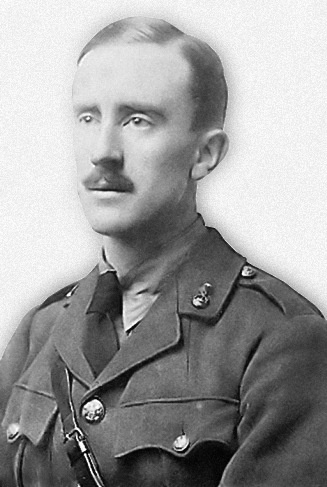
In this, the last year of the centennial of the Great War, we are often reminded not only of that conflict, but also that Second Lieutenant J R R Tolkien took part in it.

image1jrrt.jpg

By the time he had reached the Front, in July, 1916, the latest round of blood-letting, the infamous Somme, was already in progress.

image2over.jpeg

image3somme.jpg

“Blood-letting” is an understatement:  on the first day of the battle, 1 July, 1916, there had been nearly 60,000 British casualties and attacks would continue till November.  The problems faced were mainly those of 1914.  The well-equipped, well-trained professional soldier of the British Expeditionary Force

image4tommy.jpg

met the Maxim Gun

image5maxim.jpg

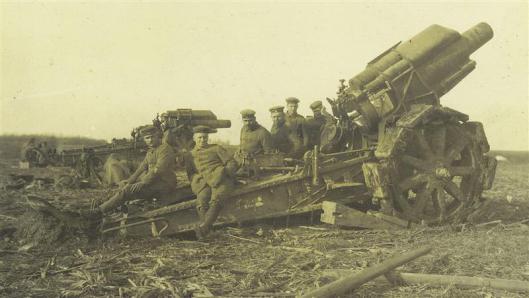
and took heavy casualties.  These casualties were multiplied by the number and range of German artillery.

image6haubitzer.jpg

To defend themselves against these modern weapons, soldiers went to ground as soon as they could.

image7frenchembankment.jpg

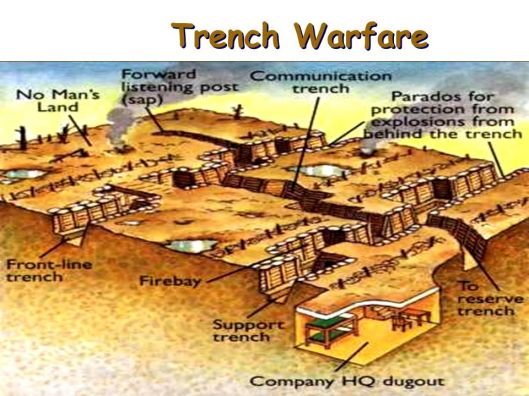
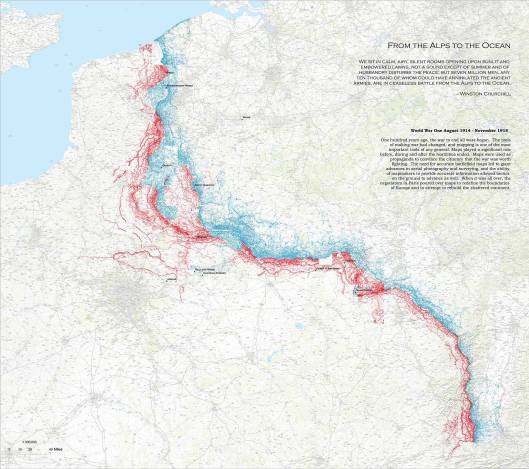
Digging in moved from a simple scrape of the earth into 500 miles (from Switzerland to the North Sea) of often very elaborate earthworks.

image8trench.jpgimage9system.jpeg

Equip these with machine guns

image10mg.jpg

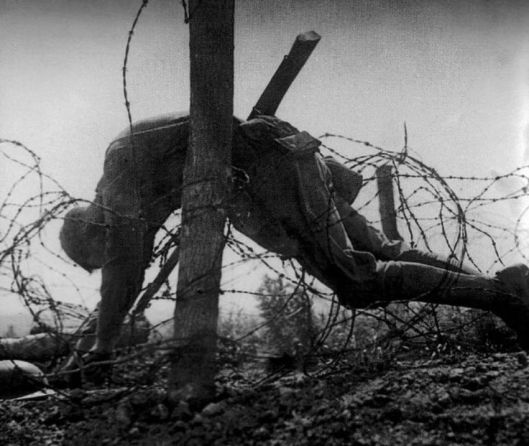
and spread acres of barbed wire in front

image11barbedwire.jpg

and you can think that you’re safe from attack.

image12trapped.jpg

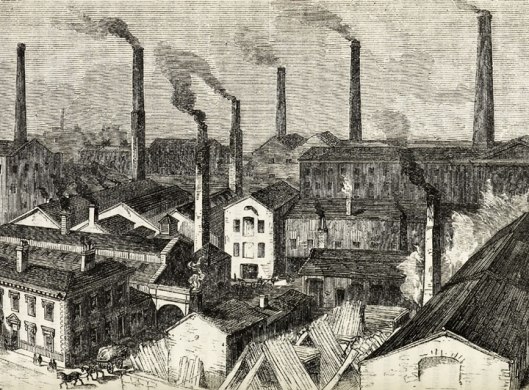
So, the problem then was:  how to break through?  And this is where the German chemical industry

image13factory.jpg

and its brilliant chemist, Fritz Haber,

image14haber.jpg

(who will share the Nobel Prize for chemistry in 1918) came in.

Haber, famous for creating artificial fertilizer—his positive side—was also a captain in the Kaiser’s army (hence the uniform in our illustration), intensely convinced that Germany was justified in waging war on Europe, and began to develop a reply to elaborate fortifications:  poison gases—Haber’s dark side.

Nearly twenty years before, in 1900, many of the world’s nations, including Germany, had signed an agreement at the Hague that, among other things, they wouldn’t employ such a weapon, but, clearly, the temptation was too great, and not only for Germany.  After the first major attack, 22 April, 1915, in which the Germans had killed or driven a large number of French troops from their trenches, the British and French began their own development programs.

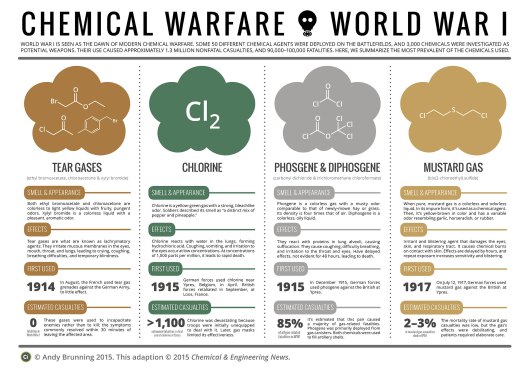
Over time, the gases varied as experiments showed scientists and military men what worked and what didn’t.  There were simple tear gases, which incapacitated soldiers by blinding them with their own tears and disturbed their breathing, to much deadlier blister agents—but here’s a chart to lay out the effects.

image15gaschart.jpg

Delivery systems varied.  Gas might be released from canisters, allowing the prevailing wind to carry it to the enemy.

image16gas.jpg

The difficulty here was the variability of winds—should the direction change, the releasers of gas might—and sometimes did—find themselves the victims.

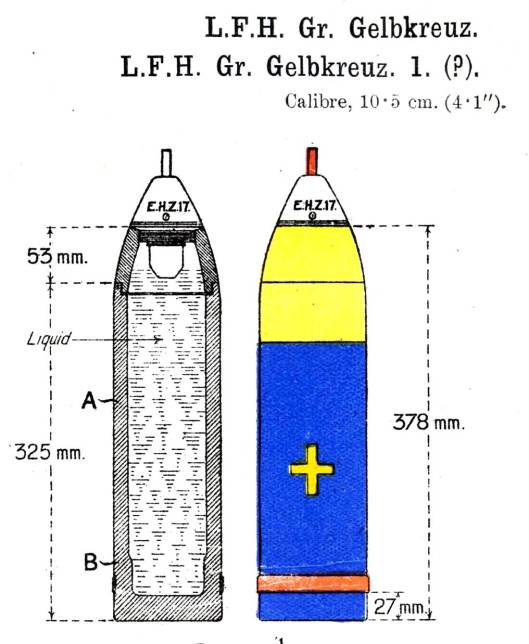
Gas packed into artillery shells was more dependable.

image17gas.jpg

Shells were marked to identify which gas was inside, as in this illustration.

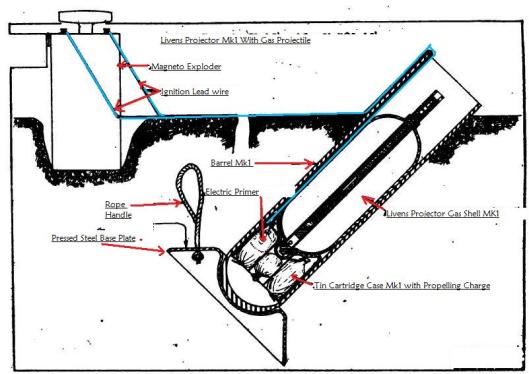
In time, the British developed a method of projecting gas bombs in large numbers with what were called “Livens projectors”.

image18gasbomb.jpg

image19livens.jpg

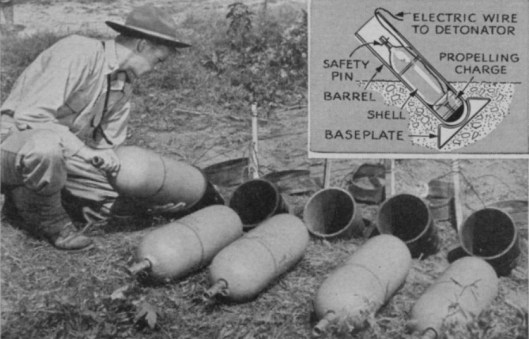
This simple mechanism could be used in banks to blanket the enemy line with poisonous air.

image20projectors.jpg

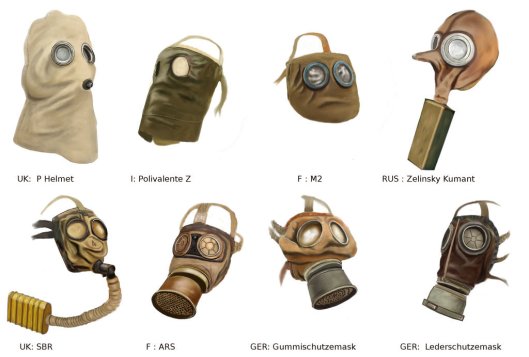
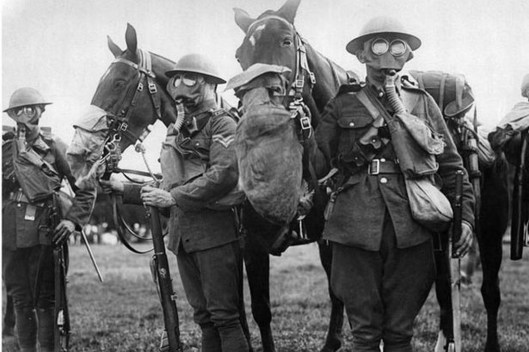
Initially, there had been no defense against this weapon, but, in time, both sides developed gas masks.

image21masks.jpg

And, of course, something had to be done for the hundreds of thousands of horses both depended upon.

image22amask.jpeg

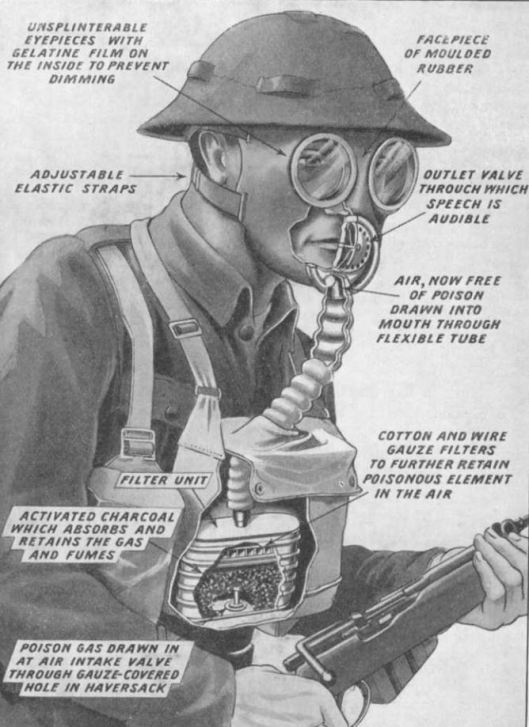
Here’s how the later, more efficient ones worked.

image22mask.jpg

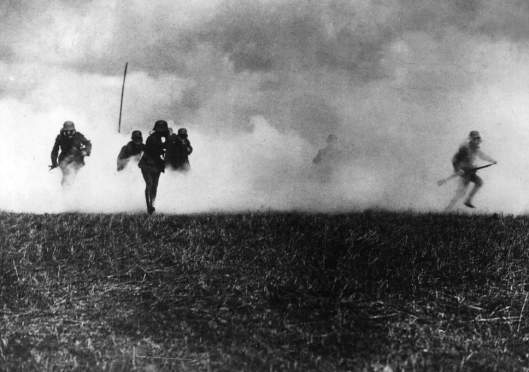
They might have prevented suffocation, but they were uncomfortable and, worse, the lenses soon fogged over, making it difficult to see the enemy in their masks advancing through the clouds of gas.

image23advance.jpg

image24combat.jpg

In the television series about young Indiana Jones of some years ago, there was a very graphic depiction of this—and here’s a LINK so that you can see for yourself.  (We very much recommend this series, by the way.  On the whole, it has many episodes which not only fill in Indie’s past, but are good adventure stories in themselves.)

We can imagine, then, what might have been going on in JRRT’s mind when he wrote:

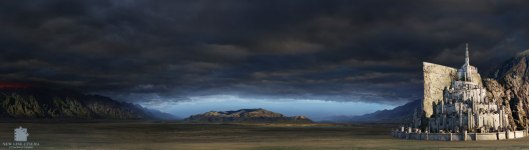
“It was dark and dim all day.  From the sunless dawn until evening the heavy shadow had deepened, and all hearts in the City were oppressed.  Far above a great cloud streamed slowly westward from the Black Land, devouring light, borne upon a wind of war; but below the air was still and breathless, as if all the Vale of Anduin waited for the onset of a ruinous storm.”  (The Return of the King, Book Five, Chapter 4, “The Siege of Gondor”)

image25gondor.jpg

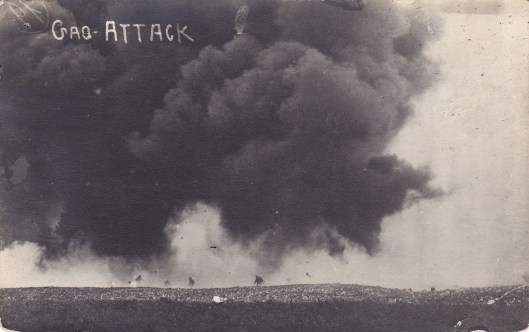
Were those orcs approaching, or the Kaiser’s infantry?

image26gas.jpg

Thanks, as ever, for reading.

MTCIDC

CD

ps

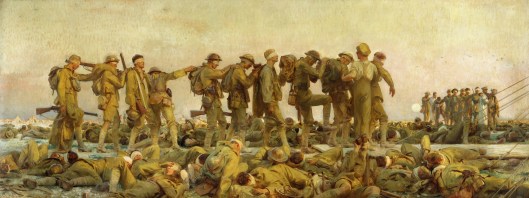
The horrific effects of chemical warfare have, to us, never been more powerfully depicted than in John Singer Sargent’s (1856-1925)  Gassed (1919), based upon Sargent’s visit to the Western Front in July, 1918.

image27gassed.jpg

pps

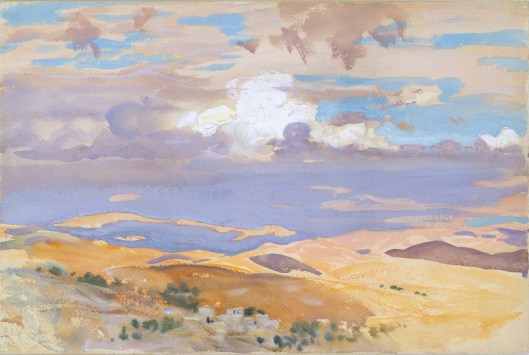
But, you know us—if we can add a little something more, we always will and, in this case, we want to end not with just this image, horrible and moving as it is, but with something from another of Sargent’s works.  Along with being a society painter, he was one of the greatest American watercolorists and has left us a collection of beautiful, atmospheric works from Europe, the US, and the Caribbean.  We want to end, then, with these very different clouds–

image28sargent.jpg

The Doubtful Sea Series Facebook Page

The Doubtful Sea Series Facebook Page

  • Ollamh

Categories

  • Artists and Illustrators
  • Economics in Middle-earth
  • Fairy Tales and Myths
  • Films and Music
  • Games
  • Heroes
  • Imaginary History
  • J.R.R. Tolkien
  • Language
  • Literary History
  • Maps
  • Medieval Russia
  • Military History
  • Military History of Middle-earth
  • Narnia
  • Narrative Methods
  • Poetry
  • Research
  • Star Wars
  • Terra Australis
  • The Rohirrim
  • Theatre and Performance
  • Tolkien
  • Uncategorized
  • Villains
  • Writing as Collaborators
Follow doubtfulsea on WordPress.com

Across the Doubtful Sea

Recent Postings

  • Through a glass… January 7, 2026
  • Heffalumps? December 31, 2025
  • We Three Kings December 24, 2025
  • A Moon disfigured December 17, 2025
  • On the Roads Again—Once More December 10, 2025
  • (Not) Crossing Bridges December 3, 2025
  • On the Road(s) Again—Again November 26, 2025
  • On the Road(s) Again November 19, 2025
  • To Bree (Part 2) November 12, 2025

Blog Statistics

  • 104,101 Views

Posting Archive

  • January 2026 (1)
  • December 2025 (5)
  • November 2025 (4)
  • October 2025 (5)
  • September 2025 (4)
  • August 2025 (4)
  • July 2025 (5)
  • June 2025 (4)
  • May 2025 (4)
  • April 2025 (5)
  • March 2025 (4)
  • February 2025 (4)
  • January 2025 (5)
  • December 2024 (4)
  • November 2024 (4)
  • October 2024 (5)
  • September 2024 (4)
  • August 2024 (4)
  • July 2024 (5)
  • June 2024 (4)
  • May 2024 (5)
  • April 2024 (4)
  • March 2024 (4)
  • February 2024 (4)
  • January 2024 (5)
  • December 2023 (4)
  • November 2023 (5)
  • October 2023 (4)
  • September 2023 (4)
  • August 2023 (5)
  • July 2023 (4)
  • June 2023 (4)
  • May 2023 (5)
  • April 2023 (4)
  • March 2023 (5)
  • February 2023 (4)
  • January 2023 (4)
  • December 2022 (4)
  • November 2022 (5)
  • October 2022 (4)
  • September 2022 (4)
  • August 2022 (5)
  • July 2022 (4)
  • June 2022 (5)
  • May 2022 (4)
  • April 2022 (4)
  • March 2022 (5)
  • February 2022 (4)
  • January 2022 (4)
  • December 2021 (5)
  • November 2021 (4)
  • October 2021 (4)
  • September 2021 (5)
  • August 2021 (4)
  • July 2021 (4)
  • June 2021 (5)
  • May 2021 (4)
  • April 2021 (4)
  • March 2021 (5)
  • February 2021 (4)
  • January 2021 (4)
  • December 2020 (5)
  • November 2020 (4)
  • October 2020 (4)
  • September 2020 (5)
  • August 2020 (4)
  • July 2020 (5)
  • June 2020 (4)
  • May 2020 (4)
  • April 2020 (5)
  • March 2020 (4)
  • February 2020 (4)
  • January 2020 (6)
  • December 2019 (4)
  • November 2019 (4)
  • October 2019 (5)
  • September 2019 (4)
  • August 2019 (4)
  • July 2019 (5)
  • June 2019 (4)
  • May 2019 (5)
  • April 2019 (4)
  • March 2019 (4)
  • February 2019 (4)
  • January 2019 (5)
  • December 2018 (4)
  • November 2018 (4)
  • October 2018 (5)
  • September 2018 (4)
  • August 2018 (5)
  • July 2018 (4)
  • June 2018 (4)
  • May 2018 (5)
  • April 2018 (4)
  • March 2018 (4)
  • February 2018 (4)
  • January 2018 (5)
  • December 2017 (4)
  • November 2017 (4)
  • October 2017 (4)
  • September 2017 (4)
  • August 2017 (5)
  • July 2017 (4)
  • June 2017 (4)
  • May 2017 (5)
  • April 2017 (4)
  • March 2017 (5)
  • February 2017 (4)
  • January 2017 (4)
  • December 2016 (4)
  • November 2016 (5)
  • October 2016 (6)
  • September 2016 (5)
  • August 2016 (5)
  • July 2016 (5)
  • June 2016 (5)
  • May 2016 (4)
  • April 2016 (4)
  • March 2016 (5)
  • February 2016 (4)
  • January 2016 (4)
  • December 2015 (5)
  • November 2015 (5)
  • October 2015 (4)
  • September 2015 (5)
  • August 2015 (4)
  • July 2015 (5)
  • June 2015 (5)
  • May 2015 (4)
  • April 2015 (3)
  • March 2015 (4)
  • February 2015 (4)
  • January 2015 (4)
  • December 2014 (5)
  • November 2014 (4)
  • October 2014 (6)
  • September 2014 (1)

Blog at WordPress.com.

  • Subscribe Subscribed
    • doubtfulsea
    • Join 78 other subscribers
    • Already have a WordPress.com account? Log in now.
    • doubtfulsea
    • Subscribe Subscribed
    • Sign up
    • Log in
    • Report this content
    • View site in Reader
    • Manage subscriptions
    • Collapse this bar
 

Loading Comments...