• About

doubtfulsea

~ adventure fantasy

Tag Archives: The Last of the Mohicans

When One Door Closes.4

30 Wednesday Nov 2016

Posted by Ollamh in Imaginary History, J.R.R. Tolkien, Literary History, Maps, Uncategorized

≈ Leave a comment

Tags

Alfred Lord Tennyson, Cirith Ungol, doors, Gilbert and Sullivan, Gondor, Grond, Hobbit door, James Fennimore Cooper, Minas Morgul, Minas Tirith, Morannon, Mordor, N.C. Wyeth, Nazgul, Orodruin, Princess Ida, Shelob's Lair, The Last of the Mohicans, The Lord of the Rings, The Princess, The Siege of Gondor, Tolkien

Welcome, as always, dear readers. In this posting, we’ll complete our survey of doors and entryways and what happens at them in The Lord of the Rings.

We began this series a little while ago when we got to thinking about Bilbo’s remark to Frodo that: “It’s a dangerous business, Frodo, going out your door.”

Bilbo had learned this the hard way when Gandalf had come to his door and he had embarked upon an adventure he, originally, had no desire to be part of.

gandalfvisitsbilbo

In three postings, we’ve followed the story through doors and entryways from that moment all the way to the moment when Gandalf blocks the Lord of the Nazgul from entering Minas Tirith through its ruined main gate.

mcbridegandalflordofnazgul.gif

In the process, we have come to see that doors and entryways seem to come in two forms: first, there are doors which lead to safety; second, there are doors which lead to danger. We’ve added other elements, natural entryways, like fords and bridges, and the fact that many of the entryways have challenges and challengers barring the way.

In a moment of cheerful intellectual cruelty, we ended the last posting at that crucial moment in “The Siege of Gondor”, in which Grond, the battering ram of the armies of Mordor, has, with the magical aid of the Lord of the Nazgul, broken down the gate and that Lord is about to enter the city, when he meets Gandalf as the challenger:

“ ‘You cannot enter here,’ said Gandalf, and the huge shadow halted. ‘Go back to the abyss prepared for you! Go back! Fall into the nothingness that awaits you and your Master. Go!’ ”

And, just at that moment, “Great horns of the North wildly blowing. Rohan had come at last.”

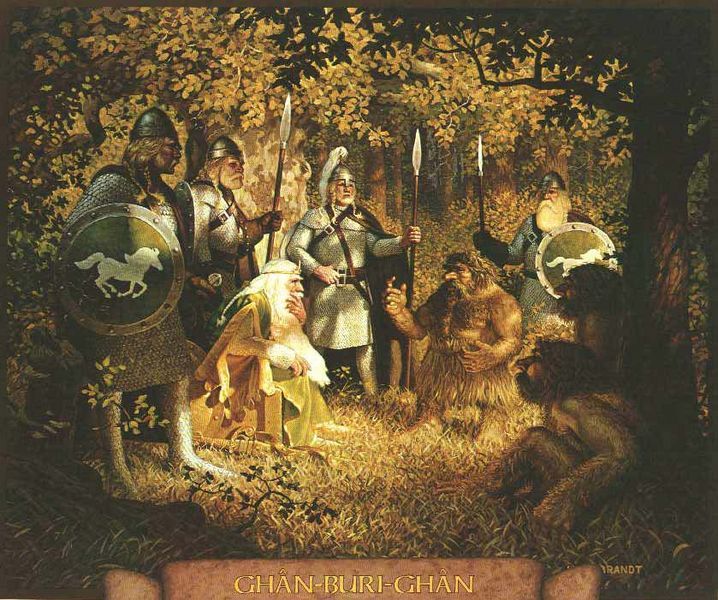
rohirrim.jpg

[We wondered, by the way, if that “Great horns of the North wildly blowing” was an accidental or deliberate allusion to a lyric from Alfred Lord Tennyson’s

tennysonyoung.jpg

poetic criticism of the idea of women’s education, The Princess (1847),

prncss.jpg

in which we find the line “The horns of Elfland faintly blowing”—here’s the whole poem:

from The Princess: The Splendour Falls on Castle Walls
By Alfred, Lord Tennyson
The splendour falls on castle walls
                And snowy summits old in story:
         The long light shakes across the lakes,
                And the wild cataract leaps in glory.
Blow, bugle, blow, set the wild echoes flying,
Blow, bugle; answer, echoes, dying, dying, dying.
         O hark, O hear! how thin and clear,
                And thinner, clearer, farther going!
         O sweet and far from cliff and scar
                The horns of Elfland faintly blowing!
Blow, let us hear the purple glens replying:
Blow, bugle; answer, echoes, dying, dying, dying.
         O love, they die in yon rich sky,
                They faint on hill or field or river:
         Our echoes roll from soul to soul,
                And grow for ever and for ever.
Blow, bugle, blow, set the wild echoes flying,
And answer, echoes, answer, dying, dying, dying.


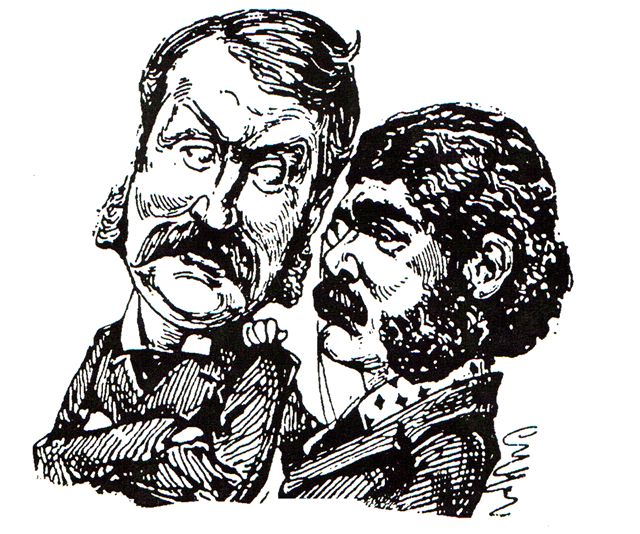
This then formed the basis of an 1870 play by W.S. Gilbert, which he converted, with his collaborator, Arthur Sullivan, into an operetta, in 1884.]


Gilbert and Sullivan Cartoon.jpg

Princess-Ida-1884.jpg

For the Aragorn and company half of the story, we see the arrival of the army of Gondor and its allies at the Morannon as the last door.

morannon.1.gif

Here, there are, in fact, two challengers/challenges. First,

“When all was ordered, the Captains rode forth towards the Black Gate with a great guard of horsemen and the banner and heralds and trumpeters…They came within cry of the Morannon, and unfurled the banner, and blew upon their trumpets; and the heralds stood out and sent their voices up over the battlement of Mordor.” (The Return of the King, Book 5, Chapter 10, “The Black Gate Opens”)

In return,

“There came a long rolling of great drums like thunder in the mountains, and then a braying of horns that shook the very stones and stunned men’s ears. And thereupon the door of the Black Gate was thrown open with a great clang, and out of it there came an embassy from the Dark Tower.”

In both cases, it goes without saying that this is a door to danger, the difference being that those from Gondor want those within to come out so that, by defeating them (though they have little hope of this), those from Gondor can enter, while those within the gate want to prevent their entry (except, perhaps, as prisoners).

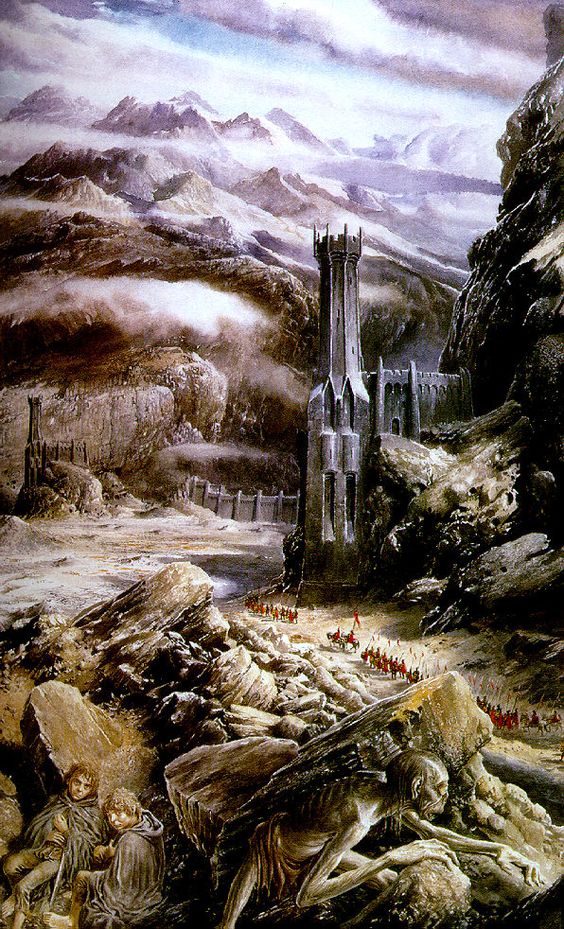
As we turn to the other half of the narrative, we begin at the same gate, where Gollum has brought Frodo and Sam.

alanleemorannon.jpg

Here, there is no easily visible challenger, just the forbidding nature of the gate, but it is still not an entryway to safety, as, on the other side is an inhospitable landscape, populated by Sauron’s vast armies, constantly on the move, as we see in later chapters. As well, from those later chapters, we gain the sense that Frodo doesn’t believe he’s going to return from Mordor anyway.

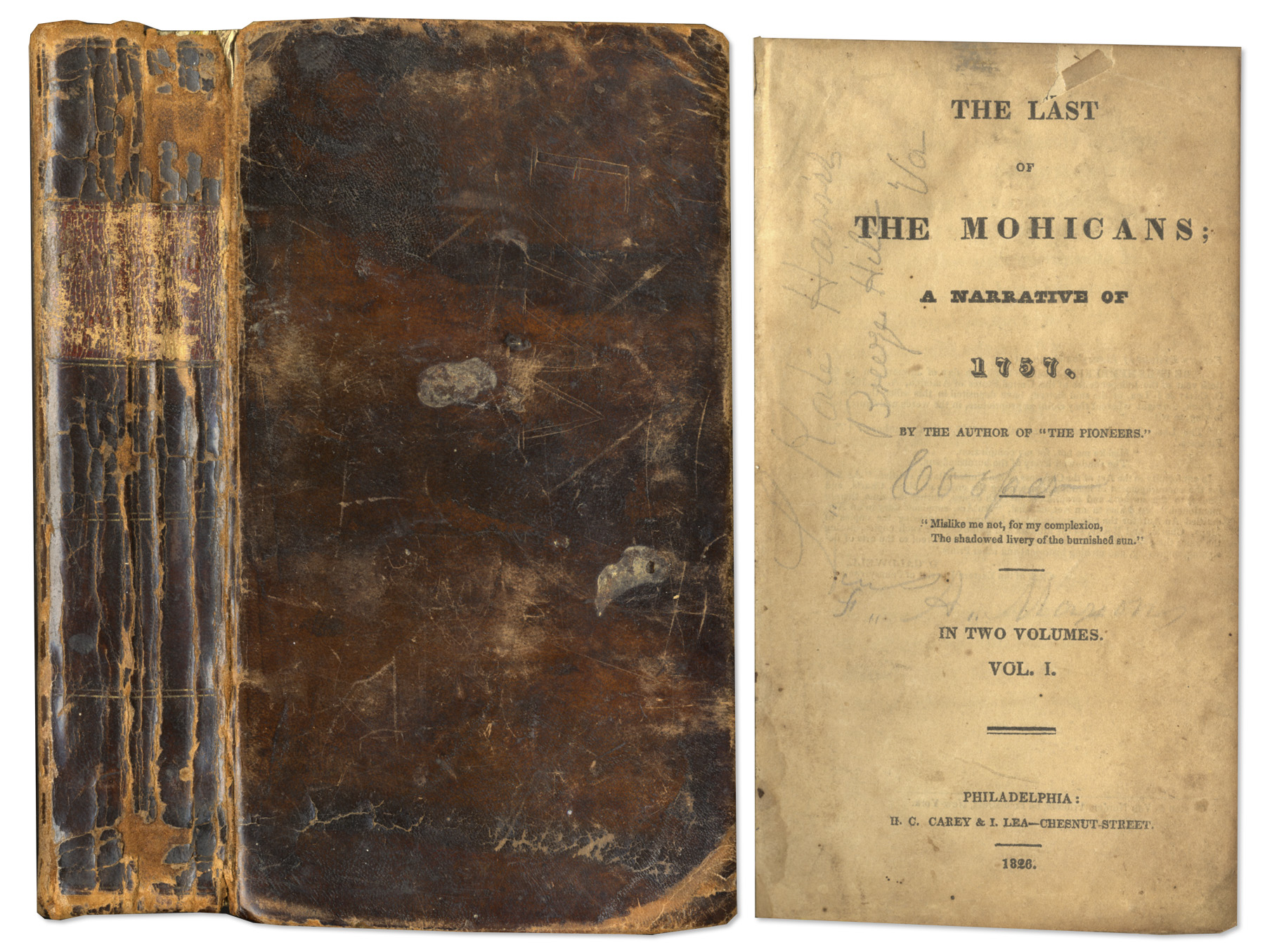
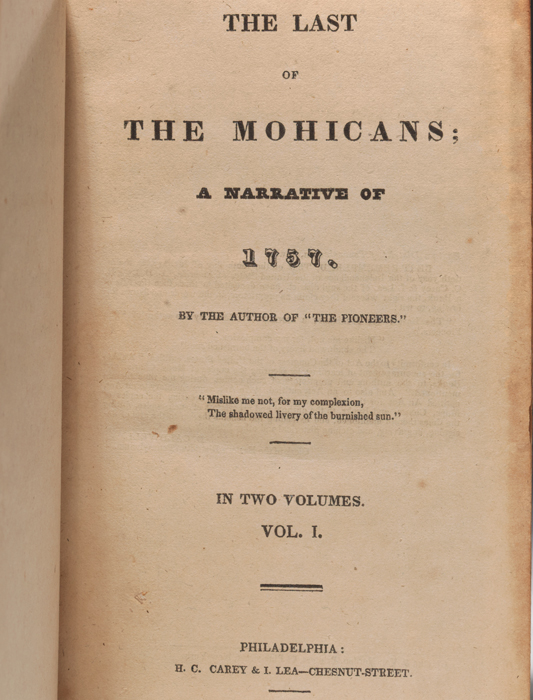
Seeing no way to enter, Frodo pushes Gollum to lead them south and, with a diversion to Faramir’s base behind a waterfall (which, to us, is reminiscent of a similar hide-out in James Fennimore Cooper’s The Last of the Mohicans (1826)

mohicansfirstedition.jpg

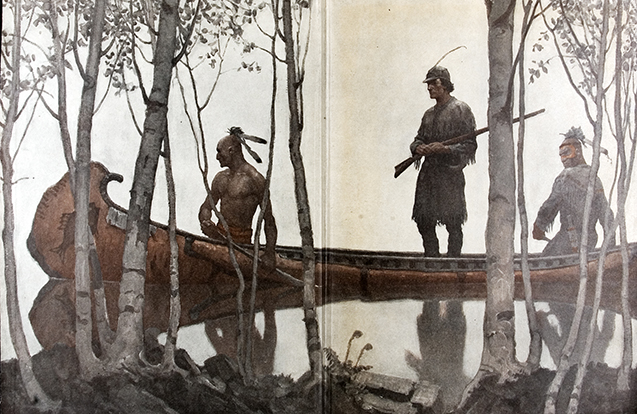
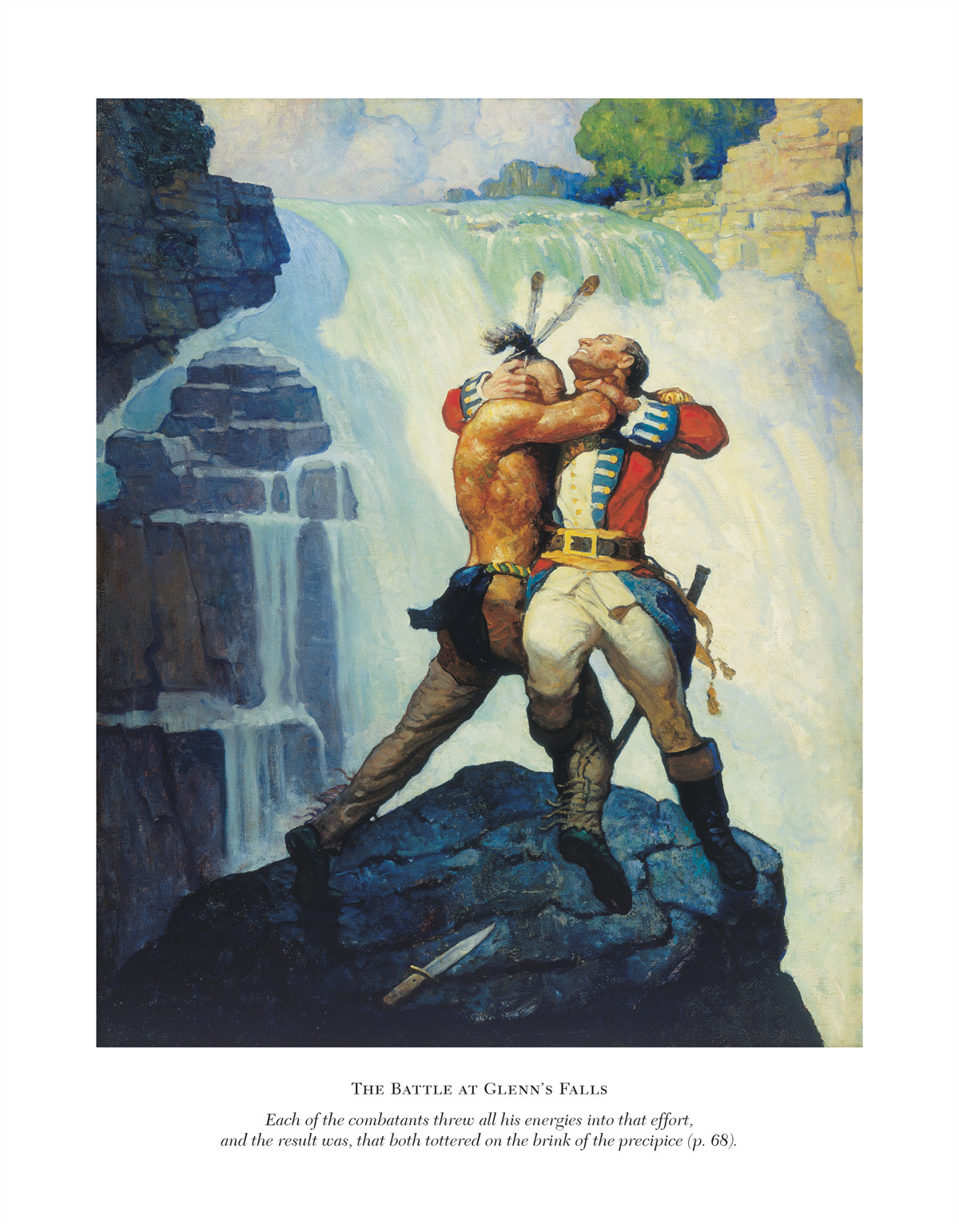
—and how can we resist mentioning that, in 1919, N.C. Wyeth illustrated an edition?)

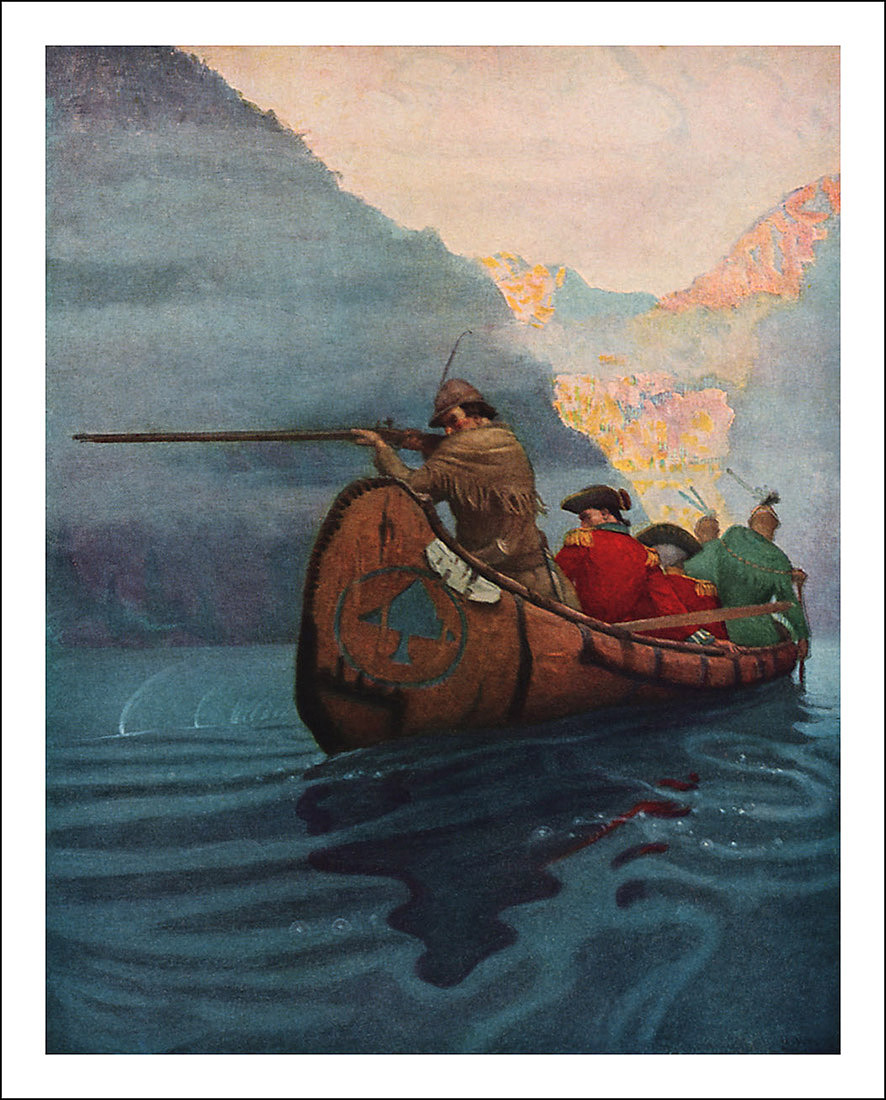
05_lastofthemohicans_wyeth_glenfalls.jpg

wyethlast.jpg

they arrive at the southern entryway to Mordor, the pass with Minas Morgul at its western end and Cirith Ungol at its eastern.

Morgul2.jpg

WATCHERS.jpg

The challengers of Minas Morgul are the Lord of the Nazgul and a vast army, on their way to attack Minas Tirith, but these are skirted, as Gollum guides the two hobbits around the site and up on a perilous climb—and into Torech Ungol, Shelob’s Lair. Safety? Gollum wants the hobbits to think so. Danger? With Shelob as a challenger, what else?

shelob.jpg

Even as Sam drives Shelob off, however, he loses Frodo, paralyzed and cocooned, and is faced with an inner door closed by the orcs as they withdraw. Climbing over it, he moves forward, cloaked by the ring, to look out towards Orodruin and the Tower of Cirith Ungol.

cirith-ungol2

And, with this, we have finished our survey.

Unless, of course, we consider two more events.

First, there is what happens at Mount Doom, where Gollum is the challenger, and the door, such as it is, leads to safety for Middle-earth, but not for Sam and Frodo.

gollum__s_dance_by_01gus01-d4rmt18.jpg

And, finally, at the edge of the Shire, in “The Scouring of the Shire”, where the returning hobbits meet with the followers of “Sharkey” at the bridge. Those followers, brain-washed by fear of “The Chief” and his “big man” followers, attempt to deny what should be a door to safety to Frodo, Merry, and Pippin, as the three had expected, but which leads, in fact, to conflict and open violence before their return home is safely accomplished.

scouringoftheshire.jpg

With that, we complete the pattern and here is our chart:


Entryway Source Challenger Challenged Outcome
Bilbo’s door The Hobbit Bilbo Dwarves Bilbo is tricked into hospitality
Beorn’s house The Hobbit Beorn Gandalf Beorn tricked into hospitality
Goblin cave The Hobbit Goblins Bilbo Escapes by use of the Ring
Mirkwood The Hobbit Elves Dwarves/Bilbo Bilbo rescues dwarves with Ring and barrels
Lonely Mountain (Back door) The Hobbit Smaug Dwarves/Bilbo Understanding the inscription, Dwarves open the door
Lonely Mountain (Front door) The Hobbit Dwarves Men, Elves, Goblins Battle of the Five Armies—eventual settlement
Bilbo’s door The Hobbit Hobbits Bilbo Bilbo’s things are up for auctions—Bilbo gets most things back
Ford of Bruinen The Lord of the Rings Wraiths Frodo/Elves After Frodo’s challenge, elf magic overwhelms wraiths
Moria (west gate) The Lord of the Rings Elves of Hollin Fellowship Gandalf discovers password—the group enters
Lothlorien (western side) The Lord of the Rings Elves Fellowship Challenged by elves, but allowed to enter
Edoras The Lord of the Rings Rohirrim Gandalf et al. Challenged by gate guards, but allowed to enter
Meduseld The Lord of the Rings Hama Gandalf et al. Challenged, but allowed to enter
Helms Deep The Lord of the Rings Aragorn Orcs/Wildings Aragorn warns them of their danger
Isengard The Lord of the Rings Merry/Pippin Gandalf et al. Greeted and offered food, drink, and smoke
Paths of the Dead The Lord of the Rings Oath-breakers Aragorn at al. Allowed to enter, but followed—leave safely
Morannon The Lord of the Rings Sauron King Elessar et al. Sauron’s army appears for battle
Morannon The Lord of the Rings Sauron Frodo/Sam/Gollum No way of entry—the three head south
Minas Morgul The Lord of the Rings Lord of Nazgul Frodo/Sam/Gollum Entry blocked by Lord’s Army
Torech Ungol The Lord of the Rings Shelob Frodo/Sam Gollum escapes, Frodo paralyzed by Shelob
Cirith Ungol The Lord of the Rings Orcs Sam With Ring as aid, Sam enters
Mt. Doom The Lord of the Rings Gollum Frodo Gollum gains Ring, but perishes in fire
Shire bridge The Lord of the Rings Hobbits Frodo et al. Hobbits climb over gate, guards run


Because this material becomes increasingly complex, there is always the possibility that, as thorough as we try to be and as inclusive, we’ve missed something. If so, we’d be glad to hear from our readers!

Thanks, as always, for reading!

MTCIDC

CD


Last Mohican, First Novelist

07 Wednesday Sep 2016

Posted by Ollamh in Artists and Illustrators, Films and Music, Heroes, Literary History, Military History, Narrative Methods

≈ Leave a comment

Tags

Baron Dieskau, British, Carillon, Daguerre, Deerfield, Fenimore Cooper's Literary Offenses, Fort Duquesne, Fort Edward, Fort Niagara, Fort St. Frederic, Fort William Henry, French, French and Indian War, General Webb, James Fenimore Cooper, Lake Champlain, Lake George, Lake Ontario, Lt. Col. Munro, Mark Twain, Marquis de Montcalm, Matthew Brady, N.C. Wyeth, Native Americans, Oswego, St. Frederic, The Last of the Mohicans, Ticonderoga

Welcome, dear readers, as always.

This is our 104th posting, making exactly 2 years of maintaining our blog, Doubtfulsea.com. When we began it, we had visited lots of other blogs, but we had no clear idea of what we wanted for ourselves. Our name came from our first novel, Across the Doubtful Sea, available from Amazon and Kindle, but we planned, from the beginning, to cover much more than the subject matter of our novel (among other things, French and English exploration of the Pacific in the 18th century, as well as Polynesian settlement). In consequence, during our two years, we have had postings on a variety of subjects, mostly about adventure/fantasy, often with an historical element, often with a focus upon the work of one of our favorite fantasy authors, JRR Tolkien.

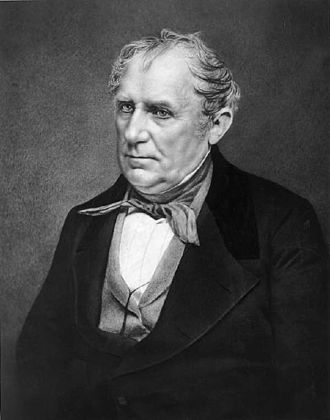
Now, in this last of our second year, we want to look at a person often viewed as the first important American novelist of the early 19th century, James Fenimore Cooper (1789-1851), and his most famous book, The Last of the Mohicans (1826).James-Fenimore-Cooper

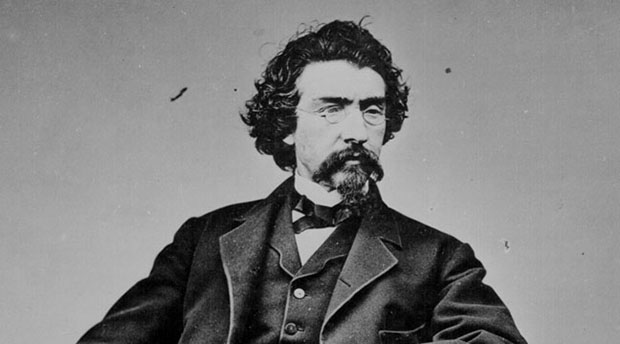
(A footnote: Cooper lived long enough that, the year before his death, he was the subject of an early photograph, using the Daguerre process, by Matthew Brady, 1822-1896, who, in a decade, would become the most famous photographer in the US because of his work documenting the American Civil War, 1861-1865.)

daguerreotypejfc

mathewbrady

DaguerreProcess4

Cooper had a long and very successful career as a novelist, beginning with a social novel, Precaution (1820), but his greatest fame came from his long series based upon US historical subjects and perhaps the most famous of all, that set in the world of the French and Indian War (1754-1763), and the book we want to focus upon,

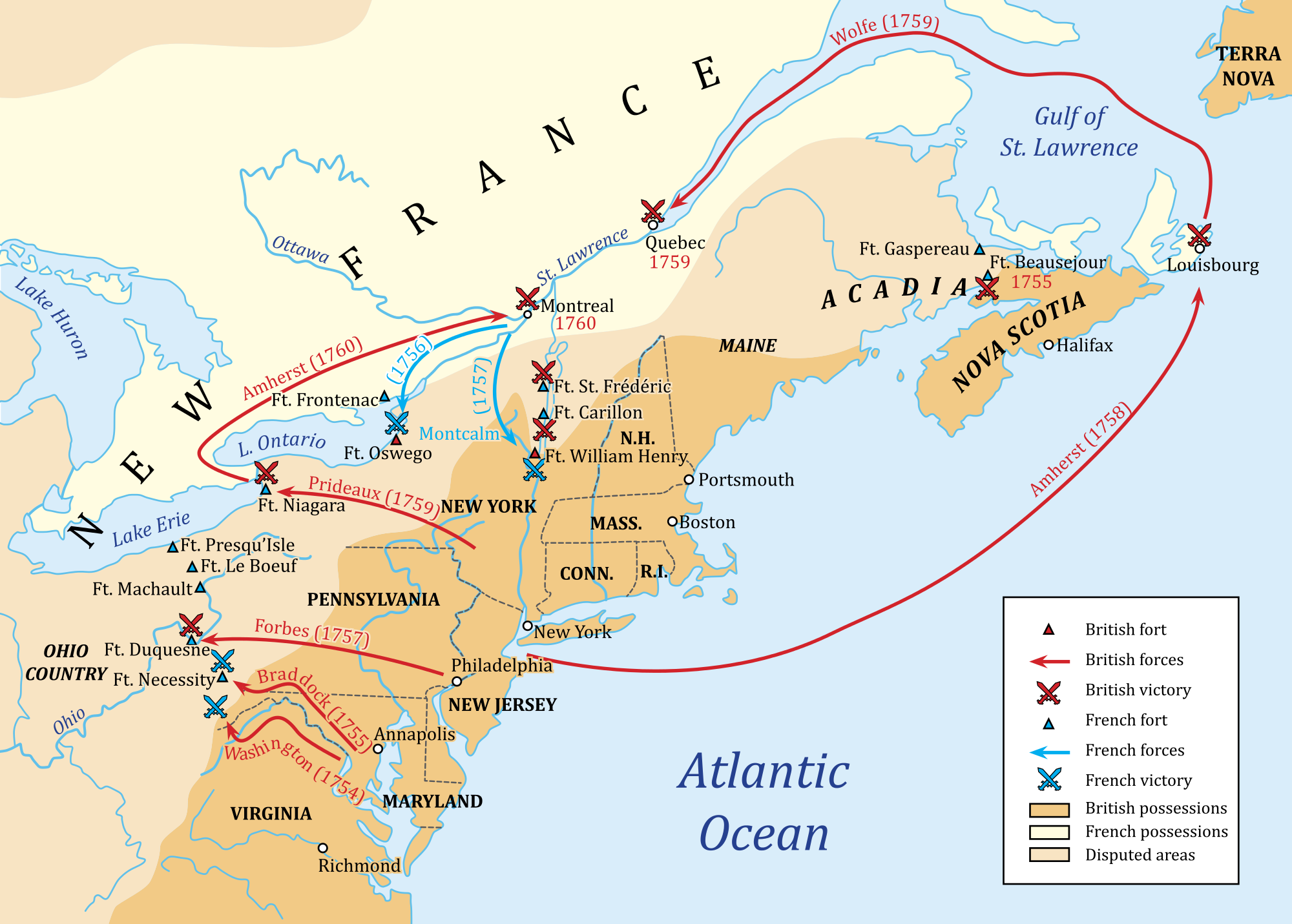
French_and_indian_war_map_svg

The Last of the Mohicans.

lastofmofirsted

The subtitle, A Narrative of 1757, immediately suggests a specific event of the war, the siege and fall of the British Fort William Henry in August, 1757.

The fort had been built at the head of Lake George as a counterbalance to two French forts, Ticonderoga (called by the French, “Carillon”) and St. Frederic, on Lake Champlain, the lake to the north.

French_and_indian_war_map_svg

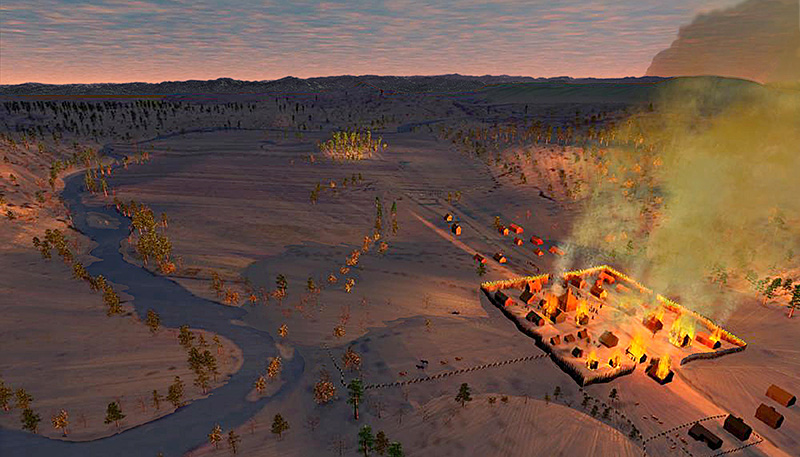
All of these forts—and more—were part of the competition between the British and French to control the northeastern part of North America. This struggle had begun in the later 17th century and had long been a proxy war in which colonial settlers and Native Americans had struggled across many miles of wilderness, raiding each other throughout the years. Here is one of the most famous raids, that of Deerfield in 1704.

deerfield1deerfield2deerfield3

In the early 1750s, the French had increased the potential tension by building a new series of forts in what is now western Pennsylvania and eastern Ohio, soon to be countered by British forts.

French_British_Forts_1753_1758

In 1755, as the war heated up, the English planned a three-pronged attack against Ft. Duquesne, Ft. Niagara, and Ft. St. Frederic (called “Crown Point” by the English).

French_and_indian_war_map_svg

duquesne

ftniagaraftstfrederic

The advance against Ft. Duquesne was defeated, that against Niagara never took off, and that on St. Frederic was blocked by a French attack on the English (actually New England colonial) army at the head of Lake George.

1-battle-of-lake-george-1755-granger

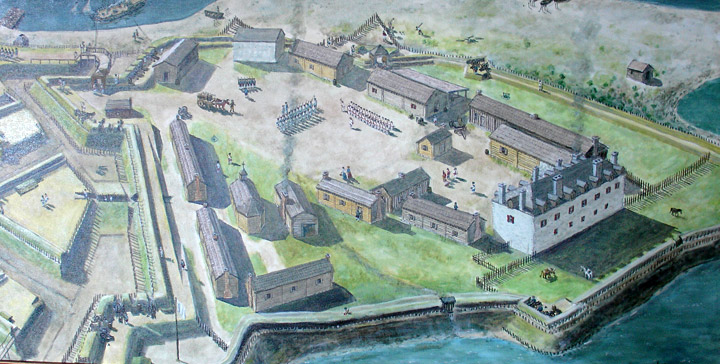
This then became the site of Ft. William Henry.

Fort-William-Henry-Museum

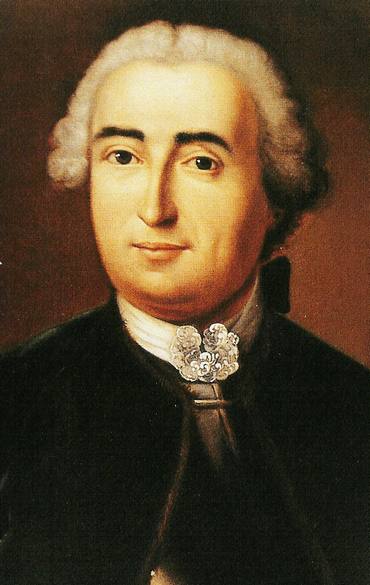
Because the European population of New France was so small in contrast to that of the English colonies—about 70,000 versus more than a million—and because the royal government in Paris had little money to spend (or chose to spend) on the colony, the first two French military commanders, the Baron Dieskau (1701-1767) and the Marquis de Montcalm (1712-1759)

montcalm

chose an aggressive strategy, aiming to keep the British as far from the center of New France as possible. Although his men were eventually driven off and he was wounded and captured, Dieskau did halt the expedition against Ft. St. Frederic. The next year, 1756, Montcalm destroyed the English forts at Oswego, on the south shore of Lake Ontario, which could have served as staging areas for attacks east and west.

Lake_Ontario_map

Then, in 1757, he mounted the attack on Ft. William Henry which forms the background story for Cooper’s novel.

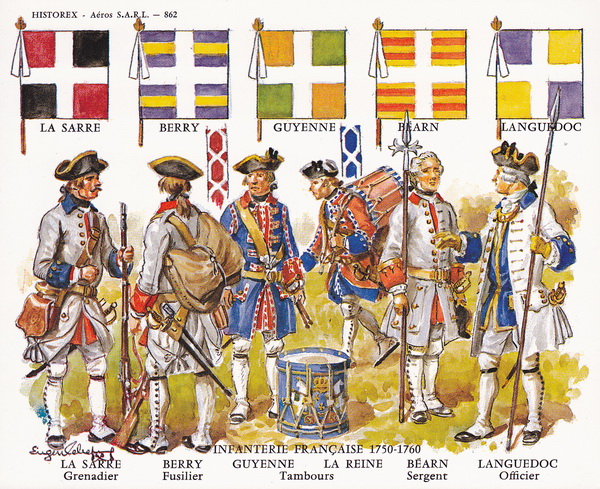
To do so, he stripped central New France of its regular troops and militia

Historex Card 862 French Infantry 1750 - 1760

and augmented them with Native Americans, for whom he felt no sympathy.

montcalmnatams

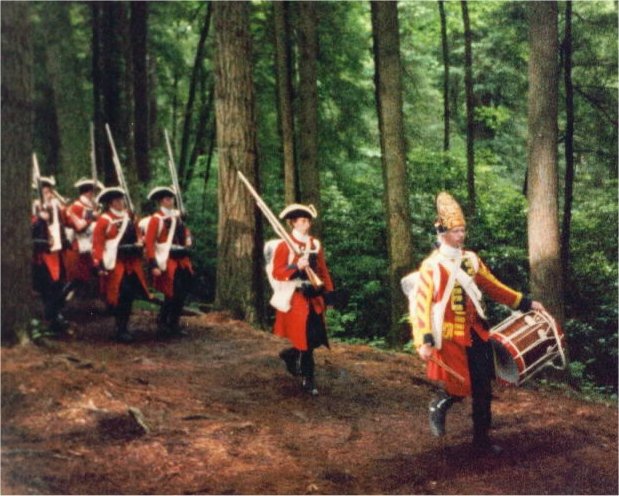
Against such a force, the English commander, Lt. Col. Munro, had a much smaller number of British regulars

brituniformsfiw

and colonial troops, based in the fort itself and in a nearby camp.

Plan_of_Fort_William_Henry_on_Lake_George

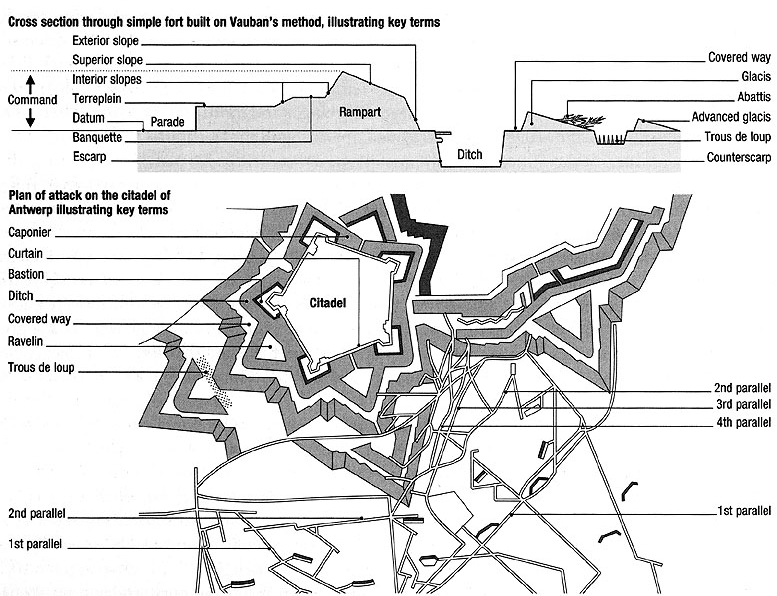
In the 18th century, besieging a town or a fort was a very formal endeavor. Forts and towns were constructed to resist attack, often having multiple walls, ditches, and outer forts, the walls being covered in earth to resist the destructive power of an enemy’s artillery.

fortress-cross-section

Before an attack, the attacker was required to send a messenger in, demanding surrender. In some cases, seeing overwhelming forces and having no promise of relief, a garrison surrendered.

surrender of detroit

To attack meant beginning with a series of trenches just outside the artillery range of the defenders, then, through zigzagging,06 Vauban's Siege Technique.pngto approach closer and closer until:

  1. the attacker’s artillery had knocked a big enough hole in the enemy’s walls that they were rapidly becoming defenseless

siege_image6

  1. there was the immediate danger of an assault

redoubt10

In the case of Ft. William Henry, there was only a dry ditch, then exposed timber walls.

Fort-William-Henry-Museum

The French summoned Munro to surrender, he refused, and the French began the siege.

frenchsiegeline

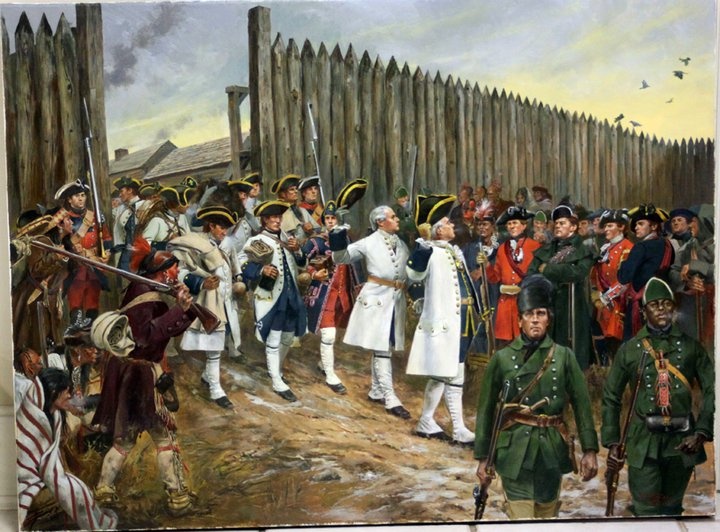
When the French guns had badly damaged the fort and there was no chance of help from General Webb, at Ft. Edward, to the south, Munro surrendered.

surrender of Ft. William Henry

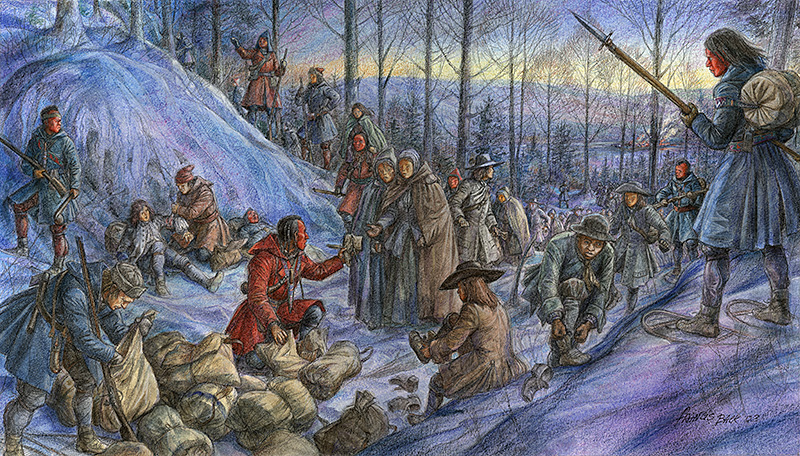
Trouble then began when Montcalm’s Native Americans felt cheated of the plunder which they had expected and, when the paroled column of soldiers began to move southward, it was attacked by them. Montcalm and some of his officers intervened, but they were unable to do more than slow the plundering and killing before some 200 fell. (There has been a great deal of argument as to numbers—it appears, for example, that others had been carried away, either to be ransomed later, adopted into tribes, or ritually murdered, as was the custom among some Native American groups. For the best modern account, see Ian Steele, Betrayals, OUP, 1990.)

01french_lg

Cooper’s novel, an adventure/romance, uses the fort and siege as its center. Main characters move towards the fort, are in it at the time of the surrender, and are involved in the disaster after it. As might seem inevitable by now, our favorite edition is that illustrated by N. C. Wyeth in 1919.

51504

And here is a selection of the illustrations.

0_8f6d0_9b893fc5_orig0_8f6d2_797c6459_orig0_8f6d4_4ef48676_orig

the-last-of-the-mohicans-9781442481305.in02the-last-of-the-mohicans-9781442481305.in03titlepage

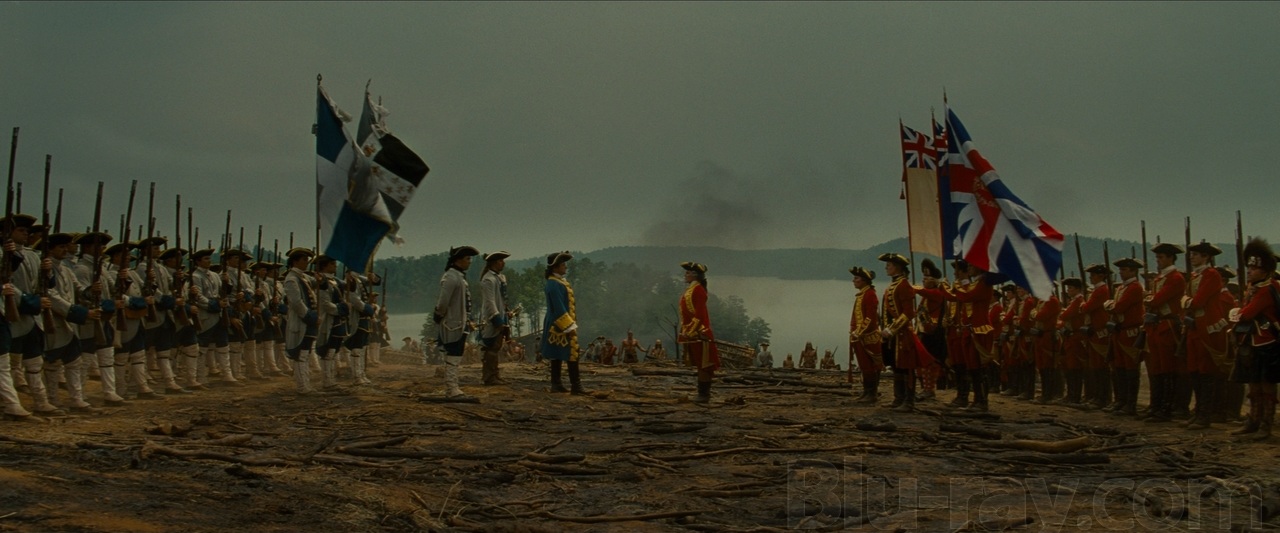
There have been numerous films made of the book, the earliest (at least US one) being a silent, dating from 1912. For us, the most colorful was the one which appeared in 1992, with Daniel Day Lewis as “Nathaniel Poe” (a slight change from the books’ Natty Bumpo). This version made many changes to the original story, including a love interest between Poe and one of Munro’s daughters, Cora, but, for us, it also had four rather spectacular scenes: the ambush of a company of redcoats in the forest by Native Americans,

ambushinforest

the French siege of Ft. William Henry,

frenchsiegeline

the British surrender,

surrender of Ft. William Henry

and the final “massacre”.

ambush2

And so we begin our third year of blogging with our next posting. We have, as always, lots of ideas for those postings, which we hope you will enjoy.

Thanks, as always, for reading!

MTCIDC

CD

PS

In 1895, Mark Twain published a comic critique of Cooper’s writing ticks. Entitled, “Fenimore Cooper’s Literary Offenses”, it can be read at http://twain.lib.virginia.edu/projects/rissetto/offense.html.

The Doubtful Sea Series Facebook Page

The Doubtful Sea Series Facebook Page

  • Ollamh

Categories

  • Artists and Illustrators
  • Economics in Middle-earth
  • Fairy Tales and Myths
  • Films and Music
  • Games
  • Heroes
  • Imaginary History
  • J.R.R. Tolkien
  • Language
  • Literary History
  • Maps
  • Medieval Russia
  • Military History
  • Military History of Middle-earth
  • Narnia
  • Narrative Methods
  • Poetry
  • Research
  • Star Wars
  • Terra Australis
  • The Rohirrim
  • Theatre and Performance
  • Tolkien
  • Uncategorized
  • Villains
  • Writing as Collaborators
Follow doubtfulsea on WordPress.com

Across the Doubtful Sea

Recent Postings

  • Through a glass… January 7, 2026
  • Heffalumps? December 31, 2025
  • We Three Kings December 24, 2025
  • A Moon disfigured December 17, 2025
  • On the Roads Again—Once More December 10, 2025
  • (Not) Crossing Bridges December 3, 2025
  • On the Road(s) Again—Again November 26, 2025
  • On the Road(s) Again November 19, 2025
  • To Bree (Part 2) November 12, 2025

Blog Statistics

  • 104,104 Views

Posting Archive

  • January 2026 (1)
  • December 2025 (5)
  • November 2025 (4)
  • October 2025 (5)
  • September 2025 (4)
  • August 2025 (4)
  • July 2025 (5)
  • June 2025 (4)
  • May 2025 (4)
  • April 2025 (5)
  • March 2025 (4)
  • February 2025 (4)
  • January 2025 (5)
  • December 2024 (4)
  • November 2024 (4)
  • October 2024 (5)
  • September 2024 (4)
  • August 2024 (4)
  • July 2024 (5)
  • June 2024 (4)
  • May 2024 (5)
  • April 2024 (4)
  • March 2024 (4)
  • February 2024 (4)
  • January 2024 (5)
  • December 2023 (4)
  • November 2023 (5)
  • October 2023 (4)
  • September 2023 (4)
  • August 2023 (5)
  • July 2023 (4)
  • June 2023 (4)
  • May 2023 (5)
  • April 2023 (4)
  • March 2023 (5)
  • February 2023 (4)
  • January 2023 (4)
  • December 2022 (4)
  • November 2022 (5)
  • October 2022 (4)
  • September 2022 (4)
  • August 2022 (5)
  • July 2022 (4)
  • June 2022 (5)
  • May 2022 (4)
  • April 2022 (4)
  • March 2022 (5)
  • February 2022 (4)
  • January 2022 (4)
  • December 2021 (5)
  • November 2021 (4)
  • October 2021 (4)
  • September 2021 (5)
  • August 2021 (4)
  • July 2021 (4)
  • June 2021 (5)
  • May 2021 (4)
  • April 2021 (4)
  • March 2021 (5)
  • February 2021 (4)
  • January 2021 (4)
  • December 2020 (5)
  • November 2020 (4)
  • October 2020 (4)
  • September 2020 (5)
  • August 2020 (4)
  • July 2020 (5)
  • June 2020 (4)
  • May 2020 (4)
  • April 2020 (5)
  • March 2020 (4)
  • February 2020 (4)
  • January 2020 (6)
  • December 2019 (4)
  • November 2019 (4)
  • October 2019 (5)
  • September 2019 (4)
  • August 2019 (4)
  • July 2019 (5)
  • June 2019 (4)
  • May 2019 (5)
  • April 2019 (4)
  • March 2019 (4)
  • February 2019 (4)
  • January 2019 (5)
  • December 2018 (4)
  • November 2018 (4)
  • October 2018 (5)
  • September 2018 (4)
  • August 2018 (5)
  • July 2018 (4)
  • June 2018 (4)
  • May 2018 (5)
  • April 2018 (4)
  • March 2018 (4)
  • February 2018 (4)
  • January 2018 (5)
  • December 2017 (4)
  • November 2017 (4)
  • October 2017 (4)
  • September 2017 (4)
  • August 2017 (5)
  • July 2017 (4)
  • June 2017 (4)
  • May 2017 (5)
  • April 2017 (4)
  • March 2017 (5)
  • February 2017 (4)
  • January 2017 (4)
  • December 2016 (4)
  • November 2016 (5)
  • October 2016 (6)
  • September 2016 (5)
  • August 2016 (5)
  • July 2016 (5)
  • June 2016 (5)
  • May 2016 (4)
  • April 2016 (4)
  • March 2016 (5)
  • February 2016 (4)
  • January 2016 (4)
  • December 2015 (5)
  • November 2015 (5)
  • October 2015 (4)
  • September 2015 (5)
  • August 2015 (4)
  • July 2015 (5)
  • June 2015 (5)
  • May 2015 (4)
  • April 2015 (3)
  • March 2015 (4)
  • February 2015 (4)
  • January 2015 (4)
  • December 2014 (5)
  • November 2014 (4)
  • October 2014 (6)
  • September 2014 (1)

Blog at WordPress.com.

  • Subscribe Subscribed
    • doubtfulsea
    • Join 78 other subscribers
    • Already have a WordPress.com account? Log in now.
    • doubtfulsea
    • Subscribe Subscribed
    • Sign up
    • Log in
    • Report this content
    • View site in Reader
    • Manage subscriptions
    • Collapse this bar
 

Loading Comments...