• About

doubtfulsea

~ adventure fantasy

Tag Archives: The Charge of the Light Brigade

Light on Their Feet

02 Wednesday Oct 2019

Posted by Ollamh in Literary History, Military History

≈ Leave a comment

Tags

Alfred Tennyson, Austrian, Balaclava, British Cavalry, chasseurs a cheval, Crimean War, Errol Flynn, Flashman, French, Gallic, gendarmes, George Macdonald Fraser, Heavy Brigade, Hungarian, Hussars, jinetes, lancers, Light Brigade, Light Dragoons, Napoleonic, North Africans, Olivia deHavilland, Renaissance cavalry, Romans, Russian Artillery, Spanish, St Helena, The Charge of the Light Brigade, Thomas Hughes, Tom Brown's School Days

As ever, dear readers, welcome.

Recently, someone asked us about the Light Brigade—that is, the collection of regiments of British cavalry who fought in the Crimean War (1854-56).
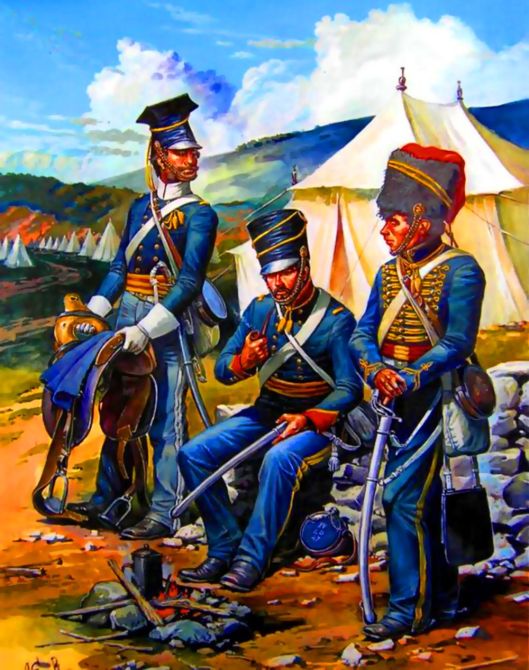
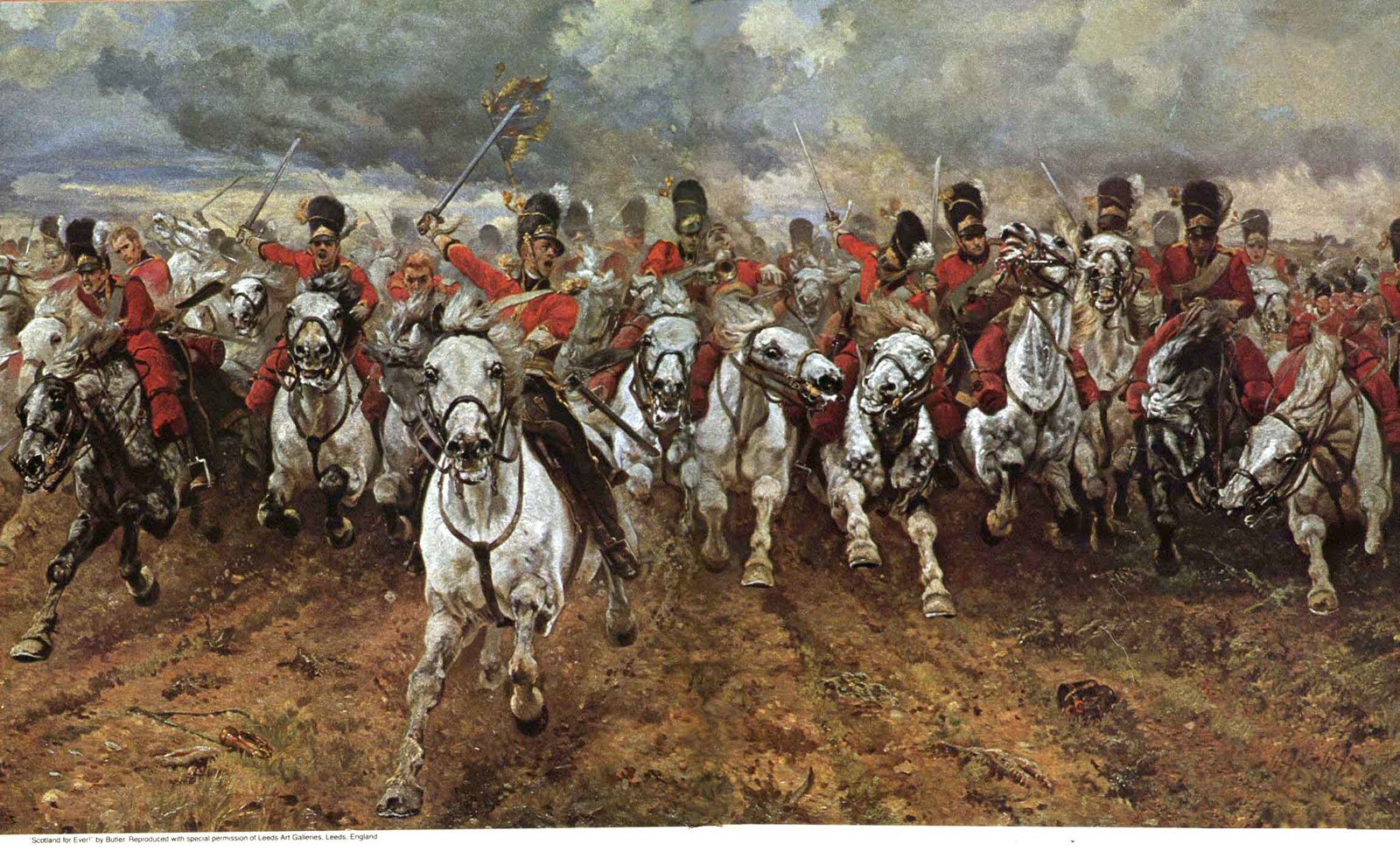
image1ltbrig.jpg

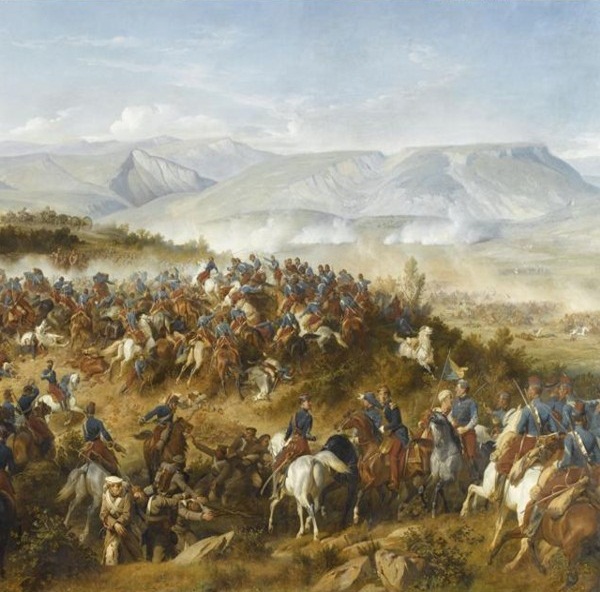
These are the troopers who mistakenly charged Russian artillery in the series of battles fought on 25 October, 1854, called, collectively, Balaclava.

image2simkin.jpg

The question was, “Why was it called ‘the Light Brigade’?  Were the soldiers thin?  And was there a Heavy Brigade, where they were all fat?”

It seemed to us a very reasonable question and our answer began, “Over many centuries, cavalry has had a number of uses, but they could probably be broken down into two groups by those uses:  1. raids, skirmishes, scouting, and pursuit; 2. attacking enemy cavalry and infantry formations—and pursuit.  The former (#1) is the job of light cavalry, the latter (#2) of heavy cavalry.”

The Romans, who themselves only produced cavalry early in their history, quickly preferring to hire the job out, might, for example, use North Africans as light cavalry.

image3nub.jpg

If heavy cavalry were needed, then the task might go to Spanish or Gallic soldiers.

image4gallic.jpg


And this would be true throughout military history—Renaissance cavalry might have heavily-armored gendarmes
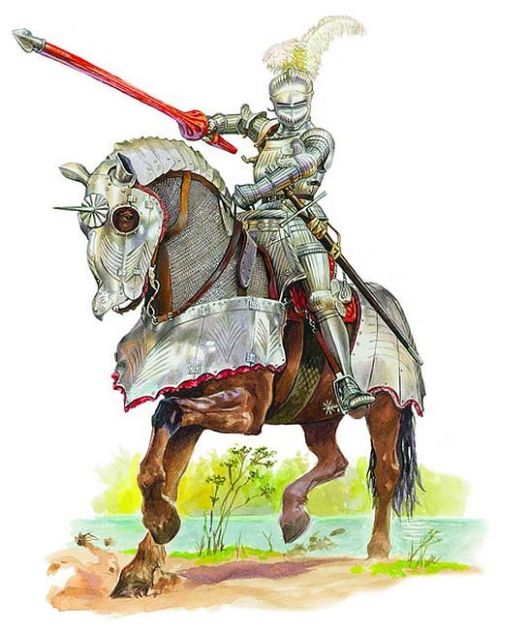
image5gendarme.jpg

to break up an enemy unit (or more) with the weight of its charge, but would also use lightly-armed jinetes

image6jinete


to find out the enemy’s positions, or attack their supply routes.

In the 18th century, most cavalry were heavy—although armor had almost disappeared.
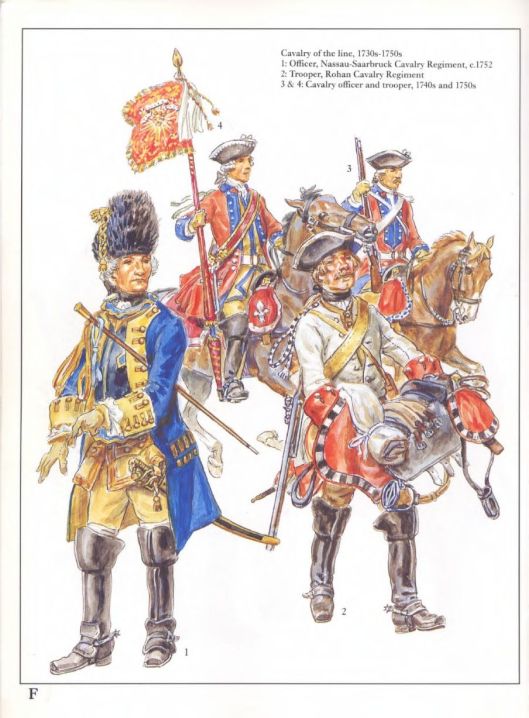
image7heavy.jpg

The Austrians and then the French added to those heavies light cavalry originally from the Hungarian world, hussars.
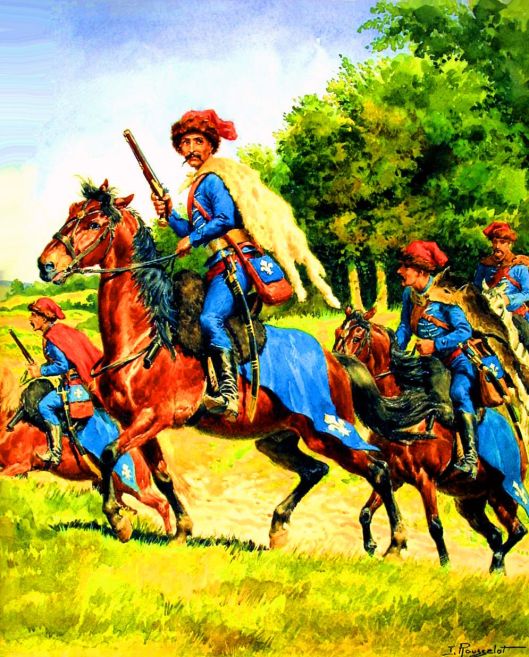
image8bercheny.jpg

Not to be outdone, the English fleshed out their heavy cavalry

image9drag.jpg

not with hussars, but something they called “light dragoons”.
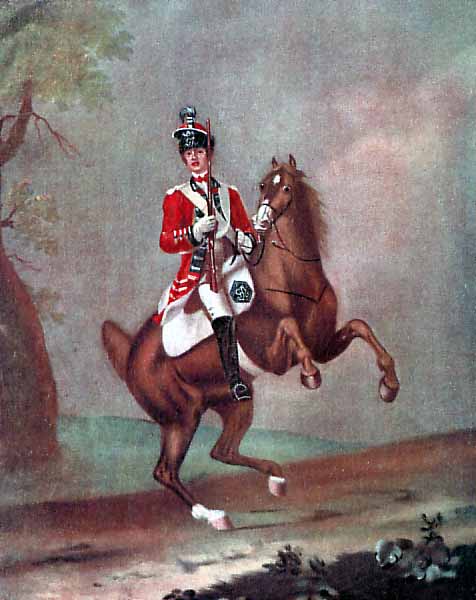
image10ld.jpg

Dragoons had originally been mounted infantrymen, who rode to battle on horseback, then dismounted to fight,
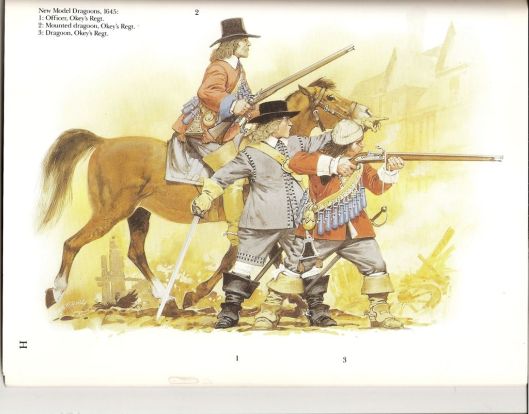
image11okey.jpg

but, by the mid-18th century, dragoons were just heavy cavalry—bigger men on bigger horses—and light dragoons were smaller men on smaller horses, with mostly different functions.

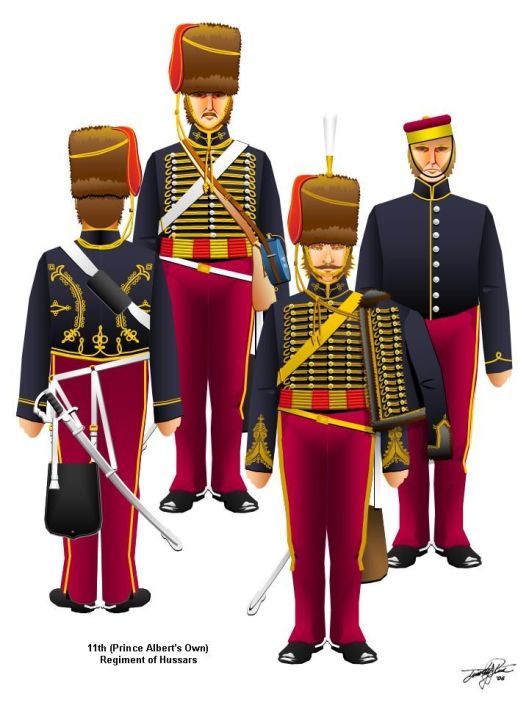
By the end of the century and just beyond, during the Napoleonic era, the French, in particular, had developed a whole series of light cavalry types—hussars,
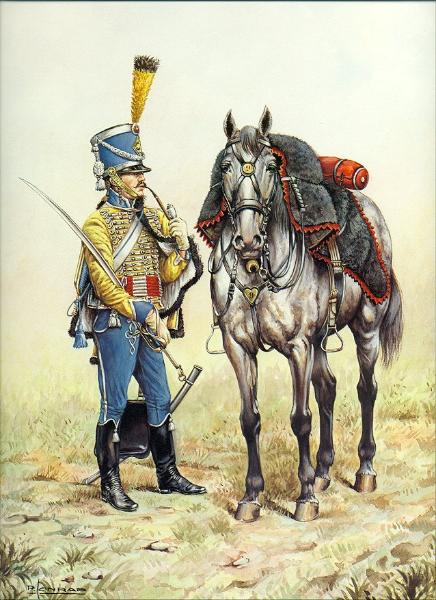
image12hussars.jpg

chasseurs a cheval (literally, “hunters on horseback”),

image13chasseurs.jpg

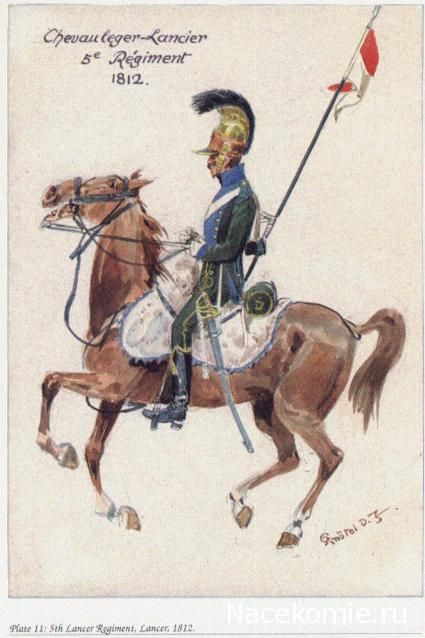
and lancers, as well.

image14lancers.jpg

The English, to match the French, converted some regiments to hussars,
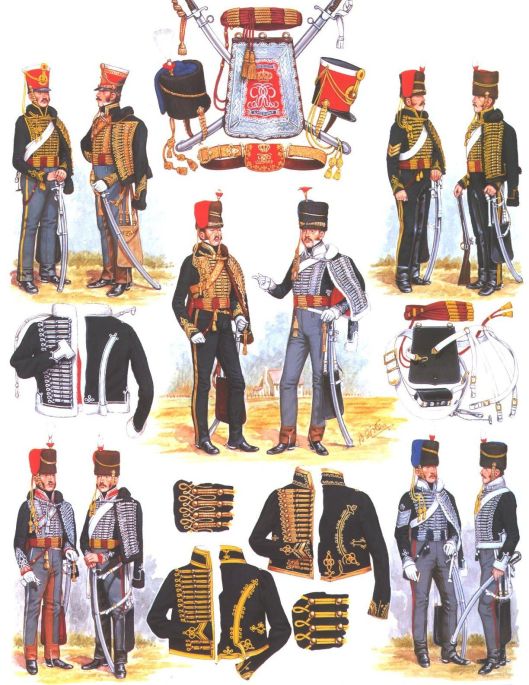
image15hussars.jpg

but only after 1820, when Napoleon was in his second and final exile on St. Helena, did they convert several other regiments to lancers.
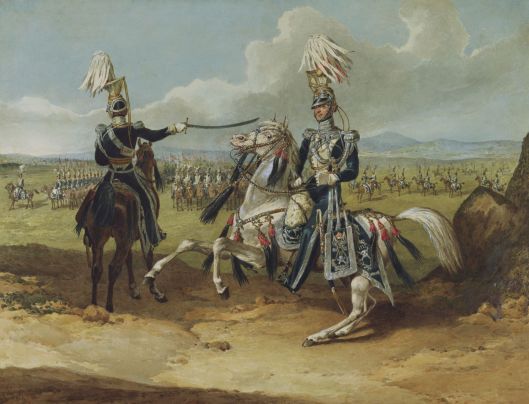
image16lancer.jpg

(You can see that they borrowed their style of dress from that of Polish lancers in Napoleon’s armies.)
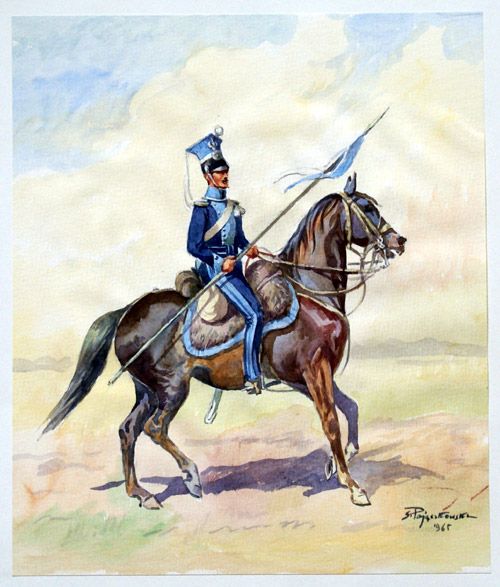
image17lancer.jpg

These lancers

image18lancers.jpg

along with hussars

image19hussars.jpg

and light dragoons

image20ld.jpg

made up the famous Light Brigade of Alfred Tennyson’s (1809-1892)

image21at


1854 poem, “The Charge of the Light Brigade”.

image22charge.png

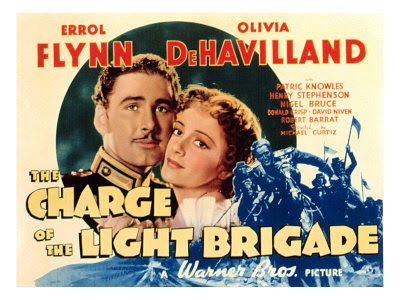
This, in turn, inspired one of our favorite adventure movies, the 1936 The Charge of the Light Brigade.
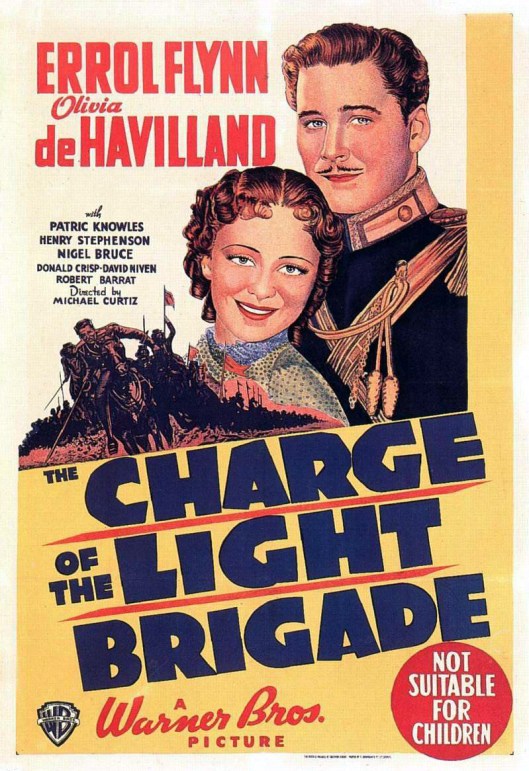
image23charge.jpg

(We wonder how different children must have been in 1936—we loved that movie as kids!)

And this film, in turn, inspired a 20th-century adventure writer, George Macdonald Fraser (1925-2008),

image24gmf.jpg

who wrote a series of 12 books detailing the life of one Harry Flashman, beginning with Flashman (1969).

image25flashman.jpg

In part, these are a parody of the life of a typical Victorian officer, who eventually becomes General Sir Harry Flashman.  He appears at many of the famous military events in mid-Victorian British history, from the First Afghan War (1839-1842) to the Zulu War (1879), along with appearances at later events, including a cameo appearance at the British declaration of war against Germany on 4 August, 1914.  The joke is, although he wins all sorts of honors, including that knighthood, he is, in fact, a complete coward and it’s only amazing luck that he manages to survive as long and as well as he does.  And there is a second joke within the first:  Flashman is actually the school bully in a very famous earlier novel, Tom Brown’s School Days (1857),

image26tbrown.PNG

by Thomas Hughes (1822-1896), a book which is the ancestor not only of many later such novels and short stories, but also of the Harry Potter books.

image27hughes.jpg

The fourth novel in the Flashman series, entitled Flashman at the Charge (1973),
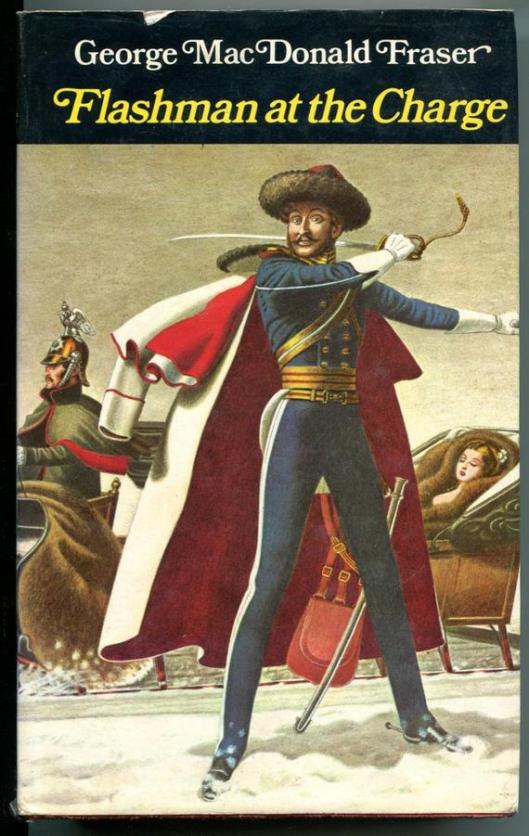
image28charge.jpg

gives us Fraser’s hero as actually leading that famous attack by accident, an accident which leads to his capture by the Russians—and many further adventures.

So, our answer to the original question is:  “No.  The Light Brigade wasn’t skinny, but was called that because it was smaller men on smaller horses with very specific jobs which required rapid movement and greater flexibility than heavy cavalry.”

And, with that answer, we say thank you for reading and

MTCIDC

CD

ps

There was, in fact, a Heavy Brigade,
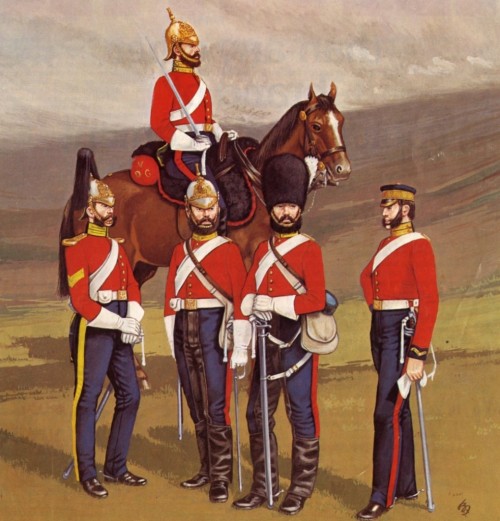
image29heavy.jpg

who made their own equally-heroic, but more successful, attack on the same day as the more famous Light Brigade charge.  Bigger men on bigger horses, they drove advancing Russian cavalry out of the Heavy Brigade camp.
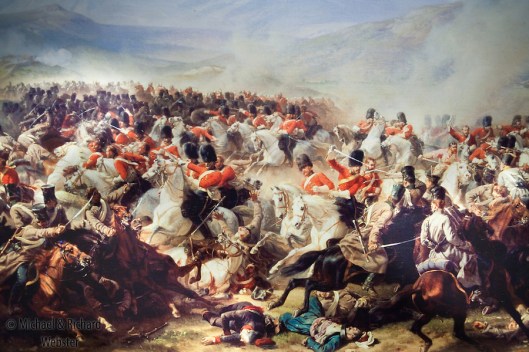
image30charge.jpg

Charge! The End?

14 Wednesday Oct 2015

Posted by Ollamh in Films and Music, J.R.R. Tolkien, Military History, Military History of Middle-earth

≈ Leave a comment

Tags

Adventure, Bataclava, Bigelow, British, British Heavy Brigade, Cavalry, Cawnpore, Charges, Chasseurs d'Afrique, Crimean War, French, Funckens, Gandalf, Helm's Deep, John Ford, Minas Tirith, Oliphaunts, Prussian, Remington, Rohirrim, Rossbach, Russian, Schreyvogel, seige, Stagecoach, surreneder, The Charge of the Light Brigade, The Lord of the Rings, Tolkien, Trostle Farm, Warhorse, Waterloo, Western, William Simpson

Dear Readers,

Welcome, as always.

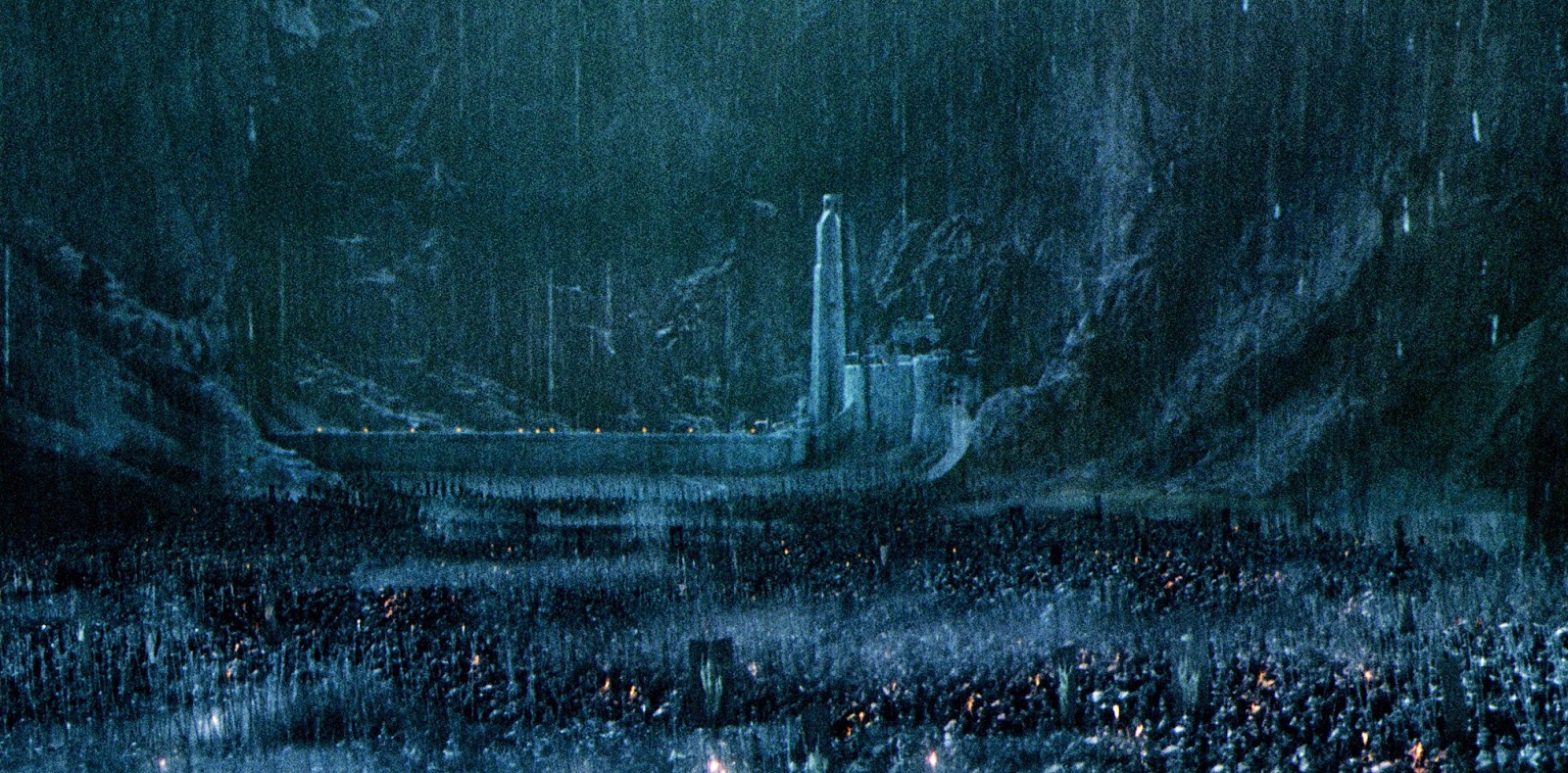
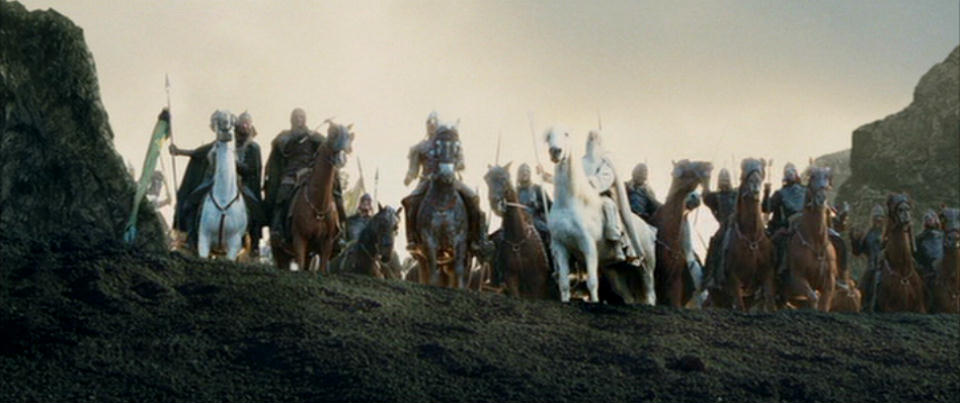
In our last, we were discussing film music, where it comes from and what it does. This brought us, as always, it seems, back to JRRT. In that post, we talked about the “Shire theme”. In this, we want to talk not about a theme, but about a scene, one we have mentioned before, the charge of the Rohirrim and the attempted raising of the siege of Minas Tirith.

gondorattacked rohirrimformup

Although, strictly speaking, what is happening to Minas Tirith is simply a frontal assault, not a siege in the classic sense. Although, seen in this illustration (by the wonderful husband and wife team of the Funckens), they may look the same—

funckenssiegeupclose

in a formal siege, you surround a town/fortress

siegediggingin

call on the place to surrender

The-Entrance-Into-Belfort-Of-The-German-Commander-Bearing-The-Flag-Of-Truce-4th-November-1870-1884

use your heavy weapons to bombard the place

catapault42cm

Drive the defenders back from their outer works

William Simpson - The Attack on the Malakoff 1855

And then call upon the defenders to surrender—which, often they do (fewer Alamos than myth would tell you)

surrender4

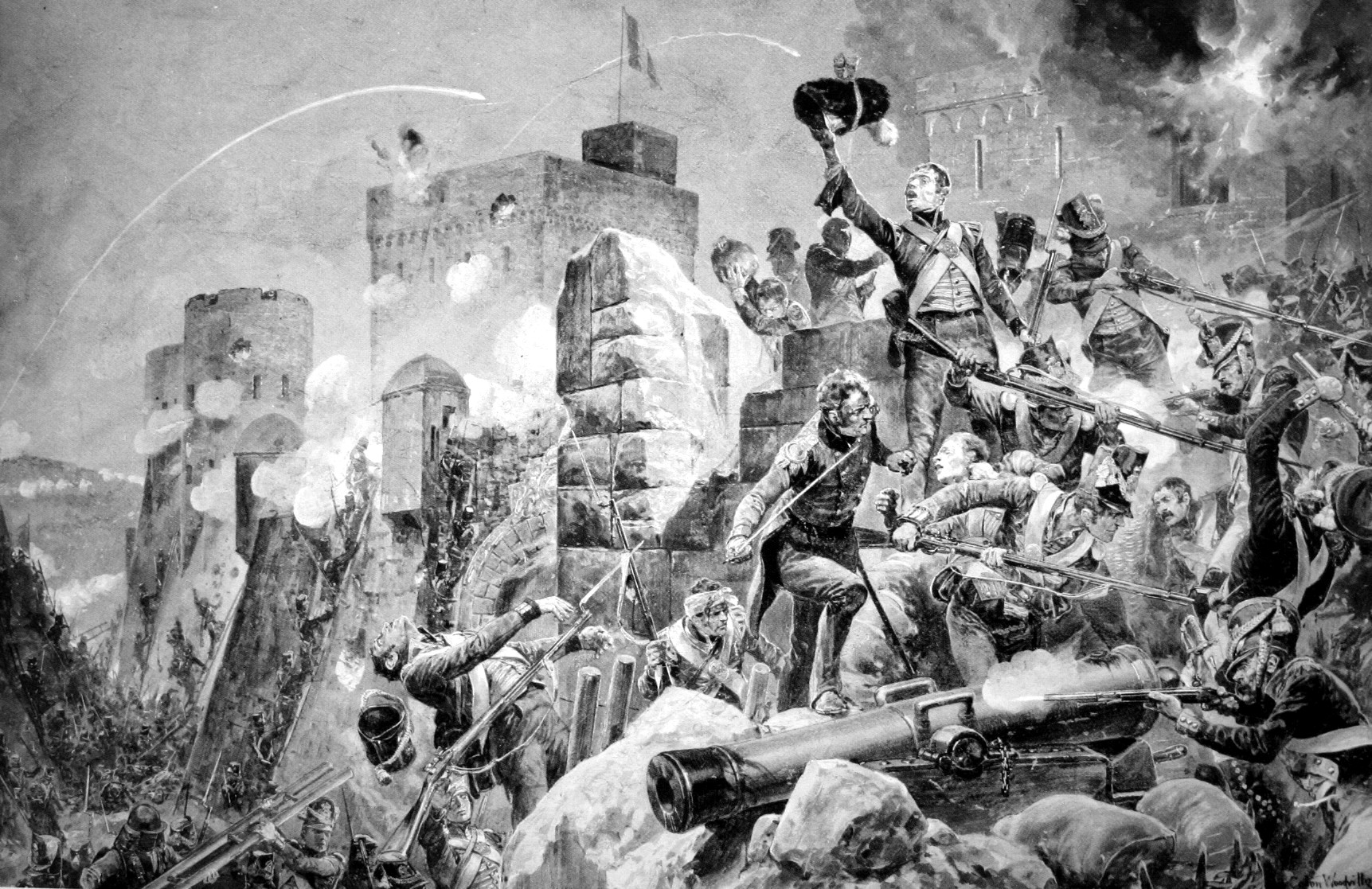
But, if not, a final—usually costly—attackSiege_of_Badajoz,_by_Richard_Caton_Woodville_Jr

march6

and, potentially, the massacre of all—or at least all of the garrison–inside. (In Jackson’s LoTR, the Orcs are certainly not taking prisoners as they break into Minas Tirith).

The charge of the Rohirrim, though, brought to mind other charges, such as the charge of the Prussian cavalry against the French/Allied army at Rossbach, in 1757—

Schlacht_bei_Roßbach1

or the French and British cavalry charges at Waterloo, 1815—

cavwaterloo1 ChargeofthelightBrigade

or those _other_ charges at the battle of Balaclava, 1854, that of the French 4th Chasseurs d’Afrique

Chasseurs_d'Afrique_à_Balaclava

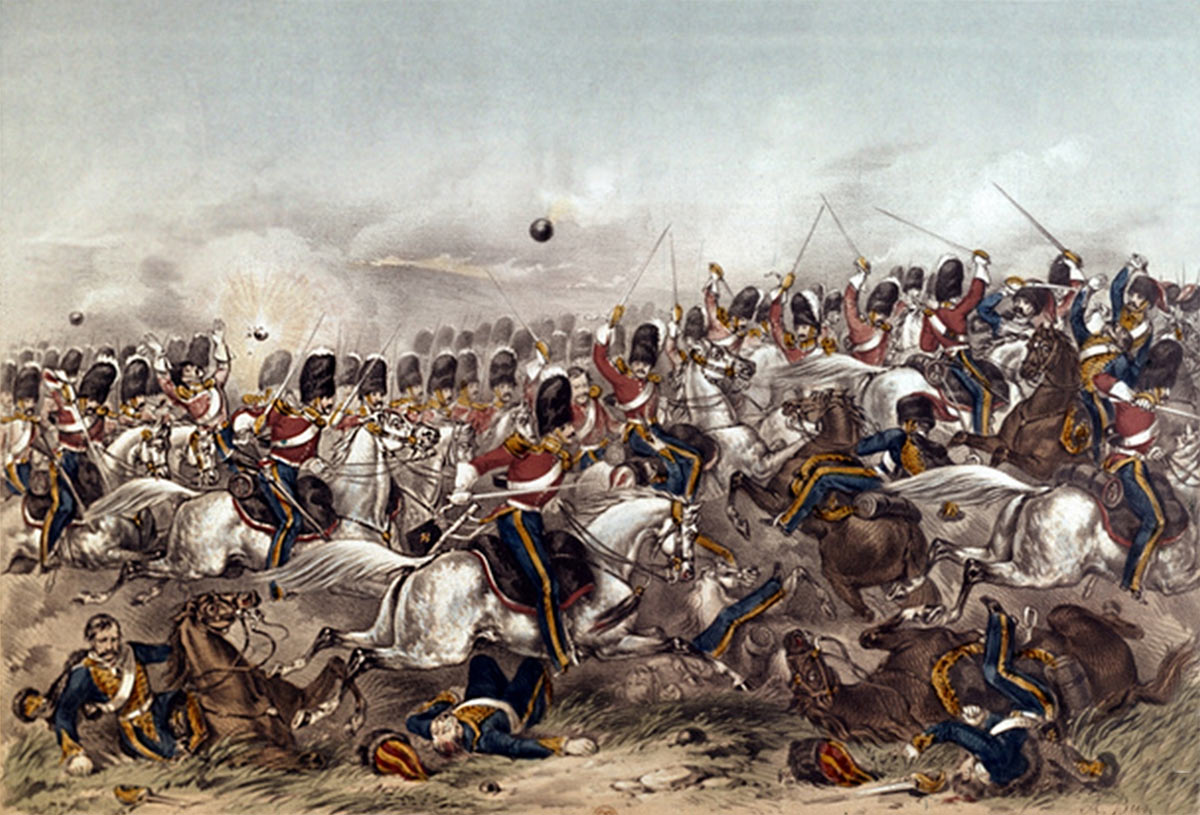
or of the British Heavy Brigade, which drove the Russian cavalry from the British camp.

balaclava-scots-greys-1200

Those last two remind us, of course, of one of our favorite adventure movies, the 1936 The Charge of the Light Brigade

charge1

It is not so authentic in look as the 1968 movie of the same name,

Charge+of+the+Light+Brigade+movie+poster+2

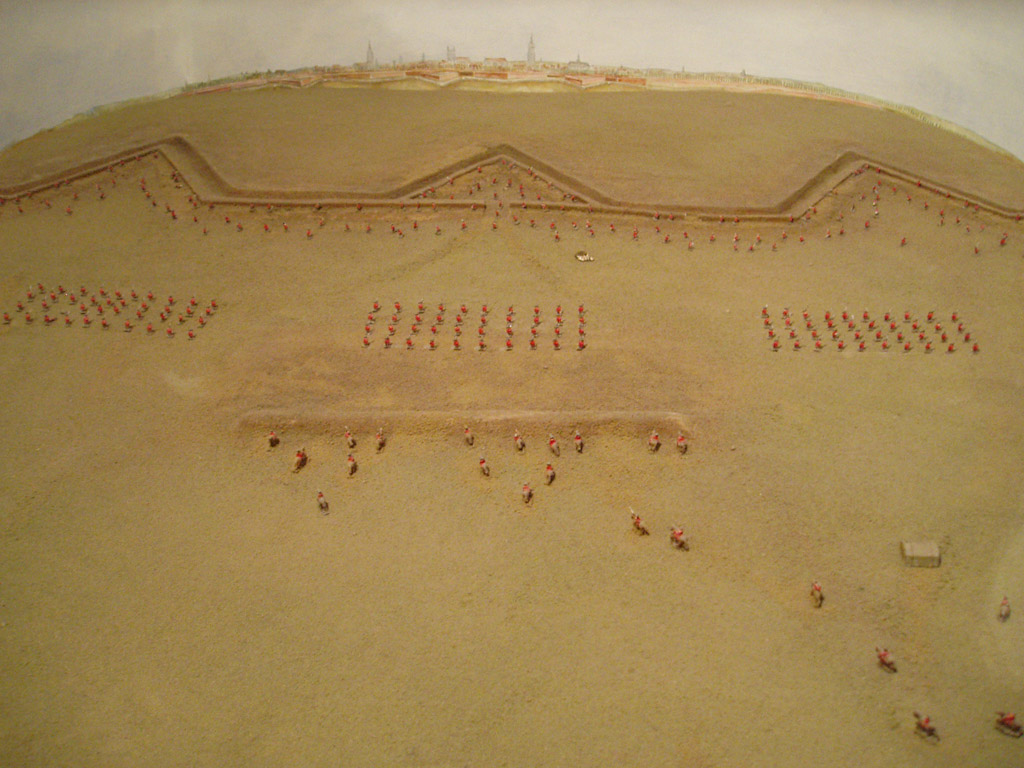
and, in fact, the film states at its opening that it’s only loosely based on actual historical events (including not only the charge, but the 1857 massacre at Cawnpore—which, in reality, occurred some three years after the Crimean War battle). It also beefs up the Russian defense—adding non-existent earthworks, for instance. Here’s the movie’s view

1225664651_the-charge-of-the-light-brigade_00016

and here’s William Simpson’s near-contemporary illustration (Simpson arrived after the battle, but must have talked to survivors and certainly could have seen the terrain).

William_Simpson_-_Charge_of_the_light_cavalry_brigade,_25th_Oct._1854,_under_Major_General_the_Earl_of_Cardigan

All of these charges were directed at enemy forces on an open battlefield. The attack of the Rohirrim actually comes from a different scenario, one which is based upon a theme familiar to those who have seen American westerns: the arrival of the cavalry in the nick of time.

In this scenario, someone is trapped and surrounded—or at least persistently assaulted by a more numerous enemy—the classic is an attack upon circled wagons

frontier-wagon-circle

The crisis comes and it looks like those attacked are about to be overwhelmed

wagon-box-fight-1867-granger

but, at the last minute, help arrives—the cavalry, bugles sounding, guidons waving (although that illustrated in this vidcap is the 1885 pattern and the film from which this comes takes place in 1880—then again, the uniforms are a bit odd, too—here’s Remington’s and Schreyvogel’s more accurate views, as well) rides fearlessly to the rescue.

Stagecoach_216Pyxurz SCHREYVOGEL_Charles_Cavalry_Charge_1905_Wadsworth_Athenaeum_source_Sandstead_d2h_ remingtoncav

After sorting through more than 50 westerns, we believe that the movie from which our first image comes is probably the source of the modern idea of the arrival of the cavalry—see this clip from John Ford’s Stagecoach (1939)

CLIP

This happens twice, of course, in The Lord of the Rings, first at Helm’s deep, when Gandalf arrives—

helms-deep gandalfarrives

and again, as we began, at Minas Tirith. It’s interesting, however, to see that, in this second example, the cavalry rescue is not so successful, since there are those oliphaunts we discussed in an earlier posting—

mumakil_by_cg_warrior-d4muefu

In our world, it wasn’t giant oliphaunts who eventually defeated cavalry and drove them to the edges of the battlefield, where they lasted a little longer, but this

maximwarhorse

as you can see in this clip from Warhorse.

CLIP

And it’s for the best, really. It’s bad enough that we humans engage in violent actions without dragging the rest of the animal kingdom into it…

trostle-farm

(A few of the 80 horses lost by Bigelow’s 9th MA Battery at the Trostle Farm, 2 July, 1863—and, as a sad ps, 25 horses were killed or so badly injured that they were put down at the filming of the 1936 The Charge of the Light Brigade—this so shocked those in Congress that a law for the protection of animals in films was passed to prevent future harm).

Thanks, as always, for reading.

MTCIDC

CD

The Doubtful Sea Series Facebook Page

The Doubtful Sea Series Facebook Page

  • Ollamh

Categories

  • Artists and Illustrators
  • Economics in Middle-earth
  • Fairy Tales and Myths
  • Films and Music
  • Games
  • Heroes
  • Imaginary History
  • J.R.R. Tolkien
  • Language
  • Literary History
  • Maps
  • Medieval Russia
  • Military History
  • Military History of Middle-earth
  • Narnia
  • Narrative Methods
  • Poetry
  • Research
  • Star Wars
  • Terra Australis
  • The Rohirrim
  • Theatre and Performance
  • Tolkien
  • Uncategorized
  • Villains
  • Writing as Collaborators
Follow doubtfulsea on WordPress.com

Across the Doubtful Sea

Recent Postings

  • A Moon disfigured December 17, 2025
  • On the Roads Again—Once More December 10, 2025
  • (Not) Crossing Bridges December 3, 2025
  • On the Road(s) Again—Again November 26, 2025
  • On the Road(s) Again November 19, 2025
  • To Bree (Part 2) November 12, 2025
  • To Bree (Part 1) November 5, 2025
  • A Plague o’ Both—No, o’ All Your Houses! October 29, 2025
  • It’s in Writing (2:  I’st a Prologue, or a Poesie for a Ring?) October 22, 2025

Blog Statistics

  • 103,211 Views

Posting Archive

  • December 2025 (3)
  • November 2025 (4)
  • October 2025 (5)
  • September 2025 (4)
  • August 2025 (4)
  • July 2025 (5)
  • June 2025 (4)
  • May 2025 (4)
  • April 2025 (5)
  • March 2025 (4)
  • February 2025 (4)
  • January 2025 (5)
  • December 2024 (4)
  • November 2024 (4)
  • October 2024 (5)
  • September 2024 (4)
  • August 2024 (4)
  • July 2024 (5)
  • June 2024 (4)
  • May 2024 (5)
  • April 2024 (4)
  • March 2024 (4)
  • February 2024 (4)
  • January 2024 (5)
  • December 2023 (4)
  • November 2023 (5)
  • October 2023 (4)
  • September 2023 (4)
  • August 2023 (5)
  • July 2023 (4)
  • June 2023 (4)
  • May 2023 (5)
  • April 2023 (4)
  • March 2023 (5)
  • February 2023 (4)
  • January 2023 (4)
  • December 2022 (4)
  • November 2022 (5)
  • October 2022 (4)
  • September 2022 (4)
  • August 2022 (5)
  • July 2022 (4)
  • June 2022 (5)
  • May 2022 (4)
  • April 2022 (4)
  • March 2022 (5)
  • February 2022 (4)
  • January 2022 (4)
  • December 2021 (5)
  • November 2021 (4)
  • October 2021 (4)
  • September 2021 (5)
  • August 2021 (4)
  • July 2021 (4)
  • June 2021 (5)
  • May 2021 (4)
  • April 2021 (4)
  • March 2021 (5)
  • February 2021 (4)
  • January 2021 (4)
  • December 2020 (5)
  • November 2020 (4)
  • October 2020 (4)
  • September 2020 (5)
  • August 2020 (4)
  • July 2020 (5)
  • June 2020 (4)
  • May 2020 (4)
  • April 2020 (5)
  • March 2020 (4)
  • February 2020 (4)
  • January 2020 (6)
  • December 2019 (4)
  • November 2019 (4)
  • October 2019 (5)
  • September 2019 (4)
  • August 2019 (4)
  • July 2019 (5)
  • June 2019 (4)
  • May 2019 (5)
  • April 2019 (4)
  • March 2019 (4)
  • February 2019 (4)
  • January 2019 (5)
  • December 2018 (4)
  • November 2018 (4)
  • October 2018 (5)
  • September 2018 (4)
  • August 2018 (5)
  • July 2018 (4)
  • June 2018 (4)
  • May 2018 (5)
  • April 2018 (4)
  • March 2018 (4)
  • February 2018 (4)
  • January 2018 (5)
  • December 2017 (4)
  • November 2017 (4)
  • October 2017 (4)
  • September 2017 (4)
  • August 2017 (5)
  • July 2017 (4)
  • June 2017 (4)
  • May 2017 (5)
  • April 2017 (4)
  • March 2017 (5)
  • February 2017 (4)
  • January 2017 (4)
  • December 2016 (4)
  • November 2016 (5)
  • October 2016 (6)
  • September 2016 (5)
  • August 2016 (5)
  • July 2016 (5)
  • June 2016 (5)
  • May 2016 (4)
  • April 2016 (4)
  • March 2016 (5)
  • February 2016 (4)
  • January 2016 (4)
  • December 2015 (5)
  • November 2015 (5)
  • October 2015 (4)
  • September 2015 (5)
  • August 2015 (4)
  • July 2015 (5)
  • June 2015 (5)
  • May 2015 (4)
  • April 2015 (3)
  • March 2015 (4)
  • February 2015 (4)
  • January 2015 (4)
  • December 2014 (5)
  • November 2014 (4)
  • October 2014 (6)
  • September 2014 (1)

Blog at WordPress.com.

  • Subscribe Subscribed
    • doubtfulsea
    • Join 78 other subscribers
    • Already have a WordPress.com account? Log in now.
    • doubtfulsea
    • Subscribe Subscribed
    • Sign up
    • Log in
    • Report this content
    • View site in Reader
    • Manage subscriptions
    • Collapse this bar
 

Loading Comments...