• About

doubtfulsea

~ adventure fantasy

Tag Archives: siege

Sally—and Harry

22 Wednesday Jan 2025

Posted by Ollamh in Uncategorized

≈ Leave a comment

Tags

Alesia, Aragorn, Ents, Eomer, Fantasy, harry, Helm's Deep, History, sally, siege

Welcome, as always, dear readers.

If you’d seen the title of an earlier posting, “You’ve Got Mail”,

you might believe that I’m beginning to specialize in romcoms from the 1980s-90s with this title—

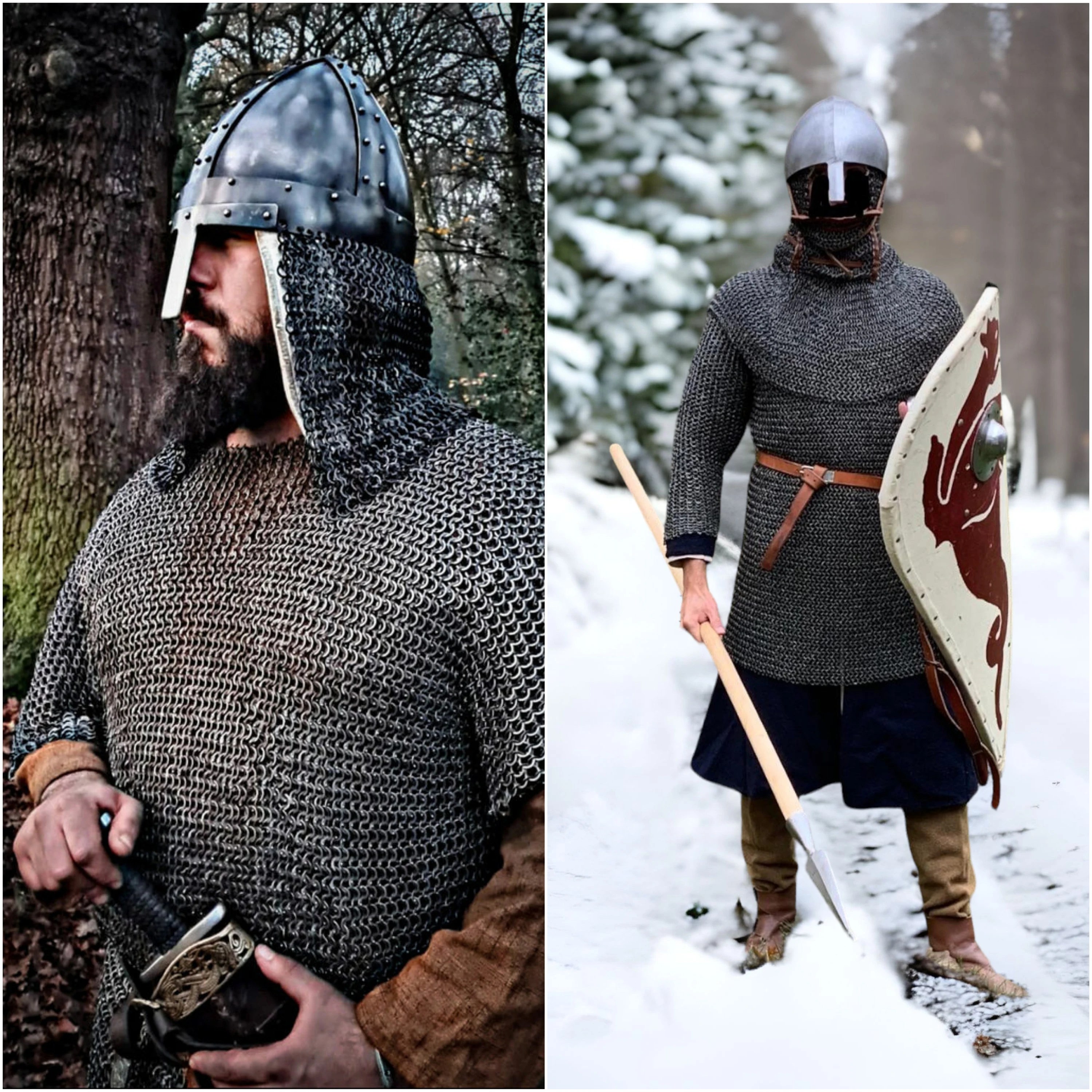
but, although some of the characters might be wearing mail in this posting,

(Denis Gordeev)

there’s no romance and no comedy.  Instead, it involves “sally” and “harry” not as nicknames for “Sarah” and “Henry”, but as verbs and nouns of destruction.

The war to which 2nd LieutenantTolkien

arrived in mid-1916

(Peter Dennis—a real favorite of mine for his ability to recreate scenes from the past, always with small, useful details.)

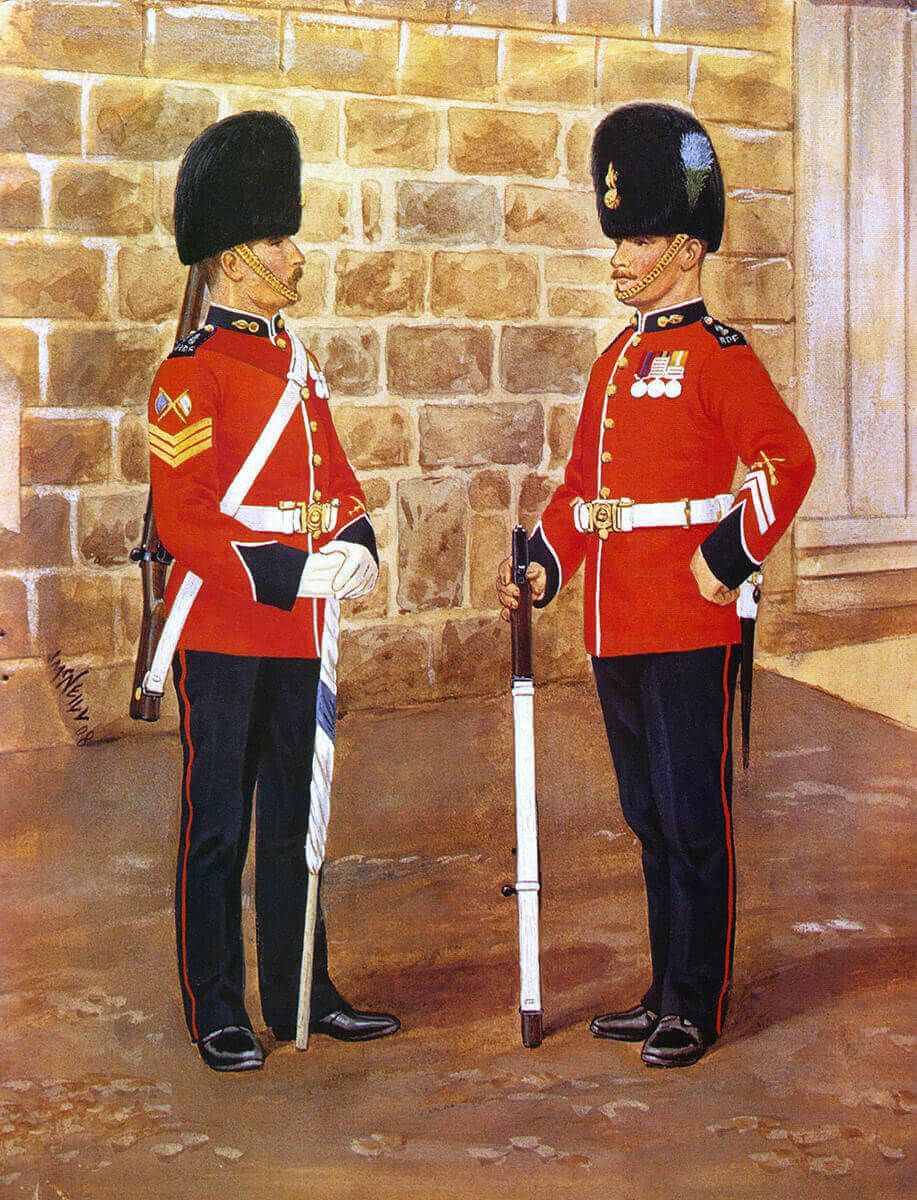
was not the war planned in 1913.  Into a world in which soldiers still wore fancy dress for parades—

(artist:  possibly Brian Fosten?)

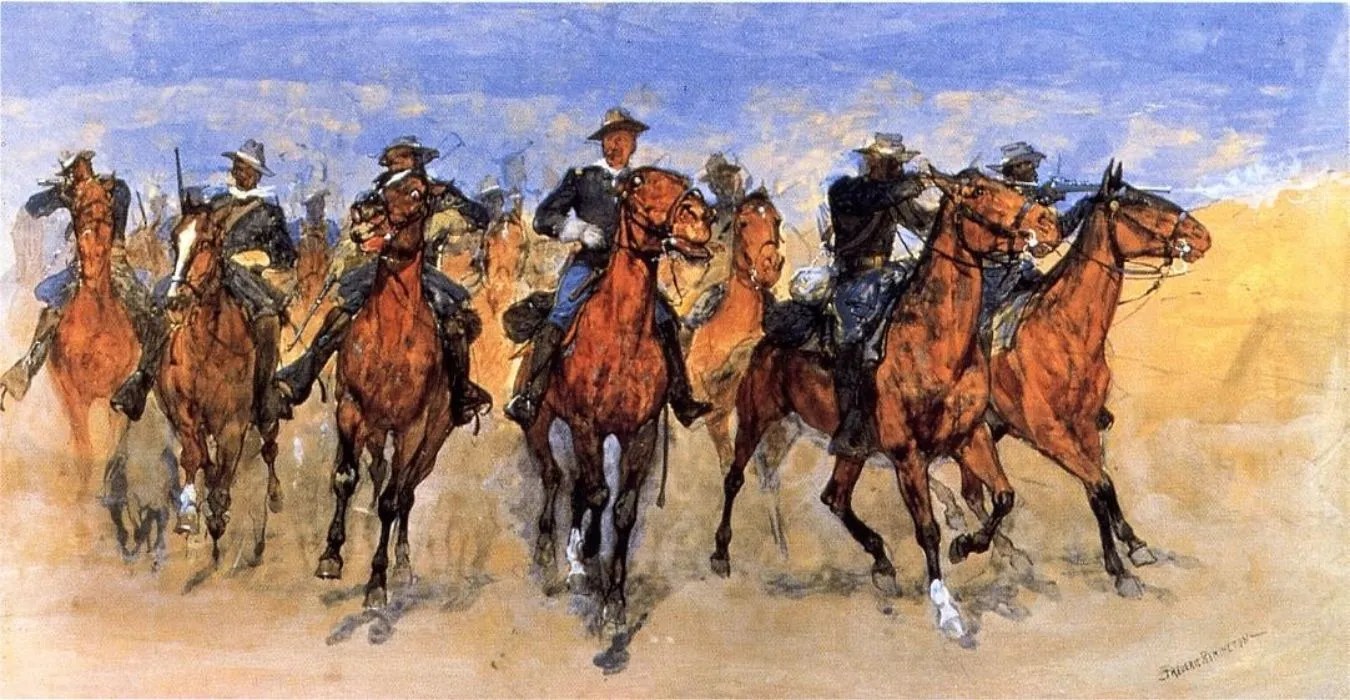
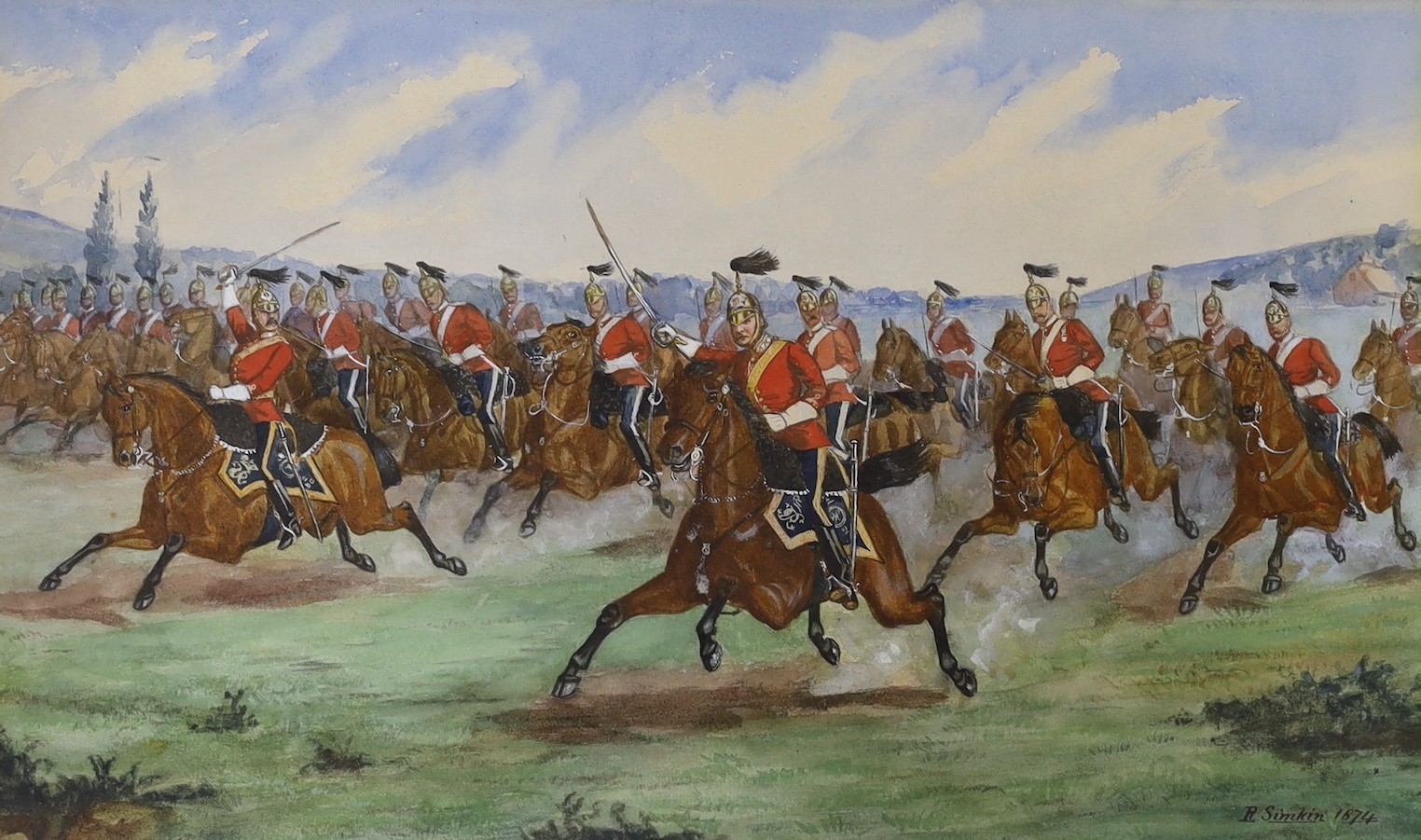
and cavalry officers still dreamed of heroic charges,

(Richard Simkin)

came these

and this sort of thing

with many other horrors to come and soldiers did the only sensible thing, given that they couldn’t just run for their lives, and began to dig in.

(another Peter Dennis)

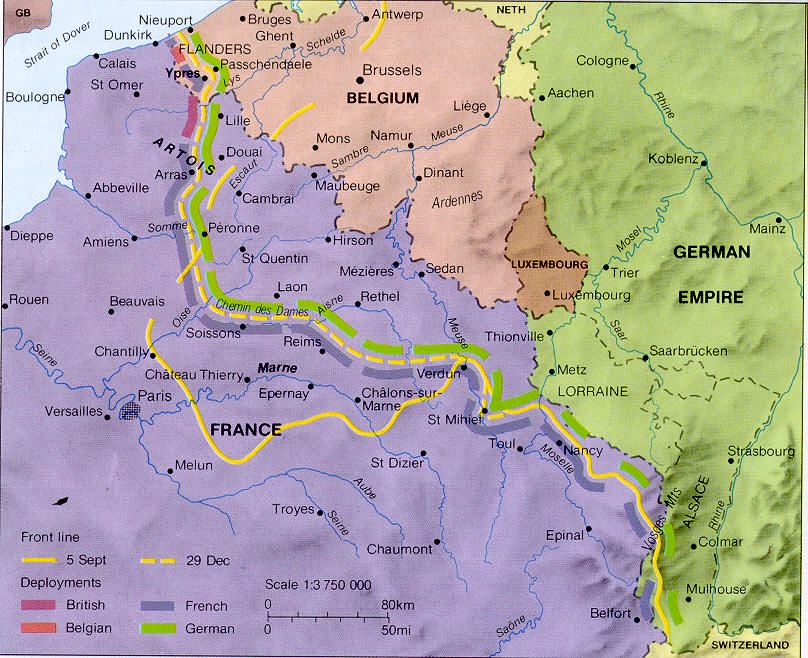
On the Western Front, where Tolkien served, this eventually meant 500 miles of such digging, from Switzerland to the North Sea, until, ultimately, there were two lines of trenches, one German, one Allied, now facing each other.

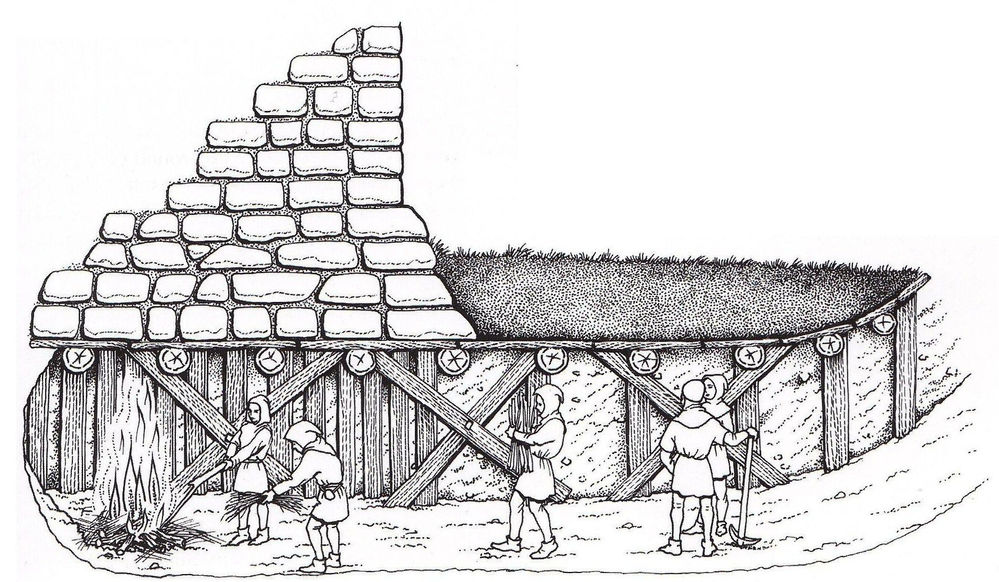
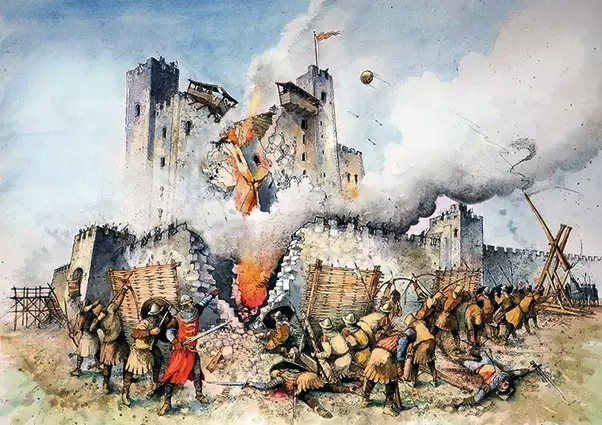
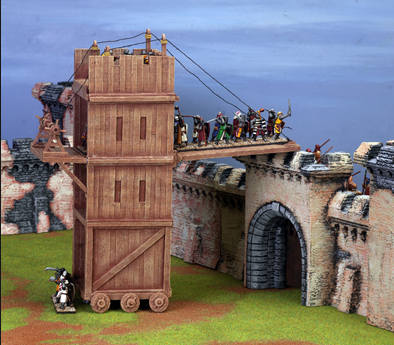
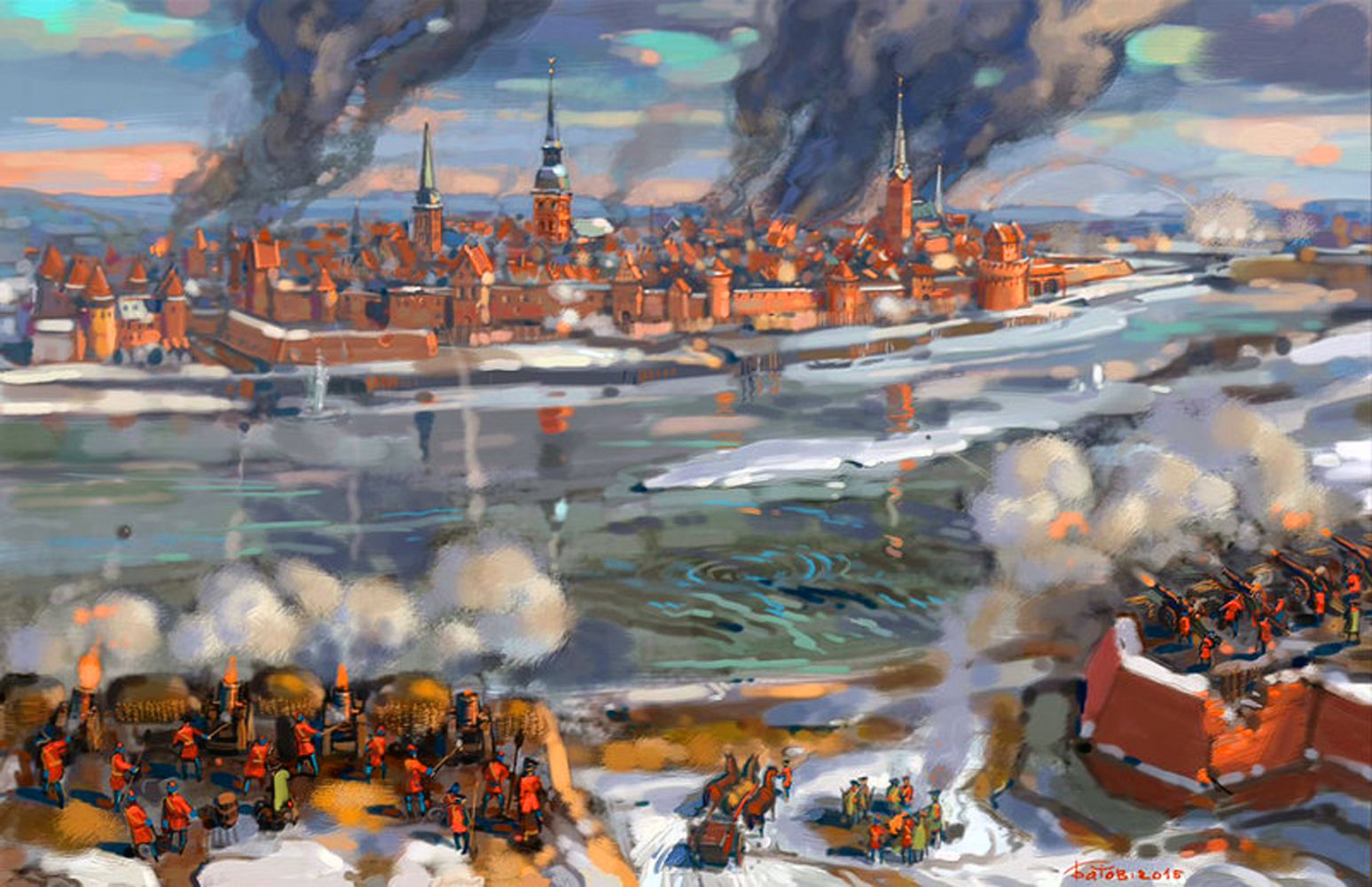
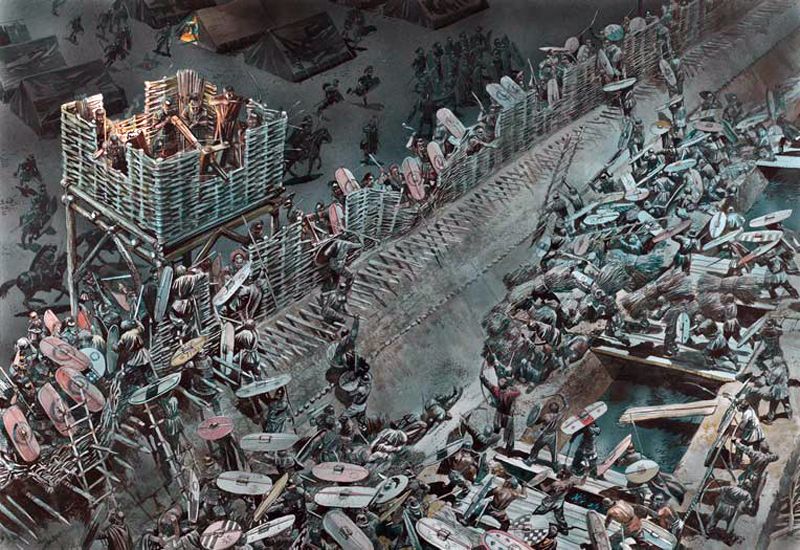
People at the time were reminded of what was called siege warfare, which, in the past had meant that an army surrounded a town or a fortress, blocking access to it from the outside, usually dug trenches to mark off the area and to protect their own soldiers and, depending upon the era and its weaponry, use various war machines against the walls and those inside.

(Julius Caesar’s siege of the Gallic stronghold of Alesia, 52bc)

(a kind of idealized medieval siege by Liliane and Fred Funcken)

(the siege of Swedish-occupied Riga by the Russians in 1710, by an artist whose name appears to be “Batov”)

The difference, in this case, being that both sides seemed to be besieging the other and neither was surrounding or surrounded.

During his stay on the Western Front in 1916, Tolkien participated in a massive assault on sections of the German lines—the Battle of the Somme—in which the British suffered over 50,000 casualties on the first day alone.

(and another Peter Dennis

Big battles like this were relatively rare, however, as they required so much planning and such great resources, but, in between them, soldiers raided each other’s trenches, both to keep their own soldiers busy and to keep the enemy off balance, as well as to gain intelligence from prisoners and captured documents.

(and a further Peter Dennis)

In older, traditional sieges, the besieged might try to do the same, as well as ruin the besiegers’ siege artillery and trenches, even carrying off the enemy’s entrenching tools.  This was called a “sally”, and here we can see the besieged Gauls trying this maneuver out at Caesar’s siege of Alesia in 52BC

(and yet another Peter Dennis)

and here are Texian volunteers sallying from the Alamo to destroy shacks (jacales) being used by Mexican skirmishers in 1836.

(Gary Zaboly)

“To sally” comes from French saillir, “to leap/jump”, and clearly implies “to jump out at someone”, preferably unexpectedly, and that’s why some fortresses have sally ports—

(this is at Fort Mifflin, on the Delaware River south of Philadelphia)

smaller gates which could be used for surprise attacks on attackers.  And, when you sally, your job is to harry the enemy, “to harry” coming from Old English hergian (HAIR-yee-an), “to harass/plunder/ravage”, among other warlike definitions.

Tolkien, perhaps with a strong memory of trench warfare, along with a reminiscence of the desperate Gauls at Alesia, recreates one of these attacks at Helm’s Deep, where Saruman’s army of orcs and Dunlendings has begun its assault upon the outer wall.

(the artist listed for this is “Brokenhill”, but the only one I could find was an art commune in Australia, which I’m hoping is correct and which you can visit here:  https://artofbrokenhill.com/ )

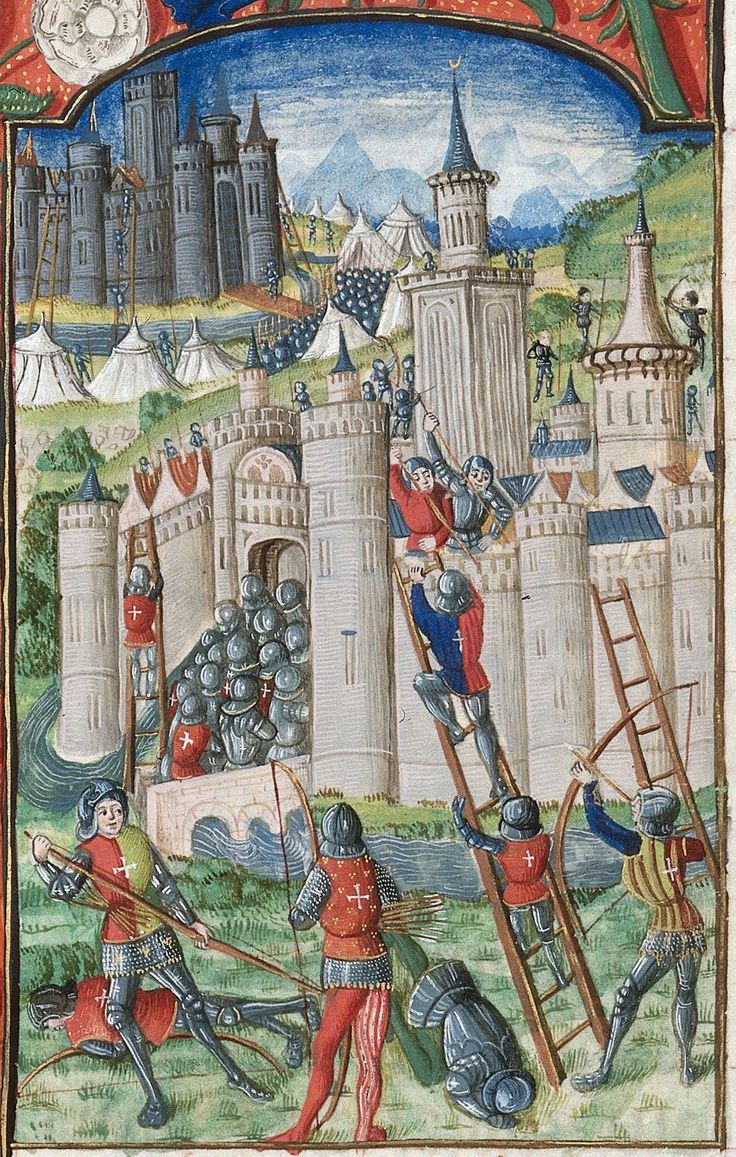
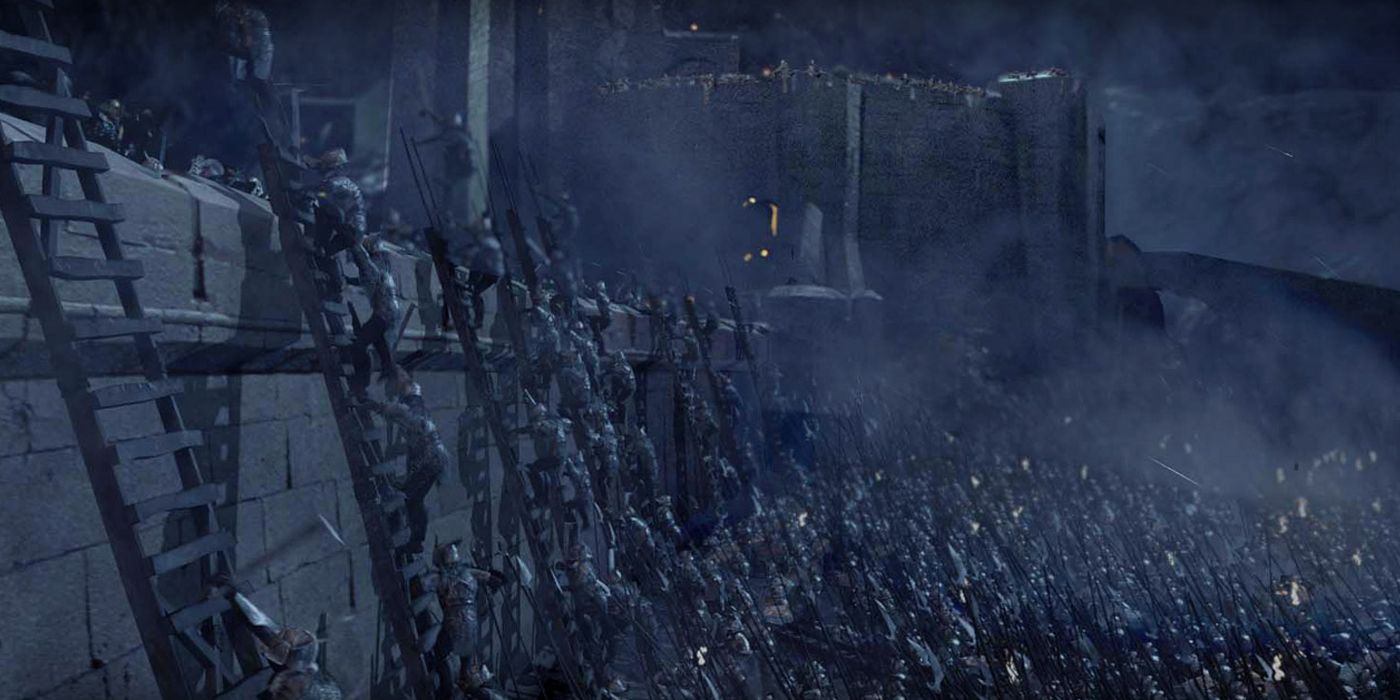
Strictly speaking, this isn’t really a siege, any more than the attack on Minas Tirith is really a siege, even though that’s the chapter title.  Rather, it’s an escalade—an assault by ladder, which has always struck me as about the last siege attack I’d join—look at what’s happening in this one—would you want to be on the top of a rickety ladder?

Included in the escalade is an attempt to break through the main gates:

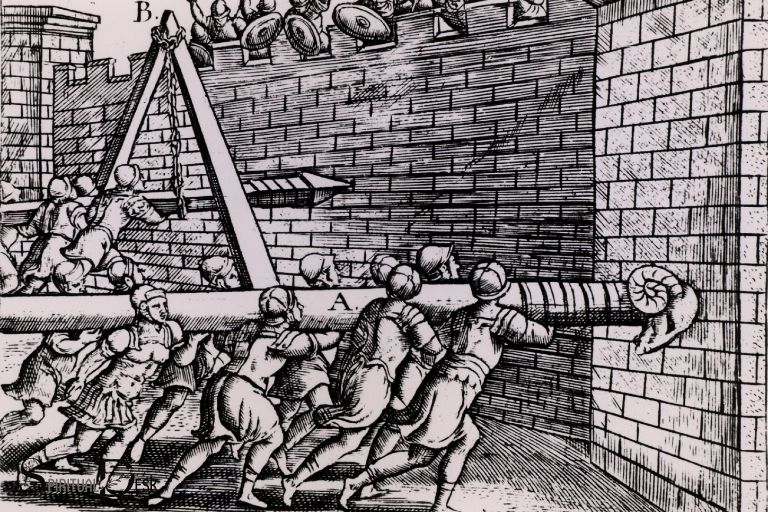
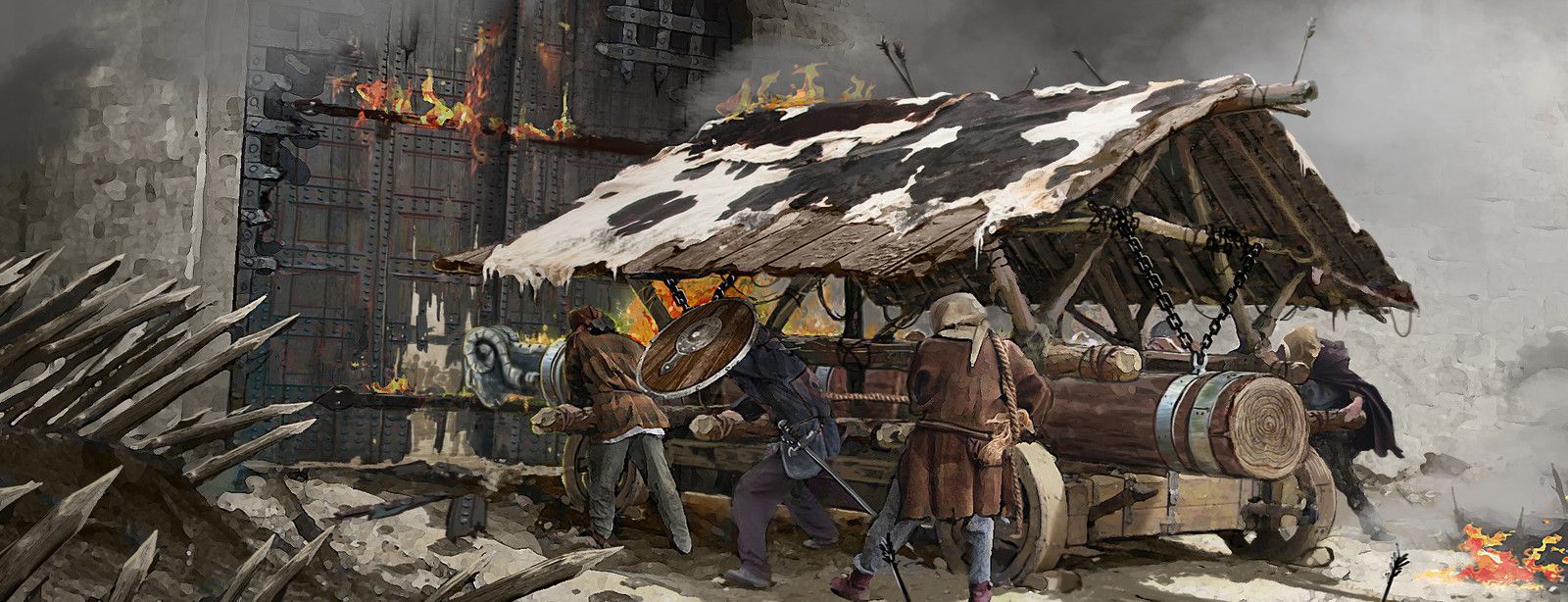
“Again the trumpets rang, and a press of roaring men leaped forth.  They held their great shields above them like a roof, while in their midst they bore two trunks of mighty trees.  Behind them orc-archers crowded, sending a hail of darts against the bowmen on the walls.  They gained the gates.  The trees, swung by strong arms, smote the timbers with a rending boom.” 

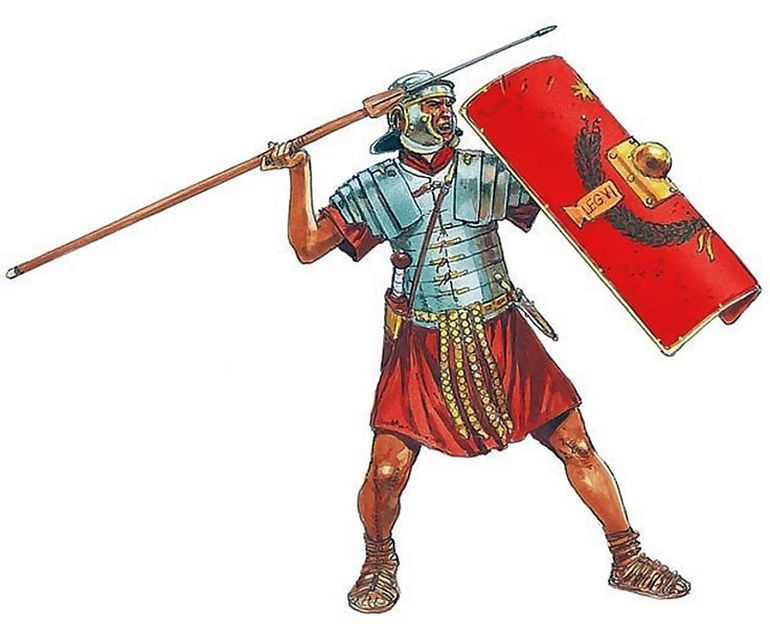
That “like a roof” is, basically, a Roman formation called a “turtle”—a testudo—used in exactly the same way in Roman assaults.

(from the column of Trajan, showing Roman infantry attacking a Dacian town)

The tree trunks are improvised battering rams—although classical ones could be tipped with metal to make them more effective—

In response, Aragorn and Eomer, with “a handful of stout swordsmen”, attempt a sally: 

“There was a small postern-door that opened in an angle of the burg-wall on the west, where the cliff stretched out to meet it…Together Eomer and Aragorn sprang through the door, their men close behind.  The two swords flashed from the sheath as one.”

Initially, this harrying of the enemy is successful, driving them back from the gate, but then there are too many of them and Eomer is grabbed by two of the Orcs, only to be rescued by the sudden appearance of Gimli, as the sally party dodges back inside the postern/sally port, which is closed behind them.

(Donato Giancola—I’ve recommended his site before—and here it is:  https://donatoarts.com/ )

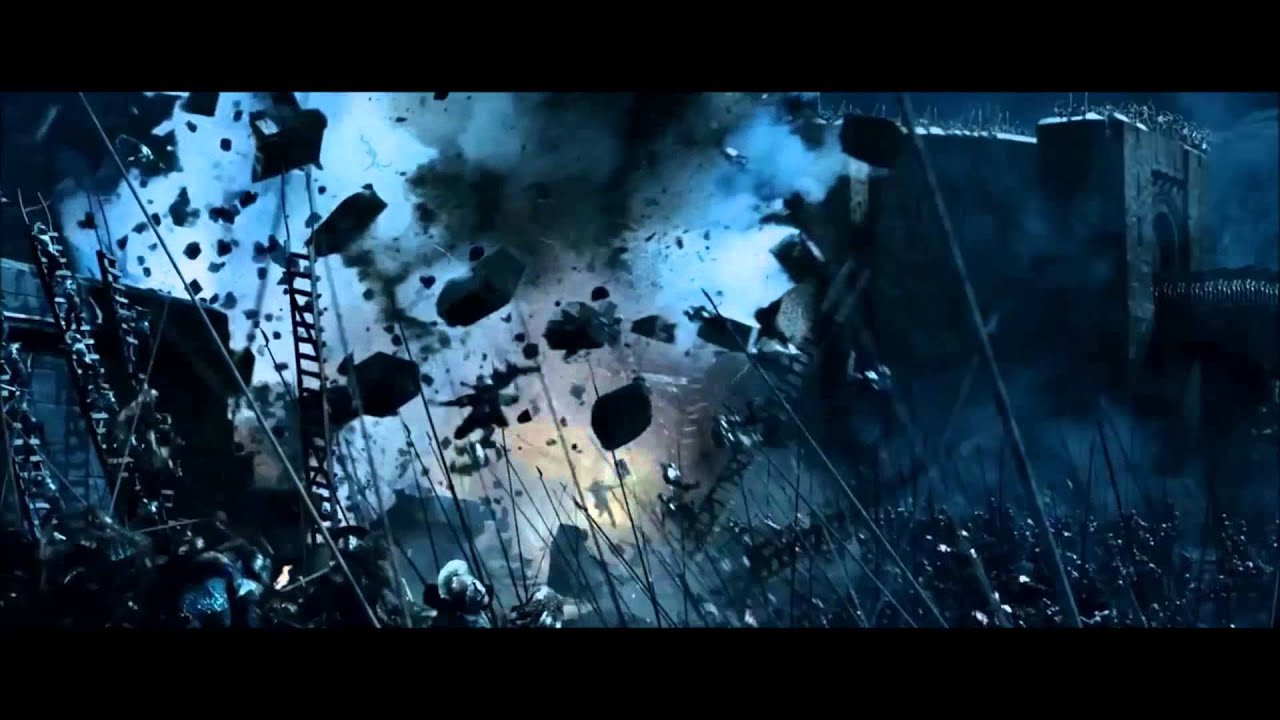
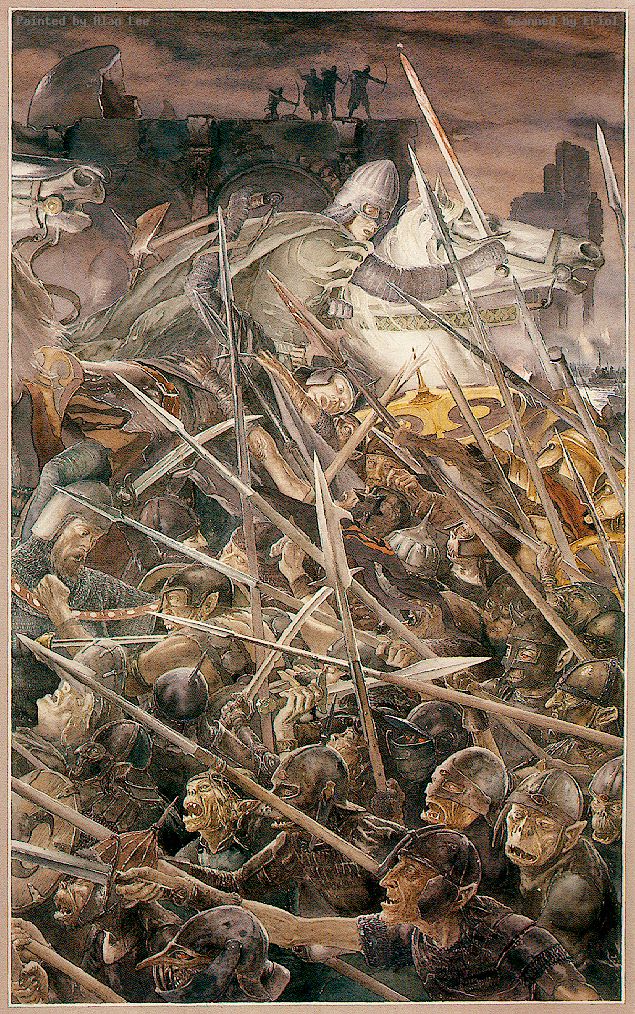
But this is only the first sally—Theoden, fretting at the rapidly decaying defensive situation, as Saruman’s early blasting powder blows holes in the ancient walls of the Deep, makes a second attack, although, this time, it seems more like the action of despair, rather than a good tactic:

“But I will not end here, taken like an old badger in a trap.  Snowmane and Hasufel and the horses of my guard are in the inner court.  When the dawn comes, I will bid men sound Helm’s horn and I will ride forth.  Will you ride with me then, son of Arathorn?  Maybe we shall cleave a road, or make such an end as will be worth a song—if any be left to sing of us hereafter.”  (this, as well as all of the previous quotations, are from The Two Towers, Book Three, Chapter 7, “Helm’s Deep”)

(Alan Lee)

It’s not, of course, a suicidal charge, as Gandalf arrives with re-enforcements and then there are the Ents, so the sally harries the Orcs to their doom among the trees

and, although there is, as I said at the beginning, neither comedy nor romance, this sally, like the romcom, has a happy ending.

As always, thanks for reading.

Stay well,

When deep in a forest, never sneer at the trees—someone might be listening,

(Alan Lee)

And remember that, also as always, there’s

MTCIDC

O
The Fall of Two Cities?

09 Wednesday Mar 2016

Posted by Ollamh in Economics in Middle-earth, Imaginary History, J.R.R. Tolkien, Language, Maps, Military History, Military History of Middle-earth, Narrative Methods

≈ Leave a comment

Tags

Agincourt, Anadoluhisari, Anatolia, Asia Minor, Bayezid I, Bosphorus, Byzantium, Constantine I, Constantinople, Crecy, English Civil Wars, Eowyn, Gondor, map, Mehmet II, Minas Tirith, motte and bailey, Newark, Normans, Osgiliath, Ottoman Empire, Poitiers, Rumelihisari, siege, The Lord of the Rings, Tolkien, Witch-King of Angmar

Dear Readers,

Welcome, as always. A little while ago, we talked about the “siege of Gondor”, which really wasn’t a siege in the formal sense, at all, but rather an assault. (We suspect that JRRT liked the sound of “siege” and so used it, not caring if it were strictly accurate or not.) In this posting, we want to look at a real siege and examine what might be parallels with events in Middle Earth.

Before we do, we want to take a moment to talk about the word “siege”. It comes into English through Old French asegier, which comes from Latin ad + sedeo > adsideo, adsidere , literally, “to sit down at”. The northern French who passed the word on to England must have liked to say what’s called a y-glide when certain consonants came before e, so, though it was spelled asegier, it would have been said “ah-see-YED-jier”. And that’s why English today has what can be a confusing spelling. (In our experience, lots of native speakers have trouble distinguishing between the ie of “siege” and the ei of “seize”). The stress on the word in English would have been away from the initial a, and so that would have disappeared from the word as it moved from being a borrowing.

[As what we think is a cool footnote, Latin also has the verb obsideo “to sit down right before=to besiege” and we can see that used in English in the word “obsession”, with the idea that something bothers you so much that it’s like you’re being besieged by it. You can also see it on this wonderful bit of 17th-c. English history.

obsidionalmoney.jpg

Although it doesn’t look like a modern coin, this is a form which used to be called “half-a-crown”—that is, 30 pennies (that’s what those three xses mean), or two shillings, sixpence.   This coin was struck in the town of Newark-upon-Trent, when it was besieged during the English Civil Wars (1642-1651).

_82601862_newark-1646map.jpg

And that’s where obsideo comes in. The back (the “reverse” in coin language—the front is called the “obverse”) says:

OBS: Newark (with a date, either 1645 or 1646, depending on when the coin was struck)

OBS = Obsessa Newark = “Newark Besieged”

There were a lot of coin-substitutes struck by various besieged towns, but, apparently, those from Newark are the most numerous.]

In the medieval western military world, sieges were more common, it seems, than pitched battles. As castles and towns were focal points for the possession and control of land—think of the hundreds of early castles, called “motte and bailey”, which the Normans built all across England in the first years after their conquest–it’s not surprising that they would have been a focus of attack.

motteandbailey.jpg Tapisserie_motte_dinan 704.jpg

As well, we can imagine that, ultimately, they would have been cheaper, in terms of the most irreplaceable manpower, sparing the highly-trained, hard-to-replace, knights and men-at-arms.

knights.jpg

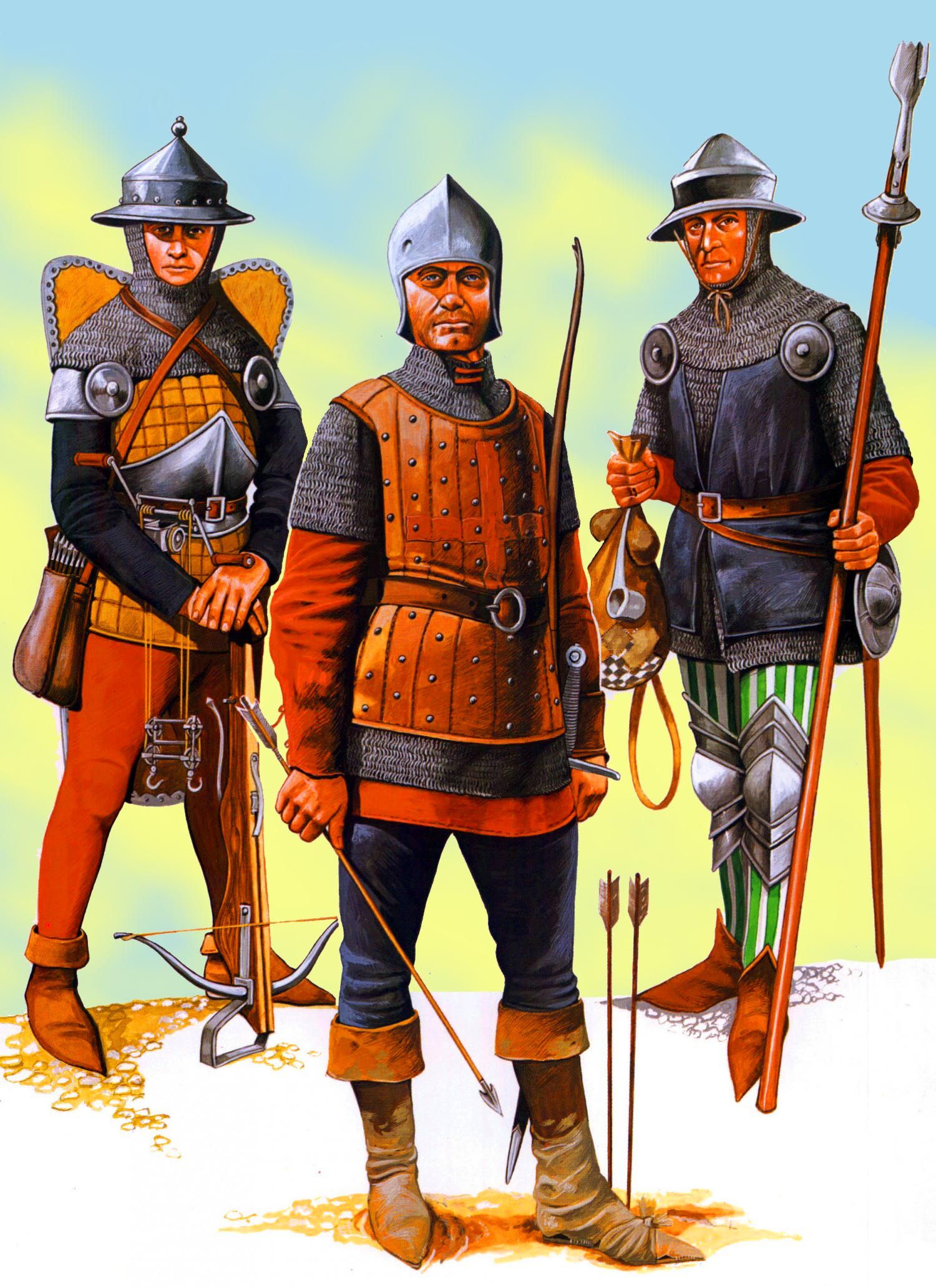
Battles like Crecy (1346), Poitiers (1356), and Agincourt (1415), cost the French dearly as their brave knights threw themselves at their English opponents, whose longbows shot them and their horses down.

agincourt.jpg

In a siege, although there was the occasional combat, including the exploitation of a break in the enemy’s defenses,

Edward-III-takes-Poix-Castle.jpg

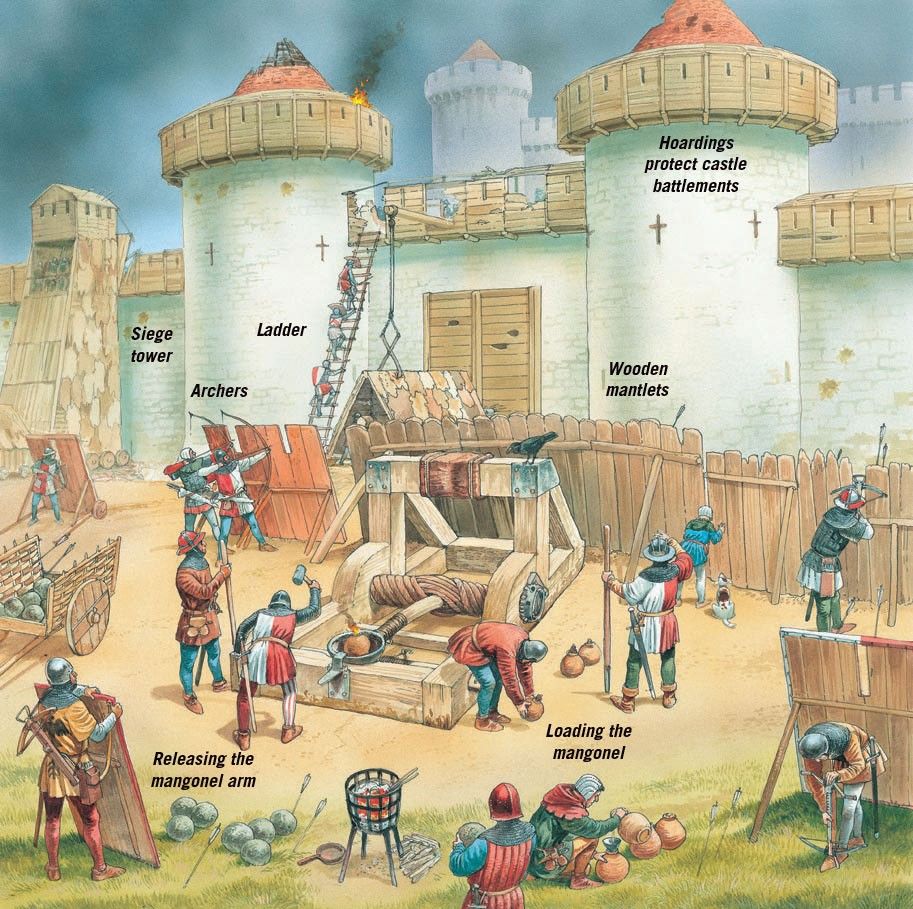
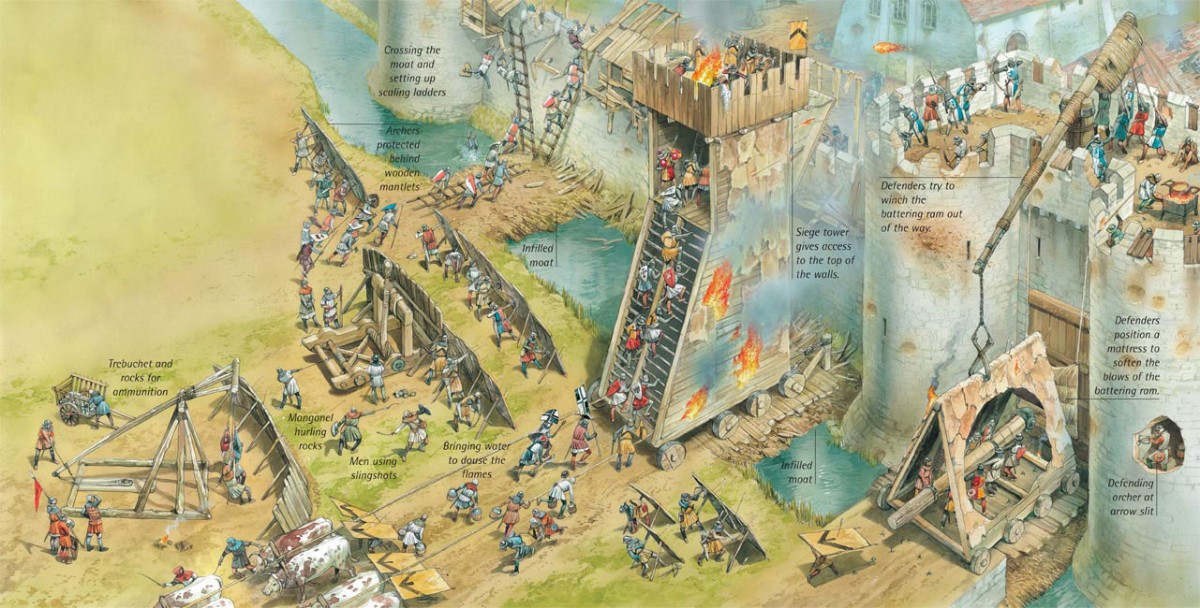
most of a siege would be spent in using machinery of various sorts to aid you in breaking down the walls—and the resistance of the defenders, as well.

castles-and-knights-2-with-labels.jpg

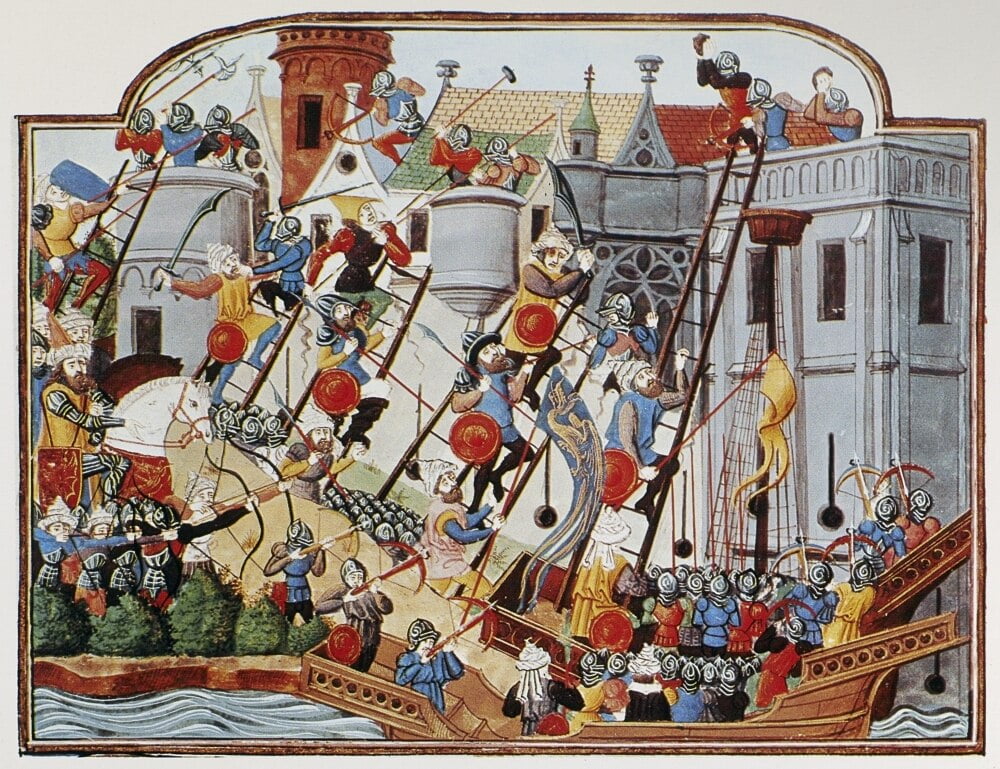
This brings us to the real, historical siege we want to examine: Constantinople, 1453.

Bizansist_touchup.jpg

Constantinople had begun life as a Greek colony, called Byzantium, on the European side of the narrow passageway between the Black Sea and the northeastern Mediterranean.

byzempmap.gif

It had been refounded and greatly expanded by the Roman emperor, Constantine I, to be a new capital in the east.

Constantine-I-Face.jpg

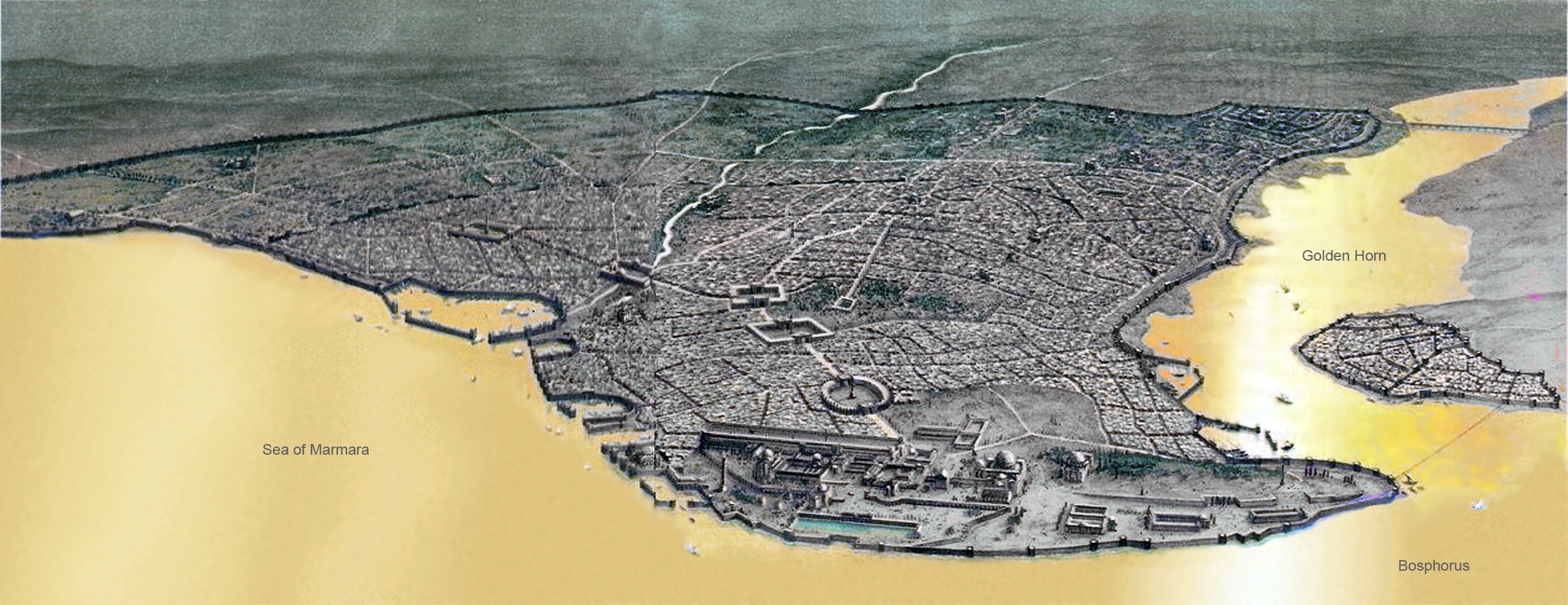
Although it was supposed to be called “New Rome”, everyone in the east called it after its refounder, and so it was “Constantinople”, becoming the capital of an eastern empire which we call “Byzantine”. Even with setbacks and a number of unsuccessful attacks over the centuries, it was, for a long time, a very wealthy and powerful city.

1-reconstruccion-de-bizancio.jpg

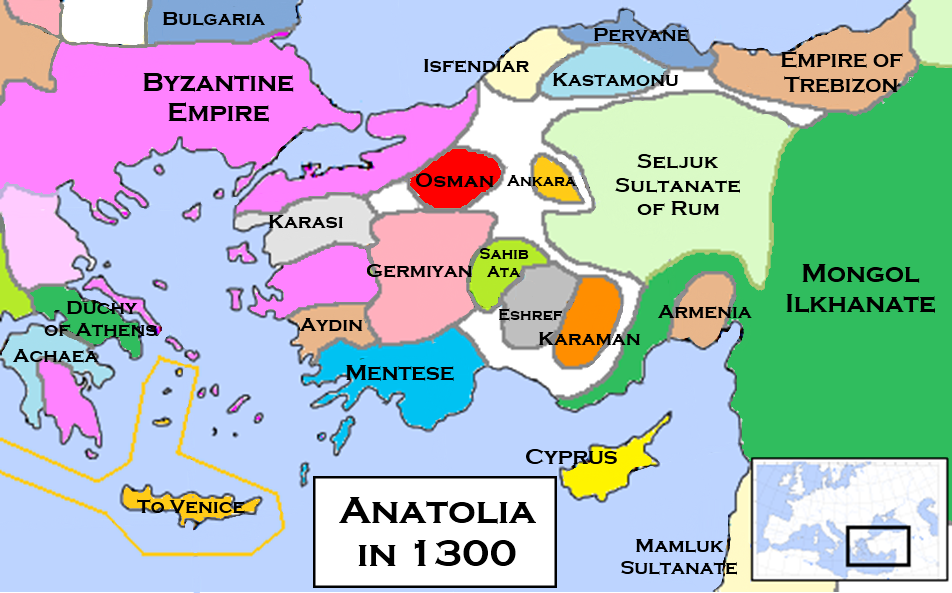
But even the wealthiest and most powerful cities will fade—especially when faced with ambitious enemies. Constantinople had had a number of those, but, finally, in its last years, perhaps its most ambitious and most powerful arose in Asia Minor: that of the Ottoman Turks. As you can see from this map, its beginnings were modest: one Turkic-speaking group among many.

Anatolian_Beyliks_in_1300.png

This was a period of instability, however. The Ottoman leaders quickly took advantage of that instability to grab power and territory, so that, by 1400, they had spread beyond the shrinking Byzantine world, into the Balkans, and, soon, Constantinople was surrounded.

trebizond1400

This surrounding took place in an increasingly-methodical way. In 1393-4, the ruler of the Ottomans, the sultan Bayezid I

bayezit1.jpg


built a small fortress on the Asia Minor side of the Bosphorus, the name for the northern stretch of the passage which led from the Black Sea to the Mediterranean. It was called Anadoluhisari, “the Anatolian fort”.

Anadoluhisari.jpg


You can see from the map that this was the beginning of setting up a choke point upstream from Constantinople.

mapwithanadoluhisari.gif

In 1451-2, the sultan Mehmet II finished the job with the Rumelihisari just opposite, on the European side (and that’s what its name means, “the Roman—that is, European—fort”).

Rumeli_hisari.jpg

Guns were mounted

muslim_rocket_technology_06.jpg

and any help which might have come from the Black Sea was blocked.

And here we want to take a minute to look at our imaginary city and its danger—because we see some easy parallels here. First, of course, the Ottoman empire was an eastern threat—so was Mordor. Mordor had taken the east bank of the Anduin, just as the Ottomans had taken the Asian side of the Bosphorus. And, in the capture of the European side and the building of Rumelihisari, we might see the taking of Osgiliath and the west bank of the Anduin. Then there is the massive city of Minas Tirith and the attack upon it.

mt.jpg 2381576-zmordorforcesk7.jpg

Constantinople was also a massive city.

Byzantine_Constantinople-en.png

It was, basically, on a triangular piece of land, with two sides protected by water. The original Greek town had had a wall, but it was long gone and almost all of Constantine’s land wall had long disappeared, as well. The latest walls are called the Theodosian, after their originator, the emperor Theodosius II (408-450AD), but the walls included bits of the Constantinian walls and many repairs, over the centuries. The main land defenses included three lines of wall and a moat.

2rh67o0.jpg

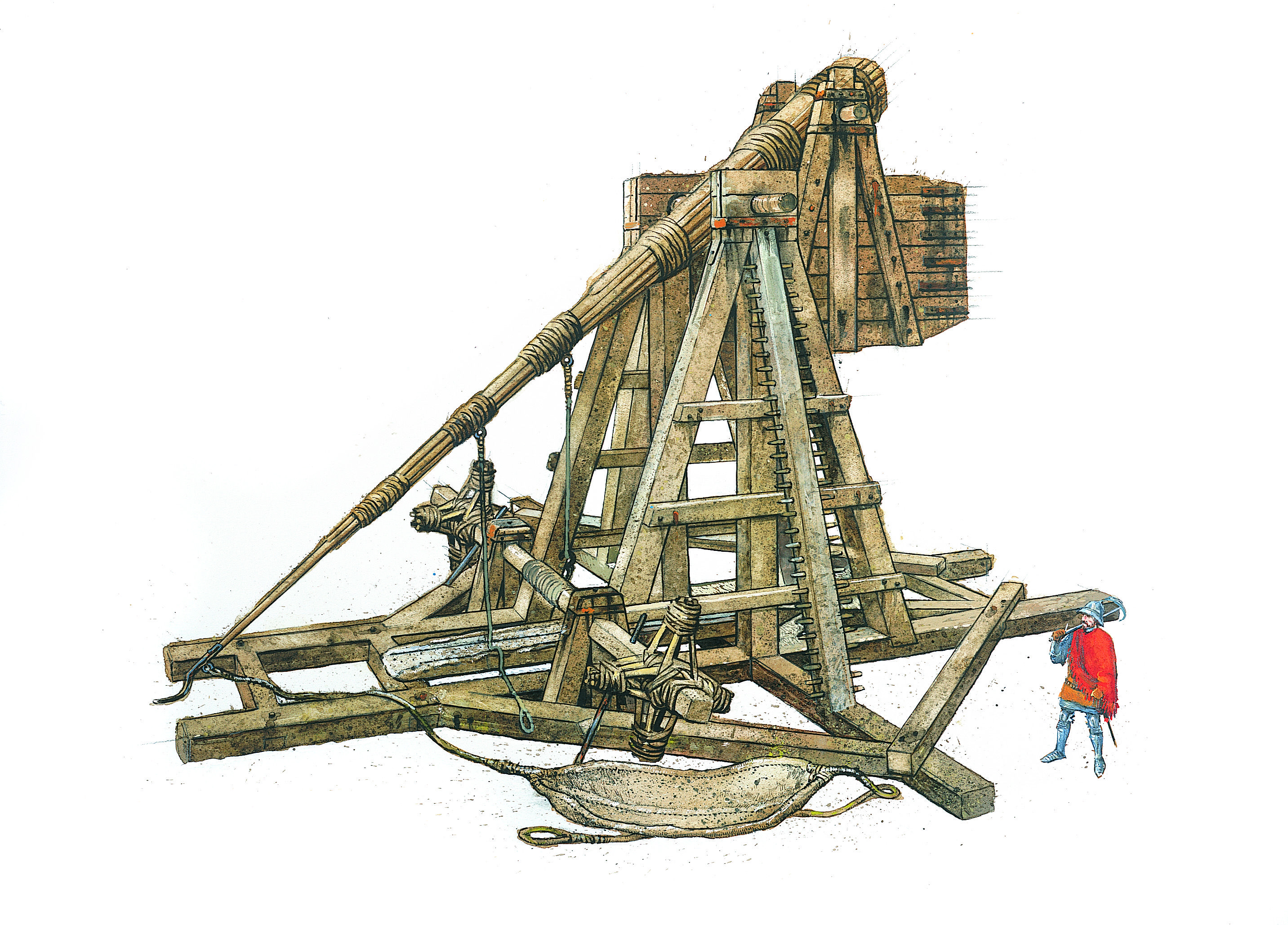
This sounds very impressive until one considers two things: first, is there a garrison big enough to defend what are, in fact, a number of miles of wall? And, second, although the walls have withstood previous attacks, including one made by the Ottomans in 1422AD, how will they stand up to the threat of modern artillery?

At the height of its power and prosperity, it is estimated that Constantinople had had a population of anywhere from 500,000 to 750,000 (although scholars argue over this). At the time of the final siege, the population had fallen to as low as 40,000. Thus, large parts of the city were empty—just like Minas Tirith:

“Pippin gazed in growing wonder at the great stone city…Yet it was in truth falling year by year into decay; and already it lacked half the men that could have dwelt at ease there.” (The Return of the King, Book 5, Chapter 1, “Minas Tirith”)

The garrison of Constantinople was perhaps about 9,000, in all, which meant that they were very thinly stretched. We don’t know just how many troops were in Minas Tirith. Some reinforcements had come from South Gondor, as we noted in an earlier posting, but only a few thousand and the defenders were powerfully outnumbered, just as those of Constantinople were, when the forces of Mordor began to arrive. The Ottoman army is thought to have had between 50,000 and 80,000 men, but just how many Orcs and others marched down the causeway from Osgiliath isn’t known–they are just a horde—something which the Jackson film shows very well.

maxresdefault

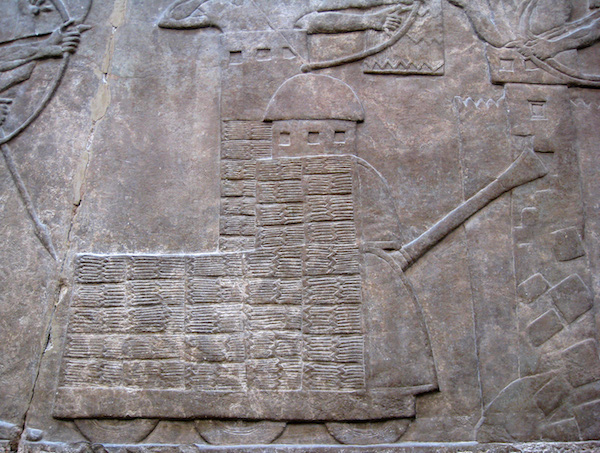
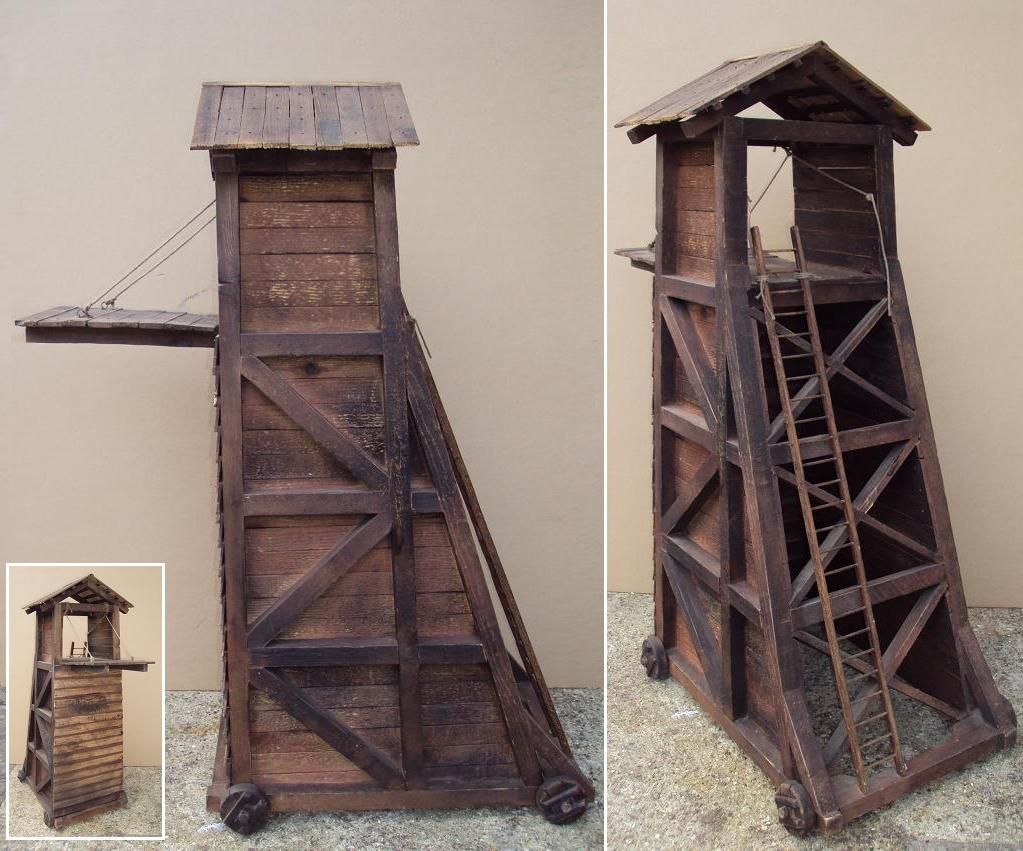
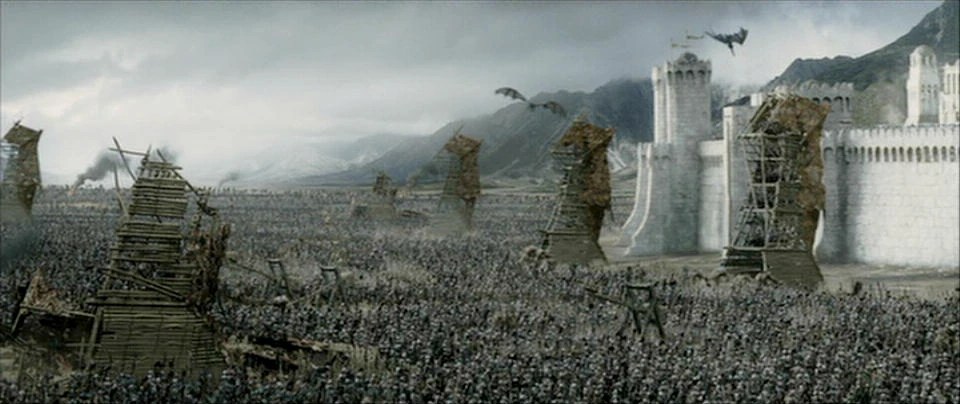
Then the assault begins, the Orcs having giant stone throwers, siege towers, and, finally, a giant, fire-breathing ram, Grond.

Grond_arrives.png

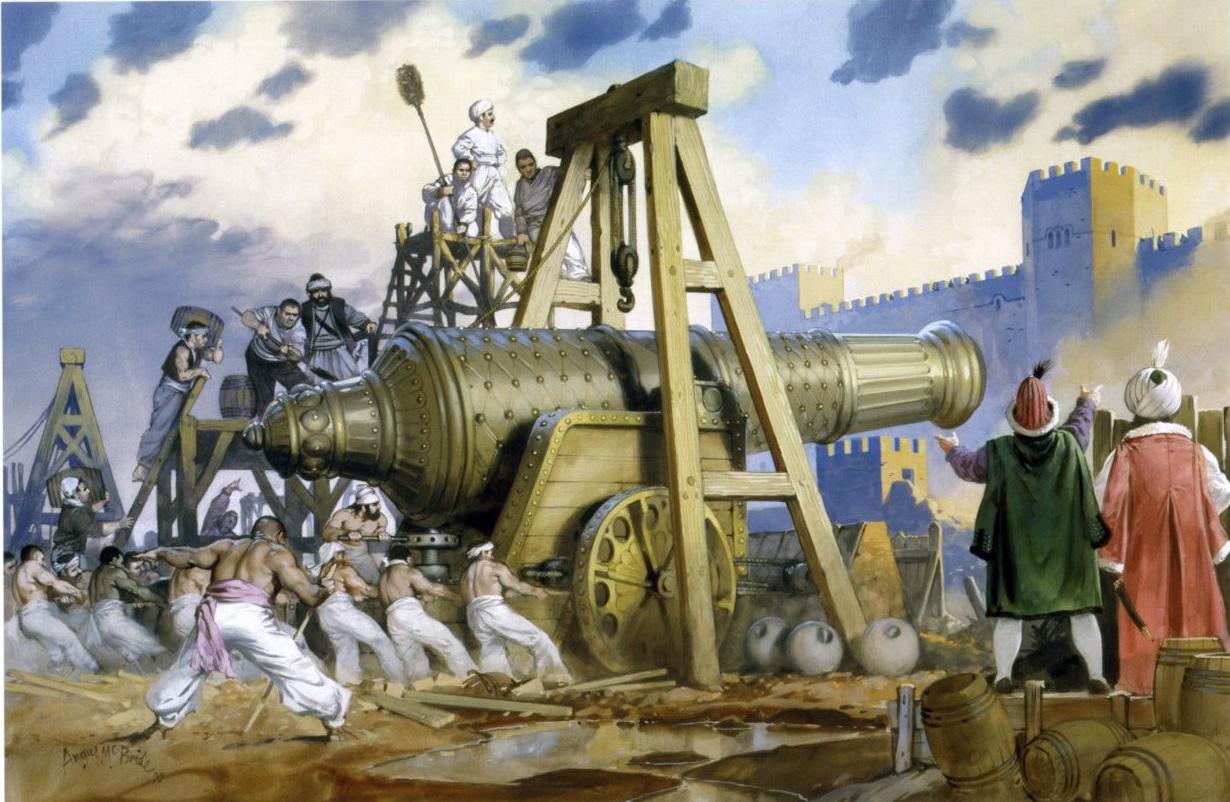
If you’ve been following our postings (and we hope you have!), then you know that we’ve discussed the use of what appears to be gunpowder, both at Helm’s Deep and at the Rammas Echor. The Orcs who attack the walls of Minas Tirith don’t appear to have such a weapon, but, unfortunately for the defenders of Constantinople in 1453, the Turks do, in the form of plentiful modern artillery.

Illustration-of-angus-mcbride-showing-the-ottoman-cannon-basilica-during-the-siege-of-constantinople-in-1453-ad.jpg

Attacks wear down the small garrison and huge, stone-throwing weapons knock down the walls, so that, finally the city falls, on 29 May, 1453.

84087026.jpg

Its conqueror, Mehmet II, rides in—

mehmet2enteringconstantinople.jpg

which is something the witch king of Angmar never gets to do, perishing instead, at the hands of Eowyn and Merry.

Eowyn.jpg


And there the parallels end, as does our posting. Did JRRT have the fall of Constantinople somewhere in the back of his mind? What do you think?

Thanks, as always, for reading.

MTCIDC

CD

The Doubtful Sea Series Facebook Page

The Doubtful Sea Series Facebook Page

  • Ollamh

Categories

  • Artists and Illustrators
  • Economics in Middle-earth
  • Fairy Tales and Myths
  • Films and Music
  • Games
  • Heroes
  • Imaginary History
  • J.R.R. Tolkien
  • Language
  • Literary History
  • Maps
  • Medieval Russia
  • Military History
  • Military History of Middle-earth
  • Narnia
  • Narrative Methods
  • Poetry
  • Research
  • Star Wars
  • Terra Australis
  • The Rohirrim
  • Theatre and Performance
  • Tolkien
  • Uncategorized
  • Villains
  • Writing as Collaborators
Follow doubtfulsea on WordPress.com

Across the Doubtful Sea

Recent Postings

  • A Moon disfigured December 17, 2025
  • On the Roads Again—Once More December 10, 2025
  • (Not) Crossing Bridges December 3, 2025
  • On the Road(s) Again—Again November 26, 2025
  • On the Road(s) Again November 19, 2025
  • To Bree (Part 2) November 12, 2025
  • To Bree (Part 1) November 5, 2025
  • A Plague o’ Both—No, o’ All Your Houses! October 29, 2025
  • It’s in Writing (2:  I’st a Prologue, or a Poesie for a Ring?) October 22, 2025

Blog Statistics

  • 103,220 Views

Posting Archive

  • December 2025 (3)
  • November 2025 (4)
  • October 2025 (5)
  • September 2025 (4)
  • August 2025 (4)
  • July 2025 (5)
  • June 2025 (4)
  • May 2025 (4)
  • April 2025 (5)
  • March 2025 (4)
  • February 2025 (4)
  • January 2025 (5)
  • December 2024 (4)
  • November 2024 (4)
  • October 2024 (5)
  • September 2024 (4)
  • August 2024 (4)
  • July 2024 (5)
  • June 2024 (4)
  • May 2024 (5)
  • April 2024 (4)
  • March 2024 (4)
  • February 2024 (4)
  • January 2024 (5)
  • December 2023 (4)
  • November 2023 (5)
  • October 2023 (4)
  • September 2023 (4)
  • August 2023 (5)
  • July 2023 (4)
  • June 2023 (4)
  • May 2023 (5)
  • April 2023 (4)
  • March 2023 (5)
  • February 2023 (4)
  • January 2023 (4)
  • December 2022 (4)
  • November 2022 (5)
  • October 2022 (4)
  • September 2022 (4)
  • August 2022 (5)
  • July 2022 (4)
  • June 2022 (5)
  • May 2022 (4)
  • April 2022 (4)
  • March 2022 (5)
  • February 2022 (4)
  • January 2022 (4)
  • December 2021 (5)
  • November 2021 (4)
  • October 2021 (4)
  • September 2021 (5)
  • August 2021 (4)
  • July 2021 (4)
  • June 2021 (5)
  • May 2021 (4)
  • April 2021 (4)
  • March 2021 (5)
  • February 2021 (4)
  • January 2021 (4)
  • December 2020 (5)
  • November 2020 (4)
  • October 2020 (4)
  • September 2020 (5)
  • August 2020 (4)
  • July 2020 (5)
  • June 2020 (4)
  • May 2020 (4)
  • April 2020 (5)
  • March 2020 (4)
  • February 2020 (4)
  • January 2020 (6)
  • December 2019 (4)
  • November 2019 (4)
  • October 2019 (5)
  • September 2019 (4)
  • August 2019 (4)
  • July 2019 (5)
  • June 2019 (4)
  • May 2019 (5)
  • April 2019 (4)
  • March 2019 (4)
  • February 2019 (4)
  • January 2019 (5)
  • December 2018 (4)
  • November 2018 (4)
  • October 2018 (5)
  • September 2018 (4)
  • August 2018 (5)
  • July 2018 (4)
  • June 2018 (4)
  • May 2018 (5)
  • April 2018 (4)
  • March 2018 (4)
  • February 2018 (4)
  • January 2018 (5)
  • December 2017 (4)
  • November 2017 (4)
  • October 2017 (4)
  • September 2017 (4)
  • August 2017 (5)
  • July 2017 (4)
  • June 2017 (4)
  • May 2017 (5)
  • April 2017 (4)
  • March 2017 (5)
  • February 2017 (4)
  • January 2017 (4)
  • December 2016 (4)
  • November 2016 (5)
  • October 2016 (6)
  • September 2016 (5)
  • August 2016 (5)
  • July 2016 (5)
  • June 2016 (5)
  • May 2016 (4)
  • April 2016 (4)
  • March 2016 (5)
  • February 2016 (4)
  • January 2016 (4)
  • December 2015 (5)
  • November 2015 (5)
  • October 2015 (4)
  • September 2015 (5)
  • August 2015 (4)
  • July 2015 (5)
  • June 2015 (5)
  • May 2015 (4)
  • April 2015 (3)
  • March 2015 (4)
  • February 2015 (4)
  • January 2015 (4)
  • December 2014 (5)
  • November 2014 (4)
  • October 2014 (6)
  • September 2014 (1)

Blog at WordPress.com.

  • Subscribe Subscribed
    • doubtfulsea
    • Join 78 other subscribers
    • Already have a WordPress.com account? Log in now.
    • doubtfulsea
    • Subscribe Subscribed
    • Sign up
    • Log in
    • Report this content
    • View site in Reader
    • Manage subscriptions
    • Collapse this bar
 

Loading Comments...