• About

doubtfulsea

~ adventure fantasy

Tag Archives: Peter Pan

Shadowy

11 Wednesday Sep 2019

Posted by Ollamh in Fairy Tales and Myths, J.R.R. Tolkien, Literary History

≈ Leave a comment

Tags

A Child's Garden of Verses, Adelbert von Chamisso, Andrew Lang, Ausgabe des Fortunatus, Charles Perrault, Fortunatus' fortune-bag, Histoires ou Contes du Temps Passe, J.M. Barrie, Le Petit Poucet, Lord Dunsany, Peter Pan, Peter Schlemihl, Peter Schlemihls Wundersame Geschichte, Robert Louis Stevenson, seven-league boots, Shadow, Siglo de Oro, Sortes Tolkienses, The Charwoman's Shadow, The Grey Fairy Book, The Lord of the Rings, Tolkien

Welcome, dear readers, as always.

We were practicing our sortes tolkienses (one way of finding a topic—by simply slipping a finger into The Lord of the Rings and opening it at that page—it’s not 100% useful, but sometimes…) and came upon the title of Chapter 2 of Book One of The Fellowship of the Ring:  “The Shadow of the Past”.

In the context of the chapter, we see that that shadow is cast by the history of the Ring itself and also by its maker, Sauron.  That, in turn, set us off on thinking about literary shadows…

In 1885, Robert Louis Stevenson (1850-1894)

image1rls.jpg

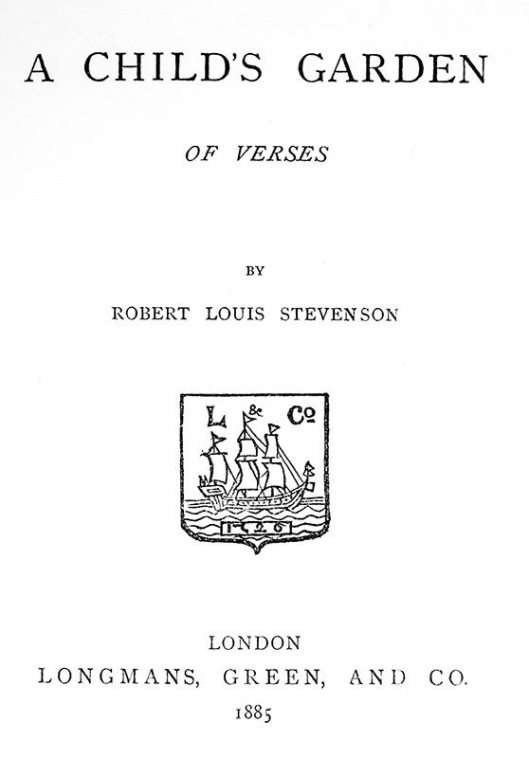
published a collection of poems.

image2achilds.jpg

Poem #19 (if you count the dedication, which is, in fact, a poem) begins:

“I have a little shadow that goes in and out with me,

And what can be the use of him is more than I can see.”

[If you would like your own copy of this volume, follow this LINK.]

In fact, in literature, its use is both visible—and invisible.

In psychology, the shadow is metaphorical, being used to symbolize an unconscious part of the personality.  [For more on this, see this LINK.]

And, visibly—but also invisibly—the shadow as physical object can represent something more, as we find in perhaps the first modern literary use of the shadow in Adelbert von Chamisso’s (1781-1838)
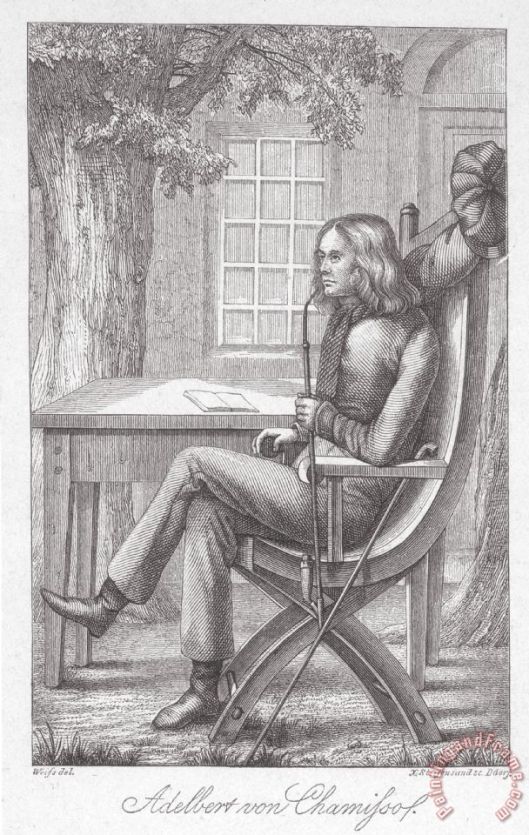
image3avonc.jpg

novella (a short novel), Peter Schlemihls Wundersame Geschichte (1814), “Peter Schlemihl’s Amazing Story”.

image4ps.jpg

Here’s the first English translation, from 1824.

image5firsteng.jpg

In the story, the protagonist, Peter Schlemihl, meets a strange man, who can pull anything out of his pocket—and we mean anything.  As Schlemihl reports:

“If my mind was confused, nay terrified, with these proceedings, how was I overpowered when the next-breathed wish brought from his pocket three riding horses.  I tell you, three great and noble steeds, with saddles and appurtenances!  Imagine for a moment, I pray you, three saddled horses from the same pocket which had before produced a pocket-book, a telescope, an ornamented carpet twenty paces long and ten broad, a pleasure-tent of the same size, with bars and iron-work!”

(This is from the 3rd edition (1861) of that first English translation.)

Impressed, Schlemihl is quickly persuaded to make a trade.  The strange man offers him a magic purse, which he calls “Fortunatus’ fortune-bag”.  This object is based on an old story which seems to appear for the first time in 1509 as Ausgabe des Fortunatus (the “Edition/Issue of Fortunatus”?), in which Fortunatus (as you’ll probably guess, the name means “Lucky”) has both a wishing cap and this bag.  Here’s the title page of that first edition.

image6fort


[If you would like to read one version of the Fortunatus story, here is a link to it from Andrew Lang’s The Grey Fairy Book (1900).]

The purse will always produce ten gold coins when one puts a hand inside, guaranteeing a steady means of wealth for the owner.  In return for this, Schlemihl hands over–his shadow.

image7ps.jpg

This seems an odd trade, but having a magic bag which acts as an endless bank account is certainly no less strange.  Not to be too literal-minded, but beyond the idea that a shadow is a tradable item, it makes us wonder, however:  what could a shadow be made of that it can be removed and collected?

At the beginning of Peter Pan (1904), Peter has lost his shadow and Wendy reattaches it by sewing it on, as if it were simply mobile black cloth and perhaps this is how we might think about it as a physical object, at least for shadow stories.
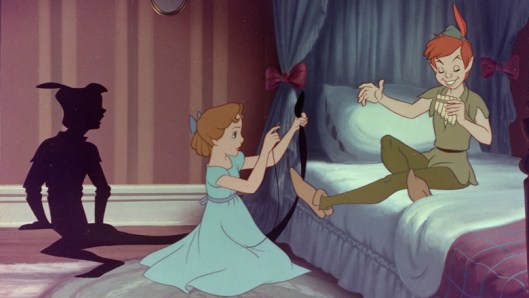
image8asewing.jpg

Although he is pleased with the money, Schlemihl soon realizes the real price he has paid:  when people see that he has no shadow, they avoid him in anything from disgust to horror, which ruins his ability to live anywhere and even to marry the girl he wishes.  The shadow, then, is more than cloth:  it is part of a person’s identity.  If you cast no shadow, you are not quite human.  The real price of the shadow is even higher, however, as Schlemihl learns when the strange man (who is obviously Satan in human form) returns to offer a second bargain:  the Devil will return his shadow in return for his soul.

It’s clear that here Schlemihl has learned his lesson, refusing this offer several times and finally throwing away the “fortune-bag”.  Although he may believe that he is done with magic, magic is not yet done with him, however.  With some of the few coins remaining to him, by accident (or so it seems), he buys a pair of seven-league boots.  (A “league”, classically, is about three miles, so, when he puts them on, each step he takes is at least twenty-one miles.)

image8seven


This element of the story, in turn, is also based on something in another older story, which appears in Charles Perrault’s (1628-1703)
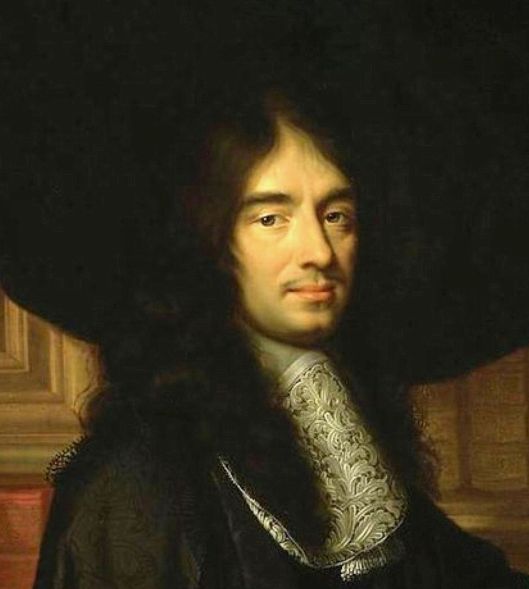
image9perrault.jpg

1697 collection, Histoires ou Contes du Temps Passe,

image10histoires.jpg

“Le Petit Poucet” (maybe “Thumblet”?).  In this story, a character steals a pair of these boots from a pursuing ogre, allowing the thief to cover great distances with every stride.

[If you’d like to read this story, here’s a LINK from a 1901 translation.]

With these boots, Schlemihl never regains his shadow, but eventually gains a peaceful existence studying the natural world (which, in fact, von Chamisso did, as well, becoming a well-known naturalist later in life).

[Here’s a LINK to a translation of the story by Michael Haldane.]

More than a century later, the early modern fantasy writer, Lord Dunsany (1878-1957)

image11ld.jpg

reused the idea of buying or trading shadows in his 1926 novel, The Charwoman’s Shadow.

image12char.jpg

A charwoman, or, simply, “char” (“char” is the same as “chore”, meaning “a task”), in the UK means a kind of cleaning woman.

image13chars.jpg

When it comes to fantasies, the idea that this may be about the shadow not of a princess, or at least a lady in distress, but of an ordinary cleaning lady, is immediately intriguing, but the charwoman isn’t really the main character.  That’s Ramon, the son of an impoverished Spanish nobleman.

To earn money for his sister’s dowry, as well as to find a profession, Ramon apprentices himself to a wizard who deals, among other things, in shadows.  As payment for his learning, Ramon uses his shadow—but, just like Peter Schlemihl before him, quickly comes to regret it.  The charwoman works in the wizard’s house and, as Ramon slowly learns spells, he also learns her story and what has happened to her since she traded away her shadow long before.

In a moment of chivalry (the story takes place in Spain in what’s called the Siglo de Oro, the “Golden Century”—the early 16th to the later 17th centuries–when wealth from the New World made Spain a world power, as well as a leader in the arts), Ramon promises to rescue the Charwoman’s shadow for her.  In the house of a wizard, you can imagine that this won’t be easy, but, eventually, and through ingenuity, he does so, only to discover that—but you should really read the story for yourself.

[Unfortunately, as this book was published in 1926, it’s still under copyright here in the US, so we can’t offer our usual LINK, but we can offer you Peter and Wendy (1911), the novel version of Barrie’s 1904 play—LINK.]

In contrast to shadows which can be traded or lost, what’s interesting to us about Sauron’s shadow is that it’s no more than a suggestion of the appearance of its owner, who, although he casts that shadow over all of Middle-earth, never appears physically in the novel.  The Nazgul—shadowy figures themselves—represent him, but Sauron himself is never more than a shadow and, in fact, when he is eventually destroyed, it’s his shadow we see broken and swept away:

“And as the Captains gazed south to the Land of Mordor, it seemed to them that, black against the pall of cloud, there rose a huge shape of shadow, impenetrable, lightning-crowned, filling all the sky.  Enormous it reared above the world, and stretched out towards them a vast threatening hand, terrible but impotent:  for even as it leaned over them, a great wind took it, and it was all blown away, and passed; and then a hush fell.”  (The Return of the King, Book Six, Chapter 4, “The Field of Cormallen”)

That “little shadow”, then, certainly has more uses than the child in Stevenson’s poem will ever see.

Thanks, as ever, for reading.

MTCIDC

CD

Eternally Yours, or Do You Believe in Magic?

06 Wednesday Jun 2018

Posted by Ollamh in Artists and Illustrators, Fairy Tales and Myths, Films and Music, Literary History, Military History

≈ Leave a comment

Tags

17th Century fashion, AB Durand, American Revolution, Arthur Rackham, Battle of Kolin, Bram Stoker, Captain Hook, Charles II, Christopher Lee, Darling Family, Darlings, Disney, Dracula, Fenian Cycle, Frederick the Great, Gerald du Maurier, Half Moon ship, Hudson River, J.M. Barrie, N.C. Wyeth, Neverland, Nina Boucicault, Oscar Wilde, Peter and Wendy, Peter Pan, Peter Pan in Kensington Gardens, Rip Van Winkle, Saruman, Tepes, The Little White Bird, The Lord of the Rings, The Picture of Dorian Gray, The Wanderings of Oisin, Tinkerbell, Tir na nOg, Tolkien, vampire, Vlad, Washington Irving, WB Yeats

Welcome, as ever, dear readers.

In our last, we spent some time thinking about immortality and Middle-earth.  Our main focus was upon the puzzle of Saruman’s seeming dissolution after his murder by Grima.

image1deathofsaruman.jpg

As one of the Maiar, it would seem that Saruman was, at least potentially, immortal, but his melancholy disappearance would suggest otherwise—perhaps because of his gradual betrayal of the trust the Valar had put in him to be an opponent of Sauron?

We had begun, however, with Bram Stoker’s (1847-1912)

image2bramstoker.jpg

1897 vampire classic, Dracula, and this has made us consider what appears to have been a popular theme in the late-Victorian-to-Edwardian literature we imagine JRRT read, growing up:  immortality (or at least lengthened life-span) through, for want of a better word, magic, and several instances immediately spring to mind.

image3dracfirst.jpg

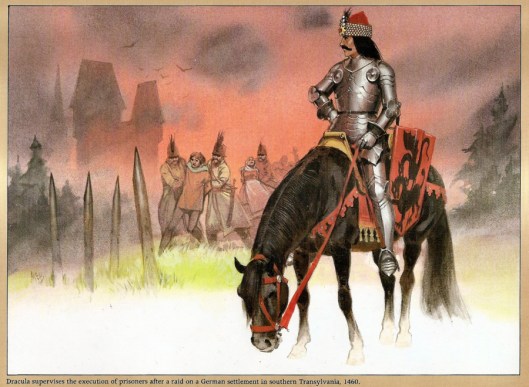
As for Dracula, we know that he was based upon a real late-15th-century eastern European border lord, Vlad, nicknamed “Tepes” (said TSE-pesh), “impaler”, who lived from about 1428 to 1477, when he was murdered.

image4drac.jpg

Stoker’s character has somehow avoided that death and has lived on for a further 500 years—how?  By being “un-dead”, a condition whose origin is never really explained, but in which a dead person continues to exist—and even flourish—if able to feed upon the blood of living people.  As this is not scientifically possible—dead is dead and actual vampire bats, after all, are alive, even if they drink blood.

image5avampirebat.jpg

All that we can say, then, is that, for all of one of the protagonists’, Dr. van Helsing’s, talk of science, we have no idea what gives Dracula his extended life–though here’s Christopher Lee, as Dracula,

image5clee.jpg

from the 1958 film, Dracula (in the US, Horror of Dracula), with the basis of his continued existence fresh on his lips.

image6poster.jpg

Considering our last post, by the way, it’s an odd coincidence that, in 1958, Lee could play Dracula and in 2001-2003, he would play Saruman.

image7leeassaruman.jpg

A few years before Stoker’s novel, in 1889, the young WB Yeats (1865-1939)

image8wby.jpg

had published The Wanderings of Oisin (AW-shin).

image9wander.jpg

This is the story in verse based upon material from the “Fenian Cycle”,  the third series of tales about early Ireland preserved by medieval monks.  Yeats’ poem deals with an ancient Irish hero who traveled to the Otherworld, spent years there without knowing that it’s a place where time works differently, and returned, only to find that he’d been gone for 300 years and, once he’d actually touched Irish soil, he immediately changed from a vigorous young man to someone 3 centuries old.  The place to which Oisin traveled, called Tir na nOg, “the Land of Youth”, is, unfortunately, not found on any ancient map, so, like Dracula’s vampirism, it is simply accepted.

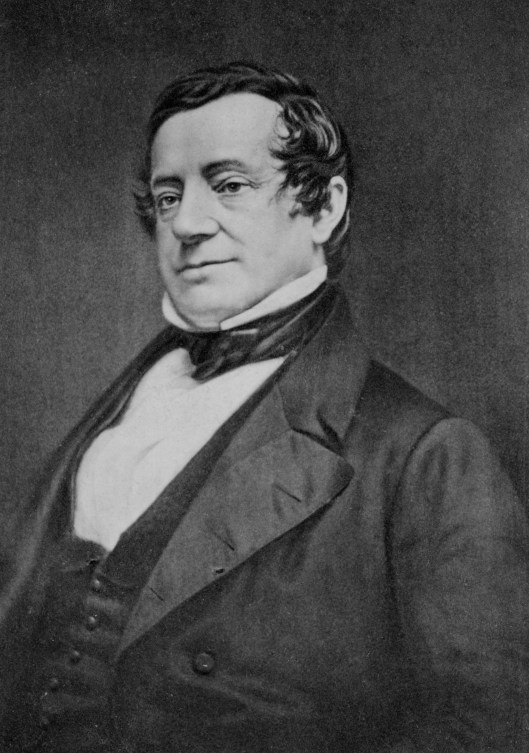
This time-warp also makes us think of the 1819 story of Rip Van Winkle, by Washington Irving (1783-1859).

image10washirv.jpg

Rip Van Winkle goes off to hunt in the mountains, the Catskills, to the west of the Hudson River before the American Revolution.

(Here’s an 1864 painting of those mountains by AB Durand (1796-1886), who belonged to the first great group of American landscape painters, called the “Hudson River School”.)

image11hudsonriverschool.jpg

While out hunting, Rip bumps into a group of troll-like creatures, who turn out to be the enchanted members of Henry Hudson’s crew

image12huds.jpg

from his ship, the Half Moon—this is an image of the 1989 recreation of the ship—

image13haelvemaen.jpg

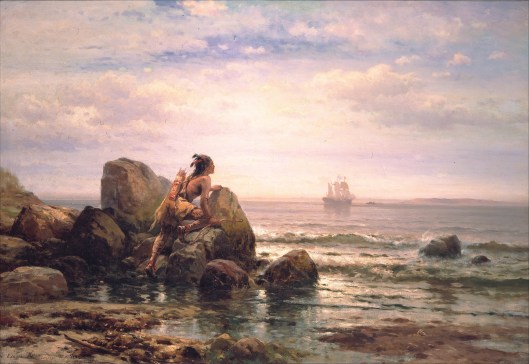
with which he explored the Hudson River in 1609.

image14hudson.jpg

(We see here Edward Moran’s 1892 painting of Hudson’s ship entering New York harbor.)

Rip drinks and bowls with them,

image15ripdrinks.jpg

image16ninepins.jpg

then falls asleep, only to awaken over twenty years later to find himself old and now a citizen of the new United States.

image17oldrip.jpg

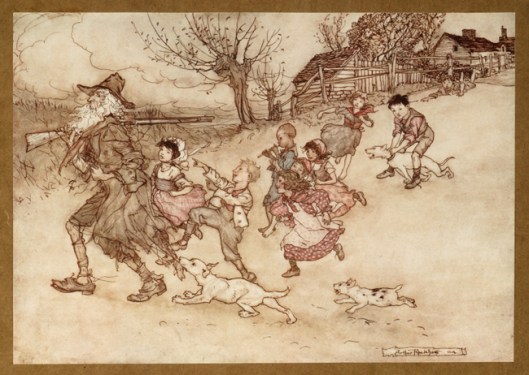
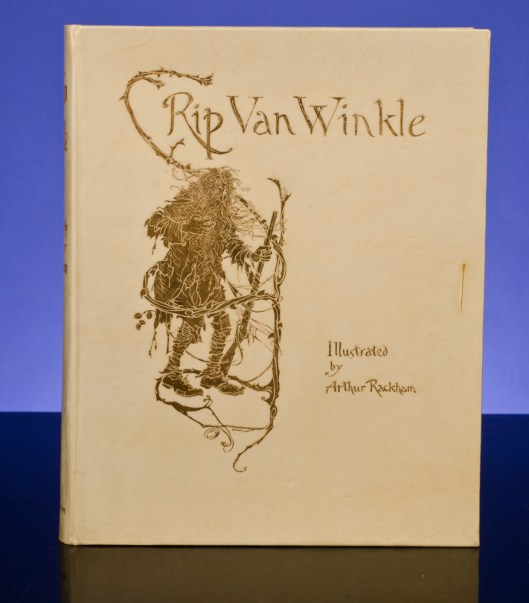
(If you follow us regularly—and we hope you do!—then you know of our great affection for late-19th-early-20th-century illustrators and, when it comes to this story, we’re very lucky in that Arthur Rackham illustrated it in 1905

image18rackham.jpg

and NC Wyeth in 1921.)

image19wyeth.jpg

Another late-Victorian story with the theme of the supernatural and long life is Oscar Wilde’s (1854-1900)

image20wilde.jpg

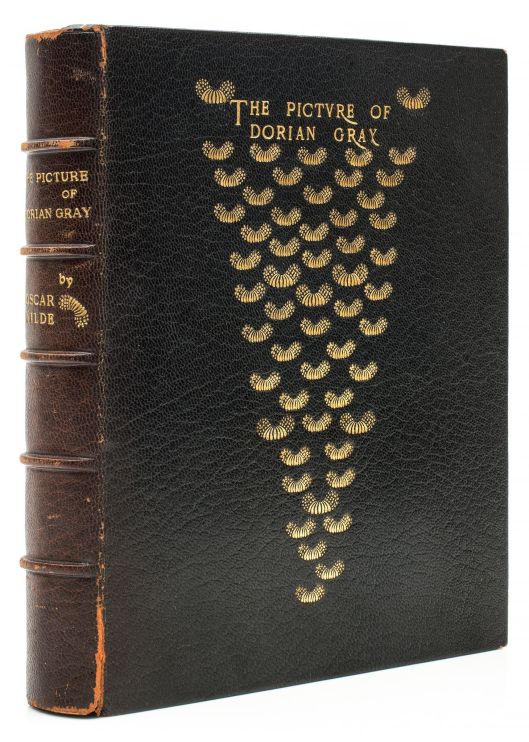
The Picture of Dorian Gray, first published in book form in 1891.

image21picture.jpg

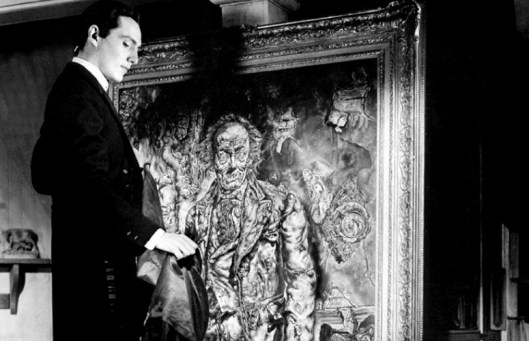
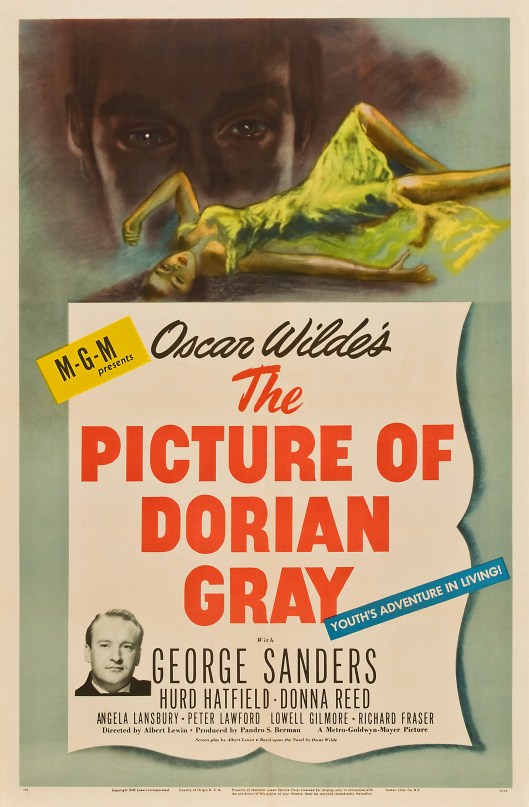
The picture here is a sinister one:  all of that which would age the protagonist, Dorian—who has an increasingly dark, secret life—is transferred to the image on canvas, so that the sitter for the portrait never seems to age.  We can see what that would look like from this image—as well as the tinted version, which is even worse,

image23picture.jpg

image24pic.jpg

from the 1945 film.

image25poster.jpg

How the picture acts as a sponge for all of the worst of Dorian is, like vampirism, never explained—Dorian promises his life if he will never age, but we never see, for example, a satanic figure, standing to one side, nod in agreement.

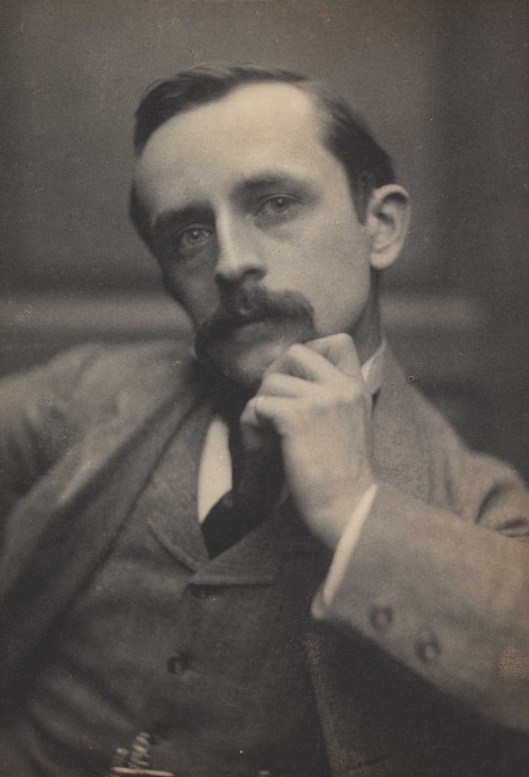
We want to end, however, with a happier story—well, sort of.  In 1902, the Scots novelist and dramatist, JM Barrie (1860-1937),

image26jmb.jpg

published a novel, The Little White Bird.

image27lwb.jpg

In it appeared for the first a seemingly-deathless character, Peter Pan.

image28ppstatue.jpg

Unlike Oisin, who has gone to a magical place, or Dorian Gray, who has his enchanted portrait, Peter just seems to be suspended in time—originally at the age of 7—days—old.

image29pp.jpg

When Barrie returned to the character, in 1904, however, he made Peter grow up–slightly.  His age isn’t exactly clear, but we know from the 1911 novelized version, Peter and Wendy,

image30pandw.png

that he still has his first set of teeth.  [Footnote:  not a very exact clue—children can begin shedding baby teeth beginning at 6 and continue till 12.]   This is the Peter of Barrie’s famous play, Peter Pan,

image31playbill.jpg

about a boy who lives on an island in Neverland

image32map.jpg

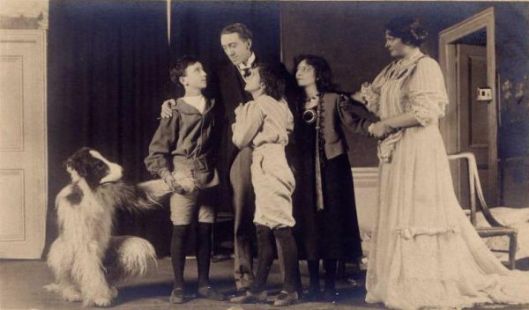
and, on a visit to London, loses his shadow while eavesdropping on the three Darling children, whose oldest sibling, Wendy, tells stories about him, which she had learned from her mother.

image33darlings.jpg

Peter is able to fly and, with the help of a fairy, Tinkerbell, he takes the Darling children back to Neverland with him, where they have all sorts of adventures.

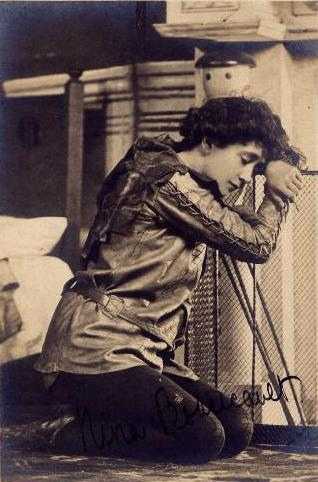
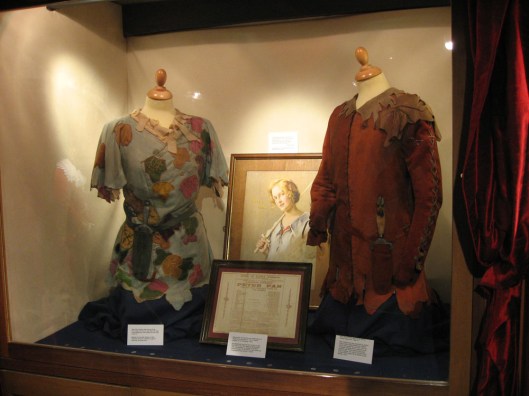
The original Peter—like so many Peters over a century to come—was a woman, Nina Boucicault.

image34nina.jpg

We are lucky to have her costume, which differs a good deal from the Peter Pan everyone knows now from the 1954 Disney film.

image35costume.jpg

image36disney.jpg

The villain of the piece, Captain Hook, however, has maintained his general outline from 1904.

image37capt.jpg

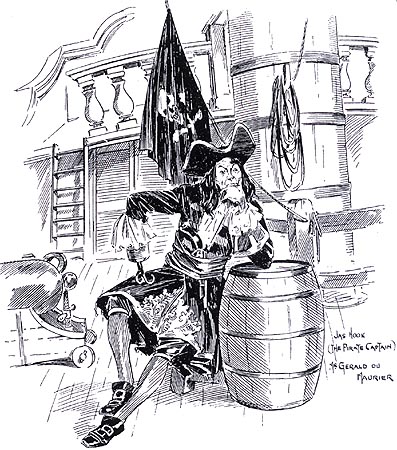
This is Gerald du Maurier, the original Captain.

image38hook.jpg

Although Barrie himself suggested that Hook should look like someone from the time of Charles II (1660-1685),

image39achas2.jpg

to us, he appears to be modeled on the fashions of the late 17th century—note the long coat with the big cuffs, not to mention the big wig.

image39costume.jpg

And here is Disney’s 1954 Hook.

image40disney.jpg

(A footnote:  in 1904, Barrie had planned to have different actors play Mr. Darling, the children’s father, and Captain Hook, but du Maurier persuaded him to allow du Maurier to play both roles, which is still the tradition.)

The subtitle of Peter Pan is Or, the Boy Who Wouldn’t Grow Up, and here we see, for the first time on our little tour, an explanation for the immortality in which the mortal is an active agent:  unlike Dracula or Oisin or Dorian Gray, Peter defies time simply by refusing to acknowledge its effects.  He won’t age because he doesn’t want to.

We said that we wanted to end on a “sort of” happy story and Peter’s stubborn immortality might fit that, but Barrie later added a kind of epilogue, a one-act play first performed in 1908.  In it, Wendy Darling, the oldest of the Darling children, has now grown up and gotten married, and had a daughter, Jane.  One night, while Wendy is putting Jane to bed in the same nursery from which the earlier adventures began, Peter appears.

Peter_and_Wendy_pg_243.jpg

At first, he simply refuses to believe that Wendy has grown up, and wants her to return to Neverland with him, although she has lost the ability to fly.  When she tries gently to explain that she can’t go with him because she has now become an adult, he collapses in tears and she runs from the room, leaving Jane asleep in her bed.  Jane wakes up and soon Peter invites her to fly to Neverland with him.  When Wendy reappears, she is quickly convinced and off the two go, leaving Wendy behind, but with the hope that Jane will have a daughter and she, in turn, will be taken to Neverland in an endless succession of daughters—perhaps immortality of a different sort?  (Here’s a LINK to the play, if you would like to read it for yourself.)

This has been a long posting, but we can’t resist a brief ps.  In 1757, Frederick the Great, the king of Prussia (1712-1786), was losing the battle of Kolin.  Desperate to win, he tried to rally his men for a counterattack, shouting, “You rascals!  Do you want to live forever?”

image41kolin.jpg

Virtually no one followed him, so we guess that most did.

Thanks, as always, for reading.

MTCIDC

CD

PS

And another ps—in 1924, the first film version of Peter Pan appeared.

image42film.jpg

It was much praised at the time and here’s a LINK so that you can see it for yourself.

The Doubtful Sea Series Facebook Page

The Doubtful Sea Series Facebook Page

  • Ollamh

Categories

  • Artists and Illustrators
  • Economics in Middle-earth
  • Fairy Tales and Myths
  • Films and Music
  • Games
  • Heroes
  • Imaginary History
  • J.R.R. Tolkien
  • Language
  • Literary History
  • Maps
  • Medieval Russia
  • Military History
  • Military History of Middle-earth
  • Narnia
  • Narrative Methods
  • Poetry
  • Research
  • Star Wars
  • Terra Australis
  • The Rohirrim
  • Theatre and Performance
  • Tolkien
  • Uncategorized
  • Villains
  • Writing as Collaborators
Follow doubtfulsea on WordPress.com

Across the Doubtful Sea

Recent Postings

  • A Moon disfigured December 17, 2025
  • On the Roads Again—Once More December 10, 2025
  • (Not) Crossing Bridges December 3, 2025
  • On the Road(s) Again—Again November 26, 2025
  • On the Road(s) Again November 19, 2025
  • To Bree (Part 2) November 12, 2025
  • To Bree (Part 1) November 5, 2025
  • A Plague o’ Both—No, o’ All Your Houses! October 29, 2025
  • It’s in Writing (2:  I’st a Prologue, or a Poesie for a Ring?) October 22, 2025

Blog Statistics

  • 103,208 Views

Posting Archive

  • December 2025 (3)
  • November 2025 (4)
  • October 2025 (5)
  • September 2025 (4)
  • August 2025 (4)
  • July 2025 (5)
  • June 2025 (4)
  • May 2025 (4)
  • April 2025 (5)
  • March 2025 (4)
  • February 2025 (4)
  • January 2025 (5)
  • December 2024 (4)
  • November 2024 (4)
  • October 2024 (5)
  • September 2024 (4)
  • August 2024 (4)
  • July 2024 (5)
  • June 2024 (4)
  • May 2024 (5)
  • April 2024 (4)
  • March 2024 (4)
  • February 2024 (4)
  • January 2024 (5)
  • December 2023 (4)
  • November 2023 (5)
  • October 2023 (4)
  • September 2023 (4)
  • August 2023 (5)
  • July 2023 (4)
  • June 2023 (4)
  • May 2023 (5)
  • April 2023 (4)
  • March 2023 (5)
  • February 2023 (4)
  • January 2023 (4)
  • December 2022 (4)
  • November 2022 (5)
  • October 2022 (4)
  • September 2022 (4)
  • August 2022 (5)
  • July 2022 (4)
  • June 2022 (5)
  • May 2022 (4)
  • April 2022 (4)
  • March 2022 (5)
  • February 2022 (4)
  • January 2022 (4)
  • December 2021 (5)
  • November 2021 (4)
  • October 2021 (4)
  • September 2021 (5)
  • August 2021 (4)
  • July 2021 (4)
  • June 2021 (5)
  • May 2021 (4)
  • April 2021 (4)
  • March 2021 (5)
  • February 2021 (4)
  • January 2021 (4)
  • December 2020 (5)
  • November 2020 (4)
  • October 2020 (4)
  • September 2020 (5)
  • August 2020 (4)
  • July 2020 (5)
  • June 2020 (4)
  • May 2020 (4)
  • April 2020 (5)
  • March 2020 (4)
  • February 2020 (4)
  • January 2020 (6)
  • December 2019 (4)
  • November 2019 (4)
  • October 2019 (5)
  • September 2019 (4)
  • August 2019 (4)
  • July 2019 (5)
  • June 2019 (4)
  • May 2019 (5)
  • April 2019 (4)
  • March 2019 (4)
  • February 2019 (4)
  • January 2019 (5)
  • December 2018 (4)
  • November 2018 (4)
  • October 2018 (5)
  • September 2018 (4)
  • August 2018 (5)
  • July 2018 (4)
  • June 2018 (4)
  • May 2018 (5)
  • April 2018 (4)
  • March 2018 (4)
  • February 2018 (4)
  • January 2018 (5)
  • December 2017 (4)
  • November 2017 (4)
  • October 2017 (4)
  • September 2017 (4)
  • August 2017 (5)
  • July 2017 (4)
  • June 2017 (4)
  • May 2017 (5)
  • April 2017 (4)
  • March 2017 (5)
  • February 2017 (4)
  • January 2017 (4)
  • December 2016 (4)
  • November 2016 (5)
  • October 2016 (6)
  • September 2016 (5)
  • August 2016 (5)
  • July 2016 (5)
  • June 2016 (5)
  • May 2016 (4)
  • April 2016 (4)
  • March 2016 (5)
  • February 2016 (4)
  • January 2016 (4)
  • December 2015 (5)
  • November 2015 (5)
  • October 2015 (4)
  • September 2015 (5)
  • August 2015 (4)
  • July 2015 (5)
  • June 2015 (5)
  • May 2015 (4)
  • April 2015 (3)
  • March 2015 (4)
  • February 2015 (4)
  • January 2015 (4)
  • December 2014 (5)
  • November 2014 (4)
  • October 2014 (6)
  • September 2014 (1)

Blog at WordPress.com.

  • Subscribe Subscribed
    • doubtfulsea
    • Join 78 other subscribers
    • Already have a WordPress.com account? Log in now.
    • doubtfulsea
    • Subscribe Subscribed
    • Sign up
    • Log in
    • Report this content
    • View site in Reader
    • Manage subscriptions
    • Collapse this bar
 

Loading Comments...