• About

doubtfulsea

~ adventure fantasy

Tag Archives: Harold Godwinson

Baruk Khazad!

12 Wednesday Dec 2018

Posted by Ollamh in Artists and Illustrators, J.R.R. Tolkien, Military History, Military History of Middle-earth

≈ Leave a comment

Tags

Adze, Alan Lee, Axe, Bayeux Tapestry, Bilbo, Dane Axe, Dwarves, francisca, Gimli, Harold Godwinson, Helm's Deep, Huscarl, mithril, Skylitzis, The Hobbit, The Lord of the Rings, Thorin, Tolkien, Varangian Guard

As always, dear readers, welcome.

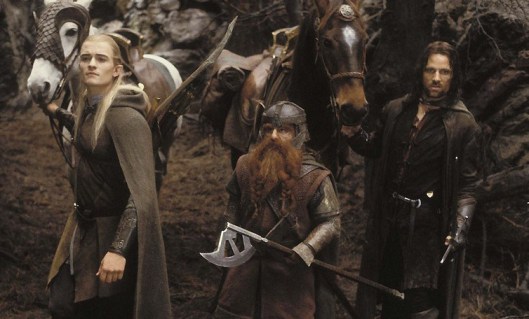
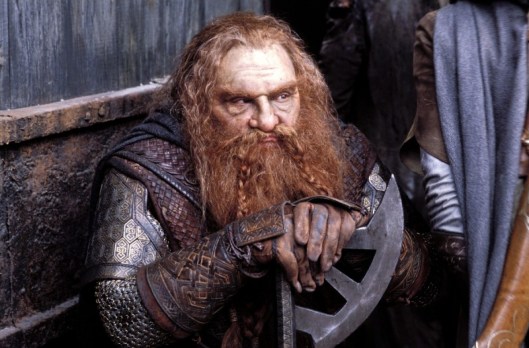
Ever since we saw the original Lord of the Rings films, we’ve been thinking about Gimli and his major weapon.

image1gimli.jpg

In The Hobbit, it would appear that the dwarves had not been armed until they used what was in the Lonely Mountain after Smaug had gone:

“Now the dwarves took down mail and weapons from the walls, and armed themselves.  Royal indeed did Thorin look, clad in a coat of gold-plated rings, with a silver-hafted axe in a belt crusted with scarlet stones.” (The Hobbit, Chapter 13, “Not at Home”)

This is where the mithril coat which eventually protects Frodo in Moria and turns up in the hands of the Mouth of Sauron comes from, when Thorin gives it to Bilbo.

image2mithril.jpg

Not long after we first meet Gimli, at the Council of Elrond, however, we see Gimli already kitted out for war:

“Gimli the dwarf alone wore openly a short shirt of steel rings, for dwarves make light of burdens; and in his belt was a broad-bladed axe.” (The Fellowship of the Ring, Book Two, Chapter 3, “The Ring Goes South”)

Certainly, the axe in Gimli’s right hand in the photo wouldn’t fit through a belt and allow for comfort or freedom of movement and we note that, in that same photo, Gimli appears to have another—but that looks too long for comfort, as well.

image3gimli.jpg

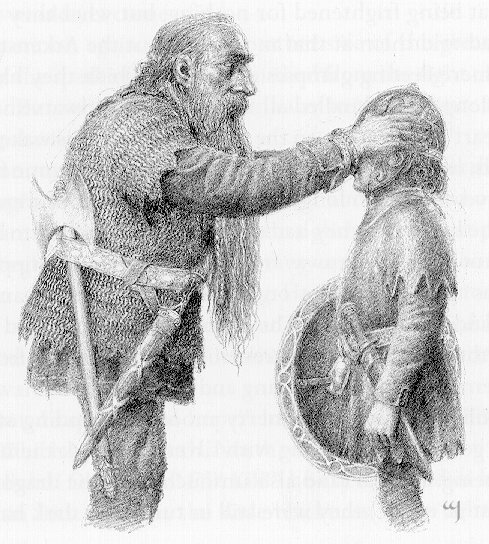
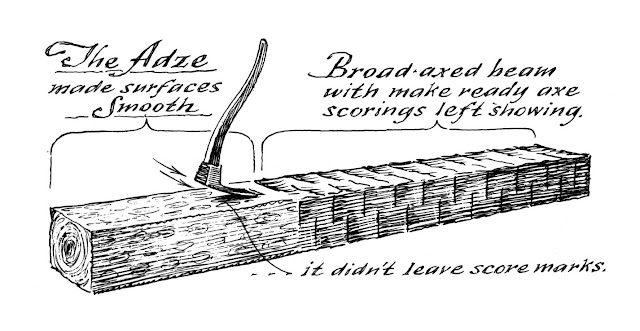
That the two axes fit in with the general persona of dwarves, however, seems to be true—after all, the translation of our title for this post is “Axes of the dwarves!”  (to be followed by Khazad ai-menu!  “the dwarves are upon you!”), which is the dwarves’ rallying cry.  What kind (or kinds) of axes these are doesn’t seem so clear, then.  Alan Lee, for example, shows us a dwarf with something which isn’t really an axe at all, but looks more like an adze, which is a tool used in woodworking to smooth and shape wood.

image4dwarf.jpg

the Broad Axe vs. the Adze - Handmade Houses... with Noah ...


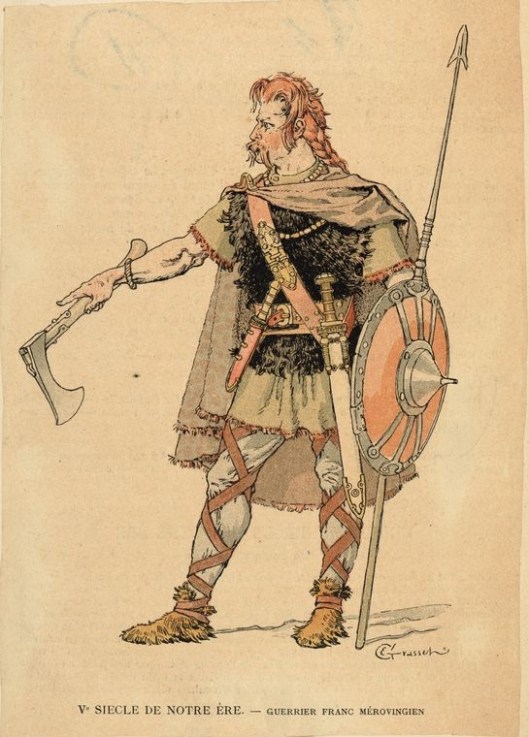
Because JRRT describes Gimli’s axe as being tuckable, we wondered whether he was thinking of the kind of throwing axe, a francisca, used by Frankish warriors (and which gave them their name).

image6francisca.jpg

image7frank.jpg

When we actually see Gimli in battle, however, he isn’t throwing, but swinging his axe.  At Helm’s deep he says to Legolas, “Give me a row of orc-necks and room to swing and all weariness will fall from me!”  And then he swings that axe:  “An axe swung and swept back.  Two Orcs fell headless.” (The Two Towers, Book Three, Chapter 7, “Helm’s Deep”)

This leads us to ask if perhaps JRRT himself wasn’t clear about Gimli’s weapon.  He never throws it, using it always as a chopper, and, when we thinking of axes with a haft—that is, handle–long enough to do that, we don’t think of that odd item in the image above—which doesn’t look substantial enough to cut through cervical vertebrae—

image8gimli.jpg

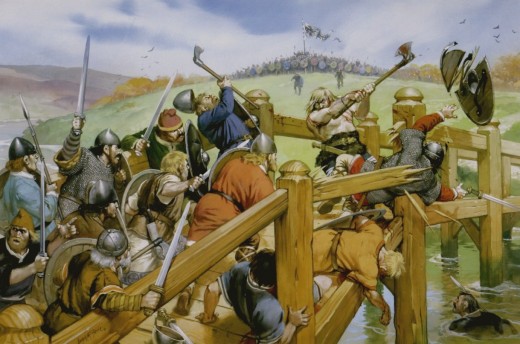
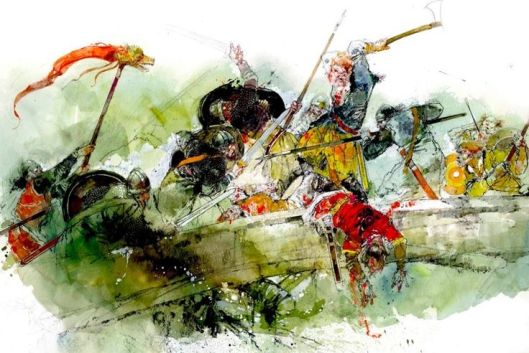
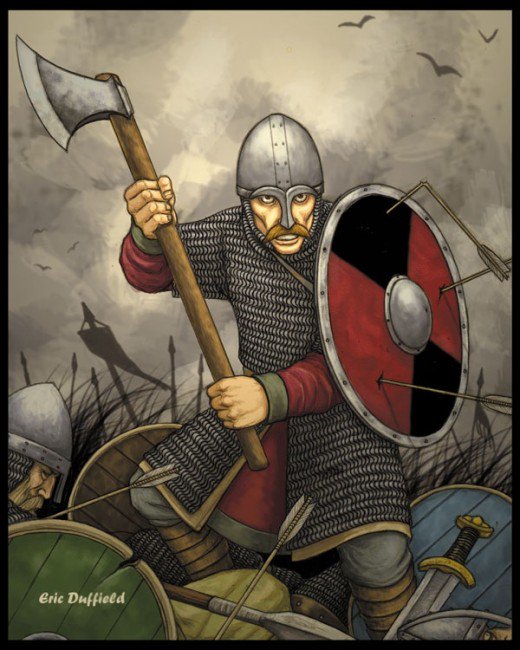
but rather of the long-hafted axe, or “Dane axe”  perhaps carried by the giant Viking who defended Stamford Bridge single-handedly against the Anglo-Saxons on 25 September, 1066,

image9stam.jpg

image10stam.jpg

with its razor-sharp blade.

image11axe.jpg

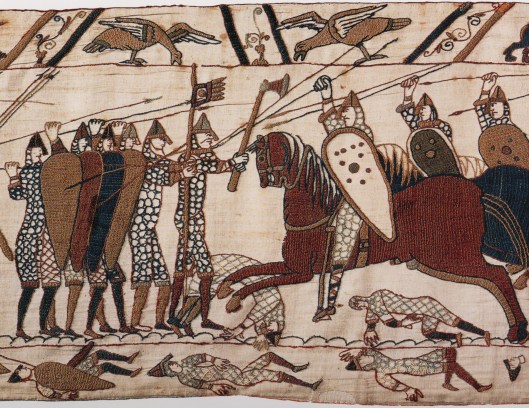
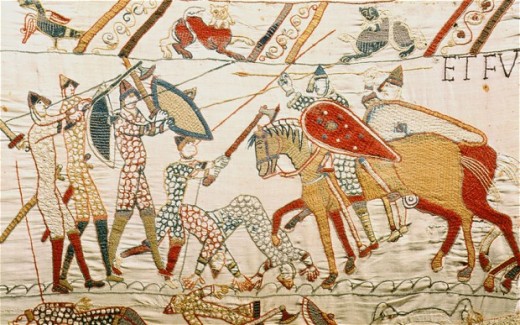
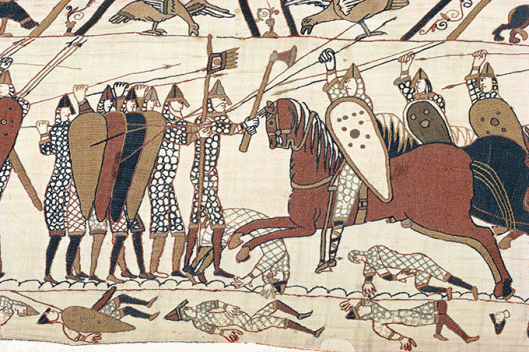
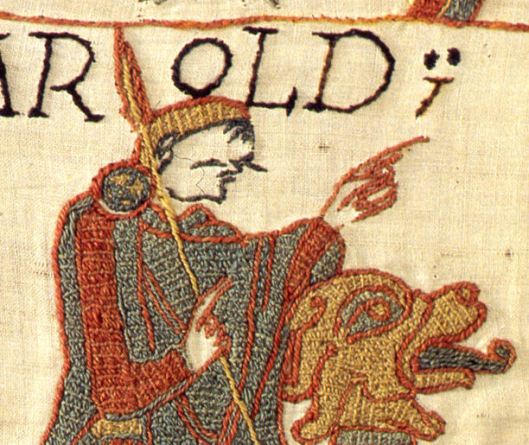
This was the kind of axe that we see carried by the huscarl, the bodyguards, of the English king, Harold Godwinson, in the depiction of the Battle of Hastings, 14 October, 1066, on the so-called Bayeux Tapestry.

image12bay.jpg

image13bay.jpg

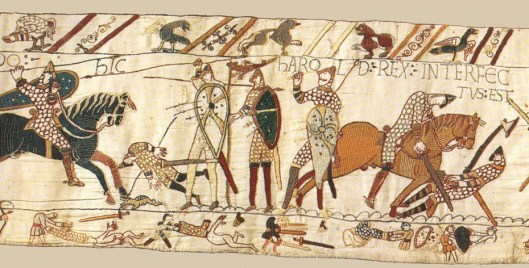
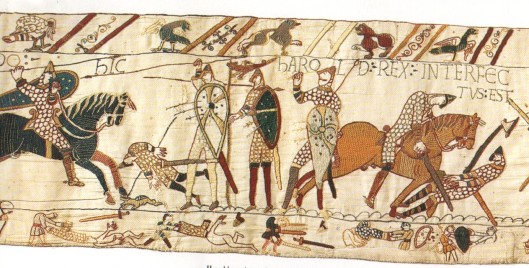
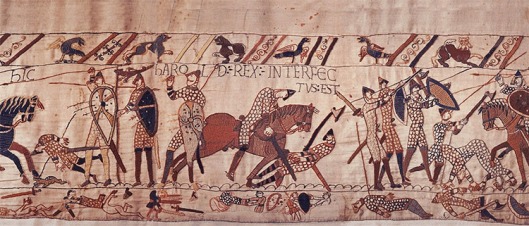
One of which Harold may himself been carrying when he was killed, if the caption on the cloth is referring to Harold being cut down by the mounted Norman in this part of the tapestry.

image14harold.jpg

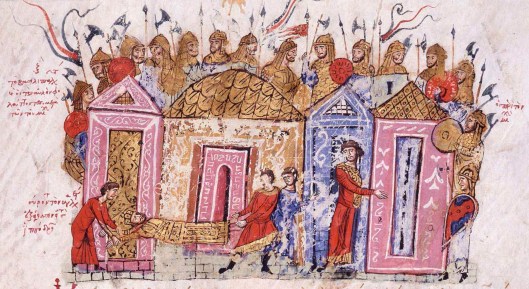
These same axes also appear to turn up as part of the armament of the Varangian Guard, the bodyguard of a number of Byzantine emperors from the 10th to 14th centuries, as depicted in the 11th-century  Skylitzis Chronicle.

image15varang.jpg

Much of this guard was made up of Norsemen and Anglo-Saxons, so the pattern of axe, we imagine, was something which both groups brought with them from their original homes.

image16varang.jpg

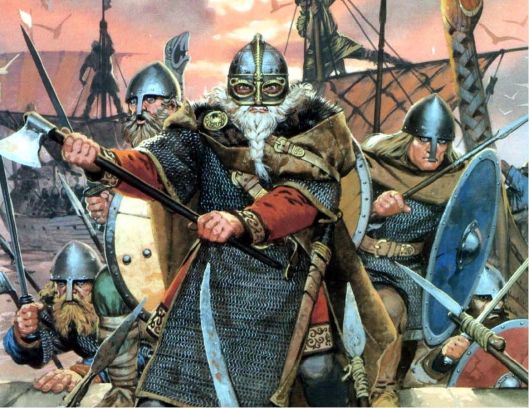
This is clearly the sort of thing to whack off heads, even two at a time, and so, if we can quietly detach it from Gimli’s belt and have him stand, perhaps even leaning on it, we have the Gimli who competes with Legolas at Helm’s Deep in the number of orcs each has dispatched.

image17vik.jpg

Thanks, as ever, for reading.

MTCIDC

CD

I Love a Parade

28 Wednesday Feb 2018

Posted by Ollamh in Artists and Illustrators, J.R.R. Tolkien, Military History, Military History of Middle-earth, Terra Australis

≈ Leave a comment

Tags

Agincourt, Bayeux Tapestry, Dol Amroth, Forlong, Great Gate, Harold Godwinson, hauberk, Hirluin the Fair, Howard Pyle, huscarls, Imrahil, Langstrand, Lincoln Cathedral, livery, Lossarnach, Medieval, Minas Tirith, Morthond, N.C. Wyeth, Palermo, parade, Ringlo Vale, Robin Hood, spangenhelm, The Lord of the Rings, Tolkien, Tower of Gondor

“I love a parade, the tramping of feet,

I love every beat I hear of a drum.”

–Koehler/Arlen Rhythmania (1931)


Welcome, dear readers, as always.  In the past, we’ve spent a posting or two discussing military aspects of The Lord of the Rings, from the look of the Rohirrim to the attack on Minas Tirith.  In this posting, we would like to go back one step from that attack to consider what is a rather melancholy moment in the lead up to that assault.

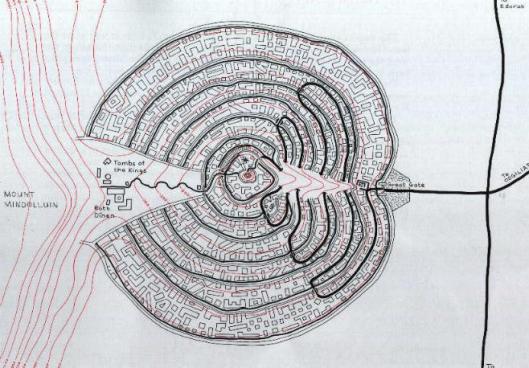
Pippin and his newfound friend, Bergil, have come down to the Great Gate of Minas Tirith.

image1minastirith.jpg

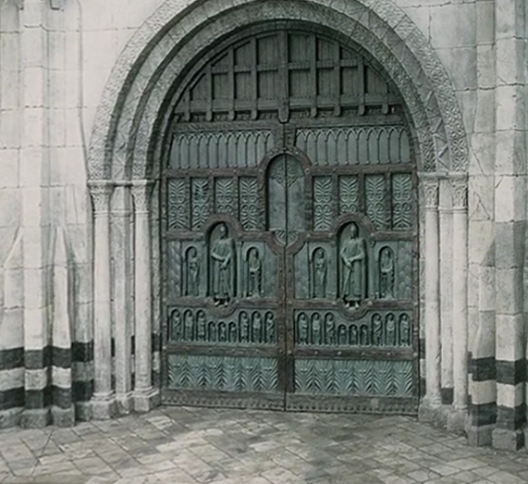
Here’s the gate from the films.

image2mtgate.png

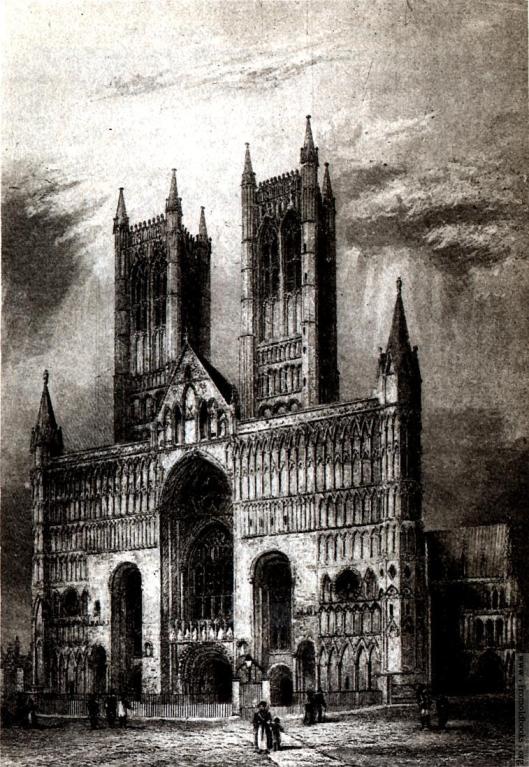
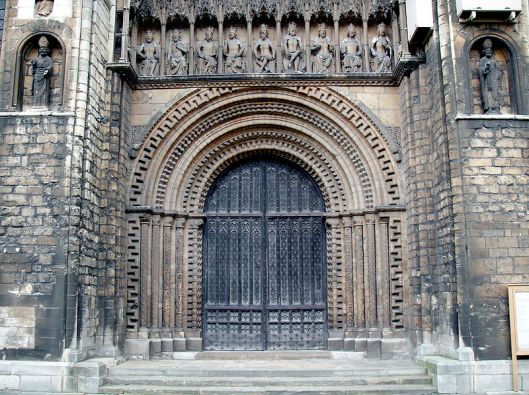
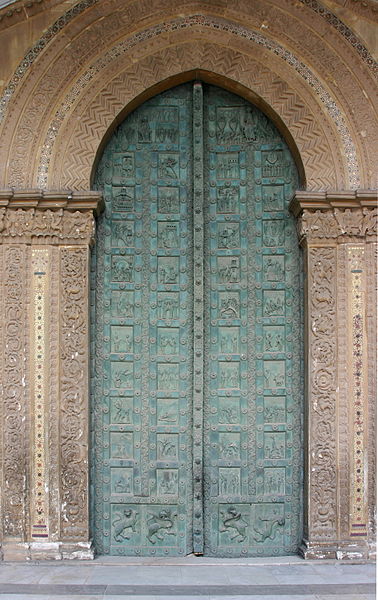
This immediately reminded us of places like the west door of Lincoln Cathedral.

image3linc.jpg

image4door.jpg

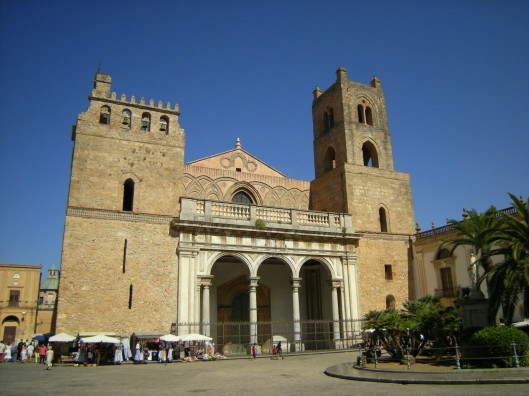
Or the main door of the cathedral of Palermo.

image5duomo.jpg

image6porta.JPG

Because he is now a member of the Guard of the Tower of Gondor, Pippin is allowed to pass through the Gate—and to take Bergil with him out to see and hear the following:

“Beyond the Gate there was a crowd of men along the verge of the road and of the great paved space into which all the ways to Minas Tirith ran.  All eyes were turned southwards, and soon a murmur rose:  ‘There is dust away there!  They are coming!’

Pippin and Bergil edged their way forward to the front of the crowd and waited.  Horns sounded at some distance, and the noise of cheering rolled towards them like a gathering wind.  There was a loud trumpet-blast, and all about them people were shouting.” (The Return of the King, Book Five, Chapter 1, “Minas Tirith”)

What happens then is a kind of parade.

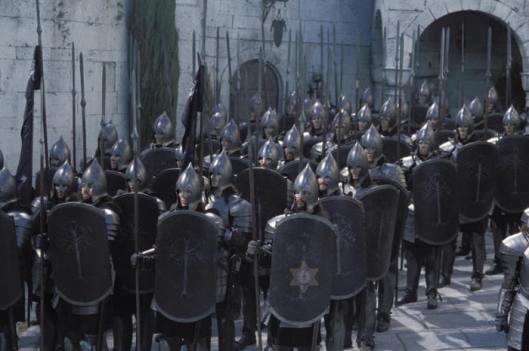
When we see the defenders of Minas Tirith in the films, they are all uniformly clad.

image7gondorians.jpg


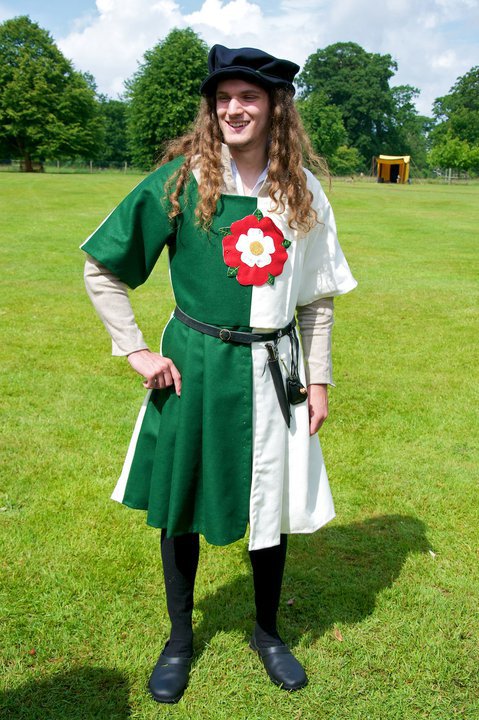
In our medieval world, this was highly unlikely, the best being that soldiers and servants might wear the colors/crest of the lord they served.  This was called “livery”.  Uniformity in clothing, weapons, and armor would be some time in the future.

image8livery.jpg

What is coming up the road from the south are reinforcements, marching in a long column of units, and those units differ greatly in look.  First are the men of Lossarnach, led by their lord, Forlong:

“Leading the line there came walking a big thick-limbed horse, and on it sat a man of wide shoulders and huge girth, but old and grey-bearded, yet mail-clad and black-helmed and bearing a long heavy spear.  Behind him marched proudly a dusty line of men, well-armed and bearing great battle-axes; grim-faced they were, and shorter and somewhat swarthier than any men Pippin had yet seen in Gondor.”

To us, those axes make the men of Lossarnach sound like the huscarls, the bodyguard of an Anglo-Saxon king, like Harold Godwinson, whom we see depicted on the “Bayeux Tapestry”.

image9huscarl.jpg

image10taphus.gif

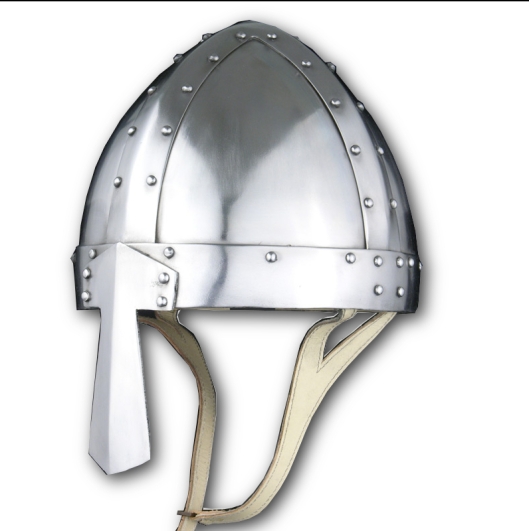
Their leader, Forlong, might be similar in appearance, wearing a type of helmet called a spangenhelm,

norman-spangenhelm-2.gif

and protected by an early form of mail shirt called a hauberk.

image12hauberk.jpg

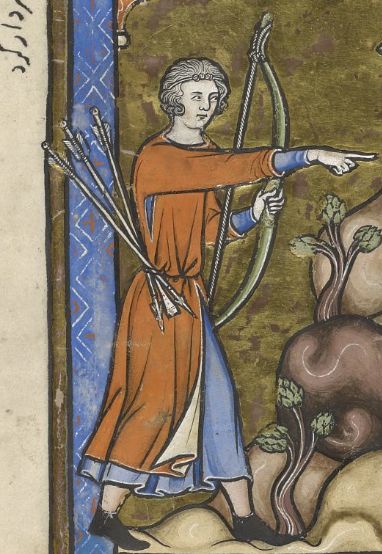
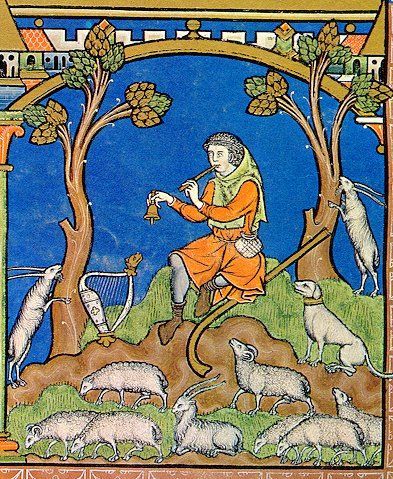
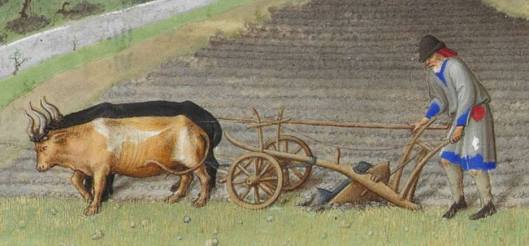
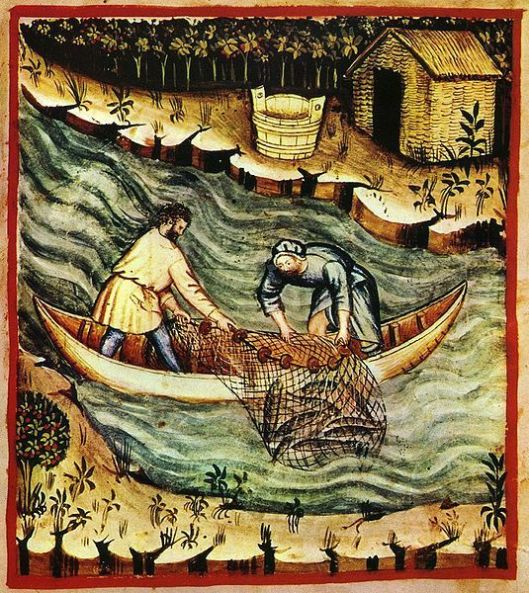
After these, we see more units, but with little description—the men of Ringlo Vale “striding on foot”, so infantry of some sort, five hundred bowmen from Morthond, from the Langstrand, “a long line of men of many sorts, hunters and herdsmen and men of little villages, scantily equipped save for the household of Golasgil their lord”.   After them, “a few grim hillmen without a captain”, and “fisher-folk of the Ethir”, all of which we imagine in their workaday clothes of hunters and shepherds and farmers and sailors, as depicted in medieval English and French manuscripts.

image13medhunter.jpg

image14shepherd.jpg

image15farmer.jpgimage16fishermen.jpg

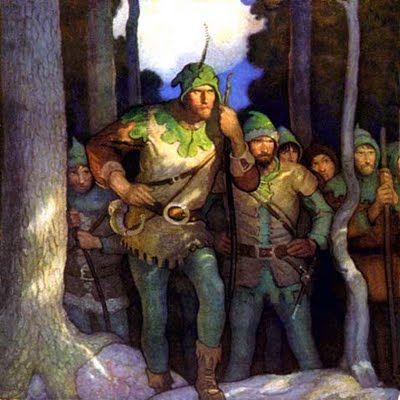
Next comes a unit which is perhaps wearing livery:  “Hirluin the Fair of the Green Hills from Pinnath Gelin with three hundreds of gallant green-clad men.”  We aren’t told how they’re armed, but that they may be in livery suggests that they may be better armed than some of the earlier contingents.  (In fact, “gallant green-clad men” makes us think of Robin Hood—perhaps more archers?)

image17rhood.jpg

And, finally, folk we’ve discussed before:

“And last and proudest, Imrahil, Prince of Dol Amroth, kinsman of the Lord, with gilded banners bearing his token of the Ship and the Silver Swan, and a company of knights in full harness riding grey horses; and behind them seven hundreds of men at arms, tall as lords, grey-eyed, dark-haired, singing as they came.”

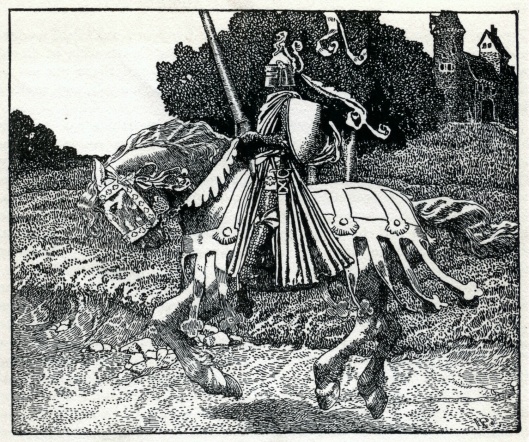
“knight in full harness”, as we talked about in an earlier post, probably meant, to JRRT, something from Howard Pyle or NC Wyeth, like this—

image18knight.JPG

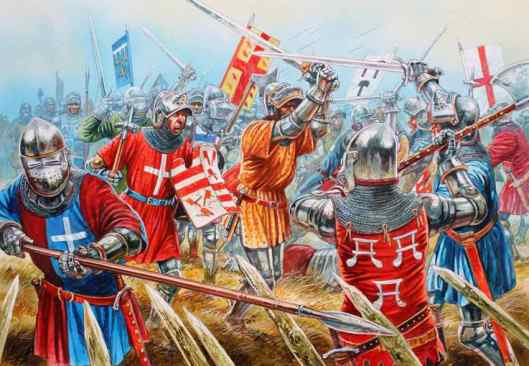
As for those “men at arms”, if they appear to be “tall as lords”, we assume that they’re on foot, which puzzles us a bit.  “Men at arms” usually means “armored soldiers on horseback” in our world—perhaps with less armor than knights, but still cavalry (unless dismounted, to fight on foot, as the French did at Agincourt in 1415, for example).  We see them, then, as looking like those dismounted cavalry, like these—

image19menatarms.jpg

However they are armed and clothed, however, they are thought to be too few by those watching and, considering what Mordor eventually sends against them, they would not have been enough, if the brave Rohirrim and Aragorn’s reinforcement from the south hadn’t arrived in time.  What would have happened if they hadn’t?  A subject for very grim fan-fiction!

Thanks, as ever, for reading!

MTCIDC

CD

Weaving (Not Hugo)

31 Wednesday Jan 2018

Posted by Ollamh in Artists and Illustrators, Fairy Tales and Myths, J.R.R. Tolkien, Literary History, Military History, The Rohirrim

≈ Leave a comment

Tags

Anglo-Saxon, Battle of Hastings, Bayeux Cathedral, Bayeux Tapestry, Bishop of Bayeux, Edward the Confessor, Harold Godwinson, Lambert Leonard-Leforestier, Louvre, Musee Napoleon, Napoleon, Normans, Odo, Odo Earl of Kent, Old English Hexateuch, Rohan, Rohirrim, The Lord of the Rings, Tolkien, Tower of Babel, William Duke of Normandy, William the Conqueror

Welcome, dear readers, as ever.

In our last, we quoted JRRT on the subject of the Rohirrim:

“The styles of the Bayeux Tapestry (made in England) fit them well enough, if one remembers that the kind of tennis-nets [the] soldiers seem to have on are only a clumsy conventional sign for chain-mail of small rings.”  (Letters, 281)

We’ve mentioned the so-called Bayeux Tapestry before and even shown an illustration or two, but we thought that it would be fun to delve a little deeper into the subject—beginning with its name and why Tolkien added “(made in England)” to his sentence.

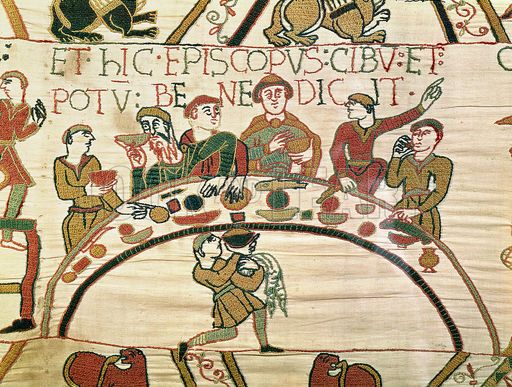
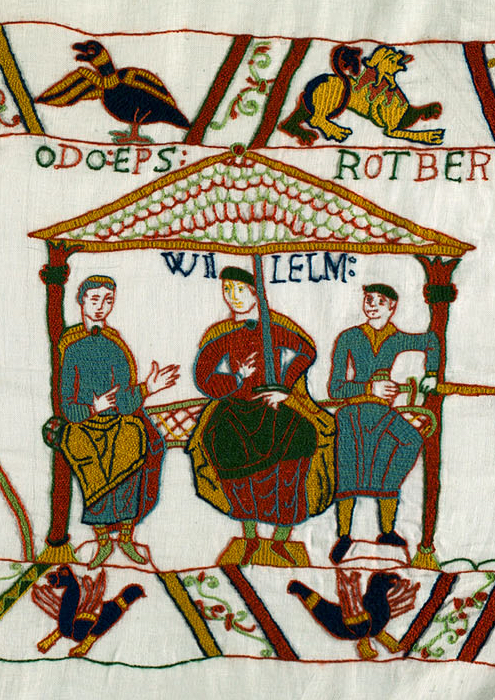
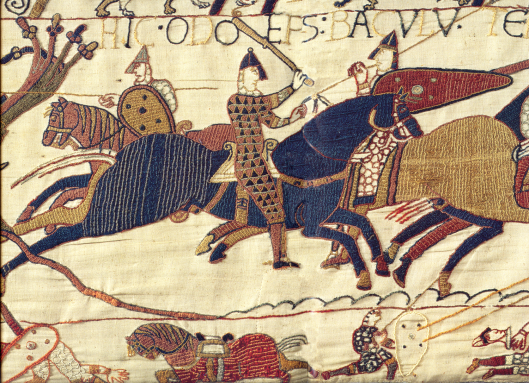
The first known reference to this approximately 230-foot-long (70.1 meters) by 20 inch high (.5m) piece of fabric dates from the latter part of the 15th century AD, from an inventory at Our Lady of Bayeux Cathedral—commonly known in English as Bayeux Cathedral—in 1476.  There has been much scholarly argument over its site of manufacture, but the evidence appears to us to identify the commissioner of the work as Odo, Bishop of Bayeux, and half-brother to William, Duke of Normandy (where Bayeux is situated), aka, “William the Conqueror”.  Odo is depicted and identified three times on the piece, twice in more peaceful settings—once blessing a meal,

image1odo.jpg

once sitting with William and his half-brother, Robert,

image2odo.jpeg

and once in a decidedly not peaceful setting, encouraging the troops at the Battle of Hastings, wearing a mail shirt and helmet and brandishing a club.  (The Latin inscription—called a titulus—says “Here Bishop Odo, holding a club, puts strength into the lads”.)

image3odo.png

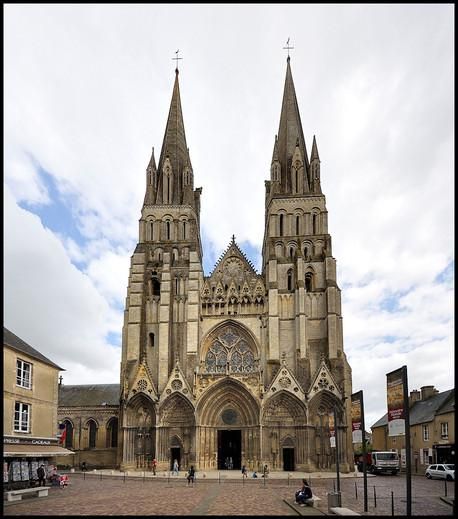
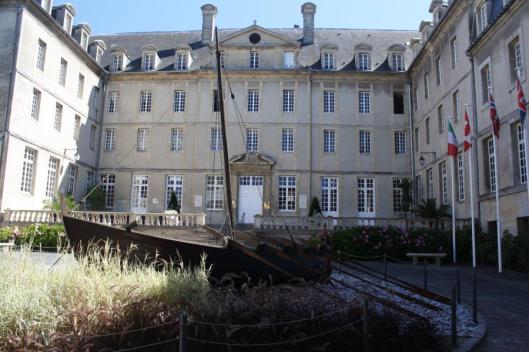
As well, several of the figures on the piece have been identified as vassals (feudal allies) of Odo.  Finally, Odo was not only the Bishop of Bayeux, but also instrumental in rebuilding the cathedral in which the artefact was first known to have been housed, Bayeux Cathedral (elements of which are buried inside this later Gothic version).

image4bayeux.jpg

It seems natural to us, then, that he, at one time William’s right-hand man, would have been responsible for the creation of the work.  (We might also add that the Norman victory made Odo Earl of Kent—one more reason for commissioning a work which shows that victory in detail.)

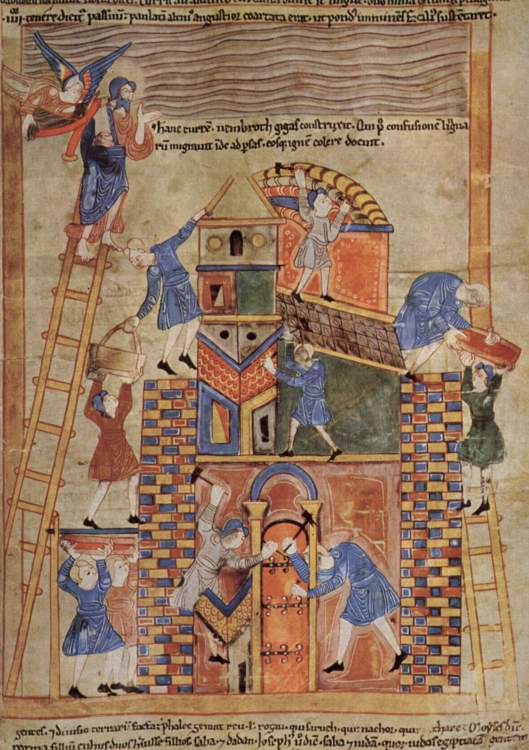
We said that there was argument as to where the work was made, but we, ourselves, would agree with JRRT and the idea that it was made in England for, among other reasons, the depiction of people and scenery on it remind us strongly of the Anglo-Saxon artistic tradition—especially embodied in the mid-11th-century manuscript of the “Old English Hexateuch”, with its 394 colored illustrations, which is to be found in the British Library (Cotton MS Claudius B. iv.).

image5babel.jpg

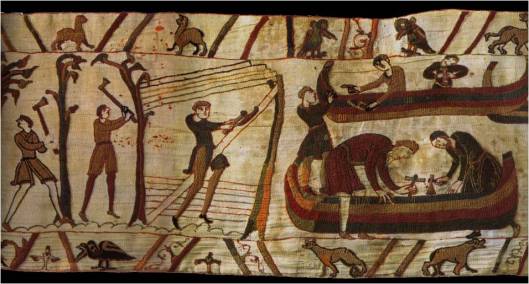
This is a depiction of the construction of the Tower of Babel.  Below is a picture of Normans building ships for their invasion of England from the Bayeux work.

image6ship.jpg

The Bayeux work is much sparer, but there’s that same interest in illustrating motion.

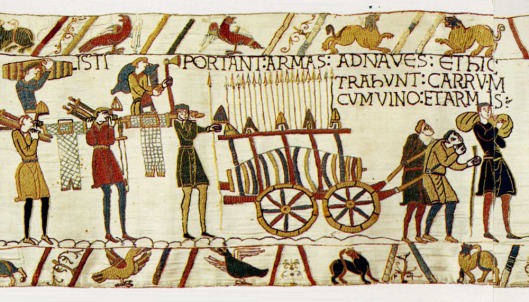
But, when we say that the Bayeux work is sparer, that is not to say that it lacks detail, as there are (at least) four visual levels throughout.  If we take just one scene at random

image7levels.jpg

and go from top to bottom we see:

  1. a narrow band of single figures—in this case, animals
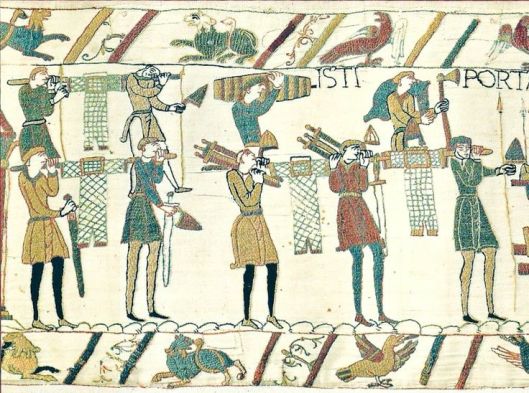
  2. a broader band of action—in this case it’s Normans loading their equipment—and other things—for the attack on England (The titulus says: “These are carrying arms to the ships and here they are dragging a cart with wine and arms.”)
  3. the captions—tituli—for every scene
  4. a lower narrow band—again, here, animals, but there are other possibilities, as in this scene, where we see scavengers removing the arms and armor of the dead after the Battle of Hastings

image8scavengers.jpg

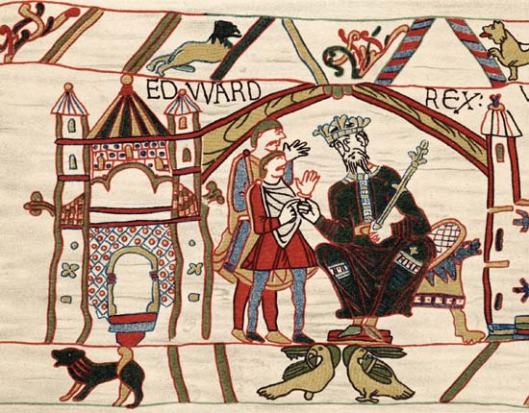
The images in the “Old English Hexateuch” illustrate individual Bible stories.  Those in the Bayeux work are scenes, all parts of a long historical narrative, which begins in 1064 (it is thought) with Edward the Confessor, the King of England,

image9eddie.jpg

sending the powerful nobleman, Harold Godwinson, on what appears (from subsequent panels) to be a mission to France.

The last scenes, at the far end, include the death of Harold on the battlefield of Hastings

image10deathofharold.jpg

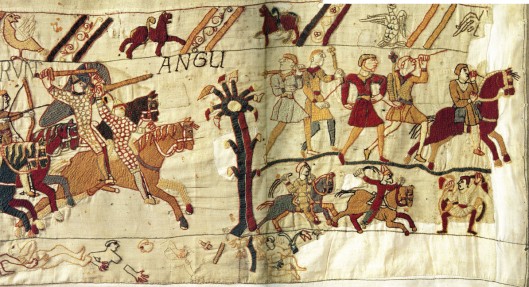
and the flight of the English from the field, with Normans in hot pursuit in October, 1066.

image11flight.jpg

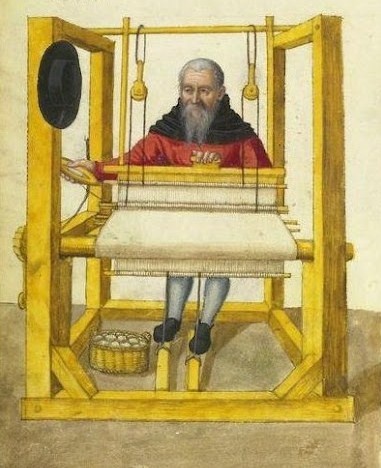
Throughout our discussion, we have avoided calling this work by its traditional name because, in fact, the “Bayeux Tapestry” is not a tapestry.  A tapestry is a solid piece of fabric, woven on a loom.

image12medloom.jpg

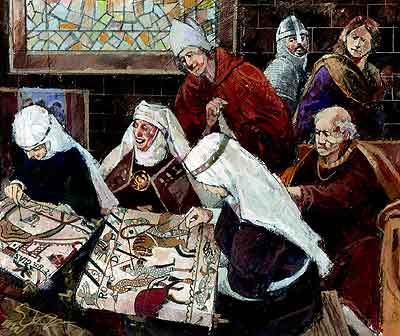
The Bayeux Tapestry is really the Bayeux Embroidery, in which various designs are stitched onto a cloth.

image13making.jpg

In this close-up, you can see how it’s done, with outlines giving the figures shape, as if they were drawn with a needle, then filled in.  (For more on this, and on the work in general, try this LINK.)

image14stitching.jpg

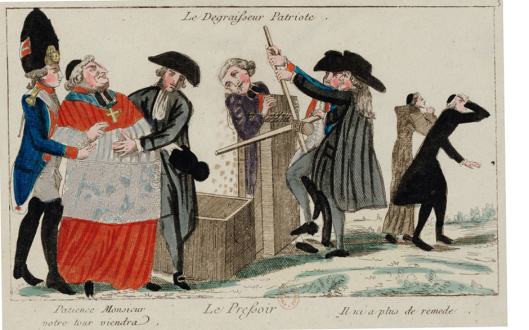
For its size and detail and historical importance, there’s no embroidery like it from early medieval England, and perhaps from Europe, but there was one moment when it almost disappeared for good.  During that period of the French Revolution when the Church (1% of the population which owned 10% of the land), was being nationalized (and plundered),

image15church.jpg

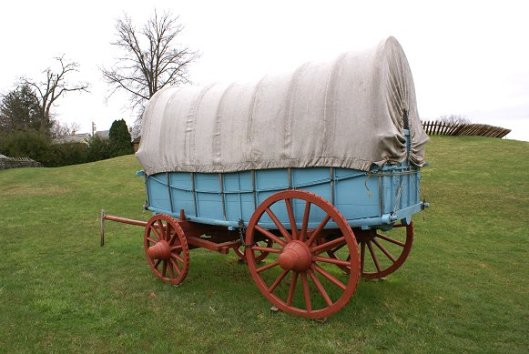
it was destined to be used for military wagon covers.

image16wagon.jpg

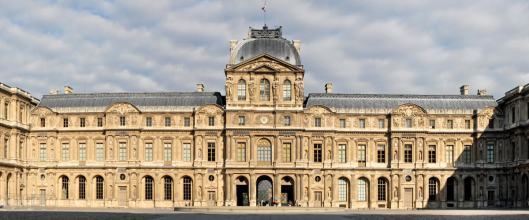
It was only saved at the last minute and shipped off to the Musee Napoleon (formerly—and subsequently—the Louvre).

image17louvre.jpg

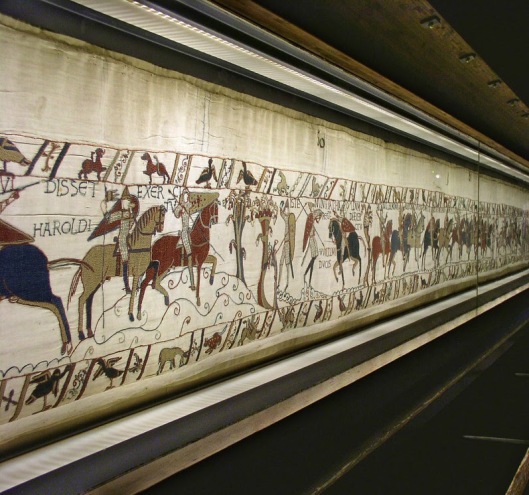
Eventually, it was returned to Bayeux where, today, it can be seen in a museum there, cleverly displayed in a way which allows the entire length to be viewed.

image18museum.jpg

image19display.jpg

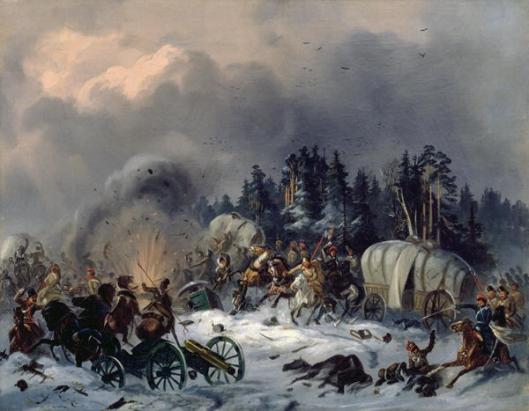
Without a member of Bayeux’ city council, Lambert Leonard-Leforestier, and his quick thinking, however, the last anyone might have seen of it would have been more like this—

image20wagon.jpg

destroyed on wagons lost in Napoleon’s disastrous retreat from Russia.

Thanks, as ever, for reading.

MTCIDC

CD

PS

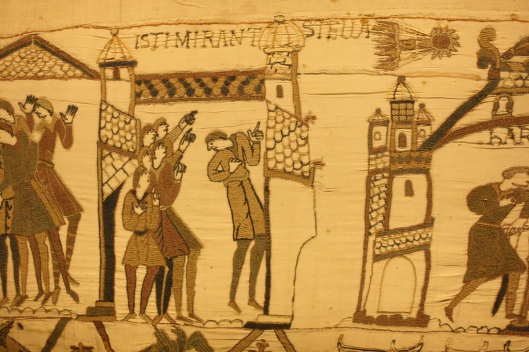
There is one more detail from the Bayeux Embroidery we’d like to mention.  If you’re a fan of Game of Thrones, you might remember a passing comet.  In fact, a passing comet—Halley’s Comet—appears on the Embroidery and, for people of the time, portended something big to come…

image21halleyscomet.jpg

For more on Halley’s comet, here’s a LINK.

Bridges and Battles

04 Wednesday Jan 2017

Posted by Ollamh in Artists and Illustrators, Heroes, J.R.R. Tolkien, Literary History, Military History, Military History of Middle-earth, Narrative Methods

≈ Leave a comment

Tags

Anglo-Saxon, Arnhem, Belisarius, Boromir, bridges, Constantine I, Constantinople, David, Diocletian, Dionysius, Gros, Hal Foster, Harold Godwinson, Horace Vernet, Horatius, Horatius at the Bridge, Justinian, Livy, Marcus Aurelius, Maxentius, Maximianus, Milvian Bridge, Napoleon, Ostrogoths, Pass of Roncevalles, Pegasus Bridge, Pliny the Elder, Pons Sublicius, Prince Valiant, Ravenna, Remagen, River Adige, River Derwent, Roland, Salarian Bridge, San Vitale, Sherlock Holmes, Stamford Bridge, Tacitus, The Council of Elrond, The Lays of Ancient Rome, The Lord of the Rings, The Oath of the Horatii, Thomas Babington Macaulay, Tiber, Tolkien, vikings

Welcome, dear readers, to our first posting for 2017—and a Happy New Year.

In our last, we discussed water-crossings in The Lord of the Rings, but said that our next would be on a more specialized subject, something we thought to call “Battle Bridges”.

This was inspired by this quotation (it’s Boromir speaking, at the Council of Elrond):

“I was in the company that held the bridge, until it was cast down behind us. For only four were saved by swimming: my brother and myself and two others.” (The Fellowship of the Ring, Book 2, Chapter 2, “The Council of Elrond”)

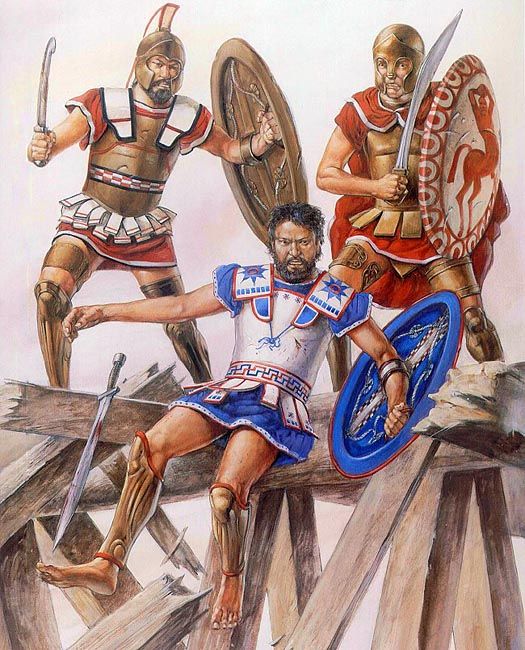
Broken bridges and swimming soldiers made us think of a story told by a number of early historians, including Dionysius of Halicarnassus, Livy, Pliny the Elder, and Tacitus, in which three Roman officers stand as a rearguard at the first bridge over the river Tiber, the Pons Sublicius, and, when two are wounded, the third, Horatius, sends them off, telling them to have the bridge destroyed so that the enemy can’t pursue the defeated Roman army into Rome. When the bridge is gone, Horatius, in his armor and with his arms, leaps into the river and swims to the Roman shore to great acclaim.
1horatiusatbridge.jpg

In the nineteenth century, this story was turned into a poem (a very long ballad) by the historian Thomas Babington, Lord Macaulay (1800-1859),

2macaulay.jpg

entitled “Horatius at the Bridge” (from his 1842 collection, The Lays of Ancient Rome).
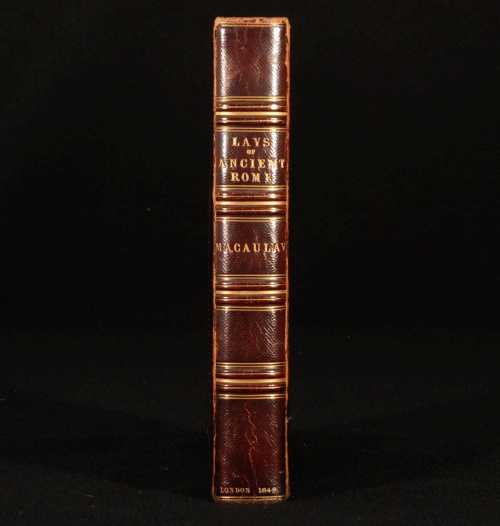
3lays1849ed.jpeg

Once upon a time, it was a standard assignment for schoolboys to memorize its approximately 600 lines and we wonder if this might once have been Tolkien’s task, which is why we have Boromir’s remark.

Once we embarked upon the subject of fights at bridges, we found, beginning with the late classical world, that there were lots more out there (our short mental list roared through time to take us as far as the seizing of Pegasus Bridge in the Normandy invasion and the subsequent bridges at Arnhem and Remagen). There was a difficulty, however: we began with an heroic action—one man or a handful against masses. What mostly came to mind was not Horatian one-man stands. Instead, they were only depicted as parts of larger military maneuvers to gain or block a crossing and individuals disappeared. Take, for example the famous battle at the Milvian Bridge, in 312AD, which led not only towards a reconstituted Roman world based upon the east, but also towards the eventual Christianization of the Roman world.

4milvian.jpg

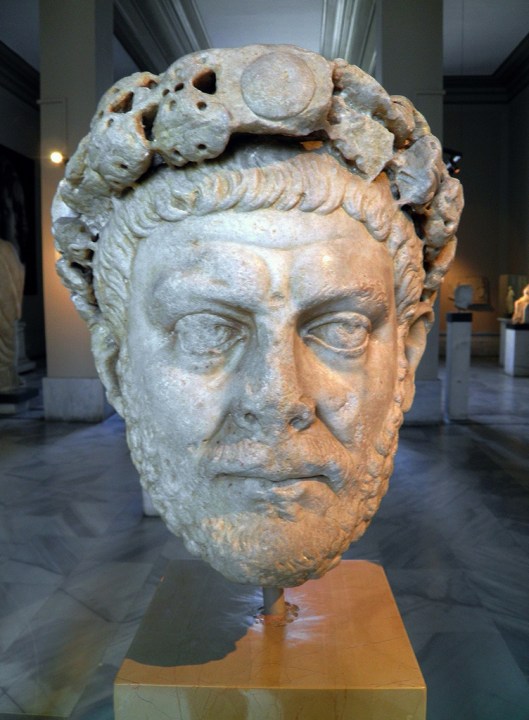
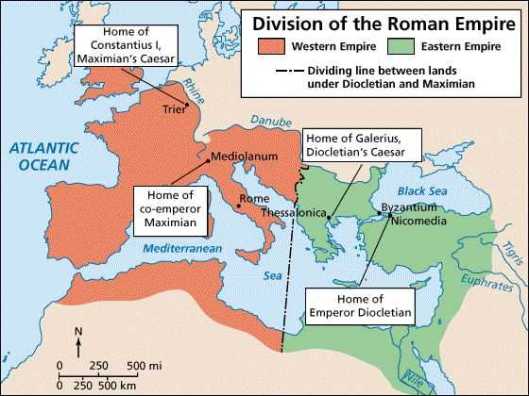
In the civil wars which wracked the late Roman empire, after its division post-284AD by Diocletian,
4adiocletian.jpg

4bdiocletiansdivision.jpg

Constantine, the western Augustus (senior emperor)

5Constantine-I-Face.jpg

defeated his rival, Maxentius (who was also his brother-in-law),

6maxentius.jpg

at a bridge outside Rome to become, in time, the sole emperor. Maxentius, who had control of Rome, had planned to block Constantine on the far side of the Tiber, keeping a pontoon bridge available for a retreat, if necessary, since it appears that the actual stone bridge was in the process of being dismantled.

(The Romans were extremely able at producing pontoon bridges—here’s a good illustration from the column of Marcus Aurelius—completed 193AD–)

When that retreat did become necessary, Maxentius was drowned in its midst, the bridge collapsed, and his troops who remained either died on the field or surrendered to Constantine.

4milvian.jpg

In time, Constantine, who believed that the empire’s main focus should actually be on the east, moved the capital to an old Greek colony, called Byzantium, but which he renamed “New Rome”—although it seems that everyone else called it Constantinople.
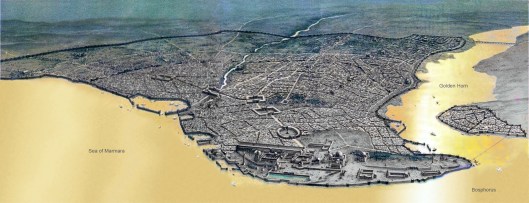
7constantinople.jpg

This would be the capital of the later Byzantine Empire, which, under the emperor Justinian,
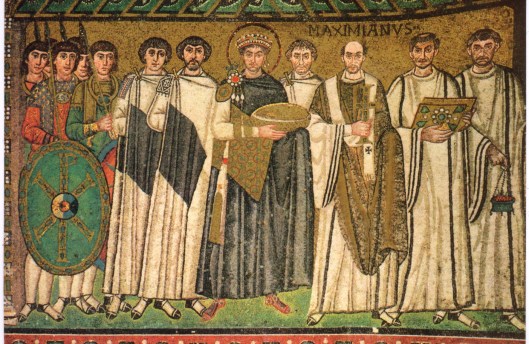
8justinian.jpg

(He’s the one with the bowl of communion bread—the only labeled figure, Maximianus, was the bishop of Ravenna, where this mosaic stands in the church of San Vitale.)

would attempt to reconquer the portions of the old western empire which had fallen into the hands of Germanic invaders.
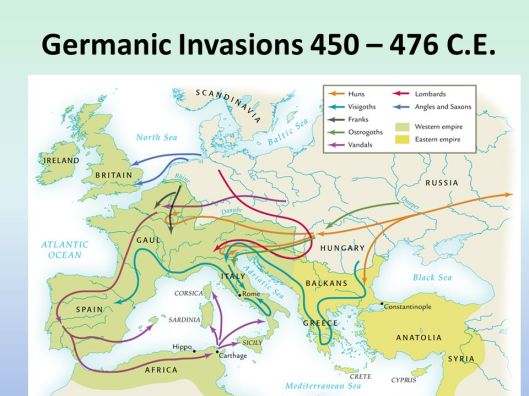
9germanicinvasions.jpg

Under Justinian’s general, Belisarius,
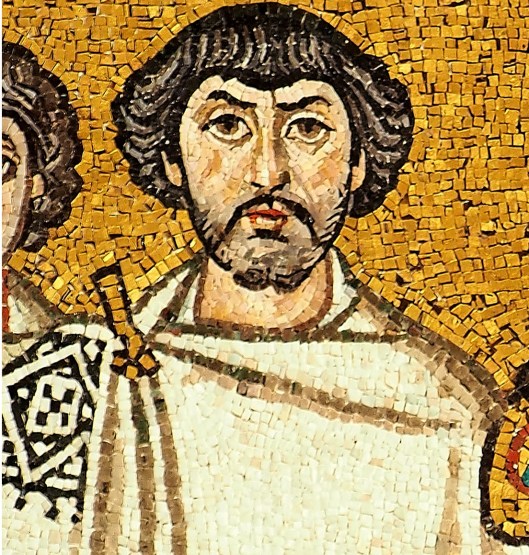
10belisarius.jpg

(this may or may not be a portrait—it’s a scholarly guess),

the Byzantines struggled for control of Rome against the Ostrogoths.

11ostrogoth.jpg

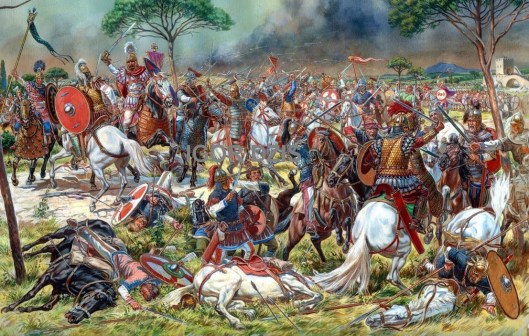
This struggle included a fight outside of Rome for control of the Salarian Bridge (537AD),
12salarianbridge.jpg

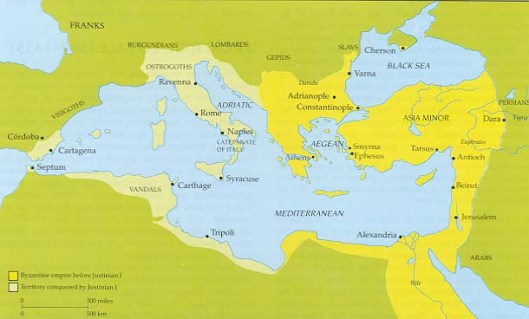
a fight which Belisarius lost, although, for a short time, Justinian’s world was enlarged, if not to the full size of the old empire, at least to include much of the western Mediterranean—quite an accomplishment for the later world of antiquity.
12ajustempire.jpg

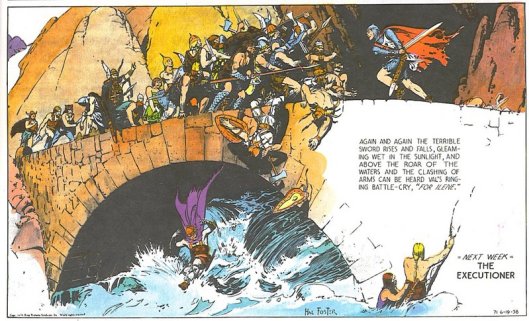
And, speaking of late antiquity, if you regularly read our blog, you know that we have a special affection for the work of Hal Foster, who created the late-antique, early-medieval world of Prince Valiant. The combination of bridge and heroic fighting reminded us of one of our favorite illustrations and so we have to include this scene (published 19 June, 1938), in which Val faces a band of Viking raiders.
13valatbridge.jpg

This image, of course, brings us back to Horatius, the single warrior against the mass. As we’ve said, in the intervening centuries there are battles at bridges, but only as one element in larger campaigns and the heroic individual disappears into the ranks. We could think of one, somewhat later, figure, however. He appears, unfortunately nameless, in the other battle of the short reign of Harold Godwinson, at Stamford Bridge, 25 September, 1066. The Anglo-Saxon army raced north from London to oppose a Viking invasion, and defeated the Vikings on the near side of the bridge over the River Derwent, but, to complete their victory, the Anglo-Saxons needed to destroy the surviving force on the far side. in the way stood, in the middle of Stamford Bridge, a single Viking warrior, blocking their advance.

14stamfordbridge.jpg

The Anglo-Saxon Chronicle says that he killed 40 of the enemy before an Anglo-Saxon floated underneath the bridge and stabbed him from beneath with his spear, but, well, as much as we believe in heroic tales…

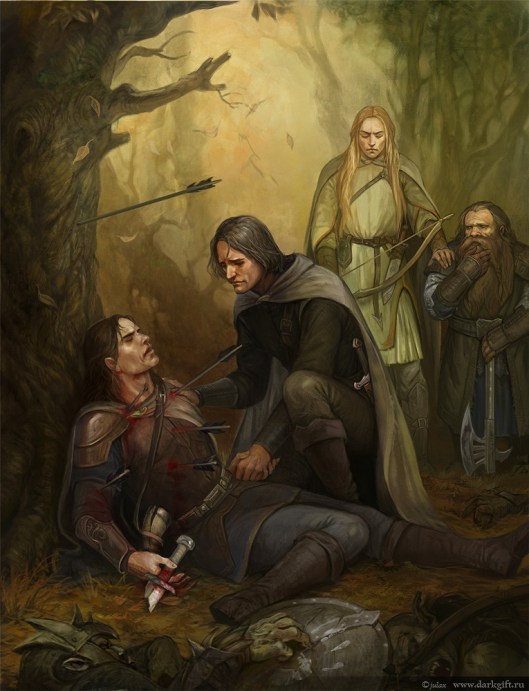
His stand, however, brings us back to Boromir and his final battle, in which he faces two waves of orcs before he is finally mortally wounded.
15boromirdeath.jpg

No bridge, but this still follows the theme of the brave man standing alone, with no possible help nearby.
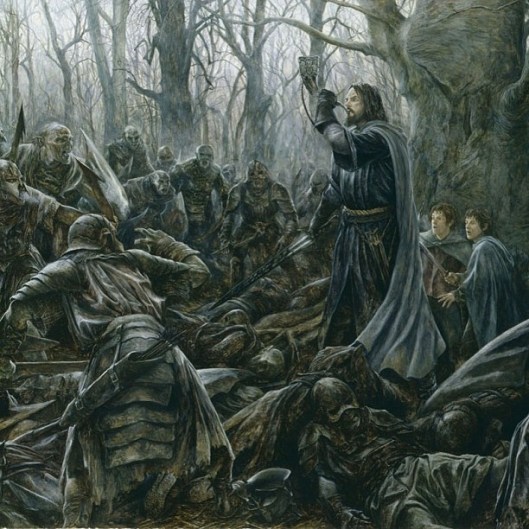
16boromirhorn.jpg

(And, of course, Boromir and his horn are meant to remind any good reader of heroic material—particularly medieval—of Roland at the Pass of Roncevalles…)
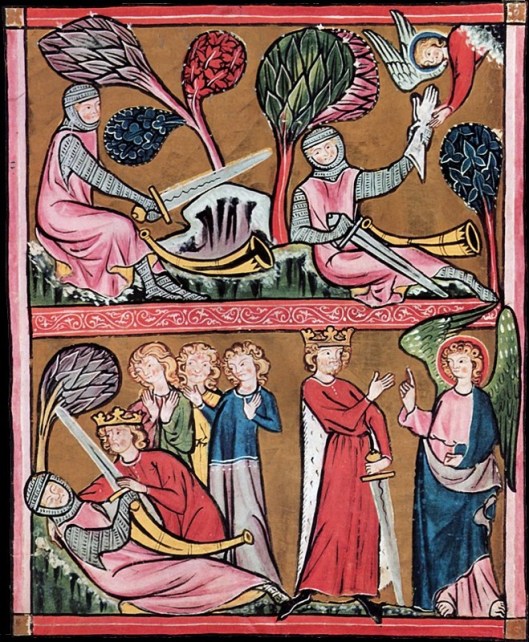
17roland.jpg

We would leave this theme here, back where it began, with Boromir, except we can’t resist (we’re afraid, when it comes to adventure and heroics, that we appear to have little or no willpower at all!) one final image and the idea behind it. There is no end of discussion about Napoleon, which, we’re sure, would please him no end. For us, however, there is a side of him which is endlessly interesting and that is as a Romantic Figure—a view of himself which he worked very hard, at least early in his life, to promote. The late 18th-century very much looked back to the classical world and, we believe, it did so in part because it loved the dramatic gestures it saw as part of that world. We only have to point out paintings like David’s “The Oath of the Horatii”(those Horatii being the direct ancestor of the one in our post), with its operatic ensemble look, to illustrate this. (To us, this looks so much like the set-up for a stirring quartet, right out of Bellini or Meyerbeer.)
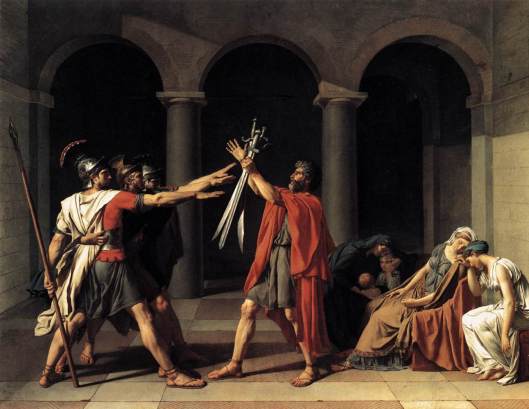
18horatii.jpg

So, during Bonaparte’s brilliant 1796-7 campaign in Italy, there was clearly a classical/Romantic moment. When the French were stalled by their Austrian opponents in crossing the River Adige, Napoleon, to encourage his troops, seized a regimental color and raced alone to the bridge, as Gros (who was actually at the battle) depicted him in his 1797 painting.
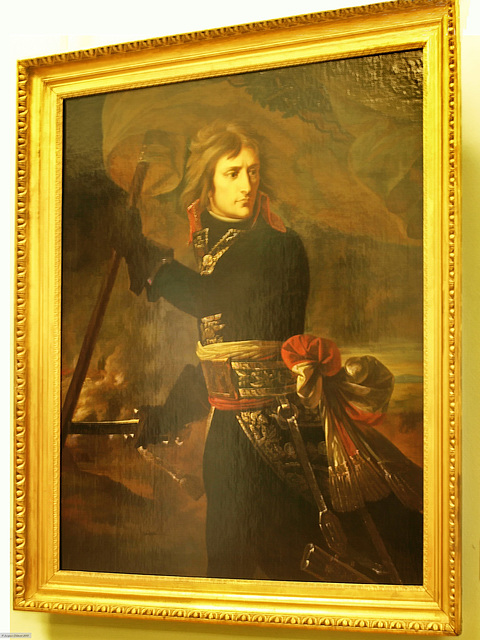
19grosarcola.jpg

Vernet, in his 1826 version, continues the heroic theme, but changes the focus a bit—Napoleon now has followers. (And you know, from its dash—and that’s Horace Vernet in general—who, according to Sherlock Holmes, may be a distant relation–that this is a favorite painting of ours.)
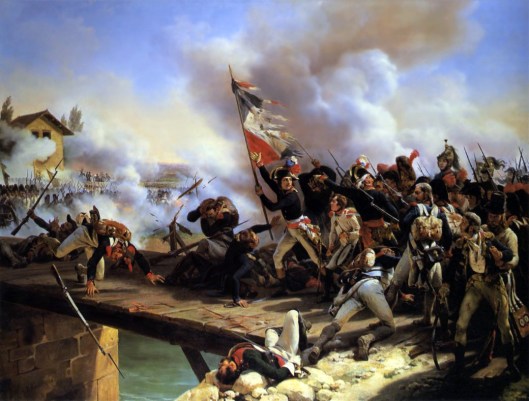
20vernetarcola.jpg

In fact, although Bonaparte did seize a color, he never made it to the bridge, either alone or in a crowd. His illustrators, however, influenced, no doubt, by the potential drama—and perhaps by a faint memory of Horatius?—depict a scene which should have happened, in their view of Napoleon as a Romantic Figure. What is most striking, however, is that, unlike Horatius—or Boromir—Bonaparte is not defending a bridge—he is attacking and his heroism comes from that gesture. This certainly fits in with Revolutionary ideology—France had been at war with much of the world since 1792—but it occurs to us that it may also suggest a shift in the approach to heroism. Horatius, given a bridge, is heroic, but passive. Give a bridge to Bonaparte and stand back (at least in iconography)! Is this the image of heroes in the Romantic world which was just coming into being?

But, as ever, we leave this to you, dear readers, to ponder, even as we thank you, as always, for reading.

MTCIDC

CD

The Doubtful Sea Series Facebook Page

The Doubtful Sea Series Facebook Page

  • Ollamh

Categories

  • Artists and Illustrators
  • Economics in Middle-earth
  • Fairy Tales and Myths
  • Films and Music
  • Games
  • Heroes
  • Imaginary History
  • J.R.R. Tolkien
  • Language
  • Literary History
  • Maps
  • Medieval Russia
  • Military History
  • Military History of Middle-earth
  • Narnia
  • Narrative Methods
  • Poetry
  • Research
  • Star Wars
  • Terra Australis
  • The Rohirrim
  • Theatre and Performance
  • Tolkien
  • Uncategorized
  • Villains
  • Writing as Collaborators
Follow doubtfulsea on WordPress.com

Across the Doubtful Sea

Recent Postings

  • A Moon disfigured December 17, 2025
  • On the Roads Again—Once More December 10, 2025
  • (Not) Crossing Bridges December 3, 2025
  • On the Road(s) Again—Again November 26, 2025
  • On the Road(s) Again November 19, 2025
  • To Bree (Part 2) November 12, 2025
  • To Bree (Part 1) November 5, 2025
  • A Plague o’ Both—No, o’ All Your Houses! October 29, 2025
  • It’s in Writing (2:  I’st a Prologue, or a Poesie for a Ring?) October 22, 2025

Blog Statistics

  • 103,208 Views

Posting Archive

  • December 2025 (3)
  • November 2025 (4)
  • October 2025 (5)
  • September 2025 (4)
  • August 2025 (4)
  • July 2025 (5)
  • June 2025 (4)
  • May 2025 (4)
  • April 2025 (5)
  • March 2025 (4)
  • February 2025 (4)
  • January 2025 (5)
  • December 2024 (4)
  • November 2024 (4)
  • October 2024 (5)
  • September 2024 (4)
  • August 2024 (4)
  • July 2024 (5)
  • June 2024 (4)
  • May 2024 (5)
  • April 2024 (4)
  • March 2024 (4)
  • February 2024 (4)
  • January 2024 (5)
  • December 2023 (4)
  • November 2023 (5)
  • October 2023 (4)
  • September 2023 (4)
  • August 2023 (5)
  • July 2023 (4)
  • June 2023 (4)
  • May 2023 (5)
  • April 2023 (4)
  • March 2023 (5)
  • February 2023 (4)
  • January 2023 (4)
  • December 2022 (4)
  • November 2022 (5)
  • October 2022 (4)
  • September 2022 (4)
  • August 2022 (5)
  • July 2022 (4)
  • June 2022 (5)
  • May 2022 (4)
  • April 2022 (4)
  • March 2022 (5)
  • February 2022 (4)
  • January 2022 (4)
  • December 2021 (5)
  • November 2021 (4)
  • October 2021 (4)
  • September 2021 (5)
  • August 2021 (4)
  • July 2021 (4)
  • June 2021 (5)
  • May 2021 (4)
  • April 2021 (4)
  • March 2021 (5)
  • February 2021 (4)
  • January 2021 (4)
  • December 2020 (5)
  • November 2020 (4)
  • October 2020 (4)
  • September 2020 (5)
  • August 2020 (4)
  • July 2020 (5)
  • June 2020 (4)
  • May 2020 (4)
  • April 2020 (5)
  • March 2020 (4)
  • February 2020 (4)
  • January 2020 (6)
  • December 2019 (4)
  • November 2019 (4)
  • October 2019 (5)
  • September 2019 (4)
  • August 2019 (4)
  • July 2019 (5)
  • June 2019 (4)
  • May 2019 (5)
  • April 2019 (4)
  • March 2019 (4)
  • February 2019 (4)
  • January 2019 (5)
  • December 2018 (4)
  • November 2018 (4)
  • October 2018 (5)
  • September 2018 (4)
  • August 2018 (5)
  • July 2018 (4)
  • June 2018 (4)
  • May 2018 (5)
  • April 2018 (4)
  • March 2018 (4)
  • February 2018 (4)
  • January 2018 (5)
  • December 2017 (4)
  • November 2017 (4)
  • October 2017 (4)
  • September 2017 (4)
  • August 2017 (5)
  • July 2017 (4)
  • June 2017 (4)
  • May 2017 (5)
  • April 2017 (4)
  • March 2017 (5)
  • February 2017 (4)
  • January 2017 (4)
  • December 2016 (4)
  • November 2016 (5)
  • October 2016 (6)
  • September 2016 (5)
  • August 2016 (5)
  • July 2016 (5)
  • June 2016 (5)
  • May 2016 (4)
  • April 2016 (4)
  • March 2016 (5)
  • February 2016 (4)
  • January 2016 (4)
  • December 2015 (5)
  • November 2015 (5)
  • October 2015 (4)
  • September 2015 (5)
  • August 2015 (4)
  • July 2015 (5)
  • June 2015 (5)
  • May 2015 (4)
  • April 2015 (3)
  • March 2015 (4)
  • February 2015 (4)
  • January 2015 (4)
  • December 2014 (5)
  • November 2014 (4)
  • October 2014 (6)
  • September 2014 (1)

Blog at WordPress.com.

  • Subscribe Subscribed
    • doubtfulsea
    • Join 78 other subscribers
    • Already have a WordPress.com account? Log in now.
    • doubtfulsea
    • Subscribe Subscribed
    • Sign up
    • Log in
    • Report this content
    • View site in Reader
    • Manage subscriptions
    • Collapse this bar
 

Loading Comments...