• About

doubtfulsea

~ adventure fantasy

Tag Archives: Great War

The Nazgul Brothers?

27 Wednesday Sep 2017

Posted by Ollamh in J.R.R. Tolkien, Military History, Military History of Middle-earth, Narrative Methods

≈ Leave a comment

Tags

aircraft, anti-aircraft gun, Aviation, Bellerophon, bombers, British Army, dogfights, Dragons, early airships, flight, flying machines, Great War, harpies, Hermes, machine gun, manoeuvres, military intelligence, Nazgul, Paris, Pegasus, Schlieffen Plan of 1914, Sir Douglas Haig, Sir James Grierson, The Blitz, The Lord of the Rings, Tolkien, trench fever, trenches, Wraiths, Wright Brothers, WWI Trenches

Welcome, dear readers, as ever.

Imagine a world where there were no airports, no contrails, no roar of engines, no small silver objects crossing the skies, the sound of their flight trailed behind them.  The only flying things would be birds and those in different seasons, some permanent, some migratory (or used to be—where we live in North America the Canada Geese, whose great chevrons across our skies used to be powerful signs of winter to come or spring soon to appear, now squat here year round).
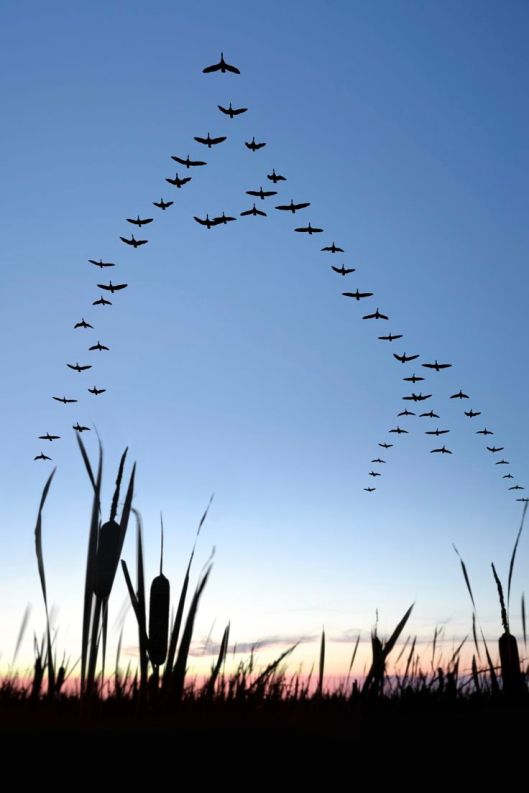
image1geese.jpg

This would have been England in 1892, the year JRRT was born.  There were early airships—basically big balloons of various sorts, but they were primarily stationary and used for (limited) military intelligence.
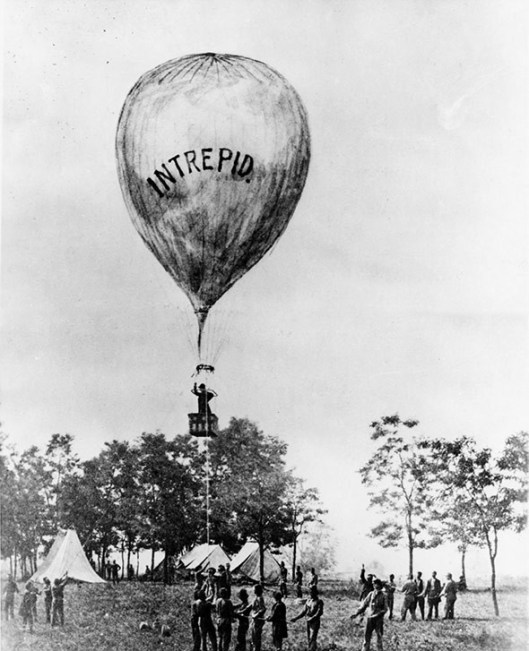
image2intrepid.jpeg

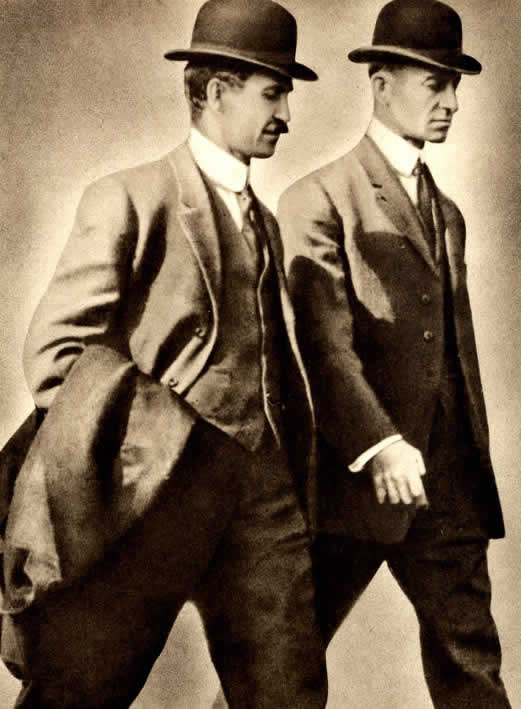
Then came the Wright brothers

image3wrights.jpg

who, in December, 1903, produced the first engine-propelled, manned flight in their enlarged kite.
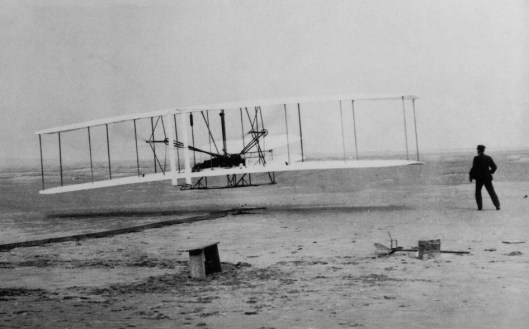
image4kittyhawk.jpg

Thereafter, flight would, literally, take off, but the Wrights, who were idealistically inclined, believed that such an invention would actually end war by making it too terrible.

The British army thought differently, however, and there were soon aerial observation units attached to military formations.  In fact, Sir James Grierson

image5grierson.jpg

tactically outfoxed his rival, Sir Douglas Haig,

image6haig.jpg

not only by his skillful use of aircraft for observation, but also by his keen understanding of how to conceal his own movements from Haig’s aircraft
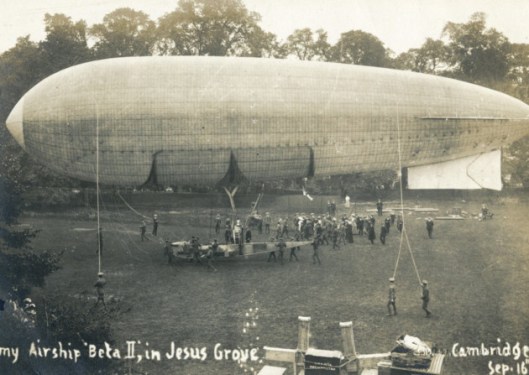
image7airship.jpg

in the army manoeuvres of 1912.

image8manoeuvres.jpg


The Great War, when it came, two years later, would then be the proving ground for all sorts of aerial experimentation.

First, it was just observation.

image9be2.jpg

A British aviator, flying north of the army, first spotted the massive German columns which were designed to outflank the British and French armies and capture Paris in the Schlieffen Plan of 1914.

image10schlieffenplan.gif

Because observation was their task, the earliest aircraft were unarmed, but this changed and soon there was aerial combat, the so-called “dog fights”, the popular images being “knights of the sky” who jousted with manoeuvres and machine guns, rather than with lances, maces, and swords.

image11joust.jpeg

image12dogfight.jpg

Next came the use of aircraft to disrupt enemy formations and their movements, bombing and strafing, sometimes as part of major attacks, the whole idea being to dominate the sky over the enemy’s trenches, while protecting your own.

image13dogfightingovertrenches.jpg

And this is where we imagine 2nd Lieutenant JRR Tolkien
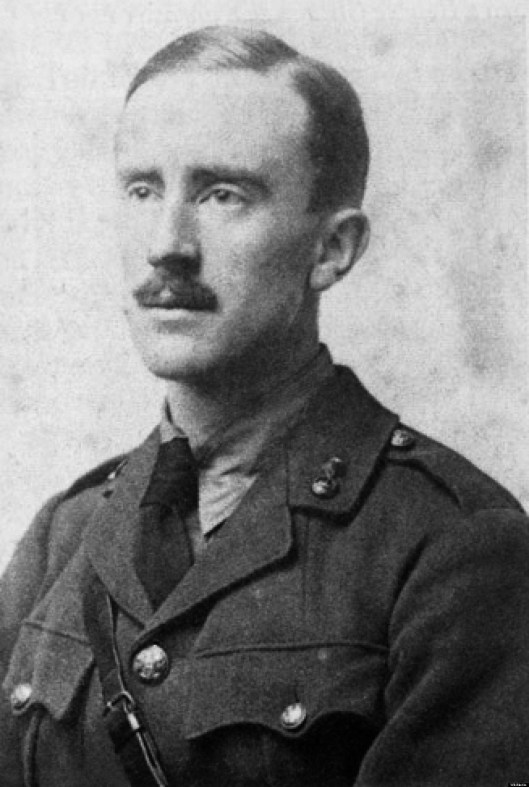
image14jrrt.jpg

in the summer of 1916, standing in such a trench,

image15atrench.jpg

looking up, and thinking…

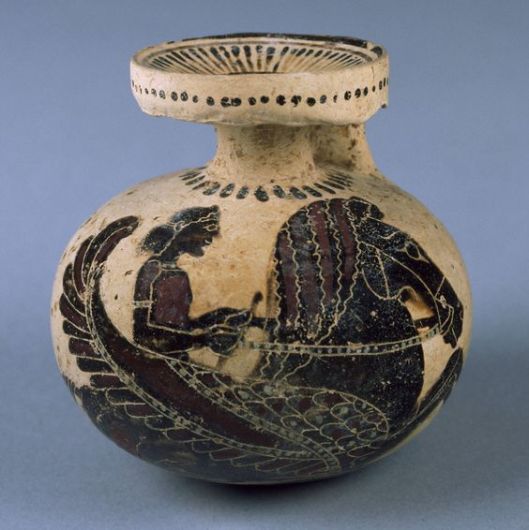
We can also imagine him imagining—not seeing flying machines, but something much earlier.  After all, with his education, background, and interests, it would have been difficult not to think of classical harpies

image15harpies.jpg

or Hermes

image16hermes.jpg

or Bellerophon, mounted on Pegasus.

image17bellerophon.jpg

And, with his Norse passion, there would also, of course, be dragons…

image18smaug.jpg

And, perhaps a combination:  a Bellerophon mounted on a miniature dragon?

image19nazgul.jpg

In the world of the trenches, there were two defences against aircraft:  friendly aircraft in the air

image20dogfight.jpg

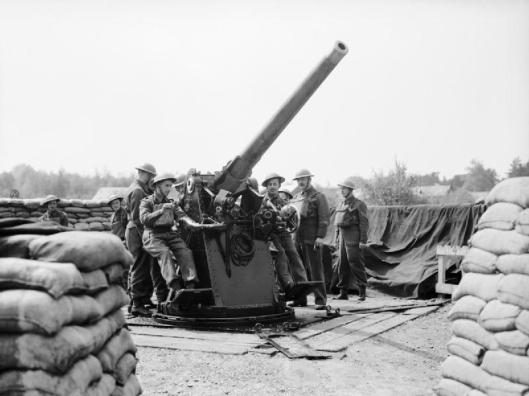
and anti-aircraft guns on the ground.

image21aagun.jpg

But the war ended fairly quickly for the scholarly lieutenant, laid low by a more primitive enemy than Industrial Age Germans with bombs:  lice.

image22lice.jpg

JRRT became sick with what was then called “trench fever”, an illness conveyed, like typhus, by the bite of the tiny insects who colonized the clothing and bodies of soldiers in every dugout in Europe.  Wracked with recurring fevers, headaches, and complete exhaustion, among other complaints, men ill with trench fever were brought to base hospitals and, if sick enough, were sent home, as there was no cure, to recover as best they could.  Tolkien spent the rest of the war in the hospital or in garrison in England and thus escaped the last and perhaps worst years of the war in the trenches.

At home, he became Professor Tolkien, taught his classes, fathered four children, and then a second war came, one in which the primitive air war of the first war was intensified by more sophisticated aircraft, more powerful explosives, and plans to bomb Britain into ruin and submission in what was called “The Blitz”.

image23blitz.jpg


JRRT went back into service, this time as an air raid warden, even as two of his sons were more directly involved in the war.

image24airraidwarden.jpg

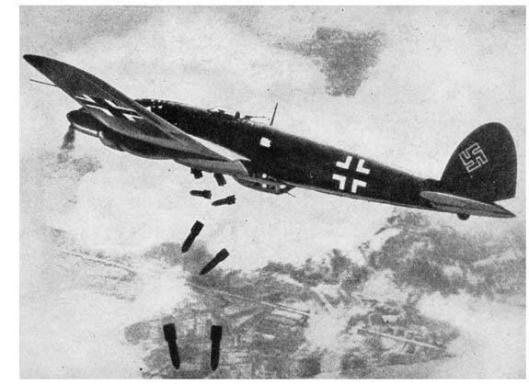
Night after night, the bombers came,

image25bomber.jpg

to be met with the same weapons as the previous war:  aircraft,
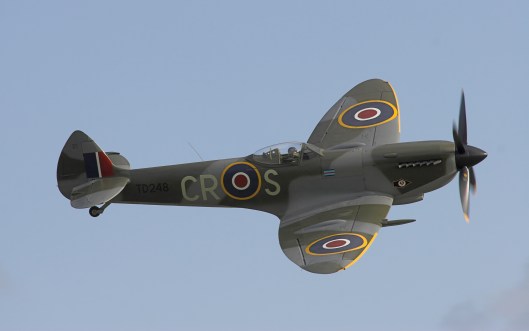
image26spit.jpg

anti-aircraft guns

image27aagun.jpg

and, because the enemy began to attack at night,

searchlights.

image28searchlight.jpg

And this brings us back to our imaginings.  Working on The Lord of the Rings, staring into the night sky, listening for enemy bombers, would Tolkien have thought of danger to Middle-earth in the form of flying things, not machines but terrible figures mounted on even more loathsome creatures—and what could be done about them?  Magic, perhaps?
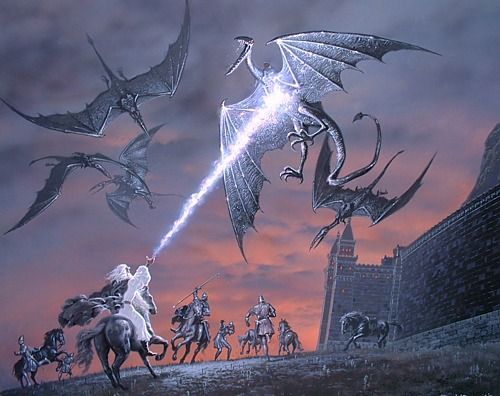
image29gandalf.jpg

Thanks, as always, for reading!

MTCIDC

CD

Ugluk Was Here

14 Wednesday Dec 2016

Posted by Ollamh in Artists and Illustrators, J.R.R. Tolkien, Language, Literary History, Military History

≈ Leave a comment

Tags

Alan Lee, Alfred Waud, American Civil War, Angus McBride, Argonath, Belgium, Black Speech, cemeteries, Confederate, Egyptian monuments, First Virginia Cavalry, graffiti, Great War, Greek mercenaries, Greeks, Hildebrandt, John Howe, Journey to the Cross-roads, Kilroy, Kilroy was here, Literacy, Napoleon I, Orcs, Pompeii, quarry at Naours, Sauron, The Lord of the Rings, Tolkien, Union, Virginia, World War I, World War II

Welcome, dear readers, as always.

One of our reasons for holding Tolkien’s work in such high esteem is that it’s so rich: practicing Sortes Tolkienses (see our earlier posting on this), we find innumerable subjects to write about.

In this posting, our eye was caught by this:

“The brief glow feel upon a huge sitting figure, still and solemn as the great stone kings of Argonath. The years had gnawed it, and violent hands had maimed it. Its head was gone, and in its place was set in mockery a round rough-hewn stone, rudely painted by savage hands in the likeness of a grinning face with one large red eye in the midst of its forehead. Upon its knees and mighty chair, and all about the pedestal, were idle scrawls mixed with the foul symbols that the maggot-folk of Mordor used.” (The Two Towers, Book 4, Chapter 7, “Journey to the Cross-roads”)

crossroads.jpg

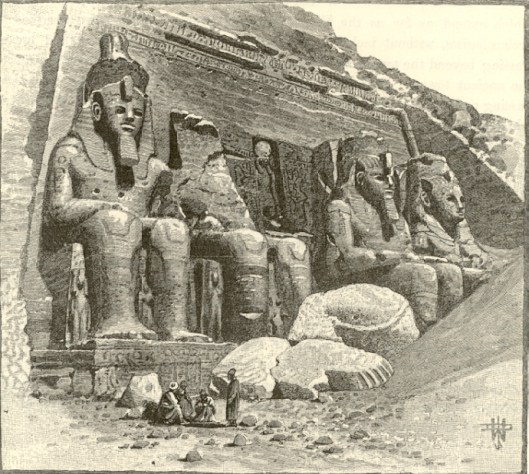
We had the feeling that we’d seen a statue something like this before—and we were curious whether JRRT had, too, and with a little mental rooting-around, we found this:

abusimbelengraving.jpg

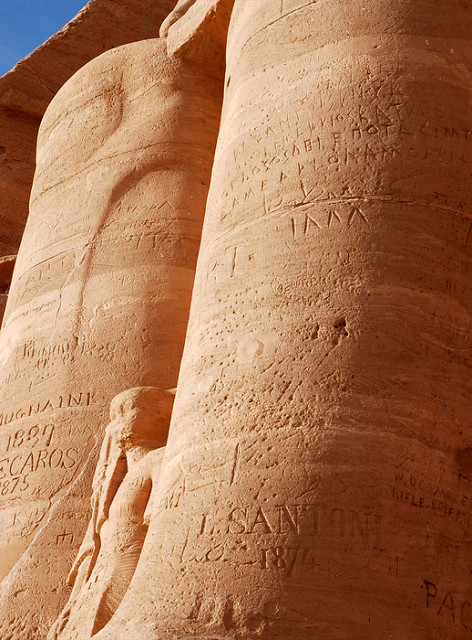
It’s Egyptian (13th century BC), and has a head, but, not only is it monumental, and seated, but it has lots of “idle scrawls” on the bases and lower parts of its legs.

abusimbelgraffiti.jpg

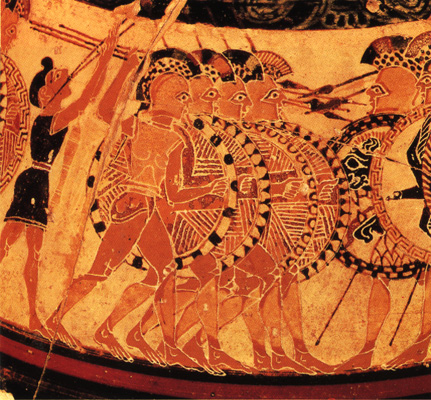
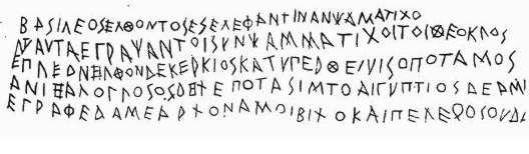
What’s particularly interesting to us is that one piece of the graffiti is actually from some Greek mercenaries c. 600bc

hoplite1.jpg

main-qimg-9eddef3641e25892afa016888b808aa5-c.jpeg

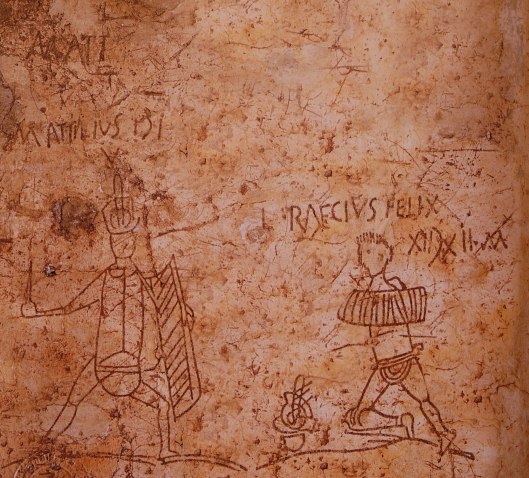
As long as there has been a certain level of literacy, of course, there has been graffiti. The walls of ancient Pompeii (sealed in by the eruption of 79AD) are loaded with everything from election posters to the admiration of gladiators to personal insults.

gladiatorialstats.JPG

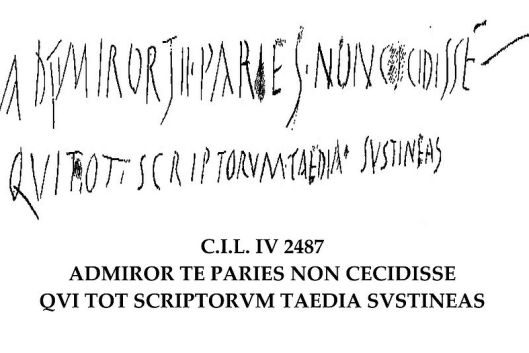
There’s so much, in fact, that this is our favorite:

antigraffiti.jpg

A translation of this might be: “I wonder/am in awe, wall, that, you, who are holding up so much boring writing, haven’t fallen down!”

Soldiers, in particular, seem prone to leaving messages behind—beginning with those 7th-c Greeks, but continuing throughout the centuries. When Napoleon I led an expedition to Egypt in 1798,

napegypt.jpg

his soldiers left their mark in more ways than one upon the landscape.

frenchinegyptgraf2.jpg

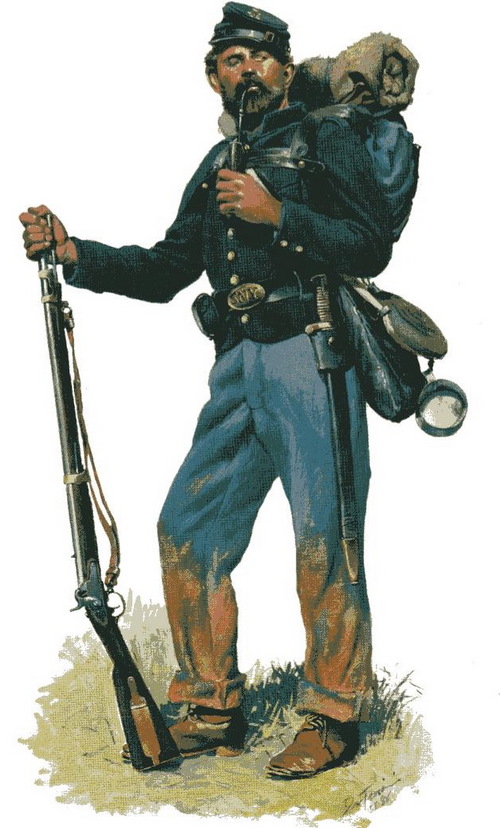
Recently discovered in a house in Virginia was a large collection of inscriptions from the soldiers, Union and Confederate, of the American Civil War.

Graffiti-House.jpg Graffiti House Wall and Chair.jpg unionsoldier.jpgAlfred R. Waudfirstva.jpg

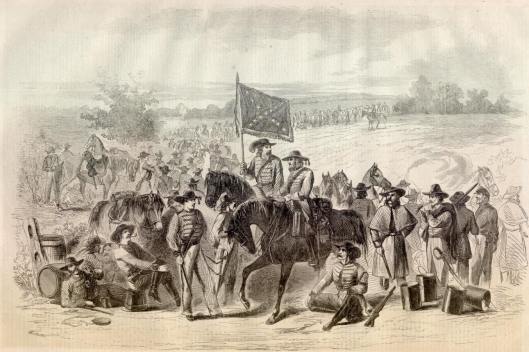
(An irresistible footnote: the picture you see of the Confederate cavalry—actually the 1st Virginia—was made by one of the greatest Civil War artists, Alfred Waud (pronounced “woad”). He had been briefly detained by this unit and took the opportunity to sketch them from life. His sketch—with his notes—then went to his publisher in New York, who had a group of engravers ready to turn his sketch into a finished—and publishable—picture.1st-virginia-cavalry-halted-based-on-sketch-by-waud-harpers-sept-27-1862.jpg

For more on the process by which a sketch becomes a magazine illustration, see this link.)

Another recent discovery was a mass of inscriptions (something like 2000 of them) in an abandoned quarry at Naours, in northern France.

quarrynaours.jpg

6XYh68h5xHSK2-3026250-In_this_image_made_on_Feb_20_2015_showing_names_engraved_on_the_-a-32_1428320205858.jpg

These date from the Great War (World War I) and, in a sad way, parallel the epitaphs on the seemingly-endless graves in the seemingly endless military cemeteries in the same region and in southern Belgium.

greatwargraves1.jpg

Tyne Cot 3.jpg

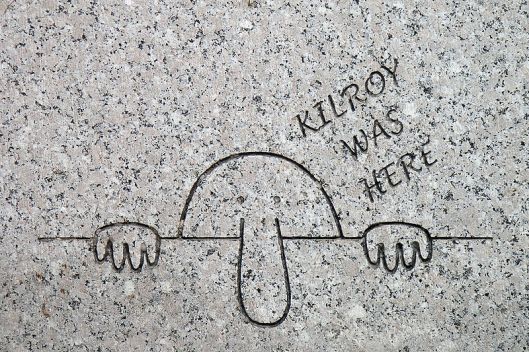
And World War II brought us Kilroy, of the famous (and ubiquitous) “Kilroy was here”.

Engraving-of-Kilroy-on-the-WWII-Memorial-in-Washington-DC.jpg

American prankster soldiers doodled this everywhere they went.

kilroy-was-here-photo.jpg

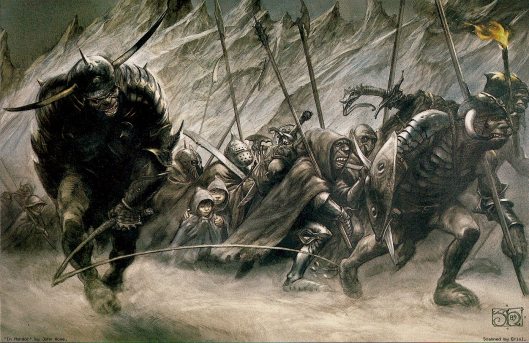
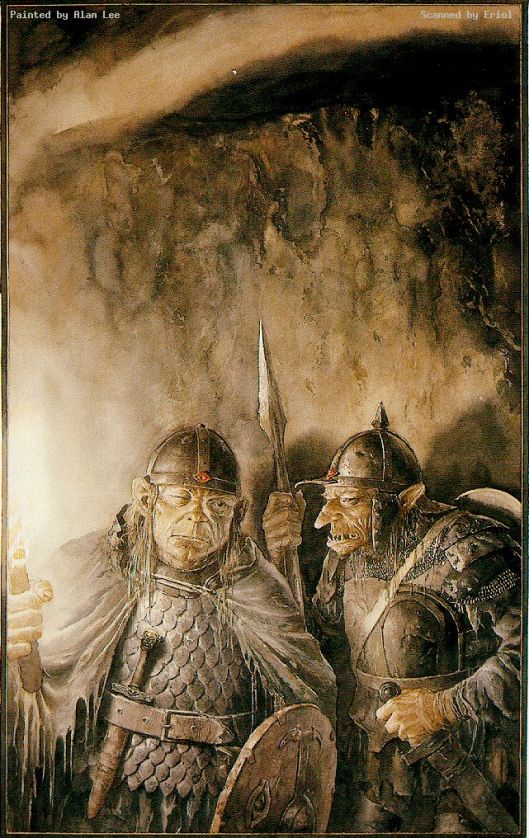
We have written previously about literacy in Middle-earth: not uncommon among hobbits, it would seem, but much less so among the other peoples. As for orcs, be they Hildebrandt

captured_by_orcs.jpg

Mcbride,

mcba_orc.jpg

Howe

John Howe - Merry et Pippin prisonniers des orcs.jpg

Or Lee,

Alan Lee - Orcs (1).jpg

although the Black Speech was created for them and Sauron’s other creatures, we have no evidence (except for the Ring inscription) of any use of it as a writing tool by any of them.

Which leaves us free to imagine just what those “idle scrawls” might read like. How about:

LUGDUSH SMELLS LIKE MAN FLESH!

LAGDUF + MUZGASH = CLUELESS AND SHIRTLESS!

GORBAG LOVES SHELOB

SHAGRAT IS A SNAGA!

And, of course:

UGLUK WAS HERE

Thanks for reading! (And why not submit your own graffiti? We’d be glad to add them to our list!)

MTCIDC

CD

Newer posts →

The Doubtful Sea Series Facebook Page

The Doubtful Sea Series Facebook Page

  • Ollamh

Categories

  • Artists and Illustrators
  • Economics in Middle-earth
  • Fairy Tales and Myths
  • Films and Music
  • Games
  • Heroes
  • Imaginary History
  • J.R.R. Tolkien
  • Language
  • Literary History
  • Maps
  • Medieval Russia
  • Military History
  • Military History of Middle-earth
  • Narnia
  • Narrative Methods
  • Poetry
  • Research
  • Star Wars
  • Terra Australis
  • The Rohirrim
  • Theatre and Performance
  • Tolkien
  • Uncategorized
  • Villains
  • Writing as Collaborators
Follow doubtfulsea on WordPress.com

Across the Doubtful Sea

Recent Postings

  • A Moon disfigured December 17, 2025
  • On the Roads Again—Once More December 10, 2025
  • (Not) Crossing Bridges December 3, 2025
  • On the Road(s) Again—Again November 26, 2025
  • On the Road(s) Again November 19, 2025
  • To Bree (Part 2) November 12, 2025
  • To Bree (Part 1) November 5, 2025
  • A Plague o’ Both—No, o’ All Your Houses! October 29, 2025
  • It’s in Writing (2:  I’st a Prologue, or a Poesie for a Ring?) October 22, 2025

Blog Statistics

  • 103,238 Views

Posting Archive

  • December 2025 (3)
  • November 2025 (4)
  • October 2025 (5)
  • September 2025 (4)
  • August 2025 (4)
  • July 2025 (5)
  • June 2025 (4)
  • May 2025 (4)
  • April 2025 (5)
  • March 2025 (4)
  • February 2025 (4)
  • January 2025 (5)
  • December 2024 (4)
  • November 2024 (4)
  • October 2024 (5)
  • September 2024 (4)
  • August 2024 (4)
  • July 2024 (5)
  • June 2024 (4)
  • May 2024 (5)
  • April 2024 (4)
  • March 2024 (4)
  • February 2024 (4)
  • January 2024 (5)
  • December 2023 (4)
  • November 2023 (5)
  • October 2023 (4)
  • September 2023 (4)
  • August 2023 (5)
  • July 2023 (4)
  • June 2023 (4)
  • May 2023 (5)
  • April 2023 (4)
  • March 2023 (5)
  • February 2023 (4)
  • January 2023 (4)
  • December 2022 (4)
  • November 2022 (5)
  • October 2022 (4)
  • September 2022 (4)
  • August 2022 (5)
  • July 2022 (4)
  • June 2022 (5)
  • May 2022 (4)
  • April 2022 (4)
  • March 2022 (5)
  • February 2022 (4)
  • January 2022 (4)
  • December 2021 (5)
  • November 2021 (4)
  • October 2021 (4)
  • September 2021 (5)
  • August 2021 (4)
  • July 2021 (4)
  • June 2021 (5)
  • May 2021 (4)
  • April 2021 (4)
  • March 2021 (5)
  • February 2021 (4)
  • January 2021 (4)
  • December 2020 (5)
  • November 2020 (4)
  • October 2020 (4)
  • September 2020 (5)
  • August 2020 (4)
  • July 2020 (5)
  • June 2020 (4)
  • May 2020 (4)
  • April 2020 (5)
  • March 2020 (4)
  • February 2020 (4)
  • January 2020 (6)
  • December 2019 (4)
  • November 2019 (4)
  • October 2019 (5)
  • September 2019 (4)
  • August 2019 (4)
  • July 2019 (5)
  • June 2019 (4)
  • May 2019 (5)
  • April 2019 (4)
  • March 2019 (4)
  • February 2019 (4)
  • January 2019 (5)
  • December 2018 (4)
  • November 2018 (4)
  • October 2018 (5)
  • September 2018 (4)
  • August 2018 (5)
  • July 2018 (4)
  • June 2018 (4)
  • May 2018 (5)
  • April 2018 (4)
  • March 2018 (4)
  • February 2018 (4)
  • January 2018 (5)
  • December 2017 (4)
  • November 2017 (4)
  • October 2017 (4)
  • September 2017 (4)
  • August 2017 (5)
  • July 2017 (4)
  • June 2017 (4)
  • May 2017 (5)
  • April 2017 (4)
  • March 2017 (5)
  • February 2017 (4)
  • January 2017 (4)
  • December 2016 (4)
  • November 2016 (5)
  • October 2016 (6)
  • September 2016 (5)
  • August 2016 (5)
  • July 2016 (5)
  • June 2016 (5)
  • May 2016 (4)
  • April 2016 (4)
  • March 2016 (5)
  • February 2016 (4)
  • January 2016 (4)
  • December 2015 (5)
  • November 2015 (5)
  • October 2015 (4)
  • September 2015 (5)
  • August 2015 (4)
  • July 2015 (5)
  • June 2015 (5)
  • May 2015 (4)
  • April 2015 (3)
  • March 2015 (4)
  • February 2015 (4)
  • January 2015 (4)
  • December 2014 (5)
  • November 2014 (4)
  • October 2014 (6)
  • September 2014 (1)

Blog at WordPress.com.

  • Subscribe Subscribed
    • doubtfulsea
    • Join 78 other subscribers
    • Already have a WordPress.com account? Log in now.
    • doubtfulsea
    • Subscribe Subscribed
    • Sign up
    • Log in
    • Report this content
    • View site in Reader
    • Manage subscriptions
    • Collapse this bar
 

Loading Comments...