• About

doubtfulsea

~ adventure fantasy

Tag Archives: Celts

Orc Arsenal.2

03 Wednesday Oct 2018

Posted by Ollamh in Artists and Illustrators, J.R.R. Tolkien, Military History, Military History of Middle-earth

≈ Leave a comment

Tags

Anglo-Saxon, Angus McBride, Bayeux Tapestry, Celts, chain-mail, hauberk, lamellae, lorica segmentata, medieval Russians, Mordor, Mycenaeans, Orcs, Renaissance irish, Republican Romans, Rohirrim, sallet, spangenhelm, Star Wars, The Lord of the Rings, Tolkien, Zulus

So, dear readers, welcome, as always.  In this posting, we want to finish our brief overview of orc weaponry which we began in our last.

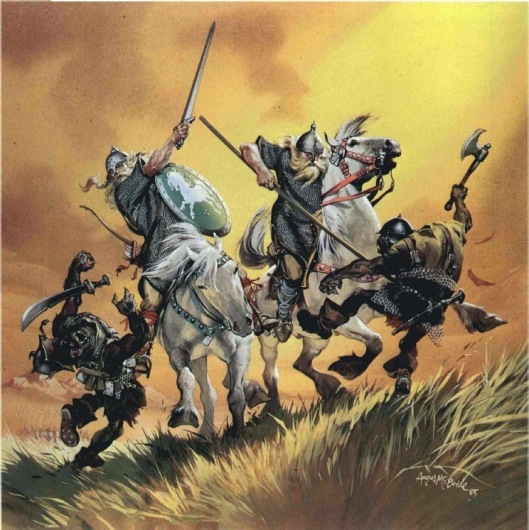
A famous military illustrator, Angus McBride, (1931-2007)
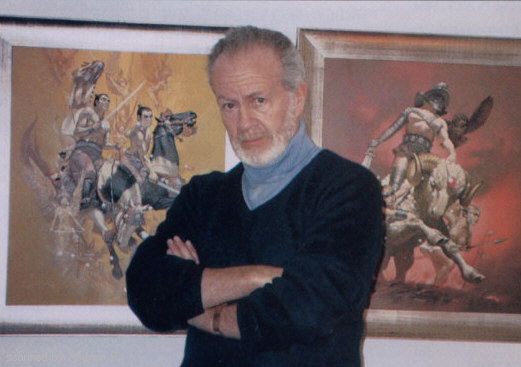
image1am.jpg

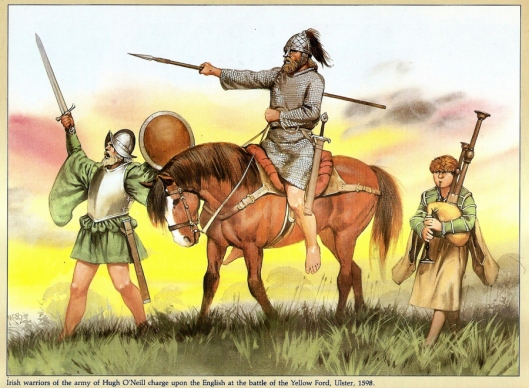
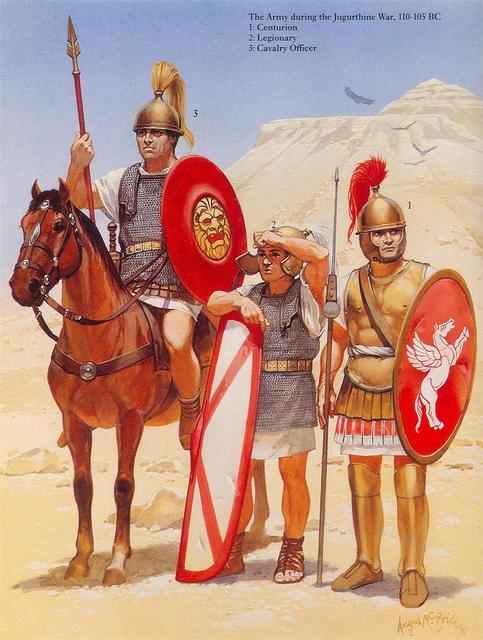
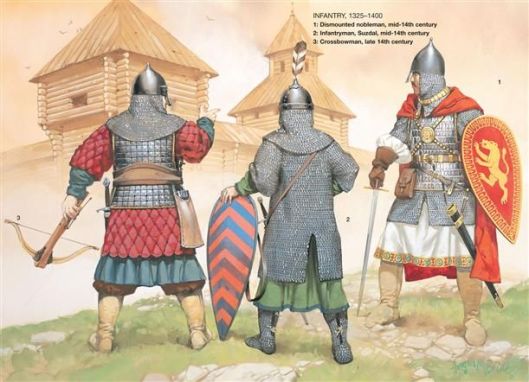
once said in an interview that there was one thing which he hated about doing such illustrations:  painting chain mail, which he said was the most tedious part of his work.  Considering that he painted it on early Celts
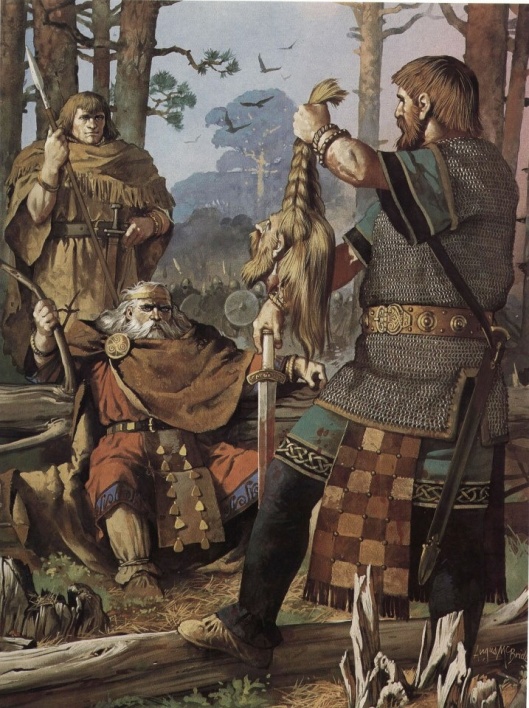
image2celts.jpg

and Renaissance Irish,

image3irish.jpg

and Republican Romans

image4romans.jpg

and medieval Russians,

image5russians.jpg

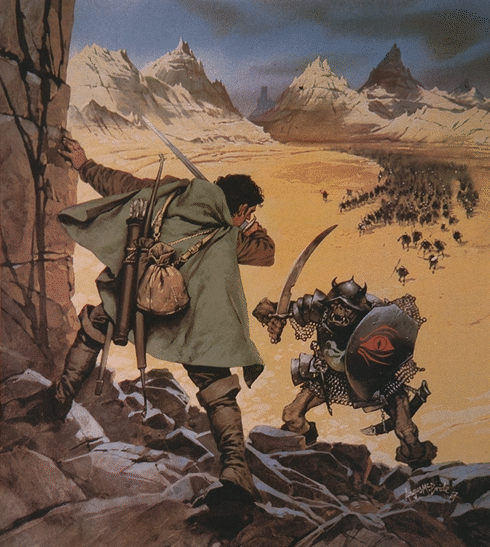
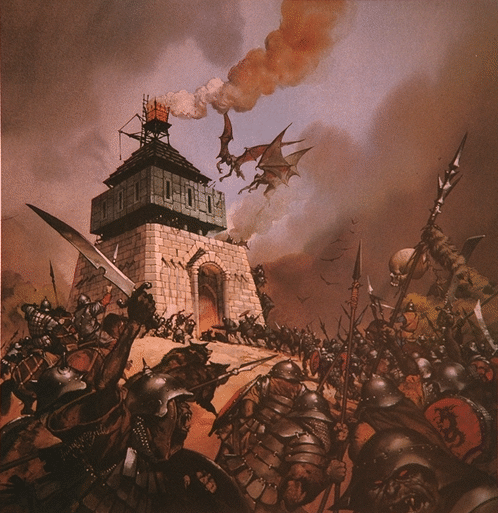
McBride must have suffered many hours of boredom!  It didn’t stop him, however, as we see in these illustrations for The Lord of the Rings,
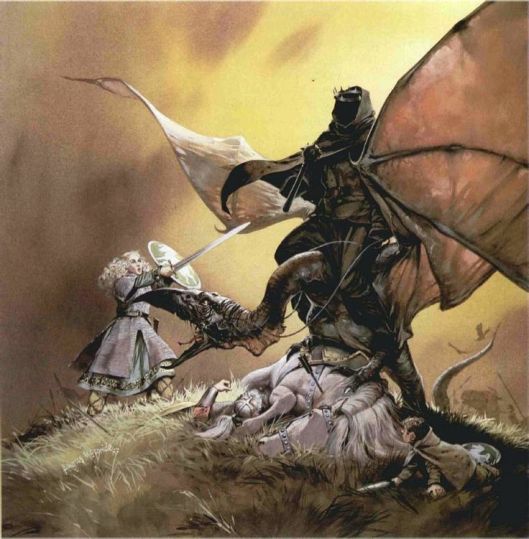
image6lotr.jpg

image7lotr.gif

image8lotr.jpg

from putting armor on Rohirrim and orcs alike.

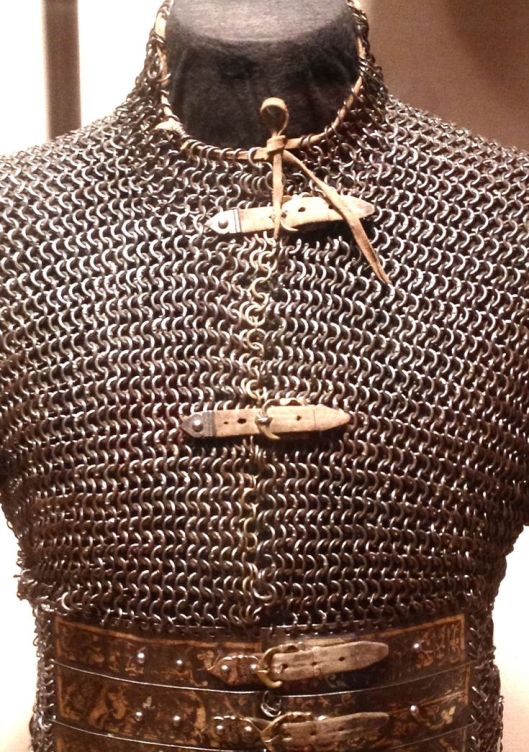
Chain mail—or simply mail—is made by linking together a series of metal rings.
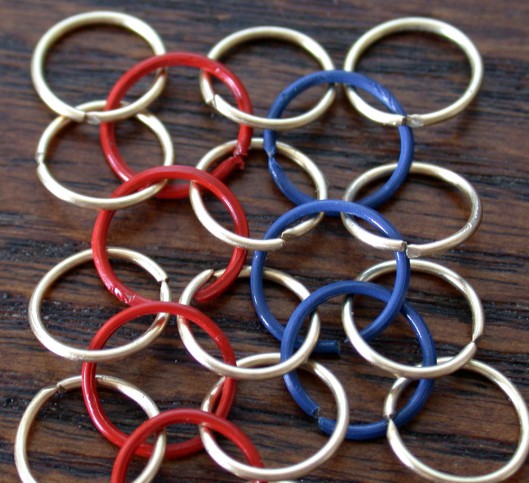
image9amakingmail.jpg

image9bmail.jpg

This is, as you can imagine, a very time-consuming process, especially if you have to make the rings first.  (Here’s a LINK on mail manufacturing, in case you’d like to try it yourself.)

We have seen the number of rings used in a full mail hauberk to be over 20,000, so it’s also metal-consuming, as well as time-consuming.  It also appears to have been expensive.  We once heard an expert say something about the “same price as a two-bedroom house”, but that seems a little excessive.  The always-useful Regia Anglorum website gives the price of a mail shirt in Anglo-Saxon times at 529d (that’s 529 pence), or 10,580 pounds in modern UK money ($13,785.18 US at today’s current exchange rate).  Here’s a LINK to their web page to see the author’s reasoning for his equivalences.

McBride shows orcs wearing mail—does JRRT?   In fact, in the first scene in which we see orcs, we read:

“…a huge orc-chieftain, almost man-high, clad in black mail from head to foot…” (The Fellowship of the Ring, Book Two, Chapter 5, “The Bridge of Khazad-dum”

And, late in the story, when Sam and Frodo are in Mordor and Sam provides clothes for Frodo:

“There were long hairy breeches of some unclean beast-fell, and a tunic of dirty leather.  He drew them on.  Over the tunic went a coat of stout ring-mail, short for a full-sized orc, too long for Frodo and heavy.” (The Return of the King, Book Six, Chapter 1, “The Tower of Cirith Ungol”)

(We can attest to the weight of such a coat, by the way, having a modern reproduction ourselves.  It weighs 25 pounds or more—that’s 11.34 kilograms.  When it’s on your shoulders, the weight is displaced, so it doesn’t feel quite so heavy, but, if you have it piled in a box, you really feel the heft.  We would also add that, because of the cost, armor wasn’t commonly left on the battlefield.  This segment of the Bayeux Tapestry shows what must normally have happened.)
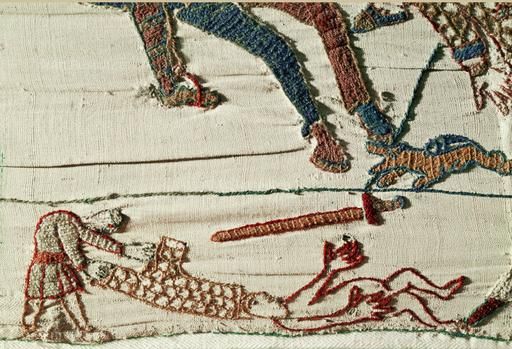
image9cstrip.jpg

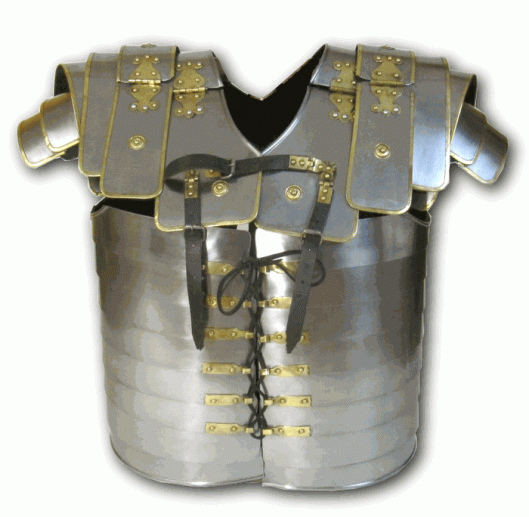
McBride, in his illustrations, depicts two other types of body armor.  In these first two depictions, we see the kind of armor the Romans called lorica segmentata.
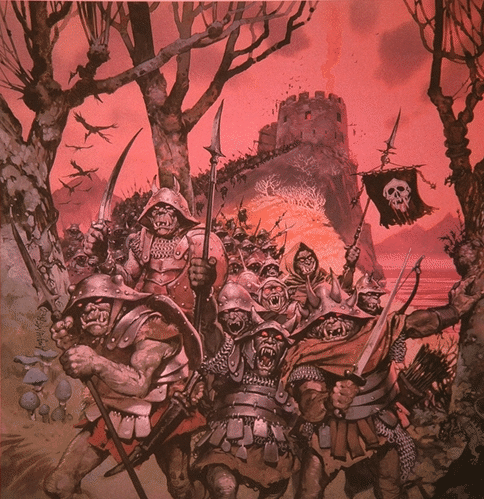
image9lorica.gif

image10lorica.gif

This is a system based upon a series of broad, overlapping iron strips.
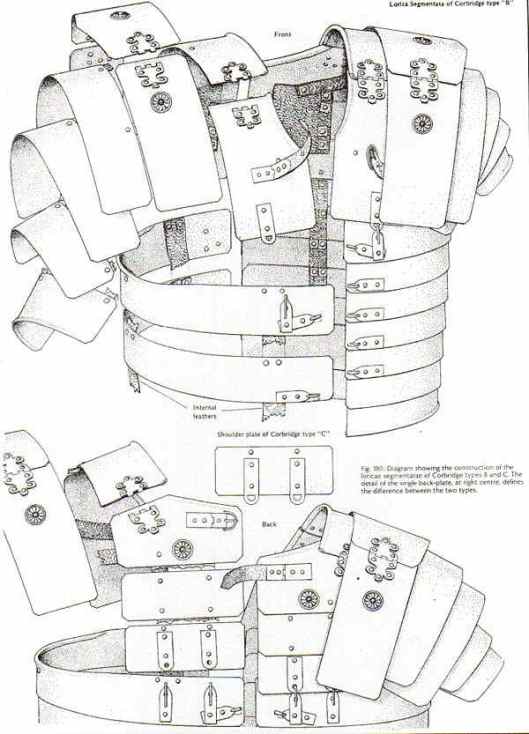
image11lorica.jpg

image12lorica.gif

As far as we can tell, this is never mentioned in the text. There may be one mention of our third type:
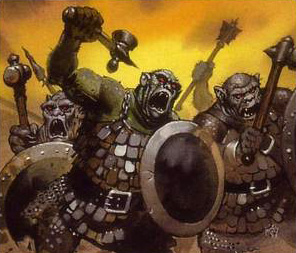
image13lam.jpg

This is armor made up of a series of small plates, called lamellae, sewn in an overlapping fashion, rather like fish scales.
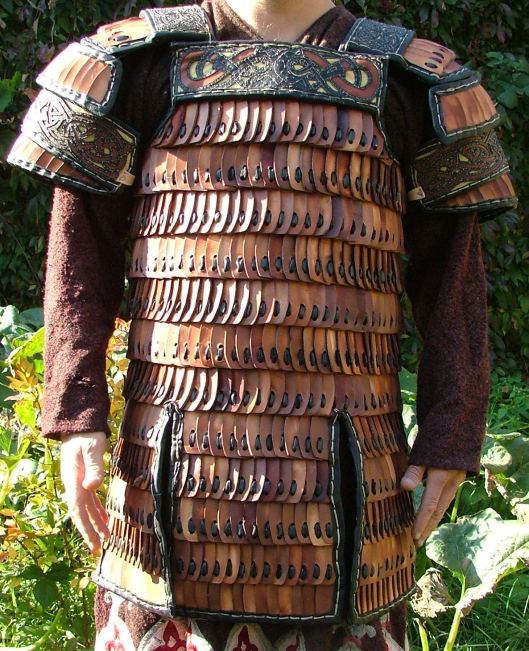
image14lam.jpg

There may be one mention of this:

“The orcs hindered by the mires that lay before the hills halted and poured their arrows into the defending ranks.  But through them came striding up, roaring like beasts, a great company of hill-trolls out of Gorgoroth.  Taller and broader than Men they were, and they were clad only in close-fitting mesh of horny scale, or maybe that was their hideous hide…” (The Return of the King, Book Five, Chapter 10, “The Black Gate Opens”)

But what about helmets?

McBride depicts most of his orcs in something which might be described as wild variations on the later medieval helmet called a sallet.
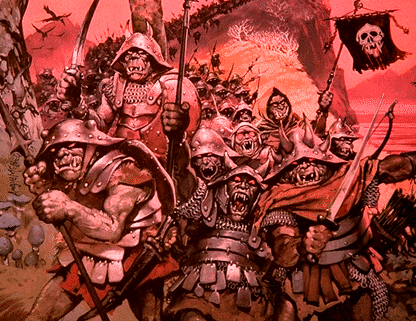
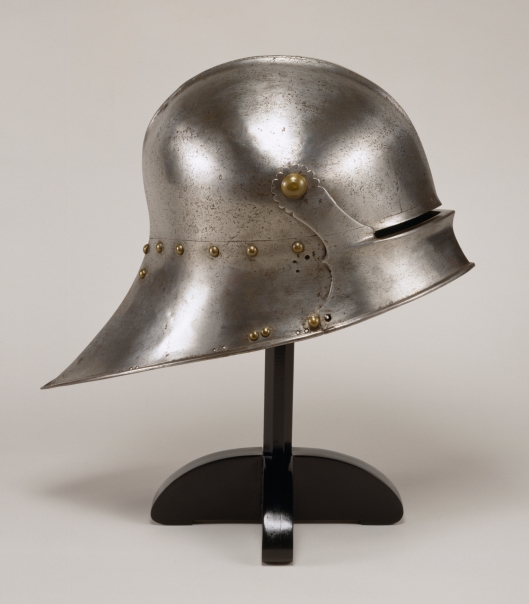
image15aorcs.gif

image15bsallet.jpg

You can see John Mollo, a costume designer for Star Wars, having fun with this pattern, too.

image15cdarth.JPG

image15ddeathstar.jpg

In the text, in that first scene in which we see orcs, there is a mention of Aragorn’s sword, Anduril, which “came down upon [an orc’s] helm”, but nothing more specific—and that’s true for the second mention, when Aragorn examines the orcs killed by by Boromir:

“…on the front of their iron helms was set an S-rune, wrought of some white metal.” (The Two Towers, Book Three, Chapter 1, “The Departure of Boromir”)

There is a bit more detail in this description:

“Sam brought several orc-helmets.  One of them fitted Frodo well enough, a black cap with iron rim, and iron hoops covered with leather upon which the Evil Eye was painted in red above the beaklike nose-guard.” (The Return of the King, Book Six, Chapter 1, “The Tower of Cirith Ungol”)

To us, this sounds like a kind of spangenhelm, the sort of thing the Normans wear in the Bayeux Tapestry.
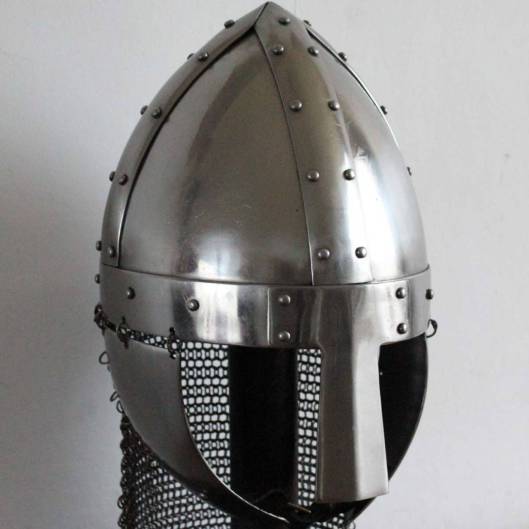
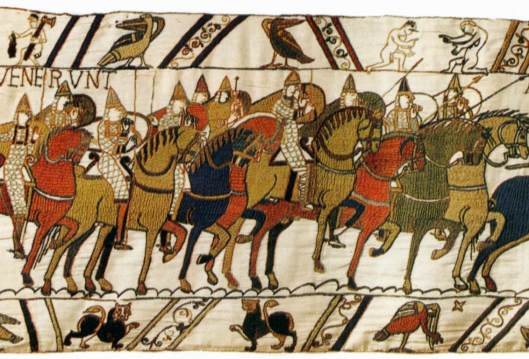
image15spangen.jpg

image16spangen.jpg

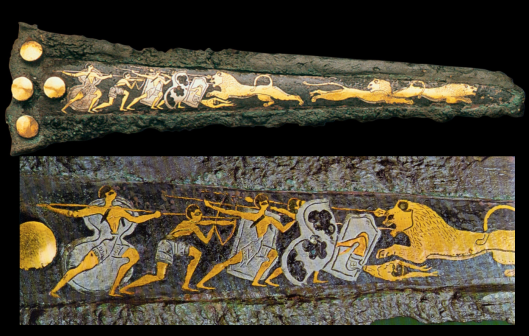
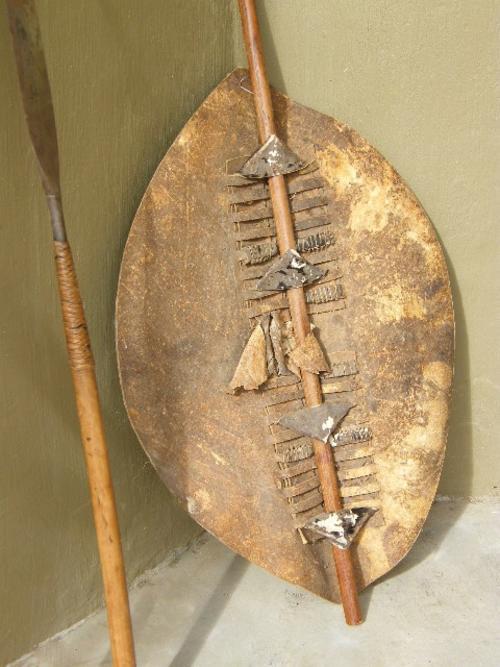
To which we can add a couple of types of shields.  The first we see—it’s that same “orc-chieftain”—carries “a huge hide shield” (The Fellowship of the Ring, Book Two, Chapter 5, “The Bridge of Khazad-dum”).  There is no further description.  If it’s only made of hide, this could resemble anything from a Mycenaean “figure-of-eight” shield
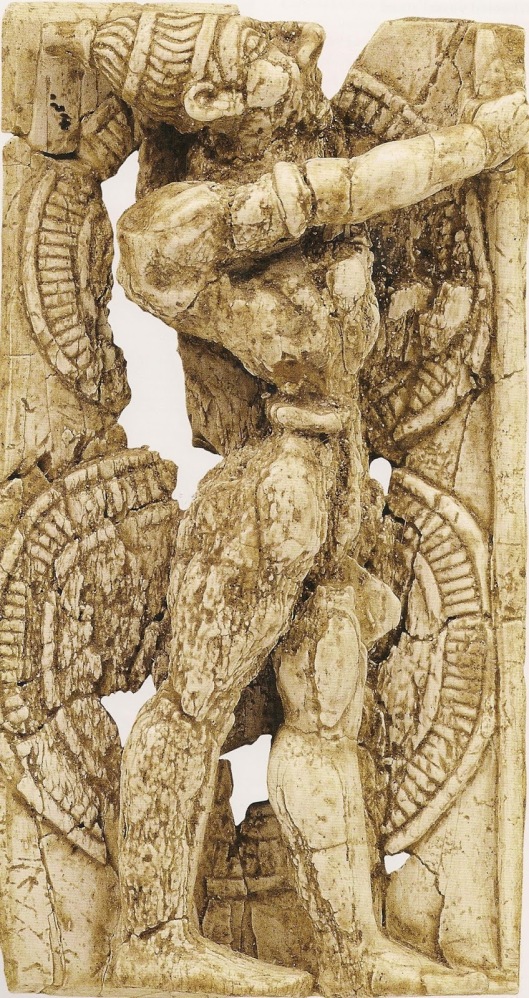
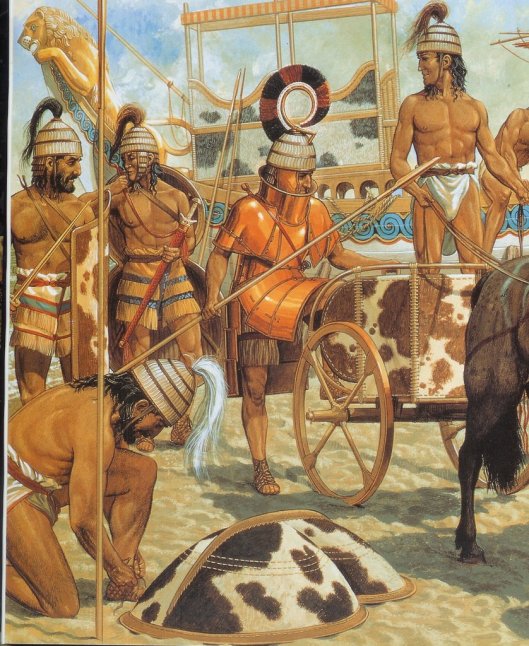
image17fig.jpeg

image18fig.jpg

to a Mycenaean “tower” shield

image19tower.png

to a Zulu shield.

image20zulu.JPG

The hill-trolls of Gorgoroth, mentioned above for their possible lamellar armor, are said to carry “round bucklers huge and black” (The Return of the King, Book Five, Chapter 10, “The Black Gate Opens”).

A huge buckler, however, is a contradiction in terms, as bucklers are, by definition, small—more a kind of one-on-one fencing defense, as we see in this illustration.
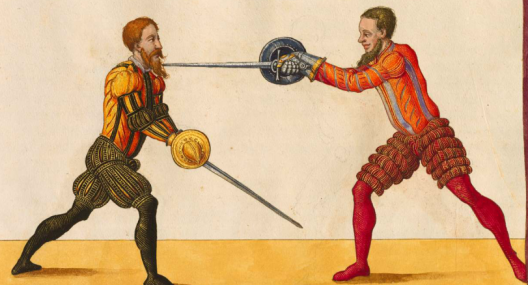
image21buckler.png

Like their helmets, orc shields commonly carry the sign of their master, Saruman or Sauron—“Upon their shields they bore a strange device” (The Two Towers, Book Three, Chapter 1, “The Departure of Boromir”).  (Some of Saruman’s followers, however, seem to have unmarked shields, as the attackers of Helm’s Deep are described as “some squat and broad, some tall and grim, with high helms and sable shields”—The Two Towers, Book Three, Chapter 7, “Helm’s Deep”)  This can also be useful if you’re the authorities and you want to catch deserters, as Sam and Frodo find out when they’re trapped by a column of orcs on the road in Mordor:

“Then suddenly one of the slave-drivers spied the two figures by the road-side…He took a step towards them, and even in the gloom he recognized the devices on their shields.  ‘Deserting, eh?’ he snarled.” ( The Return of the King, Book Six, Chapter 2, “The Land of Shadow”)
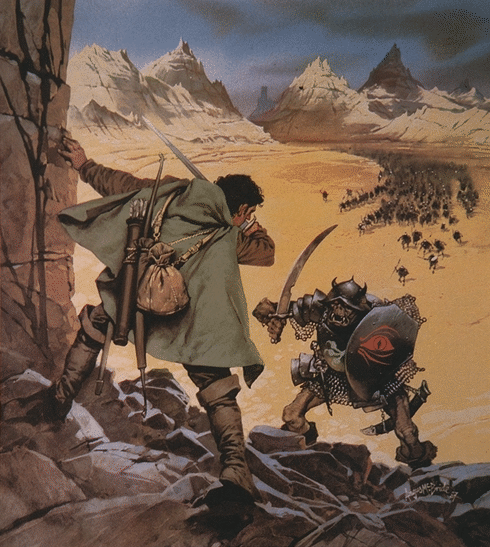
image21shield.gif

This i.d.-ing leads us towards our next posting:  Heraldry and Serial Numbers, where we’ll see more of orcs and others, too.

Thanks, as always, for reading.

MTCIDC

CD
Wains, Carts, and… (2)

14 Wednesday Feb 2018

Posted by Ollamh in Economics in Middle-earth, J.R.R. Tolkien

≈ Leave a comment

Tags

Boudica, Carts, Cassius Dio, Celts, chariots, Conestoga, Farmer Maggot, Gandalf, gur, Hobbiton, Iceni, Iron Age, Medieval, Mongols, Oregon Trail, Roman History, Romans, The Lord of the Rings, Tolkien, vikings, Wagons, Wainriders, Wains

Welcome, as always, to our blog, dear readers.

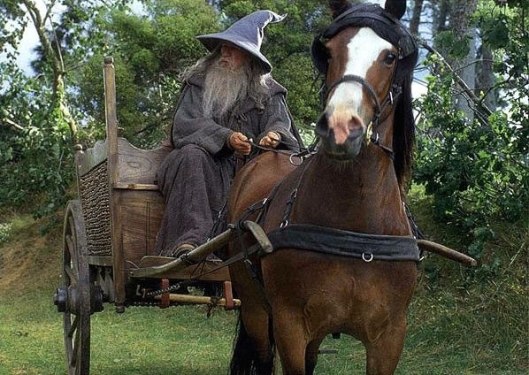
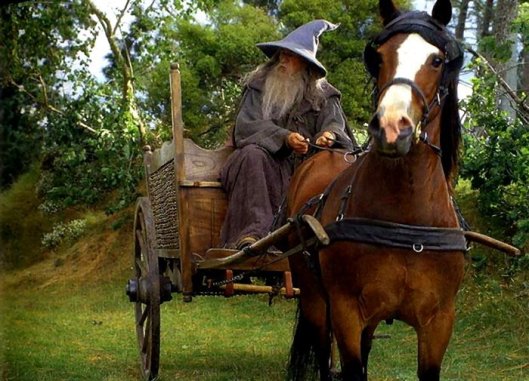
In our last, we began discussing wheeled transport in The Lord of the Rings.  We began with Gandalf’s cart, mentioned in Chapter 1.

im1gscart.jpg

The posting took us from the first traces of wheeled vehicles in western Europe, circa 3600BC (literally traces—just a pair of tracks in the clay)

im2tracks.jpg

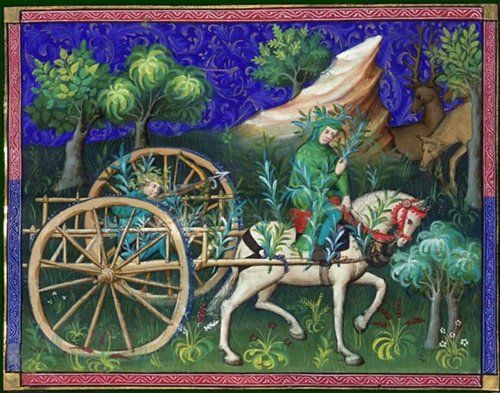
through chariots

im3chariot.jpg

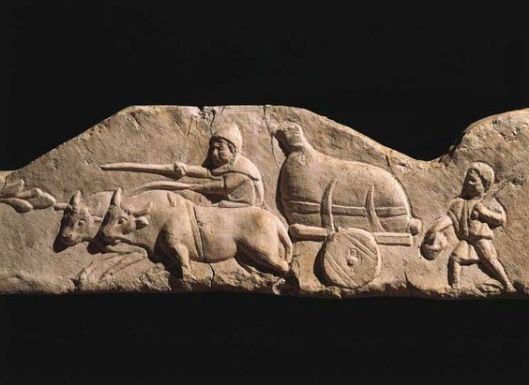
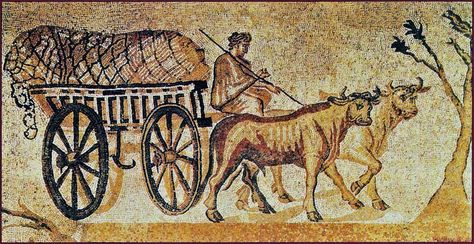
to Roman carts

im4romcart.jpg

to their descendants, medieval carts,

im5medcart.jpg

which led us back to Gandalf.

im6gcart.jpg

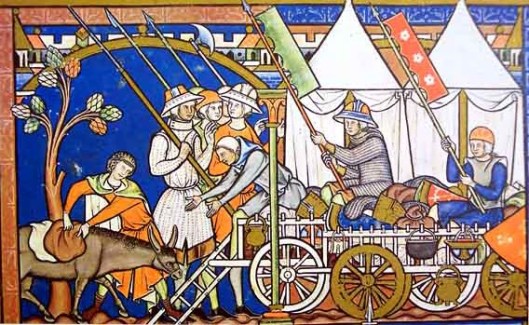
Continuing our discussion, we move from carts (2 wheels) to wagons (4 wheels) with the wagon Farmer Maggot uses to carry the hobbits to Bucklebury Ferry:

“I was going to say:  after a bit of supper, I’ll get out a small wagon, and I’ll drive you all to the Ferry.” (The Fellowship of the Ring, Book One, Chapter 4, “A Short Cut to Mushrooms”)

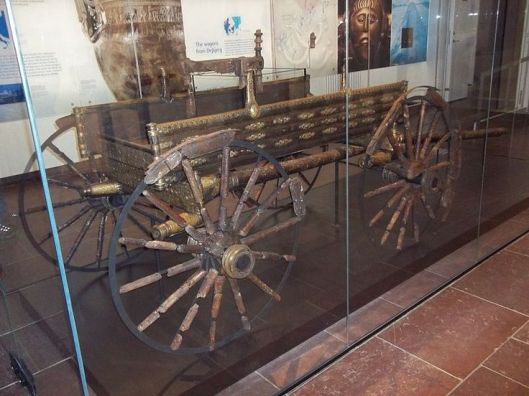
There is no description beyond that, really, but wagons are pretty generic things.  We have a few examples of early (600-500BC) Iron Age wagons—very fancy ones, too—from burials,

im7celtwag.jpg

im8celtwag.jpg

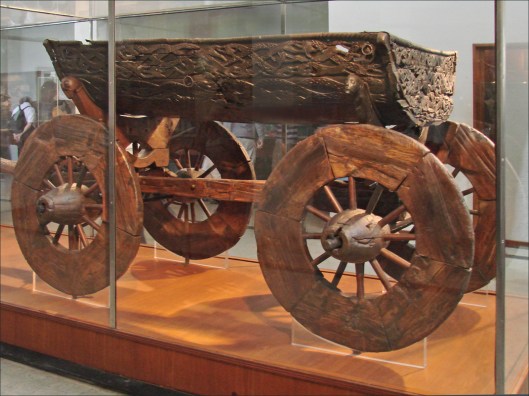
as well as this later Viking wagon.

im9oseberg.jpg

And, in between, we have Roman wagons

im10romwag.jpg

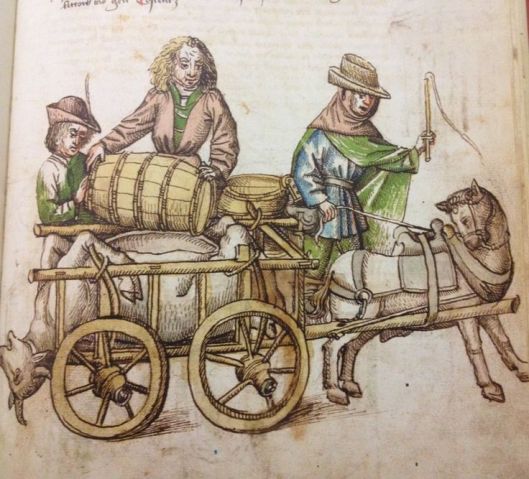
and their medieval descendants.

im11medwag.jpg

Farmer Maggott’s wagon, would probably have looked something like this (without the arms).

im12amedwag.jpg

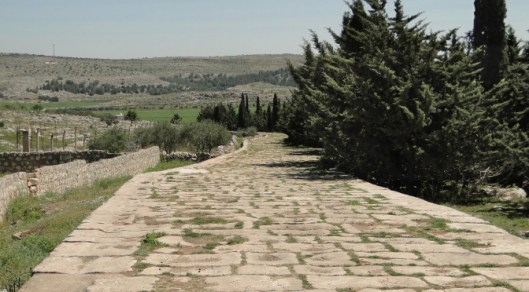
Of course, those Roman wagons were meant for paved Roman roads.

im12romroad.jpg

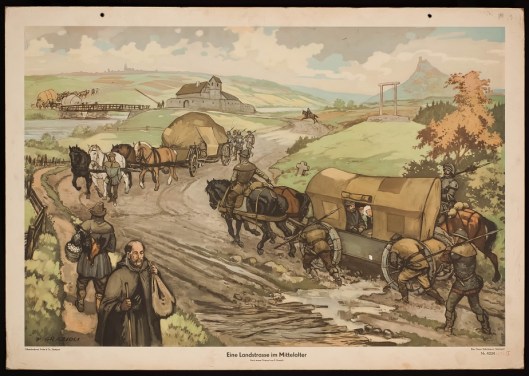
Although some Roman roads remained on the surface and continued to be used, most medieval roads were merely dirt and stones—as JRRT illustrates in that picture of the Hill

im13hobbiton.jpg

and as we see in this picture.

im14medroad.jpg

In which case, medieval people relied upon pack horses to transport many of their goods.

im15sumpter.jpg

(Think of Bill the pony as a modest example.)

An old word for wagon is wain and we would like to end this brief exploration with something about wains and Wainriders.  In Appendix A, we find this:

“The third evil was the invasion of the Wainriders, which sapped the waning strength of Gondor in wars that lasted for almost a hundred years.  The Wainriders were a people, or a confederacy of many peoples, that came from the east; but they were stronger and better armed than any that had appeared before.  They journeyed in great wains, and their chieftains fought in chariots.”

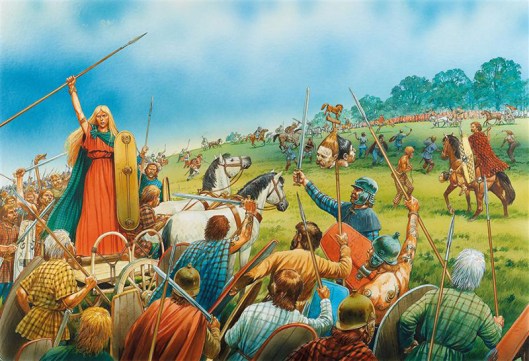
We’ve been puzzled by that combination of “great wains” and “their chieftains fought in chariots”.  The only immediate reference we could think of was to the Iceni, a tribe of ancient Britain, who, led by a female chieftain named Boudica, revolted against Roman occupation in 60-61AD.  At the final battle, where they were defeated by Roman troops, they had parked wagons in a crescent formation to their rear, then advanced with their chariots and infantry against the Romans. (See Cassius Dio, Roman History, LXII.12 for a description of this battle—here’s an easy LINK to that portion of his extensive writing.)

im16boudica.jpg

There is a problem here, however.  The Britons were not migratory and their wagons were probably no more than farm wagons and carts, hardly the great wains of JRRT’s description.  If we removed the chariots, another candidate for the Wainriders might be the Mongols, however, who were migratory and traveled in something even more splendid than a wagon—a gur—like this one—

im17ger.jpg

The Mongols certainly came from the east and, in a short time, swallowed up territory from China all the way to eastern Europe.

im18mongolconquest.jpg

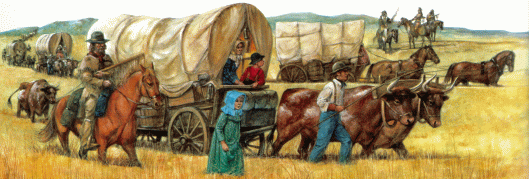
It is more likely, however, that JRRT combined things–it wouldn’t be the first time he synthesized—so much of his so-called legendarium is a mixture of this and that in brilliant profusion.  So, in the same spirit, we asked ourselves what we thought wains might look like and immediately saw the big wagon which was instrumental in colonizing the western part of the US, the Conestoga.

im19conestoga.jpg

Great, long lines of these and other wagons, packed with people and supplies, crossed the plains from the 1840s on.

im20wagtrain.gif

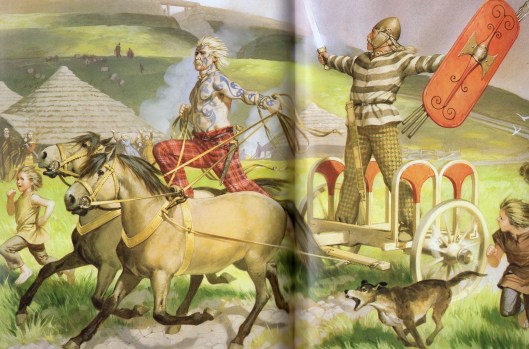
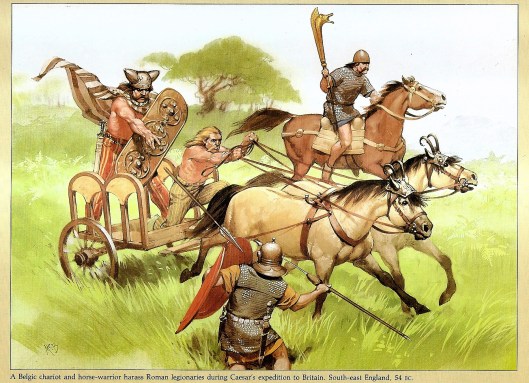
Could we then remove the 19th-century settlers and add Celts and their chariots, say?

im21celtchar.jpg

What do you think, dear readers?

Thanks, as ever, for reading.

MTCIDC

CD

Hoarders

26 Wednesday Apr 2017

Posted by Ollamh in J.R.R. Tolkien, Literary History, Narrative Methods

≈ Leave a comment

Tags

Anglo-Saxon, Barliman Butterbur, Beowulf, Bill Ferny, cartwheel penny, Celts, detectorist, Fafnir, Hoard, hord, Horrible Histories, Lenborough, monetary systems, pence, Pennies, pound, pre-Roman British coin, Regia Anglorum, shilling, Smaug, Staffordshire Hoard, Terry Herbert, The Hobbit, The Lord of the Rings, The Treasure Act, Time Team, Tolkien

Welcome, dear readers, as always.

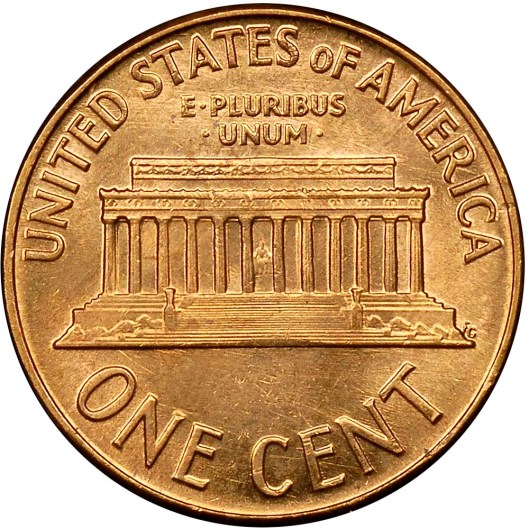
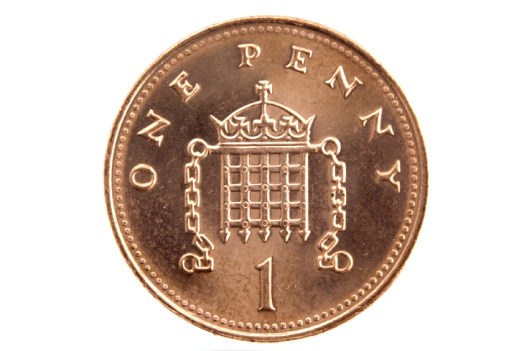
In this posting, we’re continuing with the theme suggested by our dear friend, EMH, about Middle-earth coinage. If you read our last post, you’ll remember that we cited the price of “Bill”, Sam’s pony, which was “12 silver pennies”. Our pennies here in the US—and modern British ones—are made of copper.

1auspenny.jpg


imag1aabrpenny.jpg(As usual with so many old and established things, there is argument over where the word “penny” comes from. Personally, we’ve always imagined that it’s an English diminutive of a Brythonic word—as it exists today in Welsh—“pen” = “head”, the idea being that coins had portrait heads on them. Certainly some pre-Roman British coins had them
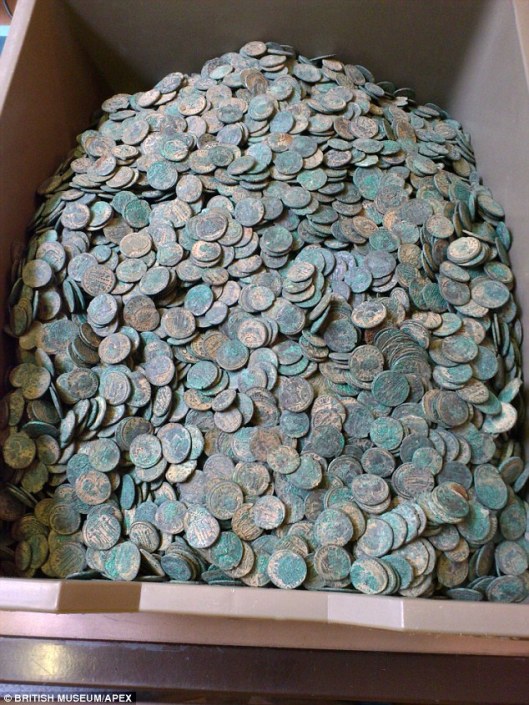
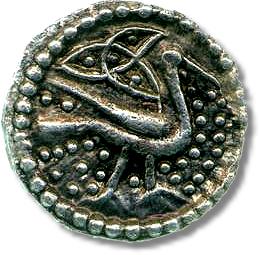
image2aancientbritcoins.jpg

and they were the norm for the Roman coins the Celts would have seen.)

image2aromancoinhoard.jpg

Originally—from the 8th century to 1797, all English pennies were silver. Here’s an 8th-century penny.

image3aaasilverpenny.jpg

In 1797, this was replaced by the so-called “cartwheel penny”, made of copper:

imag3cartwheel.jpg

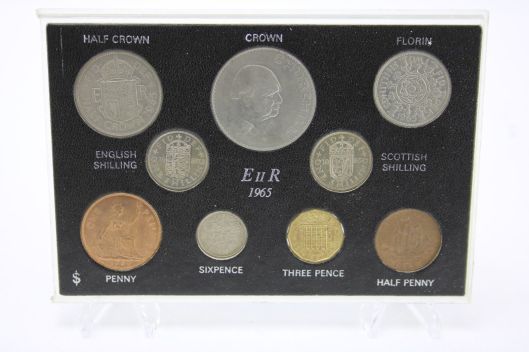
For all that the material changed, the same monetary system of 1 pound = 20 shillings, each shilling = 12 pence (pennies), which had been in place since Anglo-Saxon times, remained in place in the UK till decimalization appeared in 1971. (There is evidence that the number of pence per shilling varied early on, however, with a shilling worth anywhere from 4 to 6.)

image4aaacoinset.jpg

(For a wonderful but totally perplexing view of this money system in Tudor times, see the Horrible Histories segment here.)

So many of these early coins have all come from “hoards”—that is, from groups of valuable objects which were hidden, presumably with the idea that the one hiding them would return someday to collect them, but, for unknown reasons, never did. (The word, as “hord”, is an Old English/Anglo-Saxon word meaning “treasure/thing of value”.)

As a cache (from French “cacher” = “to hide”—“cache-cache” = the children’s game “hide and seek”) of things someone thought valuable, hoards have been discovered world-wide (just google “hoard”), but some of the most spectacular hoards have come from the UK.

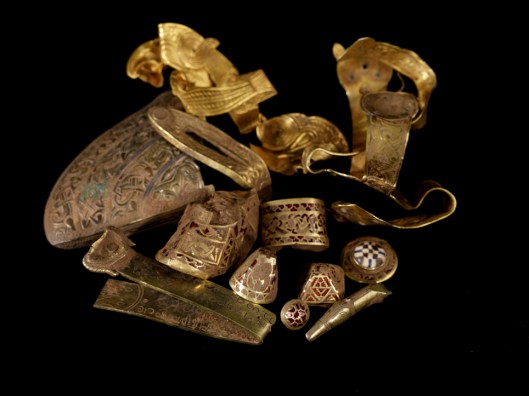
A particularly striking hoard was found by a metal detectorist, Terry Herbert, in 2009. This is the “Staffordshire Hoard”, with over 3500 objects dating from the 7th century AD.

image5staffhoard.jpg

In case “metal detectorist” is new to you, this is a person who spends time using a metal detector

image6ametaldetectors.jpg

to search what he hopes is a promising area in hopes of finding historical objects. The negative side—and we’ve seen it in the US—is that some slip into historical sites, make finds, never report them, and sell them, thereby destroying them as evidence of moments in history. The positive side—and we’ve seen this in England, particularly after the enlightened “The Treasure Act” of 1996—is that responsible detectorists cover much more ground than archaeological services can and both report finds on their own and work on sites with trained professionals. (If you have discovered the wonderful British series, “Time Team”, you can almost always see some working in the background.) In fact, in 2014, BBC4 released a comedy/drama series, The Detectorists, based upon two rather hapless members of the community, Andy and Lance,

image6thedetectorists.jpg

with a second series released in 2015 and a third promised for 2017. As an example of that special brand of quiet, quirky English humor, we very much recommend these.

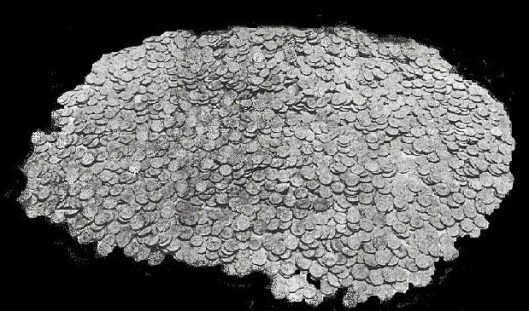
The Staffordshire Hoard contained a large selection of worked gold and silver pieces and fragments, but, as far as we can read, no coins. A major coin hoard was found at Lenborough in 2014. This was a carefully-buried lead box containing over 5,000 late Anglo-Saxon coins.

image7lenboroughhoard.JPG

And a heap like that immediately makes us think of hoards from myth—the hoard from which a slave steals a cup in Beowulf (just as Bilbo does, in The Hobbit)

image8beowulf.gif

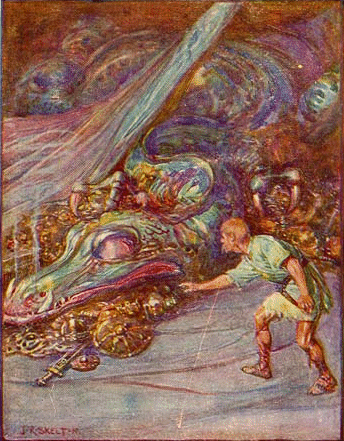
to the hoard of the dragon Fafnir

image9fafnir.jpg

to the hoard of Smaug.

image10smaug.jpg

JRRT paints a broad picture of Smaug’s hoard:

“Beneath him…lay countless piles of precious things, gold wrought and unwrought, gems and jewels, and silver red-stained in the ruddy light…Behind him where the walls were nearest could dimly be seen coats of mail, helms and axes, swords and spears hanging; and there in rows stood great jars and vessels filled with a wealth that could not be guessed.” (The Hobbit, Chapter 12, “Inside Information”)

No coins are mentioned—although ponies, unfortunately, are: Smaug says that he’s eaten six of them.

And this brings us back to our original quotation and the price of Sam’s pony:

“Bill Ferny’s price was twelve silver pennies; and that was at least three times the pony’s value in those parts.” (The Fellowship of the Ring, Book One, Chapter 11, “A Knife in the Dark”)

Butterbur the innkeeper at Bree paid for the pony and “offered Merry another eighteen pence as some compensation for the lost animals” (the others driven off by the Nazgul during their night raid on Bree). We have some sense of just how much that meant when the story goes on to say of Butterbur that, “He was an honest man, and well-off as things were reckoned in Bree; but thirty silver pennies was a sore blow to him…”

We had assumed that JRRT, as a scholar of the medieval English world, had based his coinage on the system of the Anglo-Saxon world (which was still, more or less, the system in Britain nearly to JRRT’s death in 1973). A comparison with a very useful chart of period prices, based primarily upon surviving law texts, to be found on the website of the reenactment consortium Regia Anglorum, however, suggests that, although JRRT has silver pennies, just as the AS system does, his price for the pony doesn’t appear to match at all.   If 4 silver pennies would have been a good price in the late Third Age, what would Butterbur have said to the 193.5 pence for a horse on the actual AS list?

Thanks, as ever, for reading!

MTCIDC

CD

The Doubtful Sea Series Facebook Page

The Doubtful Sea Series Facebook Page

  • Ollamh

Categories

  • Artists and Illustrators
  • Economics in Middle-earth
  • Fairy Tales and Myths
  • Films and Music
  • Games
  • Heroes
  • Imaginary History
  • J.R.R. Tolkien
  • Language
  • Literary History
  • Maps
  • Medieval Russia
  • Military History
  • Military History of Middle-earth
  • Narnia
  • Narrative Methods
  • Poetry
  • Research
  • Star Wars
  • Terra Australis
  • The Rohirrim
  • Theatre and Performance
  • Tolkien
  • Uncategorized
  • Villains
  • Writing as Collaborators
Follow doubtfulsea on WordPress.com

Across the Doubtful Sea

Recent Postings

  • Through a glass… January 7, 2026
  • Heffalumps? December 31, 2025
  • We Three Kings December 24, 2025
  • A Moon disfigured December 17, 2025
  • On the Roads Again—Once More December 10, 2025
  • (Not) Crossing Bridges December 3, 2025
  • On the Road(s) Again—Again November 26, 2025
  • On the Road(s) Again November 19, 2025
  • To Bree (Part 2) November 12, 2025

Blog Statistics

  • 104,101 Views

Posting Archive

  • January 2026 (1)
  • December 2025 (5)
  • November 2025 (4)
  • October 2025 (5)
  • September 2025 (4)
  • August 2025 (4)
  • July 2025 (5)
  • June 2025 (4)
  • May 2025 (4)
  • April 2025 (5)
  • March 2025 (4)
  • February 2025 (4)
  • January 2025 (5)
  • December 2024 (4)
  • November 2024 (4)
  • October 2024 (5)
  • September 2024 (4)
  • August 2024 (4)
  • July 2024 (5)
  • June 2024 (4)
  • May 2024 (5)
  • April 2024 (4)
  • March 2024 (4)
  • February 2024 (4)
  • January 2024 (5)
  • December 2023 (4)
  • November 2023 (5)
  • October 2023 (4)
  • September 2023 (4)
  • August 2023 (5)
  • July 2023 (4)
  • June 2023 (4)
  • May 2023 (5)
  • April 2023 (4)
  • March 2023 (5)
  • February 2023 (4)
  • January 2023 (4)
  • December 2022 (4)
  • November 2022 (5)
  • October 2022 (4)
  • September 2022 (4)
  • August 2022 (5)
  • July 2022 (4)
  • June 2022 (5)
  • May 2022 (4)
  • April 2022 (4)
  • March 2022 (5)
  • February 2022 (4)
  • January 2022 (4)
  • December 2021 (5)
  • November 2021 (4)
  • October 2021 (4)
  • September 2021 (5)
  • August 2021 (4)
  • July 2021 (4)
  • June 2021 (5)
  • May 2021 (4)
  • April 2021 (4)
  • March 2021 (5)
  • February 2021 (4)
  • January 2021 (4)
  • December 2020 (5)
  • November 2020 (4)
  • October 2020 (4)
  • September 2020 (5)
  • August 2020 (4)
  • July 2020 (5)
  • June 2020 (4)
  • May 2020 (4)
  • April 2020 (5)
  • March 2020 (4)
  • February 2020 (4)
  • January 2020 (6)
  • December 2019 (4)
  • November 2019 (4)
  • October 2019 (5)
  • September 2019 (4)
  • August 2019 (4)
  • July 2019 (5)
  • June 2019 (4)
  • May 2019 (5)
  • April 2019 (4)
  • March 2019 (4)
  • February 2019 (4)
  • January 2019 (5)
  • December 2018 (4)
  • November 2018 (4)
  • October 2018 (5)
  • September 2018 (4)
  • August 2018 (5)
  • July 2018 (4)
  • June 2018 (4)
  • May 2018 (5)
  • April 2018 (4)
  • March 2018 (4)
  • February 2018 (4)
  • January 2018 (5)
  • December 2017 (4)
  • November 2017 (4)
  • October 2017 (4)
  • September 2017 (4)
  • August 2017 (5)
  • July 2017 (4)
  • June 2017 (4)
  • May 2017 (5)
  • April 2017 (4)
  • March 2017 (5)
  • February 2017 (4)
  • January 2017 (4)
  • December 2016 (4)
  • November 2016 (5)
  • October 2016 (6)
  • September 2016 (5)
  • August 2016 (5)
  • July 2016 (5)
  • June 2016 (5)
  • May 2016 (4)
  • April 2016 (4)
  • March 2016 (5)
  • February 2016 (4)
  • January 2016 (4)
  • December 2015 (5)
  • November 2015 (5)
  • October 2015 (4)
  • September 2015 (5)
  • August 2015 (4)
  • July 2015 (5)
  • June 2015 (5)
  • May 2015 (4)
  • April 2015 (3)
  • March 2015 (4)
  • February 2015 (4)
  • January 2015 (4)
  • December 2014 (5)
  • November 2014 (4)
  • October 2014 (6)
  • September 2014 (1)

Blog at WordPress.com.

  • Subscribe Subscribed
    • doubtfulsea
    • Join 78 other subscribers
    • Already have a WordPress.com account? Log in now.
    • doubtfulsea
    • Subscribe Subscribed
    • Sign up
    • Log in
    • Report this content
    • View site in Reader
    • Manage subscriptions
    • Collapse this bar
 

Loading Comments...