• About

doubtfulsea

~ adventure fantasy

Tag Archives: book-review

Lud-ite?

29 Wednesday Jan 2025

Posted by Ollamh in Uncategorized

≈ Leave a comment

Tags

book-review, Fantasy, Gaiman, Lud-in-the-Mist, Luddite, mirrlees, neil-gaiman

Welcome, as ever, dear readers.

Perhaps you’ve heard someone—often, I would say, an older person—who, confronted with something electronic, will say, “I’m not a Luddite, but…”

It’s taken to mean “I’m not against technology, but…”

But the history of the word casts a shadow on that disclaimer, as the real Luddites were very much against technology—technology which put them out of work and set them and their families to starve—or to be worked to death in the new factories.  (Charles Dickens captures a little of this in Hard Times, 1854:  https://archive.org/details/hardtimes0000char_w0u2/page/n11/mode/2up )
It all began with wool.
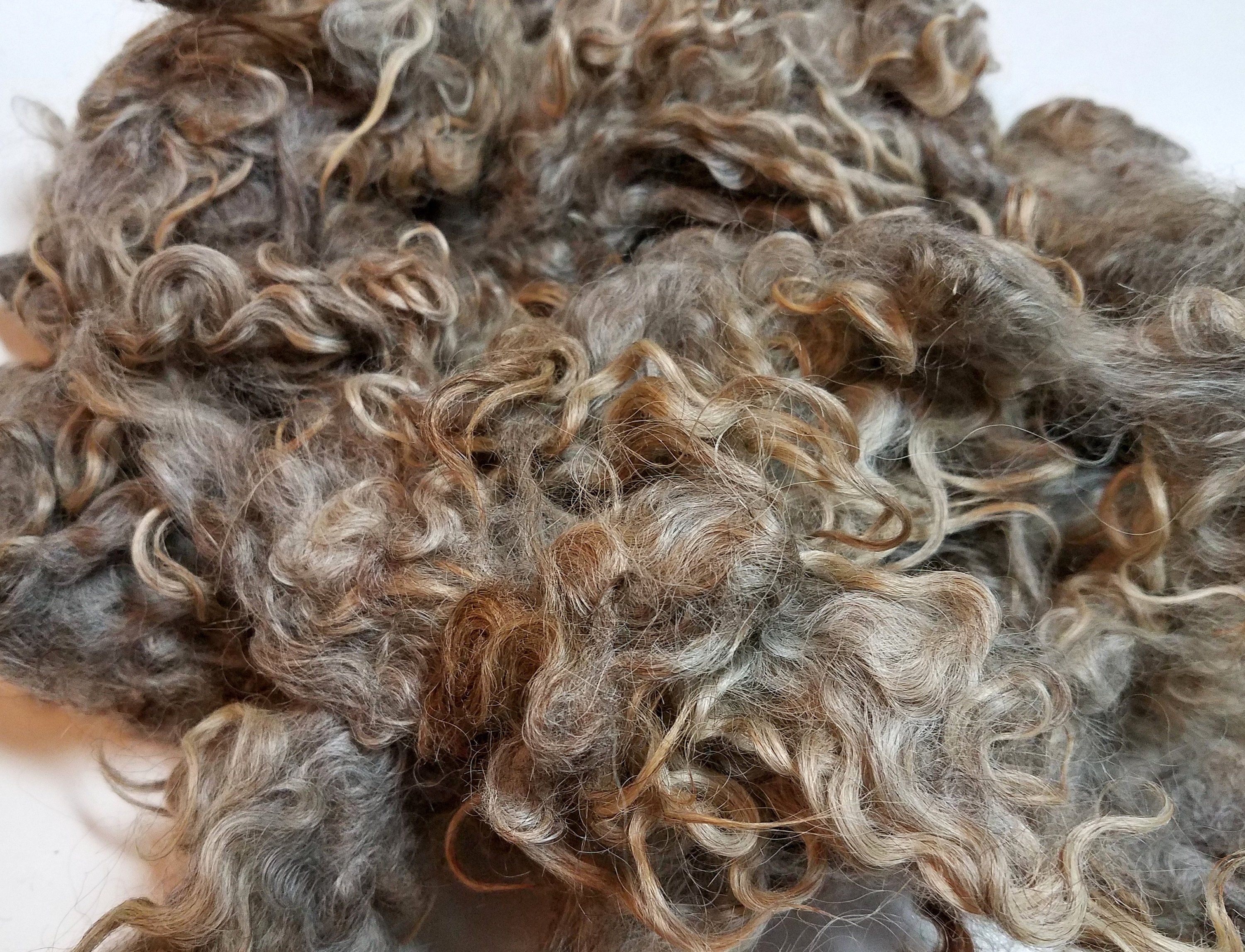
Wool production had made certain elements of medieval England very rich.

At the same time, because it was such a labor-intensive industry, it kept many ordinary people employed in everything from raising sheep to sheering, washing, carding, spinning, and weaving, almost all of which you can see in this illustration.

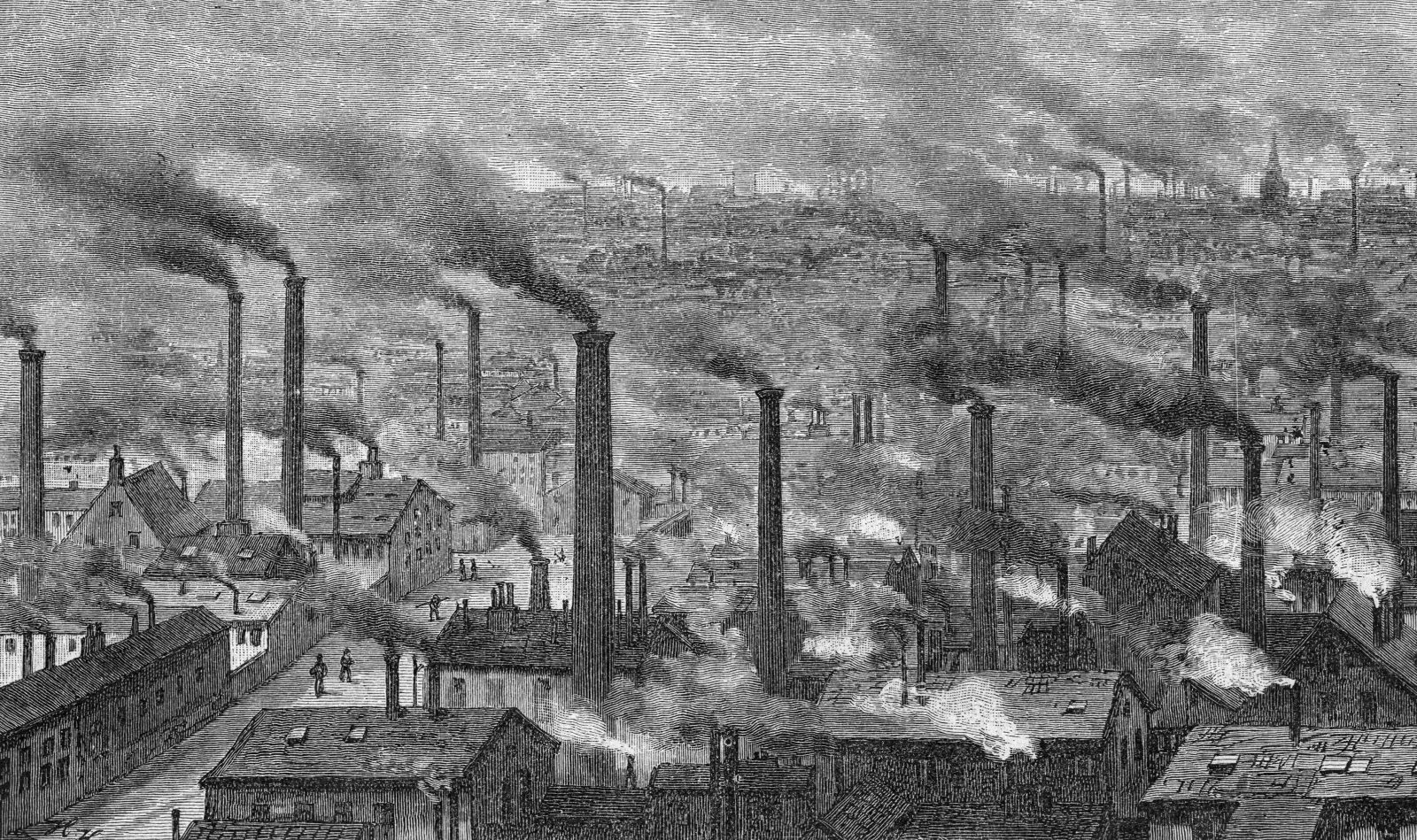
The demand for more and more wool and wool products in the later 18th century brought about the beginnings of the Industrial Revolution, when clever men began to invent devices which sped up the originally slow process of wool production, creating machines and then factories.

(This is a room in Quarry Bank, a wool mill complex in Cheshire, just a few miles from where Tolkien grew up, in Manchester.  It is held by the National Trust and, if like me, you’re interested in the history of the Industrial Revolution, you’ll want to learn more at:  https://en.wikipedia.org/wiki/Quarry_Bank_Mill )

Such places not only sped up production, but also cut down on the number of people needed to process the wool, which soon began to trouble the many who once lived by the old methods. 

As early as 1768, there had been attacks on machines and the name “Ludd” had originally been attached to an apprentice, “Ned Ludd”, who had supposedly smashed two knitting machines, called “stocking frames” in 1779.
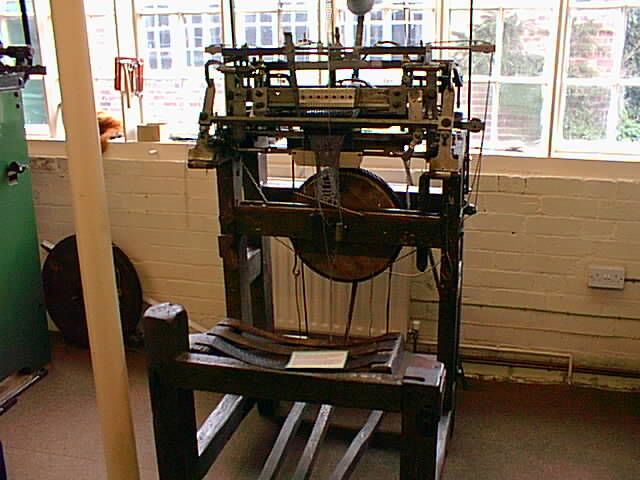
In 1811, things had reached a stage where organized violence against machines, factories, and even factory-owners, increased and “King Ludd” or “General Ludd” became a kind of meme for the anti-industrial movement.  (You can read more here:  https://en.wikipedia.org/wiki/Luddite )

This imaginary Ludd is, however, only one of a number of figures under that name.  There is, for instance, the Biblical Lud, the son of Shem, the son of Noah.

(from the wonderful mosaics of Monreale, in Sicily—Noah, we’re told, got drunk and his embarrassed sons are covering him up—see Genesis 9.20-23 for details)

There is Lud, son of Heli, and king of Britain, according to Geoffrey of Monmouth’s 12th century Historia Regum Britanniae, the founder of London, and buried at Ludgate, of course.  (You can read, in a 1904 translation, about Lud in Historia 3.20 here:  https://archive.org/details/geoffreyofmonmou00geofuoft/geoffreyofmonmou00geofuoft/page/80/mode/2up

(as reconstructed in 1895—you can read more about the site here:  https://en.wikipedia.org/wiki/Ludgate  including the actual etymology of the name)

And then there’s Lud-in-the-Mist, a 1926 fantasy novel

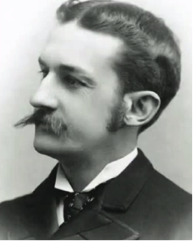
by Hope Mirrlees (1887-1978),

where Lud is the name of a town in the imaginary country of Dorimare.

(Ryuk-Duck, but, when I’ve gone to DeviantArt, I’ve been unable to locate anything more.)

Mirrlees had published two previous novels, Madeleine:  One of Love’s Jansenists (1919)

and The Counterplot (1924),

as well as a rather complex “modernist” poem, Paris (1920),
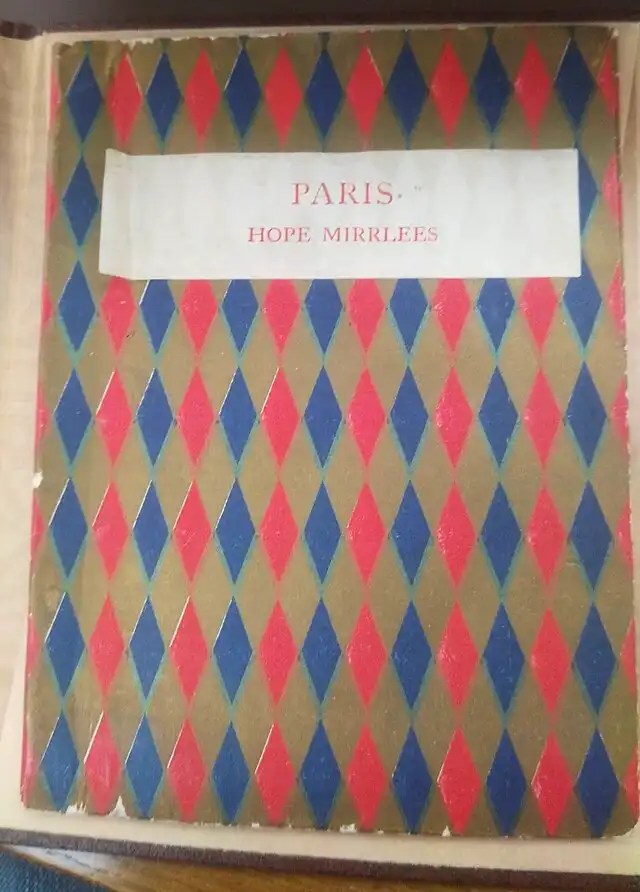
but this was her only fantasy novel. 

(You can read all four of these four works here:  Madeleine https://www.gutenberg.org/cache/epub/65926/pg65926-images.html   Paris https://www.paris-a-poem.com/ —this is, by the way, a real work of scholarship and a very useful way to approach this poem—The Counterplot https://www.gutenberg.org/cache/epub/63935/pg63935-images.html and Lud-in-the-Mist https://www.gutenberg.org/cache/epub/68061/pg68061-images.html  You can read more about the author here:  https://en.wikipedia.org/wiki/Hope_Mirrlees )

I’ve just finished Lud-in-the-Mist, which, after disappearing for about 50 years, resurfaced in a first reprint in 1970, and several more, in 2000, 2005, and 2013.  The 2005 reprint had very distinguished opening matter:  a foreward by Neil Gaiman and an introduction by Douglas Anderson, of The Annotated Hobbit.  Gaiman has said of Lud-in-the-Mist that it’s “My favourite fairy tale/detective novel/history/fantasy”  (quoted from:  https://radicalreads.com/neil-gaiman-favorite-books/ ) and I would agree that it’s a combination at least of fairy tale and fantasy and there is a sort of detective story mixed in, but I’m not so sure that this all comes together for me as it clearly has for him.

The fantasy/fairy tale lies in the basic setting that:  Dorimare is an imaginary country and Lud-in-the-Mist is its capital, sitting at the meeting of two rivers:  Dapple and Dawl.  The Dawl seems to be the usual, expected kind of river, flowing southwards to the sea from somewhere inland, but the Dapple

“…had its source in Fairyland (from a salt inland sea, the geographers held) and flowed subterraneously under the Debatable Hills, was a humble little stream, and played no part in the commercial life of the town. But an old maxim of Dorimare bade one never forget that ‘The Dapple flows into the Dawl.’ It had come to be employed when one wanted to show the inadvisability of despising the services of humble agents; but, possibly, it had originally another application.”

This is at the very beginning of the second chapter, and already sets the tone:  Dorimare may be a picturesque little country on a river so broad that the town is also a seaport, although 20 miles from the actual sea, but that broad river is fed, in part, by a second stream, one which comes from the west (and the West, of course, is always a place perhaps to be dreaded, as it is often the direction to which the dead go in many folk traditions, as well as being the home of weird, otherworldly folk, the sort of people and creatures that voyagers west, like St Brendan
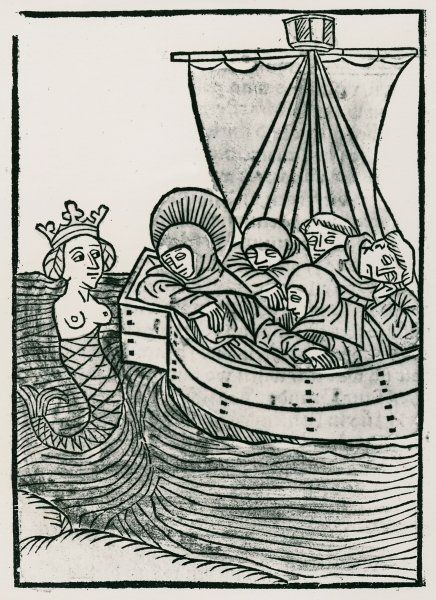
and Oisin, of the Irish Fenian Cycle, and Yeats’ early The Wanderings of Usheen, 1889, which you can read here:  https://www.gutenberg.org/files/38877/38877-h/38877-h.htm#THE_WANDERINGS_OF_USHEEN encounter. )  The river’s beginning lies, as well, in a place not visited by the Dorimarites for hundreds of years, Fairyland, and much of the book is taken up with “fairy fruit”, which is banned in Dorimare, along with any dealings or even mentions of fairies, but somehow keeps appearing and seriously disturbing the minds of those who consume it—as if the Dapple, under its pretty name, is actually underflowing and perhaps undercutting all of Dorimare.

The detective story seems almost a by-blow of the plot, although it involves a major character, Endymion Leer, who is a physician in Lud-in-the-Mist and, as the plot develops, much more, although I find that his role in the mystery somewhat trivializes the greater role he claims for himself near the end of the book at his trial for murder. 

I won’t summarize the complicated plot—you can read a brief and, I fear, inadequate précis here:  https://en.wikipedia.org/wiki/Lud-in-the-Mist and there are longer summaries to be had at various fantasy sites, although I find the ones I read, for me, too intent upon constructing complex, deeper meanings than I think the book really holds.

Instead, as I always do with reviews—films and books—I would encourage you to read it for yourself and come to your own conclusion.

There’s dry, quirky humor on the part of the narrator, some lush nature writing, a vivid depiction of what Fairyland might be like (unpleasant to nightmarish, I found it), and an appealing character in the protagonist, Nathaniel Chanticleer, who begins conventionally as a comfortable petit bourgeois (although he does have something haunting him), but grows into a feeling being through the fate of his son, Ranulph, all of which are at least enough to lure you in and perhaps keep you reading, as they did me.

So, as always, thanks for reading,

Wonder what fairy fruit might do to you,

And remember that, as ever, there’s

MTCIDC

O

PS

If going west myself, I should meet Hope Mirrlees, I would request that, should she, in some spiritual form, ever do a revised edition, she might include a map—a nice end paper one would do—as it would definitely help to keep one oriented in the characters’ travels around Dorimare.

PPS

For a powerful speech by Neil Gaiman on writing and reading and fantasy see:  https://www.theguardian.com/books/2013/oct/15/neil-gaiman-future-libraries-reading-daydreaming
Wolfing

11 Wednesday Sep 2024

Posted by Ollamh in Uncategorized

≈ Leave a comment

Tags

book-review, fairy-tales, Fiction, picture-books

Welcome, dear readers, as always.

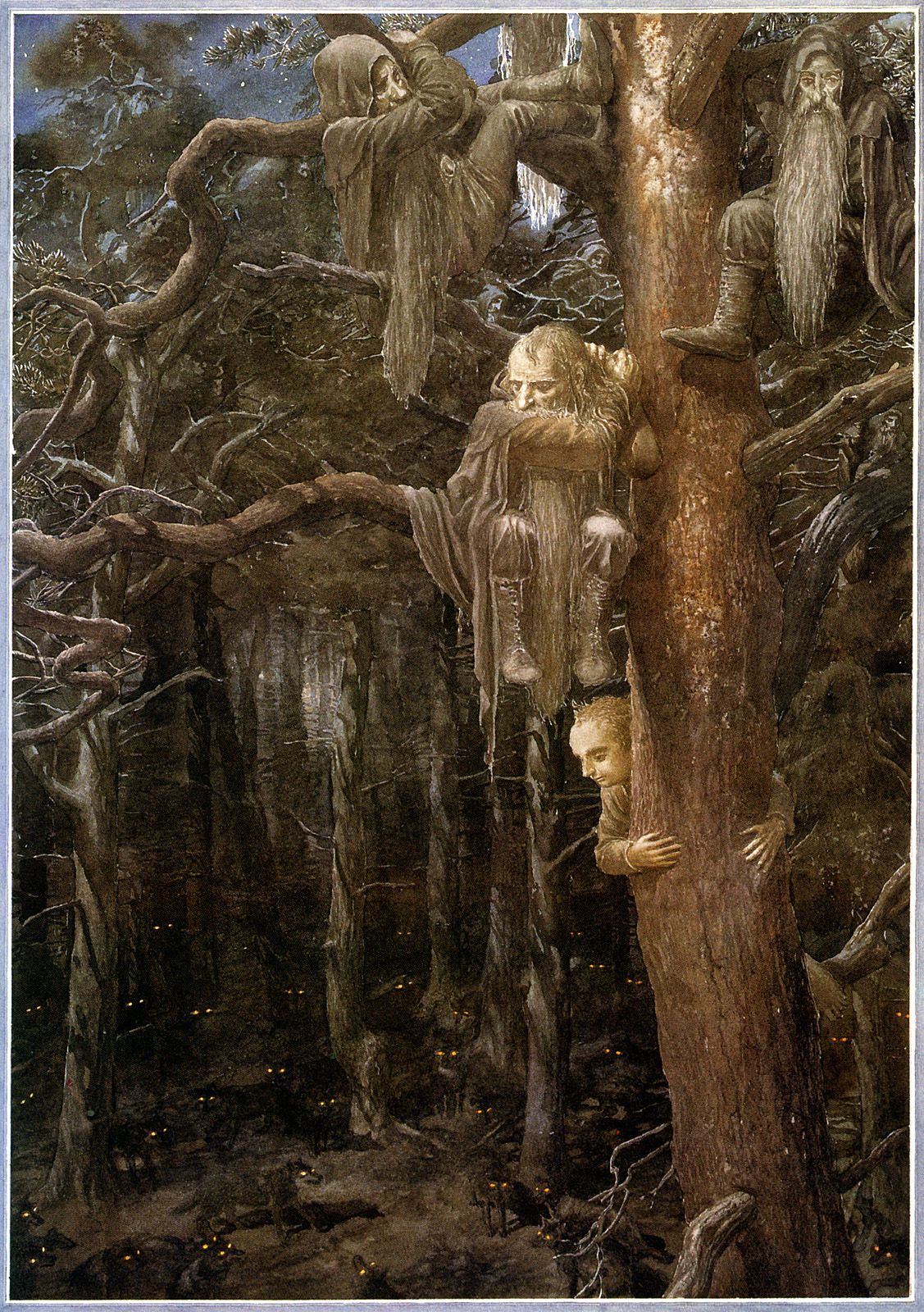
“All of a sudden they heard a howl away down hill, a long shuddering howl.  It was answered by another away to the right and a good deal nearer to them; then by another not far away to the left.  It was wolves howling at the moon, wolves gathering together!”  (The Hobbit, Chapter 6, “Out of the Frying Pan Into the Fire”)

(Alan Lee)

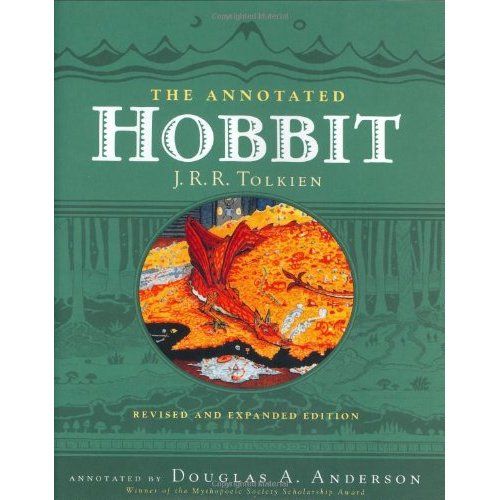
In his invaluable The Annotated Hobbit,

Douglas Anderson points to a letter by Tolkien suggesting an influence, if not inspiration, for this scene of wargs (i.e. wolves) vs treed dwarves (and hobbit), as JRRT tells us:

“Though the episode of the ‘wargs’ is in part derived from a scene in S.R. Crockett’s The Black Douglas, probably his best romance and anyway one that deeply impressed me in school-days, though I have never looked back again.  It includes Gil de Rez as a Satanist.” (“from a letter to Michael Tolkien…sometime after Aug.25, 1967”, Letters, 550)

Published in 1899, The Black Douglas,

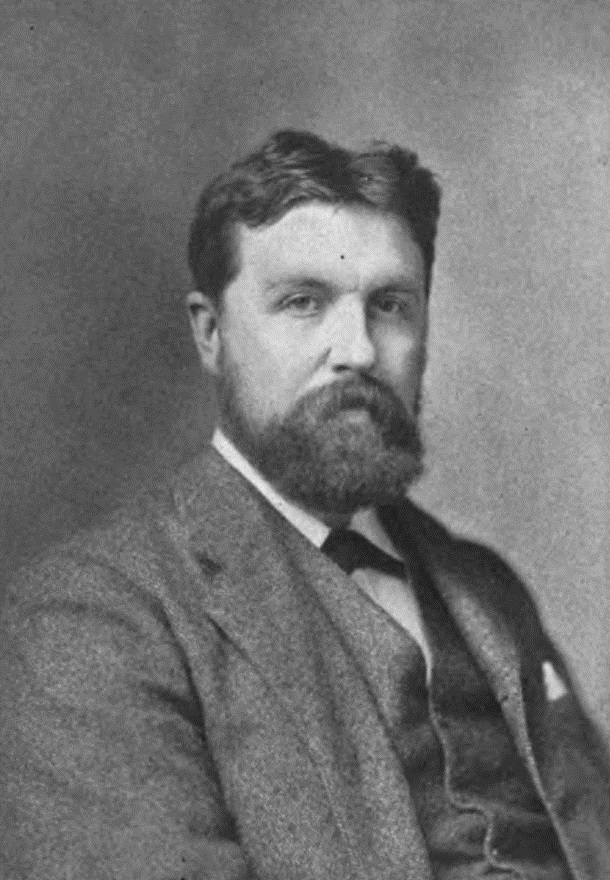
Is one of a series of Scots historical novels by S(amuel).R(utherford). Crockett (1859-1914),

based upon actual events—in this case, it has, as a basis, the short life and judicial murder of William, the 6th Earl of Douglas and his younger brother, David, in 1440.  It also has supernatural elements, however, including the sinister (but historical) figure of Gilles de Rais (c.1405-1440–Tolkien was clearly spelling from memory), one-time companion of Joan of Arc, who appears to be a werewolf, and, it’s a scene where the protagonists are attacked by werewolves

to which JRRT was referring—although the three don’t climb trees, but put their backs to them to fight on the ground, killing many of their attackers (and not being rescued by eagles—it’s Chapter XLIX and you can read it here:  https://dn790000.ca.archive.org/0/items/blackdouglas00croc/blackdouglas00croc.pdf ).

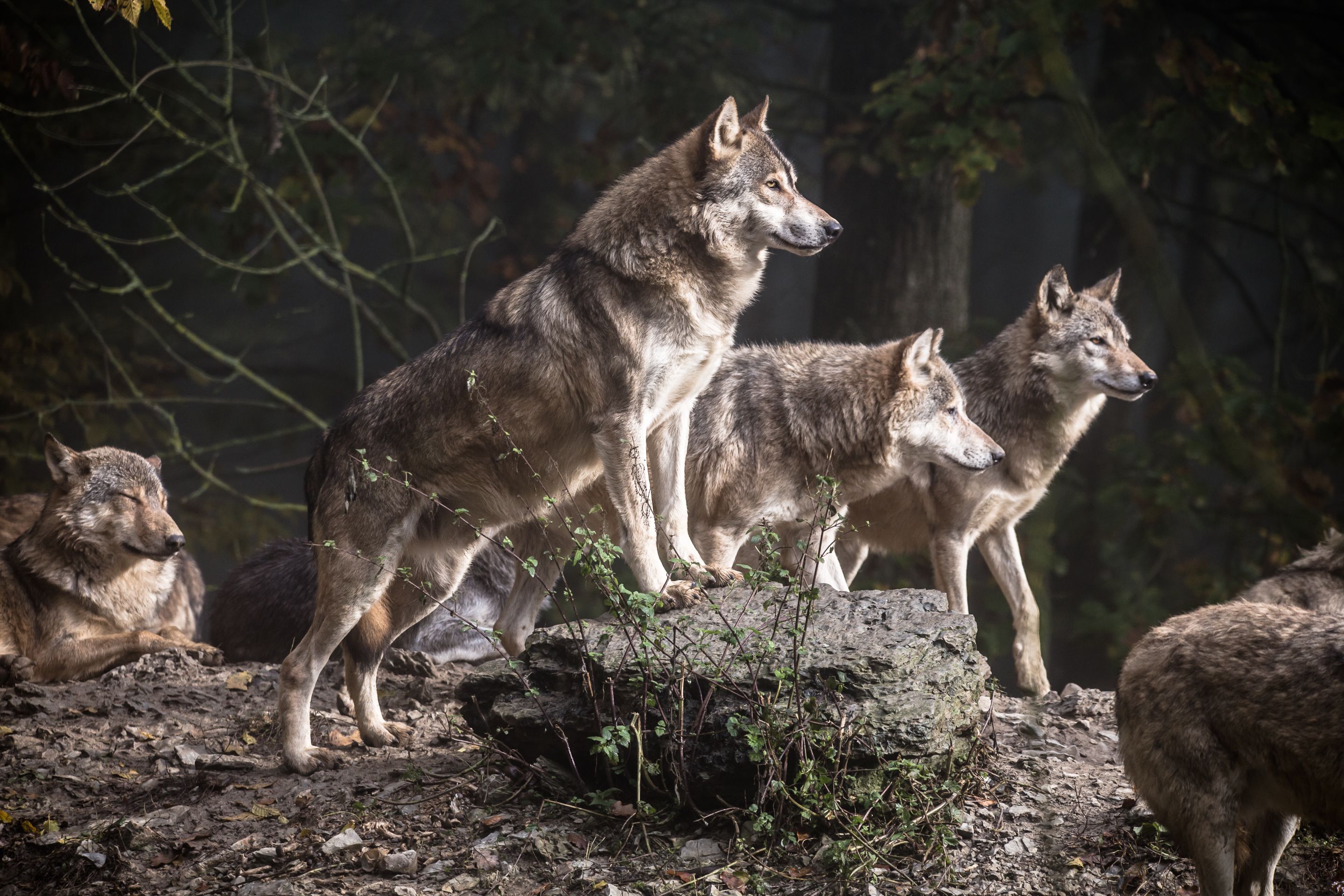
Wolves—or wargs—as we see in The Hobbit, are pack animals.

Crockett imagined even werewolves as behaving like the wolves they turn into and this led me to a question which occurred when, recently, as part of an exercise in story-telling, I asked a class to tell me the story of “The Three Little Pigs”. 

I’m sure that you know it, with its typical for Western fairy tales pattern of 3s:   porcine architecture—straw,

sticks, bricks–attempts by the wolf to enter, replies by the pigs, subsequent action by the wolf and his parboiled demise.

 Because of its simplicity and that pattern, it’s very useful as a subject for helping students to learn how stories work and how even such a simple story is built upon such basic narrative principles as foreshadowing and repetition to build tension.

But, the 3 pigs sing mockingly in the 1933 Disney version,

“Who’s afraid of the big, bad wolf,

Big, bad wolf,

Big, bad wolf?

Who’s afraid of the big, bad wolf?

Tra la la la la!”

(There’s actually a much longer song and you can read it here:  https://www.lyrics.com/lyric/27101857/Disney/Who%27s+Afraid+of+the+Big+Bad+Wolf and hear and see it here:  https://www.youtube.com/watch?v=leAh00n3hno )

and that made me notice something odd:  not “Big, bad wolves”—what happened to the pack?

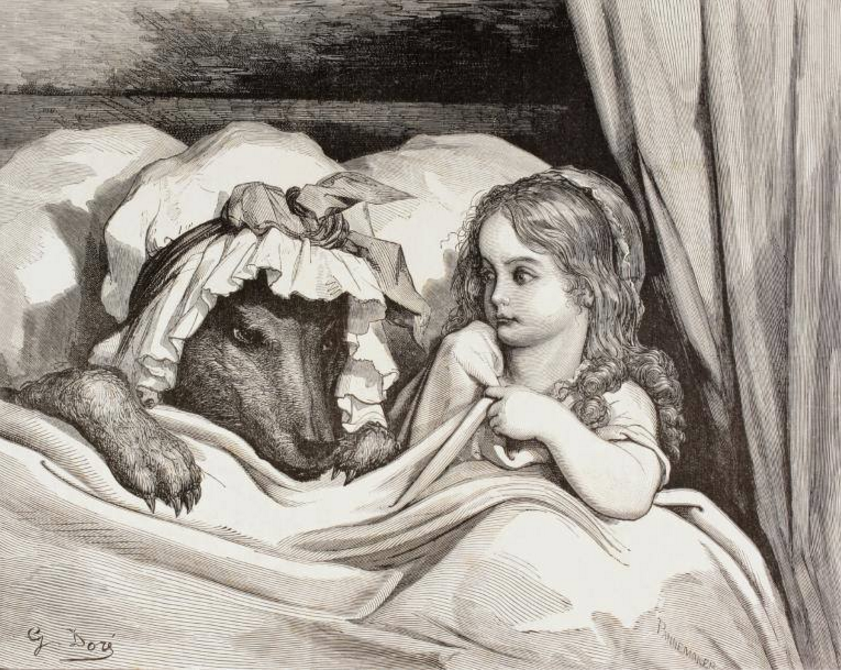
The idea of the “lone wolf” turns up in other fairy tales—think of “Little Red Riding Hood” for example,

(Perhaps my favorite illustration, by Gustave Dore—LRR seems to have a rather skeptical look—perhaps because in the version Dore illustrated, the last line of the story is:  “Et en disant ces mots, le méchant loup se jeta sur le petit Chaperon rouge, et la mangea.”—“And, in saying these words, the wicked wolf threw himself upon Little Red Riding Hood and ate her.”)

where a single wolf meets Red, and the perhaps less familiar “The Wolf and the Seven Kids”.

(This is by a well-known Victorian illustrator, Walter Crane, 1845-1915, from an 1882 collection of the Grimm fairy tales which you can see here:  https://en.wikisource.org/wiki/Household_stories_from_the_collection_of_the_Bros_Grimm_(L_%26_W_Crane)/The_Wolf_and_the_Seven_Little_Goats  You can also read a translation at this site, which is specifically devoted to the works of the Grimms:  https://www.grimmstories.com/en/grimm_fairy-tales/the_wolf_and_the_seven_little_goats )

Traditional fairy tales all have variants—sometimes numerous ones—and some appear even on a world-wide basis, like “Cinderella” (see an ancient Chinese version here:   https://www.ancient-origins.net/news-myths-legends/fish-wish-your-heart-makes-2200-year-old-tale-chinese-cinderella-003506 ), but a little preliminary research has suggested another possibility. 

Unlike other fairy tales, although scholars believe “The Three Little Pigs” to be an old story, I was surprised to learn that its first citation is only to an 1853 volume with a title which would not suggest that such a story would be included:  English Forests and Forest Trees, Historical, Legendary, and Descriptive.  It’s to be found in Chapter IX, “Dartmoor Forest” and, even more surprising, the characters aren’t pigs, but pixies, the villain of the piece isn’t a wolf, but a fox, and the houses are made of wood, stone, and iron.   You can read it here:  https://ia601307.us.archive.org/13/items/englishforestsa01unkngoog/englishforestsa01unkngoog.pdf on pages 189-190.

The version familiar to most of us first appears in the fifth edition of James Halliwell-Phillipps’ The Nursery Rhymes of England (1886), in which the third little pig (who survives, as his two brothers do not) has a lot more to do than in what must have been the simplified version I knew as a child—and this actually closely matches the Dartmoor version (except for the pixies and the fox).  You can read it here:  https://archive.org/details/nurseryrhymesofe00hall/page/36/mode/2up on pages 37-41.  (For an entertaining essay on Halliwell-Phillipps and his work, see:  https://reactormag.com/questionable-scholars-and-rhyming-pigs-j-o-halliwell-phillipps-the-three-little-pigs/  )

It’s admittedly just a guess on my part, Halliwell-Phillipps doesn’t credit a source, and, instead of a fox as the villain, there’s a wolf, but both stories, have the same pattern of threes, although building materials differ, and the three pixies have a different identity, but what we see here is the same story, which made me wonder:

  1. Did “pixies” become (possibly through mishearing of an oral telling) “pigsies”—that is, “little pigs”?
  2. Did the fox become a wolf because wolves can be quite large

(by NatsumeWolf—you can see more of her art here:  https://www.furaffinity.net/gallery/natsumewolf/ )

and therefore more menacing in a story than a diminutive, but tricky, fox?

As well, that wolf in “Little Red Riding Hood” appears in Charles Perrault’s late-17th century story collection, Histoires ou Contes du Temps passe, first translated into English in the early 18th century, appearing, as well, along with “The Wolf and the Seven Kids”, in the Grimms’ early 19th century Kinder und Hausmaerchen, first translated into English in the 1820s, both being, therefore, readily available.  So, could that frightening wolf from other stories perhaps have been leaning over Halliwell-Phillipps’ shoulder, pushing him to replace the fox, even as he turned pixies into pigsies?  After all, he had nothing to lose but his pack…

Thanks, as ever, for reading.

Stay well,

If threatened by a wolf, try to out-fox him,

And remember that there’s always

MTCIDC

O

PS

For another, rather eerie story with—well, no spoiler alert, just read it: https://ia601303.us.archive.org/8/items/thetoysofpeacean01477gut/1477-h/1477-h.htm

This is by HH Munro, 1870-1916, who used the pen name “Saki”.  I’ve mentioned him before, but I’m sure to mention him and his witty and sometimes weird short stories again in the future.

Praeteritio, or, Paraleipsis, Trailer, or Just Teasing?

17 Wednesday Jul 2024

Posted by Ollamh in Uncategorized

≈ Leave a comment

Tags

arthur-conan-doyle, book-review, books, mystery, Sherlock Holmes

As ever, dear readers, welcome.

This posting came about because I was rereading Kipling’s Just So Stories (1902).  In the last of the stories, at the beginning, I found this:

“There are three hundred and fifty-five stories about Suleiman-bin-Daoud:  but this is not one of them.  It is not the story of the Lapwing who found the Water; or the Hoopoe who shaded Sulieman-bin-Daoud from the heat.  It is not the story of the Glass Pavement, or the Ruby with the Crooked Hole, or the Gold Bars of Balkis.  It is the story of the Butterfly that Stamped.” (Rudyard Kipling, Just So Stories, “The Butterfly That Stamped”  You can read the story here:  https://archive.org/details/justsostories00kipl/page/n9/mode/2up in a 1912 American edition.  A word of caution, however:  sometimes Kipling’s language seems, to our ears, casually racist, but that was 1912 and, to my mind, doesn’t mar the stories in general, although, in 2024, it does stand out in an unpleasant way.)

It’s a trick I’ll bet you can spot immediately:  a politician speaking about a rival, will say, “But I will not mention my opponent’s _________”—and you can fill in the blank with anything negative which might come to mind.  It’s a very old rhetorical trick—so old that the Greeks used it (hence that “paraleipsis”, from the verb paraleipein, “to leave aside”) and the Romans, who were careful students of Greek rhetoric, employed it in turn (hence “praeteritio”, from praeter, “beside” and ire, “to go”).

This mentioning, but then withholding information, has a cousin in a form of this trick used by story-tellers in the West since the Greeks and clearly still in use in Victorian/Edwardian times by Kipling.   Consider, for example, Book 11 of the Odyssey.  Here, Odysseus, at the court of Alkinoos, (that’s al-KIH-noe-os),

is relating his visit to the Otherworld

and, at one point, lists a whole series of famous women he sees there, from Tyro, who slept with Poseidon and produced Pelias and Neleus—Pelias being the evil uncle who sends Jason off after the Golden Fleece—

(a wall painting from Pompeii—this is the moment when Pelias recognizes Jason by a prophecy which has warned him to beware of a visitor wearing only one sandal)

to Alkmene, mother of Herakles,

(a South Italian comic pot, in which Zeus, aided by Hermes, is trying to get into Alkmene’s window)

to Ariadne, daughter of Minos, who helped Theseus against the Minotaur in the Labyrinth.

(Ariadne gave Theseus a ball of string to help him get back from the maze.  You can read the whole list here:  Odyssey, Book 11, lines 235-330–https://www.perseus.tufts.edu/hopper/text?doc=Perseus%3Atext%3A1999.01.0136%3Abook%3D11  )

Each time, there’s a mention, but no story is ever gone into in detail.

Each of the women is given a kind of mini-biography (mostly about how the majority of them slept with Zeus), with a little detail, and the whole list resembles a well-known, now-fragmentary work once attributed to the early Greek poet, Hesiod, called “The Catalogue of Women”, also known by the first word of each entry in the catalogue as Eoiai, which we can translate as “[or] her like”.  (You can read an extensive article about this here:  https://en.wikipedia.org/wiki/Catalogue_of_Women  and you can read the collected fragments here:  https://www.theoi.com/Text/HesiodCatalogues.html  )

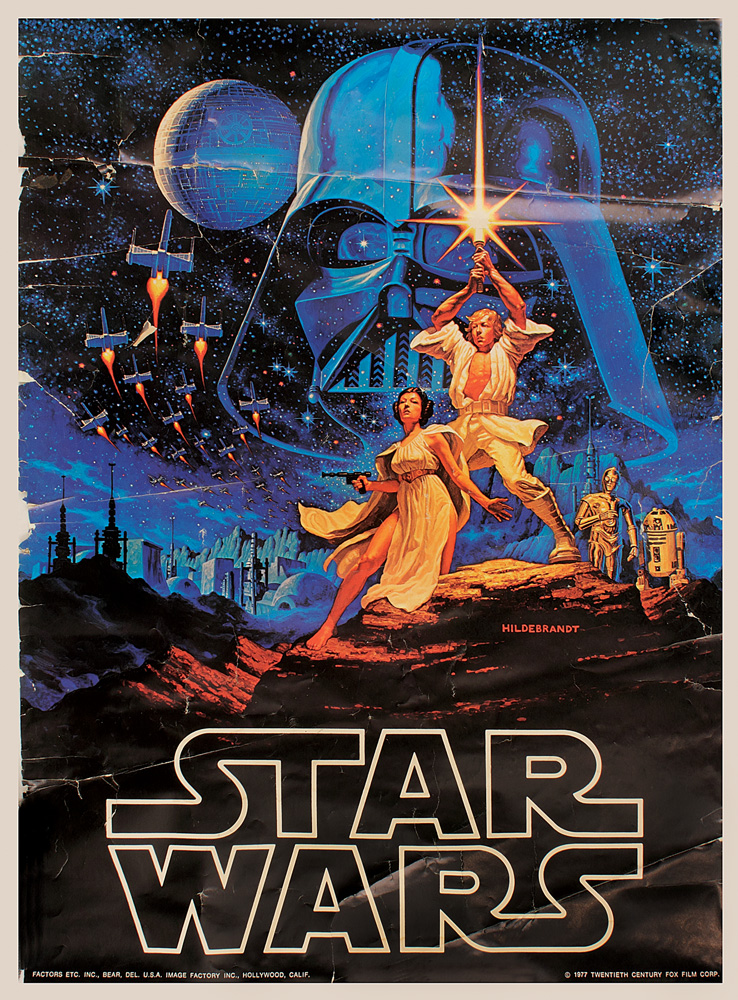
Assembling and preserving the past became an important feature of the later Greco-Roman world, but, thinking about the mini-catalogue in the Odyssey, and the fact the poem itself is a compilation of the works of earlier oral singers, I wonder if what we’re seeing here doesn’t have other purposes, first, the survival of a kind of boast on the part of those early singers—“Look what other cool stories I know”—and, second, a tease—“and wouldn’t you like to hear those next?” as if what we’re reading now wasn’t a sort of “trailer”, like those we still see in movie theatres, as well as on-line.  (As one easy example, here’s the original trailer for Star Wars:  A New Hope, from 1977:  https://www.youtube.com/watch?v=1g3_CFmnU7k   If you haven’t seen this, you’ll be amazed at how “crude” it now seems when, in 1977, it was the beginning of a new age of technological adventure-telling which is still with us, the carefully-built and filmed tiny models of then now replaced by often-astounding CGI now.)

(You’ll notice, by the way, that this poster was designed by the same Hildebrandt brothers who also gave us so many wonderful Tolkien images.)

“The Butterfly That Stamped and the two catalogues from the Greek past brought another “here are stories—but I’m not going to tell you” to mind:

“   One winter’s night, as we sat together by the fire, I ventured to
suggest to him that as he had finished pasting extracts into his
commonplace book, he might employ the next two hours in making
our room a little more habitable. He could not deny the justice of
my request, so with a rather rueful face he went off to his bedroom,
from which he returned presently pulling a large tin box behind him.
This he placed in the middle of the floor, and squatting down upon
a stool in front of it he threw back the lid. I could see that it was
already a third full of bundles of paper tied up with red tape into
separate packages.
   ‘There are cases enough here, Watson,’ said he, looking at me
with mischievous eyes.  ‘ I think that if you knew all that I have in
this box you would ask me to pull some out instead of putting
others in.’
   ‘These are the records of your early work, then?’  I asked.  ‘ I
have often wished that I had notes of those cases.’
   ‘Yes, my boy; these were all done prematurely, before my
biographer had come to glorify me.’  He lifted bundle after bundle,
in a tender, caressing sort of way.
    ‘They are not all successes, Watson,’  said he, ‘but there are some pretty little problems among
them.  Here’s the record of the Tarleton murders, and the case of
Vamberry the wine merchant, and the adventure of the old
Russian woman, and the singular affair of the aluminium crutch,
as well as a full account of Ricoletti of the club foot and his
abominable wife. And here—ah, now ! this really is something a
little recherché.’  “  (Arthur Conan Doyle, “The Musgrave Ritual”—one of my all-time favorite Holmes stories, collected in The Memoirs of Sherlock Holmes, 1894, which you can read in the 1894 edition, with the original illustrations, here:  https://ia801306.us.archive.org/27/items/memoirsofsherloc00doylrich/memoirsofsherloc00doylrich.pdf )

(one of those original illustrations by Sidney Paget)

And here we see again the same trick—and this is only one of a number of occasions in the Sherlock Holmes stories when a subject is mentioned—but there is no story to be found to follow it.  (See for much more:  https://www.ihearofsherlock.com/2016/01/the-unpublished-cases-of-sherlock-holmes.html )

As Conan Doyle came to dislike Holmes and even tried to kill him off in 1893 (see “The Final Problem” in the same volume as “The Musgrave Ritual”)

(another Sidney Paget)

it’s puzzling that he would do this to his readers—why would he suggest more stories to come?–but then, in 1901, he brought Holmes back in The Hound of the Baskervilles (originally published in The Strand Magazine, but you can read it in its 1902 book form here:  https://gutenberg.org/files/2852/2852-h/2852-h.htm ),

so, for all of his mixed feelings about his detective, perhaps that earlier quotation from “The Musgrave Ritual” is appropriate: 

   ‘There are cases enough here, Watson,’ said he, looking at me
with mischievous eyes.  ‘ I think that if you knew all that I have in
this box you would ask me to pull some out instead of putting
others in.’

And, as Conan Doyle’s last Holmes story appeared in 1927 (“The Adventure of Shoscombe Old Place” collected in The Case-Book of Sherlock Holmes, and you can read it here:  https://www.gutenberg.org/cache/epub/69700/pg69700-images.html#chap11 ) perhaps, even to Conan Doyle, there was always the chance for more.

Thanks, as ever, for reading.

Stay well,

For lack of space, I admit that I’ve left out such works as Filbert L. Gosnold’s “The Mystery of the Exploding Pants” as well as many other examples,

But remember that, as always, there’s

MTCIDC

O

PS

In closing, I have what might be a final example, of which there is, alas, no chance of more, as teasing as the initial mention is:

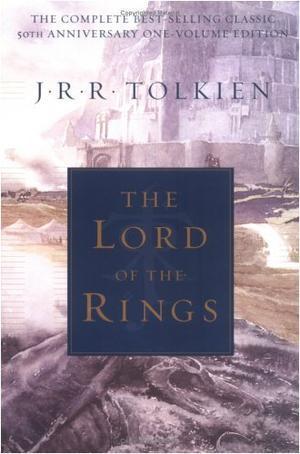
“He is surer of finding the way home in a blind night than were the cats of Queen Beruthiel.”  (The Lord of the Rings, Book Two, Chapter 4, “A Journey in the Dark”)

Although Tolkien never mentioned those felines again in print, we know a little more about the Queen and her cats from what Christopher Tolkien calls “a very ‘primitive’ outline, in one part illegible” (see Unfinished Tales, page 419), including “She had nine black cats and one white…setting them to discover all the dark secrets of Gondor”, but, as the author himself wrote, in a letter to W.H. Auden:

“I have yet to learn anything about the cats of Queen Beruthiel.”

having prefaced that with, “These rhymes and names will crop up; but they do not always explain themselves.”  (letter to W.H. Auden, 7 June, 1955, Letters, 419)

Or is this like Conan Doyle, using Sherlock Holmes to drop a teasing hint of more to come—which never did?

PPS

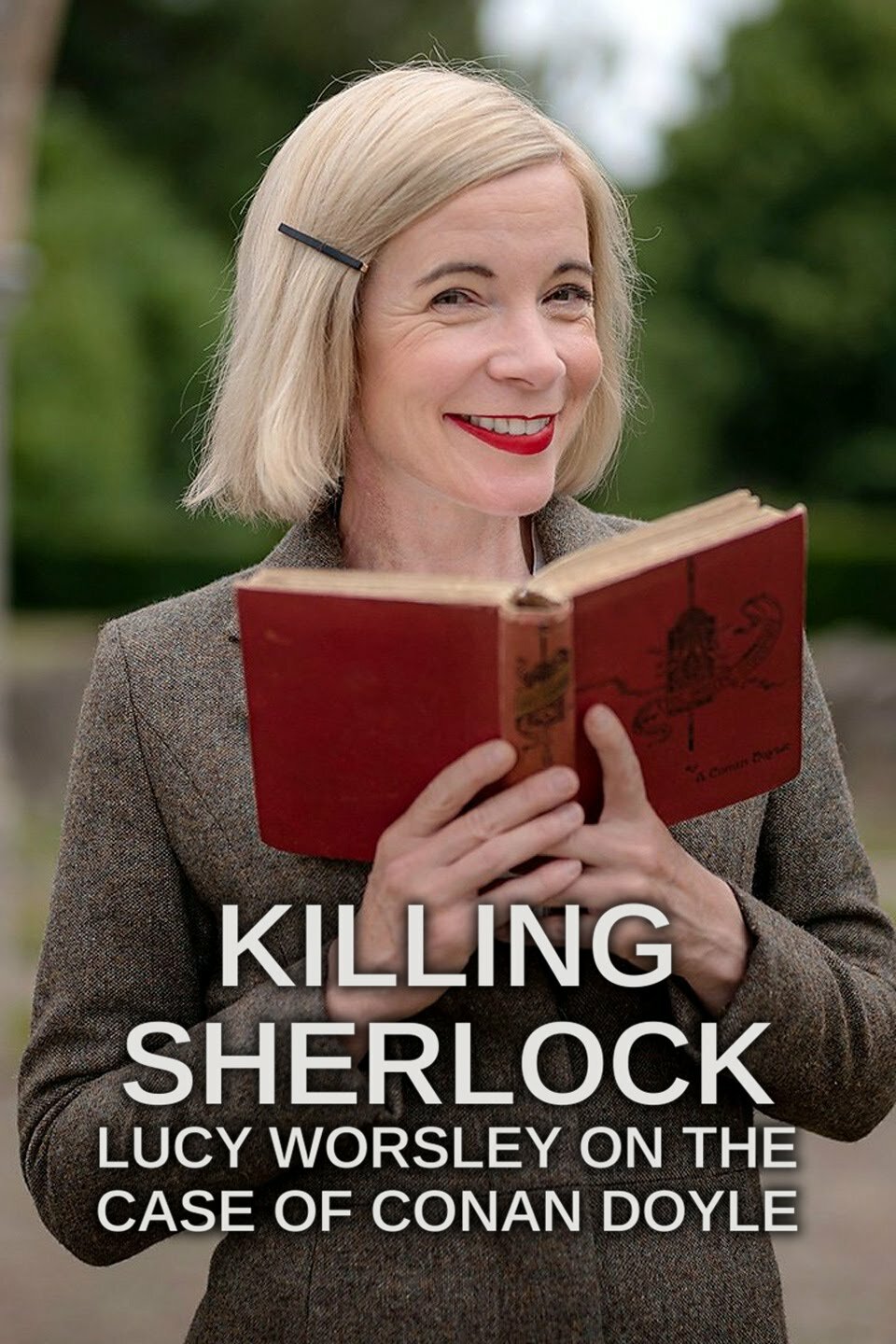
If you have access to it, you might enjoy this lively BBC series by the English historian, Lucy Worsley, on Conan Doyle’s love/hate relationship with Sherlock Holmes–

Arabian Nights for Days

31 Wednesday Jan 2024

Posted by Ollamh in Uncategorized

≈ Leave a comment

Tags

book-review, book-reviews, books, Fantasy, reading

As always, dear readers, welcome.

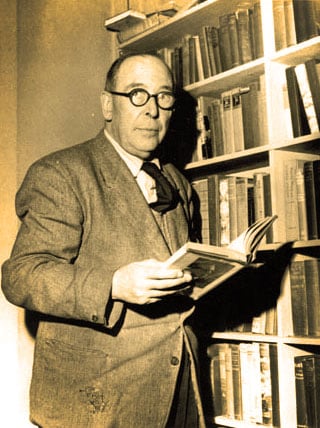
C.S. Lewis once remarked that, “You can’t get a cup of tea large enough or a book long enough to suit me.”  (from a transcript of a lecture given by Lewis’ sometime editor and biographer, Walter Hooper—here’s the whole piece:  https://www.historyspage.com/post/cs-lewis-inklings-memories-walter-hooper )

Considering my affection, not only for

but

and such works as these,

as well as a life-long love of

(but such a small cup!),

it’s clear that I’m in whole-hearted agreement with “Jack”, as his brother, “Warnie”, had named him in childhood.

In this spirit, during the early fall, I embarked upon a project I’ve long told myself I would do:  read the whole of The Thousand Nights and One Night—in translation, unfortunately.

I began with this introduction—

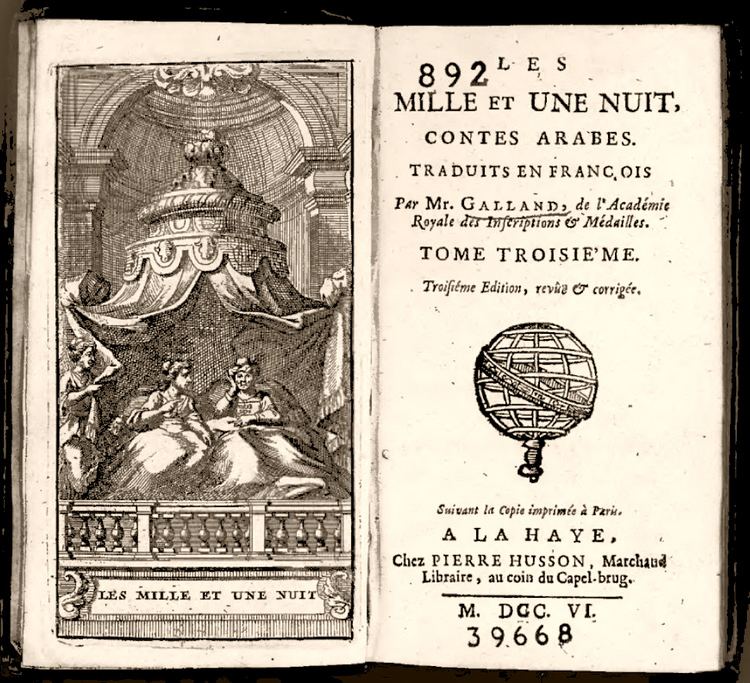
From earlier work (and postings) on the origins of “contes des fees”, as early French authors—the creators of our literary stories, like “La Belle et La Bete”, originally written by Gabrielle-Suzanne Barbot de Villeneuve in 1740, but better known by the revised 1756 version of Jeanne-Marie Leprince de Beaumont–called them—I knew something of the story of how English-speakers first encountered The Arabian Nights in the so-called “Grub Street” edition of 1706, itself an anonymous translation of Antoine Galland’s (1646-1715)

Les Mille et Une Nuits of 1704-1717.

I soon discovered, however, just how much more there was to know.  In chapters with intriguing titles like “Beautiful Infidels” and “Oceans of Story”, the author, Robert Irwin, laid out the complex history of this vast collection, which most of us know from tales which aren’t even in the main collection, “orphan stories” like “Aladdin”

(Albert Robida, 1848-1926)

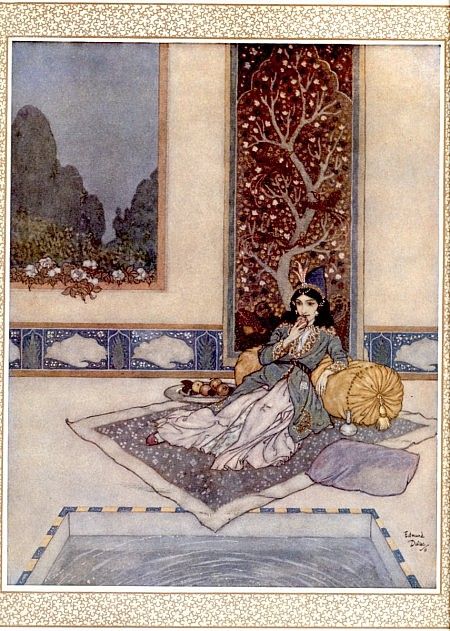
and “Ali Baba and the Forty Thieves.” 

(Edmond Dulac, 1882-1953)

(For more on translations, see: https://en.wikipedia.org/wiki/Les_mille_et_une_nuits and https://en.wikipedia.org/wiki/Translations_of_One_Thousand_and_One_Nights )

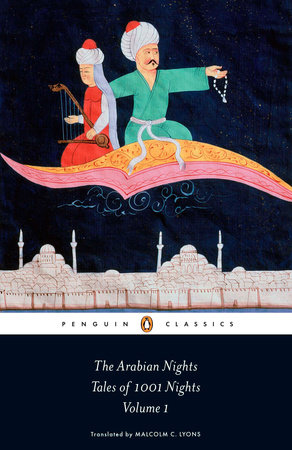
Armed with the knowledge Irwin provided, it was time to begin reading.  I chose what seemed the best translation in English, by Malcolm C. Lyons, in a set of four Penguin volumes and launched into the first.

I imagine that you know the general frame:  King Shahryar learns that his wife is unfaithful.   To keep himself from being cuckolded again, he marries a new bride every night and has her beheaded the next morning.  His Vizier’s daughter Shahrazad, decides to stop this by marrying the Sultan but then, telling one story after another, to keep him so interested night after night by stopping a story at the night’s end without finishing, to force him to suspend his murderous habit to find out what happened next. 

(Another Dulac.  If you’d like to see more of his gorgeous illustrations, look here:  https://www.gutenberg.org/cache/epub/51432/pg51432-images.html )

Finally, after 1001 stories (or perhaps a few more), he decides not to continue murdering brides, Shahrazad is saved, and, presumably, lives happily ever after (really?  Could you ever trust this man not to change his mind?).

I’ve just finished Volume 1 and set off into Volume 2

and it’s been an extremely interesting experience.  Unlike a long novel, like War and Peace, where we follow the adventures of a few main characters—Natasha, Pierre, and Andrei—even when surrounded by a host of other characters (and Tolstoy’s book has a flood of them), in The Arabian Nights, except for the shell characters—the king, the story-teller, and the story-teller’s sister, who can act as a prompter–the main characters can change often, sometimes making it difficult to remember who is doing what with or to whom.  More than once, I had to turn back a page, scan paragraphs, asking myself, “Who is Ali ibn Ishaq again?” or “Is this the brother—or is it brother-in-law?  And is this the same slave who…?”  As well, this unexpurgated text is filled with poetry, some of which is reflective of something going on in the story, some—maybe more than some—is simply poetry which has been inserted into the text.  Because it might be part of the story, I continued to read it, but often it was just what it appeared to be:  poetry inserted for some reason I didn’t understand into the text. 

At the same time, as story spawned story, stories were interwoven, stories linked themselves here and there into complex narratives, there was a certain hypnotic quality to it which kept me reading, not so much because the characters had looped me in as that the method of telling itself had.  I might not care about why X was beheaded, but I was certainly interested to understand how the story had turned in that direction and he was.  In other words, just as Shahrazad had seduced the king with her telling into wanting more and more, so she had seduced me into reading on, always wondering, “Where is this going and how will it end?”  And—just as interesting—“How will we move to the next story?”

At over 950 pages on average for each of 4 volumes, each of these would surely have (at least temporarily) satisfied C.S. Lewis—but where would we ever find a tea cup large enough to keep him—and me—going?

Thanks, as ever, for reading.

Stay well,

Uncork no bottle unless you’ve already planned how to deal with the djinn inside,

And know that, as always, there’s

MTCIDC

O

Down the Hole

24 Wednesday Jan 2024

Posted by Ollamh in Uncategorized

≈ Leave a comment

Tags

book-review, books, Fantasy, J.R.R. Tolkien, Tolkien

As ever, welcome, dear readers.

“In another moment down went Alice after it, never once considering how in the world she was to get out again.

The rabbit-hole went straight on like a tunnel for some way, and then dipped suddenly down, so suddenly that Alice had not a moment to think about stopping herself before she found herself falling down what seemed to be a very deep well.” (Alice’s Adventures in Wonderland, Chapter One, “Down the Rabbit-hole”  and you can have your own copy of the second version of the first—1865-66 edition here:  https://ia600505.us.archive.org/27/items/alicesadventur00carr/alicesadventur00carr.pdf and read about why I wrote “1865-66 edition” and much more here:   https://en.wikipedia.org/wiki/Alice%27s_Adventures_in_Wonderland )

(I discovered this image on two different pinterest sites, one in Korean, the other under the name “Ree Smith”, but with no artist identified, alas.   I love all puppets and shadow puppets in particular and this so reminded me of the work of Lotte Reiniger (1899-1981) and her “Adventures of Prince Achmed”, 1926,

that it made me wish that she had made an “Alice”.  To learn more about Reiniger and her work, see:  https://silentfilm.org/the-adventures-of-prince-achmed-1/   The original film hasn’t survived as such, but to see a reconstruction by a passionate amateur—and it’s a remarkable work—look here:  https://archive.org/details/prince-achmed-english-subtitles  )

As you can see from where I’ve just gone, English has adopted “down the rabbit hole” to mean “digressive”, which, in turn, comes from the Latin verb, digredior, “to go away from”, (literally, “to walk away from”, being a combination of dis, “apart/away from” plus gradus, “a step”)—and look, have I just begun to do a mini-rabbit hole again?

I, myself, in writing nearly 500 postings, have happily fallen down almost innumerable such holes, and this posting began with a tumble down another.

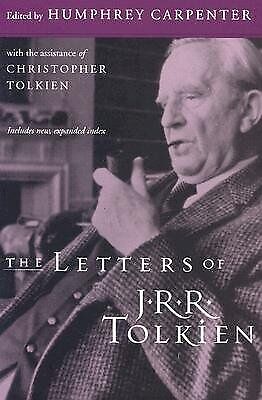
I was delighted to learn, last autumn, that there was to be a new edition of Carpenter/Tolkien’s 1981 The Letters of J.R.R. Tolkien, a mainstay for anyone with a strong interest, not only in Tolkien and his work, but in the writing of fantasy in general.

Humphrey Carpenter (1946-2005), with the aid of Christopher Tolkien, had done—as in his biography of Tolkien, 1977—an amazing job of collecting the materials (for a brief, affectionate obituary of Carpenter, see:  https://www.theguardian.com/news/2005/jan/05/guardianobituaries.booksobituaries ), but as we learn, he had done almost too good a job and the publisher was forced to have rather significant cuts made.  This new edition includes both material cut from letters and a series of letters cut from that original addition, as well.

Needless to say, it arrived and I was paging through it when I came across this rather mystifying reference in a letter to Christopher from 29 November, 1944:

“Very trying having your chief audience Ten Thousand Miles away, on or off The Walloping Window-blind.” (to Christopher Tolkien, 29 November, 1944, Letters, 147)

Unusually for Carpenter, there was no endnote as to what this was a reference, so—oh yes, yet again, a rabbit hole plunge, which revealed this:


“A capital ship for an ocean trip

Was “The Walloping Window-blind;”

No gale that blew dismayed her crew

Or troubled the captain’s mind.

The man at the wheel was taught to feel

Contempt for the wildest blow,

And it often appeared, when the weather had cleared,

That he’d been in his bunk below.

The boatswain’s mate was very sedate,

Yet fond of amusement, too;

And he played hop-scotch with the starboard watch

While the captain tickled the crew.

And the gunner we had was apparently mad,

For he sat on the after-rail,

And fired salutes with the captain’s boots,

In the teeth of the booming gale.

The captain sat in a commodore’s hat,

And dined, in a royal way,

On toasted pigs and pickles and Jigs

And gummery bread, each day.

But the cook was Dutch, and behaved as such;

For the food .that he gave the crew

Was a number of tons of hot-cross buns,

Chopped up with sugar and glue.

And we all felt ill as mariners will,

On a diet that’s cheap and rude;

And we shivered and shook as we dipped the cook

In a tub of his gluesome food.

Then nautical pride we laid aside,

And we cast the vessel ashore

On the Gulliby Isles, where the Poohpooh smiles,

And the Anagazanders roar.

Composed of sand was that favored land,

And trimmed with cinnamon straws;

And pink and blue was the pleasing hue

Of the Tickletoeteaser’s claws.

And we sat on the edge of a sandy ledge

And shot at the whistling bee;

And the Binnacle-bats wore water-proof hats

As they danced in the sounding sea.

On rubagub bark, from dawn to dark,

We fed, till we all had grown

Uncommonly shrunk, when a Chinese junk

Came by from the torriby zone.

She was stubby and square, but we didn’t much care,

And we cheerily put to sea;

And we left the crew of the junk to chew

The bark of the rubagub tree.”

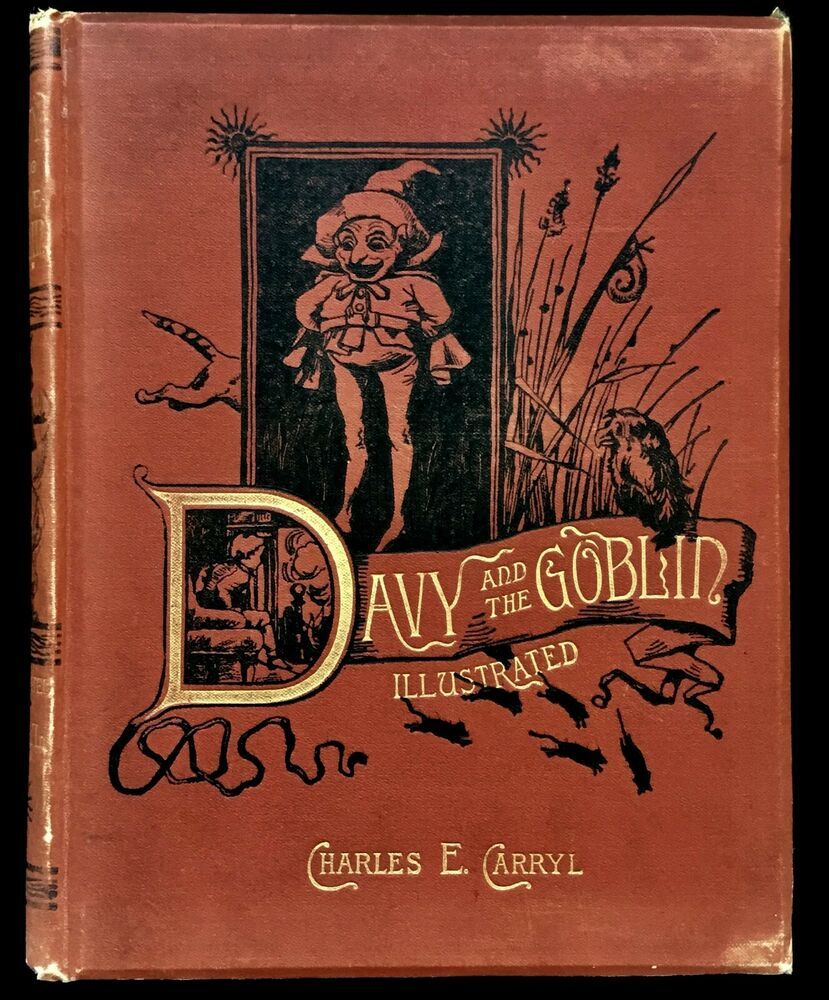
This is quoted from Davy and the Goblin, 1884-5,

by Charles E. Carryl (1841-1920), a later-Victorian/Edwardian American children’s author.

(You can read your own copy here:  https://archive.org/details/davythegoblinorw00carriala , finding the poem on pages 89-90.  There are free-floating copies of this poem at various sites, but often oddly adulterated, so, if you wish to read what Carryl wrote, here it is.)

Carryl subtitled this, “or, What Followed Reading ‘Alice’s Adventures in Wonderland’ “ and the text consists of the Goblin of the title leading the Davy of the title on a “Believing Voyage”.  This is stocked with a series of characters, some from children’s literature like Sinbad and Robinson Crusoe, some fantastical creatures, including a Whale in a Waistcoat and talking waves, and the perhaps inevitable fairies, although their queen is rather more like the Queen of Hearts in Alice than something dreamlike.  

The Goblin’s goal is to persuade Davy, who has apparently maintained that he “doesn’t believe in fairies, nor in giants, nor in goblins, nor in anything the story-books tell you.”  to change his mind on the subject.  Perhaps I’m an inattentive reader, but I’m not sure that, when Davy awakes at the end of Chapter XIV (another inevitability, at least given Alice as an influence), he’s any more a believer than he was in Chapter I, but the whimsy involved has a certain charm and Carryl can get a catchy prosodic pattern going, as in “The Walloping Window-blind”.  Although that subtitle suggests not only Carroll’s episodic—perhaps even picaresque—narrative and certainly there’s something Carrollish about the poems scattered throughout, I would suggest two other influences upon the verses:  Edward Lear (1812-1888) and W.S. Gilbert (1836-1911), in such items as Gilbert’s “The Yarn of the Nancy Bell” (see:  https://allpoetry.com/The-Yarn-of-the-Nancy-Bell )–but I sense another rabbit hole dead ahead!

As always, thanks for reading,

Stay well,

Resist puns, when possible—Carryl can’t,

And remember that, as always there’s

MTCIDC

O

The Doubtful Sea Series Facebook Page

The Doubtful Sea Series Facebook Page

  • Ollamh

Categories

  • Artists and Illustrators
  • Economics in Middle-earth
  • Fairy Tales and Myths
  • Films and Music
  • Games
  • Heroes
  • Imaginary History
  • J.R.R. Tolkien
  • Language
  • Literary History
  • Maps
  • Medieval Russia
  • Military History
  • Military History of Middle-earth
  • Narnia
  • Narrative Methods
  • Poetry
  • Research
  • Star Wars
  • Terra Australis
  • The Rohirrim
  • Theatre and Performance
  • Tolkien
  • Uncategorized
  • Villains
  • Writing as Collaborators
Follow doubtfulsea on WordPress.com

Across the Doubtful Sea

Recent Postings

  • Through a glass… January 7, 2026
  • Heffalumps? December 31, 2025
  • We Three Kings December 24, 2025
  • A Moon disfigured December 17, 2025
  • On the Roads Again—Once More December 10, 2025
  • (Not) Crossing Bridges December 3, 2025
  • On the Road(s) Again—Again November 26, 2025
  • On the Road(s) Again November 19, 2025
  • To Bree (Part 2) November 12, 2025

Blog Statistics

  • 104,127 Views

Posting Archive

  • January 2026 (1)
  • December 2025 (5)
  • November 2025 (4)
  • October 2025 (5)
  • September 2025 (4)
  • August 2025 (4)
  • July 2025 (5)
  • June 2025 (4)
  • May 2025 (4)
  • April 2025 (5)
  • March 2025 (4)
  • February 2025 (4)
  • January 2025 (5)
  • December 2024 (4)
  • November 2024 (4)
  • October 2024 (5)
  • September 2024 (4)
  • August 2024 (4)
  • July 2024 (5)
  • June 2024 (4)
  • May 2024 (5)
  • April 2024 (4)
  • March 2024 (4)
  • February 2024 (4)
  • January 2024 (5)
  • December 2023 (4)
  • November 2023 (5)
  • October 2023 (4)
  • September 2023 (4)
  • August 2023 (5)
  • July 2023 (4)
  • June 2023 (4)
  • May 2023 (5)
  • April 2023 (4)
  • March 2023 (5)
  • February 2023 (4)
  • January 2023 (4)
  • December 2022 (4)
  • November 2022 (5)
  • October 2022 (4)
  • September 2022 (4)
  • August 2022 (5)
  • July 2022 (4)
  • June 2022 (5)
  • May 2022 (4)
  • April 2022 (4)
  • March 2022 (5)
  • February 2022 (4)
  • January 2022 (4)
  • December 2021 (5)
  • November 2021 (4)
  • October 2021 (4)
  • September 2021 (5)
  • August 2021 (4)
  • July 2021 (4)
  • June 2021 (5)
  • May 2021 (4)
  • April 2021 (4)
  • March 2021 (5)
  • February 2021 (4)
  • January 2021 (4)
  • December 2020 (5)
  • November 2020 (4)
  • October 2020 (4)
  • September 2020 (5)
  • August 2020 (4)
  • July 2020 (5)
  • June 2020 (4)
  • May 2020 (4)
  • April 2020 (5)
  • March 2020 (4)
  • February 2020 (4)
  • January 2020 (6)
  • December 2019 (4)
  • November 2019 (4)
  • October 2019 (5)
  • September 2019 (4)
  • August 2019 (4)
  • July 2019 (5)
  • June 2019 (4)
  • May 2019 (5)
  • April 2019 (4)
  • March 2019 (4)
  • February 2019 (4)
  • January 2019 (5)
  • December 2018 (4)
  • November 2018 (4)
  • October 2018 (5)
  • September 2018 (4)
  • August 2018 (5)
  • July 2018 (4)
  • June 2018 (4)
  • May 2018 (5)
  • April 2018 (4)
  • March 2018 (4)
  • February 2018 (4)
  • January 2018 (5)
  • December 2017 (4)
  • November 2017 (4)
  • October 2017 (4)
  • September 2017 (4)
  • August 2017 (5)
  • July 2017 (4)
  • June 2017 (4)
  • May 2017 (5)
  • April 2017 (4)
  • March 2017 (5)
  • February 2017 (4)
  • January 2017 (4)
  • December 2016 (4)
  • November 2016 (5)
  • October 2016 (6)
  • September 2016 (5)
  • August 2016 (5)
  • July 2016 (5)
  • June 2016 (5)
  • May 2016 (4)
  • April 2016 (4)
  • March 2016 (5)
  • February 2016 (4)
  • January 2016 (4)
  • December 2015 (5)
  • November 2015 (5)
  • October 2015 (4)
  • September 2015 (5)
  • August 2015 (4)
  • July 2015 (5)
  • June 2015 (5)
  • May 2015 (4)
  • April 2015 (3)
  • March 2015 (4)
  • February 2015 (4)
  • January 2015 (4)
  • December 2014 (5)
  • November 2014 (4)
  • October 2014 (6)
  • September 2014 (1)

Blog at WordPress.com.

  • Subscribe Subscribed
    • doubtfulsea
    • Join 78 other subscribers
    • Already have a WordPress.com account? Log in now.
    • doubtfulsea
    • Subscribe Subscribed
    • Sign up
    • Log in
    • Report this content
    • View site in Reader
    • Manage subscriptions
    • Collapse this bar
 

Loading Comments...