• About

doubtfulsea

~ adventure fantasy

Tag Archives: Balin

Runing Things

13 Wednesday Aug 2025

Posted by Ollamh in J.R.R. Tolkien, Language, Tolkien

≈ Leave a comment

Tags

Anglo-Frisian Runes, Balin, Bryggen, divination, Fireworks, Futhark, Futhorc, Gandalf, Harys Dalvi, Kylver Stone, Moria, Robwords, runes, Tacitus, The Lord of the Rings, Thror's Map, Tolkien, Vimose comb

Welcome, as ever, dear readers.

It is a grim moment, in The Lord of the Rings when the company, making its way through the complexity of Moria in near-darkness, save for Gandalf’s staff, reaches this—

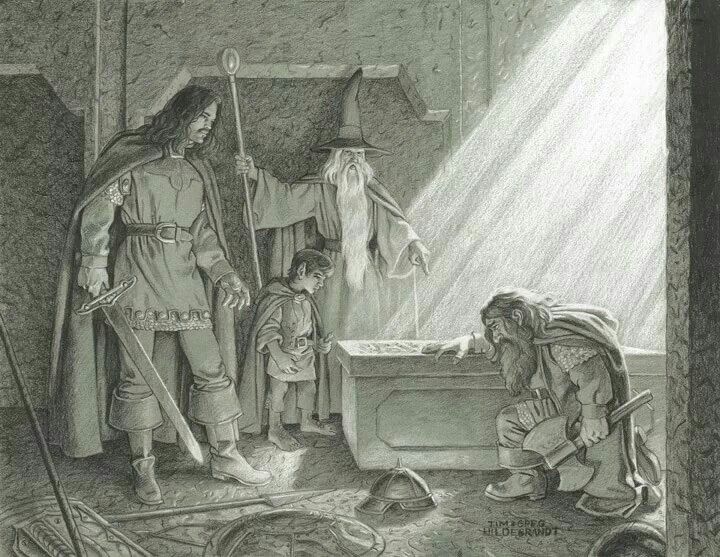
“Their feet disturbed a deep dust upon the floor, and stumbled among things lying in the doorway whose shapes they could not at first make out.  The chamber was lit by a wide shaft high in the further eastern wall; it slanted upwards and, far above, a small square patch of blue sky could be seen.  The light of the shaft fell directly on a table in the middle of the room:  a single oblong block, about two feet high, upon which was laid a great slab of white stone.
(the Hildebrandts)

‘It looks like a tomb,’ muttered Frodo, and bent forwards with a curious sense of foreboding, to look more closely at it.  Gandalf came quickly to his side.  On the slab runes were deeply graven:

‘These are Daeron’s Runes, such as were used of old in Moria,’ said Gandalf.  ‘Here it is written in the tongues of Men and Dwarves:

BALIN SON OF FUNDIN

LORD OF MORIA ‘.”  (The Lord of the Rings, Book Two, Chapter 4, “A Journey in the Dark”)

Even if you’re not an expert in early western writing systems, you’ve probably encountered runes before.  They appear to be a Germanic invention, with their first known outside mention thought to be in P. Cornelius Tacitus’ (c.56-c.120 AD) essay on some northern tribes, Germania, where this passage is cited.

“[10] Auspicia sortesque ut qui maxime observant: sortium consuetudo simplex. Virgam frugiferae arbori decisam in surculos amputant eosque notis quibusdam discretos super candidam vestem temere ac fortuito spargunt. Mox, si publice consultetur, sacerdos civitatis, sin privatim, ipse pater familiae, precatus deos caelumque suspiciens ter singulos tollit, sublatos secundum impressam ante notam interpretatur.”

“[the Germans] pay very close attention to auspices and lot-drawing:  the practice of lot-drawing is simple.  They split a branch cut from a fruit tree into splinters and scatter those, marked out with certain signs, on a white robe casually and randomly.  Then a priest of the settlement, if it may be the public consulting of an oracle, but if private, the father of a family himself, having prayed to the gods and raising his eyes to the sky, draws three [splinters] one at a time [and] interprets those drawn according to the mark stamped upon [them] previously.”

(Tactius, Germania, Section 10—my translation.  If you’d like to read the whole text, here’s a useful Victorian translation:  https://archive.org/details/tacitusagricolag00taciiala/page/62/mode/2up )

We don’t know where Tacitus got his information from, but he lived at about the same time as one of the earliest currently-known runic inscriptions, the “Vimose comb”, dated to about 160AD,

(There seem to be two guesses at to what the inscription says—transliterated, it appears to read “harja”, meaning either the obvious “comb” or the less obvious “warrior”.  For more on this and other early rune-marked artifacts, see:  https://en.wikipedia.org/wiki/Vimose_inscriptions and https://en.natmus.dk/historical-knowledge/denmark/prehistoric-period-until-1050-ad/the-early-iron-age/the-weapon-deposit-from-vimose/the-offerings-in-vimose/   Until they sold out, you could even get a bone replica of the comb here:  https://norseimports.com/products/vimose-comb )

so the notae, “marks”, he mentioned could, indeed, be early runes.

We’ve seen runes three times before in the book, each time related to Gandalf and the first letter of his name in runes–
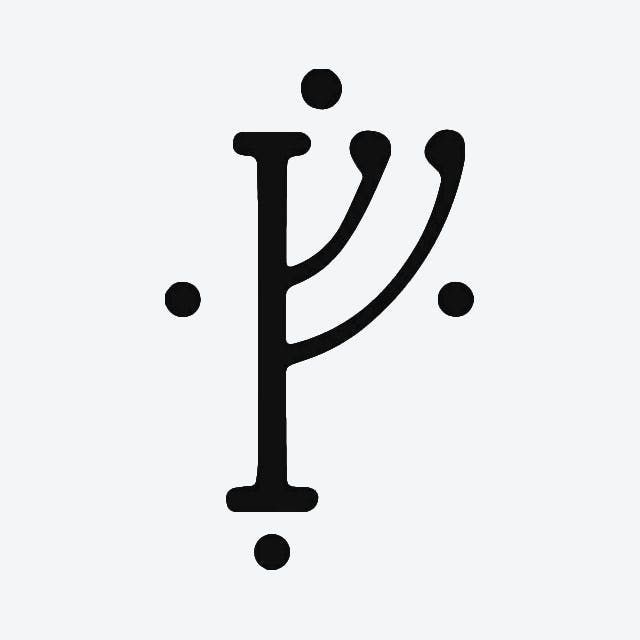
The first is a jolly appearance:
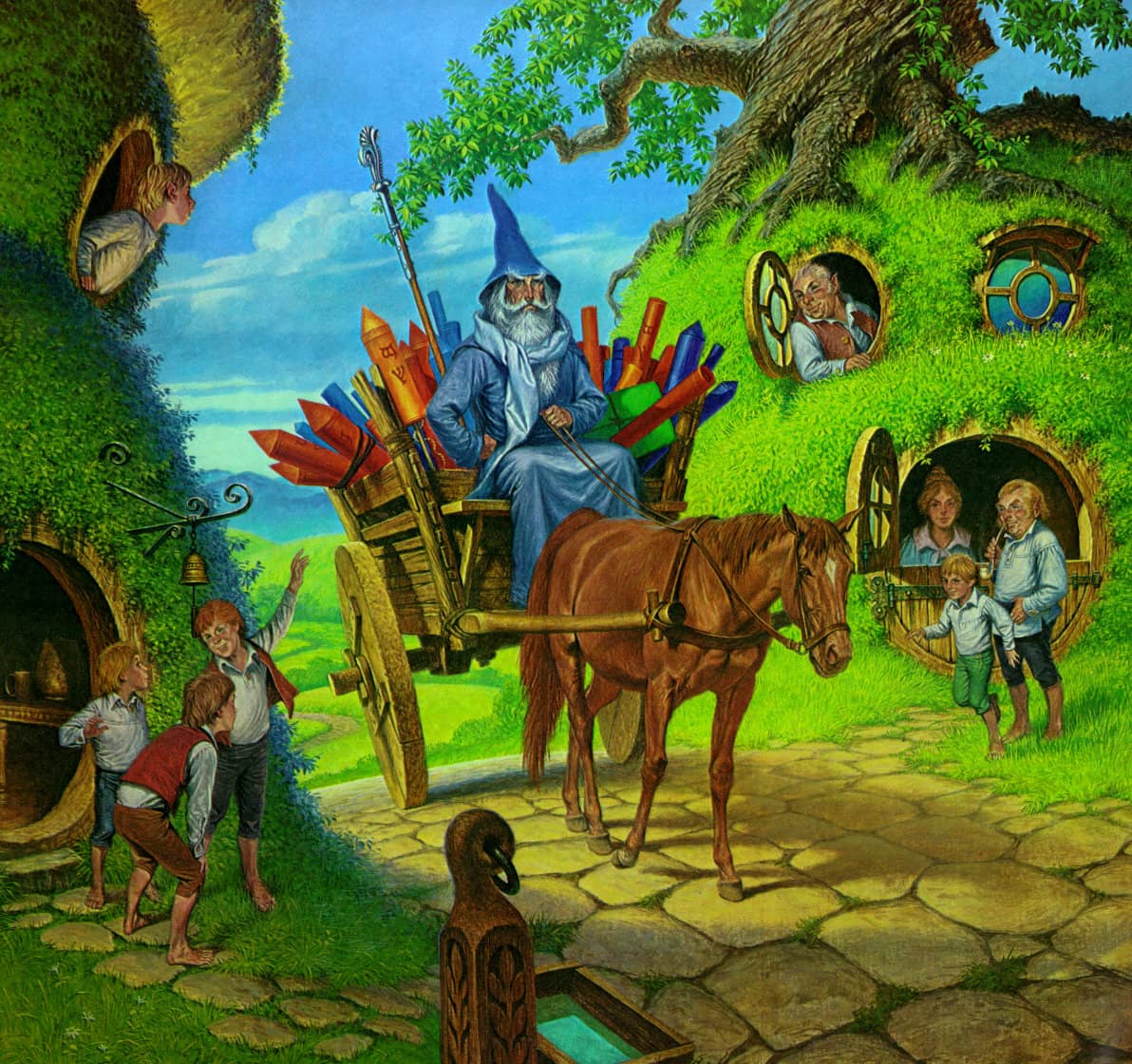
(Darrell K. Sweet, who died, unfortunately, in 2011, but you can see his archived website here:  https://web.archive.org/web/20110131141507/http://www.sweetartwork.com/DKSmainPage.html and read a little more about this very talented illustrator here:  https://en.wikipedia.org/wiki/Darrell_K._Sweet And I couldn’t resist adding this knowledgeable appreciation of his work:  https://blackgate.com/2022/04/17/an-adventure-to-be-had-a-journey-through-the-art-of-darrell-k-sweet/ )

“At the end of the second week in September a cart came in through Bywater from the direction of Brandywine Bridge in broad daylight.  An old man was driving it all alone…It had a cargo of fireworks…At Bilbo’s front door the old man began to unload:  there were great bundles of fireworks of all sorts and shapes, each labeled with a large red G [runic letter] and the elf-rune [see the image above].” (The Fellowship of the Ring, Book One, Chapter 1, “A Long-Expected Party”)

The second is not, being Gandalf’s much-delayed letter to Frodo, still at the Prancing Pony in Bree, instead of being delivered 3 months before to the Shire, meant to alert Frodo to the possibility that he won’t meet them, with some consolation that Strider might appear. (The Fellowship of the Ring, Book One, Chapter 10, “Strider”)

(the Hildebrandts)

And the third is only guessed at as seeming to be a sign from Gandalf on Weathertop:

“ ‘The stroke on the left might be a G-rune with thin branches,’ said Strider.  ‘It might be a sign left by Gandalf, though one cannot be sure…I should say…that they stood for G3, and were a sign that Gandalf was here on October the third:  that is three days ago now.  It would also show that he was in a hurry and danger was at hand, so he had no time or did not dare to write anything longer or plainer.  If that is so, we must be wary.’ “ (The Fellowship of the Ring, Book One, Chapter 11, “A Knife in the Dark”)
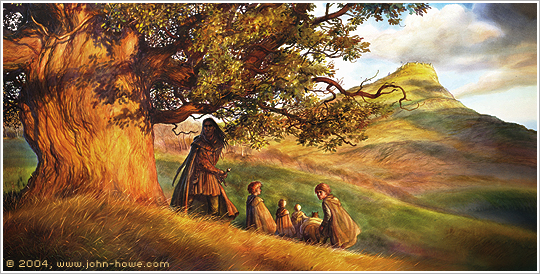
(John Howe)

In our Middle-earth, there are several iterations of runes, with the melodious (modern) names of “Futhark”(Elder and Younger) and “Futhorc”, which get those names, as the word “alphabet” does, from putting together a collection of the first letters of the series in a standard order.  Here’s the Elder Futhark—

It’s easy to see why the letters might be shaped as they were, appearing to be relatively easy to inscribe on things with a knife.  (Or a chisel for the stone inscriptions?)
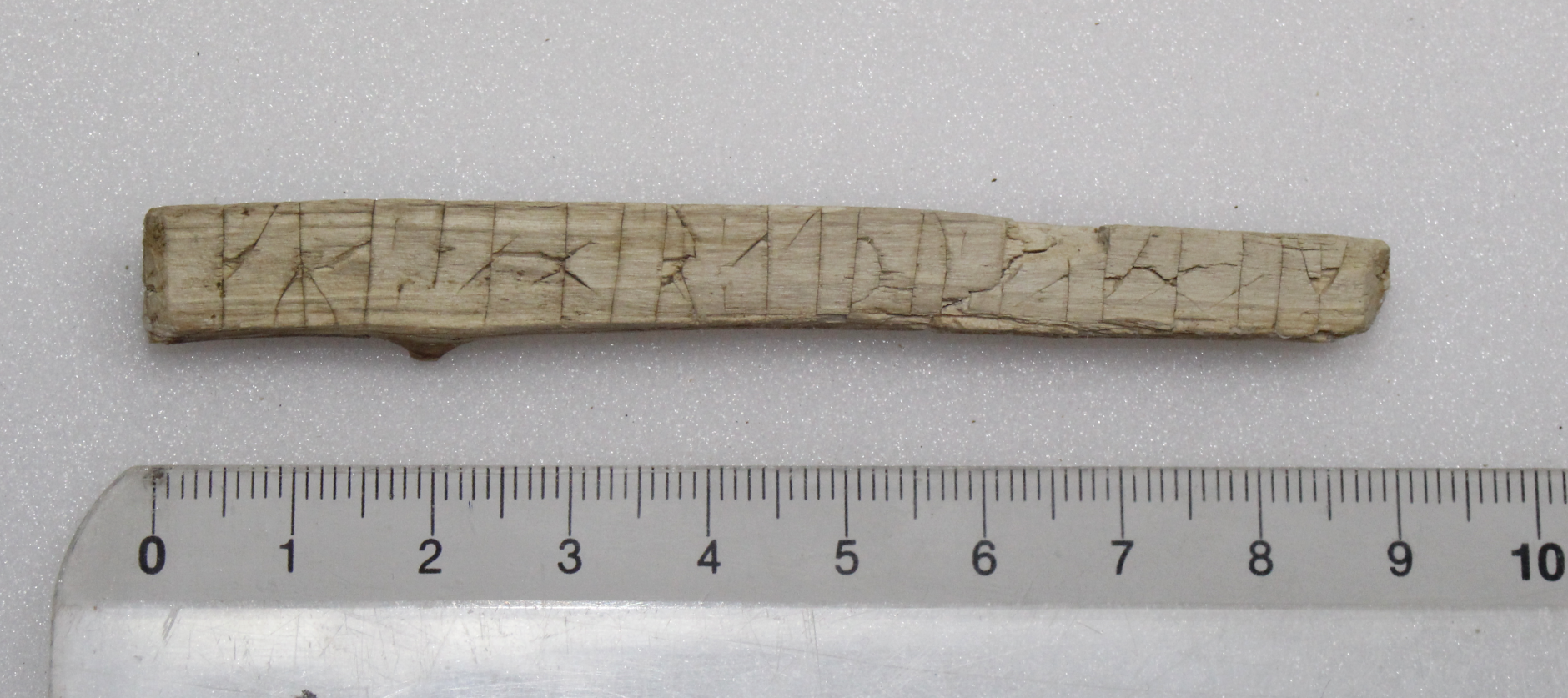
(a 12th-century AD inscription on wood from Bryggen in Norway—one of 670 inscriptions on wood or bone found at the site since 1955—for more see:  https://en.wikipedia.org/wiki/Bryggen_inscriptions  and https://en.wikipedia.org/wiki/Bryggen One of the many amazing things about this second piece is that it underlines just how sophisticated trade could be in northern Europe in the Middle Ages.)
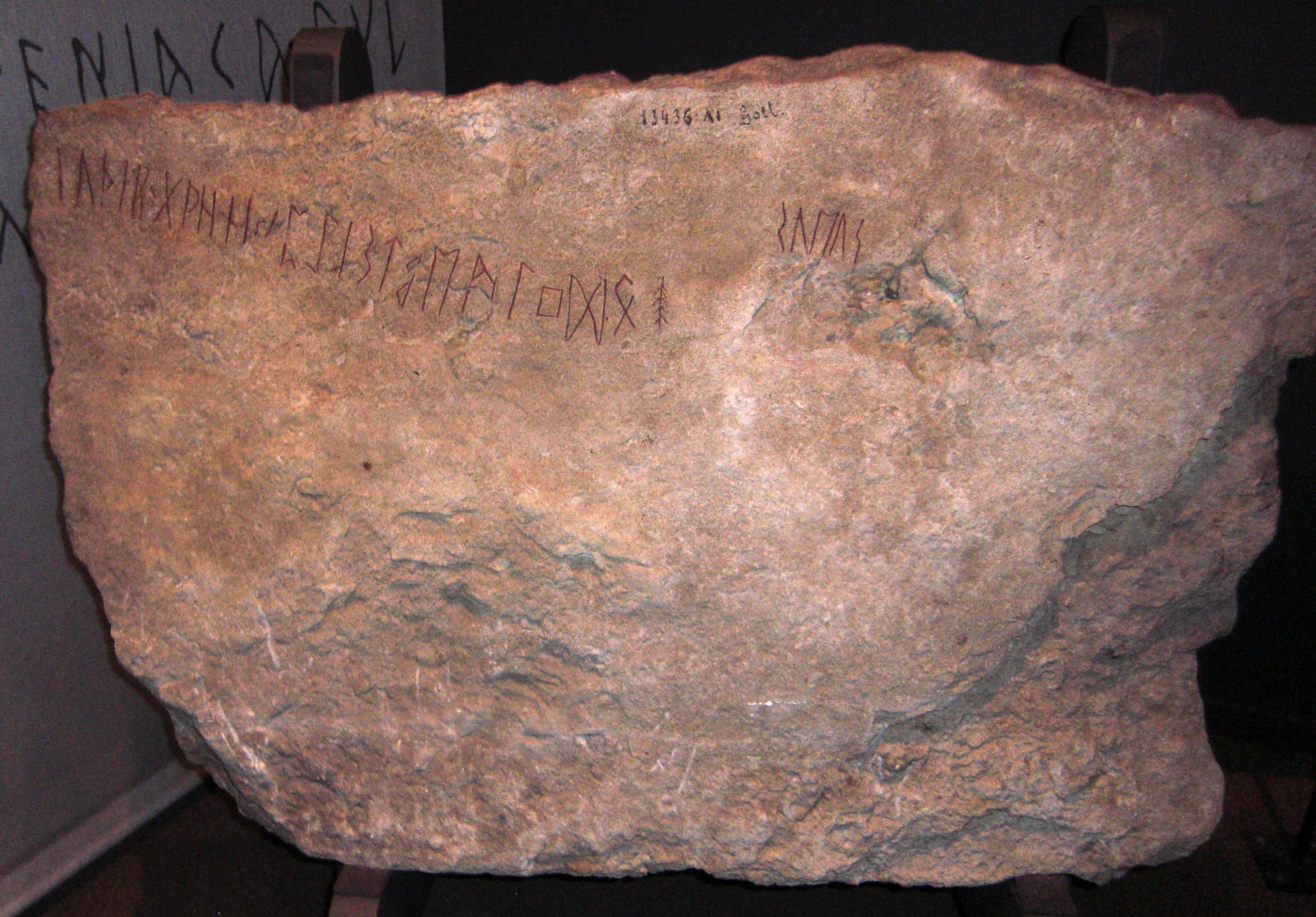
(This is the Kylver Stone from Gotland, Sweden, c.400AD, which lists the Elder Futhark letters.  For more, see:  https://en.wikipedia.org/wiki/Kylver_Stone and you can see from the translation of the runes where “Futhark” came from. )

Tolkien’s own runes, as he tells us, are derived from what are sometimes called the “Anglo-Saxon” or “Anglo-Frisian” Futhorc:

“There is the matter of the Runes.  Those used by Thorin and Co., for special purposes, were comprised of an alphabet of thirty-two letters (full list on application), similar to, but not identical, with the runes of Anglo-Saxon inscriptions.”  (letter to the editor of The Observer, published there 20 February, 1938, Letters, 42)

We can then imagine that this is what must appear as the “moon letters” on Thror’s map—
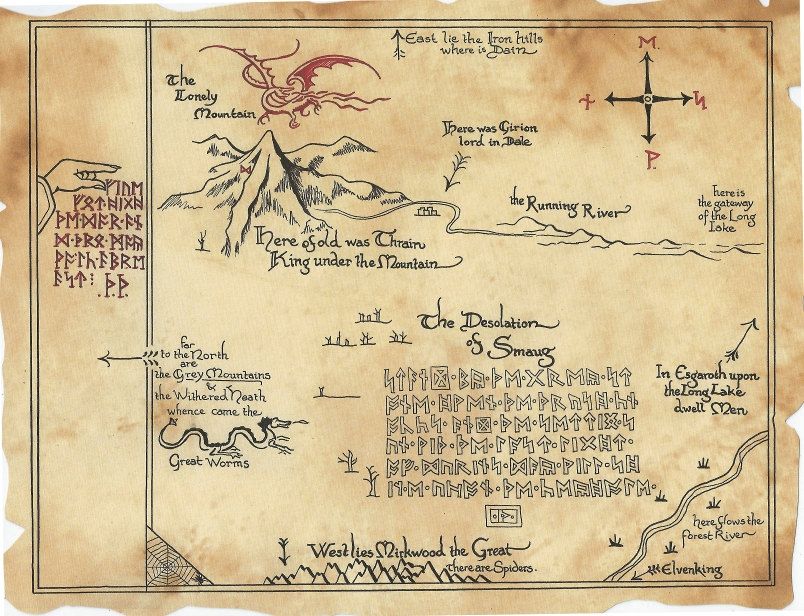
 

And this brings me to my final point.

In my last, in connection with the conlang (constructed language) toki pona, I mentioned the internet site Robwords, one of my favorite places for information and discussion about languages, primarily English, German, and French, but with some surprises (see last week’s “Simple Words” for more).

(This is Rob Watts, of Robwords)

One of those surprises was toki pona, but, in another, Rob made the suggestion that the Roman alphabet, in which I’m writing this posting, was rotten for the English language, being adapted from the Greek alphabet (in turn adapted from the Phoenician alphabet) via the Etruscan alphabet,
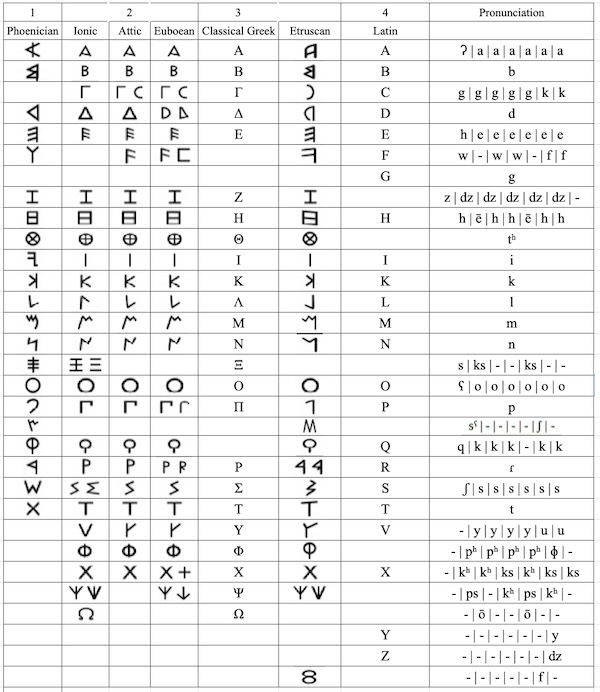
and lacking letters for certain common English sounds like “th” and “sh” and “ng”.

In his playful way, he suggested that we’d be better off with the runic system, and specifically that Anglo-Saxon version, aka Futhorc.
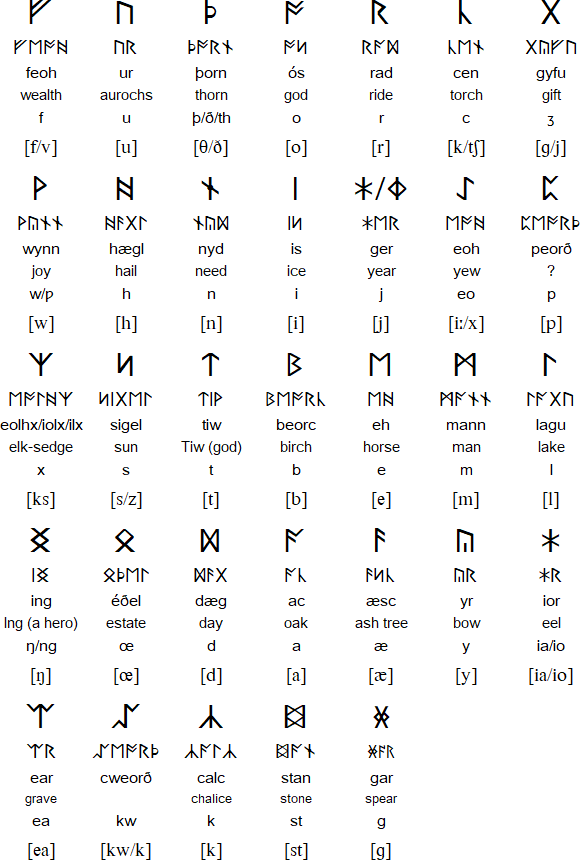
 To prove his point, he cites something familiar to Tolkien readers—

and then proceeds to translate it, showing that it’s not in the language of the dwarves, as one might expect from a dwarvish map, but English (or, if you prefer, “the Common Speech”).
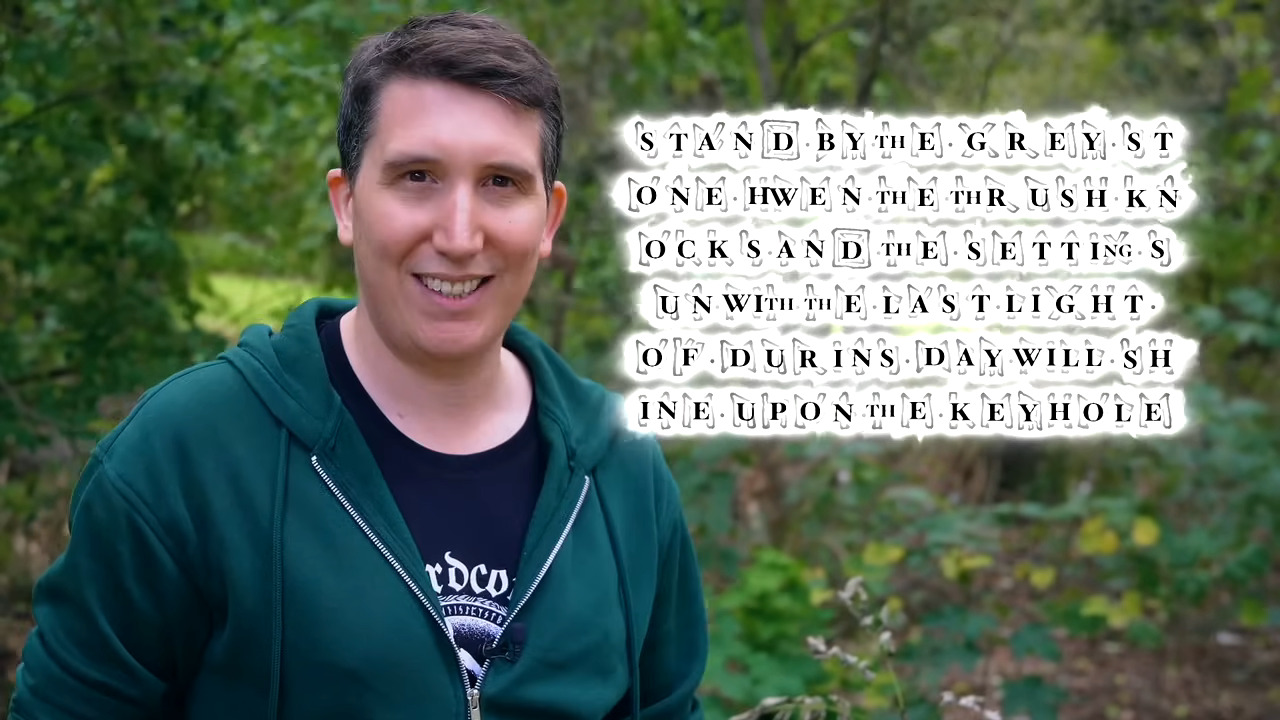
Watch the video, then, and see if you agree with Rob: https://www.youtube.com/watch?v=4npuVmGxXuk

And, if you’d like to try your hand at using the runes, here’s something to help—it’s a link to Harys Dalvi’s Old English runic keyboard:  https://www.harysdalvi.com/futhorc/  Harys Dalvi’s website is full of really interesting language and computer stuff and just plain fun:  https://www.harysdalvi.com/

Thanks, as always, for reading,

(ᚦᚫᛝᚳᛋ᛫ᚫᛋ᛫ᚫᛚᚹᛠᛋ᛫ᚠᚪᚱ᛫ᚱᛁᛁᛞᛁᛝ)

Stay well,

(ᛥᛠ᛫ᚹᛖᛚ)

Try runisizing today,

(ᛏᚱᚫᛁ᛫ᚱᚢᚾᛁᛋᛁᛋᛁᛝ᛫ᛏᚣᛞᛠ)

And remember that, as always, there’s

ᛗᚪᚱ᛫ᛏᚣ᛫ᚳᚢᛗ᛫ᛁᚾ᛫ᛞᚣ᛫ᚳᚣᚱᛋ

O

PS

At “wikiHow” there’s a pronunciation guide and a rather New Age interpretation of the Elder Futhark’s runes.  It’s fun, but, as it sits to the left of such “How” guides as “telekinesis”, and “reading palms”, I myself would stick to the pronunciations!  https://www.wikihow.com/Elder-Futhark-Runes 

PPS

And how could I resist listing this:  https://runicstudies.org/ the website for the American Association for Runic Studies?  If you get hooked on runes—and I think that that would be quite easy to do, especially after playing on Harys’ website—this site has links in all directions.

When One Door Closes (2)

16 Wednesday Nov 2016

Posted by Ollamh in J.R.R. Tolkien, Literary History, Narrative Methods

≈ Leave a comment

Tags

Balin, Barrows, Bree, Bridge of Khazad-Dum, Chamber of Mazarbul, Crickhollow, doors, Dwarves, Elven-way, Farmer Maggot, Gandalf, Greenway, Hobbit door, Hollin, Lothlorien, Moria, Nazgul, picaresque, Rivendell, Robert Burns, Tam O'Shanter, The Fellowship of the Ring, The Ford of Bruinen, The Hobbit, The Legend of Sleepy Hollow, The Lord of the Rings, The Prancing Pony, Tolkien, Washington Irving, Watcher in the Water, Weathertop, West-door, West-gate

Welcome, dear reader, as always. It’s a rather gloomy late autumn day here as we write this, fitting, perhaps, for the gloomier The Lord of the Rings after the cheerier (well, sometimes) The Hobbit, as we continue our look at the functions of doors and their equivalents in JRRT.

If you’ve read our previous posting, you’ll know that, in it, we examined doors and gates in The Hobbit, dividing them into two basic categories: doors which might lead to safety and doors which led to danger, all based upon Bilbo’s remark about how dangerous it can be, just stepping outside your door.

Bilbo’s door adventures had begun with his own.

gandalfvisitsbilbo.jpg

doorwithrune.jpg

When comparing the two books, we get a strong sense of the episodic nature of The Hobbit:  we can almost break it down into movement between doors, from the arrival of the dwarves to the knock of Gandalf and Balin, giving it more the feel of a picaresque novel: that is, a novel with an goal, but with much of its focus upon the adventures along the way, adventures which don’t always necessarily lead to that goal.   This gives it a lighter tone, as well—after all, it was meant as a children’s book in a time (1937) when such books were understood in general never to be too solemn. The Lord of the Rings, in contrast, develops an almost grimly-focused forward motion, which impels it even when the Fellowship breaks into two after the death of Boromir, and much of the action spreads from Frodo and Sam on the way to Mordor to the separate adventures of Merry and Pippin in Rohan and Gondor.

So what might we see as the first door—in either sense—in The Lord of the Rings? we asked ourselves. And we supposed that we might see minor doors of safety at Farmer Maggot’s and Frodo’s new home in Crickhollow, in both cases brief refuges from the Nazgul, but, as we said in our last posting, doors commonly have some sort of challenge to them—and challenger—and the first one of those appears briefly at the hedge in Bree:

“They came to the West-gate and found it shut; but at the door of the lodge beyond it, there was a man sitting. He jumped up and fetched a lantern and looked over the gate at them in surprise.”   (The Fellowship of the Ring, Book 1, Chapter 9, “At the Sign of the Prancing Pony”)

bree.jpg

The watchman, when his challenges (and maybe a little too-inquisitive challenges) are turned aside, lets them in and they reach The Prancing Pony, only to escape murder in their beds and the loss of their ponies.

prancingpony.jpg

The first gateway which leads to real safety, however, isn’t a door or gate at all, but a natural barrier (with some magical help): the Ford of Bruinen. Here, the role of traveler and challenger is reversed, as the challenged are the Wraiths and the challenger is Frodo, but it is the power of the Elves which closes the door.

At the Ford, by Ted Nasmith

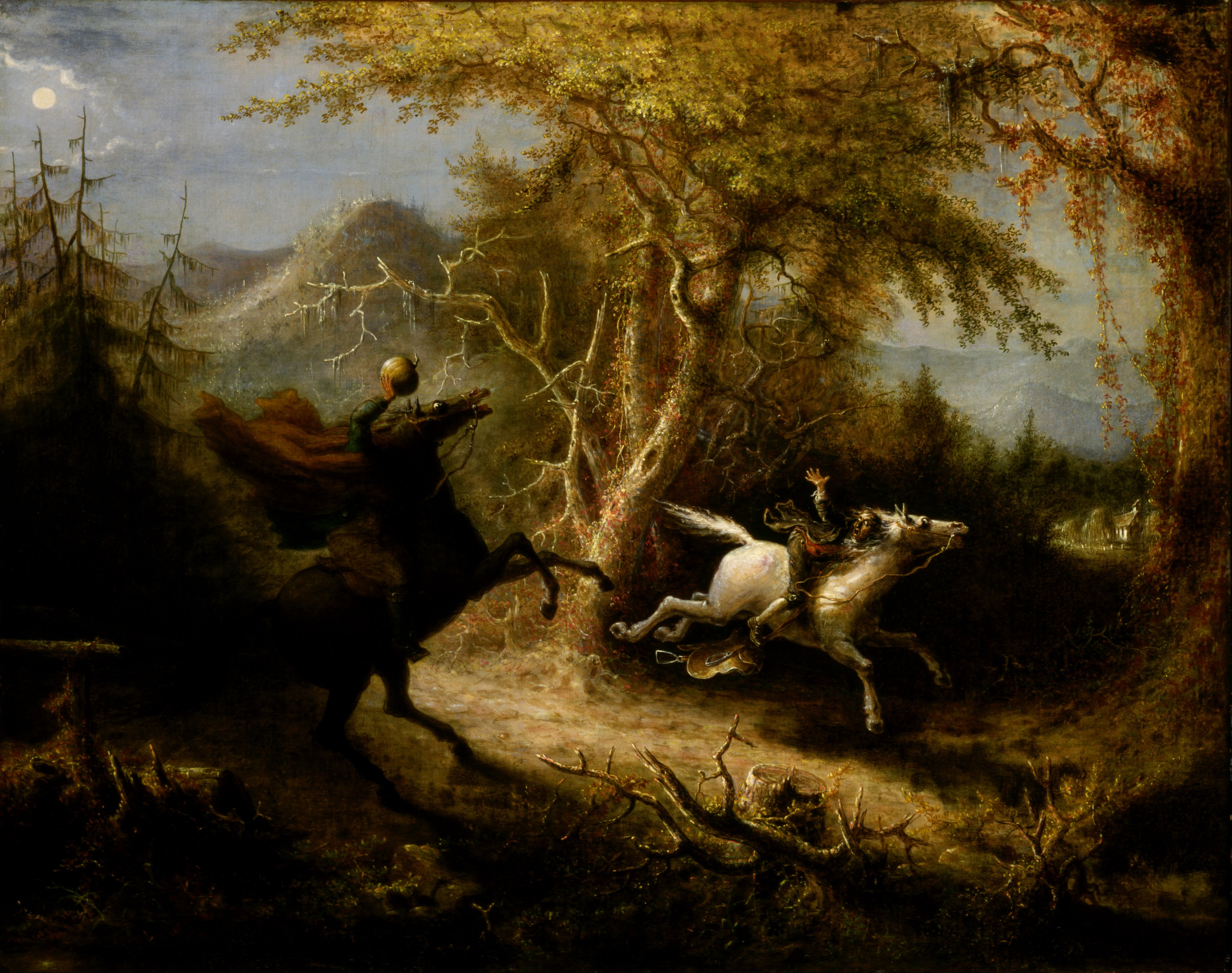
(It is interesting here that Tolkien has chosen not to take advantage of the folk belief—if you know “The Legend of Sleepy Hollow” by Washington Irving, or its inspiration, the poet Robert Burn’s “Tam O’Shanter”, this will be readily familiar to you—that evil spirits are unable to cross running water, even at a bridge.

John_Quidor_-_The_Headless_Horseman_Pursuing_Ichabod_Crane_-_Google_Art_Project.jpg

tamoshanter.jpg

To reach the Shire, the Wraiths have had to cross several bodies of water and now their hesitation to traverse another appears to be derived from their confidence that they can now control Frodo—either by the influence of the Ring, or perhaps from his wound—and call him back across the stream to them.)

From Rivendell, the next such door is that at the western side of Moria.

moriagate.jpg

Here, there is no living challenger. Rather, it is a kind of riddle—or, at least, it is initially understood as such—which bars the way. Its answer is simple, which led us to wonder, what is the purpose of this door scene in the story? As the creature in the pool

watcher.jpg

barricades the door behind them, it adds to the tension: the Fellowship has been watched and, from the hostile mountains to the wolves to the tentacle thing, it has been forced into darker and narrower ways, those ways seemingly chosen by the malevolent force observing their journey. As well, it suggests the gradual decay of what was once a vibrant, active culture, as Gandalf explains:

“Here the Elven-way from Hollin ended. Holly was the token of the people of that land, and they planted it here to mark the end of their domain; for the West-door was made chiefly for their use in their traffic with the Lords of Moria. Those were happier days, when there was still close friendship at times between folk of different race, even between Dwarves and Elves.” (The Fellowship of the Ring, Book 2, Chapter 4, “A Journey in the Dark”)

This is a theme throughout The Lord of the Rings and one which, we believe, adds to its power: the events of the close of the Third Age are set against a background of other times and other events and the landscape still bears traces of those times, from the Barrows to the Greenway and Weathertop and far beyond. As well, so many of those traces suggest that violence and the dark spirit of Sauron, sometimes through his agents, sometimes in person, have had much to do with their end.

Now that the Fellowship is within Moria, it encounters its next door: that of the Chamber of Mazarbul.

marzabul.jpg

Here, they are the challengers, when forced to defend themselves from a horde of “Orcs, very many of them…And some are large and evil: black Uruks of Mordor.” (The Fellowship of the Ring, Book 2, Chapter 5, “The Bridge of Khazad-Dum”). There is a second door, however, and, when they have beaten back their attackers, they escape by it—but only so that Gandalf may be the challenger at a crossing—as Frodo was at the ford—at the Bridge of Khazad-Dum, although here magic apparently cannot save him, as it had Frodo.

balrog.jpg

With Gandalf gone, we see the repetition of a scene from The Hobbit—the escape through a crowd to the outside world:

“…and suddenly before them the Great Gates opened, an arch of blazing light.

There was a guard of orcs crouching in the shadows behind the great door-posts towering on either side, but the gates were shattered and cast down. Aragorn smote to the ground the captain that stood in his path, and the rest fled in terror at his wrath.” (The Fellowship of the Ring, Book 2, Chapter 5, “The Bridge of Khazad-Dum”)

At this moment in The Hobbit, Bilbo had used his newly-discovered ring to escape (albeit with the loss of a few buttons), but Aragorn’s sword clearly does just as well.

It is easy to see just how prevalent the pattern is: even after that harrowing moment of being chased through the mines and losing Gandalf, where there is a door, there is someone at it to make a challenge, and this holds true even without an actual door, as the remaining members of the Fellowship seek to enter Lothlorien and are stopped by Elven sentries in a tree. (The Fellowship of the Ring, Book 2, Chapter 6, “Lothlorien”)

And the pattern continues, even as the Fellowship breaks up, but let’s take a moment to see what we’ve found so far. On the side of doors to safety, we have: Bree (although it’s not so safe as it looks), the Ford of Bruinen, the main door of Moria, and the entrance to Lorien. As for doors to danger, there are: the western doors of Moria and the door to the Chamber of Mazarbul.

In the third installment, we shall see just how many more doors/gates/entryways we find which continue to fit the pattern—and there are a fair number of them.

Thanks, as ever, for reading.

MTCIDC

CD

What’s In A Name?

26 Wednesday Aug 2015

Posted by Ollamh in Imaginary History, J.R.R. Tolkien, Narrative Methods

≈ 1 Comment

Tags

Anglo-Saxon, artefacts, Balin, Beaumaris, Bladorthin, Gandalf, Girion, Hadrian's Wall, Hoard, Middle-earth, Raedwald, Ship burial, Sigeberht, spears, Staffordshire Hoard, Stonehenge, Suffolk, Sutton Hoo, The Argonath, The Hobbit, Thorin, Thror, Tolkien, weapons

Dear Readers, welcome, as ever.

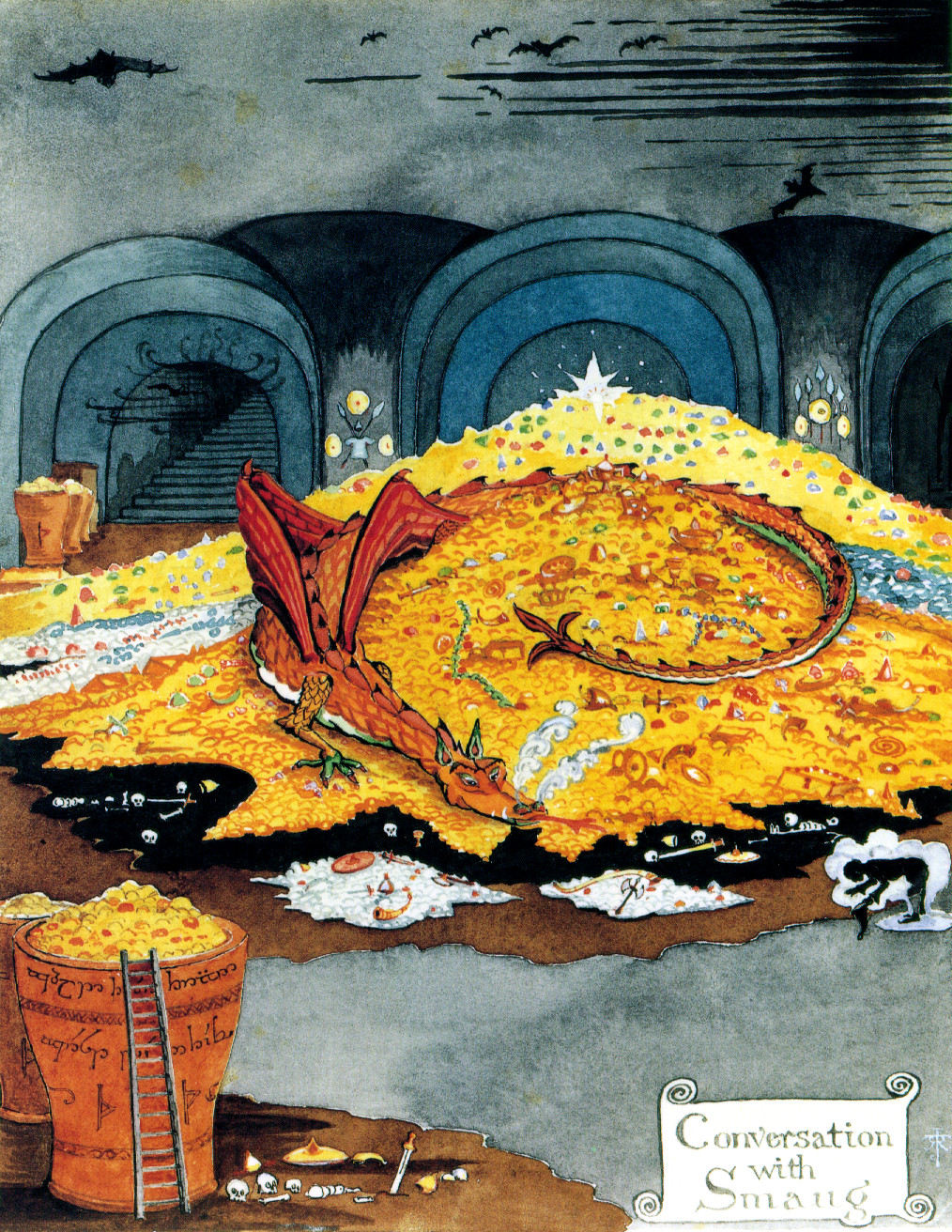
If you look for the name “Bladorthin” in The Annotated Hobbit (our standard source), you will find it only once, on page 287, where Thorin and Balin discuss what they can remember of the great hoard of the Lonely Mountain.

bilbowithsmaug

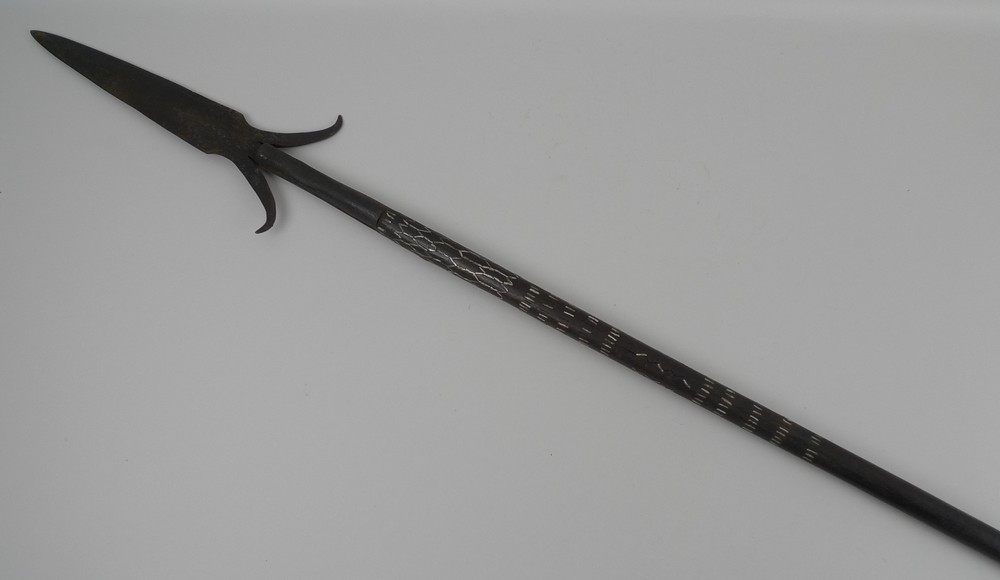
This includes not only the usual golden items and jewels, but also what appears to have been a military consignment, “the spears that were made for the armies of the great King Bladorthin (long since dead), each had a thrice-forged head and their shafts were inlaid with cunning gold, but they were never delivered or paid for.”

IMG_1566

thames spearhead1 img01

292_183

Who this king was and why he was arming his men with what appear to be deluxe weapons is a mystery and probably forever unsolved. This is likewise true for the original Bladorthin, who exchanges his name for that of the head dwarf in the first drafts, Gandalf, just as the head dwarf loses his name, Gandalf, to become Thorin. Why does Tolkien make the shift?

If neither of these can be answered, perhaps we can step back a little to wonder why Bladorthin, the king, is in The Hobbit at all?

A strongly-marked feature of The Lord of the Rings is the sense of age, of great time having passed. Part of this comes from Tolkien’s own sense of history, part from living in a place where things like stone circles

stonehenge

and Roman fortifications

hadrianswallL_tcm4-553745

let alone more recent things, like castles

Beaumaris_Castle

Beaumaris Aerial North Castles Historic Sites

are everywhere to be seen every day.

Part of it, too, comes from Tolkien’s seemingly-unquenchable desire to add to what he had created, providing more and more and more context practically per page.

What might be seen as obsessive, or nearly, however, adds what we might call convincing texture, and in two ways: on the one hand, it makes the story that much more vivid because it’s so much more detailed, and, on the other, it gives it weight: this is not a tale of yesterday, but of a long ago, even if not a long ago from the world of the Neolithic or Romans or Edward I.

This sense of age comes from a number of elements, including not only the idea that the text has been translated from a manuscript, a handwritten text from a pre-Gutenberg age, but also from the landscape which, like Tolkien’s own mid-20th-century Britain, is full of visible reminders of the past–

argonath+hildebrandt

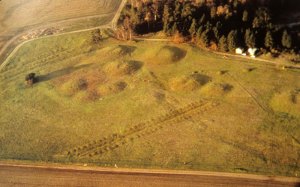
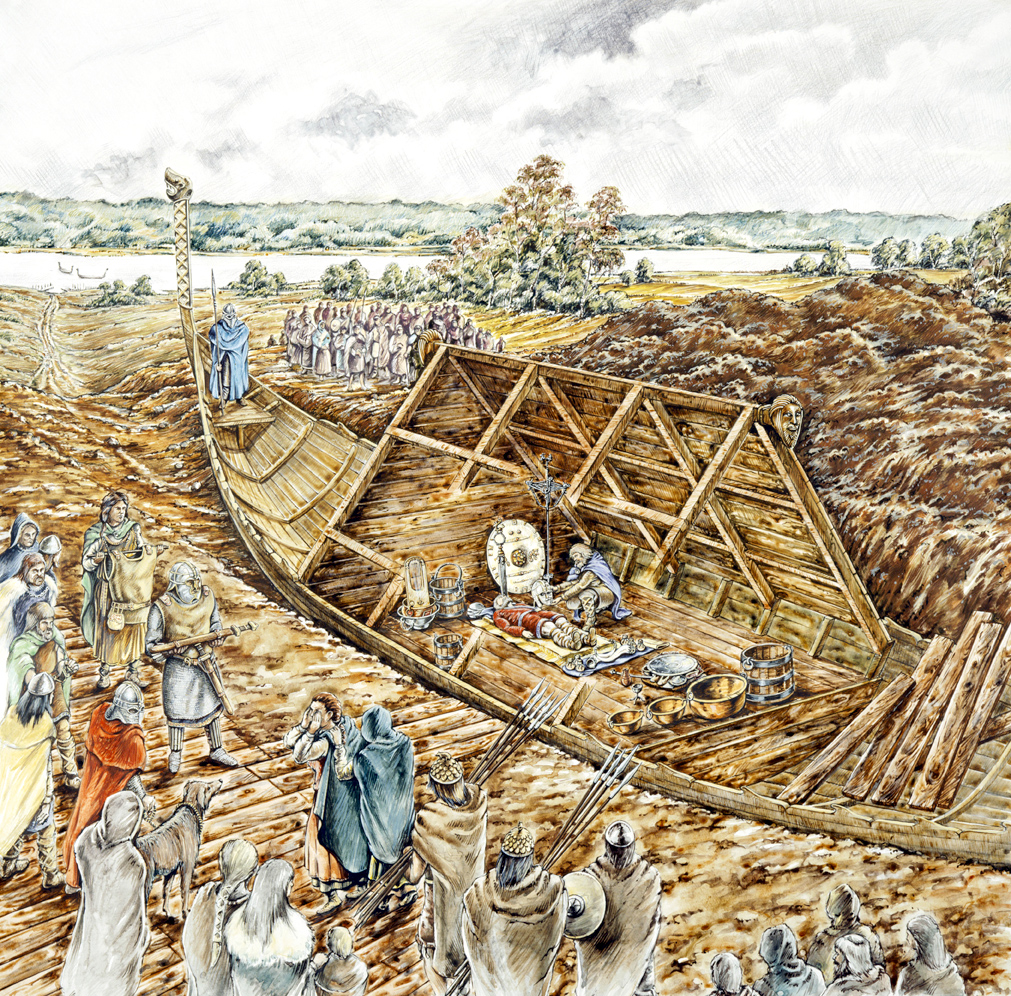
In fact, not long after the publication of The Hobbit, in 1937, a major uncovering of the English Anglo-Saxon past took place near the coast, in Suffolk, at a place called Sutton Hoo. Here, a series of mounds

03 Sutton Hoo, several mounds, c_1983_jpg

yielded a ship burial

sutton_h

Sutton Hoo, Woodbridge, Suffolk.  Reconstruction drawing of the Sutton Hoo ship burial in 620 or 630 - by Peter Dunn (English Heritage Graphics Team).     Date: circa 620

with nothing short of a hoard, including such items as these pieces from a purse

0523787e795fd30ca6116541512926f0

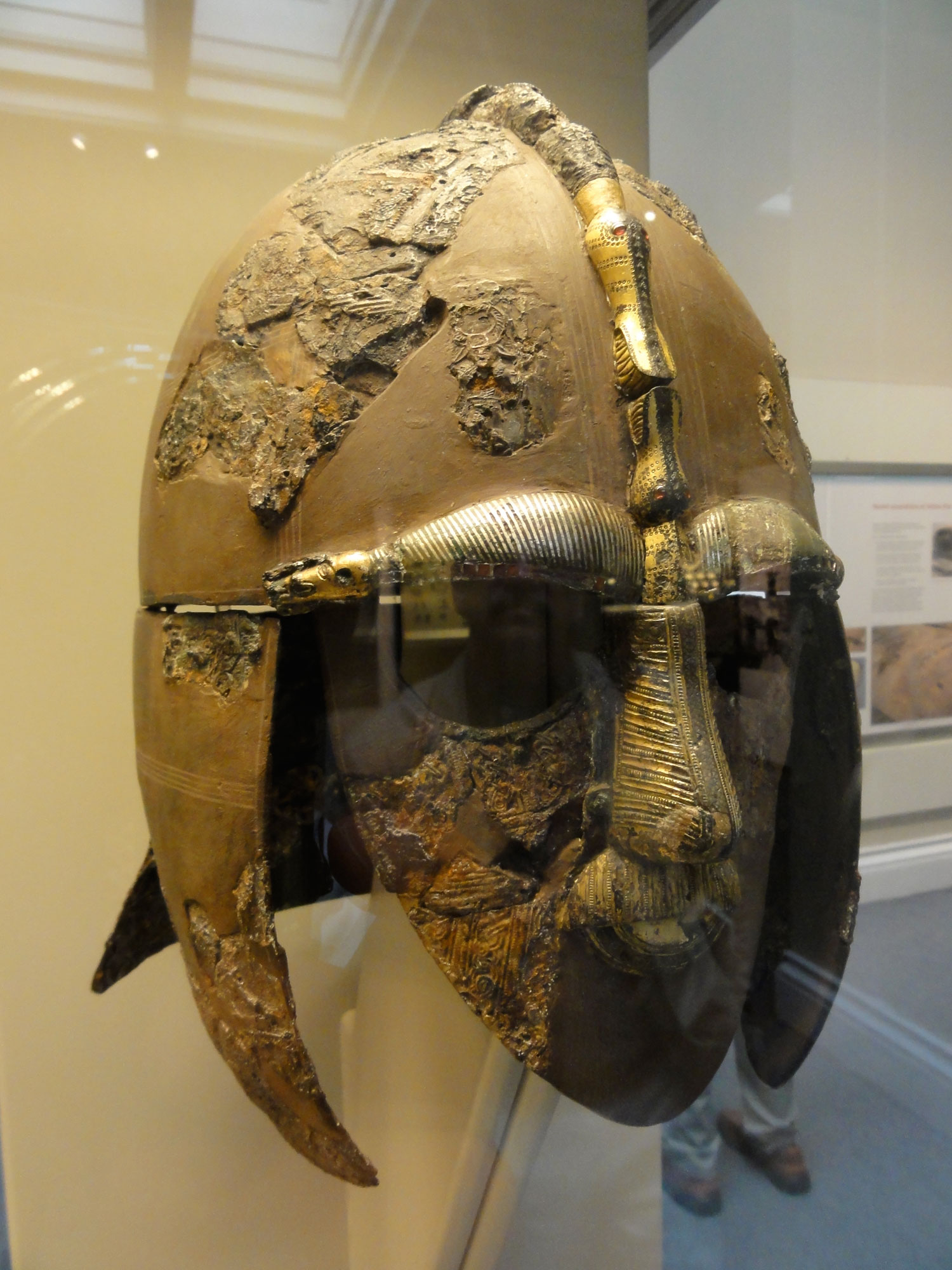
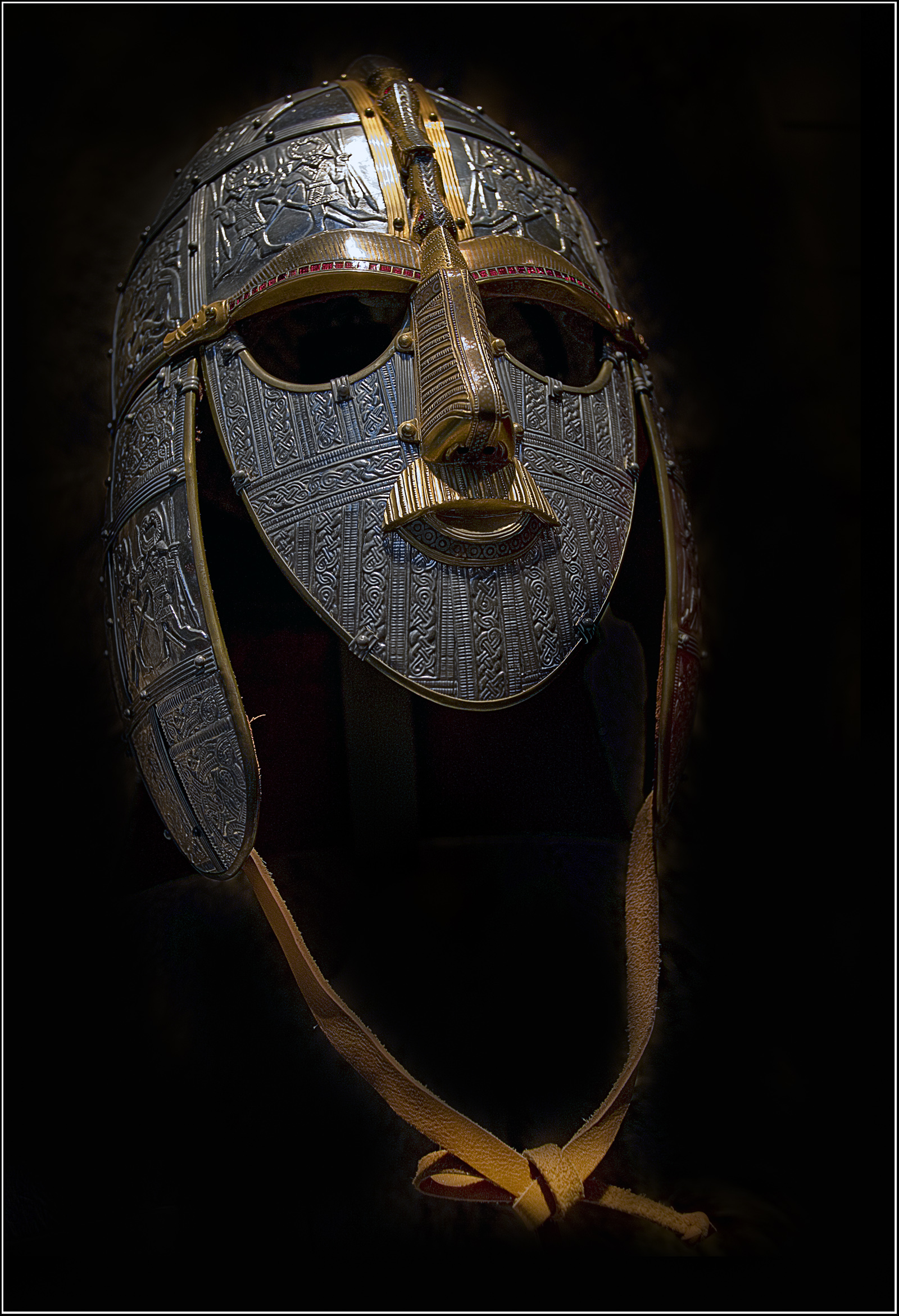
and a helmet.

sutton-hoo

2008-05-17-SuttonHoo.2

(And, since then, it turns out that the area is an extensive cemetery, which, though much plundered, has yielded many other finds.)

athelstan-albums-general-picture2865-sutton-hoo-1

Although Tolkien doesn’t mention this discovery in his selected letters, it would be difficult to imagine that he hadn’t seen something about it: it was even featured in the US National Geographic, in the year of discovery, 1939. Unfortunately, who the man buried there was appears impossible to say, leaving one aspect unknown, and all of the valuables simply generic Anglo-Saxon. (The theory now is that he is the early 7th-c AD ruler, Raedwald, or his son/step-son, Sigeberht.)

The Hobbit, written earlier in terms of years and even earlier, perhaps, in terms of literary sophistication, has, in comparison, much less depth. Much of the backdrop is, particularly in comparison, fairy-tale flat, without all of those levelsl of history.

But then there is Bladorthin.

That mound of wealth, extending beyond the sleeping Smaug is initially described as:

“…on all sides stretching away across the unseen floors, lay countless piles of precious things, gold wrought and unwrought, gems and jewels, and silver red-stained in the ruddy light.” TH 270

This is impressive enough to wake a kind of primal greed in Bilbo:

“His heart was filled and pierced with enchantment and with the desire of dwarves; and he gazed motionless, almost forgetting the frightful guardian, at the gold beyond price and count.” TH 271

Imagine, then, that such a hoard—like Sutton Hoo, or the more recent—and astonishing—Staffordshire Hoard (see the link here)

stafforshire hoard

could have names attached to some of its pieces, if not to the hoard in general. Thorin and Balin, in their reminiscing, combine general description with some specific detail, as well as identifying several one-time object owners:

“…shields made for warriors long dead; the great golden cup of Thror, two-handed, hammered and carven with birds and flowers whose eyes and petals were of jewels; coats of mail gilded and silvered and impenetrable; the necklace of Girion, Lord of Dale, made of five hundred emeralds green as grass, which he gave for the arming of his eldest son in a coat of dwarf-linked rings the like of which had never been made before, for it was wrought of pure silver to the power and strength of triple steel. But fairest of all was the great white gem, which the dwarves had found beneath the roots of the Mountain, the Heart of the Mountain, the Arkenstone of Thrain.” TH 287

Just as places in Middle-earth, by having history, are deepened, the same would be true for artefacts: not just a necklace, but Girion’s necklace, not just a golden cup, but Thror’s cup, and not just spears, but spears commissioned by Bladorthin, a king of long ago.

Thus, although Bladorthin’s history may remain a mystery outside The Hobbit, what history there is gives greater depth, narrative texture, to this early vision of Middle-earth and to the story of Bilbo, in particular.

Thanks, as ever, for reading.

MTCIDC

CD

The Doubtful Sea Series Facebook Page

The Doubtful Sea Series Facebook Page

  • Ollamh

Categories

  • Artists and Illustrators
  • Economics in Middle-earth
  • Fairy Tales and Myths
  • Films and Music
  • Games
  • Heroes
  • Imaginary History
  • J.R.R. Tolkien
  • Language
  • Literary History
  • Maps
  • Medieval Russia
  • Military History
  • Military History of Middle-earth
  • Narnia
  • Narrative Methods
  • Poetry
  • Research
  • Star Wars
  • Terra Australis
  • The Rohirrim
  • Theatre and Performance
  • Tolkien
  • Uncategorized
  • Villains
  • Writing as Collaborators
Follow doubtfulsea on WordPress.com

Across the Doubtful Sea

Recent Postings

  • A Moon disfigured December 17, 2025
  • On the Roads Again—Once More December 10, 2025
  • (Not) Crossing Bridges December 3, 2025
  • On the Road(s) Again—Again November 26, 2025
  • On the Road(s) Again November 19, 2025
  • To Bree (Part 2) November 12, 2025
  • To Bree (Part 1) November 5, 2025
  • A Plague o’ Both—No, o’ All Your Houses! October 29, 2025
  • It’s in Writing (2:  I’st a Prologue, or a Poesie for a Ring?) October 22, 2025

Blog Statistics

  • 103,217 Views

Posting Archive

  • December 2025 (3)
  • November 2025 (4)
  • October 2025 (5)
  • September 2025 (4)
  • August 2025 (4)
  • July 2025 (5)
  • June 2025 (4)
  • May 2025 (4)
  • April 2025 (5)
  • March 2025 (4)
  • February 2025 (4)
  • January 2025 (5)
  • December 2024 (4)
  • November 2024 (4)
  • October 2024 (5)
  • September 2024 (4)
  • August 2024 (4)
  • July 2024 (5)
  • June 2024 (4)
  • May 2024 (5)
  • April 2024 (4)
  • March 2024 (4)
  • February 2024 (4)
  • January 2024 (5)
  • December 2023 (4)
  • November 2023 (5)
  • October 2023 (4)
  • September 2023 (4)
  • August 2023 (5)
  • July 2023 (4)
  • June 2023 (4)
  • May 2023 (5)
  • April 2023 (4)
  • March 2023 (5)
  • February 2023 (4)
  • January 2023 (4)
  • December 2022 (4)
  • November 2022 (5)
  • October 2022 (4)
  • September 2022 (4)
  • August 2022 (5)
  • July 2022 (4)
  • June 2022 (5)
  • May 2022 (4)
  • April 2022 (4)
  • March 2022 (5)
  • February 2022 (4)
  • January 2022 (4)
  • December 2021 (5)
  • November 2021 (4)
  • October 2021 (4)
  • September 2021 (5)
  • August 2021 (4)
  • July 2021 (4)
  • June 2021 (5)
  • May 2021 (4)
  • April 2021 (4)
  • March 2021 (5)
  • February 2021 (4)
  • January 2021 (4)
  • December 2020 (5)
  • November 2020 (4)
  • October 2020 (4)
  • September 2020 (5)
  • August 2020 (4)
  • July 2020 (5)
  • June 2020 (4)
  • May 2020 (4)
  • April 2020 (5)
  • March 2020 (4)
  • February 2020 (4)
  • January 2020 (6)
  • December 2019 (4)
  • November 2019 (4)
  • October 2019 (5)
  • September 2019 (4)
  • August 2019 (4)
  • July 2019 (5)
  • June 2019 (4)
  • May 2019 (5)
  • April 2019 (4)
  • March 2019 (4)
  • February 2019 (4)
  • January 2019 (5)
  • December 2018 (4)
  • November 2018 (4)
  • October 2018 (5)
  • September 2018 (4)
  • August 2018 (5)
  • July 2018 (4)
  • June 2018 (4)
  • May 2018 (5)
  • April 2018 (4)
  • March 2018 (4)
  • February 2018 (4)
  • January 2018 (5)
  • December 2017 (4)
  • November 2017 (4)
  • October 2017 (4)
  • September 2017 (4)
  • August 2017 (5)
  • July 2017 (4)
  • June 2017 (4)
  • May 2017 (5)
  • April 2017 (4)
  • March 2017 (5)
  • February 2017 (4)
  • January 2017 (4)
  • December 2016 (4)
  • November 2016 (5)
  • October 2016 (6)
  • September 2016 (5)
  • August 2016 (5)
  • July 2016 (5)
  • June 2016 (5)
  • May 2016 (4)
  • April 2016 (4)
  • March 2016 (5)
  • February 2016 (4)
  • January 2016 (4)
  • December 2015 (5)
  • November 2015 (5)
  • October 2015 (4)
  • September 2015 (5)
  • August 2015 (4)
  • July 2015 (5)
  • June 2015 (5)
  • May 2015 (4)
  • April 2015 (3)
  • March 2015 (4)
  • February 2015 (4)
  • January 2015 (4)
  • December 2014 (5)
  • November 2014 (4)
  • October 2014 (6)
  • September 2014 (1)

Blog at WordPress.com.

  • Subscribe Subscribed
    • doubtfulsea
    • Join 78 other subscribers
    • Already have a WordPress.com account? Log in now.
    • doubtfulsea
    • Subscribe Subscribed
    • Sign up
    • Log in
    • Report this content
    • View site in Reader
    • Manage subscriptions
    • Collapse this bar
 

Loading Comments...