• About

doubtfulsea

~ adventure fantasy

Tag Archives: Aragorn

The Return of the Who.2?

28 Wednesday Oct 2015

Posted by Ollamh in Fairy Tales and Myths, Heroes, Imaginary History, J.R.R. Tolkien, Narrative Methods, Villains

≈ Leave a comment

Tags

Aragorn, Aslan, C.S. Lewis, Catholicism, Gondor, Hobbits, Jadis, Medusa, Middle-earth, monotheism, Narnia, Oxford, religion, Sauron, secular, The Bird and the Baby, The Chronicles of Narnia, The Eagle and the Child, The Hobbit, The Inklings, The Lamb and Flag, The Lord of the Rings, the Pevensies, The Return of the Ring, The White Witch, Tolkien, White Tree

Dear Readers,

Welcome, as always.

This posting is a continuation of our last, in which we made a brief attempt to think about what the title “The Return of the King” might have meant for its author in his time.

In this posting, we want to expand that meaning from a secular king to one with more religious overtones.

We ourselves, as we’ve said before, are World Civ people, believing that all people in all times and places are and should be of interest and value to everyone. We are also pan-spiritual, thinking with Gandhi that, “I believe in the fundamental Truth of all great religions of the world.”

In the case of Tolkien, this meant Catholic Christianity, a form of monotheism. Of religion and The Lord of the Rings, he wrote in 1953:

“The Lord of the Rings is of course a fundamentally religious and Catholic work; unconsciously so at first, but consciously in the revision. That is why I have not put in, or have cut out, practically all references to anything like ‘religion’, to cults or practices, in the imaginary world. For the religious element is absorbed into the story and the symbolism.” Letters, 172.

He adds to this, in a letter to Houghton Mifflin, in 1955, that “It is a monotheistic world of ‘natural theology’. (Letters, 220). At the same time, however, he adds “I am in any case myself a Christian; but the ‘Third Age’ was not a Christian world. Letters, 220.

And yet we would suggest that there is not only more of a Christian theme, but also a Christian parallel with a book written at about the same time as the later stages of The Lord of the Rings and published slightly before it. This is C.S. Lewis’ The Lion, the Witch and the Wardrobe (1950).
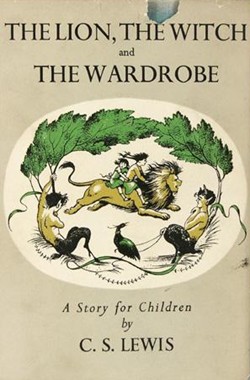
TheLionWitchWardrobe(1stEd)

As is well known, both Lewis and Tolkien
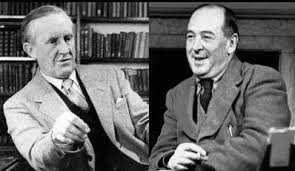
jrrt and csl

were members of a literary group in Oxford, the Inklings.

draft_lens9242861module102711761photo_1274835984eagle_and_child_pub_inkli

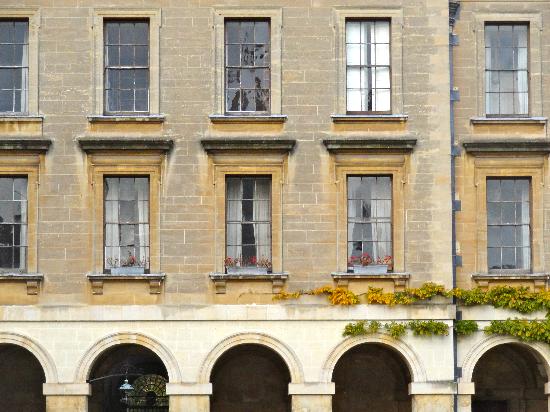
Lewis and Tolkien formed part of the permanent core, with other members coming and going over the years (1933-1949).   The meetings were held in Lewis’ rooms at Magdalen College,

magdalen room-used-by-cs-lewis

as well as at two local pubs, The Eagle and Child (called locally “Bird and Baby” or just “Bird”)

Birdandbaby

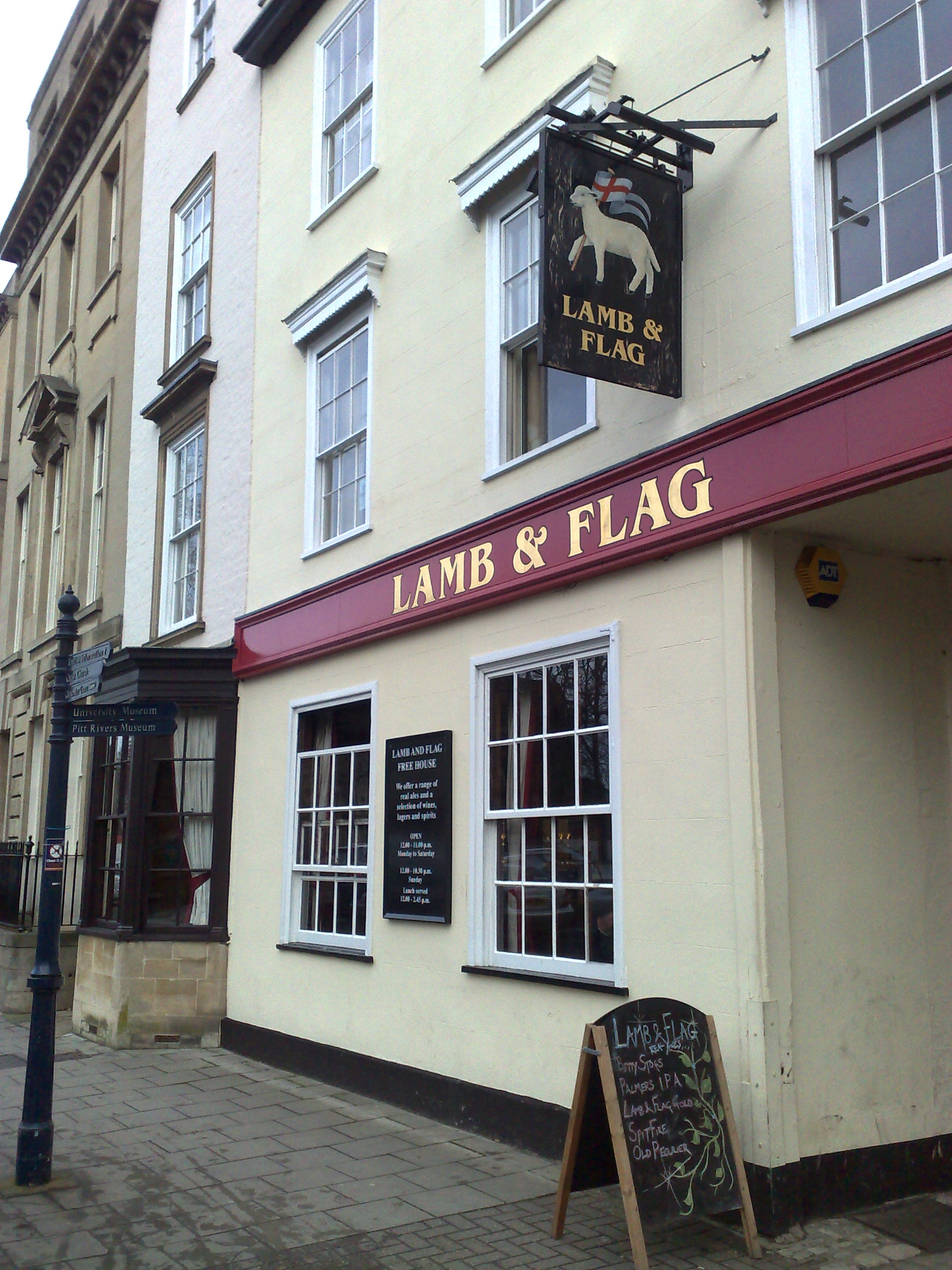
as well as The Lamb and Flag.

Lamb-and-flag-pub-oxford

The purpose (besides refreshments) was literary discussion, both of others’ works and of their own, and an important feature was the reading aloud of works in progress. Lewis had been very supportive, both of The Hobbit and The Lord of the Rings, but Tolkien had not been so enthusiastic in return. All the same, we would suggest that various elements of Lewis’ The Lion, the Witch and the Wardrobe and events around Gondor in Tolkien’s The Return of the King at times bear strong similarities.

In Lewis’ book, the main protagonists are four children, the Pevensies.
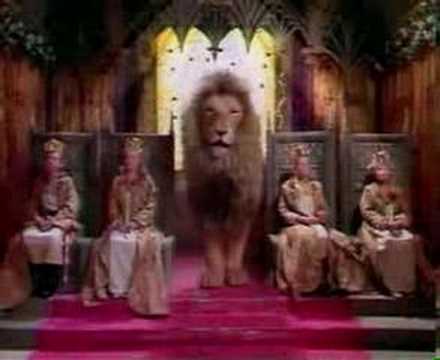
childrenaslanbbc

In Tolkien’s, there are four grown Hobbits, often mistaken, beyond the borders of the Shire, for children.
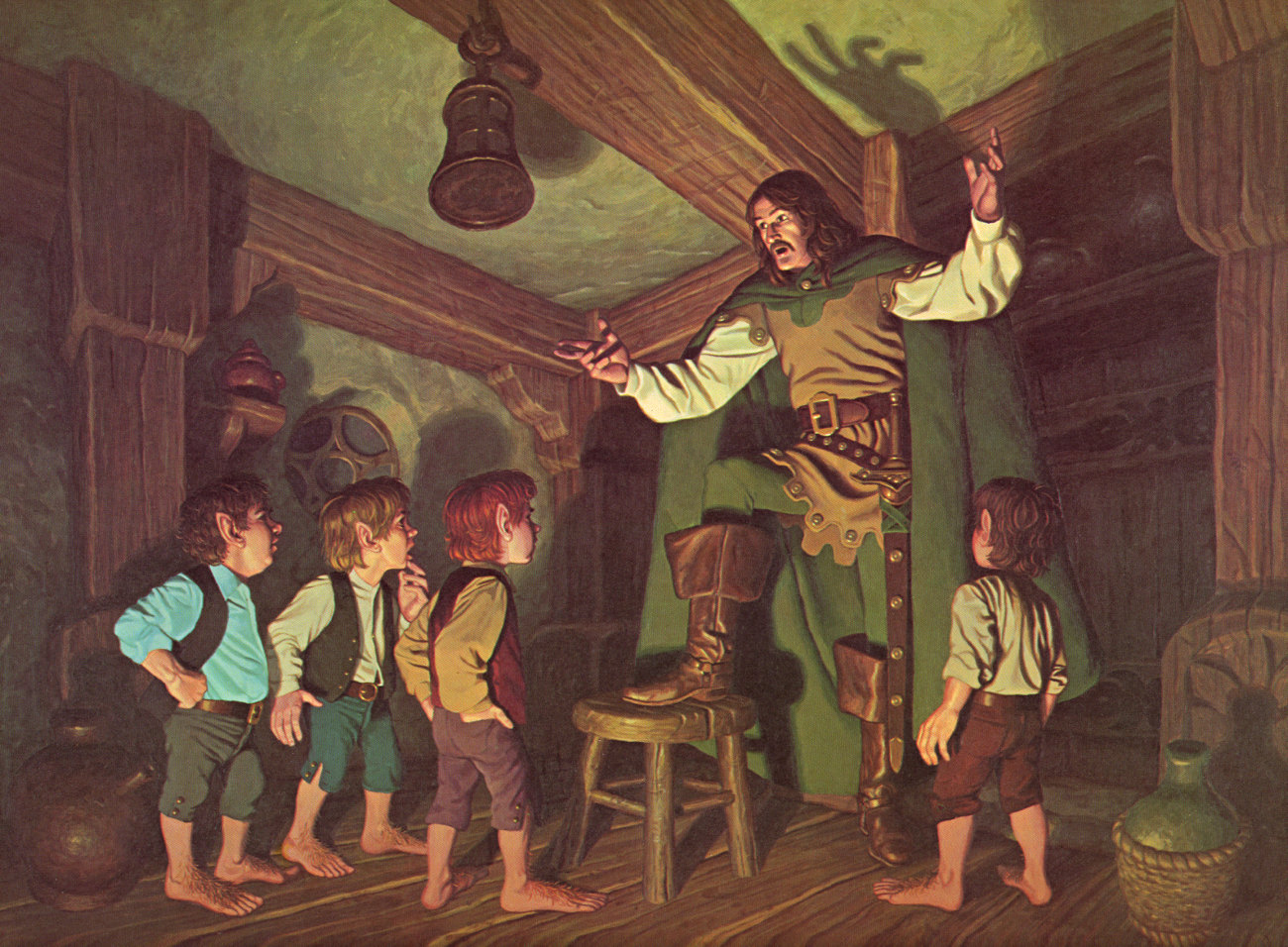
hildebrandthobbits

Both groups are on an errand which they barely understand and are faced with a supernatural enemy, the White Witch for the one, Sauron for the other. (There seems to be a lot of mirroring in all of this: the White Witch is already in Narnia and must be driven out. Sauron is outside Gondor and wants to get in, for example. The White Witch’s name is “Jadis”, by the way. Undoubtedly Lewis’ little linguistic joke: jadis in French means “formerly”, suggesting that even from the first time she appears, she’s already on her way out.)

wwbbc

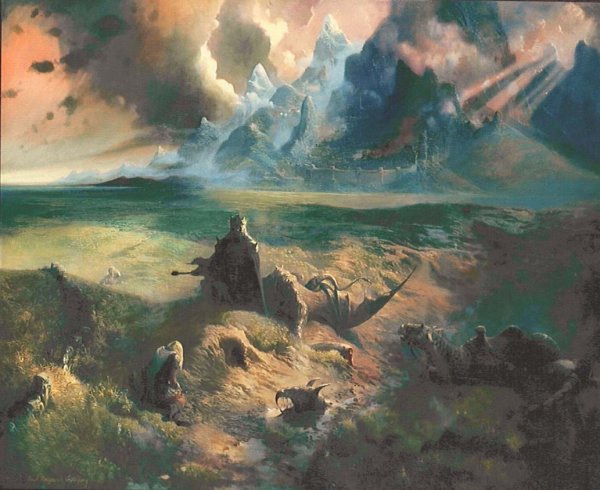
main_1-Greg-Hildebrandt-Signed-Sauron-The-Dark-Lord-Limited-Edition-34x23-Giclee-PristineAuction.com

(Notice, in the movie version of Jadis, the strong similarity between her and the Medusa. In fact, Jadis turns her enemies, when she can, to ice.)
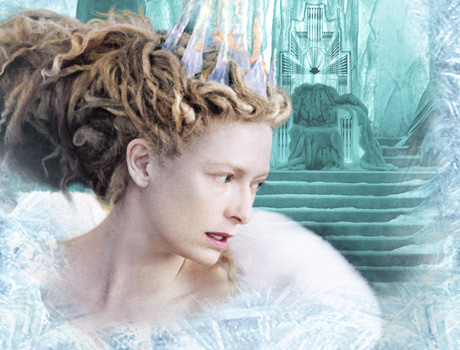
jadis1

bernini medusa

frozenmrtumnus

Before the current world of Narnia, to which the children come, there was a king who had been somehow ejected a century before. In Middle Earth, there has been no king in Gondor for ten times that. In Narnia, there has been winter for that century.
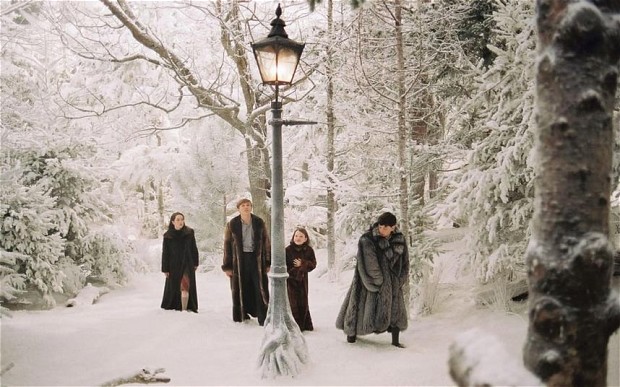
winteratthelamppost

In Gondor, in Middle Earth, its symbol of growth and stability, the White Tree, has withered and died.
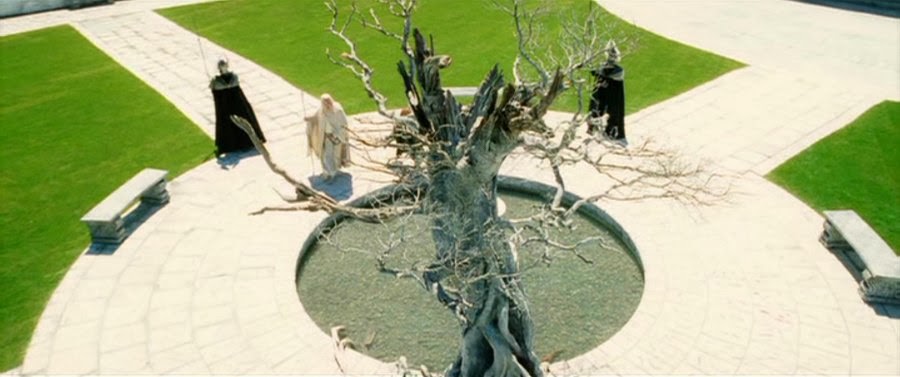
WhiteTreeGondor

When the Pevensie children have been involved in the defeat of the White Witch, they will rule Narnia in the place of the true king, the lion Aslan.

the-chronicles-of-narnia-the-lion-the-witch-and-the-wardrobe-wallpaper-the-chronicles-of-narnia-the-lion-the-witch-and-the-wardrobe-poster_590x384_23014

For about a thousand years, stewards ruled Gondor in place of the king. (Another example of mirroring.)

denethor

When Lewis’ Aslan returns, it is from death, having sacrificed himself to save one of the Pevensie children.
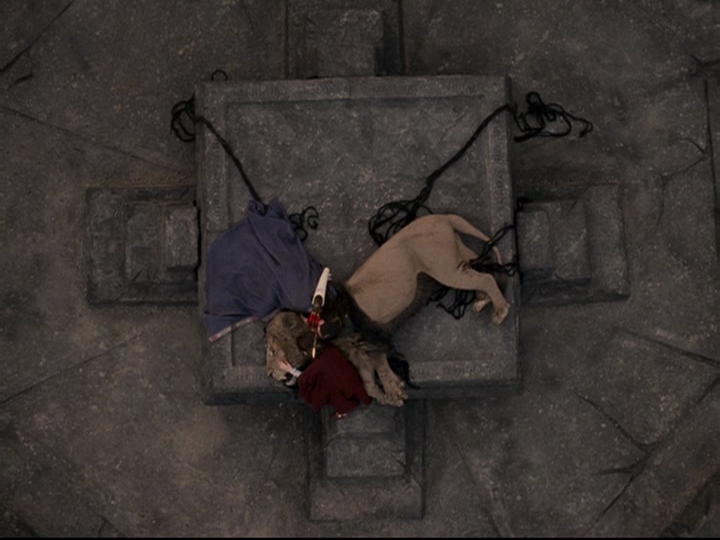
aslandead

Thus, Aslan, in effect, heals himself. When the king of Gondor, Aragon, appears, he heals others. (Tolkien would probably associate this with the old English custom of having the monarch touch people attacked with a disease called scrofula, or “the King’s evil”. We include a picture of Queen Mary—1516-1558—doing so.)

Queen_Mary_I_curing_scrofula_Levina_Teerlinc_16th_C

healingeowyn

When Aslan appears, spring returns to Narnia.
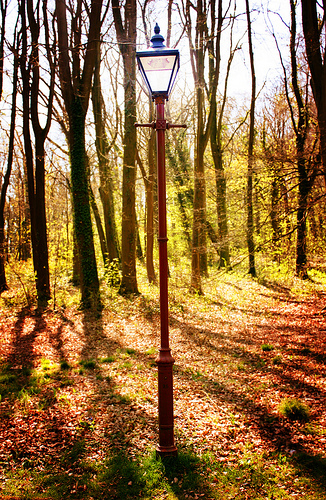
springinnarnia

When Aragorn claims the throne, he and Gandalf discover a sapling of the old tree on Mindolluin, bring it down, and plant it and it soon flowers.
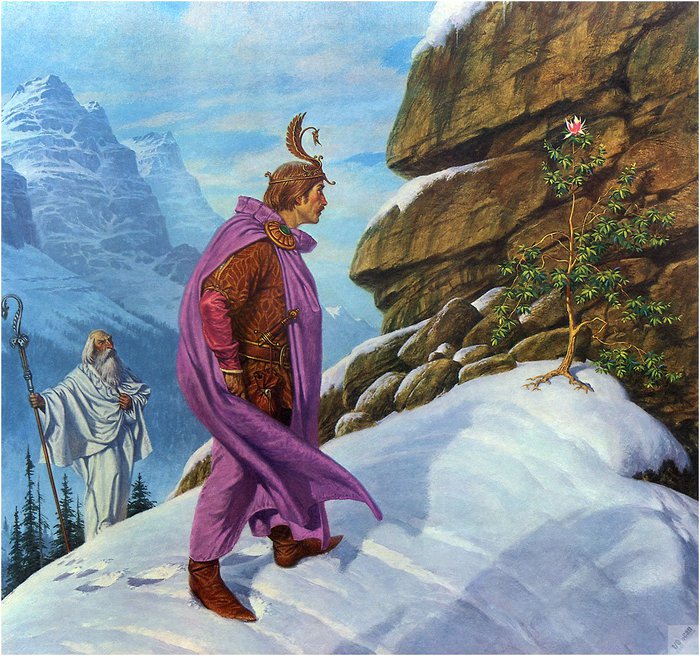
whitesapling whitetreebeginstoflower

We’re sure that there are other parallels, dear reader: can you think of any?

Thanks, as always, for reading this.

MTCIDC

CD

The Two Sieges

22 Wednesday Jul 2015

Posted by Ollamh in Heroes, J.R.R. Tolkien, Military History

≈ Leave a comment

Tags

Agincourt, Aragorn, English Longbowmen, Faramir, French Knights, Gondor, Grond, Hoth, Jan Sobieski, Lithuania, Minas Tirith, Mumakil, Nazgul, Orcs, Ottoman, Peter Jackson, Poland, Rammas Echor, Rohan, Rohirrim, Siege Towers, Stone Throwers, The Lord of the Rings, Tolkien, Vienna, Winged Hussars

Welcome, as always, dear readers!

In this posting, we’re going to make another suggestion about a model for something in Tolkien’s work.

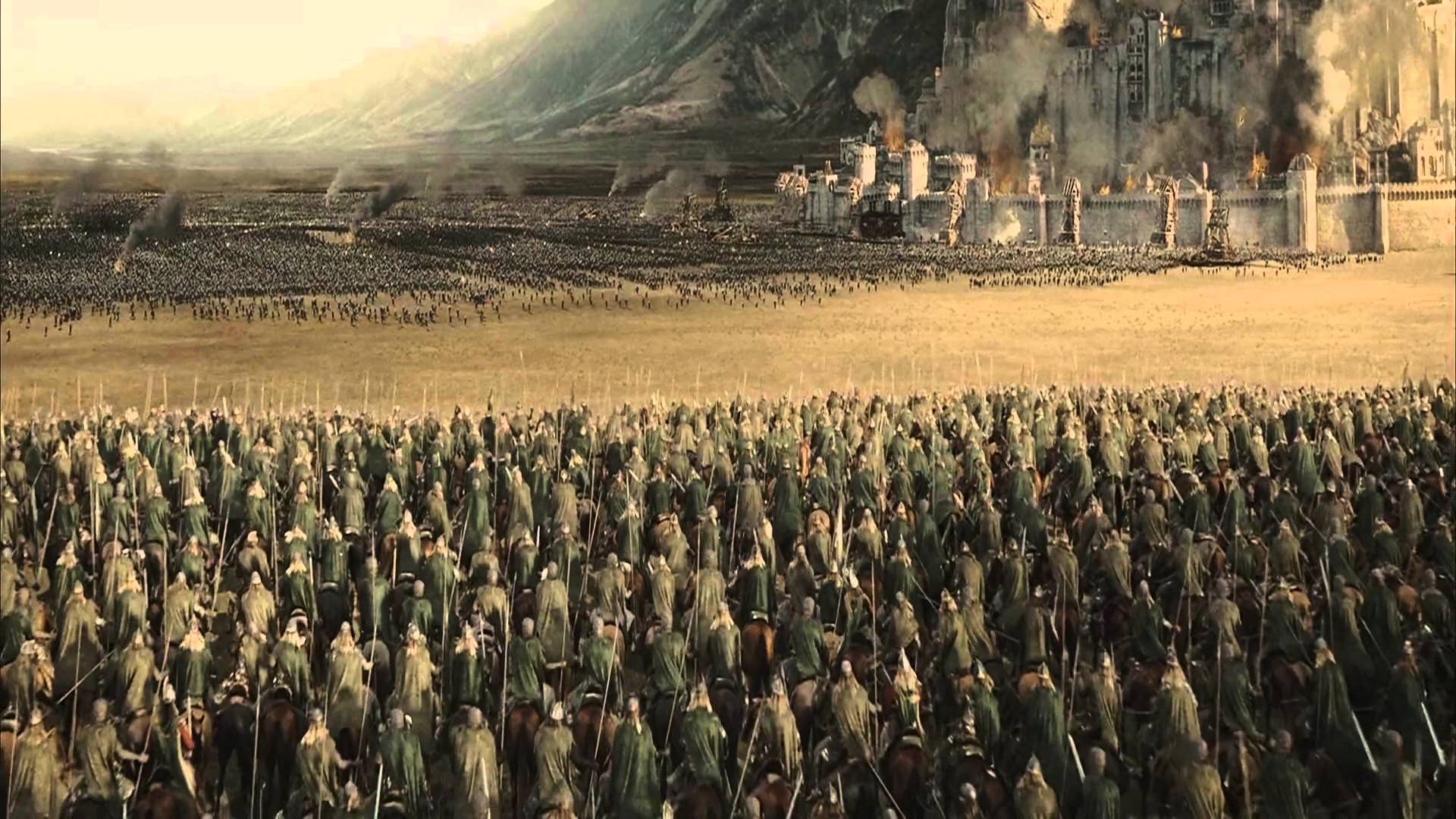
If you read us regularly, you know that our favorite part of P. Jackson’s The Lord of the Rings is anything to do with the Rohirrim. When we rewatch favorite scenes, the charge against the Orcs outside Minas Tirith is always first on our list (and high on our general list of cavalry charges—more on those in a future posting).

First, we see that massive Orc army marching up to the walls. (In the book, this is more dramatic: the Orcs blow two holes in the Rammas Echor, outflank the defenders, and drive them into retreat, which is where Faramir is badly wounded by an arrow.)

minas-tirith

Then they begin to attack with stone-throwers,

siege1

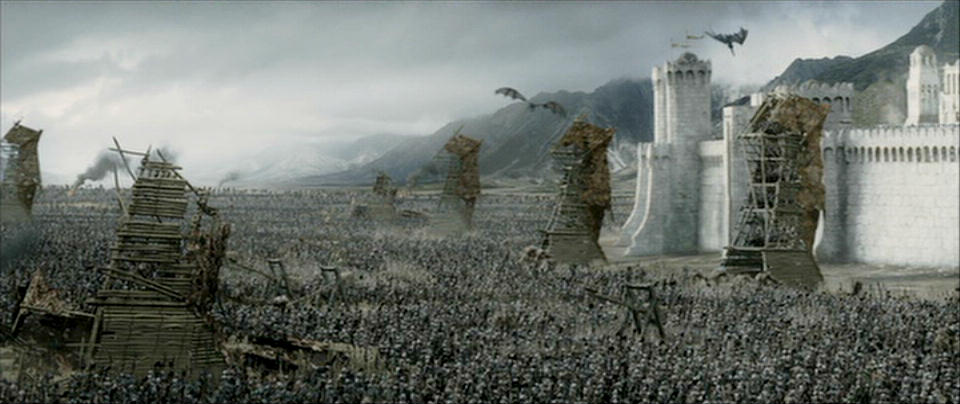
siege towers,

lotr-siege-towers

and, eventually a giant, flame-filled battering ram.

grond1

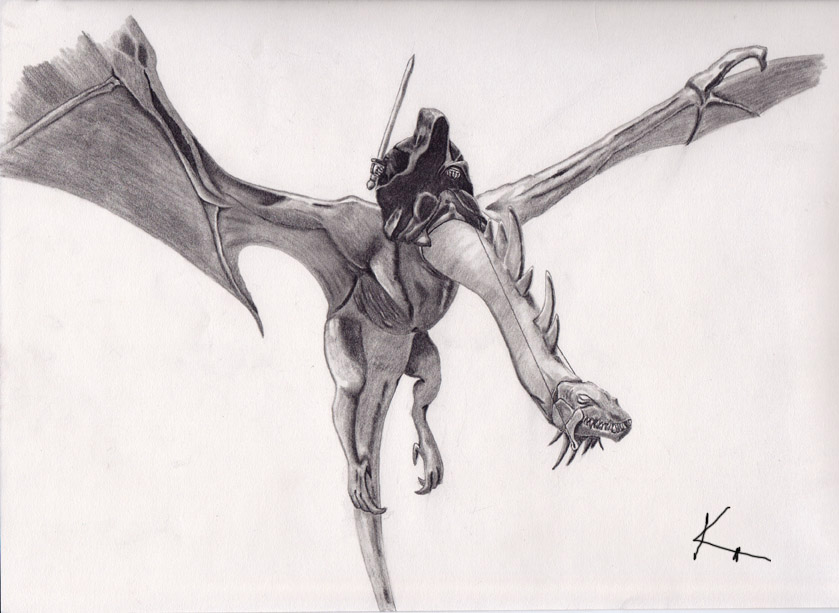
Things look increasingly desperate for Gondor as the Orcs press their attack, led by the Chief Nazgul.

witch_king_of_angmar_ii_by_dudeskindasketchy-d4d6uvd

And that’s when the Rohirrim appear.

rohirrimabouttocharge

And move to strike the Orcs from behind.

Charge_rohirrim

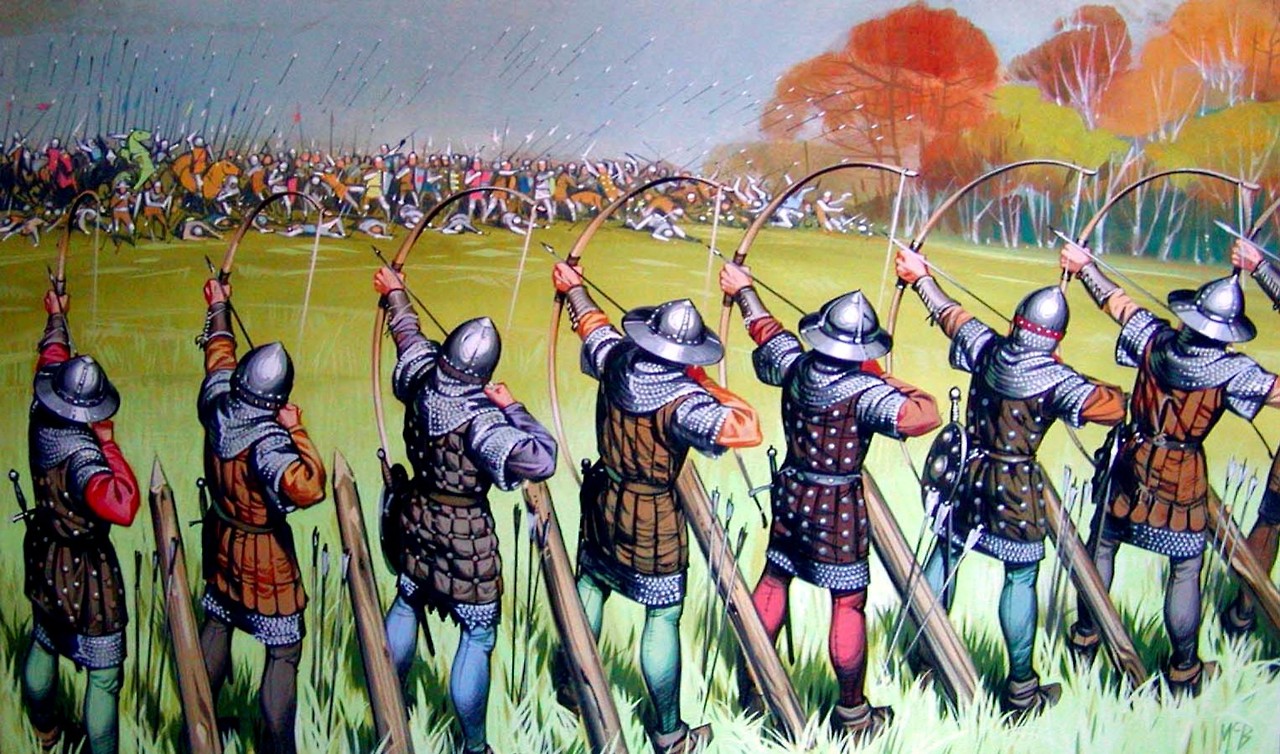
When the Orcs realize what’s happening, they try to stop the attack with bows.

archery

This immediately reminded us of the 1415 battle in which English longbowmen and their clever use defeated an army of brave French knights, Agincourt.

OLYMPUS DIGITAL CAMERA

Unlike Agincourt, however, arrows didn’t stop the Rohirrim, who sweep through the enemy—but are brought up short by the sight of a row of mumakil—giant war elephants—bearing down on them.

img-2845793-1-charge-1024x425

Seeing this scenario made us think of another attack by huge, lumbering things in a galaxy long ago and far away—

Battle_of_Hoth

The film goes on from there, including an attack by a ghost army, instead of by the actual forces brought from southern Gondor by Aragorn, but we want to back up a bit to the actual siege and another one which bears a strong resemblance to it.

For centuries, the Ottoman Turks had been expanding their dominions.

Ottoman_Empire_Map_1359-1856

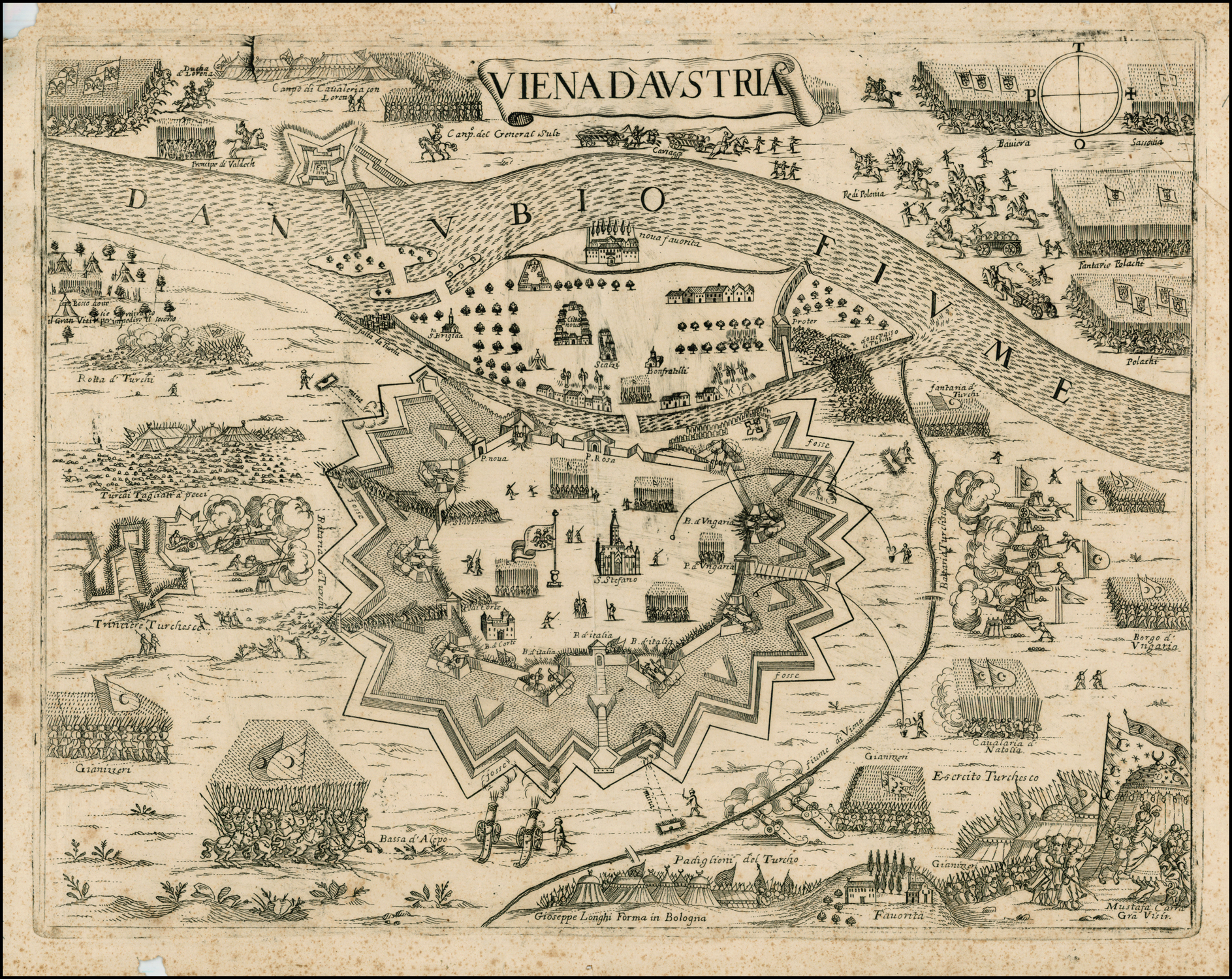
They had first reached Vienna in 1529,

Siegeofvienna1529

but had given up the siege. Now, however, in 1683, they were back.

Battle_of_Vienna_1683_map

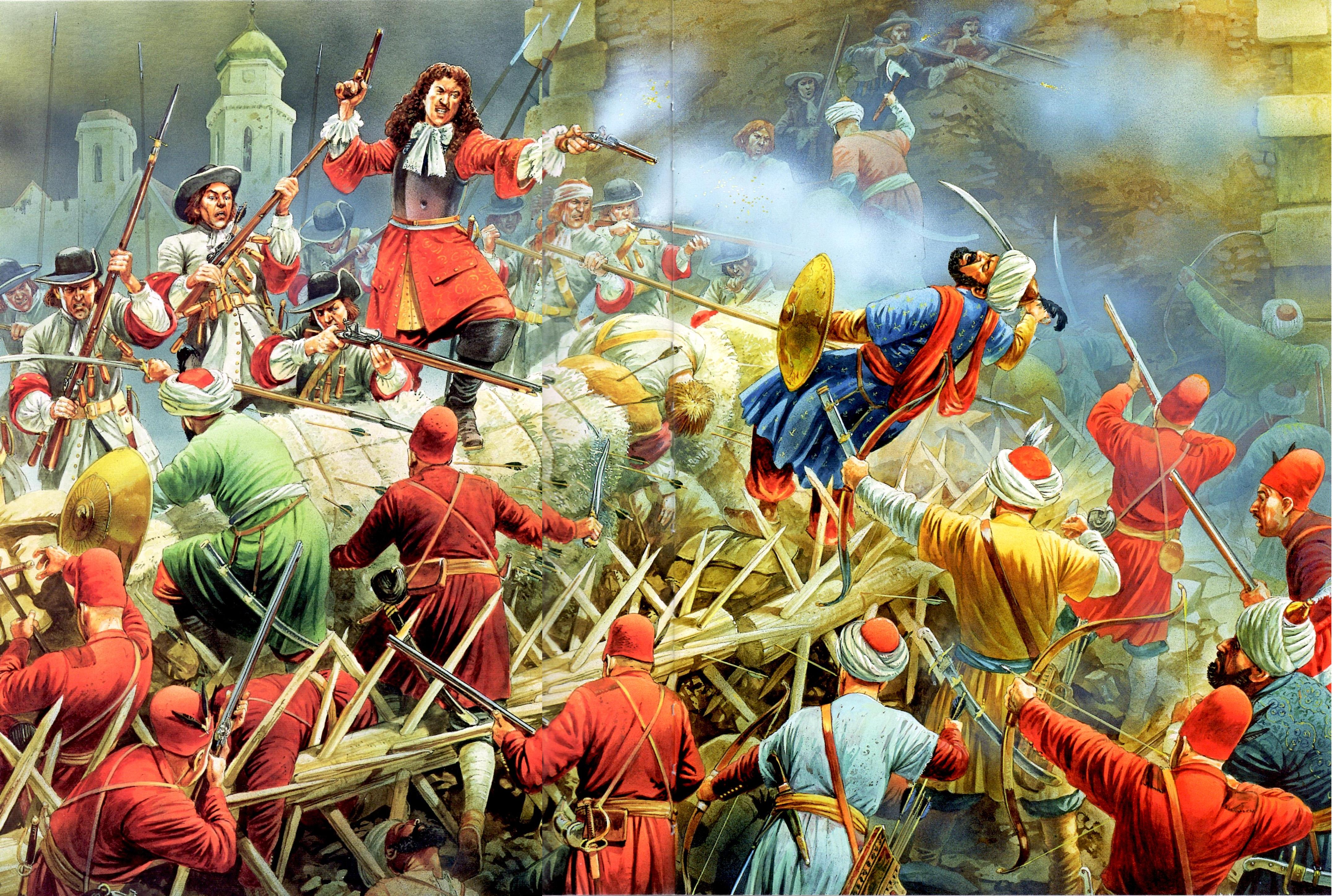
Their attacks against a dwindling number of defenders in a crumbling town

1-vienna-1683

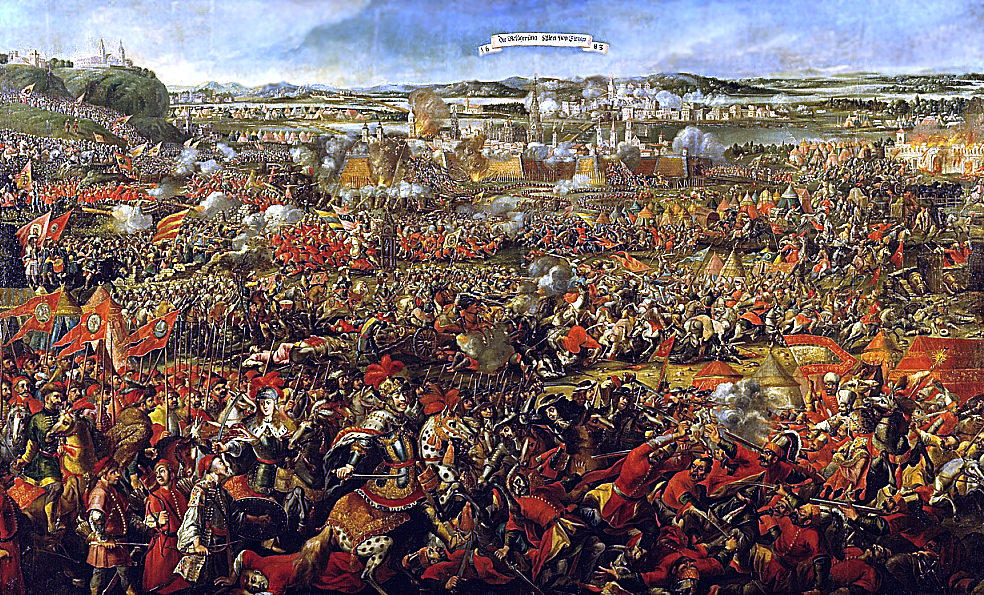
had brought them to the edge of conquest when an army of reenforcements, including cavalry from the army of the combined state of Lithuania/Poland, had appeared. Some of the cavalry were the famous Polish winged hussars.

Battle_of_Vienna_1

Just as the Rohirrim are led by their king, Theoden, so are the Poles led by their king Jan Sobieski—

bitwa-pod-wiedniem-obraz

The reenforcements, Poles in the lead, rush upon the Turks and drive them back through their camps and out of the siege entirely.

Atak_husarii

Battle_of_Vienna_1683_11

So similar, isn’t it? No giant war elephants, ghost armies, or Nazgul, but the basic elements of siege, relieving army with cavalry led by a king attacking an unprepared enemy, and chasing off the besiegers, is nearly identical.

Tolkien was an extremely well-read man, with a strong interest in history. Was the siege and relief of Vienna somewhere in the back of his mind when he began to plan the siege of Minas Tirith?

Thanks for reading!

MTCIDC

CD

The Sadness of a Second Reading

27 Wednesday May 2015

Posted by Ollamh in Artists and Illustrators, J.R.R. Tolkien, Narrative Methods, Villains

≈ Leave a comment

Tags

Aragorn, Arwen, Canterbury Tales, Chaucer, Ents, Fangorn, Frodo, Gandalf, Herblore, Hildebrandt, Hobbits, Isengard, Meduseld, Merry and Pippin, Ring, Saruman, Sauron, Smaug, The Lord of the Rings, Theoden, Tolkien, Villains

Welcome again, dear readers!

We’re sure to return to villains—Orcs first, we think—but, as we reread material for the last posting, we came across a passage which so struck us that we had to sit down and write a posting about it…

   Isengard is ruined. So much of what Tolkien described in such vivid detail in “The Road to Isengard”, both before Saruman decided to be a rival to Sauron and after, has been destroyed—here is the Hildebrandts’ version of it in Saruman’s early days

greg-hildebrandt-isengard-orthanc-saruman-607429-1300x962

And here it is when Saruman’s ambition overcame his sense of mission as one of the Istari and he could tell Gandalf that their job was to strive for “Knowledge, Rule, Order”—

Isengard_by_Nagzuku

But Fangorn and his Ents have changed all of that—

The Wrath of the Ents, by Ted Nasmith

So that, when Gandalf and his company appear, they see

“…And all about, stone, cracked and splintered into countless jagged shards, was scattered far and wide, or piled in ruinous heaps.” 

On top of one of those heaps                  

ruins 

“…two small figures…at their ease. One seemed asleep; the other, with crossed legs and arms behind his head leaned back against a broken rock and sent from his mouth long wisps and little rings of thin blue smoke.”

     Not tiny Smaugs sunning, it is, of course Merry and Pippin making themselves comfortable in the wreckage of Saruman’s palace/fortress/factory. That comfort is an affront to Gimli—or, at least, he pretends that it is—but it is a source of amusement to the rest of the company and the Hobbits themselves are a source of amazement to Theoden:

     “The days are fated to be filled with marvels. Already I have seen many since I left my house; and now here before my eyes stand yet another of the folk of legend. Are these not the Halflings, that some among us call the Holbytlan?” 

     But Theoden’s wonder is greater: not only are these figures from distant legend, but, “I had not heard that they spouted smoke from their mouths.”

     This sets Merry off on a lecture, which prefigures, of course, his later treatise, Herblore of the Shire, but which Gandalf stops in its tracks, saying,

“You do not know your danger, Theoden…These hobbits will sit on the edge of ruin [ironic here, as they are, in fact, doing so—it’s Saruman’s ruin] and discuss the pleasures of the table, or the small doings of their fathers, grandfathers, and great-grandfathers and remoter cousins to the ninth degree, if you encourage them with undue patience.” 

     Theoden, however, shows that, in the future, at least, he will encourage them with that patience—

“Farewell, my hobbits! May we meet again in my house! There you shall sit beside me and tell me all that your hearts desire: the deeds of your grandsires, as far as you can reckon them; and we will speak also of Tobold the Old and his herb-lore. Farewell!”

     Merry and Pippin, usually less-than-respectful, are quite charmed by this and behave better than usual:

     “The Hobbits bowed low. ‘So that is the King of Rohan!’ said Pippin in an undertone. ‘A fine old fellow. Very polite.’”

      If this is your first reading, there is something to look forward to—or, if you are Gandalf, to dread. For the more experienced, we already see the splitting up of Merry and Pippin, Pippin’s whirlwind ride with Gandalf to Minas Tirith, and Merry’s equally grueling ride to the Pelennor and his part in the last heroic moments of Theoden’s life and his final words on the subject of that earlier promise:

“Live now in blessedness; and when you sit in peace with your pipe, think of me! For never now shall I sit with you in Meduseld, as I promised, or listen to your herb-lore.” 

deathoftheoden

   And this brings us to the point: if you know what’s going to happen—in detail—why read this again?

     The answers are many and here are only a few from an entire spectrum: it’s such a rich story that you can easily read it again and find something new every time; you’d like to escape to Middle Earth because, even troubled as it is with Sauron, it makes more sense than Here and Now; you don’t read it all, but there are scenes and/or characters you like to revisit; it has become a kind of happy yearly ritual, as Chaucer fans reread The Canterbury Tales every spring. For us, among all of the other reasons (and we would say that probably every one makes sense, in its way) there is another reason and it has to do with that knowing.

     Wherever the sun shines directly on an object, a person, there is a shadow. Shadows can be knife-edge precise or vague, still or moving, smaller than that which casts them or greater. Knowing what’s to come in Tolkien is like seeing each event with its outcome, its shadow, all at the same moment and, as so often in The Lord of the Rings, what’s to come is compromised—if there’s happiness, it’s happiness of the moment: Sauron is defeated, but the Elves fade; Arwen marries Aragorn at last, but, he being mortal, even if a long-lived one, she is left a widow for many years; Frodo survives the Ring quest, but somehow is never healed. Events cast shadows in our current life, but we only see the shadows in retrospect in this world. In Middle Earth, on second and subsequent readings, events cast their shadows before as well as after themselves. And there is a pleasure in this. One might say, “Hmph. Adolescent thinking. Really self-pity in literary disguise.” We would disagree.

     One of the most powerful enhancers of emotion is contrast, beginning with the very idea of human mortality. As so many religions and philosophical systems advise: live now, in the moment, because there are just so many moments and then…?

     Thus, to read Theoden’s affectionate promise to the hobbits and to know, at that same moment, that it will be broken, and very dramatically, with Theoden’s death, is, potentially, to see that shadow, which is the contrast between what is said now and what will happen then.

     So, dear readers, what do you think? We imagine that you’re like us, with favorite books about which it doesn’t matter in the least that you know them practically by heart—surprise is only the first sensation—like opening a wonderful present which, once opened, you’ll use and love again and again, always grateful to the giver.

MTCIDC

CD

Newer posts →

The Doubtful Sea Series Facebook Page

The Doubtful Sea Series Facebook Page

  • Ollamh

Categories

  • Artists and Illustrators
  • Economics in Middle-earth
  • Fairy Tales and Myths
  • Films and Music
  • Games
  • Heroes
  • Imaginary History
  • J.R.R. Tolkien
  • Language
  • Literary History
  • Maps
  • Medieval Russia
  • Military History
  • Military History of Middle-earth
  • Narnia
  • Narrative Methods
  • Poetry
  • Research
  • Star Wars
  • Terra Australis
  • The Rohirrim
  • Theatre and Performance
  • Tolkien
  • Uncategorized
  • Villains
  • Writing as Collaborators
Follow doubtfulsea on WordPress.com

Across the Doubtful Sea

Recent Postings

  • Through a glass… January 7, 2026
  • Heffalumps? December 31, 2025
  • We Three Kings December 24, 2025
  • A Moon disfigured December 17, 2025
  • On the Roads Again—Once More December 10, 2025
  • (Not) Crossing Bridges December 3, 2025
  • On the Road(s) Again—Again November 26, 2025
  • On the Road(s) Again November 19, 2025
  • To Bree (Part 2) November 12, 2025

Blog Statistics

  • 104,115 Views

Posting Archive

  • January 2026 (1)
  • December 2025 (5)
  • November 2025 (4)
  • October 2025 (5)
  • September 2025 (4)
  • August 2025 (4)
  • July 2025 (5)
  • June 2025 (4)
  • May 2025 (4)
  • April 2025 (5)
  • March 2025 (4)
  • February 2025 (4)
  • January 2025 (5)
  • December 2024 (4)
  • November 2024 (4)
  • October 2024 (5)
  • September 2024 (4)
  • August 2024 (4)
  • July 2024 (5)
  • June 2024 (4)
  • May 2024 (5)
  • April 2024 (4)
  • March 2024 (4)
  • February 2024 (4)
  • January 2024 (5)
  • December 2023 (4)
  • November 2023 (5)
  • October 2023 (4)
  • September 2023 (4)
  • August 2023 (5)
  • July 2023 (4)
  • June 2023 (4)
  • May 2023 (5)
  • April 2023 (4)
  • March 2023 (5)
  • February 2023 (4)
  • January 2023 (4)
  • December 2022 (4)
  • November 2022 (5)
  • October 2022 (4)
  • September 2022 (4)
  • August 2022 (5)
  • July 2022 (4)
  • June 2022 (5)
  • May 2022 (4)
  • April 2022 (4)
  • March 2022 (5)
  • February 2022 (4)
  • January 2022 (4)
  • December 2021 (5)
  • November 2021 (4)
  • October 2021 (4)
  • September 2021 (5)
  • August 2021 (4)
  • July 2021 (4)
  • June 2021 (5)
  • May 2021 (4)
  • April 2021 (4)
  • March 2021 (5)
  • February 2021 (4)
  • January 2021 (4)
  • December 2020 (5)
  • November 2020 (4)
  • October 2020 (4)
  • September 2020 (5)
  • August 2020 (4)
  • July 2020 (5)
  • June 2020 (4)
  • May 2020 (4)
  • April 2020 (5)
  • March 2020 (4)
  • February 2020 (4)
  • January 2020 (6)
  • December 2019 (4)
  • November 2019 (4)
  • October 2019 (5)
  • September 2019 (4)
  • August 2019 (4)
  • July 2019 (5)
  • June 2019 (4)
  • May 2019 (5)
  • April 2019 (4)
  • March 2019 (4)
  • February 2019 (4)
  • January 2019 (5)
  • December 2018 (4)
  • November 2018 (4)
  • October 2018 (5)
  • September 2018 (4)
  • August 2018 (5)
  • July 2018 (4)
  • June 2018 (4)
  • May 2018 (5)
  • April 2018 (4)
  • March 2018 (4)
  • February 2018 (4)
  • January 2018 (5)
  • December 2017 (4)
  • November 2017 (4)
  • October 2017 (4)
  • September 2017 (4)
  • August 2017 (5)
  • July 2017 (4)
  • June 2017 (4)
  • May 2017 (5)
  • April 2017 (4)
  • March 2017 (5)
  • February 2017 (4)
  • January 2017 (4)
  • December 2016 (4)
  • November 2016 (5)
  • October 2016 (6)
  • September 2016 (5)
  • August 2016 (5)
  • July 2016 (5)
  • June 2016 (5)
  • May 2016 (4)
  • April 2016 (4)
  • March 2016 (5)
  • February 2016 (4)
  • January 2016 (4)
  • December 2015 (5)
  • November 2015 (5)
  • October 2015 (4)
  • September 2015 (5)
  • August 2015 (4)
  • July 2015 (5)
  • June 2015 (5)
  • May 2015 (4)
  • April 2015 (3)
  • March 2015 (4)
  • February 2015 (4)
  • January 2015 (4)
  • December 2014 (5)
  • November 2014 (4)
  • October 2014 (6)
  • September 2014 (1)

Blog at WordPress.com.

  • Subscribe Subscribed
    • doubtfulsea
    • Join 78 other subscribers
    • Already have a WordPress.com account? Log in now.
    • doubtfulsea
    • Subscribe Subscribed
    • Sign up
    • Log in
    • Report this content
    • View site in Reader
    • Manage subscriptions
    • Collapse this bar
 

Loading Comments...