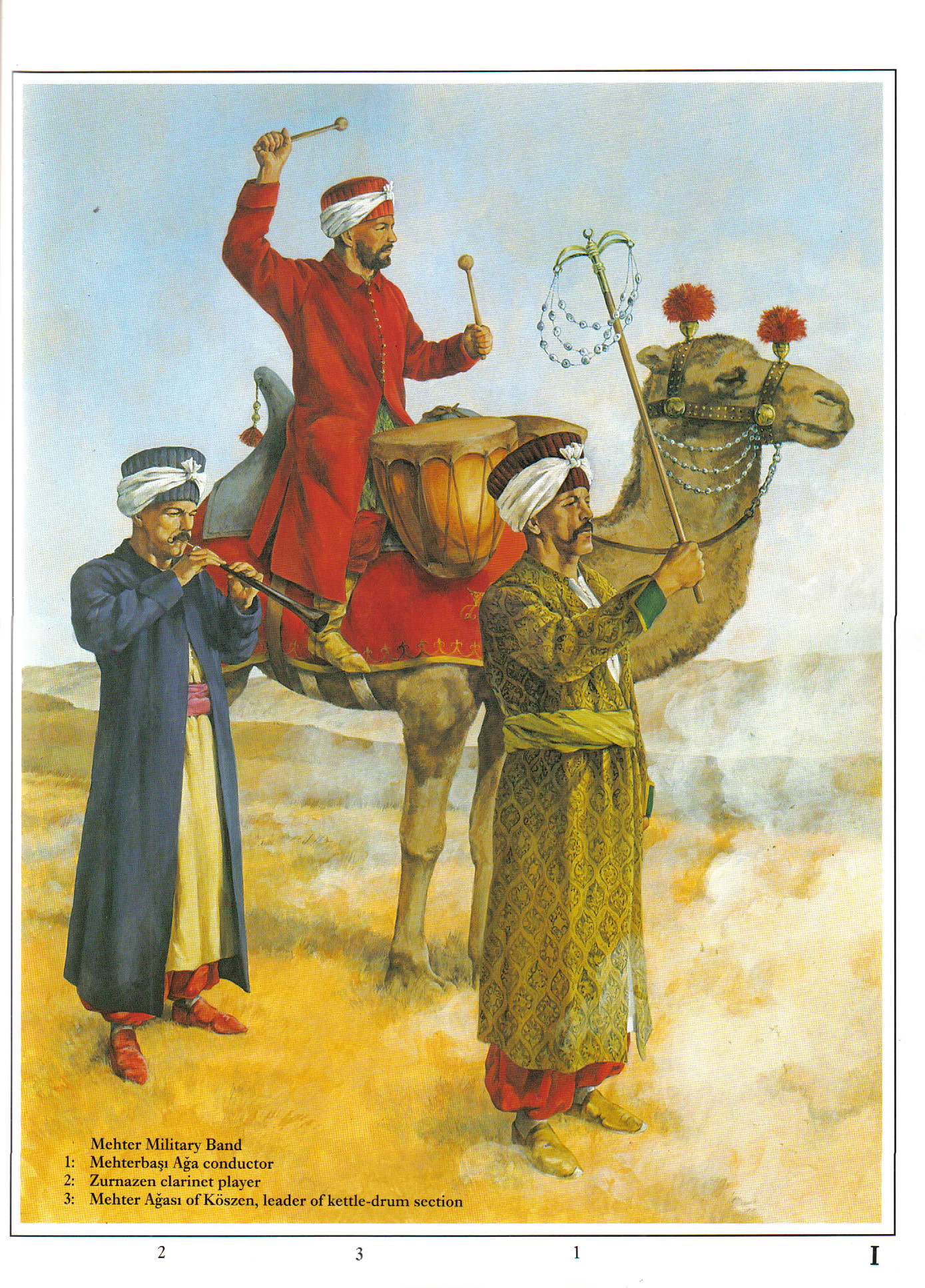
Opera…Tolkien?

Tags

, , , ,

As always, dear readers, welcome.

I’ve just read an interesting piece of news:  there’s going to be an opera based upon The Lord of the Rings (see:  https://www.classicfm.com/music-news/lord-of-the-rings-opera-approved-tolkien-estate/ ).  The composer is Paul Corfield Godfrey, 1950-, who had already composed a rather massive work on the Silmarillion, of which you can hear an excerpt here:   https://www.youtube.com/watch?v=Q4HUnCx4dLI                           You can also hear “The Lament for Boromir” here:  https://www.youtube.com/watch?v=6nxvzZ98LS4  and “The Man in the Moon Came Down Too Soon” and “The Song of the Troll”, along with one or two others on YouTube as well.  (There’s the proviso with these:  you may be accused of being a bot, unless you know the secret password.)

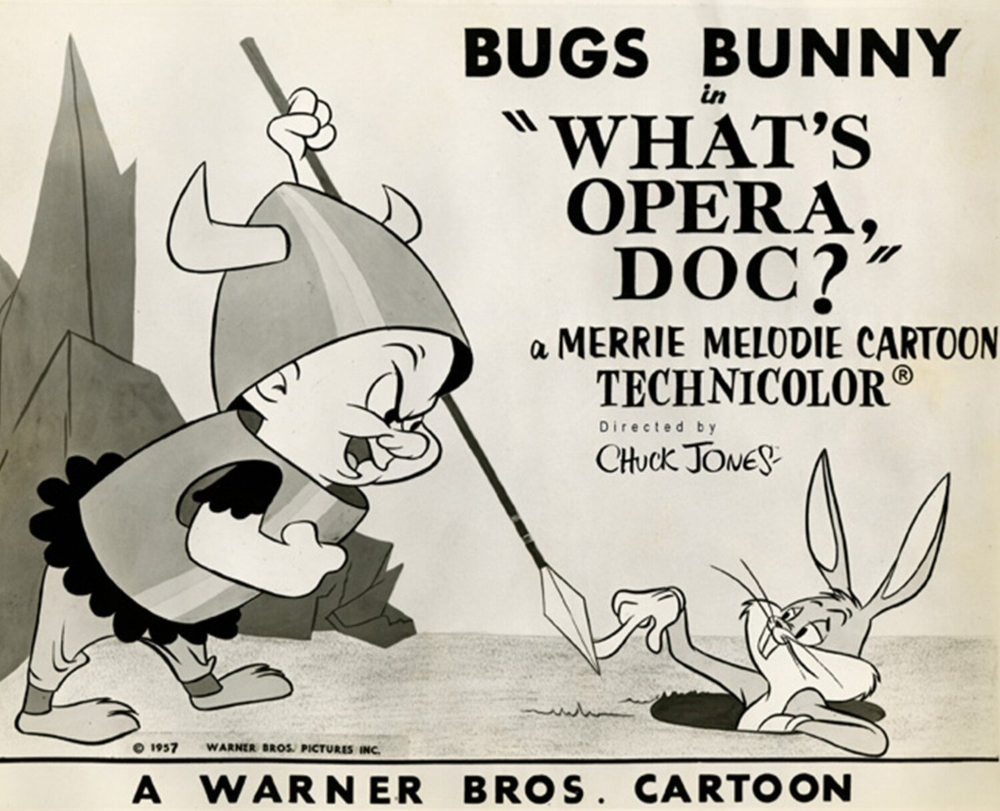
For me, opera began with a cartoon.

As a child, I saw it, loved it (Bugs Bunny always being a favorite, along with Daffy Duck), and that’s where opera first appeared in my life.

In terms of real opera, it’s an odd little piece, having, at one level, a standard plot:  Elmer Fudd pursues Bugs, as he had done many times before.

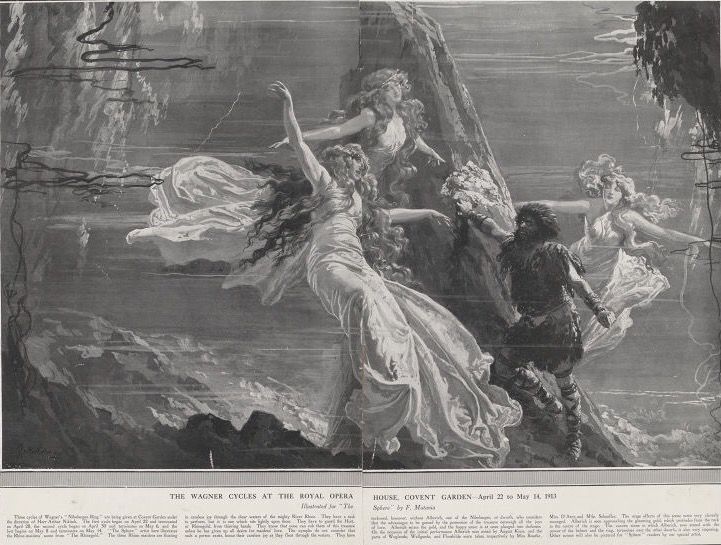
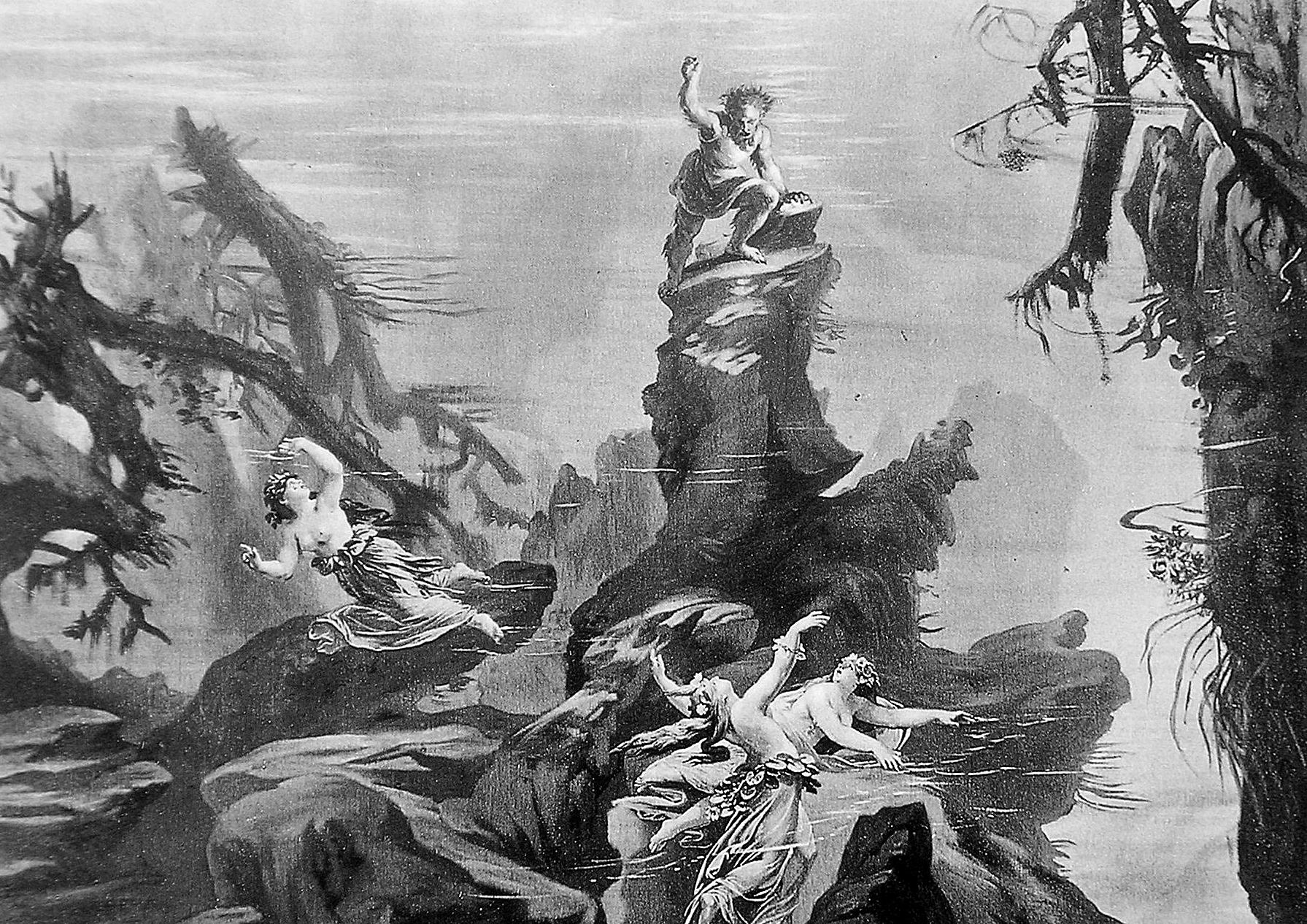
At another level, however, it’s a parody of grand opera, in which Elmer plays the Wagnerian hero, Siegfried, and Bugs, at a certain point in the story, turns himself into the Valkyrie, Brunnhilde.

And, for only the third time in their lives of pursuit and escape, Elmer actually succeeds in dealing with Bugs.

Although, in case you haven’t seen it, or forgot the plot and are worried, Bugs comes back from the dead long enough to say to the audience, “Well, what did you expect in an opera?  A happy ending?” before subsiding again.  (You can see it here:  https://www.youtube.com/watch?v=6jDcWAWRRHo provided, of course, that you’re not a bot.  You can also read a very interesting article about the making of the cartoon here:  https://en.wikipedia.org/wiki/What%27s_Opera,_Doc%3F )

Peter Schickele, 1935-2024,

the creator of PDQ Bach, 1807-1742?,

whom he once described as “the youngest and oddest of Johann Sebastian’s 20-odd children”, in a memorable introduction to Baroque opera as exemplified in PDQ Bach’s, “Haensel and Gretel and Ted and Alice”, explained that there were, in the period, two kinds of opera, “opera seria”, which was concerned with tragedies and histories, and “opera funnia”—and you can guess where this would go.

Opera seria, however, was real and where opera began, with Jacopo Peri’s, 1561-1633,

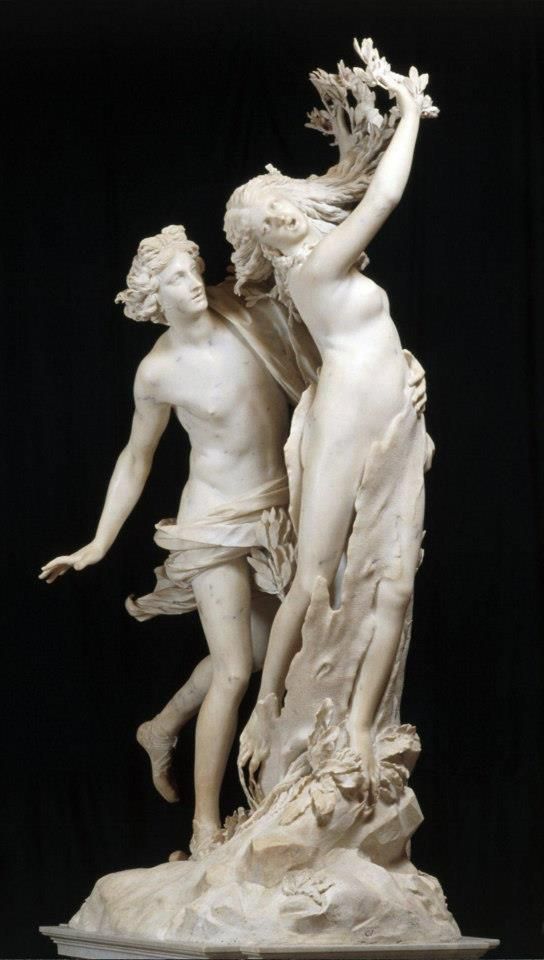
Dafne, in 1598.  This is based upon the ancient story of Daphne, who, pursued by Apollo, is turned into a laurel tree (you can read the most familiar version of the story, as told by Ovid in Book 1 of his Metamorphoses, here:  https://www.theoi.com/Text/OvidMetamorphoses1.html at line 452 and following).

(by Gian Lorenzo Bernini, 1598-1680, dated to 1622-25)

The goal of this and subsequent works, both by Peri and others, was to attempt to revive what they understood Greek tragedy to have been like, with its dark mythological stories—truly opera seria!  To Peri and his contemporaries, this meant not only solo songs and choruses, but that all of the dialogue would be sung, too, in what came to be called recitativo, and this convention continued into the 20th century.

There is another possibility, however, although not “opera funnia”.  It’s a form known in German as “Singspiel” and in French as “Opera comique” and combines the solo songs and choruses of opera seria with spoken dialogue, rather than recitativo, in just the way contemporary musicals are really plays with music, where songs appear at important dramatic points in the story.

(Rodgers and Hammerstein’s “Oklahoma”, 1943)

In 1964, an English composer, Carey Blyton, 1932-2002, wrote to JRR Tolkien requesting his permission to create a “Hobbit overture”.  Tolkien was clearly delighted and granted permission immediately, providing for us, as well, with this sidelight on himself and music:

“As an author I am honoured to hear that I have inspired a composer.  I have long hoped to do so, and hope also that I might find the result intelligible to me, or feel that it was akin to my own inspiration…I have little musical knowledge.  Though I come from a musical family, owing to defects of education and opportunity as an orphan, such music as was in me was submerged (until I married a musician), or was transformed into linguistic terms.  Music gives me great pleasure and sometimes inspiration, but I remain in the position in reverse of one who likes to read or hear poetry but knows little of its technique or tradition, or of linguistic structure.”  (from a letter to Carey Blyton, 16 August, 1964, Letters, 490.  You  can hear Blyton’s overture, composed in 1967 as Opus 52a, here:  https://www.youtube.com/watch?v=rybV4xDq_DM  –that is, if you persist in insisting that you’re not a bot.)

The musician was, of course, his wife, Edith, and Tolkien’s interest in music was certainly developed enough that, in a trip to Italy in 1955 with his daughter, Priscilla, he reacted to a performance of Giuseppe Verdi’s Rigoletto, with the words “Perfectly astounding”.  (from a letter to Christopher and Faith Tolkien, 15 August, 1955, Letters, 325)

I’ll be very curious to see what comes of this opera project, which claims to be retaining Tom Bombadil

(the Hildebrandts)

and the equally neglected Barrow-wight.

Under the Spell of the Barrow-wight, by Ted Nasmith

(Ted Nasmith)

If the selection I’ve heard from Godfrey’s Silmarillion provides us with an idea of his treatment of The Lord of the Rings, we will hear not only Tolkien’s poems, like “The Man in the Moon”, set to music, but the dialogue may also be done in recitativo, and I’ll be very curious to see how he manages this, as there’s so much of it—perhaps a narrator for continuity? 

Thinking about this has set me wondering about how one might turn The Hobbit into an opera, dialogue aside.  Tolkien has provided us with about 15 lyrics throughout:

Chapter 1, “An Unexpected Party”: 

“Chip the glasses…”  a chorus for the dwarves

“Far over the misty mountains cold…”  a second chorus for the dwarves

“Far over the misty mountains cold…”  a reprise of the first verse, sung by Thorin and overheard by Bilbo

Chapter 3, “A Short Rest”

“O!  What are you doing…”  a chorus for elves

Chapter 4, “Over Hill and Under Hill”

“Clap!  Snap!  the black crack!”  a chorus for goblins

Chapter 5, “Riddles in the Dark”

Just a thought, but perhaps these riddles could all be sung, the glaring exception being Bilbo’s “What have I got in my pocket?”

Chapter 6, “Out of the Frying-Pan into the Fire”

“Fifteen birds in five fir-trees” another goblin chorus

“Burn, burn tree and fern” a goblin chorus—but possibly add in the howling of the wolves?

Chapter 7, “Queer Lodgings”

“The wind was on the withered heath”  a chorus for dwarves

Chapter 8, “Flies and Spiders” 

“Old fat spider”

“Lazy lob and crazy cob”  two songs for Bilbo—the first time we’ve heard his voice

Chapter 9. “Barrels Out of Bond”

“Roll—roll—roll—roll”

“Down the swift dark stream you go”  two choruses for the forest elves

Chapter 10, “A Warm Welcome”

“The King beneath the mountains”  sung by the people of Lake-town

Chapter 15, “The Gathering of the Clouds”

“Under the Mountain dark and tall”  a dwarf chorus

Chapter 19, “The Last Stage”

“The dragon is withered”  a chorus for the elves of Rivendell

“Sing all ye joyful, now sing all together!”  a second chorus for the elves

“Roads go ever ever on”  a song for Bilbo and the last in the book

Reading through this list:

1. it’s easy to see that the majority of the lyrics are meant for a chorus of dwarves, goblins, Lake-town people, and assorted elves

2. the only solo numbers (excepting the riddles, if sung) are few in number and given to Bilbo

3. there are lyric gaps in the potential script:  Chapters 11-14 and 16-18 have no songs at all

If you were the librettist, how would you fill not only those gaps, but provide for more solos—for Gandalf, Bilbo,Thorin, the Chief Goblin, Gollum, Beorn, Thranduil (the forest elf king), the Master of Lake-town, Bard, Smaug, Roac (the elderly raven), as well as perhaps small comic parts for the Sackville-Bagginses, and something for the stone trolls (a trio about eating might be appropriate) too?  It’s also important to note the complete lack (except with the possible exception of the Lake-towners) of female voices in solos and choruses.  How could that imbalance be readjusted—without seriously messing with Tolkien’s text (and we know from his correspondence with Forrest J. Ackerman on a potential film version of The Lord of the Rings that, although he conceded that a different art form might require some adjustment, he had his limits as to just what and how much might be altered—see “from a letter to Forrest J. Ackerman”, June, 1958, Letters, 389-397)  Considering the story, it would seem that it would be a fitting subject for an opera seria, but there would be the danger—as there will be for Godfrey’s The Lord of the Rings—that, not maintaining the tone and making too many additions or changes to the text might quickly turn it into an opera—funnia.

Thanks for reading, as ever,

Stay well,

Beware of Godfrey’s “The Song of the Troll”—it’s catchy!

And remember that, as always, there’s

MTCIDC

O

PS

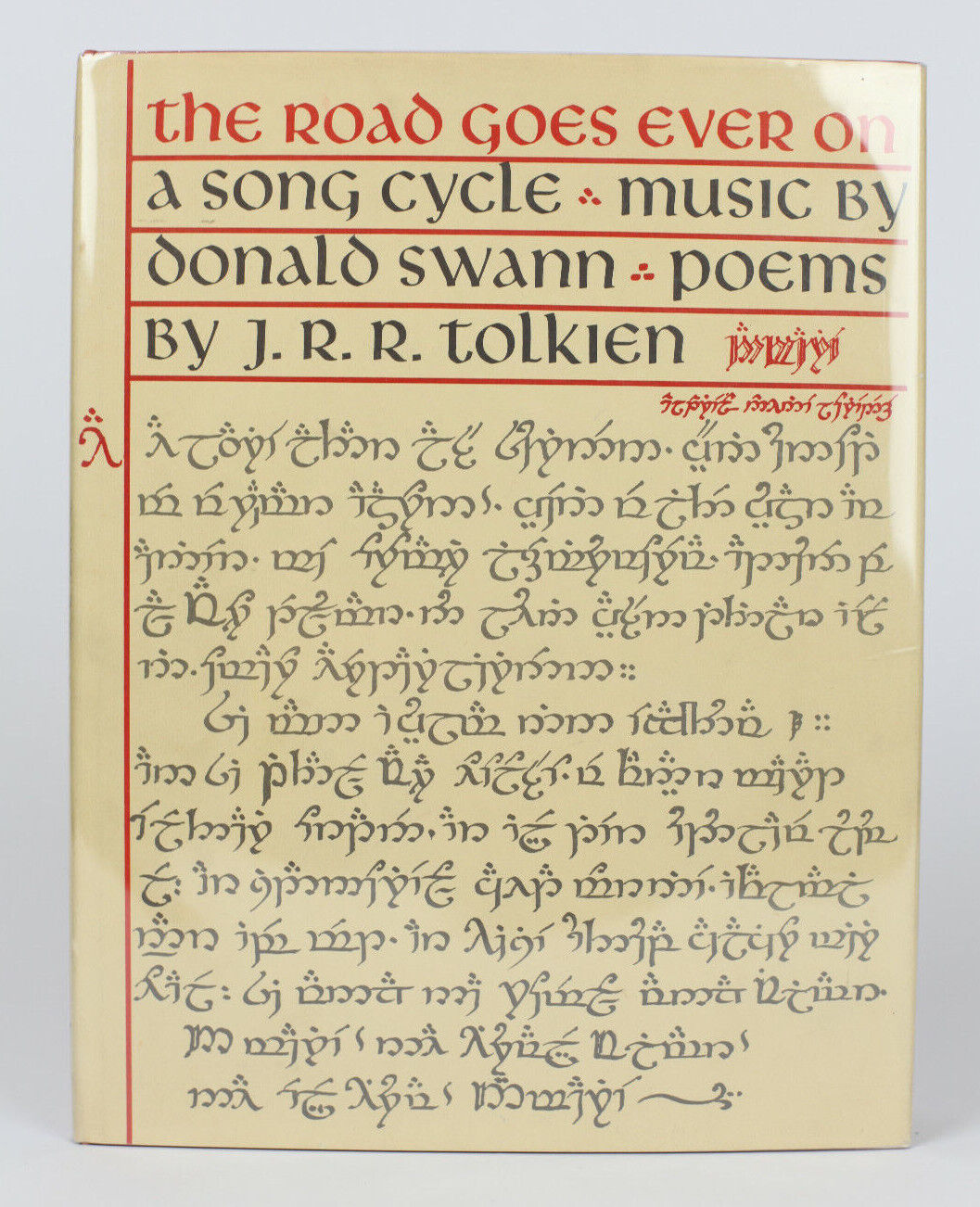
I’m not aware that Tolkien ever heard that “Hobbit overture”, but, in 1967, he collaborated with the composer, Donald Swann, 1923-1994, on a short cycle of his poems drawn from various sources, entitled The Road Goes Ever On. 

 You can read about it here:  https://en.wikipedia.org/wiki/The_Road_Goes_Ever_On  And, provided that you have finally proved to YouTube’s satisfaction that you are not, indeed, a bot, you can hear it here:  https://www.youtube.com/watch?v=YtH6ROfV7WA  I’ve loved the cycle for years, have sung it, and very much recommend it. )

Evil—But…

Tags

, , , ,

Welcome, dear readers, as always.

Although the hero of Robert Louis Stevenson’s Treasure Island, 1883,

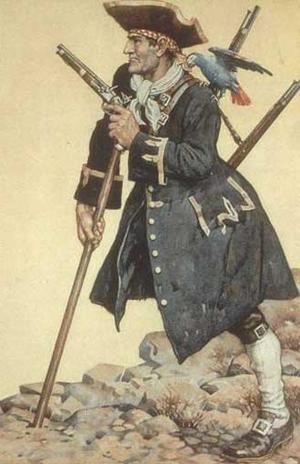
is the young narrator, Jim Hawkins, the other major character is a rascal, Long John Silver.

If you haven’t read the book, it’s a story about buried treasure (surprised?), a map,

and a voyage to find that treasure—with a crew the half of which are, unknown at first to the protagonists, (temporarily) retired pirates, led by the cook, Silver, of the pirate captain who buried the treasure, Flint.

It’s easy to see why Silver is the other major character:  charming and cold-blooded by turns, he dominates those pirates and yet clearly has a soft spot in his heart for Jim Hawkins.  At the book’s end, while the other pirates are defeated and killed or marooned on the island, we hear that:

“Silver was gone…But that was not all.  The sea-cook had not gone empty-handed. He had cut through a bulkhead unobserved, and had removed one of the sacks of coin, worth, perhaps, three or four hundred guineas, to help him on his further wanderings.

I think we were all pleased to be so cheaply quit of him.” 

The other protagonists, like Squire Trelawney and Doctor Livesey,

are sympathetic, but pale in comparison with Silver, one moment genial, the next, treacherous. (Treasure Island, Chapter XXXIV “And Last”)

And so at least I, as a reader, have always been pleased as well.  (If you want to read the story in my favorite edition, from 1911, illustrated by N.C. Wyeth, here it is:  https://archive.org/details/treasureisland00stev/page/n5/mode/2up )

There is a tradition of having, at worst, a sneaking affection for a villain which dates in English literature at least as far back as the Romantics, when the Satan of Milton’s Paradise Lost, 1667/1674, is seen as other than the destroyer of Paradise.  Shelley, in his introduction to his Prometheus Unbound, 1820, almost casually refers to Satan as “the Hero of Paradise Lost” and Blake, in The Marriage of Heaven and Hell, 1790-1793, says of Milton that

“The reason Milton wrote in fetters when he wrote of Angels and God, and at liberty when of Devils and Hell, is because he was a true poet, and of the Devil’s party without knowing it.” (“The Voice of the Devil” 3. “Energy is Eternal Delight”—But I hasten to point out that there has been an enormous amount of scholarly ink spilled over what Blake may actually have meant by this—for my purpose, however, we’ll leave it as a kind of “sympathy for the Devil”.)

Both of these Romantics found Satan more interesting than Adam and angels—in his adversarial relationship to Heaven, he’s simply more developed, and therefore not only more realistic, but, in his way, more dangerous—and tempting.

And this is why I have a soft spot for Orcs.  It’s not that I admire their behavior, from murdering Boromir

(Inger Edelfeldt)

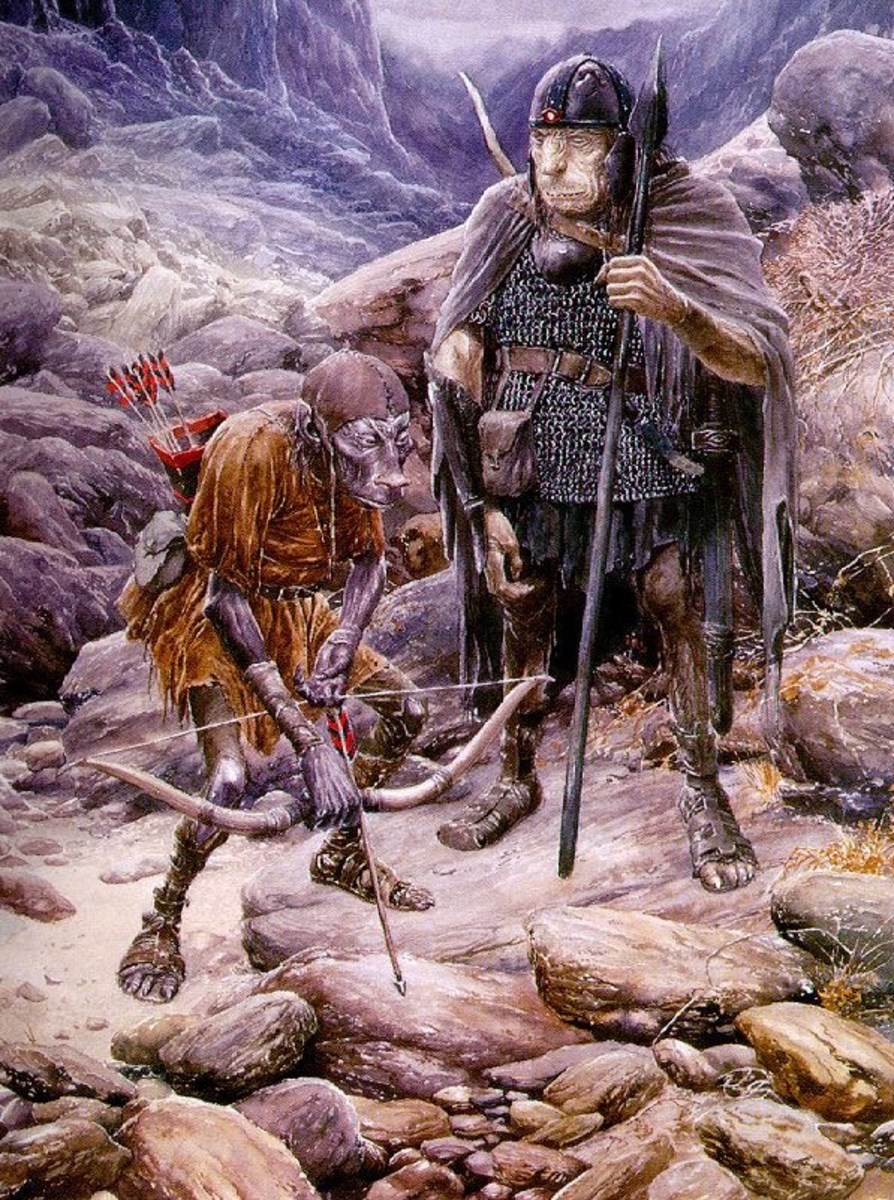
to murdering each other,

(Alan Lee—this is the pre-murder stage—very soon the archer will shoot an arrow into the other’s eye—see The Return of the King, Book Six, Chapter 2, “The Land of Shadow”)

but that Tolkien has brought them to life through his use of dialogue:  these are real foot soldiers in a real war and vivid because of it, even if they’re villains.

In the draft of a letter from 1956, he had written:

“My ‘Sam Gamgee’ is indeed, as you say, a reflexion of the English Soldier, of the privates and batmen I knew in the 1914 war, and recognized as so far superior to myself.”  (draft of a letter to H. Cotton Minchin, not dated, although JRRT noted that some version was sent 16 April, 1956, Letters, 358)

Although I would worry if Tolkien thought that the Orcs were superior to anyone, starting with himself, I would suggest that they are also modeled on the soldiers he knew in the Great War (note, by the way:  “batmen” here means “officers’ servants” not Bruce Wayne and descendants).

Consider, in comparison, the dialogue of the two Gondorian soldiers, Mablung and Damrod, we overhear when they are keeping an eye on Frodo and Sam—it seems more like an ancient history lesson than the talk of men in the trenches:

“ ‘Aye, curse the Southrons!’ said Damrod. ‘  ‘Tis said that there were dealings of old between Gondor and the kingdoms of the Harad in the Far South; there was never friendship.  In those days our bounds were away south beyond the mouths of Anduin, and Umbar, the nearest of their realms, acknowledged our sway.’ “ (The Two Towers,Book Three, Chapter 4, “Of Herbs and Stewed Rabbit”—I might add that “acknowledged our sway” sounds more like William Morris, 1834-1896, a strong influence on Tolkien, and one who revived archaic language in his writings, than the speech of ordinary infantry of any age.)

Now here are two Orcs, Grishnak and Ugluk, who sound more like Great War sergeants than historians:

“At that moment Pippin saw why some of the troop had been pointing eastward.  From that direction there now came hoarse cries, and there was Grishnakh again, and at his back a couple of score of others like him:  long-armed crook-legged Orcs.  They had a red eye painted on their shields.  Ugluk stepped forward to meet them.

‘So you’ve come back?’ he said.  ‘Thought better of it, eh?’

‘I’ve returned to see that Orders are carried out and the prisoners safe,’ answered Grishnakh.

‘Indeed!’ said Ugluk.  ‘Waste of effort.  I’ll see that orders are carried out in my command.  And what else did you come back for?  Did you leave anything behind?’

‘I left a fool,’ snarled Grishnakh.  ‘But there were some stout fellows with him that are too good to lose. I knew that you’d lead them into a mess.  I’ve come to help them.’ “  (The Two Towers, Book Three, Chapter 3, “The Uruk-hai”)

And what about this bit of reminiscence and wary conversation between Gorbag and Shagrat:

“…What d’you say?—if we get a chance, you and me’ll slip off and set up somewhere on our own with a few trusty lads, somewhere where there’s good loot nice and handy, and no big bosses.’

‘Ah!’ said Shagrat.  ‘Like old times!’

‘Yes,’ said Gorbag.  ‘But don’t count on it.  I’m not easy in my mind.  As I said, the Big Bosses, ay,’ his voice sank almost to a whisper, ‘ay, even the Biggest, can make mistakes.  Something nearly slipped, you say.  I say, something has slipped.  And we’ve got to look out.  Always the poor Uruks to put slips right, and small thanks.  But don’t forget:  the enemies don’t love us any more than they love Him, and if they get topsides on Him, we’re done too…’ “ (The Two Towers, Book Four, Chapter 10, “The Choices of Master Samwise”)

You won’t love them, considering their behavior towards Merry and Pippin, Frodo and Sam, you’ll probably be glad that at least 3 out of 4 are killed (Shagrat, though wounded by Snaga, escapes to report to the Barad-dur—see The Return of the King, Book Six, Chapter 1, “The Tower of Cirith Ungol”), but, perhaps, like me, you might remember Tolkien’s description of the Orcs to Peter Hastings:

“…fundamentally a race of ‘rational incarnate’ creatures, though horribly corrupted, if no more so than many Men to be met today.” (draft of letter to Peter Hastings, September, 1954, Letters, 285)

and find that, like “many Men to be met today”—and even for fictional men, like Long John Silver—you can have, as JRRT seems to, a brief moment of sympathy for them in their corruption as well as admitting that they can often be a lot more engaging than their virtuous Gondorian and Rohirric opponents.

Thanks, as always, for reading.

Stay well,

Beware the temptation of the Dark Side, even if it makes you want to turn the page and read on,

And remember that there’s always

MTCIDC

O

Jonah, Monstro, Moby

Tags

,

As always, dear readers, welcome.

This summer, I read a very interesting article on the possibility (I think probability) of a complex language of sperm whales (here is the BBC article:  https://www.bbc.com/future/article/20240709-the-sperm-whale-phonetic-alphabet-revealed-by-ai and there’s a very  detailed scientific essay, but actually quite followable, as it’s well written and defines its vocabulary on the subject here:  file:///C:/Users/twb/Downloads/s41467-024-47221-8.pdf ).

When I think of whales, 3 come readily to mind from literature.  The first is the creature who swallows Jonah (although it is described as piscem grandem, a “big fish” in Jerome’s translation, which a whale isn’t, although ancient people probably weren’t aware of the difference—the Greek version says ketos megas, “big sea monster”).

(This is from a mosaic found on the floor of a synagogue at Huqoq, in 2017.  For more on the discovery, see:  https://www.biblicalarchaeology.org/daily/news/huqoq-mosaics-jonah-and-the-whale-the-tower-of-babel/  I like this depiction because of its vaguely comic air—Jonah being swallowed by a fish which is being swallowed by a fish which is being swallowed by a fish, like something out of Finding Nemo.)

But the story begins in Nineveh, the capital of the Neo-Assyrian empire.

(A very genteel 19th-century reconstruction—for more early drawings of Nineveh and its remarkable reliefs, see Austen Henry Layard, 1817-1894, The Monuments of Nineveh, 1853, here:  https://archive.org/details/the-monuments-of-nineveh.-from-drawings-made-on-the-spot/page/n1/mode/2up Layard was the first serious 19th-century archaeologist to dig extensively at the site, sending back heaps of his discoveries to the British Museum, where they remain today.  He’s also a very good writer and, if you’re interested in the history of archaeology, you may enjoy his Nineveh and Its Remains, 1867, here:  https://archive.org/details/ninevehanditsre03layagoog/page/n6/mode/2up For a quick little piece on Layard and the British Museum see:  https://smarthistory.org/assyrian-lamassus-in-victorian-britain/ )

According to the story as translated by Jerome, Dominus (“the Lord”) was not pleased with the city, saying to Jonah that he should go there and inform the people that ascendit malitia eius coram me “its wickedness has come up into my presence”—and, knowing other instances of when something like this has happened, Nineveh is in for destruction unless—and that’s why Jonah is sent.  Instead of obeying, however, Jonah skips town, hops on a ship, and suddenly (are we surprised?) there’s a tremendous storm, as well as dialogue between the ship’s captain, the crew, and Jonah, who admits that he’s the reason and that, if they want calm weather, they need to throw him overboard.  The sailors are decent folk, and, at first, refuse, but, Jonah prevailing, over he goes and meets that piscis grandis.

(An ambo—a lectern from which readings are delivered—this one dates c.1130AD and is found in the church of Saint Pantaleone in Ravello, Italy)

By repenting, he’s saved, goes to Nineveh, warns the people and they, and even the king, change their ways, and there’s a happy ending—although the ending of the book itself seems rather abrupt and the book in general has been the center of scholarly discussion for centuries.  If you’d like to read Jerome’s Latin translation, which is my go-to for the Bible in general, see:  https://vulgate.org/ot/jonah_1.htm  For more about Jonah, see:  https://en.wikipedia.org/wiki/Jonah although this article needs a little editing.  On the Book of Jonah see:  https://en.wikipedia.org/wiki/Book_of_Jonah  It’s interesting that, in Western sailor’s lore, a “Jonah” is a person on board a ship who brings misfortune.  There’s a horrible example of this in Peter Weir’s outstanding film, Master and Commander, 2003, if you like first-rate adventure films—highly recommended!)

I suspect that my first whale and its occupant were well known to the author of my second story, “Carlo Collodi” (real name:  Carlo Lorenzini, 1826-1890),

who originally published his serial of the burattino (“puppet”) who could talk and move on his own in a children’s magazine, Il Giornale dei Bambini (“Children’s Magazine”) in 1881.  (The Wiki article needs to be corrected here, saying that it was first published in Il Corriere dei Piccoli–something like “The Little Ones’ Messenger”—which was not founded till 1908.  For an article about the Giornale, see:  https://www.academia.edu/7325693/Ferdinando_Martini_e_la_direzione_del_Giornale_per_i_Bambini_in_alcuni_documenti_inediti_1881_1889_ )

It is always one of the great pleasures of researching and writing this blog that I’m always taught something new and, in the case of that original short story of Pinocchio, it was a little shocking.  As someone who first met Pinocchio, Collodi’s creation, in a later revival of Disney’s 1940 Pinocchio,

I’d always imagined that, once more united with his creator, Geppetto, Pinocchio would become a real boy and live happily ever after.  In that serial, however, two tricksters, a cat and a fox, in the disguise of “assassins” attempting to steal money from Pinocchio, hang him, and that, apparently, was where the serial ended—until the publishers wanted the story to continue and so Pinocchio was rescued by an agent of his patron, the Blue Haired Fairy, and the story went on—to (more or less—lots more complications than in the film) the ending which I had always known:  Pinocchio is eventually rewarded by becoming that real boy.  (For a rather grim essay on the original form of the story, see:  https://slate.com/culture/2011/10/carlo-collodi-s-pinocchio-why-is-the-original-pinocchio-subjected-to-such-sadistic-treatment.html )

Collodi published the extended work in 1883

and, in its later chapters we see that Jonah motif appear again, when Pinocchio’s creator, Geppetto, seeking the lost Pinocchio at sea, is swallowed—along with his ship—by what the Italian text calls a pesce-cane, but which an early translator called a “dogfish”, although pescecane means “shark” in modern Italian (a “dogfish” is a gatttucio).  Pinocchio rescues Geppetto

and proceeds on his way to his boy-metamorphosis (although he has to rescue the Blue Haired Fairy from poverty and illness before the final change).  You can read the Italian here:  https://archive.org/details/laavventuredipin00coll/page/n3/mode/2up and a 1904 translation into English here:  https://archive.org/details/adventuresofpino00coll_4/page/n7/mode/2up  Be warned, however, that there is a certain level of cruelty, particularly towards animals, in this story which would make me hesitate to read this to a modern child.

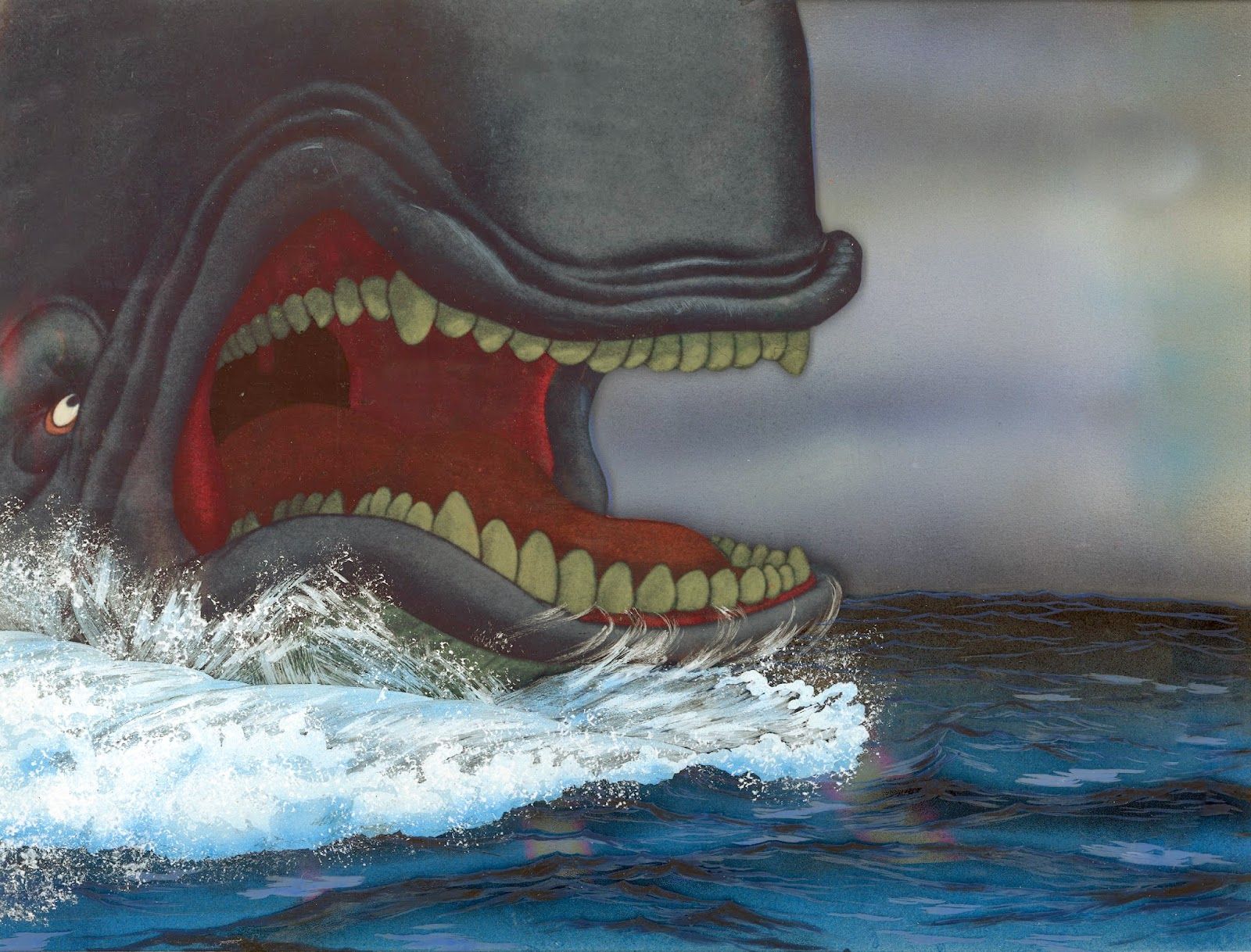
Again, as in the Jonah story, what I’ve always imagined as a whale (and so do Disney’s animators)

it seems to be everything but a cetacean (and, if you didn’t know that technical word for kinds of sea mammals, you can go back to the beginning of this posting and see where it comes from in Jonah’s swallower being called, in Greek, ketos megas),

but my third is very definitely a whale, although he only swallows a selection of his relentless pursuer (reminds me, of course, of Captain Hook, from Peter Pan, where the Crocodile there has swallowed one of Hook’s hands and now wants the rest).

It’s also a story, which, although I’ve read it twice, I can only point to, suggesting that, if you haven’t read it, you might try it, as, like War and Peace, it has the undeserved reputation of being a book more likely to be mentioned than actually read and as, over the years, War and Peace has become a favorite, a book which, every so often, I find that I just have to reread, I would say the same for this long, complex work.

(If you’d like to try War and Peace, I would recommend seeing this BBC production first.  It encapsulates many of the longer story’s elements, and, as you’d expect from the BBC, it’s beautifully acted, and it’s visually beautifully realized.)

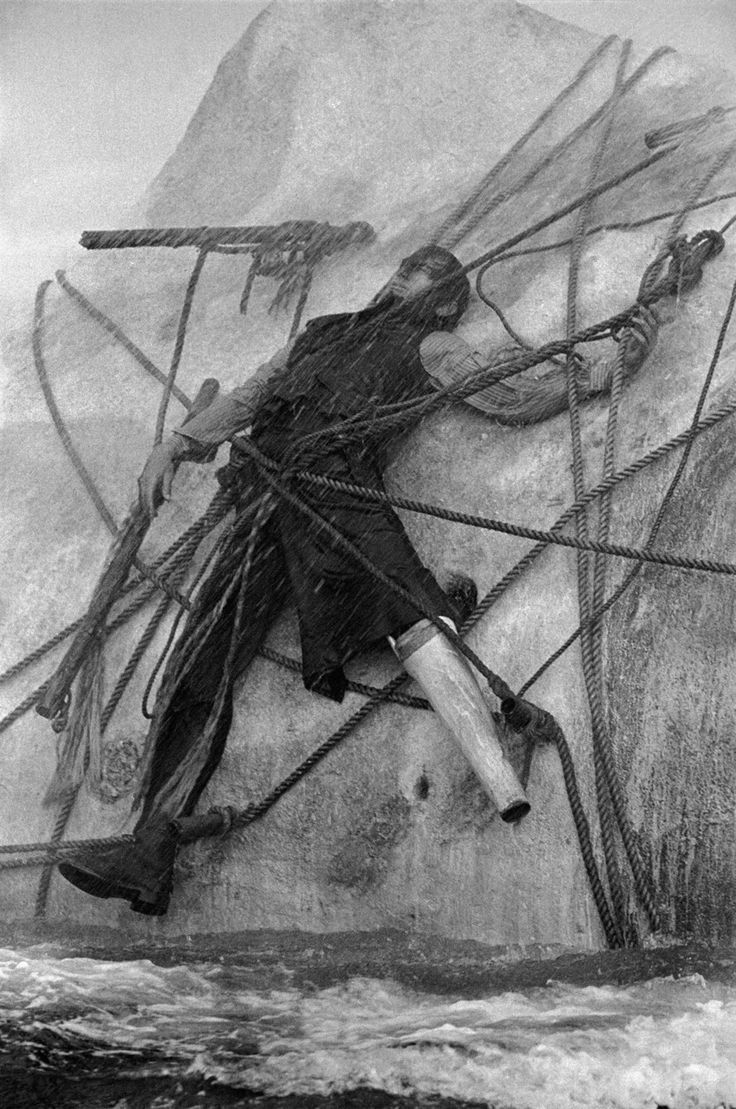
But my final whale is one of the principal characters (although spoken of, kept offstage till late in the book) of Herman Melville’s, 1851 novel.

It’s such a crazy mixture of archaic language, image, description, drama, philosophical/theological discussion that you might find it a bit like Finnegans Wake—an interesting idea, but difficult to digest (but definitely easier to follow—although, if you should try Moby Dick, I would recommend this to help you to visualize it—it may be a coloring book, but it’s extremely well detailed and drawn.)

Its whale and his pursuer, Captain Ahab, have been analyzed in every way possible—see this to read much more:  https://en.wikipedia.org/wiki/Moby-Dick –and the critical library is now enormous, but I would say that, for all that it covers, in its chapters, everything you’d ever want to know about whales and whaling, among other things, at base, it’s a book about a mad obsessive, a man so fixed upon revenge that he’s willing to sacrifice everything to gain it, including his own life, strangled by his own harpoon line and dragged into the sea to follow the whale upon whom he’s sworn vengeance.

Here’s the book, if you’d like to try it:  https://www.gutenberg.org/cache/epub/2701/pg2701-images.html#link2HCH0135  There is also an extremely useful site here:  http://powermobydick.com/ which explains the many references which often seem to litter the pages, chapter by chapter.

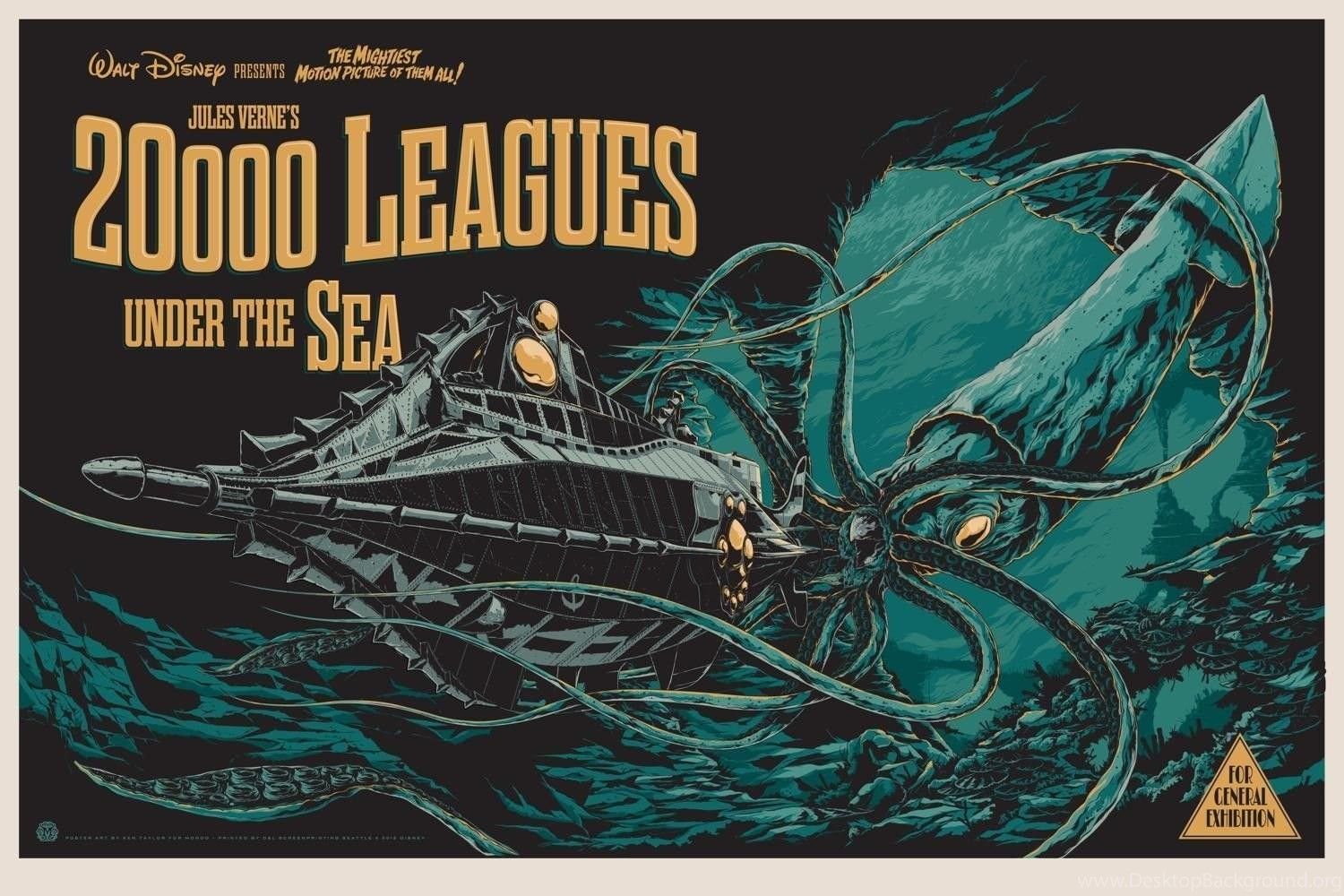
 But this seems like such a grim ending that I’ll add this:  https://www.youtube.com/watch?v=AkjTGCrLvAU  It’s Kirk Douglas, as harpooner Ned Land, in Disney’s 1954 Twenty Thousand Leagues Under the Sea,

singing “I’ve a Whale of a Tale”.  This is a great adaptation of Jules Verne’s original, with an impressive Victorian submarine, the Nautilus.  (Those thousands of leagues don’t mean deep, by the way, but long, as it describes the ranging ability of Captain Nemo’s ship.)

As always, thanks for reading.

Stay well,

Imagine not hunting whales, but chatting with them,

And remember that, as always, there’s

MTCIDC

O

Hands Up

Tags

, , , ,

As always, dear readers, welcome.

“The hallway smelt of boiled cabbage and old rag mats. At

one end of it a coloured poster, too large for indoor display,

had been tacked to the wall. It depicted simply an enor-

mous face, more than a metre wide: the face of a man of

about forty-five, with a heavy black moustache and rugged-

ly handsome features. Winston made for the stairs. It was no

use trying the lift.  Even at the best of times it was seldom

working, and at present the electric current was cut

off during daylight hours. It was part of the economy drive

in preparation for Hate Week. The flat was seven flights up,

and Winston, who was thirty-nine and had a varicose ulcer

above his right ankle, went slowly, resting several times on

the way. On each landing, opposite the lift-shaft, the poster

with the enormous face gazed from the wall. It was one of

those pictures which are so contrived that the eyes follow

you about when you move. BIG BROTHER IS WATCHING

YOU, the caption beneath it ran.” (George Orwell, 1984, Part One, Chapter 1)

This is the second paragraph in the first chapter of “George Orwell”’s (aka Eric Blair, 1903-1950) 1948 dystopian novel, 1984.  It’s an extremely thoughtful, well-written book, but its view of the future seems so hopeless and grim that it’s not easy to  read—you can do it here, however:  https://archive.org/details/GeorgeOrwells1984

I’ve been interested in that poster.

The first film made from the book, in 1956, doesn’t appear to have believed the kind of image of “Big Brother” which Orwell described—

nor does the second film, from, appropriately enough, 1984—

The first is lacking that mustache (and looks more like a man in a staring contest) and the second to me appears to be the image of someone earnestly trying to sell us something.  I wonder if what Orwell (who loathed Stalinist Russian and who used it as a model for his future Britain) actually had in mind was something like this—

combined with this—

(the British Field Marshall and Secretary of State for War, H.H. Kitchener, 1850-1916, on probably the most influential recruiting poster of the Great War/WW1)

The stare—a kind of commanding gaze—is clearly very important.  As Orwell tells us:  “It was one of those pictures which are so contrived that the eyes follow you about when you move”, which made me immediately think about Sauron as he appears in The Lord of the Rings—or, rather, doesn’t appear in actual physical form, but is only represented by what Frodo sees in Galadriel’s Mirror:

“But suddenly the Mirror went altogether dark, as dark as if a hole had opened in the world of sight, and Frodo looked into emptiness.  In the black abyss there appeared a single Eye that slowly grew, until it filled nearly all the Mirror.  So terrible was it that Frodo stood rooted, unable to cry out or to withdraw his gaze.  The Eye was rimmed with fire, but was itself glazed, yellow as a cat’s, watchful and intent, and the black slit of its pupil opened on a pit, a window into nothing.”

(an actual yellow cat’s eye)

This is powerful enough, but then—

“Then the Eye began to rove, searching this way and that; and Frodo knew with certainty and horror that among the many things that it sought he himself was one.”  (The Fellowship of the Ring, Book Two, Chapter 7, “The Mirror of Galadriel”) 

When, much later in the story, Pippin makes the mistake of looking into Saruman’s Palantir, he discovers just how powerful that gaze can be:

“ ‘I, I took the ball and looked at it…and I saw things that frightened me.  And I wanted to go away, but I couldn’t.  And then he came and questioned me; and he looked at me, and, and,  that is all I remember…Then suddenly he seemed to see me, and he laughed at me.  It was cruel.  It was like being stabbed with knives…Then he gloated over me.  I felt I was falling to pieces…’ “ (The Two Towers, Book Three, Chapter 11, “The Palantir”)

Just like the eyes of Big Brother, and of Field Marshall Kitchener, then, Sauron’s eye radiates authority and sends the same signal:  “Sauron is watching YOU”, which is why it appears even on the equipment of Sauron’s orcs—who would dare to flinch or fail when Sauron may actually be watching you personally?

(Angus McBride)

It is the badge, then, of never-sleeping watchfulness.

We know, from the narrator, that Saruman had plans to imitate Sauron—although he was deceived into thinking that he was doing so:

“A strong place and wonderful was Isengard, and long had it been beautiful…But Saruman had slowly shaped it to his shifting purposes, and made it better, as he thought, being deceived—for all those arts and subtle devices, for which he forsook his former wisdom, and which fondly he imagined were his own, came from Mordor; so that what he made was naught, only a little copy, a child’s model or a slave’s flattery, of that vast fortress, armoury, prison, furnace of great power, Barad-dur, the Dark Tower, which suffered no rival, and laughed at flattery, biding its time, secure in its pride and its immeasurable strength.”  (The Two Towers, Book Three, Chapter 8, “The Road to Isengard”)

If the all-seeing, ever-watchful Eye was Sauron’s badge, it’s interesting to see what Saruman chose:

“Suddenly a tall pillar loomed before them.  It was black; and set upon it was a great stone, carved and painted in the likeness of a long White Hand.” 

We first meet this sign when Aragorn, Legolas, and Gimli are looking through the Orc dead after Boromir’s death:

“There were four goblin-soldiers of greater stature, swart, slant-eyed, with thick legs and large hands.  They were armed with short broad-bladed swords, not with the curved scimitars usual with Orcs; and they had bows of yew, in length and shape like the bows of Men  Upon their shields they bore a strange device:  a small white hand in the centre of a black field; on the front of their iron helms was set an S-rune, wrought of some white metal.” (The Two Towers, Book Three, Chapter 1, “The Departure of Boromir”)

(Inger Edelfeldt)

I don’t believe we ever see that “S-rune” again,

but the White Hand, along with the Eye, will appear as the Orcs carry Merry and Pippin off to the west.

(Denis Gordeev)

But what does it signify?  Saruman, as he has become unknowingly corrupted by Sauron, has become “Saruman of Many Colours”, as he explains to Gandalf (see the dialogue between them in The Fellowship of the Ring, Book Two, Chapter 2, “The Council of Elrond”), but he began as Saruman the White, and that might explain the color of the hand.  On that pillar outside Isengard, the hand, then, might indicate a warning:  “Stop.  This is the Land of Saruman.  Go Back.”, as we imagine the two figures of the Argonath might be indicating by their gesture—

(the Hildebrandts)

This might work for a boundary pillar, but what about those shields?  Can we add a second meaning? 

Ugluk the captain of the Isengard Orcs might offer a very grim one:

“We are the servants of Saruman the Wise, the White Hand:  the Hand that gives us man’s flesh to eat.”  (The Two Towers, Book Three, Chapter 3, “The Uruk-hai”)

Could this then be another warning:  “If you face us, not only will we defeat you, but then we’ll eat you”?

Perhaps a clue to this possibility may be found in a closer examination of that pillar:

“Now Gandalf rode to the great pillar of the Hand, and passed it; and as he did so the Riders saw to their wonder that the Hand appeared no longer white.  It was stained as with dried blood; and looking closer they perceived that its nails were red.” (The Two Towers, Book Three, Chapter 8, “The Road to Isengard”)

It’s just as well, then, for Pippin when:

“An Orc stooped over him, and flung him some bread and a strip of raw dried flesh…”

that

“He ate the stale grey bread hungrily, but not the meat.”

Thanks, for reading, as ever.

Stay well,

Sometimes it may be good to be a picky eater,

And remember that, as always, there’s

MTCIDC

PS

While poking around for white hand images, I found this:

If you’d like to know more about it, see:  https://www.shirepost.com/products/white-hand-of-saruman-silver-coin 

Stratigraphy

Tags

, , , ,

Welcome, as always, dear readers.

If you read this blog regularly, you know that one thing which always interests me is Tolkien’s sources, both direct and indirect.  In my last, for example, you would have read about one which he directly acknowledged, S.R. Crockett’s 1899 historical novel, The Black Douglas.

(See “Wolfing”, 11 September, 2024 for more)

In this posting, however, I want to begin with a source which prompted my writing this.

It is a pair of stanzas from Theophile Gautier’s (1811-1872)   

poem “L’Art”, which I read just the other day (my translation)–

“Toute passe—L’art robuste

Seul a l’eternite;

   Le buste

Survit a la cite.

Et la medaille austere

Que trouve un laboureur

   Sous terre

Revele un empereur.”

“Everything passes–only sturdy art

To eternity;

The bust survives the city

And the austere medallion

Which the workman finds

Under the ground

Reveals an emperor.”

Gautier belonged to the beginnings of a 19th-century movement which was called “Art for Art’s Sake” and this poem is a declaration, directed towards artists themselves, of his belief that art survives—and should survive—the ages. 

What really caught my attention was the second of these two stanzas, first because the medallion reminded me of this medallion, which I use to teach the Germanification of the later western Roman Empire–

It was minted for the first Ostrogothic king, Theoderic (454-526), who controlled Italy and some areas to the east from 493-526AD, ruling as an ostensible agent of the eastern Roman Empire, but actually a kind of smaller version of the former western Roman emperors.  I’ve always found this image useful because it suggests several things at once:

1. although it’s in Latin (“Theodericus Rex Pius Princi[p]s—for “Princeps”—originally “Headman”—primum caput—in Roman Republican terms, the speaker of the Senate—later an imperial honorific—now the basis of our word “prince”), “Theoderic, king, religious, prince”, underneath that name is the Gothic language which, along with Latin and Greek, Theoderic (or the older spelling, Theodoric) spoke, his Gothic name being something like “Thiudareiks”.  The Greco-Roman name would mean “Gift of God (theo- god, originally Zeus, + dor- gift)”, whereas the Gothic name is a compound of thiuda, “people” and reiks, “ruler”, so “ruler of the people”.   And the name, being in two languages at once, would seem to suggest, perhaps inadvertently, that Theoderic is the ruler of both the older Roman population and the newer Gothic.

2. this message is underlined by the portrait of the king himself–although he has the general look of a later Roman ruler—his lamellar armor (armor made of overlapping metal plates) and the little Nike (not sneaker, but the angelic figure in his left hand, symbolizing victory)—his haircut and the mustache are definitely not, being Germanic.

(For more on this medallion, see:  https://pancoins.org/wp-content/uploads/2018/03/Theorodoric-entire-article.pdf and https://cccrh.org/wp-content/uploads/2021/05/the-coins-of-theoderic-the-ostrogoth.pdf )

The second reason that stanza caught my attention was Gautier’s suggestion that the medallion, along with the bust, are archaeological finds which have survived as emblems of a previous age, itself long lost.

Sometimes, as in the case of Gautier’s workman, finds are simply stumbled upon. The famous Rosetta Stone, for example,

was found built into a wall by French engineers from Napoleon’s 1798 invasion of Egypt,

who were, in fact, not looking for antiquities (although Napoleon’s expeditionary force actually had a scientific element attached—here’s an image of one of the volumes which, eventually, they published),

but were improving some fortifications at the time.

As time went on, however, scientific archaeology developed and began very carefully recording discoveries brought from the ground layer by layer, which is called stratigraphy, and is used by geologists and paleontologists, as well.

The thinking behind this is simply logical:  that which you find below something else is older (unless the ground is disturbed, which can and does happen), that which you find above is newer.

Something I’ve always loved about Tolkien’s work (and Tolkien himself) is the careful, patient way he’s built up Middle-earth, which is, in fact, stratigraphically designed.  For an easy example, look at Appendix A of The Lord of the Rings:

“Annals of the Kings and Rulers”,

which is then divided into:

“I  The Numenorean Kings”

which is then subdivided in turn into:

“(i) Numenor

(ii) The Realms in Exile

(iii) Eriador, Arnor, and the Heirs of Isildur

(iv) Gondor and the Heirs of Anarion

The Stewards”

to which is added

(v) Here Follows a Part of the Tale of Aragorn and Arwen”

before we move on to

“II. The House of Eorl”

Layer by layer, JRRT piles on time and its events—and this isn’t just in annalistic form—that is, a date is provided, then an event is briefly recorded (although we see this form at the beginning of Appendix B in“The Tale of Years”)—instead, we find whole short stories, like that of King Arvedui, which occupies about 2 full pages in the 50th anniversary edition which I use in these postings (1041-1043).

The consequence of this is always a sense that Middle-earth is extremely old, inhabited, colonized, with stratum after stratum of human/elvish/dwarfish activity laid on top of each other—and sometimes standing long after those originally involved are long gone.  Consider, for example, the “Pukel-men”:

“At each turn of the road there were great standing stones that had been carved in the likeness of men, huge and clumsy-limbed, squatting cross-legged with their stumpy arms folded on fat bellies.  Some in the wearing of the years had lost all features save the dark holes of their eyes that still stared sadly at the passers-by…

Such was the dark Dunharrow, the work of long-forgotten men.  Their name was lost and no song or legend remembered it.  For what purpose they had made this place, as a town or secret temple or a tomb of kings, none in Rohan could say.  Here they laboured in the Dark Years, before ever ship came to the western shores, or Gondor of the Dunedain was built; and now they had vanished, and only the old Pukel-men were left, still sitting at the turnings of the road.” (The Return of the King, Book Five, Chapter 3, “The Muster of Rohan”)

On its own, this careful, detailed building of the past gives tremendous power to present events:  for ages, other people have struggled, built, fought, and perished in Middle-earth and left behind a long record of their deeds—although sometimes only nearly-forgotten monuments are all that survives.

But I think that we might also see a larger picture here, as well.

Middle-earth was not chosen just because Tolkien, as a medievalist, had it in his vocabulary.  As he tells us:

“I am historically minded.  Middle-earth is not an imaginary world.  The name is the modern form (appearing in the 13th century and still in use) of midden-erd >middel-erd, an ancient word for the ‘oikoumene’, the abiding place of Men, the objectively real world, in use specifically opposed to imaginary worlds (as Fairyland) or unseen worlds (as Heaven and Hell).  The theatre of my tale is this earth, the one in which we now live, but the historical period is imaginary.  The essentials of that abiding place are all there (at any rate for inhabitants of N.W. Europe), so naturally it feels familiar, even if a little glorified by the enchantment of distance in time.” (“Notes on W.H. Auden’s review of The Return of the King, 1956?, Letters,345)

To which we might add:

“May I say that all this is ‘mythical’…As far as I know it is merely an imaginative invention, to express, in the only way I can, some of my (dim) apprehensions of the world.  All I can say is that, if it were ‘history’ it would be difficult to fit the lands and events (or ‘cultures’) into such evidence as we possess, archaeological or geological, concerning the nearer or remoter part of what is now called Europe…I could have fitted things in with greater verisimilitude, if the story had not become too far developed, before the question ever occurred to me.  I doubt if there would have been much gain; and I hope the, evidently long but undefined, gap in time between the Fall of Barad-dur and our Days is sufficient for ‘literary credibility’, even for readers acquainted with what is known or surmised of ‘pre-history’. “

And Tolkien has footnoted this with:

“I imagine the gap to be about 6000 years:  that is we are now at the end of the Fifth Age, if the Ages were about the same length as S.A. and T.A.  But they have, I think, quickened; and I imagine we are actually at the end of the Sixth Age, or in the Seventh.”  (Letter to Rhona Beare, 14 October, 1958, Letters, 404)

In other words, what Tolkien has done for his version of our world is to create a simulacrum of what humans in time have done for our version of our world and, as we read The Lord of the Rings, including its appendices, we are acting as something like literary archaeologists, beginning at the surface of the Third Age in its last years and reading slowly down through its strata, just as archaeologists in our world work their way down through the historical layers, recording the strata as they dig.  Although I’m admirer of good fan fiction, I don’t think that I would ever write it, but I can imagine a story which begins with an archaeologist in our world (6000 years after the Third Age) digging more deeply than ever and coming upon

“…a tall pillar loomed up before them.  It was black; and set upon it was a great stone, carved and painted in the likeness of a long White Hand…” (The Two Towers, Book Three, Chapter 8, “The Road to Isengard”)

Where might the story go from there?

Thanks, as ever, for reading.

Stay well,

When excavating always keep a careful record,

And remember that, as always, there’s

MTCIDC

O

Wolfing

Tags

, , ,

Welcome, dear readers, as always.

“All of a sudden they heard a howl away down hill, a long shuddering howl.  It was answered by another away to the right and a good deal nearer to them; then by another not far away to the left.  It was wolves howling at the moon, wolves gathering together!”  (The Hobbit, Chapter 6, “Out of the Frying Pan Into the Fire”)

(Alan Lee)

In his invaluable The Annotated Hobbit,

Douglas Anderson points to a letter by Tolkien suggesting an influence, if not inspiration, for this scene of wargs (i.e. wolves) vs treed dwarves (and hobbit), as JRRT tells us:

“Though the episode of the ‘wargs’ is in part derived from a scene in S.R. Crockett’s The Black Douglas, probably his best romance and anyway one that deeply impressed me in school-days, though I have never looked back again.  It includes Gil de Rez as a Satanist.” (“from a letter to Michael Tolkien…sometime after Aug.25, 1967”, Letters, 550)

Published in 1899, The Black Douglas,

Is one of a series of Scots historical novels by S(amuel).R(utherford). Crockett (1859-1914),

based upon actual events—in this case, it has, as a basis, the short life and judicial murder of William, the 6th Earl of Douglas and his younger brother, David, in 1440.  It also has supernatural elements, however, including the sinister (but historical) figure of Gilles de Rais (c.1405-1440–Tolkien was clearly spelling from memory), one-time companion of Joan of Arc, who appears to be a werewolf, and, it’s a scene where the protagonists are attacked by werewolves

to which JRRT was referring—although the three don’t climb trees, but put their backs to them to fight on the ground, killing many of their attackers (and not being rescued by eagles—it’s Chapter XLIX and you can read it here:  https://dn790000.ca.archive.org/0/items/blackdouglas00croc/blackdouglas00croc.pdf ).

Wolves—or wargs—as we see in The Hobbit, are pack animals.

Crockett imagined even werewolves as behaving like the wolves they turn into and this led me to a question which occurred when, recently, as part of an exercise in story-telling, I asked a class to tell me the story of “The Three Little Pigs”. 

I’m sure that you know it, with its typical for Western fairy tales pattern of 3s:   porcine architecture—straw,

sticks, bricks–attempts by the wolf to enter, replies by the pigs, subsequent action by the wolf and his parboiled demise.

 Because of its simplicity and that pattern, it’s very useful as a subject for helping students to learn how stories work and how even such a simple story is built upon such basic narrative principles as foreshadowing and repetition to build tension.

But, the 3 pigs sing mockingly in the 1933 Disney version,

“Who’s afraid of the big, bad wolf,

Big, bad wolf,

Big, bad wolf?

Who’s afraid of the big, bad wolf?

Tra la la la la!”

(There’s actually a much longer song and you can read it here:  https://www.lyrics.com/lyric/27101857/Disney/Who%27s+Afraid+of+the+Big+Bad+Wolf and hear and see it here:  https://www.youtube.com/watch?v=leAh00n3hno )

and that made me notice something odd:  not “Big, bad wolves”—what happened to the pack?

The idea of the “lone wolf” turns up in other fairy tales—think of “Little Red Riding Hood” for example,

(Perhaps my favorite illustration, by Gustave Dore—LRR seems to have a rather skeptical look—perhaps because in the version Dore illustrated, the last line of the story is:  “Et en disant ces mots, le méchant loup se jeta sur le petit Chaperon rouge, et la mangea.”—“And, in saying these words, the wicked wolf threw himself upon Little Red Riding Hood and ate her.”)

where a single wolf meets Red, and the perhaps less familiar “The Wolf and the Seven Kids”.

(This is by a well-known Victorian illustrator, Walter Crane, 1845-1915, from an 1882 collection of the Grimm fairy tales which you can see here:  https://en.wikisource.org/wiki/Household_stories_from_the_collection_of_the_Bros_Grimm_(L_%26_W_Crane)/The_Wolf_and_the_Seven_Little_Goats  You can also read a translation at this site, which is specifically devoted to the works of the Grimms:  https://www.grimmstories.com/en/grimm_fairy-tales/the_wolf_and_the_seven_little_goats )

Traditional fairy tales all have variants—sometimes numerous ones—and some appear even on a world-wide basis, like “Cinderella” (see an ancient Chinese version here:   https://www.ancient-origins.net/news-myths-legends/fish-wish-your-heart-makes-2200-year-old-tale-chinese-cinderella-003506 ), but a little preliminary research has suggested another possibility. 

Unlike other fairy tales, although scholars believe “The Three Little Pigs” to be an old story, I was surprised to learn that its first citation is only to an 1853 volume with a title which would not suggest that such a story would be included:  English Forests and Forest Trees, Historical, Legendary, and Descriptive.  It’s to be found in Chapter IX, “Dartmoor Forest” and, even more surprising, the characters aren’t pigs, but pixies, the villain of the piece isn’t a wolf, but a fox, and the houses are made of wood, stone, and iron.   You can read it here:  https://ia601307.us.archive.org/13/items/englishforestsa01unkngoog/englishforestsa01unkngoog.pdf on pages 189-190.

The version familiar to most of us first appears in the fifth edition of James Halliwell-Phillipps’ The Nursery Rhymes of England (1886), in which the third little pig (who survives, as his two brothers do not) has a lot more to do than in what must have been the simplified version I knew as a child—and this actually closely matches the Dartmoor version (except for the pixies and the fox).  You can read it here:  https://archive.org/details/nurseryrhymesofe00hall/page/36/mode/2up on pages 37-41.  (For an entertaining essay on Halliwell-Phillipps and his work, see:  https://reactormag.com/questionable-scholars-and-rhyming-pigs-j-o-halliwell-phillipps-the-three-little-pigs/  )

It’s admittedly just a guess on my part, Halliwell-Phillipps doesn’t credit a source, and, instead of a fox as the villain, there’s a wolf, but both stories, have the same pattern of threes, although building materials differ, and the three pixies have a different identity, but what we see here is the same story, which made me wonder:

  1. Did “pixies” become (possibly through mishearing of an oral telling) “pigsies”—that is, “little pigs”?
  2. Did the fox become a wolf because wolves can be quite large

(by NatsumeWolf—you can see more of her art here:  https://www.furaffinity.net/gallery/natsumewolf/ )

and therefore more menacing in a story than a diminutive, but tricky, fox?

As well, that wolf in “Little Red Riding Hood” appears in Charles Perrault’s late-17th century story collection, Histoires ou Contes du Temps passe, first translated into English in the early 18th century, appearing, as well, along with “The Wolf and the Seven Kids”, in the Grimms’ early 19th century Kinder und Hausmaerchen, first translated into English in the 1820s, both being, therefore, readily available.  So, could that frightening wolf from other stories perhaps have been leaning over Halliwell-Phillipps’ shoulder, pushing him to replace the fox, even as he turned pixies into pigsies?  After all, he had nothing to lose but his pack…

Thanks, as ever, for reading.

Stay well,

If threatened by a wolf, try to out-fox him,

And remember that there’s always

MTCIDC

O

PS

For another, rather eerie story with—well, no spoiler alert, just read it: https://ia601303.us.archive.org/8/items/thetoysofpeacean01477gut/1477-h/1477-h.htm

This is by HH Munro, 1870-1916, who used the pen name “Saki”.  I’ve mentioned him before, but I’m sure to mention him and his witty and sometimes weird short stories again in the future.

Hey, Hay

As ever, dear readers, welcome.

As I reread The Hobbit for the fall semester, I came across this-

“Far, far away to the West, where things were blue and faint, Bilbo knew there lay his own country of safe and comfortable things…

‘The summer is getting on down below,’ thought Bilbo, ‘and haymaking is going on and picnics.  They will be harvesting and blackberrying, before we even begin to go down the other side at this rate.’ “ (The Hobbit, Chapter 4, “Over Hill and Under Hill”)

Gandalf, the dwarves, and the hobbit are beginning their trip through the Misty Mountains, an increasingly bleak place

(JRRT’s sketch, but from the far side of the Mountains)

which, although they don’t know it yet, will lead the group to goblins

(This is by Justin Gerard and you can see more of his striking work here:  https://www.gallerygerard.com/the-art-of-justin-gerard )

and Bilbo to “Riddles in the Dark”,

(Alan Lee)

so it’s easy to understand why Bilbo is thinking of pleasanter things (being safe in bed and eating bacon and eggs are also daydreaming possibilities for him).  But what about haymaking?  A common older proverb in English is “Make hay while the sun shines”, meaning “do something when you can best accomplish it”, but how do you “make hay”?

From Tolkien’s map of the Shire

and from hints here and there, principally in The Lord of the Rings, it’s clear that much of it is an agricultural landscape (as Tolkien writes to Naomi Mitchison:  “The Shire is placed in a water and mountain situation and a distance from the sea and a latitude what would give it a natural fertility, quite apart from the stated fact that it was a well-tended region when they took it over…” (letter to Naomi Mitchison, 25 September, 1954, Letters, 292)

We know that the South Farthing, for example, has tobacco (“smoke leaf”) plantations,

(although this is an all-too-modern barn—I imagine that hobbit barns would be more medieval-looking

like Prior’s Hall Barn here, built in the mid-15th century.)

Farmer Maggot, in the East Farthing, grows turnips,

and, as it’s probable that he brews his own beer, he’ll be growing barley

and, for flavoring, may grow hops.

(Those odd-looking buildings in the background are oast houses, where the hops are dried before use.)

Hay can be made from any number of plant products and come from fields devoted entirely to the hay-making process, but Farmer Maggot may also set aside some of his barley-fields, which will be cut before quite ripe, to keep as much of the nutrition for cattle-feed in the hay.

This can be a tricky operation as, to preserve the goodness of the hay, it needs to be spread out and dried in the sun before it’s collected (a process called “tedding”).  Sudden wet weather can ruin a crop by dampening it to the point that there will be too much moisture, which can cause rot or encourage disease.  (For a very practical 16th-century description of this process, see pages 33-34 of  Sir Anthony Fitzherbert’s  The Book of Husbandry, 1534, edited by Walter Skeat for the English Dialect Society in 1881, at:  https://archive.org/details/bookofhusbandry00fitzuoft/page/32/mode/2up )  Once the hay is dried on both sides, it’s forked into haycocks (you can see them in the background of the previous image—Fitzherbert recommends doing this twice, gathering the hay into larger cocks the second time–from which it can be loaded onto carts and taken to be stored in a barn–also depicted in this image).

(This is the beautifully-reconstructed interior of the Prior’s Hall Barn.)

What Bilbo thinks he’s missing, then, is the (hopefully) sunny days when hay is mown (late June, early July in the UK) and tedded (not that he, who is a wealthy gentleman, would ever be doing any of that manual labor.)  But what about picnics? 

As is the case with many words in English, there is a scholarly tussle over just when and where this word first appears–probably the 18th century–but I’ll leave it to this article to say more about the word and its usage:  https://www.historytoday.com/archive/historians-cookbook/history-picnic

and, instead, wonder who was doing the picnicking and where?  Is Bilbo actually thinking about a genteel outdoor meal, like this 19th-century painting of an 18th century festivity?

or something more rustic, like this 16th-century image of workers taking time off from the field?

In any event, just as in his longing for the comfort of eggs and bacon, his inclusion of picnics with haymaking

reminds us of a strong trait of hobbits—

“Their faces were as a rule good-natured rather than beautiful…with mouths apt to laughter, and to eating and drinking.  And laugh they did, and eat, and drink, often and heartily, being fond of simple jests at all times, and of six meals a day (when they could get them).”  (The Lord of the Rings, Prologue, I, Concerning Hobbits)

No wonder a dream of far-off comfort includes eating.

Thanks, as always, for reading.

Stay well,

Hope for three sunny days in hay-making time,

And remember that there’s always

MTCIDC

O

PS

In case, after haymaking and picnicking, you feel inclined to join the fiddler,

(Cornelis Dusart, 1660-1704)

here’s a 17th-century dance with an appropriate title (and directions on how to do it)—

And here’s a transcription into modern notation, if that earlier form is a bit puzzling:  https://playforddances.com/dances-2-3/hay-cock-a-hay-cock/

PPS

And I can’t resist adding what seems like an appropriate poem by Robert Frost (1874-1963)

Mowing

There was never a sound beside the wood but one,

And that was my long scythe whispering to the ground.

What was it it whispered? I knew not well myself;

Perhaps it was something about the heat of the sun,

Something, perhaps, about the lack of sound—

And that was why it whispered and did not speak.

It was no dream of the gift of idle hours,

Or easy gold at the hand of fay or elf:

Anything more than the truth would have seemed too weak

To the earnest love that laid the swale in rows,

Not without feeble-pointed spikes of flowers

(Pale orchises), and scared a bright green snake.

The fact is the sweetest dream that labor knows.

My long scythe whispered and left the hay to make.

This comes from Frost’s 1915 collection A Boy’s Will and you can read the whole collection here:  https://archive.org/details/boyswill00fros/mode/2up   A couple of vocabulary words–forgive me if these are already known to you—

Scythe

which you probably know from images of “the Grim Reaper”, who cuts down everyone the way a harvester cuts down all the grain—

Swale

This is defined as a “valley or low place” in a Webster’s An American Dictionary of the English Language from 1865—you can read that definition here:  https://archive.org/details/americandictiona00websuoft/page/1336/mode/2up

As I’m sure that you have seen plenty of those, I include this Eastman Johnson (1824-1906) of a harvester sharpening his scythe.

Orchis

This is somewhat puzzling, as the Orchis is a genus in the Orchid family which doesn’t appear to be native to North America.  I’m presuming that Frost is employing an earlier or perhaps American form of  “orchid” ( in that same Webster’s An American Dictionary of the English Language from 1865, you can see that use:  https://archive.org/details/americandictiona00websuoft/page/918/mode/2up )of which there are a good number of types available in North America.  Using Frost’s clues—“feeble pointed spikes” and “pale”, as clues, I’ve included the image of a “White Fringed Bog Orchid” (Platanthera Blephariglottis) as a guess.

Bon Appetit

As always, welcome, dear readers.

“Still round the corner there may wait

A new road or a secret gate…”

as Frodo and the other hobbits sing, “Bilbo Baggins [having] made the words, to a tune that was as old as the hills” (The Fellowship of the Ring, Book One, Chapter 3, “Three is Company”), and now that I’m about to teach The Hobbit again, I’ve noticed not anything so grand as a new road, but perhaps a new little footpath into the book.  (For a modern setting of this song, of which JRRT approved, see:  https://www.youtube.com/watch?v=YtH6ROfV7WA&t=75s  This is from a cycle of Tolkien’s poems set to music by Donald Swann (1923-1994), who, along with Michael Flanders, was mentioned in my last posting.)

In my last, I was talking about fears—of spiders

and snakes

(and you’ll notice that I haven’t gone on to “and bears, oh my!” although the rhythm is hard to resist.)

but, rereading The Hobbit, where those spiders—and the big cousin of snakes, a dragon–

(JRRT)

appear, I’d been wondering what is it about these creatures which is most threatening?  We might imagine the odd look of spiders, both the compound eyes and those rapidly-moving legs, and, for me, the wriggly motion of snakes (I’ve always thought that you can see, from muscular tension, what an attacking mammal might signal with its legs, but what do you do with something which has no legs?),

but here, I would propose, is a different possibility, consistent with all of the major threats in the book, and which lies in the title of this posting.

This title is, on the surface, just a kind of shorthand French for “May you enjoy your meal”, which I associate with a tv cooking show from long ago—

hosted by a very knowledgeable and enthusiastic Julia Child (1912-2004),

who ended every show by wishing her viewers, “Bon appétit!”

This show, as the title suggests, is all about French cuisine and the sometimes incredibly complex creation of it.  (I myself own the first volume of Child and her collaborators’ Mastering the Art of French Cooking

but the only thing I’ve ever been able to make from it was quiche, as virtually everything else in it would appear to take numerous hours,  a fully-equipped professional kitchen, and the kind of passionate staff we see in Ratatouille.

I note here, by the way, that Tolkien himself had strong views on such:  “I smoke a pipe, and like good plain food (unrefrigerated), but detest French cooking…” from a letter to Deborah Webster, 25 October, 1958, Letters, 411) 

This title also leads to what I think is the real fear in most of The Hobbit, first introduced in Chapter 2—

“ ‘Mutton yesterday, mutton today, and blimey, if it don’t look like mutton again tomorrer,’ said one of the trolls…

William choked.  ‘Shut yer mouth!’ he said as soon as he could.  ‘Yer can’t expect folk to stop here for ever just to be et by you and Bert.  You’ve et a village and a half between yer, since we come down from the mountains.  How much more d’yer want?’ “  (Chapter Two, “Roast Mutton”—we might also note a near-quotation from a book with which Tolkien was familiar, Lewis Carroll’s Through the Looking-Glass and What Alice Found There, 1871—although the title page of the first edition says 1872–

where, in Chapter Five, “Wool and Water”, the White Queen explains to Alice something about Looking-Glass Land:  “The rule is, jam to-morrow and jam yesterday—but never jam to-day.”  You can read this on page 81 of the 1896 Ward Lock edition here:  https://archive.org/details/ThroughTheLookingGlass/page/n77/mode/2up  For Tolkien’s familiarity with Carroll’s works, see his letter to C.A. Furth, 31 August, 1937, Letters, 24-26.)

And this is only the first mention of such a danger—there’s:

“I am afraid that was the last they ever saw of those excellent little ponies…For goblins eat horses and ponies (and other much more dreadful things), and they are always hungry.” (Chapter 4, “Over Hill and Under Hill”)

and

“[Gollum] liked meat too.  Goblin he thought good, when he could get it…

“ ‘Does it guess easy?  It must have a competition with us, my preciouss!  If precious asks, and it doesn’t answer, we eats it, my preciousss.’ ”  (Chapter 5, “Riddles in the Dark”)

and

“ ‘You’ve left the burglar behind again!’ said Nori to Dori looking down…

‘He’ll be eaten if we don’t do something,’ said Thorin…” (Chapter 6, “Out of the Frying-Pan Into the Fire”)

and

“ ‘It was a sharp struggle, but worth it,’ said one.  ‘What nasty thick skins they have to be sure, but I’ll wager there is good juice inside.’

‘Aye, they’ll make fine eating, when they’ve hung a bit,’ said another. “  (Chapter 8, “Flies and Spiders”)

and, finally

“ ‘Very well, O Barrel-rider!’ he said aloud.  ‘Maybe Barrel was your pony’s name; and maybe not, though it was fat enough…Let me tell you I ate six ponies last night and I shall catch and eat all the others before long.  In return for the excellent meal I will give you one piece of advice for your good:  don’t have more to do with dwarves than you can help.’

‘Dwarves!’ said Bilbo in pretended surprise.

‘Don’t talk to me!’ said Smaug.  ‘I know the smell (and taste) of dwarf—no one better.’ “  (Chapter 12, “Inside Information”)

I think that I first met this danger when I was very small and read a comic book version of The Life and Strange Surprizing Adventures of Robinson Crusoe, 1719.

Crusoe had first been alarmed when, living on what he thought was a safely deserted island, he found a human footprint in the sand.  Then, sometime later, he came upon something even more alarming:

“When I was come down the hill to the shore, as I said above, being the S.W. point of the island, I was perfectly confounded and amazed; nor is it possible for me to express the horror of my mind at seeing the shore spread with skulls, hands, feet, and other bones of human bodies; and particularly, I observed a place where there had been a fire made, and a circle dug in the earth, like a cockpit, where it is supposed the savage wretches had sat down to the inhuman feastings upon the bodies of their fellow-creatures.”  (Robinson Crusoe, Chapter XVIII, page 217—you can read this in N.C. Wyeth’s splendidly-illustrated edition of 1920 here:  https://archive.org/details/robinsoncrusoedefo/page/n249/mode/2up )

In other words, like Crusoe’s cannibals, it’s not the outside of trolls, goblins, wolves, spiders, and a dragon which we meet in The Hobbit and which produces the emotion the characters—and readers, too,–at least this reader—feel, but their plan to fill their insides with those characters:  hence the cheerful but ultimately grim title of this posting.

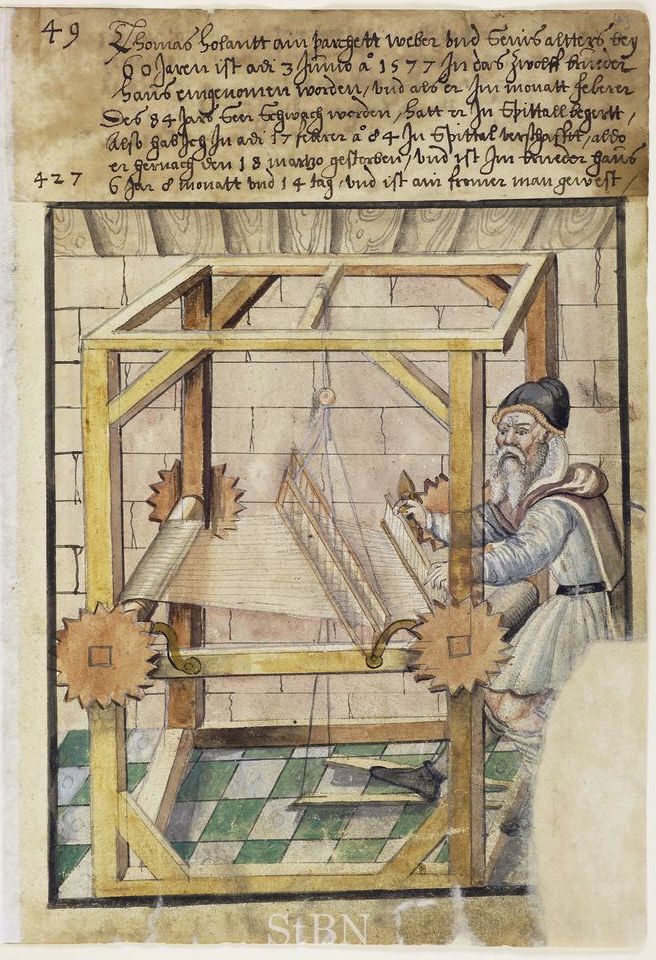
Robinson Crusoe, in succeeding chapters, works his way through his fear and disgust, even, in a sense, trying to see cannibalism as custom of an alien culture (although killing a few cannibals later in the story), and, in The Hobbit, although the fear of being consumed is the major fear, no one is actually eaten, but it’s all left me wondering what recipes an anthropophagen version of Julia Child’s books might include…  (and which might satisfy that bitter critic in Ratatouille, Anton Ego)

Thanks for reading, as always.

Stay well,

If you should see a footprint in the sand,

Head for the nearest exit in an orderly fashion,

And remember that, as always, there’s

MTCIDC

O
PS

And here are Flanders and Swann

again with “The Reluctant Cannibal”:  https://www.youtube.com/watch?v=qjAHw2DEBgw

Hinky Dinky

Welcome, dear readers, as always.

I don’t know if you have it in your memory, but I have this little song (which could be accompanied by finger motions):

“The Hinky Dinky spider

Went up the water spout.

Down came the rain

And washed the spider out.

Out came the sun

And dried up all the rain

And the Hinky Dinky spider

Went up the spout again.”

I’m perfectly blank as to when I first heard it and it stuck, but it must have been pretty early—so early that I never asked myself “what’s a ‘Hinky Dinky spider’ contrasted with any others?”

A little research turned this into “The Itsy Bitsy Spider” (a little more comprehensible than “Hinky Dinky”, certainly), but also showed that it had lots more variants and had originally appeared at least before 1910 (see this WIKI article for more:  https://en.wikipedia.org/wiki/Itsy_Bitsy_Spider  –no explanation of “Hinky Dinky”, however, unless one wants to associate it with the chorus to the Great War song, “Mademoiselle from Armentieres”—that is, “Hinky dinky parlez-vous”–as someone has suggested).

Unlike snakes, which can easily give me the willies—

(I respect them, however, seeing them, as the Romans did, as good luck signs—)

I’ve never seen spiders as anything more than those quiet people who live and work in the dim corners of the house and, if you’re lucky, polish off nasty mosquitoes.  I certainly don’t have the same feeling as the English comic duo of Michael Flanders (1922-1975) and Donald Swann (1923-1994)

expressed in their song “The Spider”–

“I have fought a Grizzly Bear,
Tracked a Cobra to its lair,
Killed a Crocodile who dared to cross my path,
But the thing I really dread
When I’ve just got out of bed
Is to find that there’s a Spider in the bath.

I’ve no fear of Wasps or Bees,
Mosquitoes only tease,
I rather like a Cricket on the hearth,
But my blood runs cold to meet
In pyjamas and bare feet,
With a great big hairy spider in the bath.

I have faced a charging Bull in Barcelona,
I have dragged a mountain Lioness from her cubs,
I’ve restored a mad Gorilla to its owner,
But I don’t dare face that tub …

What a frightful looking beast –
Half an inch across at least –
It would frighten even Superman or Garth!
There’s contempt it can’t disguise,
In the little beady eyes,
Of the Spider sitting glowering in the bath.

It ignores my every lunge
With the backbrush and the sponge;
I have bombed it with ‘A present from Penarth’.
It just rolls into a ball,
Doesn’t seem to mind at all,
And simply goes on squatting in the bath.

For hours we have been locked in endless struggle,
I have lured it to the deep end by the drain.
At last I think I’ve washed it down the plughole,
Here it comes a-crawling up the chain!

Now it’s time for me to shave,
Though my nerves will not behave,
And there’s bound to be a fearful aftermath.
So before I cut my throat,
I shall leave this final note;
Driven to it – by the Spider in the bath!”

(a couple of glosses—Garth—pronounced “Goth” in southern standard British English—was a British comic strip superhero—read about him here:  https://en.wikipedia.org/wiki/Garth_(comic_strip) and Penarth—pronounced “Penahth”—again, no r—is a seaside resort in southern Wales—you can visit it here:  https://en.wikipedia.org/wiki/Penarth  And you can hear Flanders and Swann sing this here:  https://www.youtube.com/watch?v=8z3D5Jutw1Q )

And then there’s Tolkien. 

First, of course, we have the gang of predatory spiders in Mirkwood in The Hobbit:

(Oleksiy Lipatov)

“He had picked his way stealthily for some distance, when he noticed a place of dense black shadow ahead of him, black even for that forest, like a patch of midnight that had never been cleared away.  As he drew nearer, he saw that it was made by spider-webs one behind and over and tangled with another.  Suddenly he saw, too, that there were spiders huge and horrible sitting in the branches above him, and ring or no ring he trembled with fear lest they should discover him.  Standing behind a tree he watched a group of them for some time, and then in the silence and stillness of the wood he realized that these loathsome creatures were speaking one to another.  Their voices were a sort of thin creaking and hissing…” (Chapter 8, “Flies and Spiders”)

and then there’s

“Most like a spider she was, but huger than the great hunting beasts, and more terrible than they because of the evil purpose in her remorseless eyes.  Those same eyes that he had thought daunted and defeated, there they were lit with a fell light again, clustering in her out-thrust head.  Great horns she had, and behind her short stalk-like neck was her huge swollen body, a vast bloated bag, swaying and sagging between her legs; its great bulk was black, blotched with livid marks, but the belly underneath was pale and luminous and gave forth a stench.  Her legs were bent, with great knobbed joints high above her back, and hairs that stuck out like steel spines, and at each leg’s end there was a claw.”  (The Two Towers, Book Four, Chapter 9, “Shelob’s Lair”)

(Ted Nasmith)

In a letter to W.H. Auden, Tolkien had expressed himself this way on the subject of spiders:

“But I did know more or less all about Gollum and his part, and Sam, and I knew that the way was guarded by a Spider.  And if that has anything to do with my being stung by a tarantula as a small child, people are welcome to the notion (supposing the improbable, that any one is interested).  I can only say that I remember nothing about it, should not know it if I had not been told; and I do not dislike spiders particularly, and have no urge to kill them.  I usually rescue those whom I find in the bath!”  (letter to W.H. Auden, 7 June, 1955, Letters, 316)

The innocent Mr. T, arachnophile?  And yet there’s this, from a later interview:

“Spiders,” observed Professor JRR Tolkien, cradling the word with the same affection that he cradled the pipe in his hand, “are the particular terror of northern imaginations.”… Discussing one of his own monsters, a man-devouring, spider-like female, he said, “The female monster is certainly no deadlier than the male, but she is different. She is a sucking, strangling, trapping creature.”  (The Telegraph magazine, 22 March, 1968)

Perhaps JRRT had more of a memory of that tarantula than he admitted?

As ever, thanks for reading.

Stay well,

When attempting to be friendly with spiders, remember that “attercop” is an insult,

And also remember that, as always, there’s

MTCIDC

O
“Hobbit-forming”?

Welcome, dear readers, as always.

Recently, I read a very detailed essay from 2012 by Michael Livingston, entitled, “The Myths of the Author:  Tolkien and the Medieval Origins of the Word Hobbit”, which you can read here:  https://dc.swosu.edu/cgi/viewcontent.cgi?article=1130&context=mythlore  in which he reviews the various past theories for the discovery/invention of the word.  I, for one, have always been perfectly willing to believe JRRT’s “it came out of the blue”—almost in an act of creative self-defense when he was chained to correcting what must have seemed like an endless series of student essays (as a professor, I can empathize—does this distort my judgment?).  In general, it’s clear that JRRT had a Muse to prompt him, perhaps especially when he felt mired in quotidian tasks.  And yet, reading Livingston’s essay, I began to wonder, especially after referring to two Tolkien letters.

In 1938, Tolkien had been asked about the word “hobbit”, when someone signing him/herself “Habit”, published a review of The Hobbit in The Observer, referring to “little furry men” spotted in Africa and mentioning that a friend had a memory of “an old fairy tale called ‘The Hobbit’ in a collection read about 1904’.  Tolkien’s reply at the time was brief:  “I have no waking recollection of furry pygmies…nor of any Hobbit bogey in print by 1904…” (letter to The Observer, 20 February, 1938)

Tolkien returned to this review, however, in a 1971 letter to Roger Lancelyn Green:

“Habit asserted that a friend claimed to have read, about 20 years earlier (sc. c.1918) an old ‘fairy story’ (in a collection of such tales) called The Hobbit, though the creature was very ‘frightening’…  I think it is probable that the friend’s memory was inaccurate (after 20 years), and the creature probably had a name of the Hobberd, Hobbaty class.”  (letter to Roger Lancelyn Green, 8 January, 1971, Letters, 571)

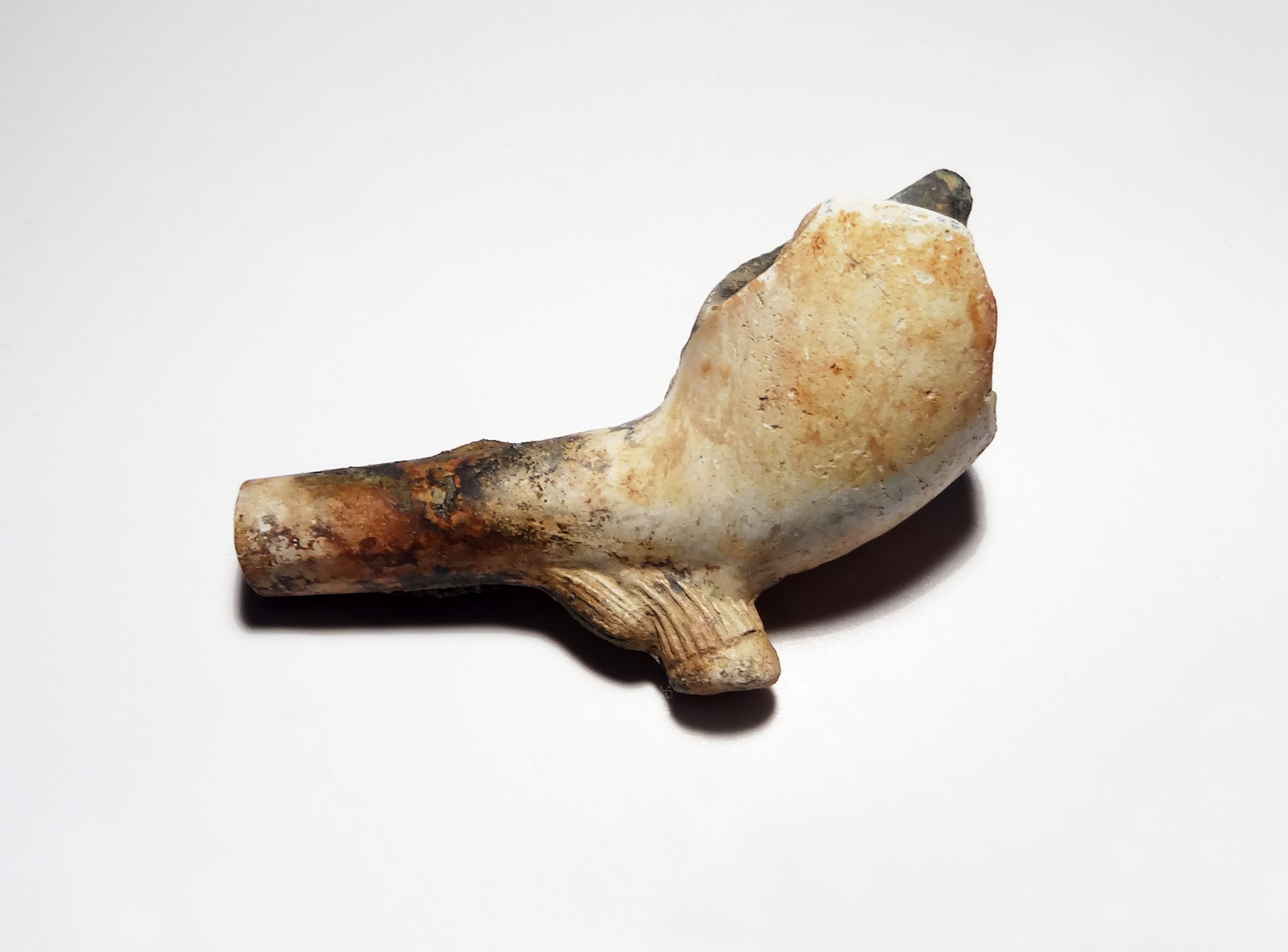
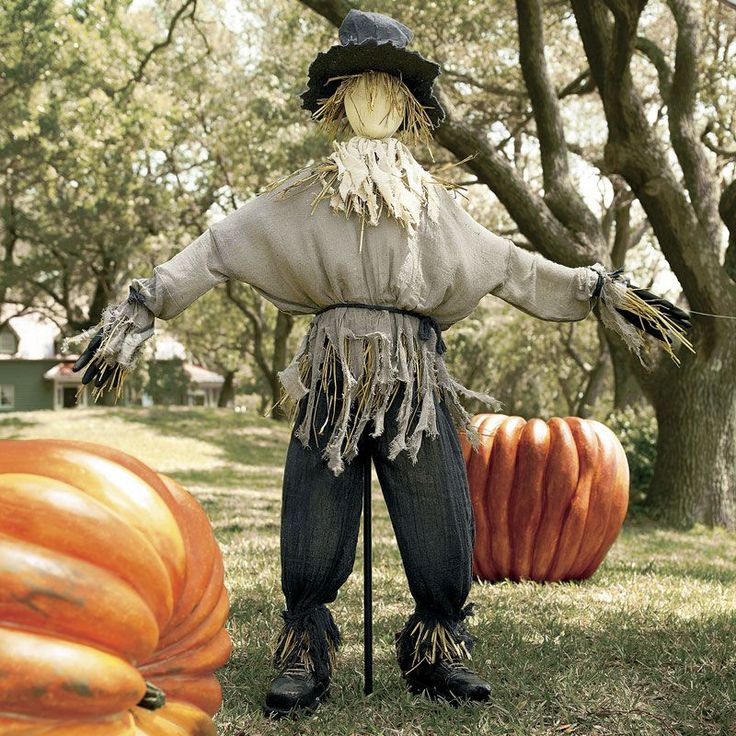
“Hobbit bogey” seems like rather a strange term—a “bogey” is a kind of demonic spirit (the origin of the English—actually, Scots—verb “to boggle”—for more on “to boggle”, see:  “Spooked”, 2 February, 2022 at this blog).  And, in this same second letter in which he refers to “Hobberd” and “Hobbaty”, he also mentions “Hobberdy Dick”—what’s all this about?

Livingston, in his article, cites the work of several earlier scholars, including Donald O’Brien’s “On the Origin of the Name ‘Hobbit’” (Mythlore 16.2, No.60, 1989, 32-28—which you can read here:  https://dc.swosu.edu/cgi/viewcontent.cgi?article=2675&context=mythlore ), and Gilliver, Marshall, and Weiner, The Ring of Words:  Tolkien and the Oxford English Dictionary, OUP, 2006, in both of which the Denham Tracts are named.  Who was Denham?  What was Denham?  And how might he have influenced JRRT?

Let’s go back a step or two.

 Even though he’s more of a dashing grave robber than a scientist, when we—or maybe just I?—think “archaeologist”, the first name which comes to mind is “Indiana Jones”.

The second is Sir Arthur Evans.

The major difference between the two isn’t, of course, that the one is fictional, but that a real archeologist, like Evans, directs patient excavation and documentation at a site, something which can take years and maybe not be completed in the lifetime of that first director (Evans worked at his site, Knossos, from 1900-1913, then again from 1922-1931 and it’s still being worked on today.)

During Evans’ lifetime—and that of Indiana Jones’ (1899-1993?) early years–the modern science of archaeology was only gradually being created, being descended most recently from something called “antiquarianism”.

Long before there were professional archaeologists, antiquaries looked into the past.  In England, although the occasional medieval or renaissance scholar might be curious about the past, the real beginnings are with the rise of the age of science, beginning in the later 17th century.  Many of these men were clergy, a good example being William Stukeley (1687-1765),

who was interested, among other things, in stone circles, like Stonehenge

and Avebury.

These are engravings from Stukeley’s own illustrations—here are modern views for an interesting contrast—

Unfortunately for science, Stukeley’s ideas about these places were less than scientific and he began to see them as:

1. druidic monuments—and, worse, that druids were monotheistic semi-Christians

2. and places like Stonehenge and Avebury were actually proto-Christian sites (for more on this, see:  Stukeley, Stonehenge A Temple Restor’d to the British Druids, 1740, https://archive.org/details/b30448554/page/n7/mode/2up  and Abury A Temple of the British Druids, 1743, https://www.gutenberg.org/files/64626/64626-h/64626-h.htm  For all of this sort of thing, Stukeley also had a more scientific side, visiting many sites—not easy to do in early-18th-century England, when travel by road was difficult, at best—carefully measuring things and thinking stratigraphically.  Because of his work, we also know much more about ancient monuments which have not survived or have suffered damage over time.  In fact, he’s quite admirable in his way and Stuart Piggott, his modern biographer, has given us a detailed portrait of him in William Stukeley An Eighteenth-Century Antiquary

which, if like me, you’re interested in the history of archaeology, I would recommend.)

Antiquaries were not just proto-archaeologists, however, but also proto-folklorists/anthropologists and, as many were clergymen, it was natural to collect from their parishioners everything from folksongs, folktales, and folklore to local vocabulary.  If such collecting had many devotees among the clergy in the UK, ordinary people might also be involved.  One such was John Francis Campbell (1821-1885),

with his Popular Tales of the West Highlands, 1860-2, which you can read here:  https://archive.org/details/populartalesofwe01campuoft/page/n5/mode/2up (Vol.1); https://archive.org/details/cu31924080788676/page/n9/mode/2up (Vol.2); https://archive.org/details/populartalesofwe00campuoft/page/n5/mode/2up (Vol.3); https://archive.org/details/populartalesofwe04camp_0/page/n7/mode/2up (Vol.4) 

Another was Michael Aislabie Denham (1801-1859), who, from 1846 to 1858, produced a series of works with titles like A Collection of Proverbs and Popular Sayings relating to the Seasons, the Weather, and Agricultural Pursuits, gathered chiefly from oral tradition.  These are monographs, some brief, some longer, which were originally printed in small numbers (50 copies, generally), but which were eventually collected and reprinted in two volumes in 1892/95 which you can read for yourself here:  https://archive.org/details/cu31924092530504/page/n7/mode/2up (Vol.1); https://archive.org/details/denhamtractscoll00denh/page/n7/mode/2up (Vol.2)

Something in Volume 2 might link Tolkien to Denham.

 “Hobberd, Hobbaty”, and “Hobberdy Dick” all have that “Hob” and, by employing the index to those tracts, we find, in a long list of supernatural creatures:  “hob-goblins, hobhoulards…hob-thrusts…hob-thrushes…hob-and-lanthorns…hob-headlesses…hobbits…hobgoblins…” (Denham Tracts, Vol.2, 77-79)

“Hobbits?” 

If you are skeptical, Livingston himself admits that there’s no hard evidence, at the moment, that Tolkien had ever opened that 2-volume collection—although Gilliver et al. note that there were copies available in Oxford libraries—but the fact that JRRT mentions other “hobs” in his letter to Green and they, in the list in the Tract, are associated with “hobbit” might suggest that, although he may have long before picked up the word in his reading (we know that he enjoyed folklore) without even remembering that he had done so.  Or, as I had always before believed, had “hobbit” had simply come to him, as he told us, and not only the hobbit, but his home and, in the sentences following, his people and their culture, from pure inspiration (with a touch of desperation)?  For myself, I’ll stick with the Muse.

As always, thanks for reading.

Stay well,

Always cite your sources (unless your inspiration comes from the Muse, in which case, offer a sacrifice),

And, as well, remember that there’s always

MTCIDC

O

ps

Stukeley’s enthusiasms could have gotten him into scholarly trouble when he was deceived into believing that Charles Bertram’s medieval forgery, The Description of Britain by “Richard of Cirencester”, was authentic.  Fortunately for him, although there were some early doubts, the truth about this fake didn’t come out until a century after Stukeley’s death.  You can read more about this at:  https://en.wikipedia.org/wiki/Charles_Bertram  You can read the 1809 translation of this forgery at:  https://archive.org/details/descriptionofbri00bert/page/n7/mode/2up  and read the series of articles from 1866-7, by the splendidly-named Bernard Bolingbroke Woodward, which revealed the work as a forgery here: 

https://archive.org/details/sim_gentlemans-magazine_january-june-1866_220/page/300/mode/2up (Parts 1 &2)

https://archive.org/details/gentlemansmagazi221hatt/page/458/mode/2up (Part 3)

https://archive.org/details/sim_gentlemans-magazine_1867-10_223/page/442/mode/2up (Part 4)

pps

Not only could antiquarianism be the target of fraud:  it could also be the target of mockery.  See Charles Dickens’ The Pickwick Papers, 1837, Chapter XI, “Involving Another Journey, And An Antiquarian Discovery…”  which you can read here:  https://www.gutenberg.org/files/580/580-h/580-h.htm#link2HCH0011

ppps

I admit to a small literary borrowing, by the way:  “hobbit-forming” was something which turns up in a Tolkien letter, but, looking through them, I can’t seem to find where.  Tolkien is actually quoting someone else, so I guess I need to admit to a double-borrowing!