How Stands the Glass Around?

Tags

, , , ,

As always, dear readers, welcome.

I admit that the title of this posting, upon further reading, may seem a little deceptive.  It’s the title of a (perhaps) early 18th-century English song, sometimes called “General Wolfe’s Song” because, somehow, a story appeared that General James Wolfe (1727-1759)

(by George Townshend, 1724-1807, one of Wolfe’s senior officers, who disliked him, but did this little watercolor which, to me, looks much more like the real man than the formal portraits we normally see)

sang it before his death (and victory) at Quebec, in 1759.  (This appears to have had no basis in fact, but has been repeated more than once, in various books about English popular song.)
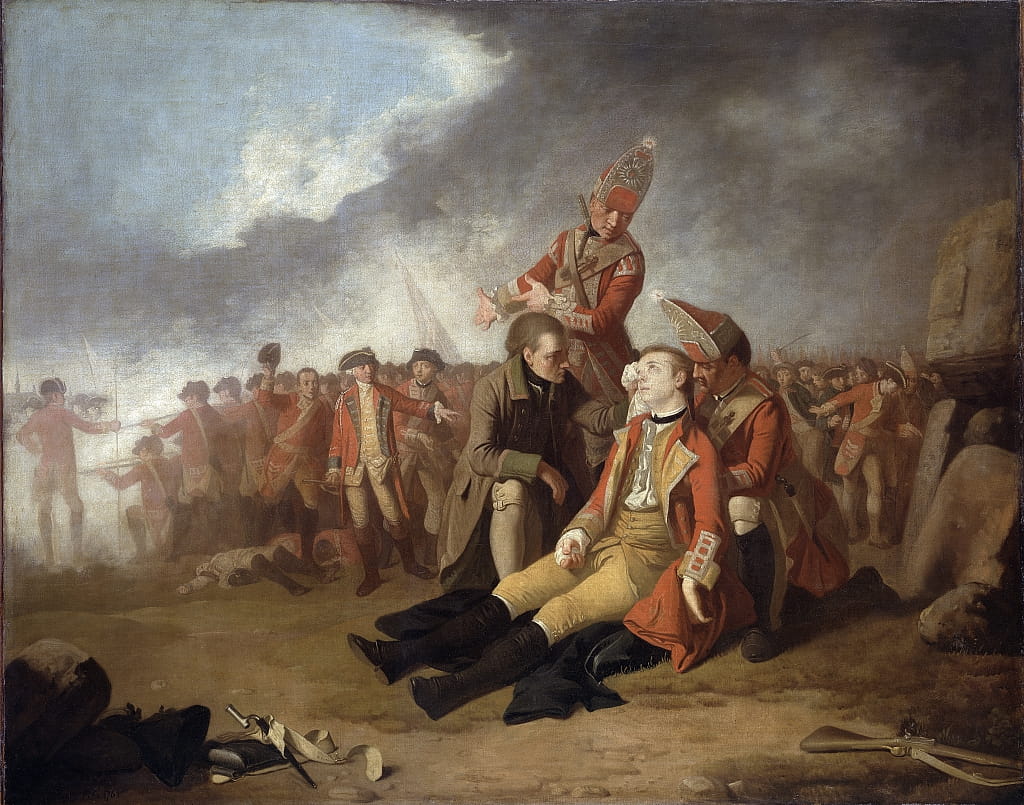
(by Edward Penny, 1763?—this, one of several versions of the picture by the painter, is in the Fort Ligonier museum in Ligonier, Pennsylvania)

The tune, at least, appears to be some years older, the first citation I can find is to a song from Thomas Odell’s (1691-1749) ballad opera The Patron (1729), where the tune for the lyric is given as that of “Why, Soldiers, Why”, which is the beginning of the second verse.  (For the first two verses, see:  https://tunearch.org/wiki/Annotation:Why_Soldiers_Why%3F    The tune may be older yet, as there’s a 1712 broadside entitled “The Duke of Marlborough’s Delight” set “to a new tune” which has similar lyrics—see the text here:  http://ballads.bodleian.ox.ac.uk/static/images/sheets/20000/16153.gif  You can hear the tune to “Why, Soldiers, Why” here:  https://www.youtube.com/watch?v=-VxlkhsOcRI )

The glass I want to talk about is, in fact, both related to the lyric, with its “Let mirth and wine abound”, and another kind of glass entirely.

When the dwarves overwhelm Bilbo’s house, in the first chapter of The Hobbit (“An Unexpected Party”—which is, in fact, a pun—JRRT admits, in a letter to Deborah Webster 25 October, 1958,  Letters,    to having a simple, hobbit sense of humor—not only is a party a festivity—although this one, for Bilbo was far from it—but, in older English, “party” can also mean “a person”—so that “unexpected party/person is presumably Gandalf, as it’s in the singular),
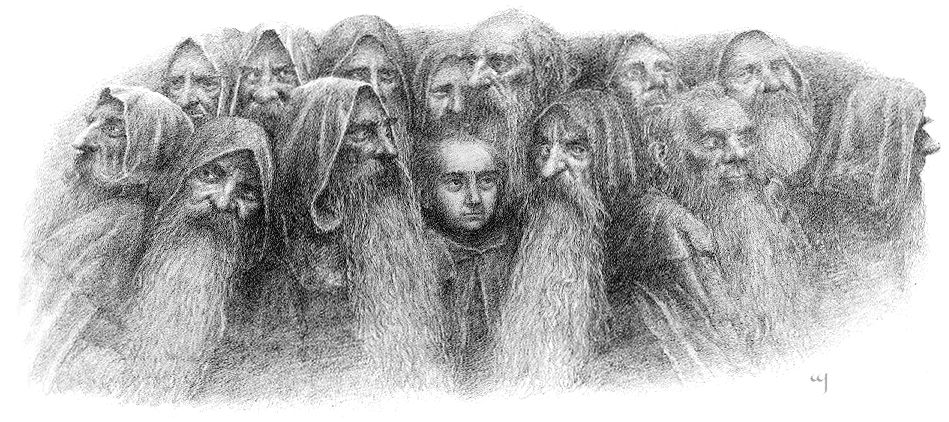
(Alan Lee)                                                                                                                          

they mock his discomfort in a clean-up song which begins:

“Chip the glasses and crack the plates!”

and this made me wonder:  The Hobbit, like The Lord of the Rings, is set in a pre-industrial—really, medieval—world:  what kind of glasses might these be?

Glass, as a material, is much older than the western Middle Ages.  As you might expect from something which may have originated in the middle of the 3rd millennium BC (2500BC?—there’s lots of on-line discussion, but see, for example:  https://www.smithsonianmag.com/science-nature/a-brief-scientific-history-of-glass-180979117/  ), there has been much scholarly debate on the subject, but let’s go with that rough date for the present.

A combination of silica sand,
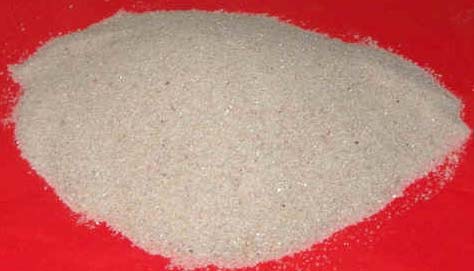
lime,
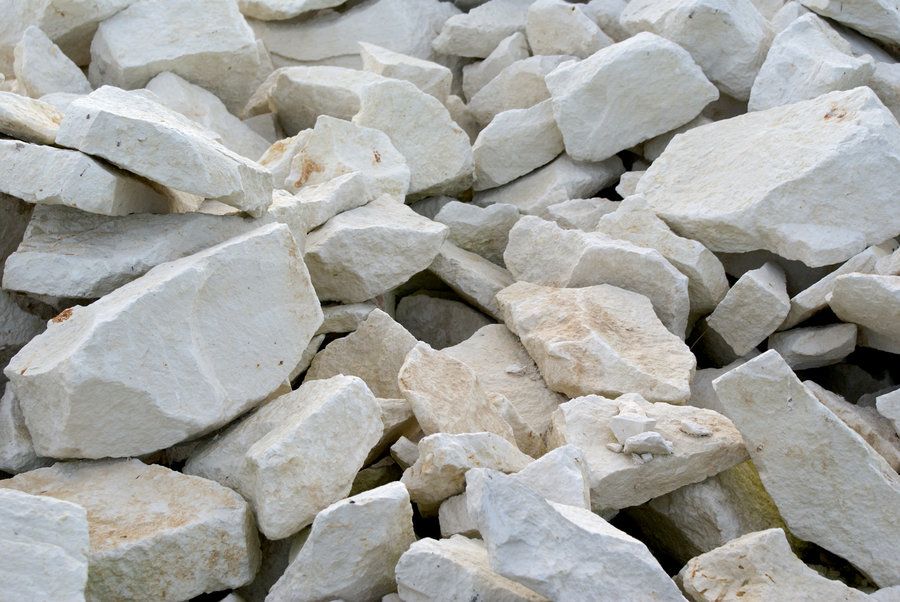
(powdered, of course)

and sodium carbonate,

(plus lots of other elements for various additional properties—see for more:  http://www.historyofglass.com/glass-making-process/glass-ingredients/ )

when heated to about 2400 degrees Fahrenheit (about 1315C), produces a moldable, shapeable liquid.

(For an experiment on making early glass, see:  https://www.youtube.com/watch?v=Lg7kZpTVoms This is from a YouTube series called “How to Make Everything” and, if you’re like me, interested in all early technologies, definitely recommended.  There’s an interesting suggestion there, as well, that glass may have been an accidental byproduct of early metal-working.) 

The first surviving glass seems to be beads–

these are Mesopotamian, but found in a grave in Denmark, showing just how extensive early trade networks were.

The Egyptians went into the glass business at some point,

and, eventually, the later Assyrians even produced the first known glass-making manual in the reign of King Ashurbanipal (reigned 669-631BC)—you can read about it here:  https://historyofknowledge.net/2018/12/05/you-us-and-them-glass-and-procedural-knowledge-in-cuneiform-cultures/  and read a translation of the cuneiform tablets on which it was written here:  https://www.nemequ.com/texts )

The Romans produced some rather amazing creations in glass,
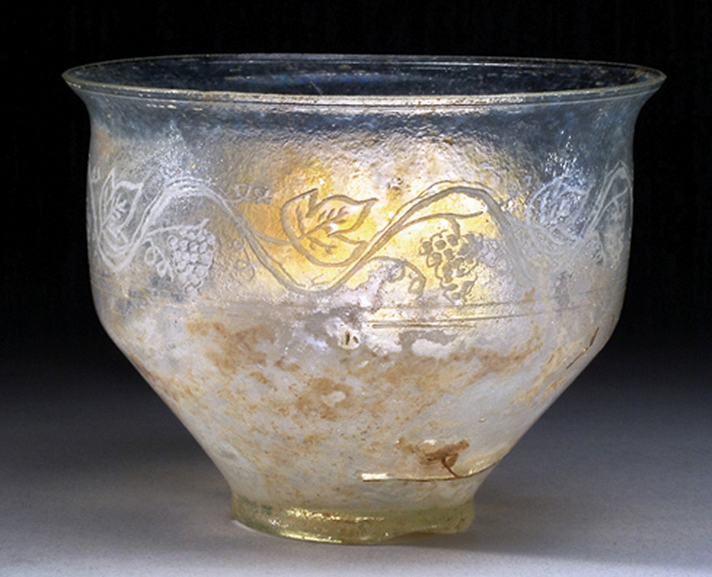
as well as the first window glass.
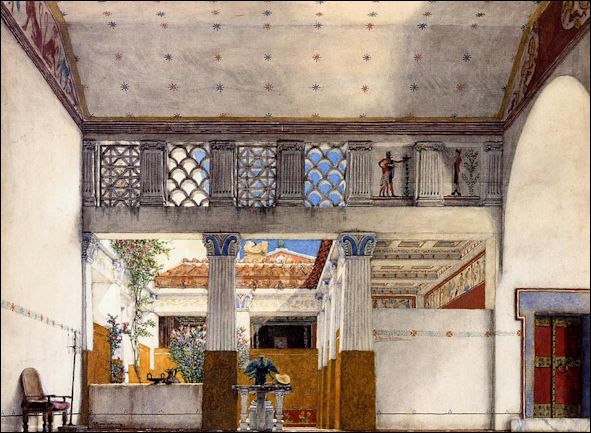
(For how Romans made window glass, see:  http://www.theglassmakers.co.uk/archiveromanglassmakers/articles.htm#No  This is actually a small collection of interesting articles.  Scroll to the last to see the specific piece about window glass.)

Even after the change in the western Roman empire from imperial rule to Germanic kingdoms and their later successors, the art of glass-making was never lost, but it appears that the older method of making larger panes may have been, since medieval domestic windows used smaller pieces of glass framed in metal, called “mullioning”—

and this was only for the very wealthy.  This leads me to wonder about:

“The best rooms were all on the left-hand side (going in), for these were the only ones to have windows, deep-set round windows looking over his garden, and meadows beyond, sloping down to the river.”  (The Hobbit, Chapter One, “An Unexpected Party”)

(JRRT)

Is this hobbit mullioning?  Other buildings in the Shire look to have had ordinary glass windows, as in—

“…some new houses had been built:  two-storeyed with narrow straight-sided windows, bare and dimly lit, all very gloomy and un-Shirelike.”

and

“The Shirriff-house at Frogmorton was as bad as the Bridge-house.  It had only one storey, but it had the same narrow windows…”

I suspect that what Tolkien had in mind was something like these Victorian railway workers’ houses,

as mentioned earlier:

“Worse, there was a whole line of the ugly new houses all along Pool Side…”

(All of these grim quotations are from The Return of the King, Book Six, Chapter 8, “The Scouring of the Shire”)

Clearly, “Shirelike” means windows of an entirely different design—and that means round, as Tolkien’s own view towards Bag End shows us—

(JRRT)

(Although you can see, by the way, in this earlier sketch, that Tolkien had not originally decided upon the window-shape consistency of the later illustration, or on the true meaning of “Shirelike”.)

But, though a window plays an important part in recruiting a crucial member of the Fellowship of the Ring:

“Suddenly he stopped as if listening.  Frodo became aware that all was very quiet, inside and outside.  Gandalf crept to one side of the window.  Then with a dart he sprang to the sill, and thrust a long arm out and downwards.  There was a squawk, and up came Sam Gamgee’s curly head hauled by one ear.”  (The Fellowship of the Ring, Book One, Chapter 2, “The Shadow of the Past”)

(Artist?  I’m always glad to credit one, but I’m stumped here.)

the glasses which the dwarves threaten to chip are clearly of the drinking variety. 

I imagine that the glasses in the Tolkien household looked like this

or, for more formal occasions, like this
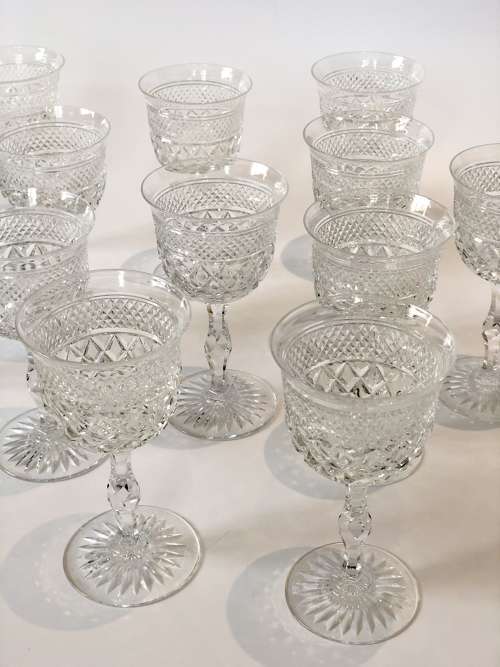
and what JRRT drank from at The Eagle and Child (aka “The Bird and Baby”) or The Lamb and Flag would have been something like this–
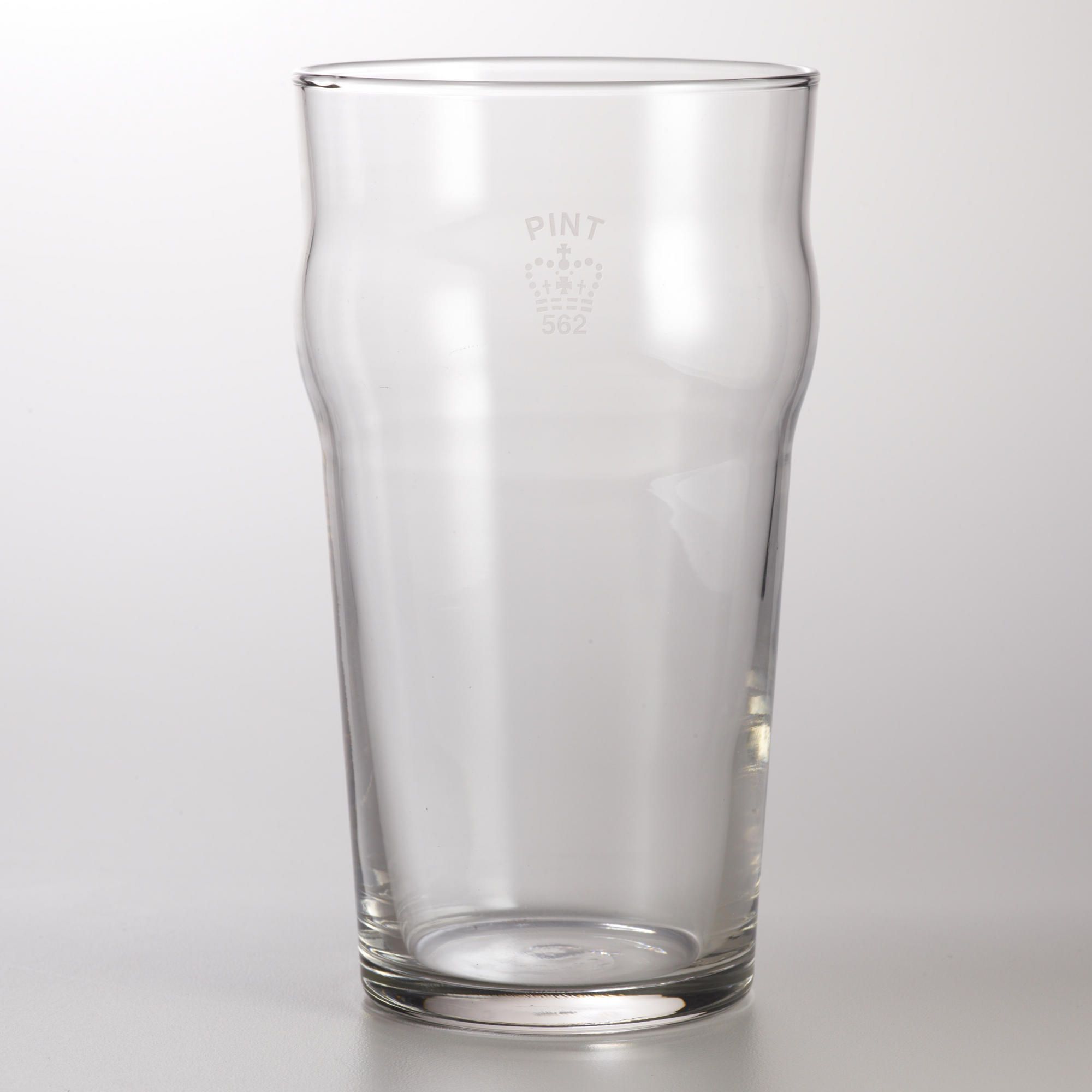
But that’s the first half of the 20th century. 

Could we see this actual medieval glass as a model?

It seems awfully dainty and, remembering the dwarves’ demands for what seems like endless rounds of food and drink, however, perhaps it wasn’t chipped glasses which Bilbo should worry about at all, but dented tankards!

Thanks, as ever, for reading.

Stay well,

When necessary, sing quietly to yourself, “Ho, ho, ho, To the bottle I go…”,

And remember that, as always, there’s

MTCIDC

O

PS

As you can tell, the history of glass—and windows—is long and complicated.

See this for more on glass:  https://en.wikipedia.org/wiki/History_of_glass

And this on windows:  https://en.wikipedia.org/wiki/Window
Speak Friend, or, Open, Sez Me

Tags

, , ,

As always, welcome, dear readers.

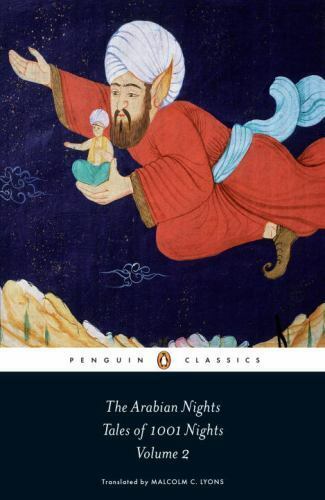
Occasionally, I return to something I’ve already written about, but, this time around, hope to see in a new, or at least newish, light.  The subject of today’s posting first appeared back in “Do What I Say, Not What I Speak”, 13 June, 2018, but, since then, I began my campaign to read all of The Arabian Nights and am now in the second volume of the Penguin edition (for the first volume, see “Arabian Nights for Days”, 31 January, 2024).

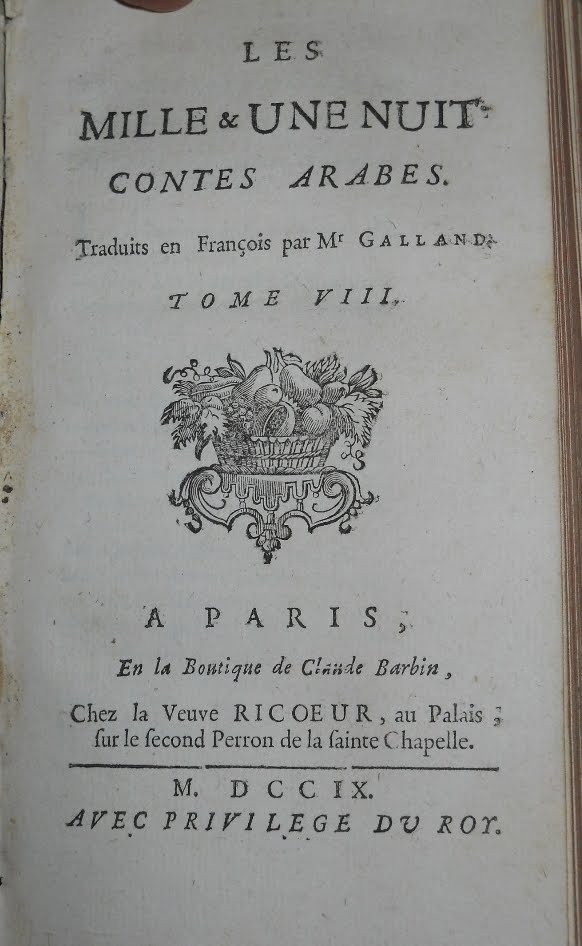
I’ve known some of the stories in this vast collection since childhood, but the first two stories I heard as a child are actually so-called “orphan tales”, being stories which appear to have no early manuscript tradition, first appearing in Antoine Galland’s (1646-1715)

Les Mille et Une Nuits (1704-1717).

and from there into the first edition in English, the anonymous so-called “Grub Street Edition” of 1706-1721.

(This is an image from the earliest edition I can locate—as you can see, it’s from 1781.  Only two copies of the first edition are known to exist, one in the Bodleian Library at Oxford, the other in the rare books collection of Princeton University and clearly they don’t get out much.)

There has been much discussion as to the actual origins of “Aladdin”

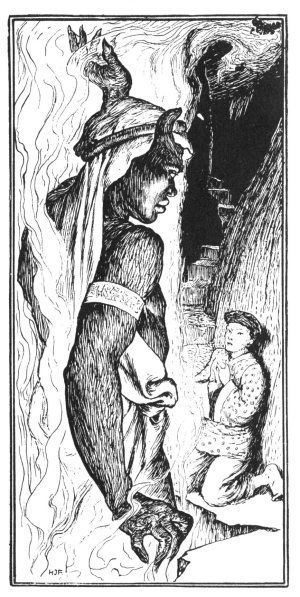
and “Ali Baba and the Forty Thieves”–

in particular, that, although they contain standard folktale motifs, they are actually the work of a Syrian storyteller named Antun Yusuf Hanna Diyab (c.1668-post-1763) and were added by Galland to his translation without attribution.  (For more, see:  https://en.wikipedia.org/wiki/Hanna_Diyab

Whatever is the truth of this, these were the stories I carried in my head for years before I came back to them when commencing my “Arabian Nights” reading campaign. 

When I was small, they were actually quite scary—the magician who pretends to be Aladdin’s long-lost uncle and who only wants to use him long enough to obtain the lamp, then would let him die in the cave where the lamp was kept, and the merciless thieves, who once they found their cave with its secret password was compromised, cut up Ali Baba’s brother who had discovered the secret but, who, forgetting the password, was trapped until the thieves returned, were among the creepier parts of my childhood, and, as may always be the case with creepy things, not easily forgotten.

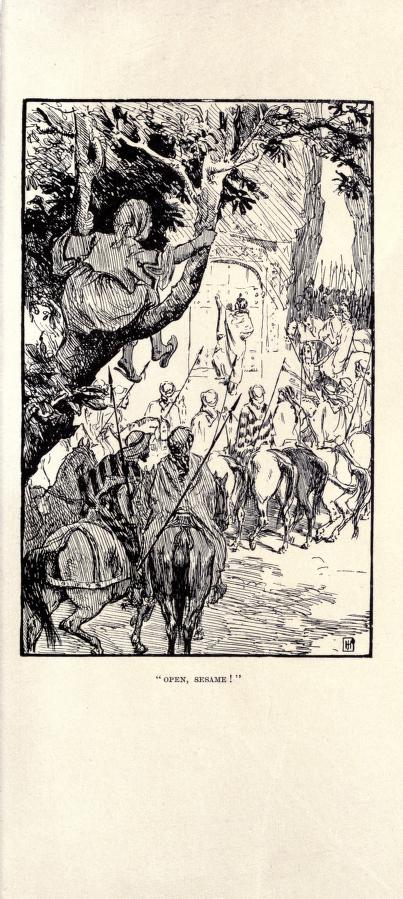
At the same time, I was always puzzled by the opening to “Ali Baba”:

“IN a town in Persia there dwelt two brothers, one named Cassim,

the other Ali Baba. Cassim was married to a rich wife and lived

in plenty, while Ali Baba had to maintain his wife and children by

cutting wood in a neighbouring forest and selling it in the town.

One day, when Ali Baba was in the forest, he saw a troop of men

on horseback, coming towards him in a cloud of dust. He was

afraid they were robbers, and climbed into a tree for safety.  When

they came up to him and dismounted, he counted forty of them.

They unbridled their horses and tied them to trees. The finest man

among them, whom Ali Baba took to be their captain, went a little

way among some bushes, and said: ‘ Open, Sesame!’ so plainly that

Ali Baba heard him. A door opened in the rocks, and having made

the troop go in, he followed them, and the door shut again of itself.”

Why would a door obey a password?  And why that word, which I knew was a kind of seed.

(For more—much more—see:  https://en.wikipedia.org/wiki/Sesame#Allergy )

This sat somewhere in my memory until I read:

“But close under the cliff there stood, still strong and living, two tall trees, larger than any trees of holly that Frodo had ever seen or imagined…

(JRRT)

‘Well, here we are at last!’ said Gandalf.  ‘Here the Elven-way from Hollin ended.  Holly was the token of the people of that land, and they planted it here to mark the end of their domain; for the West-door was made chiefly for their use in their traffic with the Lords of Moria.’ …

…they turned to watch Gandalf.  He appeared to have done nothing.  He was standing between the two trees gazing at the blank wall of the cliff, as if he would bore a hole into it…

 ‘Dwarf-doors are not made to be seen when shut,’ said Gimli.  ‘They are invisible, and their own makers cannot find them or open them, if their secret is forgotten.’

‘But this Door was not made to be a secret known only to Dwarves,’ said Gandalf…’Unless things are altogether changed, eyes that know what to look for may discover the signs.’

He walked forward to the wall.  Right between the shadow of the trees there was a smooth space, and over this he passed his hands to and fro, muttering words under his breath.  Then he stepped back.

‘Look!’ he said.  ‘Can you see anything now?’

…Then slowly on the surface, where the wizard’s hands had passed, faint lines appeared, like slender veins of silver running in the stone…

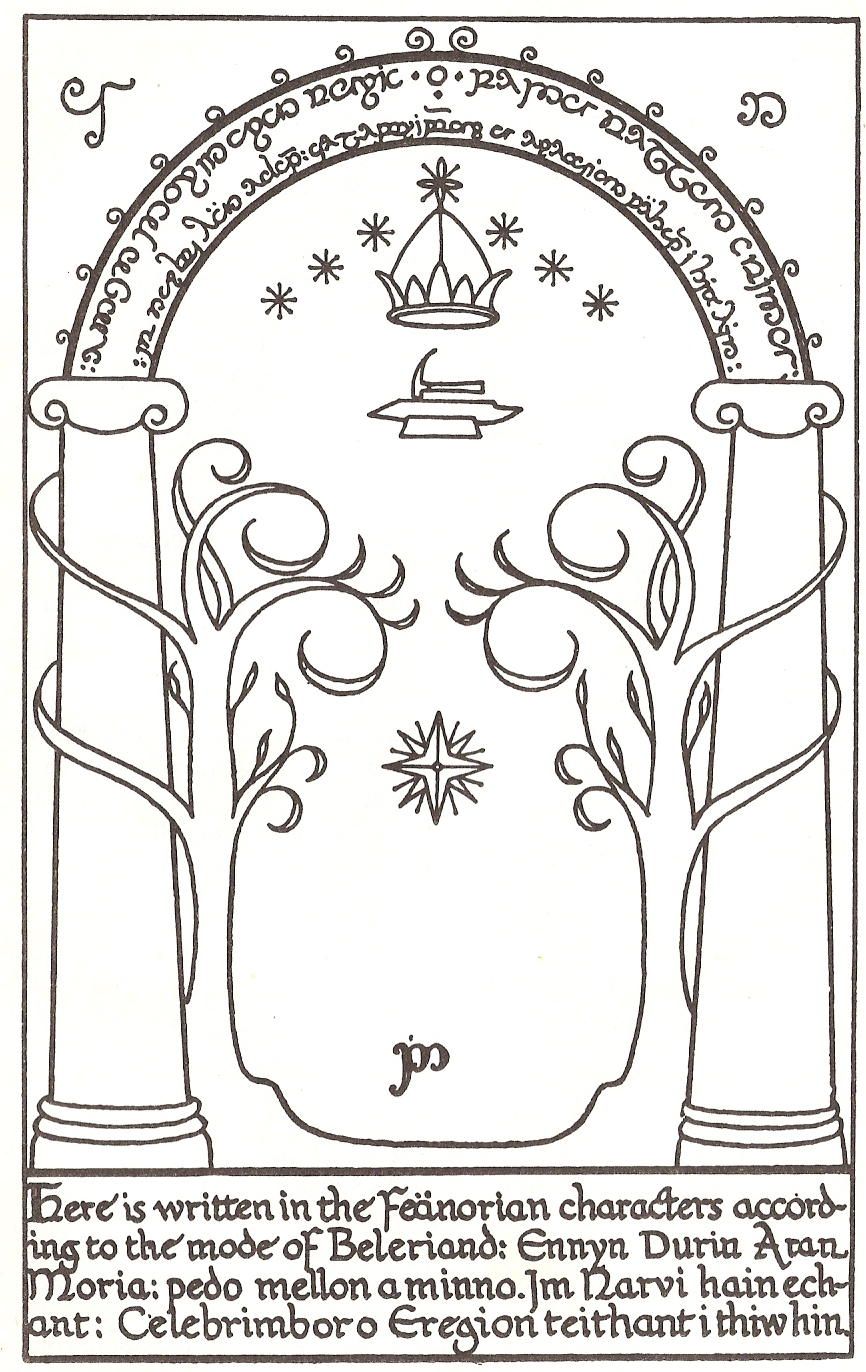
At the top, as high as Gandalf could reach, was an arch of interlacing letters of an Elvish character.

(Ted Nasmith)

Below, though the threads were in places blurred or broken, the outline could be seen…

(JRRT)

‘What does the writing say?’ asked Frodo…

‘…They say only:  The Doors of Durin, Lord of Moria.  Speak, friend, and enter.’

‘What does it mean…?’ asked Merry.

‘That is plain enough,’ said Gimli.  ‘If you are a friend, speak the password, and the doors will open, and you can enter.’ “  (The Fellowship of the Ring, Book Two, Chapter 4, “A Journey in the Dark”)

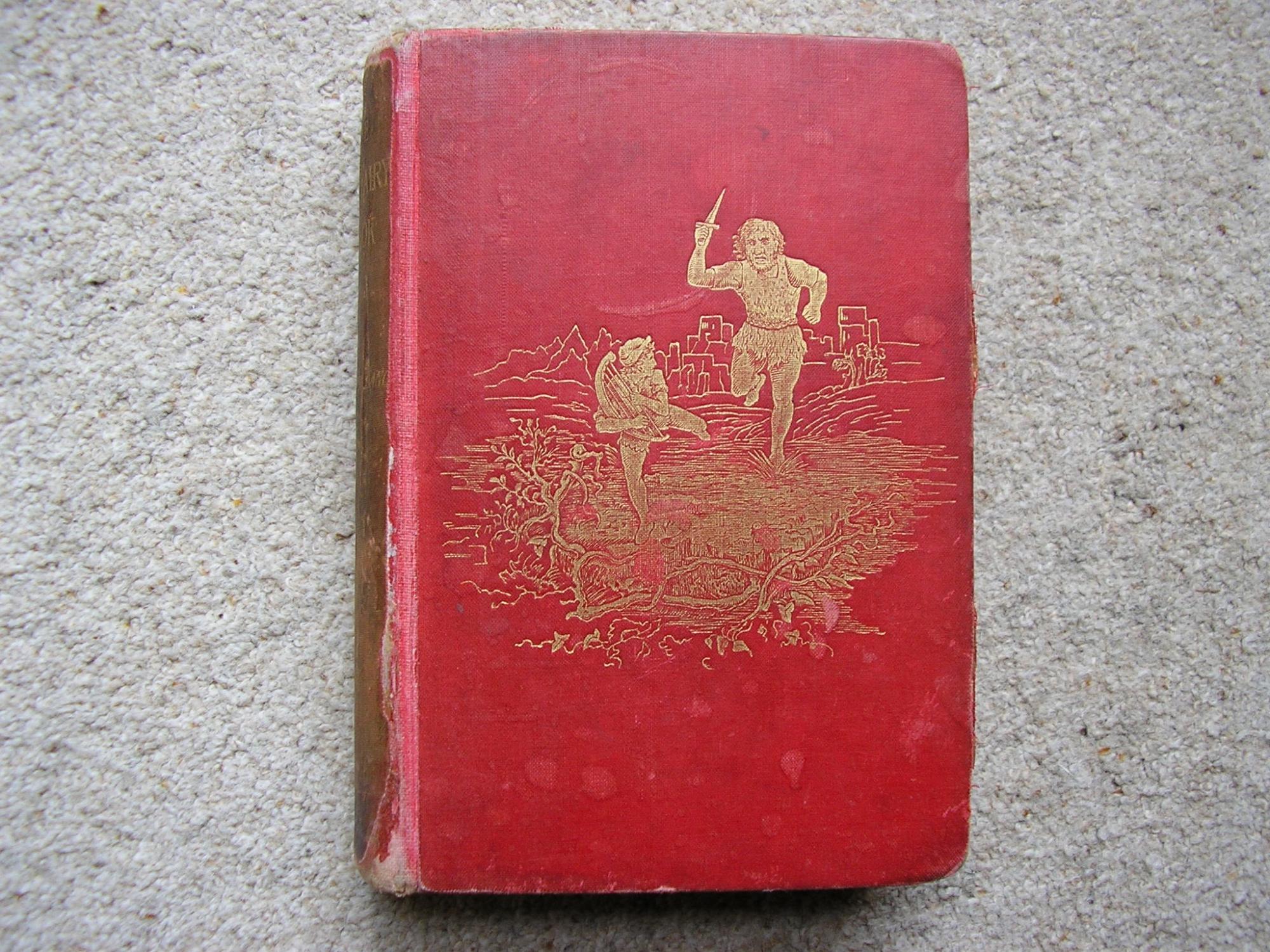
We know from various clues, like the story title “Storia Moria Castle”, that Tolkien had read—or been read to—from Andrew Lang’s (1844-1912) The Red Fairy Book, 1890,

but, interestingly, “Aladdin” and “Ali Baba” both appear in Lang’s previous The Blue Fairy Book, 1889,

from which both the “Ali Baba” quotation and illustration above, come.  Could Tolkien have been read to from, or read, “Ali Baba” there?  Certainly we see that door, and the need for the password.  But what about that password?

In The Fellowship of the Ring, Gandalf tells us that “ ‘I will tell you that these doors open outwards.  From the inside you may thrust them open with your hands.  From the outside nothing will move them save the spell of command.  They cannot be forced inwards.’   Try as he might, however, Gandalf can’t come up with that word—until he realizes that he’s made a slight mistranslation: 

“ ‘The opening word was inscribed on the archway all the time!  The translation should have been Say “Friend’ and enter.  I had only to speak the Elvish word for friend and the doors opened.’ “

To a linguist with a fine ear, like JRRT’s, the distinction, in English, between the verb “to speak”, as in “to speak a language”, and “to say”, as in “to say the right thing”, can be subtle—in this case, almost too subtle—as Gandalf says:

“ ‘Quite simple.  Too simple for a learned lore-master in these suspicious days.’ “

With the problem solved, the doors swing open—but where they’re about to go is, ultimately, worse than Ali Baba’s thieves’ treasure cave, even as I’m reminded of what happens to Ali Baba’s jealous brother.  Obtaining the password, he easily enters the cave, but, when he tries to leave, he confuses “sesame” with other grains, is trapped, and eventually dismembered by the returning thieves.  (Think Balrog and “Drums in the Dark”…)

And, though “Friend”, says Gandalf, is quite simple, and, adding, “Those were happier times” in which such a pleasant password was all that was necessary,  I’m still puzzled about “sesame” and, in both cases, I wonder about those doors—who or what was doing the opening?  Then again, when I post this,  I’ll need a password and, when I employ it, the site will pop open—who or what is doing the opening there?

Thanks, as always, for reading.

Stay well,

When it comes to locks, I prefer a good, sturdy key,

And remember that, as always, there’s

MTCIDC

O

PS

In case you want to read the two fairy books—and I hope you do—here they are:

The Blue Fairy Book 

https://archive.org/details/bluefairybook00langiala/page/n7/mode/2up

The Red Fairy Book

https://archive.org/details/cu31924084424013/page/n9/mode/2up

Terror Weapon

Tags

, , , ,

Welcome, dear readers, as always.

If you grew up, as I did, with the 1939 film, The Wizard of Oz,

but had never read the original,

L. Frank Baum’s The Wonderful Wizard of Oz, 1900,

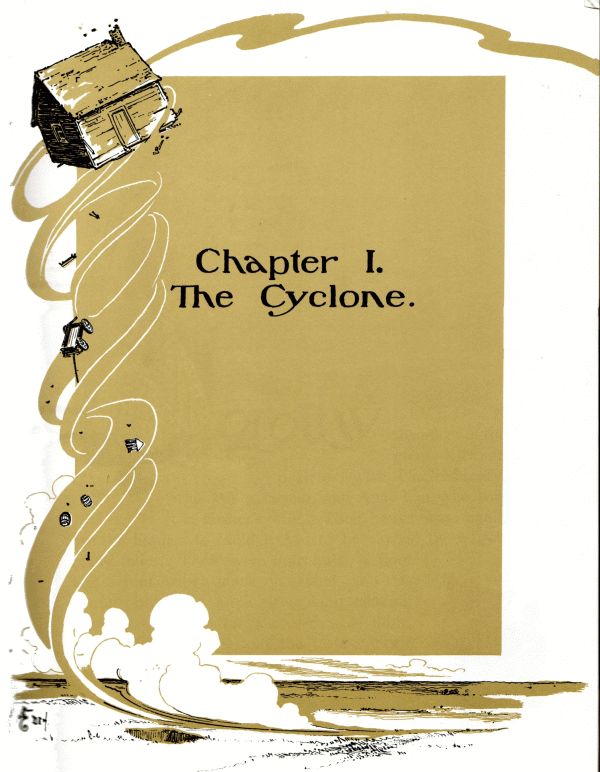
you would be surprised to open the book and find that Chapter 1 is entitled “The Cyclone”,

which, considering the use of that terrifying force of nature in the story isn’t surprising, but that “Miss Almira Gulch”, the initial incarnation of the story’s main antagonist, with her wonderful last name (a “gulch” is, as Etymonline tells us, a “deep ravine” suggesting that Miss Gulch is empty—and treacherous, as “ to dry gulch” someone is archaic Wild West slang for “to ambush”) is not to be seen.

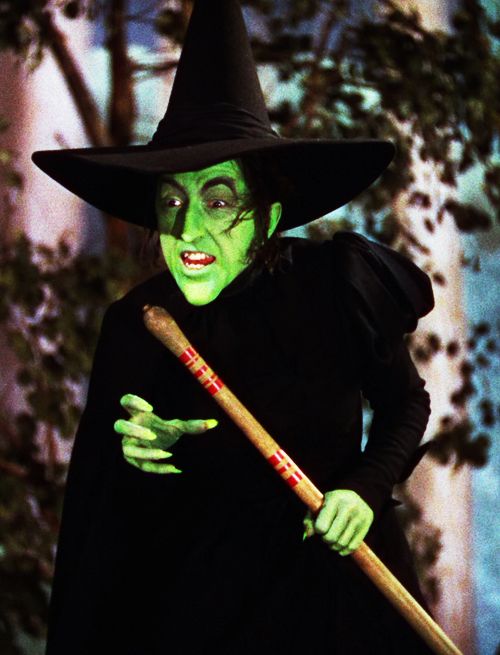
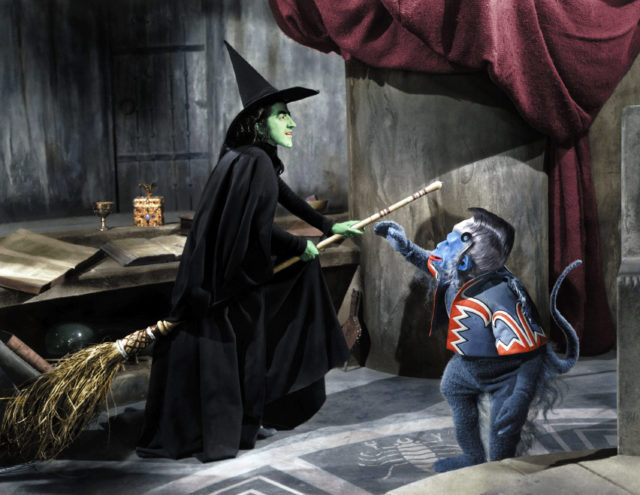
As a small child, I found almost everything about her disturbing.  As someone who, initially, wanted to deal with Toto and had the economic power to do it (shades of 1930s social commentary about the 1%), she was bad enough.  It was the green skin of her next incarnation and those dagger-like fingernails, however,

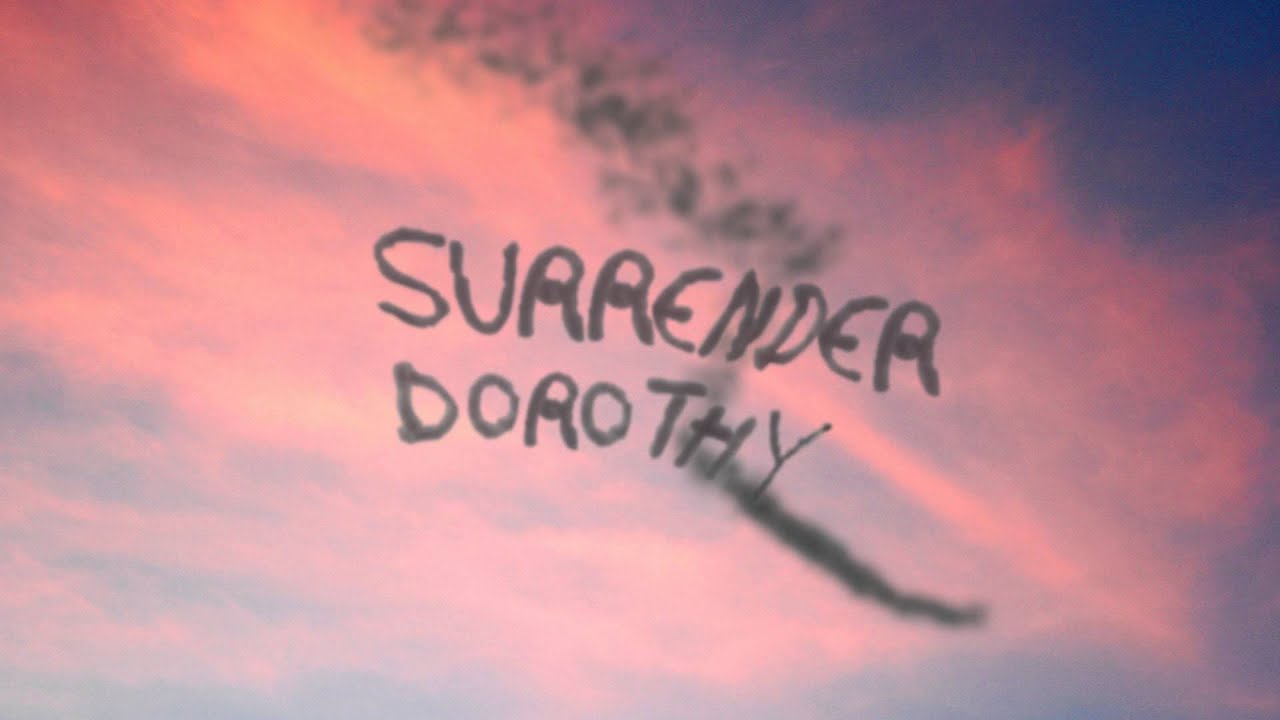
which were at the edge of nightmares, and even more so the menace of flight—not only her own skywriting,

but her nasty little airborne monkeys.

These seemed almost too prescient for what was about to happen in the real world as, on 1 September, 1939, only about two weeks after the Hollywood premiere of the film on 15 August, Germany invaded Poland, and, in less than a year, Denmark, Holland, Norway, and France, major weapons being a deadly form of those flying monkeys—

(by Mike Chappell, a favorite military artist)

paratroopers, and dive bombers, the notorious  Ju87, “Stuka” (short for “Sturzkampfflugzeug”—“dive bomber”).

To add to the effect of having such a thing racing down to drop a bomb on you, sirens were attached to the landing gear or wings, the so-called “Jericho trumpets”  (You can read more about them here:  https://www.warhistoryonline.com/instant-articles/trumpets-jericho-luftwaffe.html And you can hear one here:  https://www.youtube.com/watch?v=80bOdm2P9Y8 ), giving a wailing, screeching sound to the attacker in hopes of destroying morale even before a bomb hit.  Although designed to be support for infantry and armor, numbers were employed in the air campaign against Britain and, although Oxford was never attacked as the great ports and manufacturing centers were, I wonder if Tolkien, as a volunteer air raid warden, ever heard that sound overhead.

Even if it only appeared in a newsreel, it must have been an unforgettable noise and my wondering brought me to this:

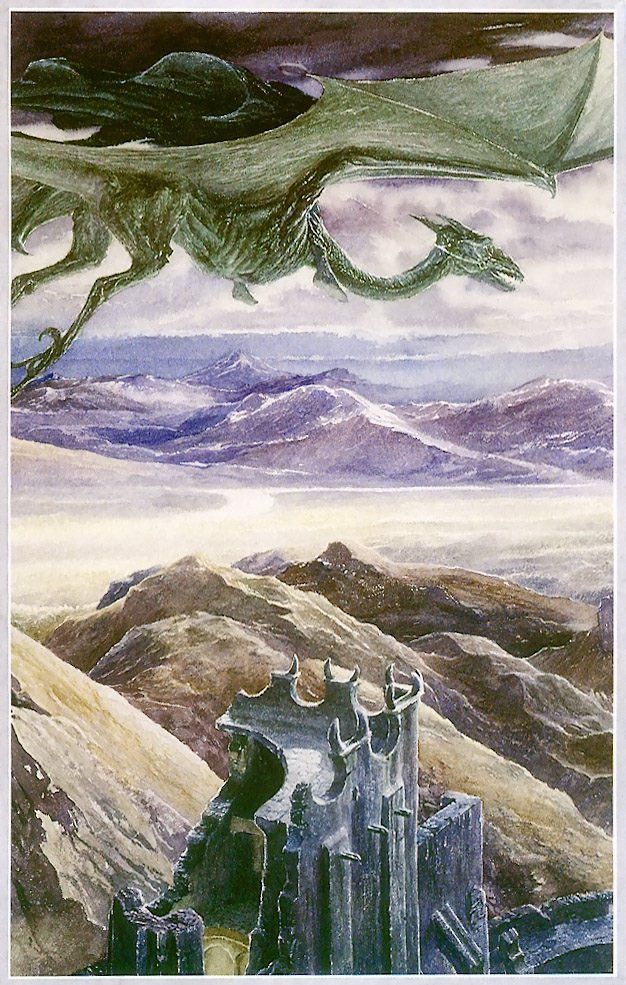
“And Minas Morgul answered.  There was a flare of livid lightnings:  forks of blue flame springing up from the tower and from the encircling hills into the sullen clouds.  The earth groaned; and out of the city there came a cry.  Mingled with harsh high voices as of birds of prey, and the shrill neighing of horses wild with rage and fear there came a rending screech, shivering, rising swiftly to a piercing pitch beyond the range of hearing.  The hobbits wheeled round towards it, and cast themselves down, holding their hands upon their ears.”  (The Two Towers, Book Four, Chapter 8, “The Stairs of Cirith Ungol”)

In Minas Tirith, Pippin heard something very similar:

“Suddenly as they talked they were stricken dumb, frozen as it were to listening stones.  Pippin cowered down with his hands pressed to his ears…”

Not Stukas diving out of the clouds to bomb the city,

but

“…now wheeling swiftly across it, like shadows of untimely night, he saw in the middle airs below him five birdlike forms, horrible as carrion-fowl yet greater than eagles, cruel as death.  Now they swooped near, venturing almost within bowshot of the walls, now they circled away.

‘Black Riders!’ muttered Pippin.  ‘Black Riders of the air!’ “

And this was not the first time that any of the hobbits had heard that terrible sound:

“Pippin knew that shuddering cry that he had heard:  it was the same that he had heard long ago in the Marish of the Shire, but now it was grown in power and hatred, piercing the heart with a poisonous despair.”

It’s unclear if Frodo and Sam had heard the same cry at Cirith Ungol, but certainly what Pippin heard and to which he reacted violently:

“Another long screech rose and fell, and he threw himself back again from the wall, panting like a hunted animal.”  (The Return of the King, Book Five, Chapter 4, “The Siege of Gondor”)

(Alan Lee)

had the same effect—and, in fact, the same effect which Stukas were intended to have upon their victims—just as the Wicked Witch, aka, Miss Gulch—had had a similar effect upon me as a little boy,

even without her creepy little simian assistants.

Thanks, as ever, for reading.

Stay well,

When going outdoors, always cast a wary eye upwards,

And remember that, as always, there’s

MTCIDC

O

PS

In case you don’t have a first edition of The Wonderful Wizard of Oz with its original illustrations, here it is for you:  https://www.youtube.com/watch?v=80bOdm2P9Y8

Orc Logistics

Tags

, , , ,

As always, dear readers, welcome.

Sauron, although he rather rashly placed much of his power (as well as his life force) in what is, basically, a magic ring, has always struck me as rather a practical person when it comes to war and foreign affairs.  In order to conquer the West, he’s:

1. turned his rather bleak realm into a giant military camp

2. brought back the final destroyer of Arnor, the Witch King of Angmar, as his chief lieutenant

3. made treaties with peoples to the east and south to bolster his already extensive armies and cleverly turned pirates loose to raid the southern shores of Gondor to distract his opponents and force them to divide their forces

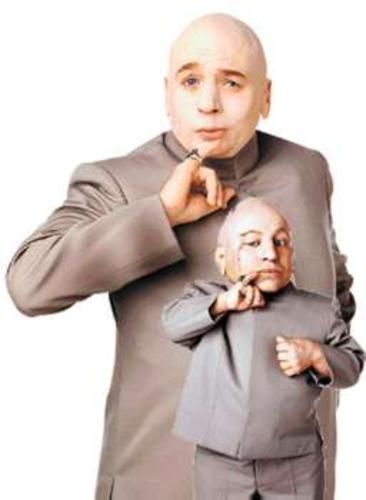
4. corrupted one of the West’s traditional allies, Saruman, turning him into a kind of “Mini Me”


5. weakened another, Rohan, through a spy in the king’s court, Grima, who has somehow turned that king into a prematurely-aged man

6. worked on the mind of the commander of Gondor, Denethor, using an ancient communications device, making him suspicious of his younger son and promoting a defeatist attitude

As well, he seems quite aware of what we call geo-politics, as we see in his demands at the Black Gate:

“ ‘The rabble of Gondor and its deluded allies shall withdraw at once beyond the Anduin, first taking oaths never again to assail Sauron the Great in arms, open or secret.  All lands east of the Anduin shall be Sauron’s for ever, solely.  West of the Anduin as far as the Misty Mountains and the Gap of Rohan shall be tributary to Mordor, and men there shall bear no weapons, but shall have leave to govern their own affairs.  But they shall help to rebuild Isengard which they have wantonly destroyed, and that shall be Sauron’s and there his lieutenant shall dwell:  not Saruman, but one more worthy of trust.”  (The Return of the King, Book Five, Chapter 10, “The Black Gate Opens”)

Reading this passage, however, I’m puzzled:

“Time passed.  At length watchers on the walls could see the retreat of the out-companies.  Small bands of weary and often wounded men came first with little order; some were running wildly as if pursued.  Away to the eastward the distant fires flickered, and now it seemed that here and there they crept across the plain.  Houses and barns were burning.  Then from many points little rivers of red flame came hurrying on, winding through the gloom, converging towards the line of the broad road that led from the City-gate to Osgiliath.”  (The Return of the King, Book 5, Chapter 4, “The Siege of Gondor”)

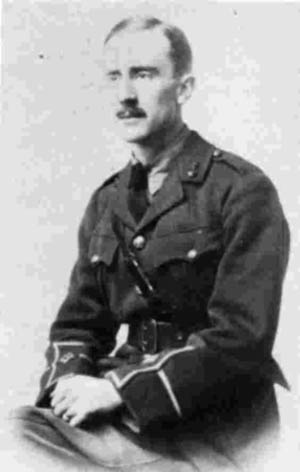
As we know, JRRT himself had been a soldier, though perhaps a reluctant one,

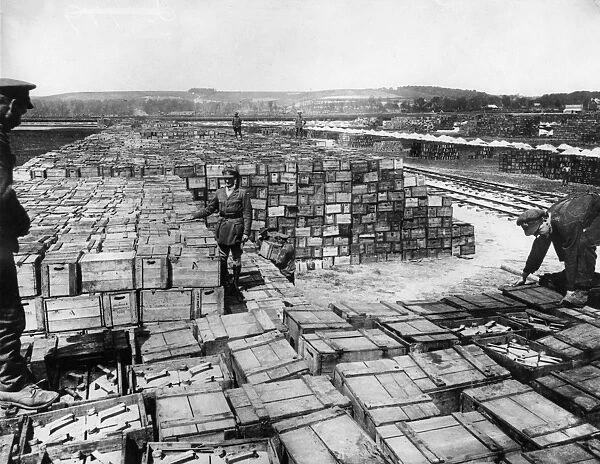
and thus would have been well aware of the saying, sometimes attributed to Napoleon, that “an army marches on its stomach”.  In 1916, such an army needed massive supply dumps,

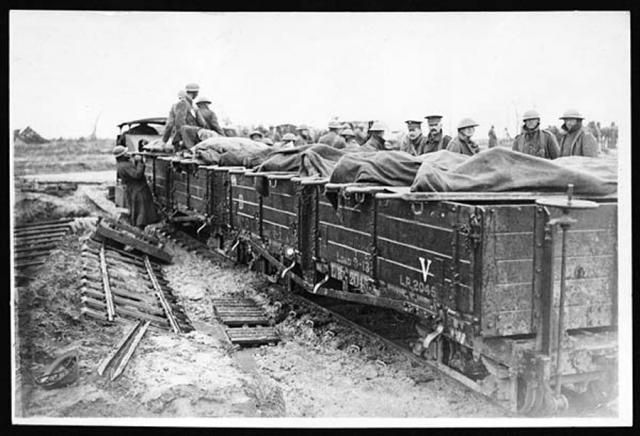
which needed railroads to bring food and ammunition to them.

From there, wagons

and, in time, early trucks,

then mules and horses would have taken supplies farther forward

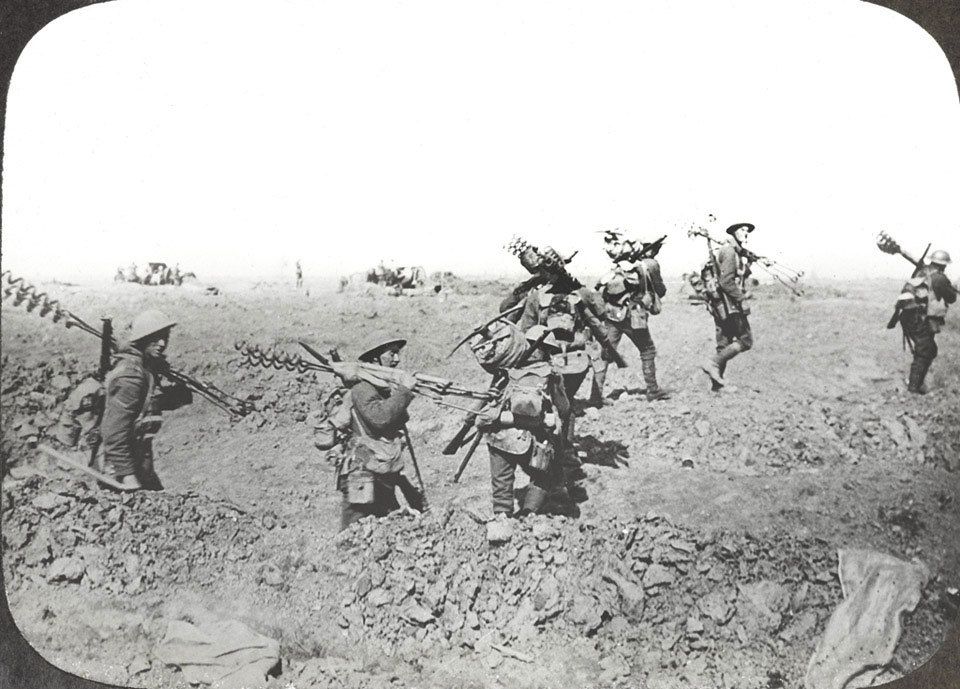
and, from there, the troops themselves might have formed what were called “carrying parties”.

Image7:  carrying

(This is actually a “wiring party”, with its “screw pickets”, which were twisted into the ground and used to hold up the barbed wire, but it can stand in for a “carrying party”.  For more on “wiring parties”, see:  https://en.wikipedia.org/wiki/Wiring_party  )

One fact alone might suggest how big the task of keeping the British Army supplied :  “By 1918, the British were sending over 67 million lbs (30 million kg) of meat to the Western Front each month.”  (This is from an article entitled “The Food That Fuelled the Front” from the Imperial War Museum website, which you can see here:  https://www.iwm.org.uk/history/the-food-that-fuelled-the-front  )

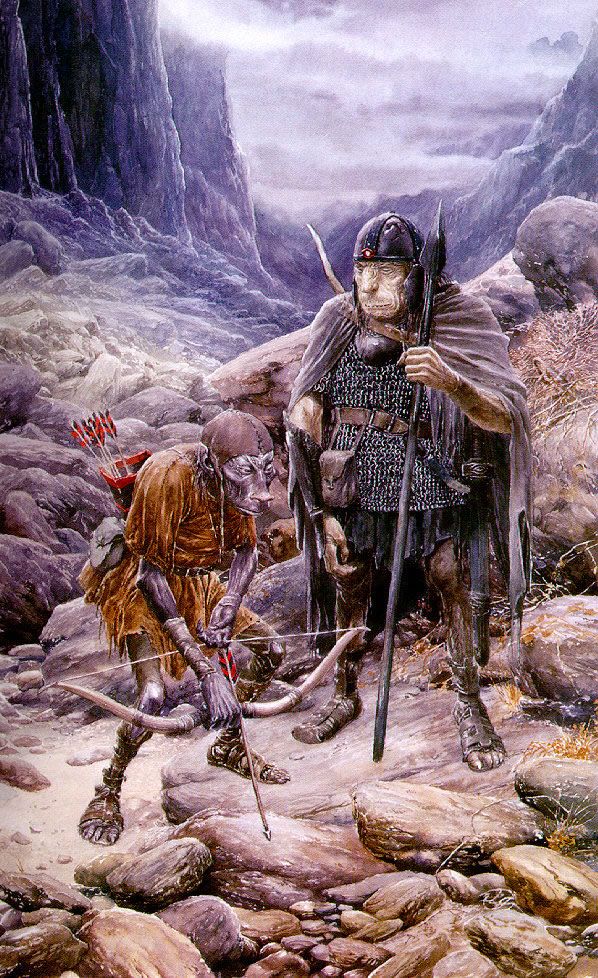
This was a vast, modern army, with all the modern technology available in 1918 to enable resupply (such supplying is called “logistics”).  Sauron’s army is of a much earlier time, its basis seemingly infantry, armed with swords, spears, and bows,

(Alan Lee)

assisted by a certain number of oliphaunts,

(Alan Lee)

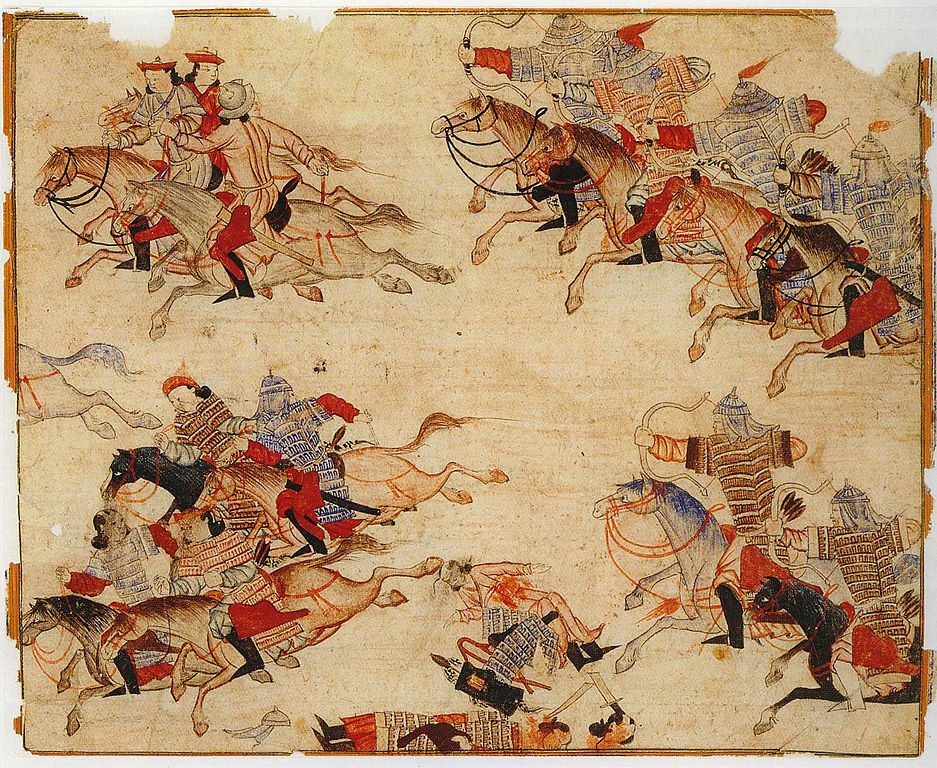
horsemen,

(These are actually Mongols, but all the text says is “Before them went a great cavalry of horsemen moving like ordered shadows…”  The Two Towers, Book Four, Chapter 8, “The Stairs of Cirith Ungol”, leaving it up to us to imagine what they might have looked like.)

and perhaps a warband of wargs,

(Artist?)

yet its basic needs would have been the same as those of the British Army in which Tolkien served.

To provide a parallel a bit closer to The Lord of the Rings, we might imagine an earlier army, like the army of New Kingdom Egypt

as we might have seen it marching to fight the Hittites

(Angus McBride)

at the Battle of Kadesh, in the summer of 1274BC. 

No oliphaunts or cavalry (or wargs) in support, but definitely chariots, maybe 2000 of them.

(Again, Angus McBride, one of my favorite military artists of the 20th century). 

The Egyptian army of Rameses II

may have numbered about 20,000, with as many as 4,000 chariot horses, and here are some potential logistic figures for such an earlier army—

Thinking of water alone, the average modern horse will drink 5-10 gallons (19-38 ltrs) of water a day, depending on working conditions, and that same horse needs to eat 15-20 pounds  (7-9 kg) of hay.  An average present-day American eats about 5.5  pounds (2.5 kg) of food per day and drinks 2 quarts (2 ltrs) of water.  On the one hand, ancient Egyptians were somewhat smaller than we are and probably less well-fed to begin with, but, on the other, that water requirement is an average and doesn’t factor in  marching for miles on dusty summertime roads in the Middle East.

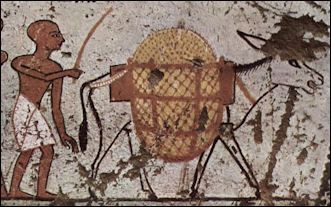
Could Rameses’ army have carried enough supplies with it for the long march (perhaps about 500 miles—about 805km)?  Rameses would have had available to him no trains or trucks, but the ancient Egyptians had carts (probably pulled by oxen, as were their plows)

and certainly used pack mules.

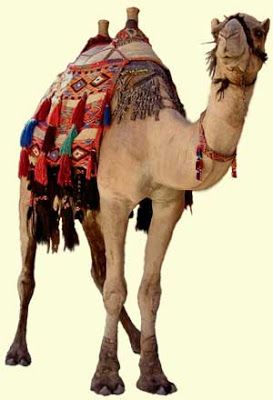
As to possible baggage camels,

there is a lot of scholarly argument about their use.  Although camel remains (a few depictions, bones, rope from camel hair) are there, there doesn’t appear to be any clear evidence for the use of camels as carriers until much later.  Food—the ordinary Egyptian diet was simple, including barley bread

and beer (also made from barley),

so large supplies of barley flour might be carried, but how to carry—and preserve–beer?  Water could be substituted, but could it be carried?  Or would the Egyptians have done as armies have done throughout history and foraged, picking up supplies of food and drink from the locals, willingly or unwillingly?  Both Rameses II’s and Sauron’s armies had horses, but add oliphaunts in Sauron’s, and all in need of fodder, this would include, in season, cutting grass

and, in and out of season, probably looting barns and granaries, as well.

Consider, then, Sauron’s armies and the Pelennor into which they had broken. 

We don’t know their numbers, but it’s clear that they are enormous, far outnumbering the defenders of Minas Tirith.   And this is what puzzles me.  Tolkien was certainly aware of such needs in general—as he once wrote:  “I am not incapable of or unaware of economic thought…” (letter to Naomi Mitchison, 25 September, 1954, Letters, 292).   And yet—

“It drew now to evening by the hour, and the light was so dim that even far-sighted men upon the Citadel could discern little clearly out upon the fields, save only the burnings that ever multiplied, and the lines of fire that grew in length and speed.”

Perhaps the army brought some provisions with it (Saruman and Sauron’s orcs seem to have had something like field rations, as we learn after they carry off Merry and Pippin), but, if the siege of Minas Tirith had proved to be a long one, what would such a vast host and its beasts have eaten, having destroyed the nearest source of food and fodder?  We’ve seen that Sauron was shrewd and showed a great amount of foresight in his pre-war preparations, so my only answer is a question:   did JRRT, who certainly had a taste for the dramatic moment–think of the way in which the Rohirrim appear at the edge of the Rammas Echor–

deliberately sacrifice economics for drama?  We’ll probably never know for certain, but, if you stand for a moment, on the wall of the first circle of Minas Tirith in the darkness, and see those fires spread across the Pelennor…

As always, thanks for reading.

Stay well,

If you have a yen for conquest, remember to pack a lunch (with carrots for your horse, of course),

And remember that, as always, there’s

MTCIDC

O

Battering Ram or…Wolf?

Tags

, , , ,

Ad haec Caesar respondit: se magis consuetudine sua quam merito eorum civitatem conservaturum, si prius quam murum aries attigisset se dedidissent;

“Caesar replies to these things that he would preserve their town, more by his own custom than by [their] deserving it, if they would have surrendered before the ram had touched the [town] wall.” (Caesar, De Bello Gallico, 2.32.  My translation.)

The Aduatuci (or Atuatuci) were a Germanic tribe in what is now eastern Belgium and they were in trouble.  Involved in resisting Julius Caesar’s conquest of their region, they found themselves besieged by a Roman army long-experienced in dealing with fortified towns like this one.  Appalled by the preparations they could see being made, they quickly agreed upon terms with Caesar—on his condition, as stated above, the idea being that, once the ram had touched the wall, it would knock it down and everyone inside would be at the mercy of the Romans (murdered on the spot or sold into slavery.  We have no idea what the town looked like, but if its walls were of the sort called murus gallicus,

as Caesar himself describes the building technique, it was his obvious preparations and chilly threat which caused the capitulation,  Caesar admitting that such walls would have stymied Roman rams.  See for more:  https://en.wikipedia.org/wiki/Murus_gallicus    Just after their surrender, the Aduatuci made the mistake of trying to trick the Romans and paid dearly for it.  See:   https://www.livius.org/articles/battle/oppidum-aduatucorum-57-bce/   )

Among those preparations would have been a siege weapon in use at least as far back as the Neo-Assyrians (10th through 7th century BC), as this relief from the edge of a bronze vessel demonstrates.

Caesar’s threat suggests that his weapon would be aimed at a wall, but, the Assyrian relief is aimed at what, I think, we’ve come to expect from medieval illustrations—

and from adventure movies—see this scene from Braveheart (1995) as an example:  https://www.youtube.com/watch?v=7PXrVUaoEEc  —

a gate, it being the weakest part of a defensive wall.

As always, welcome, dear readers.

What’s going on here, that we begin, as Horace (65-8BC) put it in his Ars Poetica, 146-149, when cautioning poets about trying to tackle bigger subjects that they can possibly manage, in medias res, “in the middle of the action”?

Because this posting is really about being in mediam portam, “in the middle of the gate”, as Tolkien says of the main gate of Minas Tirith:

“Very strong it might be, wrought of steel and iron, and guarded with towers and bastions of indomitable stone, yet it was the key, the weakest point in all that high and impenetrable wall.”  (The Return of the King, Book Five, Chapter 4, “The Siege of Gondor”)

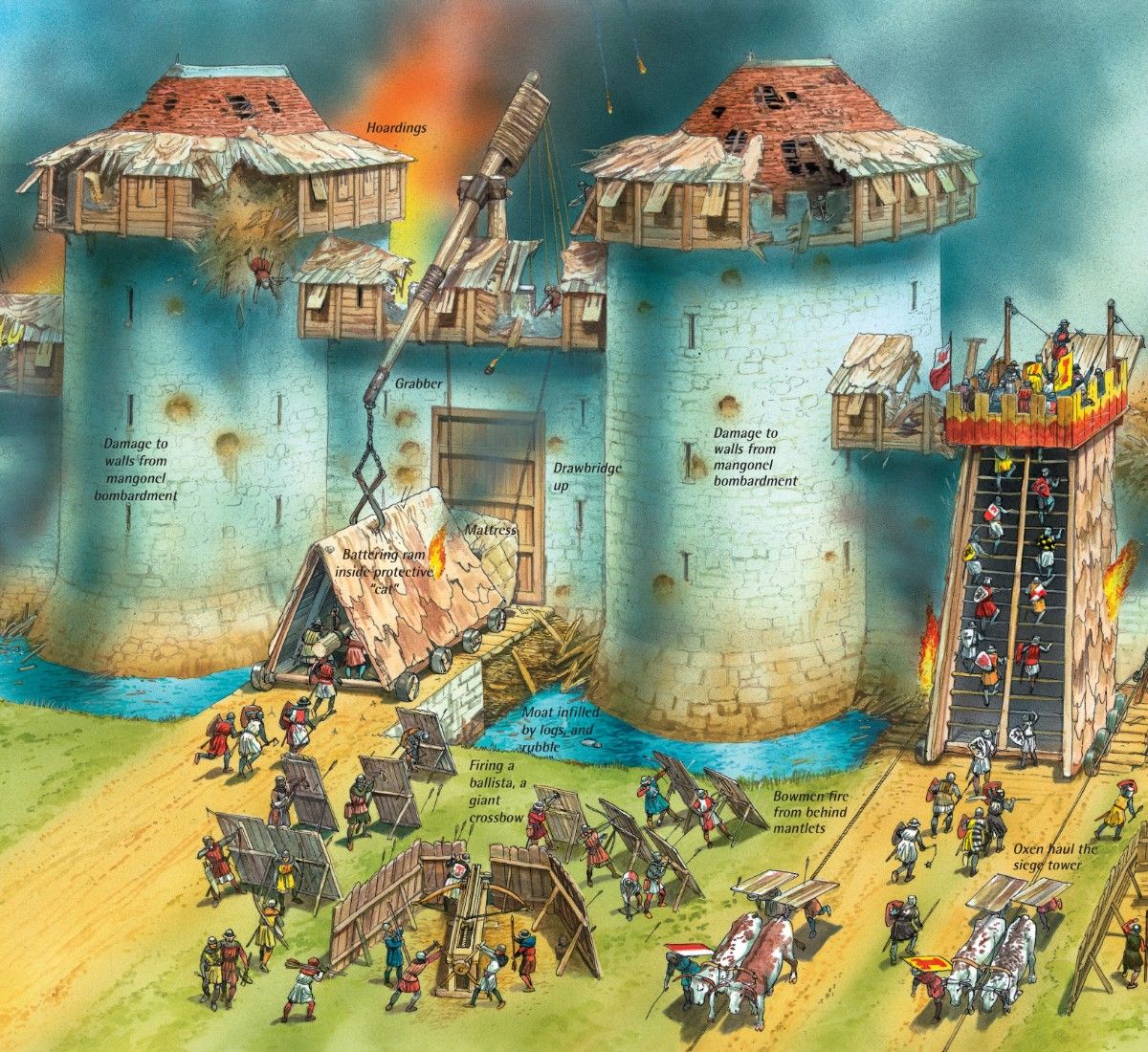
What’s attacking that gate is a monstrous ram:

“…in the midst was a huge ram, great as a forest-tree a hundred feet in length, swinging on mighty chains.  Long had it been forging in the dark smithies of Mordor, and its hideous head, founded of black steel, was shaped in the likeness of a ravening wolf, on its[,] spells of ruin lay.  Grond they named it, in memory of the Hammer of the Underworld of old.”

(from Jackson’s Return of the King, and, as usual, it varies from the text—this time, instead of simply having a wolf’s head, the whole thing appears to be a wolf—and it seems to have ingested a George Forman grill, as well)

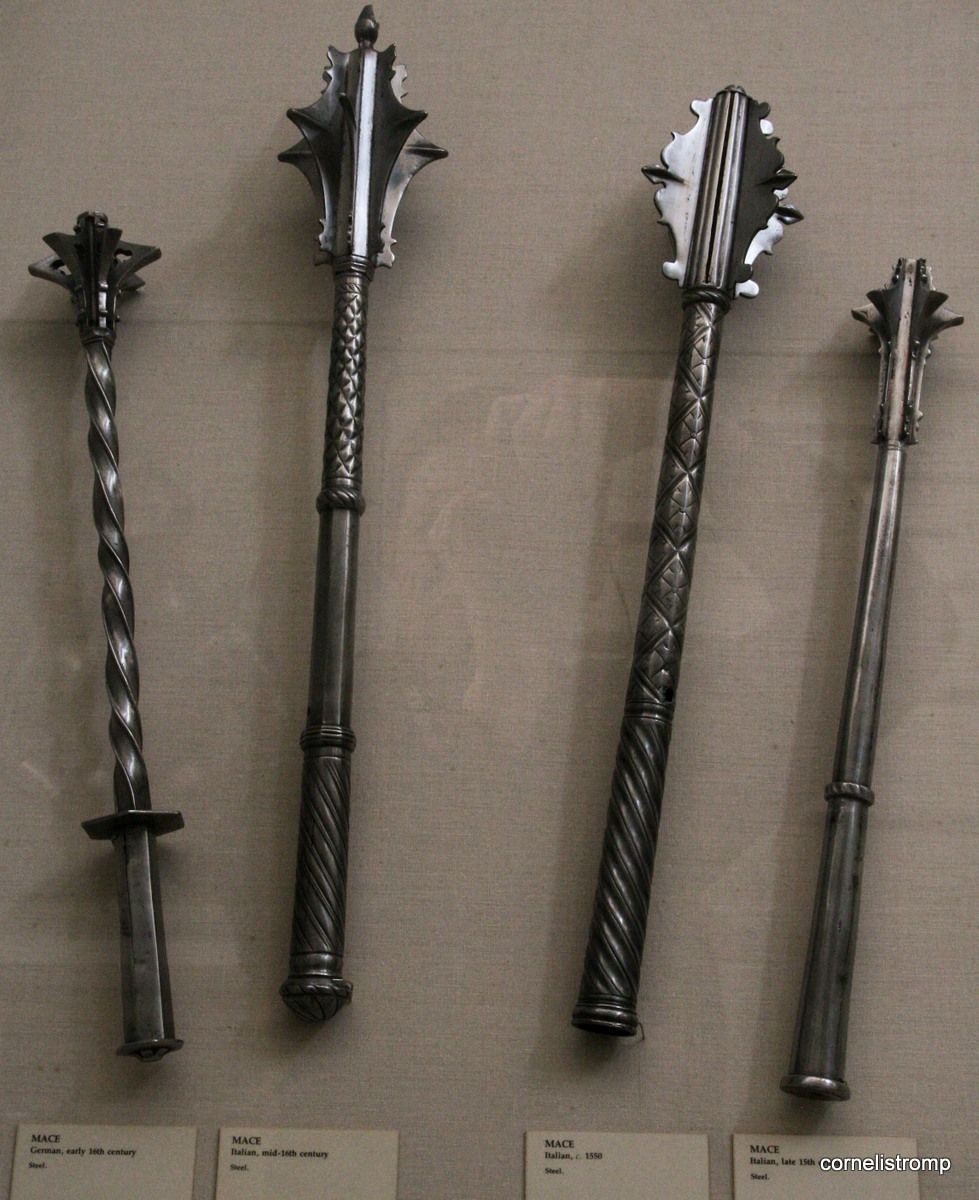
“Grond” is glossed as “the Hammer of the Underworld” and, elsewhere, as Morgoth’s mace—

but I’ve wondered about two non-Middle-earth influences upon its creation.

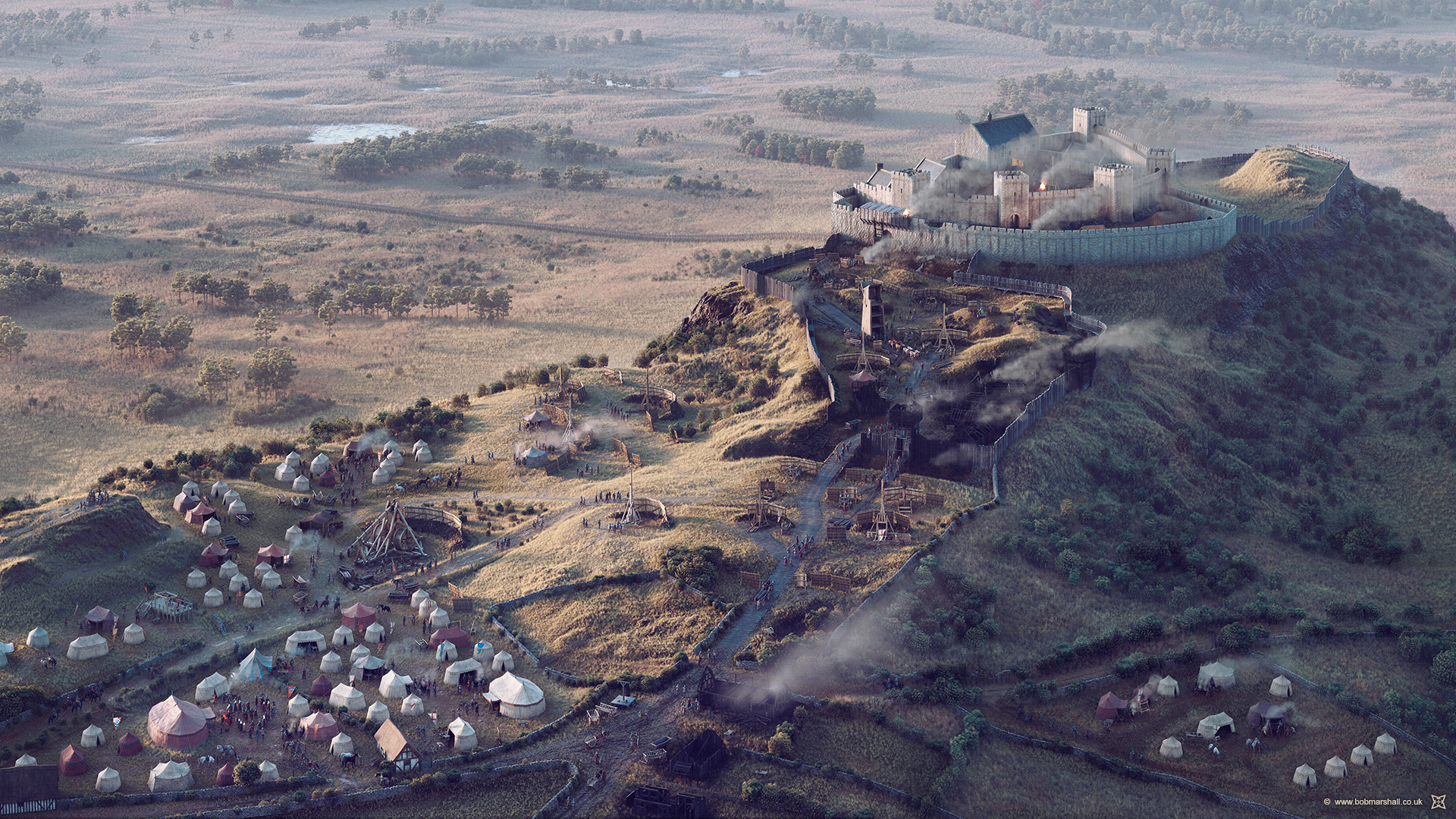
The first is to be found in something I suspect JRRT could have read at some point in his academic career, the Chronicle of Piers de Langtoft.  This is a early 14th-century compilation of earlier English history, combined with what is thought to be “Peter of Langtoft’s” own work, written in Norman French verse.  In his narration of events, the author includes an account of Edward I’s siege of Stirling Castle in 1304.

(This breathtaking reconstruction of the siege is by Bob Marshall, whose site is here:  https://www.bobmarshall.co.uk/stirlingcastle/   I recommend this site for:  a. the wonderful artwork; b. the excellent research and thinking behind it.  You can see more of his work—and it’s all as impressive as this—here:  https://bobmarshall.co.uk/)  Among the siege weapons Edward employed was something of which Piers/Peter writes:

“Entre ses aferes le reys fet carpenter

Une engine orrible, et Ludgar appeler

Et cel a son hurtir crevant le mur enter.”

“Among these events, the king had made of wood

A terrible device, and to be called ‘Ludgar’

And that [one] at its hit breaking down the whole wall.”

(my translation)

This “Ludgar” has been interpreted as being a large stone-thrower, called a trebuchet,

but it’s not its function which interested me, but what “Ludgar” is actually a shortened form of:  “Loup de Guerre”—“War Wolf”.  Could this have sparked Tolkien’s imagination to combine that name with another siege weapon?

(You can have your own copy of the text here:  https://ia801500.us.archive.org/5/items/chronicleofpierr02pete/chronicleofpierr02pete.pdf )

And that wolf leads me to my second possible influence, perhaps rather more unusual than the first.

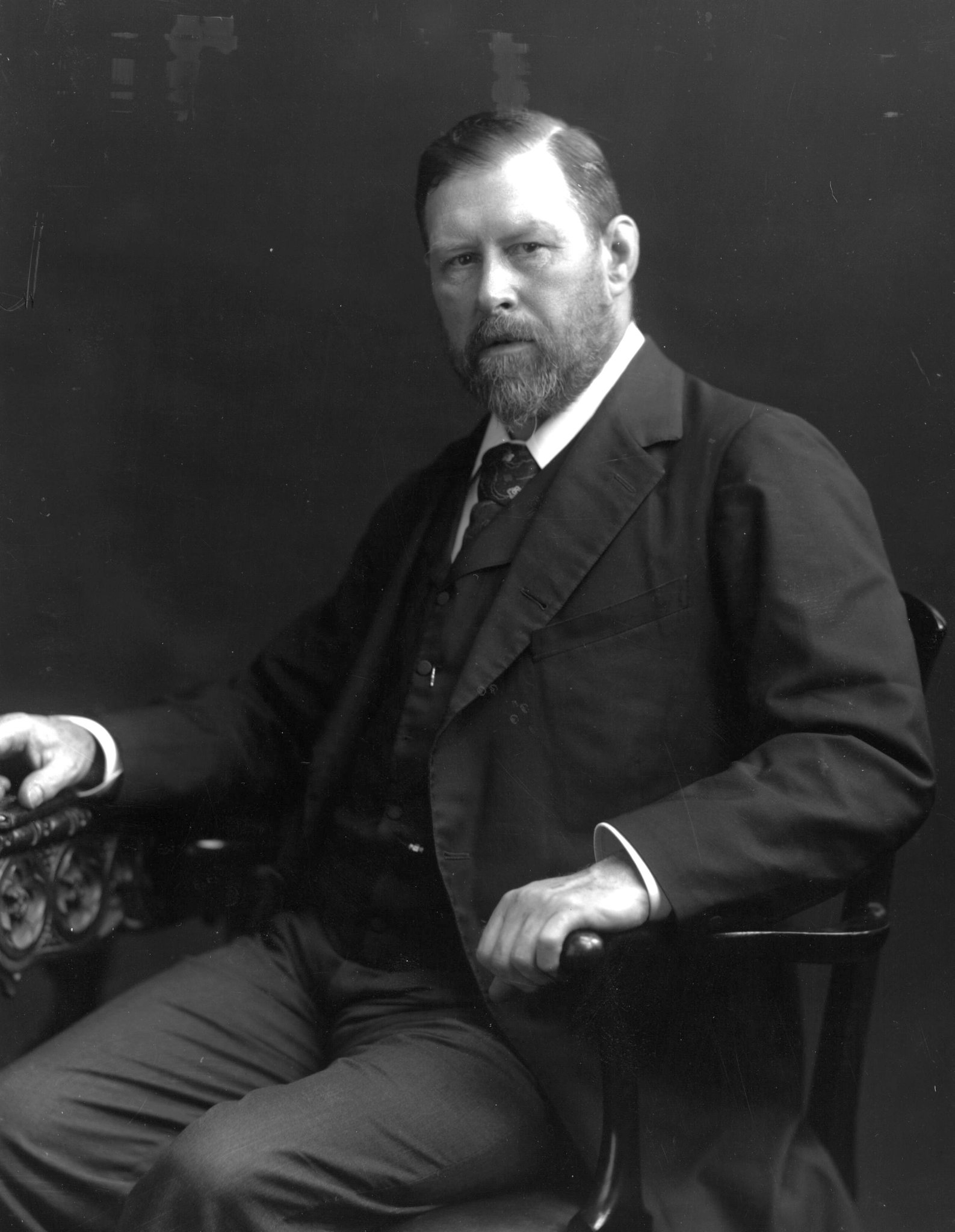
Neither The Letters of JRR Tolkien nor Oronzo Cilli’s impressive Tolkien’s Library has any mention of Bram Stoker (1847-1912)

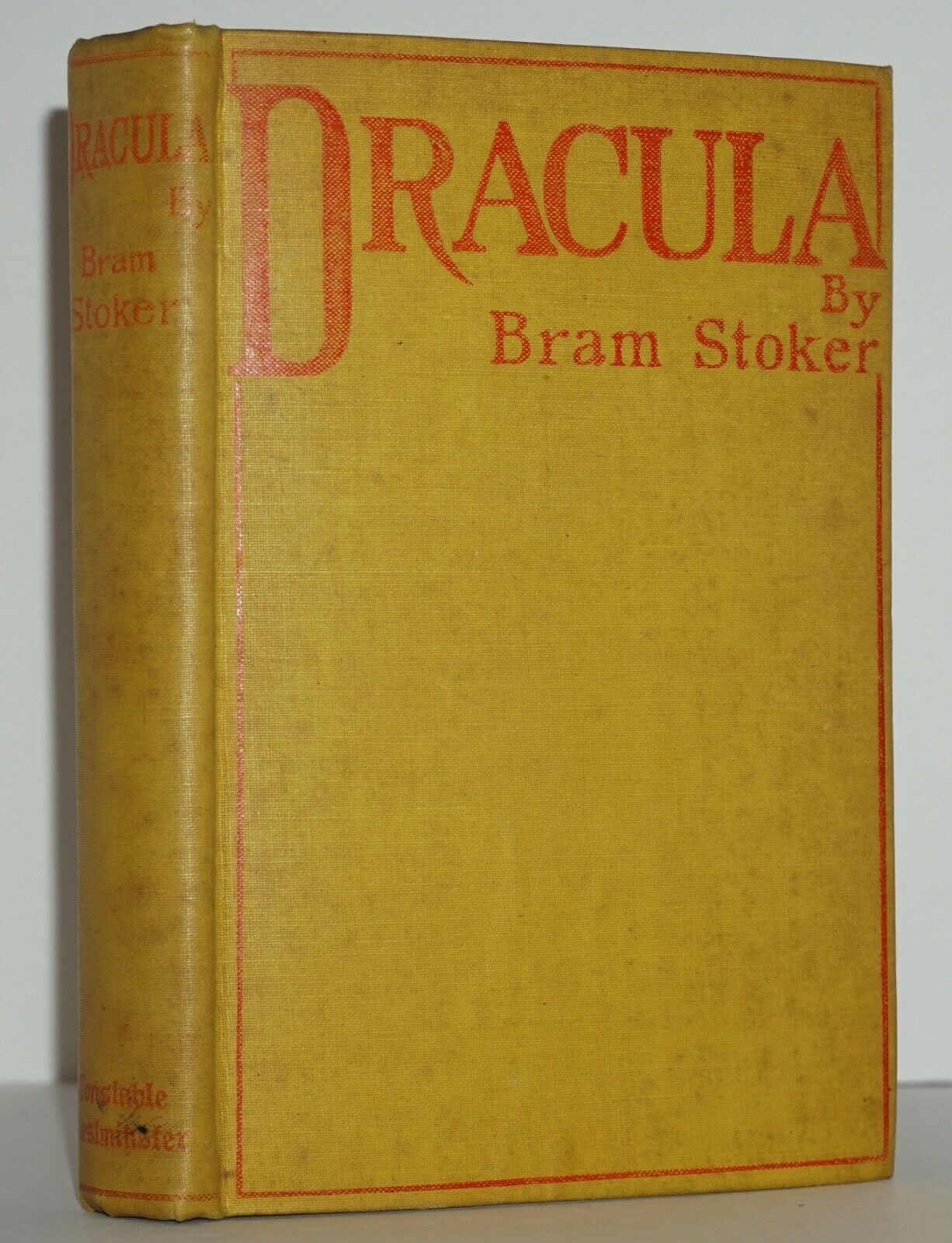
or his 1897 masterpiece, Dracula,

but, as I’m currently finishing reading it with a class, I noticed another wolf—with a similar task to that of Grond—in Stoker’s novel.

Please pardon the quick plot summary, if you’ve read the book.

Lucy Westenra is Dracula’s first victim in his one-man invasion of England.  To protect her, Dr Van Helsing surrounds her with garlic, including among other things, a garland for her neck and for the window of her first floor bedroom.  Lucy feels safe and her mother, who has a weak heart, comes to join her in bed.
Thwarted by Van Helsing’s work, Dracula picks a weapon from the London Zoological Gardens and–

“After a while there was the low howl again out in the shrubbery, and shortly after there was a crash at the window, and a lot of broken glass was hurled on the floor. The window blind blew back with the wind that rushed in, and in the aperture of the broken panes there was the head of a great, gaunt grey wolf. Mother cried out in a fright, and struggled up into a sitting posture, and clutched wildly at anything that would help her. Amongst other things, she clutched the wreath of flowers that Dr. Van Helsing insisted on my wearing round my neck, and tore it away from me. For a second or two she sat up, pointing at the wolf, and there was a strange and horrible gurgling in her throat; then she fell over—as if struck with lightning, and her head hit my forehead and made me dizzy for a moment or two. The room and all round seemed to spin round. I kept my eyes fixed on the window, but the wolf drew his head back, and a whole myriad of little specks seemed to come blowing in through the broken window, and wheeling and circling round like the pillar of dust that travellers describe when there is a simoon in the desert. I tried to stir, but there was some spell upon me, and dear mother’s poor body, which seemed to grow cold already—for her dear heart had ceased to beat—weighed me down; and I remembered no more for a while.”  (Dracula, Chapter XII, “Memorandum left by Lucy Westenra”)
(Abigail Rorer from the Folio Society edition)

Perhaps not so grand as:

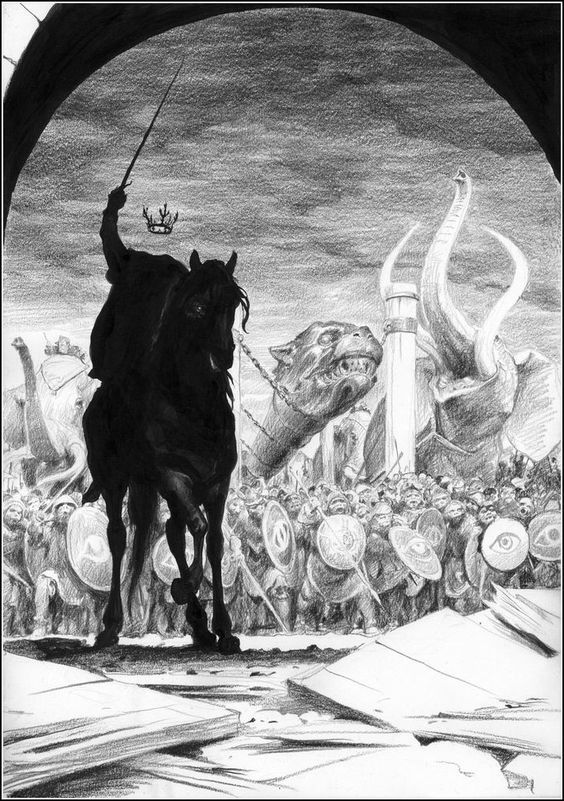
“…Thrice the great ram boomed.  And suddenly upon the last stroke the Gate of Gondor broke.  As if stricken by some blasting spell it burst asunder:  there was a flash of searing lightning, and the doors tumbled in riven fragments to the ground.

In rode the Lord of the Nazgul.”

(Denis Gordeev)

but equally effective and, as the Witch King of Agmar stands at the ruined gate, so Dracula stands at the broken window.  The difference is, the Witch King is thwarted by the advent of the Rohirrim,

(Julia Alexeeva)

while Dracula slips in and begins Lucy’s final transformation into a vampire.

So, could an early 14th century text and a late 19th-century horror novel have given Tolkien inspiration?  If an 1890 children’s book can offer him a talking dragon (“The Story of Sigurd” in Andrew Lang’s The Red Fairy Book, which you can read here:  https://archive.org/details/redfairybook00langiala/redfairybook00langiala/ )

why not?

Thanks, as ever, for reading.

Stay well,

Even if garlic might not keep out vampires, it’s good in bread,

And remember that, as always, there’s

MTCIDC

O

PS

In case you haven’t read Dracula, here’s your chance in a copy of the first American edition of 1897:  https://www.gutenberg.org/cache/epub/345/pg345-images.html

A Corking Tale?

Tags

, , , ,

Welcome, as always, dear readers,

I’m about to teach The Hobbit again, which is, as always, a pleasure—and also a repeated source of new things to think—and write—about. 

Take this, for example:

“Chip the glasses and crack the plates!

Blunt the knives and bend the forks!

That’s what Bilbo Baggins hates—

Smash the bottles and burn the corks!” 

(The Hobbit, Chapter One, “An Unexpected Party”)

Seven years ago, this formed a small part of an earlier essay, “Shire Portrait (2)” (8 February, 2017), in which the subject was the economy of the Shire.

JRRT was himself aware of just how much lay underneath that economy which he didn’t depict, writing:

“I am more conscious of my sketchiness in the archaeology and realien [“actualities/realities”] than in the economics:  clothes, agricultural implements, metal-working, pottery, architecture and the like…I am not incapable of or unaware of economic thought; and I think as far as the ‘mortals’ go, Men, Hobbits, and Dwarfs, that the situations are so devised that economic likelihood is there and could be worked out…”  (letter to Naomi Mitchinson, 25 September, 1954, Letters 291-292)

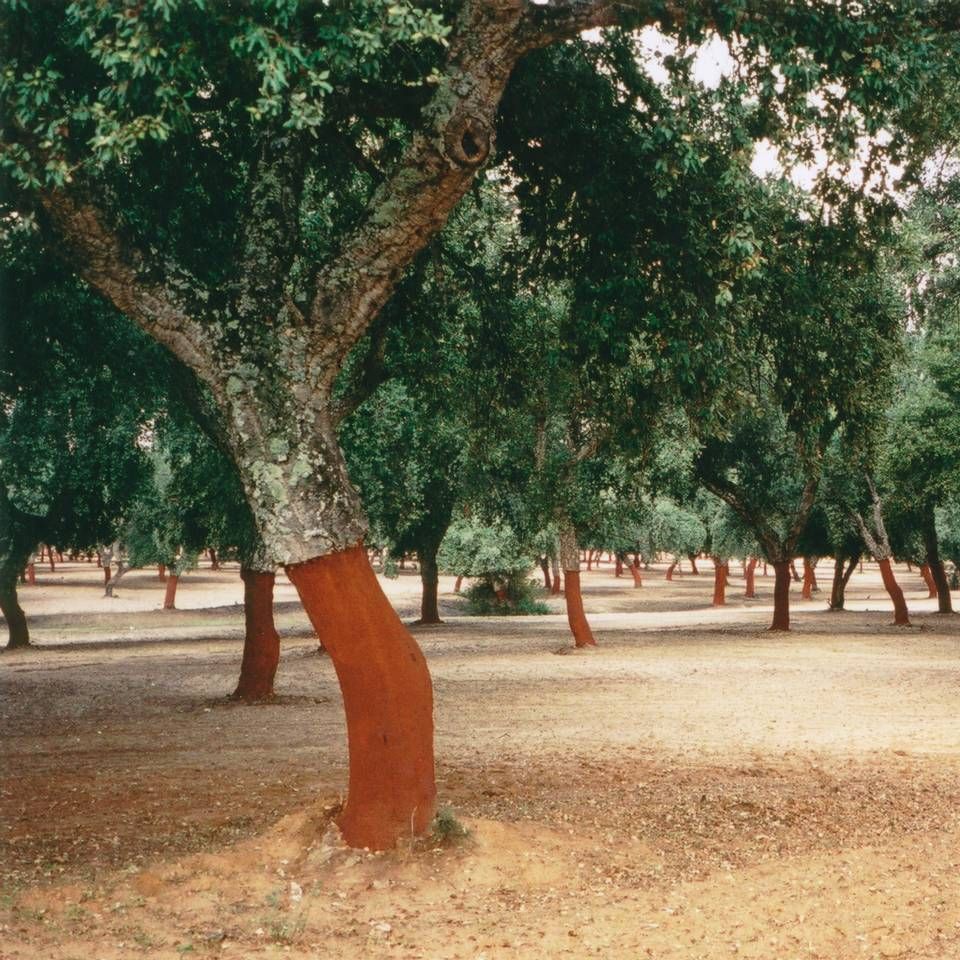
In that essay, I pointed out that, in Tolkien’s world, those threatened corks came primarily from Portugal, from the Quercus suber,

which, as the Wiki articles tells us, actually “is native to southwest Europe and northwest Africa”, suggesting, perhaps, that, in Middle-earth, it might be imported as far away as from Umbar, say, far to the south, had Tolkien bothered to go that far in expressing “economic likelihood”.

This cork bobbed up (they do, don’t they?) in my mind associated with something completely different, however, but certainly naturally:  barrels.

And this led me to what was, in fact, a mistaken idea.

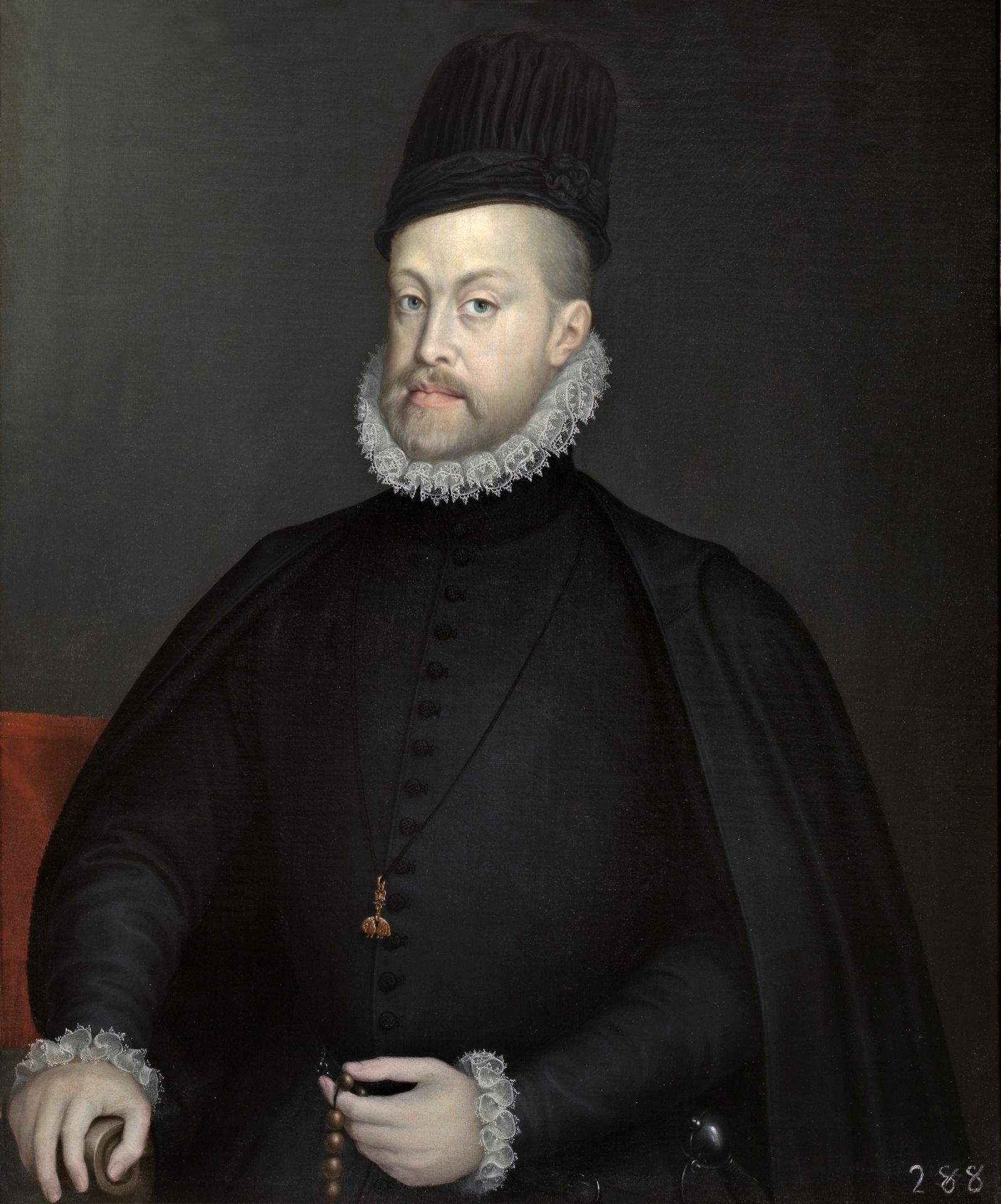
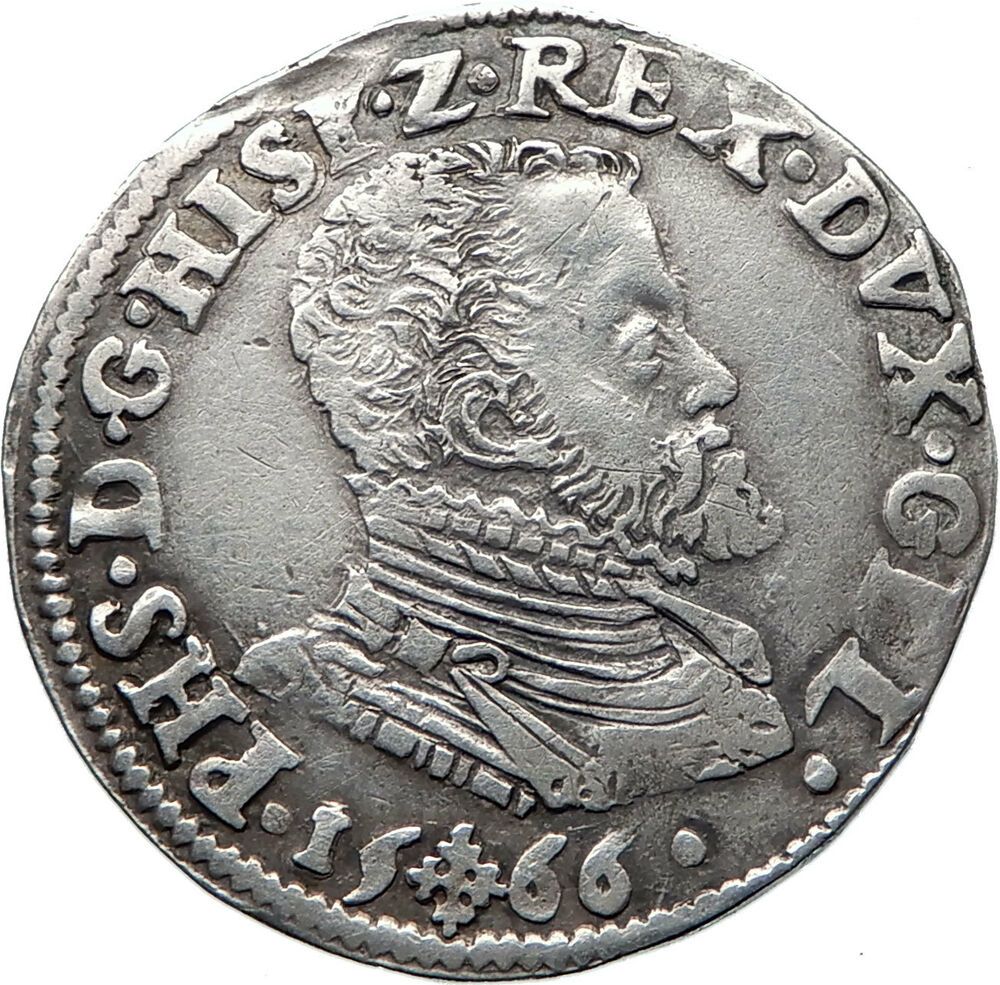
In the mid-1580s, Philip II of Spain,

a man for whom the term “religious obsessive” could have been coined, set his sights upon an attack on England.  As “His Most Catholic Majesty”, he was already fighting what seemed like an endless war against his (to his mind) rebellious Protestant subjects in the Netherlands—the so-called “80 Years War” (1568-1648), or “Dutch Revolt”.

England, now a Protestant country under its queen, Elizabeth,

was helping that revolt.  (Philip may also have been annoyed that, as he had once been married to Elizabeth’s half-sister, Mary, 1515-1558,  queen of England, 1553-1558,

he probably thought that, after her death, he should have been king.)

As Spain, because of its looting of its New World possessions, was extremely rich,

it could afford a long war and, having lots of troops already across from England,

it seemed only a matter of:

1. building lots of landing craft for an invasion army

2. assembling a fleet—an armada, in Spanish, to protect those craft till they hit the beaches of England.

Such a fleet, sailing from Spain at least to the coast of France, where the invasion army was being assembled, as were the landing craft, would need large supplies of food and water to survive on the high seas. 

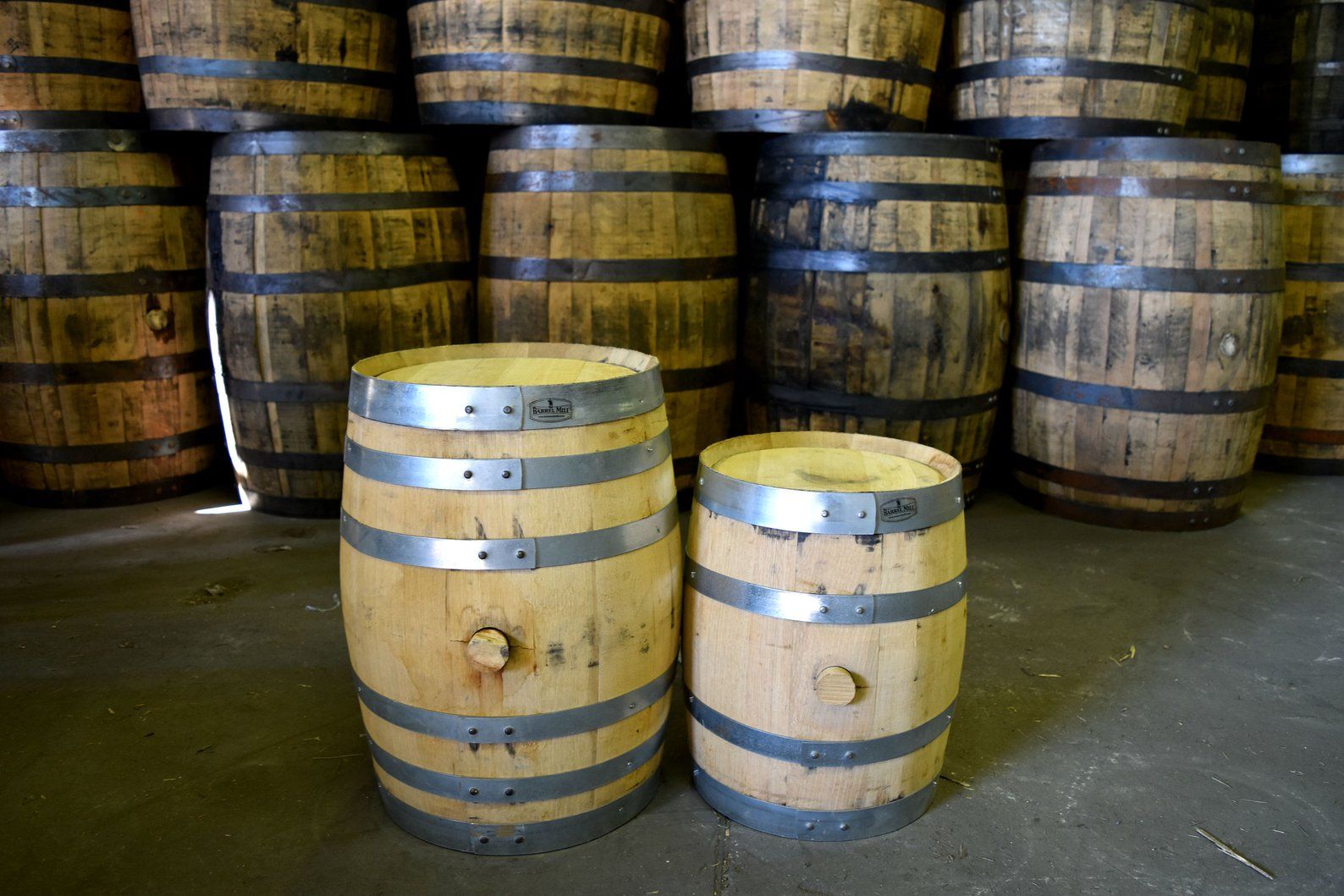
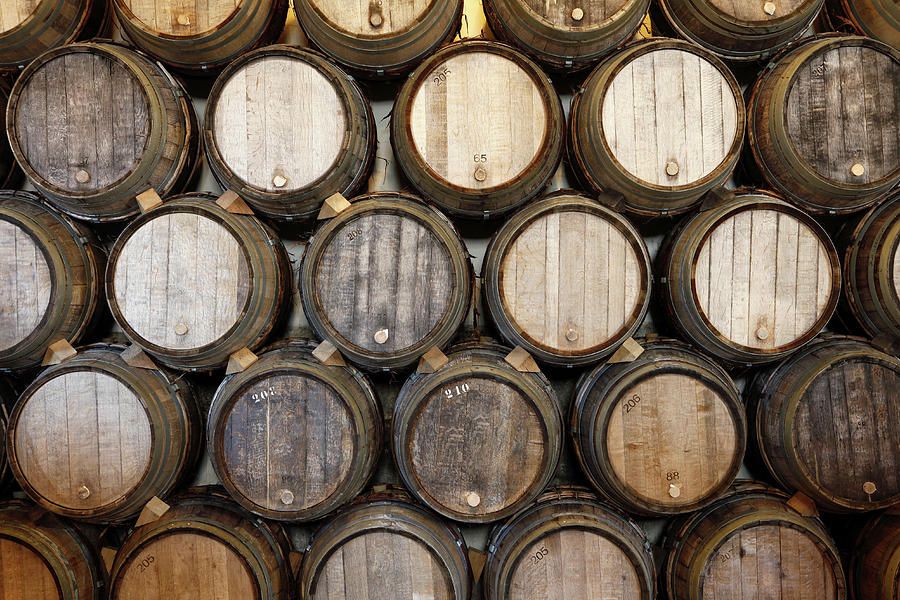
Such supplies would be carried in a vast number of barrels.

Enter now one of Elizabethan England’s most dashing characters, Sir Francis Drake (1540-1596).

When it came to sailing, Drake seems to have done it all, including surviving a circumnavigation of the globe (1577-1580), but he was, from the Spanish view, a good reason to conquer England along, as Drake had, for years, but a challenge to their (in their minds) domination of the oceans, raiding their possessions in the New World, capturing and looting their treasure ships.  (Under the Spanish form of his name, el Draque, he even supposedly had a significant price on his head:  20,000 ducats which, if I’ve got my figures right, would be almost $2,500,000.00 in today’s money—but the buying power would be substantially more—and I mean substantially.)

In 1587, Drake, with an English fleet, raided the Spanish coast, capturing and destroying ships and generally wreaking mayhem—and here’s where my mistaken idea comes in.  I thought that he had, among other things, ruined the Spanish supply of corks and hence slowed down the Armada’s ability to supply itself with those barrels.  (And I’m not the only one to have thought so—see this wonderfully silly Horrible Histories skit:  https://www.youtube.com/watch?v=w6_UkLHcdJk )

In fact, during his raid on the Spanish coast, Drake’s men not only burned perhaps as many as 37 ships, but also not corks, but 1600-1700 tons of barrel staves,

enough to make 25-30,000 barrels,

barrels which would have held the Armada’s vital supplies. 

This raid delayed the setting off for England by a year.  New staves were made, and other ships replaced the ruined ones, however, and the Armada set off the next year, in 1588, but the staves were not the usual dried wood used for barrels, but green wood and often split, allowing the contents to be spoiled.  As well, the English navy, though small, was superior to the Armada both in seamanship and its ability to deliver firepower,

and the Spanish fleet was driven to flee north, eventually, many ships being lost on a circumnavigation of Britain,

and Philip’s planned invasion never took place.

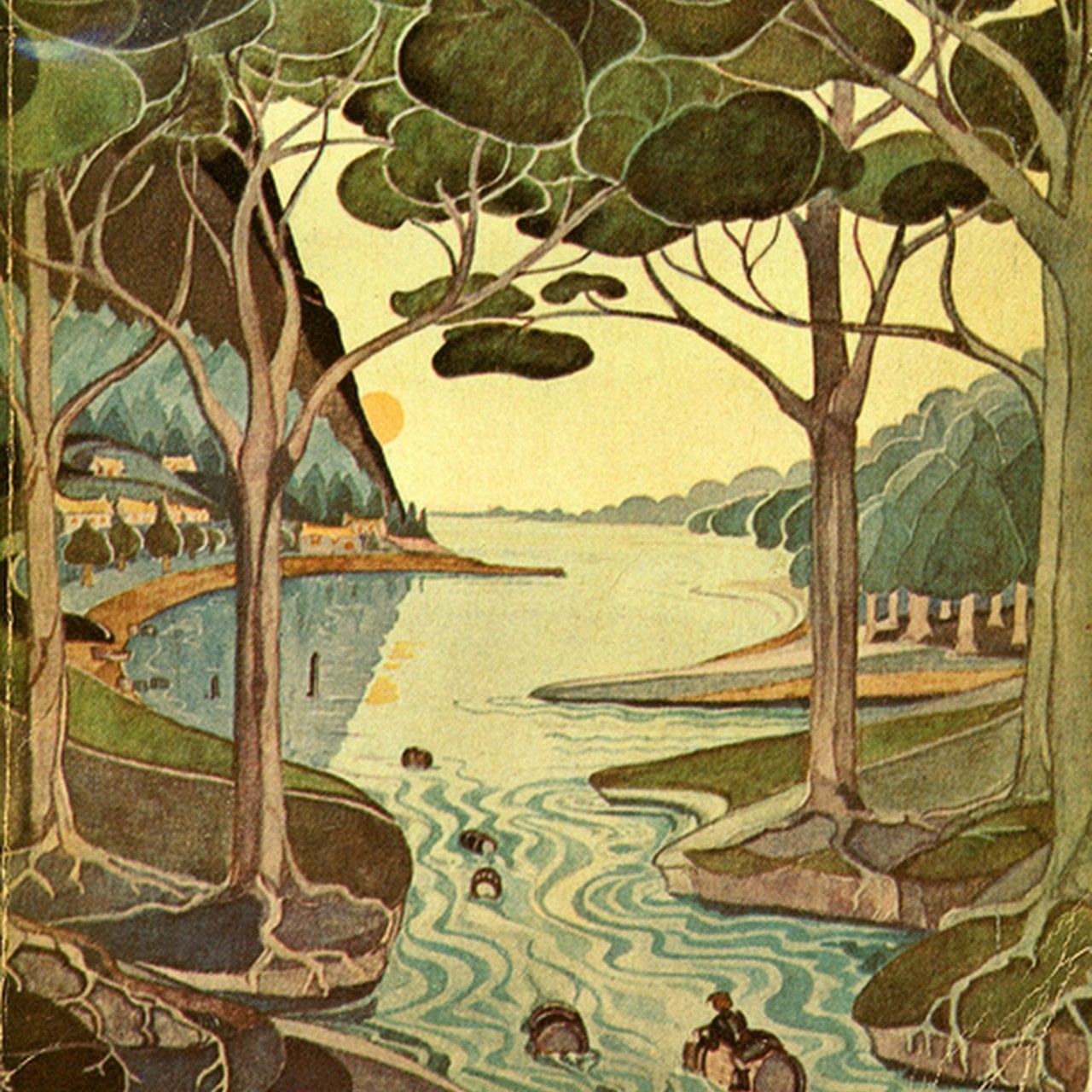
And so, considering England’s escape and those barrels, perhaps I should have been thinking about another part of The Hobbit altogether…

(JRRT)

Thanks, as ever, for reading.

Stay well,

Avoid delusions of grandeur—remember what happened to the Armada,

Image20:  armada

And remember that, as always, there’s

MTCIDC

O

ps

For a traditional view of Drake, see Julian Corbett’s 1899 2-volume work Drake and the Tudor Navyhttps://archive.org/details/corbett-drake-and-the-tudor-navy-v-1/page/n5/mode/2uphttps://archive.org/details/corbett-drake-and-the-tudor-navy-v-2    For a still-cited work on the Armada, I would recommend Garrett Mattingly’s The Armada, 1959.

pps

For more on cork, see:  https://en.wikipedia.org/wiki/Cork_(material)

ppps

“Corking”, meaning something like “first rate”, is first cited, as far as is presently known, as appearing in 1895 in Outing, An Illustrated Monthly Magazine of Recreation.  Unfortunately, the OED (Oxford English Dictionary)  doesn’t mention which issue, so, if you feel like a search, look here to begin with:  https://archive.org/details/sim_outing-sport-adventure-travel-fiction_october-1894-march-1895_25_contents/page/n1/mode/2up

Unbuttoned

Tags

, , , ,

As always, dear readers, welcome.

As far as I’ve come to know her, Beatrix Potter (1866-1943)

(with her collie, Skep)

was not one to dwell upon horrors.

And yet, the first of her stories I ever had read to me as a small child filled me with dread, almost from its very opening:

“ ‘Now my dears,’ said old Mrs. Rabbit one morning, ‘you may go into the fields or down the lane, but don’t go into Mr. McGregor’s garden: your Father had an accident there; he was put in a pie by Mrs. McGregor.’ “

This was said so casually, as if being murdered by an angry gardener and then eaten was only “an accident”, that I knew that the story to come was not going to be a sunny one. 

“Flopsy, Mopsy, and Cotton-tail, who were good little bunnies, went down the lane to gather blackberries:”

Had I been able to read this for myself, that colon after “blackberries” might have tipped me off that something awful was about to happen—

“But Peter, who was very naughty, ran straight away to Mr. McGregor’s garden, and squeezed under the gate!”

You can see already where this is going—towards another “accident” and Peter in a pie.  Fortunately, this doesn’t happen, although Peter, after stuffing himself on Mr. McGregor’s lettuce, French beans, and radishes, is spotted by the dread gardener himself and much of the middle of the story is taken up with his relentless pursuit of Peter, in which Peter loses his shoes, but

“I think he might have got away altogether if he had not unfortunately run into a gooseberry net, and got caught by the large buttons on his jacket. It was a blue jacket with brass buttons, quite new.”

Peter escapes the murderous McGregor, leaving his jacket behind and, eventually, even finds his way home, but, menacingly, the gardener hangs up the lost shoes and jacket “for a scare-crow to frighten the blackbirds”—one wonders what he did with Peter’s father’s clothes!

This is, of course, The Tale of Peter Rabbit,

first published in 1902 and Beatrix Potter’s first successful children’s book,  with 22 more to come, including two nursery rhyme collections, between 1902 and 1930.

The stories are simple, as appropriate for small books for small children, but the illustrations are anything but, being little marvels of depiction, everything from the anthropomorphized animals who are the main characters, to the world, both natural and human, in which they function.  This shouldn’t be surprising in that the author was herself both a highly-talented draftswoman and a great naturalist and had been since childhood.

At some point later in life, I must have gotten over my fear of the bloody-handed McGregor,

as I found myself increasingly interested in his creator and her complex life and personality—an upper-class Victorian/Edwardian lady who, though barred from the sorts of things her naturalist life should have allowed her—an academic education, dealing with male naturalists on their own turf, for example—still managed to publish extensively, gain wealth from it, employ that wealth in intelligent ways, and leave behind not only such lovely books and wonderful art, but also a large expanse of land in the English Lake District which forms much of a National Park.  (You can begin learning about her here:  https://en.wikipedia.org/wiki/Beatrix_Potter  You can also read a first edition of The Tale of Peter Rabbit here:   https://www.gutenberg.org/cache/epub/14838/pg14838-images.html )

Someone else who clearly knew at least some of her work mentions it somewhat obliquely in an angry letter to his publisher on the subject of a Dutch translation of his work:

“If you think I am being absurd, then I shall be greatly distressed; but I fear not altered in my opinions.  The few people I have been able to consult, I must say, express themselves equally strongly.  Anyway I am not going to be treated a la Mrs Tiggywinkle=Poupette a l’epingle.  Not that B [eatrix] P [otter] did not give translators hell.  Though possibly from securer grounds than I have.  I am no linguist, but I do know something about nomenclature, and have specially studied it, and I am actually very angry indeed.” (letter to Rayner Unwin, 3 July, 1956, Letters, 361)

This is the only direct reference I’ve seen to “BP’s” work in Tolkien’s letters, but I would offer proof of another sort in another work:

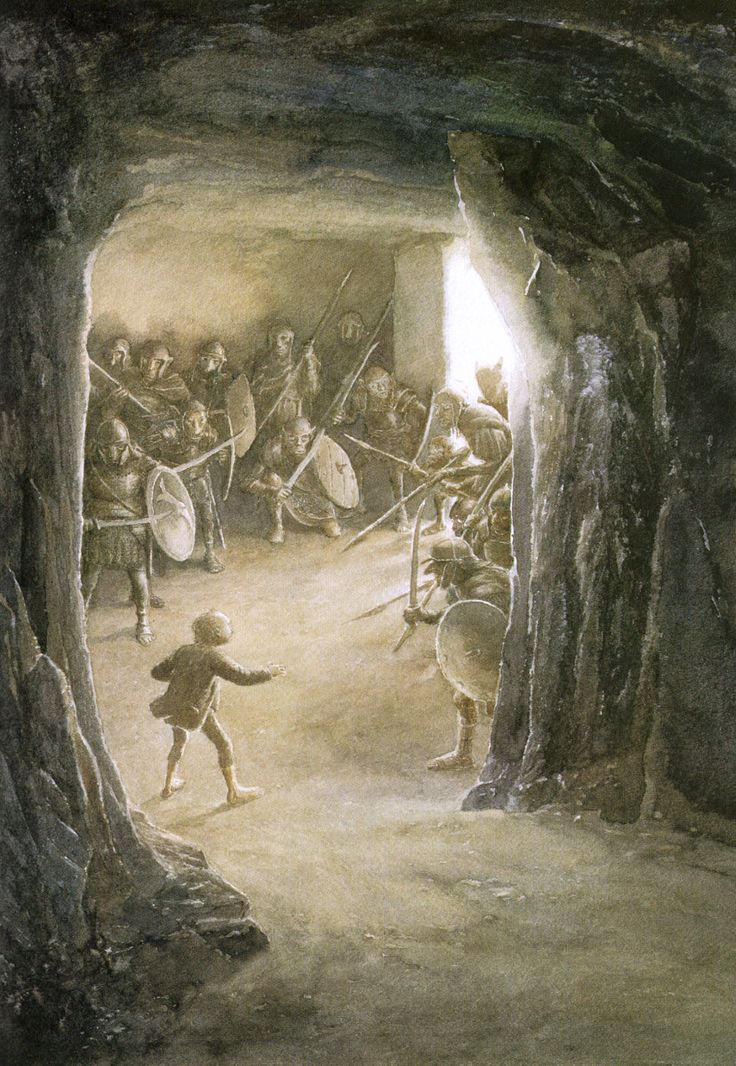
“The place was full of goblins running about, and the poor little hobbit dodged this way and that…slipped between the legs of the captain just in time, got up, and ran for the door.

It was still ajar, but a goblin had pushed it nearly to.  Bilbo struggled but he could not move it.  He tried to squeeze through the crack.  He squeezed and squeezed and he stuck!  It was awful.  His buttons had got wedged on the edge of the door and the door-post.  He could see outside into the open air…but he could not get through.

Suddenly one of the goblins inside shouted:  ‘There is a shadow by the door.  Something is outside!’

Bilbo’s heart jumped into this mouth.  He gave a terrific squirm.  Buttons burst off in all directions.  He was through, with a torn coat and waistcoat, leaping down the steps like a goat, while bewildered goblins were still picking up his nice brass buttons on the doorstep….

Bilbo had escaped.”  (The Hobbit, Chapter Five, “Riddles in the Dark”)

(Alan Lee)

What do you suppose JRRT as a child made of that violent, pie-eating McGregor?

As always, thanks for reading.

Stay well,

Always listen to your mother and you’ll never lose your buttons,

And, as ever, remember that there’s

MTCIDC

O

Yarrow
Tags

, , , ,

As always, dear readers, welcome.

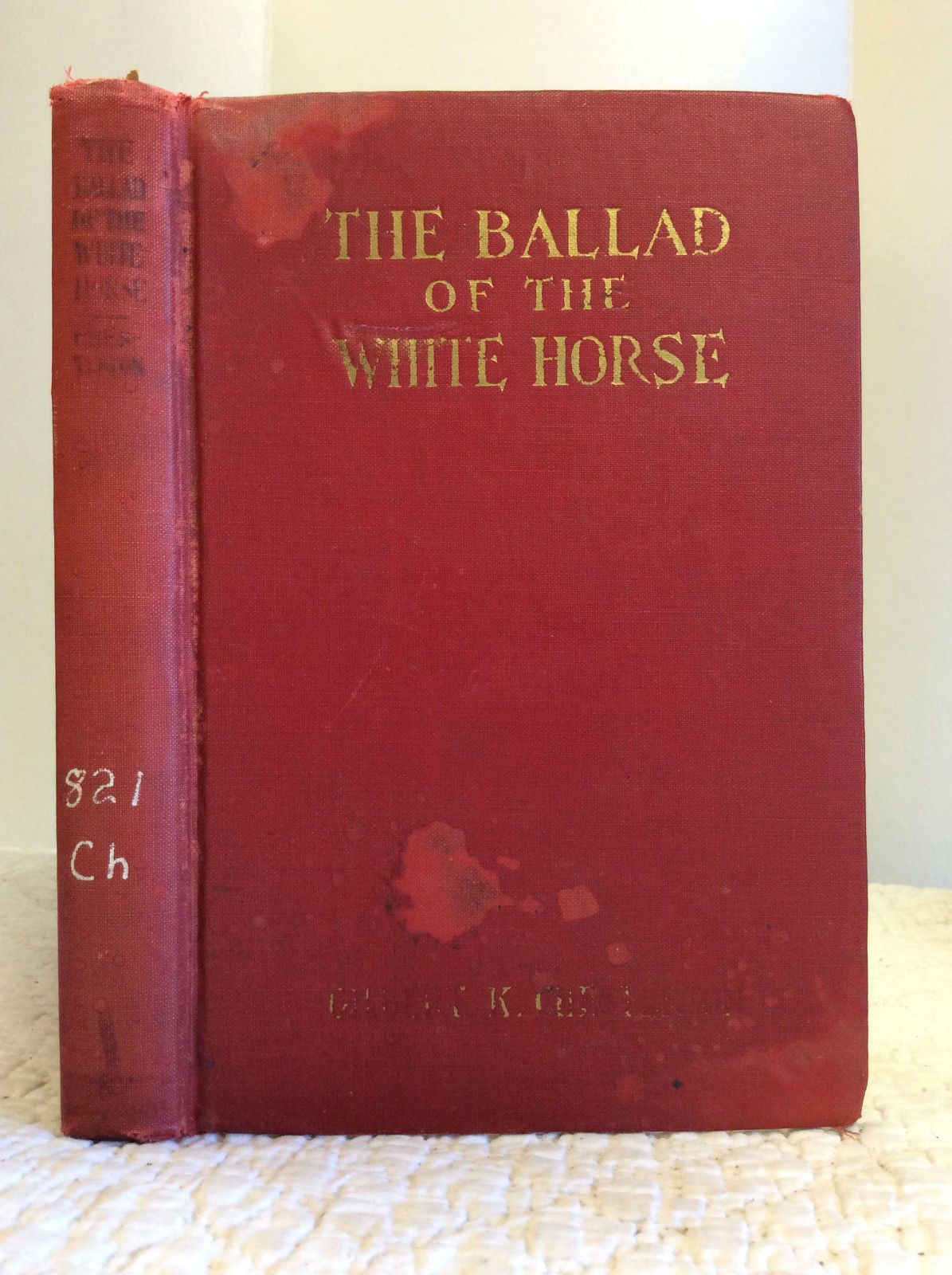
I don’t know how Tolkien thought about ballads in general, but, about what was termed a modern “ballad”, The Ballad of the White Horse, 1911,

by its author, G.K. Chesterton (1874-1936),

he had this to say:

“P[riscilla]…has been wading through The Ballad of the White Horse for the last many nights; and my efforts to explain the obscurer parts to her convince me that it is not as good as I thought.  The ending is absurd.  The brilliant smash and glitter of the words and phrases (when they come off, and not mere loud colours) cannot disguise the fact that G.K.C. knew nothing whatever about the ‘North’, heathen or Christian.”  (from an airgraph to Christopher Tolkien, 3 September, 1944, Letters, 131)

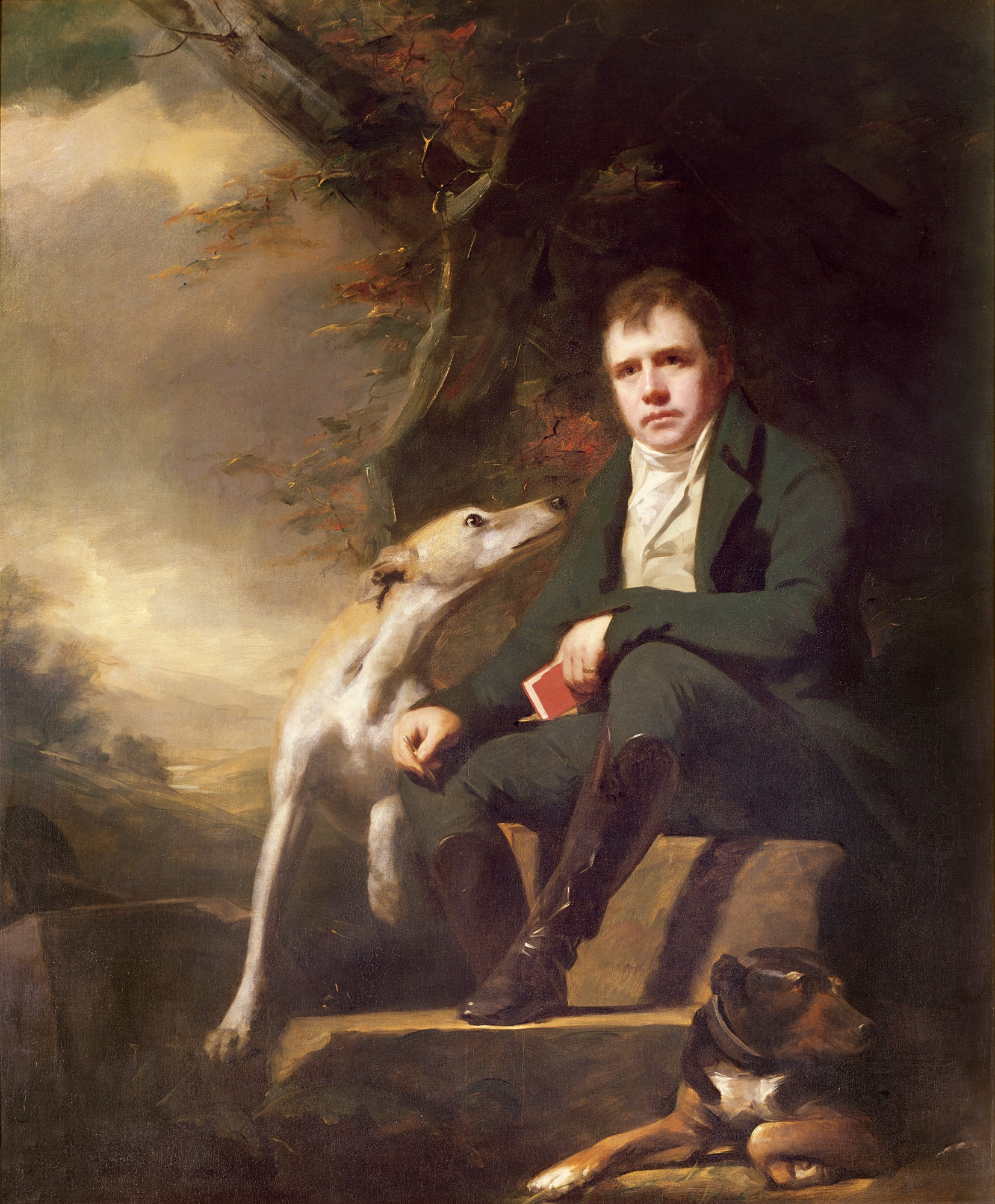
For myself, I would say that, although I’ve been reading (and singing) old ballads for a long time, I don’t think of them as having “smash and glitter”, but rather, at their best, being plain and, often, grim—and perhaps it’s in part why they have the lure they do—and have had, since at least early Romanticism.  I’m presuming that that’s a reason why, for example, following collectors who date back at least to the early 18th century, Sir Walter Scott (1770-1832),

XCF277642 Portrait of Sir Walter Scott and his dogs (oil on canvas) by Raeburn, Sir Henry (1756-1823); Private Collection; (add.info.: Walter Scott (1771-1832);); Scottish, out of copyright

(portrait by Sir Henry Raeburn—who clearly captured Scott as Scott wanted to be remembered—a reader in a romantic atmosphere—with his dogs)

published Minstrelsy of the Scottish Border (1802-1830—Scott kept revising and revising),

which included not only ballads he had personally collected or had from others, but also contemporary imitations of what he admired.  (There’s a very useful article here:  https://en.wikipedia.org/wiki/Minstrelsy_of_the_Scottish_Border on Scott and his working methods and even a site about a combined Scots/German project on the collection here:  http://walterscott.eu/ )

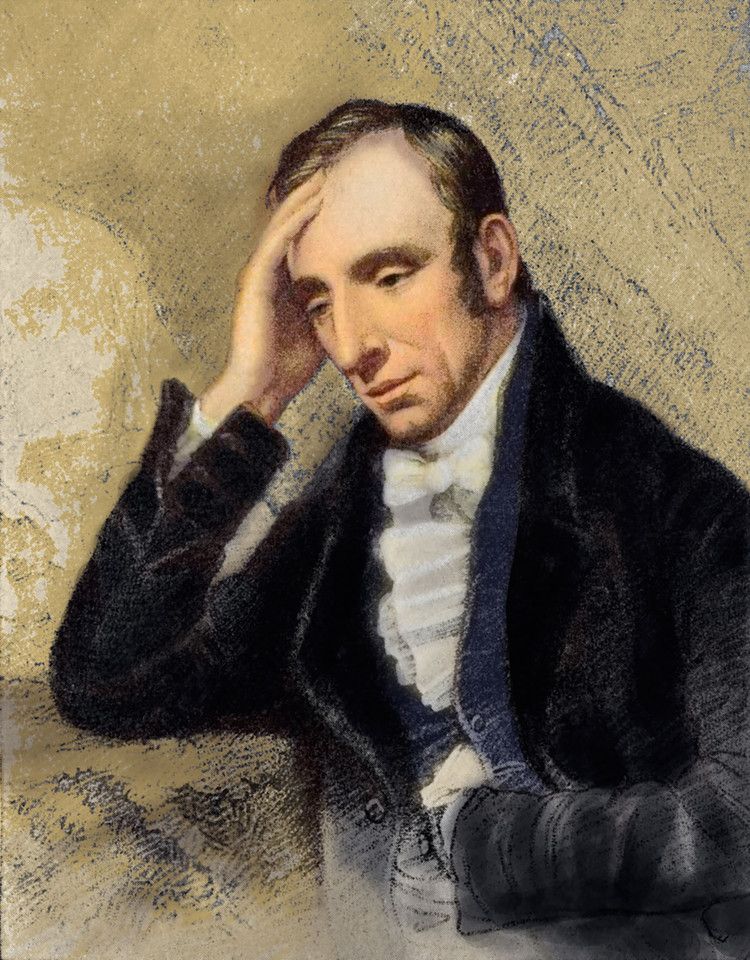
One of the ballads was clearly in the mind of another author, William Wordsworth (1770-1850),

“The Dowie Dens o Yarrow” (in modern English, perhaps something like “The Gloomy/Melancholy Dells of Yarrow”), when he wrote a very interesting poem in 1803, “Yarrow Unvisited”.

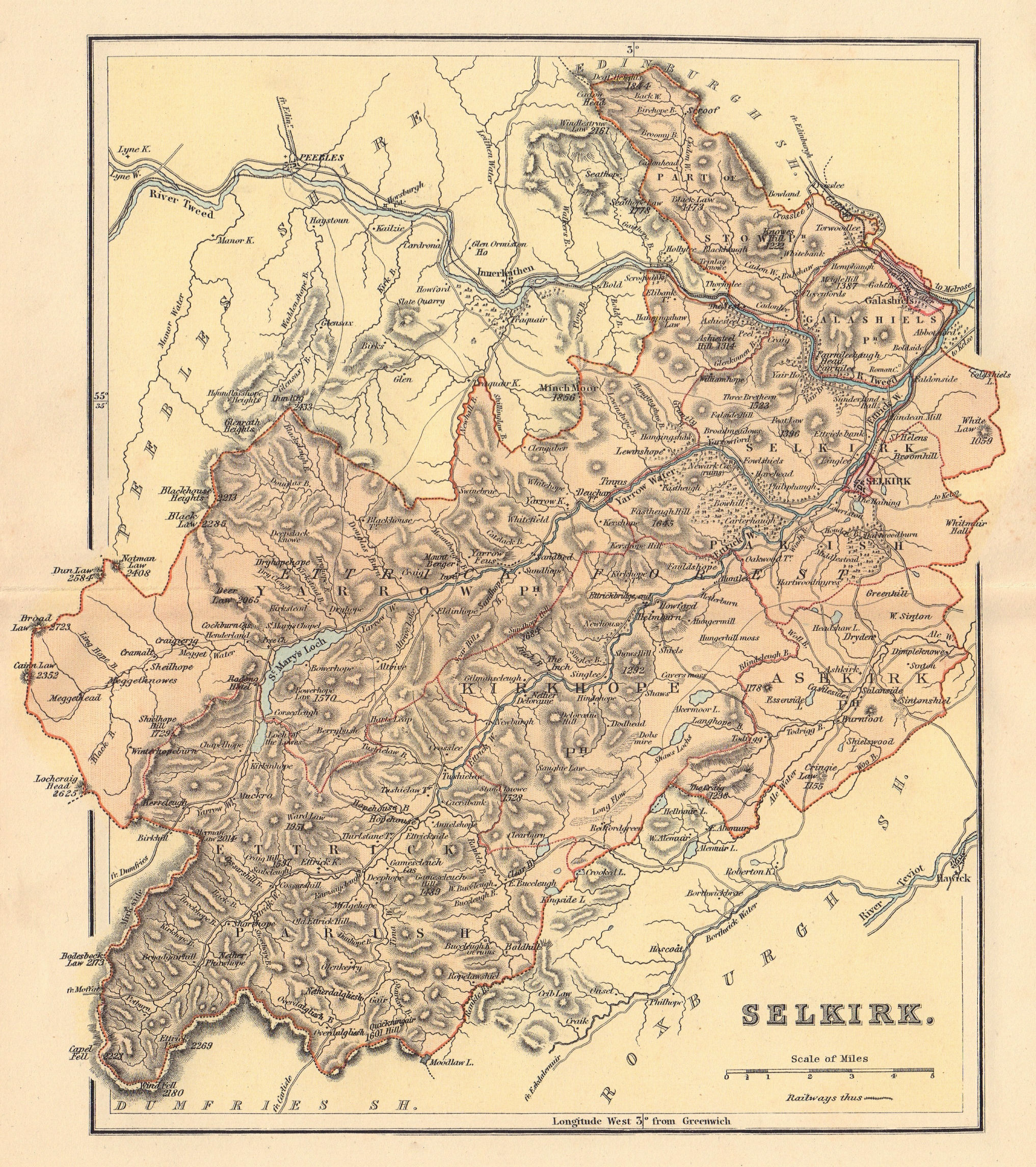
Yarrow itself is a narrow river which is a tributary of the River Tweed.  Here’s a late 19th-century map to help you to locate it—find St Mary’s Loch and follow the river line towards the Tweed.

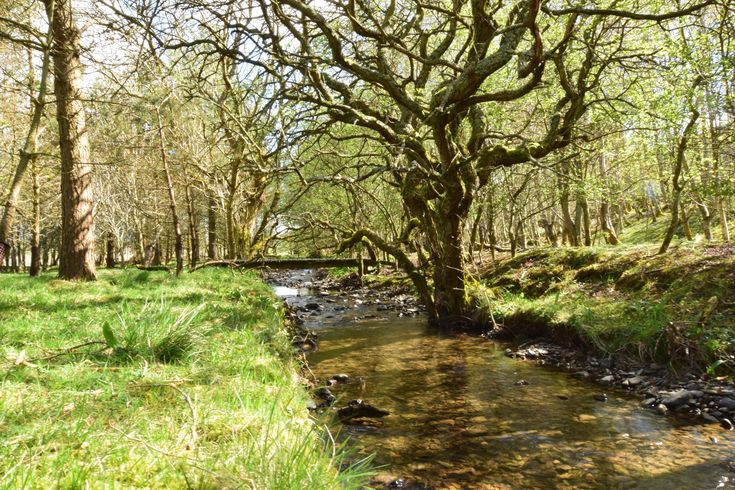
And here’s the Yarrow in full spate—appropriately in a rather stark early 20th-century photo—

The original ballad—and there are a lot of variant forms—tells the story of a lady to be fought over by a series of lords—and  their rival, in some versions, a “plough-boy lad of Yarrow” (to see variants, here are those published in FJ Child’s, 1825-1896, The English and Scottish Popular Ballads, 1882-1898, known as “Child 214” and by the title “The Braes of Yarrow” (that is, “The Hillsides of Yarrow”):   https://sacred-texts.com/neu/eng/child/ch214.htm  )  The rival defeats the lords, but is then treacherously stabbed from behind, often by the lady’s brother.  (You can hear the version I first heard and learned, sung by Ewan McColl, here:  https://www.youtube.com/watch?v=Vfsv8zUdqKM Be warned:  this performance is in line with older traditional performances, which I’ve always preferred, but might be rough, if you’re used to smoother folk singers.) 

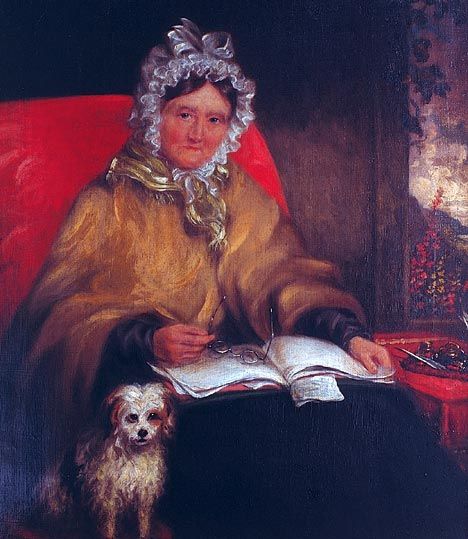
Wordsworth, and his sister, Dorothy, (1771-1855)

had made a brief tour of southern Scotland in the late summer of 1803 and had met Walter Scott there, fresh from publishing the first edition of Minstrelsy.  I suspect that the combination of their tour, that meeting, and Scott’s collection all came together in a poem which Wordsworth then wrote, probably in the early fall of 1803, “Yarrow Unvisited”.  I’ve always liked this poem because it’s not about what Wordsworth and Dorothy did see (this becomes the subject of the later “Yarrow Visited” of 1814—a good background article:  https://en.wikipedia.org/wiki/Yarrow_poems_(Wordsworth) ), but the fact that, because they didn’t see Yarrow, they could still imagine it—perhaps imagination, Wordsworth even suggests, is better, and seeing might spoil it—and because there was always the future possibility of actually seeing it.  (I am a big fan of Dorothy’s work—she had a wonderful eye for the natural world and a shrewd eye for people—and you can read her “Recollections of a Tour Made in Scotland” here:  https://www.gutenberg.org/files/42856/42856-h/42856-h.htm )

Here’s Wordsworth’s poem, the “winsome Marrow” is Dorothy, the word  “marrow” meanIng “equal/match”, being a description of the lady in the ballad:

“FROM Stirling Castle we had seen

The mazy Forth unravell’d,

Had trod the banks of Clyde and Tay

And with the Tweed had travell’d;

And when we came to Clovenford,

Then said my “winsome Marrow,”

“Whate’er betide, we’ll turn aside,

And see the Braes of Yarrow.”

“Let Yarrow folk, frae Selkirk town,

Who have been buying, selling,

Go back to Yarrow, ’tis their own,

Each maiden to her dwelling!

On Yarrow’s banks let herons feed,

Hares couch, and rabbits burrow;

But we will downward with the Tweed,

Nor turn aside to Yarrow.

“There’s Gala Water, Leader Haughs,

Both lying right before us;

And Dryburgh, where with chiming Tweed

The lintwhites sing in chorus;

There’s pleasant Tiviotdale, a land

Made blithe with plough and harrow:

Why throw away a needful day

To go in search of Yarrow?

“What’s Yarrow but a river bare

That glides the dark hills under?

There are a thousand such elsewhere

As worthy of your wonder.”—

Strange words they seem’d of slight and scorn;

My true-love sigh’d for sorrow,

And look’d me in the face, to think

I thus could speak of Yarrow!

“Oh, green,” said I, “are Yarrow’s holms,

And sweet is Yarrow flowing!

Fair hangs the apple frae the rock,

But we will leave it growing.

O’er hilly path and open strath

We’ll wander Scotland thorough;

But, though so near, we will not turn

Into the dale of Yarrow.

“Let beeves and home-bred kine partake

The sweets of Burn-mill meadow;

The swan on still Saint Mary’s Lake

Float double, swan and shadow!

We will not see them—will not go

To-day, nor yet to-morrow;

Enough if in our hearts we know

There’s such a place as Yarrow.

“Be Yarrow stream unseen, unknown!

It must, or we shall rue it:

We have a vision of our own,

Ah! why should we undo it?

The treasured dreams of times long past,

We’ll keep them, winsome Marrow!

For when we’re there, although ’tis fair

’Twill be another Yarrow!

“If Care with freezing years should come,

And wandering seem but folly,—

Should we be loth to stir from home,

And yet be melancholy;

Should life be dull, and spirits low,

’Twill soothe us in our sorrow

That earth has something yet to show,

The bonny holms of Yarrow!”

Although Wordsworth doesn’t use a ballad metre here, he cleverly echoes the sound of the 4-line stanzas in the older poem, keeping that word “Yarrow” at the end of each stanza, and rhyming or suggesting rhyme, in the second line to match it, following this Child version (214Q):

“There lived a lady in the West,

I ne’er could find her marrow;

She was courted by nine gentlemen,

And a plough-boy lad in Yarrow.”

No “smash and glitter” here, but, in the ballad, grimness and plainness and even fierceness, and, in Wordsworth’s poem, a quiet, playful thoughtfulness and, in neither, what Tolkien said of his daughter, Priscilla’s efforts with “The Ballad of the White Horse”, a need to “wade through”—although, one could always wade the Yarrow…

As ever, thanks for reading.

Stay well,

Watch your back,

And remember that there’s always

MTCIDC

O

PS

So that you can decide for yourself about that “smash and glitter”, here’s Chesterton’s poem for you:  https://www.gutenberg.org/files/1719/1719-h/1719-h.htm   It’s interesting that JRRT comments that he doesn’t think that Chesterton knew anything about the “North”—a subject upon which Tolkien himself was passionate—see his anger at the Nazis for their pirating of the subject, in his letter to Michael Tolkien, 9 June, 1941, Letters, 77)—as Chesterton boldly states, in his “Prefatory Note” he’s perfectly willing to admit that what he writes isn’t really historical and that he’s accepting myth even as he is making his own:

“This ballad needs no historical notes, for the simple reason that it does not profess to be historical. All of it that is not frankly fictitious, as in any prose romance about the past, is meant to emphasize tradition rather than history. King Alfred is not a legend in the sense that King Arthur may be a legend; that is, in the sense that he may possibly be a lie. But King Alfred is a legend in this broader and more human sense, that the legends are the most important things about him.”

PPS

If you would like to see Scott’s version of the ballad, it’s here:  https://www.gutenberg.org/ebooks/12882  All three volumes of the Scott are available here at Gutenberg.  They appear to be the 3rd edition of 1806.  For the various Child variants in Vol.3 of his collection, see:  https://archive.org/details/englishandscott07unkngoog/page/n8/mode/2up  This—and all 7 other volumes are available at the Internet Archive. 

PPPS

A “holm” in the Wordsworth is—I’m quoting “Etymonline” here:

“small island in a river; river meadow,” late Old English, from Old Norse holmr “small island,” especially in a river or bay, or cognate Old Danish hulm, from Proto-Germanic *hul-maz, from PIE root *kel- (2) “to be prominent; hill.” Obsolete, but preserved in place names, where it has various senses derived from the basic one of “island:” “‘raised ground in marsh, enclosure of marginal land, land in a river-bend, river meadow, promontory'” [“Cambridge Dictionary of English Place-Names”].”

Weathered Top

Tags

, , , ,

Welcome, as always, dear readers.

Although he denies, in an annoyed letter to Allen & Unwin, that “…I never walked in Wales or the marches in my youth…” (response to Ake Ohlmarks’ introduction to The Lord of the Rings, in which Ohlmark appears to have created an entire fictitious biography of JRRT, letter to Allen & Unwin, 23 February, 1961, Letters, 437), Tolkien did say that “I am very untraveled, though I know Wales…” and “I love Wales (what is left of it, when mines, and the even more ghastly sea-side resorts have done their worst)…” (letter to Deborah Webster, 25 October, 1958, Letters, 412).

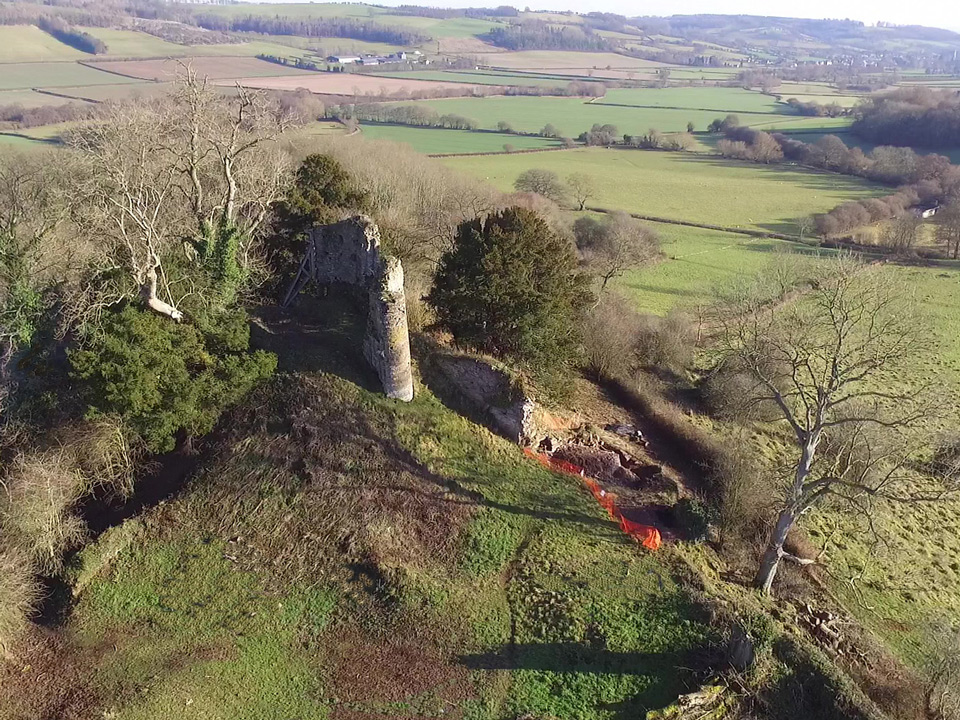
And these remarks came readily to mind when, last evening, I discovered Snodhill Castle, while watching an archeology program, Digging for Britain, on YouTube.  One of its segments took us to the borderland between England and Wales, where the Norman conquerors of England had sought to expand their territory, eventually building a large number of castles as strongpoints during their several centuries of takeover.

(This is from the Royal Commission on the Ancient and Historical Monuments of Wales website:  https://rcahmw.gov.uk/2018-year-in-review-our-improvements-to-coflein/ )

The early fortifications were once thought to have been what are called “motte and bailey”—

that is, a mound (“motte” is a late Latin word, mota, meaning “mound”) with a wooden tower on it with the addition of a palisaded lower court (“bailey” has a vaguer etymology, but I’m betting that behind it, ultimately, is Latin palus, “stake”, just as it is behind “palisade”).  For invaders who need an instant fort, this would be easy and quick to build—especially if you rounded up the locals (non-Normans, either Anglo-Saxons or Welsh, depending on your area of conquest) and made them build it for you under watchful Norman eyes.

In the 12th century, these were gradually converted to stone, as you can see at Launceston, in Cornwall.

Recent archeological work (including that done for Digging for Britain—which you can watch here:  https://www.youtube.com/watch?v=wM_jnNSpOoI ), however, suggests that Snodhill may have been built from stone, dating from its earliest beginnings, c.1067AD (?  the first documentary evidence appears to be from 1136—for more, see the wonderfully detailed report from Historic England here:  https://historicengland.org.uk/research/results/reports/7209/SnodhillCastlePeterchurchHerefordshireArchaeologicalArchitecturalandAerialInvestigationandSurvey   For a quick overview, see:  https://historicengland.org.uk/research/results/reports/7209/SnodhillCastlePeterchurchHerefordshireArchaeologicalArchitecturalandAerialInvestigationandSurvey ).

Here’s what it looked like in 1848, long after its eventual abandonment,

when most of the stone had been robbed out and used, in part, to build Snodhill Court Farm—

(this is from British History Online, which you can see here:  https://www.british-history.ac.uk/rchme/heref/vol1/plate-192  And, for more on the site, see:  https://www.snodhillcastle.org/history/ )

Here’s a recent photo of part of the site—

interesting, if you love castles, as I do, but more interesting, it seemed to me, was this aerial view—

which reminded me of:

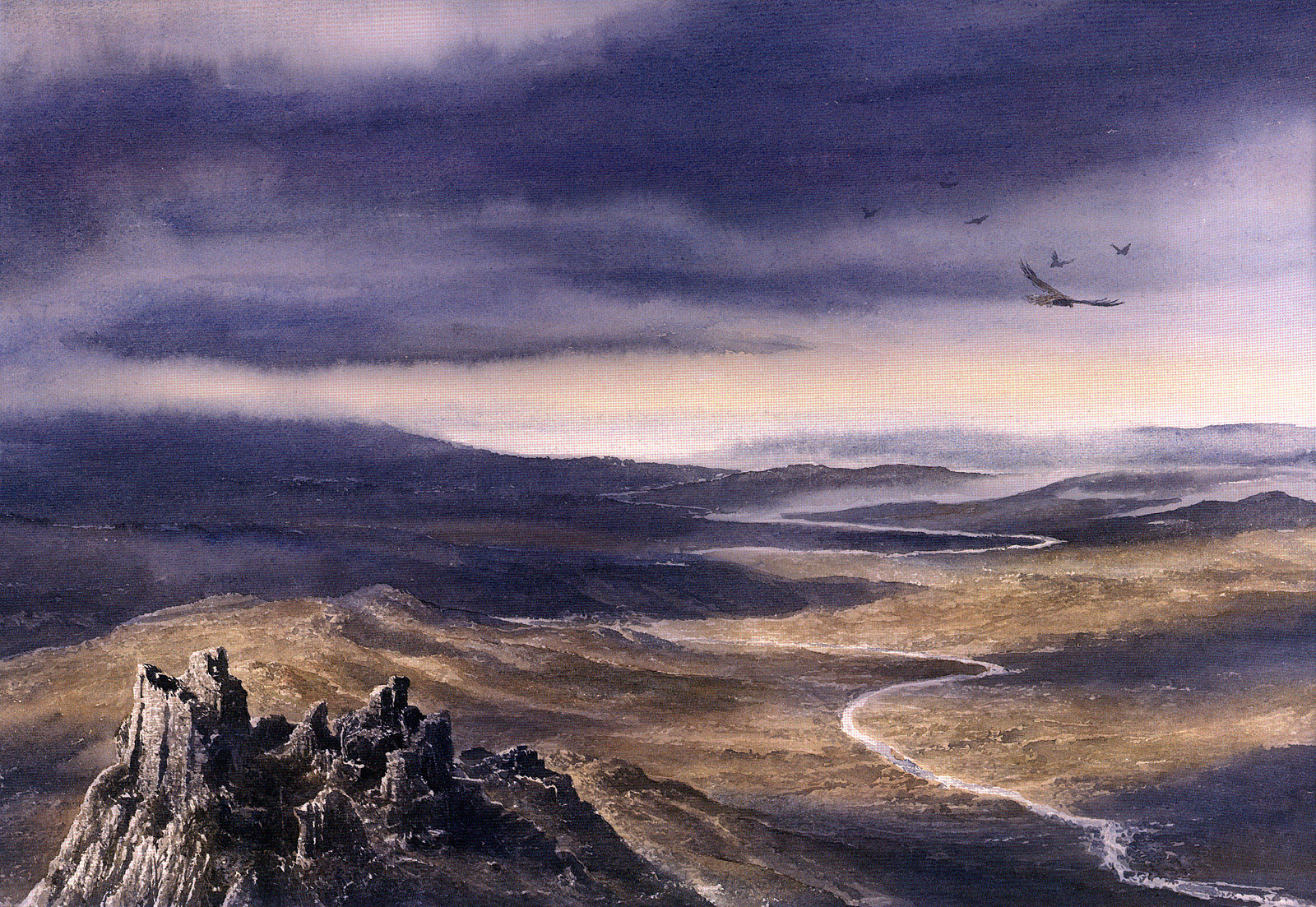
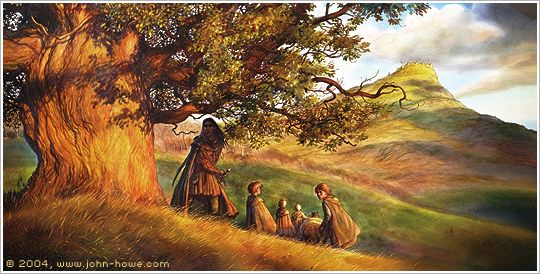
“But long before, in the first days of the North Kingdom, they built a great watch-tower on Weathertop, Amon Sul they called it.  It was burned and broken, and nothing remains of it now but a tumbled ring, like a rough crown on the old hill’s head.  Yet once it was tall and fair.”  (The Fellowship of the Ring, Book One, Chapter 11, “A Knife in the Dark”)

Aragorn is reassuring Merry, who has expressed an unease about the place—“It has a—well, rather a barrow-wightish look.  Is there any barrow on Weathertop?”—his reassurance being that it was never lived in and that it had once, in fact, been an important defensive feature from the early days of the northern realm of Arnor, “for the Tower of Amon Sul held the chief Palantir of the North…” (The Lord of the Rings, Appendix A, I, “The Numenorean Kings”, (iii) “Eriador, Arnor, and the Heirs of Isildur”)

(the Hildebrandts)

Here’s Alan Lee’s interpretation of Weathertop–

and John Howe’s greener, more “English” version—

and a second view from the air of Snodhill—

At the moment, I have no documentation that Tolkien ever walked or motored through western Herefordshire and spotted Snodhill off in the distance at the top of a long valley, but, combining his self-proclaimed love for, and knowledge of, Wales, I wonder—had he seen it once, on a tall hill, in its ruined state, and would he have remembered it and placed it on his growing mental map of Middle-earth and its long and troubled history?

Thanks, as ever, for reading.

Stay well,

When thinking of castles, remember this:

“The splendor falls on castle walls
And snowy summits old in story:
The long light shakes across the lakes
And the wild cataract leaps in glory.
Blow, bugle, blow, set the wild echoes flying,
Blow, bugle; answer, echoes dying, dying, dying.

O hark, O hear! how thin and clear,
And thinner, clearer, farther going!
O sweet and far from cliff and scar
The horns of Elfland faintly blowing!
Blow, let us hear the purple glens replying,
Blow, bugle; answer, echoes dying, dying, dying.

O love they die in yon rich sky,
They faint on hill or field, or river:
Our echoes roll from soul to soul,
And grow forever and forever.
Blow, bugle, blow, set the wild echoes flying,
And answer, echoes, answer, dying, dying, dying.”

(from Alfred Tennyson’s The Princess, 1847—this lyric added to the 1850 edition—which you can read here:  https://archive.org/details/tennysonprincess/page/n5/mode/2up )

And remember that, as always, there’s

MTCIDC

O

Setting Boundaries

Tags

, , , ,

Welcome, dear readers, as always.

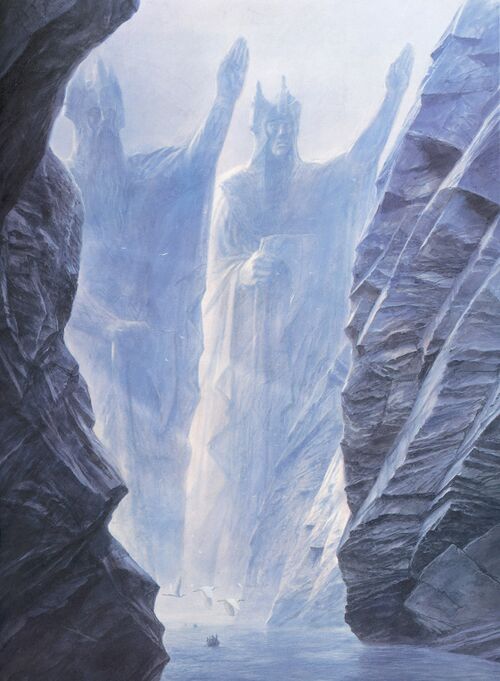
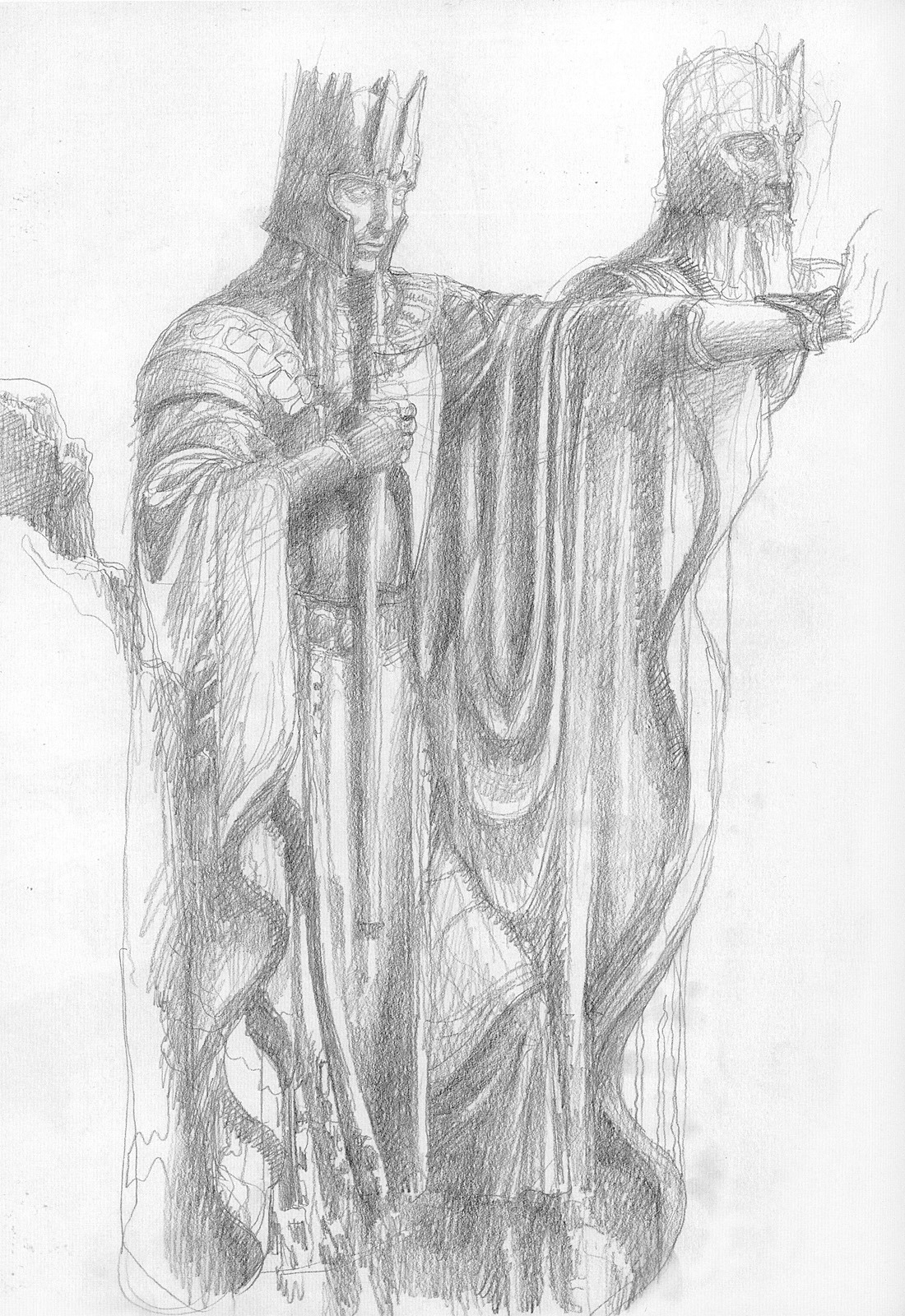
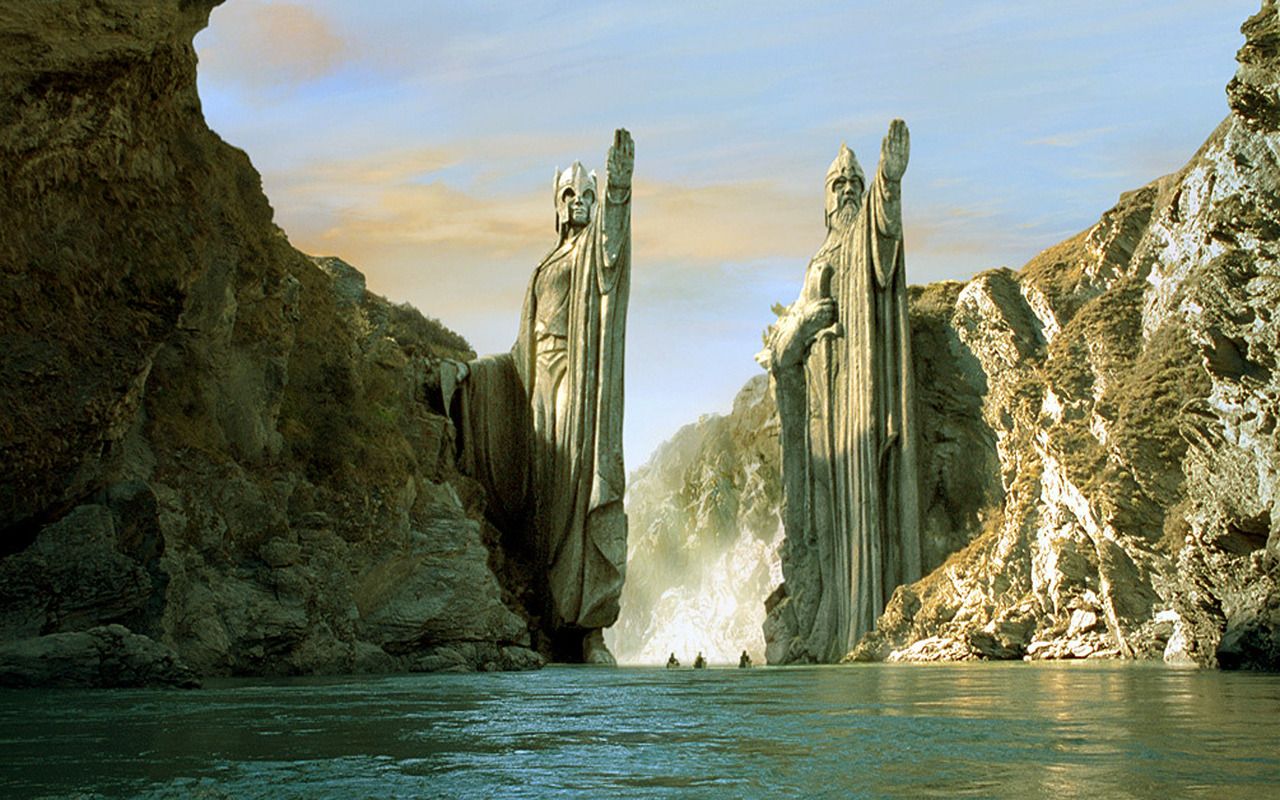
“ ‘Behold the Argonath, the Pillars of the Kings!’ cried Aragorn…

As Frodo was born towards them the great pillars rose like towers to meet him.  Giants they seemed to him, vast grey figures silent but threatening.  Then he saw that they were indeed shaped and fashioned:  the craft and power of old had wrought upon them, and still they preserved through the suns and rains of forgotten years the mighty likenesses in which they had been hewn.  Upon great pedestals founded in the deep waters stood two great kings of stone:  still with blurred eyes and crannied brows they frowned upon the North.  The left hand of each was raised palm outwards in gesture of warning; in each right hand there was an axe; upon each head there was a crumbling helm and crown.  Great power and majesty they still wore, the silent wardens of a long-vanished kingdom…” (The Fellowship of the Ring, Book Two, Chapter 9, “The Great River”)

There are a number of illustrations of this, from the Hildebrandts

to John Howe

to Alan Lee

to J.C. Barquet

and more, including in Jackson’s The Lord of the Rings,

where, in the sometimes perverse method of the films, one figure has a sword, rather than the axe which Tolkien had specifically described (true of the Alan Lee sketch, as well).  Reviewing this short list, however, the first two of these seem to portray the kings with a more peaceably raised left hand, whereas the others more clearly portray what the author wanted:  “The left hand of each was raised outwards in a gesture of warning…”

These figures, in fact, are boundary markers, set up by the Gondorian king Minalcar (later crowned as Romendacil II) some time during his regency (TA1240-1304—see The Lord of the Rings, Appendix A, (ii) “The Southern Line[:] Heirs of Anarion” and (iv) “Gondor and the Heirs of Anarion”) and the gesture is clearly meant as a warning to potential invaders.

More than once, in past postings, I’ve suggested influences upon Tolkien, from The Red Fairy Book of his childhood,

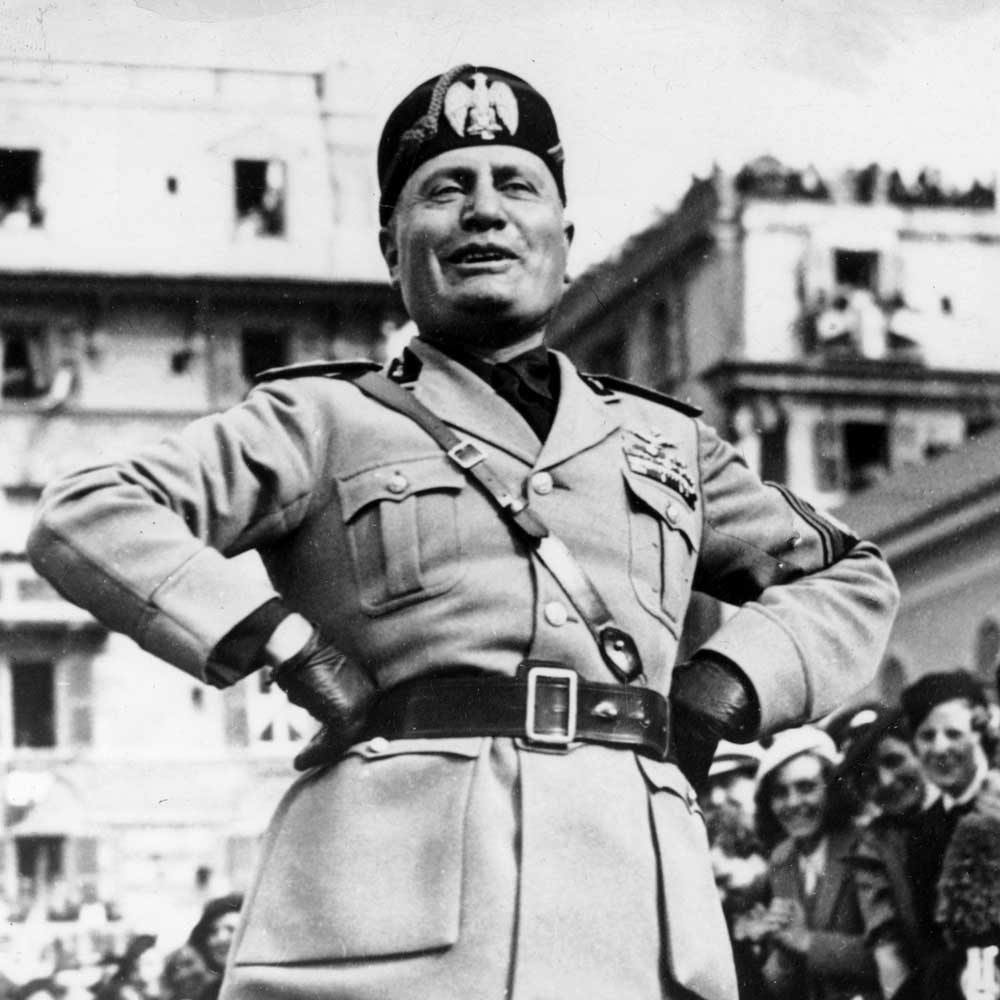
to Mussolini as a possible Saruman model.

In this posting, however, I’m moving forward, perhaps seeing a Tolkien model for something erected long after Tolkien’s death in 1973.

It begins with a bit of history in JRRT’s lifetime.

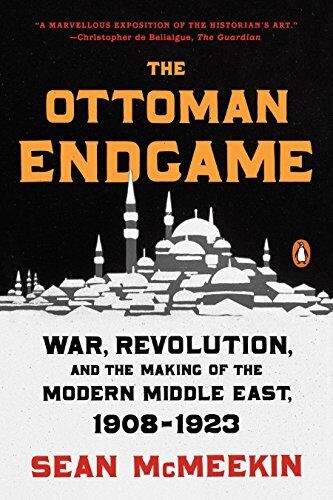
At the end of the Great War (aka “World War I”), the Middle East, the majority of it the fading Ottoman Empire, was very much in flux, with France and Britain struggling diplomatically to extend their influence over Syria, Lebanon, and the area then known as Palestine, as well as farther inland.  (For more on this, see David Fromkin’s The Peace to End All Peace, 1989,

and Sean McMeekin’s The Ottoman Endgame, 2016)

Farther north, and encouraged by the victorious Allies, Greece had invaded Turkey, hoping to expand Greece beyond its current boundaries.

This led to a number of bloody encounters between the two sides, with the Greeks advancing to within 50 miles (80km) of the capital at Ankara in the late summer of 1921 before being stopped at the climactic battle in the area of the Sakarya River.  When the Greeks finally withdrew, they had suffered 23,000 casualties (plus perhaps as many as 15,000 prisoners) against Turkish totals of 22,000 casualties and 1,000 prisoners.  This withdrawal turned into a scorched earth retreat towards the Aegean coast and ultimate evacuation of the Greek army along with thousands of civilians from Asia Minor.  (For more see:  https://www.historynet.com/the-battle-that-made-kemal-ataturk/

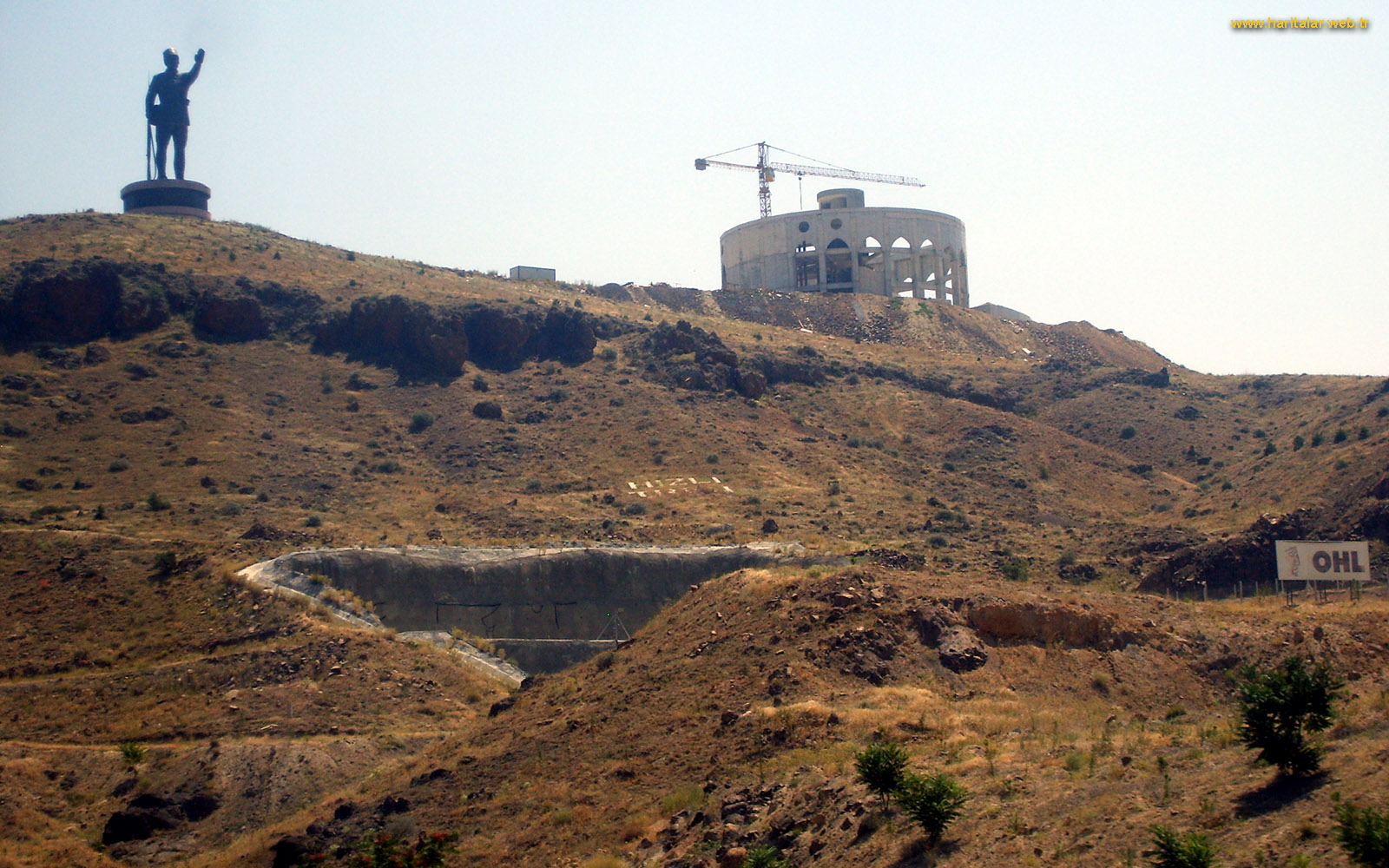
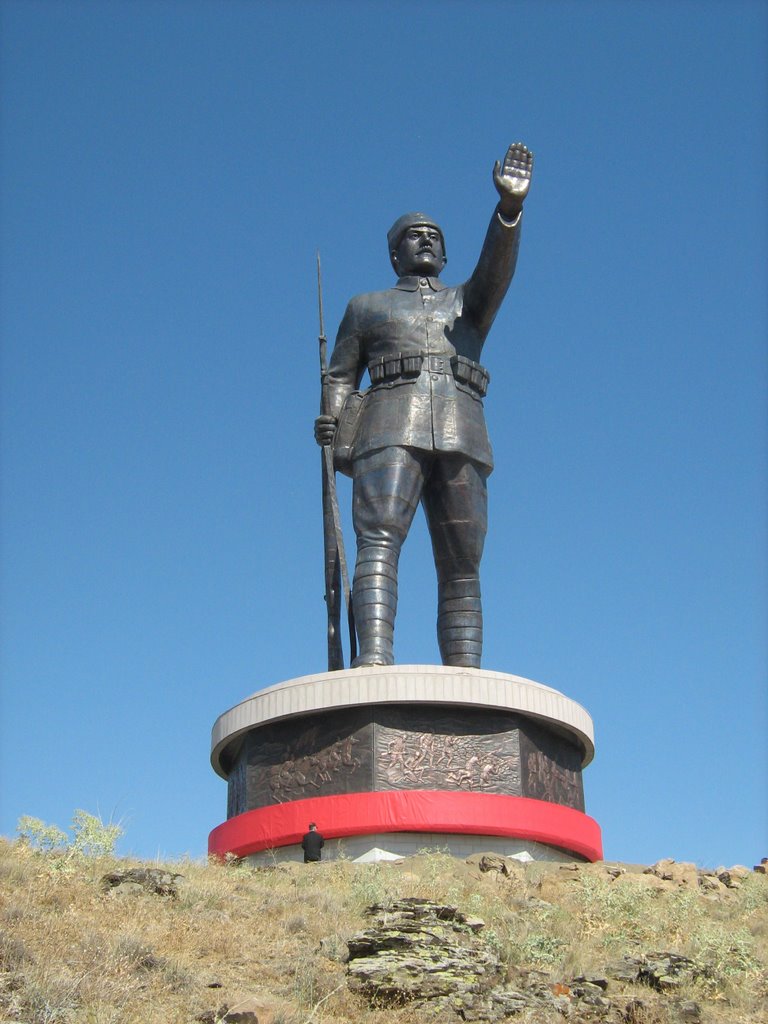
In 2015, the Turkish government established the Battle of Sakarya National Historic Park, but, in 2008, several private companies had already commemorated the battle by commissioning a statue of a Turkish infantryman to be placed on a height (Karaltepe) looking westward in the direction from which the Greek army had come.

 It’s not a boundary marker, per se, as the Argonath is meant to be, but, by marking the line of Turkish resistance to the Greek invasion, it has somewhat of the same effect.  And, though not gigantic, like the Gondorian figures, it’s over 100 feet (31m) tall on its base and the pose certainly reminds me of what Frodo sees in the river ahead,

even if it doesn’t produce the same emotional reaction as it did members of the Fellowship:

“Awe and fear fell upon Frodo, and he cowered down, shutting his eyes and not daring to look up as the boat drew near.  Even Boromir bowed his head as the boats whirled by, frail and fleeting as little leaves, under the enduring shadow of the sentinels of Numenor.”
Had the designers of the Turkish monument read The Fellowship of the Ring, or perhaps had seen the Jackson movie?

Thanks for reading, as ever.

Stay well,

What ancient monument might awe you?

And remember that, as always, there’s

MTCIDC

O

ps

In answer to my own question, I’ve always loved this—

It’s often called “the mourning Athena”, but I imagine that the goddess isn’t grieving, but reading a boundary stone and, armed with helmet and spear, seems ready to defend her city from any who would violate that boundary.  It’s nowhere near the monumental size of those images discussed above, being only about 1 ½ feet (.48m) high, but, with a goddess, does size matter?