• About

doubtfulsea

~ adventure fantasy

Category Archives: Narrative Methods

Tracking

09 Monday Feb 2015

Posted by Ollamh in Imaginary History, J.R.R. Tolkien, Maps, Narrative Methods, Research

≈ Leave a comment

Tags

Adventure, Book, Exploration, Fantasy, Fiction, History, Maps, Tolkien

Dear Readers,

While working on Across the Doubtful Sea, the Doubtful Sea series, and a forthcoming series that takes place in an alternate medieval Russia, we discovered for ourselves what our friend J.R.R. Tolkien worked on meticulously during the course of his work—the importance of maps in a story, whether they are real, fictional, or a mixture of both, in the case of our work. “If you’re going to have a story,” he said, “you must work a map; otherwise, you’ll never have a map of it afterwards.”

This became apparent when we were working on Across, using previously drawn maps of the theoretical Terra Australis: 

image1 Finaeus_antart

To give us a sense of where our characters and we were (and still are) going. 

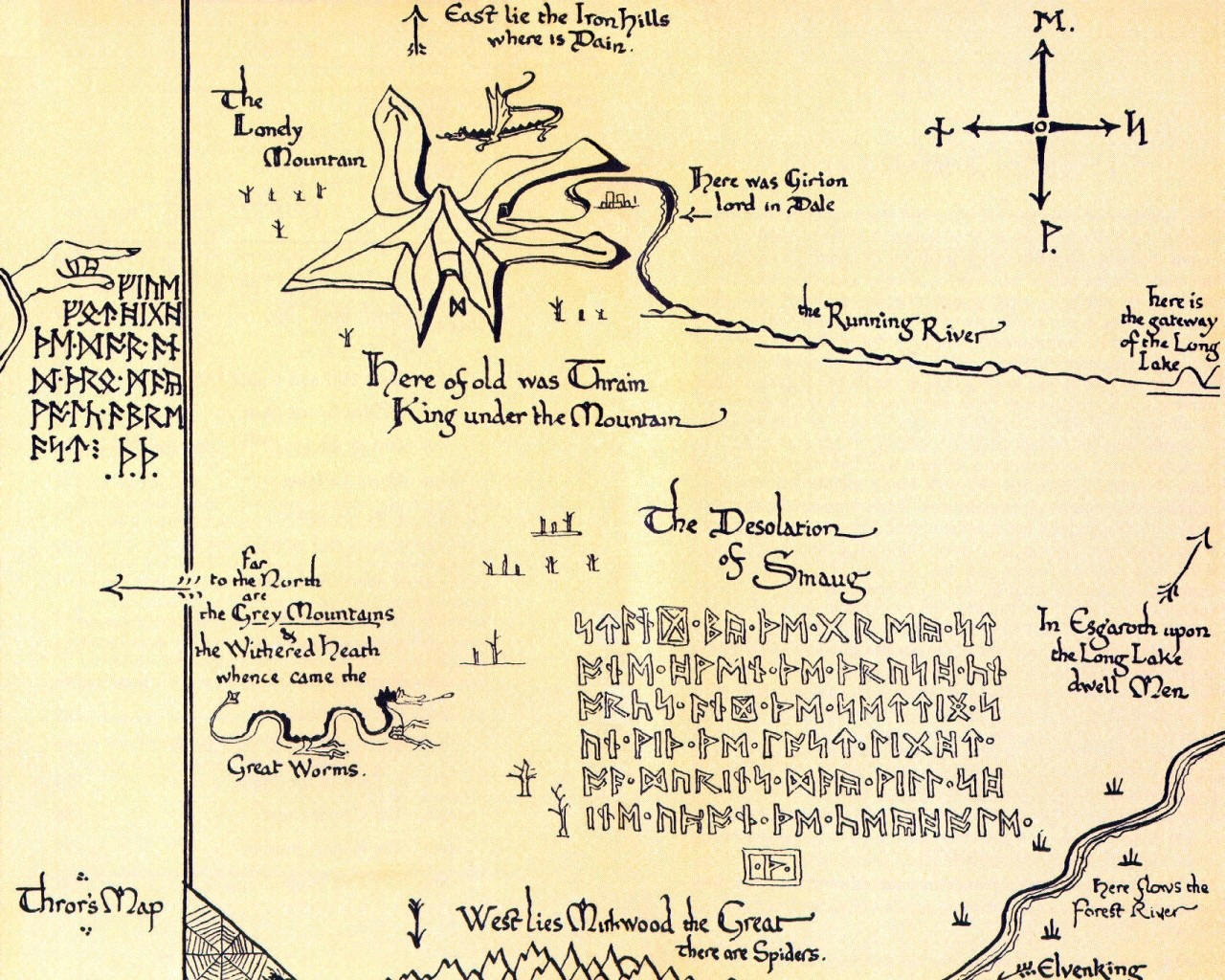
When we began talking about the geography of our alternative Russia, we began to ask ourselves, first, how do you make a map in relation to a story? It was a start to look over the shoulder of JRRT, and to see what was done before us. From there, we go on to ask, what is it that made Middle-earth Middle-earth? It’s clear that Tolkien took a considerable amount of time and care to chart out his elaborate fictional world, from Bilbo’s own maps of the Shire and the world beyond.

imgE1 

Some were detailed enough to follow the day-by-day travels of the Fellowship, while others were used to record specific moments in time, both historically and geographically.

In his letters, Tolkien often addressed the subject of his maps. Much of his enthusiasm in creating maps for his worlds had to do with the pleasure of doing so, and the satisfaction of building the physical structure of such an elaborate story. He was, however, sometimes overwhelmed by them—perhaps as if the more landscape he made, the more he had to carry—and said to his publisher that it was a matter of a “lack of skill combined with being harried” (Tolkien, letter 141). He was fortunate to have, in this aspect of his work, collaboration not unlike ours—his son, Christopher, was a talented cartographer, and after discussing the landscapes with his father, would draw the intricate world in accordance with Bilbo and Frodo’s adventures.

middle_earth_map

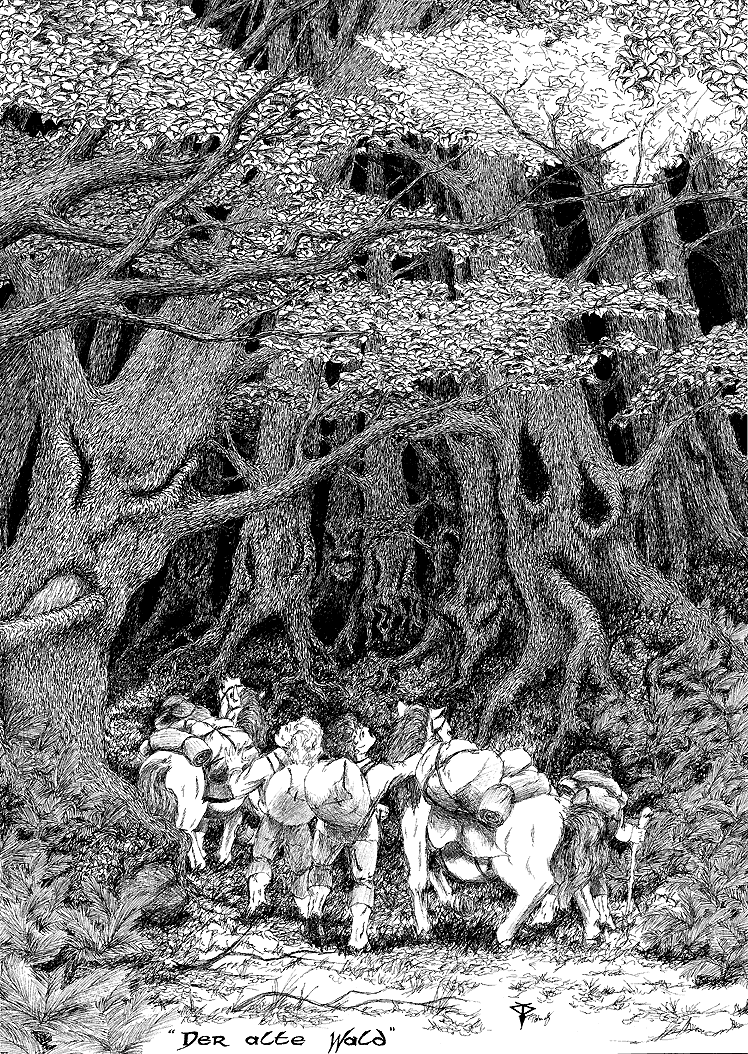
Tolkien, by creating the maps first, created a landscape which seems to exist not only before the story, but is bigger than the story. When Frodo travels eastwards, for example, there is more of the Shire and beyond than that which he actually travels over. In our case, it was rather like someone laying track while driving a train over it. The tracklayer decides where the train will go, but, looking back, can see a landscape left behind as it moves on. In this way, the story and its landscape are written as they progress, and a narrative railroad is left behind on which readers may ride. And so, unlike Tolkien, by constructing a map this way, we appear to be providing primarily a view from the track itself. If there’s more landscape, we can only know it from the map we’ve constructed afterwards.

oldforest 

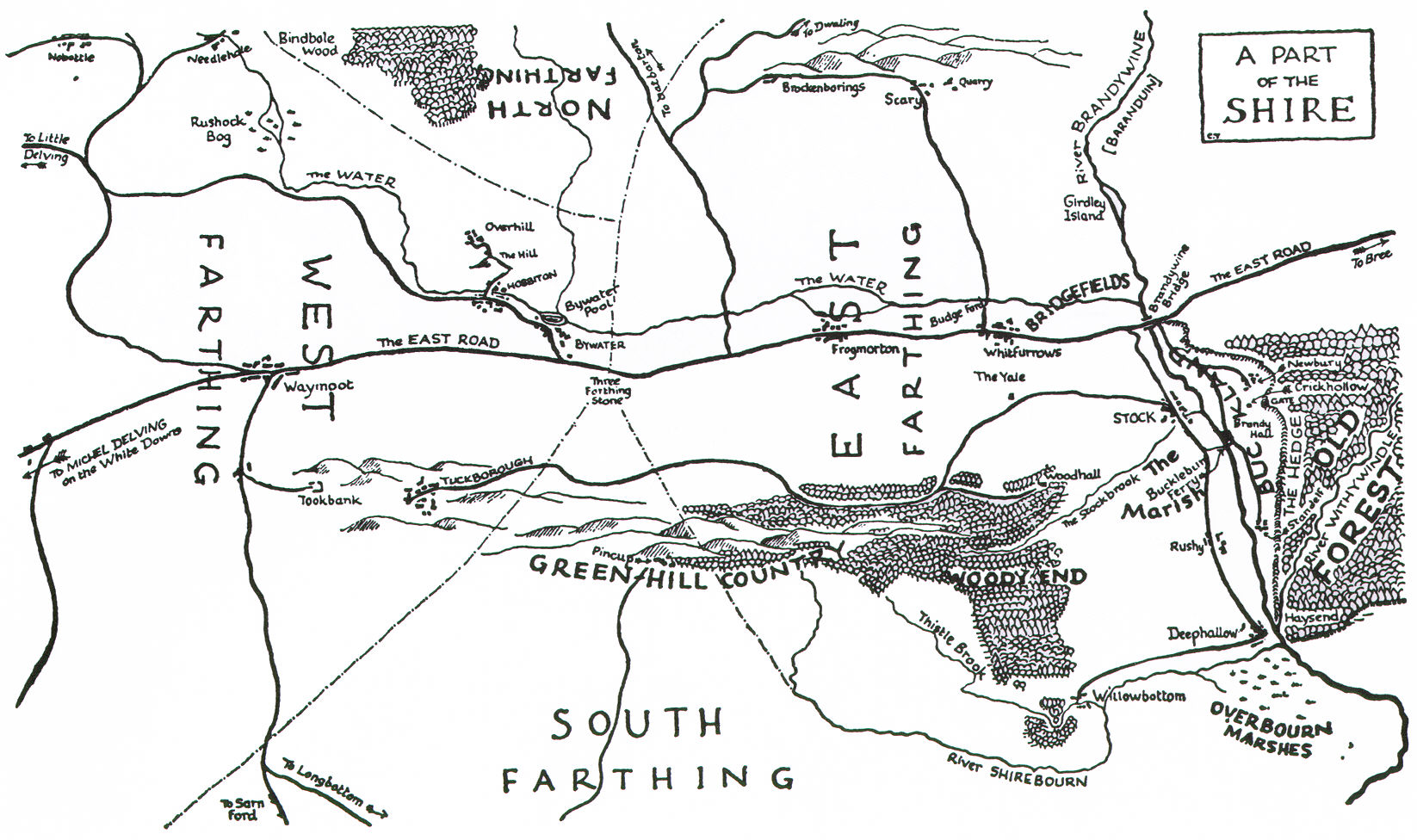
With the previously-drawn map, we can see the journey, in contrast, from a bird’s eye view.

shire_map

But this leaves us with a question: is it best to construct a bird’s eye view first, then to lay the track, or to lay track and then to look back?

This brings us to a second question: by either method, how does one make a fictional map credible?

MTCIDC,

CD

PS

For an example of simultaneous train-driving and track-laying, see Wallace and Gromit, The Wrong Trousers.

Terra (Increasingly) Cognita

30 Friday Jan 2015

Posted by Ollamh in Imaginary History, Military History, Narrative Methods, Terra Australis

≈ Leave a comment

Tags

Adventure, Book, Exploration, History, Research, Terra Australis, Writing

Dear Readers,

     Welcome, as always. Now that Across the Doubtful Sea is out in print on Amazon, we’ve turned our attention towards two projects:

  1. the “prequel”, Empire of the Isles
  2. editing and publishing the complete draft of the first book in a new series, Grey Goose and Gander, which is set in an imaginary medieval Russia. (Yes—it’s a distance from an alternate 18th-century Pacific, but we love Russian literature, both poetry and novels, and we especially love Russian fairy tales and that outstanding illustrator, Ivan Bilibin.) More on that series in future blogs!

     Among the main characters in Empire is Lucien de St. Valerien, the father of Antoine, from our first book and we follow his adventures in two periods: as a senior cadet 30 years or so before Across and then as a captain, 10 years before. The latter will lead right into Across and explain various things only hinted at in that volume in the series.

As his adventures take place in our imaginary Pacific (called “The Calm Sea”) and on our imaginary Terra Australis, we’ve been busy researching and inventing more geography. In doing so, we’re aware that we are violating a dictum which JRRT once set down about creating and mapping:

“If you’re going to have a complicated story you must work to a map; otherwise you’ll never make a map of it afterwards.”

That we are doing so clearly shows the larky beginnings of this project as well as our desire to allow the Muse to take the story (and the storytellers) where she will.

     Although we follow this ideal of inspiration, we would also agree with the Victorian English novelist, Anthony Trollope, who said of inspiration:

“To me it would not be more absurd if the shoemaker were to wait for inspiration, or the tallow-chandler for the divine moment of melting.” (A particularly apropos statement for a man with the goal of writing 10,000 words a day!)

In our case, however, we are using our research as a substitute Muse. And what particularly strikes us at the moment is the interesting clash of world views of early geographers on the subject of Terra Australis.

     As we’ve mentioned before, Terra Australis, as a concept, dates back at least to Aristotle in the 4th century BC and the concept of the need for a balance of continents. If there’s a big one on the north side of the earth (call it Terra Borealis), it would be necessary, for the equilibrium of the earth to have a second one on the south side (Terra Australis).

     The next step in the thinking, however, can diverge. There are those who imagined that such a place would resemble the continent on the northern side, having as many peoples and cultures. (This idea appears to be associated with Crates of Mallus, who lived in the 2nd century BC.) In our imaginary world, this is the standard belief, just as it was in the real pre-Captain Cook 18th century Europe. (The idea was contested, however, as it is in our books.)

     In our research, however, we’ve also happened upon a second view. This was popularized by a 5th-century AD scholar named Macrobius, who wrote a commentary on the last-century BC Roman author, Cicero’s, “Dream of Scipio”, itself the last part of Cicero’s longer philosophical work, De Re Publica.

     Cicero begins with the theory of more than one inhabited continent, but then shifts to describe an earth divided into five climate zones (reading from top to bottom: cold (and so uninhabitable), temperate, torrid (uninhabitable), temperate, and cold once more. This zonal view if followed by Macrobius and a number of the maps which appear in the earliest surviving manuscripts (which date from the period before 1100 AD) shows this very clearly.

macpre1100

     What impressed us about this idea was how it mixed what we know to be true in the real world—uninhabitable poles (as some of the maps say, terra nobis incognita frigida—“a frozen land unknown to us”)

droppedImage

with temperate regions. It then added, however, a central belt simply too hot for human existence. (Was this derived from early reports of the Sahara?).

     We’re still researching and creating, but our Terra Australis combines the two world views: we have a habitable southern continent, but one which is gradually falling under the control of a god—Atutlaluk—whose power is gradually turning Terra Australis into terra frigida—although it is gradually turning from incognita “unknown” to cognita “known” to us—and will be to you, in our next Across book, Empire of the Isles.

Thanks, as always, for reading.

MTCIDC

CD

PS

For a detailed and very interesting article on Macrobius and maps, see Alfred Hiatt, “The Map of Macrobius before 1100” available as a download at http://dx.org/10.1080/03085690701300626.

Sequels and Prequels

05 Monday Jan 2015

Posted by Ollamh in Narrative Methods, Research, Terra Australis, Writing as Collaborators

≈ Leave a comment

Tags

Collaborating, Fantasy, Fiction, History, Writing

Dear Readers,

Welcome, as always!

As we put the finishing touches on Across the Doubtful Sea (we’ve just realized that we need to have a title on the spine for the print version—oh, and a bar code on the back–yep, the things we never thought about when we were reading someone else’s book), we’ve already begun work on the second in this series, entitled Empire of the Isles.

So, where are we going in this book? Logically, you might say that we should continue in chronological order, begin the second book where the first concluded. After all, at the end of the second book of The Fellowship of the Ring, JRRT didn’t double back into earlier times to the previous defeat of Sauron in which he lost finger and ring and gradually work up to Gollum, to Bilbo, to Frodo . Elements of the past of Middle Earth, of course, appear everywhere in the text, often in geographical features like barrows, the Greenway, and Weathertop, very much the way the past was always present in JRRT’s England in barrows and stone rings and Hadrian’s Wall and castles and the ruins of monasteries. For us, this is one of the book’s great attractions and strengths . The specific past of the ring itself appears in “The Shadow of the Past” (with its resonant title, suggesting not only that the past casts a shadow upon the present, but that, involved in all, is The Shadow—Sauron) and “The Council of Elrond”, chapter 3 of the first book and chapter 2 of the second.

But is that where we want to go?

And, the answer is, no. Instead, we’ve decided to go into the past, but not just in flashbacks or explanations. As we wrote Across, we found it necessary to make reference to earlier events, but this was always done in bits and pieces, where needed for the present narrative. (No spoiler alert here—although this makes an interesting challenge in essay-writing for us: how can we discuss that narrative without too much specificity? How can we inform but tantalize at the same time?) Suppose, however, that we wrote a second book whose plot was based entirely upon events which had happened before Across.

We knew from Across that our main male protagonist, Antoine de St. Valerien, was in the Calm Sea (our Pacific) in part in search of his father, Lucien de St. Valerien, who had disappeared there on an earlier mission. Instead of fragmentary glimpses of his father and his doings, as was the case in Across, why not make the whole next book about him?

As we have written in an earlier posting, a basic premise of our trilogy is that Terra Australis, the southernmost continent which explorers and cartographers and sometimes corporations and governments once believed existed , is, in fact, real. (For those of our readers who would like to know more about this idea, we recommend: William Eisler, The Furthest Shore: Images of Terra Australis from the Middle Ages to Captain Cook, David Fausett, Writing the New World: Imaginary Voyages and Utopias of the Great Southern Land, Glyndwr Williams, The Great South Sea: English Voyages and Encounters, 1570-1750, among many other interesting works.)   In our contemporary world, this is Antarctica, of course.

antarctic2_624x420

In this alternative world, however, it is not an endless sheet of ice which covers a land mass of rock, but rather the place which those earlier explorers and others believed it to be, a country with a mixed climate, fertile land, and growing seasons. In our imaginary world, however, things are changing, owing to the influence of the people who live at its center, the Atuk, and to their god, Atutlaluk, whose power lies in cold and whose chief followers can mobilize the elements of winter against their enemies. Opposed to the Atuk are the Matan’a’e amavi’o, a Polynesian people who have long inhabited a string of a dozen islands to the north and who have more recently colonized the western fringe of Terra Australis.

Much of this was already in place in Across, but now we could use this second novel to fill in so much more: the history of colonization, the beginnings of the war between the Matan’a’e amavi’o and the Atuk, more about the Atuk, who they are, where they come from, all as a background to the story of Lucien and the part he plays in the greater narrative of the struggle between these peoples.

As we write Empire of the Isles, we’ll do what we’ve done for Across and invite you into the literary equivalent of backstage, in hopes that you’ll enjoy knowing more about where it all comes from and how it all comes about.

Thanks, as always, for reading.

MTCIDC

CD

Research

09 Tuesday Dec 2014

Posted by Ollamh in Narrative Methods, Research, Terra Australis, Writing as Collaborators

≈ 1 Comment

Tags

Exploration, Fiction, French Navy, History, Napoleonic, Research, Royal Navy, Sea, South Pacific, Terra Australis, Warship, Writing

Dear Readers,

Welcome, as always.

In this post, we want to talk a little about research. We’ve already shown you bits and pieces of what the world of Terra Australis and its peoples look like to us—and we hope to you– but we want to add a bit about some of our sources.

As we’ve said in an earlier blog, the idea of setting our Doubtful Sea series mainly in the Calm Sea (Pacific in our world) and on Terra Australis (which only exists as the forbidding Antarctica for us), was just a lark, a spur of the moment thing. We had already known a little about the French admiral and Pacific explorer, de Bougainville. Most of what we knew about him, however, came from his early career as an aide de camp to the Marquis de Montcalm, the commander of French regular troops in New France during the bulk of the French and Indian War (1756-59). (He left behind journals of that time, which have been published in English as Adventure in the Wilderness, translated by Edward P. Hamilton and published by the University of Oklahoma Press.)

And we were aware of Captain Cook, who was also involved in that war and even must have sat across the St. Lawrence River from de Bougainville at the siege of Quebec, in 1759, although neither would have been aware of the other at the time.

So what then? Lots of conversation first, based upon nothing more than our imaginations. Who would our characters be? Where would our characters go? What might happen to them?

As we talked, we began to see that, now that we had a very general idea of the beginnings of a book—and, soon, a series– we needed to know more—lots more. And here was where our plan to base our new, alternative world on the actual later 18th century of the actual world quite easily supplied a great deal of useful knowledge. We embarked upon a period of research even as we began to write a draft of the first chapters.

Because we knew so little, our questions to ourselves could have seemed as endless as the Pacific to those first explorers, but we quickly found that they could easily be grouped into a small series of main categories:

  1. 18th-century European Pacific exploration
  2. the French and English navies of the time
  3. the history of Polynesian exploration and colonization of the Pacific
  4. Terra Australis/Antarctica
  5. languages/cultures as models for Pacific protagonists/antagonists

And this research quickly proved helpful in two directions. First, it began to answer our questions about the 5 categories. Second, the answers would inspire us, not only to ask further questions, but to further creativity.

It was important, however, to feel a certain wariness about research. One of us, some years ago, began work on a novel, called Swallows Wintering, set during the American Revolution. Chapters were written, and things seemed to be humming along, but then there was a question and everything stopped for more research. And more research. And then everything stopped for good. Insecurity triumphed, perhaps? A lack of conviction disguised as a need for further sources and greater “authenticity”? (And here we might want to consider just how much “authenticity”—maybe “accuracy to the time” would be a better way of saying this—one needs even in an historical novel. You don’t want to have an Elizabethan using safety matches, as we once read in a mystery set in the late 16th century, but, perhaps it’s possible to suggest a period without being slavish about it? This is, we think, worthy of a long essay on its own!)

With that previous experience in mind, perhaps it was just as well that we decided not to write an actual historical novel, although we can certainly see that there are lots of possibilities there (we might cite our ancestor-collaborators, Nordhoff/Hall, and their series on the Bounty mutiny and its consequences, for an example). By making this an alternative world, we could use whatever we liked from our world, but never feel quite so bound as one might in a work of historical fiction.

We are both very visual people (and, we suspect, so is our audience), so, as we wrote and assembled a little library of what appeared useful books, we really began by spending hours on Google images. We searched for everything from “Antarctica” to “Versailles”, from “catamaran” to “frigate”, from “Cape Horn” to “Captain Cook” and much more besides, gathering several hundred illustrations, a few of which have appeared in our previous blog entries. (And one of which will appear, thanks to the good folk of the National Maritime Museum in London, on the cover of Across the Doubtful Sea in just a week or two.)

As well, we extended our on-line research to include articles on Polynesian and Inuit history and languages and cultures, the religions of the Pacific, the writing system of Rapa Nui (Easter Island), along with material on real Pacific explorers like La Perouse and Wallis, and the bibliographies attached to those pieces gave us more ideas for further research. (We are aware, of course, of the danger of unsubstantiated or even wrong material on the internet, but, because we were—and are—engaged in work s of alternative- world fiction, rather than historical scholarship or even historical fiction, this was not an active concern.)

In our own reading, we very much enjoy learning about earlier authors and how they wrote their books. And so, in these posts, we want to provide you, our readers, with information which, before you read our first book, we hope will entice you to do so and, after you’ve read it, will help you to see something of how we wrote it.

We intend, after Across the Doubtful Sea appears, to include a complete bibliography—including a list of websites and their addresses we found useful or just too interesting not to read (and everyone who surfs the web knows the dangers of this)—in our blog, but, for now, here are a few books we found particularly stimulating/useful. As we said in an earlier post, we experienced some difficulty in our research, owing to the period in which we were working, the 1750s to about 1790. There was plenty of material for the Revolutionary and Napoleonic Wars, 1793-1815, but much less easily available for this earlier time. Our advantage in alternative writing, however, stood us in good stead here: we didn’t feel that we had to be accurate down to the last fact, and we could use what we learned from this slightly later time to flesh out what we could discover of the earlier time. So, for example, the Osprey books on Napoleonic naval wars—books like Terry Crowdy’s French Warship Crews 1789-1805, or Gregory Fremont-Barnes’ Nelson’s Officers and Midshipmen and Nelson’s Sailors, or Chris Henry’s Napoleonic Naval Armaments 1792-1815–proved very helpful in getting a general sense of life on board the warships of that world. We would add, from a Time/Life series, Henry Gruppe’s The Frigates, as well as books like Iain Dickie et al., Fighting Techniques of Naval Warfare 1190BC to the Present, Nicholas Blake and Richard Lawrence’s The Illustrated Companion to Nelson’s Navy, and Brian Lavery’s Nelson’s Navy.

As for Pacific exploration, an easy read is Alistair MacLean’s Captain Cook (with Peter Beaglehole’s more scholarly work for those who want to learn more). For two different views of its consequences for the native cultures and peoples , we would recommend Alan Moorehead’s The Fatal Impact: The Invasion of the South Pacific 1767-1840 and Bernard Smith’s European Vision and the South Pacific. For a more general view, we would add the relevant portions of Erik Newby’s The Rand McNally World Atlas of Exploration.

This has been a long entry, and we never intend to overwhelm our readers, so we’ll end here for the present, with promise of more, both on books and on websites, in our next.

Thanks, as ever, for reading.

MTCIDC

CD

What More About Villains?

28 Tuesday Oct 2014

Posted by Ollamh in Imaginary History, Narrative Methods, Villains

≈ Leave a comment

Dear Readers,

Happy Halloween! This is a great holiday for people interested in fantasy and adventure. After all, you’ve got witches, ghouls, vampires, and even a Headless Horseman– villains!6960244159_7f66a0d317_z

(Or just children in really great costumes.)

And speaking of villains, we will.

In our last, we talked in a general way about our villains– Frenchmen and other. Now, we want to talk more specifically about Other.

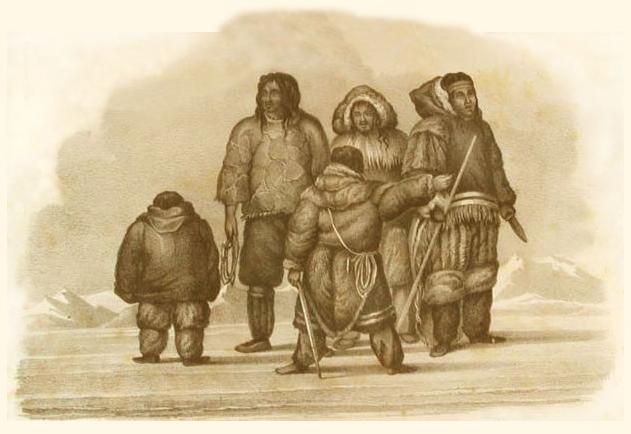
Because Terra Australis is based upon the real Antarctica, the idea of cold, in some form,  was a ready influence. And so, there appeared the Atuk, the servants of a god who embodies cold. This led us to imagine what they might look like. At first, we thought perhaps something like Inuit: all furs and big boots and slitted wooden sunscreens. And that might be an idea for the next book, Empire of the Isles. Here are a couple of those possibilities:

IMG_0754

IMG_0745

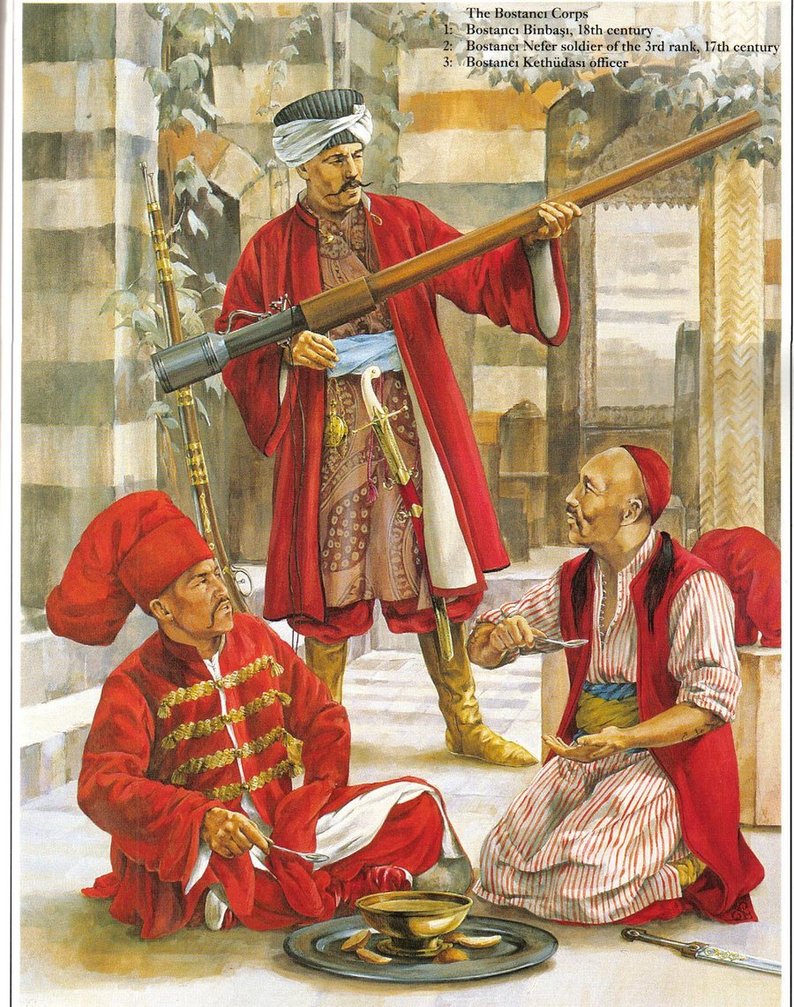
For Across the Doubtful Sea, however, we decided to imagine what they might look like underneath those wintry clothes. For models, we chose an extreme contrast– Ottoman Turkish and Persian– like the images below.

ottomanboss      ottoman_empire_2_by_byzantinum

IMG_0705

With them in costume, we wondered what they would sound like. What would their names be like? Would they speak a language like the Inupiat of our original models, or something Turkic or Persian?

For now, however, imagine dressing as one of the fearsome Atuk for next Halloween…

Thanks, as always, for reading, and save some candy corn for us!

MTCIDC,

CD

What About Villains?

24 Friday Oct 2014

Posted by Ollamh in Imaginary History, Narrative Methods, Villains

≈ 1 Comment

Tags

Adventure, Fantasy, Fiction, Villains

Dear Readers,

Villains– a big question, and something which needs more than one post.

There are so many kinds, from Sauron to the Joker. All of them, however, produce friction– that which produces problems and demands solutions. As well, it allows for heroes to be defined and to define themselves.

For this series, we have two kinds of villains so far: those native to our hero’s homeland and those who are entirely alien to everything our 18th century understands. The former include corrupt officials within the royal government, and the latter, those who might appear human, but who also have powers over nature which seem superhuman.

Corrupt officials are pretty easy to create– they’re everywhere, but we believe that we’ve given ours an extra twist. As for the others, we’ll talk about those in our next post…

Thanks for reading,

MTCIDC,

CD

Newer posts →

The Doubtful Sea Series Facebook Page

The Doubtful Sea Series Facebook Page

  • Ollamh

Categories

  • Artists and Illustrators
  • Economics in Middle-earth
  • Fairy Tales and Myths
  • Films and Music
  • Games
  • Heroes
  • Imaginary History
  • J.R.R. Tolkien
  • Language
  • Literary History
  • Maps
  • Medieval Russia
  • Military History
  • Military History of Middle-earth
  • Narnia
  • Narrative Methods
  • Poetry
  • Research
  • Star Wars
  • Terra Australis
  • The Rohirrim
  • Theatre and Performance
  • Tolkien
  • Uncategorized
  • Villains
  • Writing as Collaborators
Follow doubtfulsea on WordPress.com

Across the Doubtful Sea

Recent Postings

  • Through a glass… January 7, 2026
  • Heffalumps? December 31, 2025
  • We Three Kings December 24, 2025
  • A Moon disfigured December 17, 2025
  • On the Roads Again—Once More December 10, 2025
  • (Not) Crossing Bridges December 3, 2025
  • On the Road(s) Again—Again November 26, 2025
  • On the Road(s) Again November 19, 2025
  • To Bree (Part 2) November 12, 2025

Blog Statistics

  • 104,501 Views

Posting Archive

  • January 2026 (1)
  • December 2025 (5)
  • November 2025 (4)
  • October 2025 (5)
  • September 2025 (4)
  • August 2025 (4)
  • July 2025 (5)
  • June 2025 (4)
  • May 2025 (4)
  • April 2025 (5)
  • March 2025 (4)
  • February 2025 (4)
  • January 2025 (5)
  • December 2024 (4)
  • November 2024 (4)
  • October 2024 (5)
  • September 2024 (4)
  • August 2024 (4)
  • July 2024 (5)
  • June 2024 (4)
  • May 2024 (5)
  • April 2024 (4)
  • March 2024 (4)
  • February 2024 (4)
  • January 2024 (5)
  • December 2023 (4)
  • November 2023 (5)
  • October 2023 (4)
  • September 2023 (4)
  • August 2023 (5)
  • July 2023 (4)
  • June 2023 (4)
  • May 2023 (5)
  • April 2023 (4)
  • March 2023 (5)
  • February 2023 (4)
  • January 2023 (4)
  • December 2022 (4)
  • November 2022 (5)
  • October 2022 (4)
  • September 2022 (4)
  • August 2022 (5)
  • July 2022 (4)
  • June 2022 (5)
  • May 2022 (4)
  • April 2022 (4)
  • March 2022 (5)
  • February 2022 (4)
  • January 2022 (4)
  • December 2021 (5)
  • November 2021 (4)
  • October 2021 (4)
  • September 2021 (5)
  • August 2021 (4)
  • July 2021 (4)
  • June 2021 (5)
  • May 2021 (4)
  • April 2021 (4)
  • March 2021 (5)
  • February 2021 (4)
  • January 2021 (4)
  • December 2020 (5)
  • November 2020 (4)
  • October 2020 (4)
  • September 2020 (5)
  • August 2020 (4)
  • July 2020 (5)
  • June 2020 (4)
  • May 2020 (4)
  • April 2020 (5)
  • March 2020 (4)
  • February 2020 (4)
  • January 2020 (6)
  • December 2019 (4)
  • November 2019 (4)
  • October 2019 (5)
  • September 2019 (4)
  • August 2019 (4)
  • July 2019 (5)
  • June 2019 (4)
  • May 2019 (5)
  • April 2019 (4)
  • March 2019 (4)
  • February 2019 (4)
  • January 2019 (5)
  • December 2018 (4)
  • November 2018 (4)
  • October 2018 (5)
  • September 2018 (4)
  • August 2018 (5)
  • July 2018 (4)
  • June 2018 (4)
  • May 2018 (5)
  • April 2018 (4)
  • March 2018 (4)
  • February 2018 (4)
  • January 2018 (5)
  • December 2017 (4)
  • November 2017 (4)
  • October 2017 (4)
  • September 2017 (4)
  • August 2017 (5)
  • July 2017 (4)
  • June 2017 (4)
  • May 2017 (5)
  • April 2017 (4)
  • March 2017 (5)
  • February 2017 (4)
  • January 2017 (4)
  • December 2016 (4)
  • November 2016 (5)
  • October 2016 (6)
  • September 2016 (5)
  • August 2016 (5)
  • July 2016 (5)
  • June 2016 (5)
  • May 2016 (4)
  • April 2016 (4)
  • March 2016 (5)
  • February 2016 (4)
  • January 2016 (4)
  • December 2015 (5)
  • November 2015 (5)
  • October 2015 (4)
  • September 2015 (5)
  • August 2015 (4)
  • July 2015 (5)
  • June 2015 (5)
  • May 2015 (4)
  • April 2015 (3)
  • March 2015 (4)
  • February 2015 (4)
  • January 2015 (4)
  • December 2014 (5)
  • November 2014 (4)
  • October 2014 (6)
  • September 2014 (1)

Blog at WordPress.com.

  • Subscribe Subscribed
    • doubtfulsea
    • Join 78 other subscribers
    • Already have a WordPress.com account? Log in now.
    • doubtfulsea
    • Subscribe Subscribed
    • Sign up
    • Log in
    • Report this content
    • View site in Reader
    • Manage subscriptions
    • Collapse this bar
 

Loading Comments...