Tags
Elizabeth I, herald, Heraldry, livery, Middle-earth, Minas Ithil, Minas Morgul, Orcs, puzzle, Sam, Saruman, Sauron, Sir Roger de Trumpington, The Great War, The Lord of the Rings, Tolkien, uniforms
As always, dear readers, welcome. And perhaps welcome to a little Tolkien puzzle.
On parade, soldiers of the early 20th century could be peacocks for finery.
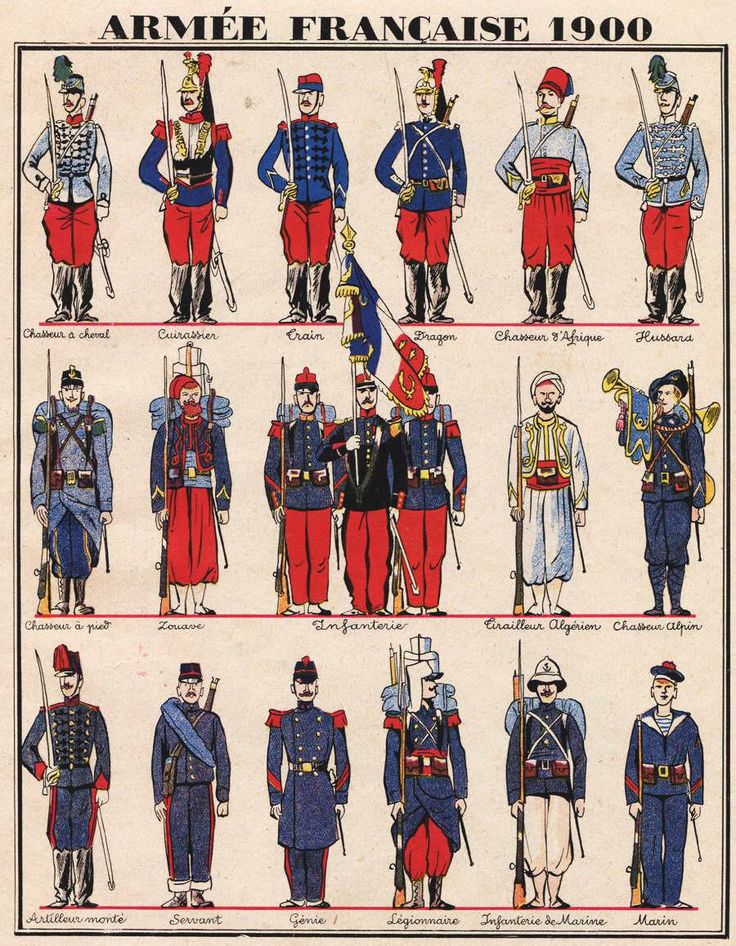
But then they met the new technological reality of heavy machine guns

and increasingly heavy artillery

and, in time, even the danger of being spotted from the air,
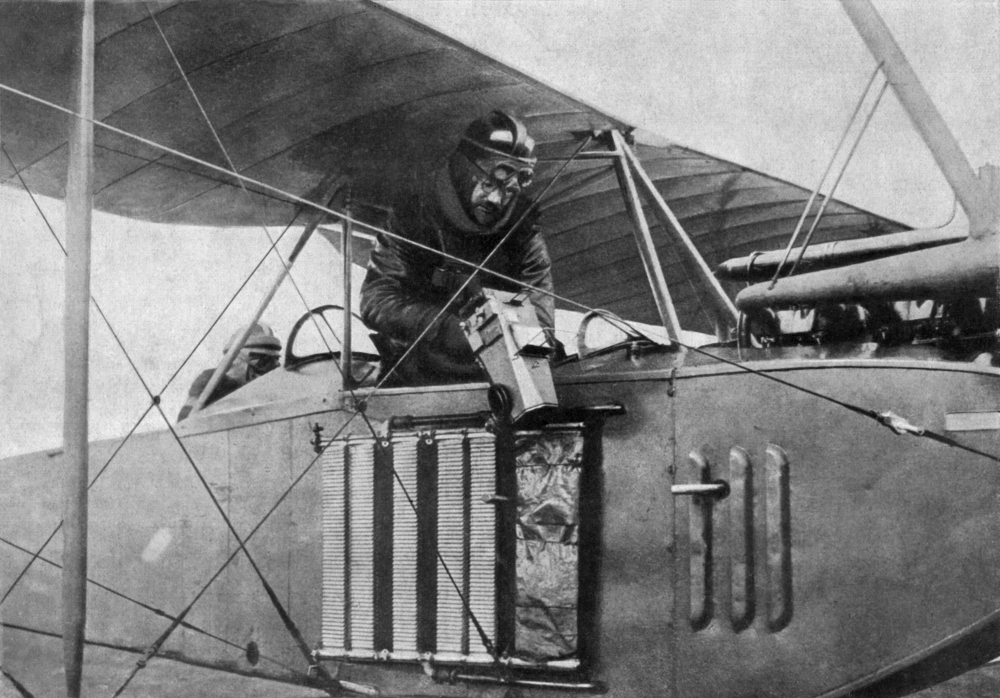
so soldiers not only dug in,
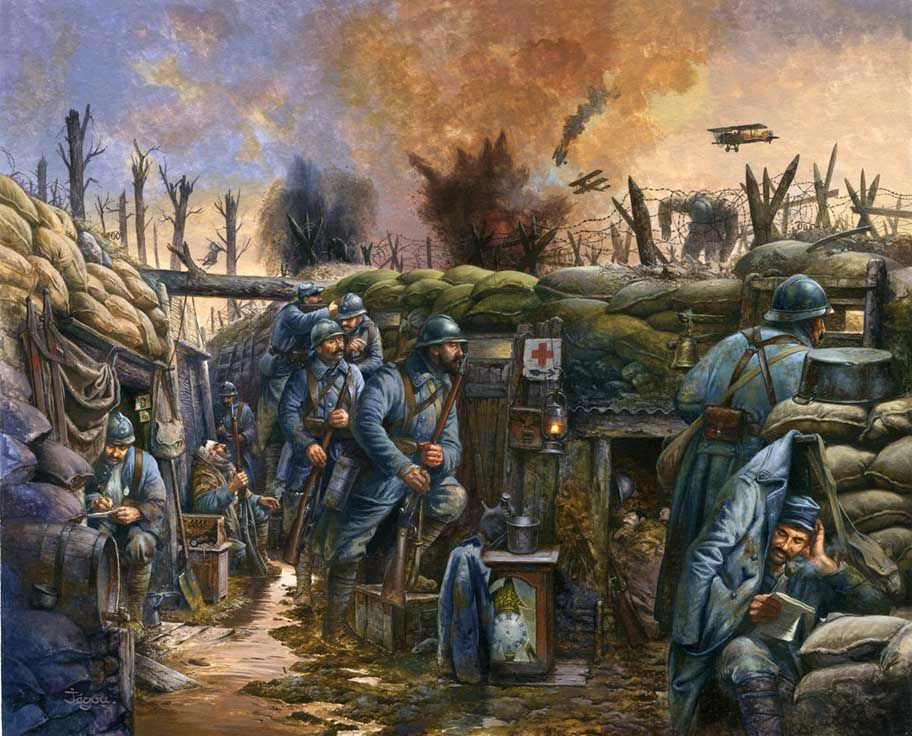
but modified their uniforms, making themselves less visible.

(Gerry Embleton)
After the war, most armies, except for special guard units,

never went back to being peacocks, abandoning a bright tradition which went back to the 17th century.
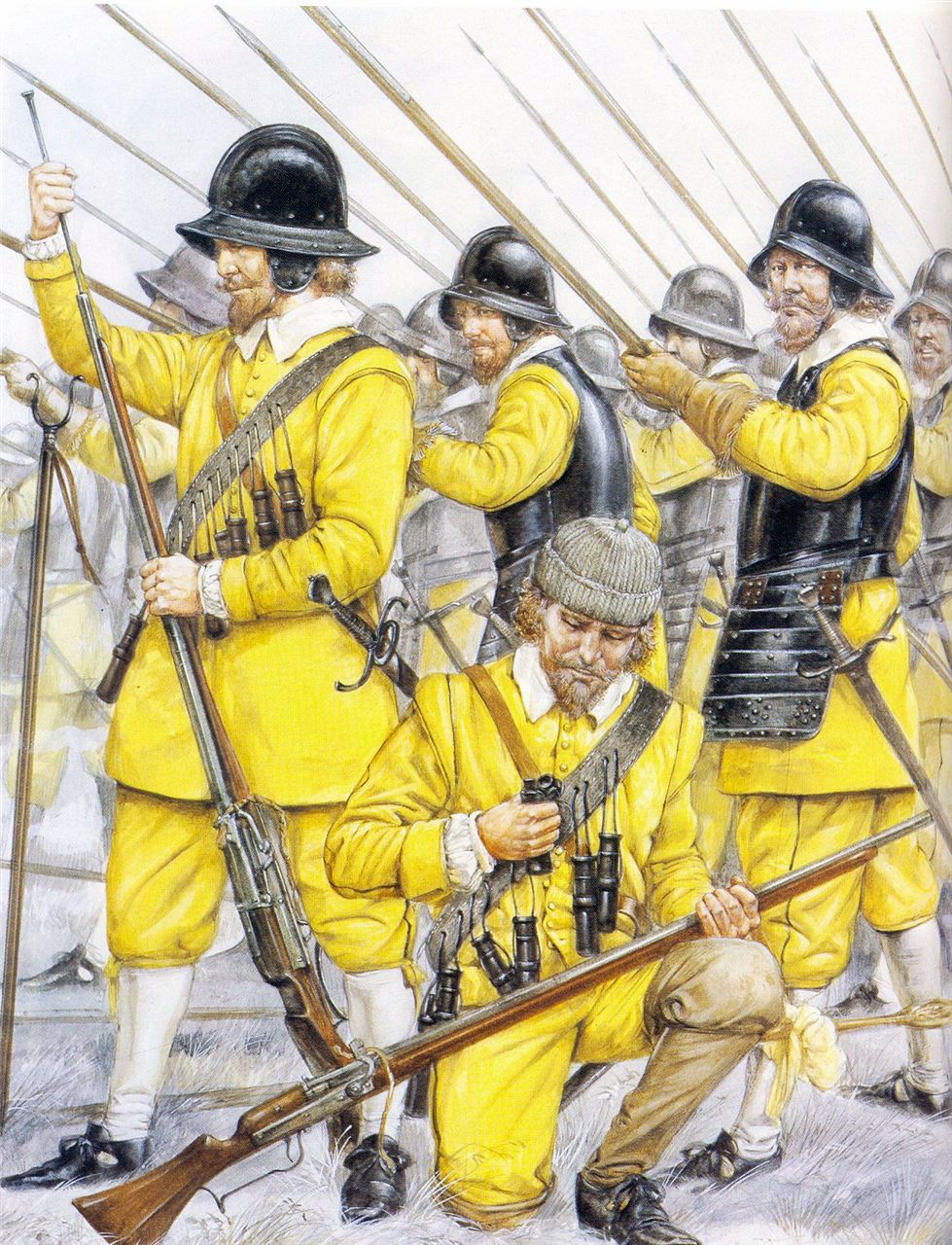
(Richard Hook)
Even in the 17th century, soldiers not wearing the same-colored clothing might distinguish themselves from their enemies by what would be called “field signs”, like wearing a strip of cloth on one arm, or sticking a particular piece of a plant or even a scrap of paper in your hatband.

(Henri IV, 1553-1610, king of France, was famous for the white plume he always wore in his hat.)

Before this, soldiers might wear the distinctive colors of their commanders (usually noblemen), called “livery”—
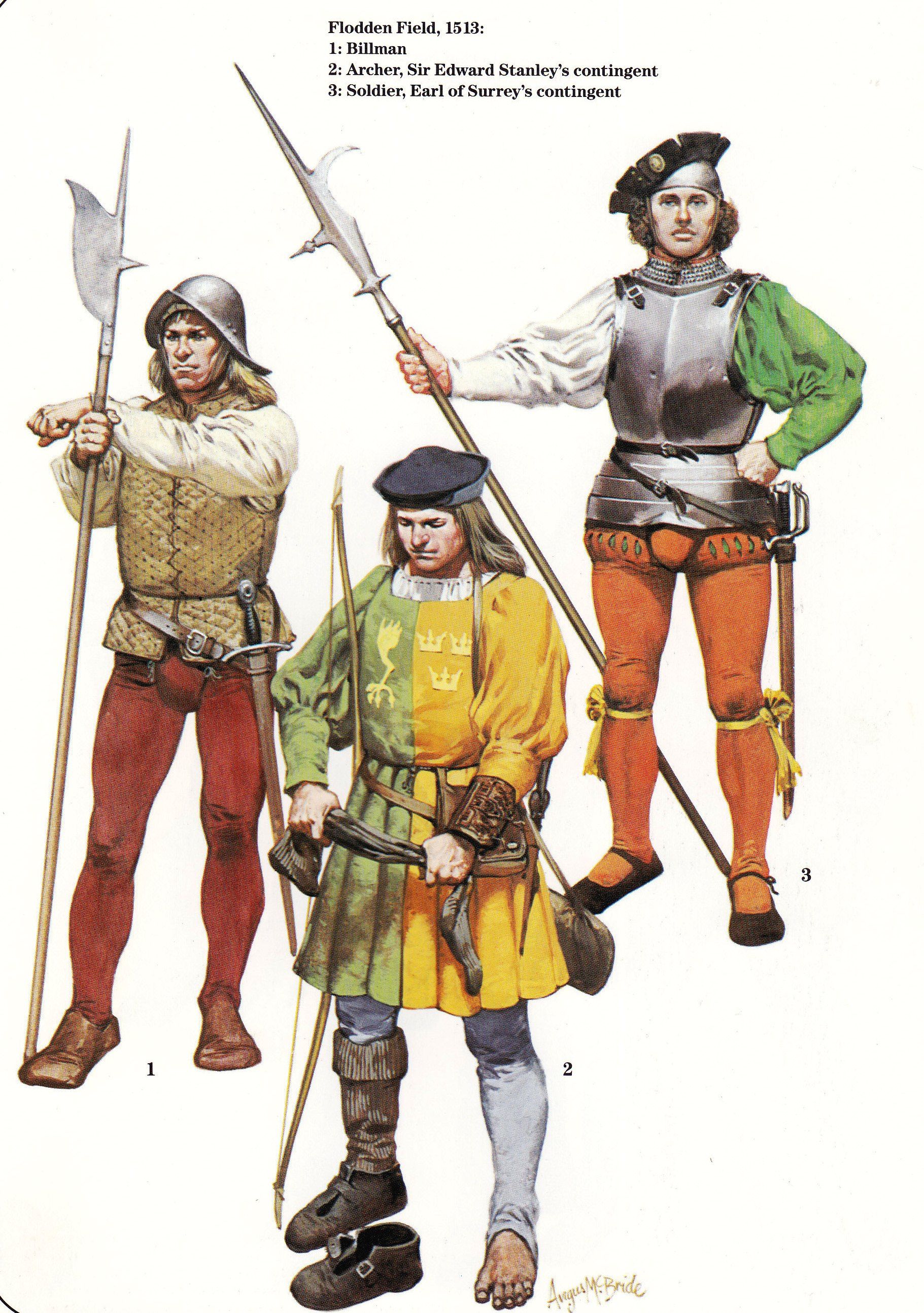
(Angus McBride)
Here we can see that Sir Edward Stanley has given this archer clothing in his colors of green and mustard-yellow, while the Earl of Surrey provided his soldiers with his colors of green and white. You’ll also notice that the archer has some distinctive badges on the front of his coat—an eagle’s claw and crowns. These are personal indicators of Sir Edward, heraldic markers to indicate to whom the archer belonged.
In the days before distinctive military dress, heraldry—the use of emblems to mark out one knight, and perhaps his followers, from another—had been developed to a high level. When everyone was covered in metal,

such emblems were a way to identify a knight—and if he had issued similar emblems to his soldiers, a way to identify the troops he had brought and commanded at a battle.
As emblems developed, there also developed a person with a specialized skill to identify them—a herald.
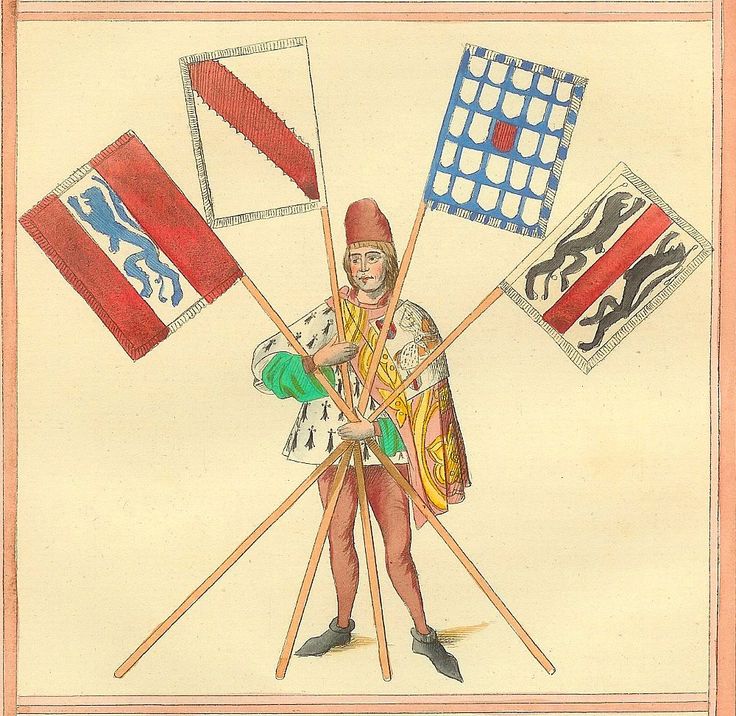
He himself, as you can see, wore distinctive clothing, which also helped him in his other role as messenger between military opponents—he was considered as a neutral and could therefore pass freely. (For more on heralds, see “Herald-ry in Middle-Earth”, 30 March, 2016 here: https://doubtfulsea.com//?s=herald&search=Go )
Tolkien himself belonged to the age of drab—

(Here’s what that uniform would have looked like in color—although this is a much higher level officer—looks to be a major—JRRT was commissioned as a second lieutenant and eventually promoted to first lieutenant )

but was well aware of earlier flashiness and we can see it in his description of the guards at Denethor’s gate—even though he sees their outfits as a throwback, just like British soldiers ever returning to bright red uniforms—except for the monarch’s guards:
“The Guards of the gate were robed in black, and their helmets were of strange shape, high-crowned, with long cheek-guards close-fitting to the face, and above the cheek-guards were set the white wings of sea-birds; but the helms gleamed with a flame of silver, for they were indeed wrought of mithril, heirlooms from the glory of old days. Upon the black surcoats were embroidered in white a tree blossoming like snow beneath a silver crown and many-pointed stars. This was the livery of the heirs of Elendil, and none wore it now in all Gondor, save the Guards of the Citadel before the Court of the Fountain where the White Tree had grown.” (The Return of the King, Book Five, Chapter 1, “Minas Tirith”)

(from the Jackson films—as you can see, the helmet fits the description, but the surcoat has disappeared and, instead, the Tree, stars, and crown have been shifted to the breastplate, removing the dramatic contrast between the black cloth and white embroidered emblems which JRRT intended)
As well, although the orcs wear no livery—no uniforms or even part-colored clothing—they do have badges—the white hand of Saruman

(perhaps suggesting that he has his hand over everything? I think of the “Armada Portrait” of Queen Elizabeth the First here—just look at the quiet statement in her hand)

and the red eye of Sauron,
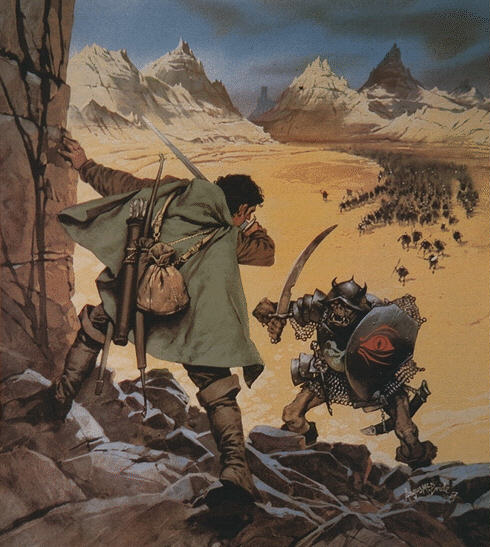
(Angus McBride—perhaps implying that, like Big Brother, Sauron has his eye on you?)
but then there’s a new one, only mentioned once, which provided the title for this posting and the puzzle—
“Two liveries Sam noticed, one marked by the Red Eye, the other by a Moon disfigured with a ghastly face of death…” (The Return of the King, Book Six, Chapter 1, “The Tower of Cirith Ungol”)
What is JRRT up to here? Minas Morgul, the “Tower of Black Sorcery”, the center of this gateway into Mordor,
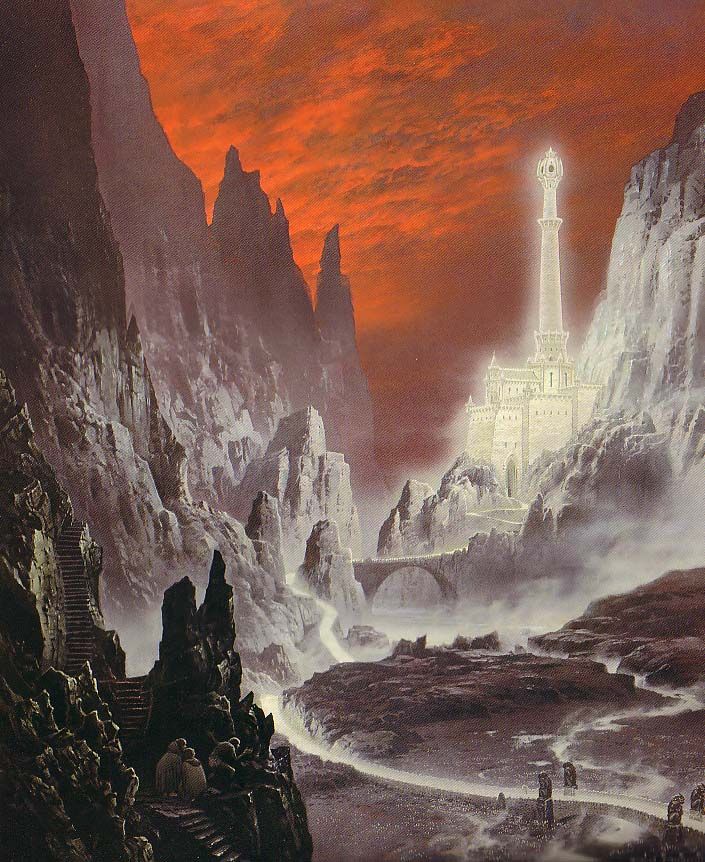
(Ted Nasmith)
had been built as Minas Ithil, “the Tower of the Moon” and it’s clear that those having that badge must come specifically from that place, and a mockery of its previous Gondorian name, which is interesting because the rest of Sauron’s forces appear to wear only the Red Eye. Yet, if we can trust an orc, we may have the sense that Sauron doesn’t appreciate deviation, as Grishnakh asks rhetorically of Ugluk:
“They might ask where his strange ideas came from. Did they come from Saruman, perhaps? Who does he think he is, setting up on his own with his filthy white badges? They might agree with me, with Grishnakh their trusted messenger; and I Grishnakh say this: Saruman is a fool, and a dirty treacherous fool. But the Great Eye is on him.” (The Two Towers, Book Three, Chapter 3, “The Uruk-hai”)
So what’s going on here? Certainly there’s rivalry between Saruman’s orcs and Sauron’s, but just how deep does orc rivalry go? When Sam arrives at the Tower of Cirith Ungol, he finds it a battleground and, climbing into the tower itself he hears two orcs arguing, Shagrat, the captain of the Tower, and Snaga, one of his men. Snaga says:
“You won’t be a captain long when They hear about all these goings-on. I’ve fought for the Tower against those stinking Morgul-rats, but a nice mess you two precious captains have made of things, fighting over the swag.” (The Return of the King, Book Six, Chapter 1, “The Tower of Cirith Ungol”)
So, seeing that emblem on a shield, with “a Moon disfigured with a ghastly face of death”, just whose face is that? And whose death?
As ever, thanks for reading.
Stay well,
If you were to come up with your own livery, what would it be?—sometimes knights made visual puns—like Sir Roger de Trumpington—

Think about that, pencil in hand, and remember that there’s always
MTCIDC
O
PS
For more on livery, see: https://en.wikipedia.org/wiki/Livery
There has been some wonderfully imaginative work done on heraldry in Tolkien. Here’s a link to get you started: https://en.wikipedia.org/wiki/Heraldry_of_Middle-earth
 doubtfulsea