• About

doubtfulsea

~ adventure fantasy

Tag Archives: Ottoman

Infrastructure and Architecture in Rivendell

28 Wednesday Sep 2016

Posted by Ollamh in Artists and Illustrators, Films and Music, Imaginary History, J.R.R. Tolkien, Literary History, Narrative Methods

≈ 2 Comments

Tags

Alan Lee, architecture, bridge, Bruinen, footbridge, Illustration, Lauterbrunnental, Middle-earth, Ottoman, packhorse bridge, Peter Jackson, Ring of Silvianus, Rivendell, Roman Britain, Roman villa, Sir Mortimer Wheeler, Stari Most, Ted Nasmith, The Lord of the Rings, Tolkien, Wasdale

Welcome, dear readers, as ever. In our last posting, we looked at the Greenway from a comparative perspective. In this one, we’ve got an idea or two from having looked as closely as we could at one of JRRT’s illustrations of Rivendell, comparing it with various modern conceptions, including that in the films of P. Jackson.

Rivendell, Sindarin, Imladris, “deep valley in a cleft”, is located on the eastern edge of Eriador, at the foot of the Misty Mountains. Set in that deep valley, which was formed by the action of the river Bruinen (“Loudwater”), it was besieged on several occasions throughout its lifetime, but had survived to be the last refuge of the Elves on that side of the mountains.

mapofmewithrivendellpointedout

It is understood that Tolkien based it upon a Swiss valley, Lauterbrunnental, which he had visited on a hiking trip in 1911.

1_lauterbrunnen_valley_2012

(And maybe there’s an echo in the name—which is sometimes translated “Louder Springs”—in Bruinen, “Loudwater”?)

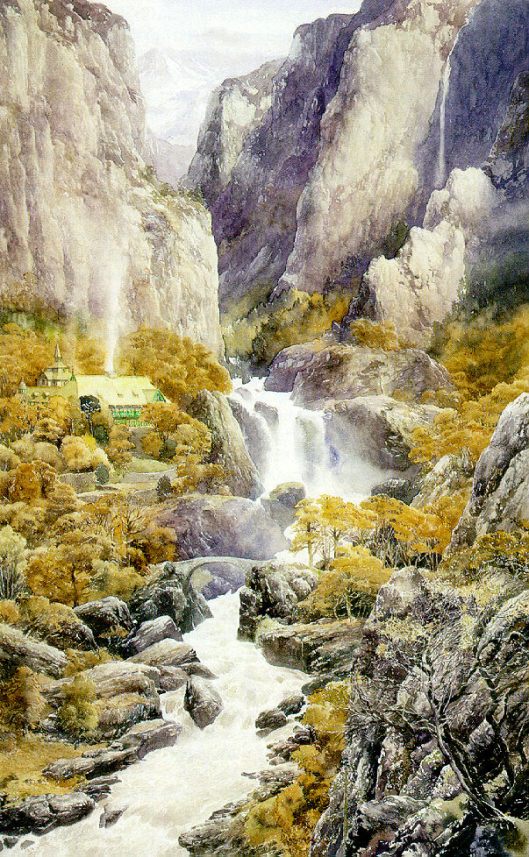
Here is the Tolkien illustration
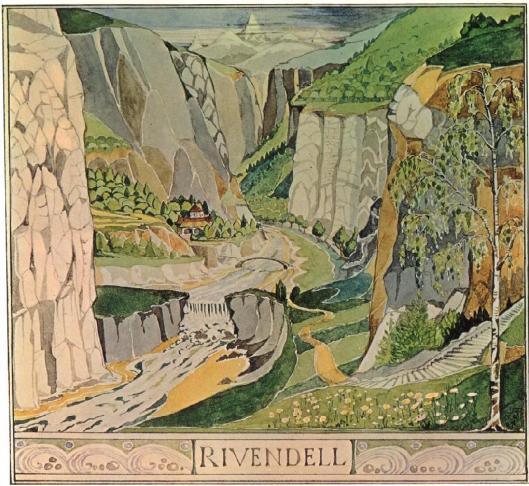
rivjrrt2

We want to look at two features here. First, in the middle ground, there is that bridge. Here is Alan Lee’s very beautiful version—although you will note that it’s been moved and shortened.The-Hobbit-and-dwarfts-on-the-bridge-alan-lee-18907573-1024-768
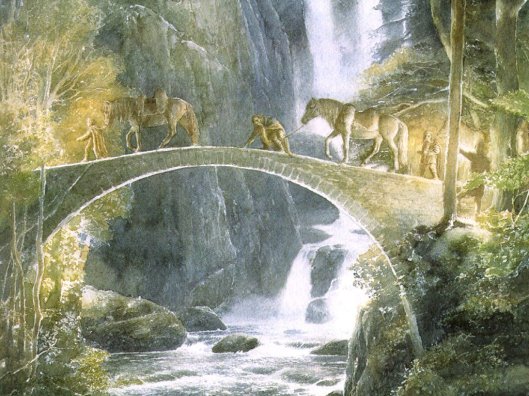
As we examined this bridge as closely as we could, we wondered, where had the idea come from for its shape? And two possibilities came to mind. First, because we’re very much World History people, we thought of those beautiful bridges from the Ottoman world. There are a number of surviving bridges which are more elaborate, but there are also single-arch bridges like these, which bear a strong resemblance to the bridge in Tolkien’s illustration.

otoman_era_bridge_gumushane_province_turkey_photo (1)

hemshin-bridge

1024px-ArchBridgeOverFirtinaDeresi@Rize-Turkey-1

4051359e3eb1f3e0a066f059868152c1

To us, one of the most beautiful is the Stari Most (Bosnian, “Old Bridge”), in Mostar (Bosnian, “Bridge Keeper”), which was built in the 16th century, destroyed in 1993, and rebuilt, and reopened in 2004.
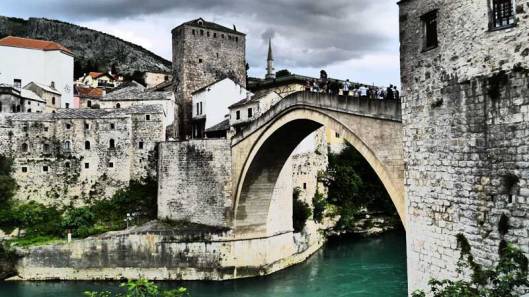
Bosna-Mostar-Stari-Most-800

003

mostar_bg_1

Moving a little closer to home (England, that is, in the case of JRRT), another possibility for a model might be something mentioned in our last posting, when we talked about medieval English roads as mostly packhorse trails. Here’s a perfect example, from Wasdale in the Lake District of northern England, a packhorse bridge.

(n) The pack horse bridge behind the Wasdale Head Inn

Moving upstream from the bridge in Tolkien’s picture, we see a house depicted.

rivjrrt2

It’s hard to make it out, even under magnification, but, when we compare it with:

  1. the buildings in the Jackson films

12887381._SX540_.png

  1. Alan Lee’s Rivendell

leerivendell

  1. or even Ted Nasmith’s,

rivendellTN-Fair_Valley_of_Rivendell

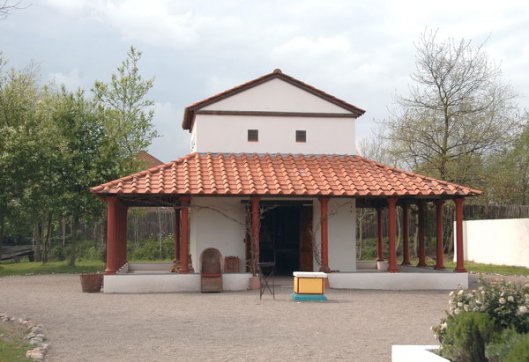
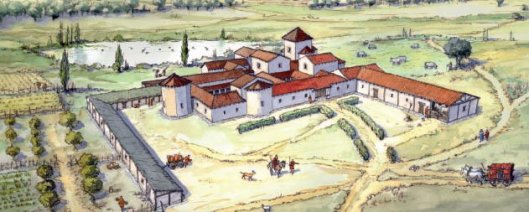
we personally don’t think anyone quite captures what Tolkien drew. To us, there appears to be, as we said before, something closer to home–in the reconstructions of Roman villas and their outbuildings. And, as we said in our last, so much of Roman Britain was still available, either above or below ground, that we can imagine JRRT  being aware of it.  (In fact, in 1929, the archaeologist, Sir Mortimer Wheeler actually consulted him on an ancient curse and the inscription on a Roman-British ring.  See the Ring of Silvianus wiki page).  Possible examples, some from reconstructed sites:
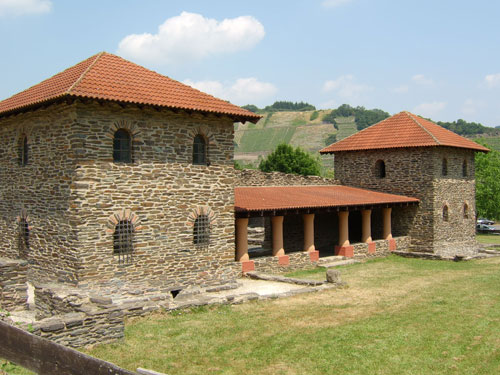
villa_mehring_01villaarcheon_temple_cuijk2delaguiaGayton-Villa-Colour-web

Blow up the Tolkien illustration for yourself, dear readers, and what do you think?

Thanks, as always, for reading.

MTCIDC

CD


The Two Sieges

22 Wednesday Jul 2015

Posted by Ollamh in Heroes, J.R.R. Tolkien, Military History

≈ Leave a comment

Tags

Agincourt, Aragorn, English Longbowmen, Faramir, French Knights, Gondor, Grond, Hoth, Jan Sobieski, Lithuania, Minas Tirith, Mumakil, Nazgul, Orcs, Ottoman, Peter Jackson, Poland, Rammas Echor, Rohan, Rohirrim, Siege Towers, Stone Throwers, The Lord of the Rings, Tolkien, Vienna, Winged Hussars

Welcome, as always, dear readers!

In this posting, we’re going to make another suggestion about a model for something in Tolkien’s work.

If you read us regularly, you know that our favorite part of P. Jackson’s The Lord of the Rings is anything to do with the Rohirrim. When we rewatch favorite scenes, the charge against the Orcs outside Minas Tirith is always first on our list (and high on our general list of cavalry charges—more on those in a future posting).

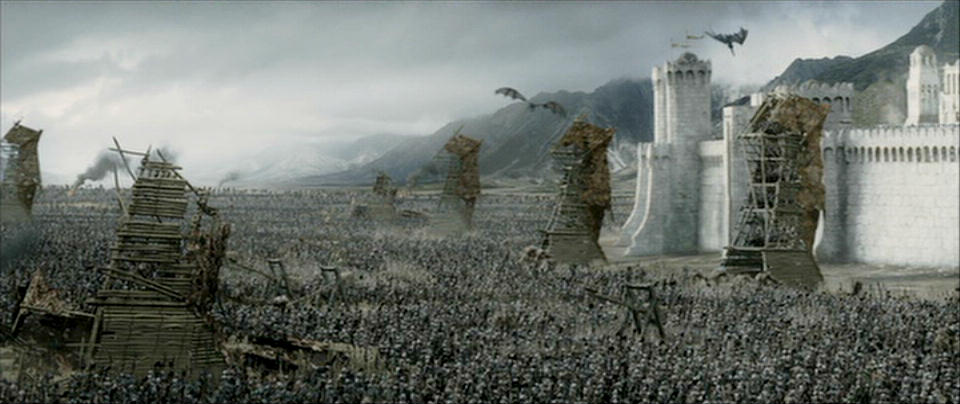
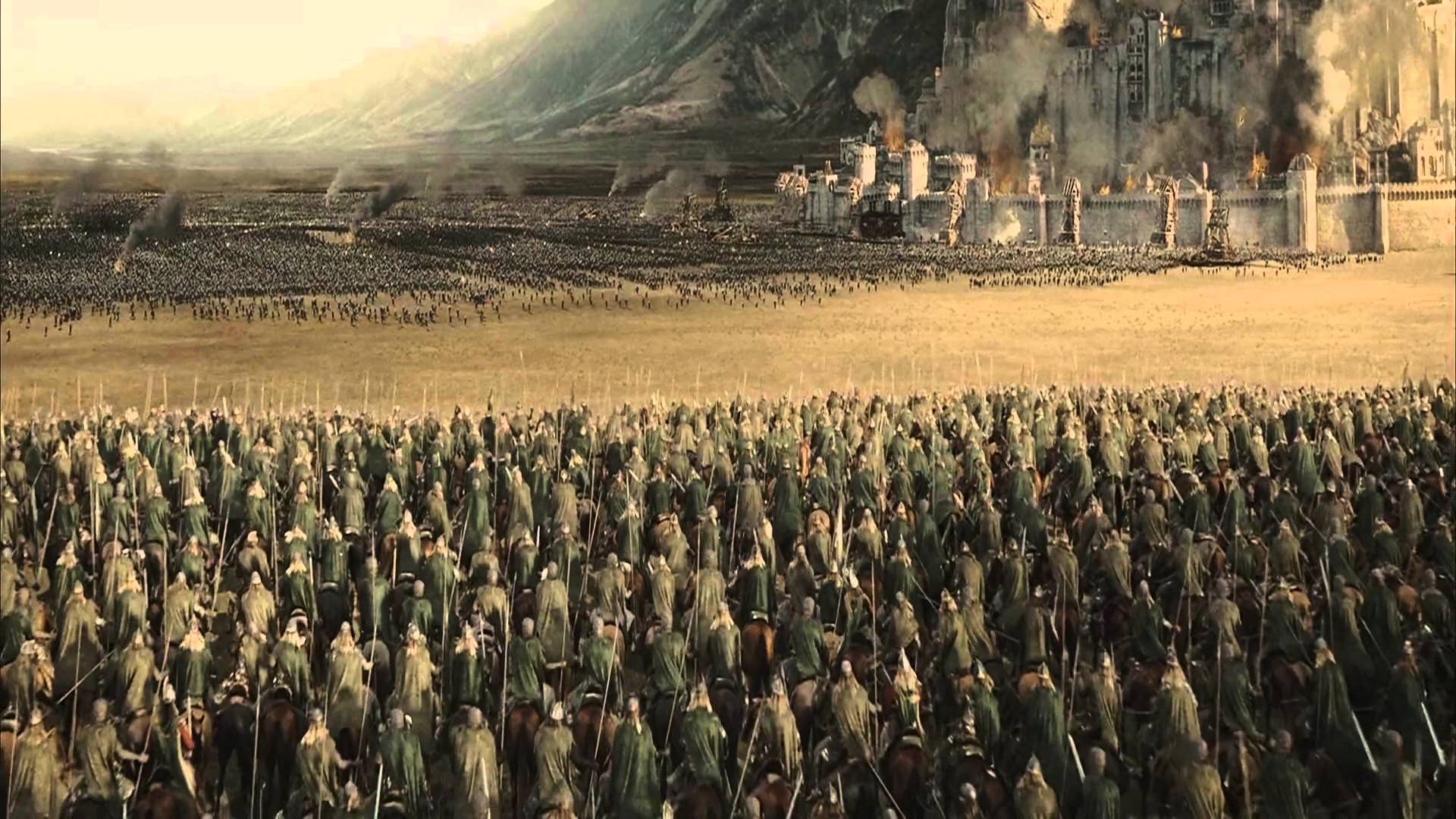
First, we see that massive Orc army marching up to the walls. (In the book, this is more dramatic: the Orcs blow two holes in the Rammas Echor, outflank the defenders, and drive them into retreat, which is where Faramir is badly wounded by an arrow.)

minas-tirith

Then they begin to attack with stone-throwers,

siege1

siege towers,

lotr-siege-towers

and, eventually a giant, flame-filled battering ram.

grond1

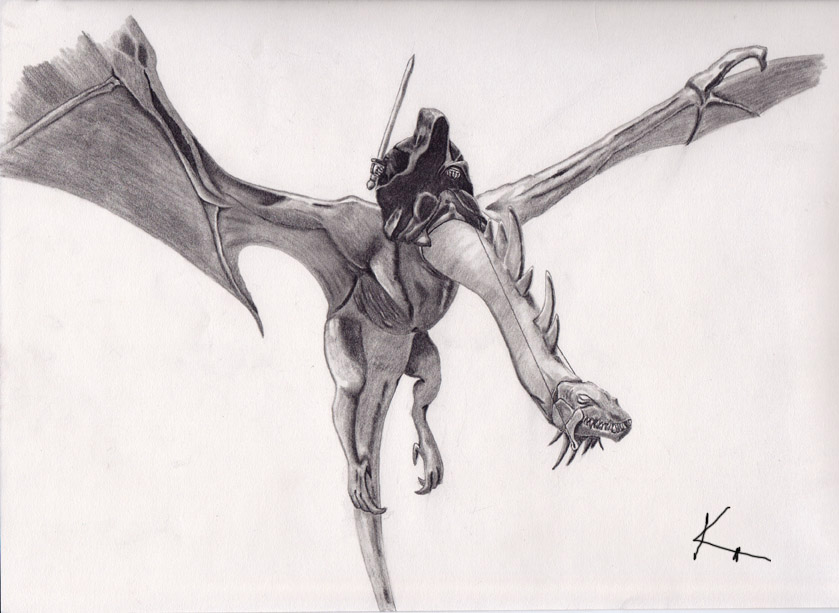
Things look increasingly desperate for Gondor as the Orcs press their attack, led by the Chief Nazgul.

witch_king_of_angmar_ii_by_dudeskindasketchy-d4d6uvd

And that’s when the Rohirrim appear.

rohirrimabouttocharge

And move to strike the Orcs from behind.

Charge_rohirrim

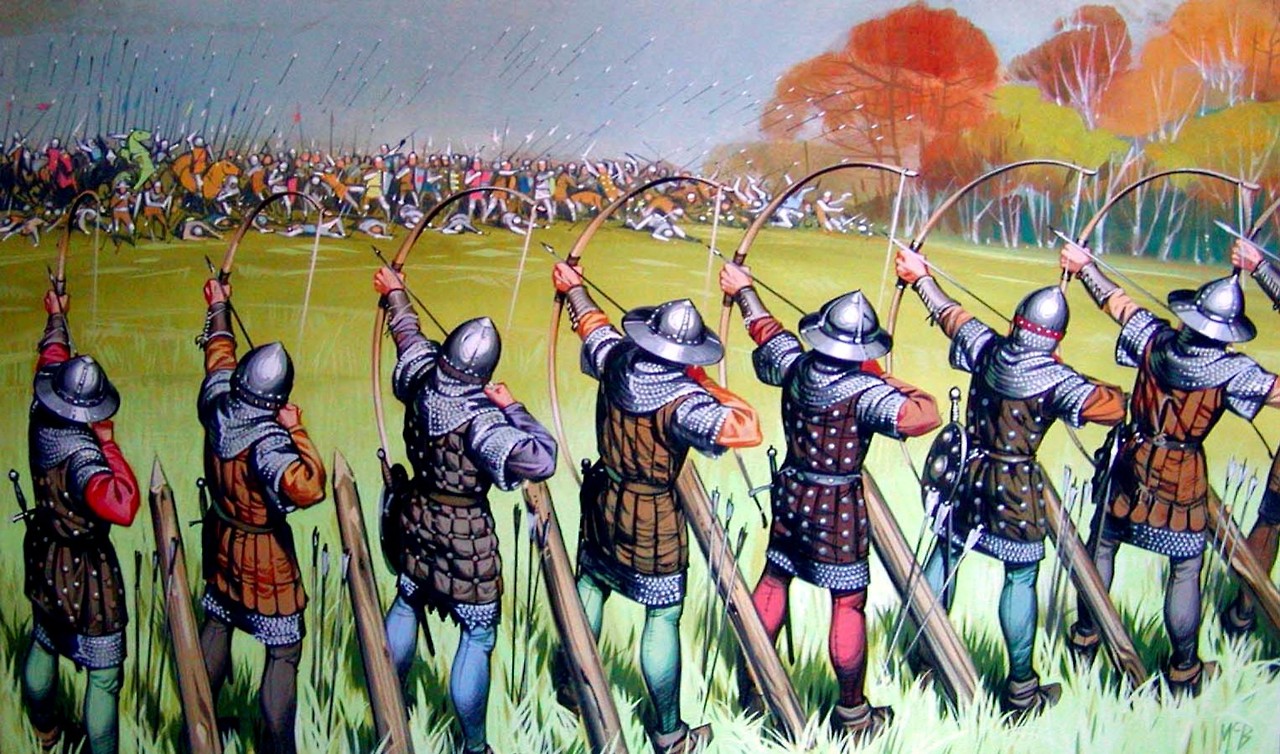
When the Orcs realize what’s happening, they try to stop the attack with bows.

archery

This immediately reminded us of the 1415 battle in which English longbowmen and their clever use defeated an army of brave French knights, Agincourt.

OLYMPUS DIGITAL CAMERA

Unlike Agincourt, however, arrows didn’t stop the Rohirrim, who sweep through the enemy—but are brought up short by the sight of a row of mumakil—giant war elephants—bearing down on them.

img-2845793-1-charge-1024x425

Seeing this scenario made us think of another attack by huge, lumbering things in a galaxy long ago and far away—

Battle_of_Hoth

The film goes on from there, including an attack by a ghost army, instead of by the actual forces brought from southern Gondor by Aragorn, but we want to back up a bit to the actual siege and another one which bears a strong resemblance to it.

For centuries, the Ottoman Turks had been expanding their dominions.

Ottoman_Empire_Map_1359-1856

They had first reached Vienna in 1529,

Siegeofvienna1529

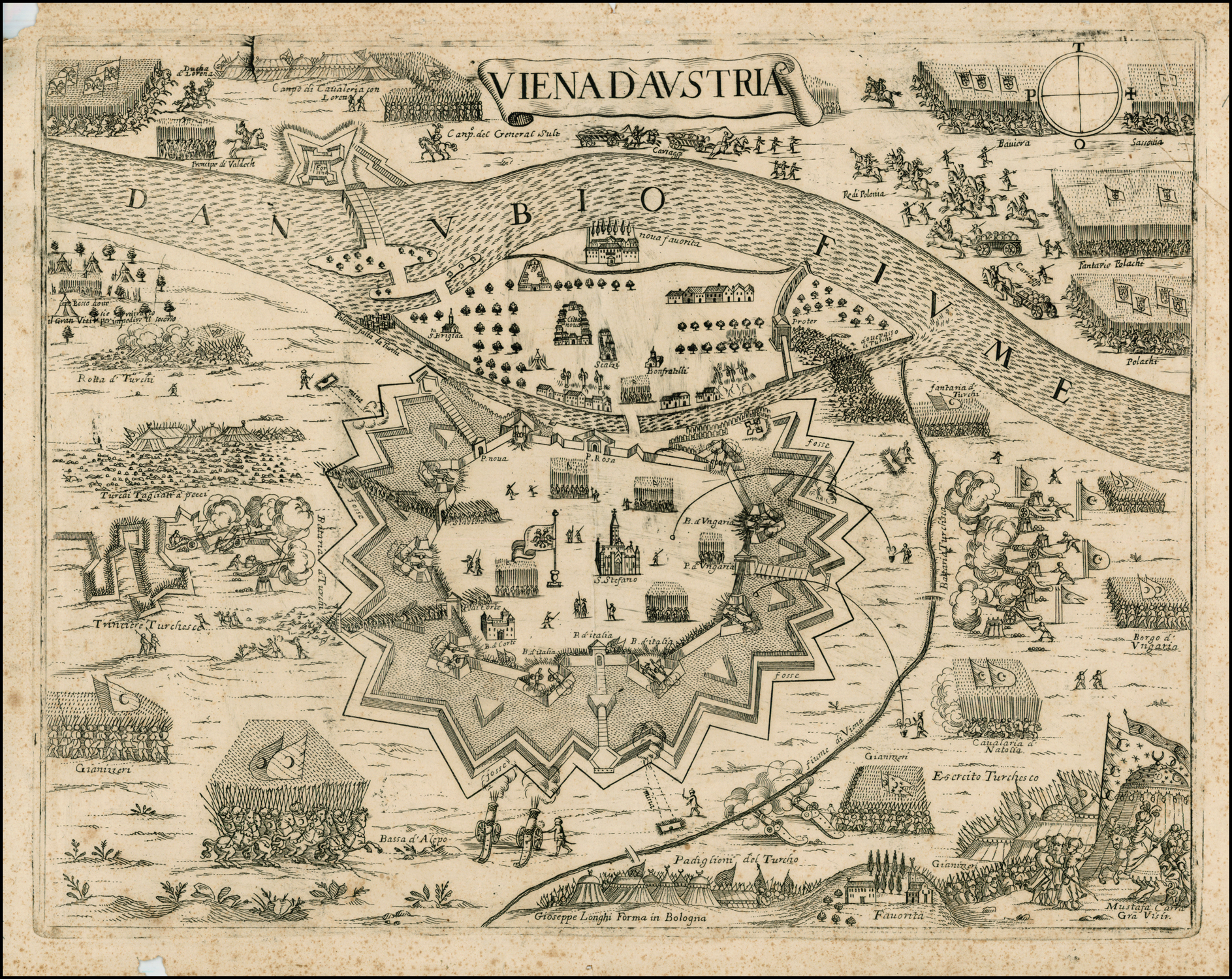
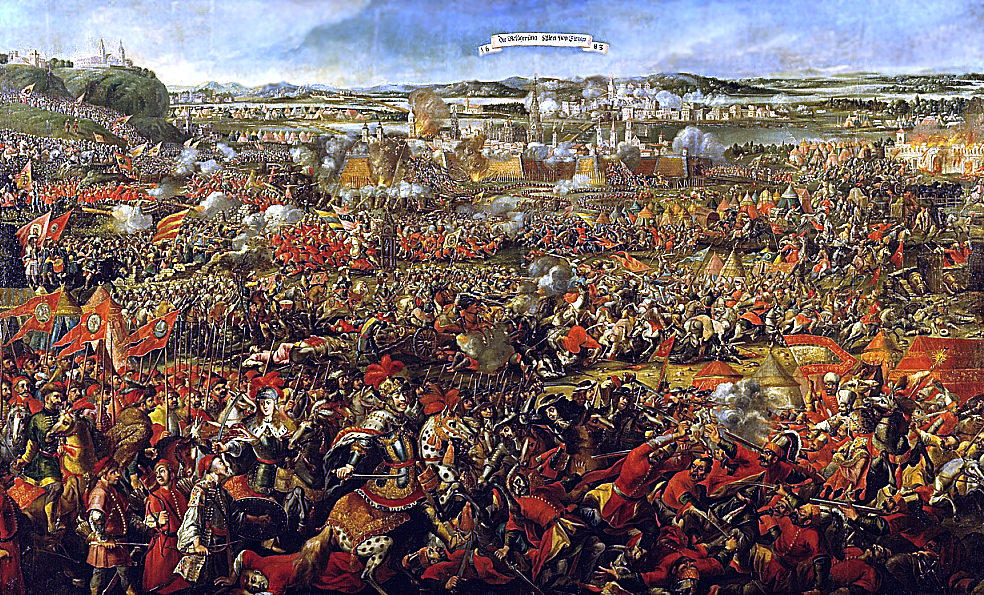
but had given up the siege. Now, however, in 1683, they were back.

Battle_of_Vienna_1683_map

Their attacks against a dwindling number of defenders in a crumbling town

1-vienna-1683

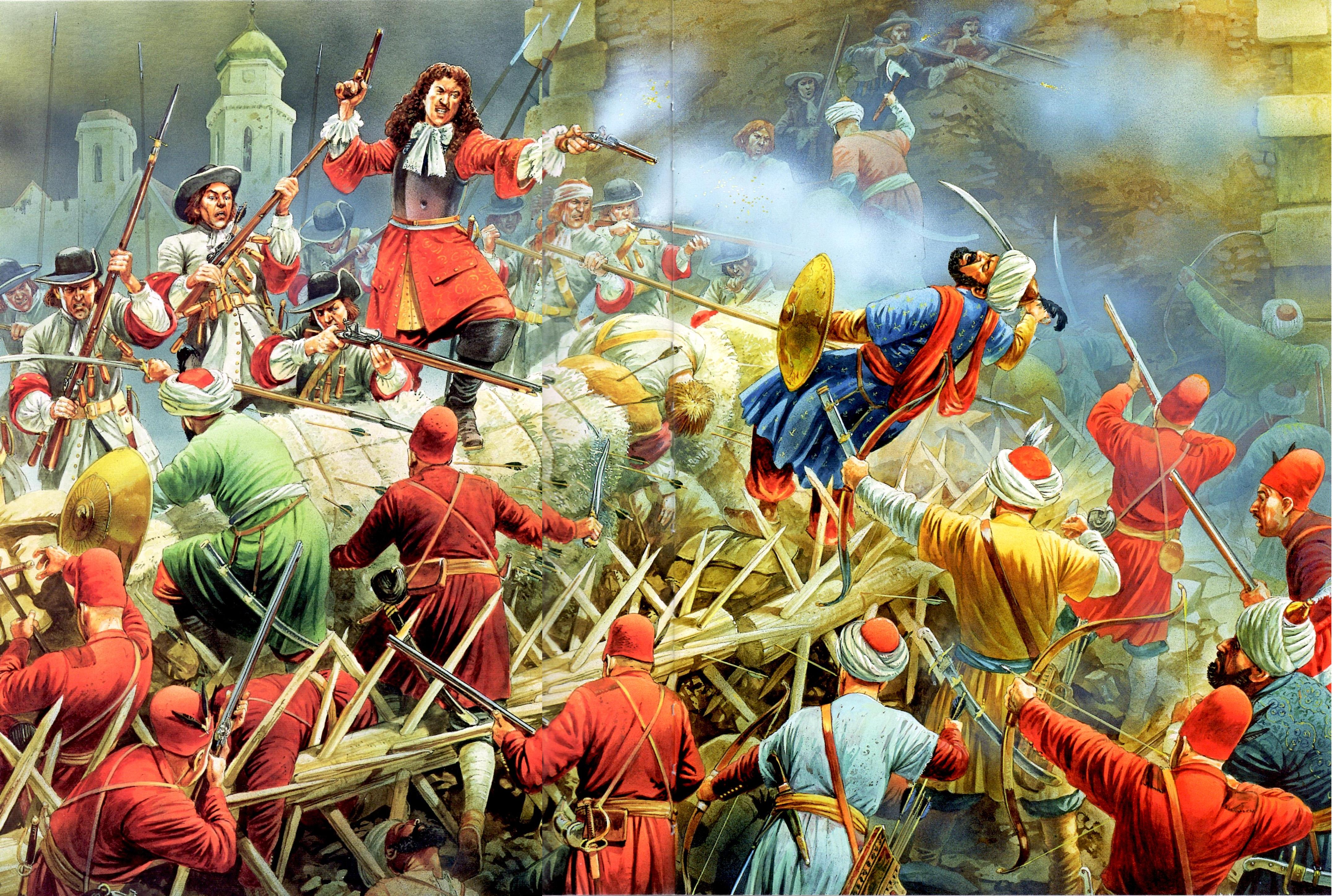
had brought them to the edge of conquest when an army of reenforcements, including cavalry from the army of the combined state of Lithuania/Poland, had appeared. Some of the cavalry were the famous Polish winged hussars.

Battle_of_Vienna_1

Just as the Rohirrim are led by their king, Theoden, so are the Poles led by their king Jan Sobieski—

bitwa-pod-wiedniem-obraz

The reenforcements, Poles in the lead, rush upon the Turks and drive them back through their camps and out of the siege entirely.

Atak_husarii

Battle_of_Vienna_1683_11

So similar, isn’t it? No giant war elephants, ghost armies, or Nazgul, but the basic elements of siege, relieving army with cavalry led by a king attacking an unprepared enemy, and chasing off the besiegers, is nearly identical.

Tolkien was an extremely well-read man, with a strong interest in history. Was the siege and relief of Vienna somewhere in the back of his mind when he began to plan the siege of Minas Tirith?

Thanks for reading!

MTCIDC

CD

The Doubtful Sea Series Facebook Page

The Doubtful Sea Series Facebook Page

  • Ollamh

Categories

  • Artists and Illustrators
  • Economics in Middle-earth
  • Fairy Tales and Myths
  • Films and Music
  • Games
  • Heroes
  • Imaginary History
  • J.R.R. Tolkien
  • Language
  • Literary History
  • Maps
  • Medieval Russia
  • Military History
  • Military History of Middle-earth
  • Narnia
  • Narrative Methods
  • Poetry
  • Research
  • Star Wars
  • Terra Australis
  • The Rohirrim
  • Theatre and Performance
  • Tolkien
  • Uncategorized
  • Villains
  • Writing as Collaborators
Follow doubtfulsea on WordPress.com

Across the Doubtful Sea

Recent Postings

  • A Moon disfigured December 17, 2025
  • On the Roads Again—Once More December 10, 2025
  • (Not) Crossing Bridges December 3, 2025
  • On the Road(s) Again—Again November 26, 2025
  • On the Road(s) Again November 19, 2025
  • To Bree (Part 2) November 12, 2025
  • To Bree (Part 1) November 5, 2025
  • A Plague o’ Both—No, o’ All Your Houses! October 29, 2025
  • It’s in Writing (2:  I’st a Prologue, or a Poesie for a Ring?) October 22, 2025

Blog Statistics

  • 103,217 Views

Posting Archive

  • December 2025 (3)
  • November 2025 (4)
  • October 2025 (5)
  • September 2025 (4)
  • August 2025 (4)
  • July 2025 (5)
  • June 2025 (4)
  • May 2025 (4)
  • April 2025 (5)
  • March 2025 (4)
  • February 2025 (4)
  • January 2025 (5)
  • December 2024 (4)
  • November 2024 (4)
  • October 2024 (5)
  • September 2024 (4)
  • August 2024 (4)
  • July 2024 (5)
  • June 2024 (4)
  • May 2024 (5)
  • April 2024 (4)
  • March 2024 (4)
  • February 2024 (4)
  • January 2024 (5)
  • December 2023 (4)
  • November 2023 (5)
  • October 2023 (4)
  • September 2023 (4)
  • August 2023 (5)
  • July 2023 (4)
  • June 2023 (4)
  • May 2023 (5)
  • April 2023 (4)
  • March 2023 (5)
  • February 2023 (4)
  • January 2023 (4)
  • December 2022 (4)
  • November 2022 (5)
  • October 2022 (4)
  • September 2022 (4)
  • August 2022 (5)
  • July 2022 (4)
  • June 2022 (5)
  • May 2022 (4)
  • April 2022 (4)
  • March 2022 (5)
  • February 2022 (4)
  • January 2022 (4)
  • December 2021 (5)
  • November 2021 (4)
  • October 2021 (4)
  • September 2021 (5)
  • August 2021 (4)
  • July 2021 (4)
  • June 2021 (5)
  • May 2021 (4)
  • April 2021 (4)
  • March 2021 (5)
  • February 2021 (4)
  • January 2021 (4)
  • December 2020 (5)
  • November 2020 (4)
  • October 2020 (4)
  • September 2020 (5)
  • August 2020 (4)
  • July 2020 (5)
  • June 2020 (4)
  • May 2020 (4)
  • April 2020 (5)
  • March 2020 (4)
  • February 2020 (4)
  • January 2020 (6)
  • December 2019 (4)
  • November 2019 (4)
  • October 2019 (5)
  • September 2019 (4)
  • August 2019 (4)
  • July 2019 (5)
  • June 2019 (4)
  • May 2019 (5)
  • April 2019 (4)
  • March 2019 (4)
  • February 2019 (4)
  • January 2019 (5)
  • December 2018 (4)
  • November 2018 (4)
  • October 2018 (5)
  • September 2018 (4)
  • August 2018 (5)
  • July 2018 (4)
  • June 2018 (4)
  • May 2018 (5)
  • April 2018 (4)
  • March 2018 (4)
  • February 2018 (4)
  • January 2018 (5)
  • December 2017 (4)
  • November 2017 (4)
  • October 2017 (4)
  • September 2017 (4)
  • August 2017 (5)
  • July 2017 (4)
  • June 2017 (4)
  • May 2017 (5)
  • April 2017 (4)
  • March 2017 (5)
  • February 2017 (4)
  • January 2017 (4)
  • December 2016 (4)
  • November 2016 (5)
  • October 2016 (6)
  • September 2016 (5)
  • August 2016 (5)
  • July 2016 (5)
  • June 2016 (5)
  • May 2016 (4)
  • April 2016 (4)
  • March 2016 (5)
  • February 2016 (4)
  • January 2016 (4)
  • December 2015 (5)
  • November 2015 (5)
  • October 2015 (4)
  • September 2015 (5)
  • August 2015 (4)
  • July 2015 (5)
  • June 2015 (5)
  • May 2015 (4)
  • April 2015 (3)
  • March 2015 (4)
  • February 2015 (4)
  • January 2015 (4)
  • December 2014 (5)
  • November 2014 (4)
  • October 2014 (6)
  • September 2014 (1)

Blog at WordPress.com.

  • Subscribe Subscribed
    • doubtfulsea
    • Join 78 other subscribers
    • Already have a WordPress.com account? Log in now.
    • doubtfulsea
    • Subscribe Subscribed
    • Sign up
    • Log in
    • Report this content
    • View site in Reader
    • Manage subscriptions
    • Collapse this bar
 

Loading Comments...