• About

doubtfulsea

~ adventure fantasy

Tag Archives: Mouth of Sauron

Alternatives

23 Wednesday Apr 2025

Posted by Ollamh in Uncategorized

≈ Leave a comment

Tags

lotr, Morgoth, Mouth of Sauron, Sauron, Sharkey, Tolkien, Turtledove, What If

As always, dear readers, welcome.

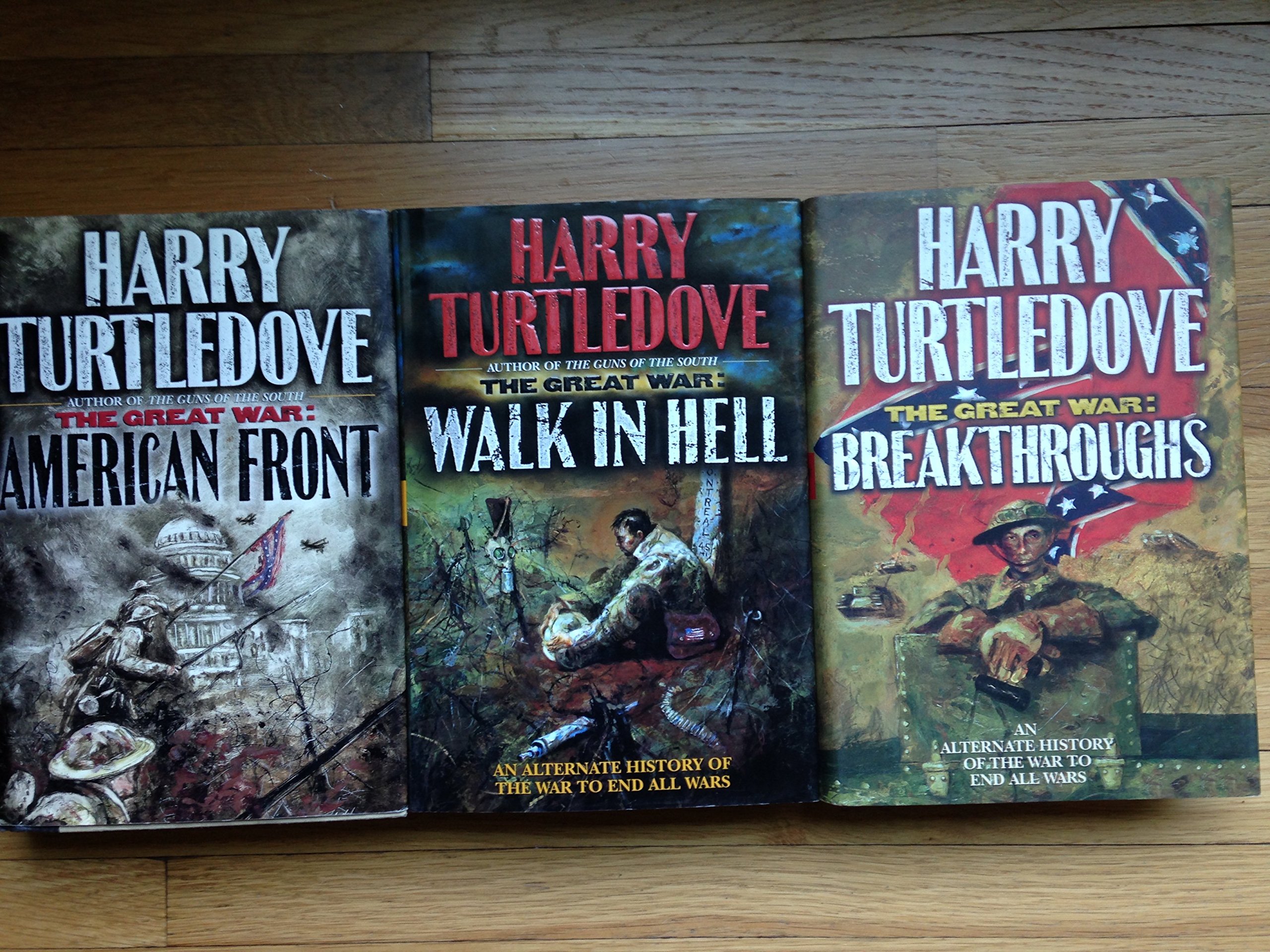
I’ve written before about “What Ifs”—that is, alternative views of things, be they historical,

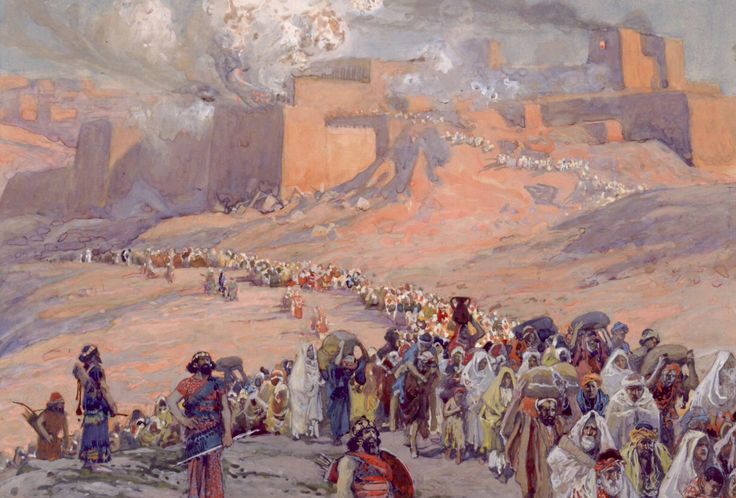
(and interesting here to see an introduction by Harry Turtledove, who has written a raft of “what ifs” himself)

or based upon fantasy.

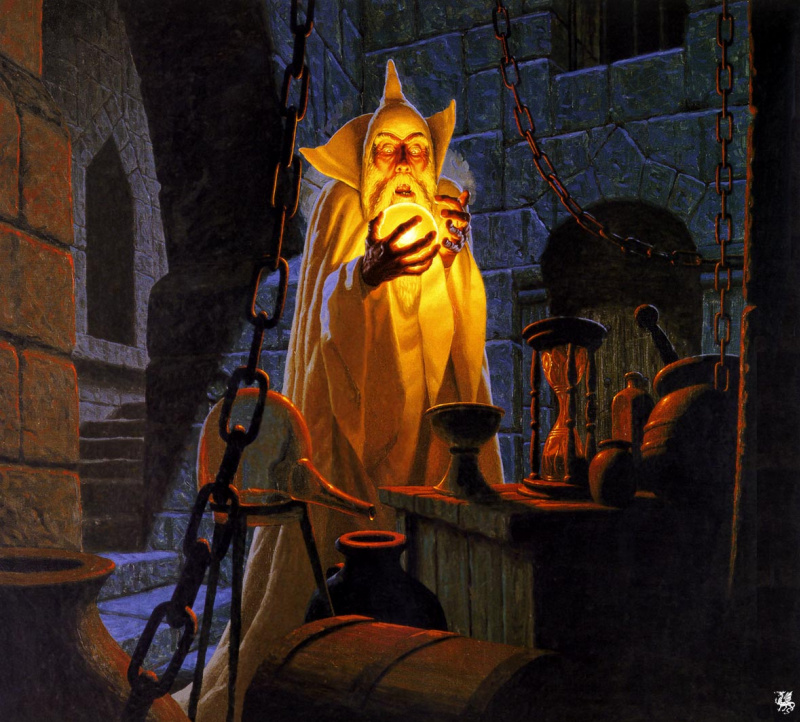
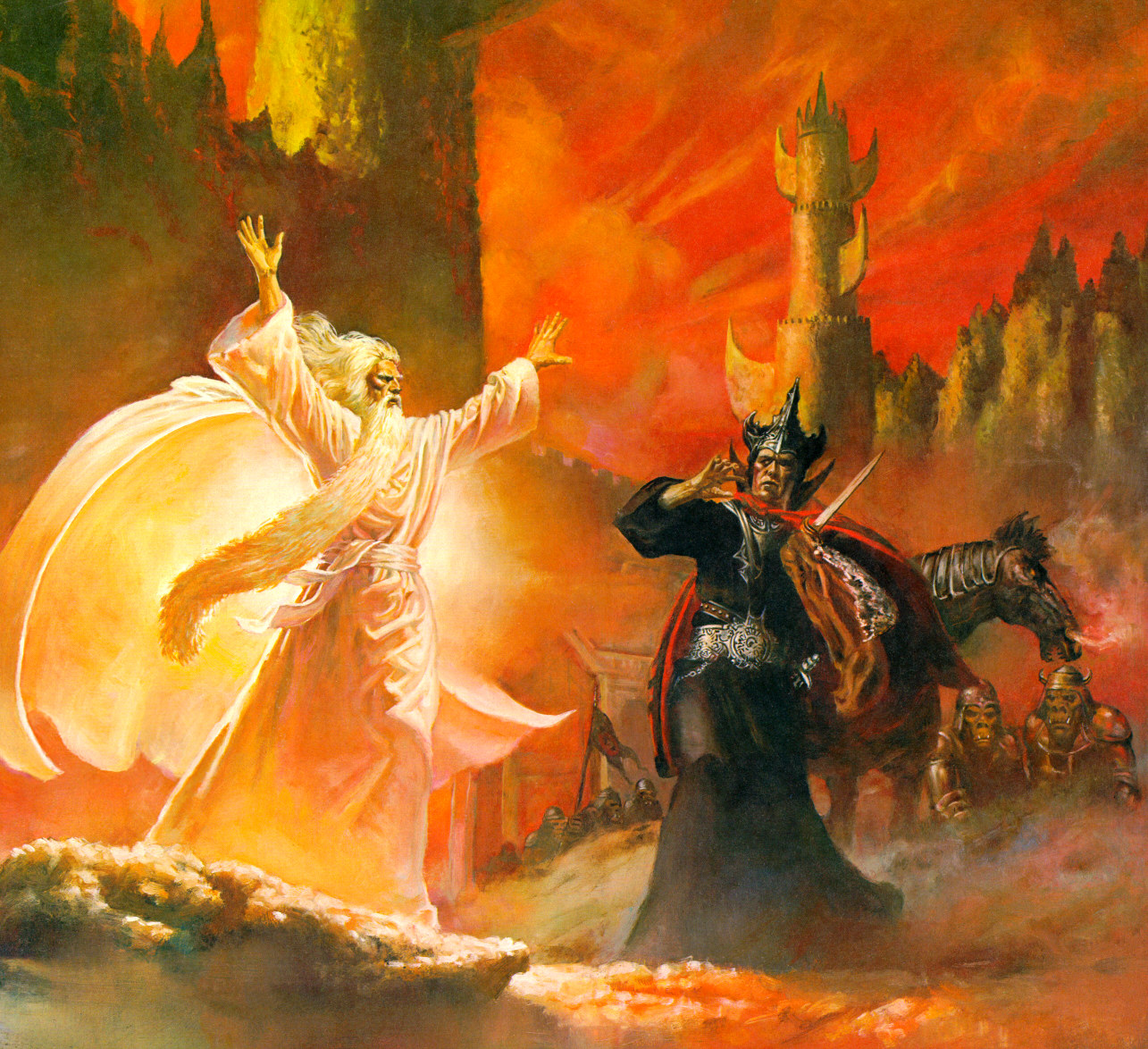
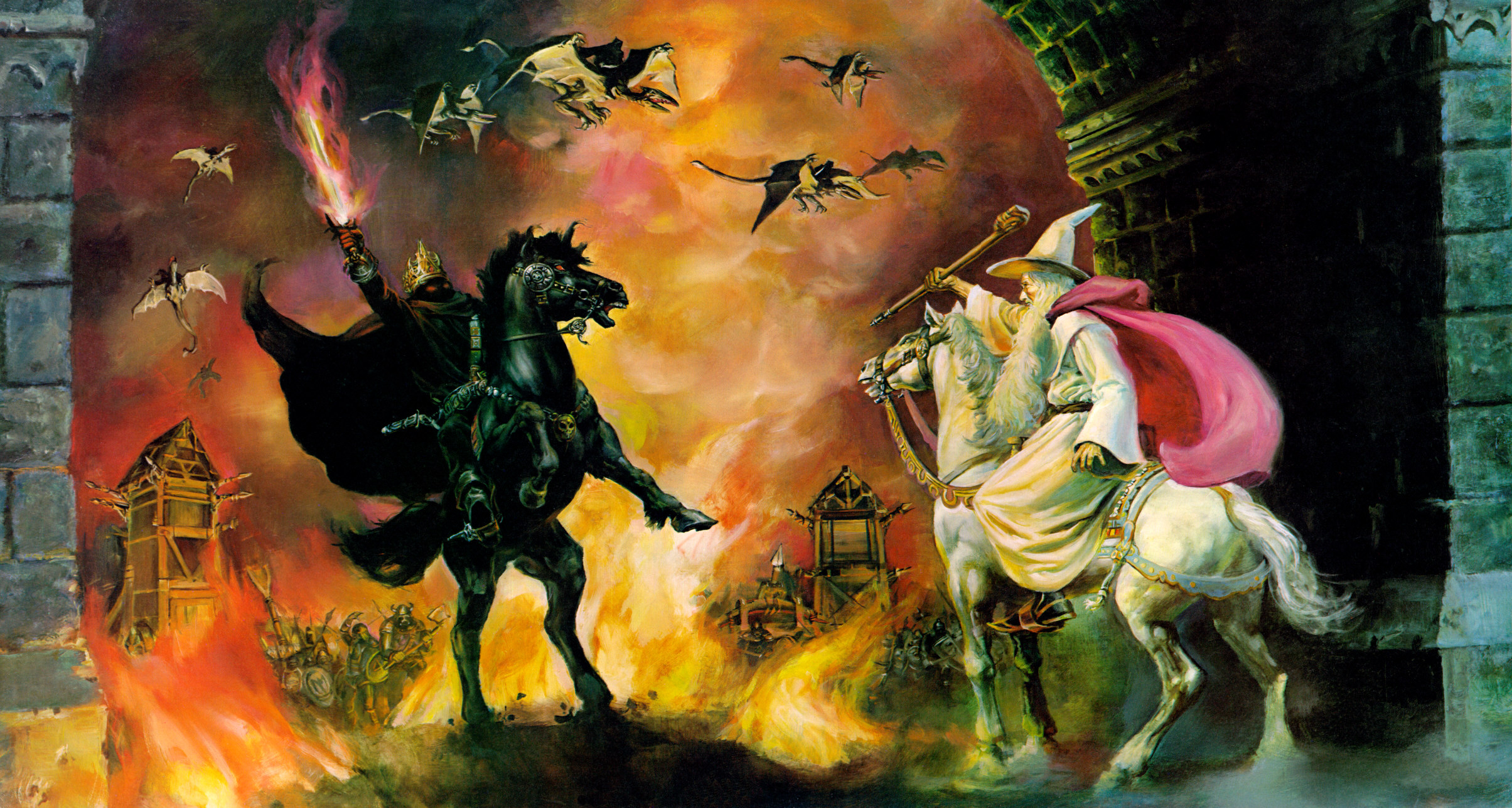
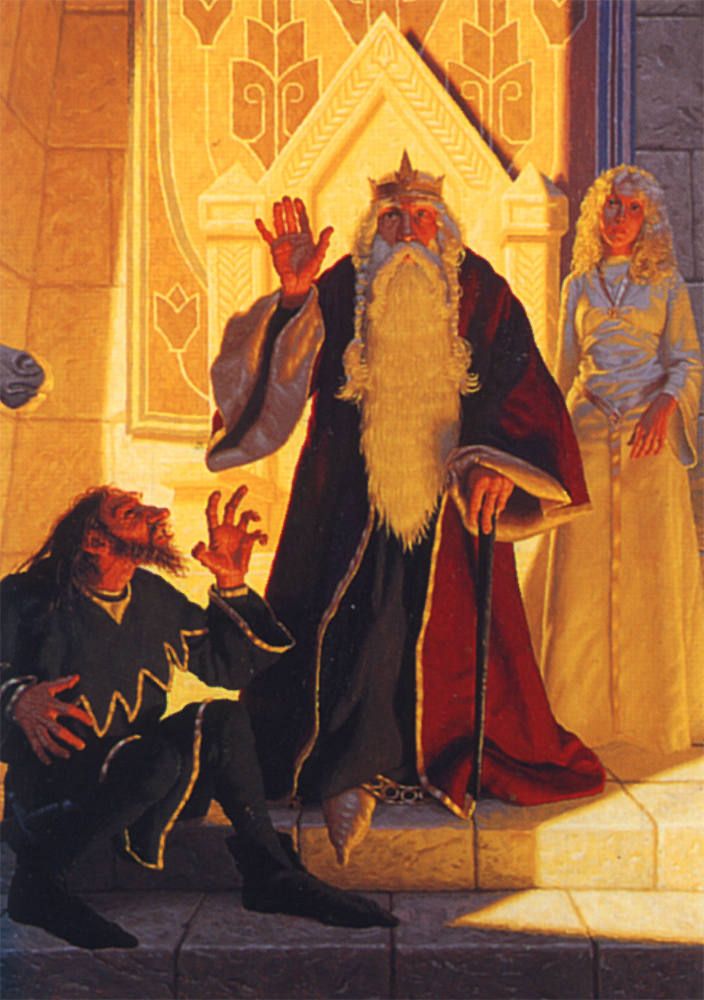
Recently, I wrote about Sauron’s terms, as stated by the Mouth of Sauron in “The Black Gate Opens”,

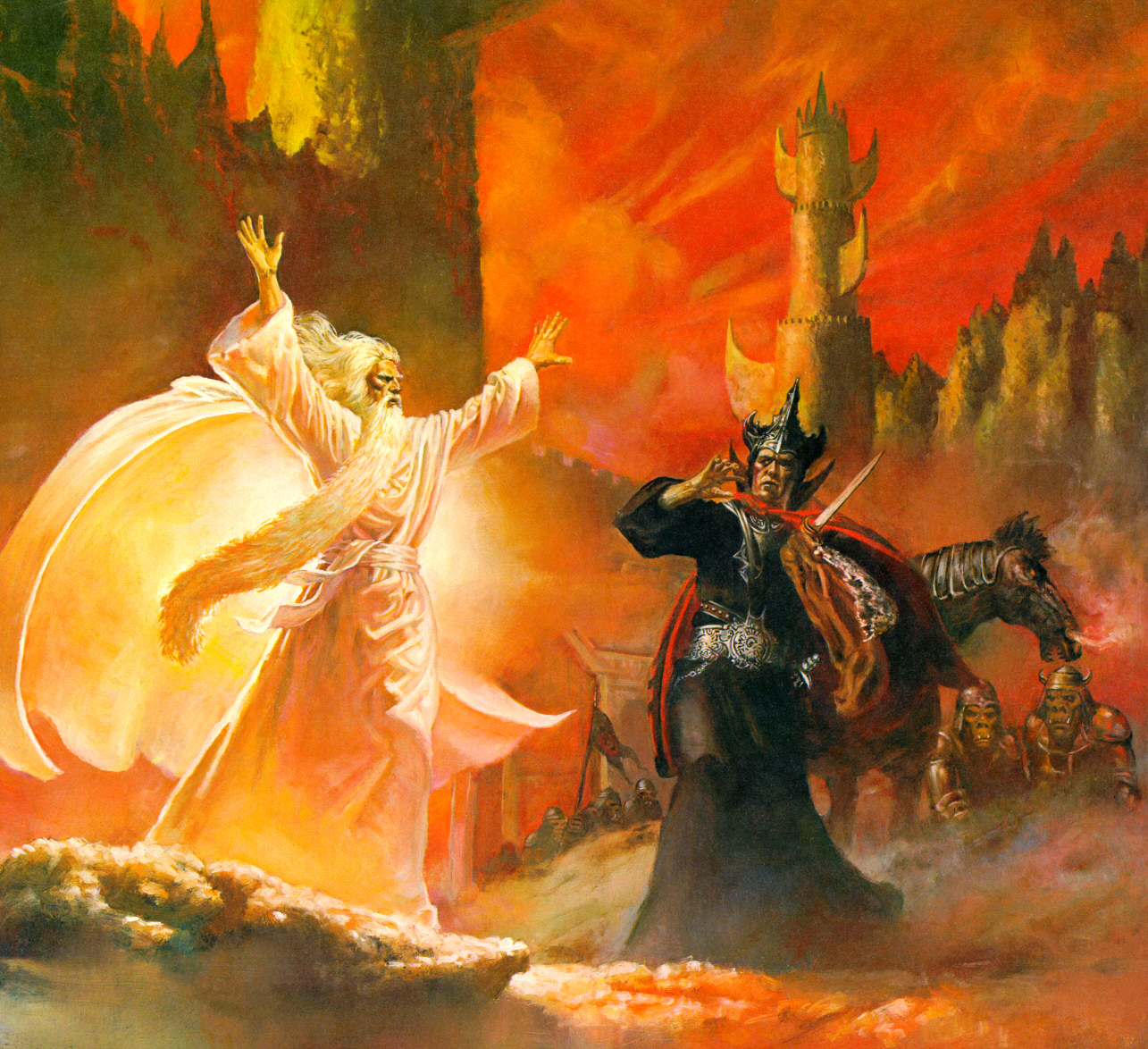
(Douglas Beekman—prolific sci-fi/fantasy artist—you can read a little about him here:  https://www.askart.com/artist/Doug_L_Beekman/122294/Doug_L_Beekman.aspx )

 to Gandalf and the others, taking apart the terms, as well as the behavior of the Mouth (see “Treating”, 26 March, 2025)), but the thought has occurred to me–a what if—what if the leaders of the West had agreed, if only to buy time?  After all, they had had no news of Frodo until the Mouth had produced his garments and, seeing them, mightn’t they have assumed that the Ring had gone back to its master?  And, if Sauron once more had the Ring, what next?

Here are the terms once more:

“ ‘The rabble of Gondor and its deluded allies shall withdraw at once beyond the Anduin, first taking oaths never again to assail Sauron the Great in arms, open or secret.  All lands east of the Anduin shall be Sauron’s for ever, solely.  West of the Anduin as far as the Misty Mountains and the Gap of Rohan shall be tributary to Mordor, and men there shall bear no weapons, but shall have leave to govern their own affairs.  But they shall help to rebuild Isengard which they have wantonly destroyed, and that shall be Sauron’s, and there his lieutenant shall dwell:  not Saruman, but one more worthy of trust.”  (The Return of the King, Book Five, Chapter 10, “The Black Gate Opens”)

At first glance, as insulting as the tone is, the terms are fairly mild, coming down to:

1. Sauron keeps Ithilien and beyond—which he mostly already holds, in fact

2. Rohan and, although it’s not named directly, we can presume Gondor:

 a. will pay tribute to Mordor

 b. but, although disarmed, will be allowed their own government

 c. although, with Isengard rebuilt, one presumes that Sauron’s lieutenant (the Mouth assumes that it will be he) will keep a close eye on Rohan and Gondor in the future

What this would mean, perhaps, is that Eomer would rule Rohan, but who would rule Gondor is uncertain—we would doubt highly that it would be Aragorn, considering that he’s already, using the Palantir, threatened Sauron—so possibly the Stewardship would continue, under Faramir?  If Sauron has a sense of irony, that would be fitting as, under his rule, there would never be a return of the King.

But was any of this real?  Would Sauron ever back down, even for a moment?  He did, many many years ago after the defeat of Morgoth, and again, when defeated by Tar-Calion, so we might see here another wavering of his purpose—after all, his minion (although he apparently isn’t aware of the fact that the Palantir has turned him into Sauron’s puppet) Saruman, has been defeated, his orc army destroyed, and his stronghold breached, and Sauron’s plan to attack Minas Tirith by land and sea has also failed, including the end of the chief of the Nazgul, Sauron’s general.  So far, things haven’t been going his way.

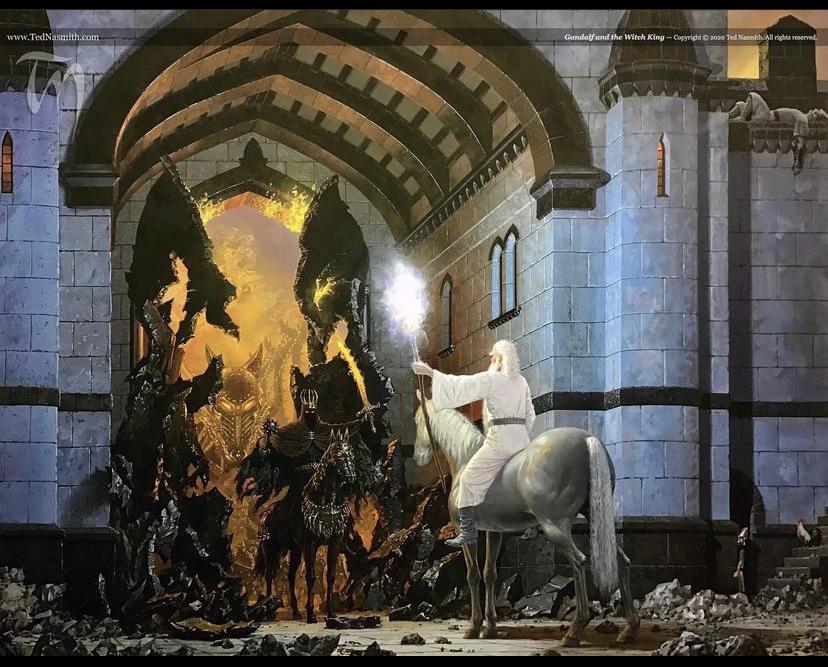
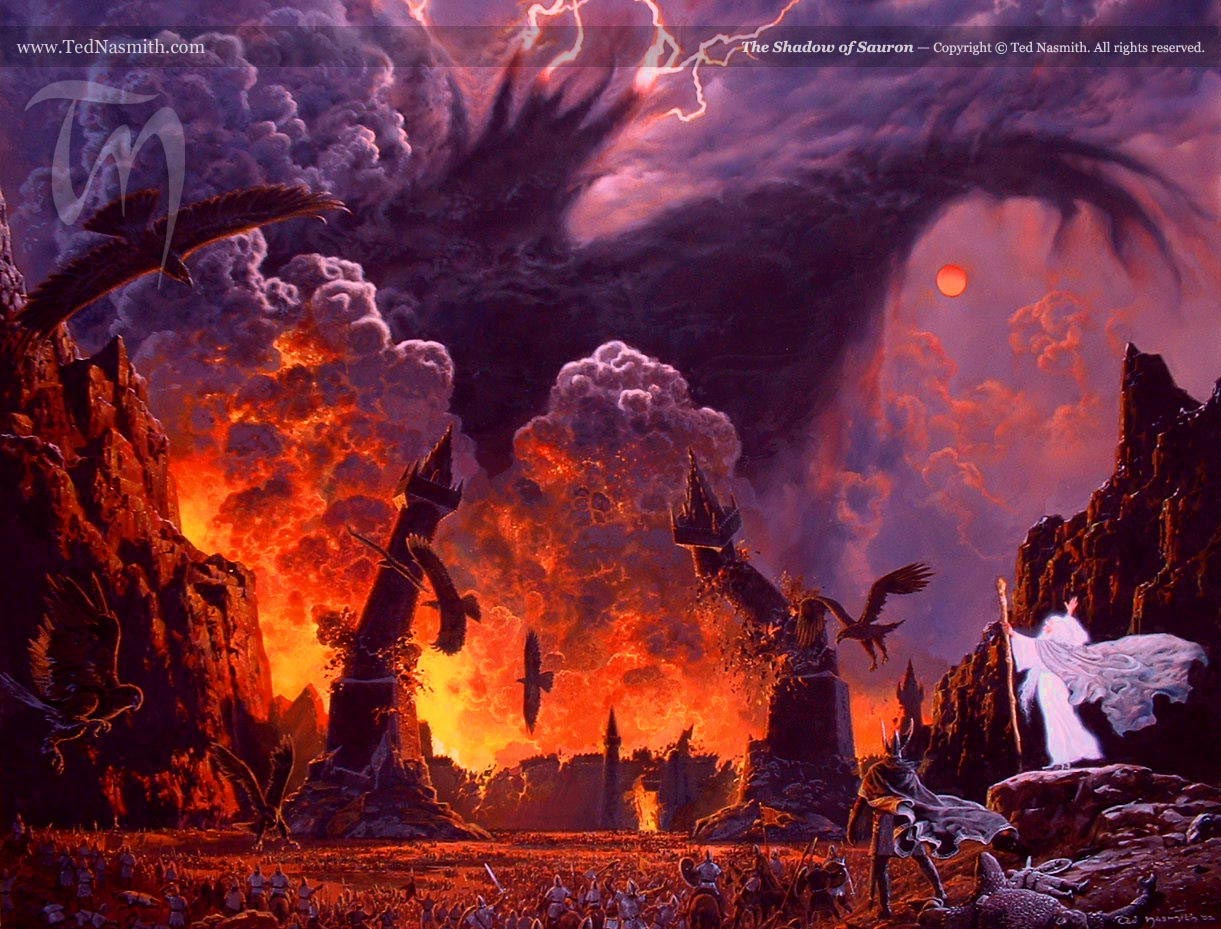
We’ll never know about what might have happened, however, if any of these terms were agreed to, because, upon Gandalf’s refusing them and threatening the Mouth, as in the chapter title, the Black Gate opens and the hordes of Mordor roar out to surround and nearly defeat the Westerners until eagles and the destruction of the Ring bring the whole thing to a crashing halt, literally.

(Ted Nasmith—and hasn’t he outdone himself with this painting?)

But could any of this ever have been a possibility?  To begin with, it would have meant that Aragorn would have been on the run and Gandalf, too, for that matter, as it’s doubtful that Sauron would have let either of the two escape alive.  We can presume, as well, that he would have attacked both Lorien and Rivendell and the forest elves’ kingdom, and probably even stretched that long, threatening arm

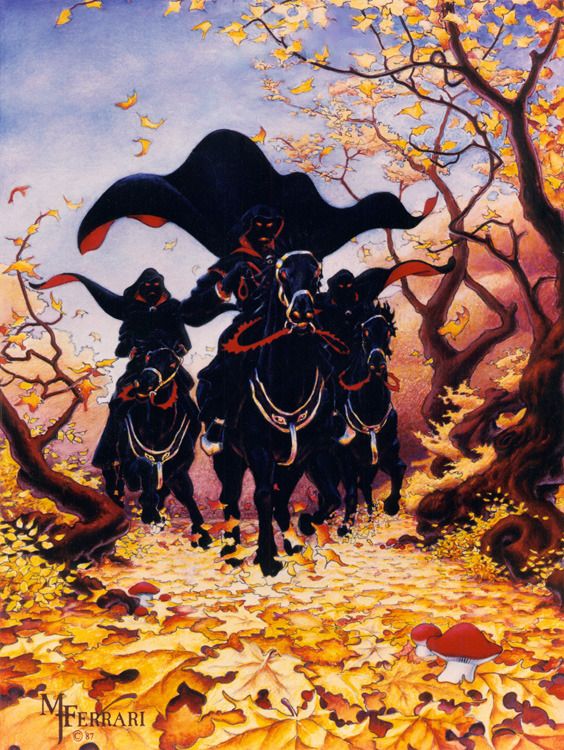
(JRRT)

beyond Rivendell to Bree and the Shire, although, if “Sharkey” was already busy industrializing the Shire, it might have amused Sauron to let him survive there, both as a puppet and as vengeance on the Shire for having been the hiding place of the Ring for so long.

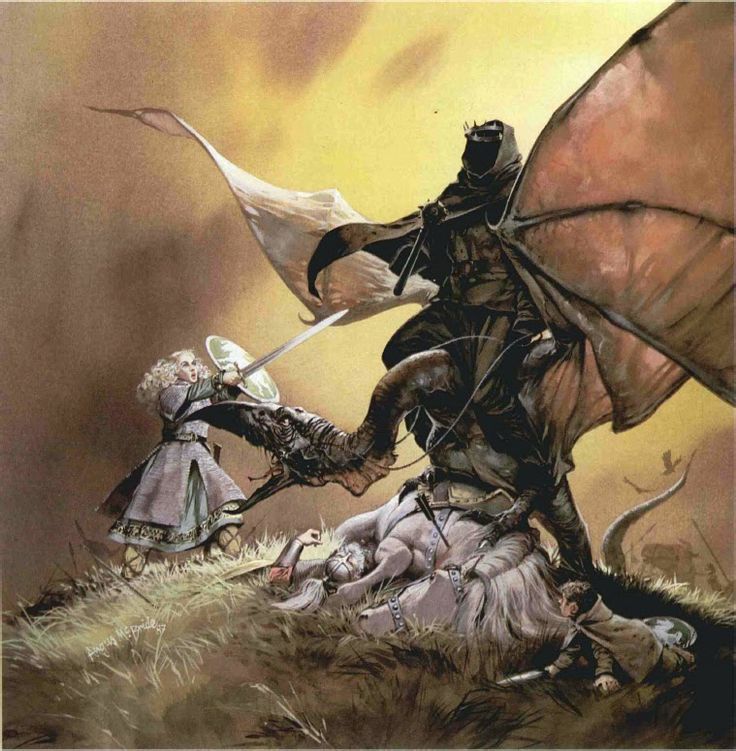
(Alan Lee)

And can we doubt that he would have ordered his new lieutenant at Isengard to deal with Fangorn and the Ents?

But would this even be the end of things?  One has only to remember Sauron’s behavior in the Second Age:

“He denies the existence of God, saying that the One is a mere invention of the jealous Valar of the West, the oracle of their own wishes.  The chief of the gods is he that dwells in the Void, who will conquer in the end, and in the void make endless realms for his servants….

A new religion, and worship of the Dark, with its temple under Sauron arises.  The Faithful are persecuted and sacrificed…”  (from a letter to Milton Waldman, late 1951, Letters, 216)

(Aztec sacrifice—as even Ted Nasmith and Denis Gordeev have yet to tackle this part of the story!)

So, might we also see new buildings and sinister ones at that?

And, when Sauron speaks of Morgoth (“chief of the gods is he that dwells in the Void”), does he have a plan to bring him back? 

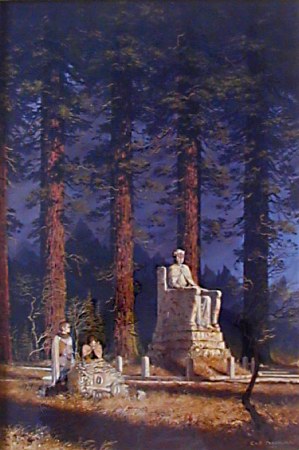
As far as I know, only Ted Nasmith has tried to represent Morgoth–

even JRRT himself doesn’t appear to have done so, so perhaps this is a “what if” taken a bit too far!

Thanks, for reading, as ever.

Stay well,

Be thankful that, for all that combating evil in Middle-earth is “the long defeat”, it hasn’t won yet,

And remember that, as always, there’s

MTCIDC

O

Treating

26 Wednesday Mar 2025

Posted by Ollamh in Uncategorized

≈ Leave a comment

Tags

diplomatic language, Gandalf, lotr, Mouth of Sauron, Tolkien

Welcome, dear readers, as always.

It’s a grim moment, late in The Lord of the Rings.  Although Sauron’s forces have failed in their attempt to take Minas Tirith,

(John Howe)

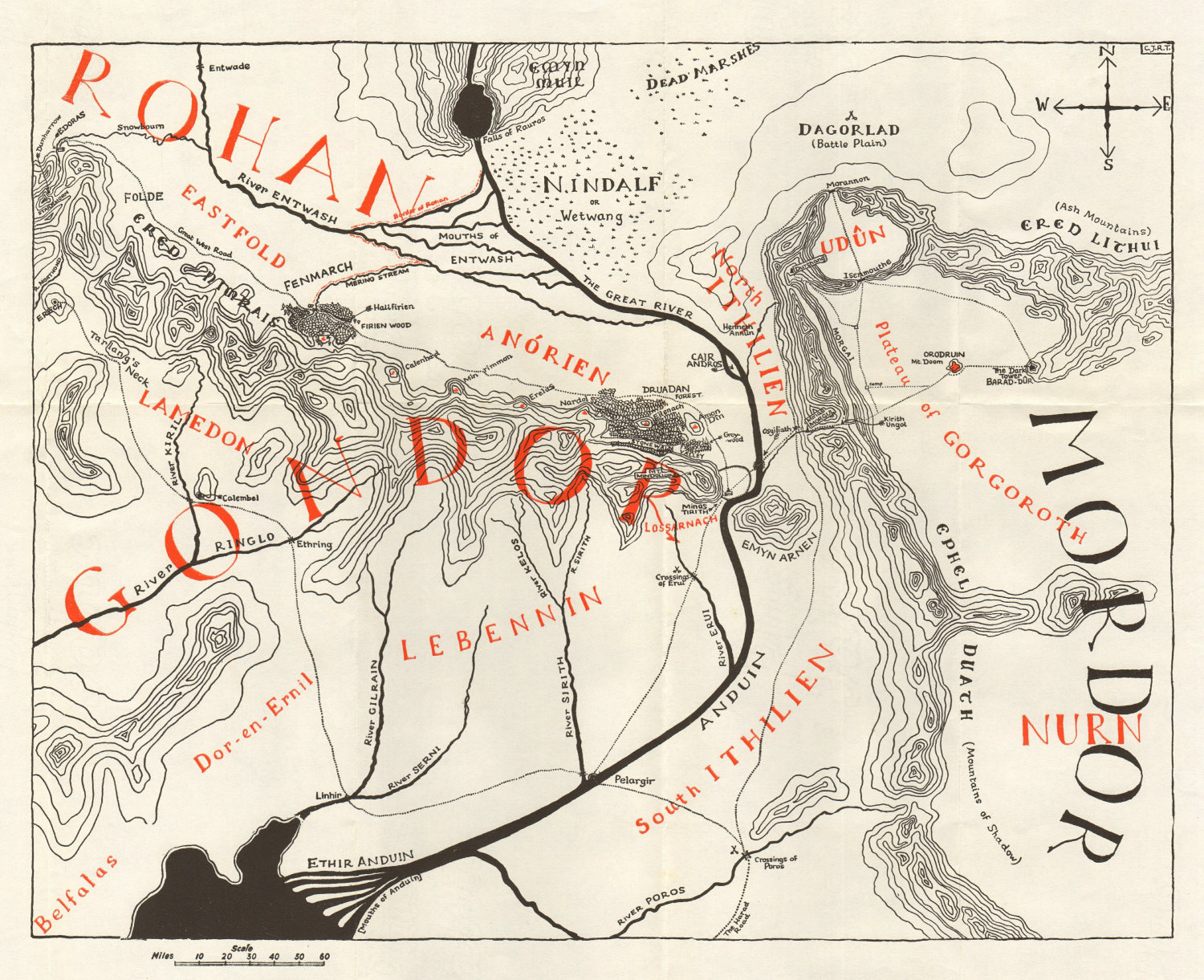
they are still active and numerous, but concealed behind the barrier of the Ephel Duath, the “Mountains of Shadow”, to the east, in Mordor.

(a much-redrawn map, beginning with JRRT. For more details, see: https://tolkiengateway.net/w/index.php?title=Map_of_Rohan,_Gondor,_and_Mordor&section=2 )

Gondor’s pretend embassy rides out, hoping to keep Sauron’s eye upon them.

(from the Jackson film)

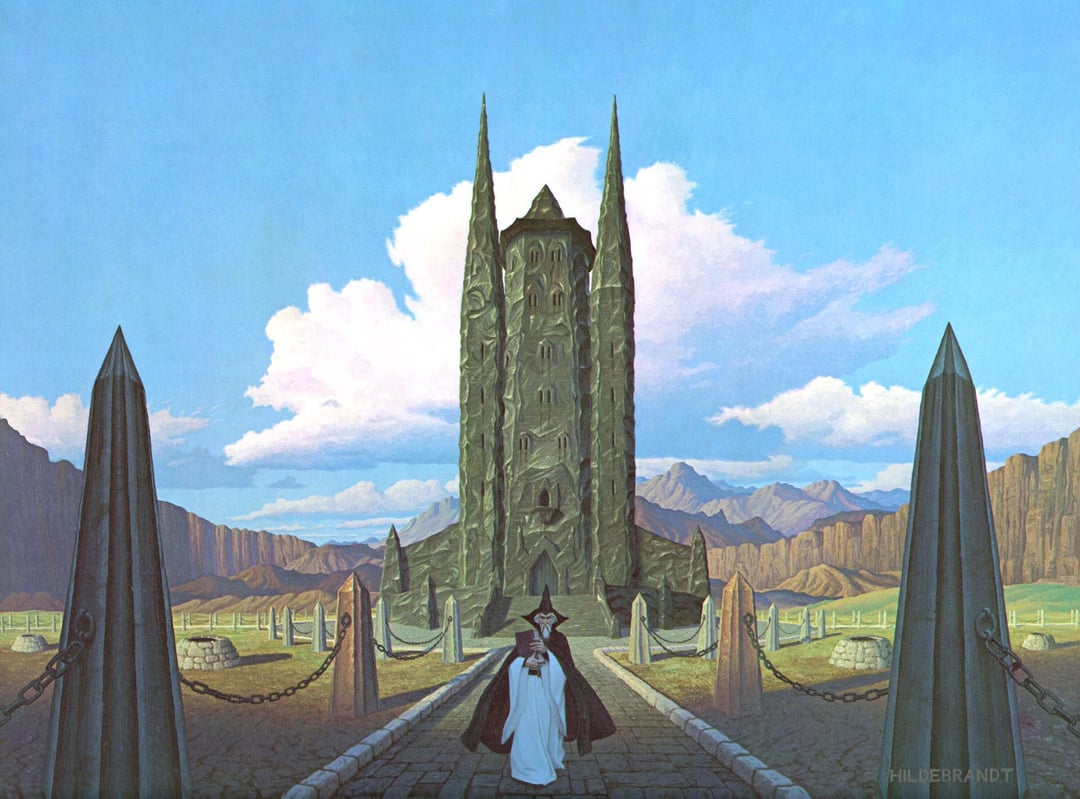
As they approach the Black Gate,

(the Hildebrandts)

they ride through the effects of the Industrial Revolution which JRRT so disliked:

“North amid their noisome pits lay the first of the great heaps and hills of slag and broken rock and blasted earth, the vomit of the maggot-folk of Mordor…”  (The Return of the King, Book Five, Chapter 10, “The Black Gate Opens”)

If we hadn’t known previously about Tolkien’s opinion of such, language choices like “vomit” and “maggot-folk”, would have told us all we needed to know and, in this posting, I want to talk a little about a particular form of language, that of diplomacy, in the scene which follows.

The embassy waits before the Black Gate in “a great mire of reeking mud and foul-smelling pools”  until, in a carefully-prepared entry, Sauron’s emissary appears:

“There came a long rolling of great drums like thunder in the mountains, and then the braying of horns that shook the very stones and stunned men’s ears.  And thereupon the door of the Black Gate [that is to say a wicket gate:  a smaller gate within a larger one, like this—

although clearly larger than this one] was thrown open with a great clang, and out of it there came an embassy from the Dark Tower.

At its head there rode a tall and evil shape…”

(Douglas Beekman—you can read more about this extremely productive sf/fantasy illustrator here:  https://www.askart.com/artist/Doug_L_Beekman/122294/Doug_L_Beekman.aspx )

The emissary—“the Mouth of Sauron”—speaks first and we see already the approach he takes:

“Is there anyone in this rout with authority to treat with me?”

Already he has turned representatives of Gondor into nothing more than an armed mob—a “rout”.

He continues:

“Or indeed with wit to understand me?”

Not only a mob, then, but a stupid one.

Then, turning to Aragorn—

“It needs more to make a king than a piece of Elvish glass, or a rabble such as this.  Why, any brigand of the hills can show as good a following.”

And you can see the general idea—

1. this isn’t an army, but a collection of nobodies—and a small one, at that

2. they are nothing but oafs

3. their leader is nothing more than a bandit chief who has appointed himself king

Gandalf then upbraids him:

“It is also the custom for ambassadors to use less insolence.  But no one has threatened you.”

To which the Mouth replies:

“So…Then thou arr the spokesman, old graybeard?  Have we not heard of thee at whiles, and of thy wanderings, ever hatching plots and mischief at a safe distance?”

First, there’s the implication that Gandalf is a doddering old man, then that he’s a plotter and of no certain abode, and then that he’s a coward.  It’s also important to notice the linguistic difference in his and Gandalf’s speech.  Unlike certain other Indo-European languages, including German, French and Italian, Modern English has abandoned the second person singular of verbs—no “thou/thy/thee”.  It’s “you” for everything.  The use of the second person singular is still preserved in those other languages and, at least in traditional French, is reserved for speaking to children, pets, loved ones, and close friends, (and, in older days, servants), there even being verbs, tutoyer, “to use thou” and vouvoyer, “ to use you”, to indicate which you might employ.  When uncertain, a person might ask, “On peut tutoyer?”—“Can we use thou?”  The advantage it provides, as we can see here, is that, whereas Gandalf is being polite, or at least neutral, the Mouth of Sauron is being  intentionally insulting—the old expression being “too familiar”—or at least downgrading Gandalf from an equal to someone of lower status, or even a child, which goes along with his earlier question as to whether anyone had the understanding (“wit”) to have a discussion with him.

The Mouth then shows Frodo’s gear, taken from him in Minas Morgul, and Pippin, recognizing it, “sprang forward with a cry of grief”, even as Gandalf tries to stop him, which gives the Mouth another opportunity:

“So you have yet another of these imps with you!…What use you find in them I cannot guess; but to send them as spies into Mordor is beyond even your accustomed folly.  Still, I thank him, for it is plain that this brat at least has seen these tokens before, and it would be vain for you to deny them now.”

Not content with downgrading the Gondorians, Aragorn, and Gandalf, hobbits are now either “imps”—that is, small demons, as in “imps of Satan” in our Middle-earth, or children, “brats”.  He then goes on to call the Shire “the little rat-land” as he builds what he claims the so-far successful resistance to Sauron actually is:

“Dwarf-coat, elf-cloak, blade of the downfallen West, and spy from the little rat-land of the Shire—nay, do not start!  We know it well—here are the marks of a conspiracy.”

Now we see where all of this is leading:  to Sauron’s terms—which are not about a cease-fire or a deal between equals, but simply a form of surrender:

“The rabble of Gondor and its deluded allies shall withdraw at once beyond the Anduin, first taking oaths never again to assail Sauron the Great in arms, open or secret.”

This repeats the Mouth’s earlier characterizing of the emissaries from Gondor as a mob—and the suggestion that they are nothing more than a group of plotters against Sauron’s (legitimate) authority.

“All lands east of the Anduin shall be Sauron’s for ever solely.”

His earlier struggles with the West had led to his defeat and loss of control of those lands, so here Sauron is attempting to guarantee that they stay in his hands this time.

“West of the Anduin as far as the Misty Mountains and the Gap of Rohan shall be tributaries to Mordor, and men there shall bear no weapons, but shall have leave to govern their affairs.”

Here we see the Rohirrim being:

a. disarmed

b. forced to pay tribute

“But they shall help to rebuild Isengard which they have wantonly destroyed…”

“wantonly” suggests, of course, that it was done without purpose—and, remembering what Saruman was actually up to, this is actually laughable, but it’s also a piece with the general tone:  we are the legitimate authorities, you have plotted against us and rebelled and with no good reason.

And then we see what the Mouth has in mind for himself:

“…and that shall be Sauron’s and there his lieutenant shall dwell:  not Saruman, but one more worthy of trust.”

(“Looking in the Messenger’s eyes they read his thought:  He was to be that lieutenant, and gather all that remained of the West under his sway; he would be their tyrant and they his slaves.”)

So far, all of this has been demands on Sauron’s part, but what will he give in return?

“It seemed then to Gandalf, intent, watching him as a man engaged in fencing with a deadly foe, that for the taking of a breath, the Messenger was at a loss; yet swiftly he laughed again,

‘Do not bandy words in your insolence with the Mouth of Sauron!…Surety you crave!  Sauron gives none.  If you sue for his clemency, you must first do his bidding.  These are his terms.  Take them or leave them.’ “

Putting all of this together, we see that, unlike the “custom of ambassadors” of Gandalf, this is a carefully-planned verbal attack, first denigrating the other side’s position for negotiating, then suggesting that, unlike an opposing state, the Gondorians are nothing more than illegimate plotters, then making a series of demands for which they are offered nothing in return except possible “clemency”.  

This, then, is not a treaty—none is offered—but the treatment of rebellious slaves and well deserves Gandalf’s rebuke which, you’ll notice, returns some of the Mouth’s medicine to him, even if not using “thou”:

“But as for your terms, we reject them utterly.  Get you gone, for your embassy is over and death is near to you.  We did not come here to waste words in treating with Sauron, faithless and accursed; still less with one of his slaves.  Begone!”

Is the Mouth’s reaction surprising, then?

“Then the Messenger of Mordor laughed no more.  His face was twisted with amazement and anger to the likeness of some wild beast that, as it crouches on its prey, is smitten on the muzzle with a stinging rod.  [How appropriate for the Mouth!]  Rage filled him and his mouth slavered, and shapeless sounds of fury came strangling from his throat.  But he looked at the fell faces of the Captains and their deadly eyes, and fear overcame his wrath.  He gave a great cry, and turned, leaped upon his steed, and with his company galloped madly back to Cirith Gorgor.”

A fitting end—wordless, he flees—undoubtedly with Gandlaf’s last words in his ears:  “…slave.  Begone!”

Thanks, as always, for reading.

Stay well,

Avoid evil emissaries with their own agendas,

And remember that, as always, there’s

MTCIDC

O

Thrones or Dominions (2)

07 Wednesday Nov 2018

Posted by Ollamh in Economics in Middle-earth, Imaginary History, J.R.R. Tolkien, Maps, Military History, Military History of Middle-earth

≈ Leave a comment

Tags

1984, Adolf Hitler, Barad-Dur, Benito Mussolini, Big Brother, Denethor, dictatorships, Elf Kingdom, Eye of Sauron, Gondor, Maiar, map, Middle-earth, Minas Tirith, Mouth of Sauron, Nazgul, Ornthanc, Rohan, Saruman, Sauron, Steward of Gondor, The Lord of the Rings, Theoden, Tolkien, Uruk-hai

As always, dear readers, welcome.

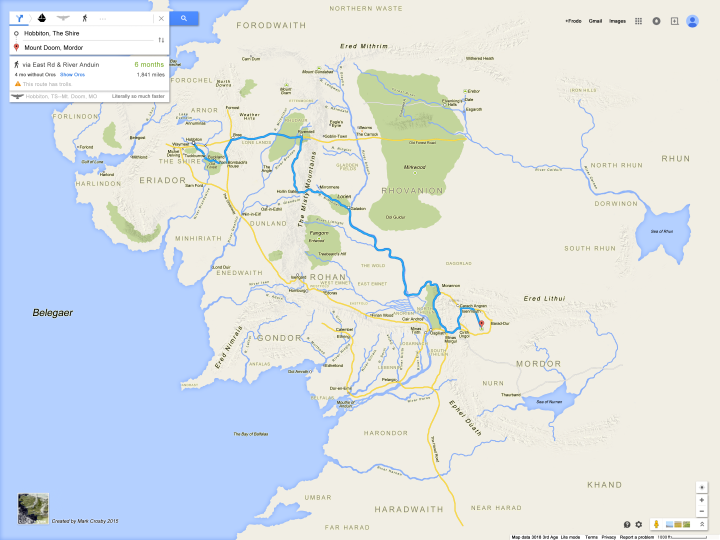
In our last, we began to discuss what we called the governments of Middle-earth at the time of the War of the Ring, making a kind of Grand Tour using the plot movement of The Lord of the Rings to loosely shape our itinerary.  (And here we’re borrowing from a witty idea, on a site called brilliantmaps.com, where we found “If Frodo and Sam had Google Maps of Middle-earth”.)

image1memap.png

Our first stop was the Shire, where we proposed that this was a “government by the few”:  that is, an oligarchy, a certain number of old and established families controlling the state.  From there, we moved on to Bree, where there was so little information that our best guess was that it, too, was probably an oligarchy, some sort of loose-knit one among—or perhaps uniting—the four villages which made up the general area.

Next, we grouped together what we suggested were two Elf kingdoms, Rivendell and Lorien, where Elrond and Galadriel (along with the nearly-invisible Celeborn), clearly were in charge, although neither would claim the title of monarch.

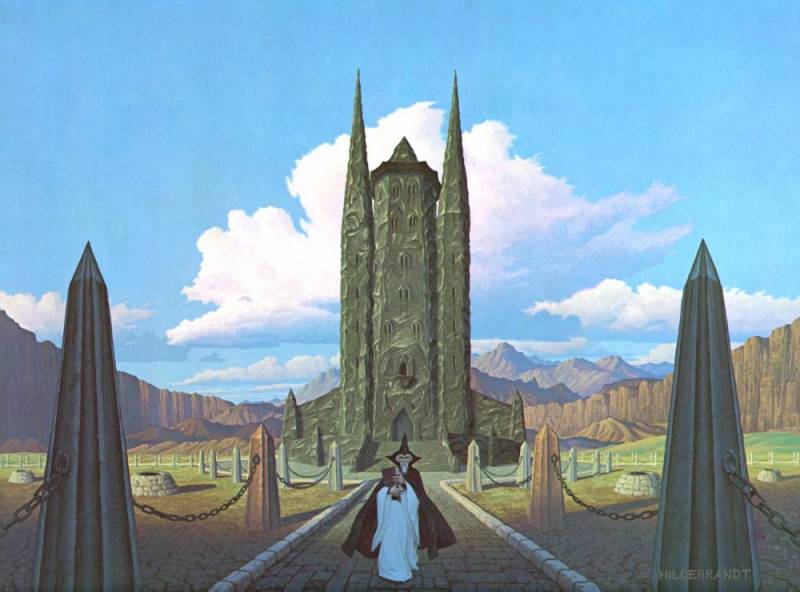
At our next stop, Isengard, Saruman,

image2orthanc.jpg

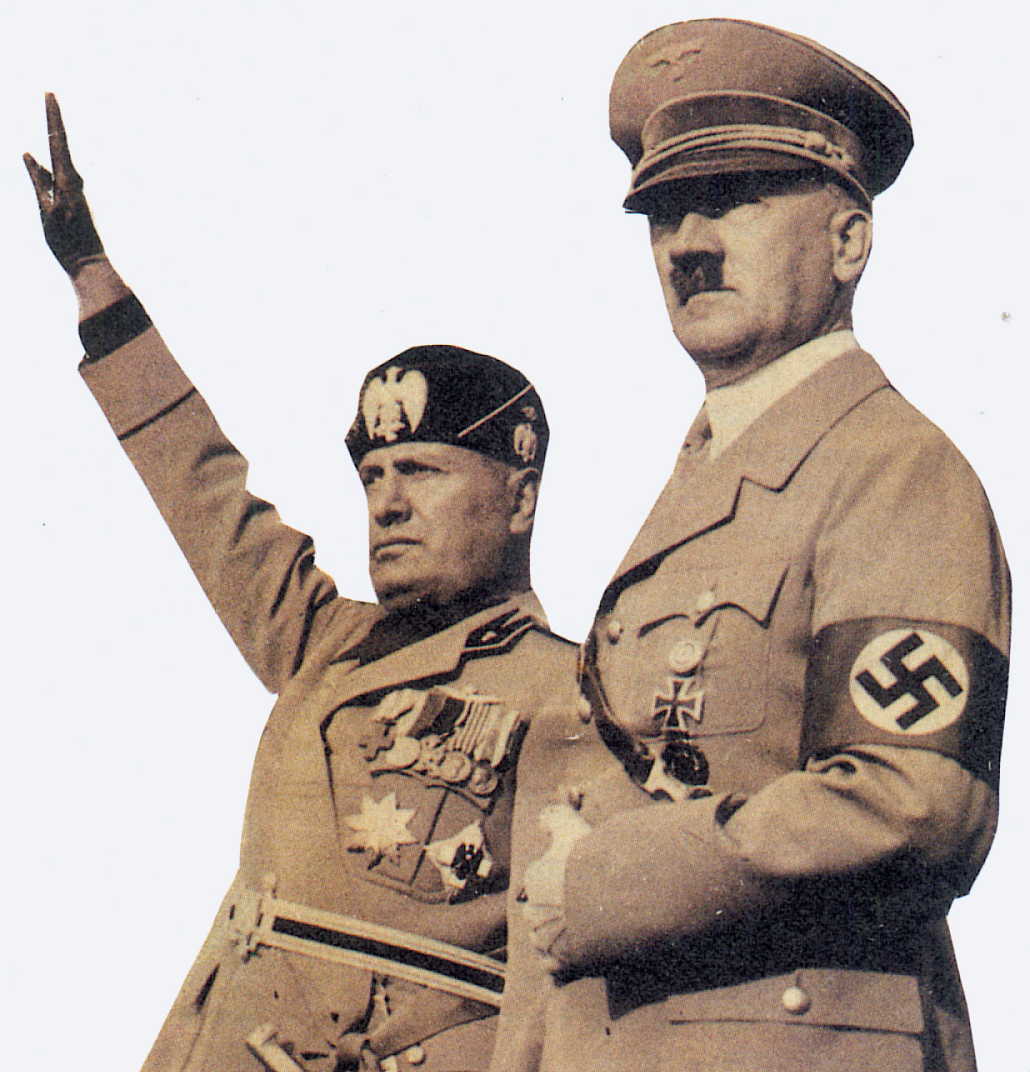
who had begun as one of the five Maiar sent to oppose the annoyingly-persistent Sauron, had moved from being what Gandalf called “the chief of my order” (The Fellowship of the Ring, Book One, Chapter 2, “The Shadow of the Past”), to being a kind of dictator—but one in the shadow of Sauron, just as Mussolini (1883-1945), who, from 1922, had been a model for such figures,

image3march.jpg

had fallen, by the later 1930s, into being the shadow of another, more powerful, dictator.

image4mushit.jpg

Like Elrond and Galadriel, he carries no title, but his captain, Ugluk, calls him “the Wise, the White Hand:  the Hand that gives us man’s-flesh to eat”, which probably tells us more than we want to know about his rule. (The Two Towers, Book Three, Chapter 3, “The Uruk-hai”)

We believe that this shadow may have been created by Saruman’s growing arrogance (which Gandalf points out to Frodo in “The Shadow of the Past”) combined with his overconfidence in using a palantir he has found in Orthanc and which puts him into communication with Sauron—and Sauron’s ability to seduce.

image5palantir.jpg

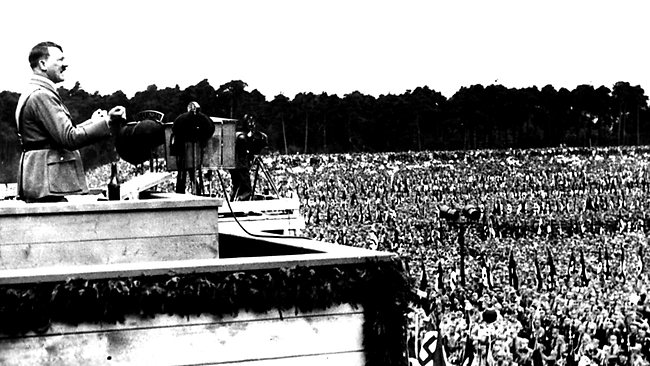
Sauron himself seems like the primal dictator, but a dictator before the 20th century, when dictators began to have a growing media world to employ to make themselves omnipresent in the lives of their citizens.

image6hitradio.jpg

image7hitmovie.jpg

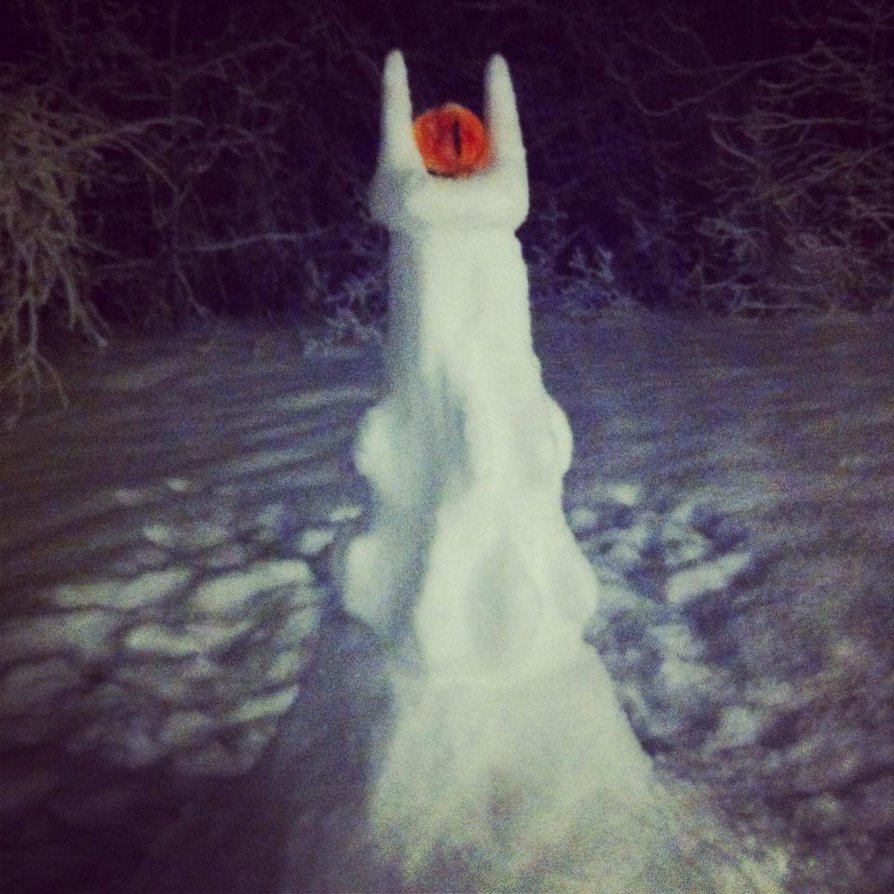
Instead, he’s  remote—sitting in the Barad dur, yet

image8baraddur.jpg

(and we can’t resist this image by “Rackthejipper”)

image9baradsnow.jpg

represented as being like 1984’s Big Brother, always watching.

image10bb.jpg

Or, as it is crudely represented in the Jackson films, literally a giant eye on a tower.

image11jack.jpg

When one thinks of modern dictators, however, one imagines them backed by huge bureaucracies, like the ministries in 1984:

“The Ministry of Truth–Minitrue, in Newspeak [Newspeak was the official

language of Oceania. For an account of its structure and etymology see

Appendix.]–was startlingly different from any other object in sight. It

was an enormous pyramidal structure of glittering white concrete, soaring

up, terrace after terrace, 300 metres into the air. From where Winston

stood it was just possible to read, picked out on its white face in

elegant lettering, the three slogans of the Party:


WAR IS PEACE

FREEDOM IS SLAVERY

IGNORANCE IS STRENGTH


The Ministry of Truth contained, it was said, three thousand rooms above

ground level, and corresponding ramifications below. Scattered about London

there were just three other buildings of similar appearance and size. So

completely did they dwarf the surrounding architecture that from the roof

of Victory Mansions you could see all four of them simultaneously. They

were the homes of the four Ministries between which the entire apparatus

of government was divided. The Ministry of Truth, which concerned itself

with news, entertainment, education, and the fine arts. The Ministry of

Peace, which concerned itself with war. The Ministry of Love, which

maintained law and order. And the Ministry of Plenty, which was responsible

for economic affairs. Their names, in Newspeak: Minitrue, Minipax, Miniluv,

and Miniplenty. (George Orwell, 1984, Chapter 1)


Instead, what we can see of Sauron’s government is much more medieval, beginning with the Nazgul, who were once human kings,

image12nazgul.jpg

who would be like the barons, the chief feudal deputies  of a king in a feudal world of the sort medieval England was and upon which much of Middle-earth, as we’ve suggested in many earlier postings, was based.  The chief of these was then the commander of Sauron’s main attack on Minas Tirith.

image13naz.jpg

To which we would add “the Voice of Sauron” (reminding us, of course, that he is only the spokesperson and Sauron would be presumed to have his eye on him, as well).  If you look for images of him, you will commonly find this:

image14jack.jpg

But, like certain other depictions in the Jackson films (that eye, for example), it is a very literal interpretation for someone JRRT described as:

“The rider was robed all in black, and black was his lofty helm; yet this was no Ringwraith but a living man…it is told that he was a renegade, who came of the race of those that are named the Black Numenoreans…” (The Return of the King, Book Five, Chapter 10, “The Black Gate Opens”)

Here’s an image possibility which comes a bit closer to the text, in our opinion.

image15lieutenant.jpg

From dictators, we make a final stop at two actual feudal  kings, the first, the ruler of Rohan, Theoden,

image16theoden.jpg

is clearly the descendant of earlier kings, as we are told in Appendix A, of The Lord of the Rings, “The Kings of the Mark”, where the line begins with Eorl the Young and continues for about five hundred years.

In the case of our other monarchy, Gondor, the kings who ruled for so many centuries (from SA3320 to TA 2050), have disappeared and, though the fiction is maintained that they will someday return, the actual ruler is their deputy, the Steward, and his role as lieutenant is symbolized literally by his position in the old throne room:

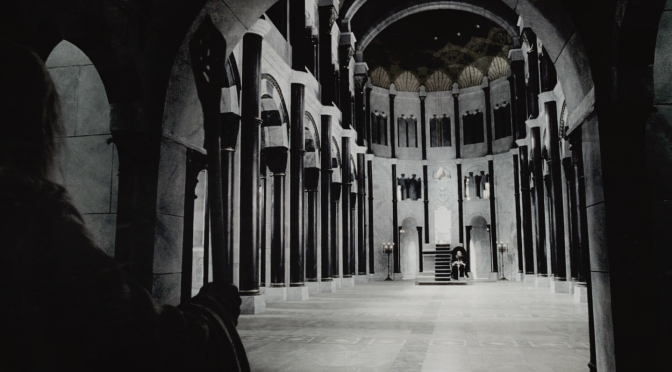
“At the far end, upon a dais [a kind of raised platform] of many steps was set a high throne under a canopy of marble shaped like a crowned helm; behind it was carved upon the wall and set with gems an image of a tree in flower.  But the throne was empty.  At the foot of the dais, upon the lowest step which was broad and deep, there was a stone chair, black and unadorned, and on it sat an old man gazing at his lap.”  (The Return of the King, Book Five, Chapter 1, “Minas Tirith)image17throne.jpg

At the same time, Denethor, and all of the previous Stewards, were kings in all but name, having ruled Gondor for twenty-five generations (see Appendix A, “The Stewards” for details).

So, in sum we have:

  1. 2 possible oligarchies (the Shire, Bree)
  2. 4 kingdoms (or at least sort of, in the case of the Elves—Rivendell, Lorien, plus Rohan and Gondor)
  3. 2 dictatorships (eastern Rohan, extending from Isengard, Mordor)

And, just when we were summarizing, the thought came to us:  what about the dwarves?  We can imagine that, considering Thorin’s family, there have been the equivalent of kings among the dwarves, but that’s a posting for another day!

Thanks, as ever, for reading.

MTCIDC

CD

Herald-ry in Middle Earth

30 Wednesday Mar 2016

Posted by Ollamh in Fairy Tales and Myths, Imaginary History, J.R.R. Tolkien, Literary History, Military History, Military History of Middle-earth, Narrative Methods

≈ 2 Comments

Tags

Achilles, armour, Battle of Bannockburn, Eurybates, flailing and winnowing, Heraldry, Heralds, Hermes, kerykeion, Lakedaimonia, lambda, Medieval, Mouth of Sauron, Robert de Septvans, Robert the Bruce, Roger de Trumpington, Sir Henry de Bohun, Spartans, tabard, Talthybius, The Black Gate, The Illiad, The Lord of the Rings, Tolkien, White Tree of Gondor

Welcome, as always, dear readers.

There is a moment in the film of The Return of the King which has always puzzled us. The Lieutenant of the Tower of Barad-dur has appeared outside the Morannon with taunts and with what appears to be disconcerting news about Frodo.

mouth-of-sauron-1.jpg

In response, Aragorn kills him. Even if you had never seen a movie with knights in it so that you would know that this was a herald or messenger of some sort and that there are rules about such people, there are modern parallels—flags of truce, even the silent protection offered to diplomats—to make you think that this was hardly proper behavior for a king.

If we look at this scene in the chapter entitled “The Black Gate Opens”, we see that this is another of those disturbing—and seemingly arbitrary—changes made by the script writers, showing once more their disregard—or lack of proper understanding—of the author and his wishes.

“Aragorn said naught in answer, but he took the other’s eye and held it, and for a moment they strove thus; but soon, though Aragorn did not stir nor move hand to weapon, the other quailed and gave back as if menaced with a blow. ‘I am a herald and ambassador, and may not be assailed!’ he cried.”

There is a parallel in this, when we are told that Aragorn has used the Palantir and wrestled with Sauron.

“ ‘It was a bitter struggle, and the weariness is slow to pass. I spoke no word to him, and in the end I wrenched the Stone to my own will…Now in the very hour of his great designs the heir of Isildur and the Sword are revealed; for I showed the blade re-forged to him. He is not so mighty yet that he is above fear; nay, doubt ever gnaws him.’ ” (The Return of the King, Book 5, chapter 2, “The Passing of the Grey Company”)

(This is misportrayed in the extended version of the film. For some reason, in return for being shown Anduril, Sauron shows Aragorn a lifeless—perhaps just napping? “she looks like she’s only sleeping!”—Arwen—which, as is so often the case with the clumsy script writers, completely misses the real point of the scene in the book.)

In both of these scenes, what the author clearly meant to show was that Aragorn’s power, now that he has chosen to reveal it, comes from within and is so great that it needs neither words nor violence to assert itself—more signs that he is the true returning king.

Thus, harming a herald, in fact, shows him as the very opposite: not only violent, but, instead of restoring and preserving—his proper task as king—he violates custom.

We note, by the way, that, in the book, he looks to be following custom. Under the direction of Gandalf, the army which marches to challenge Sauron formally declares its ownership of Ithilien with trumpet blasts

Black Trumpeterearly16thc.jpg

and its own heralds.

What is a herald, anyway? The Mouth of Sauron claims to be one and even claims immunity because of it—why?

In fact, heralds, in the western world, have an ancient lineage, first appearing in literature in The Iliad, where they act both as messengers

flaxman_Briseis_achil.jpg

and as referees.

hector-and-ajax-fighting.jpg

You’ll notice, in the first of these two pictures, that the two heralds, Talthybius and Eurybates, have the badge of a herald: a special curved wand, called a kerykeion. Hermes carries one, to indicate that he is the patron god of heralds (and therefore their protector).

0408b5884a2ff2a3c2ad0b51ffde7a13.jpg

At some point in their early history, the convention appeared that heralds were considered, in their role as messengers, to be somehow neutral and therefore were not to be harmed. (It’s not clear, however, during their first appearance, in Iliad 1, that this was so then—or at least when dealing with Achilles–but perhaps that’s just Achilles, who is not necessarily always the most balanced individual.)

Heralds in the western medieval world continued with these functions, but added another.

We have a little evidence that some ancient Greek warriors and states may have used specific designs as badges. Spartan shields, for example, sometimes carried a lambda—a tentlike shape which stands for the sound of L in English and was short for “Lakedaimonia”, which is where Sparta was located.

spartanshield.png

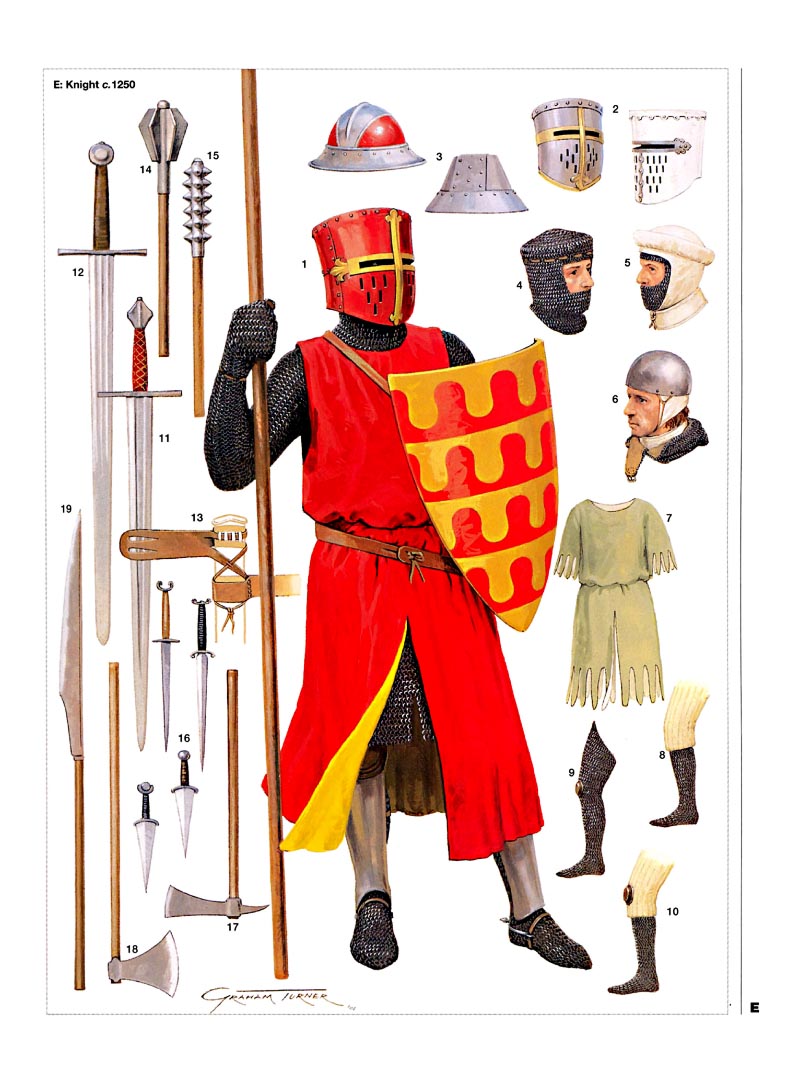
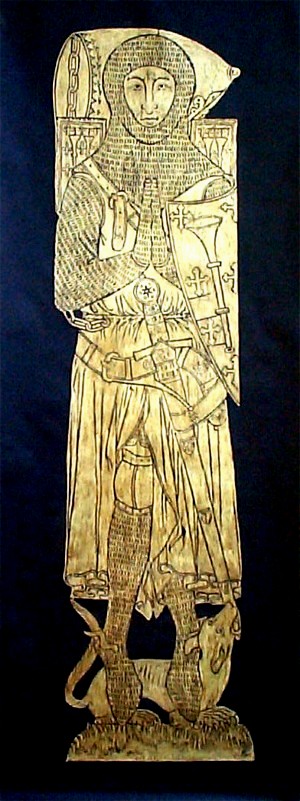
A much more elaborate system of designs gradually developed during the Middle Ages, in part because of the increasingly-elaborate armor, which, from a long shirt of chain mail, came to cover the whole knight, making him, potentially unidentifiable.

normanhorseman.jpg

late12thcknight.jpgEnglish_Knight_13thc.jpg

So, both to make himself distinguishable on the battlefield and probably because it was macho, and therefore sexy, a knight would devise a distinctive design for his shield, possibly his clothing, and maybe even his horse, as well.

Knight14thcmid.png

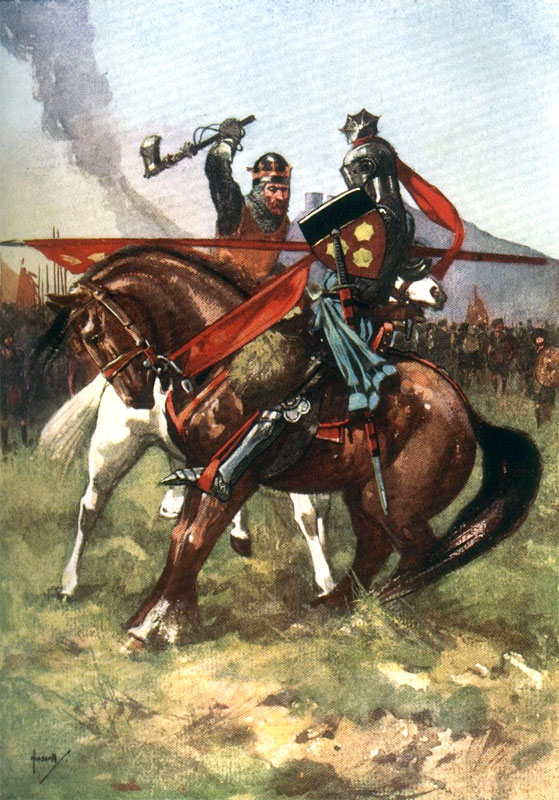
This could be pretty spectacular—just look at Robert the Bruce, king of Scotland in the early 14th century.

heraldic-robert-the-bruce.jpg

[A footnote here– at the site of the Battle of Bannockburn, there is a famous equestrian statue of the Bruce in which the head and facial features have been reconstructed from the Bruce’s actual skull.

bruce-9.jpg

images.jpg

Just before this same battle, the Bruce had shown his knightly skills by splitting, with his battle axe, the helmet and head of the English knight, Sir Henry de Bohun.]

robert-de-bruce-kills-bohun-l.jpg

Sometimes these designs could include puns on their owners’ names. Here’s Roger de Trumpington, with trumpets.

sirrogerdetrumpington.jpg

And Robert de Septvans (Septvans = “seven (winnowing) fans”).

sirrbtde7.jpg

The fan here looks actually like a basket, but was used for helping the wind to carry off the outer husk of the grain ear, a process called winnowing. (To the left is the previous process, flailing, where the beard of grain is being broken off the stalk before it is winnowed.)

threshingwinnowing.jpg

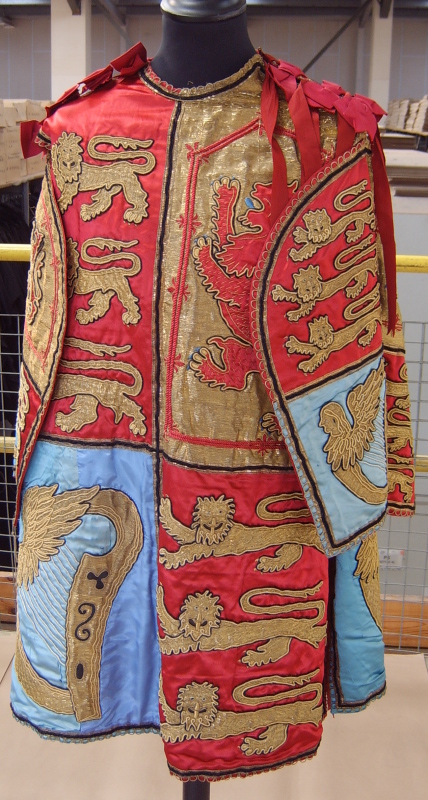
As the number and complexity of patterns on armor developed, it appears that specialists took over the job of identifying them and keeping track of them, the heralds. And, from their name, we get our general name for the designs used on armor and clothing, heraldry. Because they worked in the world of heraldry, they decorated themselves, as well, and, in England, still do.

Heralds-at-the-Garter-Service-Julian-Calder-1024x681.jpg

Thus, we can imagine that, when Aragorn, Gandalf, and their companions reached the crossroads in Ithilien,

crossroads.jpg

after the trumpets sounded, heralds wearing a special coat, called a tabard,

Pursuivant_tabard.jpg

which would have been embroidered with the tree and seven stars,

Flag_of_the_Reunited_Kingdom_of_Arnor_and_Gondor.png

would have stepped forward and reclaimed the land for the king. Specially marked, they would have been very visible, and as the lieutenant of the tower tells us, protected by custom from harm. So why is Aragorn, the one man capable of returning order to Middle Earth, scripted to kill one? What do you think?

Thanks, as ever, for reading!

MTCIDC

CD

ps

And now you know what the White Rabbit is wearing and is supposed to be doing in Alice

De_Alice's_Abenteuer_im_Wunderland_Carroll_pic_37.jpg


The Doubtful Sea Series Facebook Page

The Doubtful Sea Series Facebook Page

  • Ollamh

Categories

  • Artists and Illustrators
  • Economics in Middle-earth
  • Fairy Tales and Myths
  • Films and Music
  • Games
  • Heroes
  • Imaginary History
  • J.R.R. Tolkien
  • Language
  • Literary History
  • Maps
  • Medieval Russia
  • Military History
  • Military History of Middle-earth
  • Narnia
  • Narrative Methods
  • Poetry
  • Research
  • Star Wars
  • Terra Australis
  • The Rohirrim
  • Theatre and Performance
  • Tolkien
  • Uncategorized
  • Villains
  • Writing as Collaborators
Follow doubtfulsea on WordPress.com

Across the Doubtful Sea

Recent Postings

  • Through a glass… January 7, 2026
  • Heffalumps? December 31, 2025
  • We Three Kings December 24, 2025
  • A Moon disfigured December 17, 2025
  • On the Roads Again—Once More December 10, 2025
  • (Not) Crossing Bridges December 3, 2025
  • On the Road(s) Again—Again November 26, 2025
  • On the Road(s) Again November 19, 2025
  • To Bree (Part 2) November 12, 2025

Blog Statistics

  • 104,125 Views

Posting Archive

  • January 2026 (1)
  • December 2025 (5)
  • November 2025 (4)
  • October 2025 (5)
  • September 2025 (4)
  • August 2025 (4)
  • July 2025 (5)
  • June 2025 (4)
  • May 2025 (4)
  • April 2025 (5)
  • March 2025 (4)
  • February 2025 (4)
  • January 2025 (5)
  • December 2024 (4)
  • November 2024 (4)
  • October 2024 (5)
  • September 2024 (4)
  • August 2024 (4)
  • July 2024 (5)
  • June 2024 (4)
  • May 2024 (5)
  • April 2024 (4)
  • March 2024 (4)
  • February 2024 (4)
  • January 2024 (5)
  • December 2023 (4)
  • November 2023 (5)
  • October 2023 (4)
  • September 2023 (4)
  • August 2023 (5)
  • July 2023 (4)
  • June 2023 (4)
  • May 2023 (5)
  • April 2023 (4)
  • March 2023 (5)
  • February 2023 (4)
  • January 2023 (4)
  • December 2022 (4)
  • November 2022 (5)
  • October 2022 (4)
  • September 2022 (4)
  • August 2022 (5)
  • July 2022 (4)
  • June 2022 (5)
  • May 2022 (4)
  • April 2022 (4)
  • March 2022 (5)
  • February 2022 (4)
  • January 2022 (4)
  • December 2021 (5)
  • November 2021 (4)
  • October 2021 (4)
  • September 2021 (5)
  • August 2021 (4)
  • July 2021 (4)
  • June 2021 (5)
  • May 2021 (4)
  • April 2021 (4)
  • March 2021 (5)
  • February 2021 (4)
  • January 2021 (4)
  • December 2020 (5)
  • November 2020 (4)
  • October 2020 (4)
  • September 2020 (5)
  • August 2020 (4)
  • July 2020 (5)
  • June 2020 (4)
  • May 2020 (4)
  • April 2020 (5)
  • March 2020 (4)
  • February 2020 (4)
  • January 2020 (6)
  • December 2019 (4)
  • November 2019 (4)
  • October 2019 (5)
  • September 2019 (4)
  • August 2019 (4)
  • July 2019 (5)
  • June 2019 (4)
  • May 2019 (5)
  • April 2019 (4)
  • March 2019 (4)
  • February 2019 (4)
  • January 2019 (5)
  • December 2018 (4)
  • November 2018 (4)
  • October 2018 (5)
  • September 2018 (4)
  • August 2018 (5)
  • July 2018 (4)
  • June 2018 (4)
  • May 2018 (5)
  • April 2018 (4)
  • March 2018 (4)
  • February 2018 (4)
  • January 2018 (5)
  • December 2017 (4)
  • November 2017 (4)
  • October 2017 (4)
  • September 2017 (4)
  • August 2017 (5)
  • July 2017 (4)
  • June 2017 (4)
  • May 2017 (5)
  • April 2017 (4)
  • March 2017 (5)
  • February 2017 (4)
  • January 2017 (4)
  • December 2016 (4)
  • November 2016 (5)
  • October 2016 (6)
  • September 2016 (5)
  • August 2016 (5)
  • July 2016 (5)
  • June 2016 (5)
  • May 2016 (4)
  • April 2016 (4)
  • March 2016 (5)
  • February 2016 (4)
  • January 2016 (4)
  • December 2015 (5)
  • November 2015 (5)
  • October 2015 (4)
  • September 2015 (5)
  • August 2015 (4)
  • July 2015 (5)
  • June 2015 (5)
  • May 2015 (4)
  • April 2015 (3)
  • March 2015 (4)
  • February 2015 (4)
  • January 2015 (4)
  • December 2014 (5)
  • November 2014 (4)
  • October 2014 (6)
  • September 2014 (1)

Blog at WordPress.com.

  • Subscribe Subscribed
    • doubtfulsea
    • Join 78 other subscribers
    • Already have a WordPress.com account? Log in now.
    • doubtfulsea
    • Subscribe Subscribed
    • Sign up
    • Log in
    • Report this content
    • View site in Reader
    • Manage subscriptions
    • Collapse this bar
 

Loading Comments...