• About

doubtfulsea

~ adventure fantasy

Tag Archives: mithril

You’ve Got Mail

27 Wednesday Nov 2024

Posted by Ollamh in Uncategorized

≈ Leave a comment

Tags

Bayeux Tapestry, chain mail, mithril

Dear readers, welcome, as ever.

Although that title has been used formerly elsewhere,

this posting isn’t about a romcom, but, instead, comes from a comment by Tolkien in a letter to Rhona Beare:

“The Rohirrim were not ‘medieval’ in our sense.  The styles of the Bayeux Tapestry (made in England) fit them well enough, if one remembers that the kind of tennis-nets [the] soldiers seem to have on are only a clumsy conventional sign for chain-mail of small rings.”  (Letter to Rhona Beare, 14 October, 1958, Letters, 401.)

“Tennis-nets”?
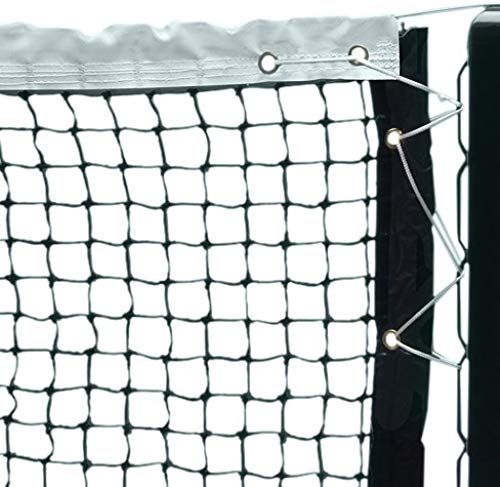
Let’s start off with the Bayeux Tapestry.

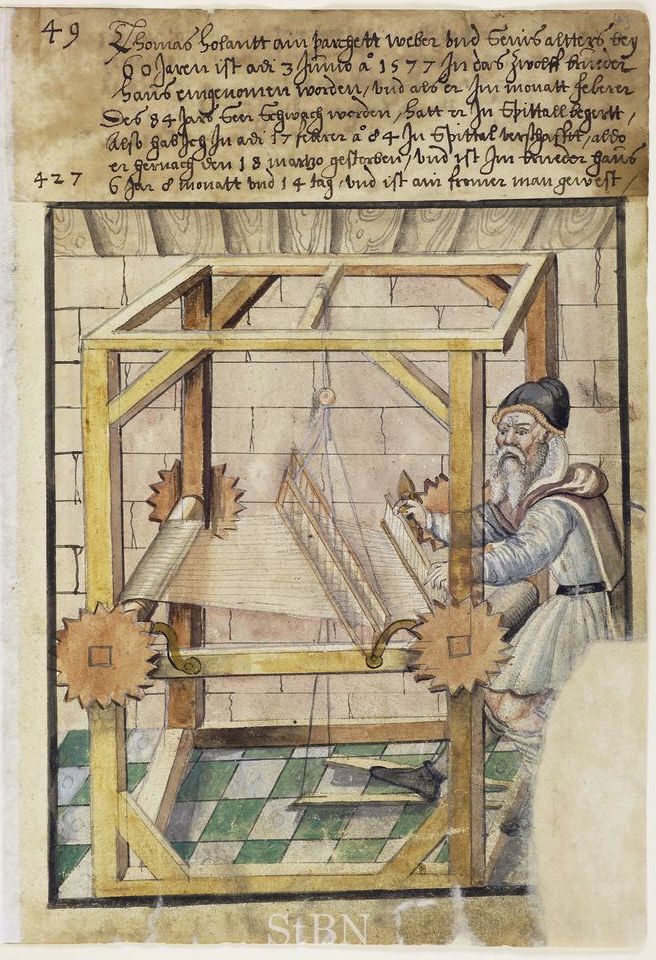
In fact, it’s not a tapestry at all.  Here’s a tapestry—

(3rd quarter 15th-century tapestry from “Pays-Bas meridionnaux”—“southern lowlands”—that is, the Netherlands, modern Belgium, and even northernmost France at the time this tapestry was made)

Tapestries are woven on looms. 
The Bayeux Tapestry is actually a 230-foot long by 20 inch high (70.1m. by 50.8cm) embroidery, in which a piece of cloth has a design plotted on the cloth and the design then stitched on—like this—

Whether it was made in England, as Tolkien very confidently asserts, or in Normandy is a question over which scholars tussle, but the subject is definitely Norman, as it depicts the conquest of southern Anglo-Saxon England by the Normans in 1066, including a little propaganda suggesting that the Anglo-Saxon king, Harold Godwinson, had violated a sacred oath in not handing the throne over to William, the Duke of Normandy, but, instead, taking it for himself (Harold is the one on the right, with the droopy mustache, William on the left, on the throne).
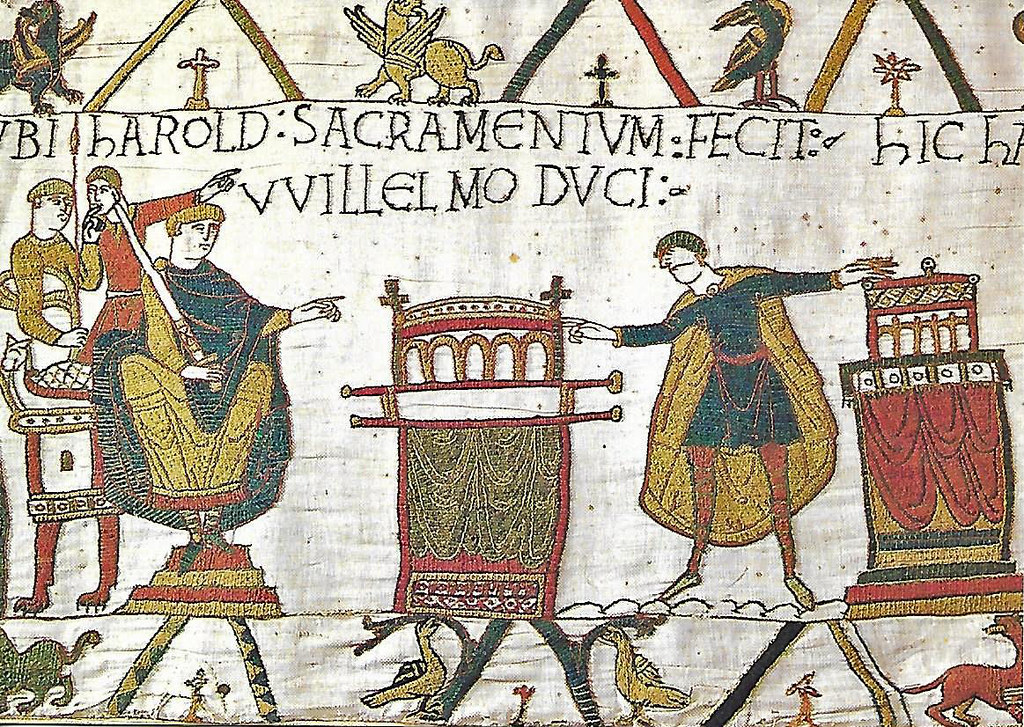
Those “tennis-nets”, which do, in fact, look a little like tennis nets,

are, as JRRT says, chain mail, which, in this image, both Anglo-Saxons (on foot on the left) and Norman (mounted, on the right) are wearing.  For a modern reconstruction—

(by Gerry Embleton, one of my favorite contemporary English military artists)

Seen up close, the mail can look like tiny fragments of chain, linked together—
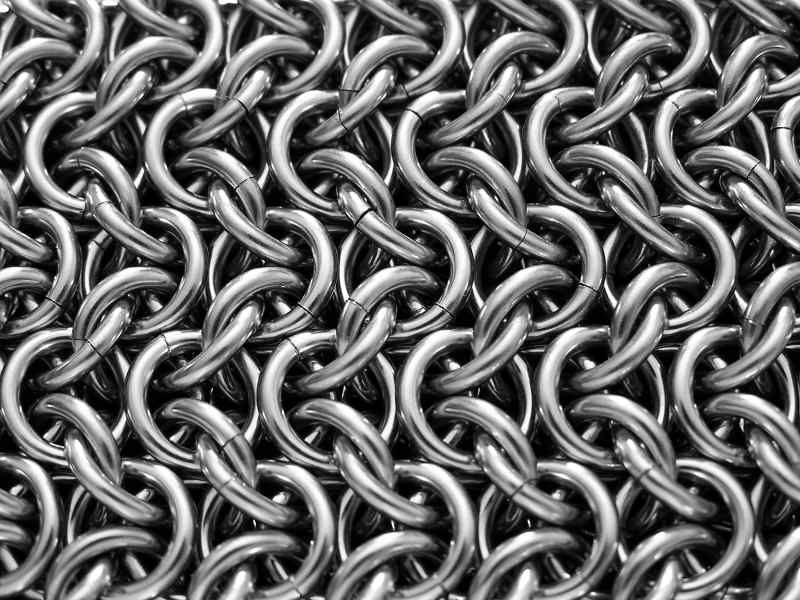
Before there was plate armor of the kind you might see in a museum or in some films with medieval themes,

there were other methods to protect the body, including various kinds of lamellar (scale) armor—little overlapping plates sewn onto a backing—

and even overlapping metal strips strung together (the Roman lorica segmentata)—

the ancient Celts, who were wonderful metal-workers, had devised chain-mail
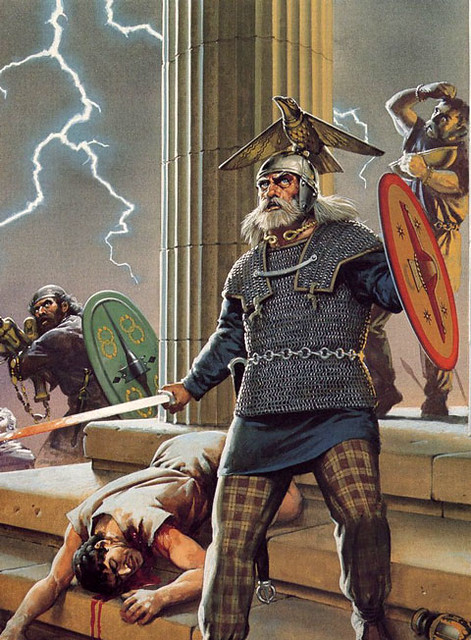
(Angus McBride)

which the Romans, ever on the lookout for better military technology, then adopted.

(Angus Mcbride again—and I really like the little sketch on the lower left-hand corner, giving you just a hint of how the artist worked).

Even when plate began to appear, mail was still used under certain sections of it, to allow for flexibility,
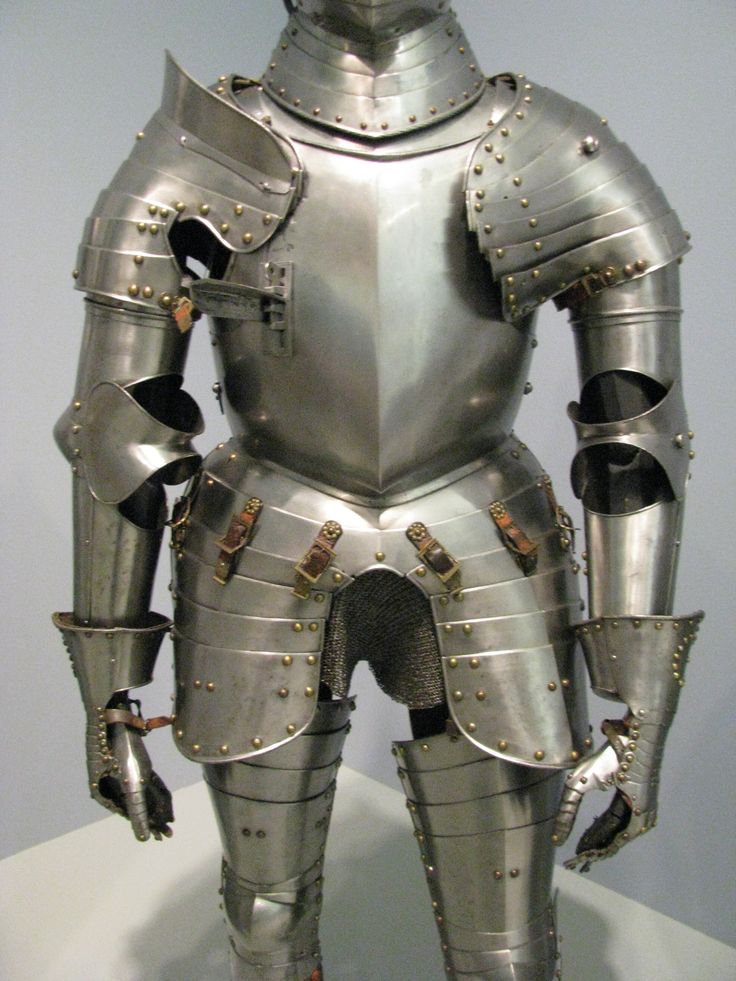
and foot soldiers might continue to wear it, as full plate was expensive.

(another Gerry Embleton)

What JRRT is imagining is that the Rohirrim would, basically, look like 11th-century Normans.
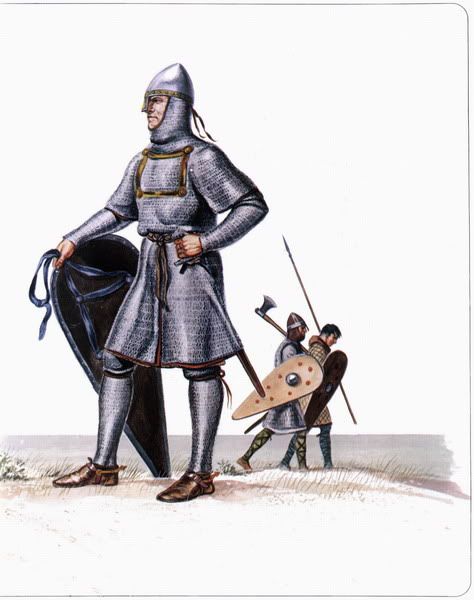
(one more Gerry Embleton)

And this is what we’re to visualize when it comes to that “mithril shirt” which, once upon a time, Thorin had given to Bilbo—

“ ‘Mr. Baggins!’ he cried.  ‘Here is the first payment of your reward!  Cast off your old coat and put on this!’

With that he put on Bilbo a small coat of mail, wrought for some young elf-prince long ago.  It was of silver-steel, which the elves call mithril…” (The Hobbit, Chapter 13, “Not At Home”)

(Alan Lee)

And, when an orc attacks Frodo in the Chamber of Records in Moria,

(Angus McBride again)

It’s no wonder that Frodo, to his friends’ surprise says, “ ‘I am all right…I can walk.  Put me down!”

since he is wearing that mithril coat passed on to him by Bilbo in Rivendell, although, when Gandalf mentions mithril and Bilbo’s coat in particular—

“ ‘I wonder what has become of it?  Gathering dust still in Michel Delving Mathom-house, I suppose.’”

And Gimli adds,

“ ‘What?…A corselet of Moria-silver?  That was a kingly gift!’ “

And Gandalf replies,

“ ‘Yes…I never told him, but its worth was greater than the value of the whole Shire and everything in it.’”

 it’s Frodo who is surprised—

“…he felt staggered to think that he had been walking about with the price of the Shire under his jacket.” (The Fellowship of the Ring, Book Two, Chapter 4, “A Journey in the Dark”)

Should you want to own a chain mail shirt of your own,
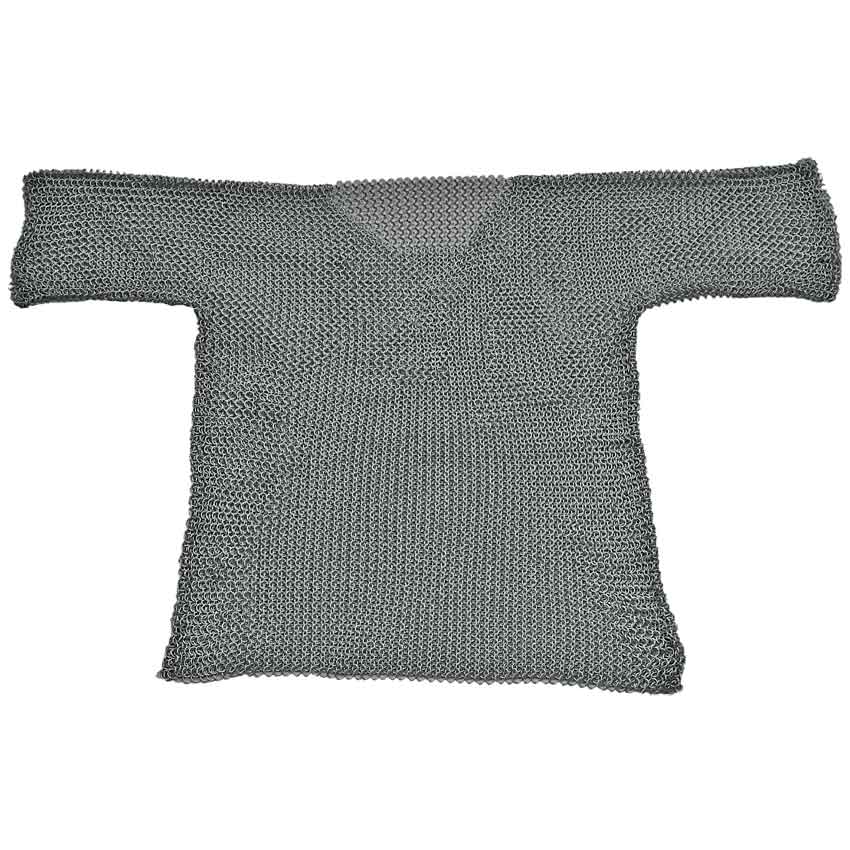
you can find one on line, but it’s not mithril, of course, nor made for a young elf-prince, but, at $87.00 (US), you can acquire one for far less than the price of the Shire.  Perhaps for Christmas?

Thanks, as ever, for reading.

Stay well,

Happy Thanksgiving, if you’re in a place where people celebrate it as a formal holiday, although I hope that they’re thankful all year round,

And remember that, as always, there’s

MTCIDC

O

Baruk Khazad!

12 Wednesday Dec 2018

Posted by Ollamh in Artists and Illustrators, J.R.R. Tolkien, Military History, Military History of Middle-earth

≈ Leave a comment

Tags

Adze, Alan Lee, Axe, Bayeux Tapestry, Bilbo, Dane Axe, Dwarves, francisca, Gimli, Harold Godwinson, Helm's Deep, Huscarl, mithril, Skylitzis, The Hobbit, The Lord of the Rings, Thorin, Tolkien, Varangian Guard

As always, dear readers, welcome.

Ever since we saw the original Lord of the Rings films, we’ve been thinking about Gimli and his major weapon.

image1gimli.jpg

In The Hobbit, it would appear that the dwarves had not been armed until they used what was in the Lonely Mountain after Smaug had gone:

“Now the dwarves took down mail and weapons from the walls, and armed themselves.  Royal indeed did Thorin look, clad in a coat of gold-plated rings, with a silver-hafted axe in a belt crusted with scarlet stones.” (The Hobbit, Chapter 13, “Not at Home”)

This is where the mithril coat which eventually protects Frodo in Moria and turns up in the hands of the Mouth of Sauron comes from, when Thorin gives it to Bilbo.

image2mithril.jpg

Not long after we first meet Gimli, at the Council of Elrond, however, we see Gimli already kitted out for war:

“Gimli the dwarf alone wore openly a short shirt of steel rings, for dwarves make light of burdens; and in his belt was a broad-bladed axe.” (The Fellowship of the Ring, Book Two, Chapter 3, “The Ring Goes South”)

Certainly, the axe in Gimli’s right hand in the photo wouldn’t fit through a belt and allow for comfort or freedom of movement and we note that, in that same photo, Gimli appears to have another—but that looks too long for comfort, as well.

image3gimli.jpg

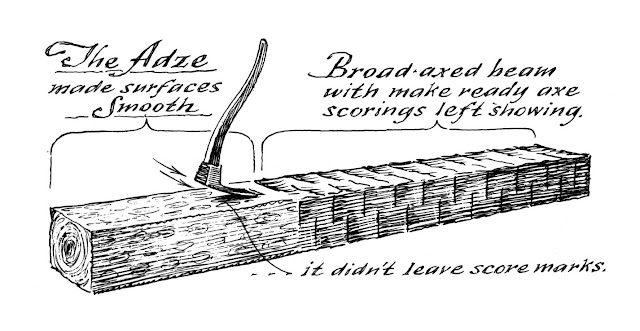
That the two axes fit in with the general persona of dwarves, however, seems to be true—after all, the translation of our title for this post is “Axes of the dwarves!”  (to be followed by Khazad ai-menu!  “the dwarves are upon you!”), which is the dwarves’ rallying cry.  What kind (or kinds) of axes these are doesn’t seem so clear, then.  Alan Lee, for example, shows us a dwarf with something which isn’t really an axe at all, but looks more like an adze, which is a tool used in woodworking to smooth and shape wood.

image4dwarf.jpg

the Broad Axe vs. the Adze - Handmade Houses... with Noah ...


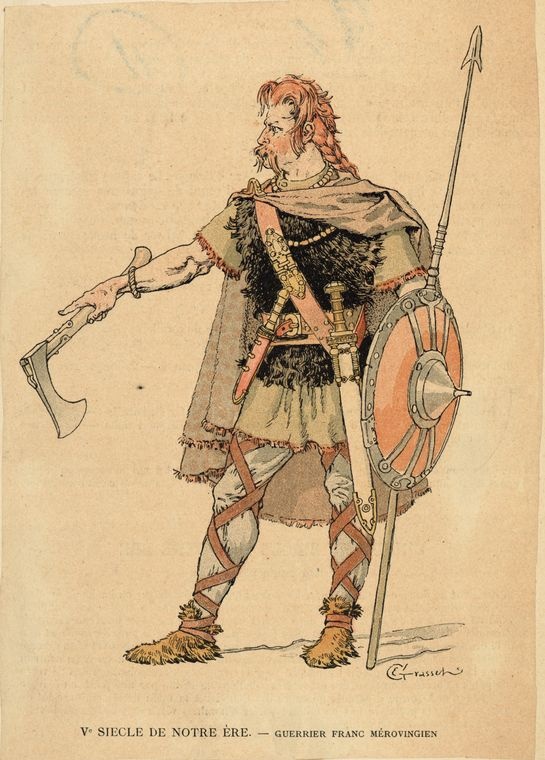
Because JRRT describes Gimli’s axe as being tuckable, we wondered whether he was thinking of the kind of throwing axe, a francisca, used by Frankish warriors (and which gave them their name).

image6francisca.jpg

image7frank.jpg

When we actually see Gimli in battle, however, he isn’t throwing, but swinging his axe.  At Helm’s deep he says to Legolas, “Give me a row of orc-necks and room to swing and all weariness will fall from me!”  And then he swings that axe:  “An axe swung and swept back.  Two Orcs fell headless.” (The Two Towers, Book Three, Chapter 7, “Helm’s Deep”)

This leads us to ask if perhaps JRRT himself wasn’t clear about Gimli’s weapon.  He never throws it, using it always as a chopper, and, when we thinking of axes with a haft—that is, handle–long enough to do that, we don’t think of that odd item in the image above—which doesn’t look substantial enough to cut through cervical vertebrae—

image8gimli.jpg

but rather of the long-hafted axe, or “Dane axe”  perhaps carried by the giant Viking who defended Stamford Bridge single-handedly against the Anglo-Saxons on 25 September, 1066,

image9stam.jpg

image10stam.jpg

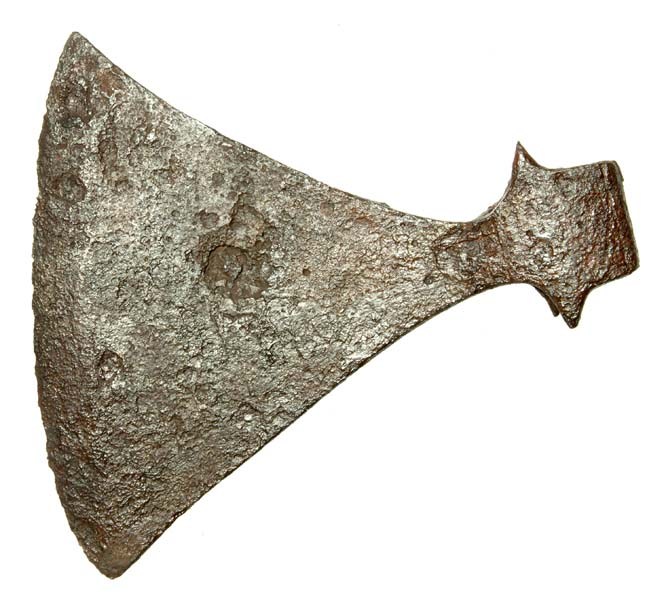
with its razor-sharp blade.

image11axe.jpg

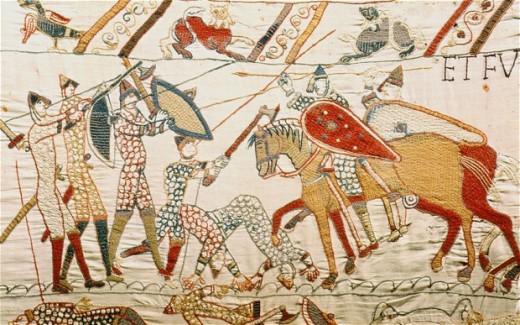
This was the kind of axe that we see carried by the huscarl, the bodyguards, of the English king, Harold Godwinson, in the depiction of the Battle of Hastings, 14 October, 1066, on the so-called Bayeux Tapestry.

image12bay.jpg

image13bay.jpg

One of which Harold may himself been carrying when he was killed, if the caption on the cloth is referring to Harold being cut down by the mounted Norman in this part of the tapestry.

image14harold.jpg

These same axes also appear to turn up as part of the armament of the Varangian Guard, the bodyguard of a number of Byzantine emperors from the 10th to 14th centuries, as depicted in the 11th-century  Skylitzis Chronicle.

image15varang.jpg

Much of this guard was made up of Norsemen and Anglo-Saxons, so the pattern of axe, we imagine, was something which both groups brought with them from their original homes.

image16varang.jpg

This is clearly the sort of thing to whack off heads, even two at a time, and so, if we can quietly detach it from Gimli’s belt and have him stand, perhaps even leaning on it, we have the Gimli who competes with Legolas at Helm’s Deep in the number of orcs each has dispatched.

image17vik.jpg

Thanks, as ever, for reading.

MTCIDC

CD

The Doubtful Sea Series Facebook Page

The Doubtful Sea Series Facebook Page

  • Ollamh

Categories

  • Artists and Illustrators
  • Economics in Middle-earth
  • Fairy Tales and Myths
  • Films and Music
  • Games
  • Heroes
  • Imaginary History
  • J.R.R. Tolkien
  • Language
  • Literary History
  • Maps
  • Medieval Russia
  • Military History
  • Military History of Middle-earth
  • Narnia
  • Narrative Methods
  • Poetry
  • Research
  • Star Wars
  • Terra Australis
  • The Rohirrim
  • Theatre and Performance
  • Tolkien
  • Uncategorized
  • Villains
  • Writing as Collaborators
Follow doubtfulsea on WordPress.com

Across the Doubtful Sea

Recent Postings

  • A Moon disfigured December 17, 2025
  • On the Roads Again—Once More December 10, 2025
  • (Not) Crossing Bridges December 3, 2025
  • On the Road(s) Again—Again November 26, 2025
  • On the Road(s) Again November 19, 2025
  • To Bree (Part 2) November 12, 2025
  • To Bree (Part 1) November 5, 2025
  • A Plague o’ Both—No, o’ All Your Houses! October 29, 2025
  • It’s in Writing (2:  I’st a Prologue, or a Poesie for a Ring?) October 22, 2025

Blog Statistics

  • 103,216 Views

Posting Archive

  • December 2025 (3)
  • November 2025 (4)
  • October 2025 (5)
  • September 2025 (4)
  • August 2025 (4)
  • July 2025 (5)
  • June 2025 (4)
  • May 2025 (4)
  • April 2025 (5)
  • March 2025 (4)
  • February 2025 (4)
  • January 2025 (5)
  • December 2024 (4)
  • November 2024 (4)
  • October 2024 (5)
  • September 2024 (4)
  • August 2024 (4)
  • July 2024 (5)
  • June 2024 (4)
  • May 2024 (5)
  • April 2024 (4)
  • March 2024 (4)
  • February 2024 (4)
  • January 2024 (5)
  • December 2023 (4)
  • November 2023 (5)
  • October 2023 (4)
  • September 2023 (4)
  • August 2023 (5)
  • July 2023 (4)
  • June 2023 (4)
  • May 2023 (5)
  • April 2023 (4)
  • March 2023 (5)
  • February 2023 (4)
  • January 2023 (4)
  • December 2022 (4)
  • November 2022 (5)
  • October 2022 (4)
  • September 2022 (4)
  • August 2022 (5)
  • July 2022 (4)
  • June 2022 (5)
  • May 2022 (4)
  • April 2022 (4)
  • March 2022 (5)
  • February 2022 (4)
  • January 2022 (4)
  • December 2021 (5)
  • November 2021 (4)
  • October 2021 (4)
  • September 2021 (5)
  • August 2021 (4)
  • July 2021 (4)
  • June 2021 (5)
  • May 2021 (4)
  • April 2021 (4)
  • March 2021 (5)
  • February 2021 (4)
  • January 2021 (4)
  • December 2020 (5)
  • November 2020 (4)
  • October 2020 (4)
  • September 2020 (5)
  • August 2020 (4)
  • July 2020 (5)
  • June 2020 (4)
  • May 2020 (4)
  • April 2020 (5)
  • March 2020 (4)
  • February 2020 (4)
  • January 2020 (6)
  • December 2019 (4)
  • November 2019 (4)
  • October 2019 (5)
  • September 2019 (4)
  • August 2019 (4)
  • July 2019 (5)
  • June 2019 (4)
  • May 2019 (5)
  • April 2019 (4)
  • March 2019 (4)
  • February 2019 (4)
  • January 2019 (5)
  • December 2018 (4)
  • November 2018 (4)
  • October 2018 (5)
  • September 2018 (4)
  • August 2018 (5)
  • July 2018 (4)
  • June 2018 (4)
  • May 2018 (5)
  • April 2018 (4)
  • March 2018 (4)
  • February 2018 (4)
  • January 2018 (5)
  • December 2017 (4)
  • November 2017 (4)
  • October 2017 (4)
  • September 2017 (4)
  • August 2017 (5)
  • July 2017 (4)
  • June 2017 (4)
  • May 2017 (5)
  • April 2017 (4)
  • March 2017 (5)
  • February 2017 (4)
  • January 2017 (4)
  • December 2016 (4)
  • November 2016 (5)
  • October 2016 (6)
  • September 2016 (5)
  • August 2016 (5)
  • July 2016 (5)
  • June 2016 (5)
  • May 2016 (4)
  • April 2016 (4)
  • March 2016 (5)
  • February 2016 (4)
  • January 2016 (4)
  • December 2015 (5)
  • November 2015 (5)
  • October 2015 (4)
  • September 2015 (5)
  • August 2015 (4)
  • July 2015 (5)
  • June 2015 (5)
  • May 2015 (4)
  • April 2015 (3)
  • March 2015 (4)
  • February 2015 (4)
  • January 2015 (4)
  • December 2014 (5)
  • November 2014 (4)
  • October 2014 (6)
  • September 2014 (1)

Blog at WordPress.com.

  • Subscribe Subscribed
    • doubtfulsea
    • Join 78 other subscribers
    • Already have a WordPress.com account? Log in now.
    • doubtfulsea
    • Subscribe Subscribed
    • Sign up
    • Log in
    • Report this content
    • View site in Reader
    • Manage subscriptions
    • Collapse this bar
 

Loading Comments...