• About

doubtfulsea

~ adventure fantasy

Tag Archives: Melkor

Oh, Come, Let Us Adore…

21 Wednesday Jun 2017

Posted by Ollamh in Imaginary History, J.R.R. Tolkien, Literary History, Military History, Military History of Middle-earth, Narrative Methods

≈ Leave a comment

Tags

1984, Adolf Hitler, altar, Ar-Pharazon, Armenelos, Artemis, Aulis, Avebury, Aztec, Benito Mussolini, Big Brother, France, Gallic Celts, George Orwell, Germany, Gondor, Greek temple, Hera, Herodotus, human sacrifice, Iphigenia, Melkor, Nazis, nemeton, Numenor, occupation, Olympia, Pantheon, Rome, sacrifice, Sauron, shrine, Soviet Union, Stalin, Stonehenge, Tenochtitlan, The Hobbit, The Lord of the Rings, The Silmarillion, The War of the Ring, Tolkien, Valar, World War II, worship

Welcome, as always, dear readers.

Some time ago, we posted a piece on what Sauron wanted out of the War of the Ring. Our evidence was this, spoken to Aragorn and Gandalf and the allied army which had marched to the Morannon as a distraction, by the Lieutenant of the Tower:

“The rabble of Gondor and its deluded allies shall withdraw at once beyond the Anduin, first taking oaths never again to assail Sauron the Great in arms, open or secret. All lands east of the Anduin shall be Sauron’s for ever, solely. West of the Anduin as far as the Misty Mountains and the Gap of Rohan shall be tributary to Mordor, and men there shall bear no weapons, but shall have leave to govern their own affairs. But they shall help to rebuild Isengard which they have wantonly destroyed, and that shall be Sauron’s, and there his lieutenant shall dwell: not Saruman, but one more worthy of trust.” (The Return of the King, Book Five, Chapter 10, “The Black Gate Opens”)

These are political conditions: Sauron is demanding territory, just as any conqueror in our world would. When France was occupied by the Nazis in 1940–something with which JRRT would have been quite familiar while writing The Lord of the Rings—here’s a map of what Hitler demanded—and got.
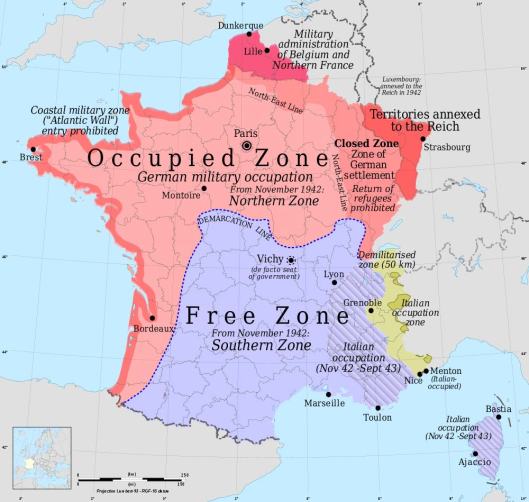
France-occupation

The last sentence of Sauron’s conditions even reminds us of the relationship between Hitler and Mussolini—although not how Mussolini would have viewed it.
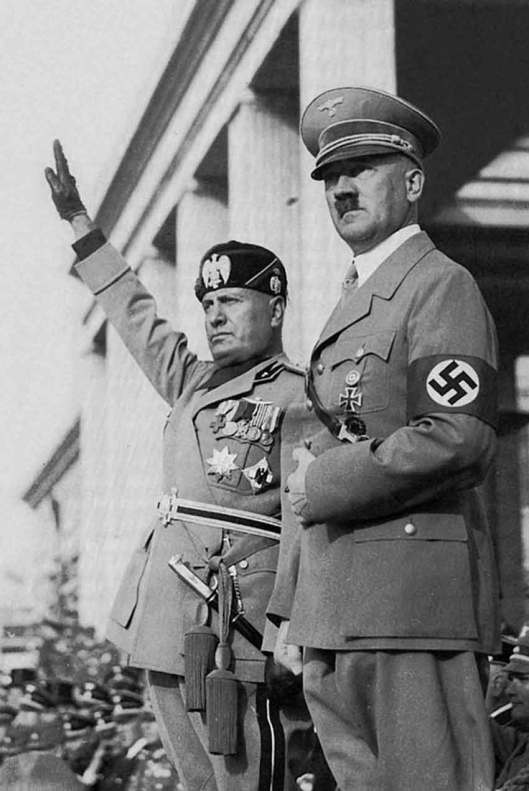
Hitler-and-Mussolini

Hitler had another dictator-partner for a short time, however, Stalin, whom he distrusted even more than Mussolini.
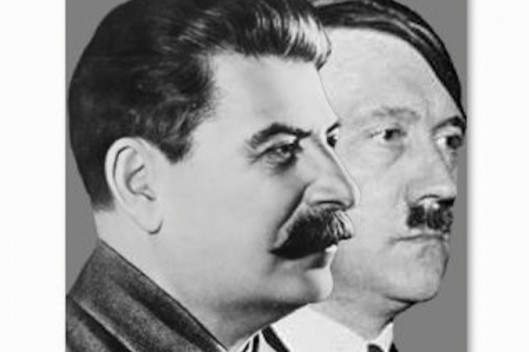
STALIN-HITLER-2-676x450

And Stalin, unlike Sauron, won his war and swallowed all of central Europe, as well as eastern Germany.

post-war-soviet-influence

It’s clear that George Orwell had this dictator in mind when he was creating his “Big Brother”, in 1984, even to his physical description (from a poster—it appears that no one has actually seen Big Brother in the flesh): “an enormous face, more than a meter wide: the face of a man about forty-five, with a heavy black mustache and ruggedly handsome features…”
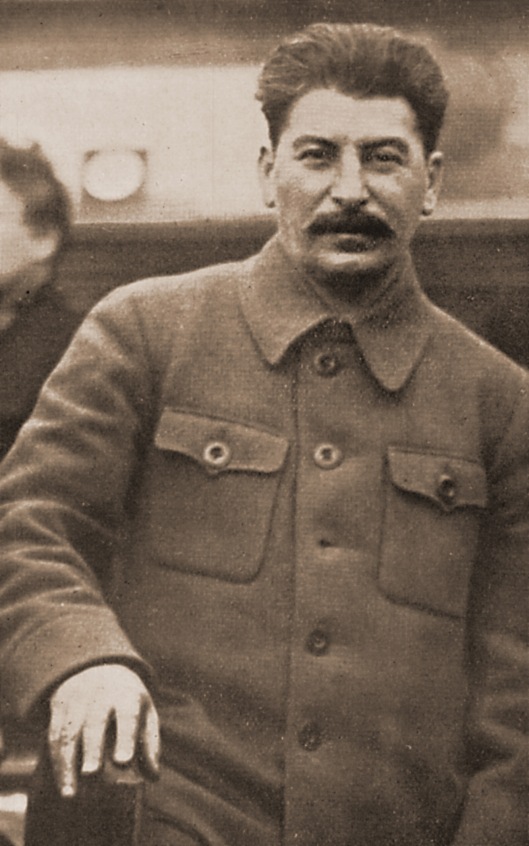
stalin

These posters were so constructed that, “It was one of those pictures…which are so contrived that the eyes follow you about when you move.”
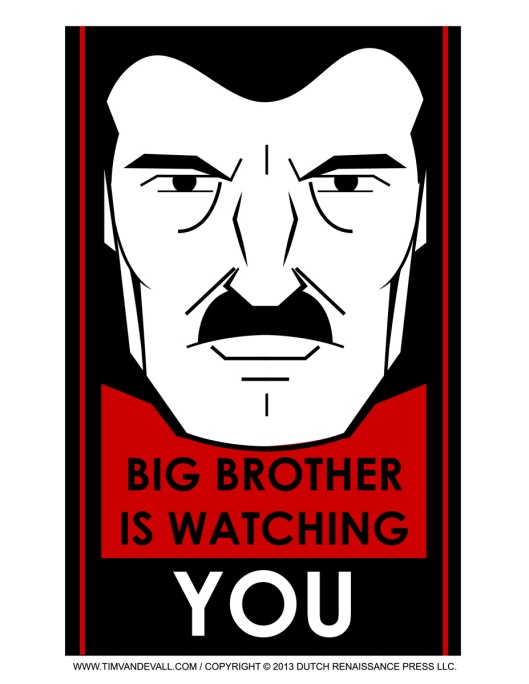
Big-Brother-Is-Watching-You-Poster

In fact, as we think about the image, its slogan, “Big Brother is Watching” might be applied to the All-Seeing Eye.
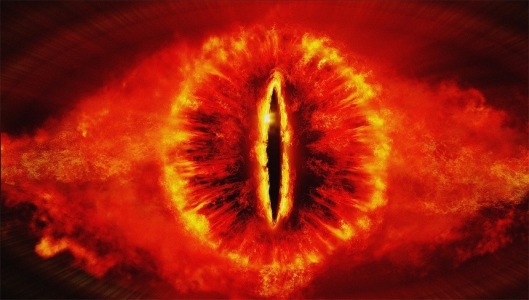
sauron-eye

That all-seeing eye, however, has another meaning, we believe, and it has to do with a goal which the Lieutenant doesn’t mention, but JRRT does:

“Sauron desired to be a God-King, and was held to be this by his servants.  If he had been victorious he would have demanded divine honour from all the rational creatures and absolute temporal power over the whole world.” (Letters, 244)

Thus, like various gods through the history of the world, by showing himself not a full physical form, but only as an eye, we can imagine that Sauron was claiming divine omniscience.

This set us to thinking: there is virtually no trace of religion in the latter part of the Third Age and certainly no religious structures. What might Sauron build as a shrine—to himself? And, as a corollary, what would he demand for worship?

In Western Europe, some the earliest shrines were not actual buildings, but sites claimed to be somehow invested with divinity, such as groves of trees, something which the Gallic Celts called a nemeton, perhaps related to the Old Irish word nemed, meaning, according to the on-line OI/Middle Irish dictionary, “(small) sacred place”.
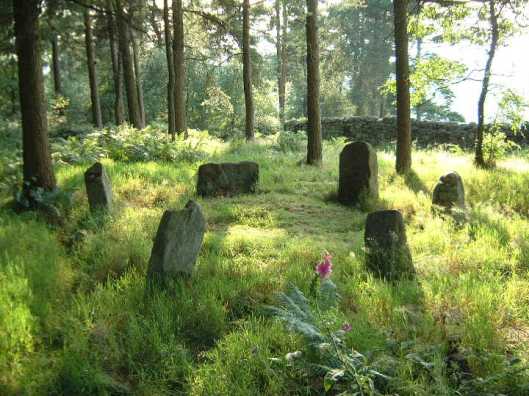
DollTorWest0801

It’s easy to see how this could lead to the idea of a stone circle (perhaps beginning with a ditch of the sort which could ring settlements?), like that at Avebury.
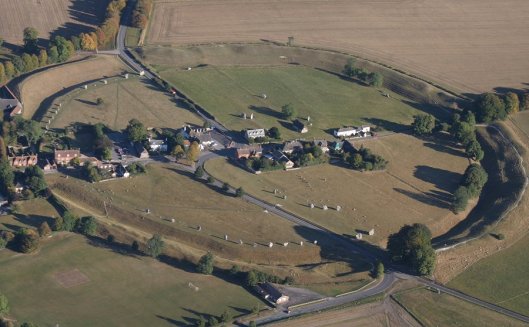
Avebury

Or its more concentrated version, Stonehenge.
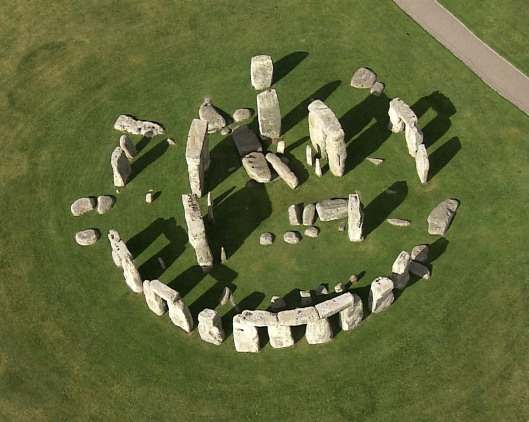
stonehenge-copy1

Another possibility might be to organize that grove into lines of pillars—using the trunks of the trees—and adding a roof—and you get a Greek temple.
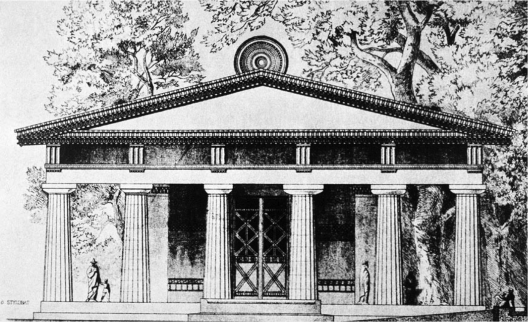
templeofhera

Herodotus tells us that, in his time, this temple, devoted to Hera at Olympia, still had a couple of wooden columns, showing just how old it was. (There are also building elements, like pegs—all in stone in later time—which mirror earlier wooden construction.)

In the Greek world (and the Roman, as well), worship was done outside the building, at an altar in front.
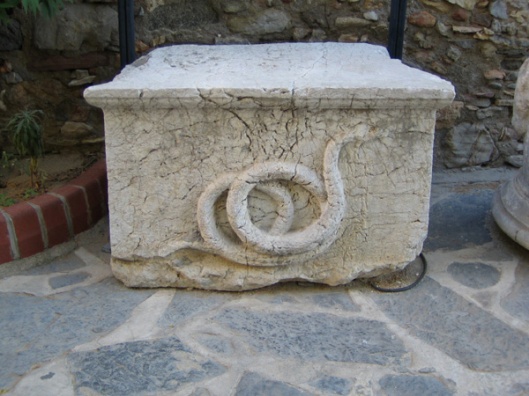
snake-altar-from-mausoleum-of-halicarnassus-in-bodrum

That worship would consist of prayers and sacrifices. As the majority of the gods were believed to live in a place above humans (Olympus—an actual mountain, but also, seemingly, an imaginary location in the sky), sacrifices were conveyed in smoke. These could be as simple as incense
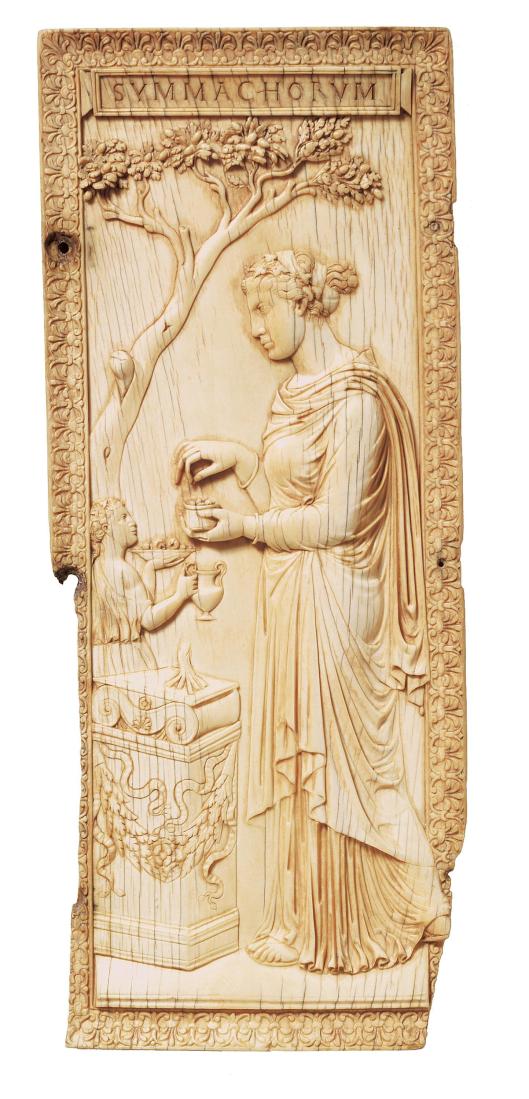
elt200810220812093544851-142058F954A638F8693

or as complicated as the barbecue after a multiple animal-slaughter, like the Roman suovetaurilia (“pigsheepbullactivity”). (Guess who got to consume the actual meat?)
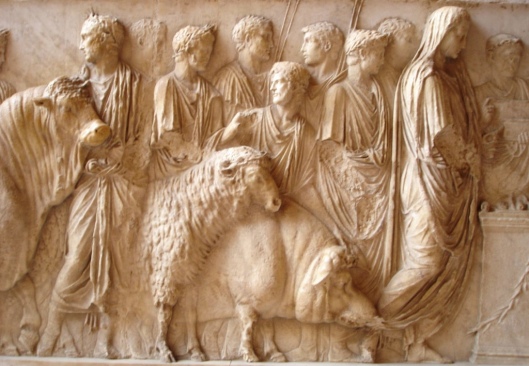
multipleanimalsacrifice

Classical people did not practice human sacrifice, considering it abominable, but it may have existed, at least in desperate circumstances in the far past, as has been preserved in the Greek story of Iphigenia, murdered at the altar of Artemis at Aulis to propitiate the goddess, who had blocked the Greeks from sailing to attack Troy.
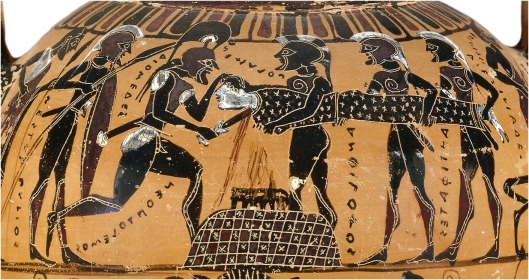
Black-figured Tyrrhenian amphora (wine-jar) attributed to the Timiades Painter

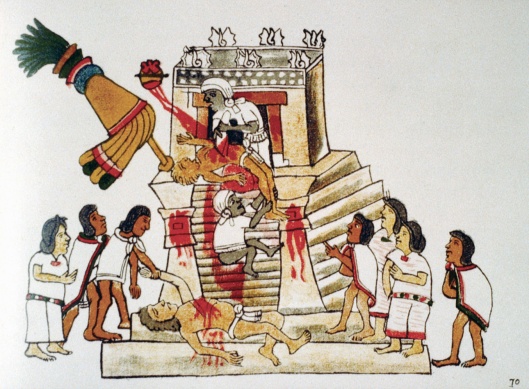
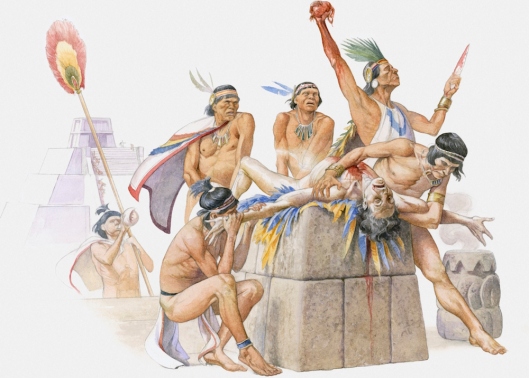
Of course, when it comes to wholesale, regular human sacrifice, we immediately think of Aztec devotion to their god, Huitzilopochtli, who was fed on the blood of human hearts at the top of his temple in the Aztec capital, Tenochtitlan.

huitzilopochtli

ThinkstockPhotos-98193978

sacrifice-2

And this brings us back to Sauron, his temple, his worship. Because there is so much wonderful material to work from in The Hobbit and The Lord of the Rings, in general, we confine ourselves to those and the Letters, but a little wider research gave us a clue—a horrible but not surprising clue—to answer our original question. In the Silmarillion, we found this:

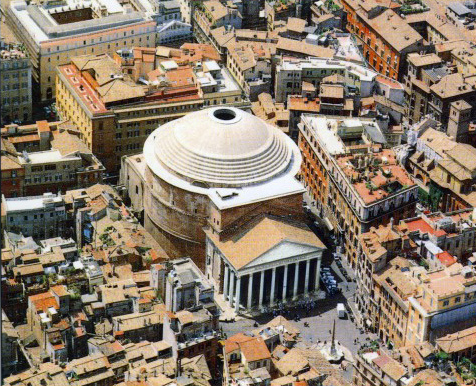
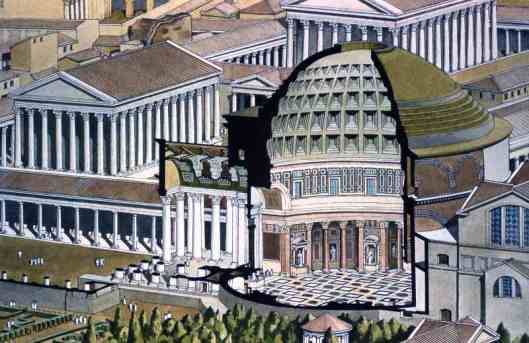
“But Sauron caused to be built upon the hill in the midst of the city of the Numenoreans, Armenelos the Golden, a mighty temple; and it was in the form of a circle at the base, and there the walls were fifty feet in thickness, and the width of the base was five hundred feet across the center, and the walls rose from the ground five hundred feet, and they were crowned with a mighty dome. And that dome was roofed all with silver, and rose glittering in the sun, so that the light of it could be seen afar off; but soon the light was darkened and the silver became black.” (The Silmarillion, “Akallabeth”, 273)

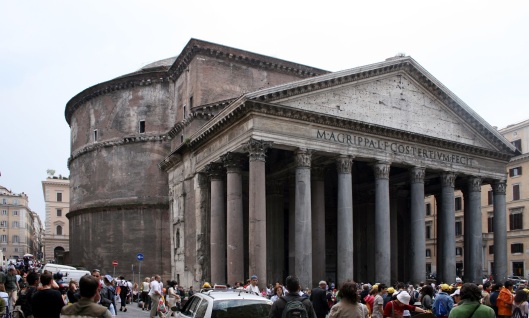
As people who are much involved with the Greco-Roman world, this description immediately brings to our minds the Pantheon, in Rome, whose dome was sheathed in copper, until that was stolen by the eastern emperor Constans II in 663AD, only to be stolen from him en route by Saracen pirates. It’s not 500 feet by 500 feet (152.4m.), of course, being only about 140 (42.67m.), but it’s certainly large and impressive—and circular, with a mighty dome.
aerial-view-pantheon

26.pantheon

Pantheon_Rome_(1)

But why did the “silver become black”? Do we have a bad feeling about this?

“For there was an altar of fire in the midst of the temple, and in the topmost of the dome there was a louver, whence there issued a great smoke…Thereafter the fire and smoke went up without ceasing; for the power of Sauron daily increased, and in that temple, with the spilling of blood and torment and great wickedness, men made sacrifice to Melkor that he should release them from Death. And most often from among the Faithful they chose their victims…”

Sauron, once Melkor’s servant, had gained great power over the Numenorean king, Ar-Pharazon, using it to persuade the king to attack the Valar—and thus bring about the destruction of Numenor. Sauron’s spirit survived that destruction, and perhaps his memory of Melkor’s temple and its worship would have, as well?

Thanks, as ever, for reading!

MTCIDC

CD

PS

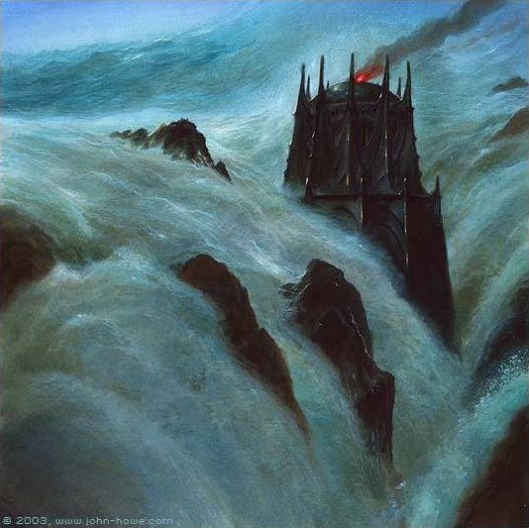
We can’t resist adding this wonderful John Howe impression of the drowning of the city of Armenelos…
John_Howe_-_The_Drowning_of_Numenor


Subsubcreations

03 Wednesday Jun 2015

Posted by Ollamh in Fairy Tales and Myths, J.R.R. Tolkien, Military History of Middle-earth, Narrative Methods, Villains

≈ Leave a comment

Tags

Chicken Run, Corsairs, Easterlings, Gorbag and Shagrat, Haradrim, Melkor, Minions, Morgoth, Nazgul, Nick and Fetcher, Orc, Robin Hood, Sauron, Star Wars, Storm Troopers, The Lord of the Rings, Tolkien, Zorro

Dear Readers,

Welcome, as always!

     Two posts ago, we talked about how it might be possible to make Sauron –the- nearly-invisible slightly more visible by means of his minions.

Minions-Film

[oh yes—minions—from Middle French, “mignon”, meaning “little/darling” and coming to have a negative meaning in English, “lackey”]

     These included the Nazgul

nazgul

various humans—corsairs, Haradrim, Easterlings—

702343aharadvetcav easterling_hassassin_by_taurus_chaoslord-d5sb6rc

And, the real stars (as Nick and Fetcher, the two rats from Chicken Run, refer to themselves)

Nick_and_Fetcher

the Orcs.

John%20Howe%20-%20Merry%20et%20Pippin%20prisonniers%20des%20orcs 36 - Orcs (MERP)

OrcsOnSentry_Alan_Lee

     Tolkien appears always to have had trouble placing them. We would suppose that this problem arose because Orcs were not the usual run-of-the-mill lackeys one usually sees in adventure, like the sheriff of Nottingham’s men

sjff_03_img1296

the soldiers of the evil commandante in the Zorro adventures

ep23d

or the hordes of faceless stormtroopers in Star Wars

Stormtrooper_Corps

       His first question—where do they come from? was immediately followed by a second—if they are created, do they have free will? That first question, any author might ask himself. The second, however, was pure Tolkien, fitting into the pattern which those who’ve only read The Lord of the Rings and not JRRT’s letters on the subject or the volumes produced by the admirable (a pale adjective!) Christopher Tolkien, would never see: the complex spiritual history which lies behind the creation of Middle Earth.

     Not that the first question was simple. In The Lord of the Rings, Fangorn says of the Orcs:

“But Trolls are only counterfeits, made by the Enemy in the Great Darkness, in mockery of Ents, as Orcs were of Elves.” L486

     The author, however, had a very different opinion:

“Their nature and origin require more thought. They are not easy to work into the theory and system.”

(Morgoth’s  Ring   409)

     Not easy because of that second question. As he wrote in an unpublished essay entitled (not surprisingly) Orcs (Morgoth’s Ring 409-413),

“…only Eru [the central creative deity] could make creatures with independent wills, and with reasoning powers. But the Orcs seem to have both: they can try to cheat Morgoth/ Sauron, rebel against him, or criticize him.”

     Morgoth (Sauron’s former master) made the Orcs in some way, but, because only the central deity, Eru, can give independent wills and reasoning powers—which Orcs display by cheating, rebelling, and criticizing– to created beings, what is to be made of Orcs? Bound by those seemingly contrary facts, the conclusion was obvious to him that “therefore they must be corruptions of something pre-existing.” (409)

But of what?

     “But Men had not yet appeared, when the Orcs already existed. Aule constructed the Dwarves out of his memory of the Music; but Eru would not sanction the work of Melkor [i.e. Morgoth] so as to allow the independence of the Orcs.

     It also seems clear…that though Melkor could utterly corrupt and ruin individuals, it is not possible to contemplate his absolute perversion of a whole people, or group of peoples, and his making that state heritable.

     In that case Elves, as a source, are very unlikely.” (409)

     Thus, logically, if the Orcs are created, not corrupted, and created by a power which hasn’t the ability to give his creations independence, then–

     “The Orcs were beasts of humanized shape (to mock Men and Elves) deliberately perverted/converted into a more close resemblance to Men. Their ‘talking’ was really reeling off ‘records’ set in them by Melkor. Even their rebellious critical words—he knew about them. Melkor taught them speech and as they bred they inherited this; and they had just as much independence as have, say, dogs or horses of their human masters. This talking was largely echoic (cf. parrots). ..Also (n.b.) Morgoth not Sauron is the source of Orc-wills. Sauron is just another (if greater) agent. Orcs can rebel against him without losing their own irremediable allegiance to evil (Morgoth).” (410-411)

     We don’t know about you, dear Readers, but we confess to a certain disappointment at the idea that the Orcs are only more complex puppets. Consider this piece of villainous dialogue between Gorbag and Shagrat:

Unknown%20-%20Bilbo%20le%20Hobbit%20(01)%20-%20Les%20orcs

     “I’d like to try somewhere where there’s none of ‘em. But the war’s on now, and when that’s over things may be easier.”

     “It’s going well, they say.”

     “They would,” grunted Gorbag. “We’ll see. But anyway, if it does go well, there should be a lot more room. What d’you say?—if we get a chance, you and me’ll slip off and set up somewhere on our own with a few trusty lads, where there’s good loot nice and handy, and no big bosses.”

     “Ah!” said Shagrat. “Like old times.” (LOTR 738)

     The plans and reminiscences of demons—how wonderful! And what an interesting sidelight into their world and even their past: they used to be masterless marauders, in the “old times”—could this suggest that perhaps they weren’t such puppets after all? We would like to imagine so!

And what is your opinion, dear readers?

Thanks, as ever, for reading.

MTCIDC

CD

The Doubtful Sea Series Facebook Page

The Doubtful Sea Series Facebook Page

  • Ollamh

Categories

  • Artists and Illustrators
  • Economics in Middle-earth
  • Fairy Tales and Myths
  • Films and Music
  • Games
  • Heroes
  • Imaginary History
  • J.R.R. Tolkien
  • Language
  • Literary History
  • Maps
  • Medieval Russia
  • Military History
  • Military History of Middle-earth
  • Narnia
  • Narrative Methods
  • Poetry
  • Research
  • Star Wars
  • Terra Australis
  • The Rohirrim
  • Theatre and Performance
  • Tolkien
  • Uncategorized
  • Villains
  • Writing as Collaborators
Follow doubtfulsea on WordPress.com

Across the Doubtful Sea

Recent Postings

  • A Moon disfigured December 17, 2025
  • On the Roads Again—Once More December 10, 2025
  • (Not) Crossing Bridges December 3, 2025
  • On the Road(s) Again—Again November 26, 2025
  • On the Road(s) Again November 19, 2025
  • To Bree (Part 2) November 12, 2025
  • To Bree (Part 1) November 5, 2025
  • A Plague o’ Both—No, o’ All Your Houses! October 29, 2025
  • It’s in Writing (2:  I’st a Prologue, or a Poesie for a Ring?) October 22, 2025

Blog Statistics

  • 103,228 Views

Posting Archive

  • December 2025 (3)
  • November 2025 (4)
  • October 2025 (5)
  • September 2025 (4)
  • August 2025 (4)
  • July 2025 (5)
  • June 2025 (4)
  • May 2025 (4)
  • April 2025 (5)
  • March 2025 (4)
  • February 2025 (4)
  • January 2025 (5)
  • December 2024 (4)
  • November 2024 (4)
  • October 2024 (5)
  • September 2024 (4)
  • August 2024 (4)
  • July 2024 (5)
  • June 2024 (4)
  • May 2024 (5)
  • April 2024 (4)
  • March 2024 (4)
  • February 2024 (4)
  • January 2024 (5)
  • December 2023 (4)
  • November 2023 (5)
  • October 2023 (4)
  • September 2023 (4)
  • August 2023 (5)
  • July 2023 (4)
  • June 2023 (4)
  • May 2023 (5)
  • April 2023 (4)
  • March 2023 (5)
  • February 2023 (4)
  • January 2023 (4)
  • December 2022 (4)
  • November 2022 (5)
  • October 2022 (4)
  • September 2022 (4)
  • August 2022 (5)
  • July 2022 (4)
  • June 2022 (5)
  • May 2022 (4)
  • April 2022 (4)
  • March 2022 (5)
  • February 2022 (4)
  • January 2022 (4)
  • December 2021 (5)
  • November 2021 (4)
  • October 2021 (4)
  • September 2021 (5)
  • August 2021 (4)
  • July 2021 (4)
  • June 2021 (5)
  • May 2021 (4)
  • April 2021 (4)
  • March 2021 (5)
  • February 2021 (4)
  • January 2021 (4)
  • December 2020 (5)
  • November 2020 (4)
  • October 2020 (4)
  • September 2020 (5)
  • August 2020 (4)
  • July 2020 (5)
  • June 2020 (4)
  • May 2020 (4)
  • April 2020 (5)
  • March 2020 (4)
  • February 2020 (4)
  • January 2020 (6)
  • December 2019 (4)
  • November 2019 (4)
  • October 2019 (5)
  • September 2019 (4)
  • August 2019 (4)
  • July 2019 (5)
  • June 2019 (4)
  • May 2019 (5)
  • April 2019 (4)
  • March 2019 (4)
  • February 2019 (4)
  • January 2019 (5)
  • December 2018 (4)
  • November 2018 (4)
  • October 2018 (5)
  • September 2018 (4)
  • August 2018 (5)
  • July 2018 (4)
  • June 2018 (4)
  • May 2018 (5)
  • April 2018 (4)
  • March 2018 (4)
  • February 2018 (4)
  • January 2018 (5)
  • December 2017 (4)
  • November 2017 (4)
  • October 2017 (4)
  • September 2017 (4)
  • August 2017 (5)
  • July 2017 (4)
  • June 2017 (4)
  • May 2017 (5)
  • April 2017 (4)
  • March 2017 (5)
  • February 2017 (4)
  • January 2017 (4)
  • December 2016 (4)
  • November 2016 (5)
  • October 2016 (6)
  • September 2016 (5)
  • August 2016 (5)
  • July 2016 (5)
  • June 2016 (5)
  • May 2016 (4)
  • April 2016 (4)
  • March 2016 (5)
  • February 2016 (4)
  • January 2016 (4)
  • December 2015 (5)
  • November 2015 (5)
  • October 2015 (4)
  • September 2015 (5)
  • August 2015 (4)
  • July 2015 (5)
  • June 2015 (5)
  • May 2015 (4)
  • April 2015 (3)
  • March 2015 (4)
  • February 2015 (4)
  • January 2015 (4)
  • December 2014 (5)
  • November 2014 (4)
  • October 2014 (6)
  • September 2014 (1)

Blog at WordPress.com.

  • Subscribe Subscribed
    • doubtfulsea
    • Join 78 other subscribers
    • Already have a WordPress.com account? Log in now.
    • doubtfulsea
    • Subscribe Subscribed
    • Sign up
    • Log in
    • Report this content
    • View site in Reader
    • Manage subscriptions
    • Collapse this bar
 

Loading Comments...