• About

doubtfulsea

~ adventure fantasy

Tag Archives: literature

Doom

19 Wednesday Mar 2025

Posted by Ollamh in Uncategorized

≈ Leave a comment

Tags

anglo-saxons, Dialogus, Domesday Book, Errantry, Gothic, History, janissaries, Janissary, literature, lotr, Mazarbul, Normans, Tolkien, William Duke of Normandy

As ever, dear readers, welcome.

If nothing else would tell us that Tolkien had a fine ear for rhythm and rhyme, just take this stanza from “Errantry”, first published in The Oxford Magazine, Vol.52, No.5–

“Of crystal was his habergeon,
His scabbard of chalcedony;
With silver tipped at plenilune
His spear was hewn of ebony.
His javelins were of malachite
And stalactite – he brandished them
And went and fought the dragon flies
Of Paradise, and vanquished them.”

In his rhyming, JRRT has used some rather specialized words:

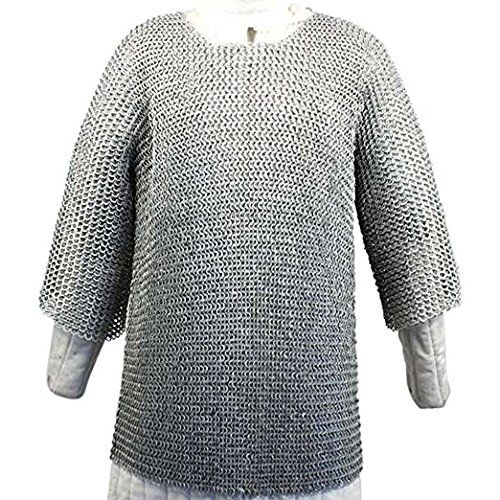
habergeon  an (often-half-sleeved) chain mail shirt—usually made of steel, not something as fragile as crystal might be
chalcedony   a kind of silica which comes in a number of varieties and colors—here’s one—

plenilune    full moon—the idea being that his spear was given its tip/blade at the full moon, suggesting perhaps a magical making? 

ebony      a dark hardwood which can be turned into a glossy black
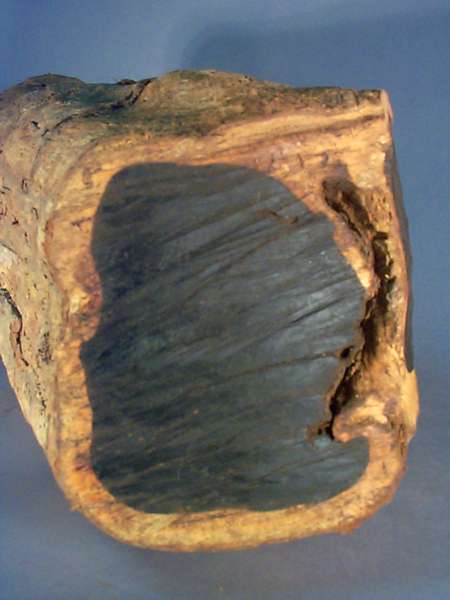
malachite   another stone, which is copper-bearing

stalactite   this isn’t a stone, but a stone deposit which hangs down in caves

and is probably there for the internal rhyme with malachite, although malachite can be discovered in stalactites, so possibly JRRT is using two different possibilities at once

brandish     to wave—something heroic warriors sometimes do with their weapons, in a boasting or threatening manner

(I haven’t been able to find an artist for this one, alas.)

For the “dragon flies of Paradise”, you’re on your own—although–

So, when it came to the soundscape of The Lord of the Rings (a subject which could use a lot of exploring—there are cues everywhere), I wasn’t surprised to see him play a little game with an unlikely toy, a drum.

(a traditional Turkish drum—with two sticks, the larger for the top, the smaller for the underside, which gives it a distinctive double sound—you can hear—and see—some here:  https://www.youtube.com/watch?v=2eaxzv6obf8  These musicians are dressed as Janissaries, members of the Sultan’s elite troops

 and you can see why such bands then influenced later 18th-century-early-19th-century composers like Mozart and Beethoven—and frightened defenders when they heard this music coming.  Here’s Beethoven’s impression:     https://www.youtube.com/watch?v=Nd0OjCO9x5Y   )

Here’s a passage of that scape which recently caught my eye:

“Gandalf had hardly spoken these words, when there came a great noise:  a rolling Boom that seemed to come from depths far below, and to tremble in the stone at their feet.  They sprang towards the door in alarm.  Doom, doom it rolled again, as if huge hands were turning the very caverns of Moria into a vast drum.  Then there came an echoing blast:  a great horn was blown in the hall, and answering horns and harsh cries were heard further off.  There was a hurrying sound of many feet.”  (The Fellowship of the Ring, Book Two, Chapter 5, “The Bridge of Khazad-dum”)

You see what I mean about soundscape:  everything described, except the movement of the Fellowship, is a sound—and notice that even the place name in the chapter title, which has, in the original, a circumflex over the –u- in “dum” , lengthening  the sound of the word, echoes  that drum and its message:  doom!

And “doom”  is an interesting word. 

A quick look at its past can take us as far back as Gothic, the ancestral cousin of the Germanic languages and our oldest surviving sample of such ancestors.  Etymonline has “Gothic doms, ‘discernment, distinction’”– https://www.etymonline.com/word/doom  but, using my on-line Gothic dictionary, we find domjan and afdomjan, where the basic sense seems to be “to establish”, from which comes the meaning “to judge” and possibly even “to condemn”.  (Here’s the page:  http://www.wulfila.be/gothic/browse/search/?find=domjan&mode=1  at the very helpful  “Wulfila” site—Wulfila was the 4th-century AD translator of the Judeo-Christian Bible from Greek into Gothic.  It’s interesting that, often the original Greek word is a form of krino, which probably original meant to “separate”, but came, in time to be used to mean “to judge, decide”, and even “to condemn”—see the Perseus page here:  https://www.perseus.tufts.edu/hopper/morph?l=kri%2Fnw&la=greek&can=kri%2Fnw0#lexicon )

This brings us to what, I imagine, was a strong influence on Tolkien whenever he wrote that word:  that oppressor of the conquered Anglo-Saxons, the so-called “Domesday Book”.
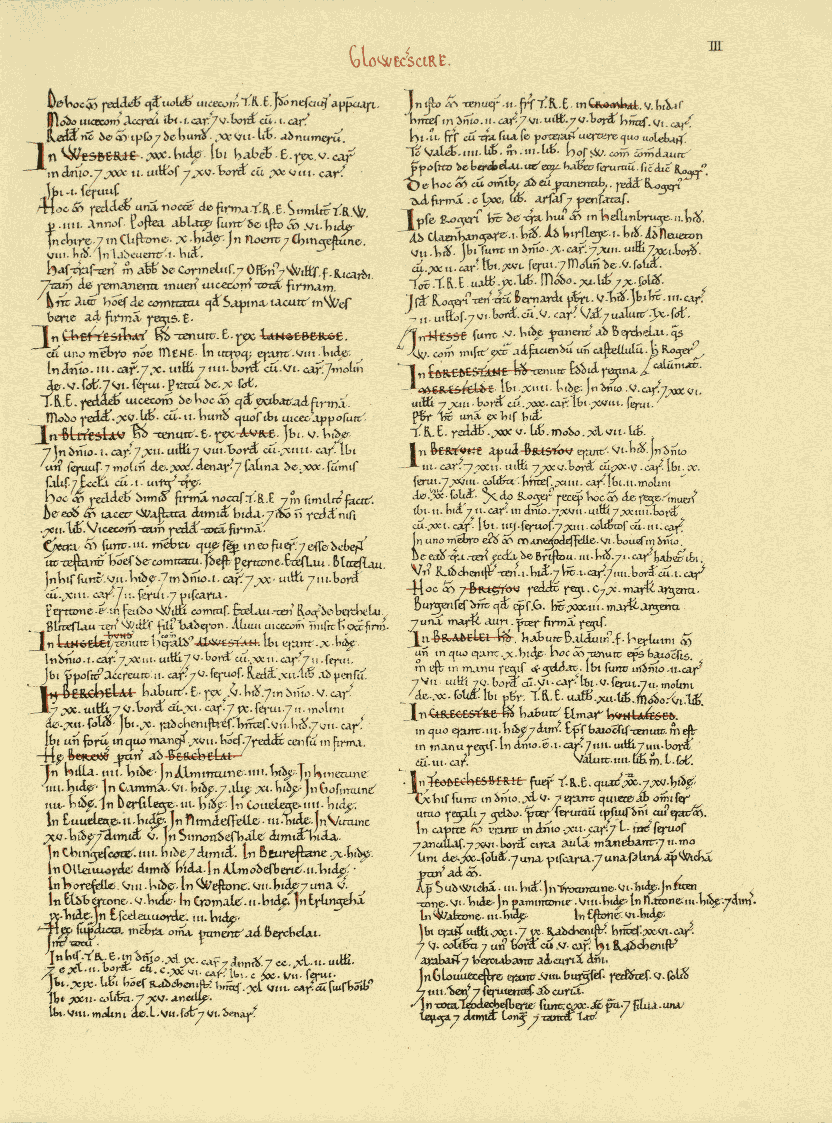
After the defeat of Harold Godwinson and his army at Hastings, in October, 1066,

Duke William of Normandy drove a ruthless campaign of conquest throughout England, giving out land to his chief followers, who then built early castles, which we call “motte and bailey”, to protect themselves and to dominate the landscape.

As well, perhaps helped by previous Anglo-Saxon tax records (easily accessible to the Norman officials because both they and their predecessors would have written in Latin), the Normans created a massive census, both of people and places, detailed practically down to the last chicken, asking, basically, “who is the owner? what does he own?  what’s it worth?  how much tax does he pay?”  It had no name, originally, as such, being called Liber de Wintonia—“the Winchester Book”—because that’s where the manuscript was originally stored.  (There were originally two volumes and you can read much more about them here:  https://en.wikipedia.org/wiki/Domesday_Book   And you can see the work itself here:  https://opendomesday.org/

The name by which we know it seems to have been a grim local joke, first known reference being in the 12th-century Dialogus de Scaccario, “Dialogue Concerning the Exchequer” (“scaccarium” being  a chess board, because the table used for accounting was gridded like one—it’s explained, in fact, in the “Dialogue”, but you can read about it here:  https://en.wikipedia.org/wiki/Exchequer ). 

In the text, the author (thought to have been Richard FitzNeal, the bishop of Ely, c.1130-1198), wrote:

“Hic liber ab indigenis ‘Domesdei’ nuncupatur id est dies iudicii per metaphoram.”

“This book is called by the locals ‘Doomsday’” : that is, as a metaphor, the Day of Judgment.”

(Dialogus de Scaccario, Book 1, Section 16B, which you can read here:  https://archive.org/details/cu31924021674365/page/n119/mode/2up in Latin, or here, in English:  https://avalon.law.yale.edu/medieval/excheq.asp#b1p16   This is a wonderfully practical text, explaining in enormous detail things like the vocabulary of the exchequer.  As is so often the case with medieval Latin, it’s a very pleasant read, written in plain, straightforward language and being just what it says it is, a dialogue between a “magister” and a “discipulus” .) 

Considering the choice of phrase, it isn’t surprising that that it was the choice of the “indigeni” .  One part of William’s master plan of conquest was to take the land away from its original Anglo-Saxon (indigenous) land-holders
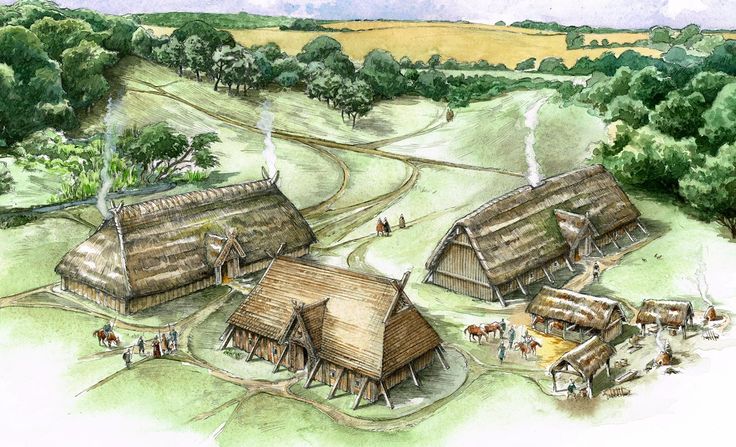
and hand it over to his own followers, thus dispossessing most of the former—and, because those owners had no recourse, it must have seemed very like the Last Judgment—the original Doomsday.

Thus, when the members of the Fellowship hear “boom” turn into “doom”, it can suggest not only a play with sound, but the same kind of catastrophic event, trapped, as they seem to be, in the record room of Mazarbul—

(Angus McBride)

And we can take this one step farther.   As Tolkien’s income grew from the sale of his books, his frustration at the amount which disappeared into tax-paying grew, as he writes:

“A Socialist government will pretty well reduce me to penury on retirement!  As it is socialist legislation is robbing me of probably ¾ of the fruits of my labors, and my ‘royalties’ are merely waiting in the bank until  the Tax Collectors walk in and bag them.  Do you wonder that anyone who can gets out of this island?  Though soon there will be nowhere to go to escape the rising tide of ‘orquerie’.”  (letter to Michael Tolkien, 6 November, 1956, Letters, 367) 

So, when JRRT thought of “doom”, as a medievalist, might he also have been equating himself with those Anglo-Saxons, not only losing their homes, but forced to hand over their hard-earned cash
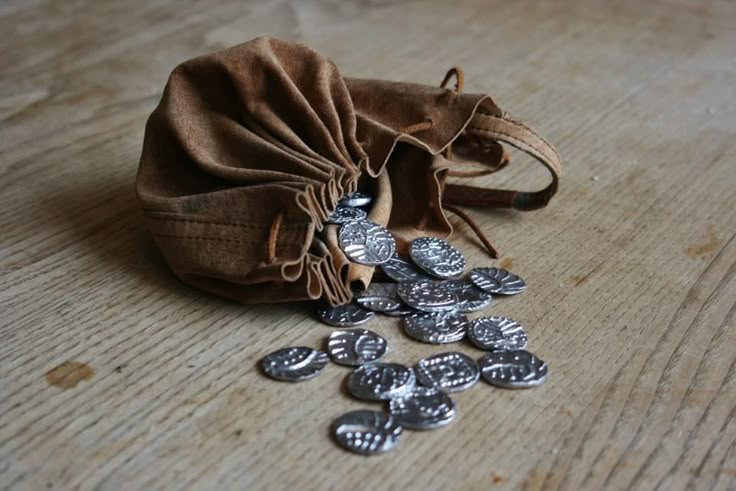
to those grim Normans, as well?

Thanks for reading, as always.

Stay well,

We’re only a month away, here in the US, from 15 April, our own “Domesday” for taxes owed,

And remember that, as ever, there’s

MTCIDC

O
Paleo-Tolkien

06 Wednesday Nov 2024

Posted by Ollamh in Uncategorized

≈ Leave a comment

Tags

books, Conan Doyle, darwin, Fantasy, Fiction, literature, sloths, Tolkien

As always, welcome, dear readers.

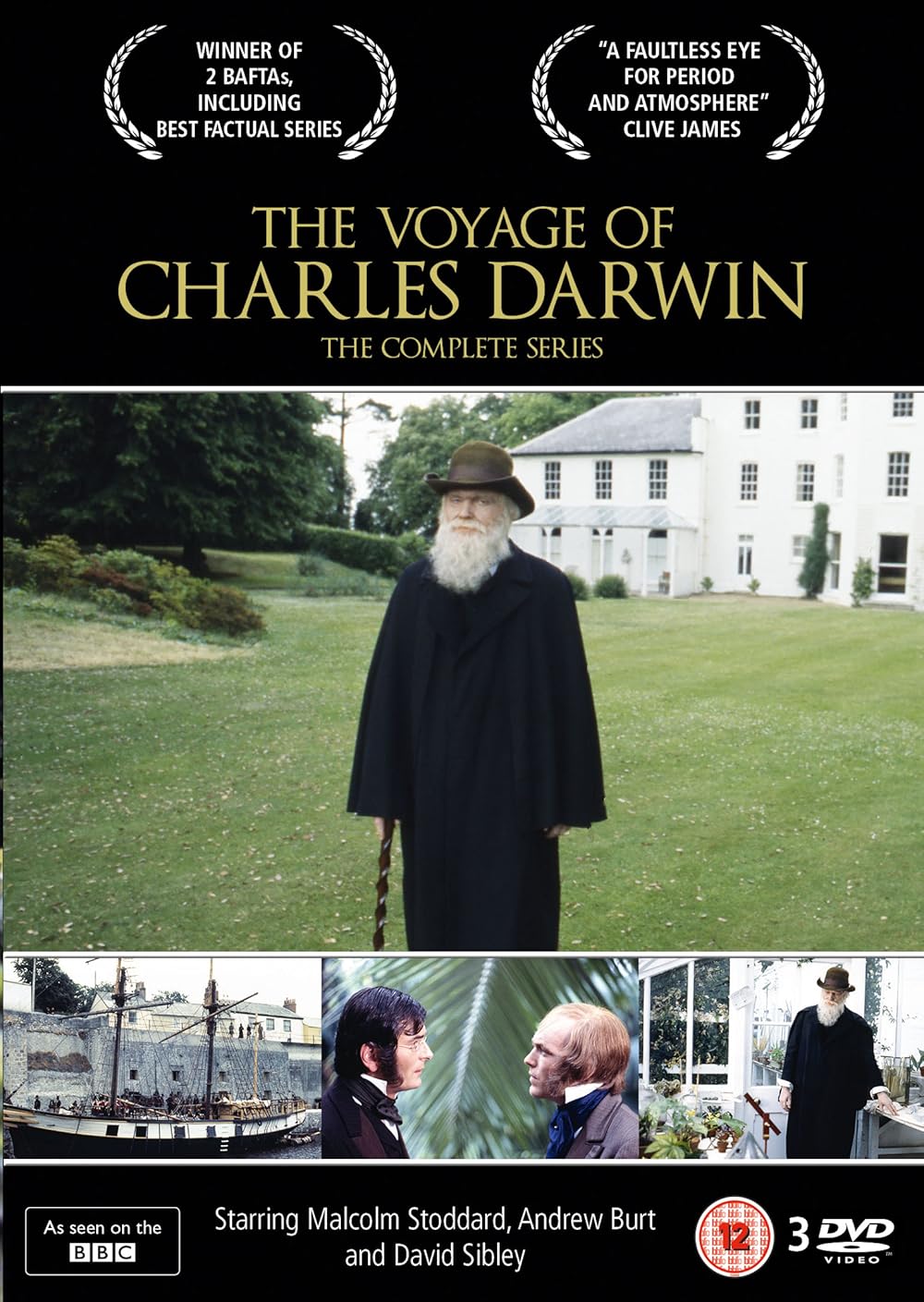
Recently, I’ve been watching a very interesting dramatized documentary, “The Voyage of Charles Darwin”.

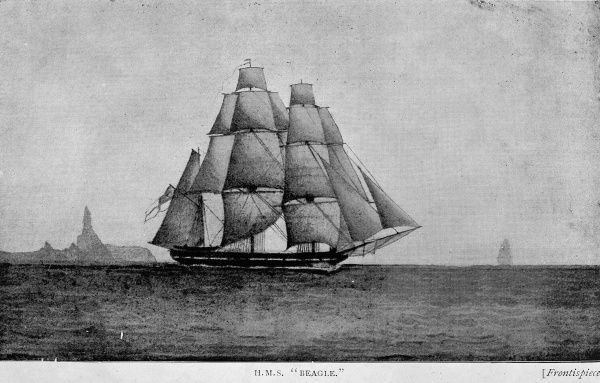
As the name implies, this includes his 5-year journey around the globe on HMS Beagle,

but goes on to follow his subsequent intellectual development through his gradual understanding of evolution.  (You can learn more about him from this rather provocative Britannica entry here:  https://www.britannica.com/biography/Charles-Darwin/The-Beagle-voyage )

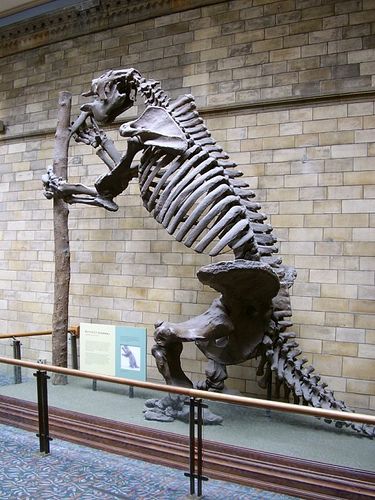
On his travels along the east coast of South America, Darwin uncovered fossils which puzzled him, including those of a giant ground sloth,

a creature whose (much smaller) tree-dwelling descendant Darwin could see in his own day.

(For more on ground sloths, see:    https://en.wikipedia.org/wiki/Ground_sloth ;  for modern sloths, see:  https://en.wikipedia.org/wiki/Sloth  For more on Darwin and fossils, see:  https://www.khanacademy.org/partner-content/amnh/human-evolutio/x1dd6613c:evolution-by-natural-selection/a/charles-darwins-evidence-for-evolution )

When I first saw this series, replayed on PBS (Public Broadcasting Service) many years ago, I had come across it by accident—very much an accident because I had, I thought, no interest whatever in science, not having enjoyed the required courses in school (gross understatement).  It was so well done, both visually and dramatically, that I was hooked and now, years later, I’ve acquired both an active interest in the history of science as well as my own DVD set of the documentary and am enjoying it even more.  It was in my mind, then, when I came across this Tolkien letter to Rhona Beare, an early Tolkien enthusiast, who had written to Tolkien with a number of questions about various details in The Lord of the Rings, including “Did the Witch-king ride a pterodactyl at the siege of Gondor?” to which JRRT replied:

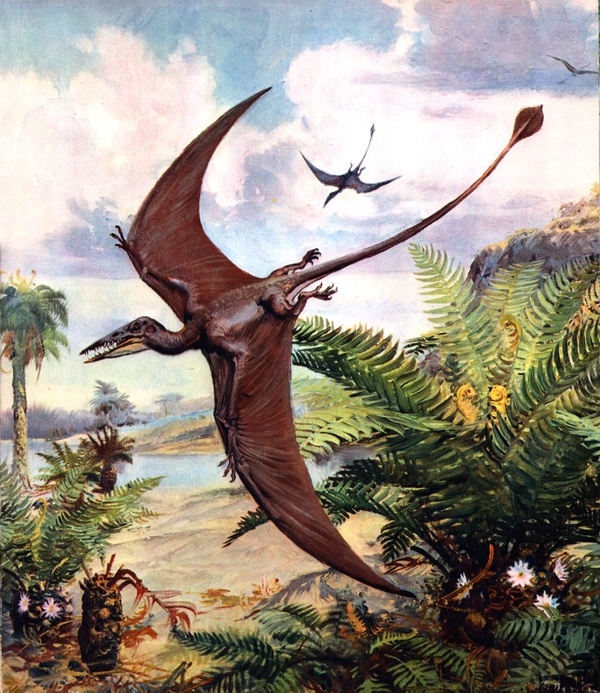
“Yes and no.  I did not intend the steed of the Witch-King to be what is now called a ‘pterodactyl’, and often is drawn (with rather less shadowy evidence than lies behind many monsters of the new and fascinating semi-scientific mythology of the ‘Prehistoric’).  But obviously it is pterodactylic and owes much to the new mythology, and its description even provides a sort of way in which it could be a last survivor of older geological eras.”  (letter to Rhona Beare, 14 October, 1958, Letters, 403)

The choice of “steed” Beare andTolkien are referring to is based upon this:

“The great shadow descended like a falling cloud.  And behold!  It was a winged creature:  if bird, then greater than all other birds, and it was naked, and neither quill nor feather did it bear, and its vast pinions were as webs of hide between horned fingers; and it stank.  A creature of an older world maybe it was, whose kind, lingering in forgotten mountains cold beneath the Moon, outstayed their day…” (The Return of the King, Book Five, Chapter 6, “The Battle of the Pelennor Fields”)

And one can see why a pterodactyl might be tempting—

(Alan Lee)

Those words in Tolkien’s text, “A creature of an older world maybe it was, whose kind, lingering in forgotten mountains cold beneath the Moon…” reminded me of a novel Tolkien may once have read, Conan Doyle’s The Lost World, 1912.  In this novel, a group of adventurers gains access to just that:  a secluded South American valley, in which various early creatures, including pterodactyls, are still living and, in fact, a young pterodactyl is even brought back to London.  Neither Letters nor Carpenter’s biography mentions Conan Doyle or the novel, but the idea of the “older world” and the pterodactyl suggest, at least to me, that this is a book which JRRT had read.  Here it is for you to read as well:  https://gutenberg.org/cache/epub/139/pg139-images.html

And, for further evidence, perhaps this, from Chapter IX?

“Well, suddenly out of the darkness, out of the night, there swooped something with a swish like an aeroplane. The whole group of us were covered for an instant by a canopy of leathery wings, and I had a momentary vision of a long, snake-like neck, a fierce, red, greedy eye, and a great snapping beak, filled, to my amazement, with little, gleaming teeth. The next instant it was gone—and so was our dinner. A huge black shadow, twenty feet across, skimmed up into the air; for an instant the monster wings blotted out the stars, and then it vanished over the brow of the cliff above us.”

This beast derived, perhaps, from Conan Doyle, and/or from what Tolkien called the “new and fascinating semi-scientific mythology of the ‘Prehistoric’”, made me think about another of Tolkien’s creatures, which some have fancifully believed may have come from memories of dinosaurs,

something which had engaged his imagination from far childhood:  dragons.

In his essay “On Fairy-Stories” he depicts this as a kind of early passion:

“I desired dragons with a profound desire.  Of course, I in my timid body did not wish to have them in the neighborhood, intruding into my relatively safe world, in which it was, for instance, possible to read stories in peace of mind, free from fear.  But the world that contained even the imagination of Fafnir was richer and more beautiful, at whatever cost of peril.”  (“On Fairy-Stories” in The Monsters and the Critics, 1983, edited by Christopher Tolkien, 135).

Tolkien freely admitted, and more than once, the strong influence of Beowulf on his work and nowhere is this influence stronger, I would say, than in The Hobbit.  And yet dragons in Beowulf are surprisingly disposable.  The dragon which brings about Beowulf’s dramatic death is dumped over a cliff into the sea:

dracan éc scufun

wyrm ofer weallclif·    léton wég niman,

flód fæðmian  frætwa hyrde. 

“The dragon, too, [that] wyrm they pushed over [the] cliff wall.  They let [the] waves take away,

To grasp, [the] keeper of [the] treasure.”  (Beowulf, 3132-33)

(My translation, with help from this excellent site:  https://heorot.dk/beowulf-rede-text.html I’ve kept “wyrm” mostly because it works nicely with those other double-u words, wall, waves, away. )

And, earlier in the poem, we are told that the dragon which Sigemund kills “hát gemealt”—“has melted”, presumably from its own heat.  (Beowulf, 897)

Smaug, however, is different.

(JRRT)

Not only does he talk, which Beowulf’s dragon does not, but, killed by Bard’s black arrow, he becomes a potential paleontological discovery:

“He would never again return to his golden bed, but was stretched cold as stone, twisted upon the floor of the shallows.  There for ages his huge bones could be seen in calm weather amid the ruined piles of the old town.”  (The Hobbit, Chapter 14, “Fire and Water”)

If Darwin had been puzzled about giant ground sloth remains, what might he have felt if he had discovered Smaug?

Thanks, as always, for reading.

Stay well,

As the proverb says, “Never laugh at live dragons”,

And remember that, as ever, there’s

MTCIDC

O
PS

Flanders and Swann, whom I have mentioned before, have a quietly cheerful song about a sloth here:  https://www.youtube.com/watch?v=blDNO5qznjM

Feudal

03 Wednesday Jul 2024

Posted by Ollamh in Uncategorized

≈ Leave a comment

Tags

anglo-saxons, Fantasy, History, literature, lord-of-the-rings

As always, dear readers, welcome.

As Gondor prepares to meet Sauron’s massive assault, it calls in troops from the south:

“And so the companies came and were hailed and cheered through the Gate, men of the Outlands marching to defend the City of Gondor in a dark hour…The men of Ringlo Vale behind the son of their lord, Dervorin striding on foot:  three hundreds…From the Anfalas, the Langstrand far away, a long line of men of many sorts…scantily equipped save for the household of Golasgil their lord…” (The Return of the King, Book Five, Chapter 1, “Minas Tirith”)

When the text repeatedly says, “their lord”, what, precisely, does that mean?

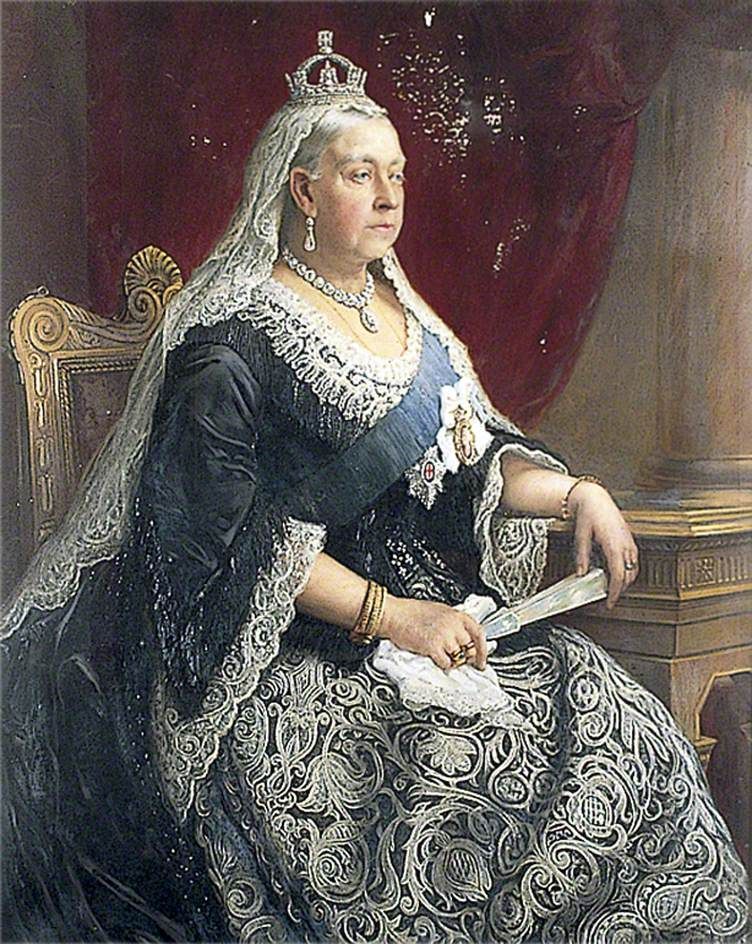
Although born in 1892, during the last years of the reign of Victoria (1819-1901),

Tolkien was not a convinced monarchist, writing to his son, Christopher:

“Give me a king whose chief interest in life is stamps, railways, or race-horses; and who has the power to sack his Vizier (or whatever you care to call him) if he does not like the cut of his trousers.”  (letter to Christopher Tolkien, 29 November, 1943, Letters, 90)

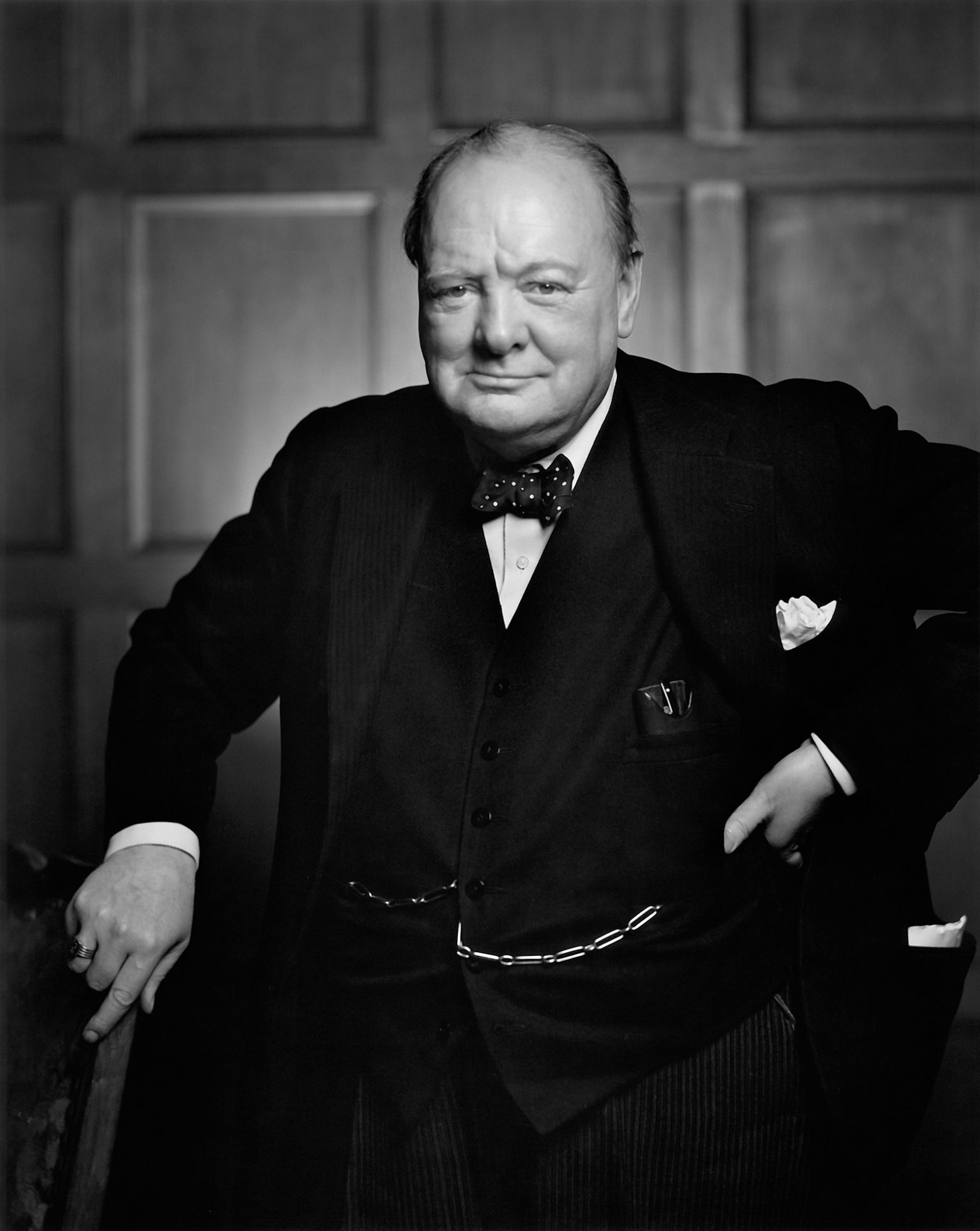
At the same time, he was not a passionate democrat, either, referring to the Prime Minister, Winston Churchill (1874-1965),

in the same letter as ‘Winston and his gang’,

having said that his own “…political opinions lean more and more to Anarchy (philosophically understood, meaning abolition of control not whiskered men with bombs)”.

And yet, in creating Middle-earth, he shows a preference for a medieval world, and, for his homeland, England, this means the form of government from which the Victorian government descended, feudalism.

Feudalism comes from Anglo-Norman French fe, which, at base, means “trust/faith”, and, in a secondary meaning, is the basis for “fief”—that is, an estate, a parcel of land given in trust.  (For more on meanings and forms, see the extremely useful Anglo-Norman French dictionary here:  https://anglo-norman.net/entry/fe ) 

It comes from Anglo-Norman because it was the Normans under Duke William of Normandy (c.1028-1087)

who introduced the concept to their newly-conquered country after 1066AD. 

The foundation of the concept is that:

1. all the land in a kingdom belongs to the king—who has received it from God

2. he then parcels the land out to his chief followers, who then

3. parcel it out to their main followers

In return, all the followers in #3 owe military service to those in #2, who, in turn, owe military service to #1.  This creates a kind of pyramid, like this–

(correct the spelling of “fife” to “fief”)

Those in #3 would then collect those below them to form the units they would bring with them when their overlords, at the king’s demand, would gather forces for whatever the king had in mind.

(by Eugene Leliepvre, one of my favorite 20th century French military illustrators)

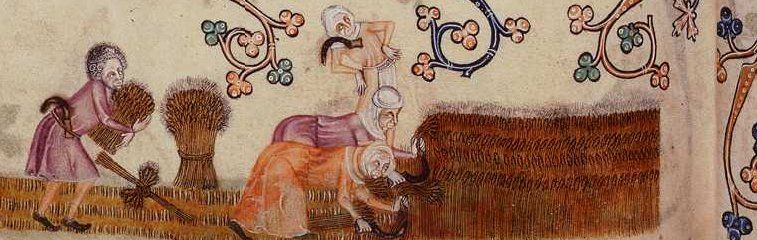
You’ll notice, of course, that those at the bottom of the pyramid—the 99% in modern terms—had no say in any of this:  when called, they were forced to go.

This was because they were the conquered.  When the Normans invaded and defeated the previous government, in the form of the death of the Anglo-Saxon king, Harold Godwinson,

they then spread out across the landscape, ousting the previous Anglo-Saxon owners and setting up forts, called “motte and baileys”,

to control the land and the locals, who, at first at least, were simply possessions.  (Feudalism became much more complicated over time, including grades of the 99%, who could be freemen, but who still had feudal obligations.)

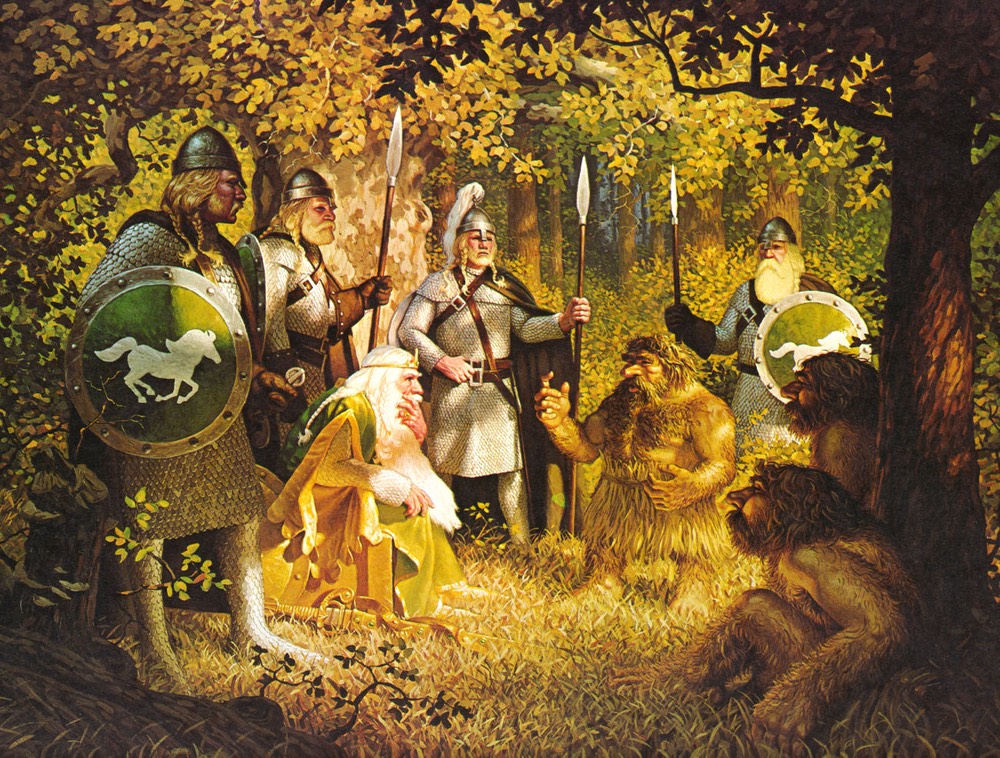
The same idea of conquest, in some sense, must have been true of the ancestors of the men of Gondor, who were not indigenous to Middle-earth, but had come from the wreckage of Numenor and who gradually came to dominate the western lands, driving the older peoples—the Dunlendings and the Woses–

(the Hildebrandts)

into exile in mountain and forest, rather than enslaving them, as the Normans did the Anglo-Saxons.

From those words “their lord”, however, it’s clear that lesser Gondorians had become part of a similar socio-economic system.

In a letter to Naomi Mitchison, JRRT has this to say about such:

“I am not incapable of or unaware of economic thought; and I think as far as the ‘mortals’ go, Men, Hobbits, and Dwarfs, that the situations are so devised that economic likelihood is there and could be worked out:  Gondor has sufficient ‘townlands’ and fiefs with a good water and road approach to provide for its population…”  (letter to Naomi Mitchison, 25 September, 1954, Letters, 292)

And there’s that word “fief”and all that it implies about rulers and ruled, both in Norman England and Gondor:  a comfortable life for those at the top,

but endless hard work, taxes, and military service for those—the great majority—at the bottom.

The British troops who surrounded Tolkien in the trenches in 1916

were, in a sense, the descendants of that feudal 99% and, although, when called upon, could be fearsomely brave, they were also well aware that they were still peasants to many of those in charge and so had songs with lyrics like:

“If you want to find the colonel,

I know where he is.

If you want to find the colonel,

I know where he is.

He’s sitting in comfort, stuffing his bloody gut.

I saw him.  I saw him,

Sitting in comfort, stuffing his bloody gut.”

(from “Hanging on the Old Barbed Wire”—you can hear a recording of some of the many mocking verses to this by the English group “Chumbawamba” here:  https://www.youtube.com/watch?v=zZhzV68U48w )

So, although Tolkien describes

“…Imrahil, Prince of Dol Amroth…and a company of knights in full harness riding grey horses; and behind them seven hundreds of men at arms, tall as lords, grey-eyed, dark-haired, singing as they came.”

we might wonder if JRRT, self-described as leaning “more and more to Anarchy”, could still hear the privates of 1916, and, if so, just what those men slogging along on foot behind “knights in full harness riding grey horses”  might actually have been singing?  Could it have been something as subversive as “Hanging on the Old Barbed Wire”, or maybe this couplet from an actual English peasant revolt in 1381:

“When Adam delved [dug]

And Eve span [spun],

Who was then

The gentleman?” 

Thanks, as ever, for reading.

Stay well,

Remember the Golden Rule,

(from the comic strip “The Wizard of Id”)

And remember, as well, that there’s

MTCIDC

O

The Unquiet of the World

29 Thursday Feb 2024

Posted by Ollamh in Uncategorized

≈ Leave a comment

Tags

Fantasy, J.R.R. Tolkien, literature, lord-of-the-rings, Tolkien

As always, dear readers, welcome.

We know that Tolkien had mixed feelings about allegory.  As he wrote in a long, detailed description of his work to Milton Waldman in 1951:

“I dislike Allegory—the conscious and intentional allegory—yet any attempt to explain the purport of myth or fairytale must use allegorical language.  (And, of course, the more ‘life’ a story has the more readily will it be susceptible of allegorical interpretations:  while the better a deliberate allegory is made the more nearly will it be acceptable just as a story.)” (from the typescript of a letter to Milton Waldman, late in 1951, Letters, 204)

This has made me think about Saruman and the Shire.

Defeated at the end of the Second Age, it’s easy to see from a map why Sauron returned to Mordor as his refuge.

It’s clearly a natural fortress, protected on three sides by forbidding mountain ranges pierced by only two gates, the Morannon

(the Hildebrandts)

and Minas Morgul (formerly Minas Ithil).

(another Hildebrandts)

His command center, the Barad-dur, was located there.

(and yet another Hildebrandts)

Sited near an active volcano, Mt. Doom,

(This is actually Villarrica in Chile erupting in March, 2015.)

it was also a blighted land, nearly waterless and bleak.

(This is the Parque Nacional de Timanfaya on the island of Lanzarote in the Canary Islands.  As someone who loves the US Southwest, I find this place absolutely stunning, but, imagining it marched across by companies of orcs and suffered across by Sam and Frodo, it might easily stand in for Mordor.)

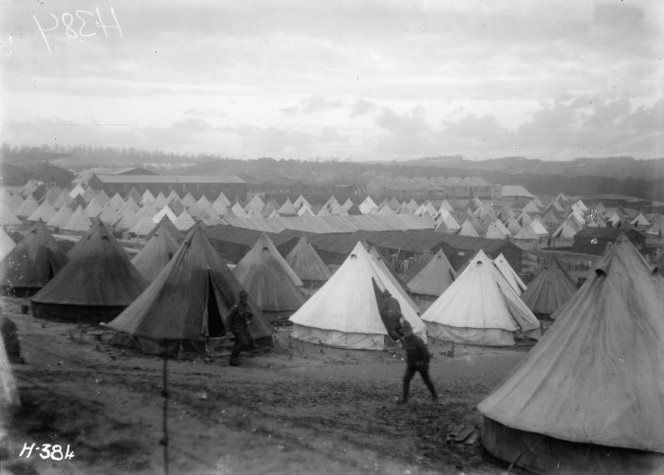
Although at the time of The Lord of the Rings it has become a vast camp,

filled with all of the tents and workshops and stables which an army like Sauron’s would require, I have no sense that it was ever anything more than as it must have looked even in the Second Age:  bleak and waterless and dominated to the north by Mt Doom, a vast volcanic plain.  Sauron hadn’t intended to blight it.  Nature had already made it that way and it was useful for what he required:  protection from prying eyes and invading troops and space to spread his growing forces.  (Although I wonder about his water supply—Sam and Frodo are lucky to find the trickle they do—and even “dark pools fed by threads of water trickling down from some source higher up the valley”—by the western mountain wall—The Return of the King, Book Six, Chapter 2, “The Land of Shadow”.  Food seems to have been supplied by slave farms to the south and southeast, also briefly described in this chapter.  Ever-practical Sam wonders about all of this:  “ ‘Pretty hopeless, I call it—saving that where there’s such a lot of folk there must be wells or water, not to mention food.’ “ )

In contrast, there was the Shire—

(JRRT)

As Tolkien imagined it:

“The Shire is placed in a water and mountain situation and a distance from the sea and a latitude that would give it a natural fertility, quite apart from the stated fact that it was a well-tended region when they [the hobbits] took it over…” (letter to Naomi Mitchison, 25 September, 1954, Letters, 292)

It was based, as he stated more than once, on

“…a Warwickshire village of about the period of the Diamond Jubilee [the 60th anniversary of Queen Victoria’s ascension to the throne, 1897]…” (letter to Allen & Unwin, 12 December, 1955, Letters, 334)

which, although the actual village, Sarehole, was just south of the booming manufacturing center of Birmingham, Tolkien describes this world as “…in a pre-mechanical age.”  (letter to Deborah Webster, 25 October, 1958, Letters, 411)

And, to Tolkien, this was

“…in the quiet of the world, when there was less noise and more green…” (The Hobbit, Chapter One, “An Unexpected Party”)

But then Saruman arrives, telling the hobbits:

“ ‘One ill turn deserves another…It would have been a sharper lesson, if only you had given me a little more time and more Men.  Still I have already done much that you will find it hard to mend or undo in your lives.  And it will be pleasant to think of that and set it against my injuries.’ ” (The Return of the King, Book Six, Chapter 8, “The Scouring of the Shire”)

It’s clear from the description given us in “The Scouring of the Shire”, however, that what Saruman intends isn’t just wanton destruction, but something more complex:  a complete reorganization of the Shire.  Part of that is a social restructuring, where a form of communism is forced upon the population.  Monitoring that is the apparatus of a police state, with many rules, a curfew, and a number of the hobbits themselves being recruited to the “Shirriffs”.   But there’s more:

“The pleasant row of old hobbit-holes in the bank on the north side of the Pool were deserted, and their little gardens that used to run down bright to the water’s edge were rank with weeds.  Worse, there was a whole line of the ugly new houses all along Pool Side, where the Hobbiton Road ran close to the bank.  An avenue of trees had stood there.  They were all gone.  And looking with dismay up the road towards Bag End they saw a tall chimney of brick in the distance.  It was pouring out black smoke into the evening air.”

Thus, what Saruman was clearly intending wasn’t just desolation, like Mordor, but rather something more like the imaginary Coketown of Charles Dickens’ Hard Times, 1854:

“It was a town of red brick, or of brick that would have been red if the smoke and ashes had allowed it; town of machinery and tall chimneys, out of which interminable serpents of smoke trailed themselves for ever and ever, and never got uncoiled.  It had a black canal in it, and a river that ran purple with ill-smelling dye, and vast piles of building full of windows where there was a rattling and a trembling all day long, and where the piston of the steam-engine worked monotonously up and down, like the head of an elephant in a state of melancholy madness.  It contained several large streets all very like one another, and many small streets still more like one another, inhabited by people equally like one another, who all went in and out at the same hours, with the same sound upon the same pavements, to do the same work, and to whom every day was the same as yesterday and to-morrow, and every year the counterpart of the last and the next.”   (Hard Times, Chapter 5, “The Keynote” which you can read here:  https://www.gutenberg.org/files/786/786-h/786-h.htm )

Tolkien more than once lamented the passing of the “quiet of the world” and his Shire, which he described in a letter as “where an ordered, civilized, if simple and rural life is maintained” embodied for him that quiet.  (from that same letter to Milton Waldman, late 1951, Letters, 219)

And so, although JRRT wrote, in a letter to the editor of New Republic, Michael Straight, that:

“There is no special reference to England in the ‘Shire’…there is no post-war reference.”

at the same time, he adds:

“…the spirit of ‘Isengard’, if not of Mordor, is of course always cropping up.” (draft of a letter to Michael Straight, “probably January or February 1956, Letters, 340)

We know what that spirit is inspired by, as Treebeard tells us:

“He has a mind of metal and wheels; and he does not care for growing things, except as far as they serve him for the moment.” (The Two Towers, Book Three, Chapter 4, “Treebeard”)

Isengardism—or Sarumanism (a word JRRT himself employs in that same letter to Naomi Mitchison quoted above, saying that he is not a ‘reformer’ (by exercise of power) since it seems doomed to Sarumanism”) to Tolkien meant brutal change—in this case, in the conversion of the Shire into a mini-industrial state, run by a Stalinist tyrant and a cowed population.  Considering Tolkien’s sadness at the conversion of the rural world of his childhood into the industrial world of his present, might we not then see what Saruman does to the Shire as rather like allegory as Tolkien once defined it:

“Of course, Allegory and Story converge, meeting somewhere in Truth.”?  (letter to Sir Stanley Unwin, 31 July, 1947, Letters, 174)

Thanks, as ever, for reading.

Stay well,

Think green thoughts,

And remember that, as always, there’s

MTCIDC

O

The Doubtful Sea Series Facebook Page

The Doubtful Sea Series Facebook Page

  • Ollamh

Categories

  • Artists and Illustrators
  • Economics in Middle-earth
  • Fairy Tales and Myths
  • Films and Music
  • Games
  • Heroes
  • Imaginary History
  • J.R.R. Tolkien
  • Language
  • Literary History
  • Maps
  • Medieval Russia
  • Military History
  • Military History of Middle-earth
  • Narnia
  • Narrative Methods
  • Poetry
  • Research
  • Star Wars
  • Terra Australis
  • The Rohirrim
  • Theatre and Performance
  • Tolkien
  • Uncategorized
  • Villains
  • Writing as Collaborators
Follow doubtfulsea on WordPress.com

Across the Doubtful Sea

Recent Postings

  • A Moon disfigured December 17, 2025
  • On the Roads Again—Once More December 10, 2025
  • (Not) Crossing Bridges December 3, 2025
  • On the Road(s) Again—Again November 26, 2025
  • On the Road(s) Again November 19, 2025
  • To Bree (Part 2) November 12, 2025
  • To Bree (Part 1) November 5, 2025
  • A Plague o’ Both—No, o’ All Your Houses! October 29, 2025
  • It’s in Writing (2:  I’st a Prologue, or a Poesie for a Ring?) October 22, 2025

Blog Statistics

  • 103,194 Views

Posting Archive

  • December 2025 (3)
  • November 2025 (4)
  • October 2025 (5)
  • September 2025 (4)
  • August 2025 (4)
  • July 2025 (5)
  • June 2025 (4)
  • May 2025 (4)
  • April 2025 (5)
  • March 2025 (4)
  • February 2025 (4)
  • January 2025 (5)
  • December 2024 (4)
  • November 2024 (4)
  • October 2024 (5)
  • September 2024 (4)
  • August 2024 (4)
  • July 2024 (5)
  • June 2024 (4)
  • May 2024 (5)
  • April 2024 (4)
  • March 2024 (4)
  • February 2024 (4)
  • January 2024 (5)
  • December 2023 (4)
  • November 2023 (5)
  • October 2023 (4)
  • September 2023 (4)
  • August 2023 (5)
  • July 2023 (4)
  • June 2023 (4)
  • May 2023 (5)
  • April 2023 (4)
  • March 2023 (5)
  • February 2023 (4)
  • January 2023 (4)
  • December 2022 (4)
  • November 2022 (5)
  • October 2022 (4)
  • September 2022 (4)
  • August 2022 (5)
  • July 2022 (4)
  • June 2022 (5)
  • May 2022 (4)
  • April 2022 (4)
  • March 2022 (5)
  • February 2022 (4)
  • January 2022 (4)
  • December 2021 (5)
  • November 2021 (4)
  • October 2021 (4)
  • September 2021 (5)
  • August 2021 (4)
  • July 2021 (4)
  • June 2021 (5)
  • May 2021 (4)
  • April 2021 (4)
  • March 2021 (5)
  • February 2021 (4)
  • January 2021 (4)
  • December 2020 (5)
  • November 2020 (4)
  • October 2020 (4)
  • September 2020 (5)
  • August 2020 (4)
  • July 2020 (5)
  • June 2020 (4)
  • May 2020 (4)
  • April 2020 (5)
  • March 2020 (4)
  • February 2020 (4)
  • January 2020 (6)
  • December 2019 (4)
  • November 2019 (4)
  • October 2019 (5)
  • September 2019 (4)
  • August 2019 (4)
  • July 2019 (5)
  • June 2019 (4)
  • May 2019 (5)
  • April 2019 (4)
  • March 2019 (4)
  • February 2019 (4)
  • January 2019 (5)
  • December 2018 (4)
  • November 2018 (4)
  • October 2018 (5)
  • September 2018 (4)
  • August 2018 (5)
  • July 2018 (4)
  • June 2018 (4)
  • May 2018 (5)
  • April 2018 (4)
  • March 2018 (4)
  • February 2018 (4)
  • January 2018 (5)
  • December 2017 (4)
  • November 2017 (4)
  • October 2017 (4)
  • September 2017 (4)
  • August 2017 (5)
  • July 2017 (4)
  • June 2017 (4)
  • May 2017 (5)
  • April 2017 (4)
  • March 2017 (5)
  • February 2017 (4)
  • January 2017 (4)
  • December 2016 (4)
  • November 2016 (5)
  • October 2016 (6)
  • September 2016 (5)
  • August 2016 (5)
  • July 2016 (5)
  • June 2016 (5)
  • May 2016 (4)
  • April 2016 (4)
  • March 2016 (5)
  • February 2016 (4)
  • January 2016 (4)
  • December 2015 (5)
  • November 2015 (5)
  • October 2015 (4)
  • September 2015 (5)
  • August 2015 (4)
  • July 2015 (5)
  • June 2015 (5)
  • May 2015 (4)
  • April 2015 (3)
  • March 2015 (4)
  • February 2015 (4)
  • January 2015 (4)
  • December 2014 (5)
  • November 2014 (4)
  • October 2014 (6)
  • September 2014 (1)

Blog at WordPress.com.

  • Subscribe Subscribed
    • doubtfulsea
    • Join 78 other subscribers
    • Already have a WordPress.com account? Log in now.
    • doubtfulsea
    • Subscribe Subscribed
    • Sign up
    • Log in
    • Report this content
    • View site in Reader
    • Manage subscriptions
    • Collapse this bar
 

Loading Comments...