Tags
books, De Zevensprong, de-sevensprong, Easy Dutch, etymology, gothic-literature, Horace Walpole, horror, Strawberry Hill, The Castle of Otranto, The Three Princes of Serendip, Tonke Dragt, Tonke Dragt.
As always, dear readers, welcome.
Ever since I first read The Castle of Otranto (1764),
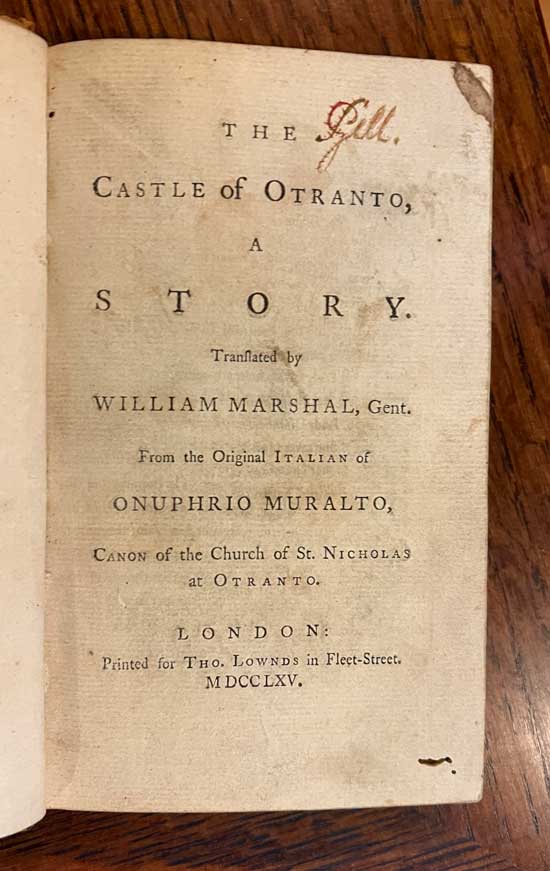
(clearly a second edition)
I’ve been interested in its author, Horace Walpole (1717-1797),

especially after visiting his (restored) house, “Strawberry Hill”, which, in its crazy way, suggests what an 18th-century gentleman, living in the country, would prefer for a tasteful castle (you can see it in the background of his portrait)—
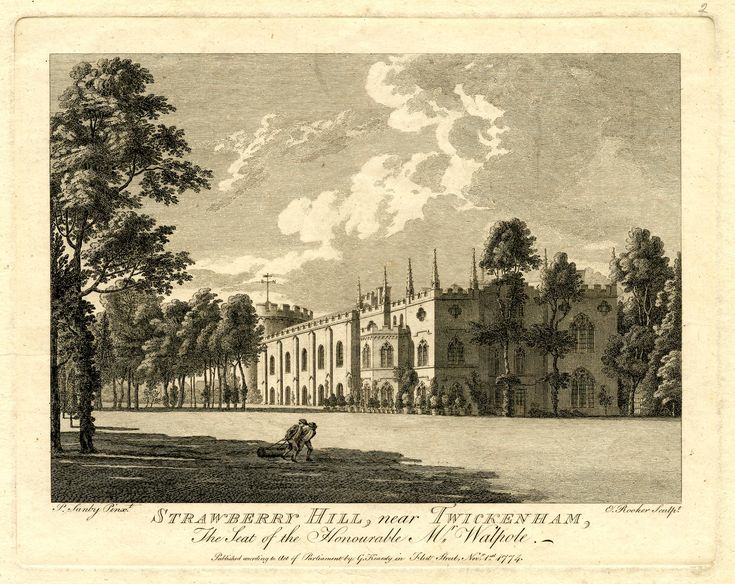
(as seen in 1774, during Walpole’s life)

(as seen today)
And, if you believe that the outside is eccentric, you have only to look at this corridor—

to see just how far Walpole’s ideas might run (wild, I would say).
The Castle of Otranto is usually cited as the first “Gothic” novel—a book with ghosts and potential horrors so extreme as to seem silly today, but it was a best-seller in the mid-18th century and it’s certainly worth a read, if nothing else as an important document in the evolution of the genre, as well as an forerunner of the Romanticism which would follow, in time. (You can read about the book here: https://en.wikipedia.org/wiki/The_Castle_of_Otranto and read the book itself here: https://archive.org/details/castleofotrant00walp/mode/2up )
An added pleasure, for me, is Walpole’s correspondence. Walpole is gossipy, quick, sometimes drily witty, and, over all, there is the voice of a real person in his letters which makes me wish that he had my e-mail address and would like to exchange letters with me now.
There’s a lot to read: 16 volumes in one edition plus supplements and extra volumes of correspondence with specific people, all available at the Internet Archive, but, in Volume 3 of Paget Toynbee’s edition, there’s this:
“This discovery, indeed, is almost of that kind which I call Serendipity, a very expressive word, which, as I have nothing better to tell you, I shall endeavour to explain to you : you will understand it better by the derivation than by the definition. I once read a silly fairy tale, called The Three Princes of Serendip : as their Highnesses travelled, they were always making discoveries, by accidents and sagacity, of things which they were not in quest of : for instance, one of them discovered that a mule blind of the right eye had travelled the same road lately, because the grass was eaten only on the left side, where it was worse than on the right — now do you understand Serendipity?” (The Letters of Horace Walpole, Fourth Earl of Orford, Vol.III, 1750-1756, 204 You can read the letter for yourself here: https://archive.org/details/lettershoracewa09toyngoog/page/n224/mode/2up )
The “silly fairy tale” which Walpole read was probably in the form of The Travels and Adventures of Three Princes of Sarendip, 1722, which you can read here: file:///D:/POSTS4/SERENDIPITY/bim_eighteenth-century_the-travels-and-adventur_1722.pdf .
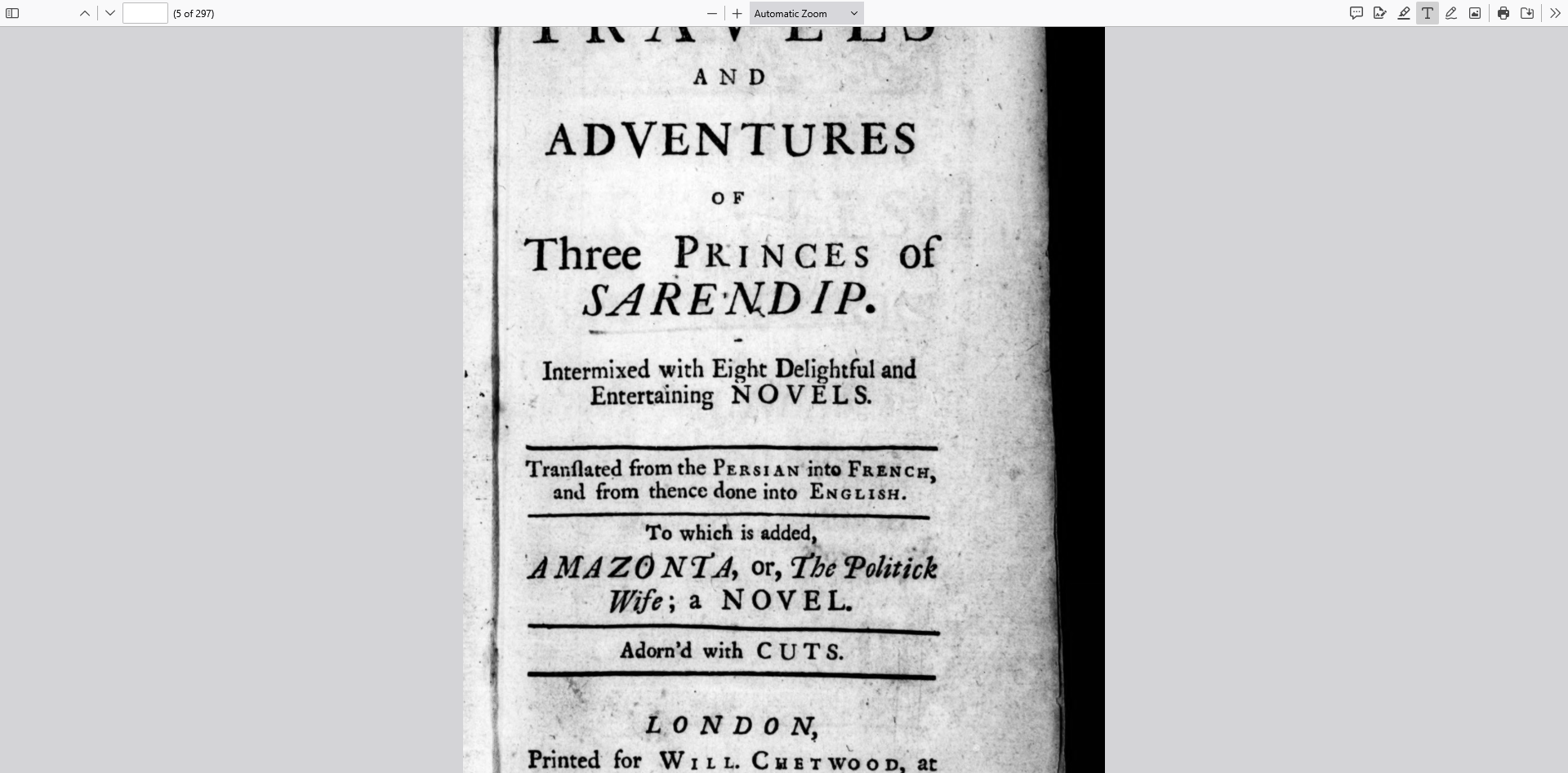
The title page reads “Translated from the Persian into French, and from thence done into English”, but perhaps the transmission story was a little more complicated, as the original story may have come from Persian—but then it appears in Italian, in Michele Tramezzino’s 1557 Peregrinaggio di tre giovani figliuoli del re di Serendippo (“Travels of the Three Young Sons of the King of Serendippo” There’s a translation here: https://en.wikisource.org/wiki/Translation:The_Three_Princes_of_Serendip ).
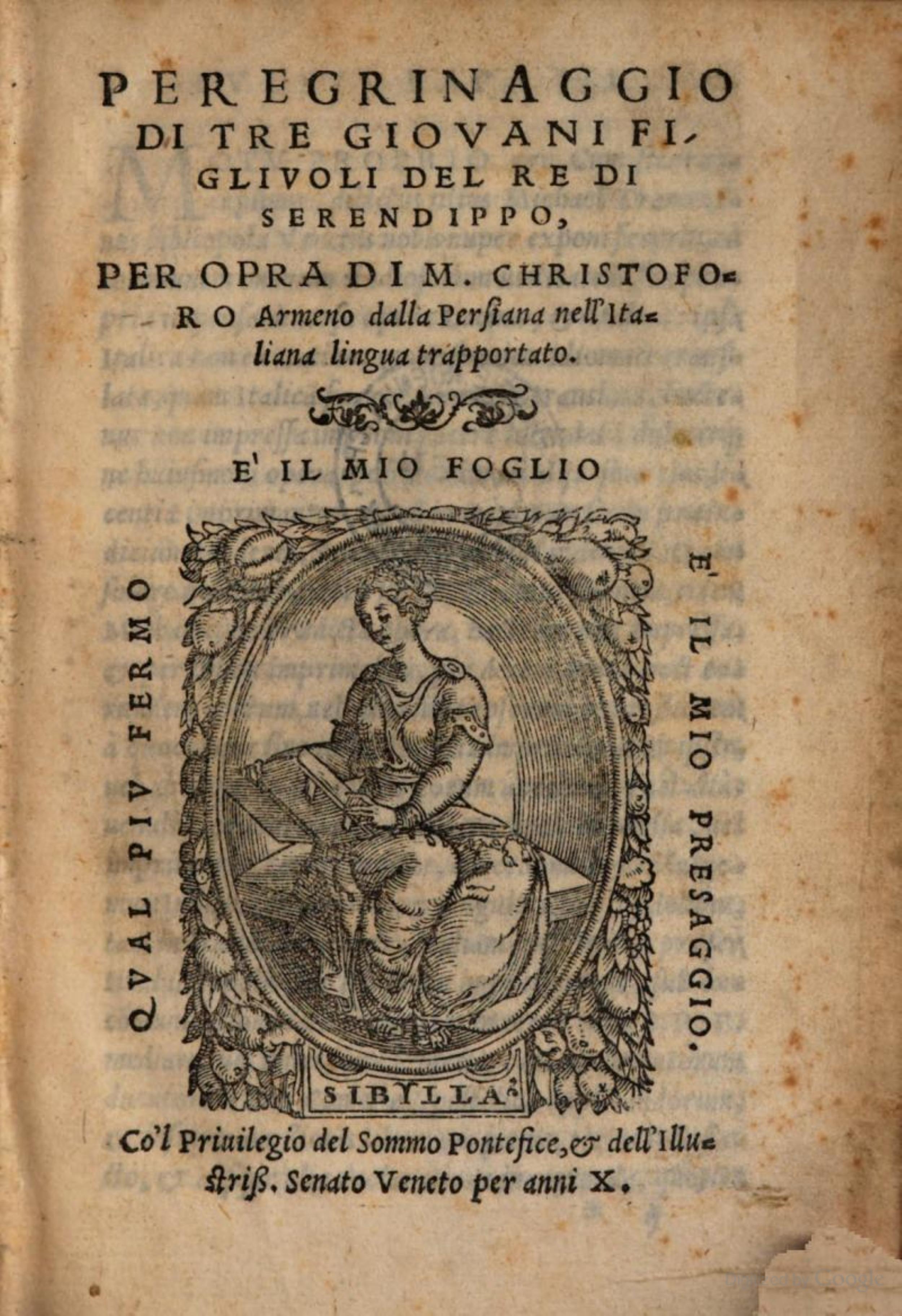
From here it turns up in the 1722 volume, although Walpole seems to have had a memory lapse, as the animal mentioned isn’t a mule, but a camel, and the story is a bit more complicated. In brief, the three young princes, while traveling, stop to help a man who has lost a camel, describing the camel to him so accurately that he’s convinced, when they claim that they don’t have it, that they have stolen it. They’re arrested and threatened with death if they don’t return the beast until they explain the clues which they have observed, which allowed them to be able to describe the camel in such detail, even though they had never seen actually seen it. The man’s neighbor then appears with the camel and the adventure ends happily.
It’s easy to see how Walpole invented the term. With the Latin he had acquired in his education, he knew that abstract nouns could be formed on the ending -itas. If you want a term in Latin meaning “worthiness”, for example, you take the Latin adjective for “worthy”—dignus—drop the -us, which signals that it’s in the nominative—that is the subject—case, then tack on the -itas and you have dignitas. Walpole took “Serendip”, added the abstract ending, and voila: serendipitas—or, in English, serendipity.
But what does Walpole mean by it? He writes of the princes that “they were always making discoveries, by accidents and sagacity, of things which they were not in quest of’, and now, in English, we usually employ the term to indicate “something randomly discovered, but which proves to be useful” and that’s why I entitled the last posting “Serendipity”. While watching an “Easy Dutch” video, I had been shown a Dutch YA (young adult) book which interested me—
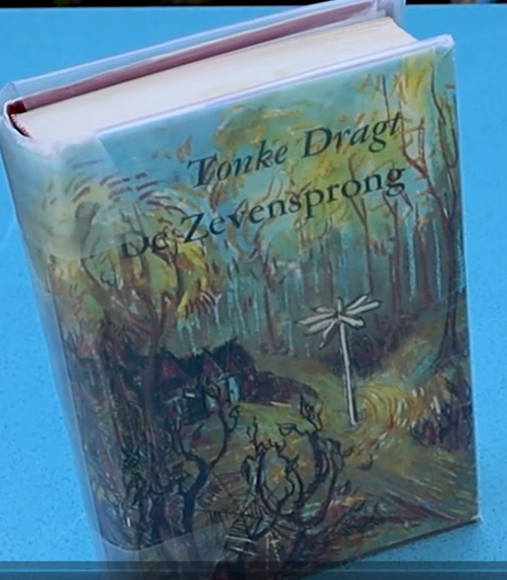
although I had no idea, watching the video, that I would be given a book recommendation. I took it as such, however, enjoyed the book, then read 3 more by the same author and wrote a review of the 4—a perfect example of “something randomly discovered, but which proved to be useful”—and fun.
Thanks, as ever, for reading.
Stay well,
May you enjoy some serendipity of your own,

And I hope that there will be even more serendipity for you in the
MTCIDC,
O
PS
For more on the three princes—and even the suggestion that they may have been an inspiration for detecting fiction, see: https://en.wikipedia.org/wiki/The_Three_Princes_of_Serendip

