Tags
Buster Keaton, Charlie Chaplin, Film, Harold Lloyd, Lumiere brothers, movies, Nosferatu, Quintilian, reviews, Safety Last, silent film, The Cabinet of Dr Caligari, The General, The Great Train Robbery, The Sneeze, the-internet-archive, the-lumiere-brothers, victorian-theatre
As always, dear readers, welcome.
If you visit this blog regularly, or even occasionally, you will see that, although I very often write about Tolkien, one of my goals, always, is to extend not only my own knowledge, but that of my readers, and a primary way to do this is to develop our joint electronic libraries. A major source for this development is the Internet Archive, the general address being: https://archive.org/ This seems like such a plain address for such a treasure house of a site—what a Victorian might call “Aladdin’s Cave”.
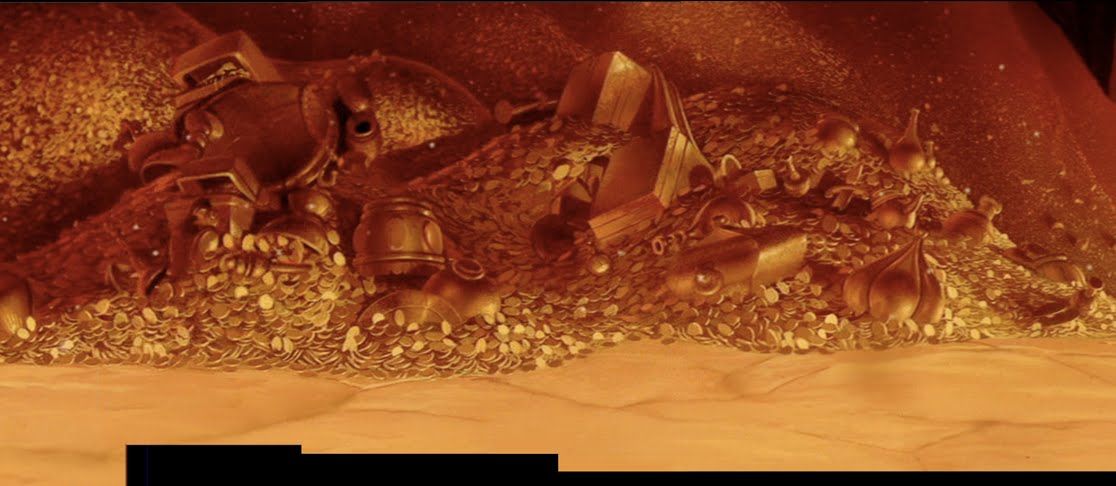
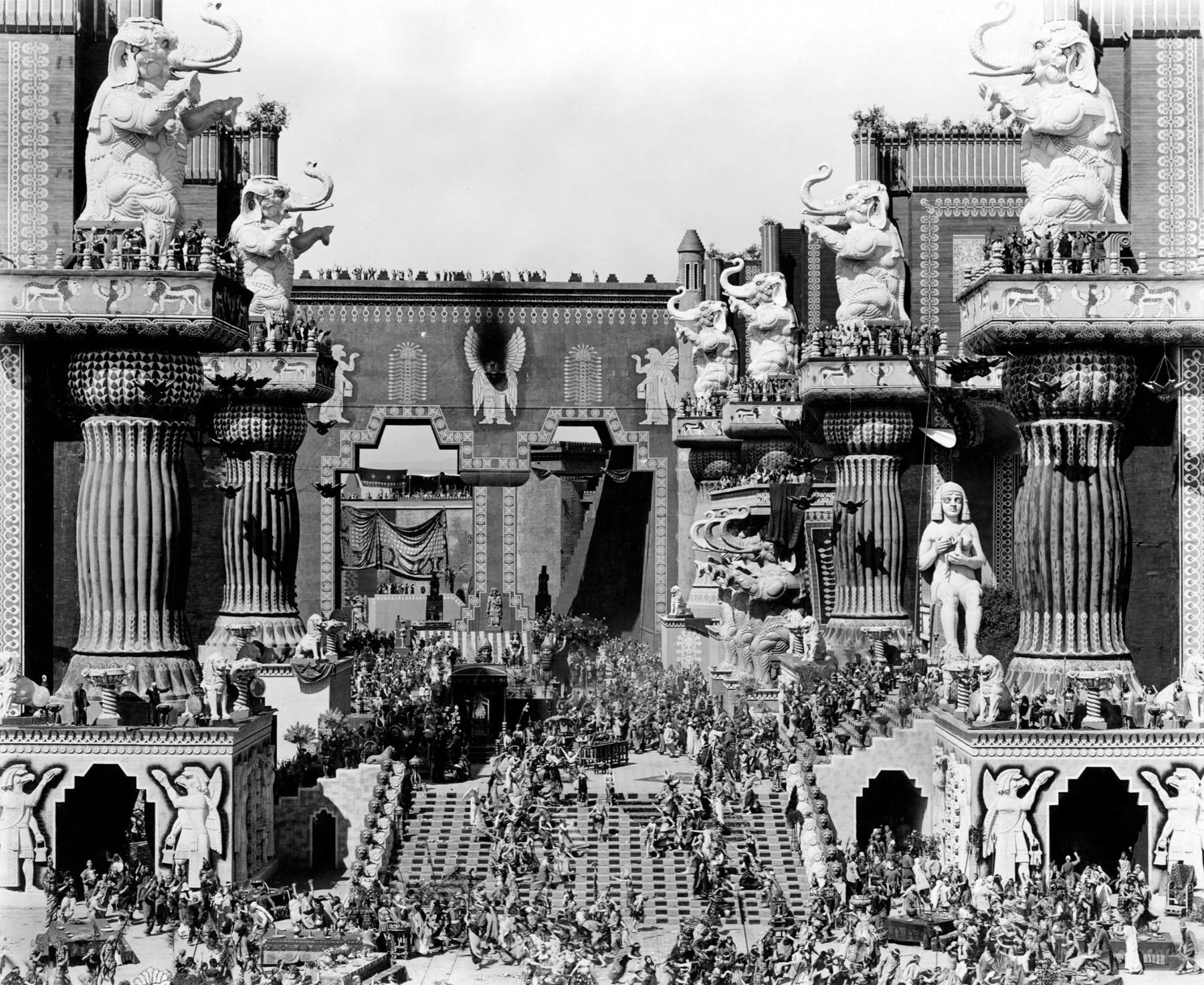
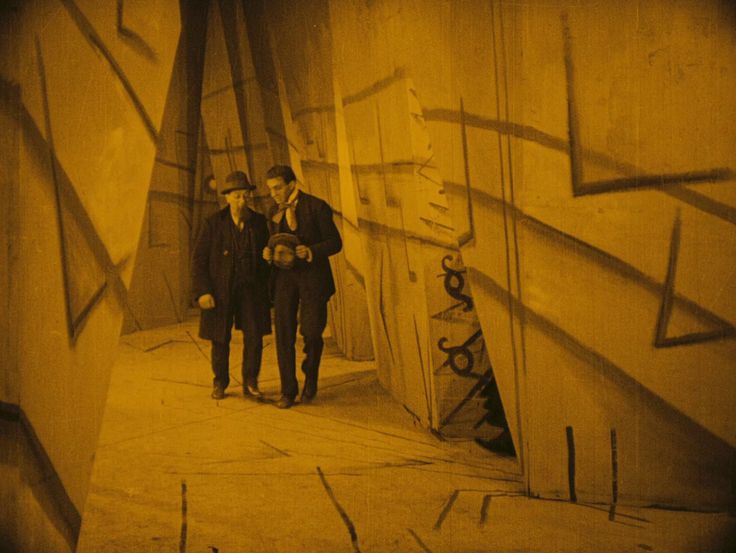
Along with what must be thousands (and thousands) of books, many of them long out of print and might be thought obscure, one of those heaps of treasure is the collection of silent films—hence the title of this posting—with hundreds of films available (the site has the number of 3,530, but there appear to be a number of repeats). The collection begins in the 1890s and goes through the 1920s, with many films considered “classic”, like “The Great Train Robbery” (1903),
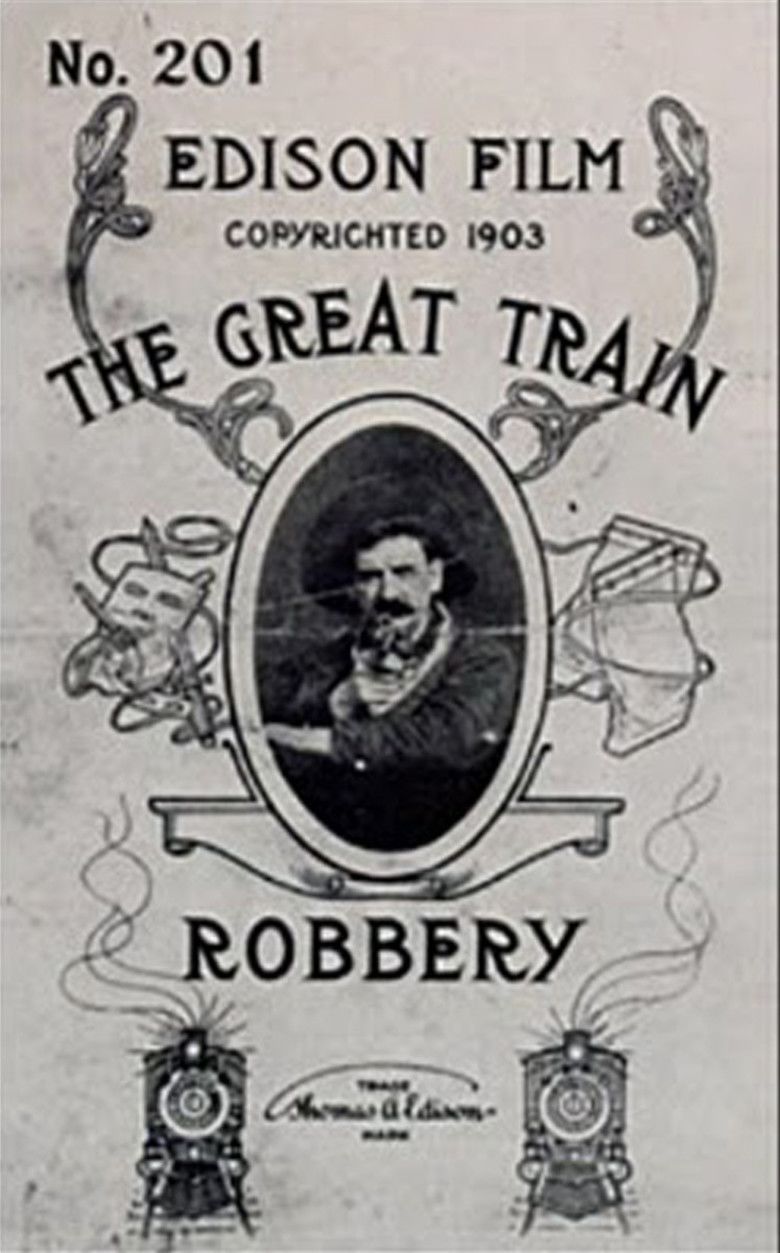
“Intolerance” (1916),
“The Cabinet of Dr. Caligari” (1920),
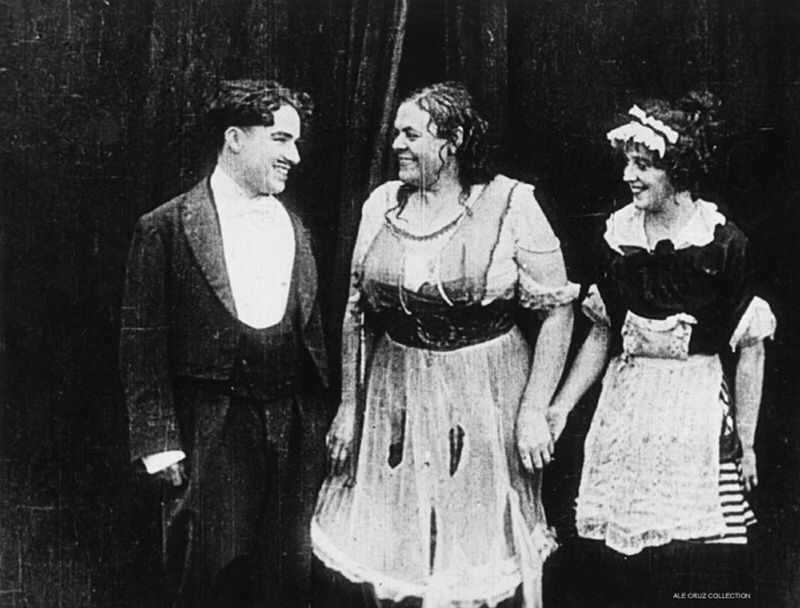
and classic comedies, like Charlie Chaplin’s early “Tillie’s Punctured Romance” (1914),
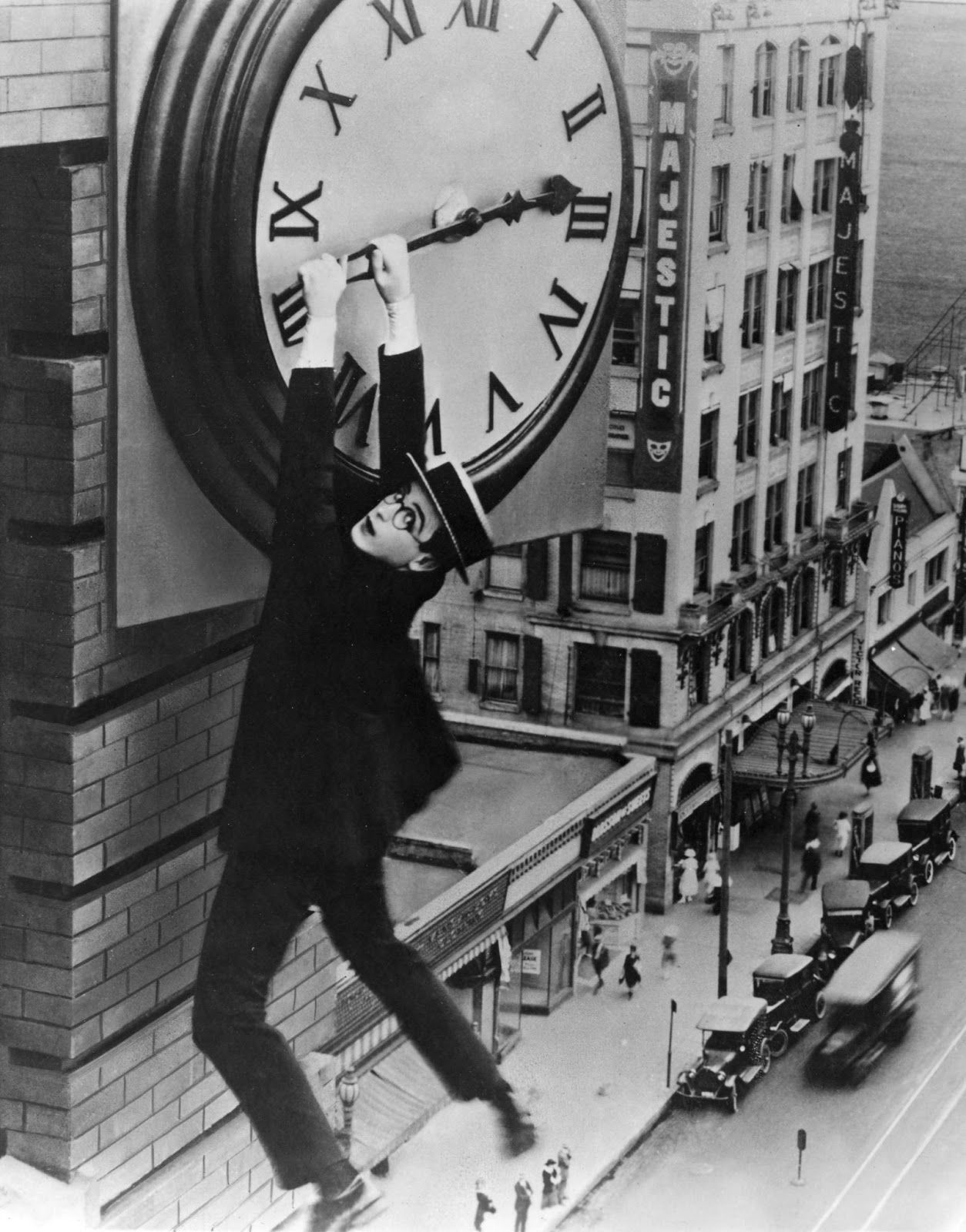
Harold Lloyd’s “Safety Last” (1923)—one of my all-time favorites–
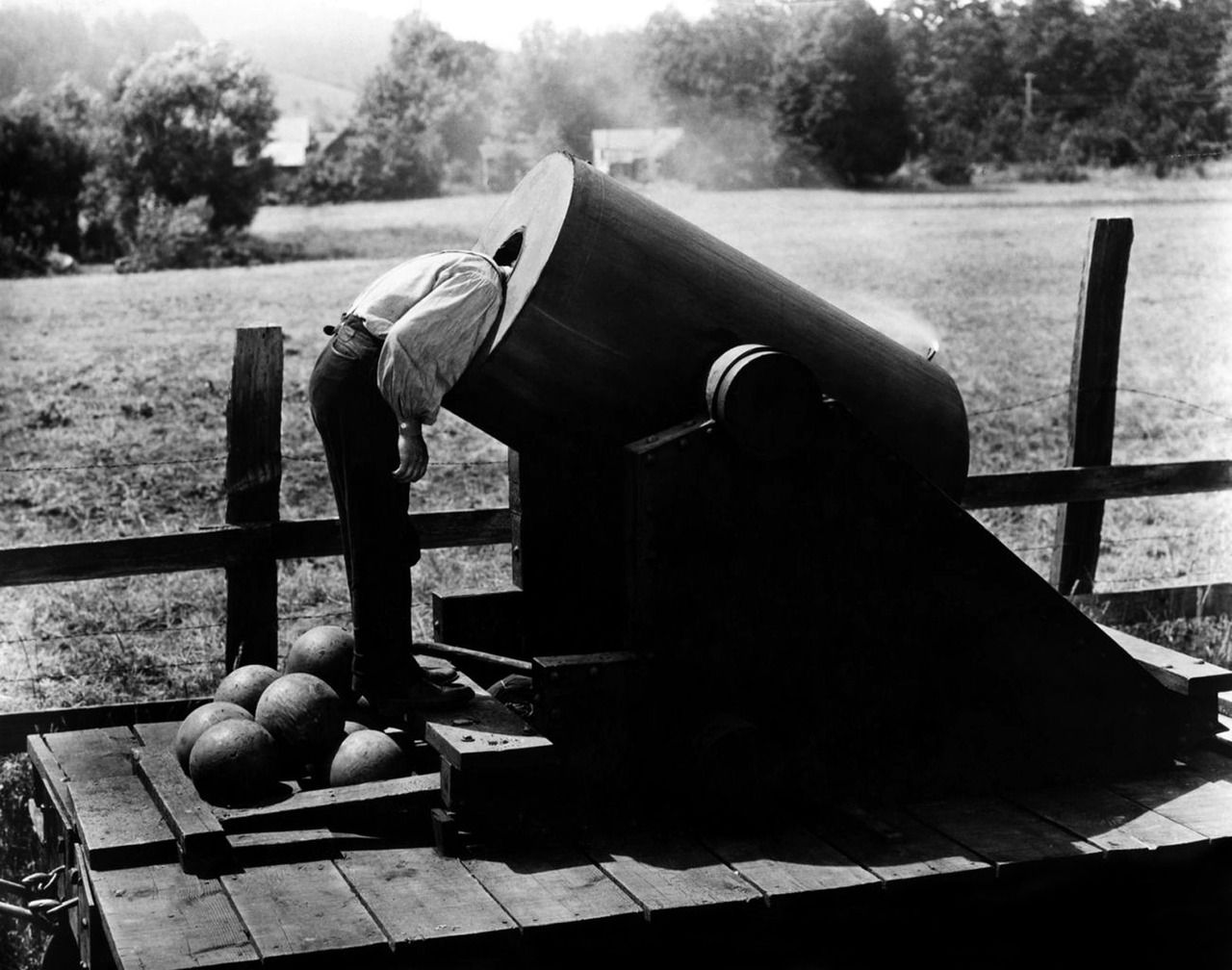
and Buster Keaton’s “The General” (1926) and how could that not be a favorite, too?
If you’re not familiar with such films, and see one for the first time, you’ll probably be puzzled, if not put off, by the seemingly overdone make-up
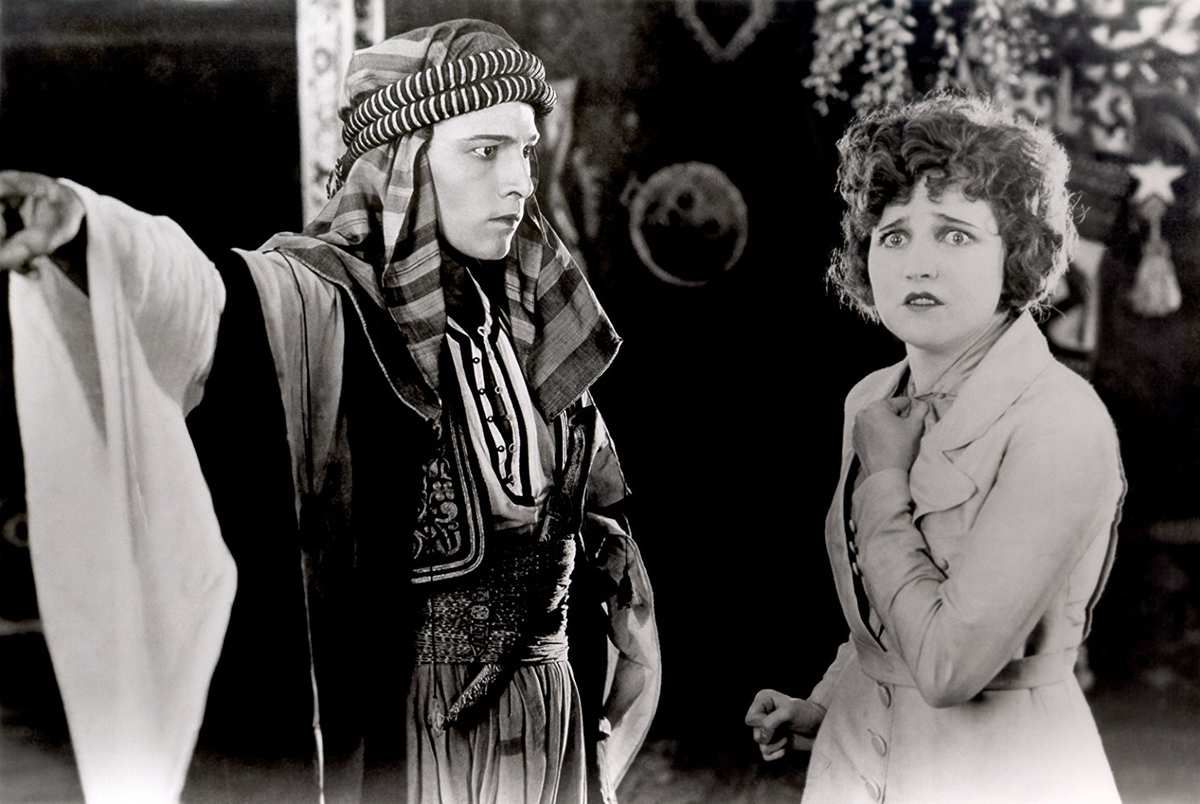
(Rudolph Valentino and Agnes Ayres, “The Sheik”, 1921)
the exaggerated gestures,
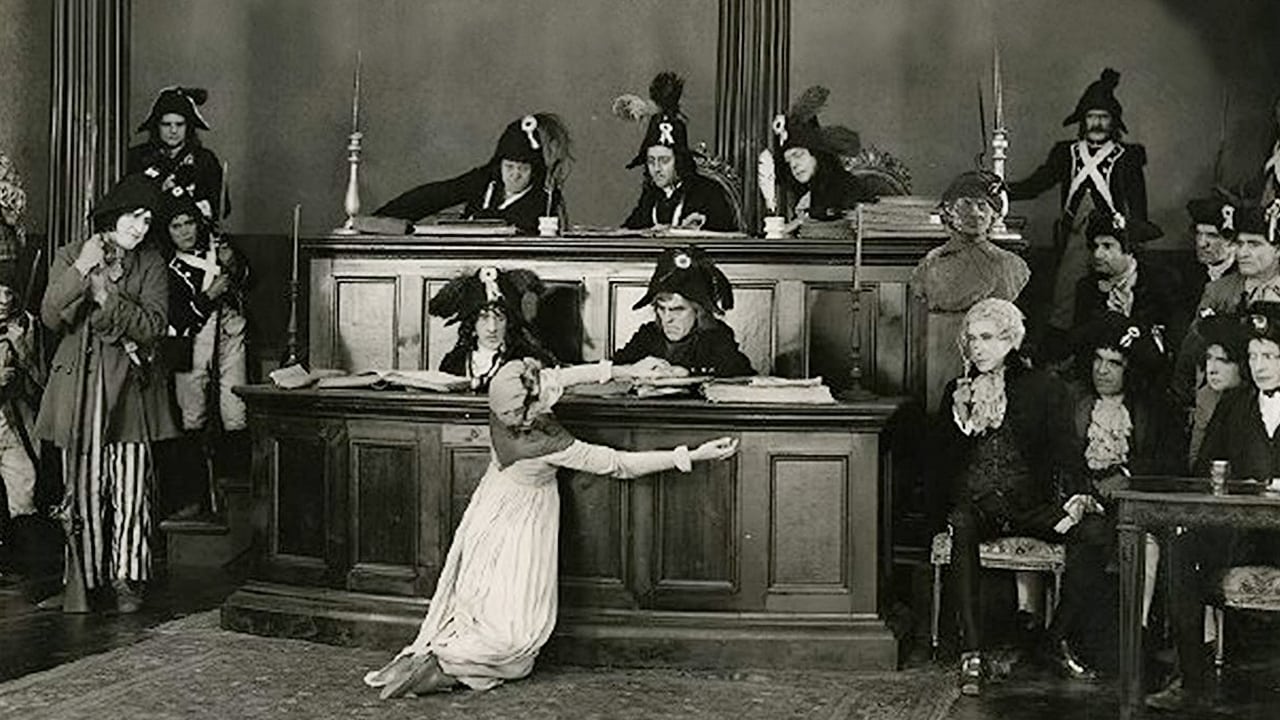
(“Orphans of the Storm”, 1921)
and, perhaps the strangest of all for viewers used to booming orchestral accompaniments and nearly-continuous sound effects, the silence.
And yet the films aren’t—and weren’t—so silent as the adjective implies.
First, for very important bits of dialogue, printed sheets, called “title cards”, would be filmed and added to the film, cluing the audience in.
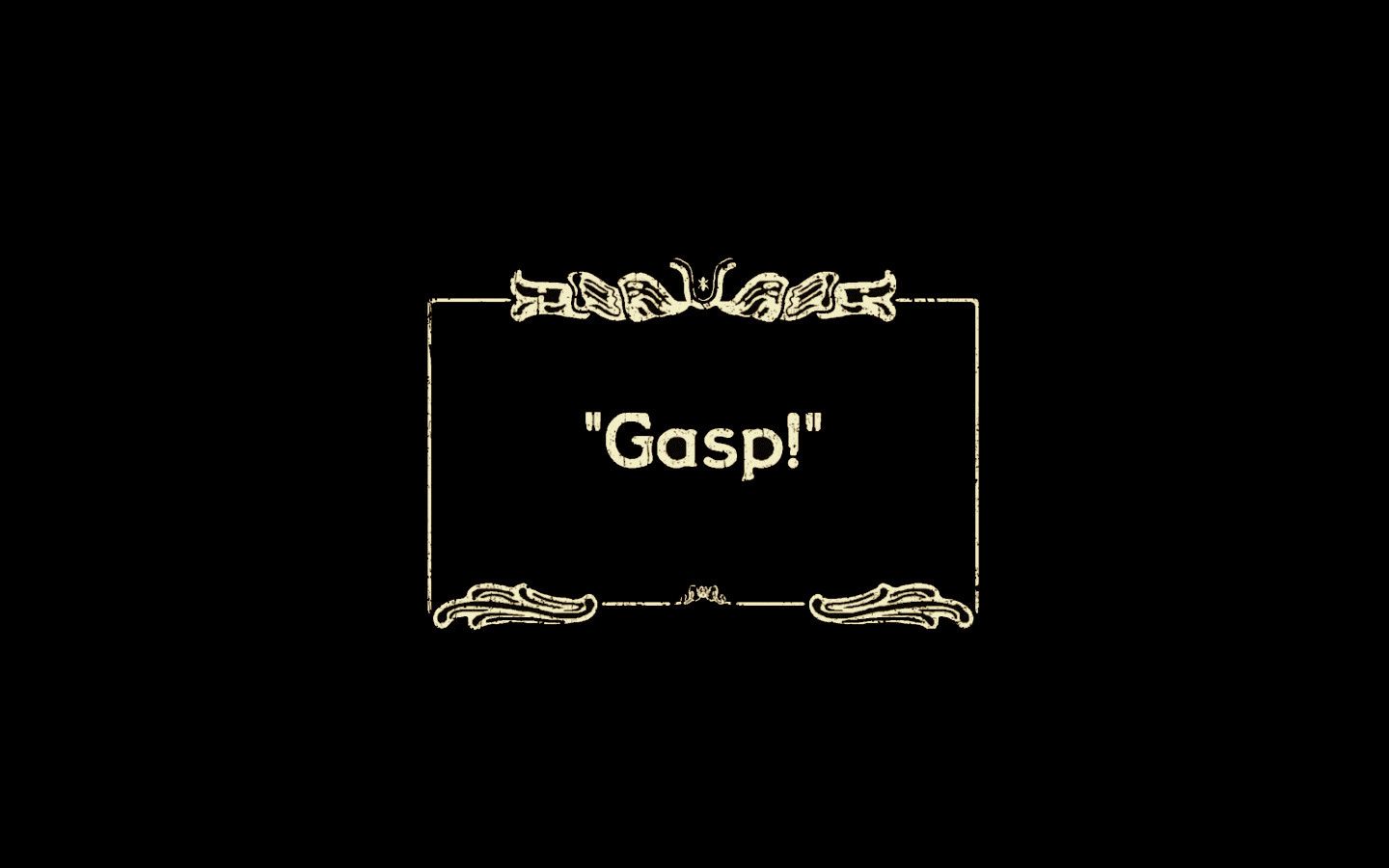
And, when a film appeared in a theatre, there would commonly be a live musical accompaniment. For short films and less expensive ones, this accompaniment would be provided by a pianist or organist employed by the theatre for that purpose.
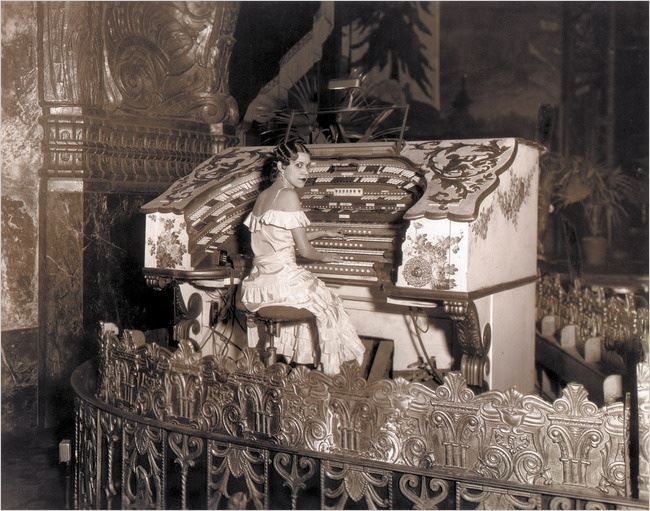
(This is Rosa Rio—actually Elizabeth Raub–1902-2010, a prominent accompanist, composer, and arranger. She led quite a long and active performing life and you can read about her here: https://en.wikipedia.org/wiki/Rosa_Rio )
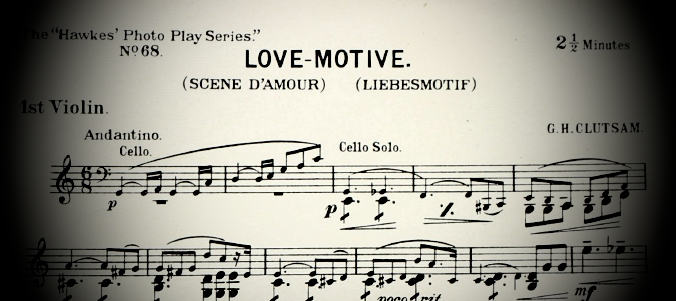
For grander productions, there might even be an orchestral score, composed specifically for the film.
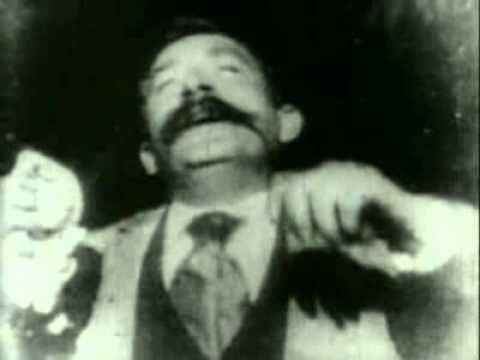
The first films were very brief and mostly did little more than catch a moment of motion—like Edison’s “The Sneeze”, 1894—which you can see here: https://www.youtube.com/watch?v=2wnOpDWSbyw
or the Lumiere brothers’ “L’Arrivee d’un train a La Ciotat”, 1895.
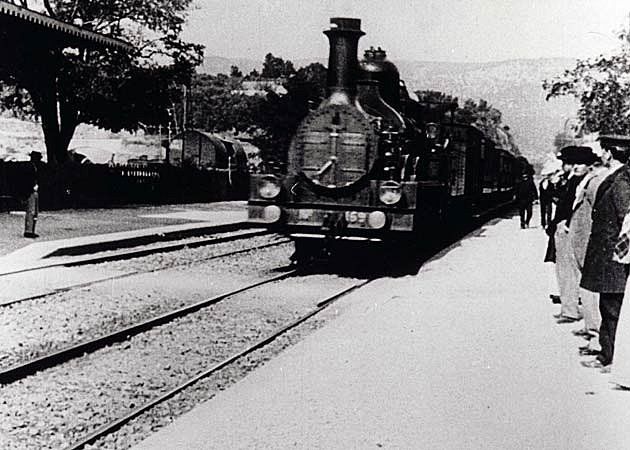
which you can see here: https://www.youtube.com/watch?v=MT-70ni4Ddo (And, as someone has cleaned up the print and added sound, you can see what a difference this makes to your initial perception here: https://www.youtube.com/watch?v=J7laguPTT-Q And you can read a very interesting little article about it here: https://en.wikipedia.org/wiki/L%27Arriv%C3%A9e_d%27un_train_en_gare_de_La_Ciotat )
This might seem like a very modest beginning to us, but imagine living in a world where all photographs of locomotives looked like this—
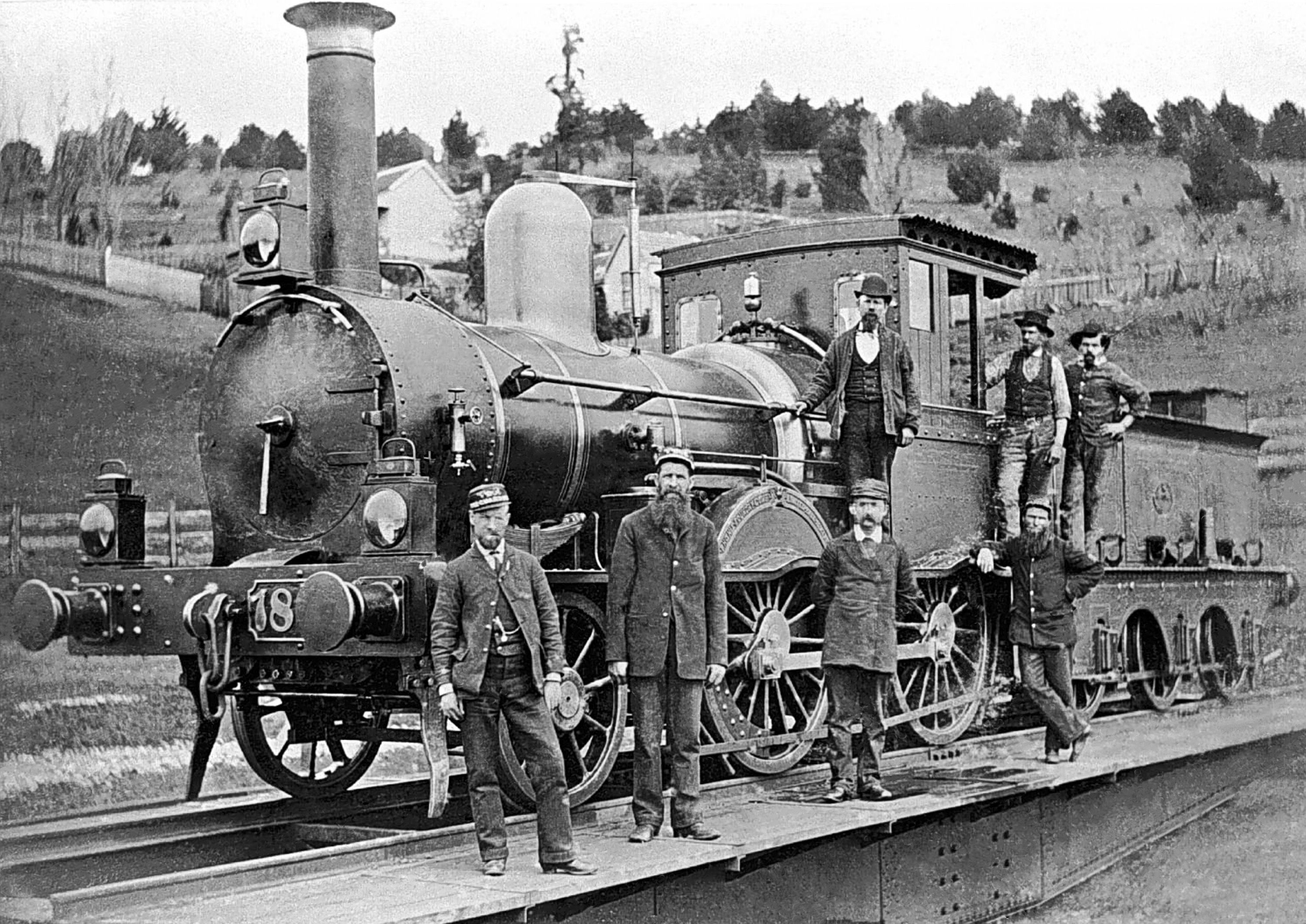
And then think of it coming to life and moving toward you as you sit in a darkened room and perhaps you can capture a little of the original magic which the first viewers must have felt.
As films became longer and more ambitious, moving from a single captured movement to a simple—and, later, increasingly complex—story, the creators looked to the best model available: late Victorian/Edwardian theatre.
Such theatres lacked modern sound amplification and, even when lit by gas or early electric light would have been dim or garishly bright
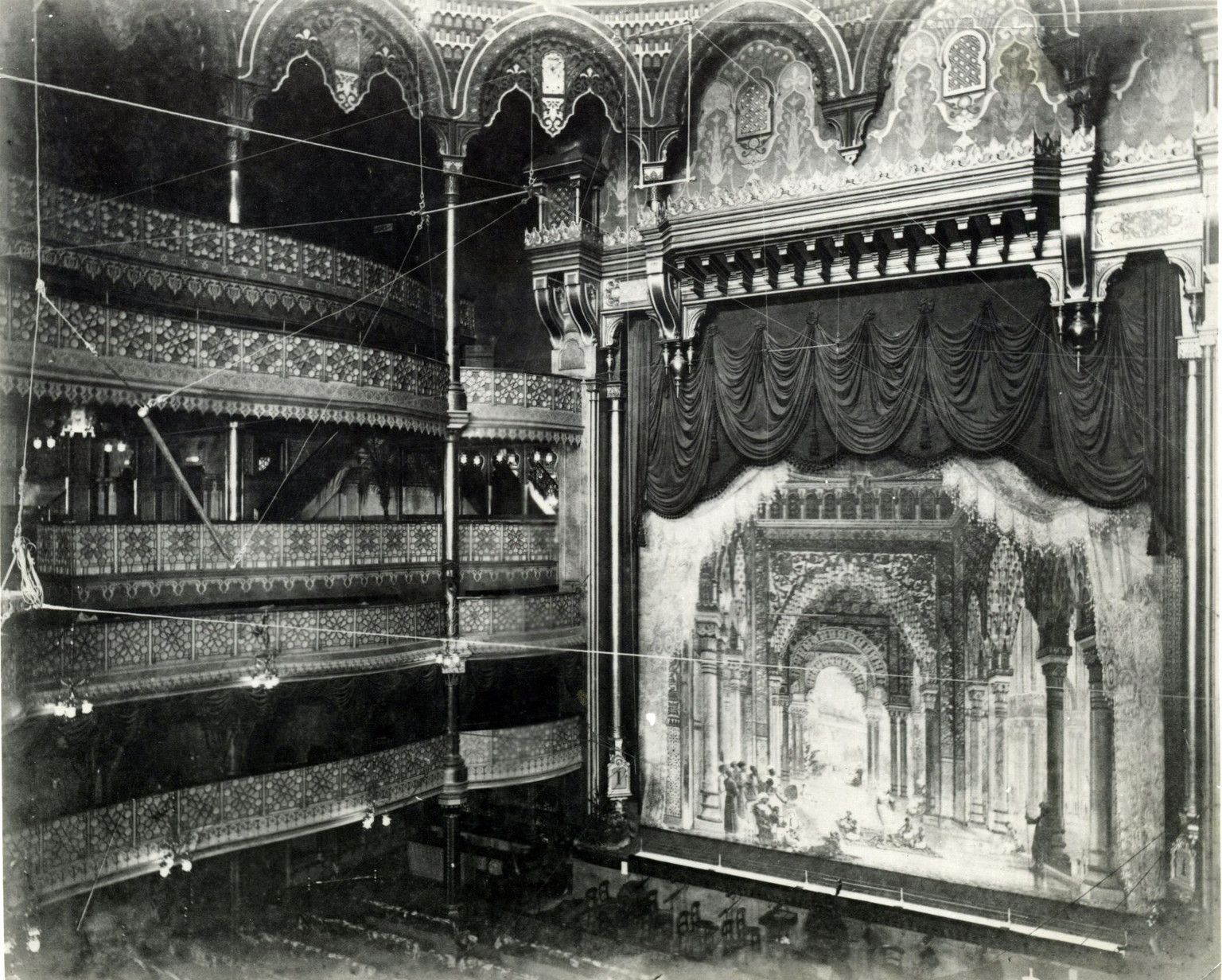
and actors, to be seen and at least understood, if not always heard, had used exaggerated makeup
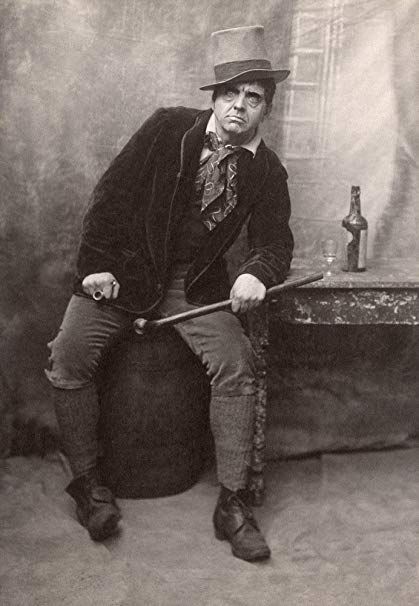
and equally exaggerated gesture.
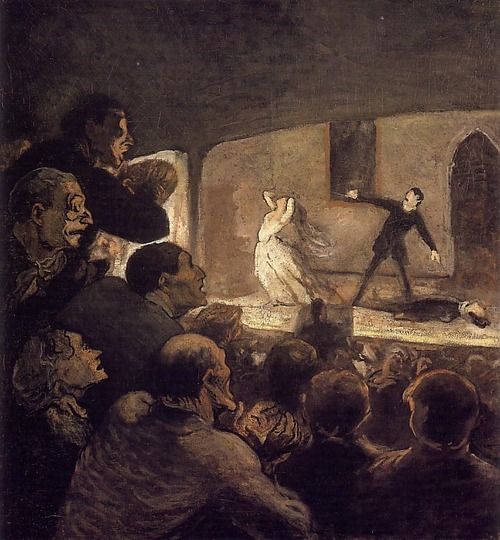
“Theatrical” gestures, in fact, date all the way back to Roman oratory (which, in turn, comes from Greek practice)—Quintilian (c.35-c.100AD), in his Institutio Oratoria, describes at some length the use of movement in oratory (Book II, Sections 66-135—you can read a translation here: https://www.perseus.tufts.edu/hopper/text?doc=Perseus%3Atext%3A2007.01.0069%3Abook%3D11%3Achapter%3D6 ) and it’s clear from later illustrations that this was still inspiring dramatic gesture many centuries later—Elizabethan
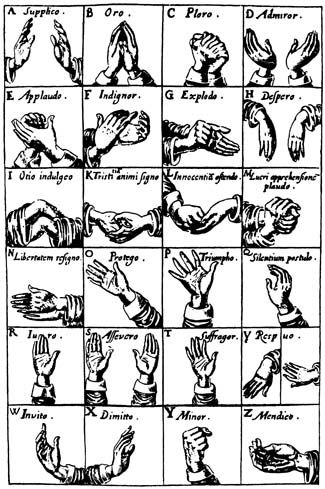
into the Victorian era.
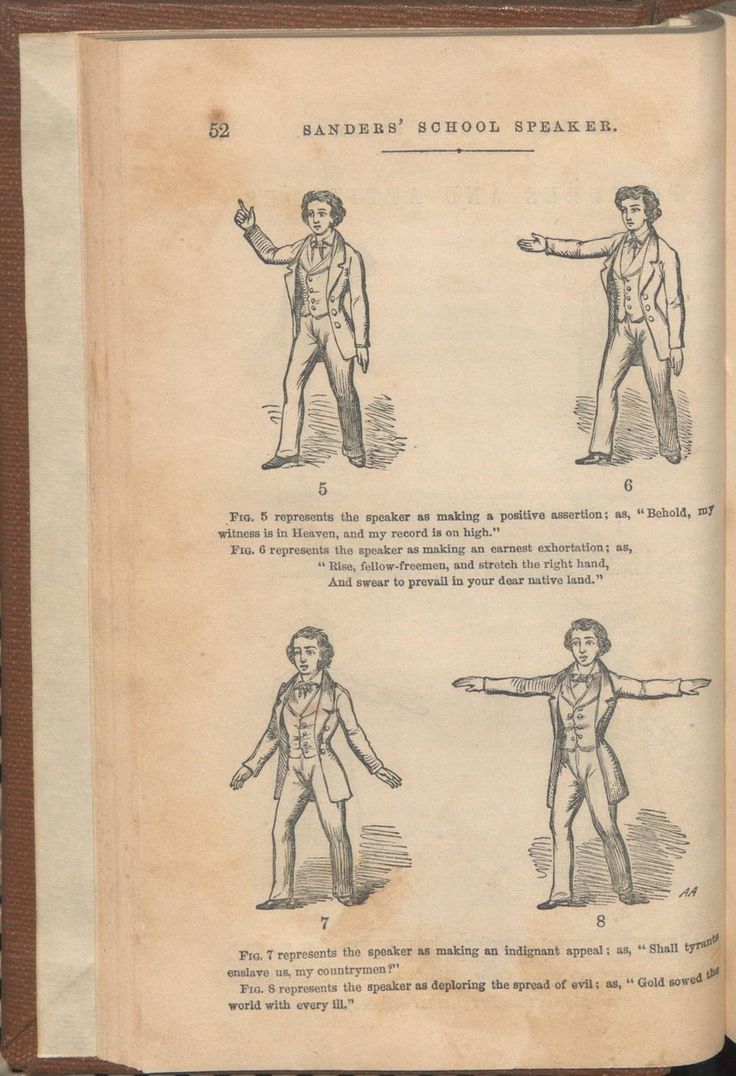
(This is from Sanders’ School Speaker, 1857, which, even skimming through it, immediately helps you to understand why, at the dedication of the National Cemetery at Gettysburg, in November, 1863, Abraham Lincoln, unschooled in oratory, read a few brief remarks—lasting 2 minutes–and the main speaker, Edward Everett, 1794-1865, trained at Harvard, spoke for two hours! And—proving my point about the Internet Archive—you can read Sanders book here: https://ia600200.us.archive.org/3/items/sandersschoolspe00sand/sandersschoolspe00sand.pdf For a very useful little article on silent movie make-up, by the way, see: https://intothegloss.com/2015/02/silent-film-makeup/ )
Why do I love silent movies? I think that it’s all of the above: on the one hand, it’s thinking of the first captures of motion and what that must have meant and felt like, as well as catching the echoes of the Victorian stage, and, on the other, it’s the sheer pleasure of watching story-telling at work, from laughter to terror, in a new art form. There’s so much to learn and so much to see and the Internet Archive offers a very large schoolroom in which to study.
So, if you’re new to the form, where to begin? You might try Charlie Chaplin’s “The Adventurer”, 1917 (https://archive.org/details/CC_1917_10_22_TheAdventurer ) or the longer film I mentioned earlier, Harold Lloyd’s “Safety Last”, 1923 (https://archive.org/details/dfwiv-Safety_Last_-_Harold_Lloyd_1923_-_Old_Time_Movie ). For horror, there is another favorite, F.W. Murnau’s 1922 “Nosferatu”, with the most grotesque of villains, “Count Orlok” (aka Dracula– https://archive.org/details/nosferatu_201508 )
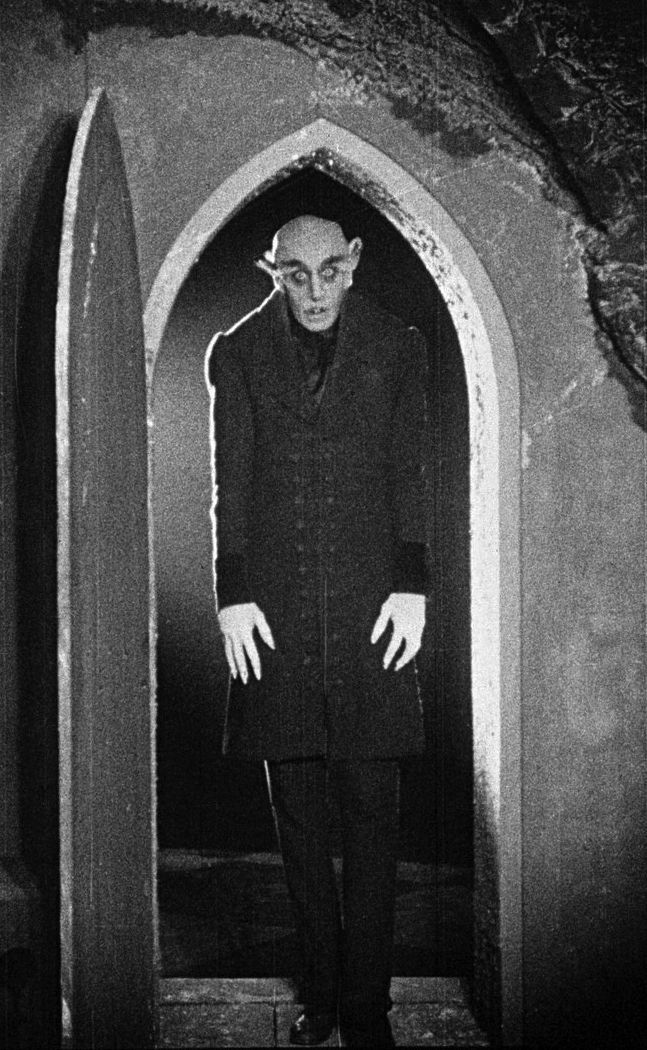
This is the first film based upon Bram Stoker’s 1897 novel and displays all sorts of menace—watch, in particular, about minute 20 or so, when the protagonist crosses a bridge and the film turns from black and white to icy blue and a carriage—more like a Victorian hearse—appears at a supernatural speed to carry him to the castle of the count. This is something else one meets in these early films: all sorts of experiments with distortion and tint. (you can read about the film here: https://en.wikipedia.org/wiki/Nosferatu )
Whatever you choose, I hope that you enjoy it as much as I enjoy this form which, although a direct ancestor of modern film, is distinctively different and itself.
Thanks for reading, as always.
Stay well,
If invited to a strange castle, be sure to wear a garlic vest,
And remember that, as always, there’s
MTCIDC
O

