• About

doubtfulsea

~ adventure fantasy

Tag Archives: Bran

A What?

24 Wednesday Apr 2019

Posted by Ollamh in J.R.R. Tolkien, Narrative Methods, Villains

≈ Leave a comment

Tags

bokor, Bran, Circe, Cleromancy, Dol Guldur, Dracula, King Saul, Necromancer, necromancy, Odyssey, Oneiromancy, Robert Southey, Rockapella, Romania, Samuel, Sauron, Teiresias, The Hobbit, The Lord of the Rings, The Walking Dead, Tolkien, Zombie, Zombie Jamboree

“It was a Zombie Jamboree,
Took place in the New York Cemetery.
It was a Zombie Jamboree,
Took place in the New York Cemetery.

Zombies from all parts of the island
Some of them were great calypsonians.
Since the season was carnival,
They got together in bacchanal
HUH! And they were singing:

Back to back, belly to belly
Well I don’t give a damn
‘Cause I’m stone dead already!
Back to back, belly to belly
It’s a Zombie Jamboree.” (Conrad Eugene Mauge, Jr., c.1953)

What in the world are we doing, dear readers? Are we about to launch into a posting about The Walking Dead?

image1wd.jpg

Well, no. Unless we mean the “walking-again dead”, which we do. And how did we get here?

It all began with our last two postings, on see-ers—that is, seers–and so many different ways of telling the future, like oneiromancy (dream interpretation) and cleromancy (using numbers), but, among them, we think the most sinister is necromancy—and this brought it to mind:

“Some here will remember that many years ago I myself dared to pass the doors of the Necromancer in Dol Guldur, and secretly explored his ways and found thus our fears were true: he was none other than Sauron, our Enemy of old, at length taking shape and power again.” (The Fellowship of the Ring, Book Two, Chapter 2, “The Council of Elrond”)

This is Gandalf recounting his adventure in Isengard. What he’s relating here happened somewhat before the action in The Hobbit, followed by the White Council’s attack on Dol Guldur (“The Hill of Dark Sorcery”), in the southern part of Mirkwood.
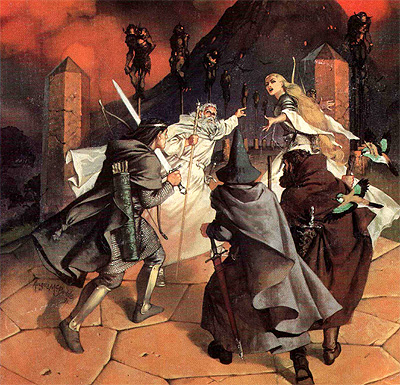
image2attack.jpg

That was parallel in time to the travels of Bilbo and the dwarves towards the Lonely Mountain.

bigmap.jpg

Here’s how John Howe thought Dol Guldur might have looked.

image4dg.jpg

And here’s how it appears in The Hobbit films

image5dg.jpg

although why it’s a ruin is unclear—Gandalf has said above that Sauron is “taking shape and power again”, and so we would imagine that, just as he’s reconstituting himself, there’s been a rebuilding campaign at his headquarters in the forest. So, rather like Howe, we see the place as more imposing, perhaps like Bran castle, in Romania, which is advertised as “Dracula’s castle” in tourist literature.

image6bran.jpg

Just as cleromancy means “telling the future by lots” (that is, by casting lots—think of throwing dice–giving you a supposed “random” result) and oneiromancy means “telling the future by dreams”, so a necromancer uses the dead to find things out, suggesting something really horrible about someone with that title.

The process of questioning the dead goes back a long way in western literature. In the Odyssey, Circe,

image7circe.jpg

who once turned part of Odysseus’ crew into pigs, tells him that, before he can go home, he must sail south, to the Otherworld, to consult Teiresias, who is a seer (see our last two postings for more on people like this)
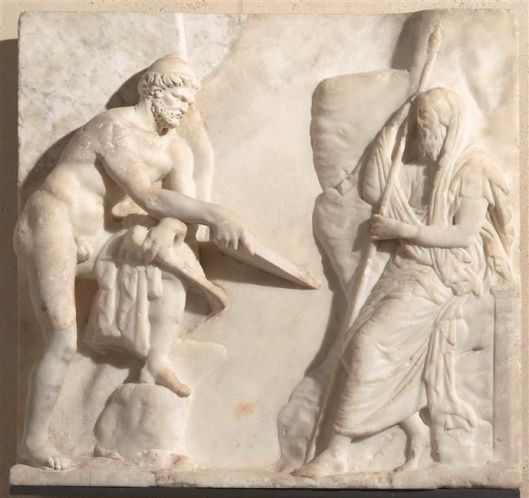
image8t.jpg

for current information about his home on Ithaca and for coaching about his future behavior. To deal with the dead, Circe tells Odysseus in detail how to make a kind of drink offering of animal blood in a pit.

image9under.png

Then, because all of the dead will be drawn to the blood (we’re back to Dracula here, aren’t we?), he is to draw his sword and stand over the pit, only allowing those he would question to sip the blood.

But why would a sword threaten ghosts? one might ask. We think that the answer is that it’s iron and iron, in folklore, is a protection against evil magic. Odysseus has used his sword earlier to threaten Circe, who is a very powerful sorceress. See this LINK for more.

image10xiphos.jpg

image11oandc.jpg

Odysseus is successful in his quest, but King Saul, in First Samuel, in the Hebrew Bible, who has already banished necromancers and magicians from his kingdom, is not. Saul is anxious about a battle to come and, when he is not answered via prayers and cleromancy about its outcome, he consults a kind of witch, who may (scholars argue over this) produce the spirit of the prophet Samuel.
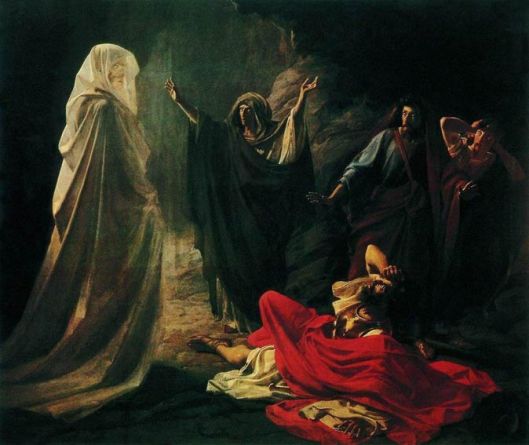
image12sam.jpg

When Samuel appears, his response to Saul is not what Saul had hoped for. Instead, Samuel scolds Saul and gives him a fortune-telling he’d rather not hear, that he will lose the battle, his army, and his life the next day, all of which comes true.

Saul had hoped that he could make Samuel do his bidding, which was less than successful, but what if one might make the dead one’s slaves? This is where our opening comes in. The tradition of zombies is complex, including the word itself. At the moment, the earliest reference to the word in English is found in 1819, in volume 3 of the poet, Robert Southey’s (1774-1843),
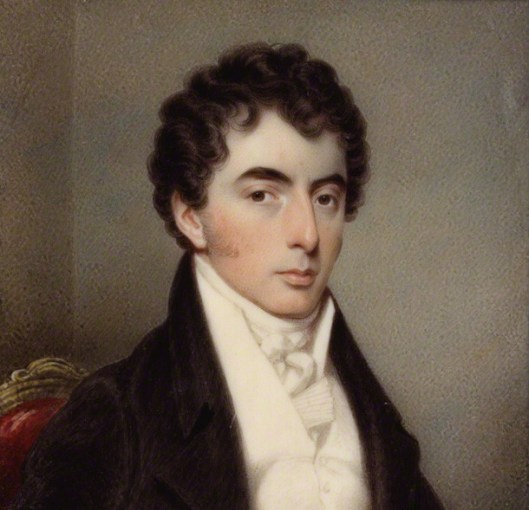
image13rs.jpg

History of Brazil, Part the Third, page 24:

They were under the government of an elective Chief, who was chosen for his justice as well as his valour, and held the office for life : all men of experience and good repute had access to him as counsellors : he was obeyed with perfect loyalty; and it is said that no conspiracies or struggles for power had ever been known among them. Perhaps a feeling of religion contributed to this obedience ; for Zombi, the title whereby he was called, is the name for the Deity, in the Angolan tongue.”

The subsequent history of zombies is complex, but a recurrent theme is that they are the dead, brought back to serve the living, usually by an evil magician, called a bokor. Among the possible tasks for such a slave is telling the future, thus making a bokor a necromancer, like Sauron.
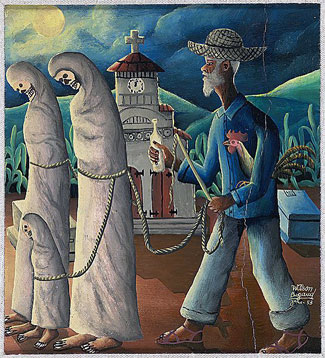
image14bokor.jpg

We’ve done an extensive image search under “zombie” and the weirdest things turn up, none of which we would put into a posting, so this is the best we can do.

image15zombies.jpg

If, however, this is the best a bokor can manage, we can’t imagine what news of the future one of these zombies might possibly give Sauron—and it’s no wonder that he loses the Ring.

But thanks for reading!

And

MTCIDC

CD

ps

If you’d like to see “Zombie Jamboree” performed, here’s a LINK to our favorite version, by Rockapella.



Stepping Westward

10 Wednesday Aug 2016

Posted by Ollamh in Artists and Illustrators, Fairy Tales and Myths, Imaginary History, J.R.R. Tolkien, Literary History, Narnia, Narrative Methods

≈ Leave a comment

Tags

Aman, Beliefs, Bran, cult statues, heroa, immrama, Istari, Ithaka, Mael Duin, Middle-earth, monotheistic, N.C. Wyeth, Odysseus, religion, Rip Van Winkle, Saint Brendan, Saruman, shrines, Stone Table, temples, The Grey Havens, The Lord of the Rings, The Odyssey, Tireisias, Tolkien, Valar, Valinor, ziggurats

Dear readers, welcome as always.

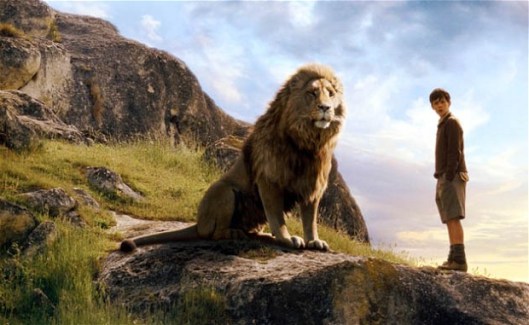
Although there are no temples or shrines to him (the closest thing is perhaps the Stone Table),

narnia stone table

Aslan

1653963a

is clearly someone with divine powers and his influence is felt directly and indirectly throughout all of the Narnia books.

JRRT once said that Middle-earth had a monotheistic religion, but the traces, as has been written about more than once, are almost invisible.

There are no ziggurats,

Ancient_ziggurat_at_Ali_Air_Base_Iraq_2005

no temples,

templeofheraselinus

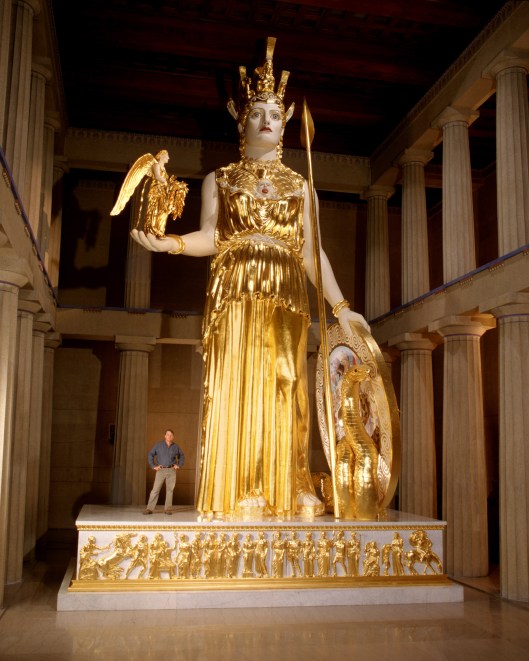
no cult statues

Athena_Parthenos_LeQuire

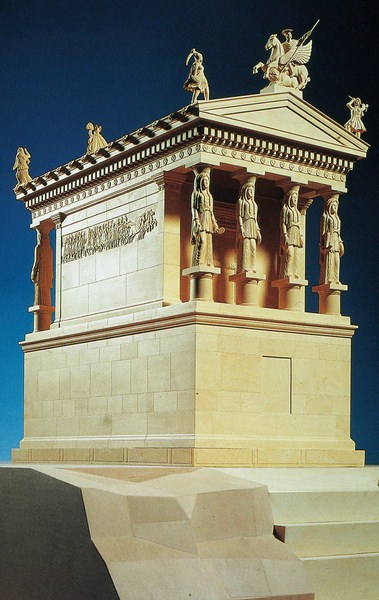
no shrines

97_full

no heroa (shrines for demi-gods or heroes).

heroon

The Valar are mentioned once (some of Faramir’s men call on them to protect them from a mumak), of course, and there is that ceremony of standing and looking west before a meal.

That idea of looking west has long interested us, mainly because, in much of western tradition before the Age of Exploration, the west was looked upon as a place of uncertainty, if not outright fear.

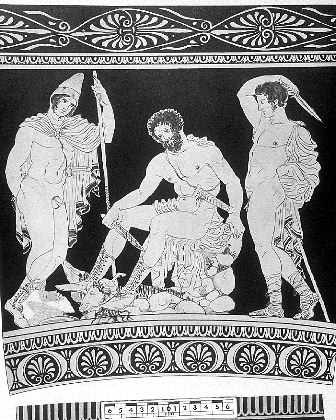
Although Odysseus, in Odyssey 9, is careful to point out that his home island, Ithaka, lies farthest towards dusk in its island group, in Odyssey 11, in the far west lies the Land of the Dead,

lykaon-painter-odysseus-and-elpenor

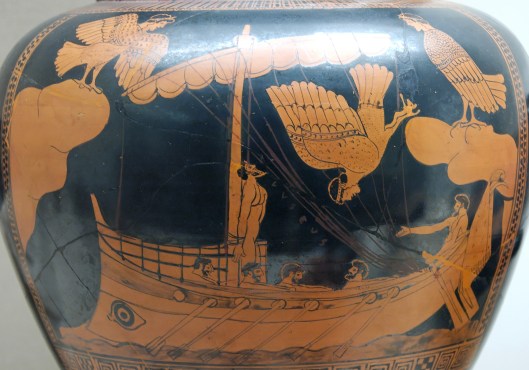
to which Odysseus sails

Odysseus_Sirens_BM_E440_n2

to consult the seer, Tireisias,

Teir.1993.01.0348

on the way to get home. This is, then, hardly a choice direction in which to sail, for all that Tireisias does provide some guidance.

The same is true for a series of stories about immrama, “voyages” (literally “rowings around”) in Old Irish, not only secular stories, like those of Mael Duin

mailduin

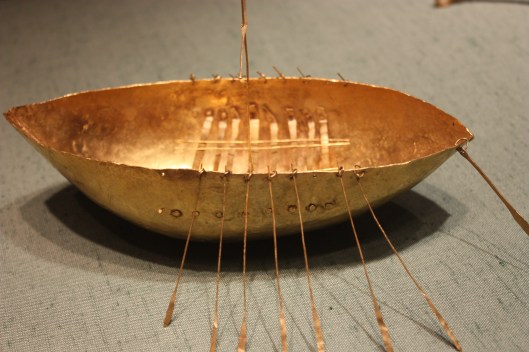
and Bran,

Broighter_Gold,_Dublin,_October_2010_(03)

but a famous religious one about Saint Brendan.

brendan

In each of these stories, sailing westward commonly means sailing rather haphazardly among sea monsters and islands with strange people or creatures. There is also the possibility of time distortion: the voyager believes himself gone in terms of a few years, at most, when, instead, he may have been gone for much longer (as in Washington Irving’s short story, “Rip Van Winkle”, in which Rip, falling asleep in the Catskill Mountains after drinking with the ghosts of the crew of the explorer Henrik Hudson’s ship The Half Moon, thinks that he has been gone only overnight when, instead, he’s been gone for twenty years.)

rip-van-winkle.wyeth

(by one of our all-time favorite illustrators, N.C. Wyeth, from his Rip Van Winkle, 1921—the whole work is available, with all of its wonderful illustrations, to download for free at the Internet Archive, may their beards grow long!)

“To go west”, probably based upon the idea of the sinking sun, as an older English expression has the meaning of “to die/to fail catastrophically” (now people in the US seem to be replacing it with “to go south”, which has none of the older resonance, unfortunately), but it ties in very nicely with these older beliefs about what lies west of Europe, so full of danger and mystery.

But then we come back to that looking west.

In the belief system of Middle-earth, westward across the sea lies the continent of Aman, and on that continent is Valinor, home of the Valar, those powerful and immortal beings who are perhaps to be likened to the archangels of Christian belief—with a bit of patron saint and even Norse and Greco-Roman pantheons thrown in. (We admit to having a very shallow knowledge of Arda theology, being less interested in the finer points of belief than in the adventures and the cultures and the languages of Middle-earth.)

The Istari, the five wizards are from there and it’s for us one of the most melancholy moments when, after his murder by Grima, it is clear that Saruman is denied a return.

jwyatt-sarumande

Gandalf, however, is permitted to return, as are Bilbo and Frodo (and, in time, Sam, apparently), all part of the defeat and disembodiment of Sauron.

greyhavens

The elves are also allowed to make the voyage to Aman, although they have their own separate place there, and, when Gandalf leaves, so do Galadriel, Celeborn, and Elrond, part of a slow general leave-taking of the Elves.

No human is admitted however, to the Undying Lands, as they are called, and it occurred to us that perhaps, in that fact, the mortals of Middle-earth are closer to Saruman than to Gandalf or the Elves:

“To the dismay of those that stood by, about the body of Saruman a grey mist gathered, and rising slowly to a great height like smoke from a fire, as a pale, shrouded figure it loomed over the Hill. For a moment it wavered, looking to the West; but out of the West came a cold wind, and it bent away, and with a sigh dissolved into nothing.” (The Return of the King, Book 6, Chapter 8, “The Scouring of the Shire”)

Could that ceremony of looking westward also be done with a sigh, an acknowledgement that there are no undying lands for them?

What do you think, dear readers?

Thanks, as ever, for reading.

MTCIDC

CD

Ps

This, for us, is a rather historical posting, being our Number 100. By earlier September, we will have reached 104, making exactly two years since we began our blog. We thank you for reading, hope that you will continue to do so, that you will share our work among your friends and that, in the future, you will be willing to share your thoughts with us, as we always encourage you to do.


The Doubtful Sea Series Facebook Page

The Doubtful Sea Series Facebook Page

  • Ollamh

Categories

  • Artists and Illustrators
  • Economics in Middle-earth
  • Fairy Tales and Myths
  • Films and Music
  • Games
  • Heroes
  • Imaginary History
  • J.R.R. Tolkien
  • Language
  • Literary History
  • Maps
  • Medieval Russia
  • Military History
  • Military History of Middle-earth
  • Narnia
  • Narrative Methods
  • Poetry
  • Research
  • Star Wars
  • Terra Australis
  • The Rohirrim
  • Theatre and Performance
  • Tolkien
  • Uncategorized
  • Villains
  • Writing as Collaborators
Follow doubtfulsea on WordPress.com

Across the Doubtful Sea

Recent Postings

  • On the Road(s) Again—Again November 26, 2025
  • On the Road(s) Again November 19, 2025
  • To Bree (Part 2) November 12, 2025
  • To Bree (Part 1) November 5, 2025
  • A Plague o’ Both—No, o’ All Your Houses! October 29, 2025
  • It’s in Writing (2:  I’st a Prologue, or a Poesie for a Ring?) October 22, 2025
  • It’s in Writing (1) October 15, 2025
  • King Trotter? October 8, 2025
  • The Voices in His Head  October 2, 2025

Blog Statistics

  • 101,985 Views

Posting Archive

  • November 2025 (4)
  • October 2025 (5)
  • September 2025 (4)
  • August 2025 (4)
  • July 2025 (5)
  • June 2025 (4)
  • May 2025 (4)
  • April 2025 (5)
  • March 2025 (4)
  • February 2025 (4)
  • January 2025 (5)
  • December 2024 (4)
  • November 2024 (4)
  • October 2024 (5)
  • September 2024 (4)
  • August 2024 (4)
  • July 2024 (5)
  • June 2024 (4)
  • May 2024 (5)
  • April 2024 (4)
  • March 2024 (4)
  • February 2024 (4)
  • January 2024 (5)
  • December 2023 (4)
  • November 2023 (5)
  • October 2023 (4)
  • September 2023 (4)
  • August 2023 (5)
  • July 2023 (4)
  • June 2023 (4)
  • May 2023 (5)
  • April 2023 (4)
  • March 2023 (5)
  • February 2023 (4)
  • January 2023 (4)
  • December 2022 (4)
  • November 2022 (5)
  • October 2022 (4)
  • September 2022 (4)
  • August 2022 (5)
  • July 2022 (4)
  • June 2022 (5)
  • May 2022 (4)
  • April 2022 (4)
  • March 2022 (5)
  • February 2022 (4)
  • January 2022 (4)
  • December 2021 (5)
  • November 2021 (4)
  • October 2021 (4)
  • September 2021 (5)
  • August 2021 (4)
  • July 2021 (4)
  • June 2021 (5)
  • May 2021 (4)
  • April 2021 (4)
  • March 2021 (5)
  • February 2021 (4)
  • January 2021 (4)
  • December 2020 (5)
  • November 2020 (4)
  • October 2020 (4)
  • September 2020 (5)
  • August 2020 (4)
  • July 2020 (5)
  • June 2020 (4)
  • May 2020 (4)
  • April 2020 (5)
  • March 2020 (4)
  • February 2020 (4)
  • January 2020 (6)
  • December 2019 (4)
  • November 2019 (4)
  • October 2019 (5)
  • September 2019 (4)
  • August 2019 (4)
  • July 2019 (5)
  • June 2019 (4)
  • May 2019 (5)
  • April 2019 (4)
  • March 2019 (4)
  • February 2019 (4)
  • January 2019 (5)
  • December 2018 (4)
  • November 2018 (4)
  • October 2018 (5)
  • September 2018 (4)
  • August 2018 (5)
  • July 2018 (4)
  • June 2018 (4)
  • May 2018 (5)
  • April 2018 (4)
  • March 2018 (4)
  • February 2018 (4)
  • January 2018 (5)
  • December 2017 (4)
  • November 2017 (4)
  • October 2017 (4)
  • September 2017 (4)
  • August 2017 (5)
  • July 2017 (4)
  • June 2017 (4)
  • May 2017 (5)
  • April 2017 (4)
  • March 2017 (5)
  • February 2017 (4)
  • January 2017 (4)
  • December 2016 (4)
  • November 2016 (5)
  • October 2016 (6)
  • September 2016 (5)
  • August 2016 (5)
  • July 2016 (5)
  • June 2016 (5)
  • May 2016 (4)
  • April 2016 (4)
  • March 2016 (5)
  • February 2016 (4)
  • January 2016 (4)
  • December 2015 (5)
  • November 2015 (5)
  • October 2015 (4)
  • September 2015 (5)
  • August 2015 (4)
  • July 2015 (5)
  • June 2015 (5)
  • May 2015 (4)
  • April 2015 (3)
  • March 2015 (4)
  • February 2015 (4)
  • January 2015 (4)
  • December 2014 (5)
  • November 2014 (4)
  • October 2014 (6)
  • September 2014 (1)

Blog at WordPress.com.

  • Subscribe Subscribed
    • doubtfulsea
    • Join 78 other subscribers
    • Already have a WordPress.com account? Log in now.
    • doubtfulsea
    • Subscribe Subscribed
    • Sign up
    • Log in
    • Report this content
    • View site in Reader
    • Manage subscriptions
    • Collapse this bar
 

Loading Comments...