Tags
As always, dear readers, welcome.
For Bilbo Baggins, what promised to be an easy morning suddenly turned dark with the arrival of “an unexpected party” (this is a Tolkien pun: “party” in Victorian English could mean “person” as well as “event”—and it’s still available in legal English, as in “the party of the first part”—which turns up in an hilarious scene from the Marx Brothers’ Night at the Opera, 1935—

in which Groucho, a shyster lawyer named “Otis P. Driftwood”, makes an agreement with the manager, played by Chico (say that “CHICK-oh” as he was supposedly always after girls), of an Italian tenor,

the agreement consists of mock legalese and—well, here, see it for yourselves: https://www.youtube.com/watch?v=G_Sy6oiJbEk ).
This party is Gandalf
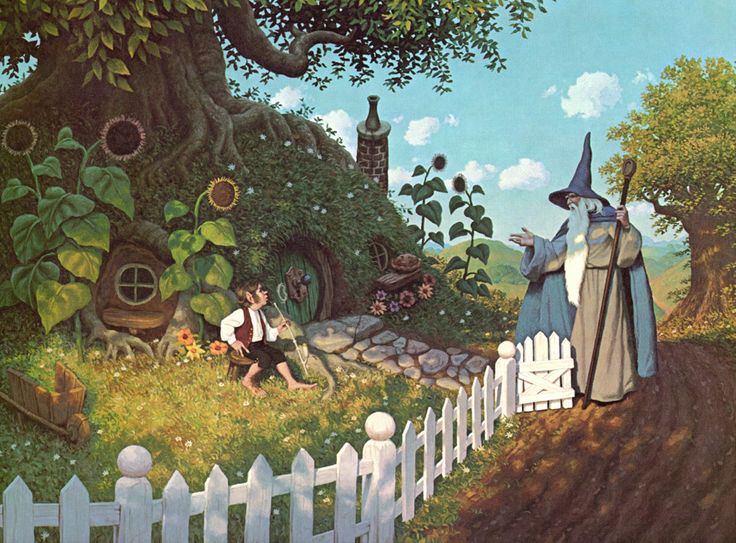
(the Hildebrandts)
and his arrival leads to that second party—the one with all of the dwarves—

(another Hildebrandts)
and the map

(JRRT—with the later addition of the moon letters)
and Bilbo’s reaction to the danger involved in joining the dwarves as a “burglar”:
“At may never return he began to feel a shriek coming up inside, and very soon it burst out like the whistle of an engine coming out of a tunnel…Then he fell flat on the floor, and kept calling out ‘struck by lightning, struck by lightning!’ over and over again…” (The Hobbit, Chapter One, “An Unexpected Party”)
Needless to say, this did not leave a very good impression upon the dwarves, leading Bilbo to overhearing Gloin say:
“It is all very well for Gandalf to talk about this hobbit being fierce, but one shriek like that in a moment of excitement would be enough to wake the dragon and all his relatives, and kill the lot of us. I think it sounded more like fright than excitement! In fact, if it had not been for the sign on the door, I should have been sure we had come to the wrong house. As soon as I clapped eyes on the little fellow bobbing and puffing on the mat, I had my doubts. He looks more like a grocer than a burglar!”
But what does a burglar look like? I’ve always presumed that Tolkien, if not Gloin, had in mind someone like this—
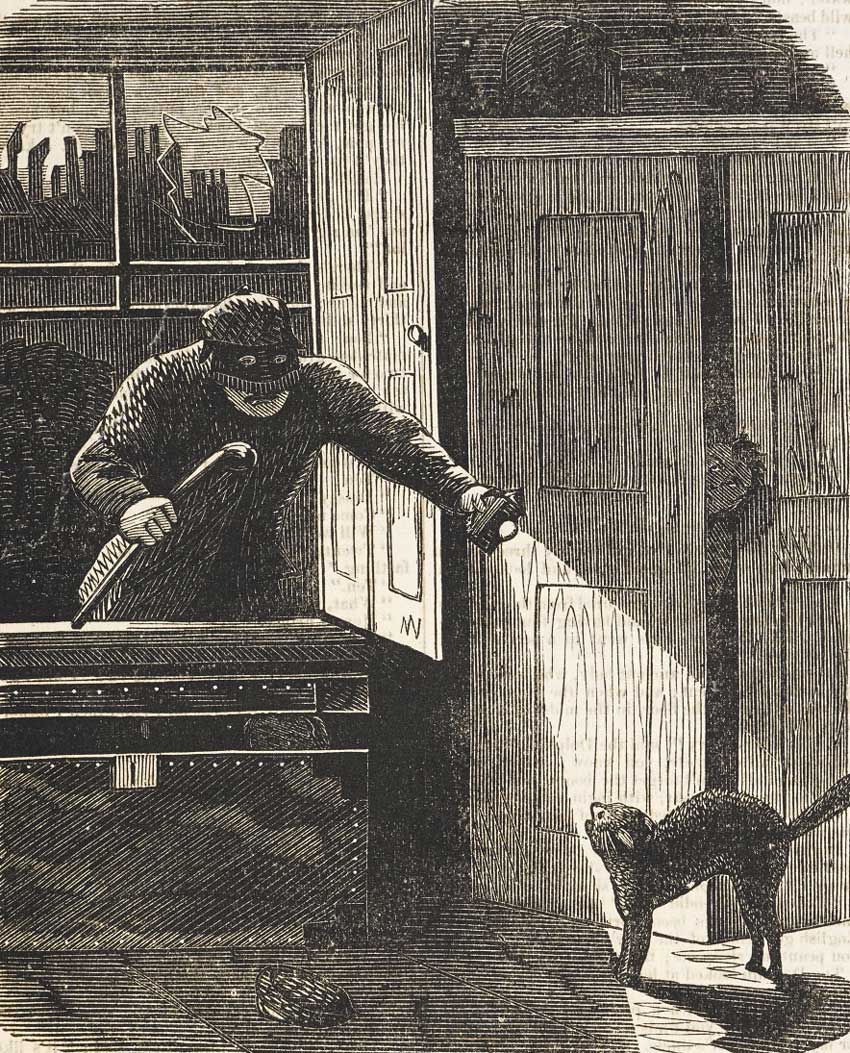
which certainly differs from Bilbo in every way.
If he doesn’t look like that, does he resemble a grocer? What does a grocer look like?
In Tolkien’s England, except for a big city, like London, which had department stores like Whiteley’s,

people bought their necessities along certain streets (sometimes called “the high”), where there were shops for anything and everything (also true in middle and lower class neighborhoods even in big cities).
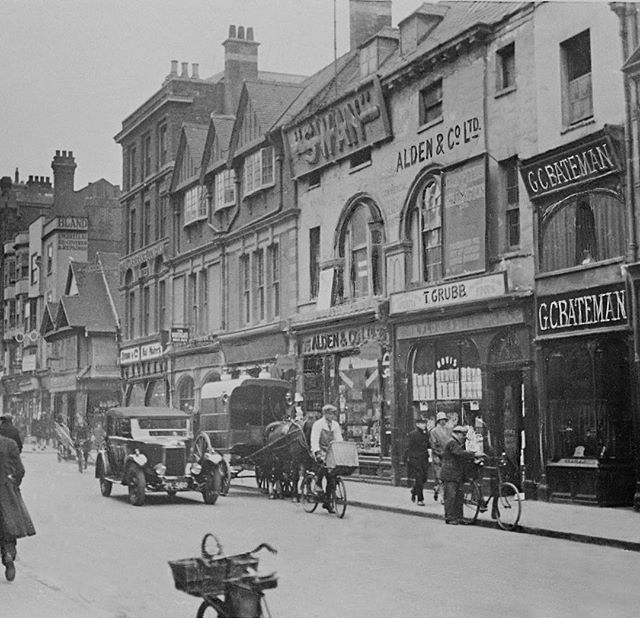
Thus, for example, you went to the butcher shop for meat,

the bakery for bread,
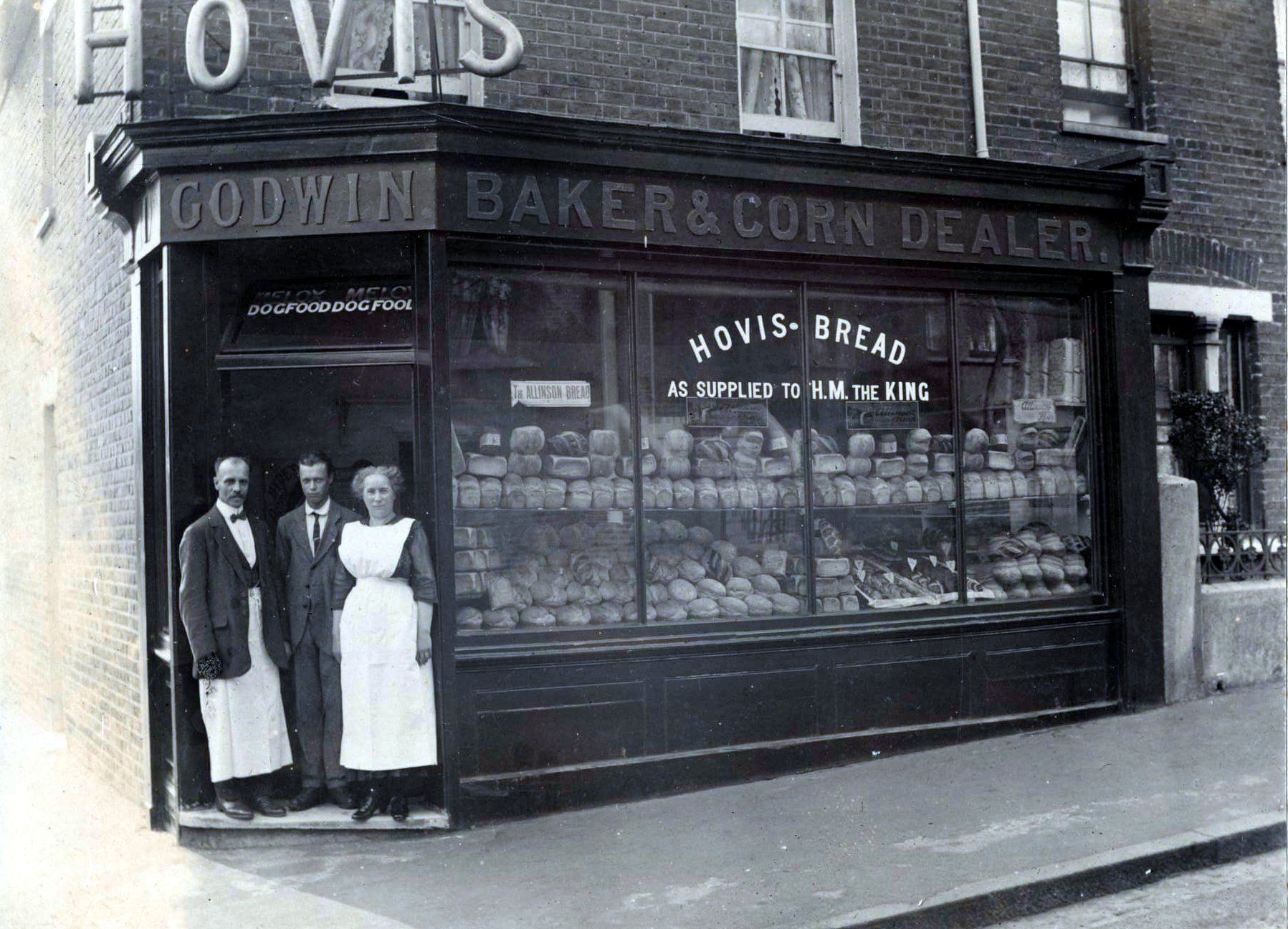
the fruiterer for fruit,

and the greengrocer for vegetables.

(This can still be the case today—I’ve certainly walked down such streets in recent years in what are commonly called “market towns”—

even when, just outside town, there are supermarkets with large parking lots—

Sainsbury’s itself began as a single shop in London in 1869—)

Such shops, and many others, including department stores, as they began to appear in the 1870s and beyond, were not self-service, as most stores are now, but were staffed with clerks, whose job was to take orders from customers, acting as in-store middlemen, like this fellow—

or these

and there could be a kind of obsequiousness to their behavior (where “the customer is always right” must have come from) which is, I think, what JRRT had in mind when he has Gloin say “more like a grocer”, “puffing and blowing”.
That Bilbo was a well-off individual, living in a rather luxurious dwelling, to begin with,

(JRRT)
and then being called “a shop assistant” or the equivalent, we can see why:
“The Took side had won. He suddenly felt he would go without bed and breakfast to be thought fierce. As for little fellow bobbing on the mat it almost made him really fierce.”
And so Bilbo was on his way to becoming the burglar Gandalf had advertized him to be.
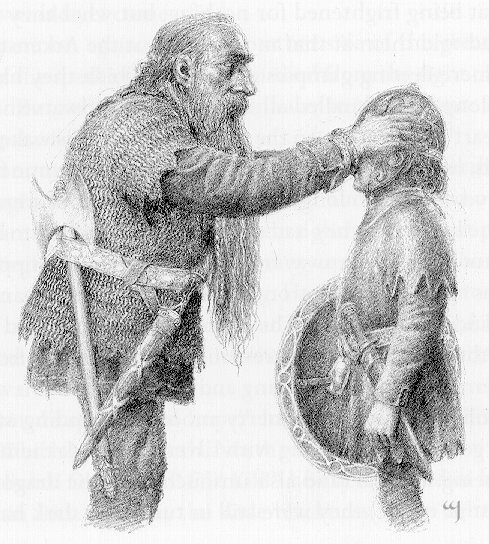
(Alan Lee)
Thanks for reading, as ever.
Stay well,
Be wary of eavesdropping on dwarves,
And remember that, as always, there’s
MTCIDC
O
PS
If you’d like to read about a completely different burglar, (someone Tolkien could easily have read about), you might try A.J. Raffles, an “amateur cracksman”—that is, a gentleman burglar–created by E.W. Hornung (1866-1921), the brother-in-law of Arthur Conan Doyle—with The Amateur Cracksman, 1899, here: https://archive.org/details/amateurcracksma03horngoog/page/n9/mode/2up

 doubtfulsea