• About

doubtfulsea

~ adventure fantasy

Tag Archives: Seleucus

Heffalumps?

31 Wednesday Dec 2025

Posted by Ollamh in Uncategorized

≈ Leave a comment

Tags

Alexander, Dunlendings, elephant, Fantasy, Hannibal, Heffalumps, movies, Mumak, Perseus, Poros, Seleucus, The Lord of the Rings, The War Of the Rohirrim, the-war-of-the-rohrrim, Tolkien, Winnie the Pooh

Welcome, as always, dear readers.

“And then, just as they came to the Six Pine Trees, Pooh looked round to see that nobody else was listening, and said in a very solemn voice:

‘Piglet, I have decided something.’

‘What have you decided, Pooh?’

‘I have decided to catch a Heffalump.’ ” (Winnie-the-Pooh, Chapter V, “In Which Piglet Meets a Heffalump”)

Winnie-the-Pooh has just turned 100,
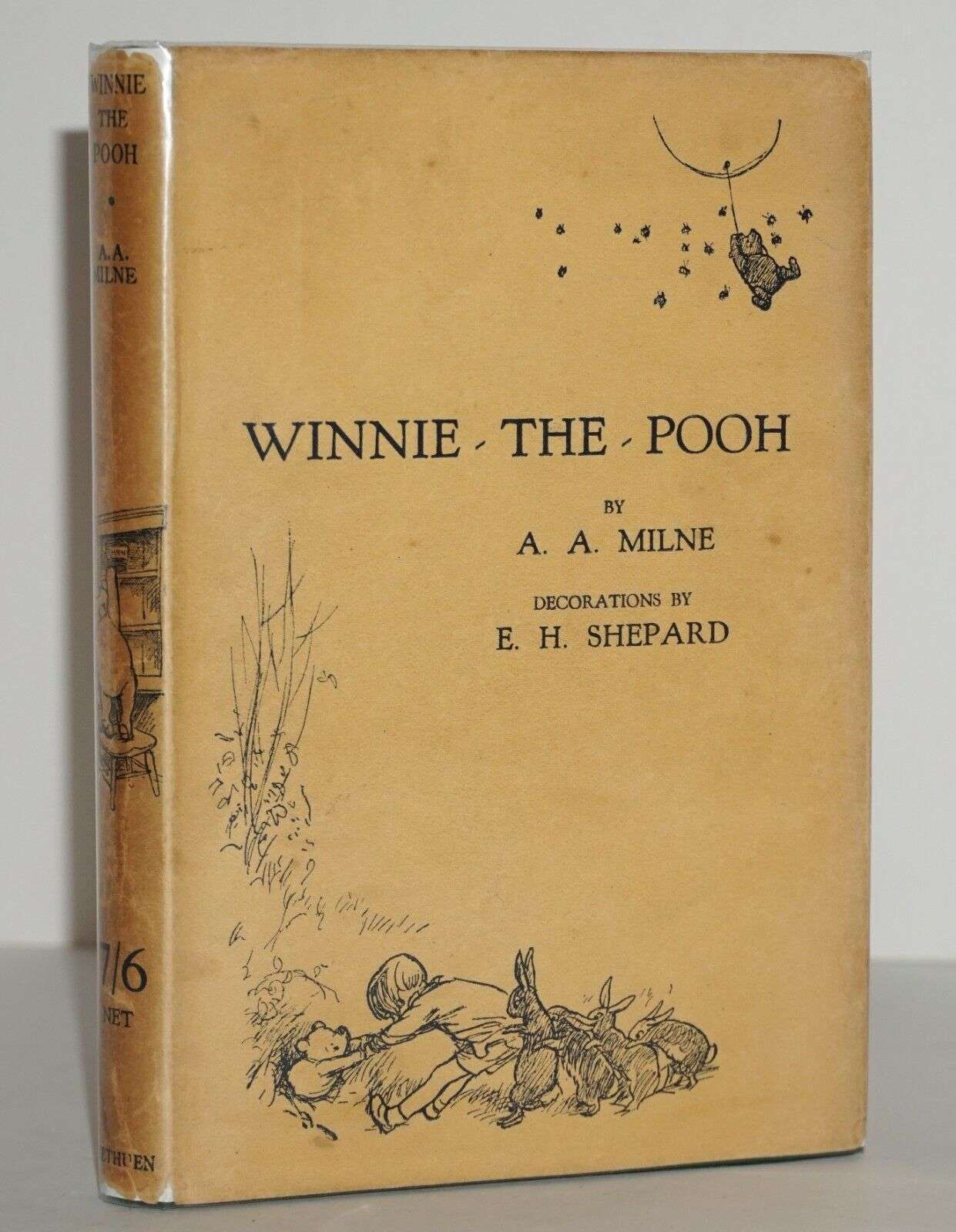
the book’s birthday being in1926, but the Pooh himself first appeared on Christmas eve, 1925, in the The Evening News.
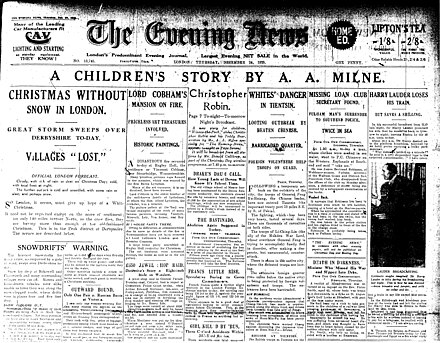
(For more Poohsiana, including the origins of the character, see:  https://en.wikipedia.org/wiki/Winnie-the-Pooh )

Although it’s never defined, from the tone of the chapter, I’ve always imagined that a “heffalump” was, in fact, an elephant. 
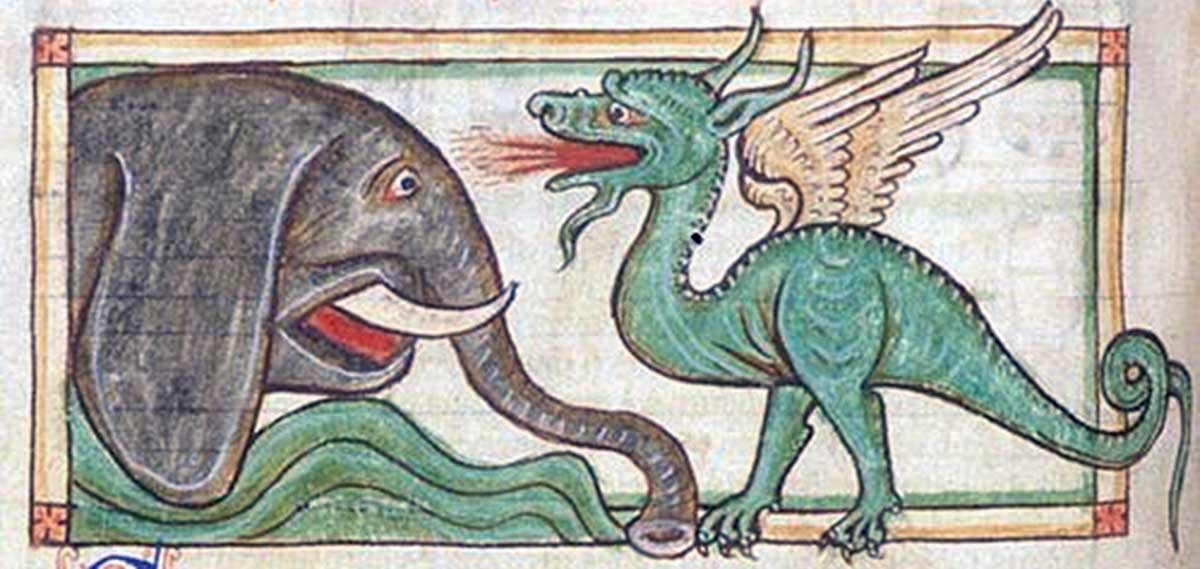
(An elephant and a tradional mortal enemy.  This is from the 13th-century Harley MS 3244, in the British Library, which I found at a wonderful medieval site:  https://medievalbestiary.info/index.html  )

And that elephant reminded me—traditionally, elephants are supposed to have wonderful memories, after all–that I was going to continue my review of the anime The War of the Rohirrim, where, surprisingly, a heffalump—sorry—a mumak—that is, an elephant, appears.
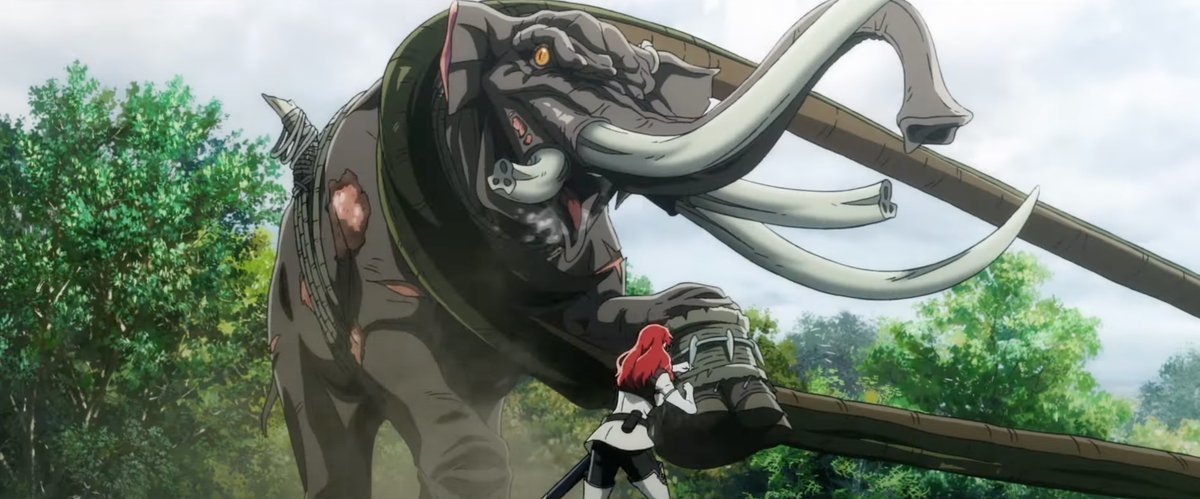
But why? 

The West first encountered war elephants when Alexander, marching eastwards, came up against the forces of Poros, an Indian king.
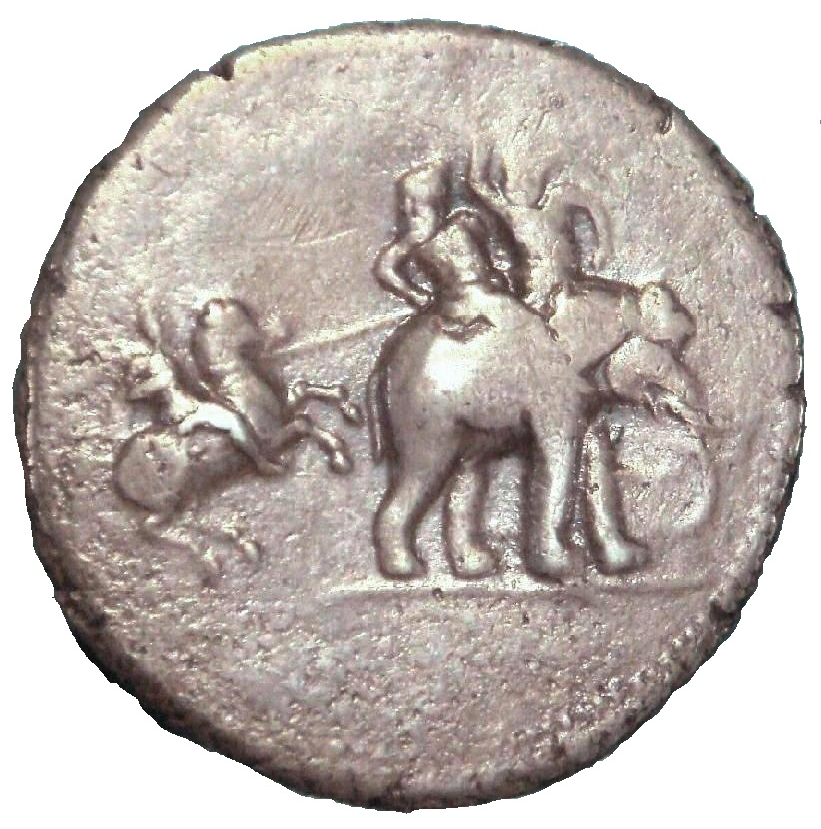
(a Macedonian commemorative coin c.324-3222BC, depicting an elephant-borne Poros.  For more on Poros, see:  https://en.wikipedia.org/wiki/Porus  )

One of Alexander’s generals—and successors—Seleucus, c.358-281BC,
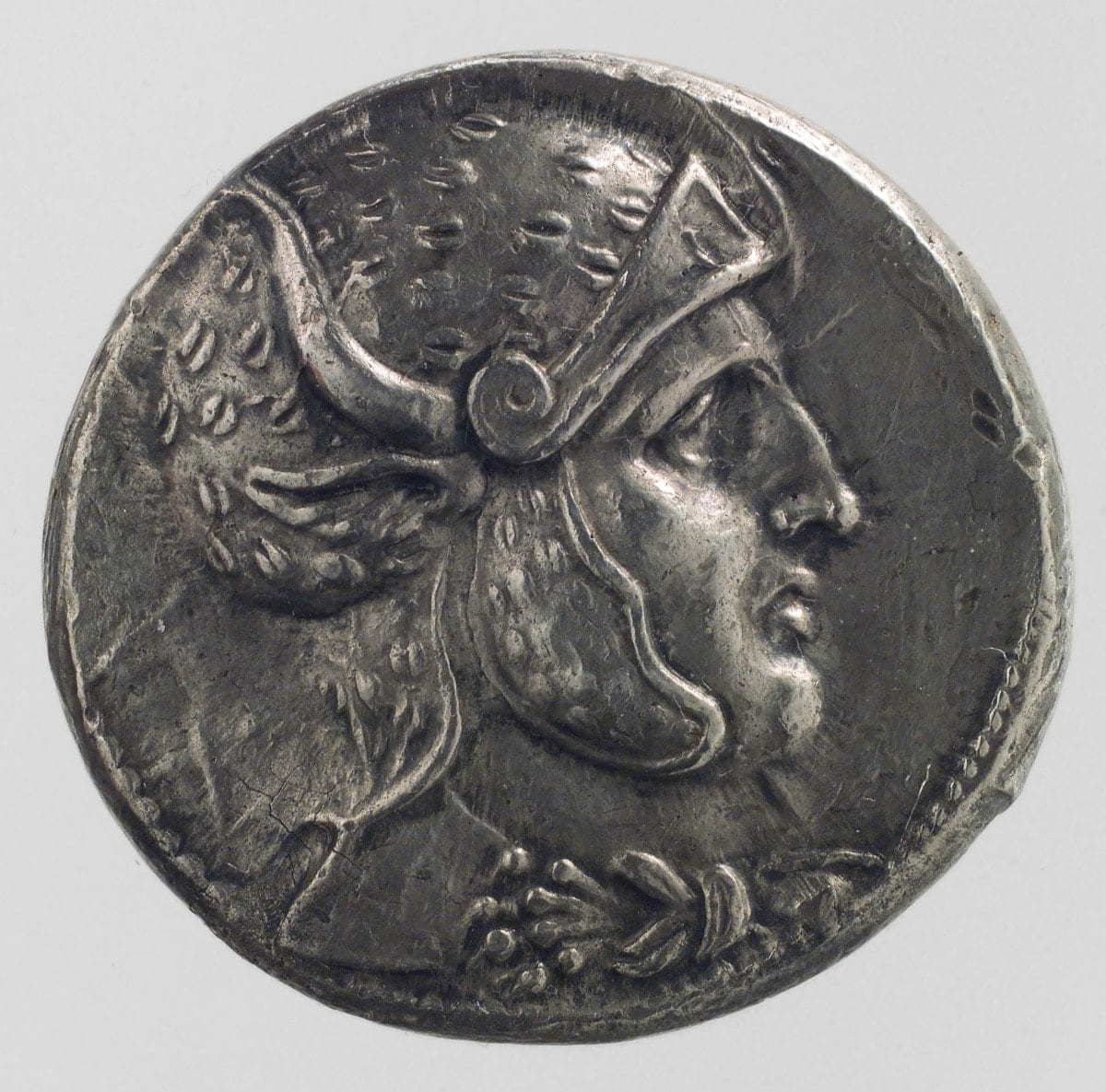
in a treaty with the Indian Mauryan kingdom, received 500 war elephants, which were then employed at the Battle of Ipsus, in 301BC,
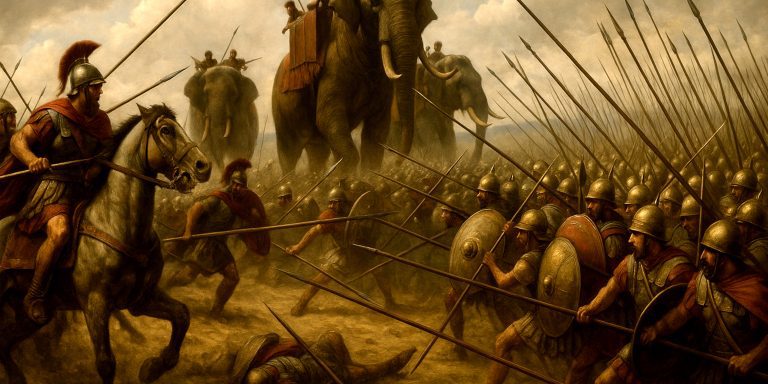
during the wars which Alexander’s generals fought among themselves to define who would control various parts of Alexander’s empire.

Elephants could be seen as rather like tanks—large, mobile weapons to break enemy lines—

(Peter Dennis)
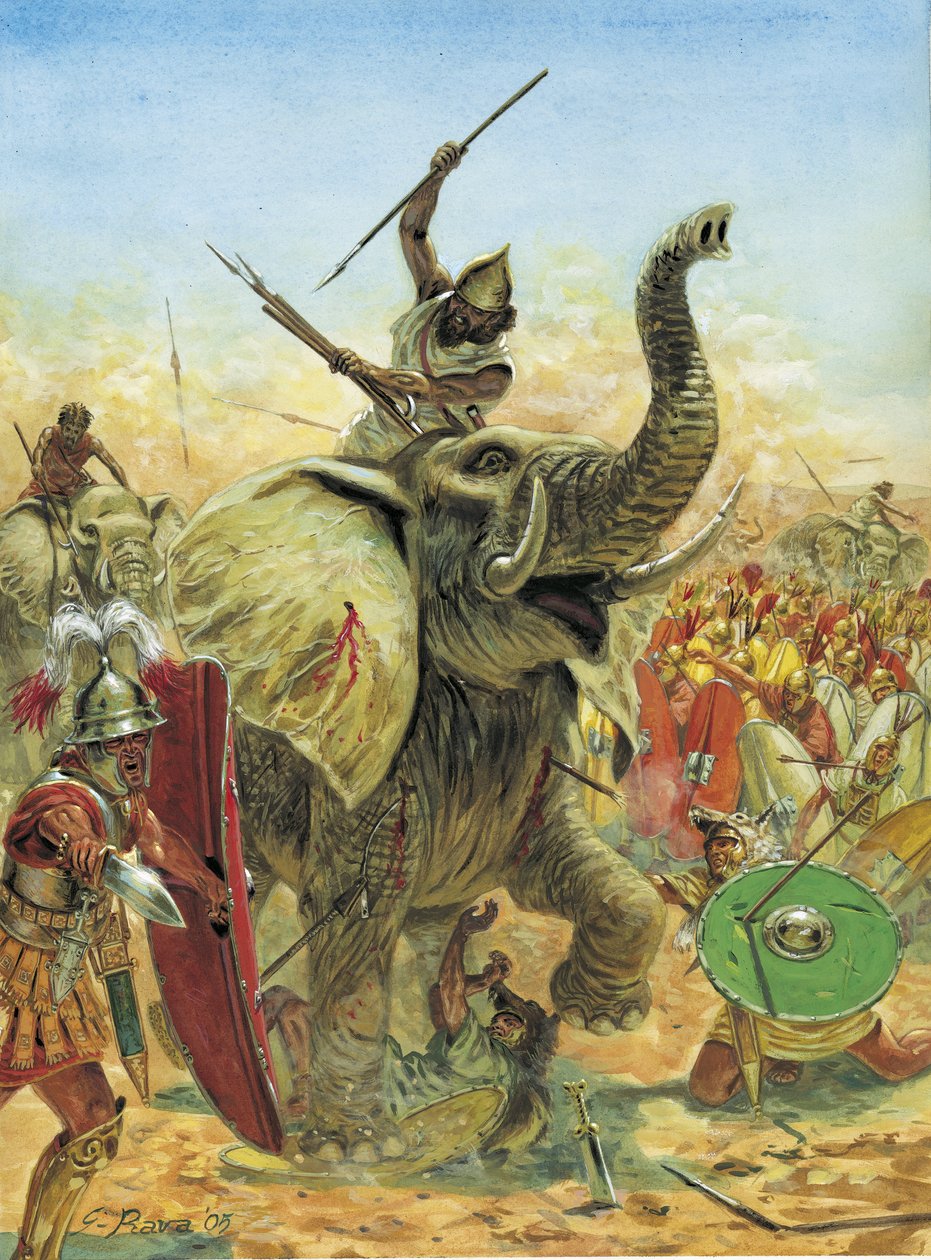
(Giuseppe Rava)

and would continue to be used in the West at least until the Romans defeated the last Macedonian king, Perseus, at the Battle of Pydna, in 168BC, but saw perhaps their most dramatic use in the wars of Carthage against Rome, particularly in the second war, where the Carthaginian general, Hannibal, invaded Italy by crossing the Alps, bringing a number of elephants with him.
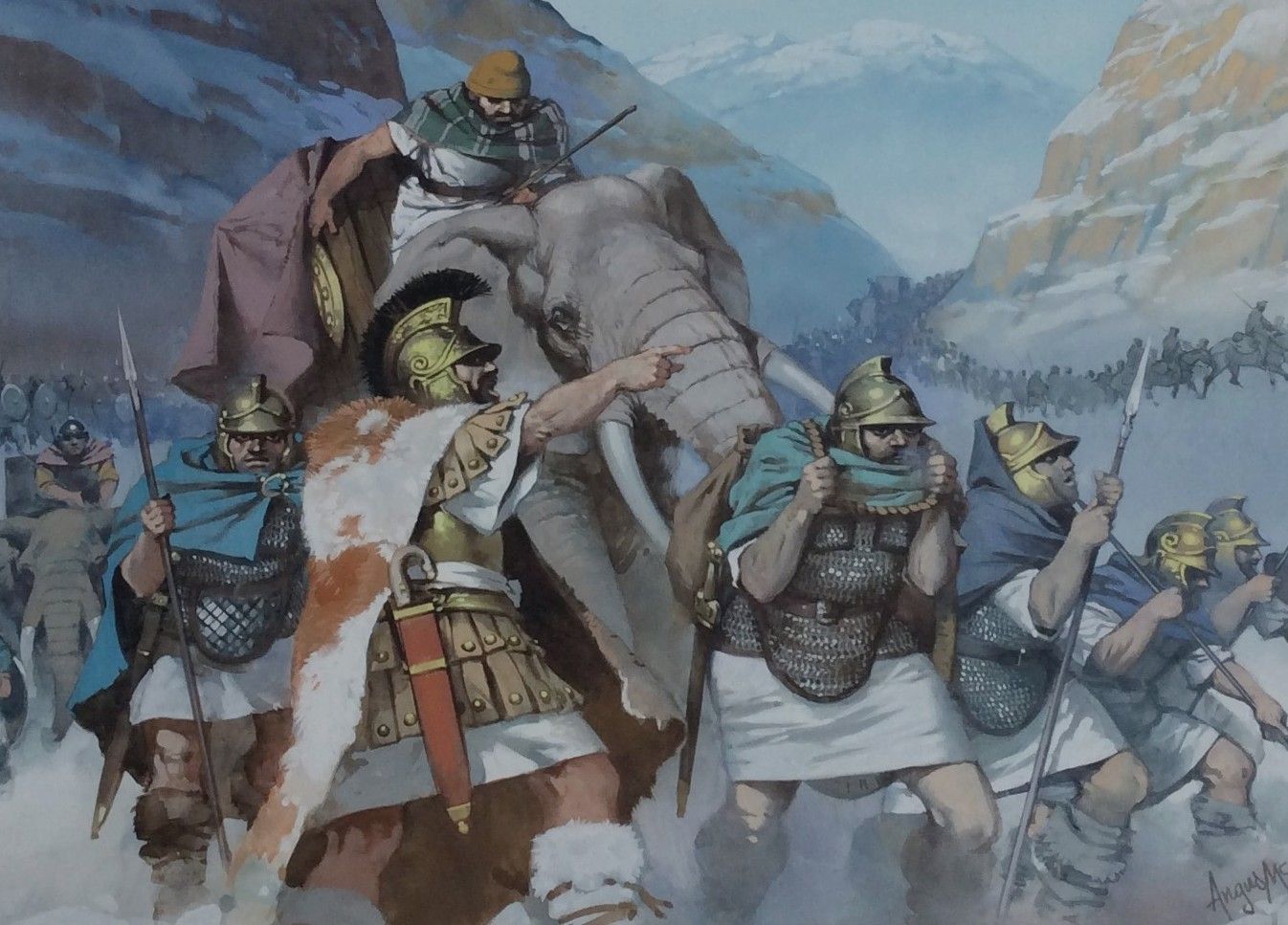
(Angus McBride)

Unfortunately for Hannibal—and his elephants—the Romans had learned to deal with the great beasts and even to turn them back against their owners—
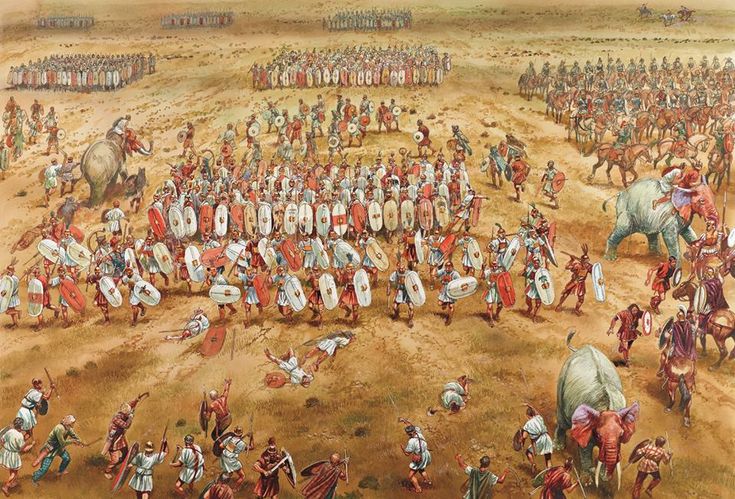
(Peter Dennis)

(for more on war elephants, see:  https://en.wikipedia.org/wiki/War_elephant )

Another factor in warfare was the belief that horses are frightened of elephants,
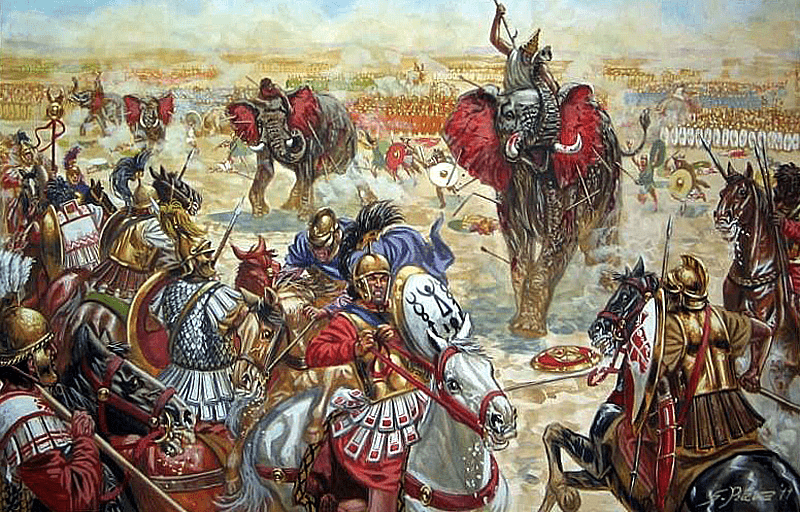
(Giuseppe Rava)

something which even Tolkien mentions—

“But wherever the mumakil came there the horses would not go, but blenched and swerved away…” (The Return of the King, Book Five, Chapter 6, “The Battle of the Pelennor Fields”)

(For more on horses’ potential hippophobia, see:  https://iere.org/are-horses-scared-of-elephants/  )

But that is in relation to the allies of Mordor in its attack on Minas Tirith:  why is there one of these monsters prominent at the Dunlendings’ attack on Edoras, some 250 years earlier? 
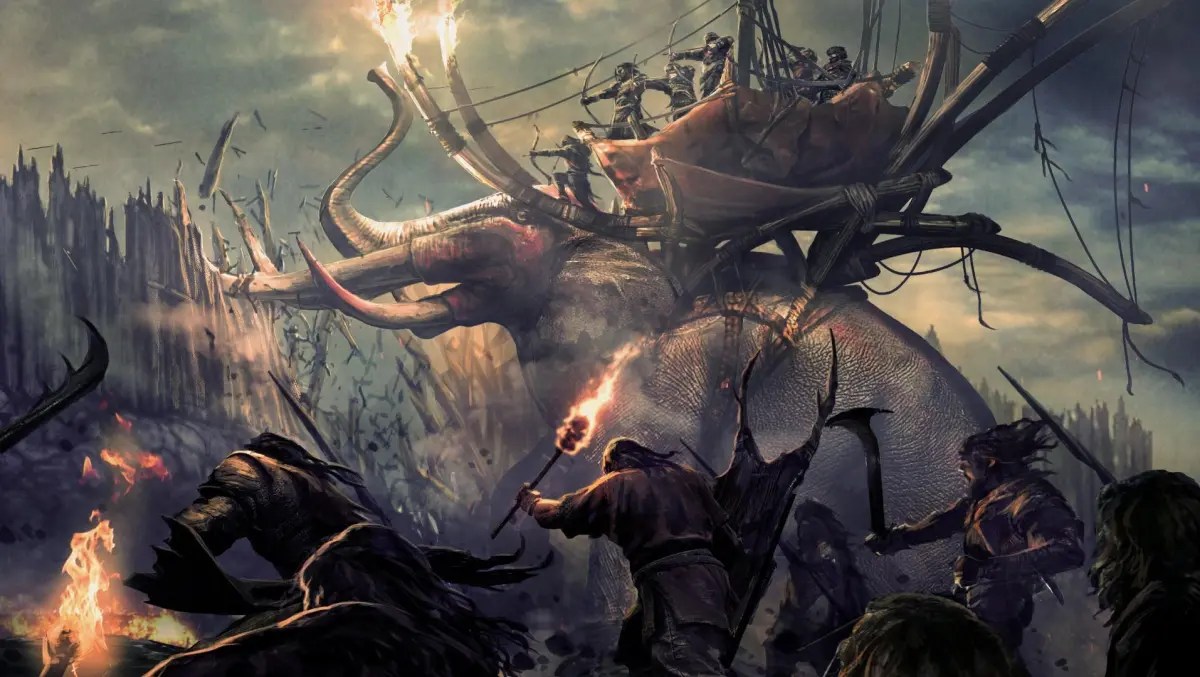
The film’s script-writers seem to be depending upon this passage from Appendix A of The Lord of the Rings:

“Four years later ([TA2758) great troubles came to Rohan, and no help could be sent from Gondor, for three fleets of the Corsairs attacked it and there was war on all its coasts.  At the same time Rohan was again invaded from the East, and the Dunlendings seeing their chance came over the Isen and down from Isengard.  It was soon known that Wulf was their leader.  They were in great force, for they were joined by Enemies of Gondor that landed in the mouths of Lefnui and Isen.”   (Appendix II:  The House of Eorl)

Thank goodness for a map—as, although I know the Isen from Isengard, I had no idea where the Lefnui was—and here, from the Tolkien Gateway, you can see both.  And you can also wonder about how such forces got to Rohan, about which JRRT is completely silent, particularly those who landed at the mouth of the Lefnui, as, straight ahead of them would have been miles of the White Mountains.  Long detour north, then east, through the Gap of Rohan, then southeast into Rohan itself?  

(from the Encyclopedia of Arda)

To which they might add:

“In the days of Beren, the nineteenth Steward, an even greater peril came upon Gondor.  Three great fleets, long prepared, came up from Umbar and the Harad, and assailed the coasts of Gondor in great force;  and the enemy made many landings, even as far north as the mouth of the Isen.  At the same time the Rohirrim were assailed from the west and the east, and their land was overrun, and they were driven into the dales of the White Mountains.” (Appendix A, (iv) Gondor and the Heirs of Anarion; The Stewards)

You can see where this argument might go:  Wulf—the antagonist of The War of the Rohirrim—invades Rohan.  His invasion force includes “…Enemies of Gondor that landed at the mouths of Lefnui and Isen” and those enemies, who were part of the fleet which attacked the west coast of Gondor, “…came up from Umbar and the Harad”, and we’re told in The Lord of the Rings that “…the Mumak of Harad was indeed a beast of vast bulk…” (The Two Towers, Book Four, Chapter 4, “Of Herbs and Stewed Rabbit”).
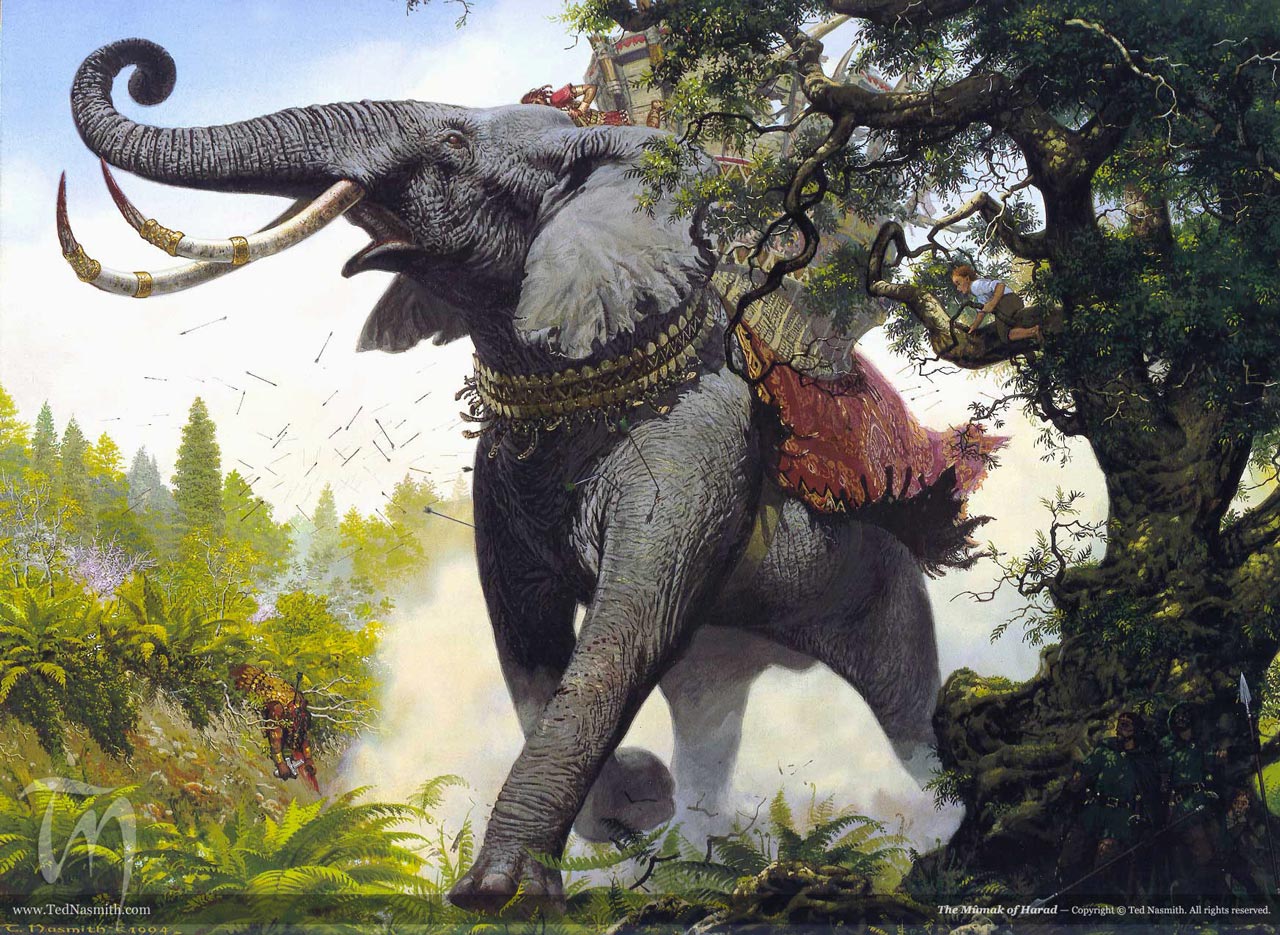
(Ted Nasmith)

So, their reasoning goes:

1. some of the Corsairs were from Harad

2. Harad is where Mumakil come from

3. some of the invasion force which followed Wulf were from the Corsairs who attacked the west coast of Gondor and therefore were from Harad

4. and thus there was the possibility that they might have brought Mumakil with them

Back in 2024, I had written a posting (“Dos Mackaneeks”, 26 June, 2024—here:  https://doubtfulsea.com/2024/06/26/dos-mackaneeks/ ) in which, while discussing “The Phantom Menace”, I had followed this reasoning:  both Saruman and Sauron clearly have access to blasting material of some sort–Saruman’s forces blow a hole in the wall of Helm’s Deep and Sauron’s do the same with the Causeway Forts on their way into the Pelennor.  And so, why would the next step not have been arming their orc armies with early “hand gonnes”?
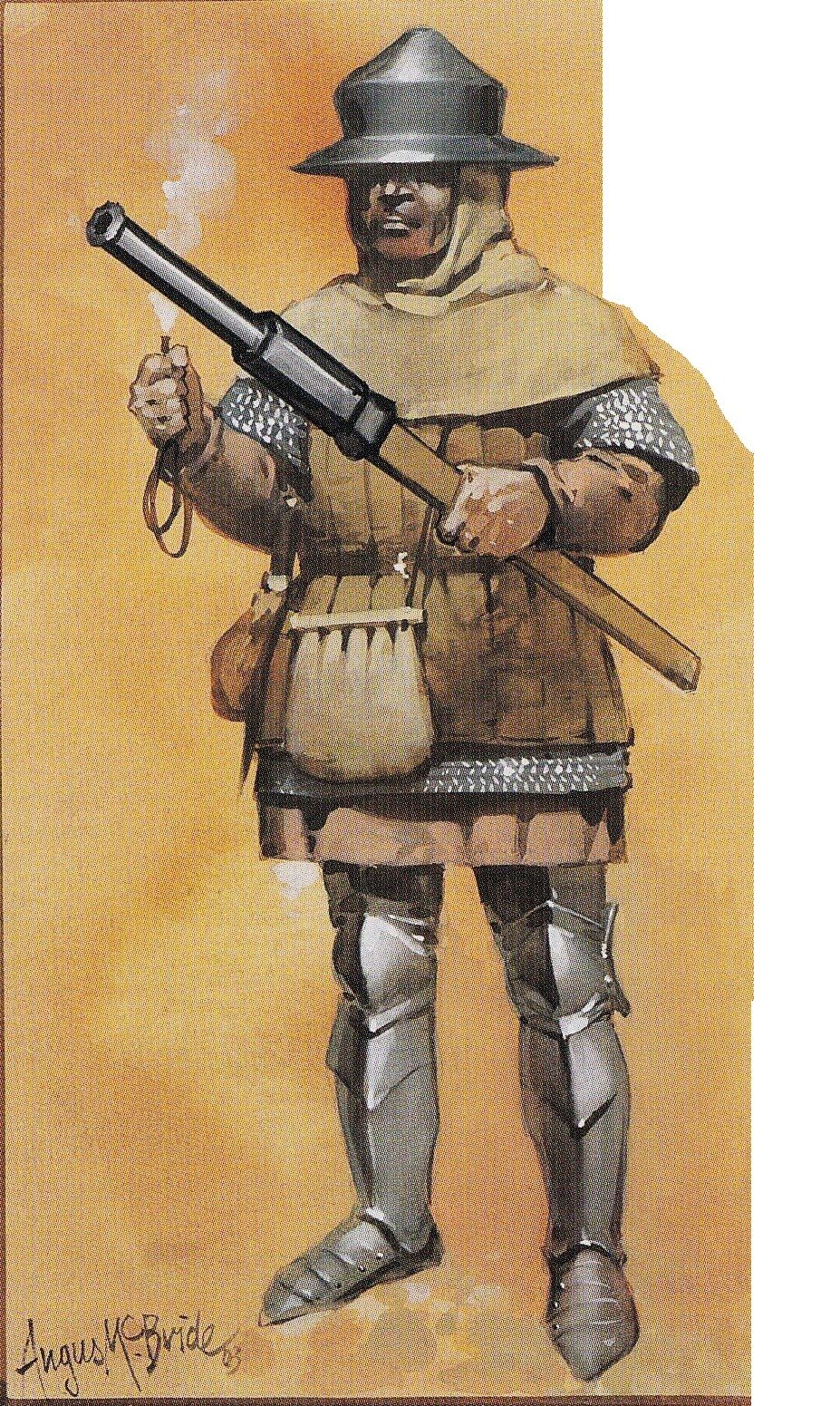
(Angus McBride)

The answer is, they didn’t:  because the author chose for them not to, even though he provided evidence that he could have.  It’s clear that Tolkien was a very deliberate writer, taking years to construct his texts in draft after draft.  And so, had he wanted to have Wulf’s forces include Mumakil, I would suggest that, as he chose to depict them both ambushed by Faramir’s rangers and forming part of the armies which attacked Minas Tirith, they were certainly a possibility at any other point in his long story, but they don’t appear there.

At base, the real problem here, as I and others have suggested, is the extreme thinness of the material upon which The War of the Rohirrim is based:  it’s really only a little over two pages in Appendix A in my 50th Anniversary edition (1065-67).  To flesh this out into a film more than 2 hours long, the script writers created a character named “Hera” out of the nearly-anonymous “Helm’s daughter”, making her a “shield maiden”, adding a nurse for her (“Olwyn”), and a kind of page (“Lief”), as well as constructing a childhood friendship for “Hera” and Wulf, among other additions to a very small story, which is really only background to the later story of Helm’s Deep. 

If you read this blog regularly, you know that I dislike vicious reviews, mostly because, along with what they suggest about their authors, they’re usually simply not helpful, and I don’t write them.  This is my second partial review of The War of the Rohirrim (see “Plain and Grassy”, 24 September, 2025, for the first part:  https://doubtfulsea.com/2025/09/24/plain-and-grassy/ )  and, while I will continue to praise the enormous artistic effort which went into making this film—I’d love to see more anime of heroic stories—I wish someone would make an anime Beowulf, or Sir Gawaine and the Green Knight, just as easy examples—I also wish that the creators would move on—what about a Ramayana, for instance, if they wanted to choose a long-established story?—or, even better, create a completely new story, one in which there would be a fierce, independent heroine, rather than try to make her out of Arwen or Galadriel or invent one like “Tauriel” or “Hera”? 

In the meantime, it’s back to Pooh and Piglet, as they try to trap the illusive Heffalump (which they never succeed in doing).
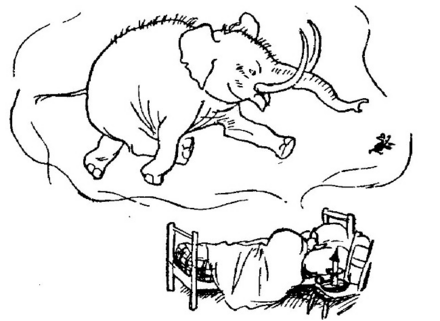
(E.H. Shepard)

As always, thanks for reading.

Stay well,

Enjoy the New Year and may it be a very happy one for you,

And remember that, as always, there’s

MTCIDC

O

Spare Change?

19 Wednesday Apr 2017

Posted by Ollamh in Economics in Middle-earth, J.R.R. Tolkien, Literary History, Narrative Methods

≈ Leave a comment

Tags

1909 penny, Abraham Lincoln, Alexander the Great, Aragorn, Asia Minor, Augustus, bartering, Bilbo's birthday, British Royal Government, Brutus, Charlemagne, Classical Greek coins, Cleopatra VII, Coinage, daggers, Denethor, Domitian, Egypt, federal law, Frankish king, freedman, George Washington, Gondor, Greek Kings, Hanoverian kings, Hellenistic Greeks, Holy Roman Emperor, Ides of March, Julio-Claudian dynasty, Julius Caesar, libertus, Lucius Plaetorius Cestianus, Lydia, manumission, Middle-earth, Pennies, pilleum, Plebeians, portrait, Prince Charles, Ptolemy I, Queen Elizabeth II, Roman Empire, Romans, Seleucus, Senatus Consulto, The Lord of the Rings, Tolkien

Welcome, dear readers, as always.

We are veering a little to the left in this posting inspired by a comment on “Shire Portrait (2)” from our good friend, EMH. It was about currency and coins in Middle-earth and we were a little vague, but E pointed out:

  1. Bilbo giving “a few pennies away” before the party
  2. the price of Bill, the pony: “twelve silver pennies”
  3. Gandalf praising Barliman and saying his news was “worth a gold piece at the least.”

With E in mind, we decided to do another posting on M-e money. Long ago, we did a posting on imagined currency in Middle-earth, but, since then, we’ve thought a bit more about the subject, and, right now, dear readers, we ask you to produce a coin, any coin. As we live in the US, here’s a US coin, a fourth of a dollar, hence, a “quarter”.

image1quarterobverse.jpg

This is the front, or “obverse” in coin speech, and we’re going to focus on that and not on the back (the “reverse”).  We use coins all day long every day, so we probably don’t look at them more than to note value when we pay for something or receive change, but let’s look at this one a bit more closely.

It seems pretty simple:

  1. at the top a single word, “Liberty”
  2. then a low relief (that is, cut very shallowly) portrait of the first president, General George Washington
  3. then, to the left, a slogan, “In God We Trust”
  4. at the bottom, the date, 1993

Let’s start with that date—1993. In 1993, the president was Bill Clinton.

image2clinton.jpg

Federal law, however, prevents coins—with very special and rare exceptions—to bear the portraits of living people. The first president on a coin was Abraham Lincoln, on a penny first minted to commemorate his 100th birthday, in 1909.

image31909penny.jpg

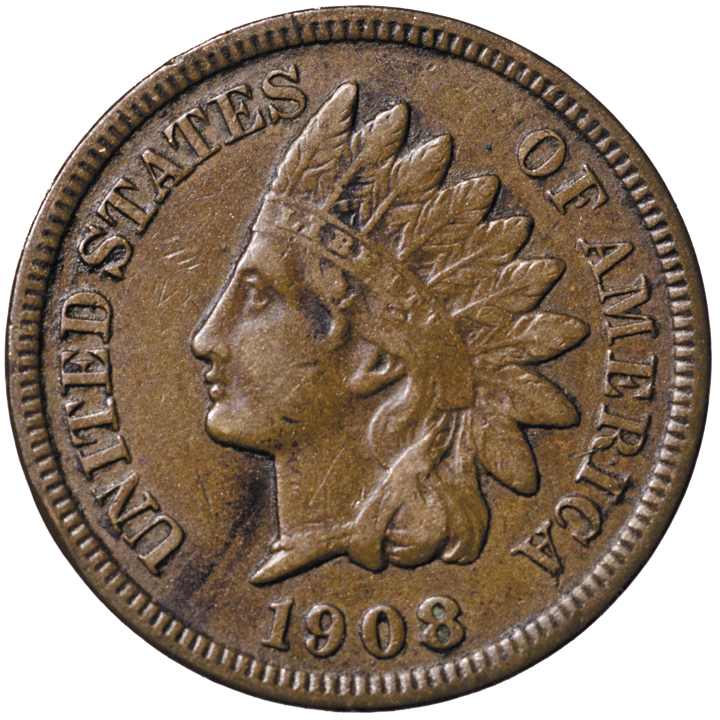
The previous coin, up to 1909, had the idealized head of a Native American,

image41908indianhead.JPG

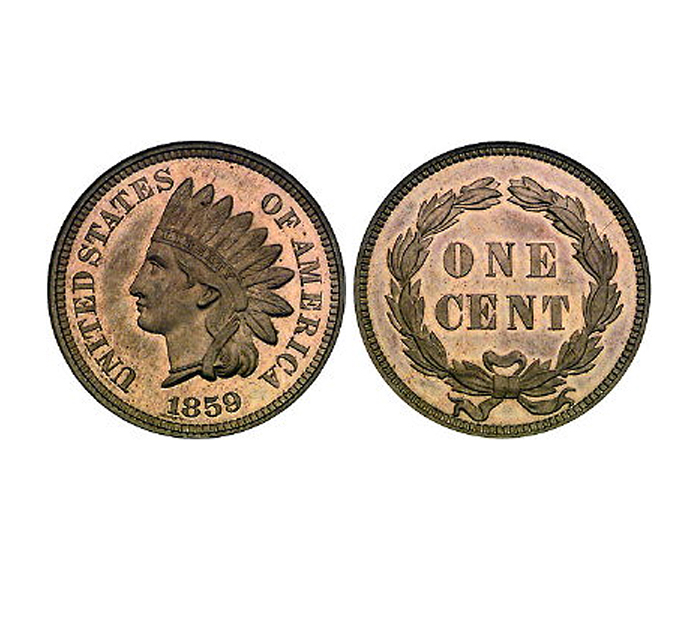
the pattern for which was first introduced in 1859.

image51859indianhead.jpg

The first coin in western European history is from the late 8th century BC, and comes from Lydia, in Asia Minor.

image6lydiancoin.jpg

Classical Greek coins seem to model themselves on Lydian coins like this, having badges–city emblems and religious tokens, like the famous Athenian owl, rather than portraits of humans, like that quarter with George Washington on it.

image7owlcoin.jpg

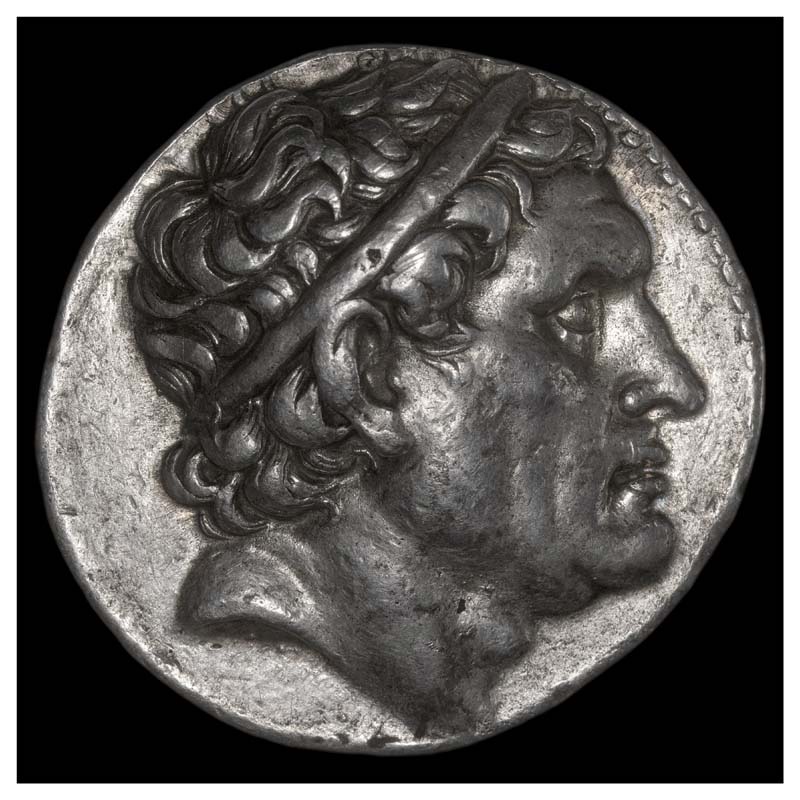
During the Hellenistic Period (post about 300bc and on), however, the Greek kings, from Greece to Asia Minor to Egypt, all began to issue coins with portraits of themselves. These were, initially, the generals of Alexander the Great, who, at Alexander’s death, had grabbed portions of his empire for themselves. We think of Seleucus, who controlled much of Asia Minor

image8seleucus.jpg

Or of Ptolemy I,

image9ptolemy1.JPG

the founder of a dynasty which ruled Egypt for nearly 300 years until their final descendant, Cleopatra VII, was defeated by the Romans.

image10cleopatravii.jpg

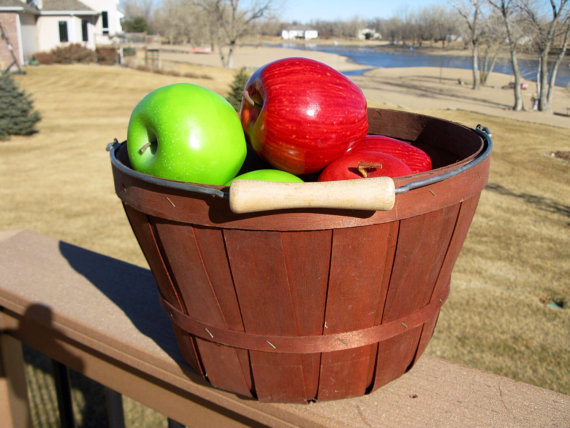
Those Romans, we imagine inspired by the Hellenistic Greeks, produced coins by the bushel .(this is an obsolete dry measurement, based upon what you can put into a basket like this:

image11bushelbasket.jpg

which was, in fact, made up of four pecks

image12peck.jpg

which could also be divided into two kennings of two pecks apiece.)

Considering that Rome produced coins from the late 4th century bc to late in the 5th century ad, it’s not surprising that there would be so many—and considering the size of the Roman empire, as well.

image13coins.jpg

Earlier Roman coins had been unlike Hellenistic coins, however, in not depicting living people—that is, until Julius Caesar gained power.

image14jc.jpg

This opened the floodgates and it’s easy to see why.

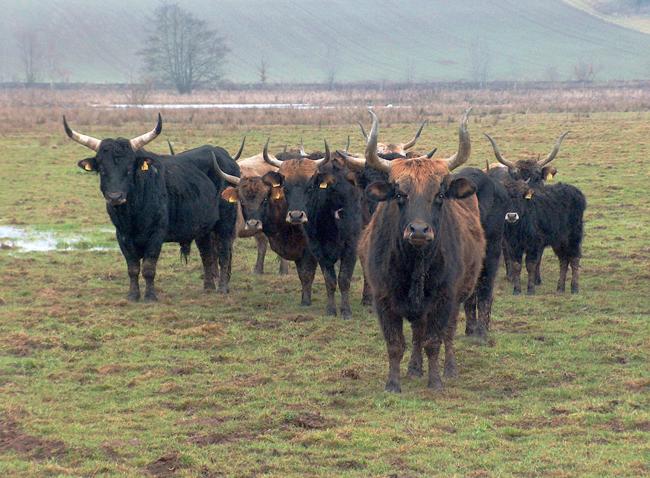
Coins are short-hand wealth, originally standing in for earlier barter items, like flocks and herds.

image15cattle.jpg

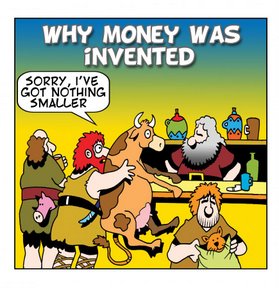
As Romans spread out beyond farms and local markets, the wealth in animals and agricultural produce, as well as raw materials, was simply not portable enough, as this cartoon shows.

image16barter.jpg

By making tokens which were accepted as a stand- in for that wealth, the agency which did so was asserting its claim to have a strong hand in, if not control of, the economy.

Julius Caesar, who had already forced the Senate to make him “Dictator for Life” (that “S…C” on both sides of his profile stands for “Senatus Consulto”—“by a decree of the Senate”), by putting his face on the currency is implying that he now is the state—and therefore possesses a power which extends to regulating the money economy by which people live and survive or prosper. (There may be a quiet joke here, as well. “SC” was stamped on bronze coins to guarantee their worth—on the back side—to have those letters surrounding Caesar on the front side, the obverse, may suggest a double meaning: he is dictator by Senatorial decree, but his worth is also being guaranteed by that decree.)

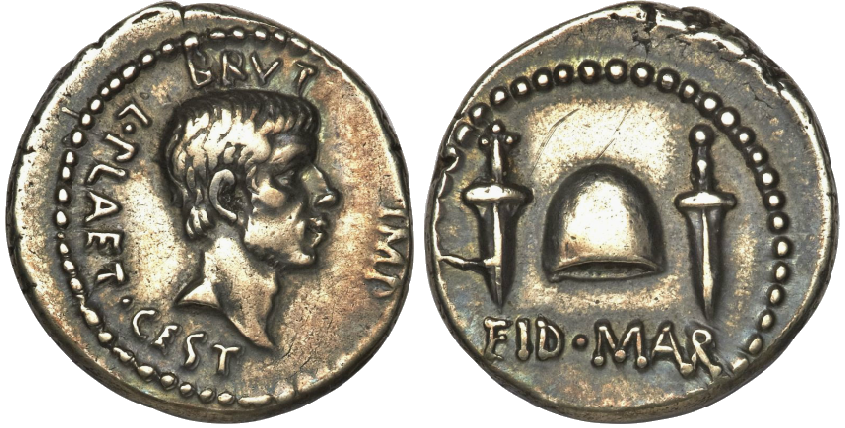
It is no surprise, then, that Brutus, one of those who murdered Caesar, would, in turn, issue his own coins—and these are even more heavily symbolic.

image17brutuscoin.png

On the obverse, there is Brutus, his name above, to our right his title “imp[erator]”—a title given to a general by his soldiers with the implication “You rule!” To our left is an abbreviated form of the name of the moneyer, the man who directed the mint, L[ucius] Plaet[orius] Cest[ianus]. Although we said that we would only examine obverses, we can’t resist the reverse here. At the bottom is the inscription, “eid mar”, standing for “eides Martis”, the “Ides of March”, the 15th of March, the day Caesar was murdered. Above that is a “pilleum”, the kind of cap worn by a slave during the ceremony called “manumission”, in which a he was turned into a “libertus”, or “freedman”.

image18manumission.jpg

To both sides of the cap are daggers.

image19pugio.jpg

Put all of this together and we see Brutus’ claim: on the 15th of March, we murdered Caesar and, as a consequence, we freed Rome from its slavery.

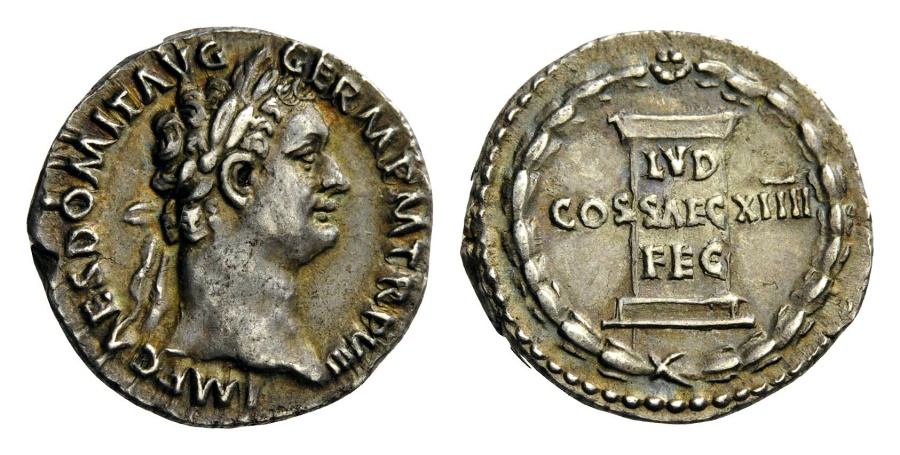
Coins like Caesar’s and Brutus’ are simple in their claims. Later emperors were less so. Look at this coin of Domitian (81-96ad).

image20domitian.jpg

On the rim of the obverse is a pile of information:

Imp[erator] Caes[ar] Domit[ianus] Aug[ustus] Germ[anicus] P[ontifex] M[aximus] Tr[ibunicia P[otestas] VIII

“Emperor Caesar Domitianus Augustus Germanicus, Chief Priest of Rome, Holding the Power of the Representative of the People 8 Times”

In fact, Domitian was sailing under false colors—Caesar, Augustus, and Germanicus all belong to the earlier Julio-Claudian dynasty, of which his family was not a part. As for “Holding the Power of the Representative of the People”, this was an ancient elective office, which allowed a member of the lower class, the Plebeians, special powers in the legislative process. As emperor and son of an emperor most of a century after elections had been abolished, this looked like an honor, but was just an empty title. “Chief Priest” had once been an extremely important position in the state, but, from the time of the first emperor, Augustus, it had simply become another title emperors claimed.

Later European rulers, eager to suggest that they were as powerful as the ancient Romans, used Roman coins as a model. Here’s one from Charlemagne, Frankish king and first Holy Roman Emperor (768-814).

image21charlemagne.jpg

Returning to our George Washington quarter,

image22gw.jpg

let’s look at the comparatively meager inscriptional material. If the coin of Domitian had so much to tell us about how important he was, the inscription on the quarter has a very different message, its focus being upon cultural values: 1.freedom; 2. religion. In our culture, probably everyone would agree with 1, but our ancestor/founders were very adamant on the subject of keeping church and state completely apart, with no influence of either upon the either, so that that 2, “In God We Trust”, shows that there is some confusion about those values. In any case, the plainness might remind us of Caesar’s coin more than Domitian’s, but, in both cases, the point of the artwork and labeling is to put the government’s stamp, whether republic or empire, upon the everyday life of everyone who buys and sells.

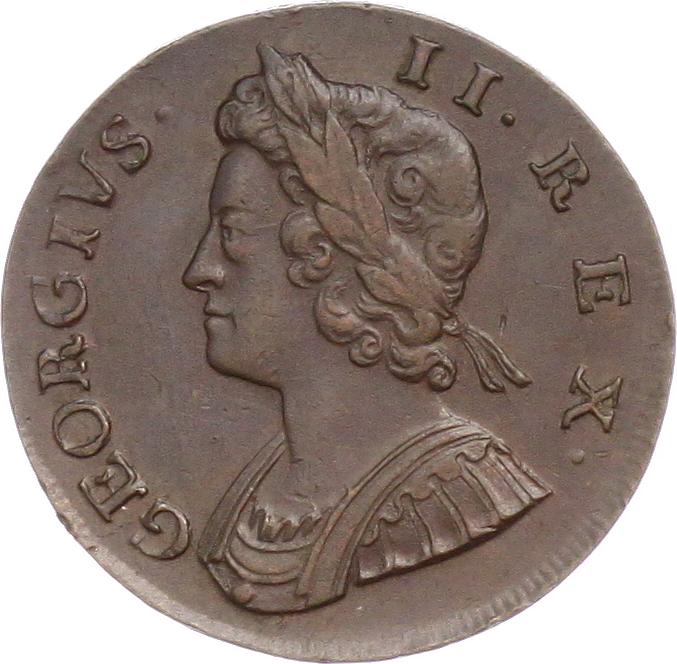
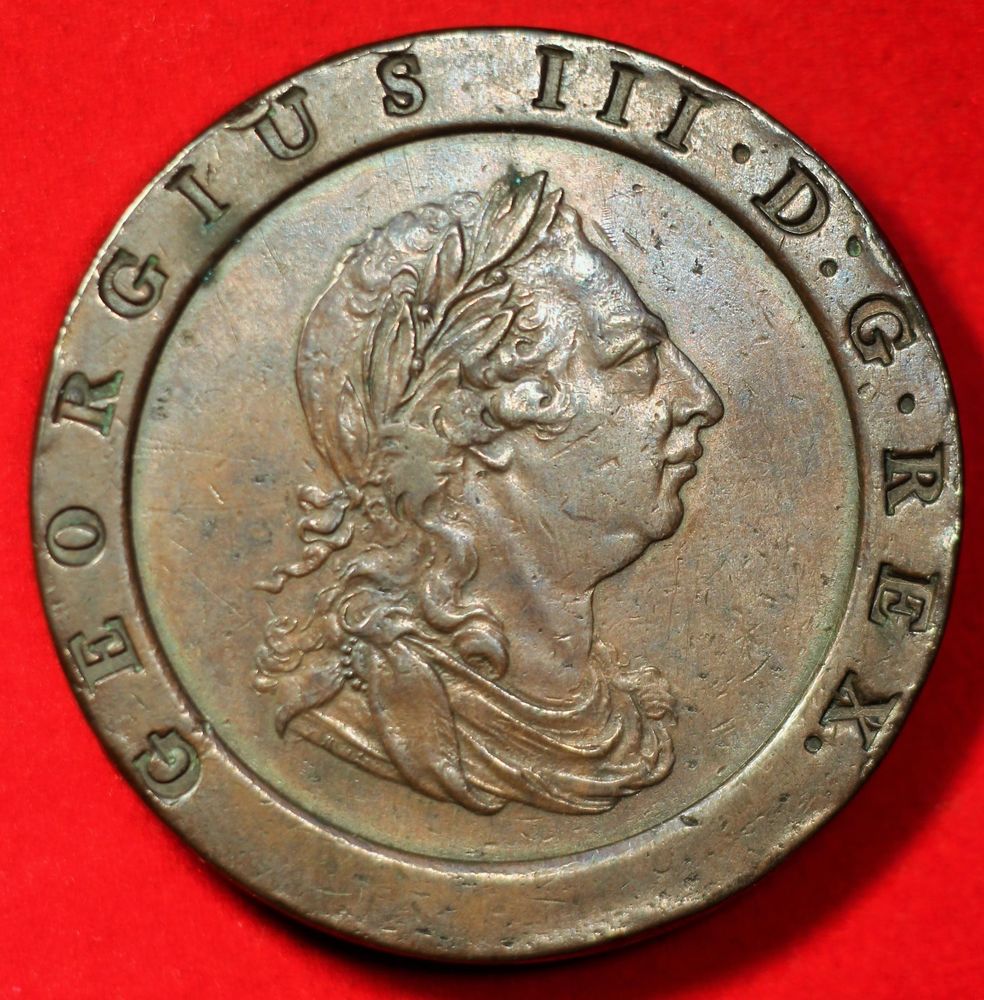
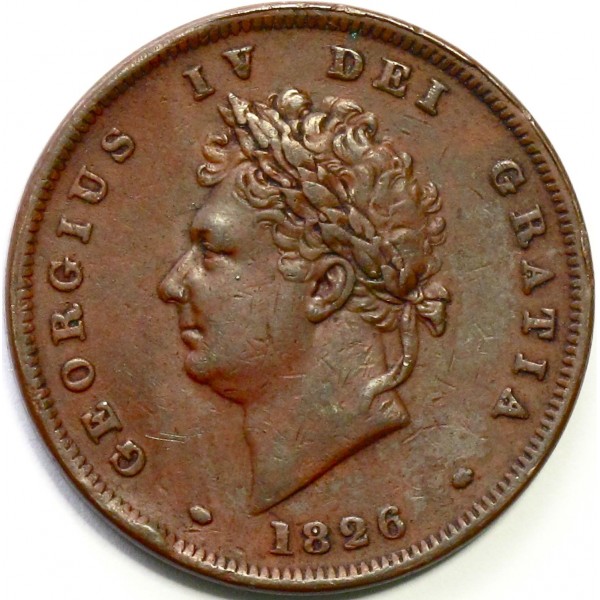
There is another message to be read here, as well. The George Washington quarter was first issued on Washington’s 200th birthday, in 1932, and is still on the obverse of the quarter, suggesting the continuity of what he stood for. In the case of monarchs, however, each new emperor/king/queen demands the issuing of new coinage, with the new ruler’s portrait, suggesting not only royal government continuity, but also, in some cases royal family continuity. Here are the first four Hanoverian kings of England, for example, all sons or grandsons, from 1714 to 1830.

image23geo1.jpg

image24geo2.jpg


image25geo3.jpg

image26geo4.jpgSo, When Prince Charles succeeds his mother, Elizabeth II,
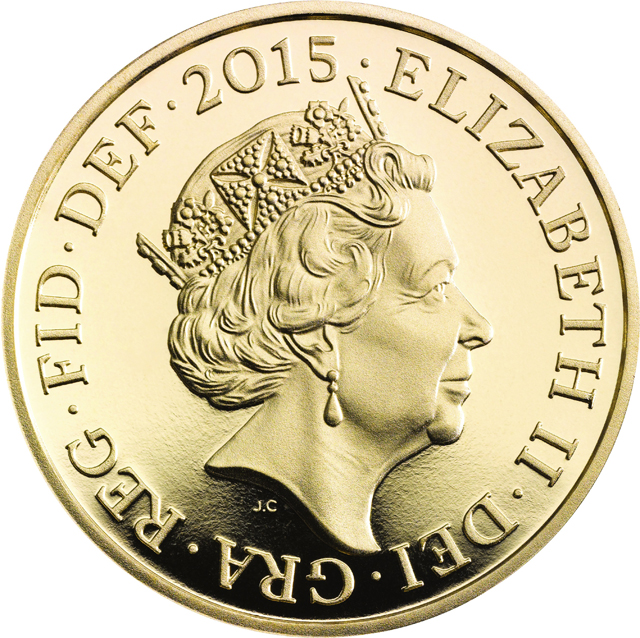
image27liz2.jpg

new coins will have to be minted.

And this brings us back to Middle-earth and to a puzzle about Gondor. There are certainly coins, as our good friend has thoughtfully pointed out. There has been no king on the throne of Gondor for many centuries, however. If Denethor’s behavior is anything to go by, the Stewards have become kings in everything but title, even though Denethor avoids the royal throne. If everyone from the Hellenistic kings to Elizabeth II has his/her portrait on the coinage, are the Stewards on Gondor’s? And what happens when Aragorn becomes King Aragorn II Elessar?

MTCIDC

CD

The Doubtful Sea Series Facebook Page

The Doubtful Sea Series Facebook Page

  • Ollamh

Categories

  • Artists and Illustrators
  • Economics in Middle-earth
  • Fairy Tales and Myths
  • Films and Music
  • Games
  • Heroes
  • Imaginary History
  • J.R.R. Tolkien
  • Language
  • Literary History
  • Maps
  • Medieval Russia
  • Military History
  • Military History of Middle-earth
  • Narnia
  • Narrative Methods
  • Poetry
  • Research
  • Star Wars
  • Terra Australis
  • The Rohirrim
  • Theatre and Performance
  • Tolkien
  • Uncategorized
  • Villains
  • Writing as Collaborators
Follow doubtfulsea on WordPress.com

Across the Doubtful Sea

Recent Postings

  • Through a glass… January 7, 2026
  • Heffalumps? December 31, 2025
  • We Three Kings December 24, 2025
  • A Moon disfigured December 17, 2025
  • On the Roads Again—Once More December 10, 2025
  • (Not) Crossing Bridges December 3, 2025
  • On the Road(s) Again—Again November 26, 2025
  • On the Road(s) Again November 19, 2025
  • To Bree (Part 2) November 12, 2025

Blog Statistics

  • 104,101 Views

Posting Archive

  • January 2026 (1)
  • December 2025 (5)
  • November 2025 (4)
  • October 2025 (5)
  • September 2025 (4)
  • August 2025 (4)
  • July 2025 (5)
  • June 2025 (4)
  • May 2025 (4)
  • April 2025 (5)
  • March 2025 (4)
  • February 2025 (4)
  • January 2025 (5)
  • December 2024 (4)
  • November 2024 (4)
  • October 2024 (5)
  • September 2024 (4)
  • August 2024 (4)
  • July 2024 (5)
  • June 2024 (4)
  • May 2024 (5)
  • April 2024 (4)
  • March 2024 (4)
  • February 2024 (4)
  • January 2024 (5)
  • December 2023 (4)
  • November 2023 (5)
  • October 2023 (4)
  • September 2023 (4)
  • August 2023 (5)
  • July 2023 (4)
  • June 2023 (4)
  • May 2023 (5)
  • April 2023 (4)
  • March 2023 (5)
  • February 2023 (4)
  • January 2023 (4)
  • December 2022 (4)
  • November 2022 (5)
  • October 2022 (4)
  • September 2022 (4)
  • August 2022 (5)
  • July 2022 (4)
  • June 2022 (5)
  • May 2022 (4)
  • April 2022 (4)
  • March 2022 (5)
  • February 2022 (4)
  • January 2022 (4)
  • December 2021 (5)
  • November 2021 (4)
  • October 2021 (4)
  • September 2021 (5)
  • August 2021 (4)
  • July 2021 (4)
  • June 2021 (5)
  • May 2021 (4)
  • April 2021 (4)
  • March 2021 (5)
  • February 2021 (4)
  • January 2021 (4)
  • December 2020 (5)
  • November 2020 (4)
  • October 2020 (4)
  • September 2020 (5)
  • August 2020 (4)
  • July 2020 (5)
  • June 2020 (4)
  • May 2020 (4)
  • April 2020 (5)
  • March 2020 (4)
  • February 2020 (4)
  • January 2020 (6)
  • December 2019 (4)
  • November 2019 (4)
  • October 2019 (5)
  • September 2019 (4)
  • August 2019 (4)
  • July 2019 (5)
  • June 2019 (4)
  • May 2019 (5)
  • April 2019 (4)
  • March 2019 (4)
  • February 2019 (4)
  • January 2019 (5)
  • December 2018 (4)
  • November 2018 (4)
  • October 2018 (5)
  • September 2018 (4)
  • August 2018 (5)
  • July 2018 (4)
  • June 2018 (4)
  • May 2018 (5)
  • April 2018 (4)
  • March 2018 (4)
  • February 2018 (4)
  • January 2018 (5)
  • December 2017 (4)
  • November 2017 (4)
  • October 2017 (4)
  • September 2017 (4)
  • August 2017 (5)
  • July 2017 (4)
  • June 2017 (4)
  • May 2017 (5)
  • April 2017 (4)
  • March 2017 (5)
  • February 2017 (4)
  • January 2017 (4)
  • December 2016 (4)
  • November 2016 (5)
  • October 2016 (6)
  • September 2016 (5)
  • August 2016 (5)
  • July 2016 (5)
  • June 2016 (5)
  • May 2016 (4)
  • April 2016 (4)
  • March 2016 (5)
  • February 2016 (4)
  • January 2016 (4)
  • December 2015 (5)
  • November 2015 (5)
  • October 2015 (4)
  • September 2015 (5)
  • August 2015 (4)
  • July 2015 (5)
  • June 2015 (5)
  • May 2015 (4)
  • April 2015 (3)
  • March 2015 (4)
  • February 2015 (4)
  • January 2015 (4)
  • December 2014 (5)
  • November 2014 (4)
  • October 2014 (6)
  • September 2014 (1)

Blog at WordPress.com.

  • Subscribe Subscribed
    • doubtfulsea
    • Join 78 other subscribers
    • Already have a WordPress.com account? Log in now.
    • doubtfulsea
    • Subscribe Subscribed
    • Sign up
    • Log in
    • Report this content
    • View site in Reader
    • Manage subscriptions
    • Collapse this bar
 

Loading Comments...