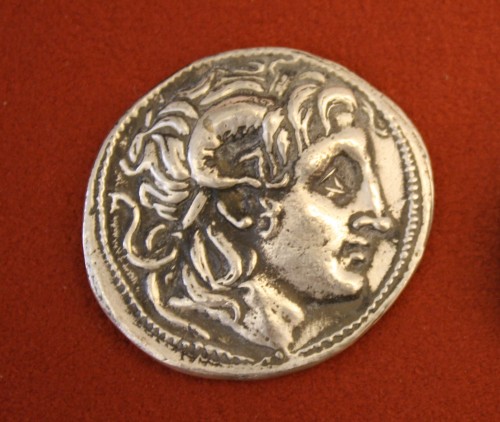
• About

doubtfulsea

~ adventure fantasy

Tag Archives: Persians

Throwing Shade

20 Wednesday Dec 2017

Posted by Ollamh in Artists and Illustrators, J.R.R. Tolkien, Narrative Methods

≈ Leave a comment

Tags

A Day: Paris In the Rain, Adelard Took, Assyrians, Bag End, Bilbo Baggins, bowler hat, ceramic chariot, China, city gent, CS Lewis, elephant, Emperor Ch'in Shihuang, Greeks, Gustave Caillebotte, Jean Marius, John Howe, Jonas Hanway, Lobelia Sackville-Baggins, Marchesa Elena Grimaldi, Mary Poppins, Monty Python, Palais Galleria, Persians, Romans, Sharkey, The Hobbit, The Lord of the Rings, The Ministry of Silly Walks, Tolkien, umbrella, umbrella stand, Un Jour: Paris sous la Pluie, van Dyck

Welcome, dear readers, as always and, if you’re in the US, we hope you’ve had a happy and not over-stuffed Thanksgiving.

Just when we think we’ve exhausted a topic, we return and, well, here we are.

image1entryway.png

Just to the left of the door and below what we now see as a barometer, there’s a tall tube-like structure, something once common—we wouldn’t be surprised if there was one in every house in which JRRT ever lived:  an umbrella stand.image2aumbrellastand.jpeg
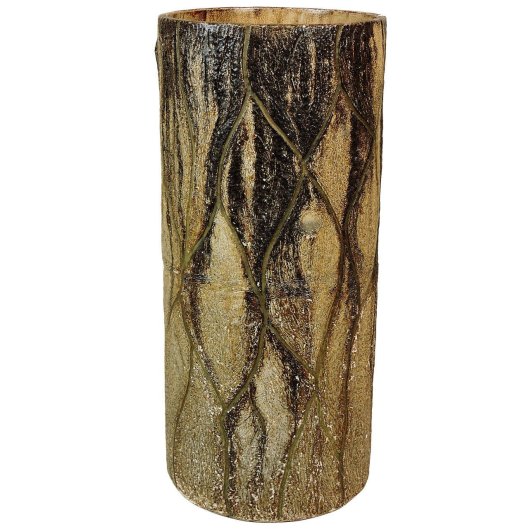
As a child, one of us was fascinated by having once seen an umbrella stand made out of an elephant’s lower leg and foot—or at least the skin.

image2belephant.jpg

The couple we’ve seen are all identified as “Victorian”, so, as we are very fond of pachyderms, we hope that such a use is now long in the past!

Umbrellas, at least as sunshades, appear to have been around since at least before 200BC in China, as this ceramic chariot—with large umbrella—from part of the tomb complex of the Emperor Ch’in Shihuang demonstrates.
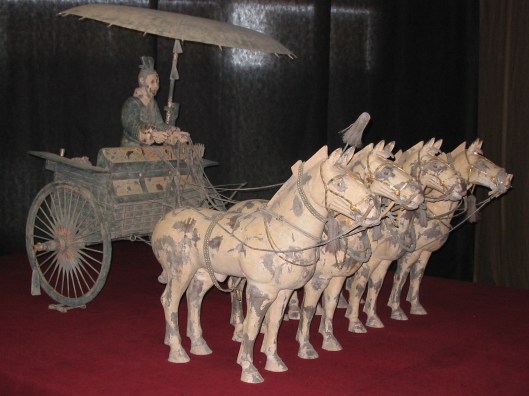
image2chin.jpeg

The Assyrians had them.

image3ashurbanipal.jpg

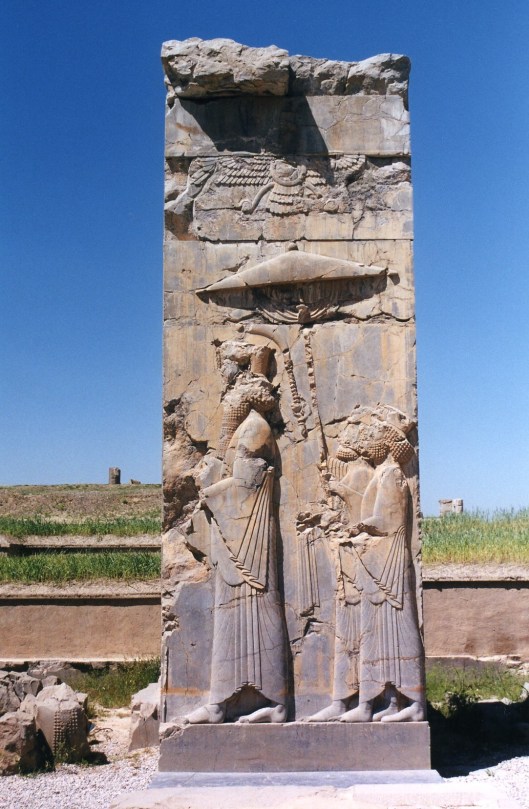
The Persians had them.

image4darius.jpg


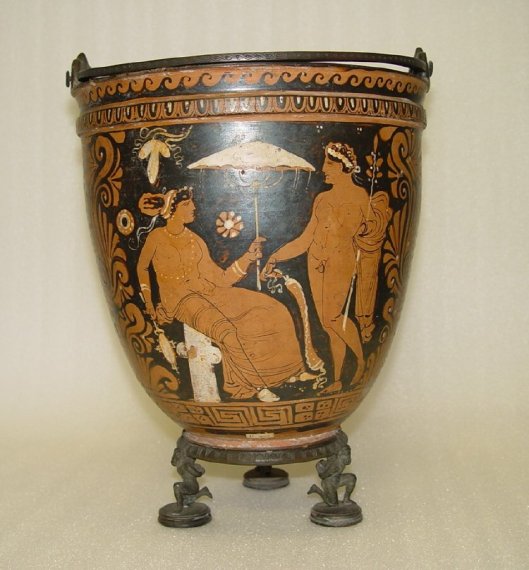
The Greeks had them.

image5greek.jpg

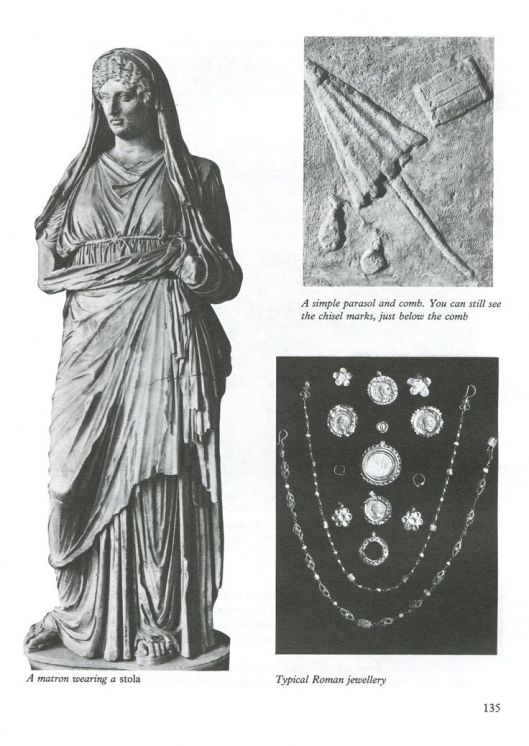
As did the Romans.

image6aroman.jpg

And so on for centuries, although it seems that the first modern references to them in England date from the early 17th century and appear, by the latter part of the century and into the 18th as part of “ladies’ apparel”, used as much for sun as rain as this 1623 portrait by van Dyck of the Marchesa Elena Grimaldi shows us.
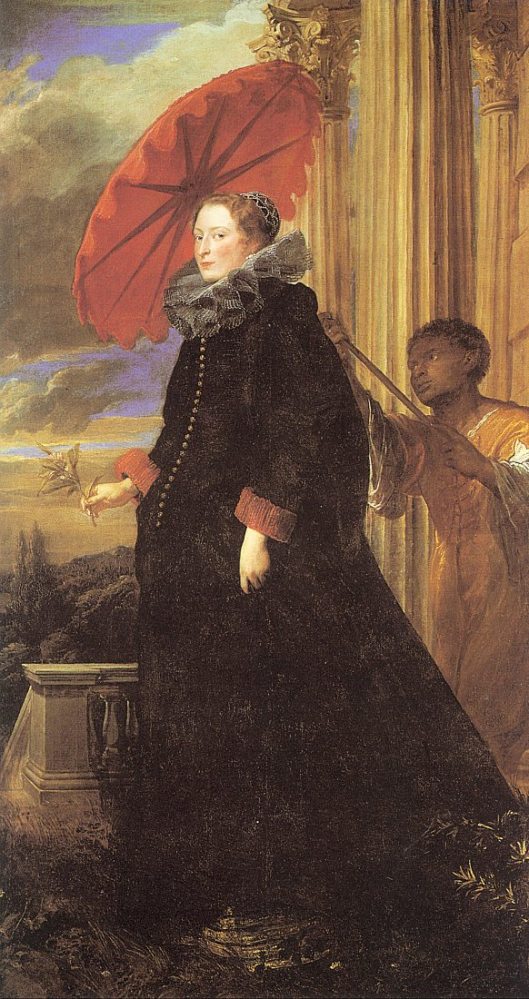
image6elenagrimaldi.jpg

A center for the manufacture of umbrellas was Paris, and the inventor of the modern collapsible model may have been Jean Marius, who received a 5-year monopoly on his invention in 1710.  Here is a later (1772) advertisement for his business
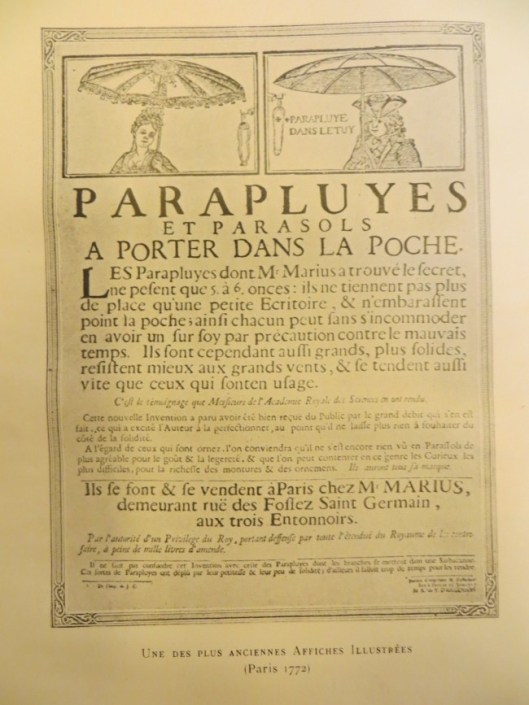
image7mariusadvert.jpg

and here is a model, identified by the Palais Galleria in Paris as post-1715 because it has no Marius markings.
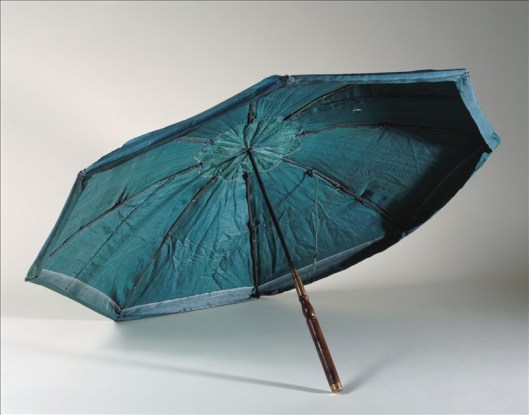
image8post1715.jpg

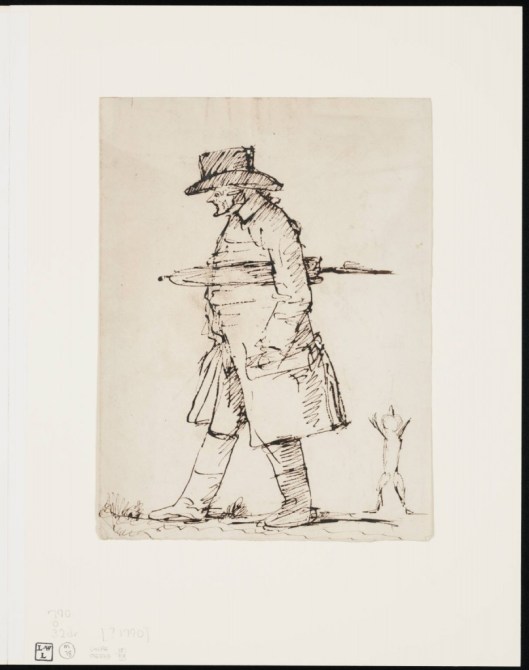
If there was a prejudice against men carrying them, being a combination of the association with “feminine things” and perhaps also a long-standing prejudice against the French, how did that so change that, by the 20th century, the umbrella, along with the bowler hat, became the marks of the “city gent” in London,
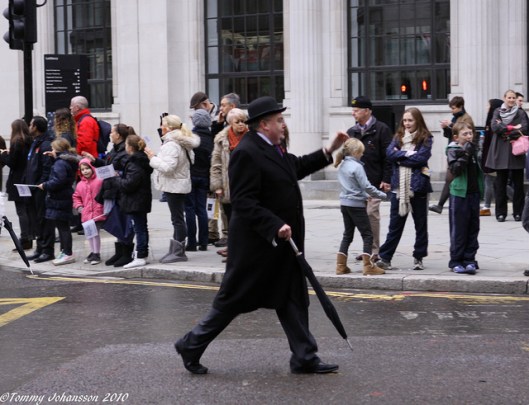
image9acitygent.jpg

caricatured in the 20th century by Monty Python in skits like “The Ministry of Silly Walks”?

image9minister.jpg

This change is said to stem from the behavior of one rather eccentric man, Jonas Hanway
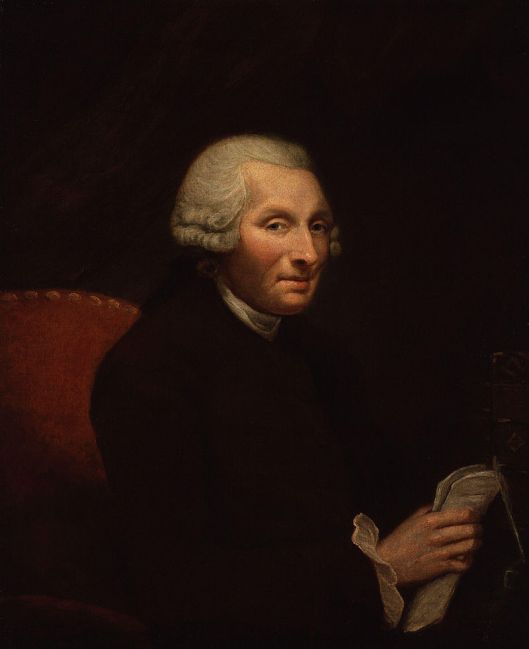
image10jonashanway.jpg

who, sometime in the 1750s, began to appear on London streets carrying an open umbrella.
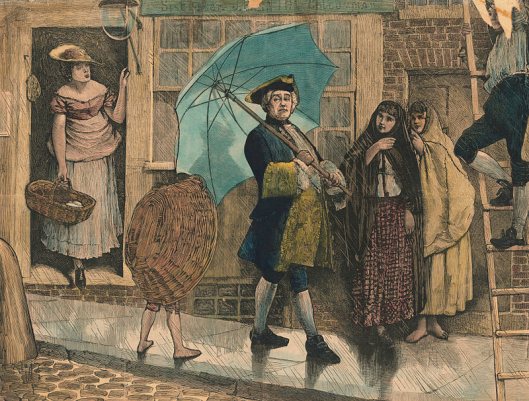
image11hanwaywithbrolly.jpg

As you, sharp-eyed reader, can tell from our verbs and constructions like “seems”, “appears” and “is said to”, this, like other items of fashion and its changes, hasn’t the firmest of scholarly foundations, but, considering how many illustrations (often mocking cartoons) begin to appear by the 1770s, something happened to alter men’s behavior. Just look at these three, from 1772, 1782, and 1790.
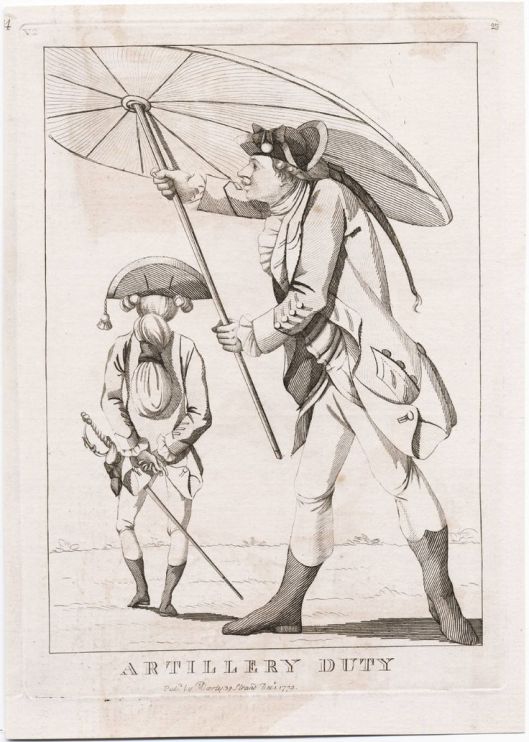
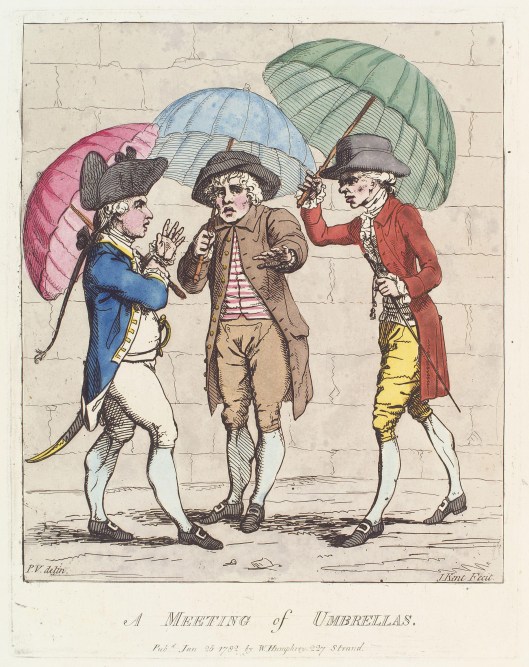
image12seventeenseventrytwo.jpg

image13seventeeneightytwo.jpg

image14seventeenninety.jpg

All of this is very interesting, you may ask, but what does it have to do with Bilbo, or with JRRT?  There are, in fact, a couple of references in The Lord of the Rings to umbrellas.  First, there is one of Bilbo’s mocking gifts:

“For Adelard Took, for his very own, from Bilbo; on an umbrella.  Adelard had carried off many unlabeled ones”.  (The Fellowship of the Ring, Book One, Chapter 1, “A Long-Expected Party”)

Then there are two to Lobelia Sackville-Baggins.  The first is suggestive of her suspicious behavior at the near-auction of Bilbo’s property at the end of The Hobbit (you’ll remember that some spoons never reappeared):

“He [Bilbo] escorted her [Lobelia] firmly off the premises, after he had relieved her of several small (but rather valuable) articles that had somehow fallen inside her umbrella.” (The Fellowship of the Ring, Book One, Chapter 1, “A Long-Expected Party”)

The second reference is actually rather pathetic.  Once “Sharkey” and his thugs take over the Shire, they evict Lobelia from Bag End and, because she resists, they drag her off to the Lockholes, as young Tom Cotton tells Merry and the others:

“She comes down the lane with her old umbrella…”

When told that “Sharkey” gave the order for her eviction (and the building of sheds at Bag End):

“ ‘I’ll give you Sharkey, you dirty thieving ruffians!’ says she, and ups with her umbrella and goes for the leader, near twice her size.” (The Return of the King, Book Six, Chapter 8, “The Scouring of the Shire”)

Here’s a little illustration of a defiant Lobelia by John Howe.

image15lobelia.jpg

By the later 19th century, men with umbrellas seem quite common—even to the point of providing material for social commentary in the public press—

image16umbrellatypes.jpg

But, in the 20th century, we who love children’s literature see them in a completely different way, either as a mode of transportation

image17mpoppins.jpg

or as part of the origin of a favorite story, when CS Lewis, at 16, had a recurring image of “a Faun carrying an umbrella and parcels in a snowy wood” (from It All Began with/as a Picture). (We’ve seen the title cited both ways.)

image18tumnusandlucy.jpg

But we want to end this posting not with literature, but with pure art.  There are lots of paintings from the 18th and 19th centuries with umbrellas, but here is what may be our favorite, by Gustave Caillebotte (1848-1894).  Although he is grouped with the Impressionists, this painting in particular shows the artist’s interest in the hard-edged world of early photography (“Un Jour:  Paris sous la Pluie”—“A Day:  Paris In the Rain”)

image19caillebotte.jpg

Stay dry, dear readers, and thanks, as ever for reading!

MTCIDC

CD
Further Thoughts

02 Wednesday Nov 2016

Posted by Ollamh in J.R.R. Tolkien, Literary History, Maps, Military History, Military History of Middle-earth, Uncategorized

≈ Leave a comment

Tags

Alexander of Macedon, Athenian Empire, Babylon, Cleopatra VII, Delian League, Mongol Empire, Mordor, Persians, Plataea, Ptolemy, Sauron, Tolkien, W.H. Auden

Welcome, dear readers, as ever.

It is one of the pleasures—perhaps we should say even blessings—of JRRT that there is such a richness available within his work—and within him—that no subject can ever be discussed to a perfect conclusion. In an earlier posting, we talked about Sauron and his demands, but, as we watch our current world and certain powers who are maneuvering to gain increasing control over land and sea, we have come back once more to wondering about what it is that Sauron has planned to do and what he will have if he succeeds.

In an unpublished reply to a review by W.H. Auden, JRRT wrote:

“The theatre of my tale is this earth, the one in which we now live, but the historical period is imaginary. The essentials of that abiding place are all there (at any rate for inhabitants of N.W. Europe), so naturally it feels familiar, even if a little glorified by the enchantment of distance in time.” (Letters, 239)

Thus, we can feel justified, we think, in looking at a would-be world conqueror from an actual historical period to see if we can better understand the fictional Sauron.

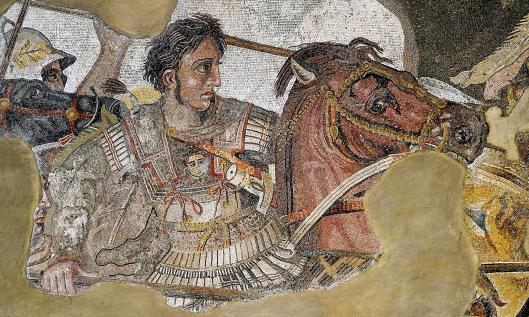
If we consider Alexander of Macedon,

Alexander_the_Great_mosaic.jpg

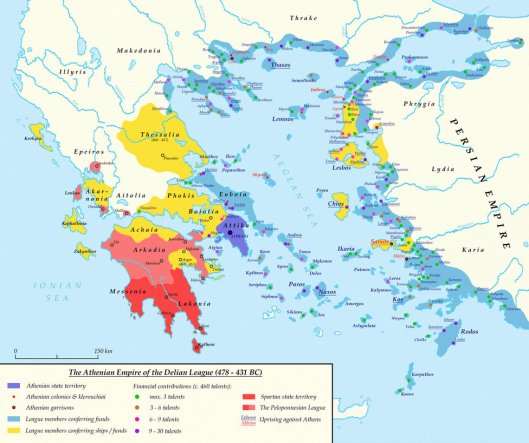
we see someone who began with a project which, in part, went back for a century and more before his own time: to take back the western shore of northern Asia Minor from its Persian overlords. This had been begun by the Delian League,

The Delian League - map.jpg

a group of Greek city-states who had been participants in the ultimate battle defeat of the invading Persians, at Plataea, in 479bc.

47948_PlateaBattleL.jpg

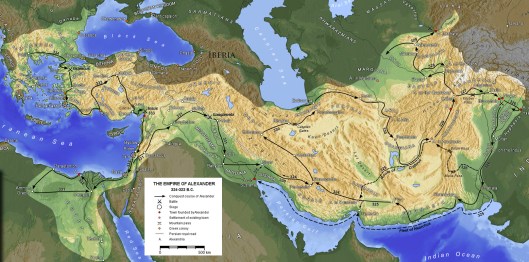
After he had defeated the southern Greeks at Chaeronea in 338bc with the aid of his son, Alexander, it had been Philip II of Macedon’s plan to do what the League had planned and take back Asia Minor from the Persian empire. Philip was murdered (by a “lone spearman”) in 336, but Alexander, took over the plan and, in 334, invaded the Persian empire and, within three years or so, had conquered it—

macedonianempirelarge.jpg

but then had kept moving eastward, besieging cities, winning battles, all the way into western India, where his army finally revolted and refused to go farther.

Alexander_troops_beg_to_return_home_from_India.jpg

He returned to his new capital, Babylon, to die there in 323bc.

the_death_of_alexander_the_great_after_the_painting_by_karl_von_piloty_1886

Because Alexander had no grown male heirs, his new empire fell apart very quickly, his chief generals seizing big chunks and defending them against other generals. We can presume, we think, that he hadn’t been planning to die young (he was born in 356), so we assume that he was out to do something permanent. His generals—the successful ones—founded dynasties, the longest-lived of them being that of Ptolemy,

Coin (Ptolemy I) (Alexandria 305-285 BC).jpg

who grabbed Egypt, and whose last descendant to rule was Cleopatra VII (yes, that Cleopatra), who committed suicide in 30bc.

Kleopatra-VII.-Altes-Museum-Berlin1.jpg

If Alexander was planning to do something similar, only on a larger scale, how do we understand it? What was all of that conquest for and why was it never enough?

Part of the explanation may lie in the analogy of the folk-tradition about sharks: that they have to keep moving to breathe. This is apparently not true (google Discovery.com/tv-shows/shark-week).

great-white-shark-swimming-blue.jpg.adapt.945.1.jpg

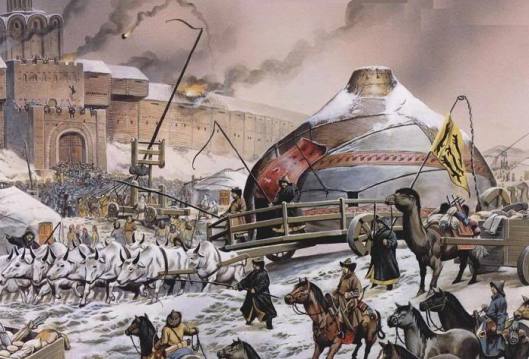
It’s a good image, however, of how an expanding kingdom has to work: the more land you have, the more people you have, the more people you have, the more food you need, therefore you need an increased food supply, which means either buying it or taking it from outside, or making the land itself produce more or simply acquiring more land—and the cycle begins again. This may have been what caused the rapid expansion of the Mongol empire in the 13th century ad, although, in their case, it may not have been expanding population so much as expanding flocks and herds which needed more pasture land.

TitleMongol2.jpg

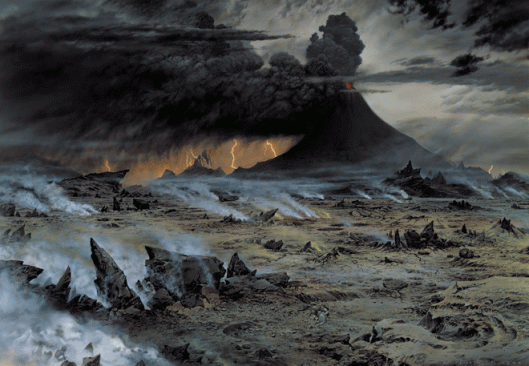
We might see Sauron in the same light: he needed huge armies to conquer Middle-earth, his huge armies, both humans and orcs, would need feeding (even orcs ate, after all, although as to what they ate…) and therefore would have needed a huge amount of growing land to be fed from, and so on and so on. Certainly Mordor was not the place for gardens and grain fields.

gorgoroth.gif

JRRT says of Sauron:

“Sauron desired to be a God-King, and was held to be this by his servants; if he had been victorious he would have demanded divine honour from all rational creatures and absolute temporal power over the whole world.” (Letters 243-244)

And perhaps this offers another view of Alexander, in turn. As Sauron would have needed land to feed his armies, perhaps Alexander was intent upon collecting worshippers? Certainly he allowed rumors to circulate that he was at least semi-divine—as we see in this coin portrait, where he is portrayed with the horns of Zeus/Ammon, a combination Greek and Egyptian god.

alexaszeusammon.jpg

Alexander succeeded in gaining territory—although not so much as he wished—but died before founding the dynasty which might have given his kingdom stability. Sauron lost, not only his kingdom-in-the-making, but his corporeal form and the bulk of his power. JRRT has given us a hint as to one side of his plans—founding a religion with himself as the god, but perhaps Alexander has given us a clue as to another side, the need to support his means of conquest. In turn, Sauron may supply a clue to another side of Alexander’s plans: inserting himself into the religion of his Greek subjects, then expanding his cult throughout as much of the world as he could conquer.

Thanks, as ever, for reading.

MTCIDC

CD

The Doubtful Sea Series Facebook Page

The Doubtful Sea Series Facebook Page

  • Ollamh

Categories

  • Artists and Illustrators
  • Economics in Middle-earth
  • Fairy Tales and Myths
  • Films and Music
  • Games
  • Heroes
  • Imaginary History
  • J.R.R. Tolkien
  • Language
  • Literary History
  • Maps
  • Medieval Russia
  • Military History
  • Military History of Middle-earth
  • Narnia
  • Narrative Methods
  • Poetry
  • Research
  • Star Wars
  • Terra Australis
  • The Rohirrim
  • Theatre and Performance
  • Tolkien
  • Uncategorized
  • Villains
  • Writing as Collaborators
Follow doubtfulsea on WordPress.com

Across the Doubtful Sea

Recent Postings

  • Towering January 28, 2026
  • Tolkien Among the Indians January 21, 2026
  • Thin and Stretched January 14, 2026
  • Through a glass… January 7, 2026
  • Heffalumps? December 31, 2025
  • We Three Kings December 24, 2025
  • A Moon disfigured December 17, 2025
  • On the Roads Again—Once More December 10, 2025
  • (Not) Crossing Bridges December 3, 2025

Blog Statistics

  • 105,537 Views

Posting Archive

  • January 2026 (4)
  • December 2025 (5)
  • November 2025 (4)
  • October 2025 (5)
  • September 2025 (4)
  • August 2025 (4)
  • July 2025 (5)
  • June 2025 (4)
  • May 2025 (4)
  • April 2025 (5)
  • March 2025 (4)
  • February 2025 (4)
  • January 2025 (5)
  • December 2024 (4)
  • November 2024 (4)
  • October 2024 (5)
  • September 2024 (4)
  • August 2024 (4)
  • July 2024 (5)
  • June 2024 (4)
  • May 2024 (5)
  • April 2024 (4)
  • March 2024 (4)
  • February 2024 (4)
  • January 2024 (5)
  • December 2023 (4)
  • November 2023 (5)
  • October 2023 (4)
  • September 2023 (4)
  • August 2023 (5)
  • July 2023 (4)
  • June 2023 (4)
  • May 2023 (5)
  • April 2023 (4)
  • March 2023 (5)
  • February 2023 (4)
  • January 2023 (4)
  • December 2022 (4)
  • November 2022 (5)
  • October 2022 (4)
  • September 2022 (4)
  • August 2022 (5)
  • July 2022 (4)
  • June 2022 (5)
  • May 2022 (4)
  • April 2022 (4)
  • March 2022 (5)
  • February 2022 (4)
  • January 2022 (4)
  • December 2021 (5)
  • November 2021 (4)
  • October 2021 (4)
  • September 2021 (5)
  • August 2021 (4)
  • July 2021 (4)
  • June 2021 (5)
  • May 2021 (4)
  • April 2021 (4)
  • March 2021 (5)
  • February 2021 (4)
  • January 2021 (4)
  • December 2020 (5)
  • November 2020 (4)
  • October 2020 (4)
  • September 2020 (5)
  • August 2020 (4)
  • July 2020 (5)
  • June 2020 (4)
  • May 2020 (4)
  • April 2020 (5)
  • March 2020 (4)
  • February 2020 (4)
  • January 2020 (6)
  • December 2019 (4)
  • November 2019 (4)
  • October 2019 (5)
  • September 2019 (4)
  • August 2019 (4)
  • July 2019 (5)
  • June 2019 (4)
  • May 2019 (5)
  • April 2019 (4)
  • March 2019 (4)
  • February 2019 (4)
  • January 2019 (5)
  • December 2018 (4)
  • November 2018 (4)
  • October 2018 (5)
  • September 2018 (4)
  • August 2018 (5)
  • July 2018 (4)
  • June 2018 (4)
  • May 2018 (5)
  • April 2018 (4)
  • March 2018 (4)
  • February 2018 (4)
  • January 2018 (5)
  • December 2017 (4)
  • November 2017 (4)
  • October 2017 (4)
  • September 2017 (4)
  • August 2017 (5)
  • July 2017 (4)
  • June 2017 (4)
  • May 2017 (5)
  • April 2017 (4)
  • March 2017 (5)
  • February 2017 (4)
  • January 2017 (4)
  • December 2016 (4)
  • November 2016 (5)
  • October 2016 (6)
  • September 2016 (5)
  • August 2016 (5)
  • July 2016 (5)
  • June 2016 (5)
  • May 2016 (4)
  • April 2016 (4)
  • March 2016 (5)
  • February 2016 (4)
  • January 2016 (4)
  • December 2015 (5)
  • November 2015 (5)
  • October 2015 (4)
  • September 2015 (5)
  • August 2015 (4)
  • July 2015 (5)
  • June 2015 (5)
  • May 2015 (4)
  • April 2015 (3)
  • March 2015 (4)
  • February 2015 (4)
  • January 2015 (4)
  • December 2014 (5)
  • November 2014 (4)
  • October 2014 (6)
  • September 2014 (1)

Blog at WordPress.com.

  • Subscribe Subscribed
    • doubtfulsea
    • Join 78 other subscribers
    • Already have a WordPress.com account? Log in now.
    • doubtfulsea
    • Subscribe Subscribed
    • Sign up
    • Log in
    • Report this content
    • View site in Reader
    • Manage subscriptions
    • Collapse this bar
 

Loading Comments...