• About

doubtfulsea

~ adventure fantasy

Tag Archives: Percival Lowell

Mars, Two

16 Wednesday Jul 2025

Posted by Ollamh in Uncategorized

≈ Leave a comment

Tags

A Princess of Mars, Around the Moon, Columbiad, Cyrano de Bergerac, Edgar Rice Burroughs, From the Earth to the Moon, HG Wells, Jules Verne, Mars, Percival Lowell, science fiction, The First Men in the Moon, The Gods of Mars, The War of the Worlds, The Warlords of Mars, Twenty Thousand Leagues Under the Sea, twenty-thousands-leagues-under-the-sea

Welcome, as ever, dear readers.

Recently, I’ve returned to my long-term project to learn more about Science Fiction, which I began several years ago.

When I began to assemble a reading list (it keeps growing), I knew that it would include older authors like Jules Verne (1828-1905),

whom I had first met through his novel, Vingt Mille Lieues Sous Les Mers

(first English translation, 1873)

usually (slightly mis-) translated as Twenty Thousand Leagues Under the Sea—but needs a final –s on “Sea-“, which the first English translation, following the original French, added.  At first sight, one might think that those masses of leagues were about depth, but, in fact, they were about length:  the idea being that the Nautilus, the submarine of the antagonist, Captain Nemo, traveled that distance below the waves during the story—that is 20,000 x 2.5 miles—maybe about two circumferences of the Earth.  Here’s the ship from the original French publication—
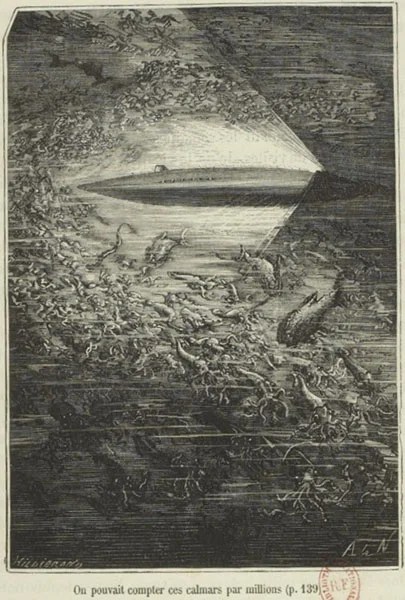
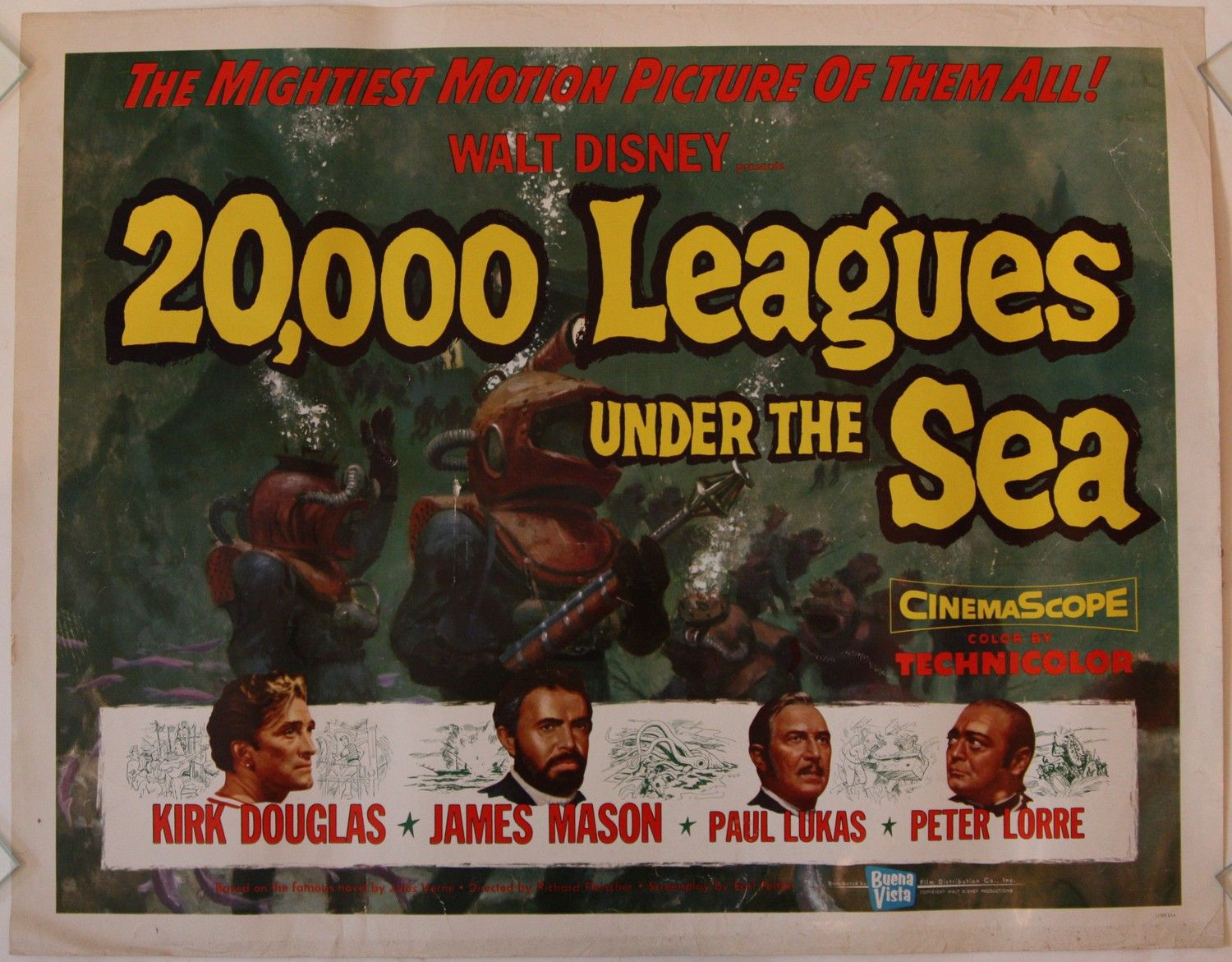
but, for me, the Nautilus (inspired by an actual submarine experiment in France—see:  https://en.wikipedia.org/wiki/French_submarine_Plongeur ) will always be the ship seen in Disney’s 1954 version of the story.
Some years earlier, in 1865, Verne had written De la Terre a la Lune, trajet direct en 97 heures et 20 minutes—From the Earth to the Moon, Direct Route in 97 Hours and 20 Minutes (usually simply translated as From the Earth to the Moon   You can read about it here:  https://en.wikipedia.org/wiki/From_the_Earth_to_the_Moon  and read an early translation here: https://web.archive.org/web/20110520193116/http://jv.gilead.org.il/pg/moon/   Be aware that this is not a very good translation and cuts the text, as well, but it’s free and will give you a general idea of the story).

(the 1874 translation)

In this adventure, an organization called the “Baltimore Gun Club” constructed a giant cannon

(called a “Columbiad” after this heavy coastal defense gun—only much bigger—for more, see:  https://en.wikipedia.org/wiki/Columbiad )
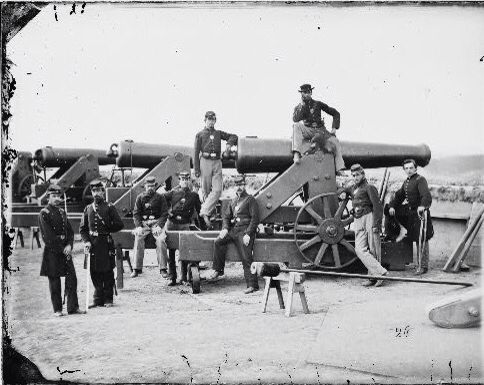
designed to shoot passengers to the Moon.  How they are to return is only revealed in the 1869 sequel, Autour de la Lune—Around the Moon—

(the second translation, 1874)

You can read about it here:  https://en.wikipedia.org/wiki/Around_the_Moon And you can read the early translation depicted above here:  https://www.gutenberg.org/cache/epub/16457/pg16457-images.html  This book inspired the early French film-maker, Georges, Melies, 1861-1938, to produce his own burlesque version, Le Voyage dans la Lune, 1902, which included that cannon—and a chorus line!)

Along with Verne, H.G. Wells, 1866-1946, was on my list, including The First Men in the Moon, 1901.

Wells’ protagonists reach the moon through a man-made anti-gravity material, called “Cavorite”, after its inventor (one of the two lunar travelers), which is attached in carefully-monitored sheets to a steel and glass sphere.  You can read the book yourself here:  https://ia601308.us.archive.org/2/items/firstmeninmoo00well/firstmeninmoo00well.pdf

(from the original English edition)

Early in my exploration of science fiction writers, I had read Edgar Rice Burroughs’, 1875-1950, A Princess of Mars (serialized 1912, first book edition, 1917).

(You can read about it here:  https://en.wikipedia.org/wiki/A_Princess_of_Mars and read the story itself here:  https://gutenberg.org/cache/epub/62/pg62-images.html )

As I said, I had known Verne already, and Wells from The War of the Worlds, (serialized 1897, first book publication 1898)

(read about it here:   https://en.wikipedia.org/wiki/The_War_of_the_Worlds and read it here:  https://www.gutenberg.org/cache/epub/36/pg36-images.html ), but all I knew about Burroughs was

and so I was hesitant, but I was pleasantly surprised that, even with a certain amount of what we might call “period” language (and cultural attitudes), this was a very readable book.  (See “Busting Into Mars”, 27 September, 2023, for more.)

Taking a recent pause from my other reading, then, I tackled the next in Burroughs’ series, The Gods of Mars (serialized 1913, first published as a novel, 1918).

And, again, I found myself sucked in.  John Carter, the hero of the previous book, was back and quickly in the thick of it again.  (Here it is for you to read:  https://archive.org/details/godsofmars02burr )

And, as well, I found that part of what had struck me in the first book caught me again:  the attention to the detail of the physical world of “Barsoom” (Burroughs’ local name for Mars).

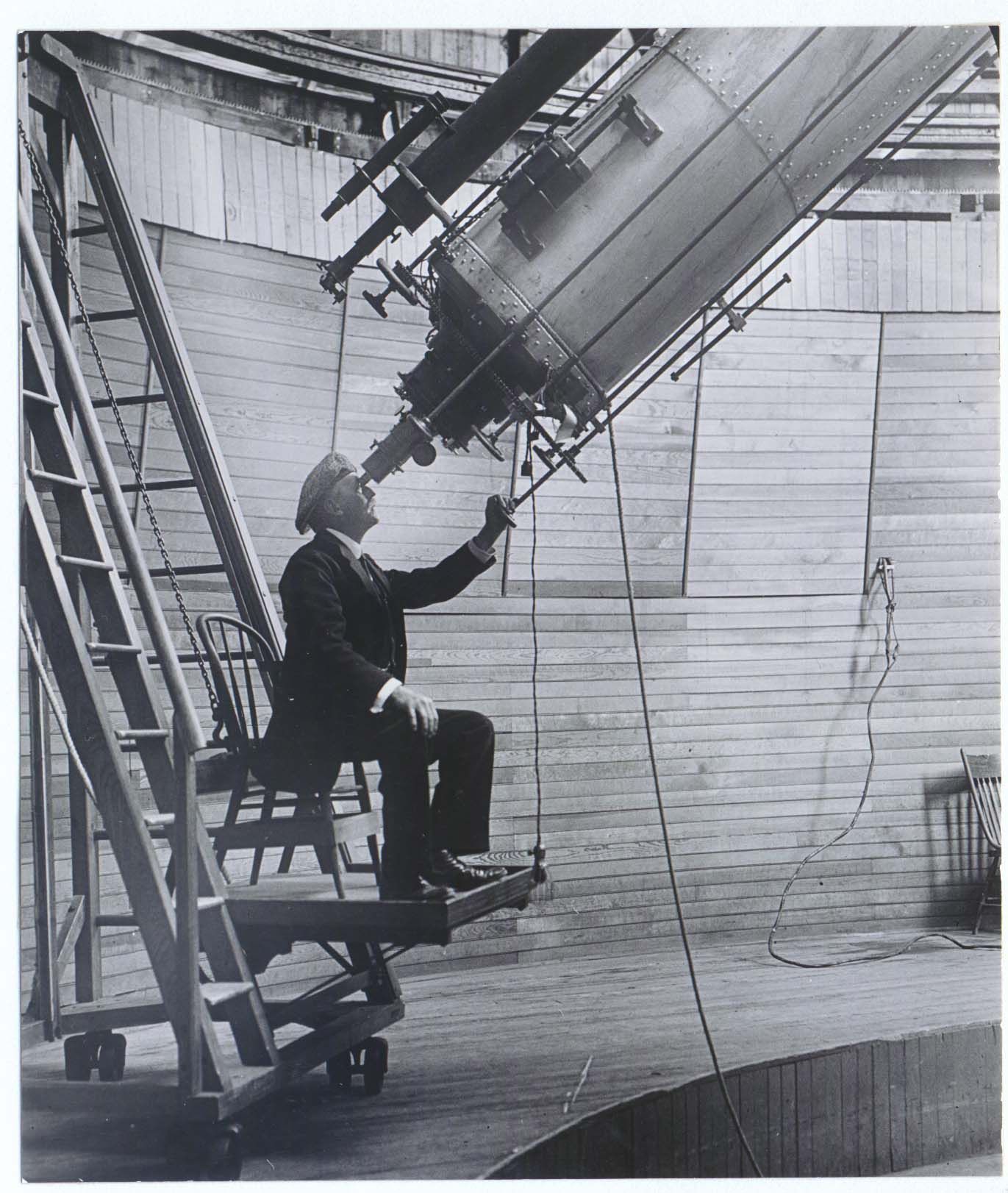
Burroughs had clearly prepped himself with the latest scientific ideas, many of them from Percival Lowell, 1855-1916, a prominent Victorian astronomer, who had become convinced, having read the work of the Italian astronomer, Giovanni Schiaparelli, 1835-1910, who, in 1877, having closely observed Mars during its nearest approach to Earth, believed that he could see long, straight, intersecting lines across the planet’s surface.  He published a map of Mars in which he called these lines “canali”, which has a number of meanings in Italian, including “ducts” and even “gullies”, but also means “channels” and, fatally, “canals”, which was immediately seized upon by some to suggest that Mars was—or at least had been—inhabited—and by people who had the engineering ability to create many-miles-long canals.

(We should probably consider terrestrial canals here, such as that the long-needed, occasionally-attempted 120-mile (193km) Suez Canal, which had only been relatively recently successfully completed in 1869.  We might add to this the 61-mile (98km) Kiel Canal, finished in 1895.  Could these have appeared as earthly parallels to those who wanted to believe in Martian versions?)


What were they for?  As Mars has a large northern ice cap, which grows and recedes yearly, it’s clear that the canals were used to direct melt across the planet.  But why?  To irrigate a dry planet, of course.  In time, Lowell published three books on the subject:   Mars (1896—read it here:  https://archive.org/details/marsbypercivallo00lowe ), Mars and Its Canals (1906—read it here:  https://archive.org/details/marsitscanals00loweuoft/page/n9/mode/2up ),  and Mars As the Abode of Life (1908—read it here:  https://archive.org/details/marsabodeoflife00loweiala )  They are filled with charts and graphs and illustrations,

piled high to convince his audience that what he observed through his powerful telescope was real.
In reality, none of it was—but it certainly inspired writers like Burroughs, who produced a world with:

1. increasing aridity

2. canals

3. declining civilizations, some of whose elaborate cities had been abandoned, only to be occasionally inhabited by tribes of warrior nomads

4. underground seas

5. 5 races of differently-hued (white, black, green, yellow, red) humanoids (although oviparous) plus masses of creatures, some tamable, some simply monstrous, like the Plant Men who appear in The Gods of Mars, which is, in fact, an ironic title, as what we see are various pretenders to that title, including the Therns, who belong to the white race and who run a kind of confidence game in which they maintain what is supposed to be a peaceful afterlife in a green river valley, but which is, in fact, a feeding ground for those Plant Men and for the fearsome White Apes.

(Michael Whalen—you can see more of his impressive work here:  https://www.michaelwhelan.com/ )

Setting these peoples into an increasingly-harsh environment then allowed Burroughs to explain why certain of these peoples—the green ones, in particular—were themselves harsh, as the declining climate turned them into brutal survivalists.

6. sophisticated aircraft and even submarines (for use on the underground waters)—for more on the aircraft, see:  https://www.erbzine.com/mag28/2806.html  This is from:  https://www.erbzine.com/mag/ the weekly on-line magazine devoted to Burroughs and his output.  I wish that every one of my favorite authors had people as creative and dedicated at work on websites as rich as this one.

7. sophisticated firearms, but, when it comes to real fighting, it is always swords

For more on things Barsoomian, see:  https://en.wikipedia.org/wiki/Barsoom as well as the extensive Erbzine.  I’ve already provided the text of The Gods of Mars above, and you can read a plot summary and more here:  https://en.wikipedia.org/wiki/The_Gods_of_Mars .  There are the occasional creaky moments, but, on the whole, this was as much fun as A Princess of Mars.  And there’s an added twist here:  it ends as a cliff-hanger.

(This is, in fact, Harold Lloyd, in his comedy Safety Last!, 1923.  Overshadowed in time, I would say, by Chaplin, Lloyd was an accomplished comic actor and this film is a pleasure to watch—and laugh at.  You can see it here:   https://archive.org/details/SafetyLastHaroldLloyd1923.FullMovieexcellentQuality.  It’s one of a great number of early films available at the Internet Archive, which, if you read this blog regularly, you know is my go-to place for any number of different things, from silent films like this one to Percival Lowell on Mars—and much more.)

But there is one little problem.  Verne’s voyagers travel in what is, basically, an enormous artillery shell.  Wells’ two men ride in a sphere powered by some sort of anti-gravity material.  Neither of these, I suppose, is really any more convincing than Cyrano de Bergerac’s claim to have visited the Moon using, in his first attempt, bottles of dew in his L’Histoire comique des Etats et Empires de la Lune, 1655 (You can read about Cyrano’s adventures here:  https://www.gutenberg.org/cache/epub/46547/pg46547-images.html and you can read about the book here:   https://en.wikipedia.org/wiki/Comical_History_of_the_States_and_Empires_of_the_Moon  ),
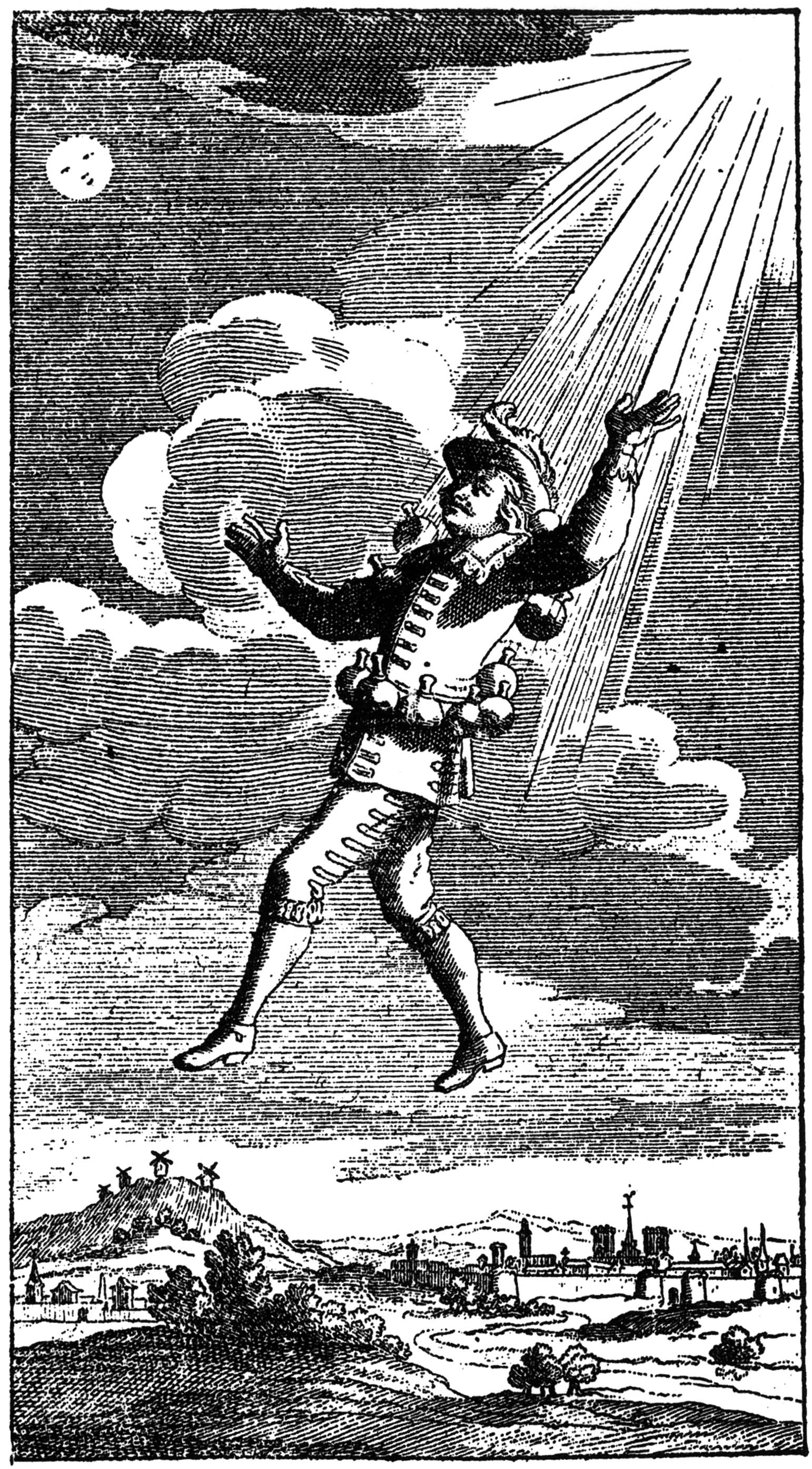
but they at least travel in their bodies.  John Carter’s voyage to Barsoom is done through what appears to be an “astral body”:

“ I made the same mighty and superhuman effort to break the bonds of the strange anaesthesia which held me, and again came the sharp click as of the sudden parting of a taut wire, and I stood naked and free beside the staring, lifeless thing that had so recently pulsed with the warm, red life-blood of John Carter.

With scarcely a parting glance I turned my eyes again toward Mars, lifted my hands toward his lurid rays, and waited.

Nor did I have long to wait; for scarce had I turned ere I shot with the rapidity of thought into the awful void before me. There was the same instant of unthinkable cold and utter darkness that I had experienced twenty years before, and then I opened my eyes in another world, beneath the burning rays of a hot sun, which beat through a tiny opening in the dome of the mighty forest in which I lay.” (The Gods of Mars, Chapter 1, “The Plant Men”)

This isn’t explained, but, however it’s done, Carter is able to use his terrestrial muscles, developed under a much denser gravity, to bounce around the Martian surface, pilot aircraft, and swing a sword, so I, for one, am able to perform a “willing suspension of disbelief” and see how the story gets off that cliff in The Warlord of Mars.

Thanks, as ever, for reading.

Stay well,

When visiting, remember that Mars’ gravity is only 38% of Earth, so look before you leap,

And remember, as well that, as always, there’s

MTCIDC

O

PS

Although he was wrong about those canals, Lowell was a creative and energetic scientist, as well as a highly-intelligent and well-read man—and a very interesting man, as well.  You can read more about him here:  https://en.wikipedia.org/wiki/Percival_Lowell  If you find him as intriguing as I do, here’s the Internet Archive page on his works—which include more than writings about Mars:  https://archive.org/search?query=creator%3A%22Percival+Lowell%22
In the Future, Use the Past

13 Wednesday Sep 2017

Posted by Ollamh in Artists and Illustrators, Fairy Tales and Myths, Films and Music, Heroes, J.R.R. Tolkien, Literary History, Narrative Methods

≈ Leave a comment

Tags

A New Hope, A Princess of Mars, Ages of Middle-earth, Death Star, Edgar Rice Burroughs, Emperor Palpatine, Frank Schoonover, George Lucas, Hildebrandt, Mos Eisley, Oxford, Percival Lowell, Return of the Jedi, Sauron, science fiction, special effects, Star Wars, Stonehenge, Tatooine, The Empire Strikes Back, The History of Middle-earth, The Last Jedi, The Lord of the Rings, Tolkien, tower of St Michael

Welcome, as always, dear readers.

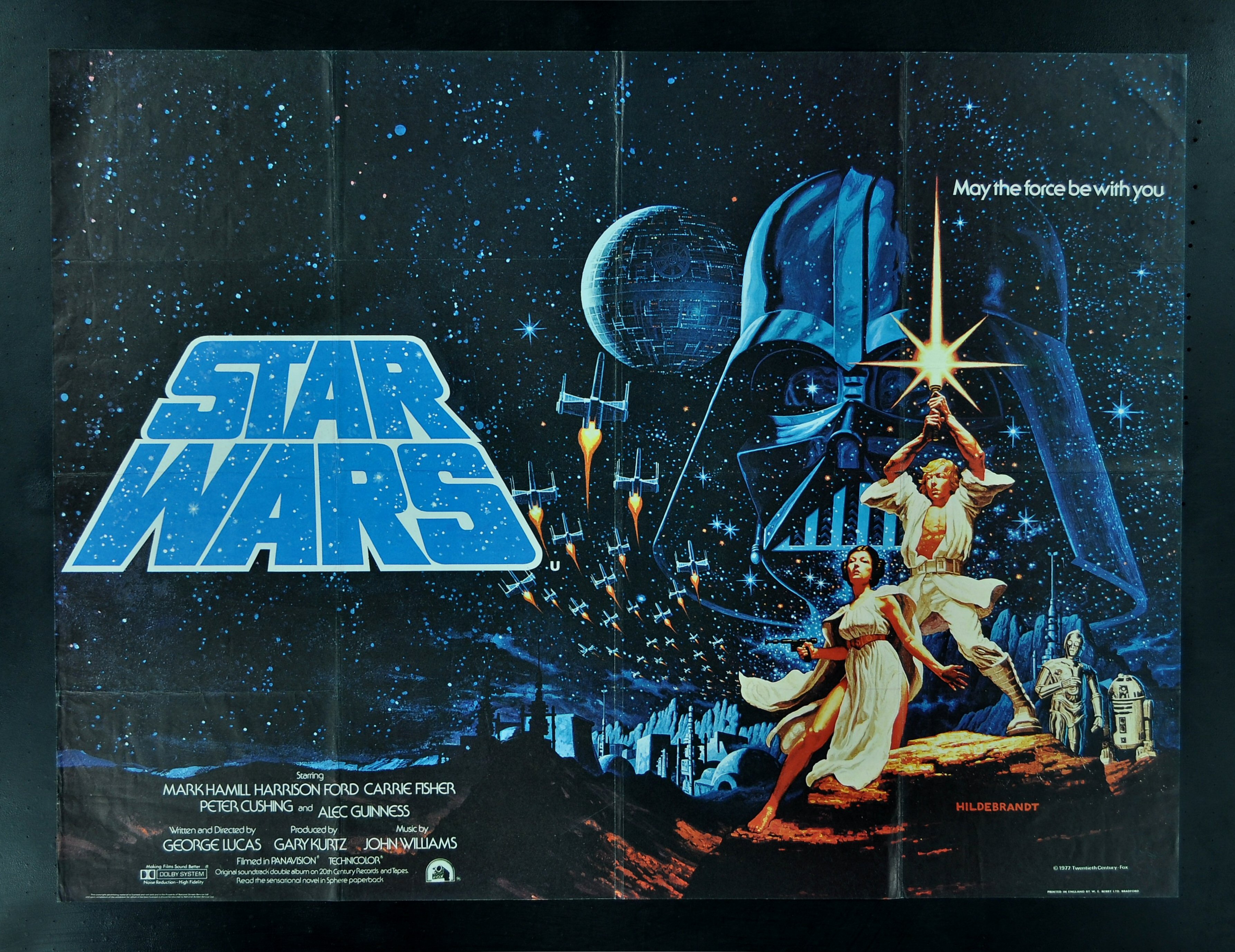
As The Last Jedi (Star Wars 8) approaches (and Star Wars Rebels, season 3 has appeared via the postman—season 4 premieres in mid-October—sadly the last season, as Disney has canceled season 5), we’ve been thinking about the original Star Wars of 1977.

image1poster.jpg

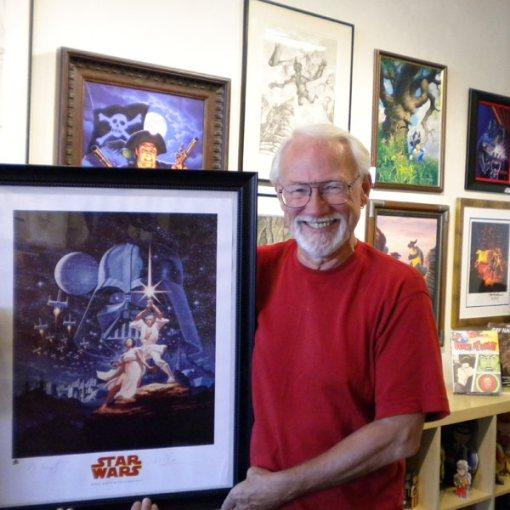
This poster—the second ever Star Wars poster, in fact (used by 20th Century Fox in the UK)– is a great link to JRRT—as if we don’t seem to make such links every time we write!  It’s by two of our favorite Tolkien illustrators, the Hildebrandt brothers.  Here’s a picture of the surviving twin, Greg, with that very poster (his brother, Tim, died in 2006).

image2gh.png

(Clink here for a LINK to an interesting little piece from 2010 about the Hildebrandts and George Lucas.)

We believe, however that there may be a deeper link.

The original reviews (here’s a LINK to summaries of some of them) were a mixture, with some critics enthusiastic about what they saw and others (in our view the stodgier ones) calling the film things like “puerile”.  One element which was occasionally commented upon was the look of the picture—and not just the (for the time) dazzling special effects—but the fact that all the worlds depicted were lived-in, not shiny and new—well, almost.  Consider Mos Eisley, for example,

image3moseisley.jpg

which looks dusty and battered, suggesting the passage of time as well as the effects of the harsh desert climate of Tatooine.

Or the Jawa sandcrawler, old and clearly rusting–

image4jawasandcrawler.jpg

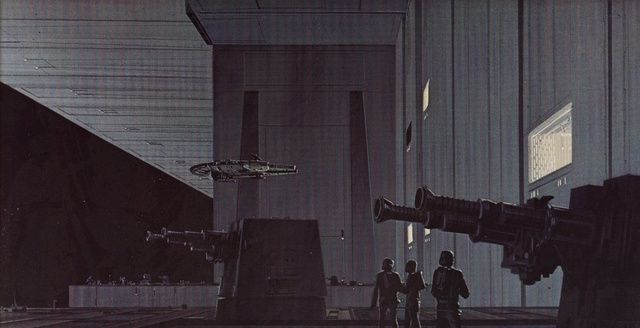
We said “almost” shiny and new because there’s one part of this galaxy with a different look:  the Death Star.

image5insidedeathstar.jpg

It looks like it’s dusted and waxed hourly, doesn’t it?  And the outside appears to be just as neat.

image6falconenteringdeathstar.jpg

What does this say about the nature of those who inhabit it?  For us, thinking about the spotless Darth Vader,

image7vader.jpg

immediately suggests that the old proverb should be changed to “Cleanliness is next to Un-godliness”!  (Okay—we’re not the neatest and most organized people we know.)

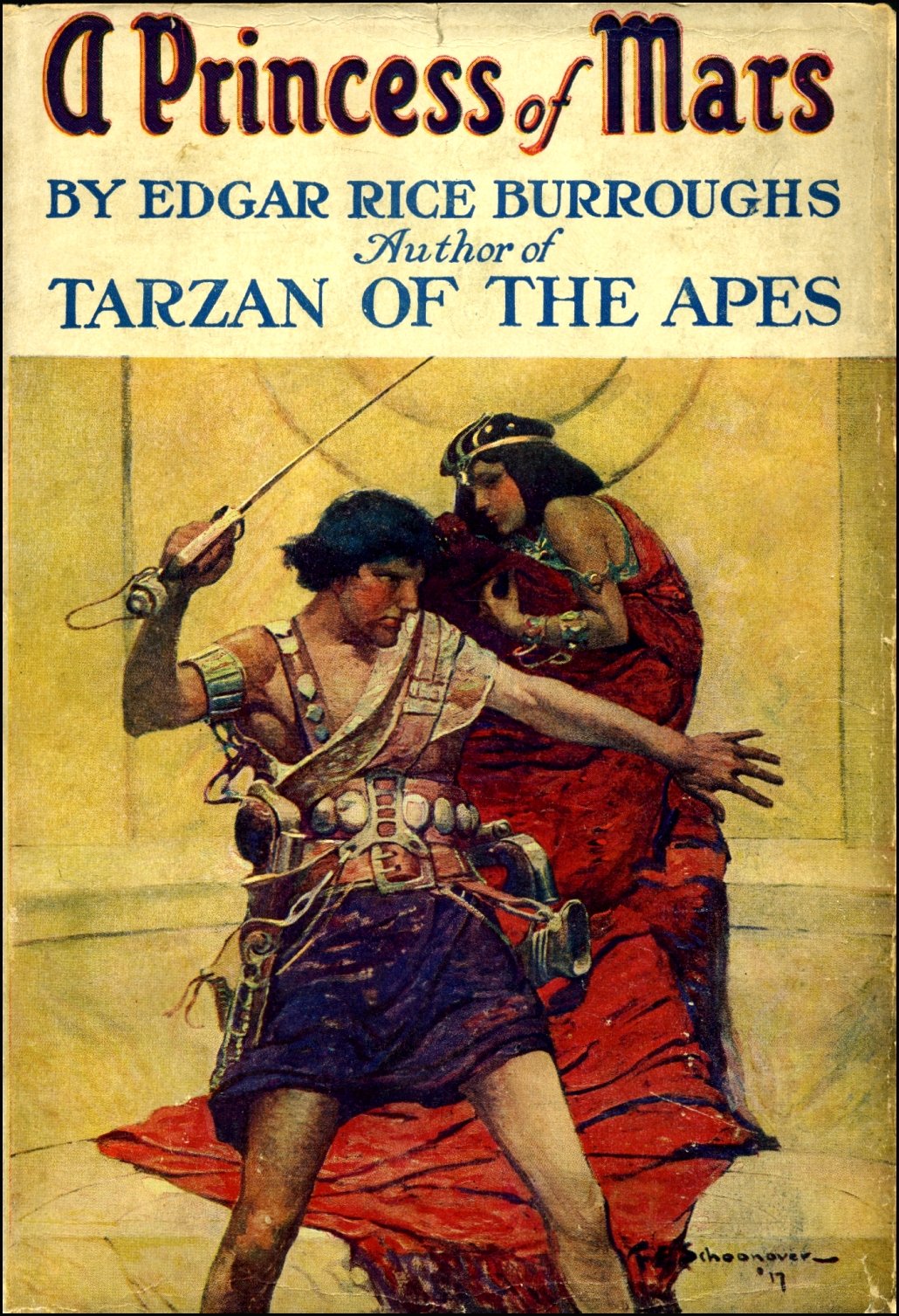
It has been pointed out, more than once and beginning with the director himself, that George Lucas was influenced by Edgar Rice Burroughs’ John Carter series, beginning with A Princess of Mars (first published serially in The All-Story, February to July, 1912).

image8princess.jpg

(And here’s another connection—this cover and the illustrations for its first publication in book form, in 1917, were by Frank Schoonover, 1877-1972, who was the student of another of our favorite illustrators, Howard Pyle, whom we have occasionally mentioned in previous postings.  The convincing detail in this cover painting shows that, just like his teacher, Schoonover did his research—in his case, by very carefully going through the text and taking note of any technical information the author might have mentioned.)

In A Princess of Mars and subsequent books,  Mars has a civilization which is old and in decline (the inspiration for which, in turn, may have come from the work of the amateur astronomer, Percival Lowell, 1855-1916, whose telescopic observations of Mars had convinced him that the planet was—or had been—the home of a dying civilization which had constructed a vast network of canals to supply themselves with water from the polar ice caps—unfortunately, numerous NASA missions have found no evidence of the desperate Martians or their canals).   It would be easy, then, to say that Lucas was just following his source material, but we would suggest that there are two better explanations for showing wear.

The first comes from something Lucas is quoted as having said to his production designers:  “What is required for true credibility is a used future.” In Lucas’ view, then, the story’s believability comes in part from its look:  if things appeared not shiny, but worn, then viewers would be more likely to accept the narrative as somehow “true”, we presume because things in our world so often look used.

There is then, we think a further presumption:  if things look worn, then they have a past, which implies that the here-and-now of the story is a small part of bigger things and, certainly, just looking at the “crawl” at the beginning of the original Star Wars,

star-wars-crawl-163729.jpeg

which leads us to  our second explanation.  This one deals with something deeper, something which we would say might provide another possible link with JRRT and is, in fact, suggested by the titles of the first three Star Wars films made and even in their sequence:  A New Hope, The Empire Strikes Back, The Return of the Jedi.

In two earlier postings, we talked about the condition of Middle-earth at the beginning of The Lord of the Rings, in which everything, from the trees to the houses of Minas Tirith, has grown old and weary—and even potentially hostile, in the case of the trees.  Part of this comes from the fact that Middle-earth is old:  one has only to turn to Appendix B, subtitled “The Tale of Years”, in The Lord of the Rings to see that, in the Second and Third Ages alone, nearly 6000 years have passed.   (In terms of our earth, that’s moving from the late Neolithic Era to modern times, 4000bc to 2017ad.)  This also emphasizes the age and depth of evil, as well as its power to corrupt in the present:  Sauron began to build Barad-dur c. SA1000—5000 years before the main narrative of The Lord of the Rings opens and, in the present, the world is crumbling.

Of course, JRRT lived surrounded by the past.  The oldest surviving building in his daily Oxford is the tower of St Michael at the North Gate, dating from 1040ad, nearly a thousand years before his time,

image9stmichaels.jpg

but Neolithic Stonehenge is only 58 miles (93km) southwest of the city and that’s 5000 years old, taking us back to the time when, in Middle-earth, Sauron had begun the Barad-dur.

image10stonehenge.JPG

image11baraddur.jpg

In contrast, Lucas was born in 1944 in Modesto, California, a town only founded in 1870, and grew up in a post-World War II world, where the key was “the future”.  It is a tribute, then, to his story-telling gift that he realized how useful in telling his story the past—even an imagined one—could be and it is interesting to see how he shares that understanding with JRRT and perhaps shares a goal, as well.

We’ve said that our second explanation may be seen in the titles of Lucas’ three films, so let’s consider them in comparison with the general shape of Tolkien’s work to see what that shared goal might be.   (In an interview, Lucas even described the three as being like a three-act play, suggesting the dramatic progress inherent in the movement from one to another.)

At the beginning of the first film, it is a dark time in the galaxy:  the repressive regime of the evil Emperor Palpatine dominates and resistance is confined to “The Rebel Alliance”, which has scraped together a fleet (and, presumably an army—we see elements in Rogue One, which takes place before this film) to resist, but seems to spend most of its time running and hiding.  The past is only implied, but the fact that there is an Empire and a resistance suggests much, just as the run-down condition of places like Tatooine might suggest both age and that the galaxy has become run-down because of that Empire.

image12palpatine.jpg

At the beginning of The Lord of the Rings, we find ourselves in a place with a long history, as we see from the many pages of the “Prologue”.  It has been a quiet place, but the world outside is becoming less so, with sinister forces growing, as Frodo hears from passing dwarves:

“They were troubled, and some spoke in whispers of the Enemy and of the Land of Mordor.” (The Fellowship of the Ring, Book One, Chapter 2, “The Shadow of the Past”)

In time, readers are brought to see that the dwarves are grossly understating the case:  the Enemy is real, Sauron, and that he has not only huge armies, but the Nazgul and a would-be ally in his enemies’ camp, Saruman.  The same may be said for the Empire:  not only do they have huge fleets and armies, but they have the “ultimate weapon”, the Death Star.

image13deathstar.jpeg

We will learn, as well, that, for all his great age and might, Sauron has an Achilles’ heel:  to give the One Ring its power, he has had to pour most of his power into it.  Thus, if he regains the ring, he will be much more powerful than he is at present, but, should the ring be destroyed, Sauron will be virtually destroyed with it.  As this struggle has been going on in Middle-earth for thousands of years, the idea that Sauron is vulnerable could easily be termed “a new hope”, just as Luke, the son of the Enforcer of the Galaxy, Darth Vader/Anakin Skywalker, will provide a new hope for the Rebels (especially when we are told about “the Chosen One”—for whom he can be taken).

For a time, things do not go well for those opposed to Sauron:  he combines psychological/meteorological attacks with the march of huge armies, and even pirate raids on Gondor’s south coast. Gondor is overrun and Minas Tirith is assaulted.  This is clearly The Empire Strikes Back, just as the pursuit of the Rebel fleet to Hoth and the destruction of Echo Base disperses the Rebels and casts a shadow over the hope felt after the destruction of the Death Star.

This is not the end, however, for the Rebels or for the good people of Middle-earth.  Not only is the Ring destroyed and Sauron disembodied, but this paves the way for The Return of the King, with all of the reflowering-to-come, as we have suggested in a previous posting.

image14crowning.jpg

And there is a strong echo in the title of Lucas’ third film, The Return of the Jedi, in which the Emperor is destroyed and balance brought back to the Force—and the galaxy.  (Of course, with Star Wars 7, we see that the happy ending is only temporary, but we have hopes that, by the conclusion of 9, there will come a final rebalancing and peace at last.)

image15return.jpg

Lucas’ acknowledges many sources but, so far, we have yet to locate a quotation from an interview or anywhere else in which he says, “Yes, I’ve read Tolkien closely and, indeed, there is a strong affinity between my work and his”, but we believe that we can suggest, at least, that he, like JRRT, is following the same path in creating a world in turmoil, a visibly-aging world.  Into this world, he places his protagonist who provides a new hope, faces the might of a not-easily-defeated enemy, but, by his bravery and determination, finally brings about the destruction of that enemy (interesting in both cases he does not do so himself—Gollum inadvertently destroys the ring, just as Anakin, not his son, kills the Emperor) and the promise of renewal in the return of the Jedi—and the King.

And what do you think, dear readers?

Thanks, as ever, for reading!

MTCIDC

CD

The Doubtful Sea Series Facebook Page

The Doubtful Sea Series Facebook Page

  • Ollamh

Categories

  • Artists and Illustrators
  • Economics in Middle-earth
  • Fairy Tales and Myths
  • Films and Music
  • Games
  • Heroes
  • Imaginary History
  • J.R.R. Tolkien
  • Language
  • Literary History
  • Maps
  • Medieval Russia
  • Military History
  • Military History of Middle-earth
  • Narnia
  • Narrative Methods
  • Poetry
  • Research
  • Star Wars
  • Terra Australis
  • The Rohirrim
  • Theatre and Performance
  • Tolkien
  • Uncategorized
  • Villains
  • Writing as Collaborators
Follow doubtfulsea on WordPress.com

Across the Doubtful Sea

Recent Postings

  • A Moon disfigured December 17, 2025
  • On the Roads Again—Once More December 10, 2025
  • (Not) Crossing Bridges December 3, 2025
  • On the Road(s) Again—Again November 26, 2025
  • On the Road(s) Again November 19, 2025
  • To Bree (Part 2) November 12, 2025
  • To Bree (Part 1) November 5, 2025
  • A Plague o’ Both—No, o’ All Your Houses! October 29, 2025
  • It’s in Writing (2:  I’st a Prologue, or a Poesie for a Ring?) October 22, 2025

Blog Statistics

  • 103,194 Views

Posting Archive

  • December 2025 (3)
  • November 2025 (4)
  • October 2025 (5)
  • September 2025 (4)
  • August 2025 (4)
  • July 2025 (5)
  • June 2025 (4)
  • May 2025 (4)
  • April 2025 (5)
  • March 2025 (4)
  • February 2025 (4)
  • January 2025 (5)
  • December 2024 (4)
  • November 2024 (4)
  • October 2024 (5)
  • September 2024 (4)
  • August 2024 (4)
  • July 2024 (5)
  • June 2024 (4)
  • May 2024 (5)
  • April 2024 (4)
  • March 2024 (4)
  • February 2024 (4)
  • January 2024 (5)
  • December 2023 (4)
  • November 2023 (5)
  • October 2023 (4)
  • September 2023 (4)
  • August 2023 (5)
  • July 2023 (4)
  • June 2023 (4)
  • May 2023 (5)
  • April 2023 (4)
  • March 2023 (5)
  • February 2023 (4)
  • January 2023 (4)
  • December 2022 (4)
  • November 2022 (5)
  • October 2022 (4)
  • September 2022 (4)
  • August 2022 (5)
  • July 2022 (4)
  • June 2022 (5)
  • May 2022 (4)
  • April 2022 (4)
  • March 2022 (5)
  • February 2022 (4)
  • January 2022 (4)
  • December 2021 (5)
  • November 2021 (4)
  • October 2021 (4)
  • September 2021 (5)
  • August 2021 (4)
  • July 2021 (4)
  • June 2021 (5)
  • May 2021 (4)
  • April 2021 (4)
  • March 2021 (5)
  • February 2021 (4)
  • January 2021 (4)
  • December 2020 (5)
  • November 2020 (4)
  • October 2020 (4)
  • September 2020 (5)
  • August 2020 (4)
  • July 2020 (5)
  • June 2020 (4)
  • May 2020 (4)
  • April 2020 (5)
  • March 2020 (4)
  • February 2020 (4)
  • January 2020 (6)
  • December 2019 (4)
  • November 2019 (4)
  • October 2019 (5)
  • September 2019 (4)
  • August 2019 (4)
  • July 2019 (5)
  • June 2019 (4)
  • May 2019 (5)
  • April 2019 (4)
  • March 2019 (4)
  • February 2019 (4)
  • January 2019 (5)
  • December 2018 (4)
  • November 2018 (4)
  • October 2018 (5)
  • September 2018 (4)
  • August 2018 (5)
  • July 2018 (4)
  • June 2018 (4)
  • May 2018 (5)
  • April 2018 (4)
  • March 2018 (4)
  • February 2018 (4)
  • January 2018 (5)
  • December 2017 (4)
  • November 2017 (4)
  • October 2017 (4)
  • September 2017 (4)
  • August 2017 (5)
  • July 2017 (4)
  • June 2017 (4)
  • May 2017 (5)
  • April 2017 (4)
  • March 2017 (5)
  • February 2017 (4)
  • January 2017 (4)
  • December 2016 (4)
  • November 2016 (5)
  • October 2016 (6)
  • September 2016 (5)
  • August 2016 (5)
  • July 2016 (5)
  • June 2016 (5)
  • May 2016 (4)
  • April 2016 (4)
  • March 2016 (5)
  • February 2016 (4)
  • January 2016 (4)
  • December 2015 (5)
  • November 2015 (5)
  • October 2015 (4)
  • September 2015 (5)
  • August 2015 (4)
  • July 2015 (5)
  • June 2015 (5)
  • May 2015 (4)
  • April 2015 (3)
  • March 2015 (4)
  • February 2015 (4)
  • January 2015 (4)
  • December 2014 (5)
  • November 2014 (4)
  • October 2014 (6)
  • September 2014 (1)

Blog at WordPress.com.

  • Subscribe Subscribed
    • doubtfulsea
    • Join 78 other subscribers
    • Already have a WordPress.com account? Log in now.
    • doubtfulsea
    • Subscribe Subscribed
    • Sign up
    • Log in
    • Report this content
    • View site in Reader
    • Manage subscriptions
    • Collapse this bar
 

Loading Comments...