• About

doubtfulsea

~ adventure fantasy

Tag Archives: Old English

The Voices in His Head 

02 Thursday Oct 2025

Posted by Ollamh in Uncategorized

≈ Leave a comment

Tags

Finnish, Gothic, Greek, Joseph Wright, Landscape, languages, Latin, Middle English, Old English, Old Norse, seascape, soundscape, Tolkien, Welsh

As ever, welcome, dear readers.

Everyone knows the term “seascape”—as in this painting by Eugene Boudin (1824-1898)–
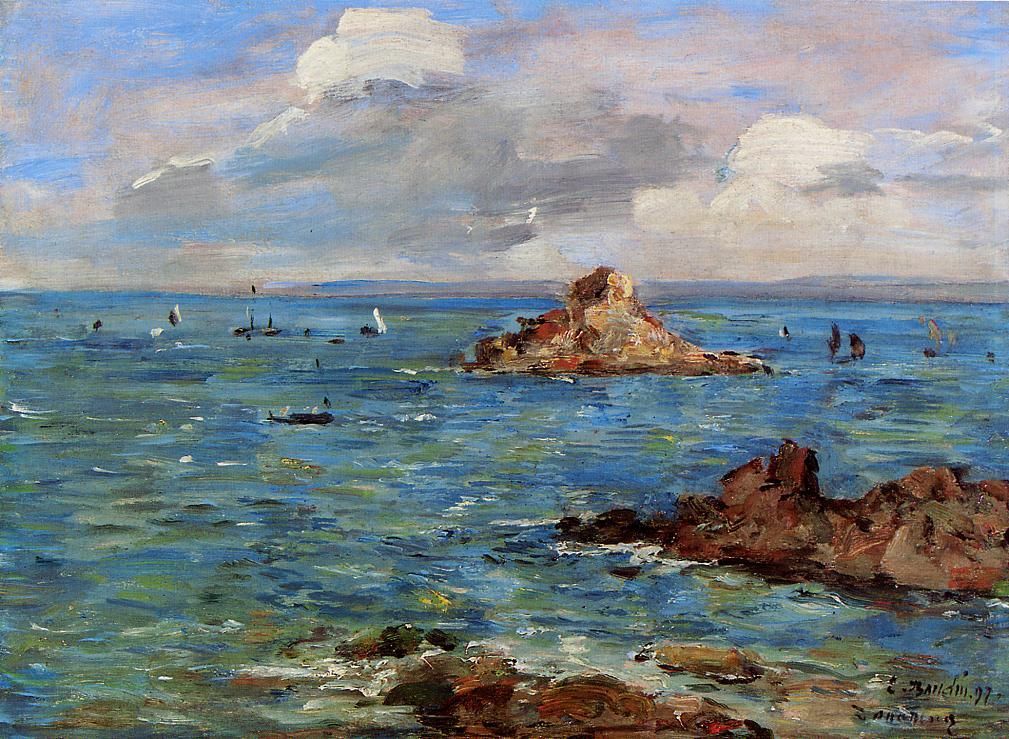
(You can learn a little more about him and see a small gallery of his work here:  https://en.wikipedia.org/wiki/Eug%C3%A8ne_Boudin   and see a lot more of his work here:  https://www.wikiart.org/en/eugene-boudin  There is also a much longer and detailed biography—in French—here:   https://fr.wikipedia.org/wiki/Eug%C3%A8ne_Boudin    As you view his work, you can see why Monet claimed him as an early influence, as well as a dear friend.)

and “landscape”—as in this painting by John Constable (1776-1837)—

(And you can learn a bit more about Constable and see a small gallery of his works here:  https://en.wikipedia.org/wiki/John_Constable )

but, in this posting, I want to talk about another –scape:  soundscape, and, in particular, the soundscape I imagine inside the head of J.R.R. Tolkien.

We might begin where he began, with the tutoring of his mother, Mabel.
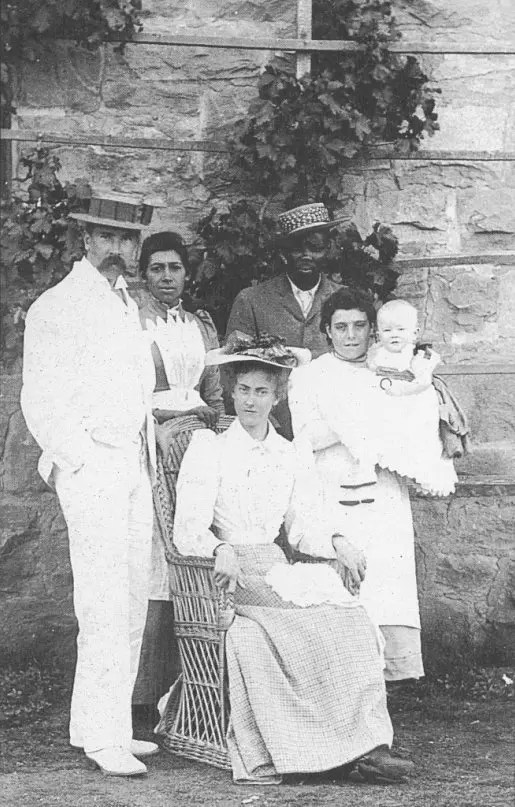
(Taken in Blomfontein, with Tolkien’s father on the left and a very tiny Tolkien on the right)

Carpenter’s biography tells us that Mabel

“…knew Latin…’

so we can imagine something like this in Tolkien’s ears:  

https://www.youtube.com/watch?v=BbcRm5EbGxg   “Scorpio Martianus”

To which I’ll add:

https://www.youtube.com/watch?v=mPuEO0VAh04  This is an attempt at Latin conversation and fun to listen to, but the subtitles don’t always mirror what is said and the use of “ius” instead of “lex” might be questioned for “law” in the script.

NativLang:  https://www.youtube.com/watch?v=_enn7NIo-S0&t=44s   This is a favorite language site of mine and this is entitled “What Latin Sounded Like and How We Know”.

“…French…”

Try this slowed-down version with subtitles—in both French and English—as I imagine that any French Mabel would have tried out would have been in talking to JRRT, then a small child, and would have been slow:  https://www.youtube.com/watch?v=aMx0d42wzBs    Unfortunately, in later life Tolkien would write:  “For instance I dislike French..”—and he also rejected French cooking—see “From a letter to Deborah Webster”, 25 October, 1958, Letters, 411.

“…and German…”  (Carpenter, J.R.R. Tolkien. 35)

This is actually German words/phrases at the children’s level (with German/English subtitles):  https://www.youtube.com/watch?v=PSu7RN1IP5Q

From Mabel, we can pass to more formal education, first at King Edward’s School in Birmingham.

Here, according to Carpenter, he was exposed to Greek:

“On his return to King Edward’s, Ronald was placed in the Sixth Class, about half way up the school.  He was now learning Greek.  Of his first contact with this language he later wrote:  ‘The fluidity of Greek, punctuated by hardness, and with its surface glitter captivated me.  But part of the attraction was antiquity and alien remoteness (from me):  it did not touch home.’ “  (Carpenter, J.R.R. Tolkien. 35)

For ancient Greek, try:   https://www.youtube.com/watch?v=NOJsnFz4Um0   

This is closer to what we understand Greek to have sounded like, including turning Greek theta into the sound T + a tiny explosion of breath afterwards (as Greek phi would sound like P + that same explosion).  There are a number of recitations on-line, but often strongly influenced by modern Greek, including the distinctive modern Greek pronunciation of sigma, which is a kind of hissy under-the-breath sound, which I like, but seems more modern than classical.

Even as he was increasing his knowledge of Latin and adding Greek to it through school instruction, Tolkien was making his own additions to what went on in his head.

Because his guardian, Father Francis Morgan (1857-1935)

spoke Spanish fluently and had a collection of books in Spanish, Tolkien was drawn to the language, later writing:

“…my guardian was half Spanish and in my early teens I used to pinch his books and try to learn it:  the only Romance language that gives me the particular pleasure of which I am speaking…”  (letter to W.H. Auden, 7 June, 1955, Letters, 312)

Here’s a little fun Spanish—this is Castilian, which is what I imagine Father Francis spoke, his family being from Andalusia:  https://www.youtube.com/watch?v=ybfyLfI5Ml0   You can read more about Father Francis here:  https://en.wikipedia.org/wiki/Francis_Xavier_Morgan )

We can add to this Anglo-Saxon (now commonly called Old English) at this time—and here’s a sample for you:

Beowulf:  https://www.youtube.com/watch?v=CH-_GwoO4xI

and likewise Middle English, which you can hear here:

Chaucer, General Prologue:  https://www.youtube.com/watch?v=qWM1Yk_BXMw

both thanks to an assistant master at King Edward’s, George Brewerton, who loaned Tolkien an Anglo-Saxon primer –my guess being Sweet’s—
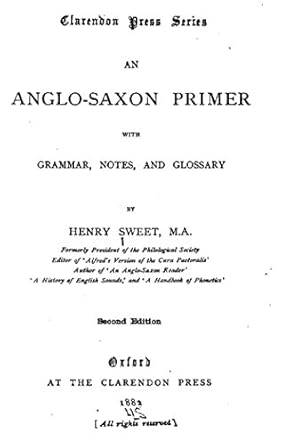
(You can see what Brewerton’s loan looked like here:  https://archive.org/details/anglosaxonprimer00sweerich )

and who:

“…encouraged his students to read Chaucer , and he recited the Canterbury Tales to them in the original Middle English.”  (Carpenter, J.R.R. Tolkien, 35)

(Here, by the way, is an interesting comparison in the changing sounds of English over centuries:  Old/Middle/Early Modern “The Lord’s Prayer”:  https://www.youtube.com/watch?v=nhgXnEGSn4A  )

This isn’t all, however. 

“One of his school-friends had bought a book at a missionary sale, but found that he had no use for it and sold it to Tolkien.  It was Joseph Wright’s Primer of the Gothic Language.  Tolkien opened it and immediately experienced ‘a sensation at least as full of delight as first looking into Chapman’s Homer. ‘ “ (Carpenter, J.R.R. Tolkien, 45)

(If you’d like to see what so pleased JRRT, see:  https://archive.org/details/aprimergothicla00wriggoog )

Here’s a short possible reconstruction of what Gothic sounded like: https://www.youtube.com/shorts/GORwFe5TL5c

And more about Gothic here:  https://www.youtube.com/watch?v=l-pmudxHUfQ

To which we should add Old Norse:

“Then he turned to a different language and took a few hesitant steps in Old Norse, reading line by line in the original words the story of Sigurd and the dragon Fafnir that had fascinated him in Andrew Lang’s Red Fairy Book when he was a small child.” (Carpenter, J.R.R. Tolkien, 43)

Here’s a brief selection :  https://www.youtube.com/watch?v=_ASsCH17cbA  ( This is from Jackson Crawford’s very interesting Norse website.  And you can read the Sigurd story which fascinated Tolkien here:  https://archive.org/details/redfairybook00langiala/redfairybook00langiala/  Tolkien formalized and extended his study of Old Norse at Oxford—see Carpenter, 71-72.  Old Norse is the ancestor of Icelandic and JRRT was particularly pleased when he was informed that The Hobbit was being translated into Icelandic.  See “from a letter ot Ungfru Adalsteinsdottir”, 5 June, 1973, Letters, 603)

With all of this behind him, Tolkien went off to Oxford, to Exeter College,
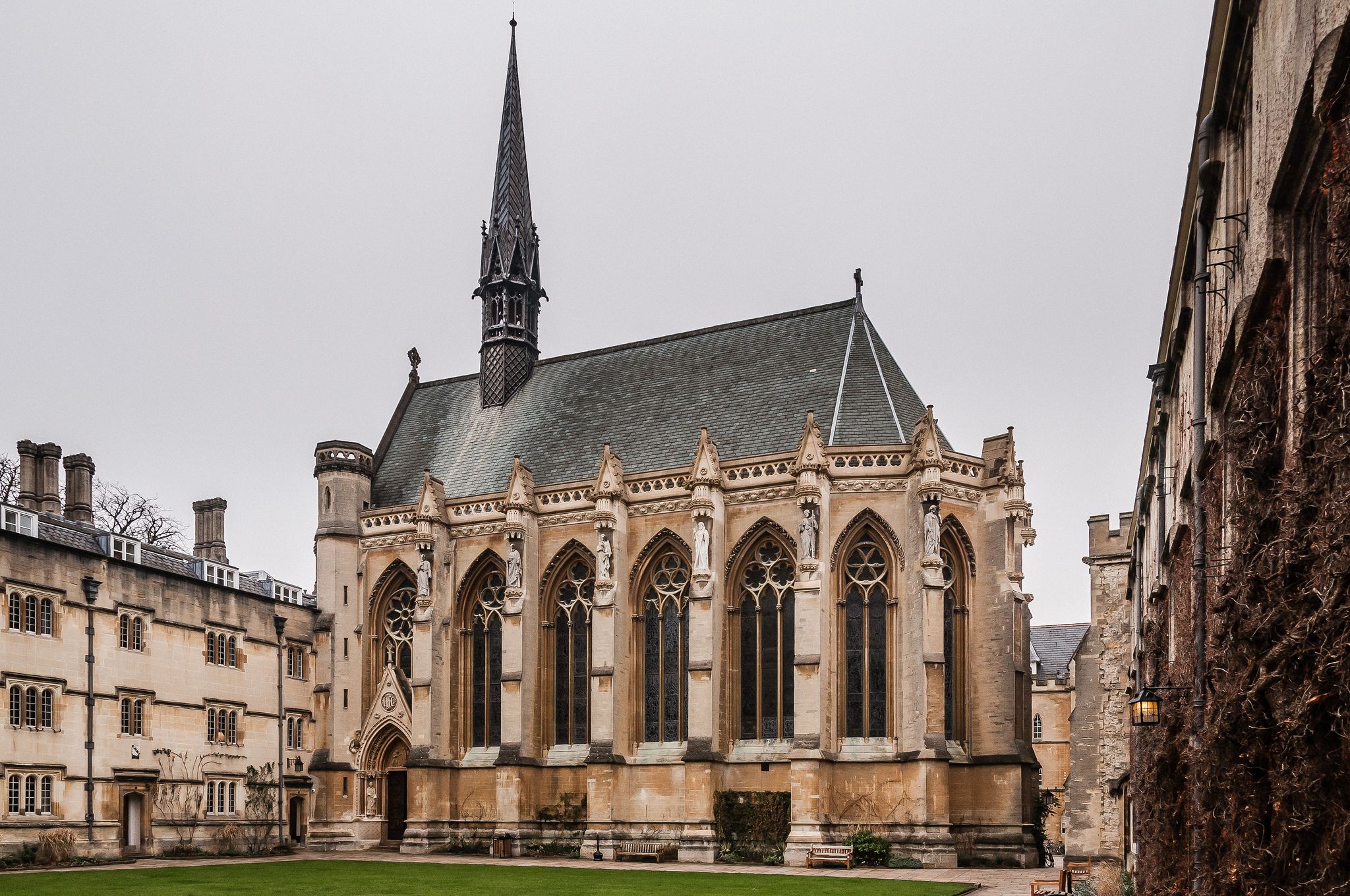
intending to continue his classical studies, but then:

“I did not learn any Welsh till I was an undergraduate, and found in it an abiding linguistic-aesthetic satisfaction…”

and here you can hear some Welsh:   https://www.youtube.com/watch?v=fvtbdq3WiyU

As a child, Tolkien’s eye had been caught by hopper cars labeled in Welsh full of coal from Welsh mines  (Carpenter, J.R.R. Tolkien, 33-34),

but it was only at Exeter , encouraged by the man who had written the Gothic text which had been such a revelation, Joseph Wright (1855-1930), that

“He managed to find books of medieval Welsh, and he began to read the language that had fascinated him on coal-trucks.  He was not disappointed; indeed he was confirmed in all his expectations of beauty.”  (Carpenter, J.R.R. Tolkien, 64)

and then:

 “ ‘Most important, perhaps, after Gothic was the discovery in Exeter College library, when I was supposed to be reading for Honour Mods, of a Finnish Grammar.   It was like discovering a complete wine-cellar filled with bottles of an amazing wine of a kind and flavour never tasted before.  It quite intoxicated me…’ ” (letter to W.H. Auden, 7 June, 1955, Letters, 312)

Here’s what Finnish sounds like:   https://www.youtube.com/watch?v=r6xt8HZy1-k

(I have no current evidence for what Tolkien’s actual discovery might have been, but here’s an 1890 Finnish grammar that, being an Oxford University Press publication, might be a good possibility:  https://www.gutenberg.org/files/59795/59795-h/59795-h.htm )

So, what might Tolkien have had echoing through his capacious head?  German, French, Latin, Greek, Old and Middle English, Gothic, Spanish, Old Norse, Welsh, and Finnish—which I thought covered them all until I discovered:

“In hospital, besides working on his mythology and the elvish languages, he was teaching himself a little Russian and improving his Spanish and Italian.”  (Carpenter, J.R.R. Tolkien, 106)

and:

“The Dutch edition and translation are going well.  I have had to swot at Dutch; but it is not a really nice language.  Actually I am at present immersed in Hebrew.  If you want a beautiful but idiotic alphabet, and a language so difficult that it makes Latin (and even Greek) seem footling—but also glimpses into a past that makes Homer seem recent—then that is the stuff!”  (letter to Michael George Tolkien, 24 April, 1957, Letters, 370)

As if German, French, Latin, Greek, Old and Middle English, Gothic ,Old Norse, Spanish, Italian, and a little Russian, Welsh, and Finnish—not to mention creating Sindarin, Quenya, a little of the language of the Dwarves, a bit of the tongue of the Ents, Rohirric, and even a fragment of the Black Speech–were not enough.

Thanks, as ever for reading.

Stay well,

Remember that:  “To learn a language is to have one more window from which to look at the world.” (a Chinese proverb)

And remember, as well, that there’s

MTCIDC

O

PS

As a contrast, here’s the sound of a language Tolkien didn’t care for (besides French)–see “From a letter to Deborah Webster”, 25 October, 1958, Letters, 412–https://www.youtube.com/watch?v=vfXBjv-uMZM

Ring Composition

09 Wednesday Jan 2019

Posted by Ollamh in Fairy Tales and Myths, J.R.R. Tolkien, Literary History, Narrative Methods

≈ Leave a comment

Tags

Alberich, Andrew Lang, Andvari, Anglo-Saxon, Annatar, Der Ring des Nibelungen, Fafnir, Fairy Books, Goetterdaemmerung, Halvor, Heroic literature, Hildebrandts, Midgard Serpent, Norse Folktales, Old English, Otter, Red Fairy Book, Richard Wagner, Ring, Sauron, Sigurd, Sir George Webbe Dasent, Soria Moria Castle, The Lord of the Rings, The Ring of the Nibelung, The Silmarillion, Tolkien, Widsith

Welcome, as always, dear readers.

The title of this essay is derived from a technique in heroic literature, in which, in some way, the story/song ends, more or less where it began, just like a ring—or the Midgard Serpent, which encircles the earth in Norse mythology.

image1jormungandr.jpg

Thinking about ring composition made us think, of course, about the Ring

image2ring.jpg

and to ask ourselves a question about the composition of The Lord of the Rings:  where did the idea of a powerful ring come from?

There has been a lot of scholarly work about what influenced JRRT, some of which he himself agreed with, some he did not.  For instance, the suggestion that Richard Wagner’s  (1813-1883)

image3wagner.jpg

huge 4-opera cycle, Der Ring des Nibelungen,   “The Ring of the Nibelung” (1848-1874)

image4ring.jpg

might have provided a spark was vigorously dismissed by Tolkien—although, to our minds, there is a certain similarity—the ring of the title is a magical one, after all, whose power would allow the owner to rule the world—but it’s accursed and only brings unhappiness—or worse– to anyone who possesses it.  And yet characters in the four operas which make up the cycle struggle over its possession.   There, however, the similarity ends.  The maker of the ring isn’t a semi-divine figure who’s attempting to rebuild his kingdom through a combination of his magical powers and his political abilities, but, rather, a dwarf, named Alberich, who has stolen the gold from which the ring is made from the Rhine Maidens, and, in return, Alberich must give up love, which he renounces.

image5alberich.JPG

He soon loses the ring and there is no parallel with the Shire, or with hobbits:  this is a world with gods and heroes, all larger-than-life, and Sam, in particular, would feel very out of place here.  Just contrast the Hildebrandts’ Frodo and Sam meeting Faramir with this children’s theatre character sheet depicting the figures from the last of the four operas, Goetterdaemmerung, “The Gods’ Twilight”.

image6samandfrodo.jpg

image7toy.jpg

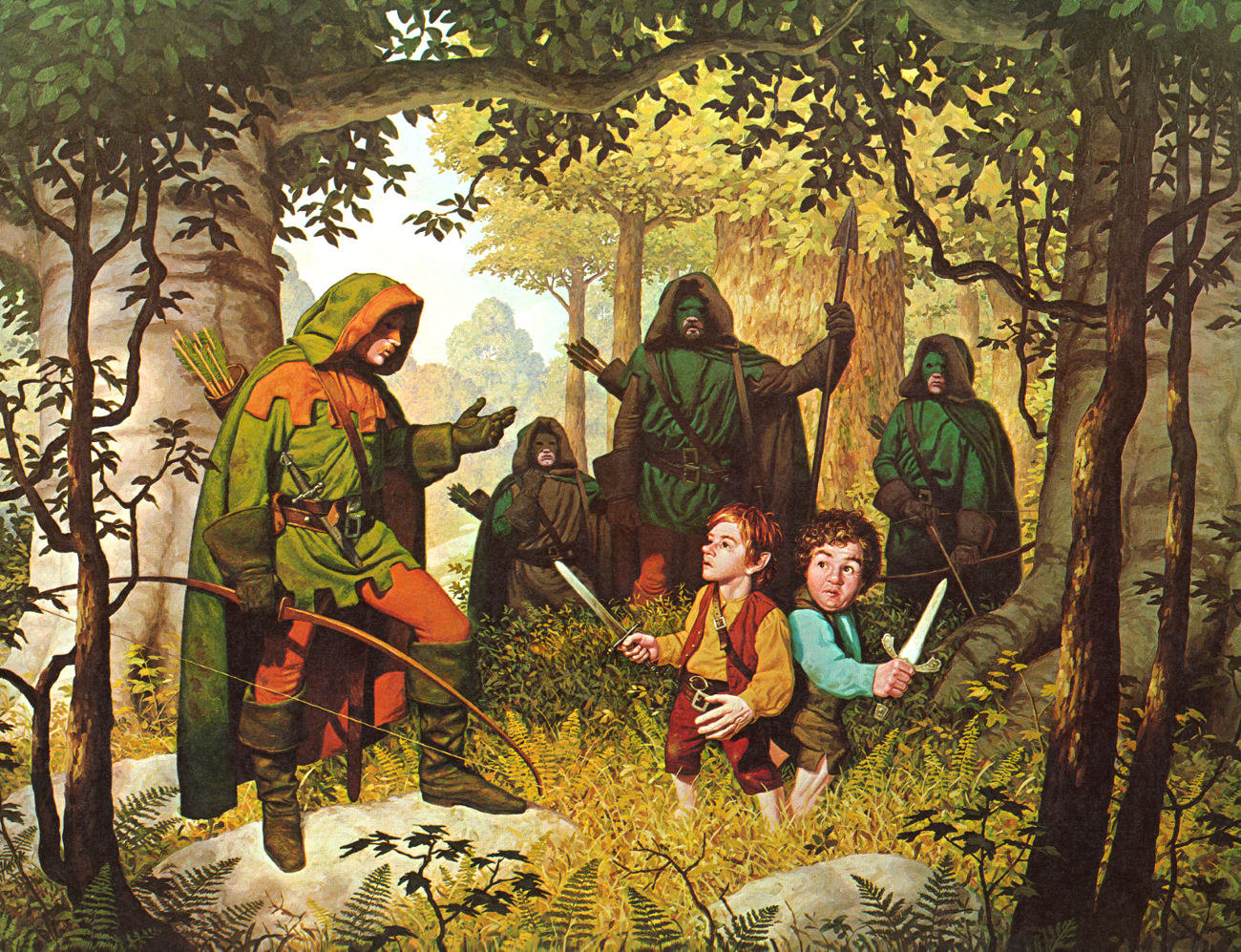
We would suggest that a stronger influence might be found in JRRT’s interest in Old English literature.  In that literature, Anglo-Saxon kings and lords are known as “ring-givers” and “gold-givers”,

image8king.jpg

image9armring.jpg

image10ring.jpg

who reward their followers—as well as singers—with precious decorations–as the poet in the poem called Widsith tells us:

Likewise I was among the Eatula with Ælfwine,
he had the lightest hand of all mankind, as I have heard,
to perform his praises, the most generous in the sharing of rings,
the bright bracelets, the child of Eadwine. (68-74)

(translation by Prof. Aaron K. Hostetter of Rutgers University, Camden—here’s a LINK so that you can read the whole poem—and much more—at his website—he has a wonderful project to translate a mass of Old English literature and has done a great deal to make it all accessible in one place.  As for Widsith, there’s a very useful Wiki article, if you’re interested.  Here’s a LINK to it.)

Whereas there might be some distant influence in the making of a powerful ring in Wagner’s operas, the giving of rings makes us think of Sauron, when he reappears in the Second Age.  At that time, he comes in the guise of “Annatar”, “Lord of Gifts” and, to gain power over the Elves, encourages them to make rings, all the while creating his own to overpower and master them.  As his power grows, he collects all of the rings he can (he never succeeds in getting the last three Elven rings) and doles them out, like those Anglo-Saxon kings and lords, to attempt to control dwarves and men, as well:

“But Sauron gathered into his hands all the remaining Rings of Power; and he dealt them out to the other peoples of Middle-earth, hoping thus to bring under his sway all those that desired secret power beyond the measure of their kind.” (The Silmarillion, 288)

The theme in both Wagner and The Silmarillion is that of supernatural control through what appears to be a rather ordinary object, a ring, something which, when Bilbo first finds it, is described as nothing more than “a tiny ring of cold metal” (The Hobbit, Chapter 5, “Riddles in the Dark”).  Tolkien may have been influenced by its appearance in opera, and more likely, by the use of rings in Old English, but there is an older possibility:

“Outside school-room hours his mother gave him plenty of story-books…The Arthurian legends also excited him.  But most of all he found delight in the Fairy Books of Andrew Lang, especially the Red Fairy Book, for tucked away in its closing pages was the best story he had ever read.  This was the tale of Sigurd who slew the dragon Fafnir:  a strange and powerful tale set in the nameless North.” (Carpenter, J.R.R. Tolkien, A Biography, 31)

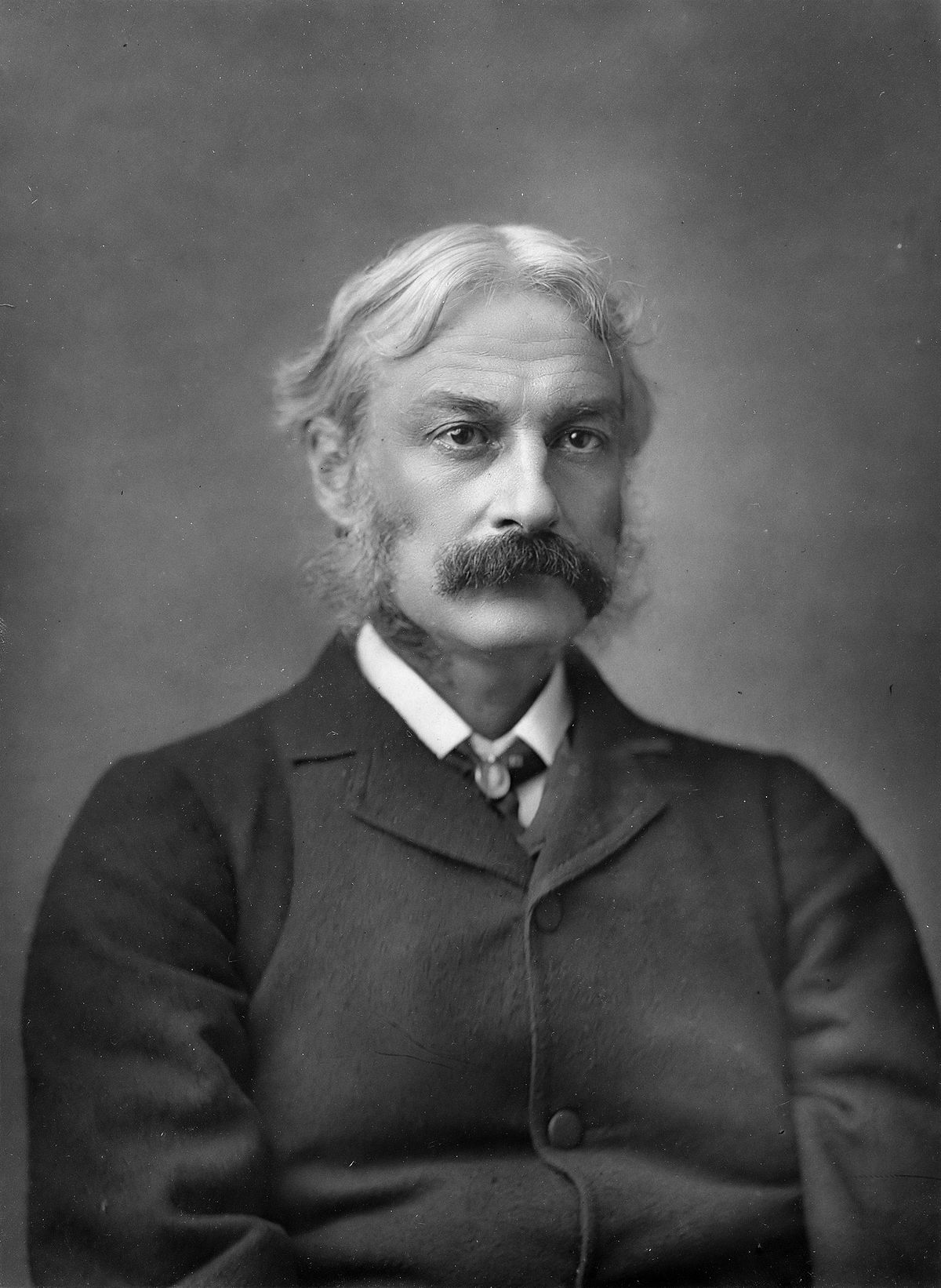
Andrew Lang (1844-1912),

image11lang.jpg

who might be considered a perfect example of the Victorian literary figure, having  written novels, poems, criticism, travelogues, and early anthropological works, had also begun publishing a series of collections of stories for children, each one of the series being bound in a different color.

image12fairybooks.jpg

His wife, Leonora Blanche Alleyne (1851-1933), did most of the editing after the initial volumes, publishing, in all, a dozen volumes between 1889 and 1910.  The Red Fairy Book (1890) was the second in the series

image13rfb.jpg

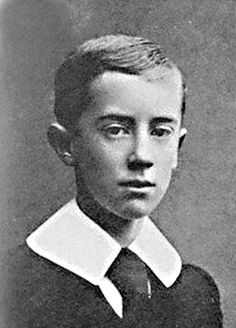
and it was in this volume that a little boy

image14jrrt.jpg

first discovered dragons—and perhaps magic rings, as well, as in the story of Sigurd, we find:

“Now there was at that time a dwarf called Andvari, who lived in a pool beneath a waterfall, and there he had hidden a great hoard of gold. And one day Otter had been fishing there, and had killed a salmon and eaten it, and was sleeping, like an otter, on a stone. Then someone came by, and threw a stone at the otter and killed it, and flayed off the skin, and took it to the house of Otter’s father. Then he knew his son was dead, and to punish the person who had killed him he said he must have the Otter’s skin filled with gold, and covered all over with red gold, or it should go worse with him. Then the person who had killed Otter went down and caught the Dwarf who owned all the treasure and took it from him.

Only one ring was left, which the Dwarf wore, and even that was taken from him.

Then the poor Dwarf was very angry, and he prayed that the gold might never bring any but bad luck to all the men who might own it, for ever.” (Lang, editor, “The Story of Sigurd”)

And this is not the only ring to be found in The Red Fairy Book.

In the “Draft of a letter to ‘Mr. Rang’ ”, dated by Tolkien as “Aug. 1967”, JRRT has this to say about the origin of the name Moria:

“In fact this first appeared in The Hobbit chap.1.  It was there, as I remember, a casual ‘echo’ of Soria Moria Castle in one of the Scandinavian tales translated by Dasent.  (The tale had no interest for me:  I had already forgotten it and have never since looked at it…)” (Letters, 384)

The “Dasent” mentioned here is Sir George Webbe Dasent (1817-1896), lawyer, civil servant, and sometime professor of English Literature and Modern History at King’s College, London, who, in 1859, had published Popular Tales from the Norse, a translation from the Norwegian of a series of pamphlets and books by Asbjornsen and Moe under the general title “Norske Folkeeventyr” (“Norse Folktales”), published between 1841 and 1871.   By the third edition (1888), Dasent had added, among other works, a story entitled “Soria Moria Castle”.  Tolkien may have seen any one of the several different editions of this work as an adult, but, as a child, he would have first read “Soria Moria Castle” in the same Red Fairy Book in which he had encountered Sigurd and the dragon.  (Here’s a LINK to the Lang if you would like to see the two stories as JRRT would have.)

Beyond the title and its hint of Dwarfish mines, however, there is also a magic ring to be found in this story, given to the hero, Halvor, by three princesses whom he has rescued from trolls:

“Then they dressed him so splendidly that he was like a King’s son; and they put a ring on his finger, and it was one which would enable him to go there and back again by wishing, but they told him that he must not throw it away, or name their names; for if he did, all his magnificence would be at an end, and then he would never see them more.” (“Soria Moria Castle”)

JRRT was born in 1893.  We don’t know exactly when his mother may have handed him Lang’s collection, but it was in childhood, according to his own recollection.  Thus, the Ring—disguised as a ring—may have entered his life long before he heard an opera, or studied an earlier form of his native language.

The Lord of the Rings has a ring in its composition and we began this posting with talk of ring composition, but now we’re going to conclude by breaking loose from that ring by suggesting that perhaps that was the ultimate purpose in the original choice of the Ring for JRRT:  to symbolize completion not by circling back, but by the breaking of a seemingly unbreakable circle.  Sauron, once the servant of Melkor, but having great power of his own, has used that power not only to return and return through the ages from defeat, but to fashion a master ring, one which controls all others, giving him even more strength.  At the same time, it had required such strength to make such a ring that, at its destruction:

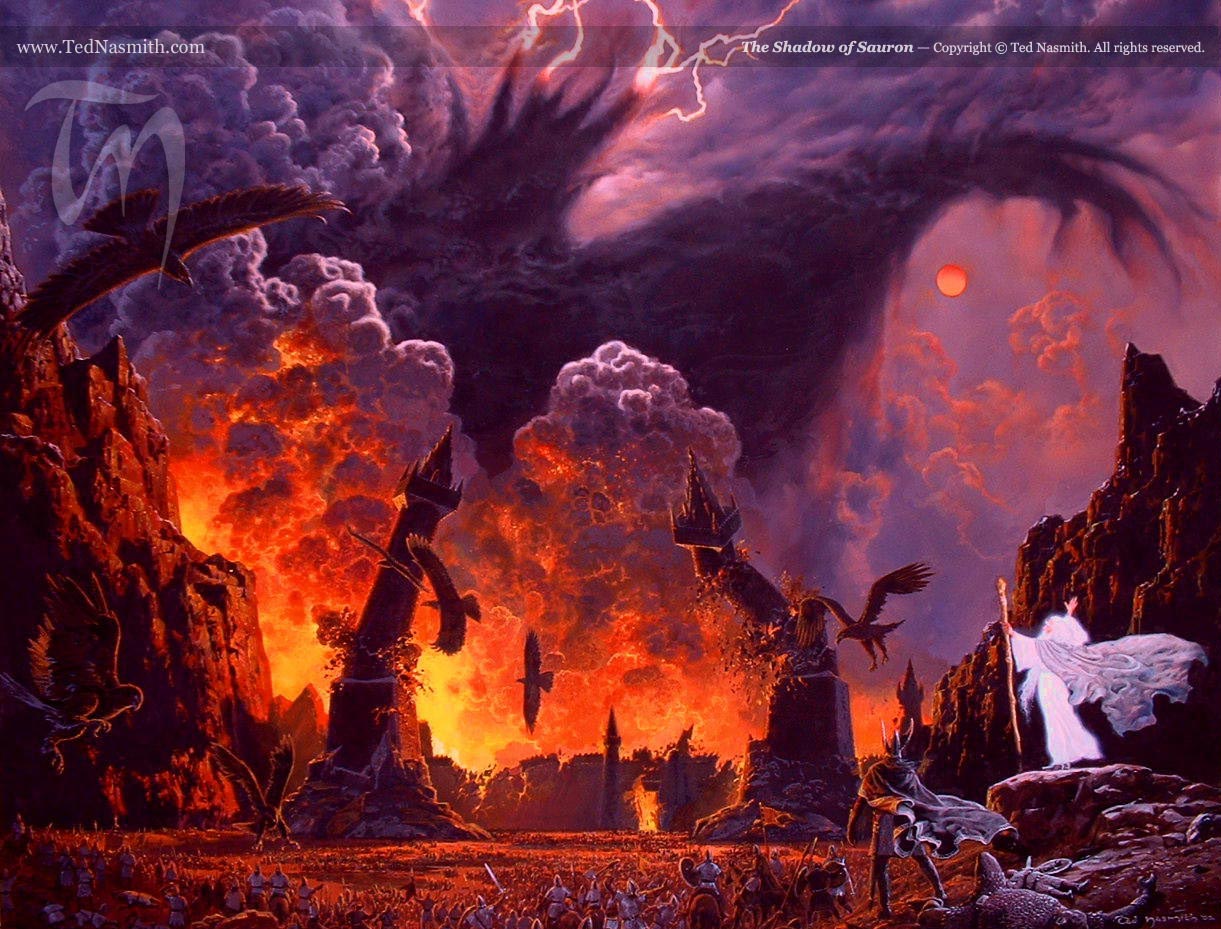
“ ‘The realm of Sauron is ended!’ said Gandalf. ‘The Ring-bearer has fulfilled his Quest.’  And as the Captains gazed south to the Land of Mordor, it seemed to them that, black against the pall of cloud, there rose a huge shape of shadow, impenetrable, lightning-crowned, filling all the sky.  Enormous it reared above the world, and stretched out towards them a vast, threatening hand, terrible but impotent:  for even as it leaned over them, a great wind took it, and it was all blown away, and passed; and then a hush fell.” (The Return of the King, Book Six, Chapter 4, “The Field of Cormallen”)

image15end.jpg

(Another wonderful illustration by one of our favorite Tolkien illustrators, Ted Nasmith)

As Gandalf has said of the Ring:

“If it is destroyed, then he will fall, and his fall will be so low that none can foresee his arising ever again. For he will lose the best part of the strength that was native to him in his beginning, and all that was made or begun with that power will crumble, and he will be maimed for ever, becoming a mere spirit of malice that gnaws itself in the shadows, but cannot again grow or take shape. And so a great evil of this world will be removed.” (The Return of the King, Book Five, Chapter 9, “The Last Debate”)

Thus, after the Ring was destroyed, so was the ring of Sauron’s return in age after age, bringing about what we might then call “ring de-composition”and the story ends not where it began, but going towards old places—the Grey Havens and beyond—for some, and new places—the Fourth Age—for others.

Thanks, as ever, for reading.

MTCIDC

CD

ps

Can we resist saying one thing more?  JRRT couldn’t—but was he thinking of a teaser for a sequel when Gandalf added to what he’d said above:

“Other evils there are that may come; for Sauron is himself but a servant or emissary.”?

The Doubtful Sea Series Facebook Page

The Doubtful Sea Series Facebook Page

  • Ollamh

Categories

  • Artists and Illustrators
  • Economics in Middle-earth
  • Fairy Tales and Myths
  • Films and Music
  • Games
  • Heroes
  • Imaginary History
  • J.R.R. Tolkien
  • Language
  • Literary History
  • Maps
  • Medieval Russia
  • Military History
  • Military History of Middle-earth
  • Narnia
  • Narrative Methods
  • Poetry
  • Research
  • Star Wars
  • Terra Australis
  • The Rohirrim
  • Theatre and Performance
  • Tolkien
  • Uncategorized
  • Villains
  • Writing as Collaborators
Follow doubtfulsea on WordPress.com

Across the Doubtful Sea

Recent Postings

  • Towering January 28, 2026
  • Tolkien Among the Indians January 21, 2026
  • Thin and Stretched January 14, 2026
  • Through a glass… January 7, 2026
  • Heffalumps? December 31, 2025
  • We Three Kings December 24, 2025
  • A Moon disfigured December 17, 2025
  • On the Roads Again—Once More December 10, 2025
  • (Not) Crossing Bridges December 3, 2025

Blog Statistics

  • 105,537 Views

Posting Archive

  • January 2026 (4)
  • December 2025 (5)
  • November 2025 (4)
  • October 2025 (5)
  • September 2025 (4)
  • August 2025 (4)
  • July 2025 (5)
  • June 2025 (4)
  • May 2025 (4)
  • April 2025 (5)
  • March 2025 (4)
  • February 2025 (4)
  • January 2025 (5)
  • December 2024 (4)
  • November 2024 (4)
  • October 2024 (5)
  • September 2024 (4)
  • August 2024 (4)
  • July 2024 (5)
  • June 2024 (4)
  • May 2024 (5)
  • April 2024 (4)
  • March 2024 (4)
  • February 2024 (4)
  • January 2024 (5)
  • December 2023 (4)
  • November 2023 (5)
  • October 2023 (4)
  • September 2023 (4)
  • August 2023 (5)
  • July 2023 (4)
  • June 2023 (4)
  • May 2023 (5)
  • April 2023 (4)
  • March 2023 (5)
  • February 2023 (4)
  • January 2023 (4)
  • December 2022 (4)
  • November 2022 (5)
  • October 2022 (4)
  • September 2022 (4)
  • August 2022 (5)
  • July 2022 (4)
  • June 2022 (5)
  • May 2022 (4)
  • April 2022 (4)
  • March 2022 (5)
  • February 2022 (4)
  • January 2022 (4)
  • December 2021 (5)
  • November 2021 (4)
  • October 2021 (4)
  • September 2021 (5)
  • August 2021 (4)
  • July 2021 (4)
  • June 2021 (5)
  • May 2021 (4)
  • April 2021 (4)
  • March 2021 (5)
  • February 2021 (4)
  • January 2021 (4)
  • December 2020 (5)
  • November 2020 (4)
  • October 2020 (4)
  • September 2020 (5)
  • August 2020 (4)
  • July 2020 (5)
  • June 2020 (4)
  • May 2020 (4)
  • April 2020 (5)
  • March 2020 (4)
  • February 2020 (4)
  • January 2020 (6)
  • December 2019 (4)
  • November 2019 (4)
  • October 2019 (5)
  • September 2019 (4)
  • August 2019 (4)
  • July 2019 (5)
  • June 2019 (4)
  • May 2019 (5)
  • April 2019 (4)
  • March 2019 (4)
  • February 2019 (4)
  • January 2019 (5)
  • December 2018 (4)
  • November 2018 (4)
  • October 2018 (5)
  • September 2018 (4)
  • August 2018 (5)
  • July 2018 (4)
  • June 2018 (4)
  • May 2018 (5)
  • April 2018 (4)
  • March 2018 (4)
  • February 2018 (4)
  • January 2018 (5)
  • December 2017 (4)
  • November 2017 (4)
  • October 2017 (4)
  • September 2017 (4)
  • August 2017 (5)
  • July 2017 (4)
  • June 2017 (4)
  • May 2017 (5)
  • April 2017 (4)
  • March 2017 (5)
  • February 2017 (4)
  • January 2017 (4)
  • December 2016 (4)
  • November 2016 (5)
  • October 2016 (6)
  • September 2016 (5)
  • August 2016 (5)
  • July 2016 (5)
  • June 2016 (5)
  • May 2016 (4)
  • April 2016 (4)
  • March 2016 (5)
  • February 2016 (4)
  • January 2016 (4)
  • December 2015 (5)
  • November 2015 (5)
  • October 2015 (4)
  • September 2015 (5)
  • August 2015 (4)
  • July 2015 (5)
  • June 2015 (5)
  • May 2015 (4)
  • April 2015 (3)
  • March 2015 (4)
  • February 2015 (4)
  • January 2015 (4)
  • December 2014 (5)
  • November 2014 (4)
  • October 2014 (6)
  • September 2014 (1)

Blog at WordPress.com.

  • Subscribe Subscribed
    • doubtfulsea
    • Join 78 other subscribers
    • Already have a WordPress.com account? Log in now.
    • doubtfulsea
    • Subscribe Subscribed
    • Sign up
    • Log in
    • Report this content
    • View site in Reader
    • Manage subscriptions
    • Collapse this bar
 

Loading Comments...