• About

doubtfulsea

~ adventure fantasy

Tag Archives: lotr

Rad Aghast

02 Wednesday Apr 2025

Posted by Ollamh in Uncategorized

≈ Leave a comment

Tags

Forrest J Ackerman, Lon Chaney Sr, lotr, Radagast, The Hobbit, Tolkien

As ever, dear readers, welcome.

I was very pleased when the new, expanded edition of The Letters of JRR Tolkien appeared in 2023,

not only for what new information might be contained in that word “expanded”, but also as, having used my paperback copy of the first edition to the point where, although the pages were still intact, the whole book seemed a little tired, as if it had been employed a little more often than it would have preferred.

When I first opened this new edition, I immediately paged through to what I had hoped was among the expanded letters:  “From a Letter to Forrest J. Ackerman” (“Not dated; June 1958”, Letters, 389-397).

This, as Humphrey Carpenter’s note tells us, was “Tolkien’s comments on the film ‘treatment’ of The Lord of the Rings”.

Ackerman doesn’t appear in Carpenter’s Tolkien biography, but he does appear in several letters, including the long excerpt, and Carpenter makes reference to him, as “agent for the film company” (Letters, 628).  In fact, he was a major figure in the American world of fantasy/science fiction/horror in the 1950s and 1960s, including being the editor of an early fan magazine, Famous Monsters of Filmland, 1958-1983, which provided an impressionable young man with this particularly haunting image—

(This is Lon Chaney, Sr., in the missing London After Midnight, 1927, which you can read about here:   https://silentology.wordpress.com/2022/10/31/everything-you-ever-wanted-to-know-about-london-after-midnight-practically/  If, like me, you love silent film, this is a good site to learn from.  You can read about the rather tangled history  of Famous Monsters  here:   https://en.wikipedia.org/wiki/Forrest_J_Ackerman and about Ackerman here:  https://en.wikipedia.org/wiki/Forrest_J_Ackerman )

From the additional material available in the new edition, we can see that Tolkien liked the visual samples with which he was presented, but—there’s no other word for it—appalled by the “treatment”, of which he wrote:

“If Z. [Zimmerman, the writer of the treatment] and/or others do so [that is, read Tolkien’s comments], they may be irritated or aggrieved by the tone of many of my criticisms.  If so, I am sorry (though not surprised).  But I would ask them to make an effort of imagination sufficient to understand the irritation (and on occasion resentment) of an author, who finds, increasingly as he proceeds, his work treated as it would seem carelessly in general, in places recklessly, and with no evident signs of any appreciation of what it is all about…”   (From a Letter…,389)

What I had hoped for was the complete letter, as, from what has actually been printed, Tolkien tells us, in his criticism, just what he might have wanted in a film of The Lord of the Rings and, in the process, provides us with a different perspective on his perspective.  Certainly, what is included  underscores what he wrote in the beginning of the letter, and something I take from it is that the writer has imagined much of the book as being downright clownish—as in Tolkien’s comments on the presentation of Tom Bombadil:

“7. The first paragraph misrepresents Tom Bombadil.  He is not the owner of the woods; and he would never make any such threat. 

‘Old scamp!’ This is a good example of the general tendency that I find in Z to reduce and lower the tone towards that of a more childish fairy-tale. “  (Letters, 391)

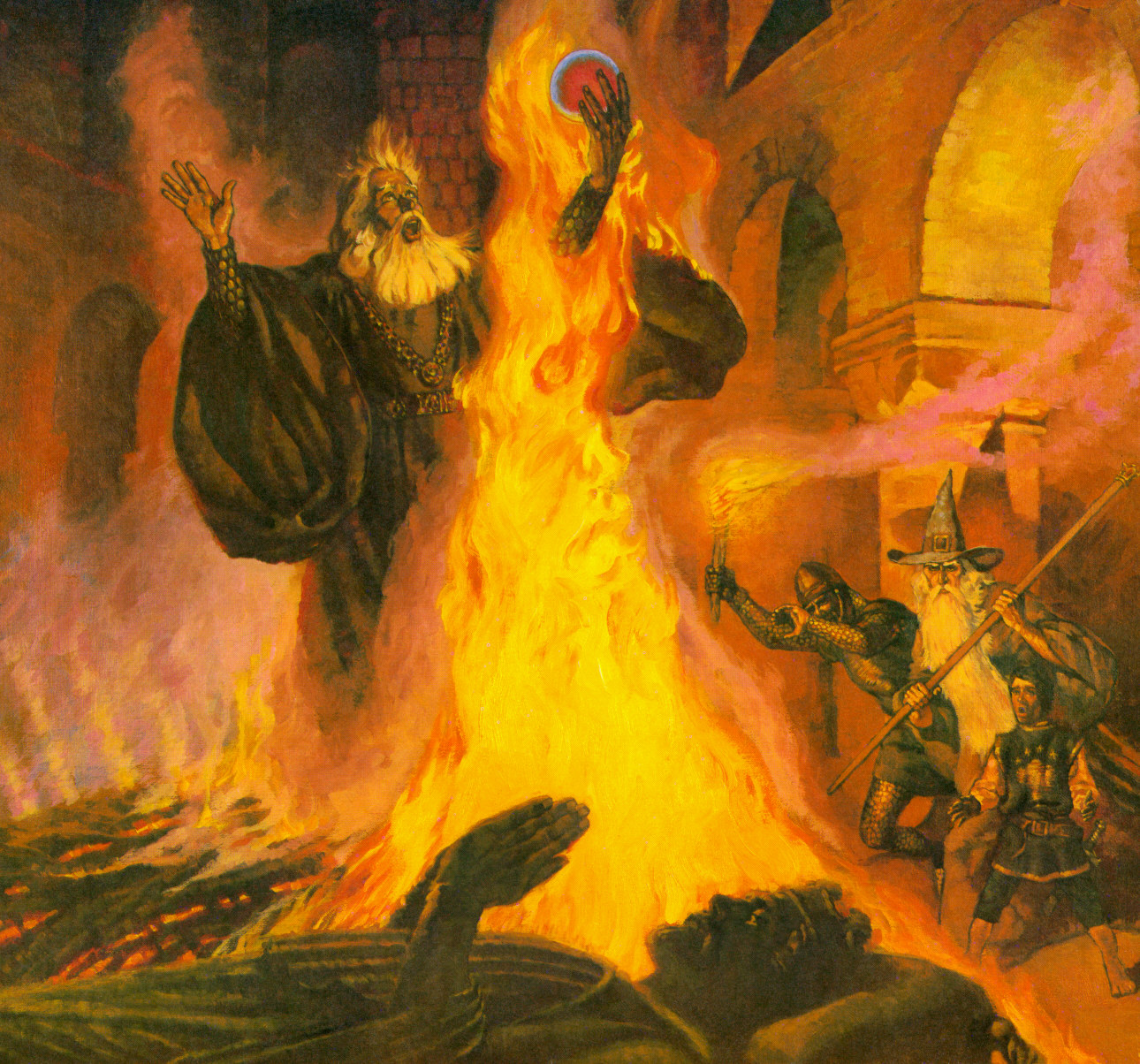
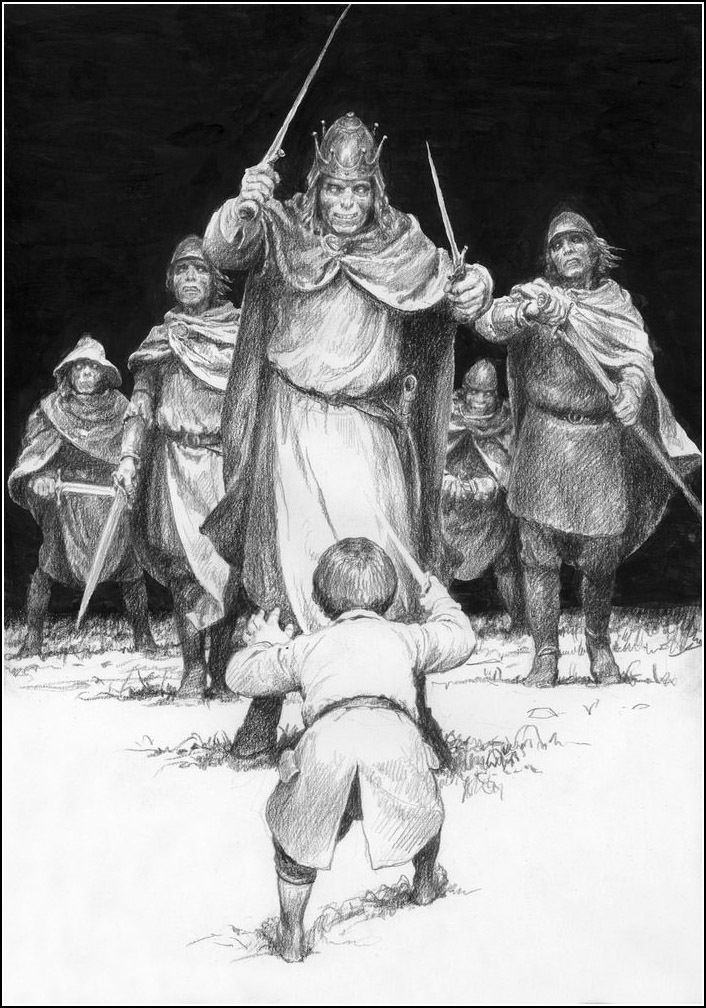
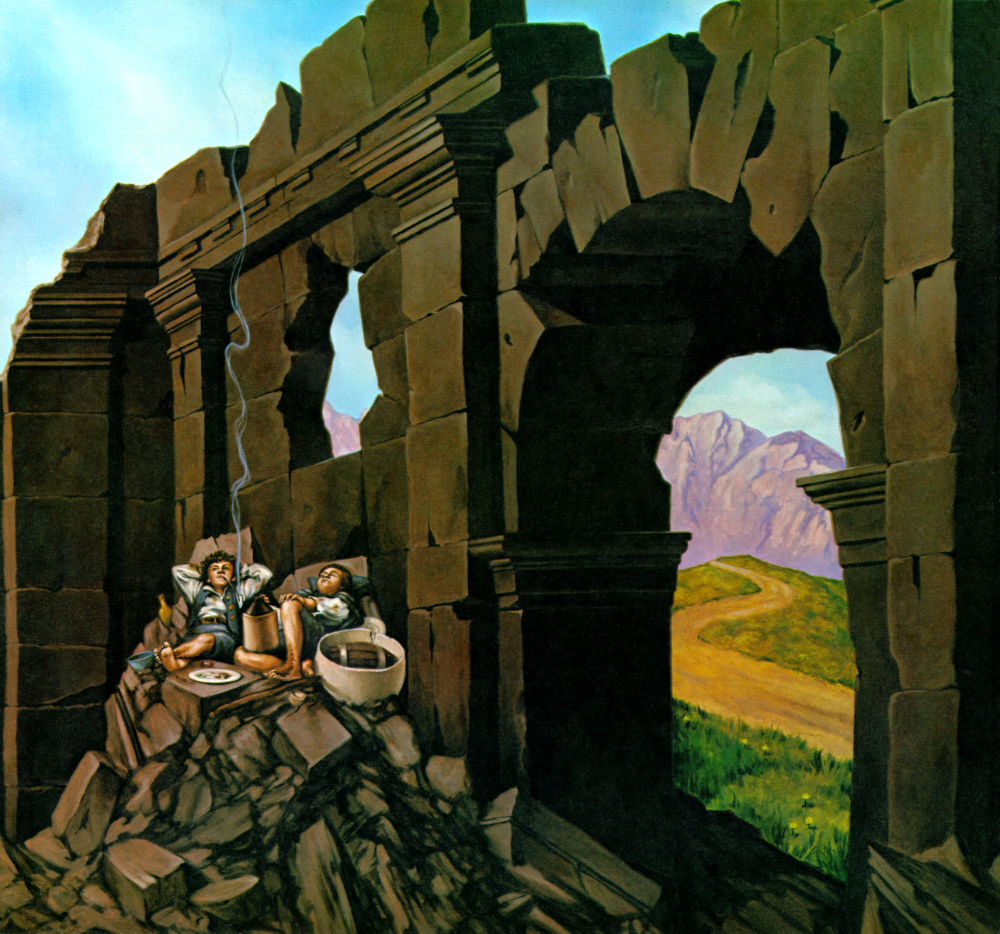
Add to this Tolkien’s later comment on the appearance of Merry and Pippin as Saruman’s “door-keepers”:

“14. Why on earth should Z say that the hobbits ‘were munching ridiculously long sandwiches’?” (Letters, 396)

(Michael Herring—you can see more of his work here:  https://www.artnet.com/artists/michael-herring/ )

Of himself, Tolkien once wrote:

“[I] have a very simple sense of humour (which even my appreciative critics find tiresome)” (from a letter to Deborah Webster, 25 October, 1958, Letters, 412)

So he was not against comedy in general:

“I return Rayner’s [Rayner Unwin, the son of Sir Stanley, Tolkien’s publisher] remarks with thanks to you both.  I am sorry he felt overpowered, and I particularly miss any reference to the comedy, with which I imagined the first ‘book’ [that is, The Fellowship] was well supplied.  It may have misfired.  I cannot bear funny books or plays myself, I mean those that set out to be all comic; but it seems to me that in real life, as here, it is precisely against the darkness of the world that comedy arises…” (letter to Sir Stanley Unwin, 31 July, 1947, Letters, 172)

Tolkien could even be a practical joker—see Humphrey Carpenter, JRR Tolkien:  A Biography, 134, for more on this.

And yet we can see, from his Ackerman comments, that, when it came to his creative work, he was not only serious, but expected others to take it seriously—to treat it seriously—as well.

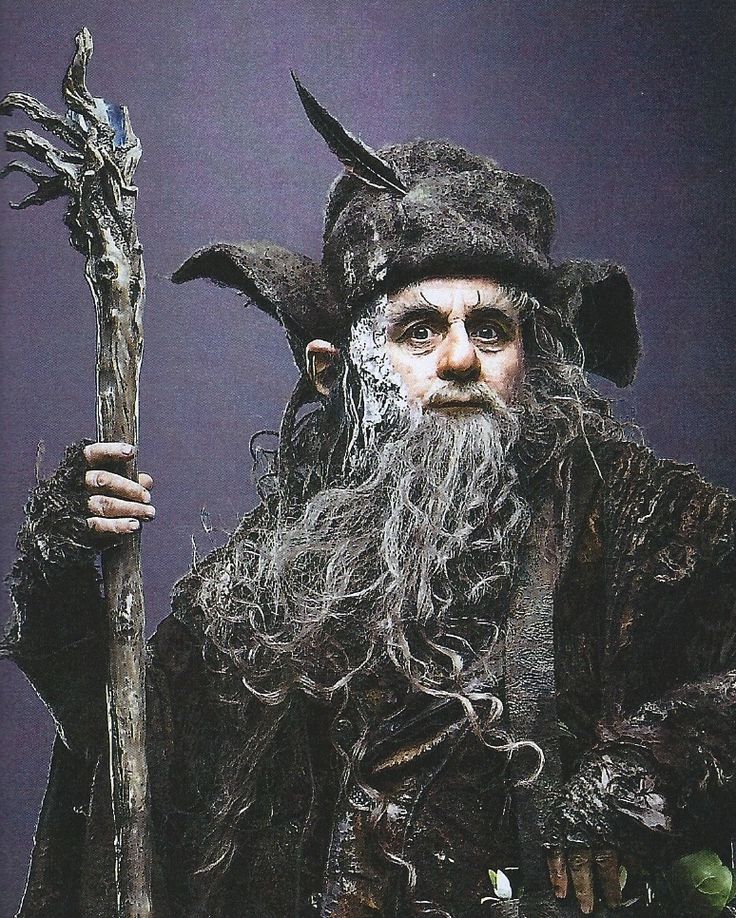
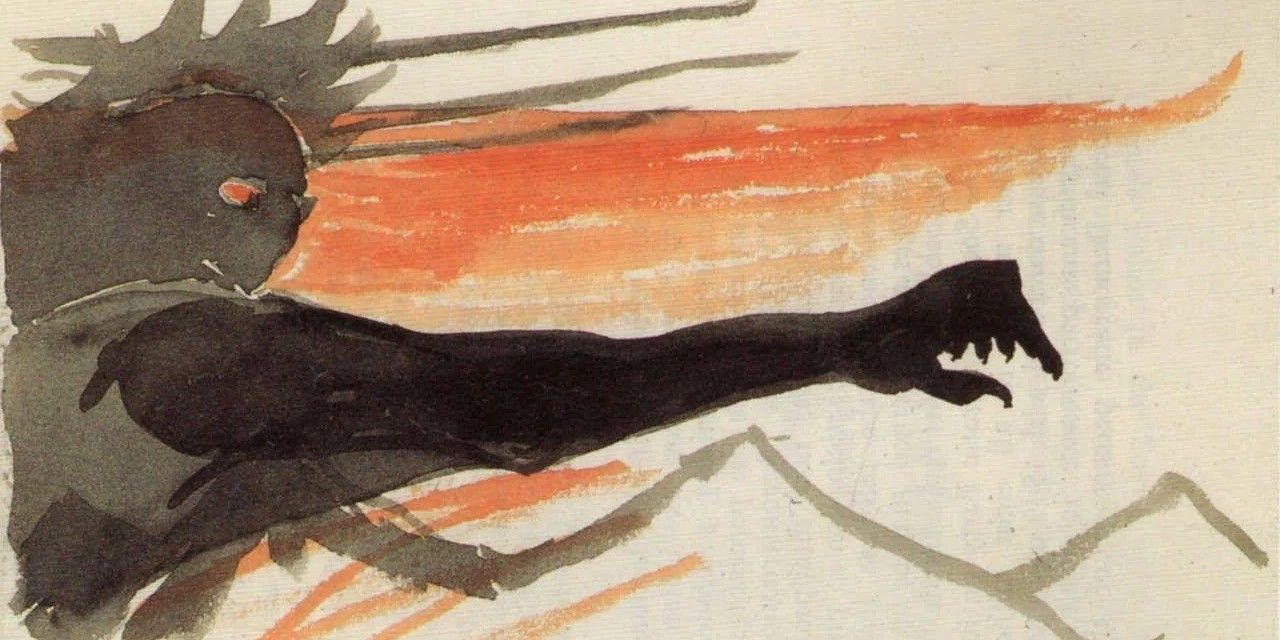
So what are we to make of the portrayal of Radagast the Brown in The Hobbit of P. Jackson and Co.?

Well, we might begin by saying that he is only mentioned in Tolkien’s Hobbit, (Chapter 7, “Queer Lodgings”) and appears, but only briefly, as a messenger from Saruman in The Fellowship of the Ring, Book Two, Chapter 2, “The Council of Elrond”. 

He is one of the 5 Istari, sent to Middle-earth as a counter-balance to Sauron.  (On the Istari, see Unfinished Tales, 405-412).  It may be that Tolkien himself thought that he had become a little too acclimatized:

“Indeed, of all the Istari, one only remained faithful, and he was the last-comer.  For Radagast, the fourth, became enamoured of the many beasts and birds that dwelt in Middle-earth, and forsook Elves and Men, and spent his days among the wild creatures.”  (JRR Tolkien, The Lost Tales, 407)

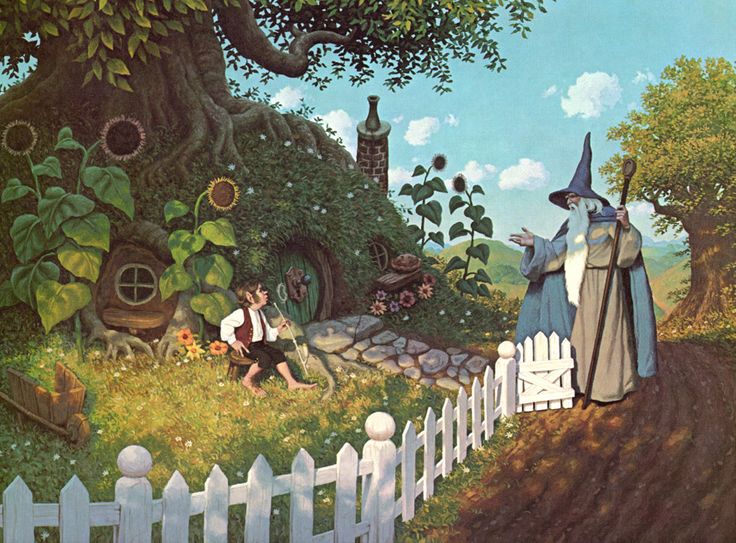
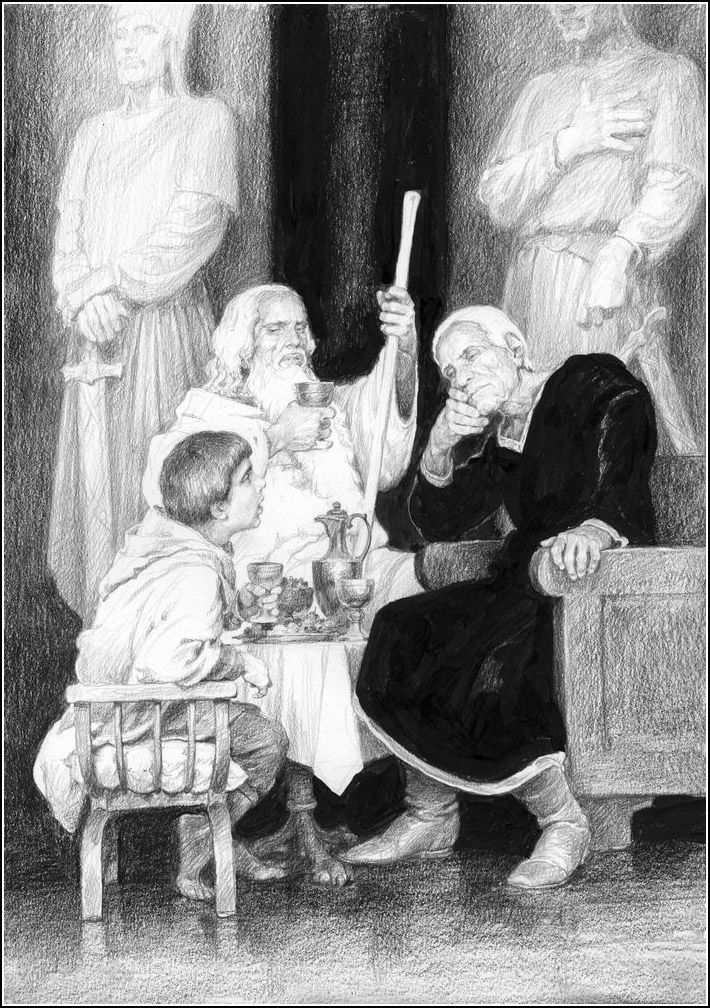
But this doesn’t mean that he’s become what Saruman sneeringly calls him:  “Radagast the Bird-tamer!  Radagast the Simple!  Radagast the fool!” (The Fellowship of the Ring, Book Two, Chapter 2, “The Council of Elrond”)—although he could easily be taken for that in Jackson’s Hobbit, for all that he’s had invented for him a role that seems to want to combine the clownish with the heroic, but, for me,  as JRRT did not create this role and would certainly have been upset by the clownish aspects of it–

see his comment  on illustrations for a German translation of The Hobbit sent him by Horus Engels:

“He has sent me some illustrations (of the Trolls and Gollum) which despite certain merits, such as one would expect of a German, are I fear too ‘Disnified’ for my taste:  Bilbo with a dribbling nose, and Gandalf as a figure of vulgar fun rather than the Odinic wanderer that I think of…” (letter to Sir Stanley Unwin, 7 December, 1946, Letters 171-172)

he seems not only unnecessary, but exactly what disturbed Tolkien about the Zimmerman “treatment” of The Lord of the Rings, the reaction of an author who finds:

“…increasingly as he proceeds, his work treated as it would seem carelessly , in places recklessly, and with no evident signs  of any appreciation of what it is all about…”

Hence the title of this posting—not  the fear generated by the Old English gaest , of the original word, but certainly a sense of disturbance of the sort JRRT felt in that “treatment” and I’m sure would have felt even more strongly seeing what had happened to his character in the hands of those who, at best, are reckless.

Thanks, as always, for reading,

Stay well,

Believe that the author means what she/he says,

And remember that, as always, there’s

MTCIDC

O

PS

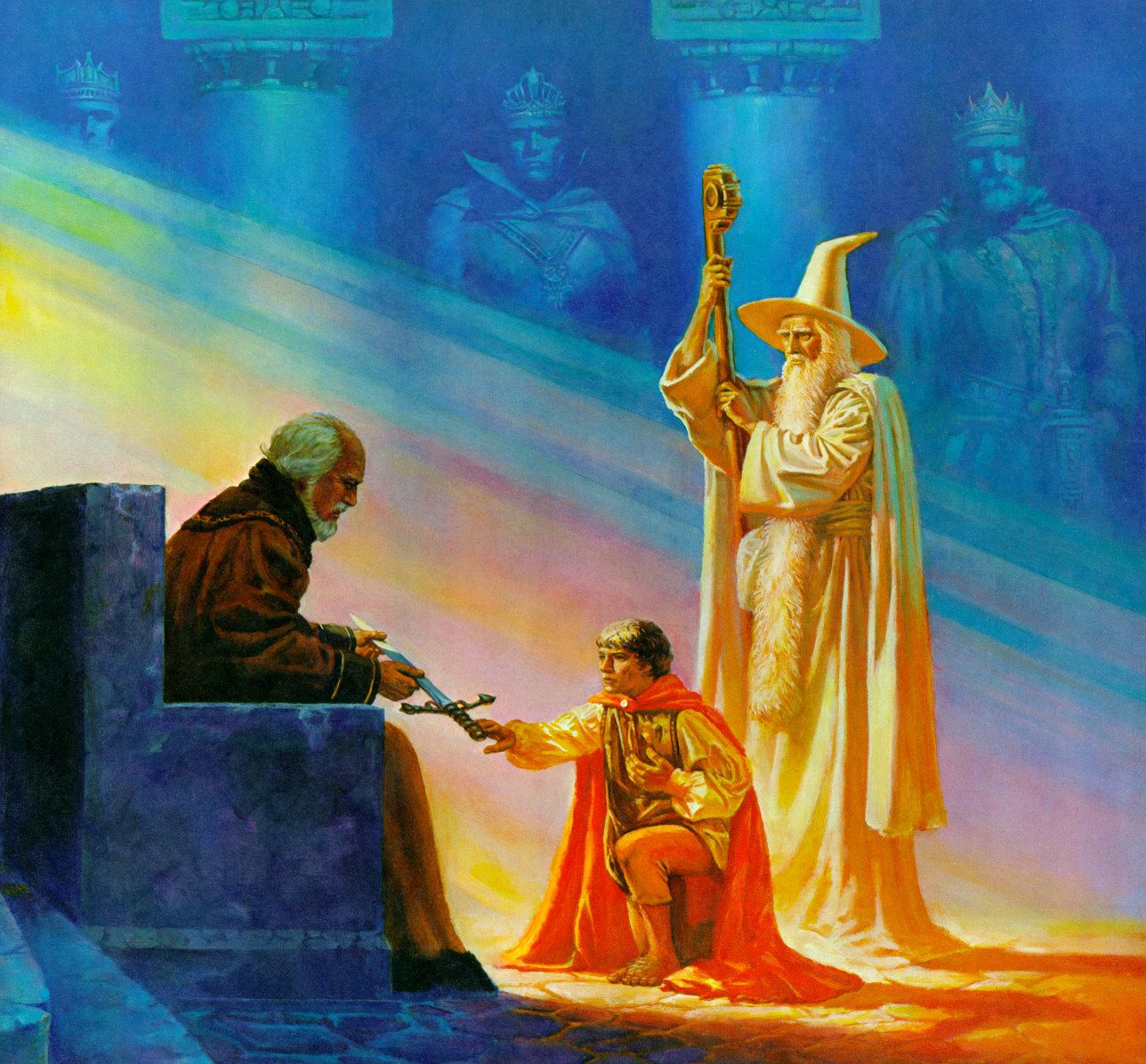
For me, this illustration, by Lucas Graciano, seems a better depiction—

(you can see more of his imaginative art here:  https://www.lucasgraciano.com/ )

Treating

26 Wednesday Mar 2025

Posted by Ollamh in Uncategorized

≈ Leave a comment

Tags

diplomatic language, Gandalf, lotr, Mouth of Sauron, Tolkien

Welcome, dear readers, as always.

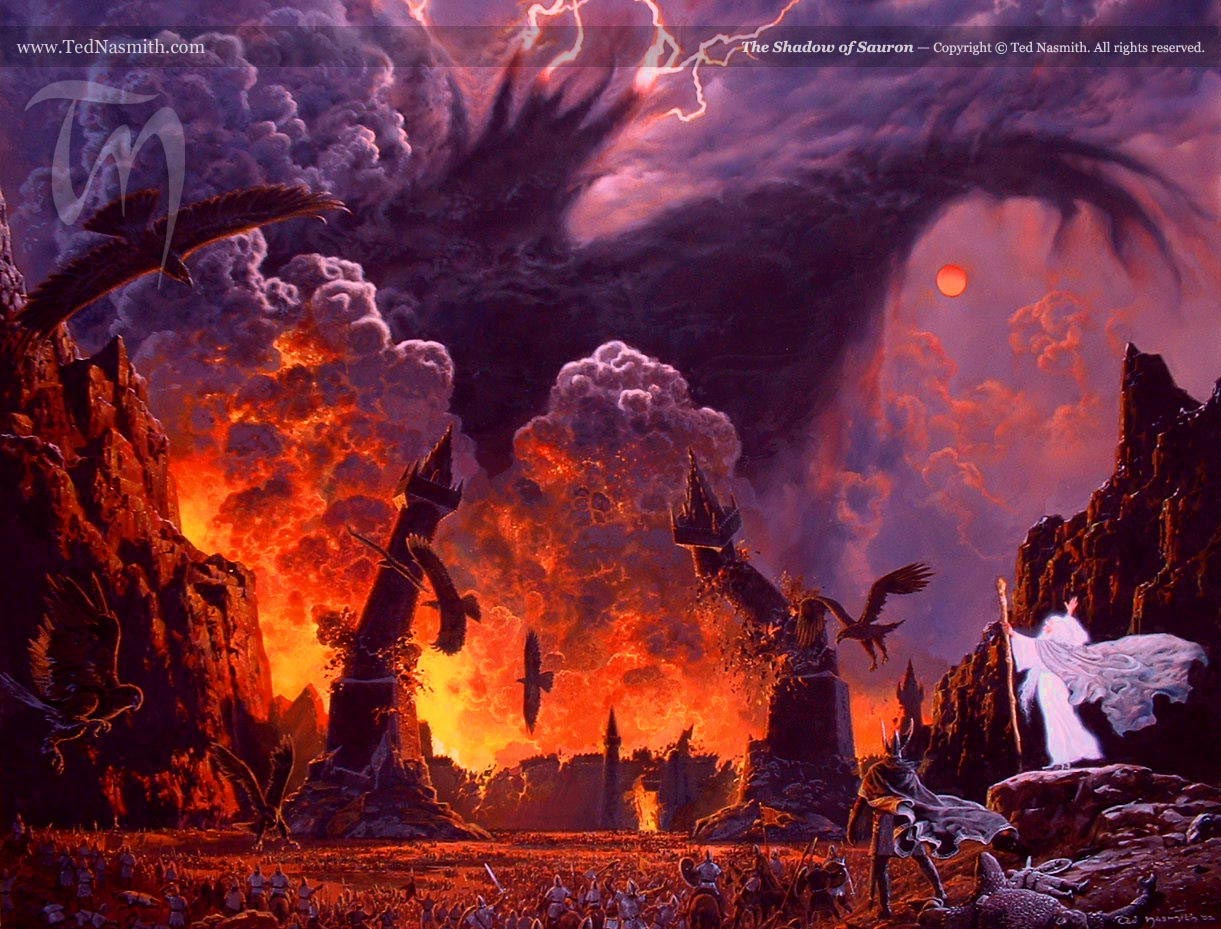
It’s a grim moment, late in The Lord of the Rings.  Although Sauron’s forces have failed in their attempt to take Minas Tirith,

(John Howe)

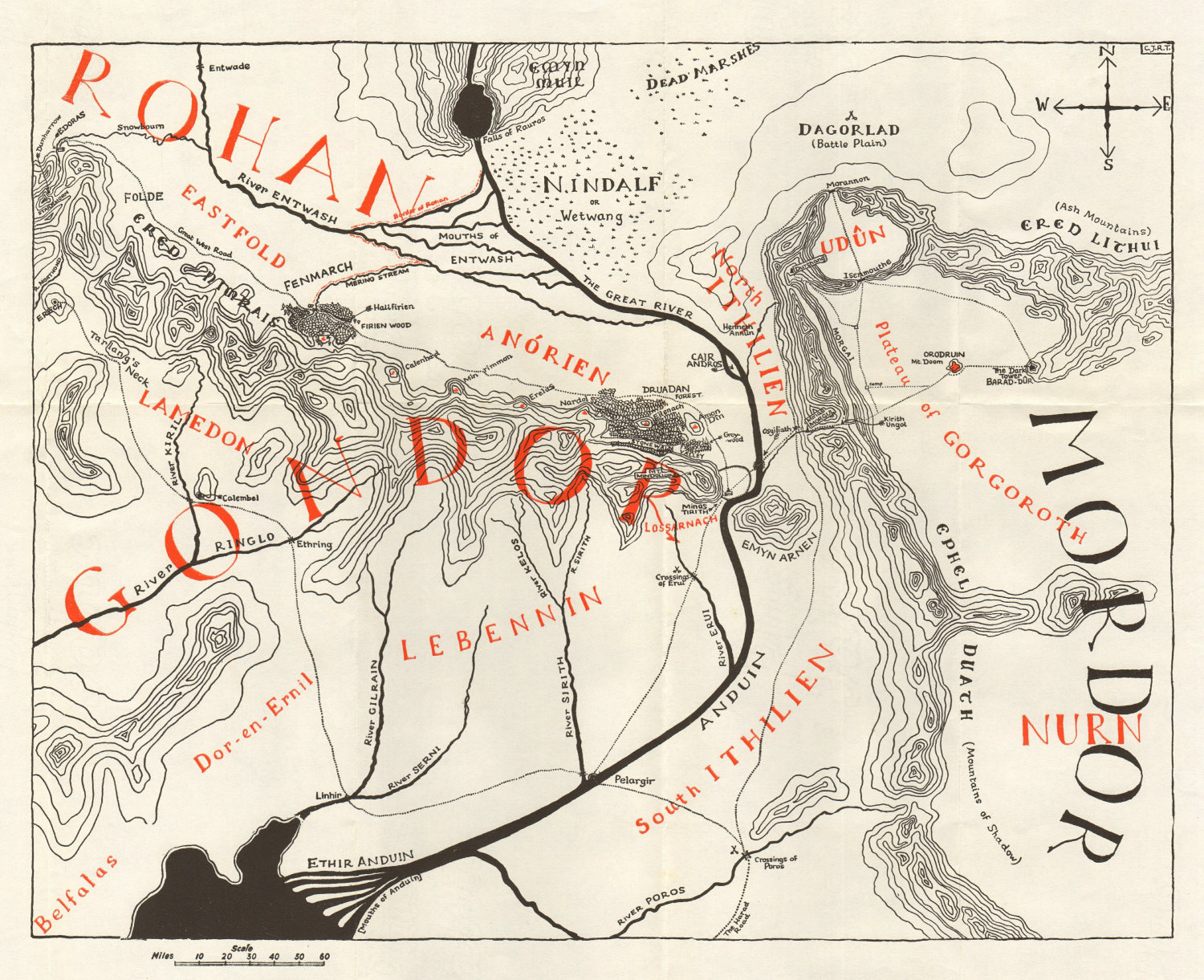
they are still active and numerous, but concealed behind the barrier of the Ephel Duath, the “Mountains of Shadow”, to the east, in Mordor.

(a much-redrawn map, beginning with JRRT. For more details, see: https://tolkiengateway.net/w/index.php?title=Map_of_Rohan,_Gondor,_and_Mordor&section=2 )

Gondor’s pretend embassy rides out, hoping to keep Sauron’s eye upon them.

(from the Jackson film)

As they approach the Black Gate,

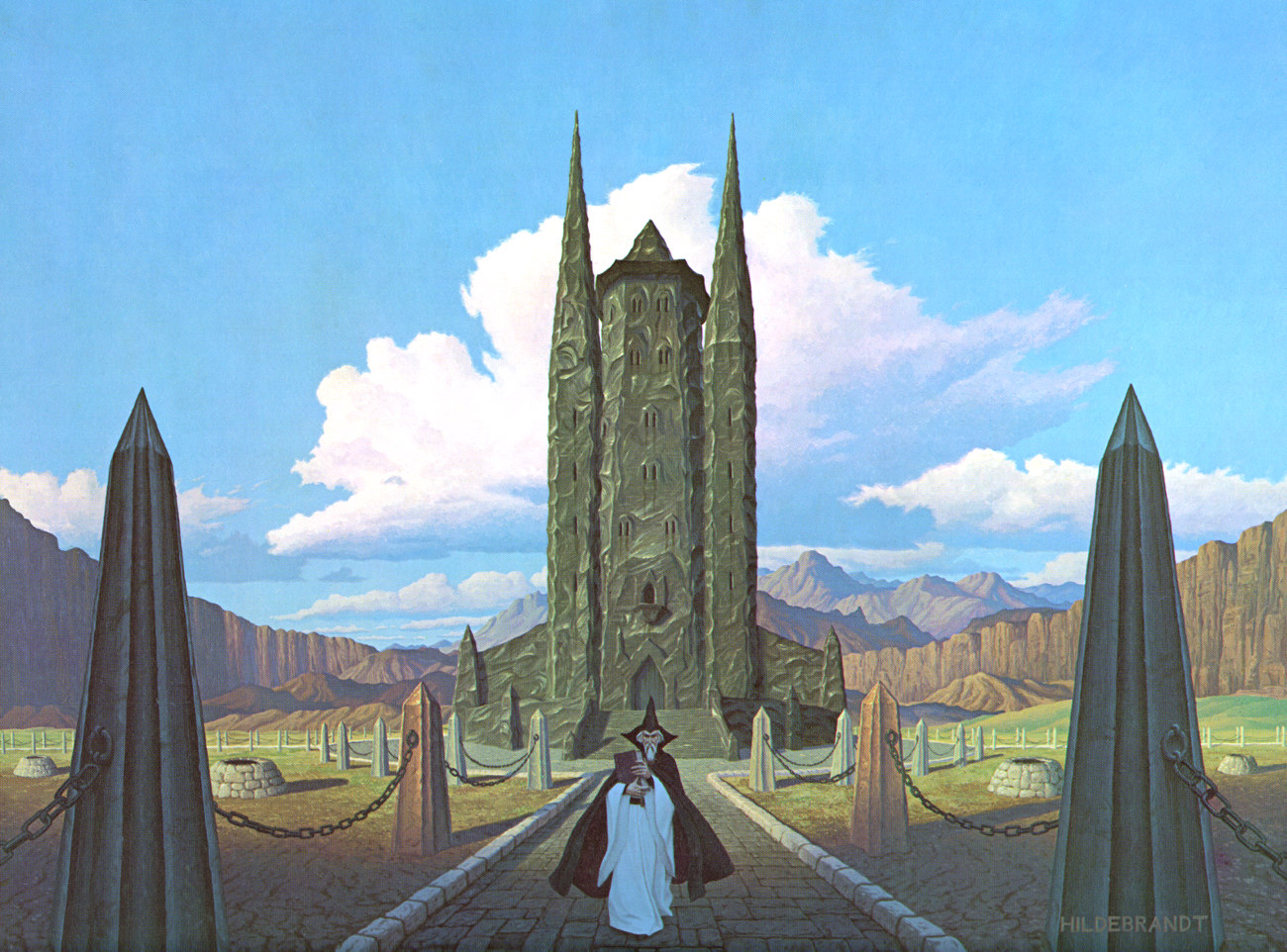
(the Hildebrandts)

they ride through the effects of the Industrial Revolution which JRRT so disliked:

“North amid their noisome pits lay the first of the great heaps and hills of slag and broken rock and blasted earth, the vomit of the maggot-folk of Mordor…”  (The Return of the King, Book Five, Chapter 10, “The Black Gate Opens”)

If we hadn’t known previously about Tolkien’s opinion of such, language choices like “vomit” and “maggot-folk”, would have told us all we needed to know and, in this posting, I want to talk a little about a particular form of language, that of diplomacy, in the scene which follows.

The embassy waits before the Black Gate in “a great mire of reeking mud and foul-smelling pools”  until, in a carefully-prepared entry, Sauron’s emissary appears:

“There came a long rolling of great drums like thunder in the mountains, and then the braying of horns that shook the very stones and stunned men’s ears.  And thereupon the door of the Black Gate [that is to say a wicket gate:  a smaller gate within a larger one, like this—

although clearly larger than this one] was thrown open with a great clang, and out of it there came an embassy from the Dark Tower.

At its head there rode a tall and evil shape…”

(Douglas Beekman—you can read more about this extremely productive sf/fantasy illustrator here:  https://www.askart.com/artist/Doug_L_Beekman/122294/Doug_L_Beekman.aspx )

The emissary—“the Mouth of Sauron”—speaks first and we see already the approach he takes:

“Is there anyone in this rout with authority to treat with me?”

Already he has turned representatives of Gondor into nothing more than an armed mob—a “rout”.

He continues:

“Or indeed with wit to understand me?”

Not only a mob, then, but a stupid one.

Then, turning to Aragorn—

“It needs more to make a king than a piece of Elvish glass, or a rabble such as this.  Why, any brigand of the hills can show as good a following.”

And you can see the general idea—

1. this isn’t an army, but a collection of nobodies—and a small one, at that

2. they are nothing but oafs

3. their leader is nothing more than a bandit chief who has appointed himself king

Gandalf then upbraids him:

“It is also the custom for ambassadors to use less insolence.  But no one has threatened you.”

To which the Mouth replies:

“So…Then thou arr the spokesman, old graybeard?  Have we not heard of thee at whiles, and of thy wanderings, ever hatching plots and mischief at a safe distance?”

First, there’s the implication that Gandalf is a doddering old man, then that he’s a plotter and of no certain abode, and then that he’s a coward.  It’s also important to notice the linguistic difference in his and Gandalf’s speech.  Unlike certain other Indo-European languages, including German, French and Italian, Modern English has abandoned the second person singular of verbs—no “thou/thy/thee”.  It’s “you” for everything.  The use of the second person singular is still preserved in those other languages and, at least in traditional French, is reserved for speaking to children, pets, loved ones, and close friends, (and, in older days, servants), there even being verbs, tutoyer, “to use thou” and vouvoyer, “ to use you”, to indicate which you might employ.  When uncertain, a person might ask, “On peut tutoyer?”—“Can we use thou?”  The advantage it provides, as we can see here, is that, whereas Gandalf is being polite, or at least neutral, the Mouth of Sauron is being  intentionally insulting—the old expression being “too familiar”—or at least downgrading Gandalf from an equal to someone of lower status, or even a child, which goes along with his earlier question as to whether anyone had the understanding (“wit”) to have a discussion with him.

The Mouth then shows Frodo’s gear, taken from him in Minas Morgul, and Pippin, recognizing it, “sprang forward with a cry of grief”, even as Gandalf tries to stop him, which gives the Mouth another opportunity:

“So you have yet another of these imps with you!…What use you find in them I cannot guess; but to send them as spies into Mordor is beyond even your accustomed folly.  Still, I thank him, for it is plain that this brat at least has seen these tokens before, and it would be vain for you to deny them now.”

Not content with downgrading the Gondorians, Aragorn, and Gandalf, hobbits are now either “imps”—that is, small demons, as in “imps of Satan” in our Middle-earth, or children, “brats”.  He then goes on to call the Shire “the little rat-land” as he builds what he claims the so-far successful resistance to Sauron actually is:

“Dwarf-coat, elf-cloak, blade of the downfallen West, and spy from the little rat-land of the Shire—nay, do not start!  We know it well—here are the marks of a conspiracy.”

Now we see where all of this is leading:  to Sauron’s terms—which are not about a cease-fire or a deal between equals, but simply a form of surrender:

“The rabble of Gondor and its deluded allies shall withdraw at once beyond the Anduin, first taking oaths never again to assail Sauron the Great in arms, open or secret.”

This repeats the Mouth’s earlier characterizing of the emissaries from Gondor as a mob—and the suggestion that they are nothing more than a group of plotters against Sauron’s (legitimate) authority.

“All lands east of the Anduin shall be Sauron’s for ever solely.”

His earlier struggles with the West had led to his defeat and loss of control of those lands, so here Sauron is attempting to guarantee that they stay in his hands this time.

“West of the Anduin as far as the Misty Mountains and the Gap of Rohan shall be tributaries to Mordor, and men there shall bear no weapons, but shall have leave to govern their affairs.”

Here we see the Rohirrim being:

a. disarmed

b. forced to pay tribute

“But they shall help to rebuild Isengard which they have wantonly destroyed…”

“wantonly” suggests, of course, that it was done without purpose—and, remembering what Saruman was actually up to, this is actually laughable, but it’s also a piece with the general tone:  we are the legitimate authorities, you have plotted against us and rebelled and with no good reason.

And then we see what the Mouth has in mind for himself:

“…and that shall be Sauron’s and there his lieutenant shall dwell:  not Saruman, but one more worthy of trust.”

(“Looking in the Messenger’s eyes they read his thought:  He was to be that lieutenant, and gather all that remained of the West under his sway; he would be their tyrant and they his slaves.”)

So far, all of this has been demands on Sauron’s part, but what will he give in return?

“It seemed then to Gandalf, intent, watching him as a man engaged in fencing with a deadly foe, that for the taking of a breath, the Messenger was at a loss; yet swiftly he laughed again,

‘Do not bandy words in your insolence with the Mouth of Sauron!…Surety you crave!  Sauron gives none.  If you sue for his clemency, you must first do his bidding.  These are his terms.  Take them or leave them.’ “

Putting all of this together, we see that, unlike the “custom of ambassadors” of Gandalf, this is a carefully-planned verbal attack, first denigrating the other side’s position for negotiating, then suggesting that, unlike an opposing state, the Gondorians are nothing more than illegimate plotters, then making a series of demands for which they are offered nothing in return except possible “clemency”.  

This, then, is not a treaty—none is offered—but the treatment of rebellious slaves and well deserves Gandalf’s rebuke which, you’ll notice, returns some of the Mouth’s medicine to him, even if not using “thou”:

“But as for your terms, we reject them utterly.  Get you gone, for your embassy is over and death is near to you.  We did not come here to waste words in treating with Sauron, faithless and accursed; still less with one of his slaves.  Begone!”

Is the Mouth’s reaction surprising, then?

“Then the Messenger of Mordor laughed no more.  His face was twisted with amazement and anger to the likeness of some wild beast that, as it crouches on its prey, is smitten on the muzzle with a stinging rod.  [How appropriate for the Mouth!]  Rage filled him and his mouth slavered, and shapeless sounds of fury came strangling from his throat.  But he looked at the fell faces of the Captains and their deadly eyes, and fear overcame his wrath.  He gave a great cry, and turned, leaped upon his steed, and with his company galloped madly back to Cirith Gorgor.”

A fitting end—wordless, he flees—undoubtedly with Gandlaf’s last words in his ears:  “…slave.  Begone!”

Thanks, as always, for reading.

Stay well,

Avoid evil emissaries with their own agendas,

And remember that, as always, there’s

MTCIDC

O

Doom

19 Wednesday Mar 2025

Posted by Ollamh in Uncategorized

≈ Leave a comment

Tags

anglo-saxons, Dialogus, Domesday Book, Errantry, Gothic, History, janissaries, Janissary, literature, lotr, Mazarbul, Normans, Tolkien, William Duke of Normandy

As ever, dear readers, welcome.

If nothing else would tell us that Tolkien had a fine ear for rhythm and rhyme, just take this stanza from “Errantry”, first published in The Oxford Magazine, Vol.52, No.5–

“Of crystal was his habergeon,
His scabbard of chalcedony;
With silver tipped at plenilune
His spear was hewn of ebony.
His javelins were of malachite
And stalactite – he brandished them
And went and fought the dragon flies
Of Paradise, and vanquished them.”

In his rhyming, JRRT has used some rather specialized words:

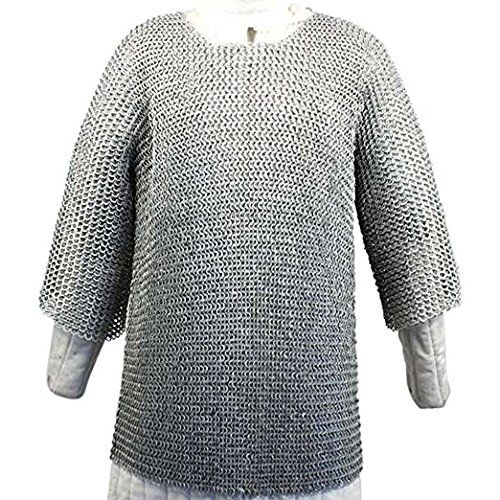
habergeon  an (often-half-sleeved) chain mail shirt—usually made of steel, not something as fragile as crystal might be

chalcedony   a kind of silica which comes in a number of varieties and colors—here’s one—

plenilune    full moon—the idea being that his spear was given its tip/blade at the full moon, suggesting perhaps a magical making? 

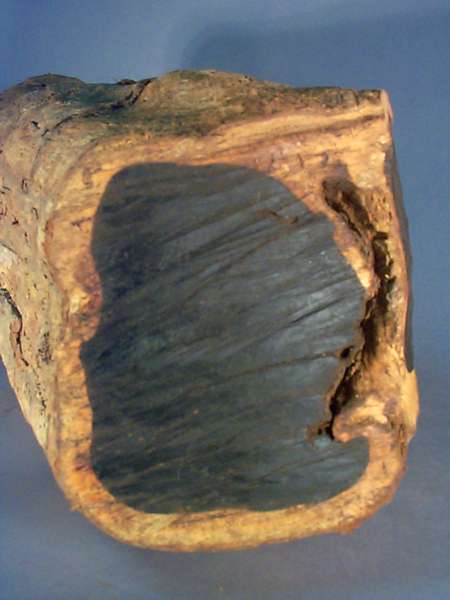
ebony      a dark hardwood which can be turned into a glossy black

malachite   another stone, which is copper-bearing

stalactite   this isn’t a stone, but a stone deposit which hangs down in caves

and is probably there for the internal rhyme with malachite, although malachite can be discovered in stalactites, so possibly JRRT is using two different possibilities at once

brandish     to wave—something heroic warriors sometimes do with their weapons, in a boasting or threatening manner

(I haven’t been able to find an artist for this one, alas.)

For the “dragon flies of Paradise”, you’re on your own—although–

So, when it came to the soundscape of The Lord of the Rings (a subject which could use a lot of exploring—there are cues everywhere), I wasn’t surprised to see him play a little game with an unlikely toy, a drum.

(a traditional Turkish drum—with two sticks, the larger for the top, the smaller for the underside, which gives it a distinctive double sound—you can hear—and see—some here:  https://www.youtube.com/watch?v=2eaxzv6obf8  These musicians are dressed as Janissaries, members of the Sultan’s elite troops

 and you can see why such bands then influenced later 18th-century-early-19th-century composers like Mozart and Beethoven—and frightened defenders when they heard this music coming.  Here’s Beethoven’s impression:     https://www.youtube.com/watch?v=Nd0OjCO9x5Y   )

Here’s a passage of that scape which recently caught my eye:

“Gandalf had hardly spoken these words, when there came a great noise:  a rolling Boom that seemed to come from depths far below, and to tremble in the stone at their feet.  They sprang towards the door in alarm.  Doom, doom it rolled again, as if huge hands were turning the very caverns of Moria into a vast drum.  Then there came an echoing blast:  a great horn was blown in the hall, and answering horns and harsh cries were heard further off.  There was a hurrying sound of many feet.”  (The Fellowship of the Ring, Book Two, Chapter 5, “The Bridge of Khazad-dum”)

You see what I mean about soundscape:  everything described, except the movement of the Fellowship, is a sound—and notice that even the place name in the chapter title, which has, in the original, a circumflex over the –u- in “dum” , lengthening  the sound of the word, echoes  that drum and its message:  doom!

And “doom”  is an interesting word. 

A quick look at its past can take us as far back as Gothic, the ancestral cousin of the Germanic languages and our oldest surviving sample of such ancestors.  Etymonline has “Gothic doms, ‘discernment, distinction’”– https://www.etymonline.com/word/doom  but, using my on-line Gothic dictionary, we find domjan and afdomjan, where the basic sense seems to be “to establish”, from which comes the meaning “to judge” and possibly even “to condemn”.  (Here’s the page:  http://www.wulfila.be/gothic/browse/search/?find=domjan&mode=1  at the very helpful  “Wulfila” site—Wulfila was the 4th-century AD translator of the Judeo-Christian Bible from Greek into Gothic.  It’s interesting that, often the original Greek word is a form of krino, which probably original meant to “separate”, but came, in time to be used to mean “to judge, decide”, and even “to condemn”—see the Perseus page here:  https://www.perseus.tufts.edu/hopper/morph?l=kri%2Fnw&la=greek&can=kri%2Fnw0#lexicon )

This brings us to what, I imagine, was a strong influence on Tolkien whenever he wrote that word:  that oppressor of the conquered Anglo-Saxons, the so-called “Domesday Book”.

After the defeat of Harold Godwinson and his army at Hastings, in October, 1066,

Duke William of Normandy drove a ruthless campaign of conquest throughout England, giving out land to his chief followers, who then built early castles, which we call “motte and bailey”, to protect themselves and to dominate the landscape.

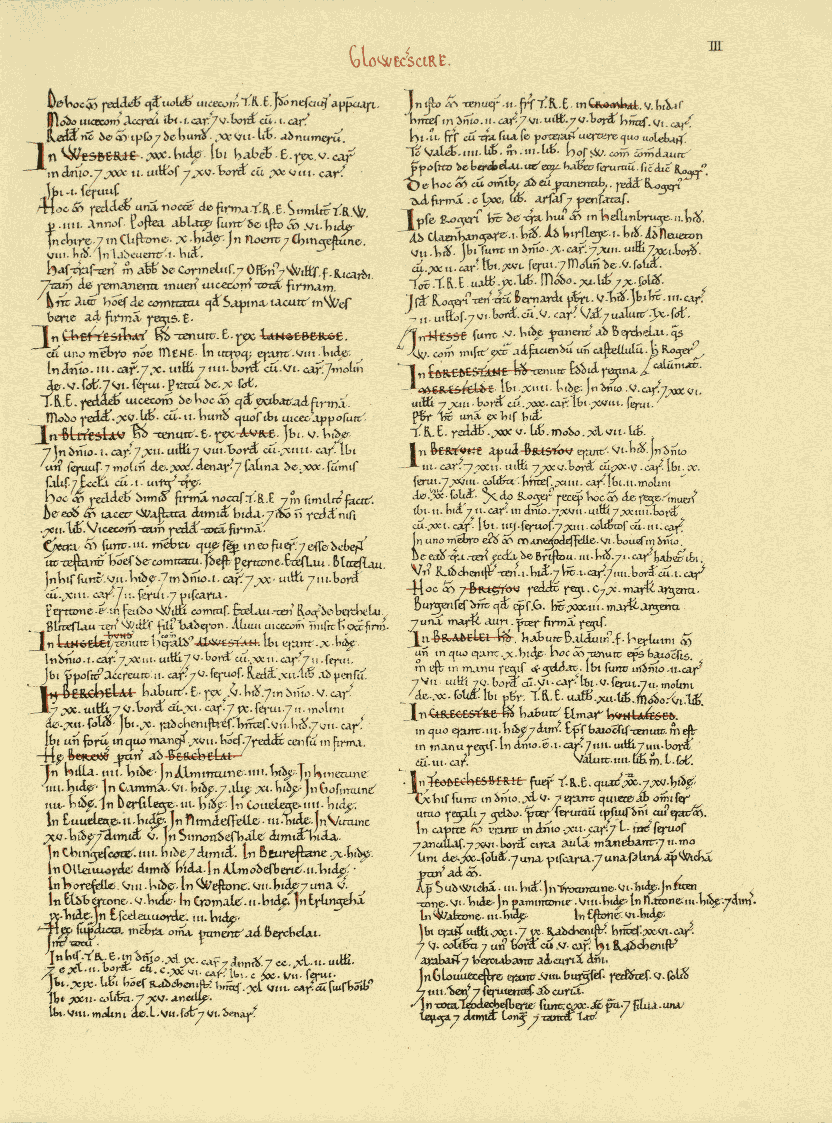
As well, perhaps helped by previous Anglo-Saxon tax records (easily accessible to the Norman officials because both they and their predecessors would have written in Latin), the Normans created a massive census, both of people and places, detailed practically down to the last chicken, asking, basically, “who is the owner? what does he own?  what’s it worth?  how much tax does he pay?”  It had no name, originally, as such, being called Liber de Wintonia—“the Winchester Book”—because that’s where the manuscript was originally stored.  (There were originally two volumes and you can read much more about them here:  https://en.wikipedia.org/wiki/Domesday_Book   And you can see the work itself here:  https://opendomesday.org/

The name by which we know it seems to have been a grim local joke, first known reference being in the 12th-century Dialogus de Scaccario, “Dialogue Concerning the Exchequer” (“scaccarium” being  a chess board, because the table used for accounting was gridded like one—it’s explained, in fact, in the “Dialogue”, but you can read about it here:  https://en.wikipedia.org/wiki/Exchequer ). 

In the text, the author (thought to have been Richard FitzNeal, the bishop of Ely, c.1130-1198), wrote:

“Hic liber ab indigenis ‘Domesdei’ nuncupatur id est dies iudicii per metaphoram.”

“This book is called by the locals ‘Doomsday’” : that is, as a metaphor, the Day of Judgment.”

(Dialogus de Scaccario, Book 1, Section 16B, which you can read here:  https://archive.org/details/cu31924021674365/page/n119/mode/2up in Latin, or here, in English:  https://avalon.law.yale.edu/medieval/excheq.asp#b1p16   This is a wonderfully practical text, explaining in enormous detail things like the vocabulary of the exchequer.  As is so often the case with medieval Latin, it’s a very pleasant read, written in plain, straightforward language and being just what it says it is, a dialogue between a “magister” and a “discipulus” .) 

Considering the choice of phrase, it isn’t surprising that that it was the choice of the “indigeni” .  One part of William’s master plan of conquest was to take the land away from its original Anglo-Saxon (indigenous) land-holders

and hand it over to his own followers, thus dispossessing most of the former—and, because those owners had no recourse, it must have seemed very like the Last Judgment—the original Doomsday.

Thus, when the members of the Fellowship hear “boom” turn into “doom”, it can suggest not only a play with sound, but the same kind of catastrophic event, trapped, as they seem to be, in the record room of Mazarbul—

(Angus McBride)

And we can take this one step farther.   As Tolkien’s income grew from the sale of his books, his frustration at the amount which disappeared into tax-paying grew, as he writes:

“A Socialist government will pretty well reduce me to penury on retirement!  As it is socialist legislation is robbing me of probably ¾ of the fruits of my labors, and my ‘royalties’ are merely waiting in the bank until  the Tax Collectors walk in and bag them.  Do you wonder that anyone who can gets out of this island?  Though soon there will be nowhere to go to escape the rising tide of ‘orquerie’.”  (letter to Michael Tolkien, 6 November, 1956, Letters, 367) 

So, when JRRT thought of “doom”, as a medievalist, might he also have been equating himself with those Anglo-Saxons, not only losing their homes, but forced to hand over their hard-earned cash

to those grim Normans, as well?

Thanks for reading, as always.

Stay well,

We’re only a month away, here in the US, from 15 April, our own “Domesday” for taxes owed,

And remember that, as ever, there’s

MTCIDC

O

Into the Fire

19 Wednesday Feb 2025

Posted by Ollamh in Uncategorized

≈ Leave a comment

Tags

Aetius, Attila, Chalons, Denethor, Faramir, Gandalf, lotr, Middle-earth, Palantir, Pippin, Saruman, Sauron, Tolkien

As ever, welcome, dear readers.

I’ve always admired the way in which JRRT shows the slow descent of Denethor into darkness, from someone who rules Gondor

(Denis Gordeev)

as if he were its rightful king, accepting Pippin’s offer of allegiance,

(Douglas Beekman—a prolific sci-fi fantasy illustrator.  You can see numbers of his illustrations here:  https://www.isfdb.org/cgi-bin/ea.cgi?23068  This catalogue if from the Internet Speculative Fiction Data Base, a wonderfully rich site if you have an interest in sci-fi.)

to the pensive and grieving father,

(an Alan Lee sketch)

to the desperate madman of his last scene—

(artist? so far, I can’t locate one)

But that last scene has always impressed me as Tolkien at his dramatic best.

It begins with the setting:

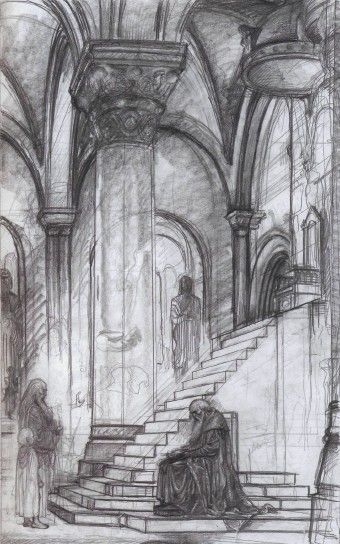
“There Pippin, staring uneasily around him, saw that he was in a wide vaulted chamber, draped as it were with the great shadows that the little lantern threw upon its shrouded walls.  And dimly to be seen were many rows of tables, carved of marble; and upon each table lay a sleeping form, hands folded, head pillowed upon stone.  But one table near at hand stood broad and bare.  Upon it at a sign from Denethor they laid Faramir and his father side by side, and covered them with one covering, and stood then with bowed heads as if mourners beside a bed of death.”

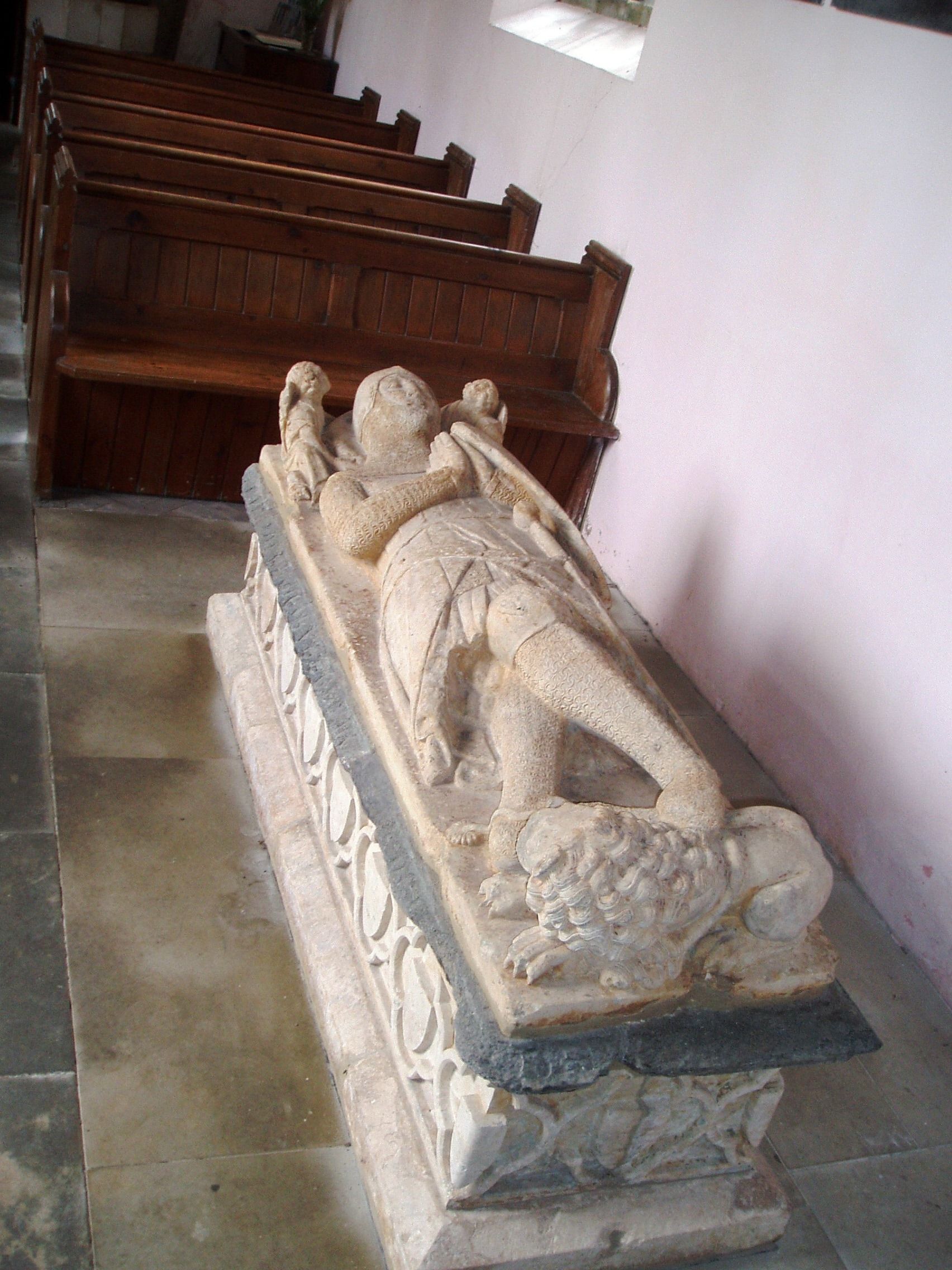
I think that we can imagine that JRRT’s image here is based upon any number of medieval English churches, with their tombs, usually along the walls, or,

more grandly,  the basilica of St Denis, in a northern suburb of Paris,

of which he might have seen a photo.  (As I haven’t found a reference that he had actually visited the place.)

What happens next, however, has a different model—or, rather, perhaps two. 

After having himself and Faramir placed on that empty table, Denethor then makes the terrible command:

“ ‘Here we will wait,’ he said.  ‘But send not for the embalmers.  Bring us wood quick to burn, and lay it all about us, and beneath; and pour oil upon it.  And when I bid you thrust in a torch.’ “ (all of the above from The Return of the King, Book Five, Chapter 4, “The Siege of Gondor”)

What’s going on here?   When Gandalf, summoned by Pippin attempts to stop this, Gandalf says to Denethor:

“ ‘Authority is not given to you, Steward of Gondor, to order the hour of your death,’…And only the heathen kings, under the domination of the Dark Power, did thus, slaying themselves in pride and despair, murdering their kin to ease their own death.’”  (The Return of the King, Book Five, Chapter 7, “The Pyre of Denethor”)

“Heathen”, from Old English haethen, came into English with the meaning “non-believer (in Christianity)” and seems, at first, rather an odd word for Gandalf to have employed, as Tolkien has written himself that “…the ‘Third Age’ was not a Christian world.” (letter to the Houghton Mifflin Co., 30 June, 1955, Letters, 319)

I wonder, however, whether JRRT was remembering something from early medieval history, which he might have read in conjunction with his early avid study of Gothic (which almost ruined his academic career—see his letter to Christopher of 2 January, 1969 (Letters, 558).

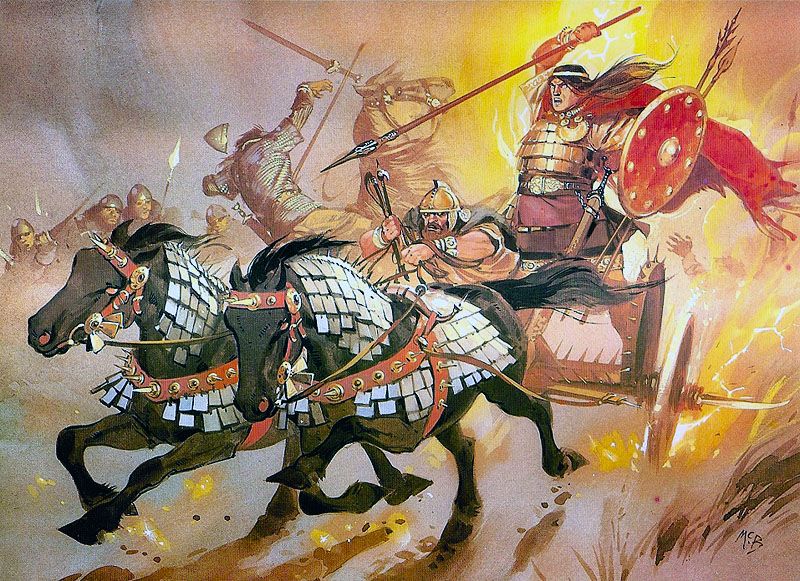
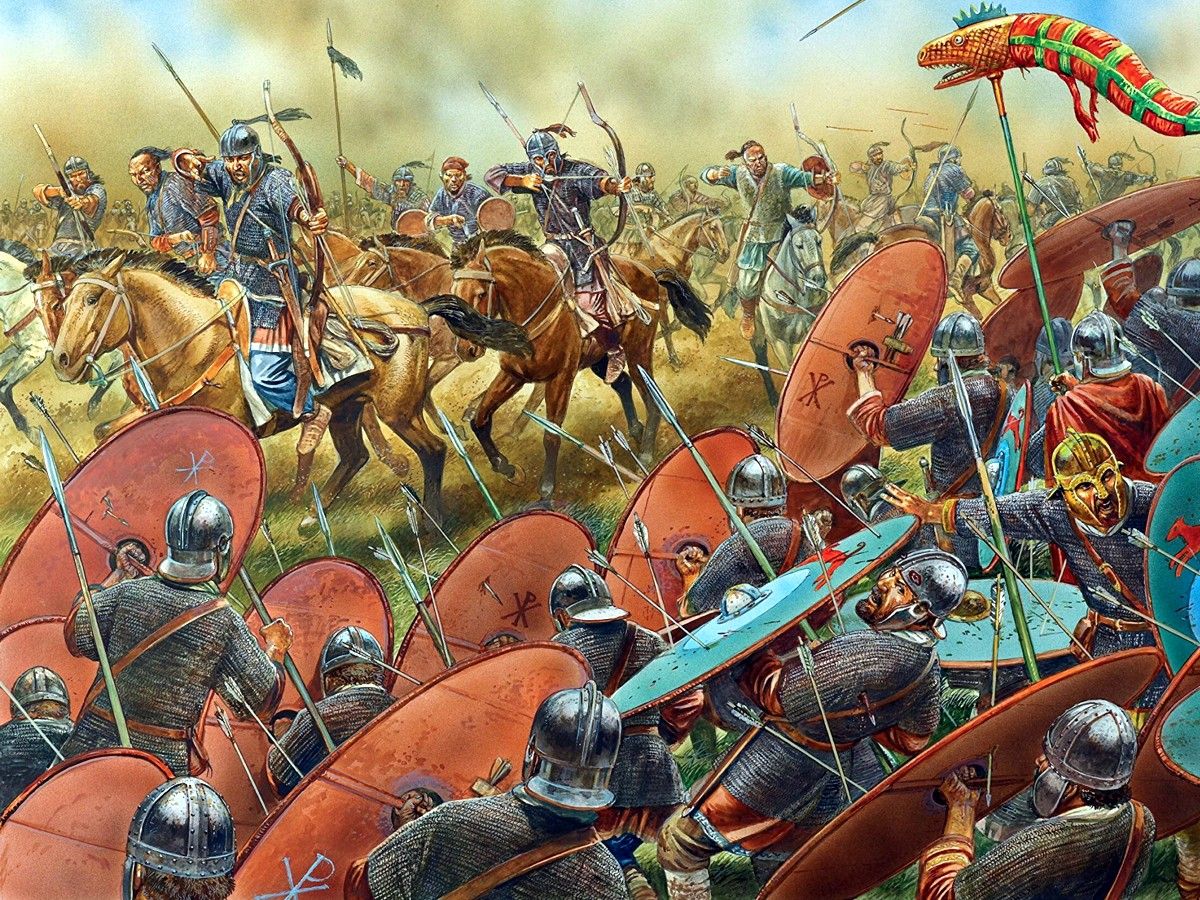
It’s in the account by the 6th-century Gothic historian, Jordanes, of the Battle of the Catalaunian Plains (also known as the Battle of Chalons), between Roman and their Germanic allies, including Visigoths, led by the Roman general, Aetius, and an invading army of Huns and their subject peoples, led by Attila, a battle fought on 20 June, 451.

(by Peter Dennis, one of my favorite contemporary military artists)

The battle was very much a back-and-forth affair, but late in it, the Huns had been driven back to their camp and Attila, usually the soul of confidence, was troubled–and this is where Jordanes’ description comes in:

Fertur autem desperatis rebus praedictum regem adhuc et suppraemo magnanimem equinis sellis construxisse pyram seseque, si adversarii inrumperent, flammis inicere voluisse, ne aut aliquis eius vulnere laetaretur aut in potestate hostium tantarum gentium dominus perveniret.  (Jordanes, De Origine Actibusque Getarum, XL, 213—my translation)

“It is said, moreover, that things were [so] despaired of, that the king [that is, Attila] still supremely brave,  commanded at this point that [they] build a pyre from horse saddles and, should the enemy break in [to his camp], he wished to throw himself into the flames lest either anyone take joy in wounding [him] or lest he, the master of so many peoples come into the power of the enemy.”

None of Attila’s kin is involved in this potential self-immolation, but certainly the pride is there and even despair (as in that “desperatis rebus”) which Gandalf mentions.

But, as I said earlier, there might be another model—and perhaps an even darker one.  Notice that

“But one table near at hand stood broad and bare.”

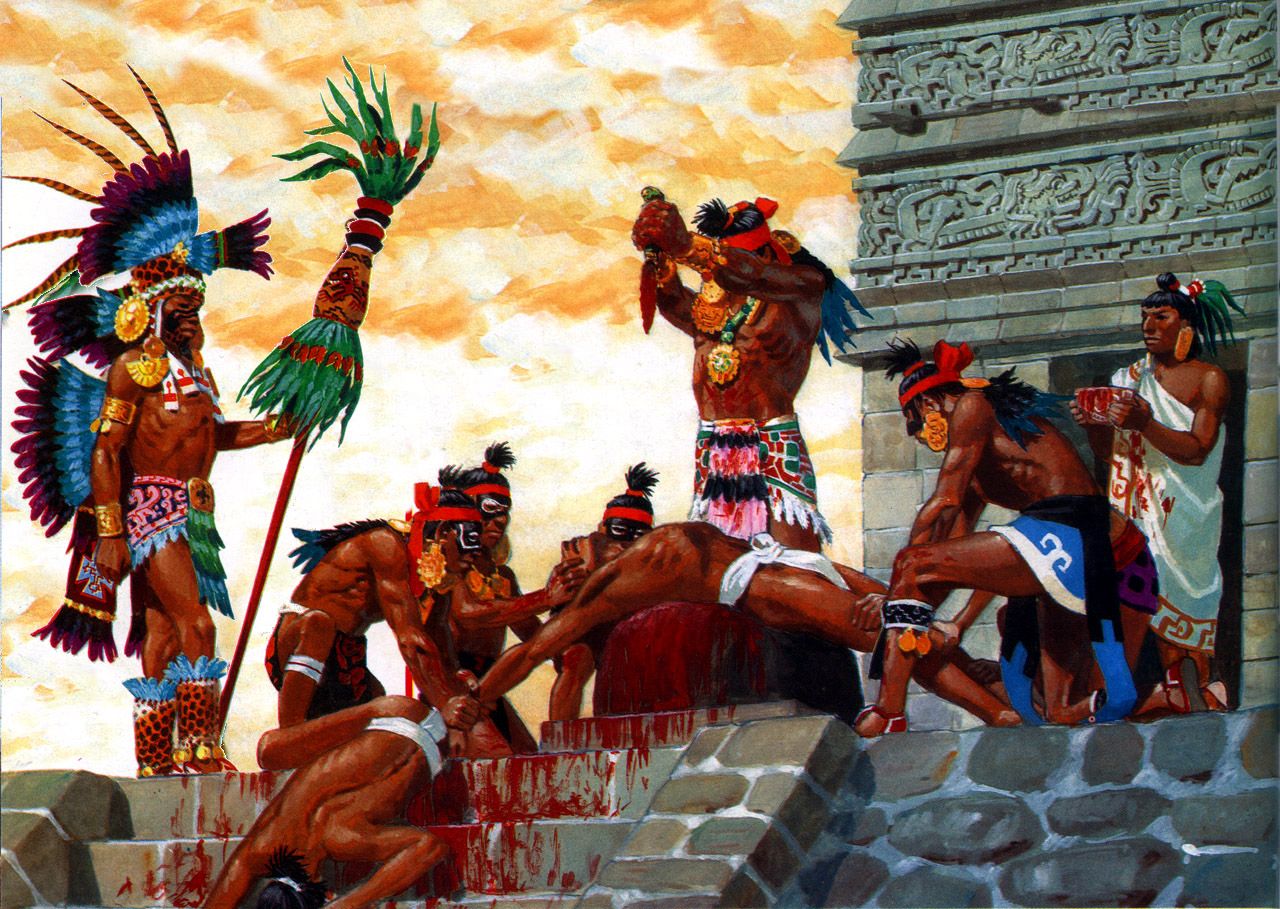
What immediately came to mind was that it resembled an altar—not a Christian one, but something from a different world, in which the symbolic sacrifice of the Christian religion was a real sacrifice—

(artist unknown)

I thought of this because of something which Tolkien had written about Sauron, who has become the prisoner of the Numenorean king Tar-Calion:

“…and seduces the king and most of the lords and people with his lies.  He denies the existence of God, saying that the One is a mere invention of the jealous Valar of the West, the oracle of their own wishes.  The chief of the gods is he that dwells in the Void, who will conquer in the end, and in the void make endless realms for his servants…

A new religion, and worship of the Dark, with its temple under Sauron arises.  The Faithful are persecuted and sacrificed.”  (letter to Milton Waldman, late 9n 1951, Letters, 216)

Why, we might ask, is Denethor so prepared to make a fiery end to himself and his son?

“ ‘Come!’ said Gandalf.  ‘We are needed.  There is much that you can yet do.’

Then suddenly Denethor laughed.  He stood up tall and proud again, and stepping swiftly back to the table he lifted from it the pillow on which his head had lain.  Then coming to the doorway he drew aside the covering, and lo!  he had between his hands a palantir.  And as he held it up, it seemed to those that looked on that the globe began to glow with an inner flame, so that the lean face of the Lord was lit as with a red fire, and it seemed cut out of hard stone, sharp with black shadows, noble, proud, and terrible.  His eyes glittered.

‘Pride and despair!’ he cried.  ‘Didst thou think that the eyes of the White Tower were blind?  Nay, I have seen more than thou knowest, Grey Fool.  For thy hope is but ignorance.  Go then and labour in healing!  Go forth and fight!  Vanity….The West has failed.  It is time for all to depart who would not be slaves.”

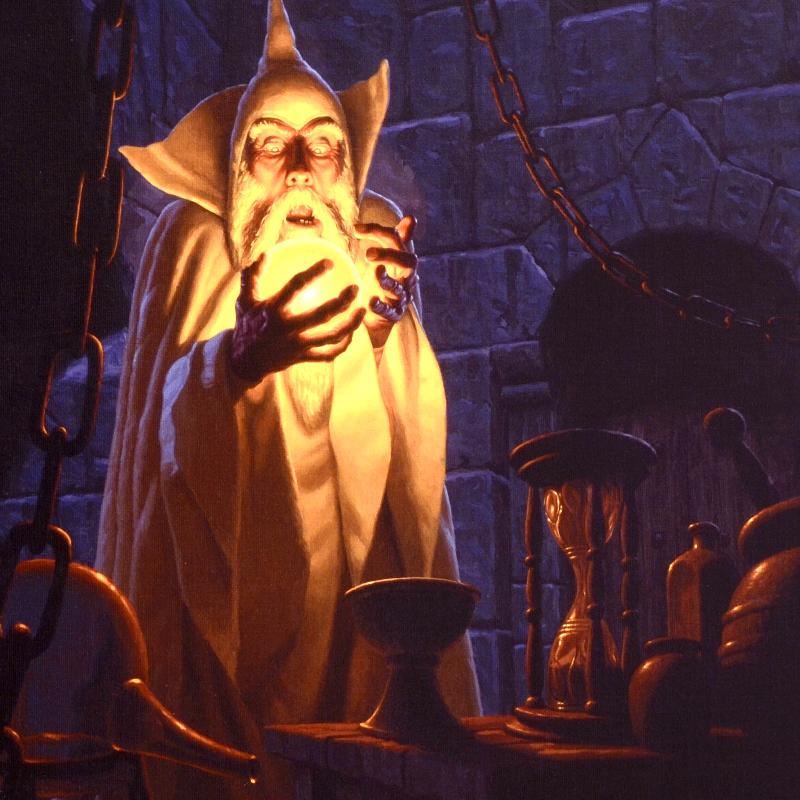
And the answer is in that palantir.  As it had earlier corrupted Saruman,

(the Hildebrandts)

and nearly driven Pippin mad with only one look into it, so it has shown Denethor exactly what Sauron had wanted him to see and, deluded, we might imagine that, in his action, he was not only destroying the current ruler of Gondor and his son, but was also acting like the Numenoreans who were his ancestors, making a sacrifice which Sauron had once demanded of them.

And, although Faramir is rescued, Denethor:

“…leaped upon the table, and standing wreathed in fire and smoke he took up the staff of his stewardship that lay at his feet and broke it on his knee.  Casting the pieces into the blaze he bowed and laid himself on the table, clasping the palantir with both hands upon his breast.  And it was said that ever after, if any man looked in that Stone, unless he had a great strength of will to turn it to other purpose, he saw only two aged hands withering in flame.”

And so Sauron had his sacrifice.

Thanks, as ever, for reading.

Stay well,

And remember that, as always, there’s

MTCIDC

O

Clubbing

15 Wednesday Jan 2025

Posted by Ollamh in Uncategorized

≈ Leave a comment

Tags

Bishop Odo of Bayeux, club, Eowyn, Fantasy, lord-of-the-nazgul, lotr, Mace, Merry, Teddy Roosevelt, theodore-roosevelt, Tolkien

Welcome, as always, dear readers.

So many earlier events are tied to this scene:

“The great shadow descended like a falling cloud…Upon it sat a shape, black-mantled, huge and threatening.”

It’s Eowyn about to challenge the Witch King of Angmar, the chief of the Nazgul, mounted upon his really disgusting creature.  Behind it lie:

1. the Black Riders

(the Gaffer and a Nazgul—perfectly captured by Denis Gordeev)

2. a sword taken from the barrow where the Barrow Wight almost makes an early end to the story

(a sketch for a painting by Matthew Stewart.  You can see more of his work here:  https://mattstewartartblog.blogspot.com/ )

3. Merry swearing fealty to Theoden

(a statue group from a Dutch site called “Odd World”:  https://www.oddworld.be/the-lord-of-rings-merry-and-theoden-miniatuur-beeld-1_prod11508.html

4. Eowyn, in despair over her unrequited love for Aragorn, disguising herself as “Dernhelm”, and taking Merry with her to Minas Tirith

(another Matthew Stewart)

5. one of those disgusting creatures

(Alan Lee)

And I’m sure that you can think of more, as it’s a wonderfully rich dramatic scene, including Tolkien at his archaizing best (William Morris would be very pleased with him):

“Begone, foul dwimmerlaik, lord of carrion!”

As you can imagine, there are numerous illustrations of it—from the Hildebrandts

to Alan Lee

to Ted Nasmith

to Denis Gordeev—

In each case, it’s interesting to see what moment in the scene each artist has chosen.  What caught my eye this time, however, wasn’t a person or creature or even the action, but an object:

“…the Lord of the Nazgul.  To the air he had returned, summoning his steed ere the darkness failed, and now he was come again, bringing ruin, turning hope to despair, and victory to death.  A great black mace he wielded.”

If you knew nothing about weaponry, you’d know that, at least, it’s a weapon, if, for no other reason,from its effect:

“With a cry of hatred that stung the very ears like venom he let fall his mace.  Her shield was shivered in many pieces, and her arm was broken…”  (The Return of the King, Book Five, Chapter 6, “The Battle of the Pelennor Fields”)

If you look up “mace” in Wikipedia, you find a wide variety of possibilities, however, everything from a spice

to a kind of tear gas

to a Star Wars character

(I’m afraid that I don’t have an artist for this, but how could I resist such a wonderful depiction?)

and more—which you can investigate here:  https://en.wikipedia.org/wiki/Mace –but it’s the weapon which I was interested in.

We have earlier seen Nazgul armed with swords:

“There were five tall figures:  two standing on the lip of the dell, three advancing.  In their white faces burned keen and merciless eyes; under their mantles were long grey robes; upon their grey hairs were helms of silver; in their haggard hands were swords of steel.”  (The Fellowship of the Ring, Book One, Chapter 11, “A Knife in the Dark”)

(Weathertop by Alan Lee)

And, of course, at least one dagger—the Morgul Knife which wounds Frodo.

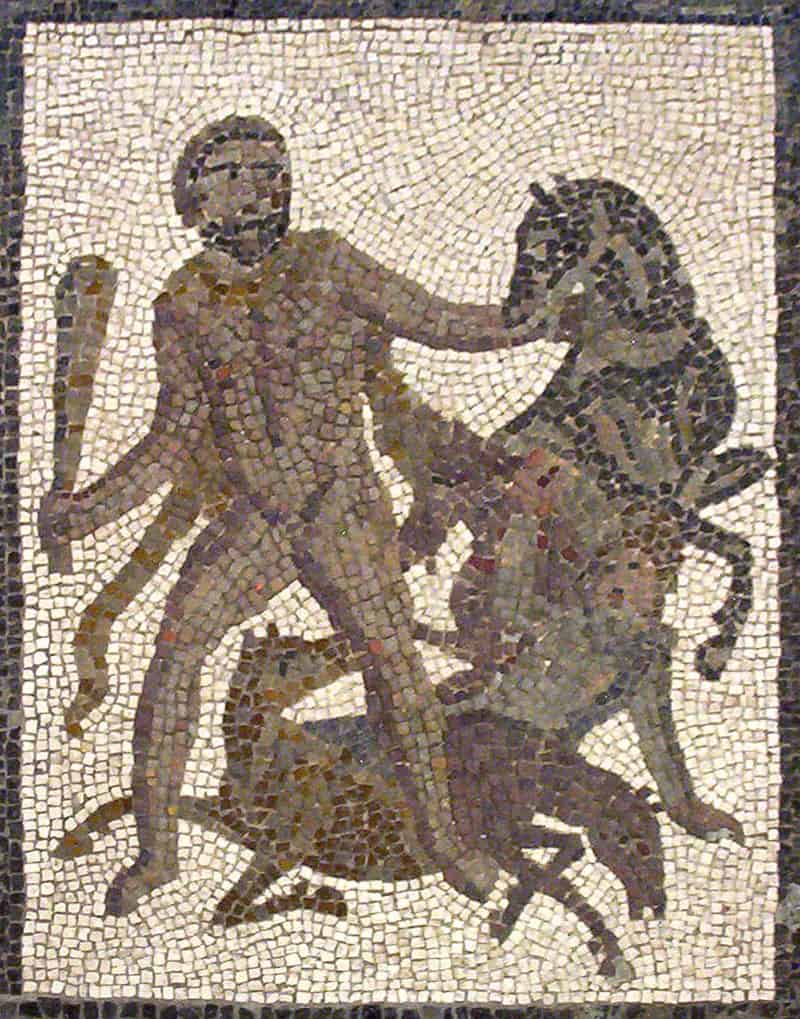
The mace, however, is new—but, in fact, very old.  It’s a kind of club, originally probably nothing more than the sort of thing which Herakles carries.

(a rather sea-sick looking Herakles, sailing in the cup of Helios)

When it comes to violence, however, people are endlessly inventive and, by the time of the Egyptians, we find polished stone heads

which, when attached to a stick, became a favorite early bashing weapon.

(from the so-called “Narmer palette”—31st century BC—this is an interesting find from 1894 from the ancient Egyptian site of Nekhen—you can read more about it here:  https://en.wikipedia.org/wiki/Hierakonpolis )

Tolkien’s model, however, would have come from a much later, probably medieval, period and the fact that it’s black might indicate that it’s made of iron.  Of course there’s one medieval wooden club which JRRT would have known—

This is Odo, the bishop of Bayeux, in Normandy, the half-brother of Duke William, at the battle of Hastings.  Apparently, as an ecclesiastic, he felt unable to wield a sword or spear, like other Normans, and so he has armed himself with what might be thought of (although not by its victims) as a more “peaceable” weapon.

But this is, shall we say, unusual, and there were a wide variety of types to choose from—here’s a selection, along with other medieval weapons–

(by the Funckens, Liliane and Fred, from a very lively 3-volume set on medieval and Renaissance clothing, armor, and weaponry)

Various artists have made different choices, modeling their work on actual maces, or spinning off into fantasy, but perhaps we can do what Tolkien did with the Rohirrim, when he suggested that their armor would look like the mail of the Normans in the Bayeux Tapestry.  (see letter to Rhona Beare, 14 October, 1958, Letters, 401).  I haven’t spotted a Norman actually using a mace, but there appears to be an image of one here, between the charging Normans and the defending Anglo-Saxons, on the left (thrown by one of the latter?)–

It’s a bit small for Tolkien’s description, but, blow it up a bit for scale (after all, the Nazgul towers over Eowyn) and perhaps the one labeled “German 16” below would be a rough match?

Ironically, it’s Merry’s ancient sword which saves Eowyn, but, before that, that mace, combined with the force of the Nazgul’s swing, smashes Eowyn’s shield (probably made of overlapping layers of wood, perhaps with a metal covering?) and would have smashed her as well, reminding me of a remark supposedly made by the early 20th-century US President, Theodore Roosevelt, “Speak softly—and carry a big stick”!

Thanks, for reading, as always.

Stay well,

Dare I say stick around

Because, as always, there’s

MTCIDC?

O
Newer posts →

The Doubtful Sea Series Facebook Page

The Doubtful Sea Series Facebook Page

  • Ollamh

Categories

  • Artists and Illustrators
  • Economics in Middle-earth
  • Fairy Tales and Myths
  • Films and Music
  • Games
  • Heroes
  • Imaginary History
  • J.R.R. Tolkien
  • Language
  • Literary History
  • Maps
  • Medieval Russia
  • Military History
  • Military History of Middle-earth
  • Narnia
  • Narrative Methods
  • Poetry
  • Research
  • Star Wars
  • Terra Australis
  • The Rohirrim
  • Theatre and Performance
  • Tolkien
  • Uncategorized
  • Villains
  • Writing as Collaborators
Follow doubtfulsea on WordPress.com

Across the Doubtful Sea

Recent Postings

  • Through a glass… January 7, 2026
  • Heffalumps? December 31, 2025
  • We Three Kings December 24, 2025
  • A Moon disfigured December 17, 2025
  • On the Roads Again—Once More December 10, 2025
  • (Not) Crossing Bridges December 3, 2025
  • On the Road(s) Again—Again November 26, 2025
  • On the Road(s) Again November 19, 2025
  • To Bree (Part 2) November 12, 2025

Blog Statistics

  • 104,131 Views

Posting Archive

  • January 2026 (1)
  • December 2025 (5)
  • November 2025 (4)
  • October 2025 (5)
  • September 2025 (4)
  • August 2025 (4)
  • July 2025 (5)
  • June 2025 (4)
  • May 2025 (4)
  • April 2025 (5)
  • March 2025 (4)
  • February 2025 (4)
  • January 2025 (5)
  • December 2024 (4)
  • November 2024 (4)
  • October 2024 (5)
  • September 2024 (4)
  • August 2024 (4)
  • July 2024 (5)
  • June 2024 (4)
  • May 2024 (5)
  • April 2024 (4)
  • March 2024 (4)
  • February 2024 (4)
  • January 2024 (5)
  • December 2023 (4)
  • November 2023 (5)
  • October 2023 (4)
  • September 2023 (4)
  • August 2023 (5)
  • July 2023 (4)
  • June 2023 (4)
  • May 2023 (5)
  • April 2023 (4)
  • March 2023 (5)
  • February 2023 (4)
  • January 2023 (4)
  • December 2022 (4)
  • November 2022 (5)
  • October 2022 (4)
  • September 2022 (4)
  • August 2022 (5)
  • July 2022 (4)
  • June 2022 (5)
  • May 2022 (4)
  • April 2022 (4)
  • March 2022 (5)
  • February 2022 (4)
  • January 2022 (4)
  • December 2021 (5)
  • November 2021 (4)
  • October 2021 (4)
  • September 2021 (5)
  • August 2021 (4)
  • July 2021 (4)
  • June 2021 (5)
  • May 2021 (4)
  • April 2021 (4)
  • March 2021 (5)
  • February 2021 (4)
  • January 2021 (4)
  • December 2020 (5)
  • November 2020 (4)
  • October 2020 (4)
  • September 2020 (5)
  • August 2020 (4)
  • July 2020 (5)
  • June 2020 (4)
  • May 2020 (4)
  • April 2020 (5)
  • March 2020 (4)
  • February 2020 (4)
  • January 2020 (6)
  • December 2019 (4)
  • November 2019 (4)
  • October 2019 (5)
  • September 2019 (4)
  • August 2019 (4)
  • July 2019 (5)
  • June 2019 (4)
  • May 2019 (5)
  • April 2019 (4)
  • March 2019 (4)
  • February 2019 (4)
  • January 2019 (5)
  • December 2018 (4)
  • November 2018 (4)
  • October 2018 (5)
  • September 2018 (4)
  • August 2018 (5)
  • July 2018 (4)
  • June 2018 (4)
  • May 2018 (5)
  • April 2018 (4)
  • March 2018 (4)
  • February 2018 (4)
  • January 2018 (5)
  • December 2017 (4)
  • November 2017 (4)
  • October 2017 (4)
  • September 2017 (4)
  • August 2017 (5)
  • July 2017 (4)
  • June 2017 (4)
  • May 2017 (5)
  • April 2017 (4)
  • March 2017 (5)
  • February 2017 (4)
  • January 2017 (4)
  • December 2016 (4)
  • November 2016 (5)
  • October 2016 (6)
  • September 2016 (5)
  • August 2016 (5)
  • July 2016 (5)
  • June 2016 (5)
  • May 2016 (4)
  • April 2016 (4)
  • March 2016 (5)
  • February 2016 (4)
  • January 2016 (4)
  • December 2015 (5)
  • November 2015 (5)
  • October 2015 (4)
  • September 2015 (5)
  • August 2015 (4)
  • July 2015 (5)
  • June 2015 (5)
  • May 2015 (4)
  • April 2015 (3)
  • March 2015 (4)
  • February 2015 (4)
  • January 2015 (4)
  • December 2014 (5)
  • November 2014 (4)
  • October 2014 (6)
  • September 2014 (1)

Blog at WordPress.com.

  • Subscribe Subscribed
    • doubtfulsea
    • Join 78 other subscribers
    • Already have a WordPress.com account? Log in now.
    • doubtfulsea
    • Subscribe Subscribed
    • Sign up
    • Log in
    • Report this content
    • View site in Reader
    • Manage subscriptions
    • Collapse this bar
 

Loading Comments...