• About

doubtfulsea

~ adventure fantasy

Tag Archives: Huns

Hybrids

01 Wednesday Jan 2025

Posted by Ollamh in Uncategorized

≈ Leave a comment

Tags

anglo-saxons, Boudica, chariots, eurasian-steppe, Huns, hybrds, Hybrids, Jacksons The Lord of the Rings, jacksons-lord-of-the-rings, Julius Caesar, Mongols, Normans, Rohirrim, Sarmatians, Scythians, Tacitus, Tolkien, Wainriders

As always, dear readers, welcome.

The title of this piece might suggest electric cars, and it definitely will mention several different wheeled vehicles, but it is actually what I hope is a little study in something Tolkien does wonderfully well:  taking different elements from different times and cultures and so blending them that they become believable new wholes.

Although I don’t always agree with elements in Jackson’s The Lord of the Rings, one thing has always given me pleasure:  the Rohirrim, whether en masse

or a small grouping.

And this is true for Edoras

as well as for Meduseld.

And yet they appear to be a kind of combination of peoples:  on the one hand, Tolkien imagined them to be Anglo-Saxons,
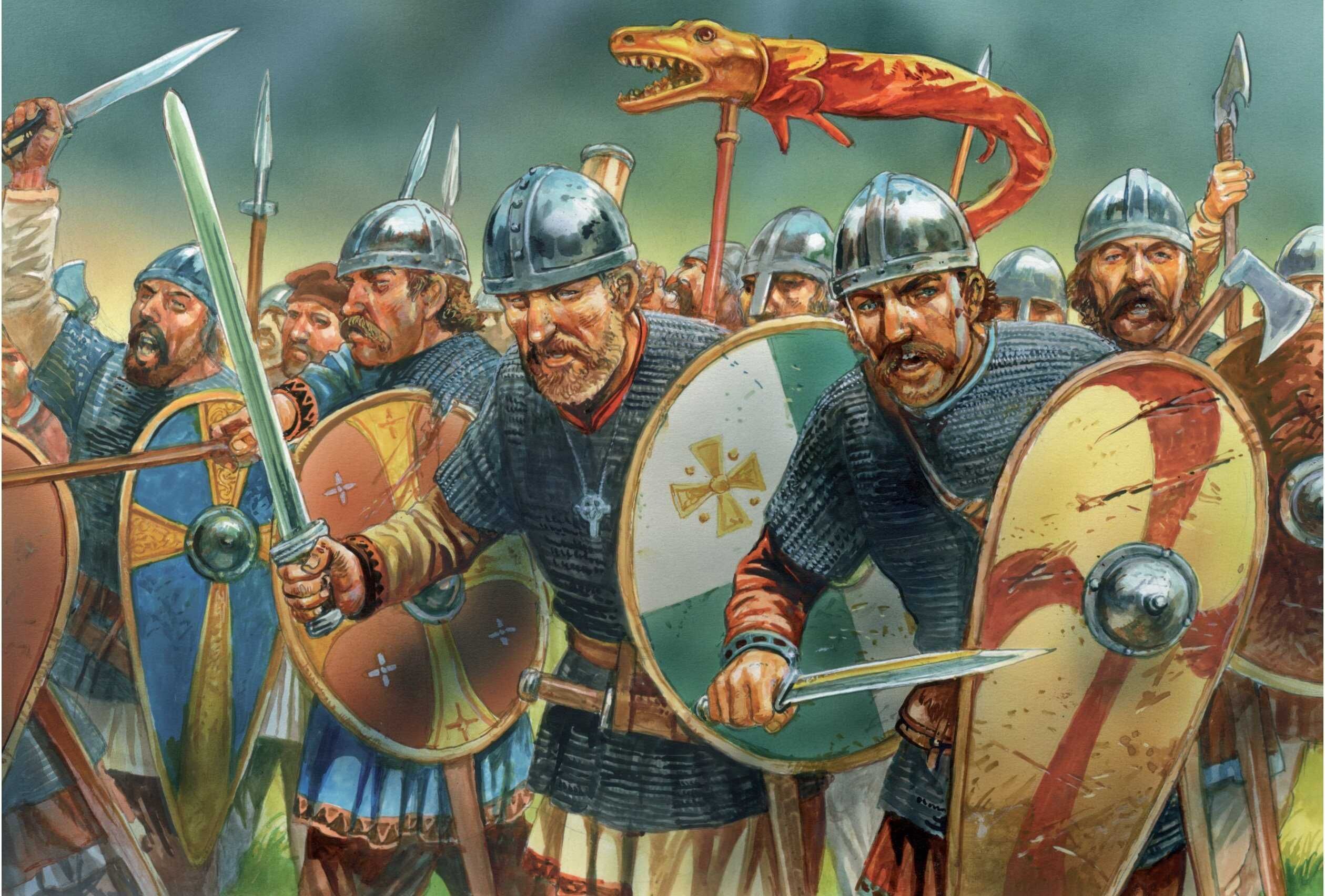
(Peter Dennis)

a people who primarily fought on foot, as at their last two major battles, Stamford Bridge,
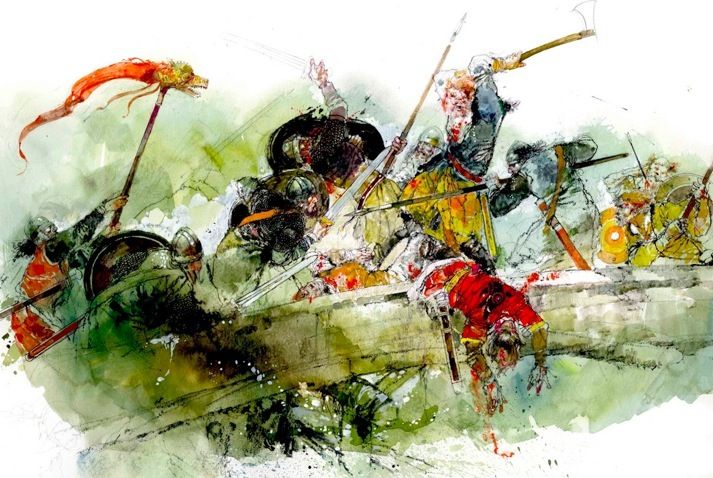
(Victor Ambrus—who worked for years with the popular British archeology series, Time Team—which is available on YouTube and much recommended)

where they defeated another infantry force, the Vikings, and Hastings,
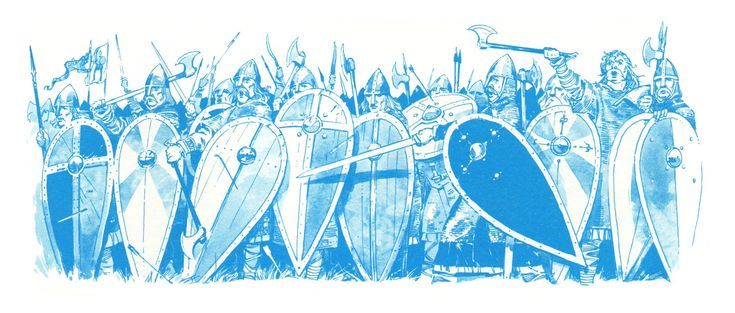
(Artist?)

in which they were overwhelmed at the battle’s conclusion by Norman cavalry.
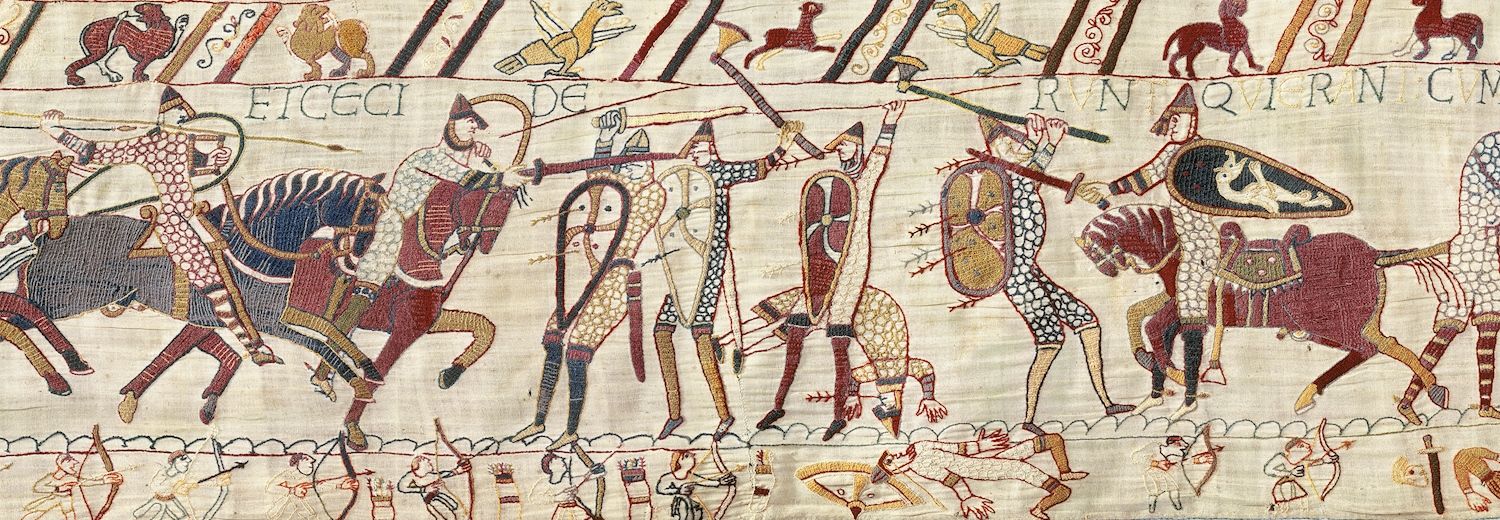
(From the wonderful “Bayeux Tapestry”—actually the “Bayeux Embroidery”—if you’d like to see the whole thing, look here:  https://www.bayeuxmuseum.com/en/the-bayeux-tapestry/discover-the-bayeux-tapestry/explore-online/  To my knowledge, there’s nothing like it from the Middle Ages for depicting a specific series of events in the medieval world.)

On the other hand, the Rohirrim were mounted, more like those Normans who defeated the Anglo-Saxons,

although the language they speak is, basically, a form of Old English, the language of the Anglo-Saxons.  Tolkien imagined them, in fact, as looking like the Normans, as well, describing them in a letter to Rhona Beare:

“The styles of the Bayeux Tapestry (made in England) fit them well enough, if one remembers that the kind of tennis-nets [the] soldiers seem to have on are only a clumsy conventional sign for chain-mail of small rings.”  (letter to Rhona Beare, 14 October, 1958, Letters, 401)

That is, their armor actually can look like this—
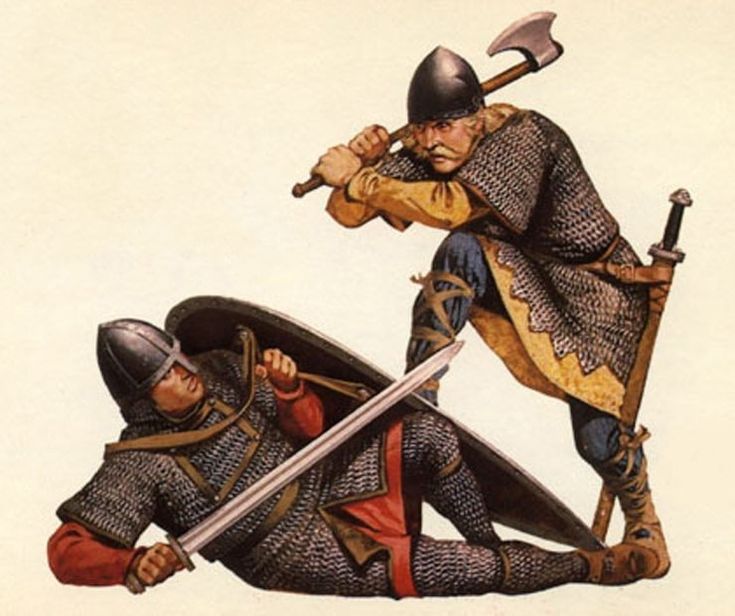
(By Angus McBride—and ironic, as, for all that McBride must have painted dozens of figures in chain mail, he once confessed in an interview that it was his least favorite part of illustrating, as the mail took so long to do.)

It’s also interesting to think about them as a people.  Anglo-Saxons were descended from a combination of locals (Romano-British) and various groups of west-Germanic tribesmen who had either been early post-Roman invaders of Britain or Germanic tribesmen brought to Britain to protect the locals from those invaders and who had become colonizers in turn.

But who were the Rohirrim and where did they come from?

“Eorl the Young was lord of the Men of Eotheod.  That land lay near the sources of Anduin, between the furthest ranges of the Misty Mountains and the northernmost parts of Mirkwood.”

(JRRT)

They had not always lived there, however:

“The Eotheod [from Old English, “Horsefolk”] had moved to those regions in the days of King Earnil II [TA 1945-2043] from lands in the vales of Anduin between the Carrock and the Gladden, and they were in origin close akin to the Beornings and the men of the west-eaves of the forest.  The forefathers of Eorl claimed descent from kings in Rhovanion, whose realm lay beyond Mirkwood before the invasions of the Wainriders…They loved best the plains and delighted in horses and in all feats of horsemanship…” (The Lord of the Rings, Appendix A II “The House of Eorl”)

The combination of “They loved best the plains and delighted in horses” makes perfect sense when one thinks about comparative history in our Middle-earth.  Consider the Eurasian Steppe, stretching from western China all the way to the Hungarian puszta.

This is an immense belt of grassland,

some 5000 miles (8000km) wide,

and has been the homeland of numerous horsefolk throughout history, from the Scythians
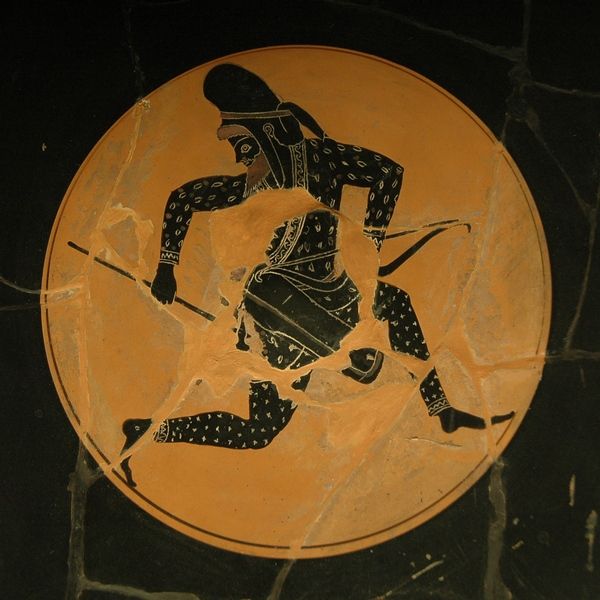
to the Sarmatians
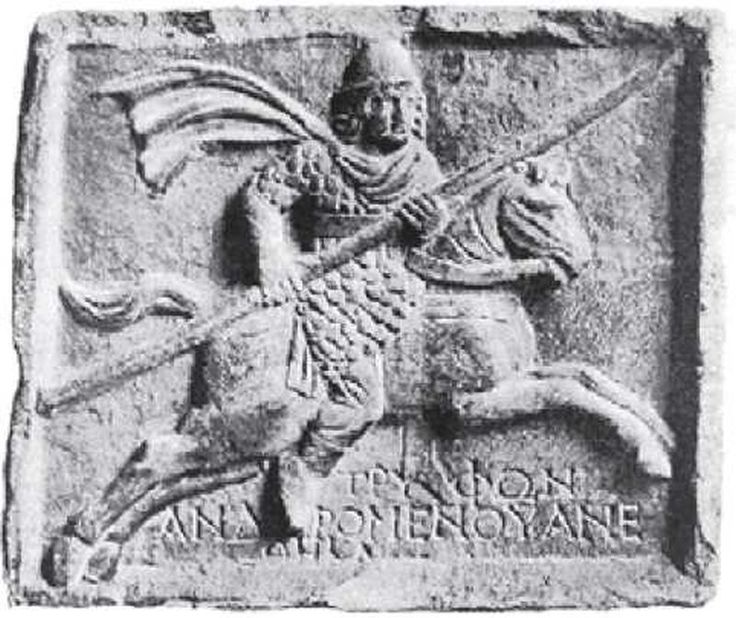
to the Huns
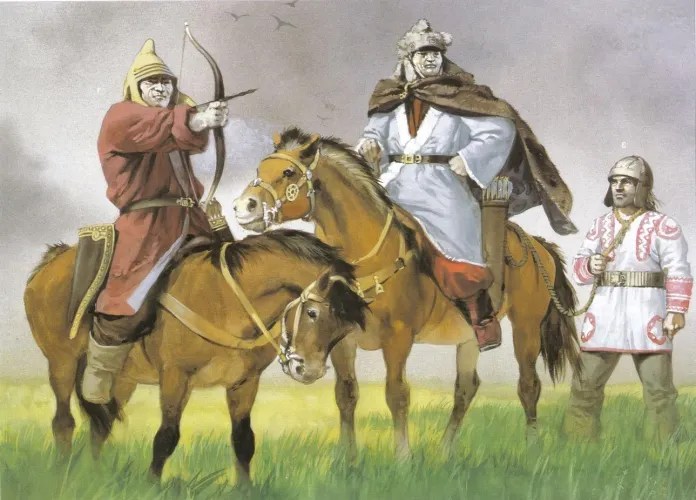
(Angus McBride)

to the Mongols.
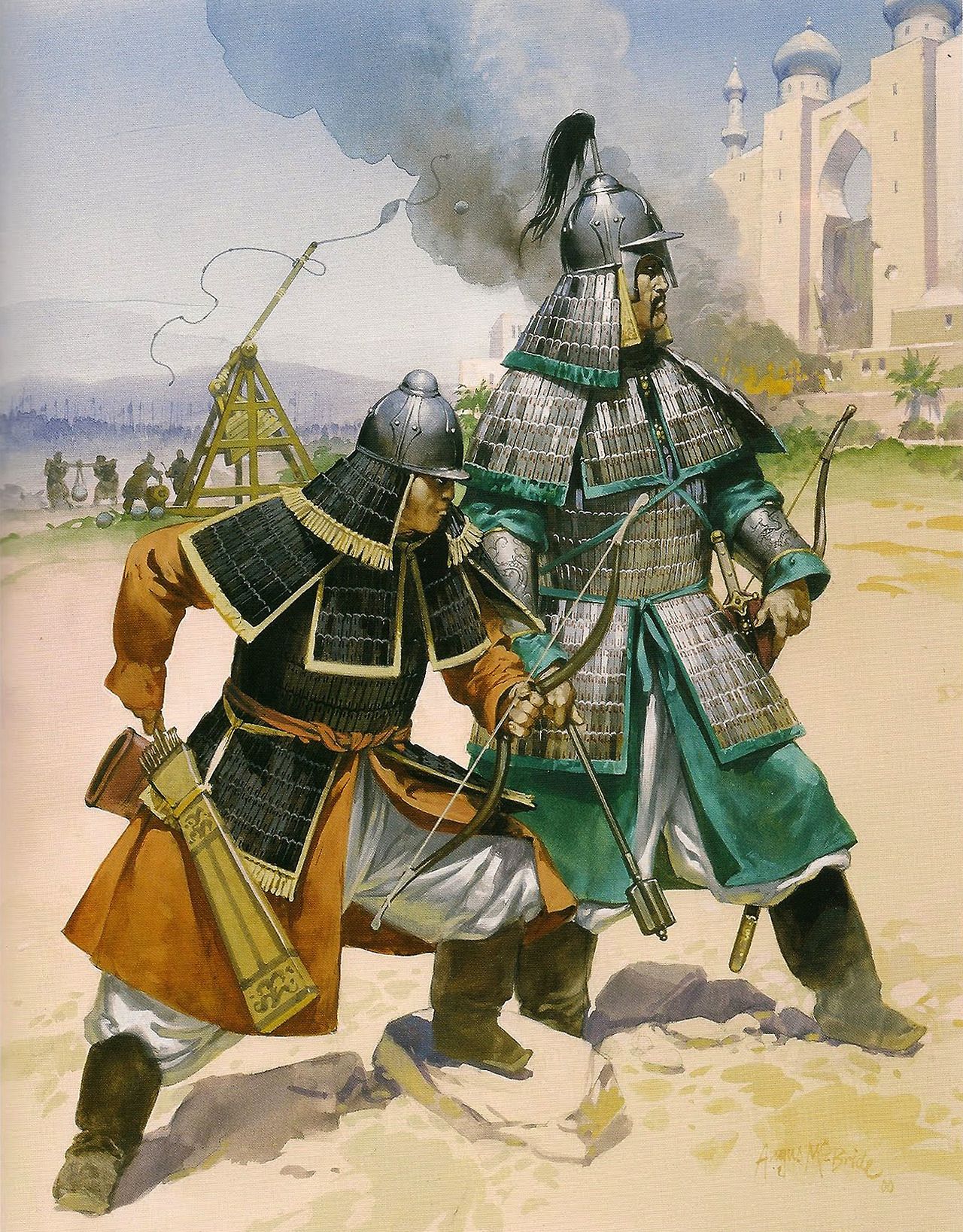
(another McBride)

All of these peoples have used the Steppe to graze their herds of horses, sometimes moving west for grazing, sometimes moving west when pressured by others further east, and sometimes as predators, like the Huns, moving west to seek new plunder.
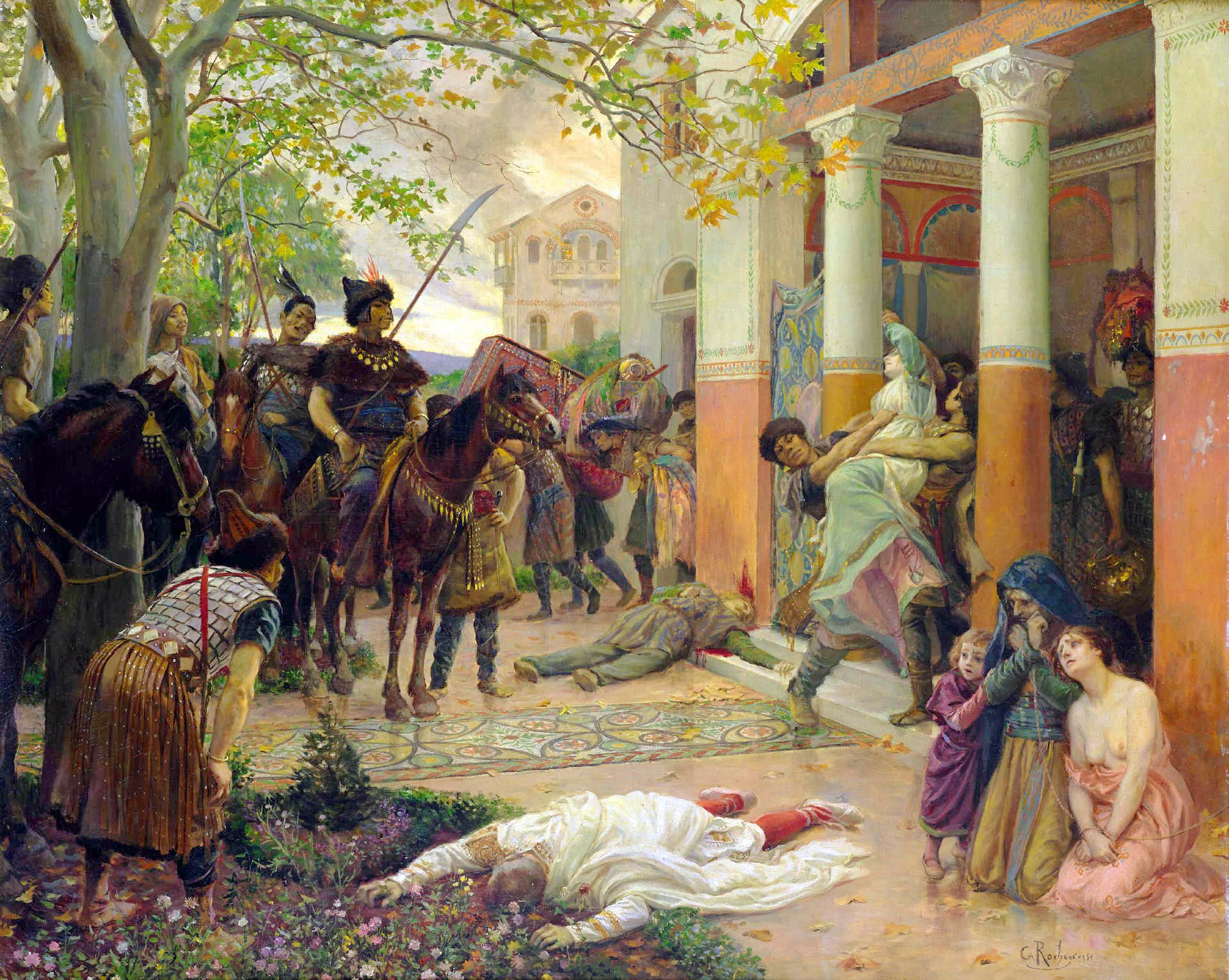
(I haven’t been able to identify an artist for this–it has the look of late-Victorian.)

In two of these cases, whole peoples might be on the move and this is perhaps where Tolkien has gotten part of his description of those Wainriders he mentions:

“The Wainriders were a people, or a confederacy of many peoples, that came from the East; but they were stronger and better armed than any that had appeared before.  They journeyed in great wains, and their chieftains fought in chariots…” 

So, we can imagine that the Eotheod, pressured by the Wainriders, were forced west, as one steppe people is pushed westward by another to the east. 

But Tolkien gives us another—or perhaps additional–possibility:

“Stirred up, as was afterwards seen, by the emissaries of Sauron, they made a sudden assault on Gondor…The people of eastern and southern Rhovanion were enslaved; and the frontiers of Gondor were for that time withdrawn to the Anduin and the Emyn Muil.” (The Lord of the Rings, Appendix A, IV “Gondor and the Heirs of Anarion”)

The Wainriders, then, might be both steppe peoples moving westwards, but also predators, like the Huns, or like the Mongols, who were both predators and empire-builders, and here we might see Mongols with their characteristic ger (a large round tent)—on a wagon—perhaps like the Wainriders?
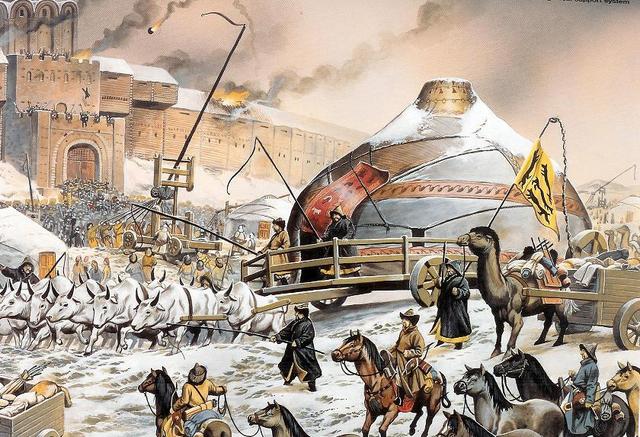
(Wayne Reynolds)

Although there is no mention in our text of the Rohirrim migrating with wagons, it’s clear from parallels in our world that the peoples who crossed the Eurasian Steppe appear to have used them regularly.  But here, like the Rohirrim, we have another odd juxtaposition.  The Rohirrim are Anglo-Saxons on horseback:  cavalry, which was true for all of those migrants across the Steppe in our world.  Chariots, however, although Tolkien says that the Wainrider chiefs fought in them (of which fact this is the only mention) were not part of those other horsefolks’ arsenals.  Where did they come from?

The answer, I think, lies in the period of British history before the Anglo-Saxons and almost before the Romans, among the earlier Celtic settlers of England.  Julius Caesar encountered chariots there and described their use:

Genus hoc est ex essedis pugnae. Primo per omnes partes perequitant et tela coiciunt atque ipso terrore equorum et strepitu rotarum ordines plerumque perturbant, et cum se inter equitum turmas insinuaverunt, ex essedis desiliunt et pedibus proeliantur. 2 Aurigae interim paulatim ex proelio excedunt atque ita currus conlocant ut, si illi a multitudine hostium premantur, expeditum ad quos receptum habeant. 3 Ita mobilitatem equitum, stabilitatem peditum in proeliis praestant, ac tantum usu cotidiano et exercitatione efficiunt uti in declivi ac praecipiti loco incitatos equos sustinere et brevi moderari ac flectere et per temonem percurrere et in iugo insistere et se inde in currus citissime recipere consuerint.

“This is the kind of fighting from chariots.  At first, they ride around in all directions and throw spears and often, by the very frightfulness of the horses and the roar of the wheels, they shake the ranks [of the enemy] and, when they have slipped themselves among the troops of [enemy] cavalry, they leap from the chariots and fight on foot.  Meanwhile, the charioteers move out a little way from the fighting and so place their vehicles that, if they [the dismounted fighters] should be pressed by a large number of the enemy, they may have an easy retreat to them.  Thus, they provide the mobility of cavalry [as well as] the steadiness of infantry in [their] battles and they accomplish so much by daily practice and exercise that they are accustomed to control their stirred-up horses on a sloping and steep place and rein [them] in quickly and to turn [them] and to run along the yoke pole and to stand on the yoke and from there to take themselves back into the vehicles extremely speedily.”  (Caesar, De Bello Gallico, Book IV, Chapter 33—my translation)

(Angus McBride)

Tolkien may have remembered this from his schooldays, when he would first have encountered the text—and he might have found those wagons there, too, although slightly later.  When, in 60-61AD, the Iceni queen, Boudica, led a revolt against Roman rule,

(Peter Dennis)

in the final battle, when the tribesmen advanced towards the Roman formation, as Tacitus (c.56-c.120AD) tells us, their families watched from their wagons, placed behind the battle line (De Vita et Moribus Iulii Agricolae, Chapter 34).  And, as a prelude to the battle, Boudica had ridden among the ranks in a chariot (Chapter 35).

(another Peter Dennis—in fact, if you’d like to know more about this amazing woman, who, for a brief time, had been a real threat to the Romans, you might invest in: 
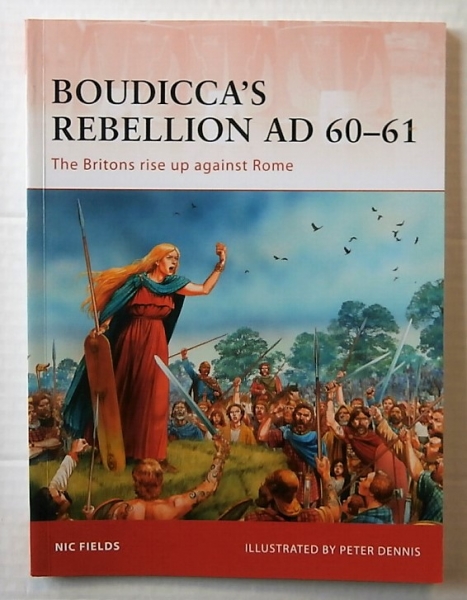
And so, as in combining Anglo-Saxon and Norman to create the Rohirrim, Tolkien may have taken Steppe people, added Celtic Britons, and produced the Wainriders. 

Thanks, as always for reading.

Stay well,

Remember that a horse will drink, on average, between 5 and 10 gallons (19-38 litres) of water a day,

And remember, as well, that there’s always

MTCIDC

O
What If…

31 Wednesday May 2017

Posted by Ollamh in Artists and Illustrators, J.R.R. Tolkien, Literary History, Maps, Military History, Military History of Middle-earth, Narrative Methods, Tolkien

≈ Leave a comment

Tags

Alamo, Andelkrag, Anduin, Caernarfon, Carcassonne, Duc de Berry, fortresses, Hal Foster, Harry Turtledove, Howard Pyle, Huns, Minas Tirith, moat, Mont Saint Michel, Mordor, Numenor, Peter Jackson, Portchester, Prince Valiant, Rohirrim, S.M. Stirling, Santa Anna, Segontium, Siege Warfare, Texas War for Independence, The Lord of the Rings, The Return of the King, Tiryns, Tolkien, Tower of Orthanc, Tres Riches Heures

Welcome, readers, as always.

If you are among our excellent regulars, you know that we’re fascinated by history (one of us has taught it for years). One subset of our interest is “what ifs”, two of our favorite scifi/fantasy authors being Harry Turtledove and S.M. Stirling, who have written numerous books exploring all sorts of alternative places and times.

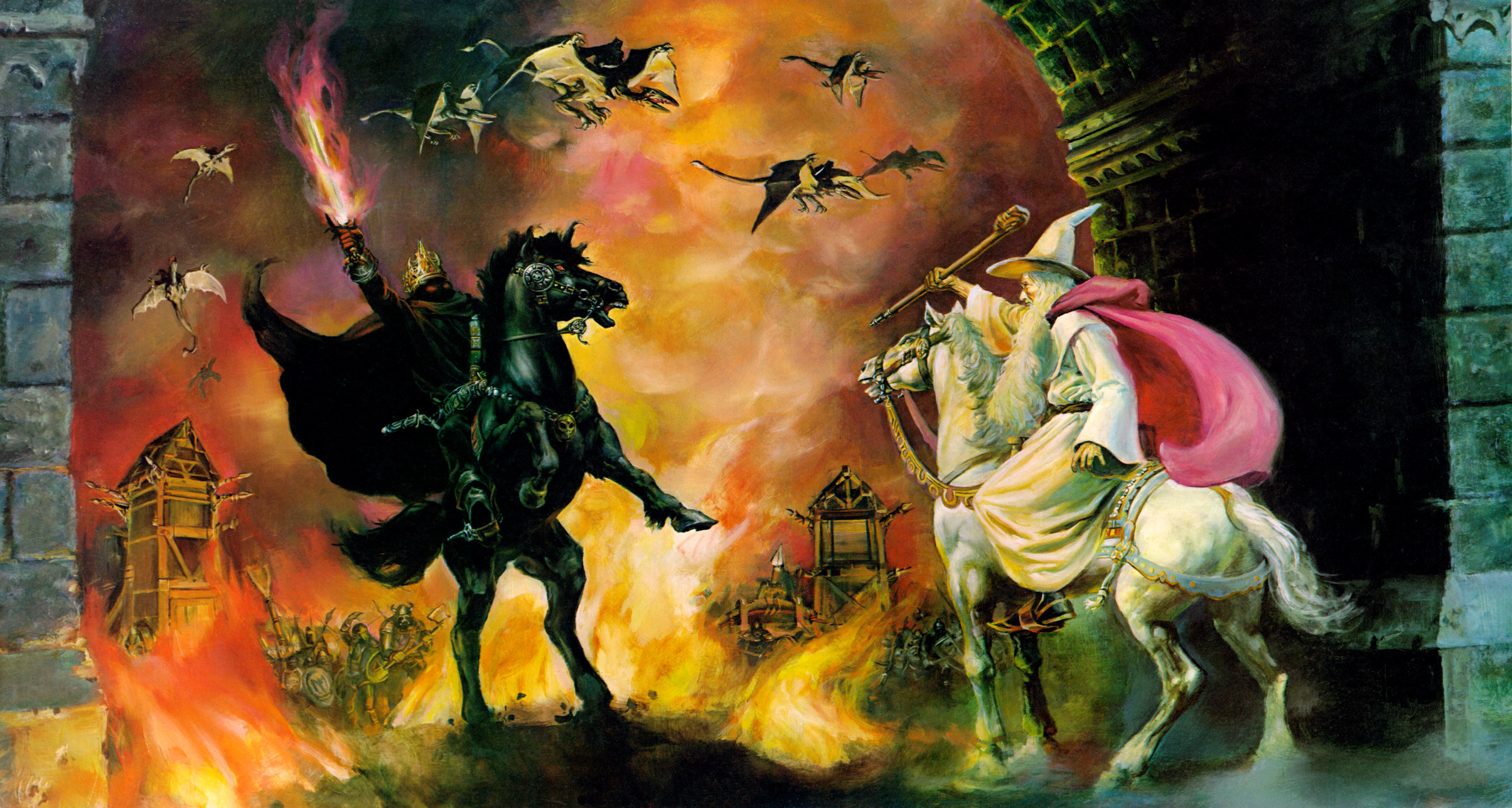
In this posting, we’d like to try a “what if” ourselves: what would happen to Minas Tirith if the Rohirrim and Aragorn had failed to arrive?

Walls collapsing under a rain of boulders, soldiers fleeing from the defenses, the main gate broken in by a giant battering ram—

image1anazgan.jpg

how was this the place of which its creator had written:

“A strong citadel it was indeed, and not to be taken by a host of enemies, if there were any within that could hold weapons…” (The Return of the King, Book Five, Chapter 1, “Minas Tirith”)

In an earlier posting, we talked about Sauron’s attack on Minas Tirith

image1battackonmt.jpg

and even suggested that one inspiration might have been an episode of the comic strip Prince Valiant and the siege of Andelkrag by the Huns (published in May, 1939). (Footnote: there is a rumor that the writer/illustrator, Hal Foster, intended the Huns to equal the Nazis and therefore annoyed Hitler—a would-be Sauron to Saruman’s Mussolini, as we once also suggested?)

image1andelkrag.jpg

That castle is splendid, but not quite what one would have seen in the 5th century AD, when Attila led the Huns to invade central and western Europe. Andelkrag appears to be a very elaborate late-medieval castle, c.1400 or so, rather like the ones you might see in the Duc de Berry’s Tres Riches Heures (c.1412-16; 1440s; 1485-1489).

image2tresrichesheures.jpg

More likely, if Andelkrag had been a real fortress, it would have been a repurposed Roman army installation, like this at Caernarfon, called by the Romans, Segontium.

image3caernarfonsegontium.jpg

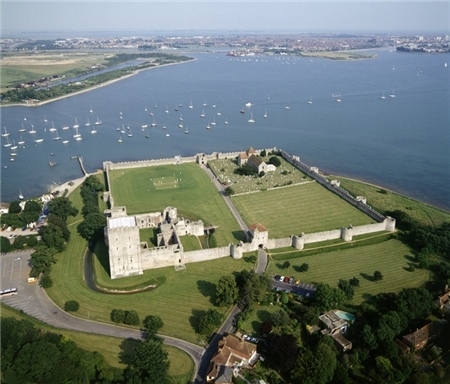
Such forts might then be converted into castles, as at Portchester

62790_8d3686244501897

but that would hardly have provided the gallant medieval look which Foster gave his comic strip and which, in turn, came from the illustrations of people like Howard Pyle (1853-1911), in the previous generation (and which, we have previously argued, had a strong influence on what JRRT imagined his Middle-earth to look like).

image5ahowpylephoebe.jpg

image6pyleillustration.JPG

We are told in one of the extra features in the extended film version of The Lord of the Rings that an inspiration for P. Jackson’s Minas Tirith

image5mt.jpg

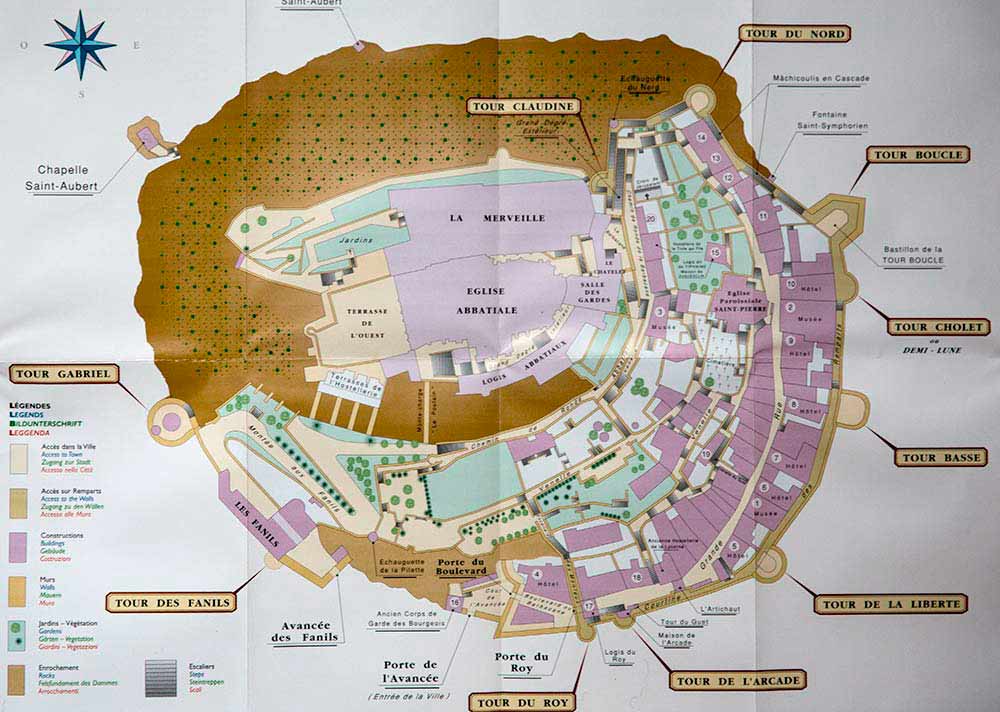
was the ancient island fort/religious site of Mont Saint Michel, on the western coast of France.

image6mtstmich.jpg

image7mtstmichmap.jpg

As you can see from the photo and the map, this isn’t just a fort, however, but a little fortified town, reminding us that Minas Tirith isn’t a castle, but a walled city, like the restored medieval town of Carcassonne, in southern France.

image8carcassonne.jpg

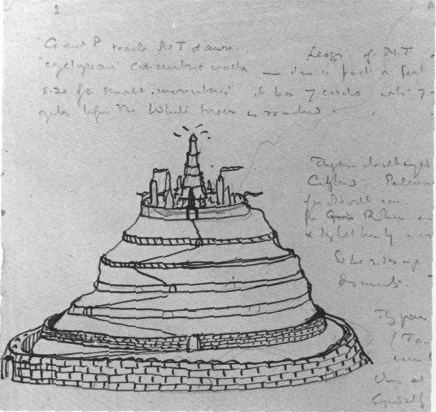
Like Mont St. Michel, Minas Tirith is built up a slope.

jrrtsfirstmtdrawing.jpeg

(This, by the way, is Tolkien’s first sketch.)

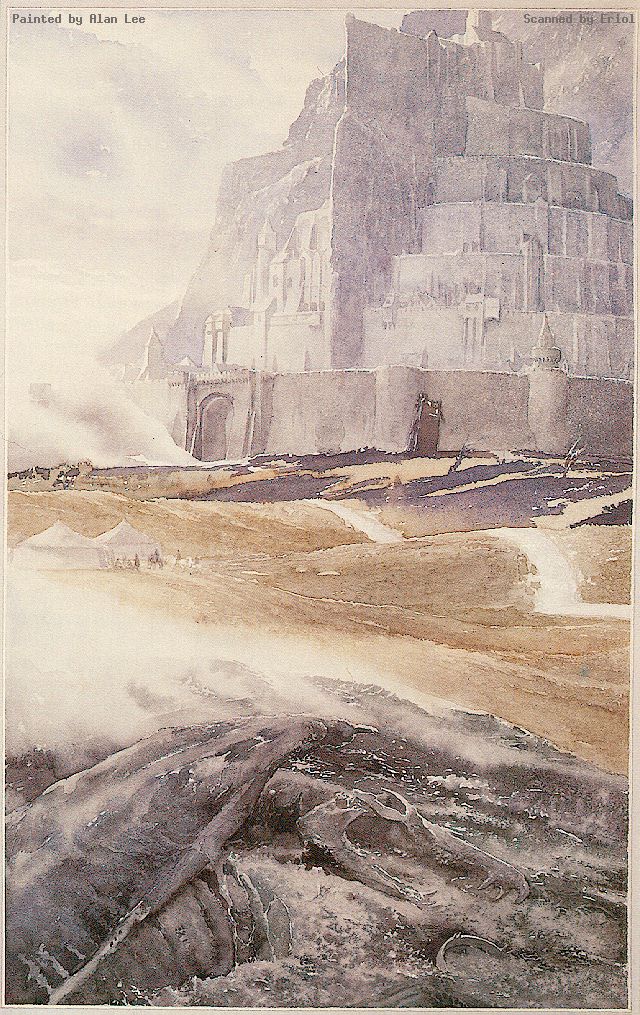
But, unlike Mont St. Michel and Carcassonne, it has not one wall, but many:

“For the fashion of Minas Tirith was such that it was built on seven levels, each delved into the hill, and about each was set a wall, and in each wall was a gate.”

image12leemt.jpg

Because the city was built on a series of levels, this would mean that each wall would overlook the next lower one, so that the defenders on the upper wall could rain down missiles on attackers below.

poi_img_town_defences_1

This is an ancient practice. The Bronze Age Greek city of Tiryns (yes, there is a bit of a similarity in the name, isn’t there?) is so constructed, for example, that its entryway forces attackers to move to the left, thereby potentially exposing an unshielded side, as well as undergoing a barrage of arrows and rocks from those on the wall above.

Tiryns Reconstruction

tiryns-walls

In the case of Minas Tirith, there is an added obstacle:

“But the gates were not set in a line: the Great Gate in the City Wall was at the east point of the circuit, but the next faced half south, and the third half north, and so to and fro upwards; so that the paved way that climbed towards the Citadel turned this way and then that across the face of the hill.”

image13mtzigzag

Attackers, then, would not only be at the mercy of those above them, but would, should they break through one gate, be forced to zigzag back and forth as they fought their way upwards, taking more and more casualties as they advanced.

minas-tirith3

Added to this, at the lowest level, was the main wall:

“…of great height and marvellous thickness, built ere the power and craft of Numenor waned in exile; and its outward face was like to the Tower of Orthanc, hard and dark and smooth, unconquerable by steel or fire, unbreakable except by some convulsion that would rend the very earth on which it stood.” (The Return of the King, Book Five, Chapter 4, “The Siege of Gondor”)

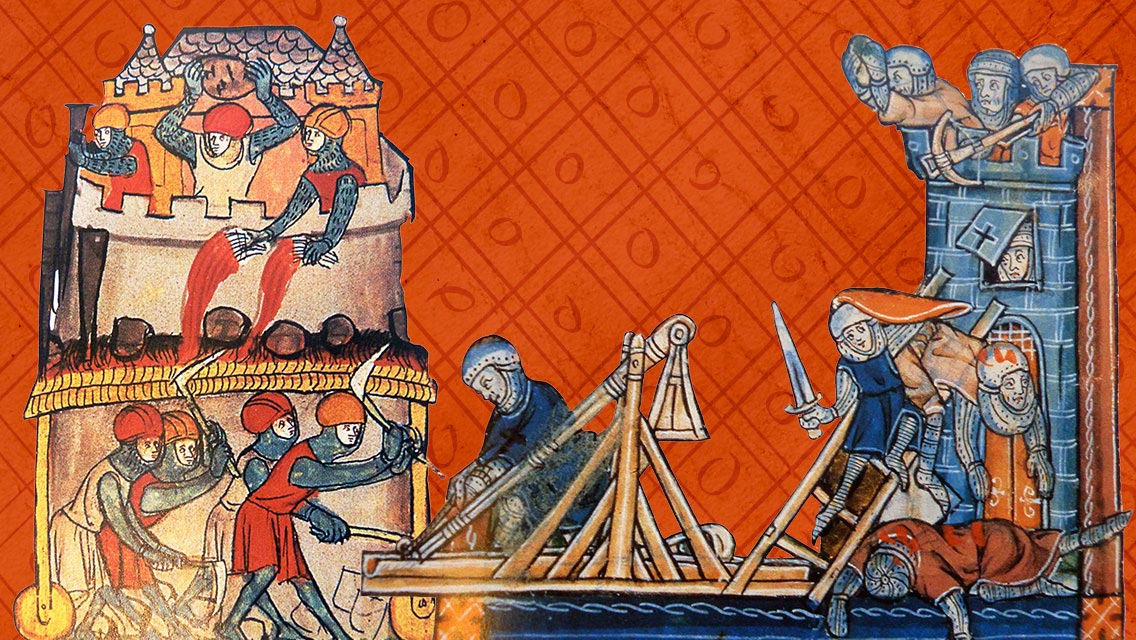
Unlike so many fortresses—going back at least to Neolithic times—Minas Tirith had no moat. Not only does such a watery ditch slow down attackers by giving them one more puzzle to solve, but it also makes a standard siege practice, undermining, much more difficult. Basically, what undermining does is to hollow out an area underneath a wall and replace the original foundation with a flammable wooden one. Then the miners fill the hollow with burnables, torch them, and wait to see if the new wooden foundation collapses, bringing down the wall on top of it. You can see miners at work in this medieval manuscript illustration.

villanip214bottom.jpg

A wet moat would have forced the miners to dig much deeper, to avoid being flooded out.

For Minas Tirith, the nearest water source for a wet moat would have been the Anduin, some miles away, but dry moats were useful as well. This diorama of the final attack by the British at the siege of Badajoz in 1812 shows how effective such a thing might be. Although the besiegers have managed, through prolonged bombardment, to create a breach in the main wall, they have to struggle through the deep dry moat to reach it—and took large numbers of casualties in doing so.

image18badajoz

Against all of these defenses, the head of the Nazgul, as Sauron’s general in the field, has the usual siege weapons: stone throwers, siege towers, even a massive battering ram. He also has a more subtle tool:

“But soon there were few left in Minas Tirith who had the heart to stand up and defy the hosts of Mordor. For yet another weapon, swifter than hunger, the Lord of the Dark Tower had: dread and despair.”

Even so, under the command of Gandalf, there was still resistance and we can imagine that that resistance would have persisted through all the circles, but the ultimate difficulty, which would have caused the fall of the city, had not the Rohirrim—and then Aragorn—come, was the lack of reserves.

Gondor was, at the time of the siege, in decline, as Pippin noticed when he and Gandalf arrived there:

“Yet it was in truth falling year by year into decay; and already it lacked half the men that could have dwelt at ease there.”

When reenforcements came from the south, they were “less than three thousands full told.”

When a city or castle is under siege, it needs not only a force to man its walls, but also a second force, to be sent quickly to any place where an enemy breakthrough is threatened. The force on the walls has two main jobs: 1. to keep the enemy at a distance with missile fire—or, failing that, to cut down the attacking force as it approaches the walls, trimming its numbers and thereby possibly demoralizing it; 2. to fend off the enemy if it actually manages to gain the walls. This illustration from the Prince Valiant Andelkrag siege provides a good image of this double job.

image19defenseofandelkrag

It might be possible, if the enemy made an assault upon a single point, to siphon off men from other parts of the defenses to act as a temporary second force, but, if the enemy attacks more than one place at the same time, this is not a safe thing to do. In the case of the assault on the first wall of Minas Tirith, the enemy commander seems to have had such numbers—and didn’t care in the least about his losses– that he could attack the entire wall:

“Ever since the middle night the great assault had gone on. The drums rolled. To the north and to the south company upon company of the enemy pressed to the walls. There came great beasts, like moving houses in the red and fitful light, the mumakil of the Harad dragging through the lanes amid the fires huge towers and engines. Yet their Captain cared not greatly what they did or how many might be slain: their purpose was only to test the strength of the defence and to keep the men of Gondor busy in many places.”

The weakest place in any strong wall is a gate and that knowledge has guided Sauron’s Captain:

“It was against the Gate that he would throw his heaviest weight. Very strong it might be, wrought of steel and iron, and guarded with towers and bastions of indomitable stone, yet it was the key, the weakest point in all that high and impenetrable wall.”

Thus, with everyone pinned in position by a general assault, and there being no other possible reserve, once the gate is down—but then a cock crows and there are horns and, well, you know what happens next.

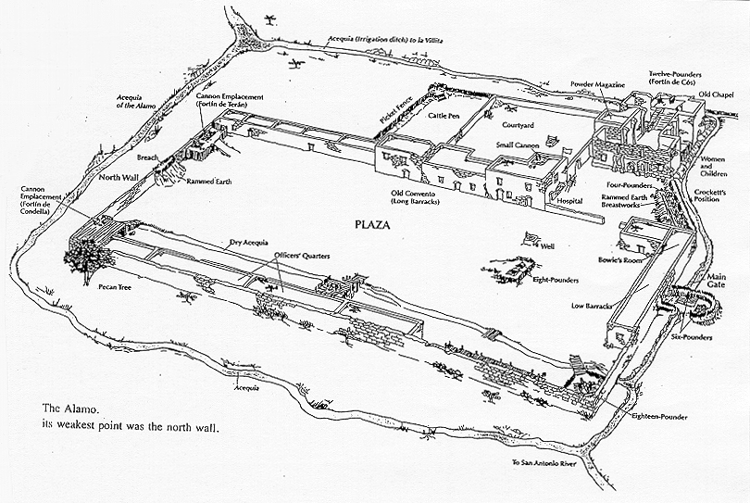
But, continuing our “what if”, we look to a different model, the Alamo, a ruined mission turned into a fortress in the so-called “Texas War for Independence” of 1835-36.

alamo-map-3

Within this mission, some 180plus defenders faced a Mexican army of several thousand, staving them off for a week-and-a-half before finally being overwhelmed by a series of nearly-simultaneous pre-dawn assaults from several directions at once.image21alamoassault

The survivors drew back, still fighting, and made a series of last stands in the rooms of the surviving mission buildings, dying almost to a man because the Mexican general, Santa Anna, had declared that there would be no mercy for any survivors. (There were a handful of prisoners, however, perhaps including the famous American frontiersman, Davy Crockett, but under Santa Anna’s direction, they were then murdered.)

In our grim “what if”, the survivors of the outer wall, led in retreat by Gandalf, are gradually driven back, like the Alamo defenders, until they reach the Citadel—and then—but, can we go on? Are the Rohirrim and Aragorn simply delayed and then appear? Are there eagle-rescues, as in The Hobbit?

image23eaglerescue.gif

What do you think, dear readers?

And thanks, as ever, for reading!

MTCIDC

CD

PS

We saw this Lego attack on Minas Tirith and it was just too wonderful not to include!

legominastirith.jpg

PPS

As we were finishing this, we happened upon a really great website–

https://middleeartharchitectures.wordpress.com/  –wonderful visuals!

The Doubtful Sea Series Facebook Page

The Doubtful Sea Series Facebook Page

  • Ollamh

Categories

  • Artists and Illustrators
  • Economics in Middle-earth
  • Fairy Tales and Myths
  • Films and Music
  • Games
  • Heroes
  • Imaginary History
  • J.R.R. Tolkien
  • Language
  • Literary History
  • Maps
  • Medieval Russia
  • Military History
  • Military History of Middle-earth
  • Narnia
  • Narrative Methods
  • Poetry
  • Research
  • Star Wars
  • Terra Australis
  • The Rohirrim
  • Theatre and Performance
  • Tolkien
  • Uncategorized
  • Villains
  • Writing as Collaborators
Follow doubtfulsea on WordPress.com

Across the Doubtful Sea

Recent Postings

  • A Moon disfigured December 17, 2025
  • On the Roads Again—Once More December 10, 2025
  • (Not) Crossing Bridges December 3, 2025
  • On the Road(s) Again—Again November 26, 2025
  • On the Road(s) Again November 19, 2025
  • To Bree (Part 2) November 12, 2025
  • To Bree (Part 1) November 5, 2025
  • A Plague o’ Both—No, o’ All Your Houses! October 29, 2025
  • It’s in Writing (2:  I’st a Prologue, or a Poesie for a Ring?) October 22, 2025

Blog Statistics

  • 103,221 Views

Posting Archive

  • December 2025 (3)
  • November 2025 (4)
  • October 2025 (5)
  • September 2025 (4)
  • August 2025 (4)
  • July 2025 (5)
  • June 2025 (4)
  • May 2025 (4)
  • April 2025 (5)
  • March 2025 (4)
  • February 2025 (4)
  • January 2025 (5)
  • December 2024 (4)
  • November 2024 (4)
  • October 2024 (5)
  • September 2024 (4)
  • August 2024 (4)
  • July 2024 (5)
  • June 2024 (4)
  • May 2024 (5)
  • April 2024 (4)
  • March 2024 (4)
  • February 2024 (4)
  • January 2024 (5)
  • December 2023 (4)
  • November 2023 (5)
  • October 2023 (4)
  • September 2023 (4)
  • August 2023 (5)
  • July 2023 (4)
  • June 2023 (4)
  • May 2023 (5)
  • April 2023 (4)
  • March 2023 (5)
  • February 2023 (4)
  • January 2023 (4)
  • December 2022 (4)
  • November 2022 (5)
  • October 2022 (4)
  • September 2022 (4)
  • August 2022 (5)
  • July 2022 (4)
  • June 2022 (5)
  • May 2022 (4)
  • April 2022 (4)
  • March 2022 (5)
  • February 2022 (4)
  • January 2022 (4)
  • December 2021 (5)
  • November 2021 (4)
  • October 2021 (4)
  • September 2021 (5)
  • August 2021 (4)
  • July 2021 (4)
  • June 2021 (5)
  • May 2021 (4)
  • April 2021 (4)
  • March 2021 (5)
  • February 2021 (4)
  • January 2021 (4)
  • December 2020 (5)
  • November 2020 (4)
  • October 2020 (4)
  • September 2020 (5)
  • August 2020 (4)
  • July 2020 (5)
  • June 2020 (4)
  • May 2020 (4)
  • April 2020 (5)
  • March 2020 (4)
  • February 2020 (4)
  • January 2020 (6)
  • December 2019 (4)
  • November 2019 (4)
  • October 2019 (5)
  • September 2019 (4)
  • August 2019 (4)
  • July 2019 (5)
  • June 2019 (4)
  • May 2019 (5)
  • April 2019 (4)
  • March 2019 (4)
  • February 2019 (4)
  • January 2019 (5)
  • December 2018 (4)
  • November 2018 (4)
  • October 2018 (5)
  • September 2018 (4)
  • August 2018 (5)
  • July 2018 (4)
  • June 2018 (4)
  • May 2018 (5)
  • April 2018 (4)
  • March 2018 (4)
  • February 2018 (4)
  • January 2018 (5)
  • December 2017 (4)
  • November 2017 (4)
  • October 2017 (4)
  • September 2017 (4)
  • August 2017 (5)
  • July 2017 (4)
  • June 2017 (4)
  • May 2017 (5)
  • April 2017 (4)
  • March 2017 (5)
  • February 2017 (4)
  • January 2017 (4)
  • December 2016 (4)
  • November 2016 (5)
  • October 2016 (6)
  • September 2016 (5)
  • August 2016 (5)
  • July 2016 (5)
  • June 2016 (5)
  • May 2016 (4)
  • April 2016 (4)
  • March 2016 (5)
  • February 2016 (4)
  • January 2016 (4)
  • December 2015 (5)
  • November 2015 (5)
  • October 2015 (4)
  • September 2015 (5)
  • August 2015 (4)
  • July 2015 (5)
  • June 2015 (5)
  • May 2015 (4)
  • April 2015 (3)
  • March 2015 (4)
  • February 2015 (4)
  • January 2015 (4)
  • December 2014 (5)
  • November 2014 (4)
  • October 2014 (6)
  • September 2014 (1)

Blog at WordPress.com.

  • Subscribe Subscribed
    • doubtfulsea
    • Join 78 other subscribers
    • Already have a WordPress.com account? Log in now.
    • doubtfulsea
    • Subscribe Subscribed
    • Sign up
    • Log in
    • Report this content
    • View site in Reader
    • Manage subscriptions
    • Collapse this bar
 

Loading Comments...