• About

doubtfulsea

~ adventure fantasy

Category Archives: Villains

Villainous Thoughts 1

16 Thursday Apr 2015

Posted by Ollamh in Narrative Methods, Villains

≈ Leave a comment

Tags

Cruella de Vil, Ebenezer Balfour, Gollum, Jafar, Prince John, Robin Hood, Sauron, Sheriff of Nottingham, Villains

Dear Readers,

Welcome! 

     Is an adventure possible without a villain? Not an “antagonist”—that’s for serious essays on subjects like “the nature of evil”—but someone tall and devious, like Jafar
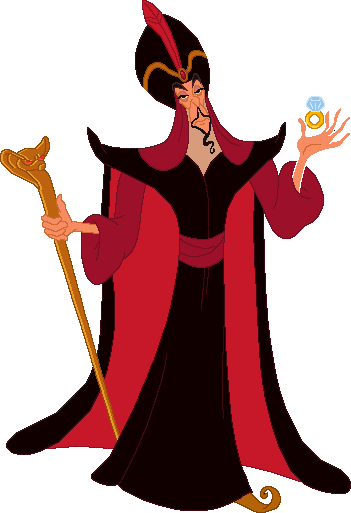
 Jafar

or stumpy and seedy like Uncle Ebenezer in Kidnapped

 kidnapped-balfour-and-uncle

or skinny and smoky, like Cruella de Vil.
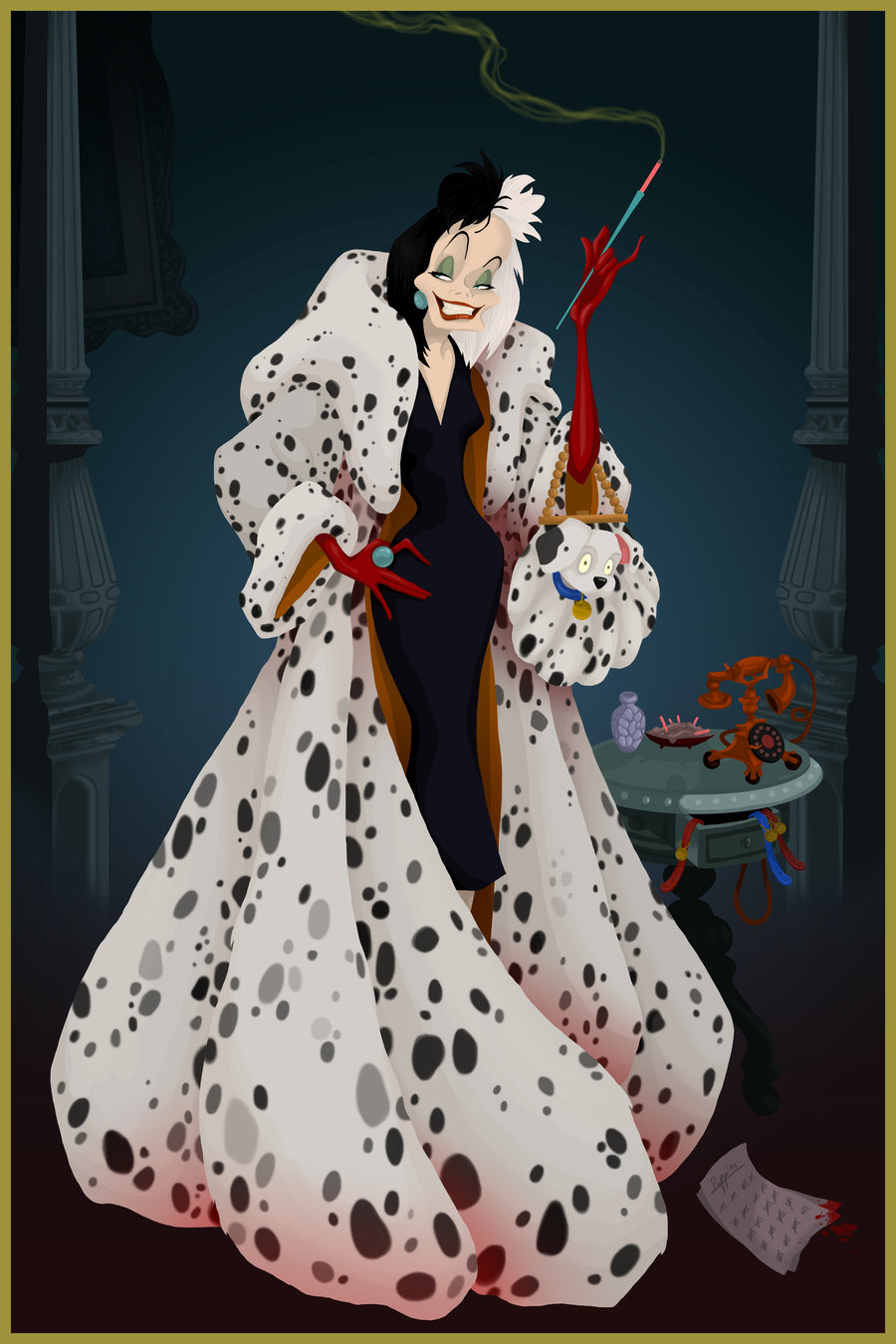
 cruella__s_coat_by_justin_mctwisp-d4tqil3 

Whatever the figure, on the one hand, he/she provides the kind of friction which can set a story in motion and keep it there. On the other, villains can add a certain stature to a story. When the villain is an oaf, the story is in danger of being, or becoming, oafish. The Hobbit with only the stone trolls,

 lee09

for example, would quickly become something out of Monty Python’s gumbies, at best.

 gumbies

An ancient and smooth-talking dragon makes the story bigger and gives it more weight.

 hildebrandtSmaug

(To see how a quiet and amiable dragon affects a story, see Kenneth Grahame’s “The Reluctant Dragon” from Dream Days (1898—available for free at Gutenberg)

 Reluctant%20Dragon%201

An elegant villain can make a story more elegant, as Captain Hook would insist.
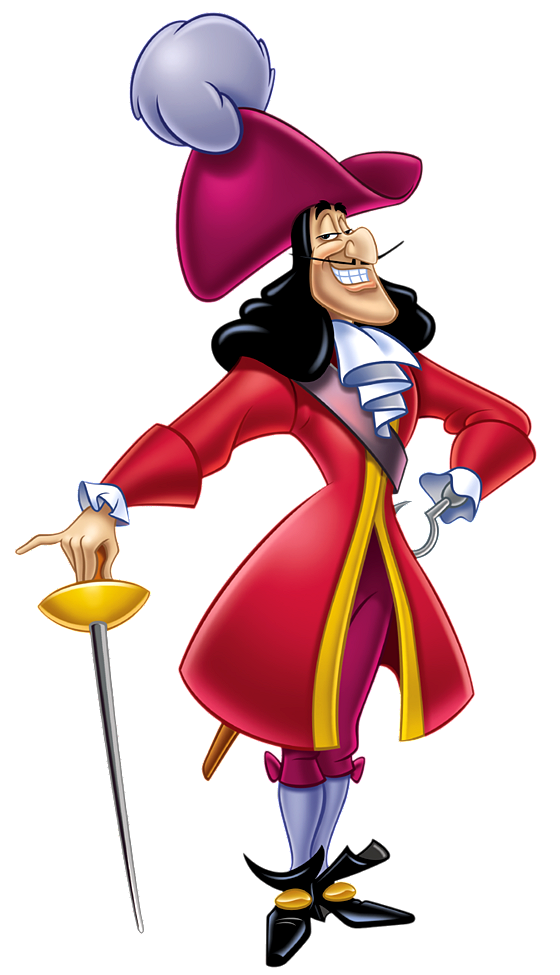
 CaptHook-PP

As a way of testing this premise, imagine a Lord of the Rings in which the main villain is Gollum. It might be entertaining, but how much smaller the drama than that which we see as grand, in part because of the size and menace of the villain.
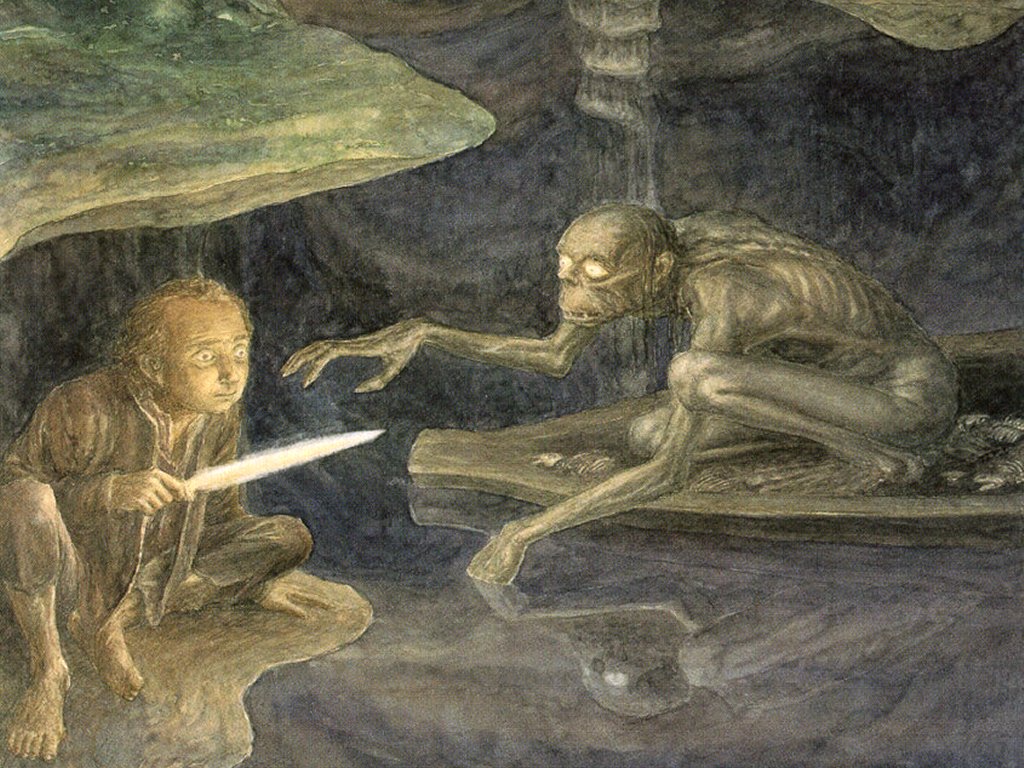
 illustration-d-Alan-Lee-The-Hobbit-

(A note: while we have shown you the various villains we’ve mentioned so far, when it comes to Sauron, we’re stuck. We know that he is embodied in some form and that he was once “comely” (that is, good to look at) and he was of a size to fight Gil-Galad & Co., but, otherwise, it’s hard to know quite what to show: certainly not the searchlight from the Jackson films. His and his writers’ difficulty is obvious: how do you make what, in the books, is more a kind of watching, brooding evil feeling than a form (with the exception of that eye) into something visible?   We don’t believe, however, that their choice was successful, but, in fact, diminished the menace. We intend to discuss further the idea of “the invisible villain”, however, in a further part of this series.)

     What adds to the power of a villain is a certain primal nature: this is someone driven to be who he/she is because of what she/he wants—and the converse is true: what he/she wants can define who he/she is. What is Cruella, for instance, apart from her lust for a fur coat made from Dalmatians?

     In the case of Robin Hood, even if we had never heard him say a word, we would know what Prince John wants—that word “Prince” might serve as giveaway. He wants to be King John.

Adventures-of-Robin-Hood-02 

It perfectly suits his ambitions that his brother, Richard, the real king of England, is being held for ransom in Austria. It’s even an opportunity to look pious—you’re rescuing your brother with that huge sum of money—when, in reality, you’re simply increasing your own revenues. And your chief collector (in the tradition), the Sheriff of Nottingham, is thus nothing but a function in the story of John: the actual hand in the people’s purse, but he’s doing it for the sake of his master.

(Here’s the Sheriff—both images from the classic Errol Flynn 1938 The Adventures of Robin Hood.)

09-melville-coopersheriff 

As long as Richard doesn’t return, there will be John (and his—quite literal—extension, the Sheriff). And thus he is what we might call an open-ended villain, someone who can be employed again and again to apply the friction. This fits perfectly with his role in the Robin Hood stories as, unlike a novel, with its elaborate built-in sense and need of resolution brought about by the author, the original Robin Hood stories were folktales and folksongs—brief, their initial goal a short narrative from set-up to resolution. Villains here could be reused, their resolution not necessarily requiring their complete destruction. This can also have the side benefit of allowing singers/tellers to give villains a sense of depth from the number of experiences (usually very bad ones!) with the hero they have. The urge towards development of this sort, both for villain and hero, might, in fact, be a reason for A Gest of Robyn Hode, a collection of Robin Hood stories roughly made into one long tale and printed somewhere between 1492 and 1534. (For more, see the useful Wiki site.)
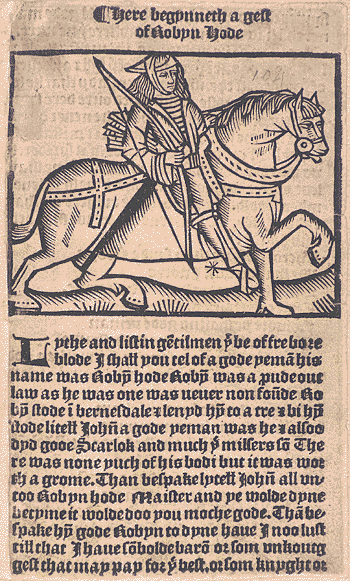
A-Gest-of-Robin-Hood

     The opposite of a character like Prince John would be what we might call a terminal villain. He/she appears and the story’s action begins. With his/her disappearance, the story, effectively, ends, even if there’s a coda: once Darth Vader/Anakin tosses the Emperor over the railing, what’s left but funerals, ghostly reunions, and fireworks? And, even if you clone the Emperor for a rematch, the original has been eliminated and his complex and long-developing relationship with his star pupil, Vader, has been resolved.

     This is, of course, only the beginning of our discussion of villains. Next, we want to ask, faintly echoing Freud, “What do villains want?”

Thanks, as ever, for reading and, as always, we welcome questions and comments!

MTCIDC

CD

Villainous Vessels

02 Tuesday Dec 2014

Posted by Ollamh in Imaginary History, Military History, Villains

≈ 1 Comment

Dear Readers,

Welcome!

In this post, we want to add something to our former one about the Atuk, the mysterious villains who inhabit the center of Terra Australis.

The name Atuk amavi’o, in the language of their enemies, the Matan’a’e amavi’o, means “people of the cold” and, although their interior and warmer-weather dress may echo Ottoman/Persian clothes, their winter look reflects their icy outer world. Their warships also suit that world.

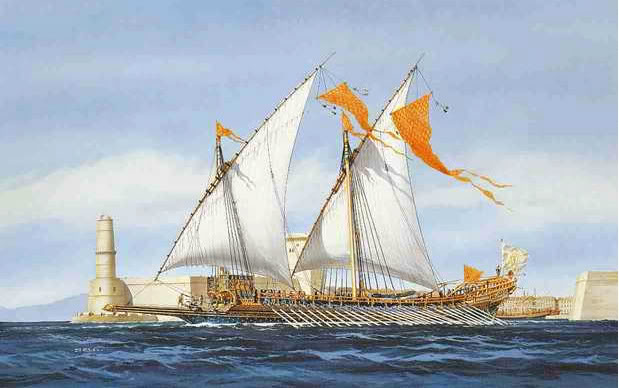
We had originally imagined them as looking like real galleys from the history of our world, the sort used by the Ottoman and their Venetian, Spanish, and other European enemies in the sixteenth and seventeenth centuries.

galley-warship-builder-drawing

galley

These are long, graceful vessels, powered by oars for battle and in-shore maneuvering, but by large, triangular sails—called “lateen sails”—for longer distances.

galley

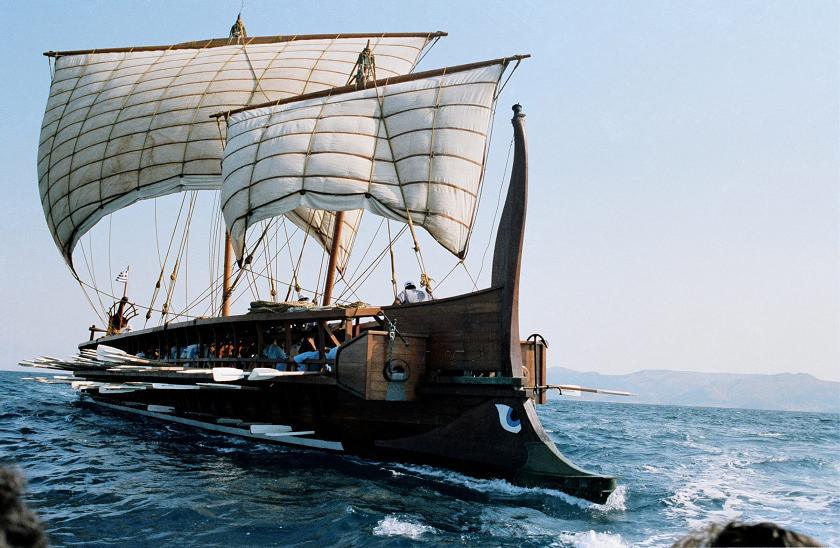
Originally, these were built like ancient classical warships, with bronze rams on their prows.

trireme

Increasingly, with the development of gunpowder, the Ottoman and their enemies turned to shipboard artillery. This was commonly mounted on the forecastle (the front) of their ships, to fight their battles.

Maltese-Galley

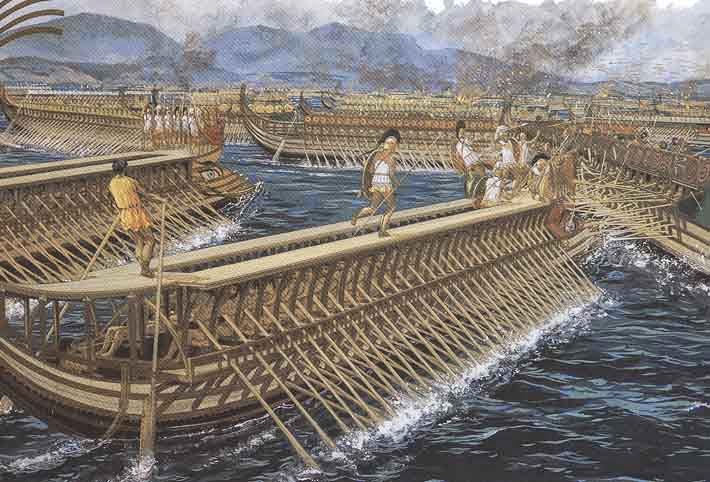
In the world we’ve created, however, the Atuk have not made the shift to cannon. In contrast to classical warships, though, they don’t employ the old ramming attack.

Athens- trireme warfare

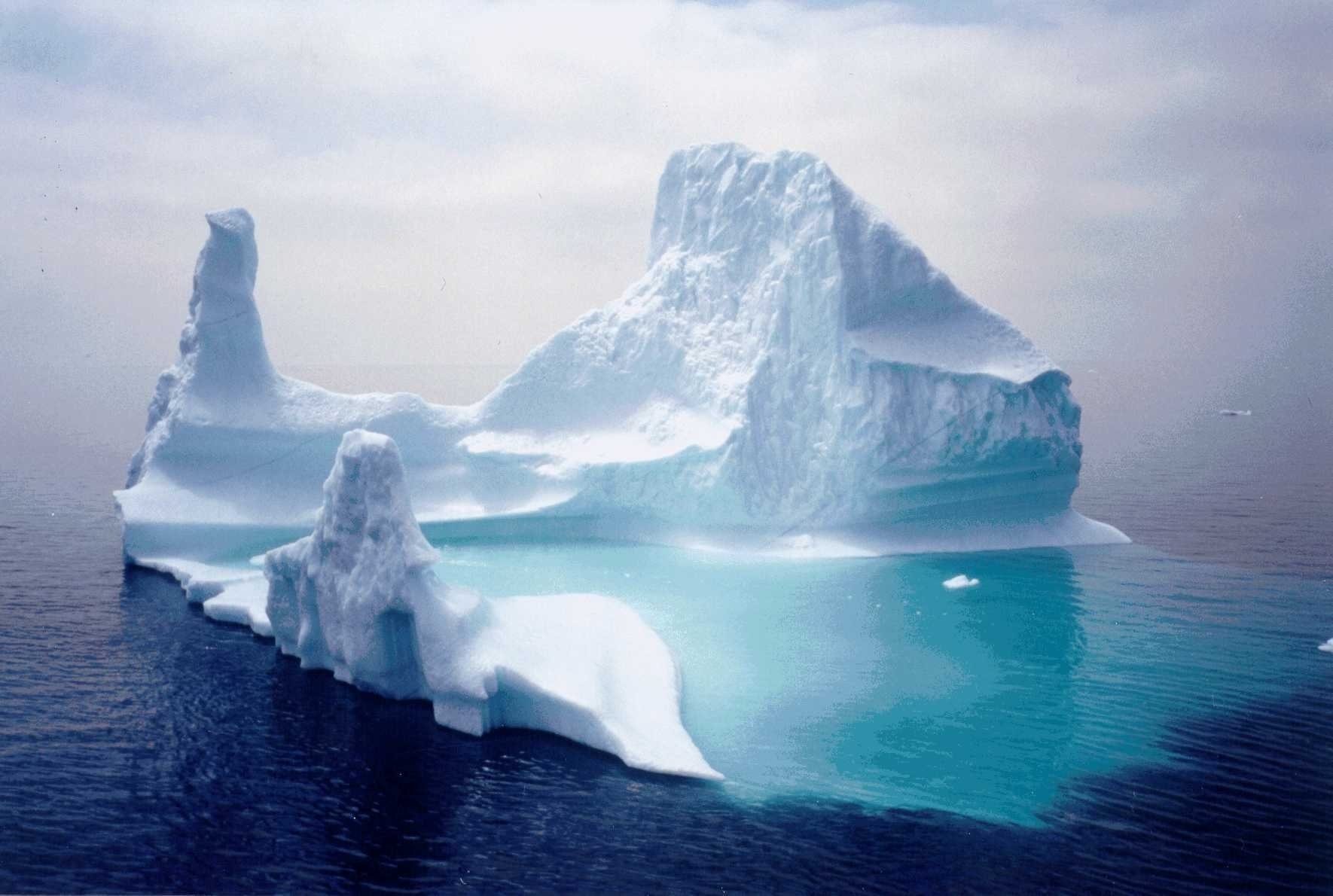
In fact, although the basic structure and outline of their ships may be based upon Mediterranean galleys, we have made a significant change. Oars and sails are there, but these have been combined with something from the world of ice. Imagine ships—galleys—made from the frozen sea itself.

iceberg2 Iceberg2-1 iceberg-7560701

As for their armament, well, dear readers, that’s for you to discover in Across the Doubtful Sea, when it appears on Amazon/Kindle in early December.

Thanks for reading.

MTCIDC

CD

A Language for Antagonists

04 Tuesday Nov 2014

Posted by Ollamh in Imaginary History, Language, Villains

≈ 1 Comment

Dear Readers,

In our last, we told you that some of our villains are French. (Of course, this means English-speaking in a novel written in English.) If your villains don’t belong to your culture and don’t use yours as their first language, what might they speak? And, what might they call themselves and the places around them?

We’ve already shown you how our non-French villains evolved. They originally had the look of Inuit because of their association with cold. Then, because we like the contrast, we showed you their bright Turkish-Persian look underneath.

So– Inuit look made us wonder about Inuit sound.

We want to make a very necessary disclaimer here: that we borrowed visuals or languages from any culture doesn’t indicate anything more than the magpie nature of our creating an alternate 18th century world. To us, all languages and cultures are equally interesting and we’d study them all, if we could.

There are some really useful online sources, including this Iñupiat Dictionary, which we encourage you to open and look through. We think you will find it as fascinating as we did. (A mild warning– this is a rather large file– but worth it!)

As we browsed this and other sites, we sometimes lifted things entirely. At other times, we adapted what we found. Our goals were not only to provide ourselves with a fund of useful words and naming elements, but also to create a strong contrast with the languages of our protagonists, both French and Polynesian.

As great admirers of Tolkien we’ve always been fascinated by the languages he created for Middle-earth. We hope to try to create our own in a future series of adventure novels, tentatively called To Windward.

In our next, we want to talk about our protagonists, both French and– English?

Thank you for reading!

MTCIDC,

CD

What More About Villains?

28 Tuesday Oct 2014

Posted by Ollamh in Imaginary History, Narrative Methods, Villains

≈ Leave a comment

Dear Readers,

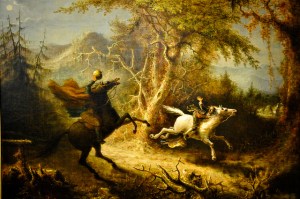
Happy Halloween! This is a great holiday for people interested in fantasy and adventure. After all, you’ve got witches, ghouls, vampires, and even a Headless Horseman– villains!6960244159_7f66a0d317_z

(Or just children in really great costumes.)

And speaking of villains, we will.

In our last, we talked in a general way about our villains– Frenchmen and other. Now, we want to talk more specifically about Other.

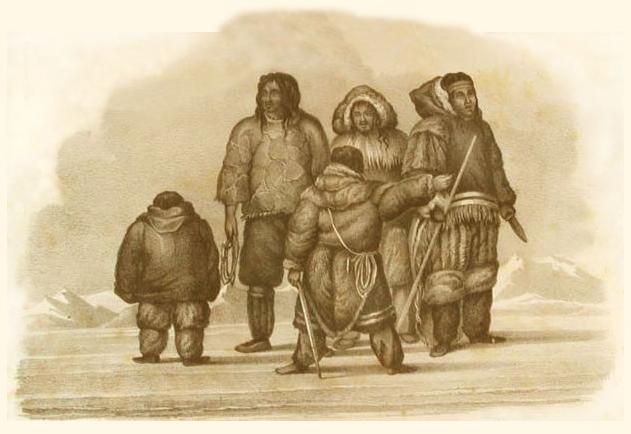
Because Terra Australis is based upon the real Antarctica, the idea of cold, in some form,  was a ready influence. And so, there appeared the Atuk, the servants of a god who embodies cold. This led us to imagine what they might look like. At first, we thought perhaps something like Inuit: all furs and big boots and slitted wooden sunscreens. And that might be an idea for the next book, Empire of the Isles. Here are a couple of those possibilities:

IMG_0754

IMG_0745

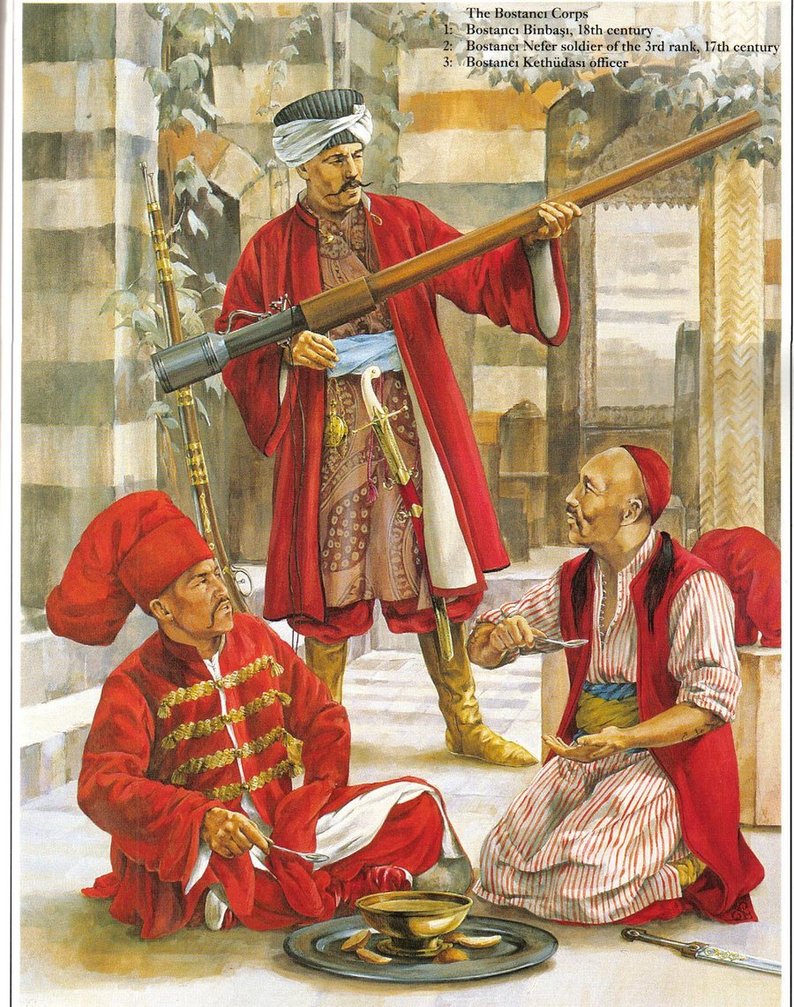
For Across the Doubtful Sea, however, we decided to imagine what they might look like underneath those wintry clothes. For models, we chose an extreme contrast– Ottoman Turkish and Persian– like the images below.

ottomanboss      ottoman_empire_2_by_byzantinum

IMG_0705

With them in costume, we wondered what they would sound like. What would their names be like? Would they speak a language like the Inupiat of our original models, or something Turkic or Persian?

For now, however, imagine dressing as one of the fearsome Atuk for next Halloween…

Thanks, as always, for reading, and save some candy corn for us!

MTCIDC,

CD

What About Villains?

24 Friday Oct 2014

Posted by Ollamh in Imaginary History, Narrative Methods, Villains

≈ 1 Comment

Tags

Adventure, Fantasy, Fiction, Villains

Dear Readers,

Villains– a big question, and something which needs more than one post.

There are so many kinds, from Sauron to the Joker. All of them, however, produce friction– that which produces problems and demands solutions. As well, it allows for heroes to be defined and to define themselves.

For this series, we have two kinds of villains so far: those native to our hero’s homeland and those who are entirely alien to everything our 18th century understands. The former include corrupt officials within the royal government, and the latter, those who might appear human, but who also have powers over nature which seem superhuman.

Corrupt officials are pretty easy to create– they’re everywhere, but we believe that we’ve given ours an extra twist. As for the others, we’ll talk about those in our next post…

Thanks for reading,

MTCIDC,

CD

Newer posts →

The Doubtful Sea Series Facebook Page

The Doubtful Sea Series Facebook Page

  • Ollamh

Categories

  • Artists and Illustrators
  • Economics in Middle-earth
  • Fairy Tales and Myths
  • Films and Music
  • Games
  • Heroes
  • Imaginary History
  • J.R.R. Tolkien
  • Language
  • Literary History
  • Maps
  • Medieval Russia
  • Military History
  • Military History of Middle-earth
  • Narnia
  • Narrative Methods
  • Poetry
  • Research
  • Star Wars
  • Terra Australis
  • The Rohirrim
  • Theatre and Performance
  • Tolkien
  • Uncategorized
  • Villains
  • Writing as Collaborators
Follow doubtfulsea on WordPress.com

Across the Doubtful Sea

Recent Postings

  • Through a glass… January 7, 2026
  • Heffalumps? December 31, 2025
  • We Three Kings December 24, 2025
  • A Moon disfigured December 17, 2025
  • On the Roads Again—Once More December 10, 2025
  • (Not) Crossing Bridges December 3, 2025
  • On the Road(s) Again—Again November 26, 2025
  • On the Road(s) Again November 19, 2025
  • To Bree (Part 2) November 12, 2025

Blog Statistics

  • 104,223 Views

Posting Archive

  • January 2026 (1)
  • December 2025 (5)
  • November 2025 (4)
  • October 2025 (5)
  • September 2025 (4)
  • August 2025 (4)
  • July 2025 (5)
  • June 2025 (4)
  • May 2025 (4)
  • April 2025 (5)
  • March 2025 (4)
  • February 2025 (4)
  • January 2025 (5)
  • December 2024 (4)
  • November 2024 (4)
  • October 2024 (5)
  • September 2024 (4)
  • August 2024 (4)
  • July 2024 (5)
  • June 2024 (4)
  • May 2024 (5)
  • April 2024 (4)
  • March 2024 (4)
  • February 2024 (4)
  • January 2024 (5)
  • December 2023 (4)
  • November 2023 (5)
  • October 2023 (4)
  • September 2023 (4)
  • August 2023 (5)
  • July 2023 (4)
  • June 2023 (4)
  • May 2023 (5)
  • April 2023 (4)
  • March 2023 (5)
  • February 2023 (4)
  • January 2023 (4)
  • December 2022 (4)
  • November 2022 (5)
  • October 2022 (4)
  • September 2022 (4)
  • August 2022 (5)
  • July 2022 (4)
  • June 2022 (5)
  • May 2022 (4)
  • April 2022 (4)
  • March 2022 (5)
  • February 2022 (4)
  • January 2022 (4)
  • December 2021 (5)
  • November 2021 (4)
  • October 2021 (4)
  • September 2021 (5)
  • August 2021 (4)
  • July 2021 (4)
  • June 2021 (5)
  • May 2021 (4)
  • April 2021 (4)
  • March 2021 (5)
  • February 2021 (4)
  • January 2021 (4)
  • December 2020 (5)
  • November 2020 (4)
  • October 2020 (4)
  • September 2020 (5)
  • August 2020 (4)
  • July 2020 (5)
  • June 2020 (4)
  • May 2020 (4)
  • April 2020 (5)
  • March 2020 (4)
  • February 2020 (4)
  • January 2020 (6)
  • December 2019 (4)
  • November 2019 (4)
  • October 2019 (5)
  • September 2019 (4)
  • August 2019 (4)
  • July 2019 (5)
  • June 2019 (4)
  • May 2019 (5)
  • April 2019 (4)
  • March 2019 (4)
  • February 2019 (4)
  • January 2019 (5)
  • December 2018 (4)
  • November 2018 (4)
  • October 2018 (5)
  • September 2018 (4)
  • August 2018 (5)
  • July 2018 (4)
  • June 2018 (4)
  • May 2018 (5)
  • April 2018 (4)
  • March 2018 (4)
  • February 2018 (4)
  • January 2018 (5)
  • December 2017 (4)
  • November 2017 (4)
  • October 2017 (4)
  • September 2017 (4)
  • August 2017 (5)
  • July 2017 (4)
  • June 2017 (4)
  • May 2017 (5)
  • April 2017 (4)
  • March 2017 (5)
  • February 2017 (4)
  • January 2017 (4)
  • December 2016 (4)
  • November 2016 (5)
  • October 2016 (6)
  • September 2016 (5)
  • August 2016 (5)
  • July 2016 (5)
  • June 2016 (5)
  • May 2016 (4)
  • April 2016 (4)
  • March 2016 (5)
  • February 2016 (4)
  • January 2016 (4)
  • December 2015 (5)
  • November 2015 (5)
  • October 2015 (4)
  • September 2015 (5)
  • August 2015 (4)
  • July 2015 (5)
  • June 2015 (5)
  • May 2015 (4)
  • April 2015 (3)
  • March 2015 (4)
  • February 2015 (4)
  • January 2015 (4)
  • December 2014 (5)
  • November 2014 (4)
  • October 2014 (6)
  • September 2014 (1)

Blog at WordPress.com.

  • Subscribe Subscribed
    • doubtfulsea
    • Join 78 other subscribers
    • Already have a WordPress.com account? Log in now.
    • doubtfulsea
    • Subscribe Subscribed
    • Sign up
    • Log in
    • Report this content
    • View site in Reader
    • Manage subscriptions
    • Collapse this bar
 

Loading Comments...