• About

doubtfulsea

~ adventure fantasy

Author Archives: Ollamh

Ships, Towers, Domes, Theatres, and Temples

10 Wednesday Jun 2020

Posted by Ollamh in Uncategorized

≈ Leave a comment

As always, dear readers, welcome.

If you’re a fan of English Romantic poetry, you’ll recognize our title:  it’s from the sixth line of William Wordsworth’s (1770-1850)
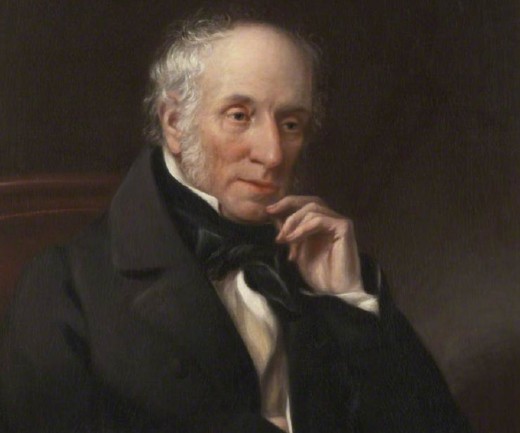
image1wordsworth

sonnet, “Upon Westminster Bridge, September 3, 1802”, first published in 1807 and long known to have been inspired by an entry in his sister, Dorothy’s, journal.   (here’s a LINK to the rest of the poem, if you don’t know it:  https://www.poetryfoundation.org/poems/45514/composed-upon-westminster-bridge-september-3-1802 )

In this posting, we are not going to talk about Wordsworth or the poem or even about the ships, domes, and theatres, but we will talk about towers and temples—or, really about their absence—in Middle-earth.

Way back in 2016, in a posting (our 100th) called “Stepping Westward” (a title also based upon a Wordsworth poem), we talked a bit about religion in Middle-earth, but we’ve thought more about the subject since then and, in particular, about Middle-earth as based in a great part, on earlier forms of England.

JRRT, in a September, 1954 letter to Peter Hastings, wrote, in a footnote:

“There are thus no temples or ‘churches’ or fanes [an archaic word meaning “shrines”] in this ‘world’ among ‘good’ peoples.  They had little or no ‘religion’ in the sense of worship.”  (Letters, 193)

For us, who have spent a good deal of time, both in medieval England and in modern-day England, this seems to leave a large gap in the landscape.  Just look at this mid-16th-century drawing of Old London Bridge and across London by Anton van der Wyngaerde (1525-1571)—

image2wyngaerde

(And do we imagine that JK Rowling had him somehow in mind with the spell “Wingardium Leviosa”?)

image3hermione

At a rough count, we spot about thirty church towers

image4tower

and steeples

Naseby Church

within this image, one for each parish within that part of the city visible.

And here’s a map showing London’s parishes before the Great Fire of 1666 to show you just how many existed a century after that drawing—

image6amap

We’re not experts at Church history, but we know that a parish is the smallest unit of Church of England governance (the Catholic Church uses the same system, from which the C of E system was derived) and it indicates not only the church itself, but a certain quantity of land around it.  In the medieval world, as in the Renaissance world depicted in the drawing, parishes could be quite small—just look at this map of parishes in Hastingleigh, in Kent, just south of Canterbury.
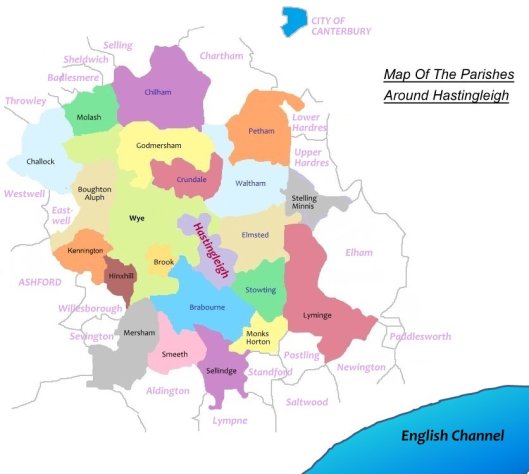
image6parishes

In rolling countryside in England, in fact, it’s sometimes possible to stand on a hill and see more than one church at a time, each potentially a parish center.  Imagine what Hobbiton might look like
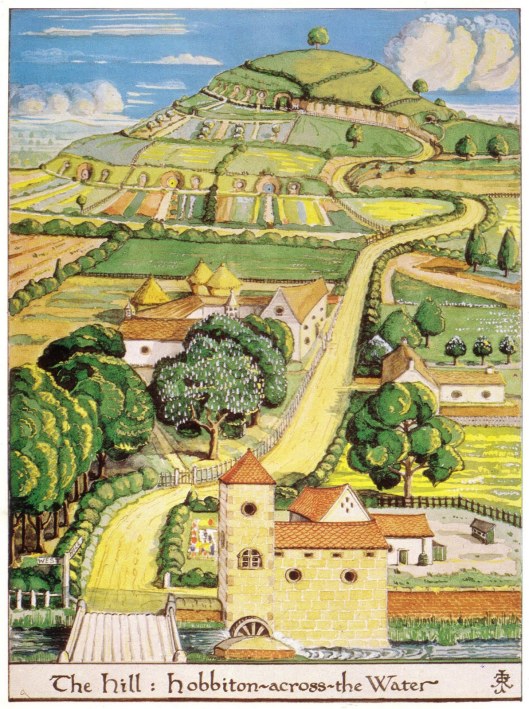
image7hobbiton

with the addition of an ancient church, like this at Kirk Hammerton.

image8church

(Notice the cemetery, too—we know where the important people in places like Edoras
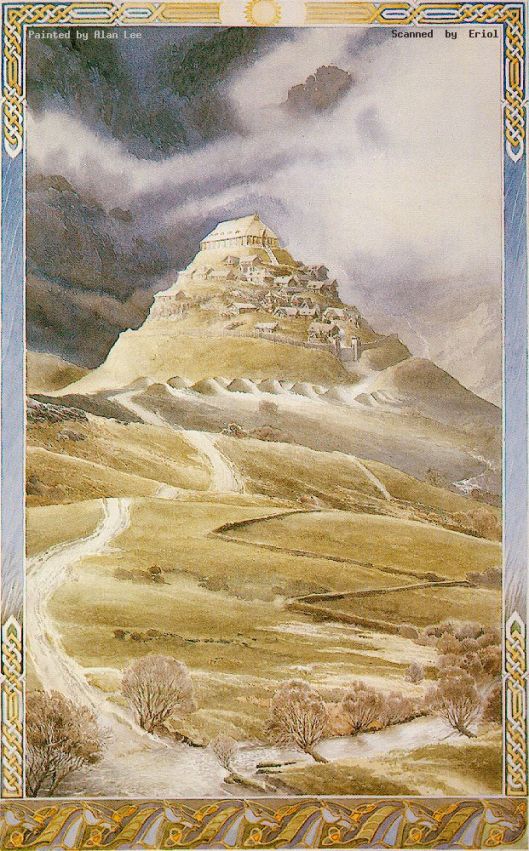
image9edoras

or Minas Tirith

image10stewards

were buried, but what about important hobbits, or even ordinary ones?  In the medieval world, the latter would simply have been buried on church ground in normal circumstances, only the very well-to-do would have had markers of any sort and those more likely inside the church.)

There is nothing like a church, then, even though so much of Middle-earth is medieval England, but is there any other possible influence from that far-off ecclesiastical world?  Perhaps–and it rather surprised us when we thought of it.

Along with parish churches and catherdrals, the homes of the ruling authorities, bishops, (so called because those larger churches held the bishops’ headquarters, marked by a throne, a cathedra—here’s a very famous one, from Ravenna, in northeastern Italy)
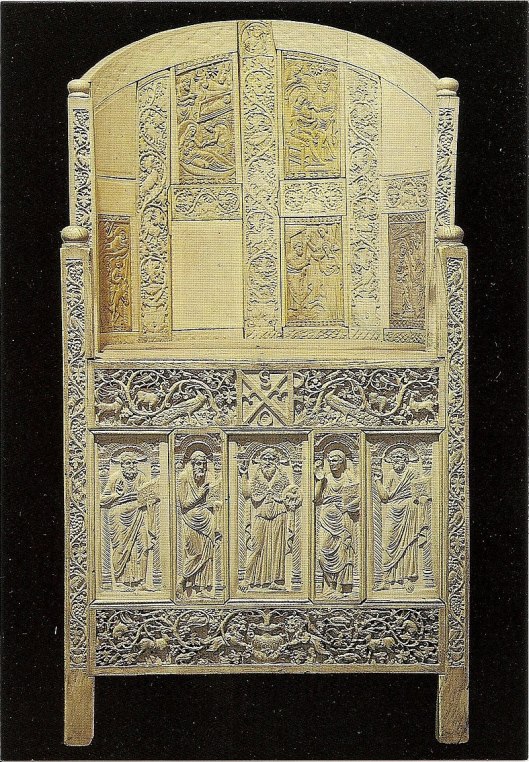
image11ravenna

there arose in the West, beginning in the 4th century AD, a series of religious communities, in which men—and then women—lived and worshipped together.  For men, these were called monasteries and for women, convents.  Such places were intentionally removed from cities and towns (many of the very first were established in the Egyptian desert).
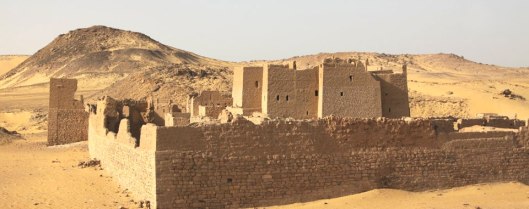
image12astsimeons

The lives of people who lived in them were intentionally very basic and strictly ruled, but they developed into complex societies, some with very elaborate buildings, like this monastery at Cluny, in eastern central France.
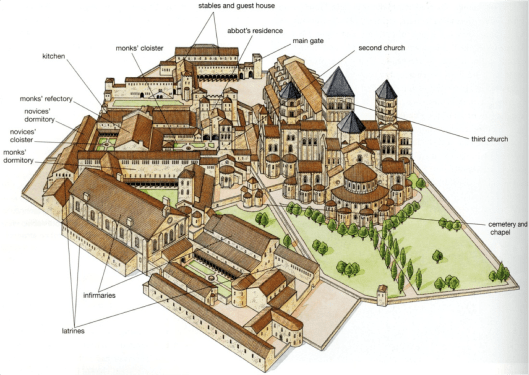
image12clunyiii

Such a place provided not only living and worship space for its inhabitants, but perhaps the only medical facility for anyone for many miles, an infirmarium.
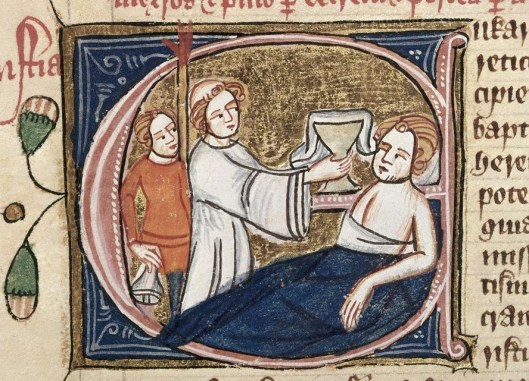
image13infirmary

As well, there might be a school, a library, and a copy center, a scriptorium,

image14scriptorium

where books would be copied—the only way a book would be multiplied in the West until the invention of the printing press in the middle of the 15th century.

After Frodo is wounded on Weathertop by the morgul knife,
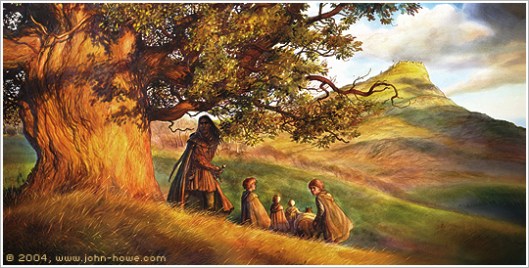
image15howeweathertop

Aragorn and the hobbits flee as best they can to Rivendell,
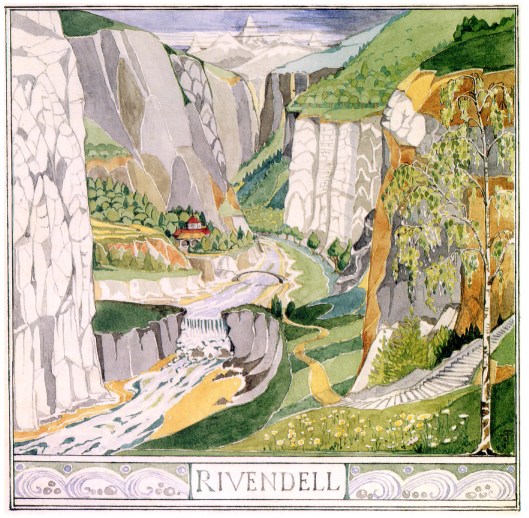
image15rivendell

where Frodo is healed by Elrond, after a tricky operation.  As Frodo recovers, he finds Bilbo, who has been working on his book.  Rivendell seems to be a repository of knowledge—when Bilbo had visited with the dwarves some eighty years before, it had been Elrond who had discovered and translated the moon runes on Thror’s map,
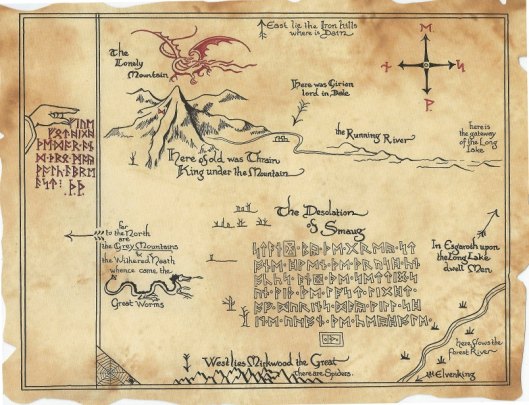
image16runes

and, while staying there eighty years later, Bilbo had not only worked on what would become There and Back Again, but also completed “three books of lore that he had made at various times, written in his spidery hand, and labelled on their red backs: Translations from the Elvish, by B.B.”  (The Return of the King, Book Six, Chapter 6, “Many Partings”)

Rivendell might not have been a religious community, but it is removed (and rather tricky to find, at least as far as Gandalf is concerned in chapter 3 of The Hobbit), it acts as an infirmary for Frodo, and it appears to be a place of learning for Bilbo—perhaps, if Middle-earth has no churches, it might have the suggestion of a monastery?

Thanks, as ever, for reading and stay well, with

MTCIDC

CD


ps

Based at the remains of the monastery at Cluny is a wonderful musical group, Odo, which takes its name from one of the early abbots (directors) of the community.  They mix Western medieval with Middle Eastern music in all sorts of interesting ways.  Here they are in this LINK performing an Egyptian lullaby, “Nami, Nami”.

And here’s a second and smokier performance by Azam Ali and her ensemble.

https://www.youtube.com/watch?v=FuGhF_FhWKw

We hope you enjoy both as much as we do!

Smoke—and Caterpillars

03 Wednesday Jun 2020

Posted by Ollamh in Uncategorized

≈ Leave a comment

Welcome, dear readers, as ever.

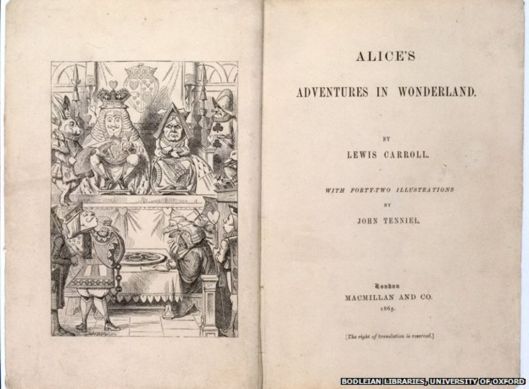
Recently, we’ve been rereading Lewis Carroll’s (1832-1898)

image1lc

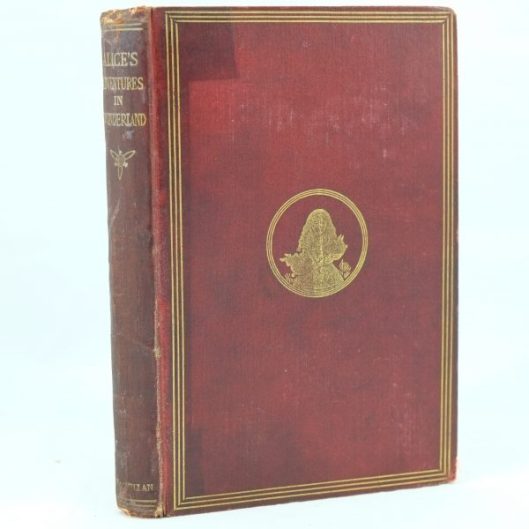
Alice’s Adventures in Wonderland (1865).

image2first

We’d come to the very end of Chapter IV, “The Rabbit Sends in a Little Bill”, about to begin Chapter V, “Advice from a Caterpillar”, and there, in the original publication, is this illustration, by Sir John Tenniel (1820-1914),

image3tenniel

of, as the text tells us:

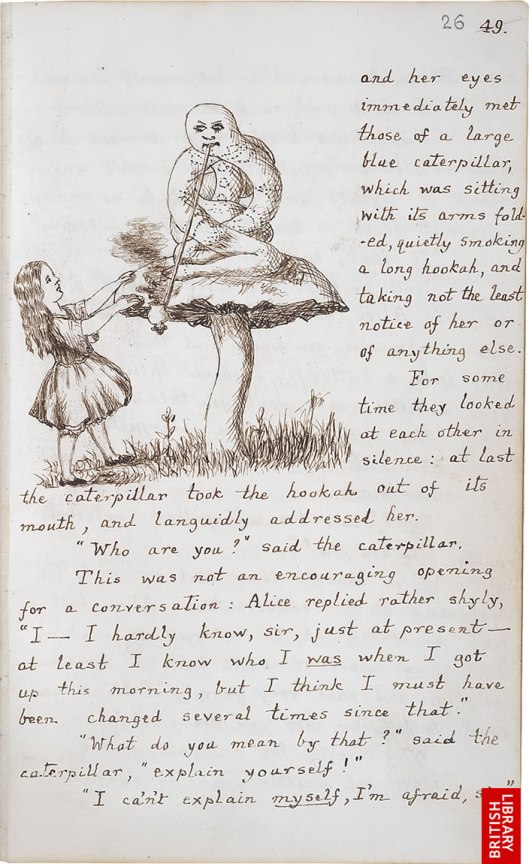
“…a large blue caterpillar, that was sitting on the top [of a mushroom] with its arms folded, quietly smoking a long hookah…”

image4cater

If you read us regularly, you know that the first thing which would strike us isn’t necessarily the image, but that word, “caterpillar”.  Where in the world did the term “caterpillar” come from?  The answer you might see in this image—

image5wooly

Here in the US, this is commonly called a “wooly-bear” or “wooly-worm”, although it is not really wooly, and certainly not a bear, although perhaps a little wormy.  In fact, it’s the larva of a Pyrrarchtia Isabella, the Isabella tiger moth.  These are a North American creature, but there are similar hairy caterpillars in Europe.

image6moth

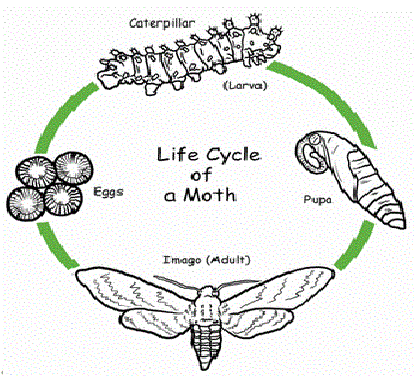
Well, we know the life stages of butterflies and moths from a biology class long ago,

image7moth

so, if this is a caterpillar, what’s the next step?  Imagine that someone long ago, instead of calling it a “wooly bear” thought that it looked more feline—a kind of very fuzzy feline.  And that person, who spoke (late) Latin, called it a “catta pilosa”, a “hairy cat” which, through Old North French “caterpilose”  into Middle English “catyrpel” became, yes, a “caterpillar”.  To help to see how that pronunciation changed, think of southern English dialects which don’t pronounce those R’s and you immediately get “cat-uh-pill-uh”, which is just on the edge of that older word.

Now that we have that straightened out, more or less, the next question is:  what is a caterpillar doing in the text—and, further, why is it smoking a hookah?  Or, if you’re not familiar with that gadget,

image8hookah

perhaps we should also ask, what’s a hookah?

To begin, we can only guess why there’s a caterpillar there.  It’s in the manuscript version which Carroll presented to the original Alice in 1864, (although in Chapter III and without a chapter title), so it appeared sometime in the early process of composition.

image9ms

As we understand it, the story began as a piece of oral creation, a story told on a boating trip with the original Alice, her two older sisters, and an Oxford friend, on 4 July, 1862.  We might imagine then, that, somewhere along the way, a caterpillar appeared, perhaps dropping into the boat?  Certainly there are various common caterpillars which appear at this season in England.  (Here’s a LINK for you to explore them:  https://www.wildlifetrusts.org/wildlife/how-identify/identify-caterpillars )

So, if we have a caterpillar appear, what might it be doing?  It will probably talk—most creatures in Wonderland do—but could it perhaps be doing something exotic, as well?  Carroll’s illustration, although the text says that he was smoking a long hookah, depicts the caterpillar as smoking something different, a chibouk, a kind of very long-stemmed Turkish tobacco pipe.

image10chibouque

A hookah, as you can see both from our photos above and below and from Tenniel’s illustration, consists of a smaller bowl, in which the tobacco is placed and lighted, on top of a bigger flask of water, through which the smoke is sucked and “purified” as the smoker inhales it through a long hose, then blows it out again, as we see in Tenniel’s version of the scene.

image11ahookah

The point, however, is that, hookah or chibouk, this suggests a Middle Eastern theme, especially if we imagine that the mushroom upon which he is seated is an ottoman, a kind of backless sofa/couch

image11ottoman

the very name of which tells us where it comes from.

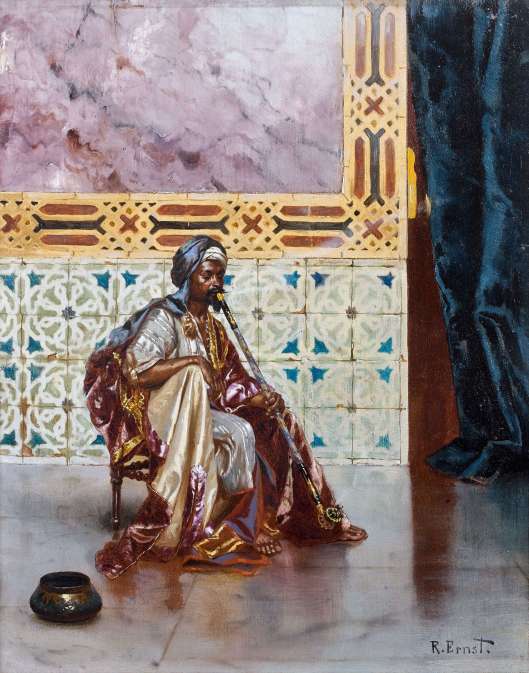
A further clue might be found in the Tenniel illustration:  the caterpillar appears to be wearing something with long, loose sleeves, rather like the kinds of robes worn by Middle Eastern gentlemen in Victorian fantasy paintings of that world

image12fantasy

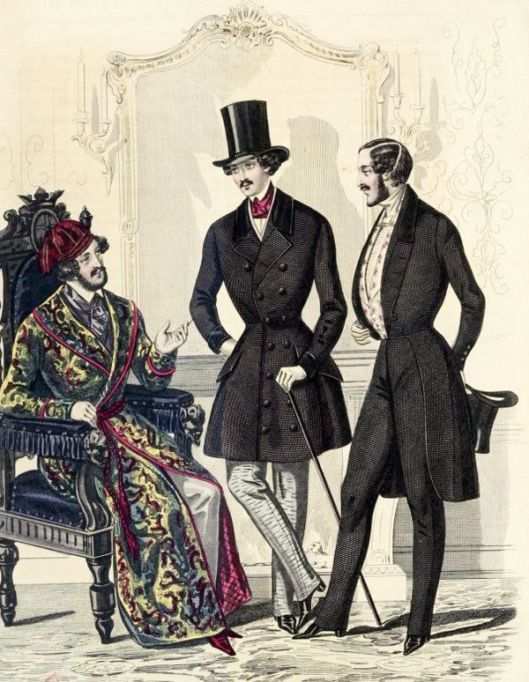
as well as Victorian “smoking jackets”—actually more like a bathrobe in this 1840s fashion illustration–

image13smoking

which gentlemen wore in leisure moments at home, complete with a distinctive “smoking cap”,

image14fez

often, as here, modeled upon another Middle Eastern garment, the headwear called a fez.  (Although this gentleman seems to prefer a cigar to a hookah of chibouk.)

So, if we put these various bits together, we would offer the following:   that we have the suggestion that Alice, in this strange place, has come upon a gentleman caterpillar, lounging on an ottoman in somewhat “Middle Eastern” dress, idly smoking an exotic kind of pipe.

We might indicate one more detail, one which we’re a little reluctant to add, but there may be a clue in the description of the caterpillar’s speech and actions:

“…at last the Caterpillar took the hookah out of its mouth, and addressed her in a languid, sleepy voice.”

And, in the final moments of their conversation, the caterpillar:

“…took the hookah out of its mouth, and yawned once or twice, and shook itself.”

Perhaps this is just a very lazy sort of creature, but, other things were smoked besides tobacco in hookahs and, of course, there have always been readers who have attached so-called “drug culture” ideas to Wonderland—as if the whole thing is based upon some hallucinatory dose.  To us, who spend a lot of time in Victorian and later fantasy worlds, this is completely unnecessary and actually does a disservice to the author’s wonderful imagination—and yet, there is that sleepy quality…

We’ll leave this to you, dear readers, with thanks for reading, with a wish that you will stay well, as well as our reassurance that there will be

MTCIDC

CD


ps

If you would like to see the hand-written early version of Alice, which Carroll gave to Alice, it is now in the British Library, and here’s the LINK:  https://www.bl.uk/collection-items/alices-adventures-under-ground-the-original-manuscript-version-of-alices-adventures-in-wonderland


A QUICK POST

27 Wednesday May 2020

Posted by Ollamh in Uncategorized

≈ Leave a comment

Welcome, as ever, dear readers.

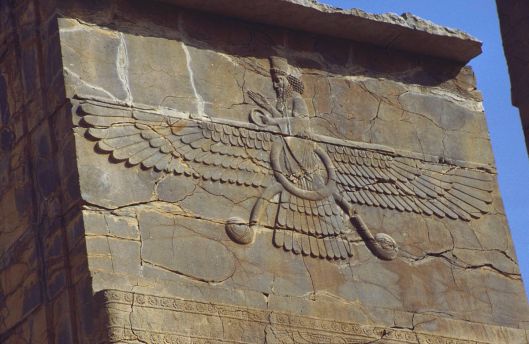
We begin this posting with the Persians

image1persians

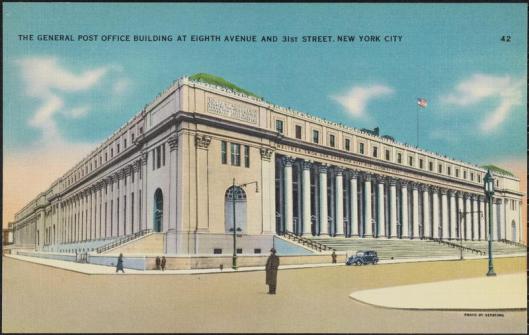
and a post office.

image2nypo

This might seem a very odd pairing, but the inscription over the front of the 8th Avenue post office building in New York City (opened 1914) offers a connection.

image3po

This is only a part of the inscription, which reads, in full:

“Neither snow nor rain nor heat nor gloom of night stays these couriers from the swift completion of their appointed rounds.”

Persian?  This doesn’t look like Persian.  Now this looks like Persian—

image4persian

This is one of a pair of inscriptions, called the “Ganjnameh Inscriptions”, “Ganjnameh” in Farsi meaning “Treasure Book”, the locals believing that, if you could read what was written on this pair,

image5inscriptions

you would be given the instructions to find ancient buried treasure.  Instead, they are about two Persian kings, Darius I (550-486BC—he’s the one sitting down) and his son, Xerxes I (c.518-465BC)

image6dandx

and, as good Zoroastrians, their patron god, Ahura Mazda.

image7am

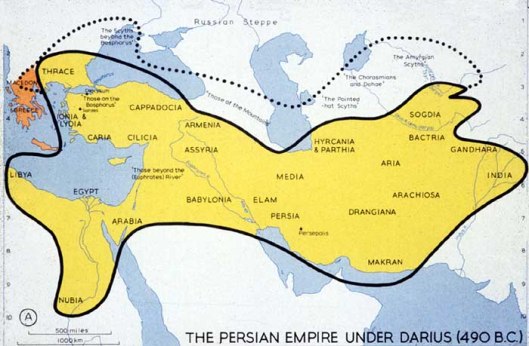
Darius, often called “Darius the Great”, was an early and very ambitious Persian monarch, who extended his empire beyond its previous boundaries

image8empire

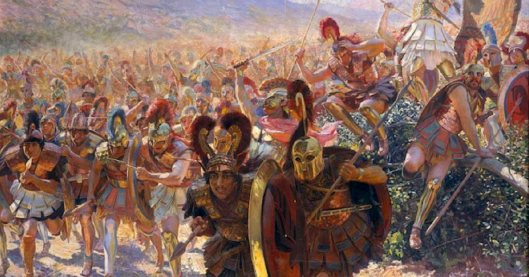
and is known in Western history for being the king whose expeditionary force was defeated by the Athenians and their allies, the Plataeans, at the battle of Marathon, in 490BC.

image9marathon

The story of this monarch and that of his son, Xerxes, who led a second expedition against Greece 10 years later, are told in the Greek Heroodotus’ (c.484-c.425) Histories, a 9-book account of Greek relations with Asia Minor and particularly with Persia, seeking to explain, in part, why the two were at odds through several centuries.

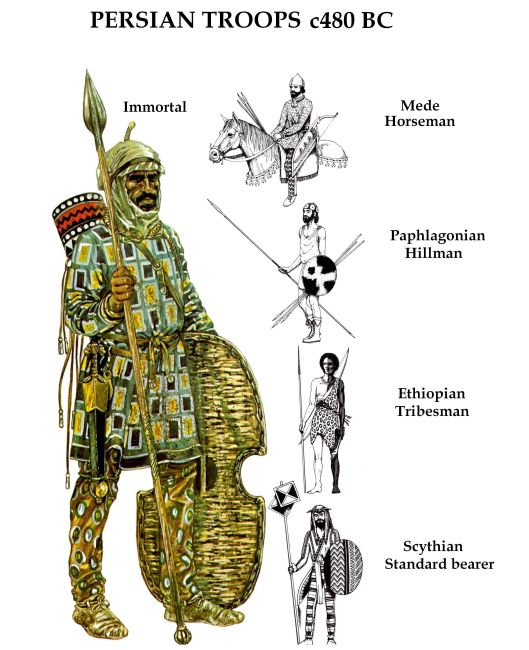
As empire-builders, the Persians were easy rulers.  They never had the troops to occupy their huge territories, once they had conquered them, but, instead, appointed a governor (satrap) and demanded two major items:  troops, when required,

image10troops

and taxes (always required).

image11daric

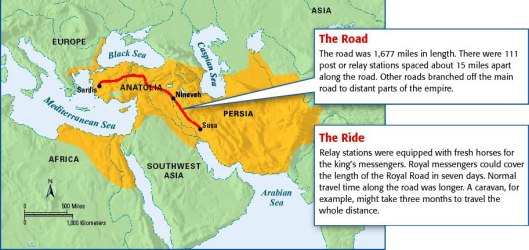
To keep control of such a huge stretch of land, Darius and his successors maintained a direct route of communication from the western edge of Asia Minor to one of their capitals, at Susa.  This route was called the “Royal Road” and stretched for nearly 1700 miles.

image12road

If it took months to walk the distance one way, but, with a long series of stations, each with fresh horses, a relay of messengers might travel the same distance in a week—and this is where that inscription on the post office comes in.  Herodotus describes this road and its government service here:

“Now there is nothing mortal that accomplishes a course more swiftly than do these messengers, by the Persians’ skillful contrivance. It is said that as many days as there are in the whole journey, so many are the men and horses that stand along the road, each horse and man at the interval of a day’s journey. These are stopped neither by snow nor rain nor heat nor darkness from accomplishing their appointed course with all speed. [2] The first rider delivers his charge to the second, the second to the third, and thence it passes on from hand to hand, even as in the Greek torch-bearers’ race in honor of Hephaestus. This riding-post is called in Persia, angareion.” (Herodotus, Histories, Book VIII, 98, from the 1920 Godley translation)

And here’s an illustration of what Herodotus suggests is a Greek parallel—

image13torchbearer

(If the message was by word of mouth, there could be a real danger of miscommunication—follow this LINK to such a danger by the wonderful Horrible Histories folk:  https://www.youtube.com/watch?v=QKqkq4hGpgo )

You can see, then, that the builders of that New York post office, borrowing from (and adapting) Herodotus, wanted to suggest that the US Postal Service was as imposing (and as unbeatable?) as the Persian Imperial Post.

Long before the US Postal Service, however, the idea of something as speedy for government use as this was not lost upon the Romans.

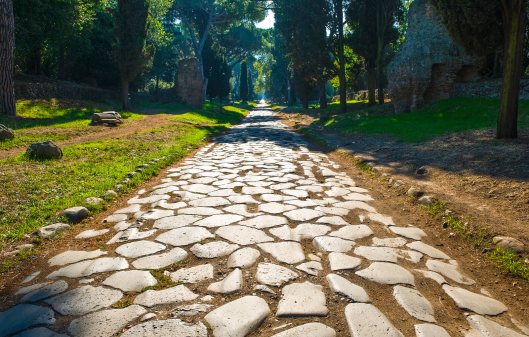
The emperor Augustus, about the year 20BC, founded a Roman version of this service, called the cursus publicus, using the increasingly-elaborate Roman road network (ultimately 50,000 miles—80,000km–of paved roads).

image14road

We have a good description of this official service from a much later source, the Historia Arcana (“Secret History”) of Procopius (c.500-after c.565AD), a Byzantine court official at the time of the emperor Justinian (482-565AD):

“For the Roman Emperors of earlier times, by way of making provision that everything should be reported to them speedily and be subject to no delay, — such as the damage inflicted by the enemy upon each several country, whatever befell the cities in the course of civil conflict or of some unforeseen calamity, the acts of the magistrates and of all others in every part of the Roman Empire — and also, to the end that those who conveyed the annual taxes might reach the capital safely and without either delay or risk, had created a swift public post extending everywhere, in the following manner.  3 Within the distance included in each day’s journey for an unencumbered traveller2 they established stations, sometimes eight, sometimes less, but as a general thing not less than five. 4 And horses to the number of forty stood ready at each station. And grooms in proportion to the number of horses were detailed to all stations. 5 And always travelling with frequent changes of the horses, which were of the most approved breeds, those to whom this duty was assigned covered, on occasion, a ten-days’ journey in a single day…”  (Procopius, Historia Arcana, xxx—translator, HB Dewing, 1935)

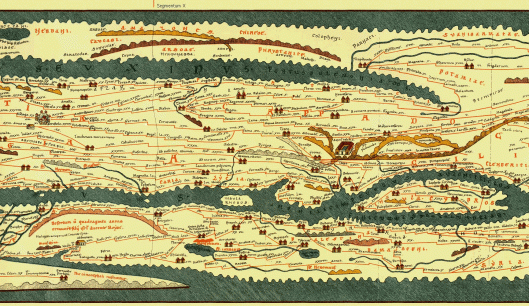
Remarkably, we can even trace the routes taken by couriers by using an extremely interesting piece of geographical charting, the so-called Tabula Peutingeriana, the”Peutinger Map”.

image15map

Named for Konrad Peutinger (1465-1547),

image16kp

a scholar in whose hands it lay in the 16th century, it is 13th century copy of a map which may date all the way back to the time of Augustus himself.  (If you’d like to read more about the map and theories of origin, here’s a LINK:  https://en.wikipedia.org/wiki/Tabula_Peutingeriana )

The original was a 22-foot long scroll which, leaving out Britannia and Hispania, charts the thousands of miles of Roman roads.  (See the LINK above for a roll-out of the whole map.)

The use of such a speedy service was not lost upon someone else, in a much later time.  In the 3rd section of the “Prologue” to The Lord of the Rings, we see:

“The only real official in the Shire at this date was the Mayor of Michel Delving (or of the Shire)…the offices of Postmaster and First Shirriff were attached to the mayoralty, so that he managed both the Messenger Service and the Watch.  These were the only Shire-services, and the Messengers were the most [sic] numerous, and much the busier of the two.  By no means all Hobbits were lettered, but those who were wrote constantly to all their friends (and a selection of their relations) who lived further off than an afternoon’s walk.”  (The Lord of the Rings, Prologue, Section 3—the word “sic” is inserted in brackets above because there’s a grammatical error in the text here.  JRRT names only two groups, the Messenger Service and the Watch, which means that one should use the comparative form of “much/many”, which is “more”, here, instead of the superlative “most”, which would be used for more than two groups.)

This establishes a postal service in the Shire—but what about the speedy part?  We turn to the next-to-the-last chapter of The Return of the King, “The Scouring of the Shire”, and listen to Robin Smallburrow speaking with Sam:

“We aren’t allowed to send by it now, but they use the old Quick Post service, and keep special runners at different points.” (The Return of the King, Book Six, Chapter 8, “The Scouring of the Shire”)

And, as this posting was entitled “A Quick Post”, we’ll end here, saying, as always, thanks for reading and MTCIDC,

CD

ps

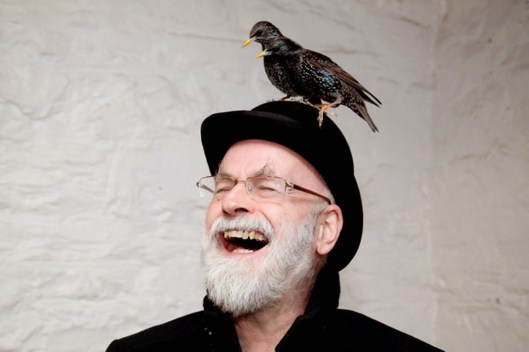
That post office motto turns up in a comic form (with missing letters), more or less, in Terry Pratchett’s Going Postal (2004),

imagegoingpostal

where, on the central post office in Ankh-Morpork, may be read the inscription:  “Neither rain nor snow nor glo m of ni  t can stay these mes sengers abo t their duty”.

We recommend not only this (one of our favorite Pratchett novels), but also recommend the film adaptation, which really captures much of the feel of the book.

imagefilm


A Policeman’s Lot, or, Guards! Guards!
20 Wednesday May 2020

Posted by Ollamh in Uncategorized

≈ Leave a comment

As always, welcome, dear readers.

It’s clear that, before the advent of Sharkey and his “big men”, the Shire had little need of law enforcement:

“The Shirriffs was the name that the Hobbits gave to their police, or the nearest equivalent that they possessed.  They had, of course, no uniforms (such things being quite unknown), only a feather in their caps; and they were in practice haywards than policemen, more concerned with the strayings of beasts than of people.  There were in the Shire only twelve of them, three in each Farthing, for Inside Work.  A rather large body, varying at need, was employed to ‘beat the bounds’, and to see that Outsiders of any kind, great or small, did not make themselves a nuisance.” (The Lord of the Rings, Prologue 3)

That Sharkey and his thugs were able not only to take over the Shire, but reorganize and expand these Shirriffs into their own hobbit enforcers, suggests how nearly useless they could be—unlike the body which we suspect they may have been modeled upon, Hitler’s notorious private police force, the SA (SturmAbteilung—“Storm(trooper)Detachment”).

image1asturm

The consequence occurs when Merry, Pippin, Frodo, and Sam return to the Shire (a wonderfully atmospheric depiction by Allen Lee)

image1bscour

and their fearlessness so shakes this ersatz-SA that they quickly collapse, leaving only those “big men” to deal with an improvised army of angry hobbits.

A Tolkien illustration by Ted Nasmith

(by Ted Nasmith—always one of our favorite illustrators)

If the subsequent violence weren’t there to darken the picture (along with the deaths of Sharkey/Saruman and Grima), the plight of the Shirriffs would be almost silly, as the hobbits they attempt to take prisoner turn the tables, almost making the Shirriffs into prisoners:

“It was rather a comic cavalcade that left the village, though the few folk that came out to stare at the ‘get-up’ of the travelers did not seem quite sure whether laughing was allowed.  A dozen Shirriffs march in front, while Frodo and his friends rode behind.  Merry, Pippin, and Sam sat at their ease laughing and talking and singing, while the Shirriffs stumped along trying to look stern and important.” (The Return of the King, Book Six, Chapter 8, “The Scouring of the Shire”)

These Shirriffs in their haplessness (you can see “Shire”—from Old English scir—said “sheer”—here, combined with gerefa—something like “yeh-REH-fuh”—“official”) reminded us of the Ank-Morpork City Watch in the novels of Terry Pratchett (1948-2015),

image1tp

and, if you’re a fan, as we are, you’ll immediately recognize our subtitle as a borrowing from his 1989 novel.

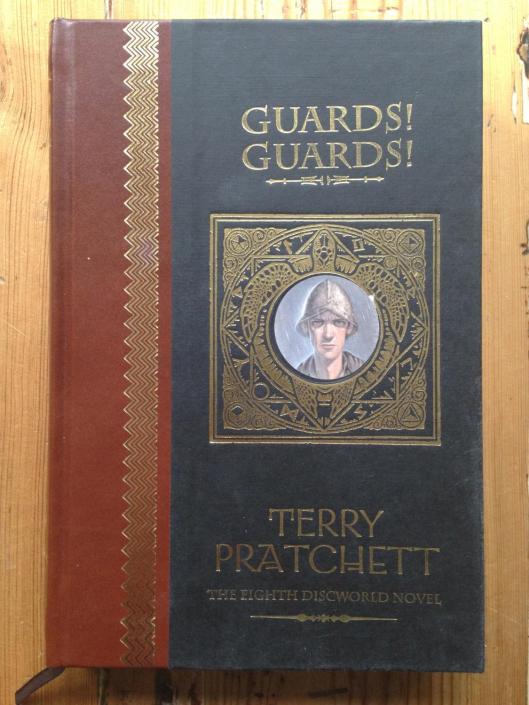
image2guards

The City Watch are the police

image3watch

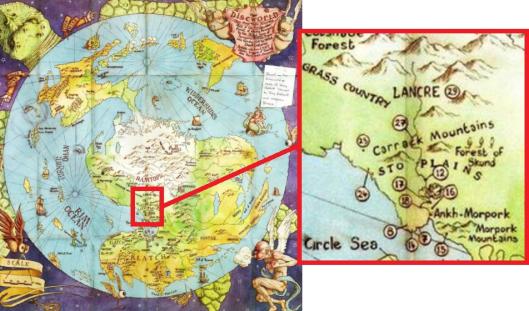
of the city of Ankh-Morpork, on Discworld, Pratchett’s personal planet.

image4map

As the City Watch, they are not actually guards, but, rather, what, in our world, would be early policemen.

image5constables

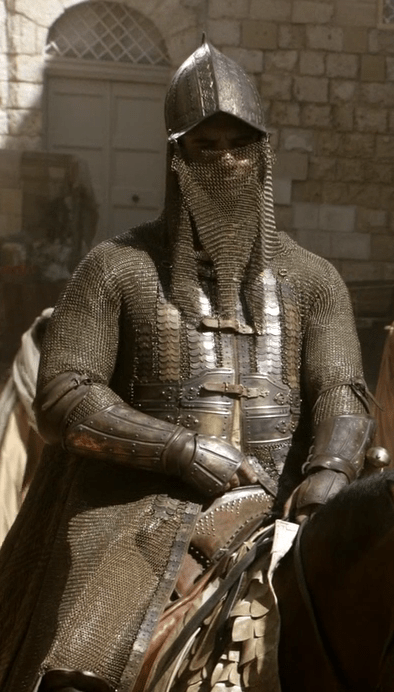
In their general look and behavior, however, they’re not like the City Watch of King’s Landing,

image6citywatch

but a bit more simple-minded, like the Keystone Cops (1912-1917) of silent film.

image7keystone

Comedy and the constabulary go back a very long time.  Ancient Athens employed mercenaries from north of the Black Sea, the Scythians, as the muscle in their police force.

image8aascythian

The Athenian comic dramatist, Aristophanes (c446-c386), saw the comedy in such foreigners who seemed not too bright—mostly because they spoke Greek badly—and yet represented the state.

There was a kind of combined watch and fire department, called the Cohorts of the Watch (Cohortes Vigilum), in Rome, but we don’t know of anything in surviving Roman literature which portrays them as figures of fun.  Shakespeare, however, has given us a constable, Dogberry, whose name alone is ridiculous.  He is head of the Watch in the town of Messina in Much Ado About Nothing (1598-9?)

image9dogberry

and his instructions to his men will give you an idea of how Shakespeare wants us to view this officer of the law:

DOGBERRY

You shall also make no noise in
the streets; for, for the watch to babble and to
talk is most tolerable and not to be endured.

Watchman

We will rather sleep than talk: we know what
belongs to a watch. 

DOGBERRY

Why, you speak like an ancient and most quiet
watchman; for I cannot see how sleeping should
offend: only, have a care that your bills be not
stolen. Well, you are to call at all the
ale-houses, and bid those that are drunk get them to bed.

Watchman

How if they will not?

DOGBERRY

Why, then, let them alone till they are sober: if
they make you not then the better answer, you may
say they are not the men you took them for.

Watchman

Well, sir.

DOGBERRY

If you meet a thief, you may suspect him, by virtue
of your office, to be no true man; and, for such
kind of men, the less you meddle or make with them,
why the more is for your honesty.

Watchman

If we know him to be a thief, shall we not lay
hands on him?

DOGBERRY

Truly, by your office, you may; but I think they
that touch pitch will be defiled: the most peaceable
way for you, if you do take a thief, is to let him
show himself what he is and steal out of your company.

(Much Ado About Nothing, Act III, Scene 3)

Here we see a combination of kinds of comedy:

  1. misuse of words (these are called “malapropisms” from Mrs. Malaprop, a character in WB Sheridan’s The Rivals, 1775, who constantly garbles meanings—“malaprop” is from French mal a propos, “inappropriate”)—as when Dogberry says “to talk is most tolerable and not to be endured”, where Dogberry means intolerable
  2. opposite meaning—when the unnamed watchman says “We will rather sleep than talk: we know what belongs to a watch.”—one of the meanings of “to watch” is “to stay awake”! And Dogberry agrees with him:  “for I cannot see how sleeping could offend.”
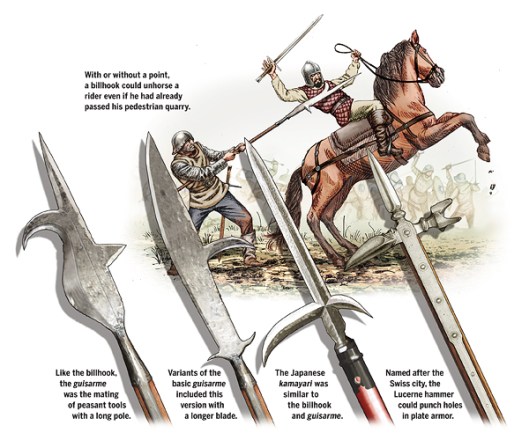
  3. giving oneself away—the tasks of the Watch are clearly to include enforcing curfew hours for taverns and catching thieves and Dogberry’s response to questions about drunks (“let them along till they are sober”) and thieves (“the less you meddle or make with them, why the more is for your honesty”), where “meddle or make” means “have to do with them” give us the picture of an officer who will sleep on duty and avoid his duties when awake. (We would also point out that line about sleeping on duty: “only, have a care that your bills be not stolen”.  “Bills”, here, doesn’t mean records of debt, but a medieval weapon, a billhook,

image10abill

suggesting that these constables are so inept that, not only will they be sleeping on duty, but also they will be in danger of losing their weapons while doing so.)

Constables, competent or note, were the norm in the Renaissance and beyond, policemen in the modern sense being an early modern invention.  For us, with our interest in the Victorian world, this means the London Metropolitan Police, founded by Sir Robert Peel in 1829 (and hence, in slang, called “bobbies” or “peelers”).

OLYMPUS DIGITAL CAMERA

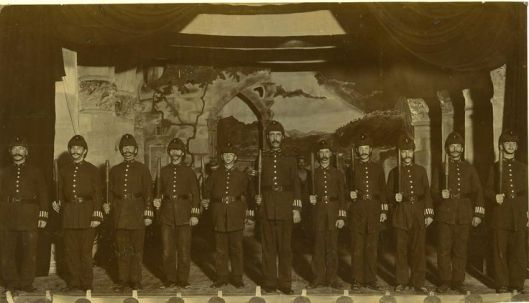
With their distinctive uniforms and, in time, helmets, as well as their truncheons (clubs), rather than firearms, they quickly became familiar figures in 19th-century Britain, so much so that it was easy for WS Gilbert to introduce them as comic opponents for his pirates in his and Arthur Sullivan’s 1879/80 operetta, The Pirates of Penzance.

image11penzance

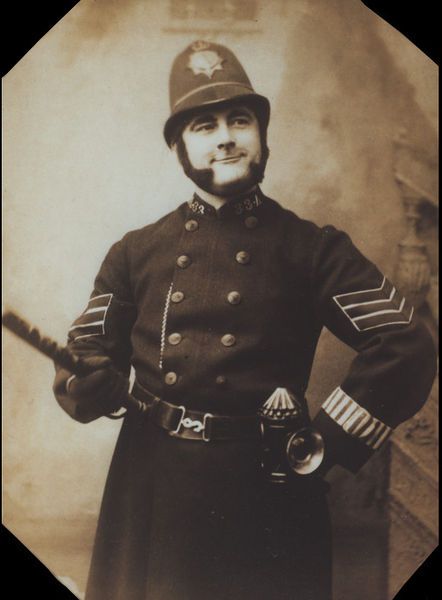
Like Dogberry and his watchmen, they are depicted as timid, but Gilbert does something more:  he makes them sentimental, as the sergeant

image12rbarrington

tells us:

WHEN a felon’s not engaged in his employment,
  Or maturing his felonious little plans,
His capacity for innocent enjoyment
  Is just as great as any honest man’s.
Our feelings we with difficulty smother         5
  When constabulary duty’s to be done:
Ah, take one consideration with another,
  A policeman’s lot is not a happy one!
When the enterprising burglar’s not a-burgling,
  When the cut-throat isn’t occupied in crime,         10
He loves to hear the little brook a-gurgling,
  And listen to the merry village chime.
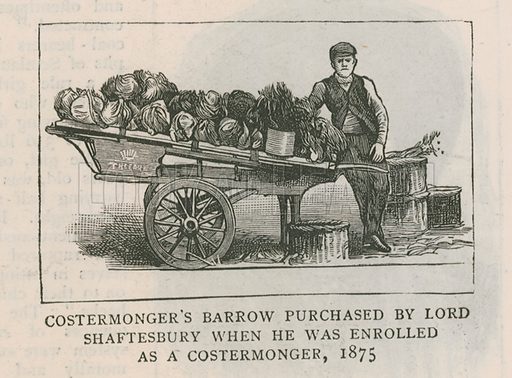
When the coster’s finished jumping on his mother,
  He loves to lie a-basking in the sun:
Ah, take one consideration with another,         15
A policeman’s lot is not a happy one!  

(We have no idea why there is this bracketing around our quotation, but, when we tried to get rid of it, it stubbornly remained.  Rather than struggle with it, since it has given us the quotation, we decided to leave it, with apologies for our rather primitive computer skills!  A “coster”, by the way, is, basically, a city pushcart salesman.  The word is short for “costermonger” = “apple seller”.)

Costermonger's barrow purchased by Lord Shaftesbury when he was enrolled as a costermonger, 1875

You can see what will happen when such constables attempt to subdue anyone, let alone pirates.

image13subdue

This brings us back to those Shirriffs, and we leave you with the idea that, although the sergeant in The Pirates of Penzance sings that a policeman’s lot is not a happy one, in literature, from Aristophanes to Tolkien, it is sometimes a comic one.

As ever, thanks for reading, with

MTCIDC,

of course,

and stay well!

CD

The Word

13 Wednesday May 2020

Posted by Ollamh in Uncategorized

≈ Leave a comment

“In the beginning was the Word…”

John, I, 1.

Welcome, dear readers, as ever.

Although we begin with what is the opening of the Christian New Testament’s Book of John, the word here stands not for anything religious, although it might be spiritual.  Rather, it is the approach we want to take for something we’ve been thinking about for some time and which we’ve chosen as the theme for this, our 300th posting.

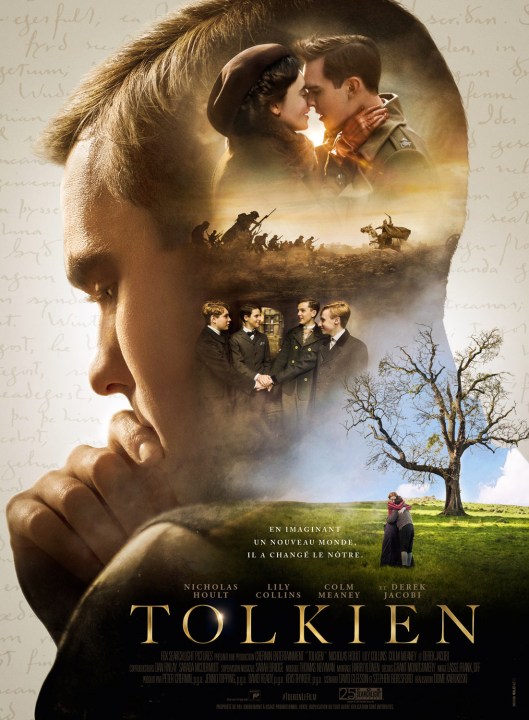
In May, 2019, Fox Searchlight released Tolkien, a film about the early life of JRRT.  Reviews were very mixed.  Some people saw it as a rather over-fanciful depiction, and criticized it as such.  A few were very negative.  And some praised certain aspects of it.  We are in the latter category, in that we saw it as an honest attempt to do something very difficult:  to tell the external story of a complex, highly-creative man while, at the same time, suggesting something of his internal story.

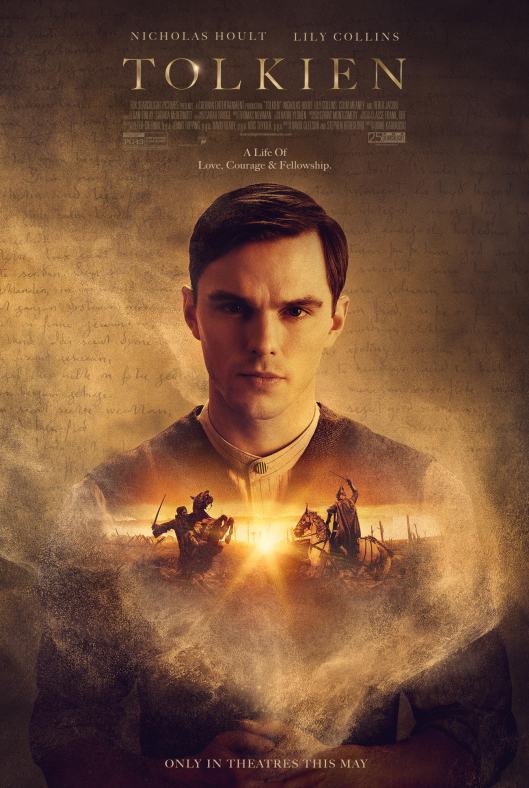
We are always interested in movie posters and here are three which suggest to us different approaches with which the writers and director tried to present to us thematic material which would both hold the story together and hold our attention, as well.

The first

image1poster

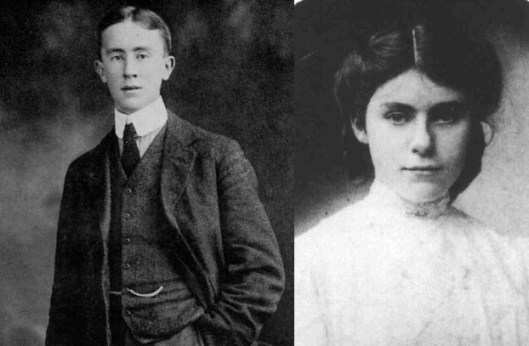
shows us Nicholas Hoult, who played Tolkien, as a rather serious young man in his 20s.  The likeness between him and JRRT is not particularly strong,

image2jrrt

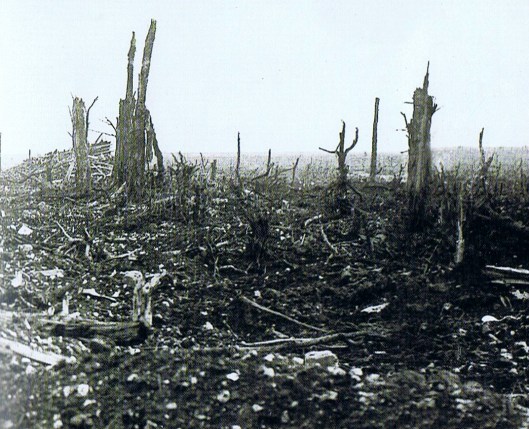
but that, to us, was of no matter:  what we wanted to see was how he acted, not who the actor was.  What really caught our eye was the scene just below his image.  It’s small, but it appears to be of two medievalish mounted figures who look like they’re about to engage in combat.  All right, we thought—a suggestion of the medieval world of Middle-earth, but, at the moment, more medieval than Middle-earth, which could suggest the world in which Tolkien would spend his academic life, once he realized that Classics was not for him.  Telling, however, is the background to this small scene:  blasted trees.  And we know where we’ve seen this—

image3nomansland

So—in this approach, we see a young Tolkien set above a world which combines knights and the No Man’s Land of his experience in the Great War.

image4ajrrt

Our second poster

image4poster

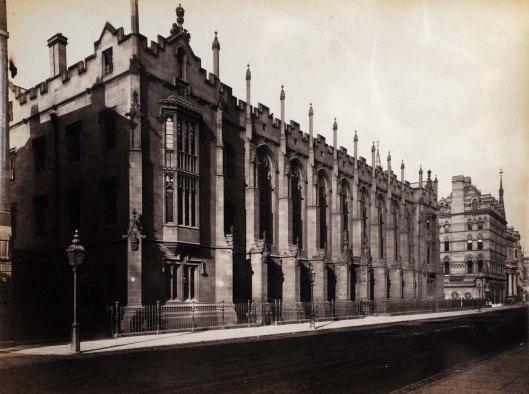
retains the image of Tolkien, and of those medievalish figures, but includes two more elements.  Within a picture frame are, first, four schoolboys, and we know, from the film, that they represent JRRT’s best friends at King Edward’s School in Manchester, which he attended from 1900-1902 and 1903-1911.

image5kingedwards

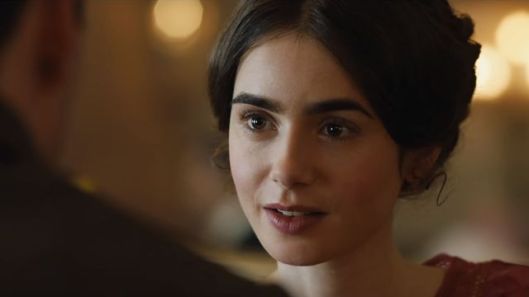
Their position in Tolkien’s early life is underlined by the slogan above the frame:  “A Life of Love, Courage & Fellowship”.  Love certainly existed among Tolkien and his friends, but the other figure within the frame signifies another kind of love, the romantic variety, in the form of Lily Collins, who plays Edith Bratt, Tolkien’s one-time sweetheart and eventual wife.

image6edith

Here, we think that the director came closer to a resemblance, if we put the two together.

image7lc


image8edith

So, in this approach, we retain the suggestion of the medieval and the Great War, but add to it Tolkien’s early friendship (with the suggestion, at least in the poster, of “fellowship”), and his romantic life.

The third poster tries to bring this all together,

image9poster

suggesting, perhaps, that all these parts:  friendship, love, medievalism, and the Great War, swirl around inside JRRT’s head.  Although Tolkien himself fought shy on a regular basis of the idea that works like The Lord of the Rings were somehow cloaked versions of actual events in some way, all writers carry their experiences with them and those experiences may inspire creative work, even if somewhat indirectly.  Thinking of Tolkien’s long separation from Edith, for example, might we see a suggestion of the many years in which Arwen and Aragorn waited for each other?

So far, then, we see the film using the actual events of JRRT’s life, more or less in their historical order, with a certain amount of embellishment, presumably to give that life a bit more “drama”.  But this isn’t all which the film attempts and, for us, this extra—but crucial–level is the most interesting—and the most daring.  Tolkien is known for having written that:  “The ‘stories’ were made rather to provide a world for the languages than the reverse.  To me a name comes first and the story follows.”  (Letters, 219)

There are two moments when the director and writers try to include this idea that language is key and, for us, they are our favorite moments in the film.  The first involves a statement taken from a 1955 lecture, “English and Welsh”, in which Tolken writes:  “Most English-speaking people, for instance, will admit that cellar door is ‘beautiful’, especially if dissociated from its sense (and from its spelling). “ (JRR Tolkien, The Monsters and the Critics, Hammersmith:  HarperCollins, 2006, 190)

Its sense, for JRRT, would probably have been something like this—

image10cellardoor

By “its spelling”, we wonder if what he actually means is its pronunciation.  In certain areas of England, the Rs at the end of both words would be pronounced as the alphabetic sound R, a bit of a growl in the back of the throat, but in what is called RS—“received standard” (British) English, those Rs almost disappear, making the words sound more like “selladaw” (this is a bit crude as a key to pronunciation—but we have a better way of demonstrating it which will appear in just a moment).

In the film, this remark is brought to life in an interesting way.  Tolkien and Edith are at tea in a rather swanky place and she challenges him to tell her a story, using “selladaw”.  He takes up the challenge, groping for meaning, and quickly changes her suggestion—that it’s a person—to it being a place name.  Here’s the LINK to a clip:   https://annasmol.net/2019/04/13/tolkiens-cellar-door/

which we found on a website we encourage you to visit at:  https://annasmol.net/

In the clip, you’ll hear the RS pronunciation, as well as see something the director and writers also wanted to bring out:  that Edith sparked something poetic in Tolkien, truly being Luthien to his Beren.  (If this story is unfamiliar to you, it’s in the Silmarillion, and also might have been suggested, in part, by Tolkien’s long waiting for Edith.  Here’s a LINK to the Wiki article on the subject, which is very useful:   https://en.wikipedia.org/wiki/Beren_and_L%C3%BAthien   )

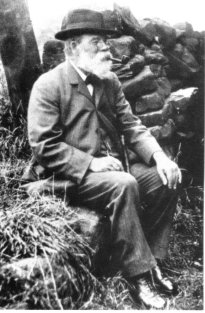
The second moment is not so dramatic (or romantic), but it tries to provide some sense of that pure love of language, its history and creation, which was so vital to what stood behind Tolkien’s massive world of Middle-earth, but it’s not something which Tolkien says.  Rather, it’s spoken by one of Tolkien’s professors, Joseph Wright (1855-1930), at Oxford.

image11jw

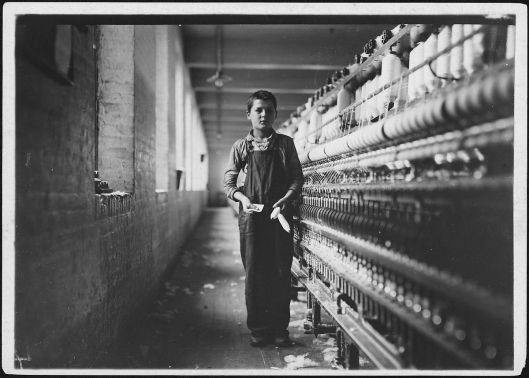
Wright was a remarkable man in himself, having risen from poverty in Yorkshire, where he began by leading donkey carts at mines,

image12donkey

then worked changing the bobbins of thread in a factory,

image13abobbin

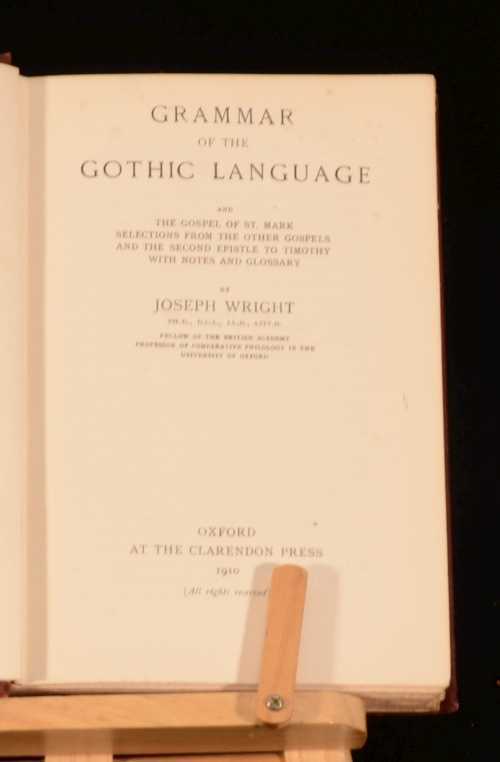
all the while teaching himself to become a scholar, which, eventually he did, his specialty being Germanic languages—as in this volume on one of the ancestors of such languages, Gothic.

imagegothic

(If you’d like your own copy of this work, here’s a LINK:  https://archive.org/details/in.ernet.dli.2015.272068 )

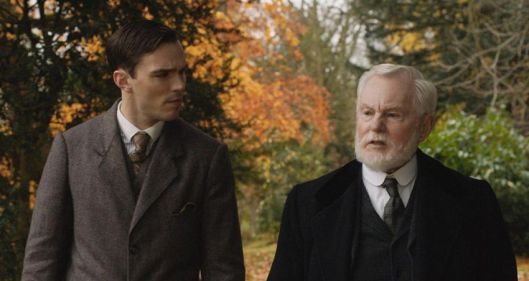
In the film, he’s played by the wonderful English actor, Derrick Jacobi,

image14dj

and, at one point, he is walking with Tolkien and they pass a tree.  Wright/Jacobi then speaks:

“A child points,

and is taught a word.

Tree.

Later, he learns

to distinguish this tree

from all the others.

He learns its particular name.

He plays under the tree.

He dances around it.

Stands beneath its branches,

for shade or shelter.

He kisses under it,

he sleeps under it,
he weds under it.

He marches past it

on his way to war,and

limps back past it

on his journey home.

A king is said to have

hidden in this tree.

A spirit may dwell

within its bark.

Its distinctive leaves

are carved onto the tombs and

monuments of his landlords.

Its wood might have built

the galleons

that saved his ancestors

from invasion.

And all this,

the general and the specific,

the national and the personal,

all this,

he knows,

and feels,

and summons, somehow,

however faintly,

with the utterance

of a single sound.

Oak.”

(Here’s a LINK to the text, if you’d like to read more:
https://www.springfieldspringfield.co.uk/movie_script.php?movie=tolkien )

So what would we say, ultimately, about this film?  Being people who teach and write about Tolkien, we were predisposed to like it, if nothing else because it was, as we said, an honest attempt to show us something of the life of a person we much admire.  If it takes liberties here and there as to how to tell that story, we never feel that it falsifies Tolkien’s life as old-fashioned so-called “biopics” usually did.  As well, it gave us moments—like the two we’ve discussed above—where we saw a bit more and thought a bit more about JRRT, his life, and his work and that is certainly a gift for which director and writers should be thanked.

And thank you, for reading, as always.  With our next posting, number 301, we’ll be close to finishing our 6th year of publishing, which will be #312.  So, as we always write,

MTCIDC

CD

ps

There is another famous Joseph Wright, an amazing 18th-century English painter (usually called “Joseph Wright of Derby”, 1734-1797).  Here are two of his works—he paints a wide variety of subjects, including early scientific and industrial themes.  Google Images will give you more—and we recommend that you have a look.

image15jwd

image16jwd

Here’s a LINK to a museum specializing in his work:  https://www.derbymuseums.org/joseph-wright-derby

Swords and Symbols

06 Wednesday May 2020

Posted by Ollamh in Uncategorized

≈ Leave a comment

“Your father’s lightsaber.  This is the weapon of a Jedi Knight.  Not as clumsy or random as a blaster.  An elegant weapon…for a more civilized age.”

Welcome, dear readers, as always.  We’ve had a few rather grim postings recently, so we thought that we would lighten up a bit with a positive one…

If you’re a Star Wars fan, you know what we’ve just quoted above and where it comes from:  Obi-Wan has just handed Luke something about whose owner he will tell less than the truth.

image1.jpg

On one level, it is what he says it is—it’s a lightsaber, of which we see many, handled not only by the Jedi, but also by their opponents, the Sith.

image2dooku.jpg

By his emphasis upon “the weapon of a Jedi Knight”, and contrasting it with a blaster, however, Obi-wan is offering it as more than a weapon, but as a symbol:  making us wonder, without one, is a Jedi really a Jedi?

A few months ago, we posted a piece about “Sting”, the weapon which Bilbo acquired from the lair of the trolls in The Hobbit:  “…Bilbo took a knife in a leather sheath.  It would have made only a tiny pocket-knife for a troll, but it was as good as a short sword for the hobbit.”  (The Hobbit, Chapter 2, “Roast Mutton”)

It stood Bilbo in good stead several times, both in keeping Gollum at a respectful distance

image3gollum.jpg

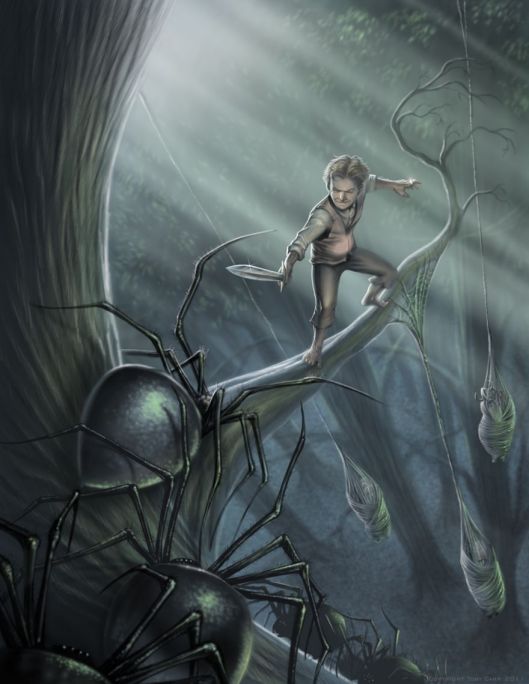
and also in dealing with the Mirkwood spiders.

image4mirkwoodtobycarr.jpg

(A very interesting illustration by Toby Carr–we’d like to see more of his work.)

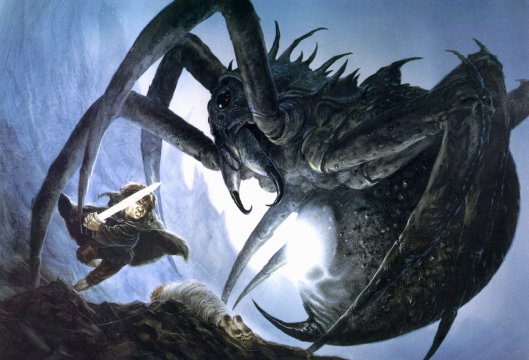
Bilbo passes it on to Frodo, but, beyond stabbing a goblin in the foot with it and threatening Gollum, Frodo never really employs it—although Sam does good service with it when he stabs Shelob.

image5sam.jpg

It’s clear, however, that Frodo has no real interest in using it and, by the end of The Lord of the Rings, has become very wary of violence in general:

“Frodo had been in the battle, but he had not drawn sword, and his chief part had been to prevent the hobbits in their wrath at their losses, from slaying those of their enemies who threw down their weapons.”  (The Return of the King, Book Six, Chapter 8, “The Scouring of the Shire”)

For Bilbo, Sting had been a useful tool (even though made in Gondolin, like Orcrist and Glamdring, probably for a higher purpose).  For Frodo, it ultimately appears to be something to discard.  For neither is it a symbol of something greater, as Narsil/Anduril is, for Aragorn.

Here, we see a very ancient sword, made in the First Age, but which passes in time to Elendil, who uses and loses it in the battle on the slopes of Orodruin, in the Second Age, when it breaks under him during his final struggle with Sauron.  His son, Isildur, uses the sherd of the sword to cut the Ring from Sauron’s hand.  Though broken, the sword remains in Isildur’s family, until finally inherited by Aragorn, in the Third Age.  Through age and use, then, this has become a symbol of the original Numenorean kingship which will eventually be restored, at the final defeat of Sauron in The Lord of the Rings, as the prophecy quoted by Gandalf in his letter to Frodo predicts:

“All that is gold does not glitter,

Not all those who wander are lost;

The old that is strong does not wither,

Deep roots are not reached by the frost.

From the ashes a fire shall be woken,

A light from the shadows shall spring;

Renewed shall be blade that was broken,

The crownless again shall be king.”

 (The Fellowship of the Ring, Book One, Chapter 10, “Strider”)

The fact that the sword is mentioned—and that it will be reforged, meaning that it, too, will be restored–shows its importance to that restoration, to which we would add:  and also to the ultimate overthrow of Sauron, this time perhaps not as a sword which will harm him physically, but as a reminder of his previous defeat, as well as a threat of what is to come.  Aragorn has used the palantir which Saruman lost and which Gandalf has put into Aragorn’s care, as he reports:

“The eyes of Orthanc did not see through the armour of Theoden; but Sauron has not forgotten Isildur and the sword of Elendil.  Now in the very hour of his great designs the heir of Isildur and Sword are revealed; for I showed the blade re-forged to him.  He is not so mighty yet that he is above fear; nay, doubt ever gnaws him.” (The Return of the King, Book Five, Chapter 2, “The Passing of the Grey Company”)

Thus, with the reforged sword, Aragorn shows both himself and a prophesied symbol of kingship and of Aragorn’s right to that kingship, as he asserts when he receives that same palantir from Gandalf:

“There is one who may claim it by right.  For this assuredly is the palantir of Orthanc from the treasury of Elendil, set here by the Kings of Gondor.  Now my hour draws near.  I will take it.” (The Two Towers, Book Three, Chapter 11, “The Palantir”)

This idea of symbol brings us back to the question of Luke and his father’s lightsaber.

[And a footnote here—

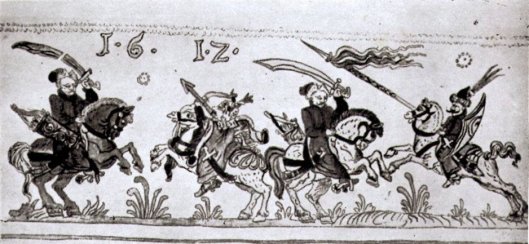
Actually, a saber, perhaps originally a Turkic weapon, but which comes into the West from Hungary,

image6ahussar.jpg

looks like this:

image6sabre.jpg

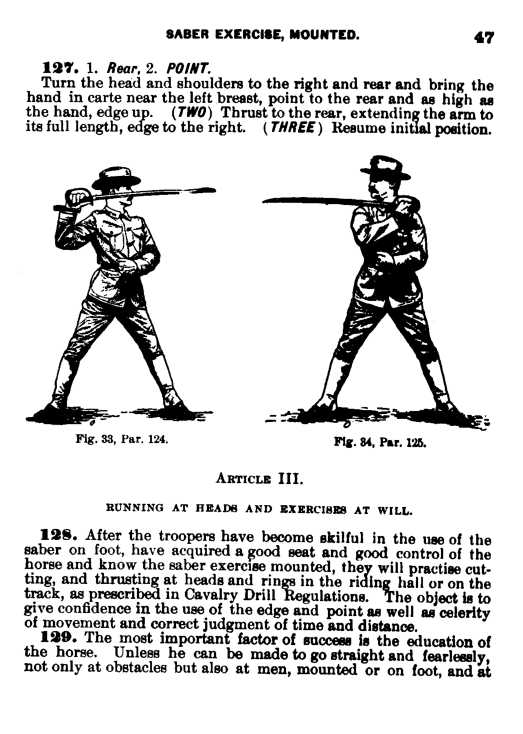
It belongs to a variety of weapon called a “backsword” meaning a kind of sword which is sharpened along only one side.  It may have a sharpened point for stabbing—as this 1907 saber exercise shows—

image7drill.jpg

but its main job is for slashing—

image8slash.jpg

Originally, we are told, the lightsaber was called a “laser sword”, which is more accurate, in terms of how it looks and how it’s used—more like a rapier, which has both sharpened blade and point—

image9rapier.jpg

but, somehow, “laser sword” sounds just, well, clunky.]

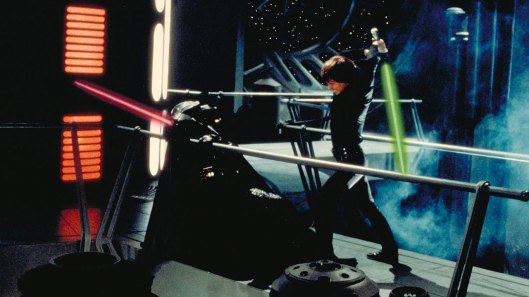
The importance of the lightsaber for Luke is underlined by the fact that, after he’s lost his father’s (as well as his hand) in his first duel with…his father,

image10loss.jpg

he makes another, which is, in fact, one stage from padawan to Jedi Knight in the Jedi tradition.

image11lightsaber.jpg

When Luke surrenders to Darth Vader in The Return of the Jedi,

image12luke.jpg

Vader comments upon this:

“Vader looks down from Luke to the lightsaber in his own black-gloved hand. He seems to ponder Luke’s words.

VADER (indicating lightsaber)

I see you have constructed a new lightsaber.

Vader ignites the lightsaber and holds it to examine its humming, brilliant blade.

VADER

Your skills are complete.  Indeed, you are powerful, as the Emperor has foreseen.”

 What the Emperor has not foreseen, however, is what use Luke makes of this weapon.  Although he fights a second duel with his father and actually defeats him, cutting off his right hand in a mirror of what had happened to him in his first duel,

image13duel.jpg

when told by the Emperor to kill his father,

image14emp.jpg

Luke refuses, throwing his lightsaber aside.

image15luke.jpg

And what he says then suggests that perhaps the lightsaber may be a symbol of being a Jedi, but, unlike Anduril, its symbolic power may not be so great:

“EMPEROR

Good!  Your hate has made you powerful.  Now fulfill your destiny and take your father’s place at my side!

Luke looks at his father’s mechanical hand, then to his own mechanical, black-gloved hand, and realizes how much he is becoming like his father.  He makes a decision for which he has spent a lifetime in preparation.  Luke steps back and hurls his lightsaber away.

LUKE

Never!  I’ll never turn to the dark side.  You’ve failed, Your Highness.  I am a Jedi, like my father before me.”

And this, in turn, answers our earlier question:  is a Jedi a Jedi without a lightsaber?   As Obi-wan has said, when he symbolically offers a Jedi’s life to Luke, it is the weapon of a Jedi Knight.  When Luke casts his aside, defying the Emperor and inviting his own death, we see that, although a lightsaber is part of what makes a Jedi, what really makes him one is more complex, something which the Emperor, who killed his own master, Darth Plagueis, in his sleep, could never understand and this lack of understanding leads to his own destruction (well, temporary destruction, as he’ll reappear in Star Wars IX).

image16avader.png

Thanks, as always, for reading and, as ever,

MTCIDC,

CD

ps

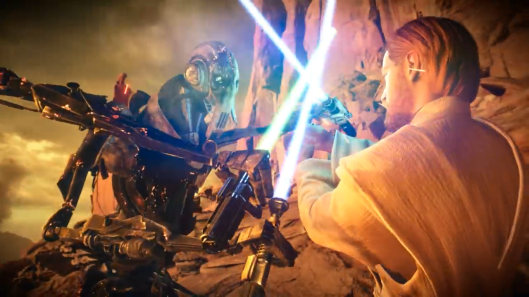
In fact, even Obi-wan himself finds a blaster more useful, at least once.  When confronting General Grievous, who has four lightsabers,

image16grievous.png

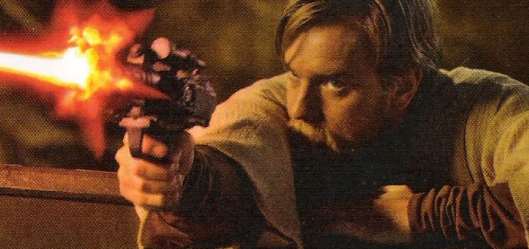
on Utapau, he loses his own, finds a handgun and

image17blaster.jpg

image18blasted.jpg

But Obi-wan has a final comment–

“The JEDI fires several blasts in the stomach area of the alien Droid, and he EXPLODES from the inside out.  The smoldering Droid falls to the ground.  OBI-WAN has killed GENERAL GRIEVOUS.  He pulls himself up onto the platform and walks by the destroyed carcass.

OBI-WAN:  So uncivilized . . .”

pps

We apologize for the use of italic throughout–something happened in the copying of quotations process and we don’t seem to be able to fix it.  It’s an elegant typeface, however, and perhaps it fits the lightsaber idea?

Kalevala, Further

29 Wednesday Apr 2020

Posted by Ollamh in Uncategorized

≈ Leave a comment

As ever, dear readers, welcome.

In our last, we had been talking about trochaic tetrameter, which, at the time, we thought sounded like the name for an exotic plant—or, possibly, an extinct bird—but is, in fact a rhythmic pattern like this:

DUM da DUM da DUM da DUM da

where a single DUM da is called a “trochee” (from 16th-century French and ultimately from Greek trecho, “to run”—so a trochee is a kind of runner)

The most familiar place to find this in English is in Henry Wadsworth Longfellow’s Hiawatha (1855), the opening line of which is:

“Should you ask me, whence these legends?”

Broken down, this can give you:

SHOULD you    ASK me    WHENCE these   LEG ends

Although this was a poem based upon Native American legends, this meter isn’t Native American.  It can be found in many places in the world, but Longfellow borrowed it from a German translation of Elias Loennrot’s compilation of Finnish folksongs, a collection which he called the Kalevala (which we are informed means something like “Herosland”).

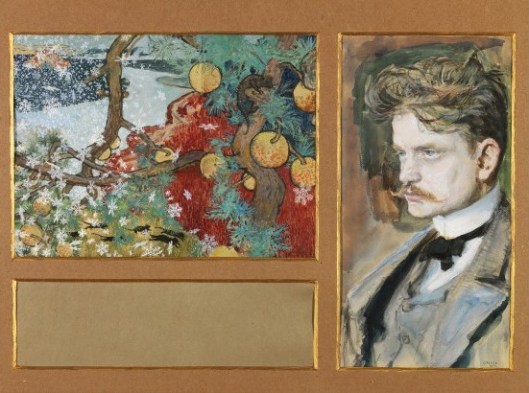
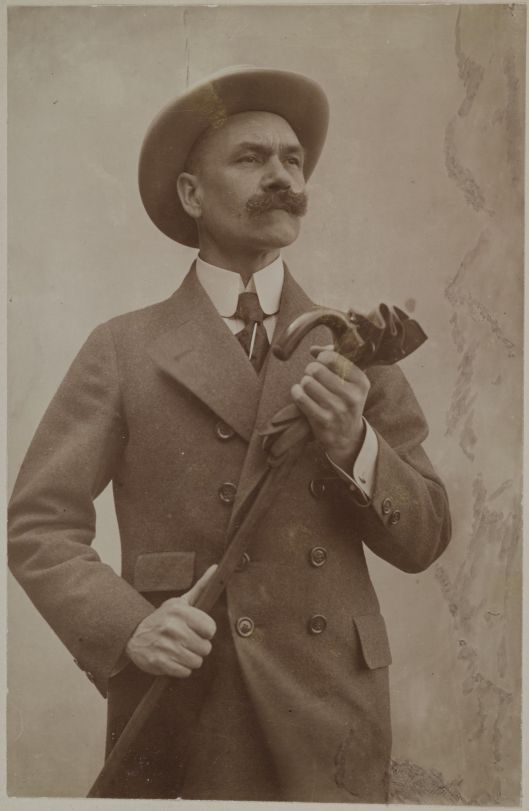
We had first heard of the Kalevala not through literature, but through music, specifically that of Jean Sibelius (1865-1957).

image1sibelius.jpg

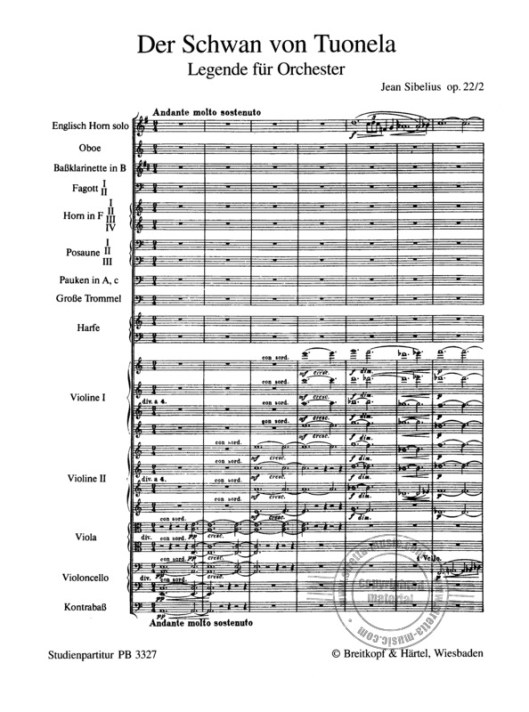
Sibelius is the national composer of Finland and was inspired by his reading of the collection, at first planning an opera based upon some of the stories he found there, but, instead, composing four separate pieces brought together into an orchestral suite, named after a major character in the Kalevala, Lemminkainen (pronounced, roughly, LEH-min-KY-nen), the Lemminkainen Suite, Opus 22.

In this suite are musically depicted four moments from the adventures of Lemminkainen and the one which immediately caught our attention when we first heard it was the third:  “The Swan of Tuonela” (pronounced TOO-uh-ne-la—in Finnish, this is Tuonelan Joutsen—TOO-uh-ne-lan YOHT-sen).

image2swan.jpg

Lemminkainen is depicted in the collection as a womanizer and, to win the daughter of a powerful sorceress, Louhi, he must complete several tasks.  First,he must hunt the Elk of Hiisi.

image3elk.jpg

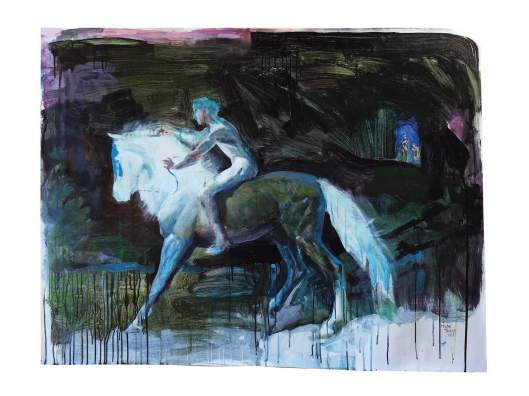
Then he had to tame the Gelding of Hiisi

image4gelding.jpg

(This is a painting by the contemporary artist, Michel Tamer, who, like Sibelius, has been inspired by the Kalevala.  We especially like his landscapes and you might, too, at this LINK:  https://micheltamerartist.com/catalog/ )

His third and final task is to shoot the Swan which swims in the river which surrounds the island of the dead, Tuonela (TOO-un-ne-la—“the land of Tuoni”, who, along with his wife, Tuonetar, are the local rulers).

image5swan.jpg

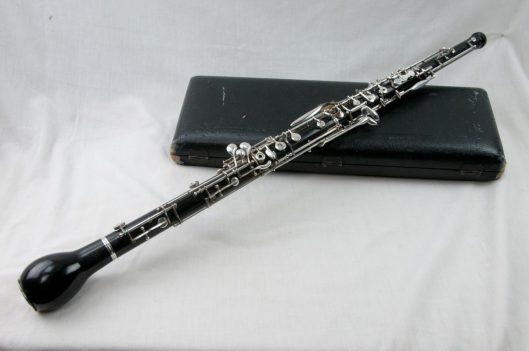
And this is where Sibelius’ composition comes in, using an English horn to represent the song of the Swan.

image6enghorn.jpg

(Oddly, an English horn isn’t a horn at all, but a woodwind instrument.  Here’s a LINK so that you can hear this beautiful piece:  https://www.youtube.com/watch?v=X3_H5YlgKFU )

Unfortunately, instead of killing the Swan, Lemminkainen is killed himself and cut into pieces which are scattered into the river.  Luckily for him, his mother is alerted to what has happened by her son’s magic comb/brush, which, she has been told, will bleed if he’s in trouble.  It does, and she goes in search of him, first demanding what has happened to her son from Louhi, who eventually tells her.  Her quest continues until the sun pinpoints the location where Lemminkainen was killed.  Getting a special rake from the famous craftsman, Ilmarinen (ILL-ma-ri-nen), she proceeds to the river and gathers up the bits of Lemminkainen’s body, then painstakingly puts him back together, finally using a drop of honey from the gods to bring him back to life.

image7mom.jpg

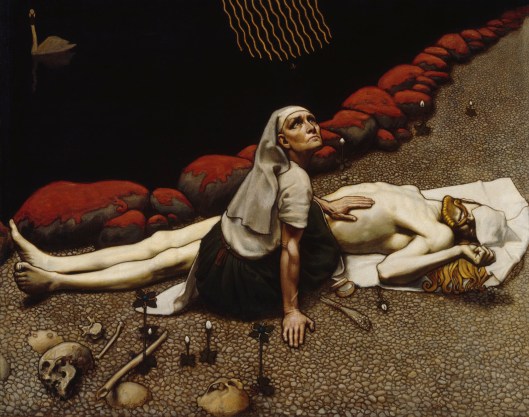
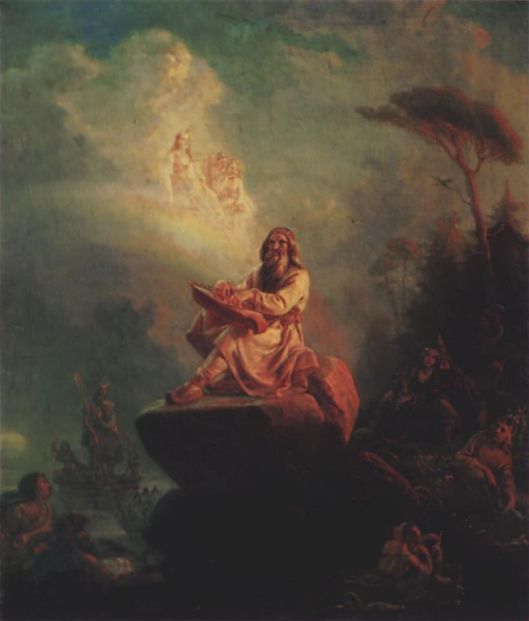
This painting, as well as that of Lemminkainen and the Swan—and that of a very young Sibelius, are all the work of the Finnish artist, Akseli Gallen-Kallela (1865-1931),

image8akseli.jpg

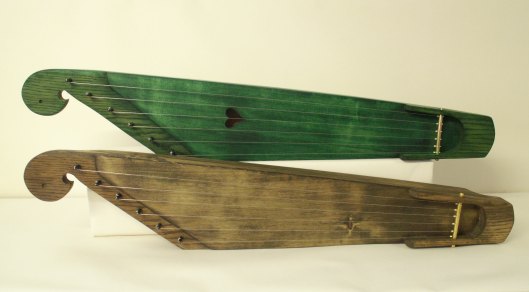
who, among other subjects, painted a series of works based on the Kalevala.  Along with Lemminkainen, and Ilmarinen, the other main male figures are Vainamoinen (VAY-neh-moy-nen) and Kullervo (KOO-ler-voh).  Vainamoinen is a very interesting figure, being the first man, as well as a magician, and a singer, and also the first to use the kantele (KAHN-teh-leh), the traditional folk instrument of Finland.

image9kantele.JPG

This is a kind of lap harp or zither and here’s a LINK so that you can enjoy it: https://www.youtube.com/watch?v=sC0lUR3LoOg

Besides the back-and-forth rocking and matching verses style of performing the songs from which the Kalevala came (see our last posting for more on this),

image10performers.jpg

songs could also be sung or recited to the kantele, so it’s fitting that perhaps the first illustration of the Kalevala, by R. W. Ekman (1808-1873),

image11ekman.jpg

is of Vainamoinen playing the kantele.

image12kantele.jpg

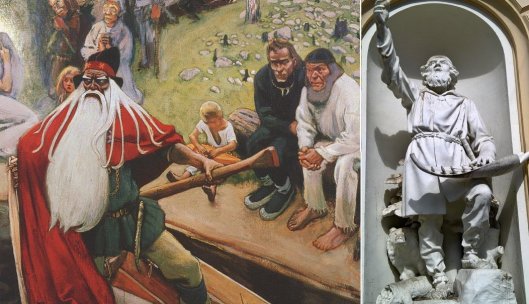
Kullervo is a different sort of character entirely, being perhaps the unluckiest man in the whole Kalevala.  As a child, he is seemingly the only survivor of the massacre of his family, enslaved, tormented by the wife of his owner, murderer, seducer (although unknowingly) of his own sister and the cause of her death—it seems like there’s nothing in his life worth living for.

image13kullervo.jpg

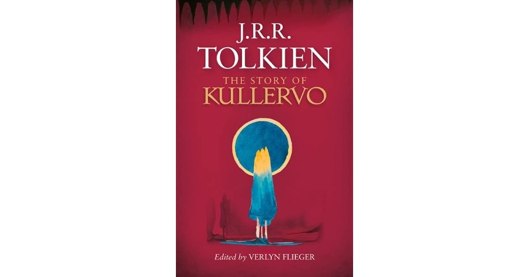
It’s interesting that Tolkien, while an Oxford undergraduate, in 1914-1915, decided to do a version of this story, which was only published in 2010.  It would have been a grim time, with the Great War going on and JRRT struggling with his original field of study, Classics, and being drawn to Germanic languages—perhaps he was drawn also to a gloomy story because he himself felt that way?

image14kullervo.jpg

As we’re sure you can tell, there’s a great deal more to be said about the Kalevala, but we hope that we’ve given you a bit more to add to what we wrote in our last posting and we’ll close with another Gallen-Kallela painting.  Vainamoinen, after many adventures, decides to leave it all behind, but he also leaves behind the kantele—so that others could then sing about him and the other heroes and villains in the story.

image15vainamoinen.jpg

Thanks, as ever, for reading,

Stay well,

And

MTCIDC

CD


ps

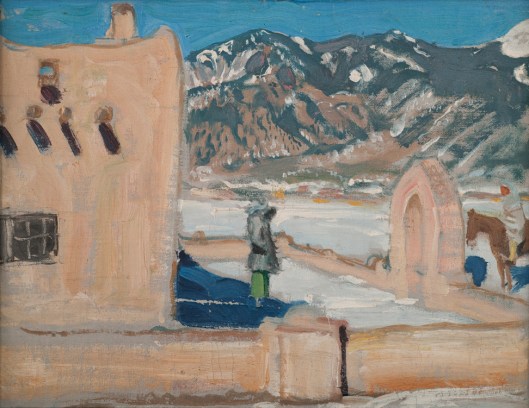
Gallen-Kallela was a really remarkable artist, who traveled to and lived in Africa and the US, as well as in his native Finland, painting wherever he went.  Here’s a LINK where you can learn more about him:  https://www.gallen-kallela.fi/en/ –It’s the site for his house in Finland, which looks to be both beautiful and quirky.

And here’s a painting from his time living in Taos, New Mexico.

image16taos.jpg

“Should you ask me, whence these stories?”

22 Wednesday Apr 2020

Posted by Ollamh in Uncategorized

≈ Leave a comment

Welcome, as ever, dear readers.

Everybody who reads beyond The Hobbit and The Lord of the Rings probably knows this passage from a 1955 letter to the poet W.H. Auden (1907-1973) :

image1auden.jpg

“I mentioned Finnish, because that set the rocket off in its story.  I was immensely attracted by something in the air of the Kalevala, even in Kirby’s poor translation. I never learned  Finnish well enough to do more than plod through a bit of the original, like a schoolboy with Ovid; being mostly taken up with its effect on ‘my language’.” (Letters, 214)

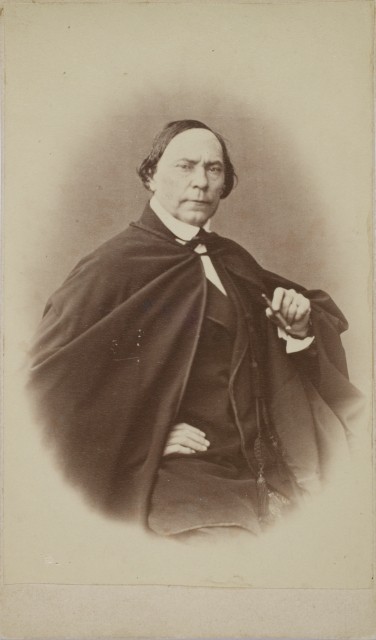
Those same people will also know that the Kalevala is a collection of traditional Finnish mythological stories in verse stitched together into a sort of long epic-like thing by Elias Loennrot, (1802-1884)

image2lonn.jpg

a first version being published in 1835, but the longer and standard version in 1849.

image3kalevala.jpg

Loennrot was, by profession, a doctor, but his hobby was collecting folklore and folksong, a pastime taken up by educated enthusiasts throughout western Europe during the Romantic Era. His informants were mainly country people, both in his district in Finland, then part of the Russian Empire as the Grand Duchy of Finland, and from rural areas which he would visit during his holidays.

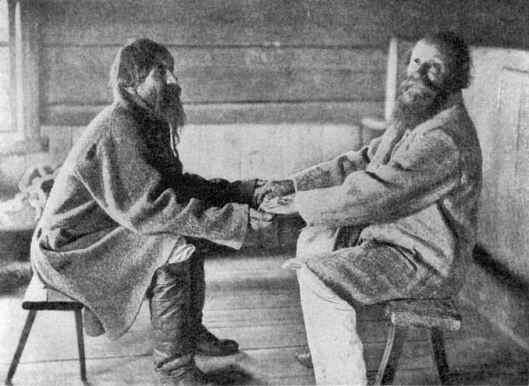
One method of performing these songs was for two men to sit on a bench facing each other, to join crossed hands, and to recite back and forth.

image4reciting.jpg

There was a basic metre, called by metricists, trochaic tetrameter, which might sound like the Latin name for an exotic plant, but, if we take it apart we have:  tetrameter = four beats in a line; trochaic = having a troche = a foot which can be written like this:  DUM dum.

So, a line of trochaic tetrameter would look like this:  DUM dum DUM dum DUM dum DUM dum.

In Finnish folkverse, this could have a number of little variations, although there was a big one, as well:  sometimes there could be a break (metricists called this a “caesura”—from the Latin verb caedo, “to cut”) between the second and third feet, giving you: DUM dum DUM dum    DUM dum DUM dum.  If you would like to learn more, here’s a LINK which has some useful information about the verse of the poem: https://en.wikipedia.org/wiki/Kalevala

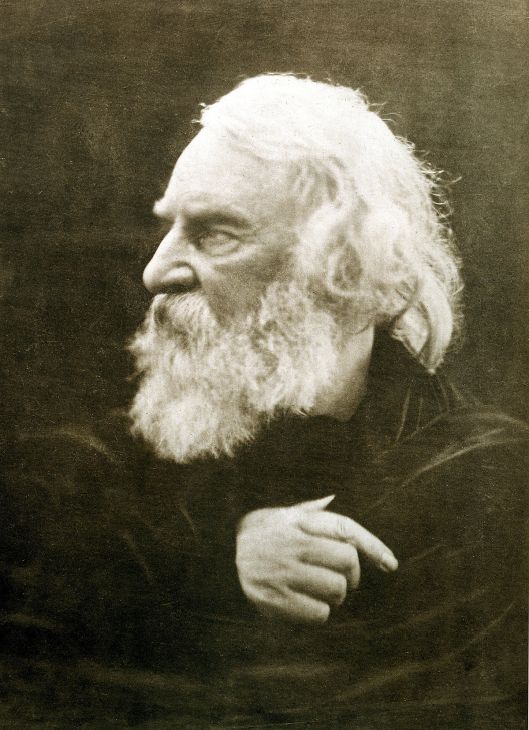
We first met this verse form not in the Kalevala, but in a poem in English, by the famous 19th-century American poet, Henry Wadsworth Longfellow (1807-1882).

image5hwl.jpg

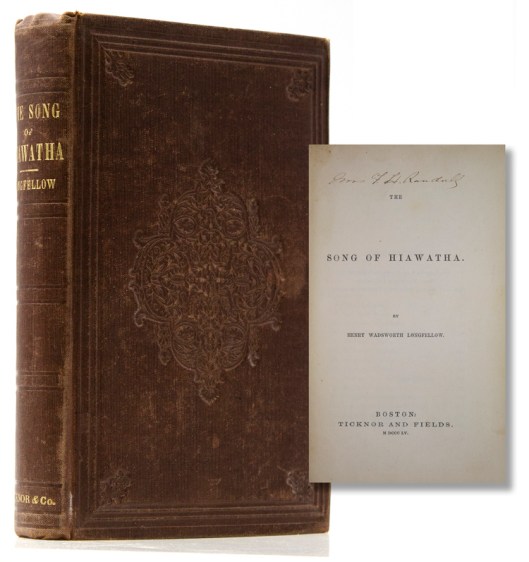
Longfellow was the Smith Professor of Modern Languages at Harvard from 1836 to 1854, when he retired to focus on his writing. His command of languages was impressive, including Latin (from boyhood), Spanish, French, Italian, German, Dutch, Danish, Icelandic, and Finnish. He was always in search of subjects, often choosing, for his longer works, North American ones. In 1855, he published Hiawatha,

image6hiawatha.jpg

based upon Native American mythology. (Say it “HEE-uh-wah-thuh”, by the way, as Longfellow explained in a letter.)  The metre wasn’t Native American, however, but Finnish.  Although he had some knowledge of the language, Longfellow had actually read a German translation, by Franz Anton Schiefner (1817-1879)

image7schiefner.jpg

published in 1852. This translation kept the metre of the original and Longfellow clearly found that it suited his narrative purposes. Here are the opening lines—from which we took the title of this posting:

“Should you ask me, whence these stories?
Whence these legends and traditions,
With the odors of the forest
With the dew and damp of meadows,
With the curling smoke of wigwams,
With the rushing of great rivers,
With their frequent repetitions,
And their wild reverberations
As of thunder in the mountains?”

It’s interesting, then, that the Kalevala, which so enchanted the young Tolkien that he almost lost his scholarship at Oxford because of it (Letters, 87, 214-215), and which was “the original germ of the Silmarillion” (Letters, 86), provided metrical inspiration for Longfellow in one of his most famous works.

And Hiawatha was, in turn, the inspiration for another poem, by another famous (English) Victorian author, Charles Lutwidge Dodgson, “Lewis Carroll” (1832-1898),.

image8cl.jpg

the author of Alice’s Adventures in Wonderland (1865),

image9alice.jpg

among other works.

Besides being a professor of mathematics and fantasy creator, Dodgson was also a keen amateur photographer.  Here’s his image of another poet, Alfred, Lord Tennyson (1809-1892).

image10tennyson.jpg

In 1869, he published Phantasmagoria and Other Poems, including a poem entitled “Hiawatha’s Photographing”—and you can see what he’s done, can’t you? In 1883, he republished it in another collection, Rhyme? And Reason?, with the poem illustrated by Arthur B Frost.  Following our theme of  Kalevala influences, we thought that, rather than summarize, we’d simply reprint it here—without the illustrations, which we don’t seem to be able to copy–in hopes to bring a little cheer to what is a pretty grim time.  This is from the 1884 American edition, the LINK to which is right here (where you can see the illustrations for yourself):  https://ia800209.us.archive.org/5/items/cu31924013341049/cu31924013341049.pdf

(Don’t skip the intro!)

Hiawatha’s Photographing Poem

[In an age of imitation, I can claim no special merit for this slight attempt at doing what is known to be so easy. Any fairly practised writer, with the slightest ear for rhythm, could compose, for hours together, in the easy running metre of ‘The Song of Hiawatha.’ Having, then, distinctly stated that I challenge no attention in the following little poem to its merely verbal jingle, I must beg the candid reader to confine his criticism to its treatment of the subject.]

From his shoulder Hiawatha

Took the camera of rosewood,

Made of sliding, folding rosewood;

Neatly put it all together.

In its case it lay compactly,

Folded into nearly nothing;

But he opened out the hinges,

Pushed and pulled the joints and hinges,

Till it looked all squares and oblongs,

Like a complicated figure

In the Second Book of Euclid.


The camera

This he perched upon a tripod—

Crouched beneath its dusky cover—

Stretched his hand, enforcing silence—

Said, “Be motionless, I beg you!”

Mystic, awful was the process.

All the family in order

Sat before him for their pictures:

Each in turn, as he was taken,

Volunteered his own suggestions,

His ingenious suggestions.

First the Governor, the Father:

He suggested velvet curtains

Looped about a massy pillar;

And the corner of a table,

Of a rosewood dining-table.

He would hold a scroll of something,

Hold it firmly in his left-hand;

He would keep his right-hand buried

(Like Napoleon) in his waistcoat;

He would contemplate the distance

With a look of pensive meaning,

As of ducks that die in tempests.

Grand, heroic was the notion:

Yet the picture failed entirely:

Failed, because he moved a little,

Moved, because he couldn’t help it.


Next, his better half took courage;

She would have her picture taken.

She came dressed beyond description,

Dressed in jewels and in satin

Far too gorgeous for an empress.

Gracefully she sat down sideways,

With a simper scarcely human,

Holding in her hand a bouquet

Rather larger than a cabbage.

All the while that she was sitting,

Still the lady chattered, chattered,

Like a monkey in the forest.

“Am I sitting still?” she asked him.

“Is my face enough in profile?

Shall I hold the bouquet higher?

Will it come into the picture?”

And the picture failed completely.


Next the Son, the Stunning-Cantab:

He suggested curves of beauty,

Curves pervading all his figure,

Which the eye might follow onward,

Till they centered in the breast-pin,

Centered in the golden breast-pin.

He had learnt it all from Ruskin

(Author of ‘The Stones of Venice,’

‘Seven Lamps of Architecture,’

‘Modern Painters,’ and some others);

And perhaps he had not fully

Understood his author’s meaning;

But, whatever was the reason,

All was fruitless, as the picture

Ended in an utter failure.


Next to him the eldest daughter:

She suggested very little,

Only asked if he would take her

With her look of ‘passive beauty.’

Her idea of passive beauty

Was a squinting of the left-eye,

Was a drooping of the right-eye,

Was a smile that went up sideways

To the corner of the nostrils.

Hiawatha, when she asked him,

Took no notice of the question,

Looked as if he hadn’t heard it;

But, when pointedly appealed to,

Smiled in his peculiar manner,

Coughed and said it ‘didn’t matter,’

Bit his lip and changed the subject.

Nor in this was he mistaken,

As the picture failed completely.

So in turn the other sisters.


Last, the youngest son was taken:

Very rough and thick his hair was,

Very round and red his face was,

Very dusty was his jacket,

Very fidgety his manner.

And his overbearing sisters

Called him names he disapproved of:

Called him Johnny, ‘Daddy’s Darling,’

Called him Jacky, ‘Scrubby School-boy.’

And, so awful was the picture,

In comparison the others

Seemed, to one’s bewildered fancy,

To have partially succeeded.

Finally my Hiawatha

Tumbled all the tribe together,

(‘Grouped’ is not the right expression),

And, as happy chance would have it

Did at last obtain a picture

Where the faces all succeeded:

Each came out a perfect likeness.

Then they joined and all abused it,

Unrestrainedly abused it,

As the worst and ugliest picture

They could possibly have dreamed of.

‘Giving one such strange expressions—

Sullen, stupid, pert expressions.

Really any one would take us

(Any one that did not know us)

For the most unpleasant people!’

(Hiawatha seemed to think so,

Seemed to think it not unlikely).

All together rang their voices,

Angry, loud, discordant voices,

As of dogs that howl in concert,

As of cats that wail in chorus.

But my Hiawatha’s patience,

His politeness and his patience,

Unaccountably had vanished,

And he left that happy party.

Neither did he leave them slowly,

With the calm deliberation,

The intense deliberation

Of a photographic artist:

But he left them in a hurry,

Left them in a mighty hurry,

Stating that he would not stand it,

Stating in emphatic language

What he’d be before he’d stand it.

Hurriedly he packed his boxes:

Hurriedly the porter trundled

On a barrow all his boxes:

Hurriedly he took his ticket:

Hurriedly the train received him:

Thus departed Hiawatha.


Thanks for reading, as ever, stay well, and

MTCIDC

CD

“Get Up and Bar the Door!”

15 Wednesday Apr 2020

Posted by Ollamh in Uncategorized

≈ Leave a comment

No, dear readers, that’s not directed at you—although, at the current moment in the world’s health, you could easily be forgiven if you thought that it was!

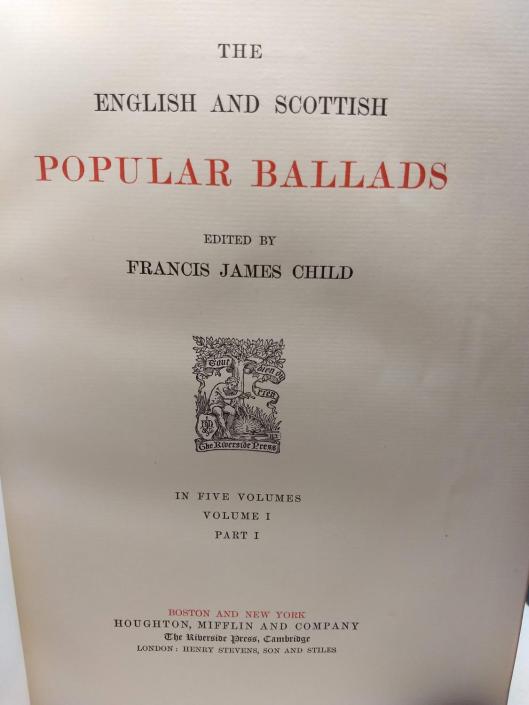
Instead, it’s the title of a well-known Child Ballad—Number 275.  (We occasionally mention these, from the giant collection (305 ballads with variants) by Professor FJ Child, entitled The English and Scottish Popular Ballads, in five volumes, published from 1882-1898—in ten parts.)

image1childballads.jpg

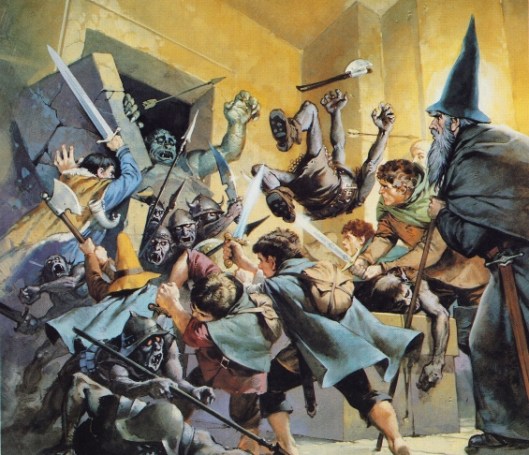
And we chose the title because this is a post which actually originally began with a look back at a recent, serious posting, in which we found ourselves in the mines of Moria, in the Chamber of Mazarbul, defending ourselves from an orc attack—

“Heavy feet were heard in the corridor.  Boromir flung himself against the door and heaved it to; he wedged it with broken sword-blades and splinters of wood.  The Company retreated to the other side of the chamber.  But they had no chance to fly yet.  There was a blow on the door that made it quiver; and then it began to grind slowly open, driving back the wedges.  A huge arm and shoulder with a dark skin of greenish scales, was thrust through the widening gap.  Then a great flat, toeless foot was forced through below.  There was a dead silence outside…

There was a crash on the door, followed by crash after crash.  Rams and hammers were beating against it.  It cracked and staggered back, and the opening grew suddenly wide.  Arrows came whistling in, but struck the northern wall, and fell harmlessly to the floor.  There was a horn-blast and a rush of feet, and orcs one after another leaped into the chamber.”  (The Fellowship of the Ring, Book Two, Chapter 5, “The Bridge of Khazad-Dum”)

image2mazar.jpg

We wondered, as we read this, whether somewhere in the back of Tolkien’s head there was another scene of people trapped in a room under attack?

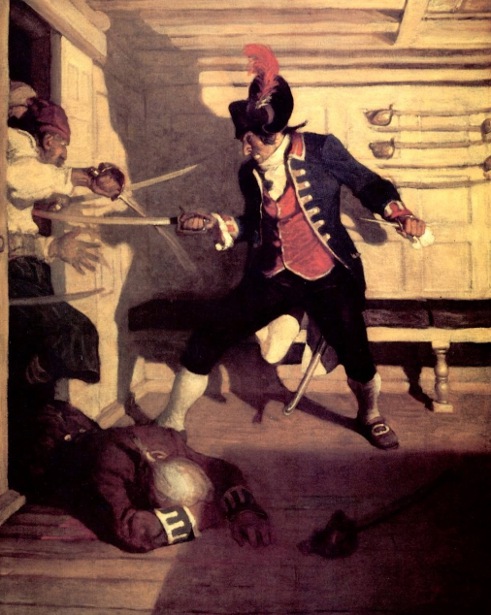
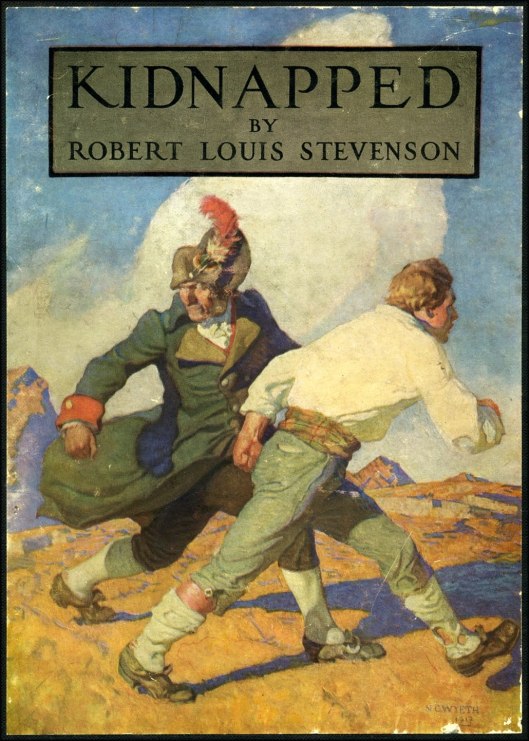
In Robert Louis Stevenson’s Kidnapped (1886), the hero, David Balfour, is trapped in the cabin of a ship with a Scottish office in the service of France, Alan Breck Stewart.  They are heavily outnumbered, but they have seized the ship’s small supply of weapons and are about to defend themselves from an attack by the ship’s crew.

“It came all of a sudden when it did, with a rush of feet and a roar, and then a shout from Alan, and a sound of blows and some one crying out as if hurt. I looked back over my shoulder, and saw Mr. Shuan in the doorway, crossing blades with Alan.

“That’s him that killed the boy!” I cried.

“Look to your window!” said Alan; and as I turned back to my place, I saw him pass his sword through the mate’s body.

It was none too soon for me to look to my own part; for my head was scarce back at the window, before five men, carrying a spare yard for a battering-ram, ran past me and took post to drive the door in. I had never fired with a pistol in my life, and not often with a gun; far less against a fellow-creature. But it was now or never; and just as they swang the yard, I cried out: “Take that!” and shot into their midst.

I must have hit one of them, for he sang out and gave back a step, and the rest stopped as if a little disconcerted. Before they had time to recover, I sent another ball over their heads; and at my third shot (which went as wide as the second) the whole party threw down the yard and ran for it.

Then I looked round again into the deck-house. The whole place was full of the smoke of my own firing, just as my ears seemed to be burst with the noise of the shots. But there was Alan, standing as before; only now his sword was running blood to the hilt, and himself so swelled with triumph and fallen into so fine an attitude, that he looked to be invincible. Right before him on the floor was Mr. Shuan, on his hands and knees; the blood was pouring from his mouth, and he was sinking slowly lower, with a terrible, white face; and just as I looked, some of those from behind caught hold of him by the heels and dragged him bodily out of the round-house. I believe he died as they were doing it.” (Kidnapped, Chapter X, “The Siege of the Round-House”)

image3pilot.jpg

(This is an illustration by NC Wyeth, from his 1913 edition of the story.)

image4kidnapped.jpg

At present, we don’t find ourselves besieged by orcs or sailors, or even by boredom or “cabin fever”—the latter of which always makes us think of Charlie Chaplin in The Gold Rush (1925), when his starving cabin mate begins to imagine him as a giant chicken—

image5goldrush.jpg

and we hope that, by reading this and our other postings, we can help you to fight off boredom and “cabin fever”, too, if not orcs and sailors.

But what about the ballad?

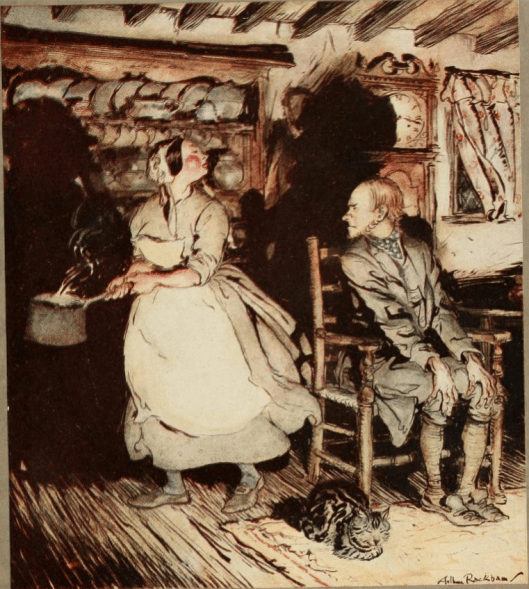
It’s a simple story.  A farmwife is making puddings

image6ayorkshirepudding.jpg

when her husband tells her to get up and bar the door.

image6bdoorbar.jpg

She refuses, saying that, as he seems to have the leisure, he should do it.  He refuses and a quarrel breaks out

image7rackham.png

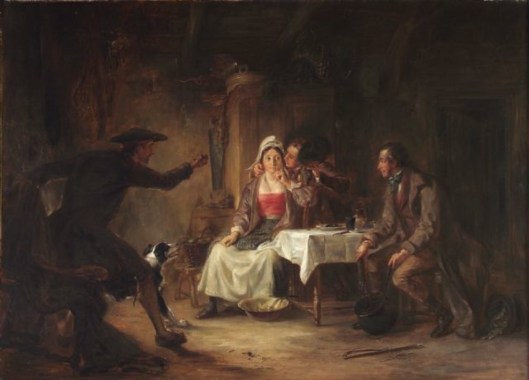
which only ends when they agree that the next person who speaks will be obliged to do it.  They sit in silence so long that two thieves quietly slip in and proceed to rob the house—and neither husband nor wife says a word.  Finally, when one of the thieves proposes to kiss the wife, the husband loudly objects—thus being the first to speak and his wife then tells him:  “So, you get up and bar the door!”

image8bar.jpg

A silly little song and perhaps just the thing for a such a time, when many of us are stuck indoors.  Here are three versions of the ballad, if you’re not familiar with it:

275A: Get Up and Bar the Door


275A.1  IT fell about the Martinmas time,

And a gay time it was then,

When our goodwife got puddings to make,

And she’s boild them in the pan.

275A.2  The wind sae cauld blew south and north,

And blew into the floor;

Quoth our goodman to our goodwife,

‘Gae out and bar the door.’

275A.3  hand is in my hussyfskap,

Goodman, as ye may see;

An it shoud nae be barrd this hundred year,

It’s no be barrd for me.’

275A.4  y made a paction tween them twa,

They made it firm and sure,

That the first word whaeer shoud speak,

Shoud rise and bar the door.

275A.5  Then by there came two gentlemen,

At twelve o clock at night,

And they could neither see house nor hall,

Nor coal nor candle-light.

275A.6  ‘Now whether is this a rich man’s house,

Or whether is it a poor?’

But neer a word wad ane o them speak,

For barring of the door.

275A.7  And first they ate the white puddings,

And then they ate the black;

Tho muckle thought the goodwife to hersel,

Yet neer a word she spake.

275A.8  Then said the one unto the other,

‘Here, man, tak ye my knife;

Do ye tak aff the auld man’s beard,

And I’ll kiss the goodwife.’

275A.9  ‘But there’s nae water in the house,

And what shall we do than?’

‘What ails ye at the pudding-broo,

That boils into the pan?’

275A.10 O up then started our goodman,

An angry man was he:

‘Will ye kiss my wife before my een,

And scad me wi pudding-bree?’

275A.11 Then up and started our goodwife,

Gied three skips on the floor:

‘Goodman, you’ve spoken the foremost word,

Get up and bar the door.’


275B: Get Up and Bar the Door


275B.1  THERE leeved a wee man at the fit o yon hill,

John Blunt it was his name, O

And he selld liquor and ale o the best,

And bears a wondrous fame. O

Tal lara ta lilt, tal lare a lilt,

Tal lara ta lilt, tal lara

275B.2  The wind it blew frae north to south,

It blew into the floor;

Says auld John Blunt to Janet the wife,

Ye maun rise up and bar the door.

275B.3  ‘My hans are in my husseyskep,

I canna weel get them free,

And if ye dinna bar it yersel

It’ll never be barred by me.’

275B.4  They made it up atween them twa,

They made it unco sure,

That the ane that spoke the foremost word

Was to rise and bar the door.

275B.5  There was twa travellers travelling late,

Was travelling cross the muir,

And they cam unto wee John Blunt’s,

Just by the light o the door.

275B.6  ‘O whether is this a rich man’s house,

Or whether is it a puir?’

But never a word would the auld bodies speak,

For the barring o the door.

275B.7  First they bad good een to them,

And syne they bad good morrow;

But never a word would the auld bodies speak,

For the barring o the door, O.

275B.8  First they ate the white puddin,

And syne they ate the black,

And aye the auld wife said to hersel,

May the deil slip down wi that!

275B.9  And next they drank o the liquor sea strong,

And syne they drank o the yill:

‘And since we hae got a house o our ain

I’m sure we may tak our fill.’

275B.10 It’s says the ane unto the ither,

Here, man, tak ye my knife,

An ye’ll scrape aff the auld man’s beard,

While I kiss the gudewife.

275B.11 ‘Ye hae eaten my meat, ye hae drucken my drink,

Ye’d make my auld wife a whore!’

‘John Blunt, ye hae spoken the foremost word,

Ye maun rise up and bar the door.’


275C: Get Up and Bar the Door


275C.1  THERE livd a man in yonder glen,

And John Blunt was his name; O

He maks gude maut and he brews gude ale,

And he bears a wondrous fame. O

275C.2  The wind blew in the hallan ae night,

Fu snell out oer the moor;

‘Rise up, rise up, auld Luckie,’ he says,

‘Rise up, and bar the door.’

275C.3  They made a paction tween them twa,

They made it firm and sure,

Whaeer sud speak the foremost word

Should rise and bar the door.

275C.4  Three travellers that had tint their gate,

As thro the hills they foor,

They airted by the line o light

Fu straught to Johnie Blunt’s door.

275C.5  They haurld auld Luckie out o her bed

And laid her on the floor,

But never a word auld Luckie wad say,

For barrin o the door.

275C.6  ‘Ye’ve eaten my bread, ye hae druken my ale,

And ye’ll mak my auld wife a whore!’

‘A ha, Johnie Blunt! ye hae spoke the first word,

Get up and bar the door.’


Thanks, as ever, for reading, stay well, and know that, barring (yep, a bad pun) unforeseen circumstances,

MTCIDC


CD


ps

In case you don’t have your own copy of Kidnapped, here’s a LINK to an early American edition:  http://www.gutenberg.org/files/421/421-h/421-h.htm

A great read for all of us stay-at-homes!


Not So Dry As Tinder?

08 Wednesday Apr 2020

Posted by Ollamh in Uncategorized

≈ Leave a comment

Welcome, as ever, dear readers.  We hope that you are well and happy in what, unless we make it otherwise, can be a gloomy time.

Our title this time is a kind of hope, based upon our subject, which is about one of our favorite fairy tales, Hans Christian Andersen’s (1805-1875)

image1hca.jpg

“The Tinderbox” (Fyrtoget, in Danish, which looks like it actually means “fire tinder”—more about “tinder” below).

(This image of HCA comes from a very interesting website, which we’ve just recently discovered.  Here’s a LINK, if you’d like to investigate it for yourself:  https://www.terriwindling.com/)

If you, like us, grew up in a world of safety matches,

image2box.jpg

(We have no idea why these are called “Double Happiness”, by the way—perhaps because, 1. when you strike them against the box, they actually light; 2. when you try to light a fire with them, they don’t simply wink out immediately, as we have often had happen to us?)

a “tinderbox” is something from the very far past.  After all, friction matches have been with us since their invention, by John Walker, in 1826.  Before such became common—and probably, in much of the world long after—the way to light a fire was to strike a piece of flint with a piece of steel,

image3flintandsteel.jpg

causing a spark.

image4fands.jpg

For handy carrying purposes, these two could be carried in a box, and, so that you always had something for the spark to set alight (and it could be any number of things, from moss to bits of fabric), you stuffed such things, called “tinder” (from the Old English verb tendan, “to kindle/alight/set alight”) into the box along with the flight and steel—and there was a “tinderbox”.

image5tbox.png

image6tbox.jpg

In the Andersen story, first published in 1836, when tinderboxes were still the method for lighting fires, the tinderbox is actually a magical one, as a soldier discovers, after he acquires one.  When he strikes a light once, twice, or three times, bigger and bigger dogs with bigger and bigger eyes appear and will fetch him anything he may wish.

image7dogs.png

The soldier has discovered this wonderful device when he was lowered into a hollow tree by a witch—but, in this posting, we’re not going to discuss the story as story, rather, when we did a little image-searching, what caught our attention was the soldier himself—how he was dressed.  If you’re a regular reader, you’ll know that, along with the many other things we’ve taught and teach, we currently run a “History of Western Warfare” course and the look of soldiers through the ages interests us (as does dress in general).  We collected about two dozen images of the soldier hero from various tellings of the story and were interested to see the choices made for how he would be depicted.

First, however, how did the original author portray him?  What clues does he give us?  If we wanted a perfect picture, we would be disappointed, we’re afraid, as the details are few.  In the first paragraph, we are told that the soldier has a pack (tornyster) and a sabre (sabel).  A few paragraphs later, we are told that he fills his pockets (lommen) and then his kaskett, which, in modern Danish, means “hat/cap”, but we suspect, from the original French word, that, in 1836, this meant “shako”, a kind of tall, cylindrical military headgear, as the look of a Danish soldier then would have been something like this–

image8soldaten.jpg

He also fills his boots (stovler).

So—HCA has told us that our soldier has (probably) a shako, a pack, something with pockets, boots, and he’s armed with a sabre.  As he has a pack, and he’s been walking along a country road, not riding, we assume that he’s an infantryman, and so that “sabre” is actually an infantry short sword (in French, sabre-briquet), which was rapidly disappearing from an infantryman’s weaponry by the time the story would have been written, but it would have looked like this—as still worn by a Danish Footguard today.

image9livgard.jpg

Now, let’s look at some images.  We thought that we would classify them not by publication date, but by period of dress, and the first one would be this—

image10kettle.jpg

Here, we’re looking at a later-medieval infantryman, a bit like this one—

image11.jpg

wearing a breastplate and the distinctive “kettle helmet”.  No shako, pack, pockets, short sword, or boots.  It almost makes us wonder if the illustrator had actually read the story!

Here’s another—

image12lands.jpg

By his clothing, we’ve moved forward a couple of centuries, this being an early-16th-century landsknecht,

image13landsknechte.jpg

Again—everything the author mentions seems to be missing.  We admire the art of it, but, again, has the artist spent any time with the text?

Our next illustration just seems very odd—the soldier appears to have turned into an early-17th-century musketeer—or perhaps it’s puss-in-boots?

image14musk.jpg

image15musk.jpg

image16puss.jpg

We certainly don’t want to suggest in our little review that there is only one way to illustrate a story.  When it comes to Tolkien, for instance, we admire a wide variety of artists, from the first great illustrators, the Hildebrandts,

image17gandb.jpg

to Michael Hague

image18gandalf.jpeg

to the wonderful work of Ted Nasmith

image19crossroads.jpg

to many others, including Lee, Howe, and Gordeev—and there are, indeed, many, and who knows who else is out there?  Our personal preference—and maybe this makes us a little old-fashioned—is for those illustrations which stick closest to what we understand Tolkien was presenting to us and we feel the same about HCA’s (fragmentary) description.  For example, here’s what appears, by its style, to be a later-19th-century depiction of the first meeting of the witch and the soldier—

image20wands.jpg

Here you see the shako, the pack, and, in this case, what appears to be a literal (cavalry) sabre.   Even more convincing—and we’ll stress, to us—is this 2007 view.  (This is Stephen Mitchell’s version, illustrated by Bagram Ibatoulline)

image21wands.jpg

As we said, we found about two dozen different illustrations, and those were just of the soldier and the witch.  For fun, go to your usual image search engine and see what you find that pleases you:  hopefully, we have kindled a little flame of interest with this posting?

Thanks, as always, for reading,

Stay well,

And MTCIDC

CD

ps

If you don’t have a copy of “The Tinderbox” at hand, here’s a LINK to a translation:  https://www.andersenstories.com/en/andersen_fairy-tales/the_tinderbox

The same site gave us the Danish original and we apologize to any Danish reader for any mistakes made, being only beginners in that excellent language!

← Older posts
Newer posts →

The Doubtful Sea Series Facebook Page

The Doubtful Sea Series Facebook Page

  • Ollamh

Categories

  • Artists and Illustrators
  • Economics in Middle-earth
  • Fairy Tales and Myths
  • Films and Music
  • Games
  • Heroes
  • Imaginary History
  • J.R.R. Tolkien
  • Language
  • Literary History
  • Maps
  • Medieval Russia
  • Military History
  • Military History of Middle-earth
  • Narnia
  • Narrative Methods
  • Poetry
  • Research
  • Star Wars
  • Terra Australis
  • The Rohirrim
  • Theatre and Performance
  • Tolkien
  • Uncategorized
  • Villains
  • Writing as Collaborators
Follow doubtfulsea on WordPress.com

Across the Doubtful Sea

Recent Postings

  • The Damage of Dragons March 11, 2026
  • Encouragement March 4, 2026
  • Eavesdropping February 25, 2026
  • Do You Speak Villain? (Part 3) February 18, 2026
  • Do You Speak Villain? (2) February 11, 2026
  • Do You Speak Villain? (Part 1) February 4, 2026
  • Towering January 28, 2026
  • Tolkien Among the Indians January 21, 2026
  • Thin and Stretched January 14, 2026

Blog Statistics

  • 109,036 Views

Posting Archive

  • March 2026 (2)
  • February 2026 (4)
  • January 2026 (4)
  • December 2025 (5)
  • November 2025 (4)
  • October 2025 (5)
  • September 2025 (4)
  • August 2025 (4)
  • July 2025 (5)
  • June 2025 (4)
  • May 2025 (4)
  • April 2025 (5)
  • March 2025 (4)
  • February 2025 (4)
  • January 2025 (5)
  • December 2024 (4)
  • November 2024 (4)
  • October 2024 (5)
  • September 2024 (4)
  • August 2024 (4)
  • July 2024 (5)
  • June 2024 (4)
  • May 2024 (5)
  • April 2024 (4)
  • March 2024 (4)
  • February 2024 (4)
  • January 2024 (5)
  • December 2023 (4)
  • November 2023 (5)
  • October 2023 (4)
  • September 2023 (4)
  • August 2023 (5)
  • July 2023 (4)
  • June 2023 (4)
  • May 2023 (5)
  • April 2023 (4)
  • March 2023 (5)
  • February 2023 (4)
  • January 2023 (4)
  • December 2022 (4)
  • November 2022 (5)
  • October 2022 (4)
  • September 2022 (4)
  • August 2022 (5)
  • July 2022 (4)
  • June 2022 (5)
  • May 2022 (4)
  • April 2022 (4)
  • March 2022 (5)
  • February 2022 (4)
  • January 2022 (4)
  • December 2021 (5)
  • November 2021 (4)
  • October 2021 (4)
  • September 2021 (5)
  • August 2021 (4)
  • July 2021 (4)
  • June 2021 (5)
  • May 2021 (4)
  • April 2021 (4)
  • March 2021 (5)
  • February 2021 (4)
  • January 2021 (4)
  • December 2020 (5)
  • November 2020 (4)
  • October 2020 (4)
  • September 2020 (5)
  • August 2020 (4)
  • July 2020 (5)
  • June 2020 (4)
  • May 2020 (4)
  • April 2020 (5)
  • March 2020 (4)
  • February 2020 (4)
  • January 2020 (6)
  • December 2019 (4)
  • November 2019 (4)
  • October 2019 (5)
  • September 2019 (4)
  • August 2019 (4)
  • July 2019 (5)
  • June 2019 (4)
  • May 2019 (5)
  • April 2019 (4)
  • March 2019 (4)
  • February 2019 (4)
  • January 2019 (5)
  • December 2018 (4)
  • November 2018 (4)
  • October 2018 (5)
  • September 2018 (4)
  • August 2018 (5)
  • July 2018 (4)
  • June 2018 (4)
  • May 2018 (5)
  • April 2018 (4)
  • March 2018 (4)
  • February 2018 (4)
  • January 2018 (5)
  • December 2017 (4)
  • November 2017 (4)
  • October 2017 (4)
  • September 2017 (4)
  • August 2017 (5)
  • July 2017 (4)
  • June 2017 (4)
  • May 2017 (5)
  • April 2017 (4)
  • March 2017 (5)
  • February 2017 (4)
  • January 2017 (4)
  • December 2016 (4)
  • November 2016 (5)
  • October 2016 (6)
  • September 2016 (5)
  • August 2016 (5)
  • July 2016 (5)
  • June 2016 (5)
  • May 2016 (4)
  • April 2016 (4)
  • March 2016 (5)
  • February 2016 (4)
  • January 2016 (4)
  • December 2015 (5)
  • November 2015 (5)
  • October 2015 (4)
  • September 2015 (5)
  • August 2015 (4)
  • July 2015 (5)
  • June 2015 (5)
  • May 2015 (4)
  • April 2015 (3)
  • March 2015 (4)
  • February 2015 (4)
  • January 2015 (4)
  • December 2014 (5)
  • November 2014 (4)
  • October 2014 (6)
  • September 2014 (1)

Blog at WordPress.com.

  • Subscribe Subscribed
    • doubtfulsea
    • Join 78 other subscribers
    • Already have a WordPress.com account? Log in now.
    • doubtfulsea
    • Subscribe Subscribed
    • Sign up
    • Log in
    • Report this content
    • View site in Reader
    • Manage subscriptions
    • Collapse this bar
 

Loading Comments...