• About

doubtfulsea

~ adventure fantasy

Monthly Archives: January 2025

Lud-ite?

29 Wednesday Jan 2025

Posted by Ollamh in Uncategorized

≈ Leave a comment

Tags

book-review, Fantasy, Gaiman, Lud-in-the-Mist, Luddite, mirrlees, neil-gaiman

Welcome, as ever, dear readers.

Perhaps you’ve heard someone—often, I would say, an older person—who, confronted with something electronic, will say, “I’m not a Luddite, but…”

It’s taken to mean “I’m not against technology, but…”

But the history of the word casts a shadow on that disclaimer, as the real Luddites were very much against technology—technology which put them out of work and set them and their families to starve—or to be worked to death in the new factories.  (Charles Dickens captures a little of this in Hard Times, 1854:  https://archive.org/details/hardtimes0000char_w0u2/page/n11/mode/2up )
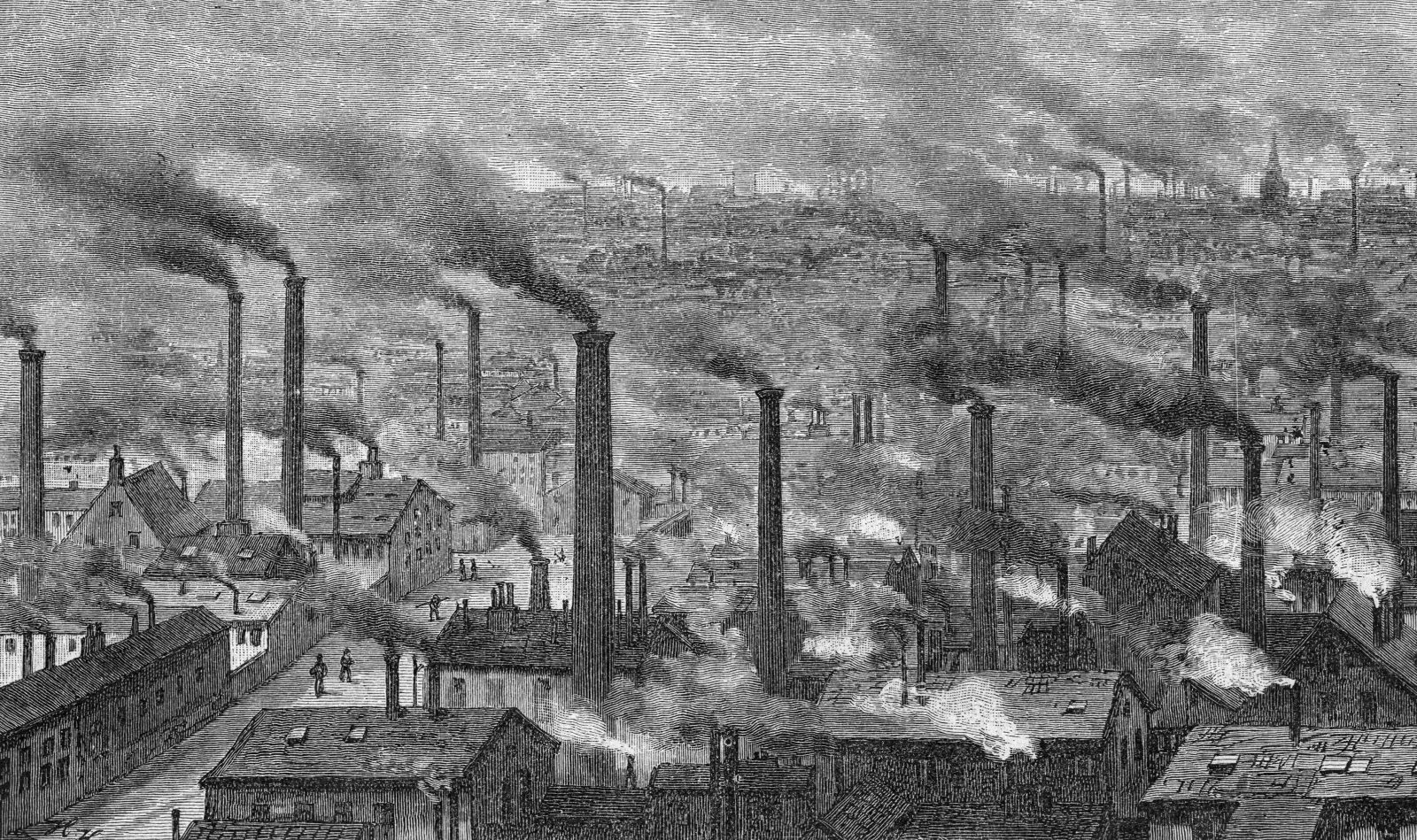
It all began with wool.
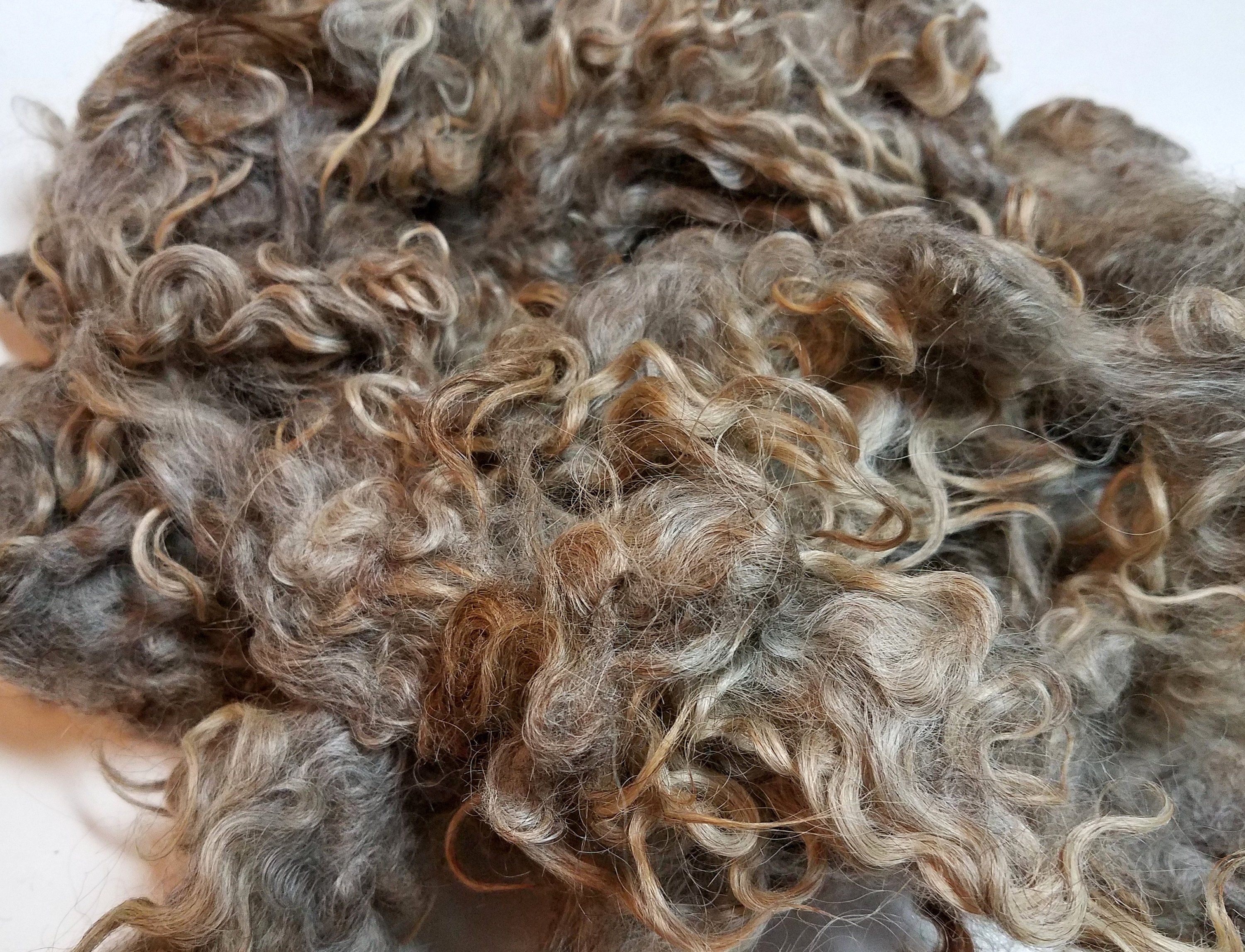
Wool production had made certain elements of medieval England very rich.

At the same time, because it was such a labor-intensive industry, it kept many ordinary people employed in everything from raising sheep to sheering, washing, carding, spinning, and weaving, almost all of which you can see in this illustration.

The demand for more and more wool and wool products in the later 18th century brought about the beginnings of the Industrial Revolution, when clever men began to invent devices which sped up the originally slow process of wool production, creating machines and then factories.

(This is a room in Quarry Bank, a wool mill complex in Cheshire, just a few miles from where Tolkien grew up, in Manchester.  It is held by the National Trust and, if like me, you’re interested in the history of the Industrial Revolution, you’ll want to learn more at:  https://en.wikipedia.org/wiki/Quarry_Bank_Mill )

Such places not only sped up production, but also cut down on the number of people needed to process the wool, which soon began to trouble the many who once lived by the old methods. 

As early as 1768, there had been attacks on machines and the name “Ludd” had originally been attached to an apprentice, “Ned Ludd”, who had supposedly smashed two knitting machines, called “stocking frames” in 1779.
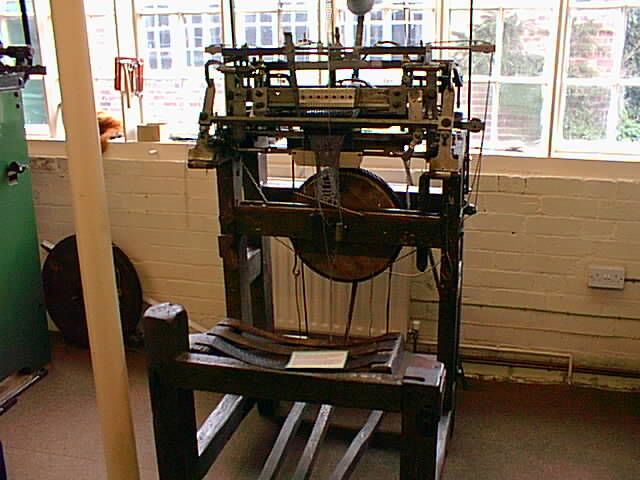
In 1811, things had reached a stage where organized violence against machines, factories, and even factory-owners, increased and “King Ludd” or “General Ludd” became a kind of meme for the anti-industrial movement.  (You can read more here:  https://en.wikipedia.org/wiki/Luddite )

This imaginary Ludd is, however, only one of a number of figures under that name.  There is, for instance, the Biblical Lud, the son of Shem, the son of Noah.

(from the wonderful mosaics of Monreale, in Sicily—Noah, we’re told, got drunk and his embarrassed sons are covering him up—see Genesis 9.20-23 for details)

There is Lud, son of Heli, and king of Britain, according to Geoffrey of Monmouth’s 12th century Historia Regum Britanniae, the founder of London, and buried at Ludgate, of course.  (You can read, in a 1904 translation, about Lud in Historia 3.20 here:  https://archive.org/details/geoffreyofmonmou00geofuoft/geoffreyofmonmou00geofuoft/page/80/mode/2up

(as reconstructed in 1895—you can read more about the site here:  https://en.wikipedia.org/wiki/Ludgate  including the actual etymology of the name)

And then there’s Lud-in-the-Mist, a 1926 fantasy novel

by Hope Mirrlees (1887-1978),

where Lud is the name of a town in the imaginary country of Dorimare.

(Ryuk-Duck, but, when I’ve gone to DeviantArt, I’ve been unable to locate anything more.)

Mirrlees had published two previous novels, Madeleine:  One of Love’s Jansenists (1919)

and The Counterplot (1924),

as well as a rather complex “modernist” poem, Paris (1920),
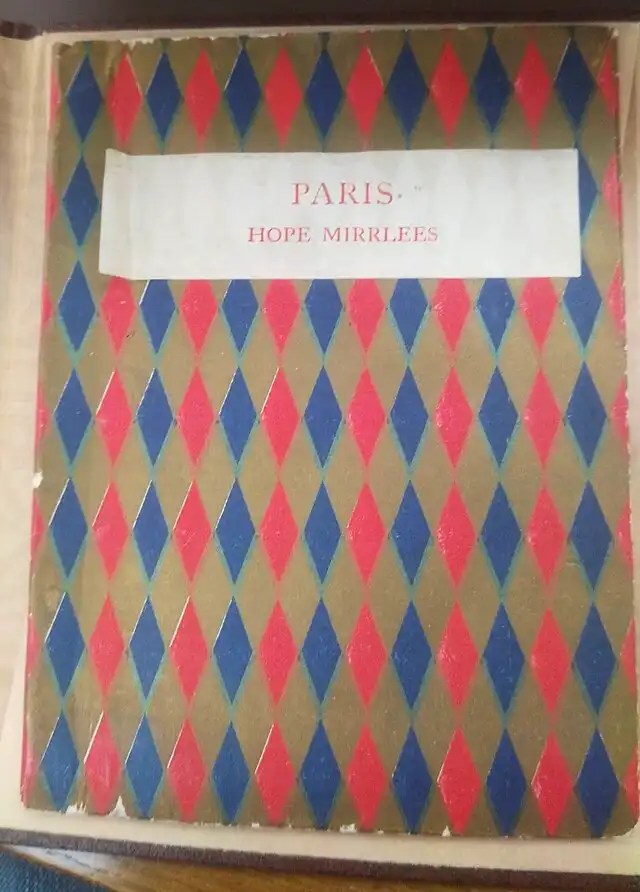
but this was her only fantasy novel. 

(You can read all four of these four works here:  Madeleine https://www.gutenberg.org/cache/epub/65926/pg65926-images.html   Paris https://www.paris-a-poem.com/ —this is, by the way, a real work of scholarship and a very useful way to approach this poem—The Counterplot https://www.gutenberg.org/cache/epub/63935/pg63935-images.html and Lud-in-the-Mist https://www.gutenberg.org/cache/epub/68061/pg68061-images.html  You can read more about the author here:  https://en.wikipedia.org/wiki/Hope_Mirrlees )

I’ve just finished Lud-in-the-Mist, which, after disappearing for about 50 years, resurfaced in a first reprint in 1970, and several more, in 2000, 2005, and 2013.  The 2005 reprint had very distinguished opening matter:  a foreward by Neil Gaiman and an introduction by Douglas Anderson, of The Annotated Hobbit.  Gaiman has said of Lud-in-the-Mist that it’s “My favourite fairy tale/detective novel/history/fantasy”  (quoted from:  https://radicalreads.com/neil-gaiman-favorite-books/ ) and I would agree that it’s a combination at least of fairy tale and fantasy and there is a sort of detective story mixed in, but I’m not so sure that this all comes together for me as it clearly has for him.

The fantasy/fairy tale lies in the basic setting that:  Dorimare is an imaginary country and Lud-in-the-Mist is its capital, sitting at the meeting of two rivers:  Dapple and Dawl.  The Dawl seems to be the usual, expected kind of river, flowing southwards to the sea from somewhere inland, but the Dapple

“…had its source in Fairyland (from a salt inland sea, the geographers held) and flowed subterraneously under the Debatable Hills, was a humble little stream, and played no part in the commercial life of the town. But an old maxim of Dorimare bade one never forget that ‘The Dapple flows into the Dawl.’ It had come to be employed when one wanted to show the inadvisability of despising the services of humble agents; but, possibly, it had originally another application.”

This is at the very beginning of the second chapter, and already sets the tone:  Dorimare may be a picturesque little country on a river so broad that the town is also a seaport, although 20 miles from the actual sea, but that broad river is fed, in part, by a second stream, one which comes from the west (and the West, of course, is always a place perhaps to be dreaded, as it is often the direction to which the dead go in many folk traditions, as well as being the home of weird, otherworldly folk, the sort of people and creatures that voyagers west, like St Brendan
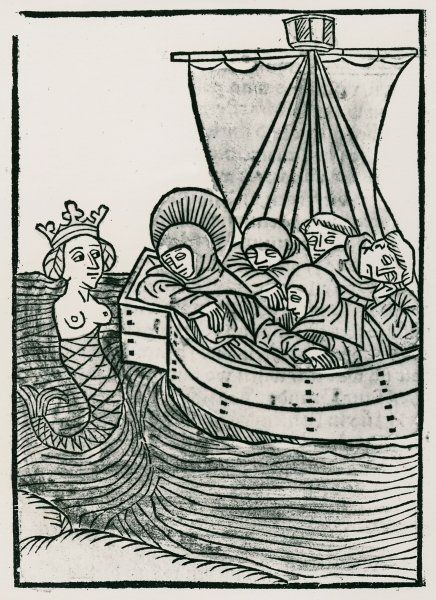
and Oisin, of the Irish Fenian Cycle, and Yeats’ early The Wanderings of Usheen, 1889, which you can read here:  https://www.gutenberg.org/files/38877/38877-h/38877-h.htm#THE_WANDERINGS_OF_USHEEN encounter. )  The river’s beginning lies, as well, in a place not visited by the Dorimarites for hundreds of years, Fairyland, and much of the book is taken up with “fairy fruit”, which is banned in Dorimare, along with any dealings or even mentions of fairies, but somehow keeps appearing and seriously disturbing the minds of those who consume it—as if the Dapple, under its pretty name, is actually underflowing and perhaps undercutting all of Dorimare.

The detective story seems almost a by-blow of the plot, although it involves a major character, Endymion Leer, who is a physician in Lud-in-the-Mist and, as the plot develops, much more, although I find that his role in the mystery somewhat trivializes the greater role he claims for himself near the end of the book at his trial for murder. 

I won’t summarize the complicated plot—you can read a brief and, I fear, inadequate précis here:  https://en.wikipedia.org/wiki/Lud-in-the-Mist and there are longer summaries to be had at various fantasy sites, although I find the ones I read, for me, too intent upon constructing complex, deeper meanings than I think the book really holds.

Instead, as I always do with reviews—films and books—I would encourage you to read it for yourself and come to your own conclusion.

There’s dry, quirky humor on the part of the narrator, some lush nature writing, a vivid depiction of what Fairyland might be like (unpleasant to nightmarish, I found it), and an appealing character in the protagonist, Nathaniel Chanticleer, who begins conventionally as a comfortable petit bourgeois (although he does have something haunting him), but grows into a feeling being through the fate of his son, Ranulph, all of which are at least enough to lure you in and perhaps keep you reading, as they did me.

So, as always, thanks for reading,

Wonder what fairy fruit might do to you,

And remember that, as ever, there’s

MTCIDC

O

PS

If going west myself, I should meet Hope Mirrlees, I would request that, should she, in some spiritual form, ever do a revised edition, she might include a map—a nice end paper one would do—as it would definitely help to keep one oriented in the characters’ travels around Dorimare.

PPS

For a powerful speech by Neil Gaiman on writing and reading and fantasy see:  https://www.theguardian.com/books/2013/oct/15/neil-gaiman-future-libraries-reading-daydreaming

Sally—and Harry

22 Wednesday Jan 2025

Posted by Ollamh in Uncategorized

≈ Leave a comment

Tags

Alesia, Aragorn, Ents, Eomer, Fantasy, harry, Helm's Deep, History, sally, siege

Welcome, as always, dear readers.

If you’d seen the title of an earlier posting, “You’ve Got Mail”,

you might believe that I’m beginning to specialize in romcoms from the 1980s-90s with this title—

but, although some of the characters might be wearing mail in this posting,

(Denis Gordeev)

there’s no romance and no comedy.  Instead, it involves “sally” and “harry” not as nicknames for “Sarah” and “Henry”, but as verbs and nouns of destruction.

The war to which 2nd LieutenantTolkien

arrived in mid-1916

(Peter Dennis—a real favorite of mine for his ability to recreate scenes from the past, always with small, useful details.)

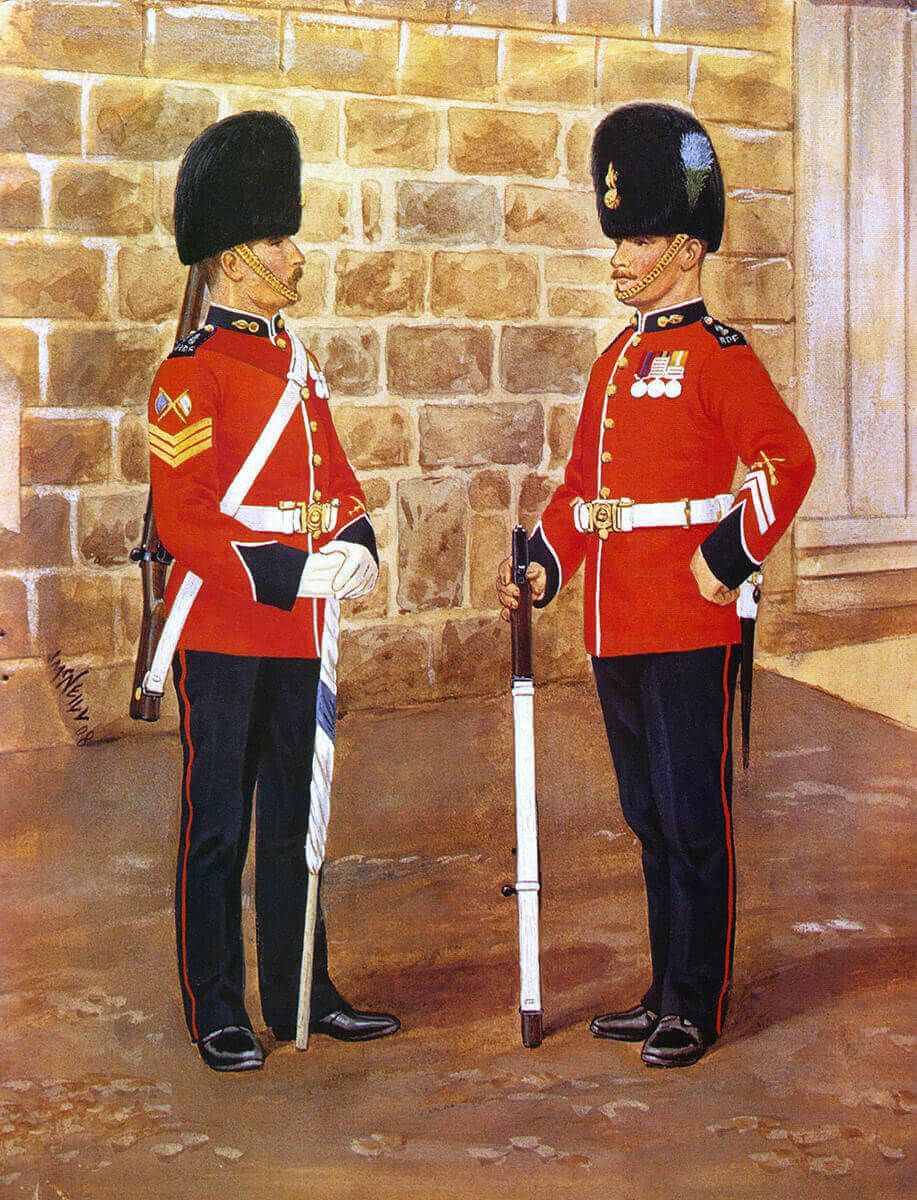
was not the war planned in 1913.  Into a world in which soldiers still wore fancy dress for parades—

(artist:  possibly Brian Fosten?)

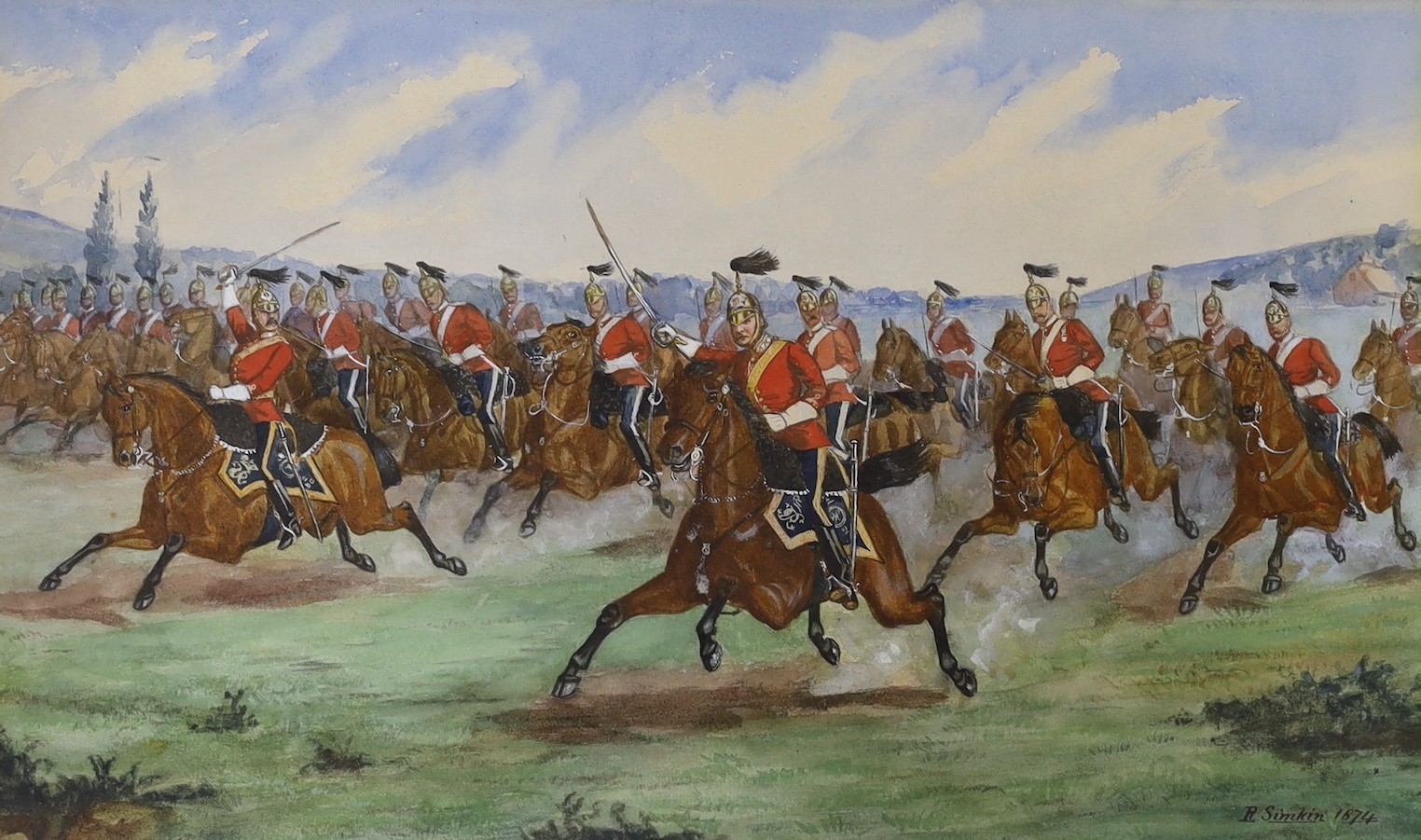
and cavalry officers still dreamed of heroic charges,

(Richard Simkin)

came these

and this sort of thing

with many other horrors to come and soldiers did the only sensible thing, given that they couldn’t just run for their lives, and began to dig in.

(another Peter Dennis)

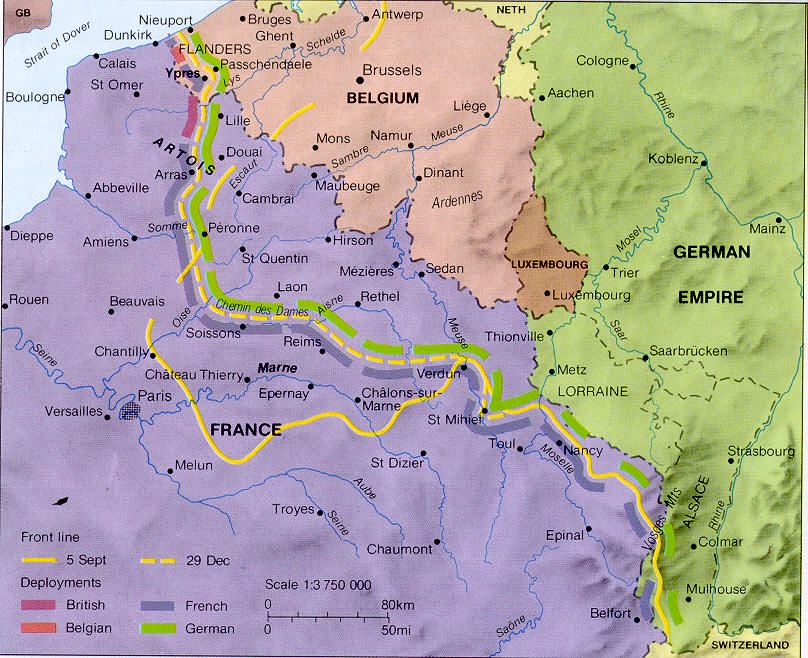
On the Western Front, where Tolkien served, this eventually meant 500 miles of such digging, from Switzerland to the North Sea, until, ultimately, there were two lines of trenches, one German, one Allied, now facing each other.

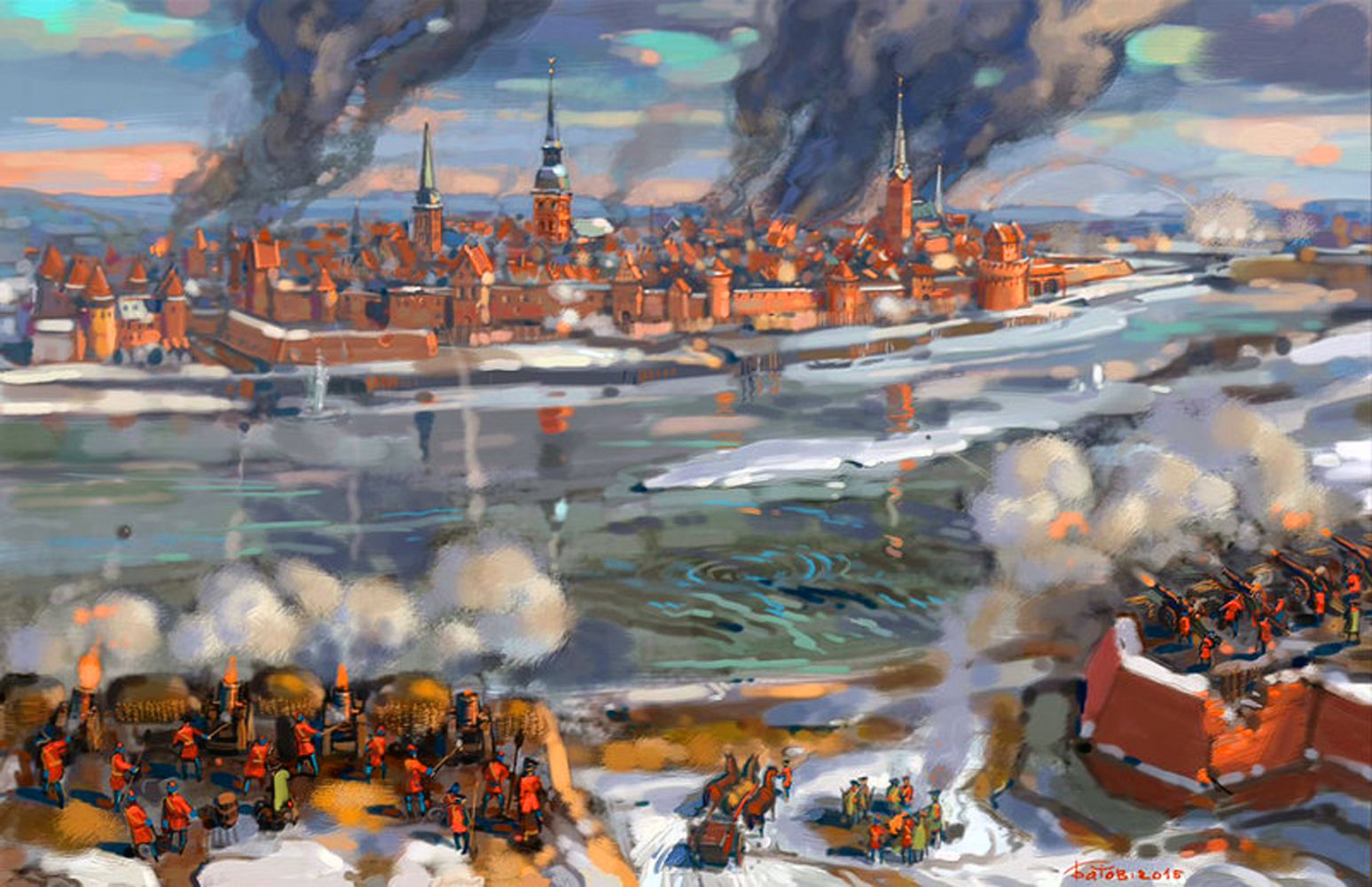
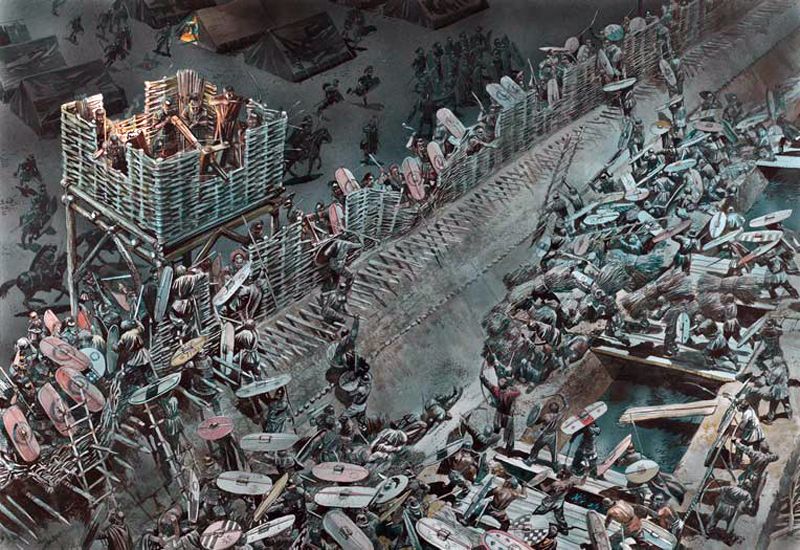
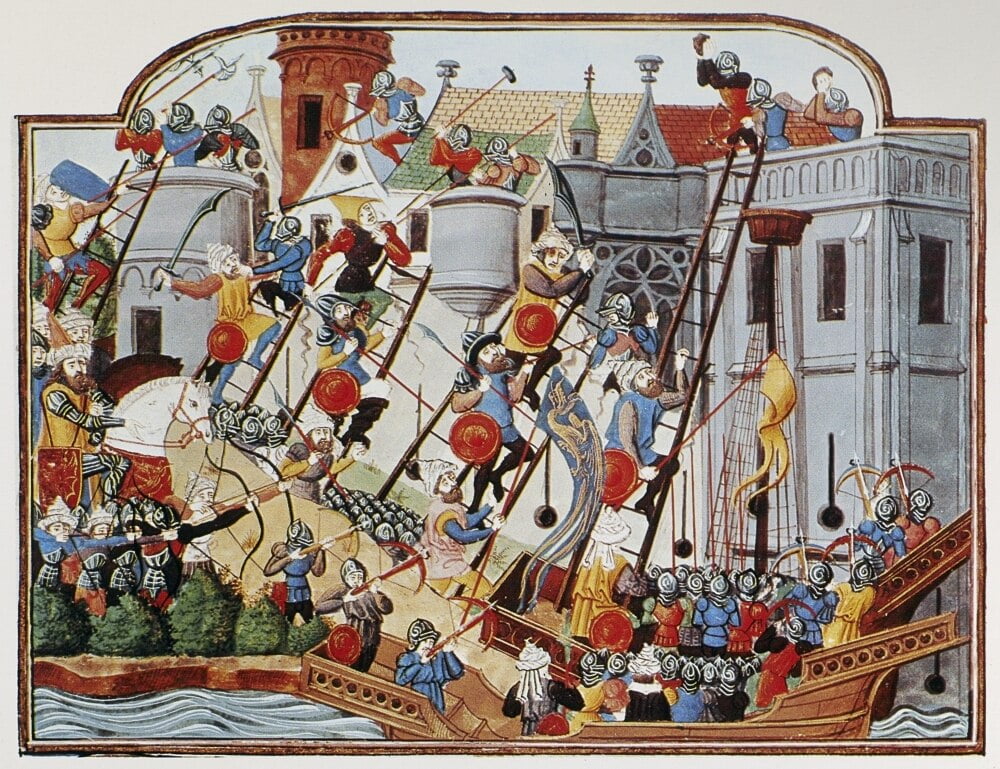
People at the time were reminded of what was called siege warfare, which, in the past had meant that an army surrounded a town or a fortress, blocking access to it from the outside, usually dug trenches to mark off the area and to protect their own soldiers and, depending upon the era and its weaponry, use various war machines against the walls and those inside.

(Julius Caesar’s siege of the Gallic stronghold of Alesia, 52bc)

(a kind of idealized medieval siege by Liliane and Fred Funcken)

(the siege of Swedish-occupied Riga by the Russians in 1710, by an artist whose name appears to be “Batov”)

The difference, in this case, being that both sides seemed to be besieging the other and neither was surrounding or surrounded.

During his stay on the Western Front in 1916, Tolkien participated in a massive assault on sections of the German lines—the Battle of the Somme—in which the British suffered over 50,000 casualties on the first day alone.

(and another Peter Dennis

Big battles like this were relatively rare, however, as they required so much planning and such great resources, but, in between them, soldiers raided each other’s trenches, both to keep their own soldiers busy and to keep the enemy off balance, as well as to gain intelligence from prisoners and captured documents.

(and a further Peter Dennis)

In older, traditional sieges, the besieged might try to do the same, as well as ruin the besiegers’ siege artillery and trenches, even carrying off the enemy’s entrenching tools.  This was called a “sally”, and here we can see the besieged Gauls trying this maneuver out at Caesar’s siege of Alesia in 52BC

(and yet another Peter Dennis)

and here are Texian volunteers sallying from the Alamo to destroy shacks (jacales) being used by Mexican skirmishers in 1836.

(Gary Zaboly)

“To sally” comes from French saillir, “to leap/jump”, and clearly implies “to jump out at someone”, preferably unexpectedly, and that’s why some fortresses have sally ports—

(this is at Fort Mifflin, on the Delaware River south of Philadelphia)

smaller gates which could be used for surprise attacks on attackers.  And, when you sally, your job is to harry the enemy, “to harry” coming from Old English hergian (HAIR-yee-an), “to harass/plunder/ravage”, among other warlike definitions.

Tolkien, perhaps with a strong memory of trench warfare, along with a reminiscence of the desperate Gauls at Alesia, recreates one of these attacks at Helm’s Deep, where Saruman’s army of orcs and Dunlendings has begun its assault upon the outer wall.

(the artist listed for this is “Brokenhill”, but the only one I could find was an art commune in Australia, which I’m hoping is correct and which you can visit here:  https://artofbrokenhill.com/ )

Strictly speaking, this isn’t really a siege, any more than the attack on Minas Tirith is really a siege, even though that’s the chapter title.  Rather, it’s an escalade—an assault by ladder, which has always struck me as about the last siege attack I’d join—look at what’s happening in this one—would you want to be on the top of a rickety ladder?

Included in the escalade is an attempt to break through the main gates:

“Again the trumpets rang, and a press of roaring men leaped forth.  They held their great shields above them like a roof, while in their midst they bore two trunks of mighty trees.  Behind them orc-archers crowded, sending a hail of darts against the bowmen on the walls.  They gained the gates.  The trees, swung by strong arms, smote the timbers with a rending boom.” 

That “like a roof” is, basically, a Roman formation called a “turtle”—a testudo—used in exactly the same way in Roman assaults.

(from the column of Trajan, showing Roman infantry attacking a Dacian town)

The tree trunks are improvised battering rams—although classical ones could be tipped with metal to make them more effective—

In response, Aragorn and Eomer, with “a handful of stout swordsmen”, attempt a sally: 

“There was a small postern-door that opened in an angle of the burg-wall on the west, where the cliff stretched out to meet it…Together Eomer and Aragorn sprang through the door, their men close behind.  The two swords flashed from the sheath as one.”

Initially, this harrying of the enemy is successful, driving them back from the gate, but then there are too many of them and Eomer is grabbed by two of the Orcs, only to be rescued by the sudden appearance of Gimli, as the sally party dodges back inside the postern/sally port, which is closed behind them.

(Donato Giancola—I’ve recommended his site before—and here it is:  https://donatoarts.com/ )

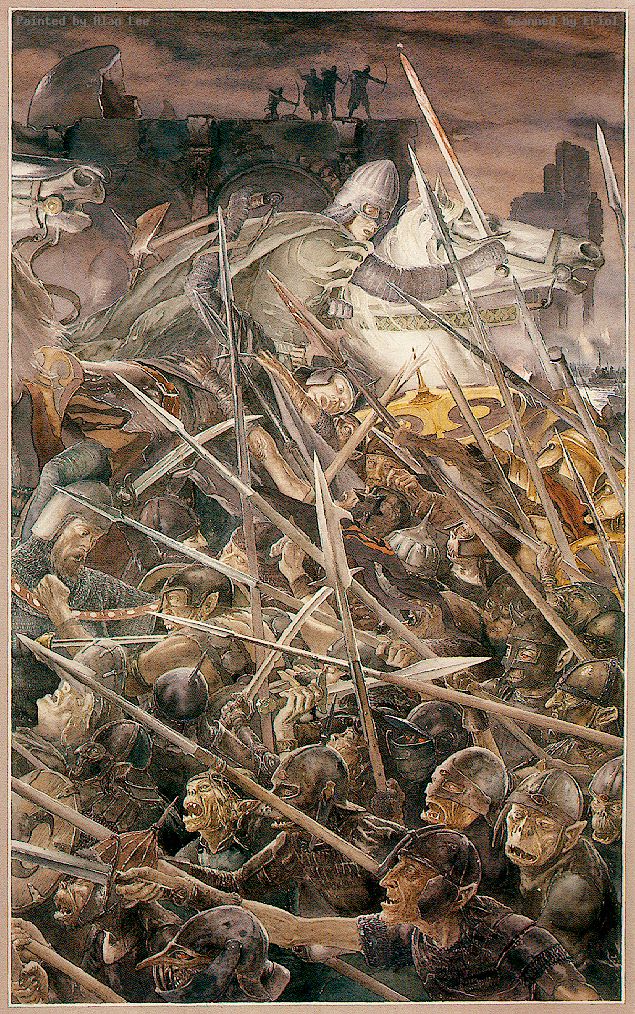
But this is only the first sally—Theoden, fretting at the rapidly decaying defensive situation, as Saruman’s early blasting powder blows holes in the ancient walls of the Deep, makes a second attack, although, this time, it seems more like the action of despair, rather than a good tactic:

“But I will not end here, taken like an old badger in a trap.  Snowmane and Hasufel and the horses of my guard are in the inner court.  When the dawn comes, I will bid men sound Helm’s horn and I will ride forth.  Will you ride with me then, son of Arathorn?  Maybe we shall cleave a road, or make such an end as will be worth a song—if any be left to sing of us hereafter.”  (this, as well as all of the previous quotations, are from The Two Towers, Book Three, Chapter 7, “Helm’s Deep”)

(Alan Lee)

It’s not, of course, a suicidal charge, as Gandalf arrives with re-enforcements and then there are the Ents, so the sally harries the Orcs to their doom among the trees

and, although there is, as I said at the beginning, neither comedy nor romance, this sally, like the romcom, has a happy ending.

As always, thanks for reading.

Stay well,

When deep in a forest, never sneer at the trees—someone might be listening,

(Alan Lee)

And remember that, also as always, there’s

MTCIDC

O

Clubbing

15 Wednesday Jan 2025

Posted by Ollamh in Uncategorized

≈ Leave a comment

Tags

Bishop Odo of Bayeux, club, Eowyn, Fantasy, lord-of-the-nazgul, lotr, Mace, Merry, Teddy Roosevelt, theodore-roosevelt, Tolkien

Welcome, as always, dear readers.

So many earlier events are tied to this scene:

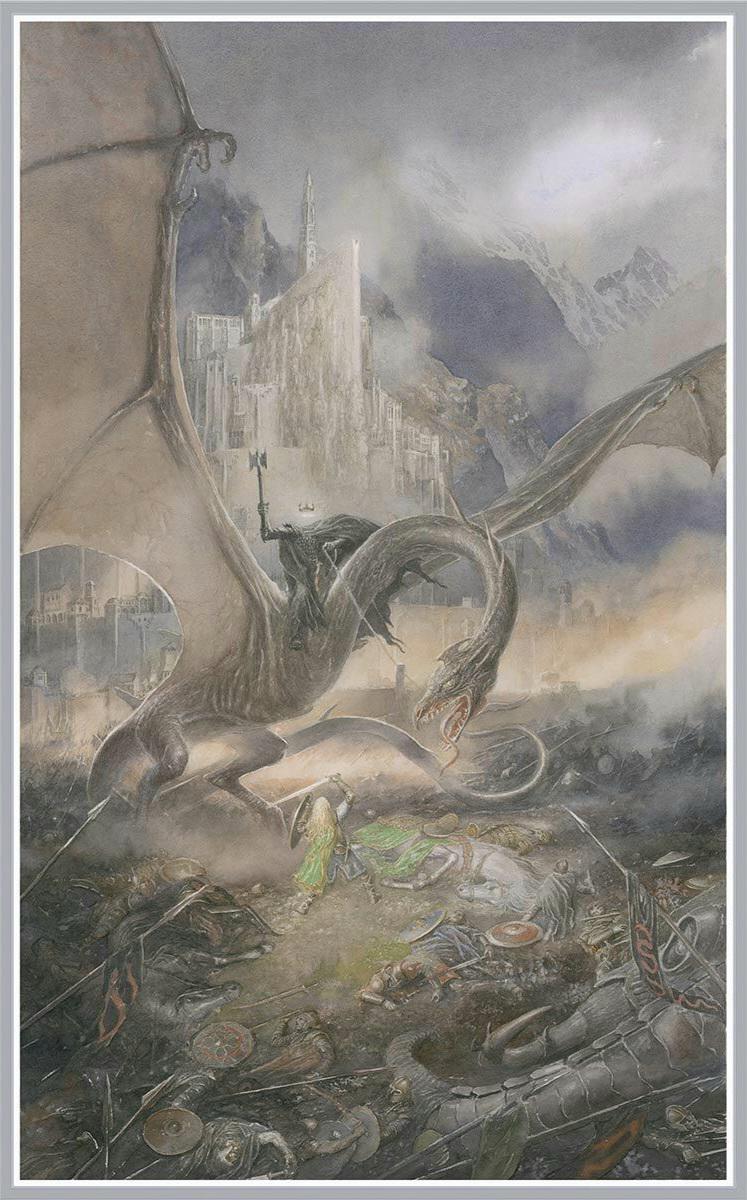
“The great shadow descended like a falling cloud…Upon it sat a shape, black-mantled, huge and threatening.”

It’s Eowyn about to challenge the Witch King of Angmar, the chief of the Nazgul, mounted upon his really disgusting creature.  Behind it lie:

1. the Black Riders

(the Gaffer and a Nazgul—perfectly captured by Denis Gordeev)

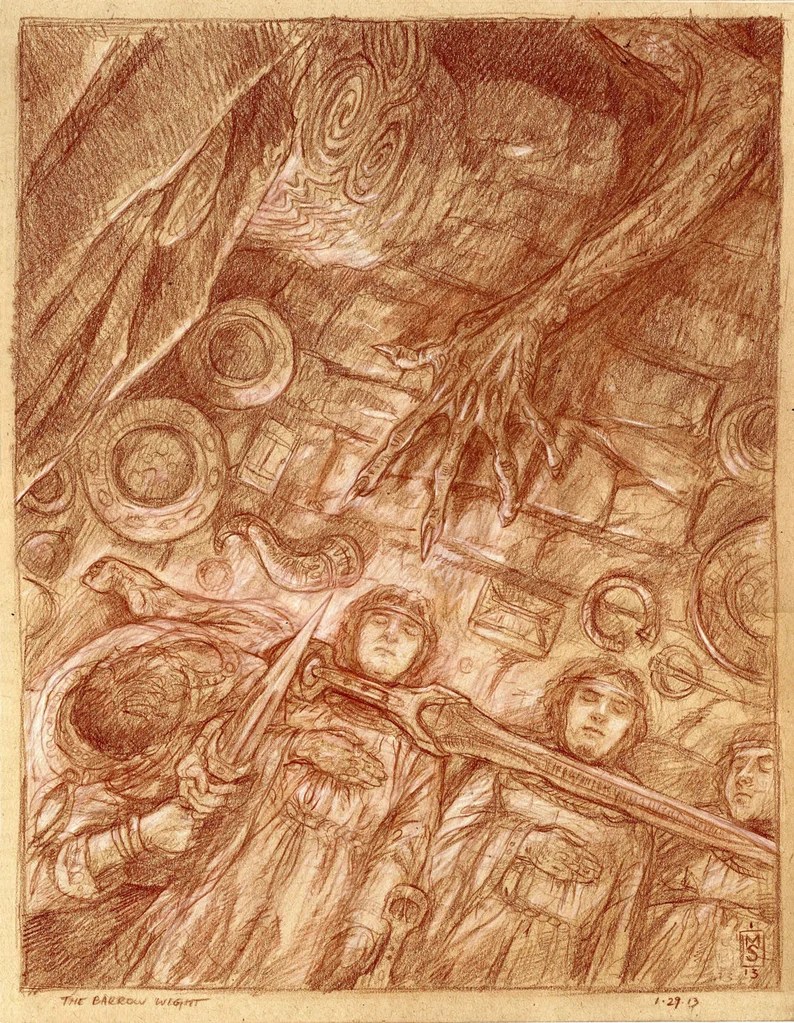
2. a sword taken from the barrow where the Barrow Wight almost makes an early end to the story

(a sketch for a painting by Matthew Stewart.  You can see more of his work here:  https://mattstewartartblog.blogspot.com/ )

3. Merry swearing fealty to Theoden

(a statue group from a Dutch site called “Odd World”:  https://www.oddworld.be/the-lord-of-rings-merry-and-theoden-miniatuur-beeld-1_prod11508.html

4. Eowyn, in despair over her unrequited love for Aragorn, disguising herself as “Dernhelm”, and taking Merry with her to Minas Tirith

(another Matthew Stewart)

5. one of those disgusting creatures

(Alan Lee)

And I’m sure that you can think of more, as it’s a wonderfully rich dramatic scene, including Tolkien at his archaizing best (William Morris would be very pleased with him):

“Begone, foul dwimmerlaik, lord of carrion!”

As you can imagine, there are numerous illustrations of it—from the Hildebrandts

to Alan Lee

to Ted Nasmith

to Denis Gordeev—

In each case, it’s interesting to see what moment in the scene each artist has chosen.  What caught my eye this time, however, wasn’t a person or creature or even the action, but an object:

“…the Lord of the Nazgul.  To the air he had returned, summoning his steed ere the darkness failed, and now he was come again, bringing ruin, turning hope to despair, and victory to death.  A great black mace he wielded.”

If you knew nothing about weaponry, you’d know that, at least, it’s a weapon, if, for no other reason,from its effect:

“With a cry of hatred that stung the very ears like venom he let fall his mace.  Her shield was shivered in many pieces, and her arm was broken…”  (The Return of the King, Book Five, Chapter 6, “The Battle of the Pelennor Fields”)

If you look up “mace” in Wikipedia, you find a wide variety of possibilities, however, everything from a spice

to a kind of tear gas

to a Star Wars character

(I’m afraid that I don’t have an artist for this, but how could I resist such a wonderful depiction?)

and more—which you can investigate here:  https://en.wikipedia.org/wiki/Mace –but it’s the weapon which I was interested in.

We have earlier seen Nazgul armed with swords:

“There were five tall figures:  two standing on the lip of the dell, three advancing.  In their white faces burned keen and merciless eyes; under their mantles were long grey robes; upon their grey hairs were helms of silver; in their haggard hands were swords of steel.”  (The Fellowship of the Ring, Book One, Chapter 11, “A Knife in the Dark”)

(Weathertop by Alan Lee)

And, of course, at least one dagger—the Morgul Knife which wounds Frodo.

The mace, however, is new—but, in fact, very old.  It’s a kind of club, originally probably nothing more than the sort of thing which Herakles carries.

(a rather sea-sick looking Herakles, sailing in the cup of Helios)

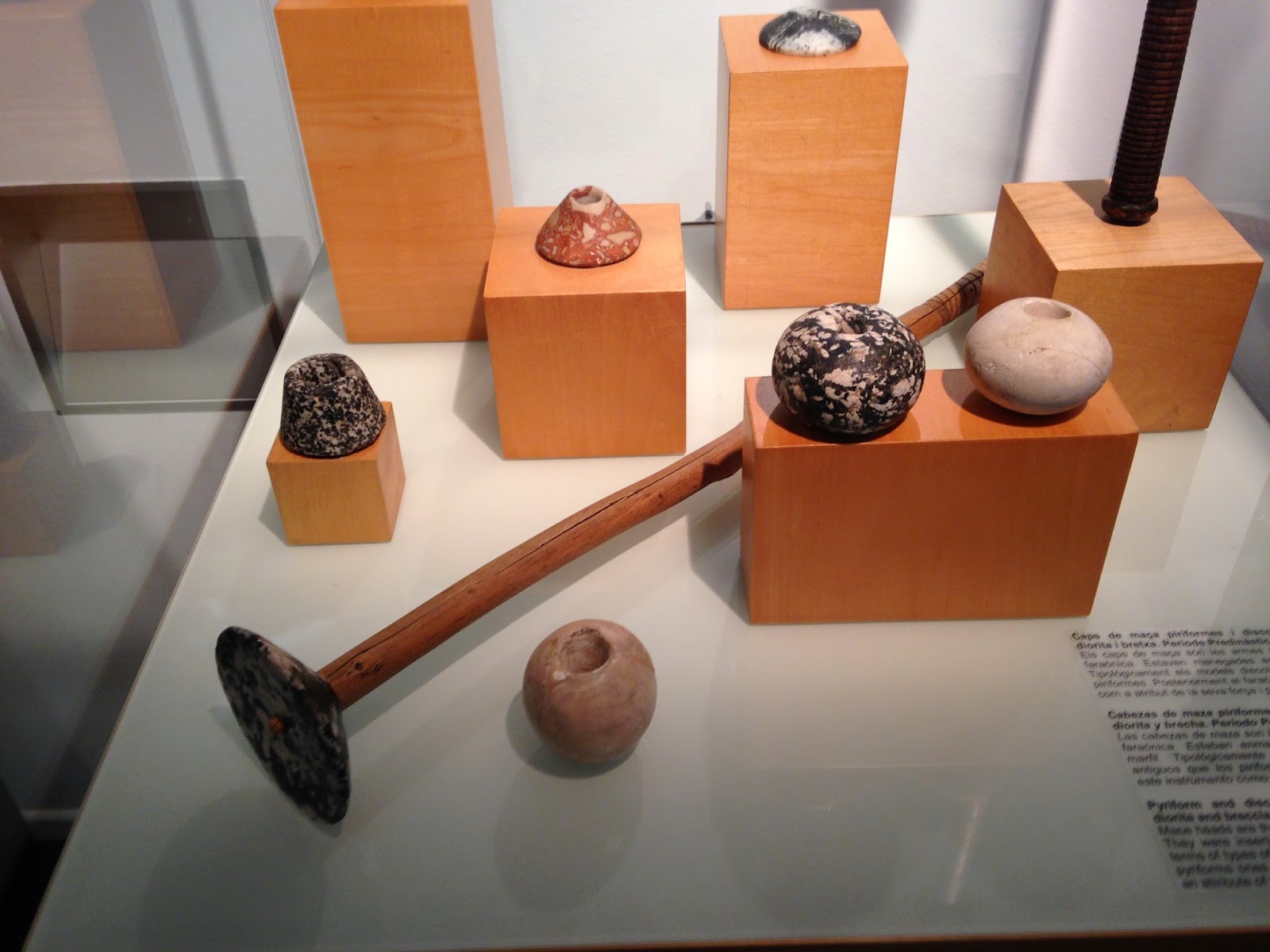
When it comes to violence, however, people are endlessly inventive and, by the time of the Egyptians, we find polished stone heads

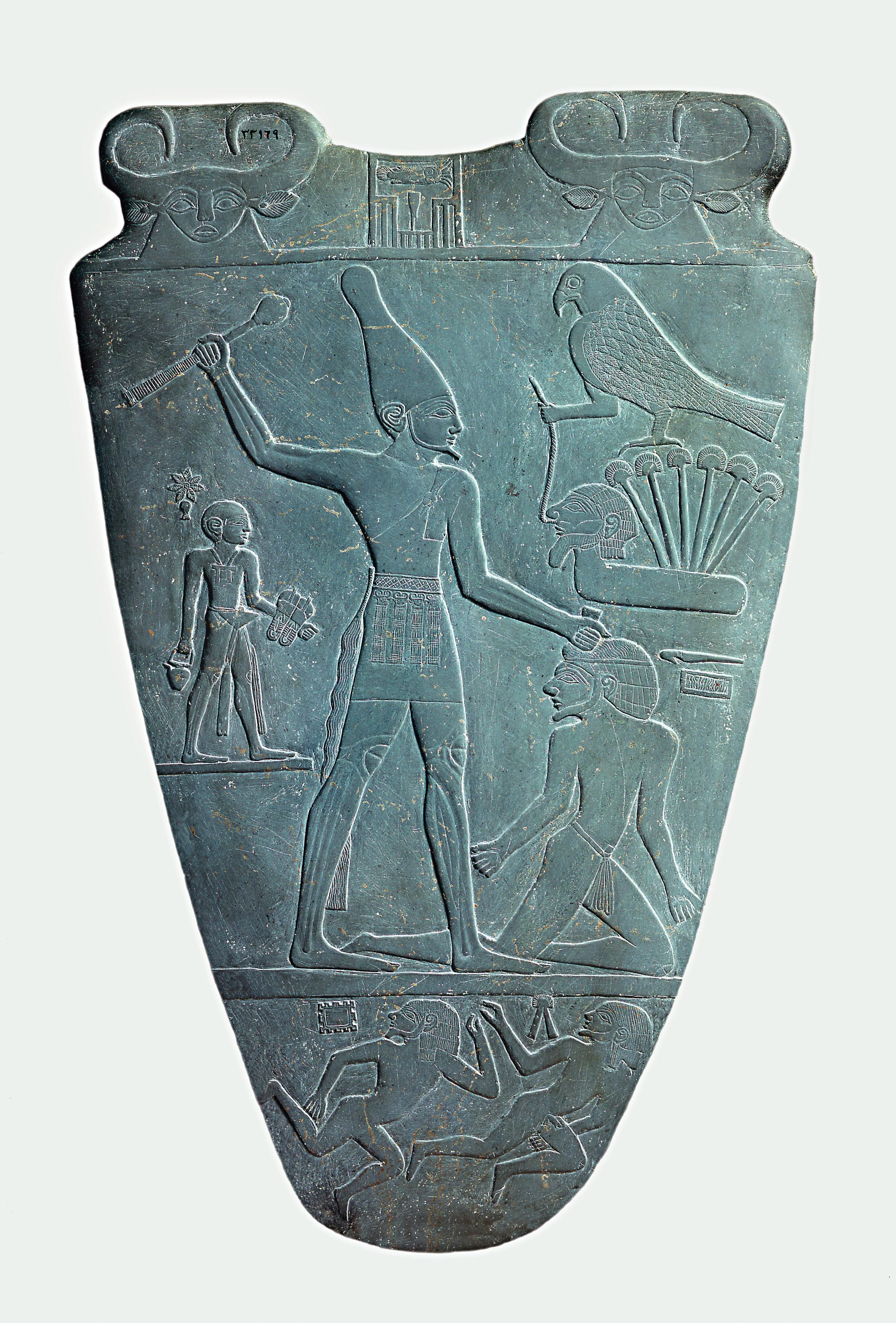
which, when attached to a stick, became a favorite early bashing weapon.

(from the so-called “Narmer palette”—31st century BC—this is an interesting find from 1894 from the ancient Egyptian site of Nekhen—you can read more about it here:  https://en.wikipedia.org/wiki/Hierakonpolis )

Tolkien’s model, however, would have come from a much later, probably medieval, period and the fact that it’s black might indicate that it’s made of iron.  Of course there’s one medieval wooden club which JRRT would have known—

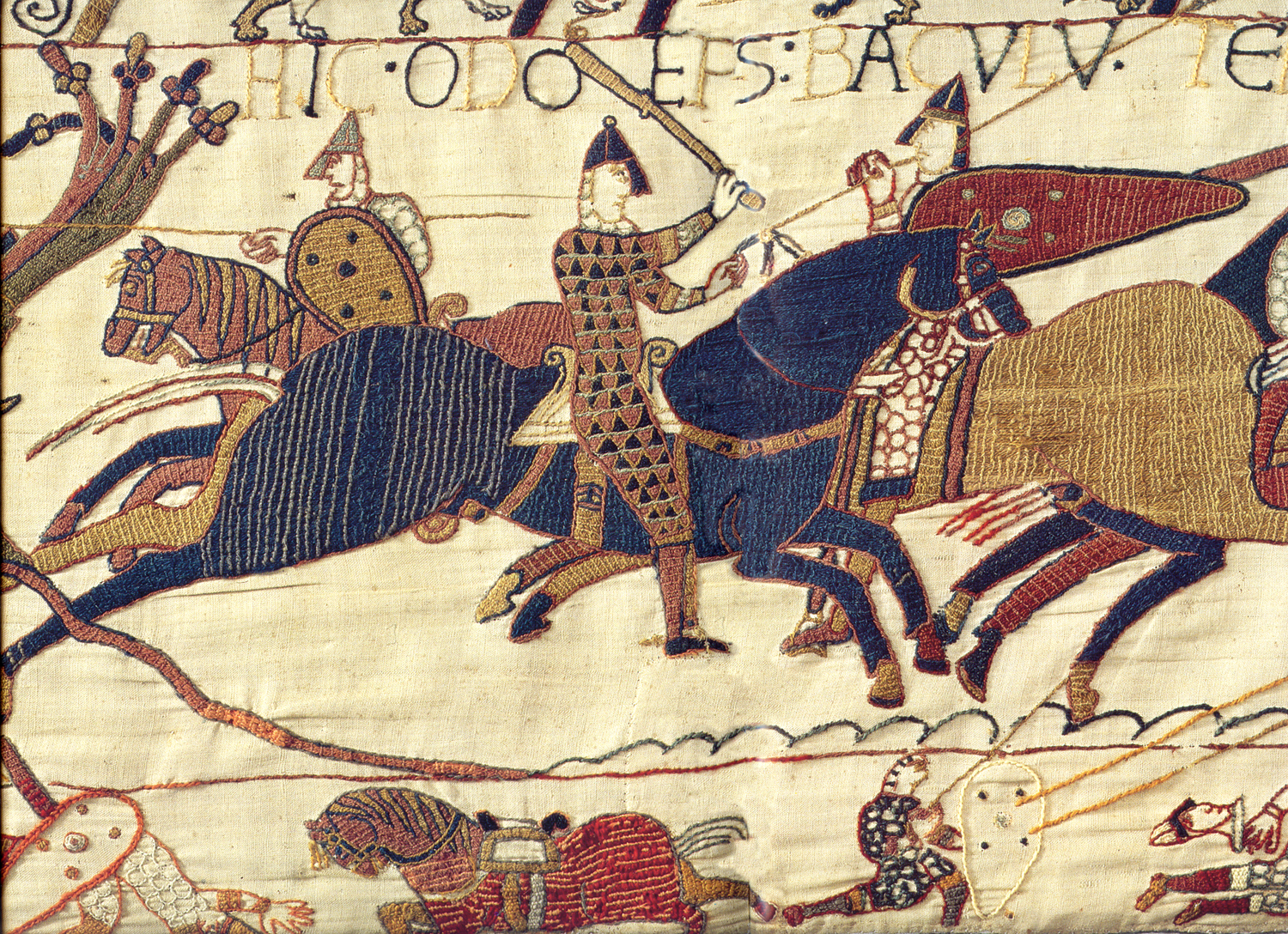
This is Odo, the bishop of Bayeux, in Normandy, the half-brother of Duke William, at the battle of Hastings.  Apparently, as an ecclesiastic, he felt unable to wield a sword or spear, like other Normans, and so he has armed himself with what might be thought of (although not by its victims) as a more “peaceable” weapon.

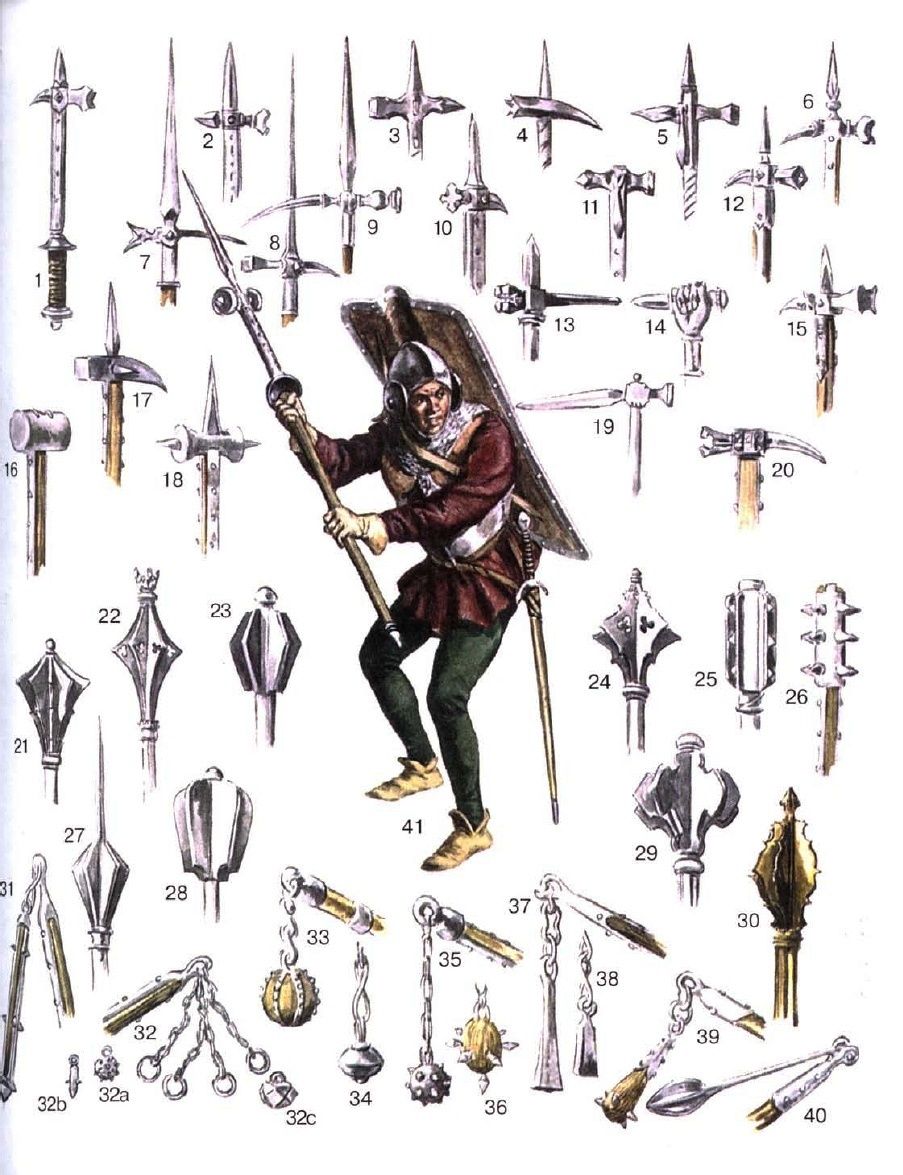
But this is, shall we say, unusual, and there were a wide variety of types to choose from—here’s a selection, along with other medieval weapons–

(by the Funckens, Liliane and Fred, from a very lively 3-volume set on medieval and Renaissance clothing, armor, and weaponry)

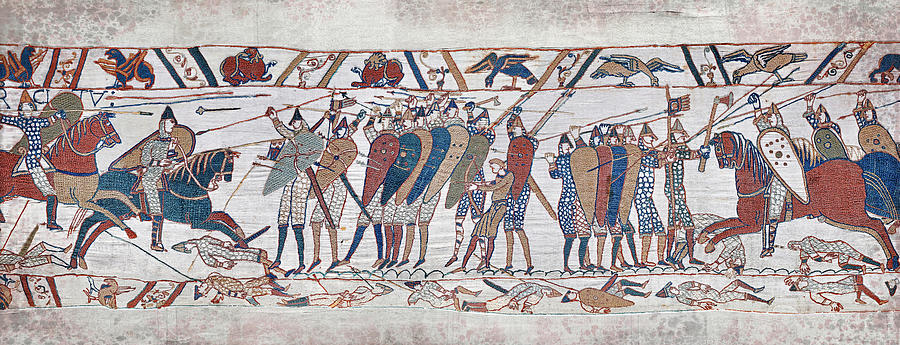
Various artists have made different choices, modeling their work on actual maces, or spinning off into fantasy, but perhaps we can do what Tolkien did with the Rohirrim, when he suggested that their armor would look like the mail of the Normans in the Bayeux Tapestry.  (see letter to Rhona Beare, 14 October, 1958, Letters, 401).  I haven’t spotted a Norman actually using a mace, but there appears to be an image of one here, between the charging Normans and the defending Anglo-Saxons, on the left (thrown by one of the latter?)–

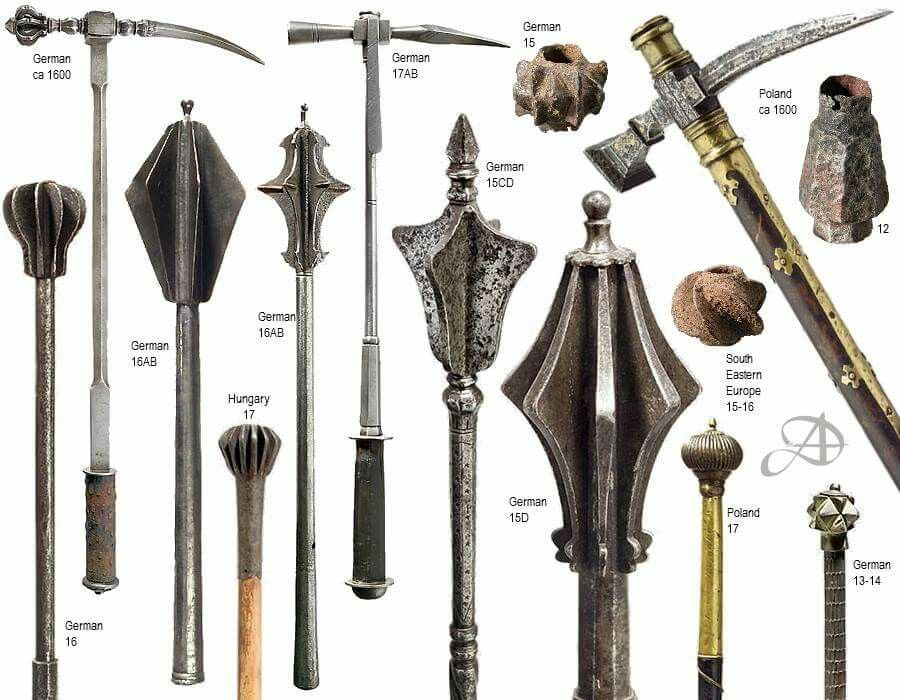
It’s a bit small for Tolkien’s description, but, blow it up a bit for scale (after all, the Nazgul towers over Eowyn) and perhaps the one labeled “German 16” below would be a rough match?

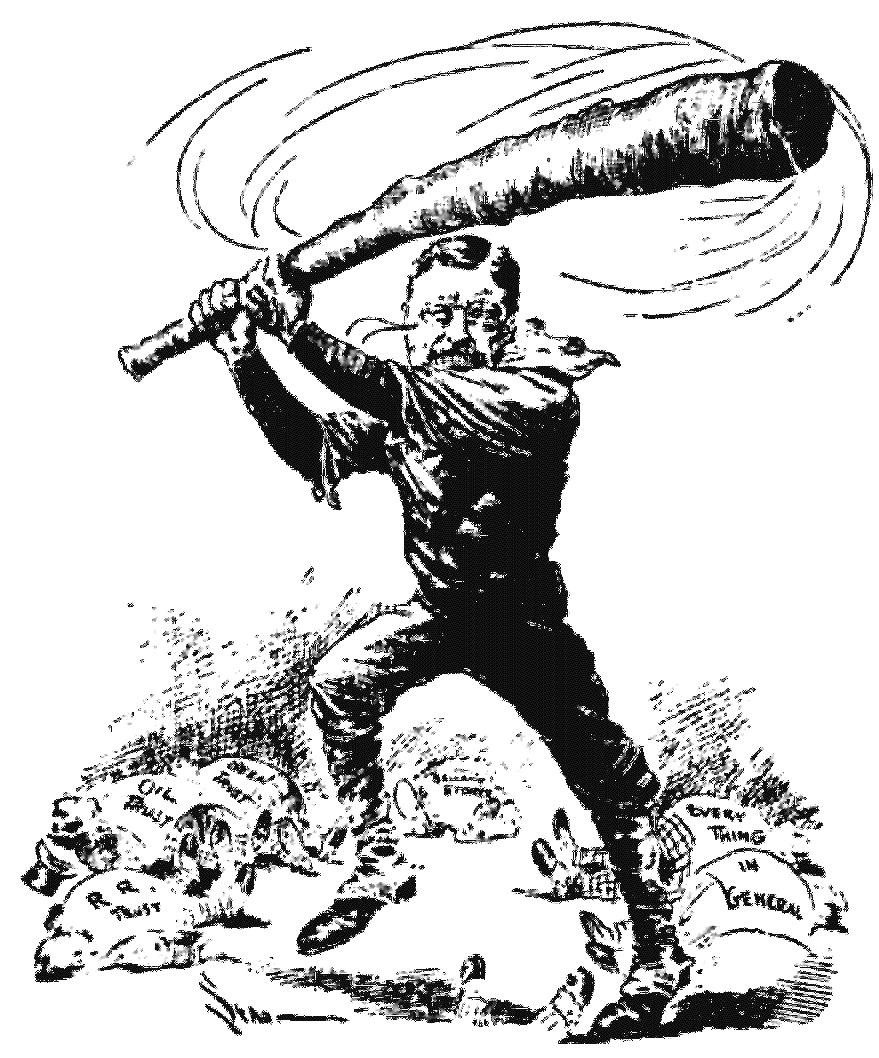
Ironically, it’s Merry’s ancient sword which saves Eowyn, but, before that, that mace, combined with the force of the Nazgul’s swing, smashes Eowyn’s shield (probably made of overlapping layers of wood, perhaps with a metal covering?) and would have smashed her as well, reminding me of a remark supposedly made by the early 20th-century US President, Theodore Roosevelt, “Speak softly—and carry a big stick”!

Thanks, for reading, as always.

Stay well,

Dare I say stick around

Because, as always, there’s

MTCIDC?

O

Bacon and Eggs, Etc.

08 Wednesday Jan 2025

Posted by Ollamh in Uncategorized

≈ Leave a comment

Tags

bacon and eggs, being eaten, Eating, Fantasy, Goblins, Gollum, seed-cake, Smaug, snails, spiders, The Hobbit, Tolkien, Tolkien as hobbit, trolls

Dear readers, welcome, as always.

When Tolkien admitted that he was a hobbit, he defined them—and himself—in part in this way:

“…I like gardens, trees and unmechanized farmlands; I smoke a pipe, and like good plain food (unrefrigerated), but detest French cooking… “ (from a letter to Deborah Webster, 25 October, 1958, Letters, 411)

This follows, of course, his description in “Concerning Hobbits” in the Prologue to The Lord of the Rings:

“Their faces were as a rule good-natured rather than beautiful, broad, bright-eyed, red-cheeked, with mouths apt to laughter, and to eating and drinking.  And laugh they did, and eat, and drink, often and heartily, being fond of simple jests at all times, and of six meals a day (when they could get them).”

And this is an extension of the description in the first chapter, “An Unexpected Party”, of The Hobbit:

“[they] have long clever brown fingers, good-natured faces, and laugh deep fruity laughs (especially after dinner, which they have twice a day when they can get it).”

This propensity for the consumption of comestibles—and for the reporting of and description of eating and all that might go with it—is more, in The Hobbit, than simply a fond look at a foible, however.  In fact, it is a theme which seems, at times to dominate the book—and we see this practically on the first page of the novel, not only in that mention of multiple dinners, but even in the fact that hobbit laughs are “fruity”.

The opening setting itself announces the theme:  “Bilbo Baggins was standing at his door after breakfast…” and soon Bilbo is resisting Gandalf’s proposal of an adventure by saying “Nasty disturbing uncomfortable things!  Make you late for dinner!”  (The Hobbit, Chapter 1, “An Unexpected Party”)

(the Hildebrandts)

There follows the rattled Bilbo’s invitation to Gandalf to come to tea (after which he consoles himself with “a cake or two and a drink of something”), and then the party from the chapter title, which includes not only a major depletion of Bilbo’s pantry (or pantries, as the narrator has already informed us that Bilbo’s house has “lots of these”), but even a kind of heroic catalogue of what’s called for and which Bilbo seems able to supply including:  tea, beer, seed-cake, coffee, scones, ale, porter, red wine, raspberry jam, apple-tart, mince-pies, cheese, pork-pie, salad, eggs, chicken, and pickles (and a single biscuit—that is, cookie, for Bilbo).

The chapter ends with one last burst of food-talk as Bilbo offers bed and breakfast to the dwarves (as a way of seeing them off) and Thorin orders breakfast as if Bilbo were running an inn:

“But I agree about bed and breakfast.  I like six eggs with my ham, when starting on a journey:  fried not poached, and mind you don’t break ‘em.”

(Eggs and ham—those eggs will appear again, but with bacon, when Bilbo, more than once, yearns for them.  This is from a rather mouth-watering website called “The English Kitchen”, which you can visit here:  https://www.theenglishkitchen.co/2020/04/proper-ham-eggs.html  And, as, when you search for a useful image of ham and eggs, you suddenly find yourself surrounded by images of Dr. Seuss’ wonderful Green Eggs and Ham, you can it read here:  https://ia601502.us.archive.org/20/items/green-eggs-and-ham_202211/GreenEggs%20Ham.pdf )

And Bilbo goes off the bed annoyed not only at Thorin, but at all of the other dwarves, who have made similar orders.

After that opening, it’s not surprising that Chapter 2 begins with a still-annoyed Bilbo, faced with a mountain of dirty dishes, the remains of a breakfast he didn’t fix, but, cleaning up, he enjoys his own first breakfast and is starting on a second one when Gandalf appears and Bilbo is suddenly off on the adventure which takes up the rest of the book.

Food soon appears again as one of their ponies “got into the river before they could catch him…and all the baggage that he carried was washed away off him.  Of course it was mostly food, and there was mighty little left for supper, and less for breakfast.”  (Chapter 2)

But then the eating theme takes a different and disturbing turn:  trolls

(JRRT)

who, though currently munching mutton, have “…et a village and a half between yer, since we come down from the mountains” and soon, like amateur chefs on “The Great Goblin Bake Off”, are discussing how to prepare dwarf—will it be roasting?  boiling?  before the judge, one Gandalf, decides the argument by tricking them into being exposed to the sun and turned to stone.

(JRRT)

This is, in its way, a mirror to the original eating idea, in which the protagonists who do the consuming are at risk of becoming a potential article for consumption and we’ll see this repeated more than once with:

1. the goblins (Chapter 4):  “For goblins eat horses and ponies and donkeys (and other much more dreadful things), and they are always hungry.”

(Alan Lee)

2. Gollum (Chapter 5):  “He was looking out of his pale lamp-eyes for blind fish, which he grabbed with his long fingers as quick as thinking.  Goblin he thought good, when he could get it…” and there’s the possibility that Bilbo might be on the menu—if he loses the riddle contest.

(Alan Lee)

3. the spiders (Chapter 8):  “  ‘What nasty thick skins they [the dwarves] have to be sure, but I’ll wager there is good juice inside.’ ‘Aye, they’ll make fine eating, when they’ve hung a bit…’ ”

(and another Alan Lee)

4. and, of course, Smaug (Chapter 12):  “ ‘Let me tell you I ate six ponies last night and I shall catch and eat all the others before long…I know the smell (and taste) of dwarf…Girion Lord of Dale is dead, and I have eaten his people like a wolf among sheep…’ “

(JRRT)

On the other side (the eating, not eaten), however, there are:

1. supper with the Rivendell elves (Chapter 3)

(JRRT)

2. rabbit, hare, and sheep with the eagles (Chapter 6)

(JRRT)

3. meals with Beorn (Chapter 7)

(Ted Nasmith)

4. starving in Mirkwood while being tantalized by elvish feasts (Chapter 8)

(another elf king, in an illustration by A.W. Bayes, 1831-1909)

5. prison rations in the dungeons of Thranduil, the king of the forest elves (Chapter 9)—as well as food stolen by Bilbo

(a generic dungeon as, so far, I haven’t discovered a useful illustration of the original situation)

6. feasts in Lake-town (Chapter 10)

(JRRT)

7. a gourmet diet of snails (Chapter 11)

(Alan Lee)

8. and even the threat of siege and starvation (Chapter 15)—

(Alan Lee)

Given that so much of the text is handed over to eating and drinking, it’s surprising that the conclusion of the story doesn’t have Gandalf returning (with Balin) to tea some years later—

(Alan Lee)

could it be that even that academic hobbit is finally full?

As always, thanks for reading.

Stay well,

One slice of cake should do, I think, don’t you? Or maybe two?

And remember that, as always, there’s

MTCIDC

O

Hybrids

01 Wednesday Jan 2025

Posted by Ollamh in Uncategorized

≈ Leave a comment

Tags

anglo-saxons, Boudica, chariots, eurasian-steppe, Huns, hybrds, Hybrids, Jacksons The Lord of the Rings, jacksons-lord-of-the-rings, Julius Caesar, Mongols, Normans, Rohirrim, Sarmatians, Scythians, Tacitus, Tolkien, Wainriders

As always, dear readers, welcome.

The title of this piece might suggest electric cars, and it definitely will mention several different wheeled vehicles, but it is actually what I hope is a little study in something Tolkien does wonderfully well:  taking different elements from different times and cultures and so blending them that they become believable new wholes.

Although I don’t always agree with elements in Jackson’s The Lord of the Rings, one thing has always given me pleasure:  the Rohirrim, whether en masse

or a small grouping.

And this is true for Edoras

as well as for Meduseld.

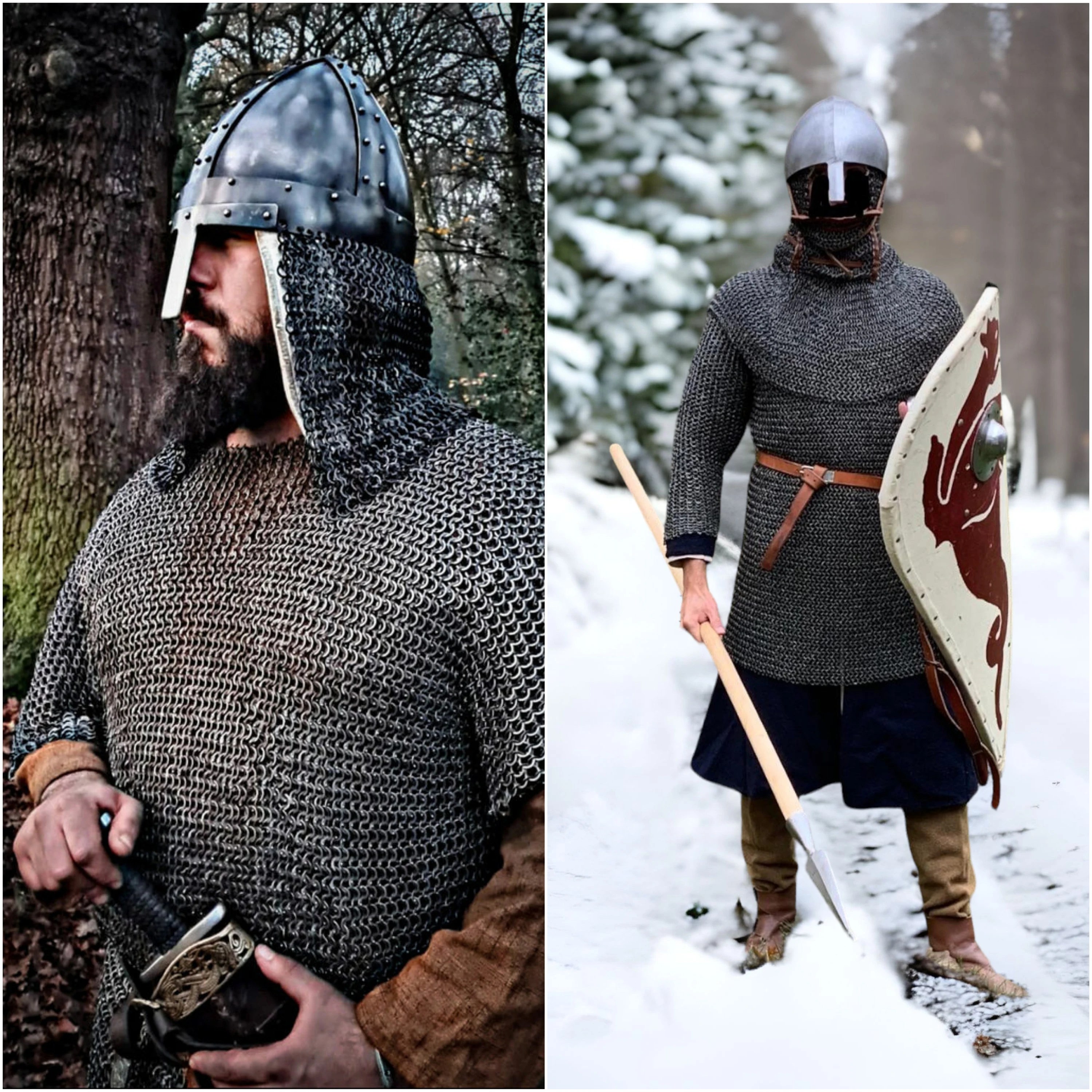
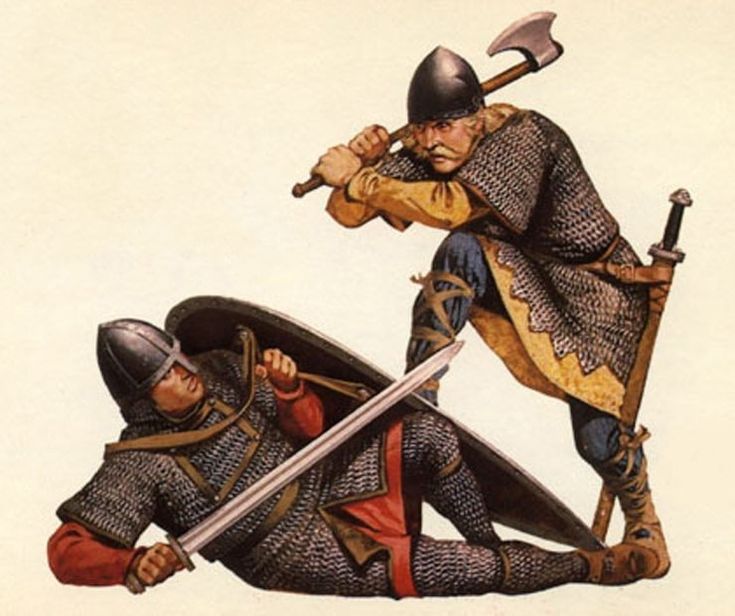
And yet they appear to be a kind of combination of peoples:  on the one hand, Tolkien imagined them to be Anglo-Saxons,

(Peter Dennis)

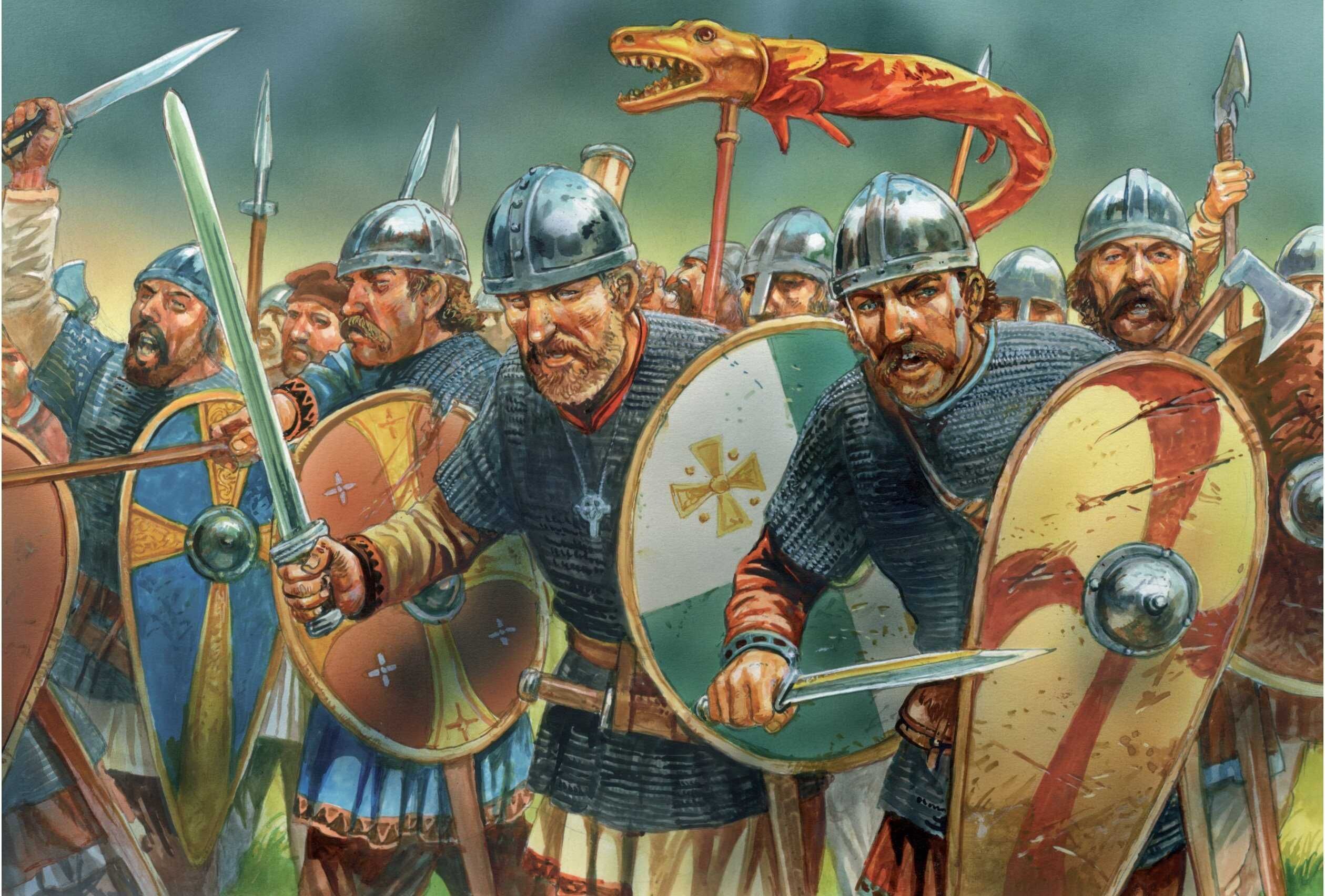
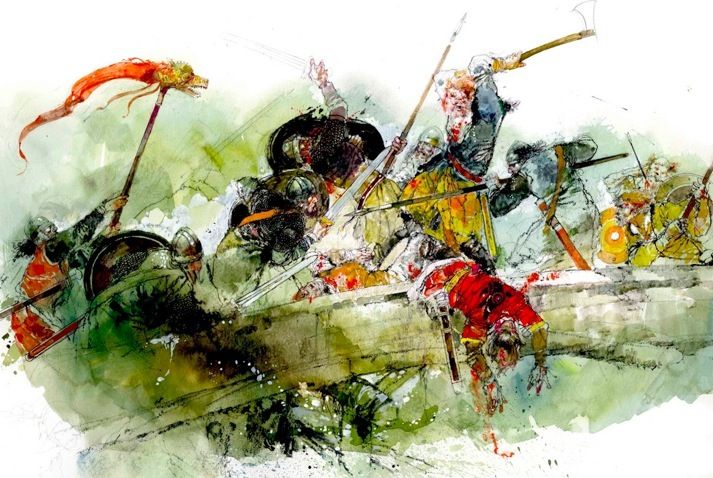
a people who primarily fought on foot, as at their last two major battles, Stamford Bridge,

(Victor Ambrus—who worked for years with the popular British archeology series, Time Team—which is available on YouTube and much recommended)

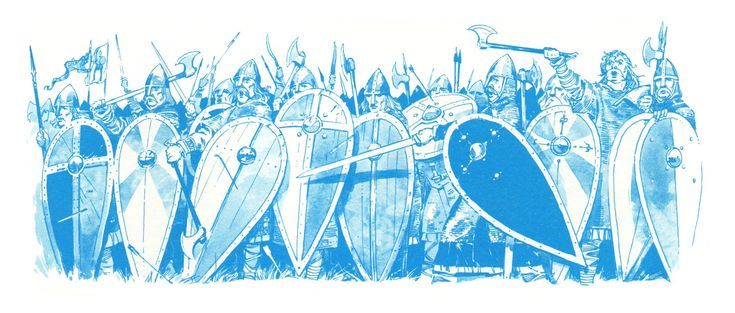
where they defeated another infantry force, the Vikings, and Hastings,

(Artist?)

in which they were overwhelmed at the battle’s conclusion by Norman cavalry.

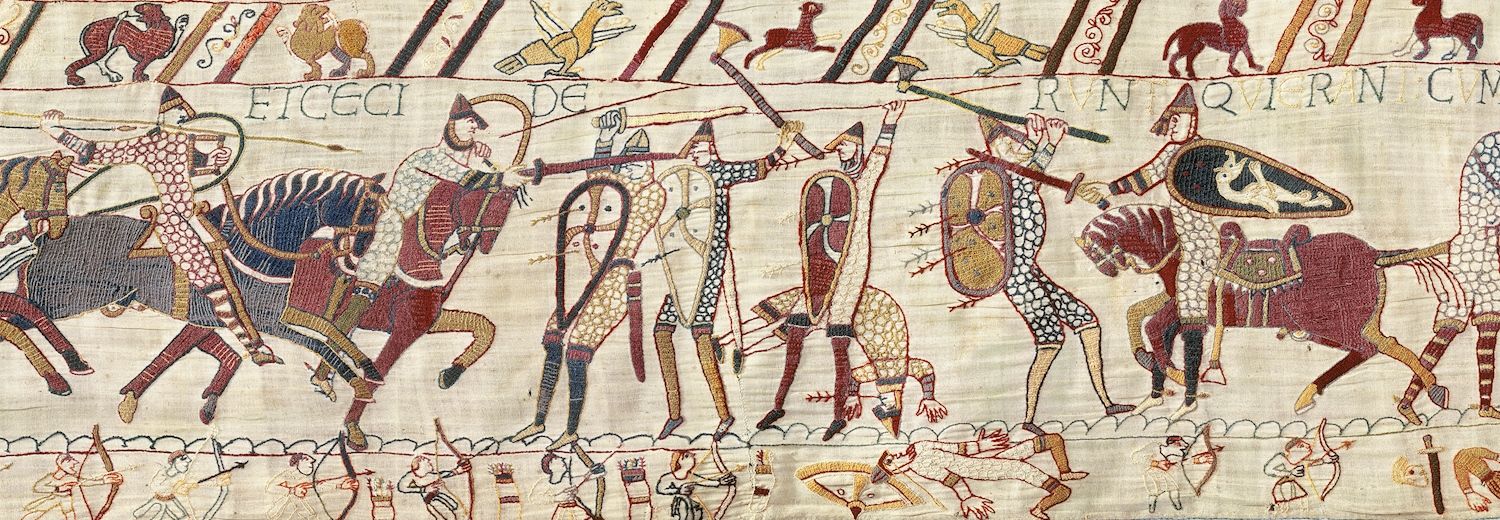
(From the wonderful “Bayeux Tapestry”—actually the “Bayeux Embroidery”—if you’d like to see the whole thing, look here:  https://www.bayeuxmuseum.com/en/the-bayeux-tapestry/discover-the-bayeux-tapestry/explore-online/  To my knowledge, there’s nothing like it from the Middle Ages for depicting a specific series of events in the medieval world.)

On the other hand, the Rohirrim were mounted, more like those Normans who defeated the Anglo-Saxons,

although the language they speak is, basically, a form of Old English, the language of the Anglo-Saxons.  Tolkien imagined them, in fact, as looking like the Normans, as well, describing them in a letter to Rhona Beare:

“The styles of the Bayeux Tapestry (made in England) fit them well enough, if one remembers that the kind of tennis-nets [the] soldiers seem to have on are only a clumsy conventional sign for chain-mail of small rings.”  (letter to Rhona Beare, 14 October, 1958, Letters, 401)

That is, their armor actually can look like this—

(By Angus McBride—and ironic, as, for all that McBride must have painted dozens of figures in chain mail, he once confessed in an interview that it was his least favorite part of illustrating, as the mail took so long to do.)

It’s also interesting to think about them as a people.  Anglo-Saxons were descended from a combination of locals (Romano-British) and various groups of west-Germanic tribesmen who had either been early post-Roman invaders of Britain or Germanic tribesmen brought to Britain to protect the locals from those invaders and who had become colonizers in turn.

But who were the Rohirrim and where did they come from?

“Eorl the Young was lord of the Men of Eotheod.  That land lay near the sources of Anduin, between the furthest ranges of the Misty Mountains and the northernmost parts of Mirkwood.”

(JRRT)

They had not always lived there, however:

“The Eotheod [from Old English, “Horsefolk”] had moved to those regions in the days of King Earnil II [TA 1945-2043] from lands in the vales of Anduin between the Carrock and the Gladden, and they were in origin close akin to the Beornings and the men of the west-eaves of the forest.  The forefathers of Eorl claimed descent from kings in Rhovanion, whose realm lay beyond Mirkwood before the invasions of the Wainriders…They loved best the plains and delighted in horses and in all feats of horsemanship…” (The Lord of the Rings, Appendix A II “The House of Eorl”)

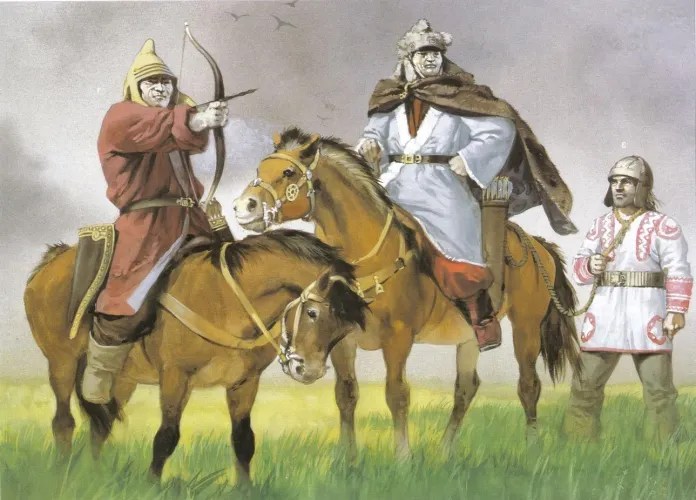
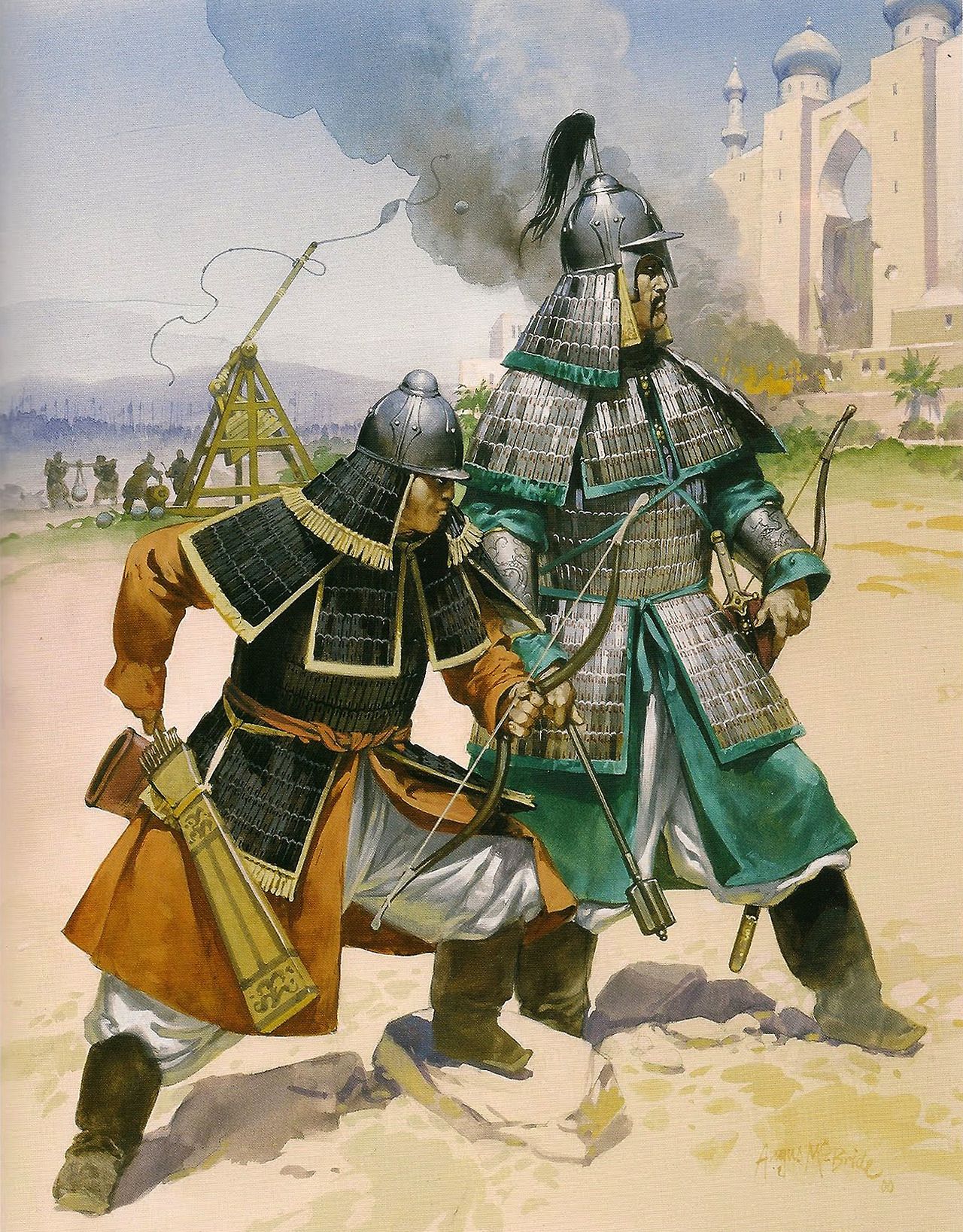
The combination of “They loved best the plains and delighted in horses” makes perfect sense when one thinks about comparative history in our Middle-earth.  Consider the Eurasian Steppe, stretching from western China all the way to the Hungarian puszta.

This is an immense belt of grassland,

some 5000 miles (8000km) wide,

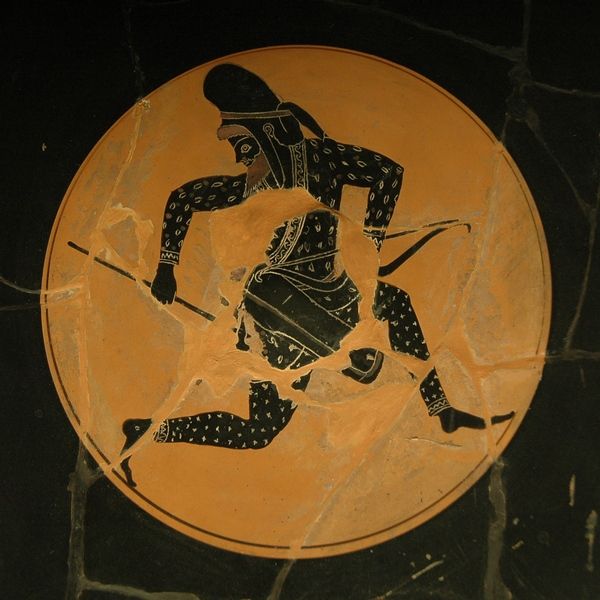
and has been the homeland of numerous horsefolk throughout history, from the Scythians

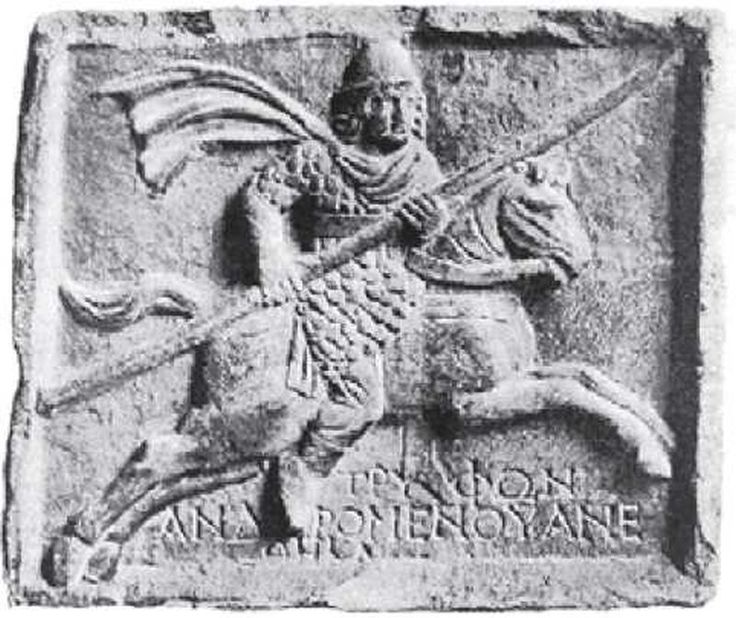
to the Sarmatians

to the Huns

(Angus McBride)

to the Mongols.

(another McBride)

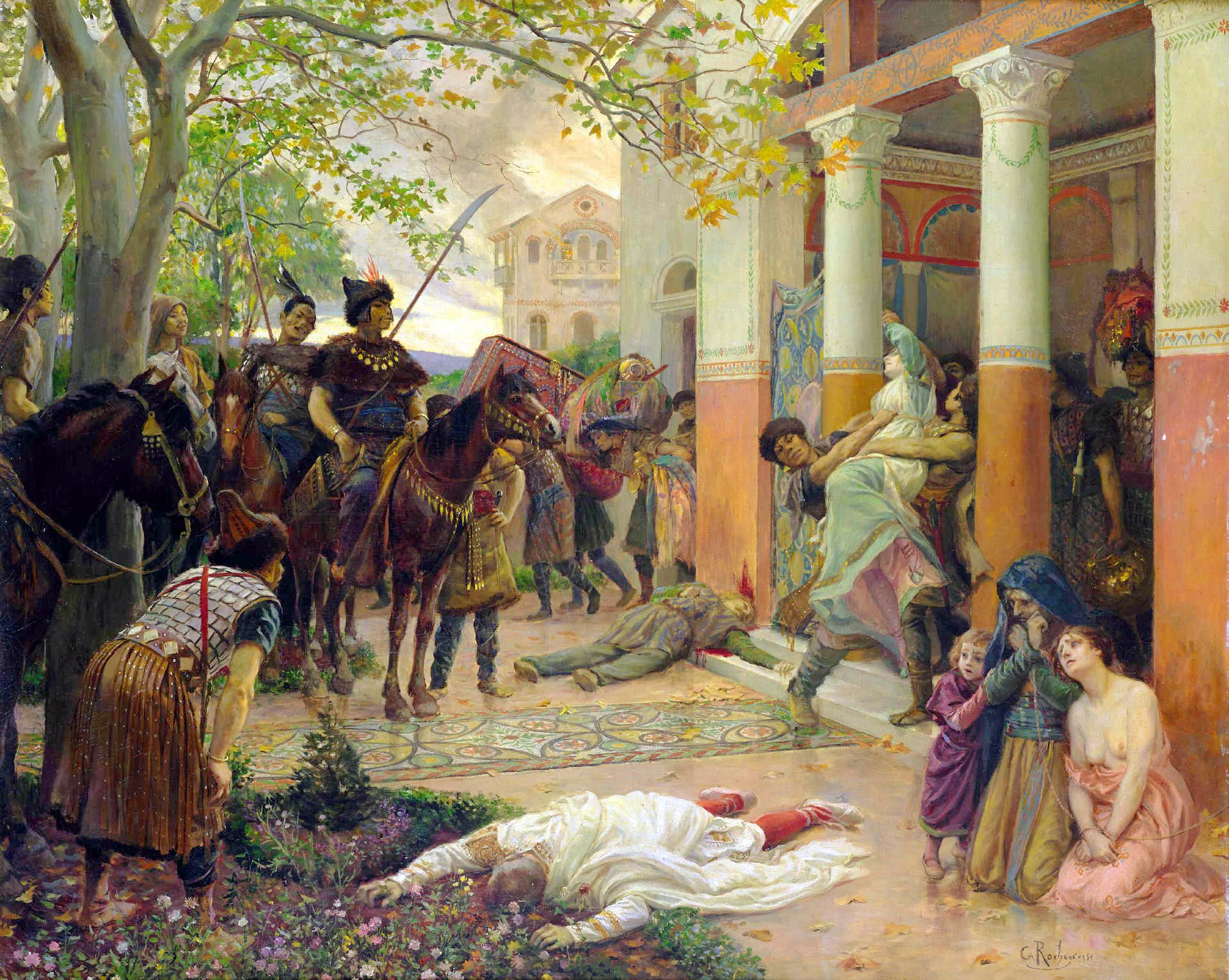
All of these peoples have used the Steppe to graze their herds of horses, sometimes moving west for grazing, sometimes moving west when pressured by others further east, and sometimes as predators, like the Huns, moving west to seek new plunder.

(I haven’t been able to identify an artist for this–it has the look of late-Victorian.)

In two of these cases, whole peoples might be on the move and this is perhaps where Tolkien has gotten part of his description of those Wainriders he mentions:

“The Wainriders were a people, or a confederacy of many peoples, that came from the East; but they were stronger and better armed than any that had appeared before.  They journeyed in great wains, and their chieftains fought in chariots…” 

So, we can imagine that the Eotheod, pressured by the Wainriders, were forced west, as one steppe people is pushed westward by another to the east. 

But Tolkien gives us another—or perhaps additional–possibility:

“Stirred up, as was afterwards seen, by the emissaries of Sauron, they made a sudden assault on Gondor…The people of eastern and southern Rhovanion were enslaved; and the frontiers of Gondor were for that time withdrawn to the Anduin and the Emyn Muil.” (The Lord of the Rings, Appendix A, IV “Gondor and the Heirs of Anarion”)

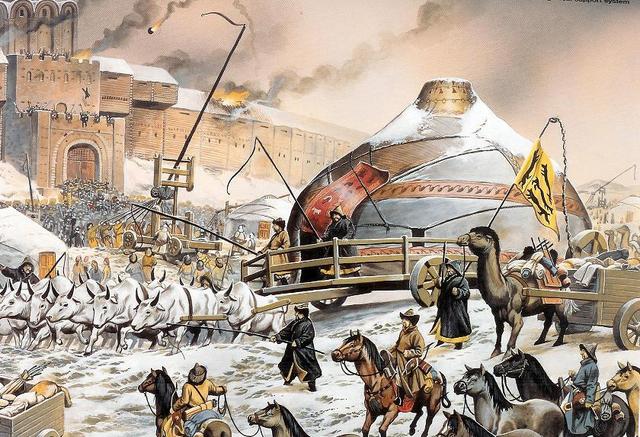
The Wainriders, then, might be both steppe peoples moving westwards, but also predators, like the Huns, or like the Mongols, who were both predators and empire-builders, and here we might see Mongols with their characteristic ger (a large round tent)—on a wagon—perhaps like the Wainriders?

(Wayne Reynolds)

Although there is no mention in our text of the Rohirrim migrating with wagons, it’s clear from parallels in our world that the peoples who crossed the Eurasian Steppe appear to have used them regularly.  But here, like the Rohirrim, we have another odd juxtaposition.  The Rohirrim are Anglo-Saxons on horseback:  cavalry, which was true for all of those migrants across the Steppe in our world.  Chariots, however, although Tolkien says that the Wainrider chiefs fought in them (of which fact this is the only mention) were not part of those other horsefolks’ arsenals.  Where did they come from?

The answer, I think, lies in the period of British history before the Anglo-Saxons and almost before the Romans, among the earlier Celtic settlers of England.  Julius Caesar encountered chariots there and described their use:

Genus hoc est ex essedis pugnae. Primo per omnes partes perequitant et tela coiciunt atque ipso terrore equorum et strepitu rotarum ordines plerumque perturbant, et cum se inter equitum turmas insinuaverunt, ex essedis desiliunt et pedibus proeliantur. 2 Aurigae interim paulatim ex proelio excedunt atque ita currus conlocant ut, si illi a multitudine hostium premantur, expeditum ad quos receptum habeant. 3 Ita mobilitatem equitum, stabilitatem peditum in proeliis praestant, ac tantum usu cotidiano et exercitatione efficiunt uti in declivi ac praecipiti loco incitatos equos sustinere et brevi moderari ac flectere et per temonem percurrere et in iugo insistere et se inde in currus citissime recipere consuerint.

“This is the kind of fighting from chariots.  At first, they ride around in all directions and throw spears and often, by the very frightfulness of the horses and the roar of the wheels, they shake the ranks [of the enemy] and, when they have slipped themselves among the troops of [enemy] cavalry, they leap from the chariots and fight on foot.  Meanwhile, the charioteers move out a little way from the fighting and so place their vehicles that, if they [the dismounted fighters] should be pressed by a large number of the enemy, they may have an easy retreat to them.  Thus, they provide the mobility of cavalry [as well as] the steadiness of infantry in [their] battles and they accomplish so much by daily practice and exercise that they are accustomed to control their stirred-up horses on a sloping and steep place and rein [them] in quickly and to turn [them] and to run along the yoke pole and to stand on the yoke and from there to take themselves back into the vehicles extremely speedily.”  (Caesar, De Bello Gallico, Book IV, Chapter 33—my translation)

(Angus McBride)

Tolkien may have remembered this from his schooldays, when he would first have encountered the text—and he might have found those wagons there, too, although slightly later.  When, in 60-61AD, the Iceni queen, Boudica, led a revolt against Roman rule,

(Peter Dennis)

in the final battle, when the tribesmen advanced towards the Roman formation, as Tacitus (c.56-c.120AD) tells us, their families watched from their wagons, placed behind the battle line (De Vita et Moribus Iulii Agricolae, Chapter 34).  And, as a prelude to the battle, Boudica had ridden among the ranks in a chariot (Chapter 35).

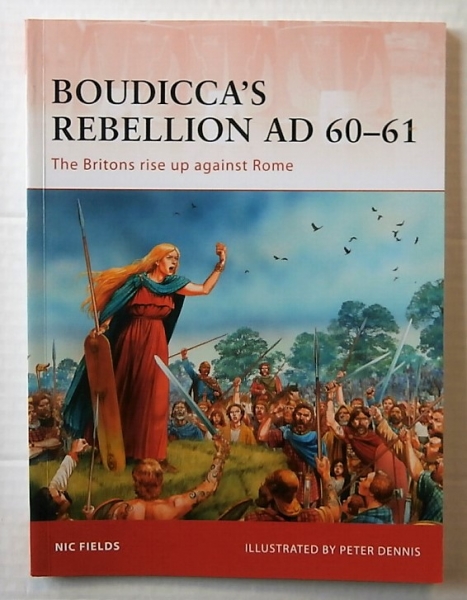
(another Peter Dennis—in fact, if you’d like to know more about this amazing woman, who, for a brief time, had been a real threat to the Romans, you might invest in: 

And so, as in combining Anglo-Saxon and Norman to create the Rohirrim, Tolkien may have taken Steppe people, added Celtic Britons, and produced the Wainriders. 

Thanks, as always for reading.

Stay well,

Remember that a horse will drink, on average, between 5 and 10 gallons (19-38 litres) of water a day,

And remember, as well, that there’s always

MTCIDC

O

The Doubtful Sea Series Facebook Page

The Doubtful Sea Series Facebook Page

  • Ollamh

Categories

  • Artists and Illustrators
  • Economics in Middle-earth
  • Fairy Tales and Myths
  • Films and Music
  • Games
  • Heroes
  • Imaginary History
  • J.R.R. Tolkien
  • Language
  • Literary History
  • Maps
  • Medieval Russia
  • Military History
  • Military History of Middle-earth
  • Narnia
  • Narrative Methods
  • Poetry
  • Research
  • Star Wars
  • Terra Australis
  • The Rohirrim
  • Theatre and Performance
  • Tolkien
  • Uncategorized
  • Villains
  • Writing as Collaborators
Follow doubtfulsea on WordPress.com

Across the Doubtful Sea

Recent Postings

  • A Moon disfigured December 17, 2025
  • On the Roads Again—Once More December 10, 2025
  • (Not) Crossing Bridges December 3, 2025
  • On the Road(s) Again—Again November 26, 2025
  • On the Road(s) Again November 19, 2025
  • To Bree (Part 2) November 12, 2025
  • To Bree (Part 1) November 5, 2025
  • A Plague o’ Both—No, o’ All Your Houses! October 29, 2025
  • It’s in Writing (2:  I’st a Prologue, or a Poesie for a Ring?) October 22, 2025

Blog Statistics

  • 103,189 Views

Posting Archive

  • December 2025 (3)
  • November 2025 (4)
  • October 2025 (5)
  • September 2025 (4)
  • August 2025 (4)
  • July 2025 (5)
  • June 2025 (4)
  • May 2025 (4)
  • April 2025 (5)
  • March 2025 (4)
  • February 2025 (4)
  • January 2025 (5)
  • December 2024 (4)
  • November 2024 (4)
  • October 2024 (5)
  • September 2024 (4)
  • August 2024 (4)
  • July 2024 (5)
  • June 2024 (4)
  • May 2024 (5)
  • April 2024 (4)
  • March 2024 (4)
  • February 2024 (4)
  • January 2024 (5)
  • December 2023 (4)
  • November 2023 (5)
  • October 2023 (4)
  • September 2023 (4)
  • August 2023 (5)
  • July 2023 (4)
  • June 2023 (4)
  • May 2023 (5)
  • April 2023 (4)
  • March 2023 (5)
  • February 2023 (4)
  • January 2023 (4)
  • December 2022 (4)
  • November 2022 (5)
  • October 2022 (4)
  • September 2022 (4)
  • August 2022 (5)
  • July 2022 (4)
  • June 2022 (5)
  • May 2022 (4)
  • April 2022 (4)
  • March 2022 (5)
  • February 2022 (4)
  • January 2022 (4)
  • December 2021 (5)
  • November 2021 (4)
  • October 2021 (4)
  • September 2021 (5)
  • August 2021 (4)
  • July 2021 (4)
  • June 2021 (5)
  • May 2021 (4)
  • April 2021 (4)
  • March 2021 (5)
  • February 2021 (4)
  • January 2021 (4)
  • December 2020 (5)
  • November 2020 (4)
  • October 2020 (4)
  • September 2020 (5)
  • August 2020 (4)
  • July 2020 (5)
  • June 2020 (4)
  • May 2020 (4)
  • April 2020 (5)
  • March 2020 (4)
  • February 2020 (4)
  • January 2020 (6)
  • December 2019 (4)
  • November 2019 (4)
  • October 2019 (5)
  • September 2019 (4)
  • August 2019 (4)
  • July 2019 (5)
  • June 2019 (4)
  • May 2019 (5)
  • April 2019 (4)
  • March 2019 (4)
  • February 2019 (4)
  • January 2019 (5)
  • December 2018 (4)
  • November 2018 (4)
  • October 2018 (5)
  • September 2018 (4)
  • August 2018 (5)
  • July 2018 (4)
  • June 2018 (4)
  • May 2018 (5)
  • April 2018 (4)
  • March 2018 (4)
  • February 2018 (4)
  • January 2018 (5)
  • December 2017 (4)
  • November 2017 (4)
  • October 2017 (4)
  • September 2017 (4)
  • August 2017 (5)
  • July 2017 (4)
  • June 2017 (4)
  • May 2017 (5)
  • April 2017 (4)
  • March 2017 (5)
  • February 2017 (4)
  • January 2017 (4)
  • December 2016 (4)
  • November 2016 (5)
  • October 2016 (6)
  • September 2016 (5)
  • August 2016 (5)
  • July 2016 (5)
  • June 2016 (5)
  • May 2016 (4)
  • April 2016 (4)
  • March 2016 (5)
  • February 2016 (4)
  • January 2016 (4)
  • December 2015 (5)
  • November 2015 (5)
  • October 2015 (4)
  • September 2015 (5)
  • August 2015 (4)
  • July 2015 (5)
  • June 2015 (5)
  • May 2015 (4)
  • April 2015 (3)
  • March 2015 (4)
  • February 2015 (4)
  • January 2015 (4)
  • December 2014 (5)
  • November 2014 (4)
  • October 2014 (6)
  • September 2014 (1)

Blog at WordPress.com.

  • Subscribe Subscribed
    • doubtfulsea
    • Join 78 other subscribers
    • Already have a WordPress.com account? Log in now.
    • doubtfulsea
    • Subscribe Subscribed
    • Sign up
    • Log in
    • Report this content
    • View site in Reader
    • Manage subscriptions
    • Collapse this bar
 

Loading Comments...