• About

doubtfulsea

~ adventure fantasy

Monthly Archives: December 2024

The Toys of Dale

25 Wednesday Dec 2024

Posted by Ollamh in Uncategorized

≈ Leave a comment

Tags

christmas, Dale, Dwarves, Tolkien, toys

Welcome, as always, dear readers.

From his letters, it’s clear that Tolkien had very mixed feelings about Christmas. 

To his son, Christopher, far away in the RAF, he writes:

“Today is the ‘last day for posting in time for Christmas’, and though I resent the way in which this feast of peace and joy is made into a labour (not to say a nightmare of shabby commercialism)…”

and continues:

“…The shops, by the way, pass belief here this year.  There is stuff that a barbarian would be ashamed of, bits of shapeless wood and paper smeared with paint, and would certainly not be such fools as to purchase, selling for idiotic prices like 18/6 [18 shillings, 6 pence, when 1 shilling, 3 pence would buy a quart of milk—see:  https://www.sunnyavenue.co.uk/insight/how-much-is-a-shilling-worth-today ).  Surely this Xmas Gift business is a form of dementia, when it allows itself to be cheated so transparently.”  (letter to Christopher Tolkien, 10 December, 1944, Letters, 149-150)

He has, however, already qualified this a bit by calling Christmas a “feast of peace and joy”, with a further proviso some years later in a letter to his son Michael:

“Well here comes Christmas!  That astonishing thing that no ‘commercialism’ can in fact defile—unless you let it.” (letter to Michael Tolkien, 19 December, 1962, Letters, 457)

I have no idea what “bits of shapeless wood and paper smeared with paint” might actually be, but, as Tolkien has clearly been shopping and there are children in the family, I imagine that it was some crude, mass-produced toy, which might also suffer from wartime shortages of raw materials.  Perhaps something like this?
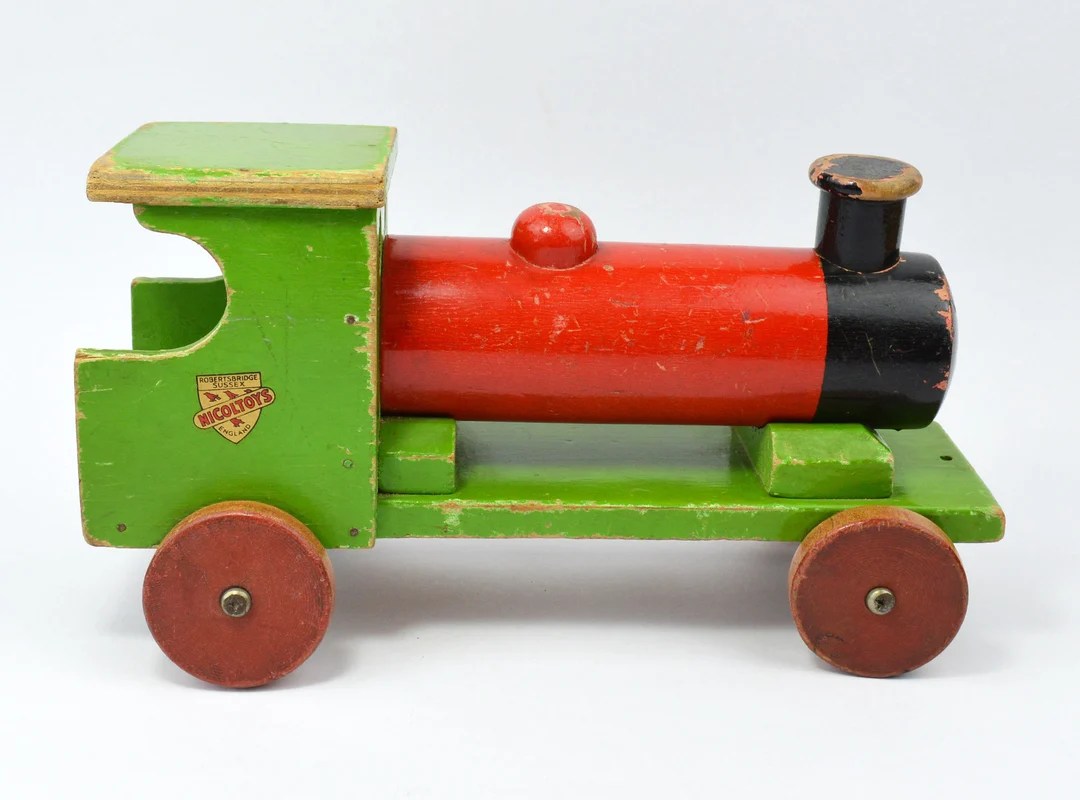
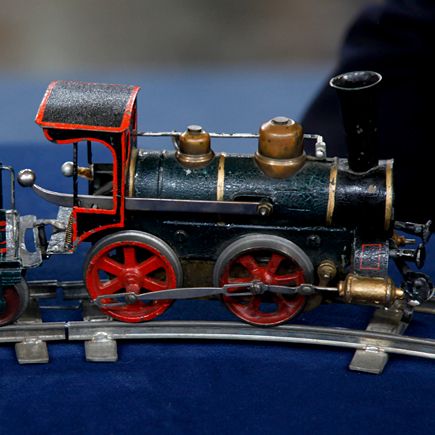
Born in 1893, Tolkien had grown up in a world of increasingly-sophisticated children’s playthings, from Marklin’s beautifully-engineered toy trains
to William Britain’s popular toy soldiers
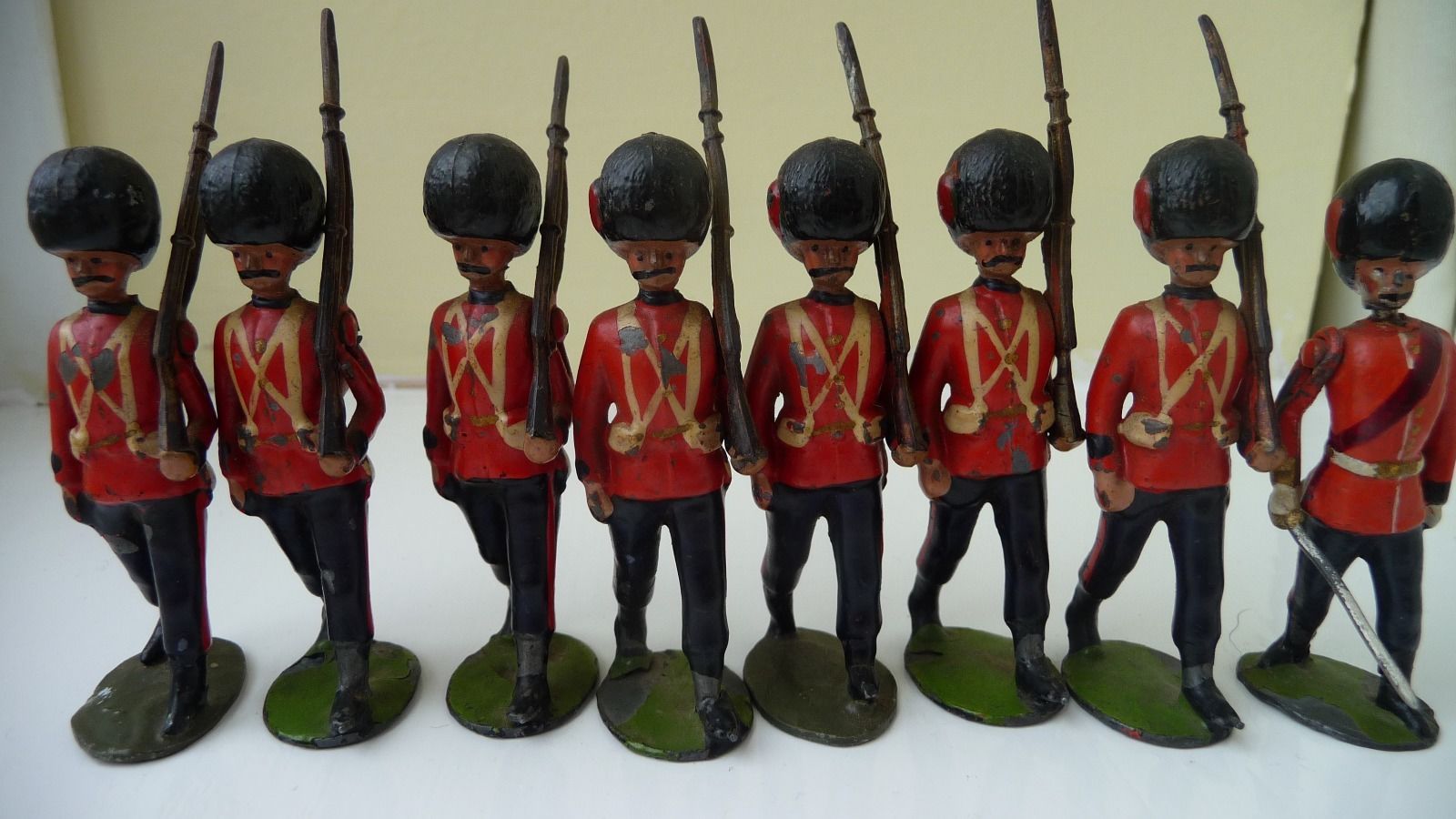
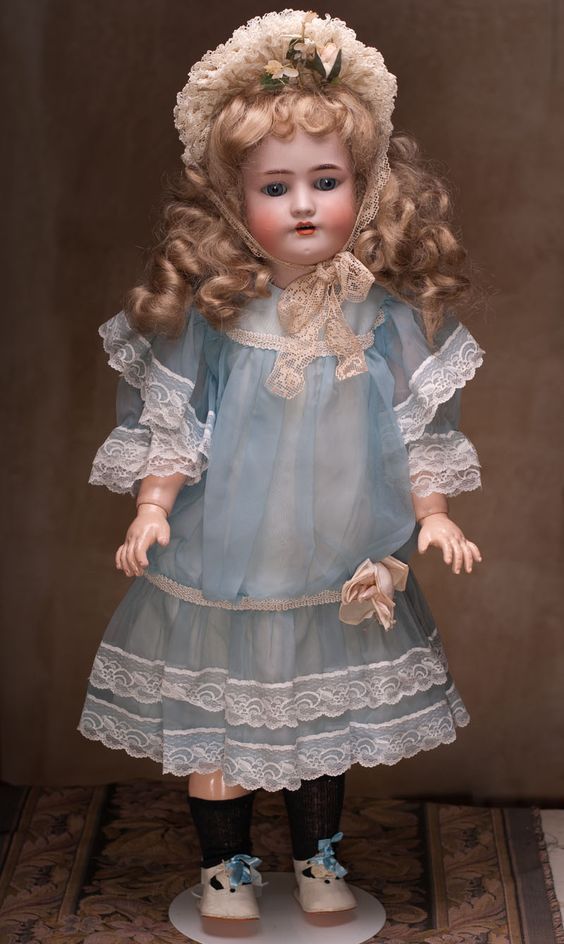
for boys and elaborate dolls,
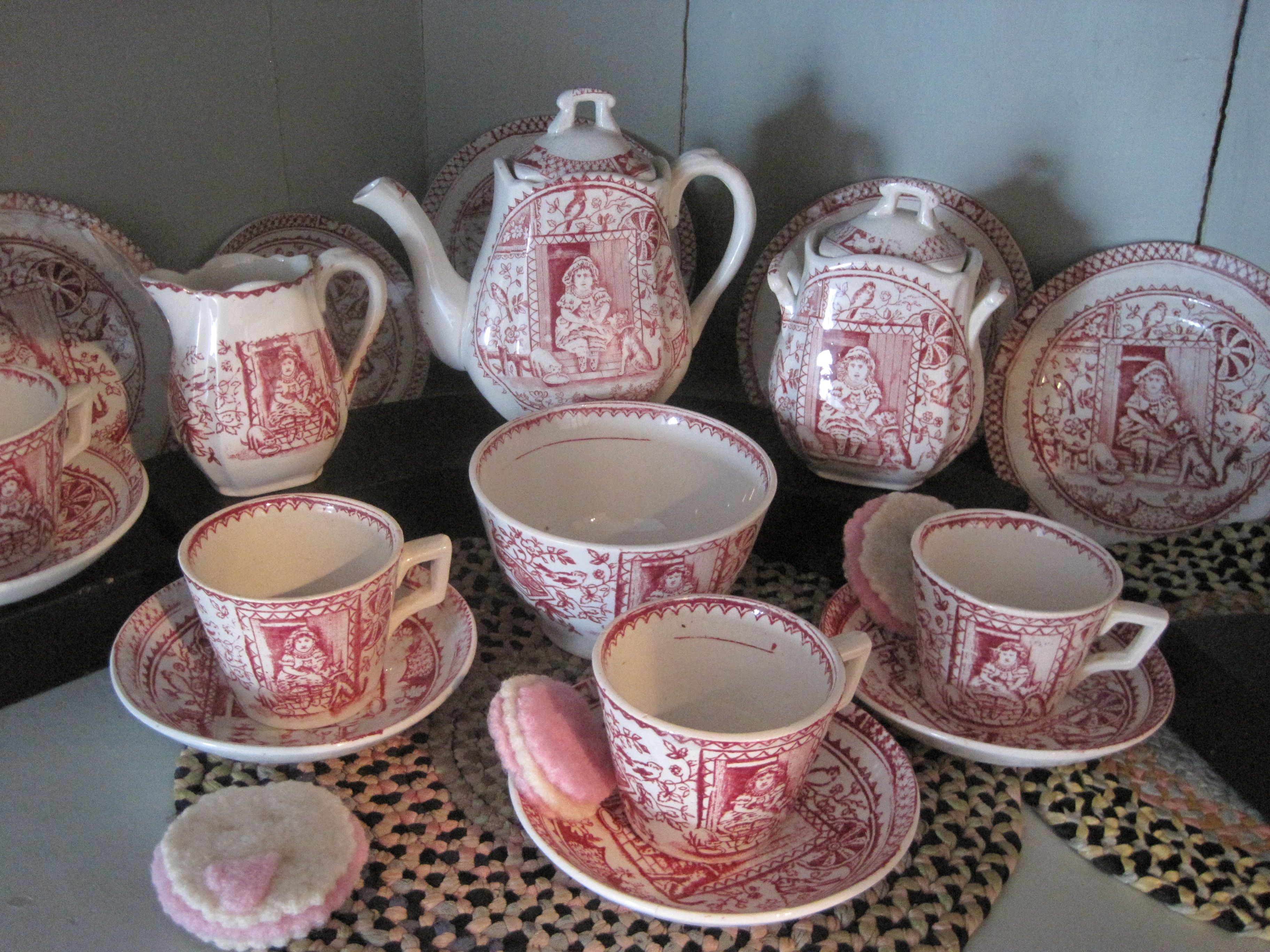
elegant tea sets,
and doll houses for girls, among other toys.

As one of two sons of a mother barely scraping by,

it’s unlikely that he, or his younger brother, Hilary, could ever have more than glimpsed such things in a toy shop window,

and had to be contented with the lesser toys of the age—clay rather than stone marbles,

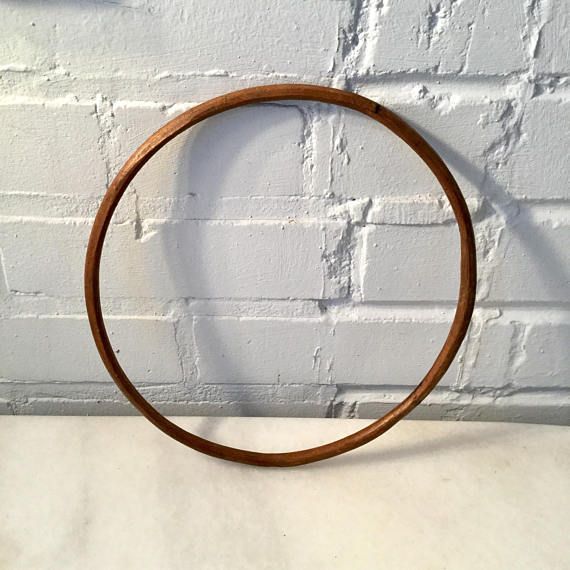
a wooden hoop, rather than a steel one,
or, in a moment of splurging on his mother’s part, perhaps a pop gun—one is mentioned in The Hobbit where, in Chapter 1, Gandalf refers to Bilbo opening his door like one—for more on that and other such weapons in fiction, see “Pop!” 13 December, 2017 here:  https://doubtfulsea.com//?s=popgun&search=Go

In the Third Age of Middle-earth, we might expect to be surprised and puzzled by Gandalf’s remark, as there are no guns to be seen there and here we can’t use the plausible explanation for other anachronisms in the text, that it’s the narrator telling the story in the 1930s, as it’s Gandalf who says it, not the exterior—and much more modern—narrator.

But I would suggest another explanation—which also appears in The Hobbit.  Speaking of the long-lost world of the dwarves’ Lonely Mountain and the town of Dale at its foot, Thorin says:

“Altogether those were good days for us, and the poorest of us had money to spend, and to lend, and leisure to make beautiful things just for the fun of it, not to speak of the most marvelous and magical toys, the like of which is not to be found in the world now-a-days.  So my grandfather’s halls became full of armour and jewels and carvings and cups, and the toy market of Dale was the wonder of the North.”  (The Hobbit, Chapter One, “An Unexpected Party”)

Perhaps, even before the appearance of gunpowder weapons (foreshadowed both by Saruman’s attack on Helm’s Deep and Sauron’s on the Causeway Forts in The Lord of the Rings), then, the dwarvish and human craftsmen of the region had created something which, in their time, used air to propel its missile, rather than this? 

But what about other “most marvelous and magical” toys?

The Third Age in Middle-earth is, at base, a medieval world, the kind of place Tolkien, as a boy, would have seen through the eyes of illustrators like Howard Pyle (1853-1911)
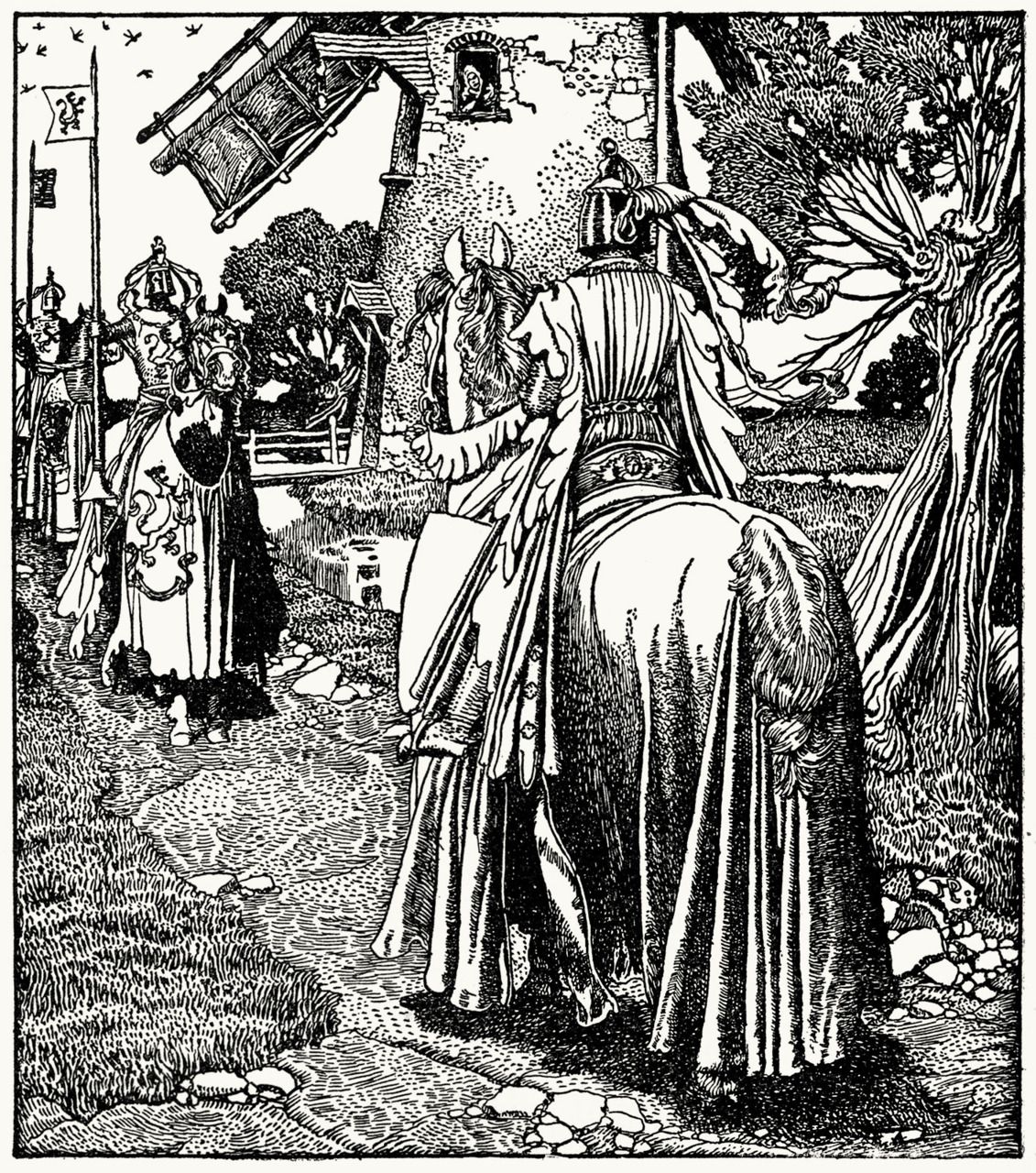
(from his The Story of King Arthur and his Knights, 1903, which you can read here:   https://archive.org/details/storykingarthur02pylegoog/page/n15/mode/2up )

and the writings of authors like his favorite, William Morris (1834-1896).

(You can read this here:  https://gutenberg.org/cache/epub/169/pg169-images.html )

Toys like that Marklin train above, therefore, wouldn’t have been available,

but, as Tolkien shows us a clock on the right-hand wall of the entryway at Bag End,
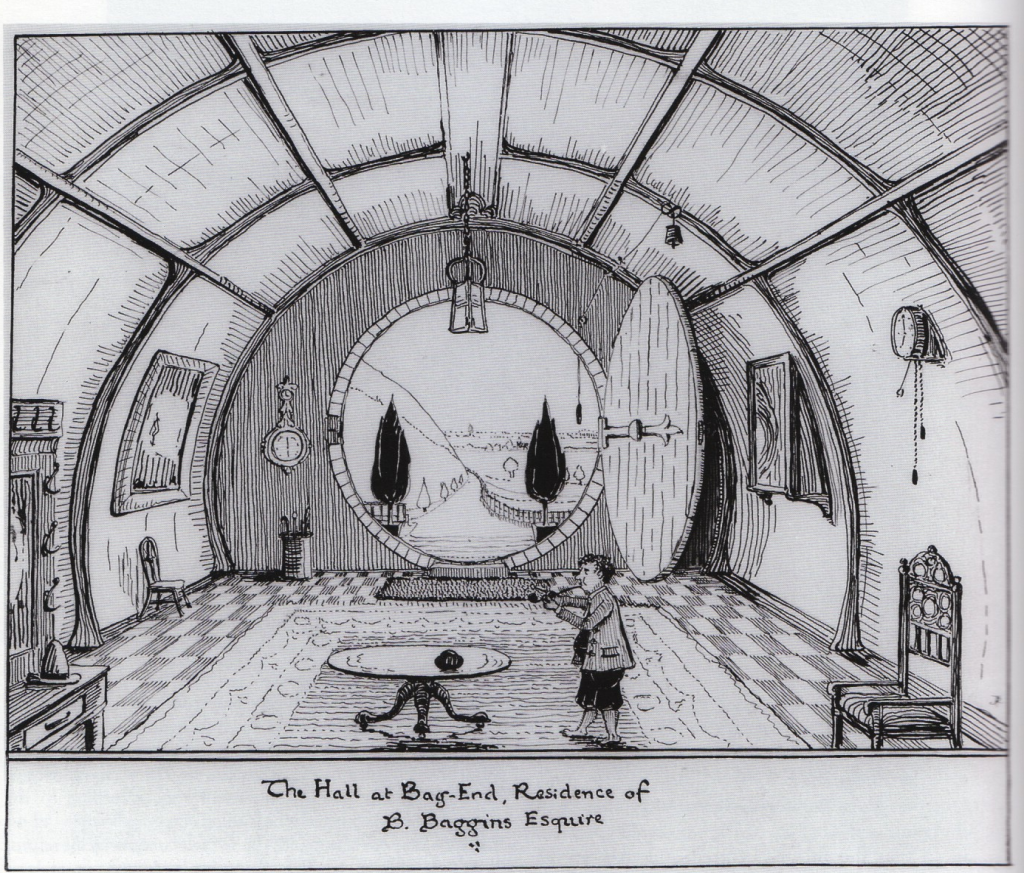
and, as mechanical toys were certainly for sale in the later Victorian world,
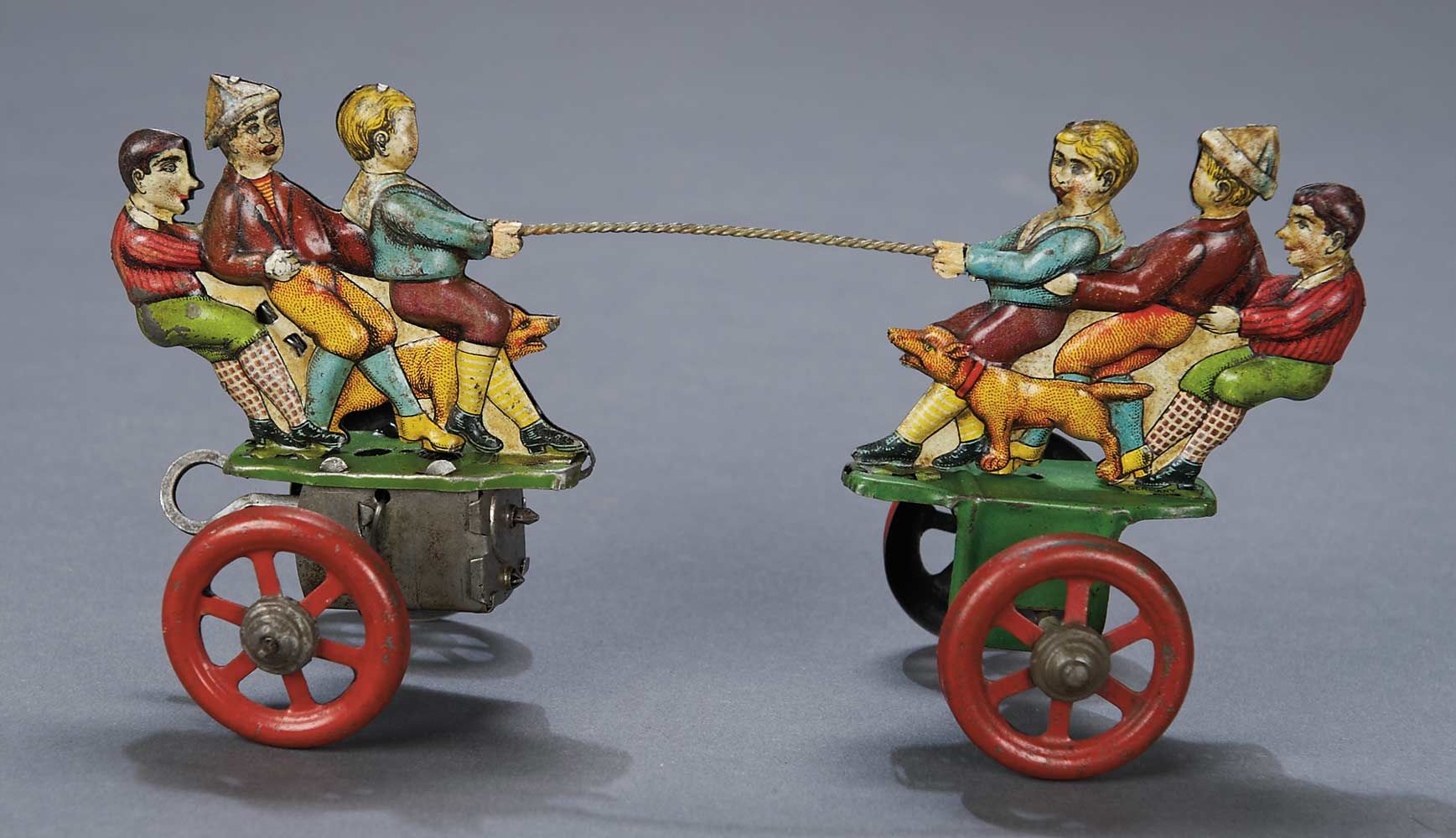
perhaps we can imagine something like this on sale in the Dale toy market?

or this?
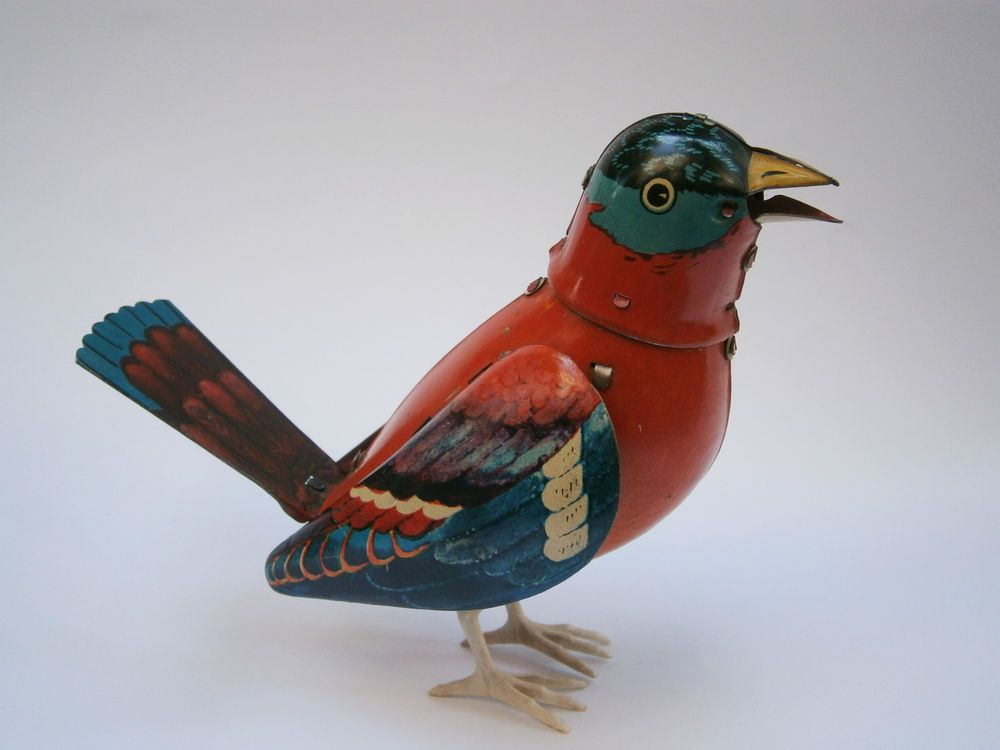
always remembering that, although these might seem crude to us, they are antiques and worn from being once much-loved and much-played with, and, in medieval Middle-earth, anything which moved without being pushed or pulled would be magical!

Thanks for reading, as always.

Stay well,

Remember what JRRT said about keeping Christmas magical,

And remember, as well, that there’s

MTCIDC

O

PS

There are many sites for early mechanical toys, some informational, some for collectors, and some both at once.  Here’s one which is fun to read and has a practical side:  https://www.unclealstoys.com/origin-of-wind-up-toys-discovering-the-fascinating-history/

Underheard

18 Wednesday Dec 2024

Posted by Ollamh in Uncategorized

≈ Leave a comment

Tags

Ballads, deck-us-all-with-boston-charlie, George Washington, god-save-the-king, mondegreen, pogo

As always, dear readers, welcome.

If you read this blog regularly, you probably imagine that, as a small child, I lived in a constant state of puzzlement—and I did.  In part, this came from the fact that, before I could read and write, and sometimes after that, I lived in an oral world, where so much of my life was spent hearing things, rather than seeing them in print—and that could lead to interesting results.

For instance, there’s a patriotic song I was taught, probably in kindergarten, which begins:

“My country, ‘tis of thee,

Sweet land of liberty,

Of thee I sing.” 

From the oddly convoluted grammar, you might suspect that it was written to an already-existing tune—and you’d be right:  it’s set to “God Save the King”.  (You can read about its history here:  https://en.wikipedia.org/wiki/My_Country,_%27Tis_of_Thee  If you think that the use of a tune about a king as the basis for a song for a republic is surprising, just consider:  these words date from 1831, but there’s a 1786 song to the same tune entitled “God Save Great Washington”—only 3 years after the founding of a country which had fought for 8 years to escape the very king the original song had been written for.  

Here’s a verse from that:  

“God save great Washington,
His worth from eve’ry tongue,
Demands applause;
Ye tuneful pow’rs combine,
And each true Whig now join
Whose heart did ne’r resign
The glorious cause.” 

About the same level as “My Country, ‘tis of thee”, I would say.  This is quoted from a usually very useful source:  https://mudcat.org/thread.cfm?threadid=39759  but the work cited there says that the lyric is from The Philadelphia Continental Journal for 7 April, 1786, and, as far as I can determine, there was no such journal in Philadelphia at that time.  Perhaps this is a mistake for the Boston-based Continental Journal and Weekly Advertiser, which ran from 1776 to 1787?  For a list of 18th-century Philadelphia newspapers, see:  https://brainly.infogalactic.com/info/List_of_newspapers_in_Pennsylvania_in_the_18th_century#Philadelphia )

And this is where orality comes in.  Hearing a teacher sing this while we stumbled along behind her, I thought that what she sang was “My country, dizzily…” which, even (or perhaps especially) to a small child, was somewhat enigmatic.   You can imagine, then, what would be the case had I then tried to teach it to another child, or even an adult.

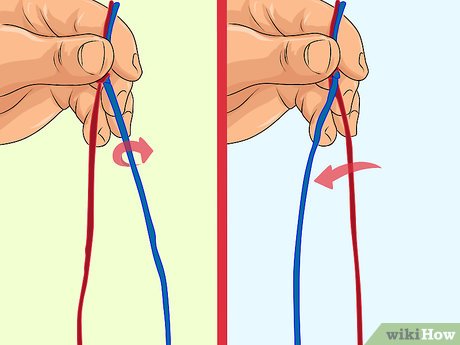
If you’ve ever played the game called “Whisper Down the Lane” or “Telephone”, you’ve seen what happens when someone initially says something which is then passed down a chain of listeners—you can read more about it at WikiHow here:  https://www.wikihow.com/Play-the-Telephone-Game  from which this illustration comes.

As the original message passes from mouth to ear to mouth, words change and it’s sometimes quite surprising when, if you had spoken that initial message, you heard the last person in the chain repeat what she or he heard.

It’s also a very good illustration of the effect of oral tradition on songs.

For example, in Child Ballad #200, (formally, The English and Scottish Popular Ballads, edited by Francis James Child), with a variety of titles including “The Wraggle Taggle Gypsies, O”.  The basic story is that a fine lady is enticed to go off with some Gypsies (a term no longer used, “Romani People” being currently employed, but, in discussing the ballad, I’m going to stick to the older term as that’s what’s in the text) and, in many variants, the idea is that the Gypsies have (literally) enchanted her, the word  used being “glamer/glamour/glamourie/-ye”, a Scots and perhaps even then archaic word for magic/magic spell.  Except for variant G, which, instead of the Gypsies casting their glamour/glamourie over her, has:  “They called their grandmother over.”

In an introductory note, Child writes that he collected it from the Roxburghe Ballads, a selection first published in 1847 (for more on this and its somewhat dubious history, see:  https://en.wikipedia.org/wiki/Roxburghe_Ballads   and for more on the original collection, see:  https://ebba.english.ucsb.edu/page/roxburghe ), and which is derived from a mass of popular sheet music of the 17th and 18th centuries. 

I suppose one could say that “grandmother” simply shows that the word “glamour/glamourie”, from Scots, was simply misunderstood by whoever was behind variant G, but, remembering “My country dizzily”, I would suggest that it’s just as likely that someone misheard the word—and a new character was added to the ballad.  (For the ballad and its variants in Child’s edition, see:   https://archive.org/details/englishandscopt104chiluoft/page/60/mode/2up )

And this is certainly true for another ballad example, in which another character sprang suddenly into being.  This is from Child #181, “The Bonnie Earl of Moray” in which the narrator sings:

 “Ye Highlands and ye Lawlands,

Oh where have you been?

They have slain the Earl o’ Moray

And layd him on the green.”

and from which came that character—Lady Mon de Green (also written Lady Mondegreen).  And what’s interesting here for me is that this has become a general term for a misheard lyric, a “mondegreen”, but invented not by a linguist, but by a humorist, Sylvia Wright (1917-1981), and published in an article in Harper’s Magazine in 1954.    (See:  “The death of Lady Mondegreen” in November’s issue)  Wright explained that she, as a child, had—you guessed it—misheard that line in “The Bonnie Earl of Moray”—so you can see that childhood (mine, Wright’s) and orality can have the same effect.  (For much more—and I mean much– on the subject, see:  https://en.wikipedia.org/wiki/Mondegreen )

But one more example—fitting for the season and what we might call a mondegreen with intent—in fact an entire song:

“Deck us all with Boston Charlie,
Walla Walla, Wash., an’ Kalamazoo!
Nora’s freezin’ on the trolley,
Swaller dollar cauliflower alley-garoo!

Don’t we know archaic barrel
Lullaby Lilla Boy, Louisville Lou?
Trolley Molly don’t love Harold,
Boola boola Pensacoola hullabaloo!

Bark us all bow-wows of folly,
Polly wolly cracker ‘n’ too-da-loo!
Donkey Bonny brays a carol,
Antelope Cantaloupe, ‘lope with you!

Hunky Dory’s pop is lolly,
Gaggin’ on the wagon, Willy, folly go through!
Chollie’s collie barks at Barrow,
Harum scarum five alarm bung-a-loo!

Dunk us all in bowls of barley,
Hinky dinky dink an’ polly voo!
Chilly Filly’s name is Chollie,
Chollie Filly’s jolly chilly view halloo!

Bark us all bow-wows of folly,
Double-bubble, toyland trouble! Woof, woof, woof!
Tizzy seas on melon collie!
Dibble-dabble, scribble-scrabble! Goof, goof, goof!”

As this is a well-known Christmas carol, I won’t supply either the original, or a translation (and how would you translate “Chollie’s collie barks at Barrow”?  or would you even want to?)  It is the work of the cartoonist/satirist Walt Kelly (1913-1973)

Kelly was the creator of the comic strip “Pogo” and it’s the characters from there who bring us this willfully misheard wonder—

You can listen to it here:  https://www.youtube.com/watch?v=SL0lPcNwRqQ and, with the lyrics above, join in.

As ever, thanks for reading.

Stay well,

Try to mishear something every day—it makes life…surprising,

And remember that, as always, there’s

MTCIDC

O

Spinning a Tale

11 Wednesday Dec 2024

Posted by Ollamh in Uncategorized

≈ Leave a comment

Tags

fairy-tales, perrault, Sleeping Beauty, spindle, uncle-andy

As ever, dear readers, welcome.

“Cependant les fées commencèrent à faire leurs dons à la princesse. La plus jeune lui donna pour don qu’elle serait la plus belle personne du monde ; celle d’après, qu’elle aurait de l’esprit comme un ange ; la troisième, qu’elle aurait une grâce admirable à tout ce qu’elle ferait ; la quatrième, qu’elle danserait parfaitement bien ; la cinquième, qu’elle chanterait comme un rossignol ; et la sixième, qu’elle jouerait de toutes sortes d’instruments dans la dernière perfection. Le rang de la vieille fée étant venu, elle dit, en branlant la tête encore plus de dépit que de vieillesse, que la princesse se percerait la main d’un fuseau, et qu’elle en mourrait.”

“Nevertheless the fairies began to make their gifts to the princess.  The youngest gave her as a gift that she would be the most beautiful person in the world.  The next, that she would have the soul of an angel.  The third, that she would have an admirable grace in everything which she would do.  The fourth that she would play all manner of instruments to the utmost perfection.  The turn of the old fairy being come, she said, shaking her head more in spite than from age, that the princess would pierce her hand on a spindle and that she would die of it.”  (My translation, as with all of the text in this posting, based upon Feron’s 1902 edition of the Les Contes de Perrault which you can read here:  https://fr.wikisource.org/wiki/Contes_de_Perrault_(%C3%A9d._1902)/La_Belle_au_Bois_dormant )

You know this story—although you may know it by its English name, “Sleeping Beauty” and not by its original name “La Belle au Bois Dormant”—the “Beautiful Girl in the Sleeping Forest”—although that translation is wonderfully—and a little testily–argued over here:  https://forum.wordreference.com/threads/la-belle-au-bois-dormant.3158165/  For all that people joust over whether that present participle/adjective, “dormant” can modify “Belle”, I prefer the idea that, as Beauty has fallen asleep, so the whole world around her has joined in the enchantment, as the story says—and so even the woods are drowsing till the prince arrives.)

 This story first appeared in Charles Perrault’s (1628-1703)

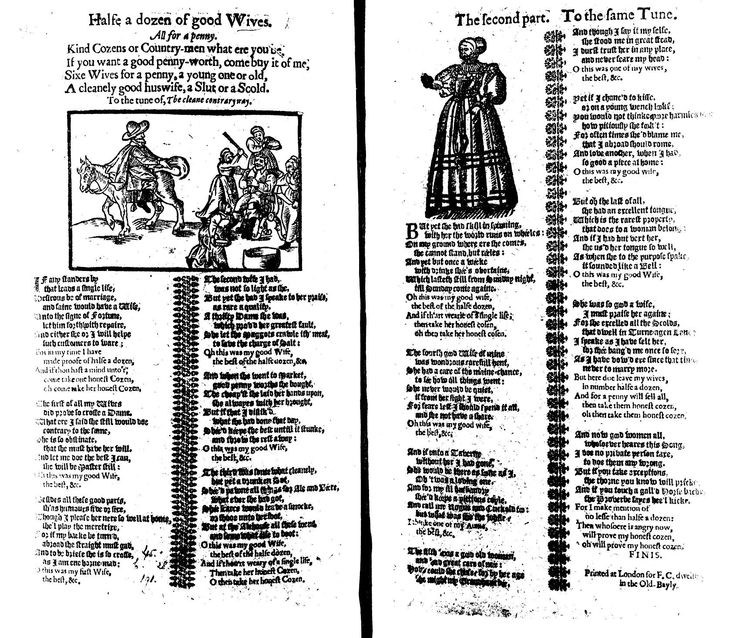
 1697 collection Histoires ou Contes du Temps passé, avec des moralites—“Stories or Tales of Past Time, with Morals”, which sounds pretty dry—until you reach the subtitle:  Les Contes de ma Mere L’Oye—“The Tales of My Mother Goose” and suddenly we’ve passed into another Time Past entirely.

(As you can see, an early edition—1742—but not a first)

I’ve always loved the story, but, when I was small, there was one thing which I didn’t understand—  what was a “fuseau”—a “spindle”?

In my last posting, we had been briefly in Sam Gamgee’s uncle Andy’s rope walk

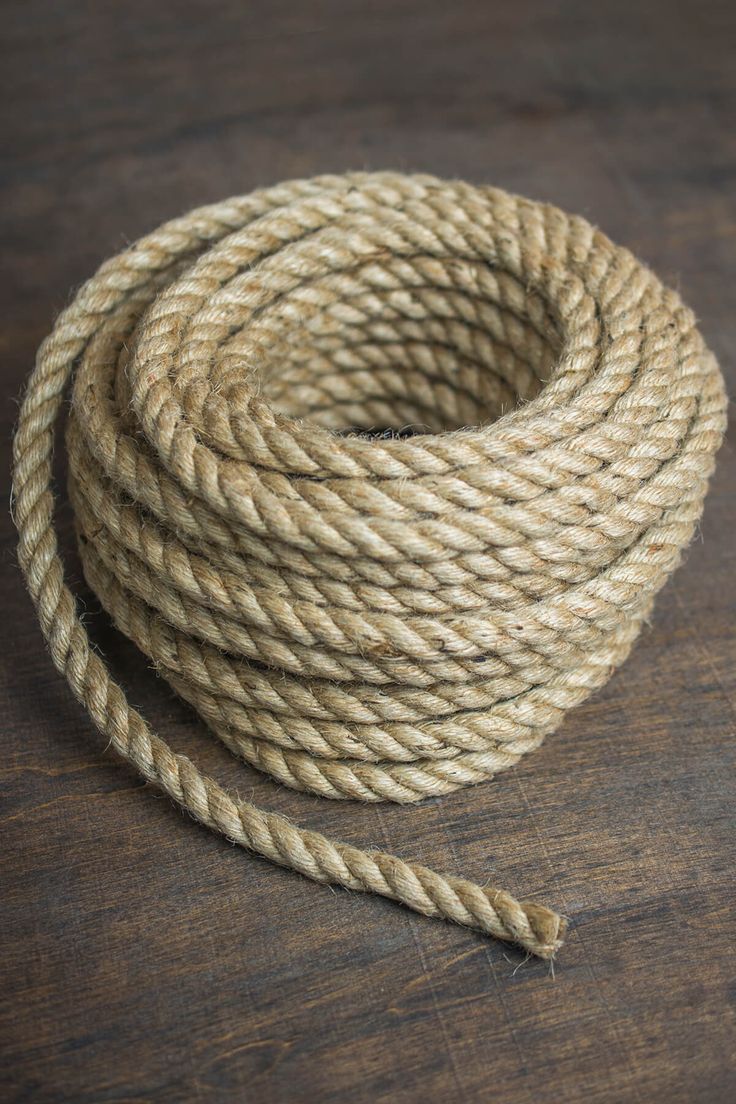
where we had been talking about how rope

 is made, with likening the twisting of the fibers

 to that of making thread.

(If you’d like to know more about making rope, have a look at this very informative WikiHow feature: https://www.wikihow.com/Make-Rope )

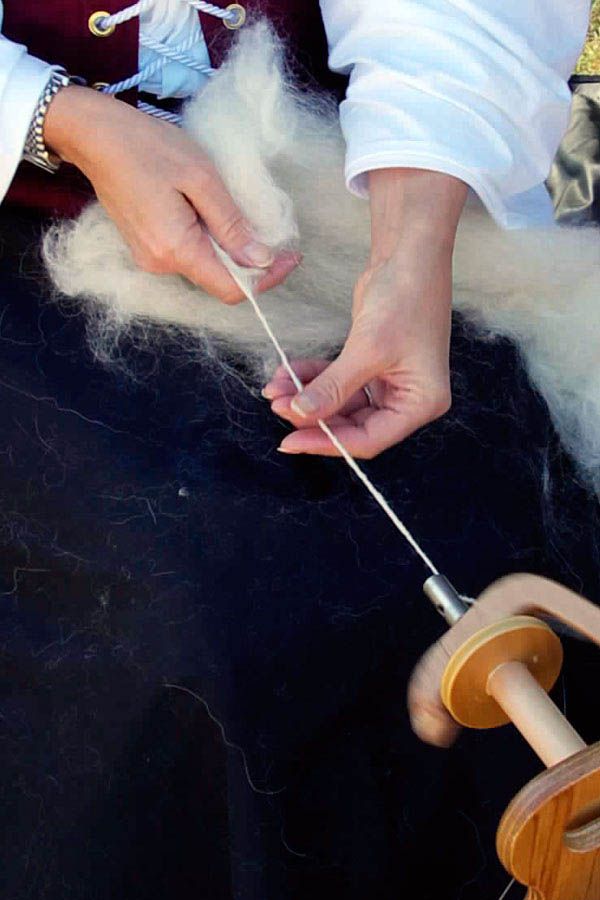
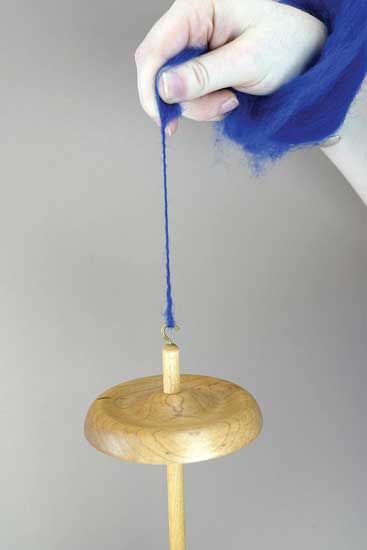
The simplest way to do this is to use a drop spindle—and here’s that “fuseau”–which allows gravity to do much of the work for you—

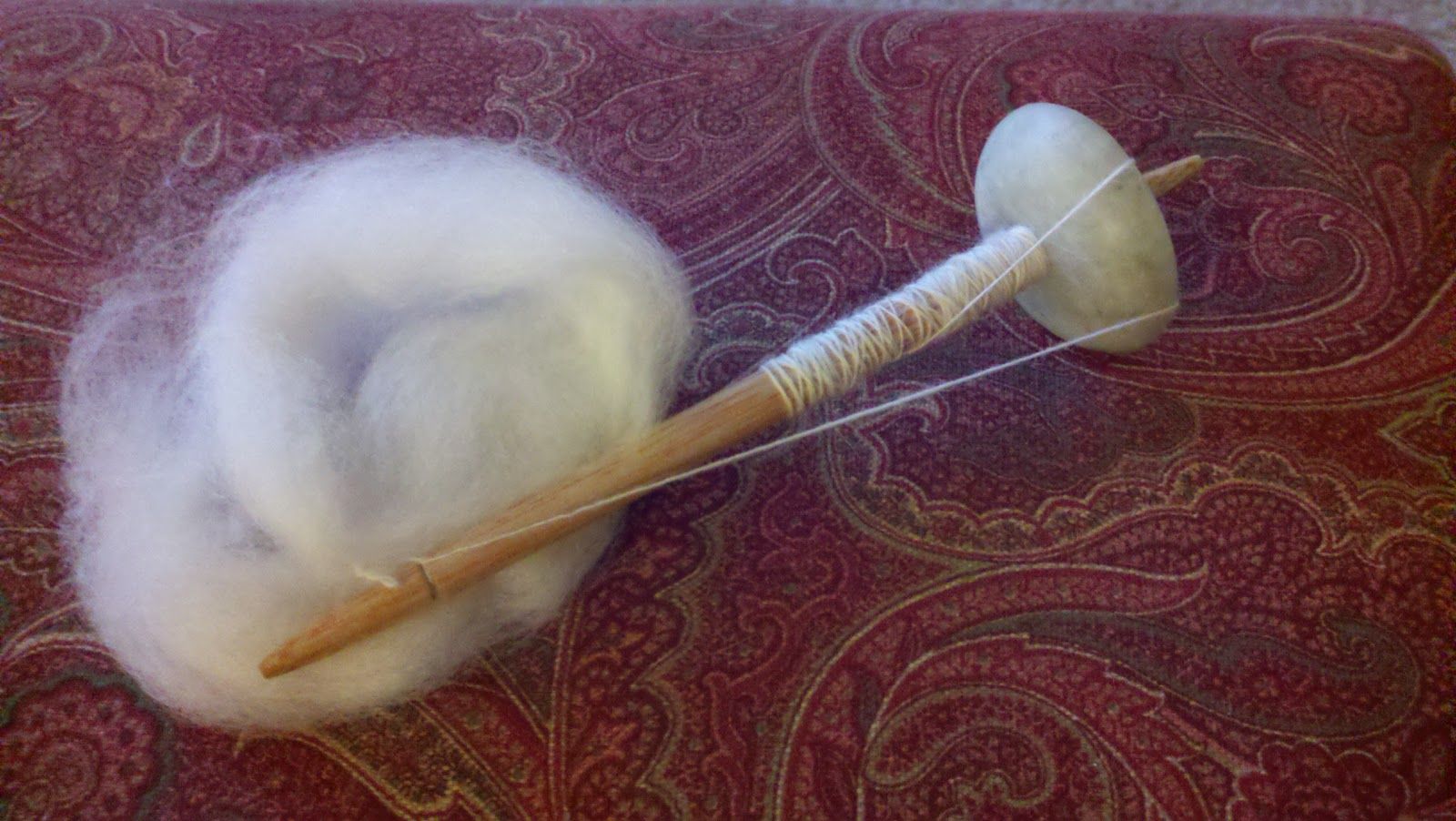
(Here’s the whole spindle)

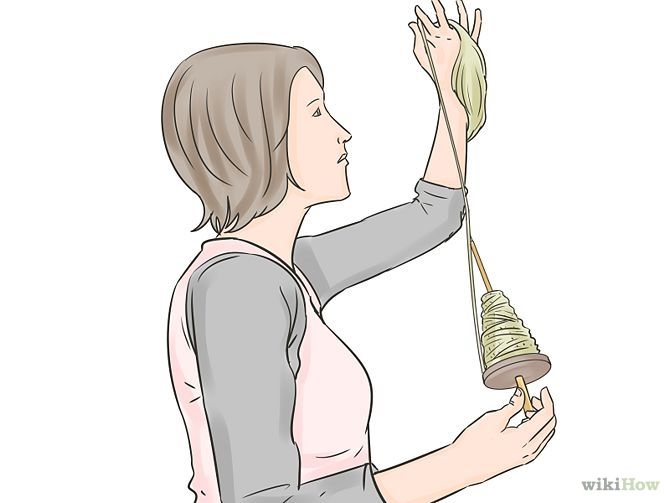
(And here’s a WikiHow on spinning thread—which includes both a drop spindle and a spinning wheel:  https://www.wikihow.com/Spin-Wool  And there’s a YouTube video imbedded to make the process clearer.)

This is only a later part of the process of making cloth, which begins, of course, with shearing a sheep.

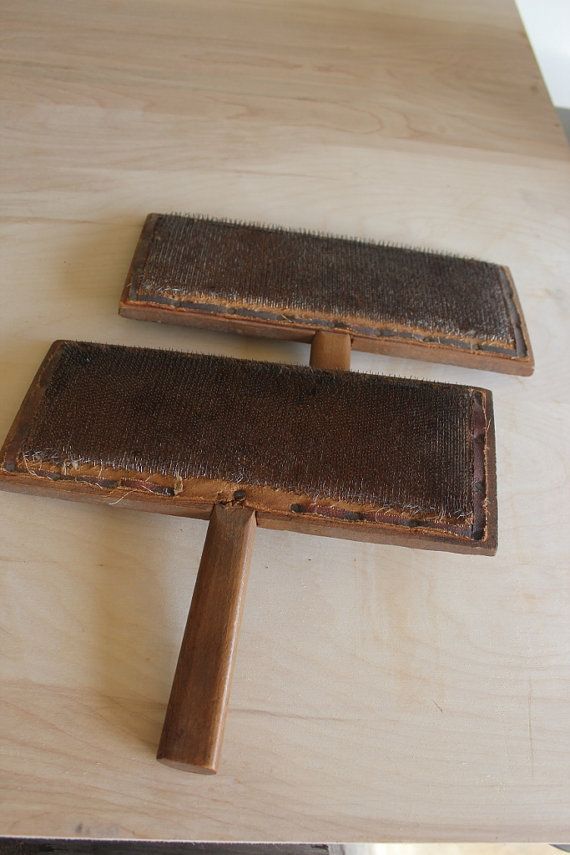
Then the fleece needs to be cleaned and the fibers need to be organized, with a pair of carding combs—

but here’s the whole process, in an 18th-century setting.

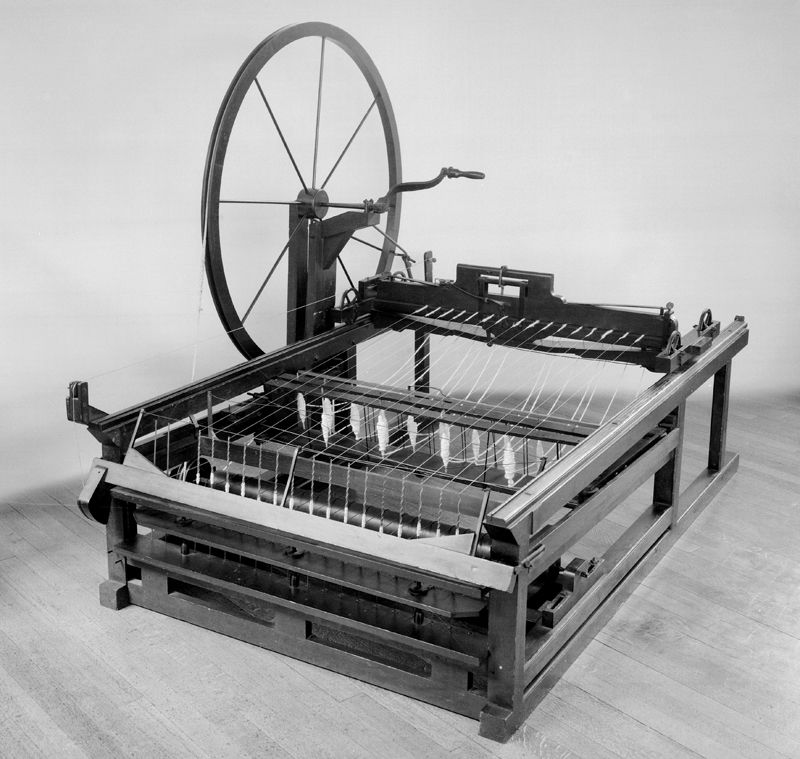
It’s a very labor-intensive process, as you can imagine, and you can see why the Industrial Revolution had, among its earliest inventions, the “Spinning Jenny”, which allowed one person to use a simple machine to produce numerous spools of thread at the same time, where a previous spinster (meaning someone who spins, not an unmarried woman, necessarily) could only produce one spool at a time and, at the time, it was said that it took five spinsters to keep a weaver busy.

(There was no “Jenny” by the way—it’s really “ginny”—18th-century Northeast English for “engine”—that is, in period technology, “machine”.)

In the story:

“Le roi, pour tâcher d’éviter le malheur annoncé par la vieille, fit publier aussitôt un édit par lequel il défendait à toutes personnes de filer au fuseau, ni d’avoir des fuseaux chez soi, sur peine de vie.”

“The king, to try to avoid the curse pronounced by the old fairy, immediately had an edict published by which he forbade anyone from spinning with a spindle, nor to have spindles in the home, on pain of death.” 

But, inevitably—this is a fairy tale, after all—when she is 15 or 16, the princess, exploring a family country house, discovers a room in which an old woman is using a spindle (and, surprisingly, unlike that which our suspicious modern minds would expect, the old woman is an innocent, as the text says that she simply hadn’t heard of the king’s proclamation) and, piercing her hand, the princess simply falls victim to the curse—and the counter-spell which puts her to sleep.

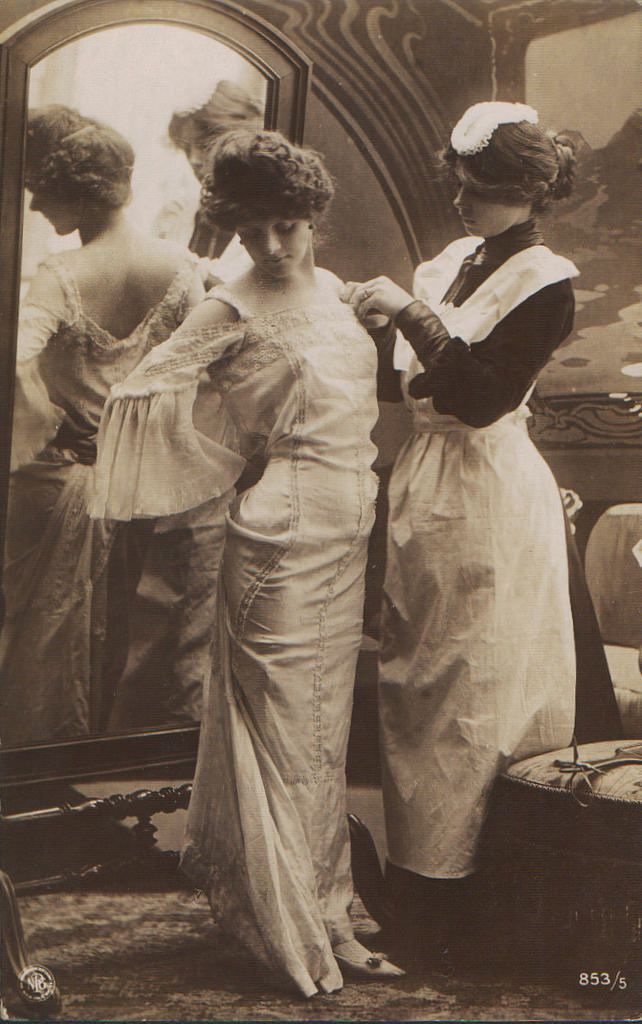
Why a spindle?  I’m sure that there are all sorts of Freudian explanations for this, but what I imagine Perrault—or whoever may have told the tale which he had once heard—if there ever was a real “ma Mere L’Oye”—thought was that, in the world of royalty, where clothes magically appeared in the hands of your servants,

(a much later image, but you get the idea)

a spindle might have seemed like a pretty—and novel—toy, as the princess exclaims, seeing the old woman at work:

“ ‘Ah ! que cela est joli !’ reprit la princesse ; ‘comment faites-vous ? donnez-moi que je voie si j’en ferais bien autant.’ “

“ ‘How pretty that is!…’How do you do it?  Give it to me so that I may see if I may do it as well.’ “

And, reaching for it, as she’s a little “etourdie”—“scatterbrained” (or, more gently, “thoughtless”)—

“elle s’en perça la main et tomba évanouie.”—“she pierced her hand and fainted.”

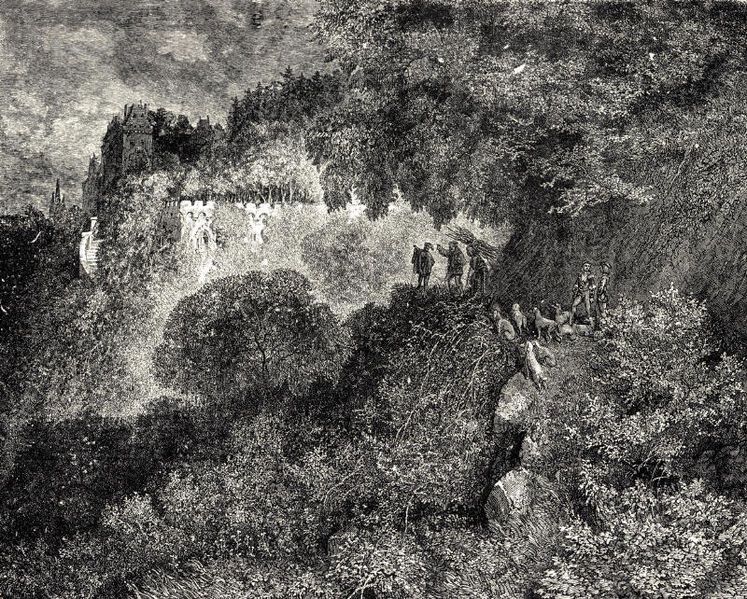
Now as the youngest fairy, who has hidden behind a curtain, sensing trouble when the old fairy appears, has decreed, a century will pass, and the country house and all in and around it—including the forest which surrounds it– will sleep.

Thanks, as always, for reading.

Stay well,

Avoid antagonizing elderly fairies,

And remember that, as always, there’s

MTCIDC

O

PS

In this season of Tchaikovsky’s “Nutcracker”, don’t forget that he also wrote a “Sleeping Beauty” ballet, which has its own wonderful music, which you can hear—and see–here:   https://www.youtube.com/watch?v=w7qLg1lOfrw

Learning the Ropes

04 Wednesday Dec 2024

Posted by Ollamh in Uncategorized

≈ Leave a comment

Tags

Emyn Muil, Fantasy, Frigate, Frodo, Gordian Knot, Ninnyhammer, Rope, Sam Gamgee, Tolkien

As always, dear readers, welcome.

“At last they were brought to a halt.  The ridge took a sharper bend northward and was gashed by a deeper ravine.  On the farther side it reared up again, many fathoms at a single leap; a great grey cliff loomed before them, cut sheer down as if by a knife stroke.  They could go no further forwards, and must turn now either west or east.  But west would lead them only into more labour and delay, back towards the heart of the hills; east would take them to the outer precipice.” 

Frodo and Sam have been traveling away from the Anduin and their friends, headed for Mordor, even as Sam has said,

“ ‘What a fix!…That’s the one place in all the lands we’ve ever heard of that we don’t want to see any closer, and that’s the place we’re trying to get to!’ “

And now they’re in the area called Emyn Muil (translated by Paul Stack as “Drear Hills”—see: https://eldamo.org/index.html )

(This appears to be from Karen Wynn Fonstad’s The Atlas of Middle Earth, an invaluable book.)

which, to me, has always seemed volcanic, like this—

and Peter Jackson must have had a similar idea, as this part of his second film was set in the land near Mt. Ruapeha, an active volcano on New Zealand’s North Island—

Confronted by that ravine, Frodo has tried climbing down, only “…to come down with a jolt to his feet on a wider ledge not many yards lower down.”  Sam, helpless, shouts that he’ll come down, until Frodo replies:  “Wait!  You can’t do anything without a rope.”

 An approaching storm has darkened the air around them, but Frodo’s words bring a sudden light to him: 

“Rope!…Well, if I don’t deserve to be hung on the end of one as a warning to numbskulls!  You’re nowt but a ninnyhammer, Sam Gamgee:  that’s what the Gaffer said to me often enough, it being a word of his.  Rope!” 

And not ordinary rope, but Elvish rope:

“ ‘Maybe you remember them putting the ropes in the boats, as we started off in the Elvish country,’ “ says Sam.  “ ‘I took a fancy to it, and I stowed a coil in my pack… ‘It may be a help in many needs’ he said:  Haldir, or one of those folk.  And he spoke right.’ “

And so Sam “unslung his pack and rummaged in it.  There indeed at the bottom was a coil of the silken-grey rope made by the folk of Lorien.”

With it, Frodo is quickly up beside Sam and soon, using the rope, they reach the bottom of the ravine.

(Donato Giancola—you can see more of his impressive work here:  https://donatoarts.com/  Don’t forget to check out the dragons.)

But there’s a further problem:

“But Sam did not answer:  he was staring back up the cliff.  ‘Ninnyhammers!’ he said.  ‘Noodles!  My beautiful rope!  There it is tied to a stump and we’re at the bottom.  Just as nice a little stair for that stinking Gollum as we could leave.’ “

And then—

“ [Sam] looked up and gave one last pull to the rope as if in farewell.

To the complete surprise of both the hobbits it came loose.  Sam fell over, and the long grey coils slithered silently down on top of him.”

Frodo, of course, mocks Sam, who, hurt, replies:

“ ‘I may not be much good at climbing, Mr. Frodo…but I do know something about rope and about knots.  It’s in the family as you might say.  Why, my grand-dad, and my uncle Andy after him, him that was the Gaffer’s eldest brother, he had a rope-walk over by Tightfield many a year.’ “ (all of the above from The Two Towers, Book Four, Chapter 1, “The Taming of Smeagol”)

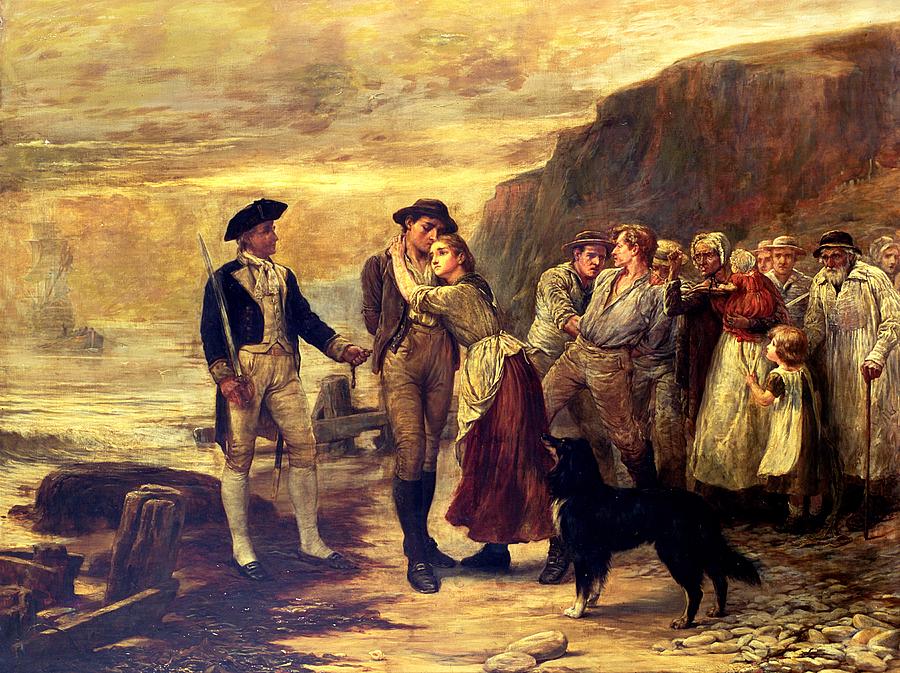
When you read the title of this posting, you’ll probably smile and say, “That means understanding how something works”, and you’d be right.  Imagine, however, that the expression began with someone press-ganged (forcibly drafted) into the British Navy during the Napoleonic era.

The Royal Navy’s pressgangs tried to kidnap actual sailors, usually from commercial vessels, but, to make up numbers, practically any male of over a certain age might do.

Once aboard (and incapable of escaping), the new crew member might be assigned any number of different duties, from cook

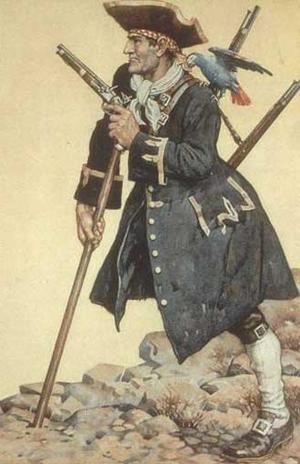
(Long John Silver, from Stevenson’s Treasure Island, was originally a cook)

to gunner,

but a major job was in handling the complicated power which made the ship move:  the sails and what controlled the sails, the rigging.  Many sailors were specifically trained to deal with the sails, but, in emergencies, it could even mean “all hands to the rigging!”  (To learn more about how complex this process is, see this 1848 The Art of Rigging:  https://archive.org/details/artrigging00steegoog/page/n4/mode/2up  based upon David Steel’s 1794 2-volume work.)

An 18th-century naval frigate (smaller war ship), like this one, HMS Pomone,

required, as you can imagine, a vast amount of rope for its rigging, and the biggest ships, like HMS Victory,

needed the equivalent of over 30 miles (48km+) of the stuff, so “learning the ropes” was clearly never an easy job for a beginning  (and, if pressganged, probably very reluctant) sailor! 

To provide that rope, there were what Sam’s grandfather and uncle had—ropewalks—and long walks they could be, like this one, from the Chatham dockyards in England.

To make rope, one began with the fibers of the hemp plant

and twisted and stretched them just as is done with wool to make woolen thread. 

The difference is that rope is commonly much longer than thread, as is the case with the ropes needed for HMS Victory’s rigging and so ropewalks had to be long enough to produce long lines.  (It’s a complicated process so, for more on this, see:  https://en.wikipedia.org/wiki/Ropewalk )

It might seem puzzling, looking at that ropewalk, and thinking about HMS Victory, why hobbits, who certainly weren’t sailors (think:  Frodo’s parents died in what must have been a rowboat accident on the Brandywine—see The Fellowship of the Ring, Book One, Chapter 1, “A Long-Expected Party” for gossip on the subject) would have a ropewalk, but we might ask the same question of the elves of Lorien, which was far from the sea, even though elves did take ship at the Grey Havens,

Departure at the Grey Havens, by Ted Nasmith

(Ted Nasmith)

to sail westwards.  The answer might be, as Sam and Frodo found out, in Haldir’s words, “It may be a help in many needs” and even if one needs and uses rope, it isn’t necessary for most people to require Victory’s 30 miles of the stuff. 

But then there’s that other question:  if Sam was as familiar with rope as he claimed, and an expert at knot-tying, why did that elvish rope come tumbling down on his head after supporting the two hobbits on their climb?

Thanks for reading, as always.

Stay well,

Considering solving knotty rope problems as Alexander did, with the Gordian knot,

And remember that, as always, there’s

MTCIDC

O

The Doubtful Sea Series Facebook Page

The Doubtful Sea Series Facebook Page

  • Ollamh

Categories

  • Artists and Illustrators
  • Economics in Middle-earth
  • Fairy Tales and Myths
  • Films and Music
  • Games
  • Heroes
  • Imaginary History
  • J.R.R. Tolkien
  • Language
  • Literary History
  • Maps
  • Medieval Russia
  • Military History
  • Military History of Middle-earth
  • Narnia
  • Narrative Methods
  • Poetry
  • Research
  • Star Wars
  • Terra Australis
  • The Rohirrim
  • Theatre and Performance
  • Tolkien
  • Uncategorized
  • Villains
  • Writing as Collaborators
Follow doubtfulsea on WordPress.com

Across the Doubtful Sea

Recent Postings

  • On the Road(s) Again—Again November 26, 2025
  • On the Road(s) Again November 19, 2025
  • To Bree (Part 2) November 12, 2025
  • To Bree (Part 1) November 5, 2025
  • A Plague o’ Both—No, o’ All Your Houses! October 29, 2025
  • It’s in Writing (2:  I’st a Prologue, or a Poesie for a Ring?) October 22, 2025
  • It’s in Writing (1) October 15, 2025
  • King Trotter? October 8, 2025
  • The Voices in His Head  October 2, 2025

Blog Statistics

  • 102,418 Views

Posting Archive

  • November 2025 (4)
  • October 2025 (5)
  • September 2025 (4)
  • August 2025 (4)
  • July 2025 (5)
  • June 2025 (4)
  • May 2025 (4)
  • April 2025 (5)
  • March 2025 (4)
  • February 2025 (4)
  • January 2025 (5)
  • December 2024 (4)
  • November 2024 (4)
  • October 2024 (5)
  • September 2024 (4)
  • August 2024 (4)
  • July 2024 (5)
  • June 2024 (4)
  • May 2024 (5)
  • April 2024 (4)
  • March 2024 (4)
  • February 2024 (4)
  • January 2024 (5)
  • December 2023 (4)
  • November 2023 (5)
  • October 2023 (4)
  • September 2023 (4)
  • August 2023 (5)
  • July 2023 (4)
  • June 2023 (4)
  • May 2023 (5)
  • April 2023 (4)
  • March 2023 (5)
  • February 2023 (4)
  • January 2023 (4)
  • December 2022 (4)
  • November 2022 (5)
  • October 2022 (4)
  • September 2022 (4)
  • August 2022 (5)
  • July 2022 (4)
  • June 2022 (5)
  • May 2022 (4)
  • April 2022 (4)
  • March 2022 (5)
  • February 2022 (4)
  • January 2022 (4)
  • December 2021 (5)
  • November 2021 (4)
  • October 2021 (4)
  • September 2021 (5)
  • August 2021 (4)
  • July 2021 (4)
  • June 2021 (5)
  • May 2021 (4)
  • April 2021 (4)
  • March 2021 (5)
  • February 2021 (4)
  • January 2021 (4)
  • December 2020 (5)
  • November 2020 (4)
  • October 2020 (4)
  • September 2020 (5)
  • August 2020 (4)
  • July 2020 (5)
  • June 2020 (4)
  • May 2020 (4)
  • April 2020 (5)
  • March 2020 (4)
  • February 2020 (4)
  • January 2020 (6)
  • December 2019 (4)
  • November 2019 (4)
  • October 2019 (5)
  • September 2019 (4)
  • August 2019 (4)
  • July 2019 (5)
  • June 2019 (4)
  • May 2019 (5)
  • April 2019 (4)
  • March 2019 (4)
  • February 2019 (4)
  • January 2019 (5)
  • December 2018 (4)
  • November 2018 (4)
  • October 2018 (5)
  • September 2018 (4)
  • August 2018 (5)
  • July 2018 (4)
  • June 2018 (4)
  • May 2018 (5)
  • April 2018 (4)
  • March 2018 (4)
  • February 2018 (4)
  • January 2018 (5)
  • December 2017 (4)
  • November 2017 (4)
  • October 2017 (4)
  • September 2017 (4)
  • August 2017 (5)
  • July 2017 (4)
  • June 2017 (4)
  • May 2017 (5)
  • April 2017 (4)
  • March 2017 (5)
  • February 2017 (4)
  • January 2017 (4)
  • December 2016 (4)
  • November 2016 (5)
  • October 2016 (6)
  • September 2016 (5)
  • August 2016 (5)
  • July 2016 (5)
  • June 2016 (5)
  • May 2016 (4)
  • April 2016 (4)
  • March 2016 (5)
  • February 2016 (4)
  • January 2016 (4)
  • December 2015 (5)
  • November 2015 (5)
  • October 2015 (4)
  • September 2015 (5)
  • August 2015 (4)
  • July 2015 (5)
  • June 2015 (5)
  • May 2015 (4)
  • April 2015 (3)
  • March 2015 (4)
  • February 2015 (4)
  • January 2015 (4)
  • December 2014 (5)
  • November 2014 (4)
  • October 2014 (6)
  • September 2014 (1)

Blog at WordPress.com.

  • Subscribe Subscribed
    • doubtfulsea
    • Join 78 other subscribers
    • Already have a WordPress.com account? Log in now.
    • doubtfulsea
    • Subscribe Subscribed
    • Sign up
    • Log in
    • Report this content
    • View site in Reader
    • Manage subscriptions
    • Collapse this bar
 

Loading Comments...