Tags
As always, dear readers, welcome.
I’ve just read an interesting piece of news: there’s going to be an opera based upon The Lord of the Rings (see: https://www.classicfm.com/music-news/lord-of-the-rings-opera-approved-tolkien-estate/ ). The composer is Paul Corfield Godfrey, 1950-, who had already composed a rather massive work on the Silmarillion, of which you can hear an excerpt here: https://www.youtube.com/watch?v=Q4HUnCx4dLI You can also hear “The Lament for Boromir” here: https://www.youtube.com/watch?v=6nxvzZ98LS4 and “The Man in the Moon Came Down Too Soon” and “The Song of the Troll”, along with one or two others on YouTube as well. (There’s the proviso with these: you may be accused of being a bot, unless you know the secret password.)
For me, opera began with a cartoon.
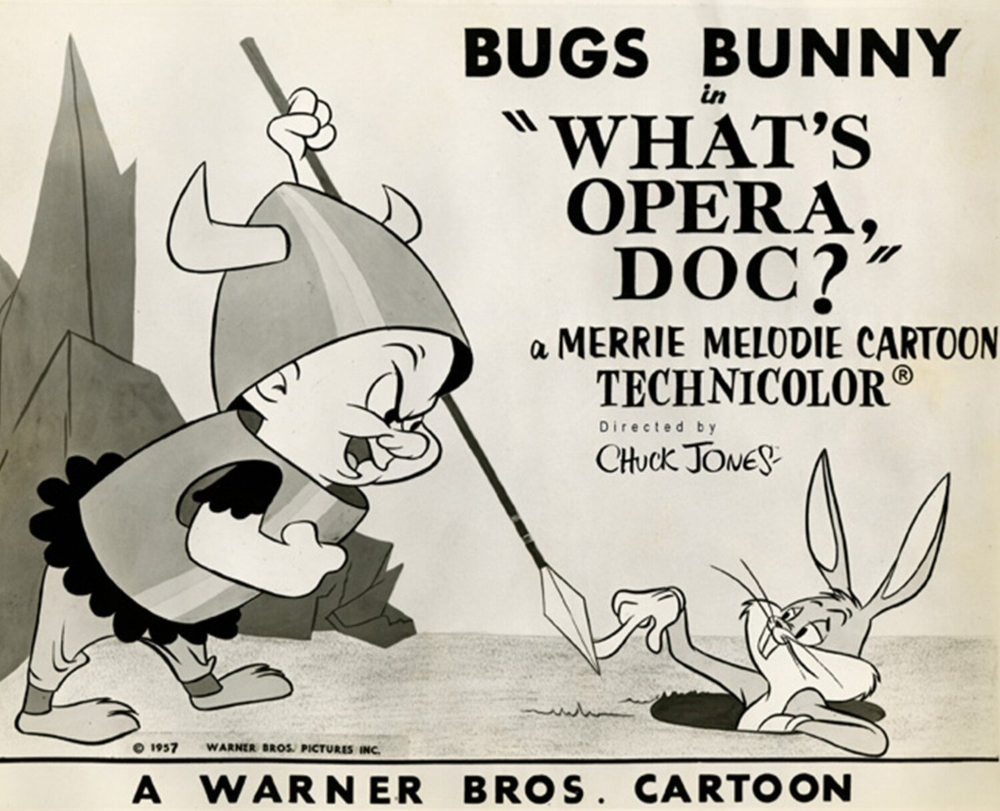
As a child, I saw it, loved it (Bugs Bunny always being a favorite, along with Daffy Duck), and that’s where opera first appeared in my life.

In terms of real opera, it’s an odd little piece, having, at one level, a standard plot: Elmer Fudd pursues Bugs, as he had done many times before.

At another level, however, it’s a parody of grand opera, in which Elmer plays the Wagnerian hero, Siegfried, and Bugs, at a certain point in the story, turns himself into the Valkyrie, Brunnhilde.

And, for only the third time in their lives of pursuit and escape, Elmer actually succeeds in dealing with Bugs.

Although, in case you haven’t seen it, or forgot the plot and are worried, Bugs comes back from the dead long enough to say to the audience, “Well, what did you expect in an opera? A happy ending?” before subsiding again. (You can see it here: https://www.youtube.com/watch?v=6jDcWAWRRHo provided, of course, that you’re not a bot. You can also read a very interesting article about the making of the cartoon here: https://en.wikipedia.org/wiki/What%27s_Opera,_Doc%3F )
Peter Schickele, 1935-2024,

the creator of PDQ Bach, 1807-1742?,

whom he once described as “the youngest and oddest of Johann Sebastian’s 20-odd children”, in a memorable introduction to Baroque opera as exemplified in PDQ Bach’s, “Haensel and Gretel and Ted and Alice”, explained that there were, in the period, two kinds of opera, “opera seria”, which was concerned with tragedies and histories, and “opera funnia”—and you can guess where this would go.
Opera seria, however, was real and where opera began, with Jacopo Peri’s, 1561-1633,

Dafne, in 1598. This is based upon the ancient story of Daphne, who, pursued by Apollo, is turned into a laurel tree (you can read the most familiar version of the story, as told by Ovid in Book 1 of his Metamorphoses, here: https://www.theoi.com/Text/OvidMetamorphoses1.html at line 452 and following).
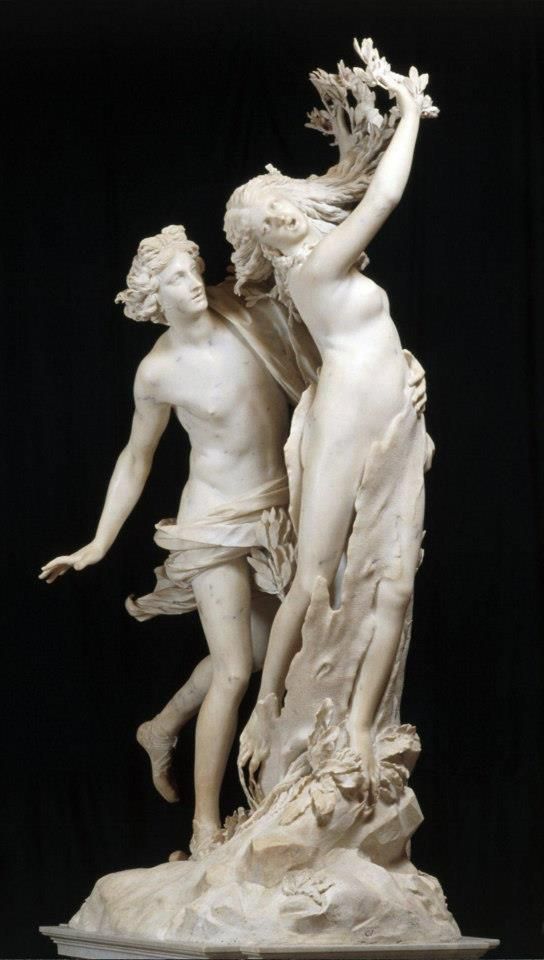
(by Gian Lorenzo Bernini, 1598-1680, dated to 1622-25)
The goal of this and subsequent works, both by Peri and others, was to attempt to revive what they understood Greek tragedy to have been like, with its dark mythological stories—truly opera seria! To Peri and his contemporaries, this meant not only solo songs and choruses, but that all of the dialogue would be sung, too, in what came to be called recitativo, and this convention continued into the 20th century.
There is another possibility, however, although not “opera funnia”. It’s a form known in German as “Singspiel” and in French as “Opera comique” and combines the solo songs and choruses of opera seria with spoken dialogue, rather than recitativo, in just the way contemporary musicals are really plays with music, where songs appear at important dramatic points in the story.

(Rodgers and Hammerstein’s “Oklahoma”, 1943)
In 1964, an English composer, Carey Blyton, 1932-2002, wrote to JRR Tolkien requesting his permission to create a “Hobbit overture”. Tolkien was clearly delighted and granted permission immediately, providing for us, as well, with this sidelight on himself and music:
“As an author I am honoured to hear that I have inspired a composer. I have long hoped to do so, and hope also that I might find the result intelligible to me, or feel that it was akin to my own inspiration…I have little musical knowledge. Though I come from a musical family, owing to defects of education and opportunity as an orphan, such music as was in me was submerged (until I married a musician), or was transformed into linguistic terms. Music gives me great pleasure and sometimes inspiration, but I remain in the position in reverse of one who likes to read or hear poetry but knows little of its technique or tradition, or of linguistic structure.” (from a letter to Carey Blyton, 16 August, 1964, Letters, 490. You can hear Blyton’s overture, composed in 1967 as Opus 52a, here: https://www.youtube.com/watch?v=rybV4xDq_DM –that is, if you persist in insisting that you’re not a bot.)
The musician was, of course, his wife, Edith, and Tolkien’s interest in music was certainly developed enough that, in a trip to Italy in 1955 with his daughter, Priscilla, he reacted to a performance of Giuseppe Verdi’s Rigoletto, with the words “Perfectly astounding”. (from a letter to Christopher and Faith Tolkien, 15 August, 1955, Letters, 325)
I’ll be very curious to see what comes of this opera project, which claims to be retaining Tom Bombadil

(the Hildebrandts)
and the equally neglected Barrow-wight.

(Ted Nasmith)
If the selection I’ve heard from Godfrey’s Silmarillion provides us with an idea of his treatment of The Lord of the Rings, we will hear not only Tolkien’s poems, like “The Man in the Moon”, set to music, but the dialogue may also be done in recitativo, and I’ll be very curious to see how he manages this, as there’s so much of it—perhaps a narrator for continuity?
Thinking about this has set me wondering about how one might turn The Hobbit into an opera, dialogue aside. Tolkien has provided us with about 15 lyrics throughout:
Chapter 1, “An Unexpected Party”:
“Chip the glasses…” a chorus for the dwarves
“Far over the misty mountains cold…” a second chorus for the dwarves
“Far over the misty mountains cold…” a reprise of the first verse, sung by Thorin and overheard by Bilbo
Chapter 3, “A Short Rest”
“O! What are you doing…” a chorus for elves
Chapter 4, “Over Hill and Under Hill”
“Clap! Snap! the black crack!” a chorus for goblins
Chapter 5, “Riddles in the Dark”
Just a thought, but perhaps these riddles could all be sung, the glaring exception being Bilbo’s “What have I got in my pocket?”
Chapter 6, “Out of the Frying-Pan into the Fire”
“Fifteen birds in five fir-trees” another goblin chorus
“Burn, burn tree and fern” a goblin chorus—but possibly add in the howling of the wolves?
Chapter 7, “Queer Lodgings”
“The wind was on the withered heath” a chorus for dwarves
Chapter 8, “Flies and Spiders”
“Old fat spider”
“Lazy lob and crazy cob” two songs for Bilbo—the first time we’ve heard his voice
Chapter 9. “Barrels Out of Bond”
“Roll—roll—roll—roll”
“Down the swift dark stream you go” two choruses for the forest elves
Chapter 10, “A Warm Welcome”
“The King beneath the mountains” sung by the people of Lake-town
Chapter 15, “The Gathering of the Clouds”
“Under the Mountain dark and tall” a dwarf chorus
Chapter 19, “The Last Stage”
“The dragon is withered” a chorus for the elves of Rivendell
“Sing all ye joyful, now sing all together!” a second chorus for the elves
“Roads go ever ever on” a song for Bilbo and the last in the book
Reading through this list:
1. it’s easy to see that the majority of the lyrics are meant for a chorus of dwarves, goblins, Lake-town people, and assorted elves
2. the only solo numbers (excepting the riddles, if sung) are few in number and given to Bilbo
3. there are lyric gaps in the potential script: Chapters 11-14 and 16-18 have no songs at all
If you were the librettist, how would you fill not only those gaps, but provide for more solos—for Gandalf, Bilbo,Thorin, the Chief Goblin, Gollum, Beorn, Thranduil (the forest elf king), the Master of Lake-town, Bard, Smaug, Roac (the elderly raven), as well as perhaps small comic parts for the Sackville-Bagginses, and something for the stone trolls (a trio about eating might be appropriate) too? It’s also important to note the complete lack (except with the possible exception of the Lake-towners) of female voices in solos and choruses. How could that imbalance be readjusted—without seriously messing with Tolkien’s text (and we know from his correspondence with Forrest J. Ackerman on a potential film version of The Lord of the Rings that, although he conceded that a different art form might require some adjustment, he had his limits as to just what and how much might be altered—see “from a letter to Forrest J. Ackerman”, June, 1958, Letters, 389-397) Considering the story, it would seem that it would be a fitting subject for an opera seria, but there would be the danger—as there will be for Godfrey’s The Lord of the Rings—that, not maintaining the tone and making too many additions or changes to the text might quickly turn it into an opera—funnia.
Thanks for reading, as ever,
Stay well,
Beware of Godfrey’s “The Song of the Troll”—it’s catchy!
And remember that, as always, there’s
MTCIDC
O
PS
I’m not aware that Tolkien ever heard that “Hobbit overture”, but, in 1967, he collaborated with the composer, Donald Swann, 1923-1994, on a short cycle of his poems drawn from various sources, entitled The Road Goes Ever On.
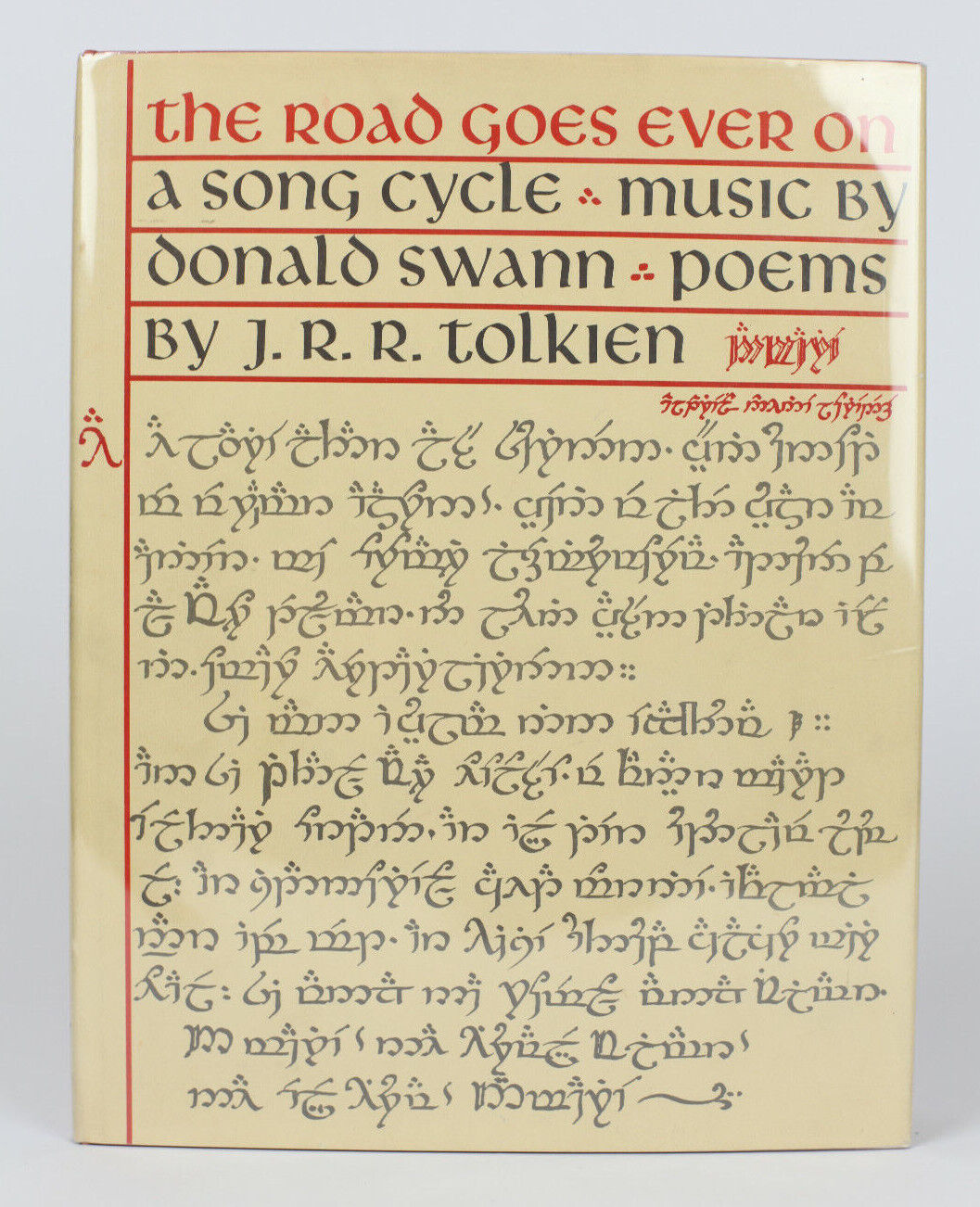
You can read about it here: https://en.wikipedia.org/wiki/The_Road_Goes_Ever_On And, provided that you have finally proved to YouTube’s satisfaction that you are not, indeed, a bot, you can hear it here: https://www.youtube.com/watch?v=YtH6ROfV7WA I’ve loved the cycle for years, have sung it, and very much recommend it. )
 doubtfulsea