• About

doubtfulsea

~ adventure fantasy

Tag Archives: George Washington

Underheard

18 Wednesday Dec 2024

Posted by Ollamh in Uncategorized

≈ Leave a comment

Tags

Ballads, deck-us-all-with-boston-charlie, George Washington, god-save-the-king, mondegreen, pogo

As always, dear readers, welcome.

If you read this blog regularly, you probably imagine that, as a small child, I lived in a constant state of puzzlement—and I did.  In part, this came from the fact that, before I could read and write, and sometimes after that, I lived in an oral world, where so much of my life was spent hearing things, rather than seeing them in print—and that could lead to interesting results.

For instance, there’s a patriotic song I was taught, probably in kindergarten, which begins:

“My country, ‘tis of thee,

Sweet land of liberty,

Of thee I sing.” 

From the oddly convoluted grammar, you might suspect that it was written to an already-existing tune—and you’d be right:  it’s set to “God Save the King”.  (You can read about its history here:  https://en.wikipedia.org/wiki/My_Country,_%27Tis_of_Thee  If you think that the use of a tune about a king as the basis for a song for a republic is surprising, just consider:  these words date from 1831, but there’s a 1786 song to the same tune entitled “God Save Great Washington”—only 3 years after the founding of a country which had fought for 8 years to escape the very king the original song had been written for.  

Here’s a verse from that:  

“God save great Washington,
His worth from eve’ry tongue,
Demands applause;
Ye tuneful pow’rs combine,
And each true Whig now join
Whose heart did ne’r resign
The glorious cause.” 

About the same level as “My Country, ‘tis of thee”, I would say.  This is quoted from a usually very useful source:  https://mudcat.org/thread.cfm?threadid=39759  but the work cited there says that the lyric is from The Philadelphia Continental Journal for 7 April, 1786, and, as far as I can determine, there was no such journal in Philadelphia at that time.  Perhaps this is a mistake for the Boston-based Continental Journal and Weekly Advertiser, which ran from 1776 to 1787?  For a list of 18th-century Philadelphia newspapers, see:  https://brainly.infogalactic.com/info/List_of_newspapers_in_Pennsylvania_in_the_18th_century#Philadelphia )

And this is where orality comes in.  Hearing a teacher sing this while we stumbled along behind her, I thought that what she sang was “My country, dizzily…” which, even (or perhaps especially) to a small child, was somewhat enigmatic.   You can imagine, then, what would be the case had I then tried to teach it to another child, or even an adult.

If you’ve ever played the game called “Whisper Down the Lane” or “Telephone”, you’ve seen what happens when someone initially says something which is then passed down a chain of listeners—you can read more about it at WikiHow here:  https://www.wikihow.com/Play-the-Telephone-Game  from which this illustration comes.

As the original message passes from mouth to ear to mouth, words change and it’s sometimes quite surprising when, if you had spoken that initial message, you heard the last person in the chain repeat what she or he heard.

It’s also a very good illustration of the effect of oral tradition on songs.

For example, in Child Ballad #200, (formally, The English and Scottish Popular Ballads, edited by Francis James Child), with a variety of titles including “The Wraggle Taggle Gypsies, O”.  The basic story is that a fine lady is enticed to go off with some Gypsies (a term no longer used, “Romani People” being currently employed, but, in discussing the ballad, I’m going to stick to the older term as that’s what’s in the text) and, in many variants, the idea is that the Gypsies have (literally) enchanted her, the word  used being “glamer/glamour/glamourie/-ye”, a Scots and perhaps even then archaic word for magic/magic spell.  Except for variant G, which, instead of the Gypsies casting their glamour/glamourie over her, has:  “They called their grandmother over.”

In an introductory note, Child writes that he collected it from the Roxburghe Ballads, a selection first published in 1847 (for more on this and its somewhat dubious history, see:  https://en.wikipedia.org/wiki/Roxburghe_Ballads   and for more on the original collection, see:  https://ebba.english.ucsb.edu/page/roxburghe ), and which is derived from a mass of popular sheet music of the 17th and 18th centuries. 
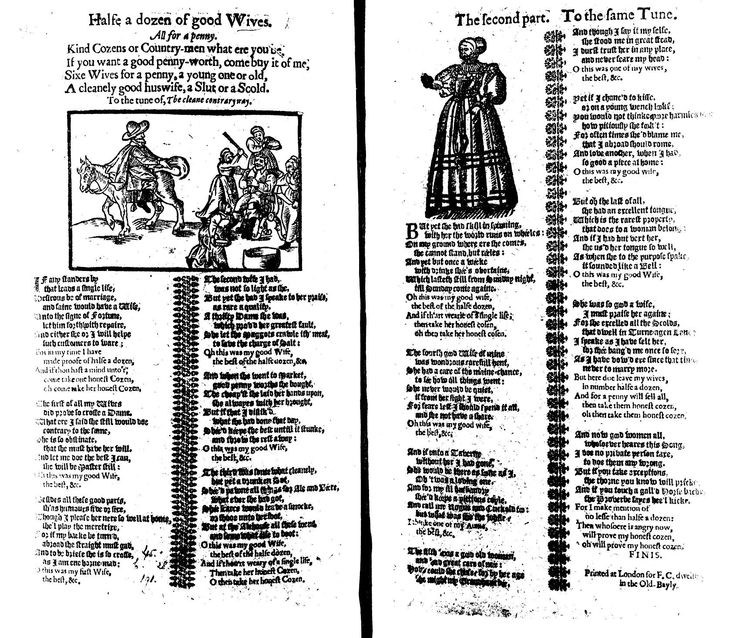
I suppose one could say that “grandmother” simply shows that the word “glamour/glamourie”, from Scots, was simply misunderstood by whoever was behind variant G, but, remembering “My country dizzily”, I would suggest that it’s just as likely that someone misheard the word—and a new character was added to the ballad.  (For the ballad and its variants in Child’s edition, see:   https://archive.org/details/englishandscopt104chiluoft/page/60/mode/2up )

And this is certainly true for another ballad example, in which another character sprang suddenly into being.  This is from Child #181, “The Bonnie Earl of Moray” in which the narrator sings:

 “Ye Highlands and ye Lawlands,

Oh where have you been?

They have slain the Earl o’ Moray

And layd him on the green.”

and from which came that character—Lady Mon de Green (also written Lady Mondegreen).  And what’s interesting here for me is that this has become a general term for a misheard lyric, a “mondegreen”, but invented not by a linguist, but by a humorist, Sylvia Wright (1917-1981), and published in an article in Harper’s Magazine in 1954.    (See:  “The death of Lady Mondegreen” in November’s issue)  Wright explained that she, as a child, had—you guessed it—misheard that line in “The Bonnie Earl of Moray”—so you can see that childhood (mine, Wright’s) and orality can have the same effect.  (For much more—and I mean much– on the subject, see:  https://en.wikipedia.org/wiki/Mondegreen )

But one more example—fitting for the season and what we might call a mondegreen with intent—in fact an entire song:

“Deck us all with Boston Charlie,
Walla Walla, Wash., an’ Kalamazoo!
Nora’s freezin’ on the trolley,
Swaller dollar cauliflower alley-garoo!

Don’t we know archaic barrel
Lullaby Lilla Boy, Louisville Lou?
Trolley Molly don’t love Harold,
Boola boola Pensacoola hullabaloo!

Bark us all bow-wows of folly,
Polly wolly cracker ‘n’ too-da-loo!
Donkey Bonny brays a carol,
Antelope Cantaloupe, ‘lope with you!

Hunky Dory’s pop is lolly,
Gaggin’ on the wagon, Willy, folly go through!
Chollie’s collie barks at Barrow,
Harum scarum five alarm bung-a-loo!

Dunk us all in bowls of barley,
Hinky dinky dink an’ polly voo!
Chilly Filly’s name is Chollie,
Chollie Filly’s jolly chilly view halloo!

Bark us all bow-wows of folly,
Double-bubble, toyland trouble! Woof, woof, woof!
Tizzy seas on melon collie!
Dibble-dabble, scribble-scrabble! Goof, goof, goof!”

As this is a well-known Christmas carol, I won’t supply either the original, or a translation (and how would you translate “Chollie’s collie barks at Barrow”?  or would you even want to?)  It is the work of the cartoonist/satirist Walt Kelly (1913-1973)

Kelly was the creator of the comic strip “Pogo” and it’s the characters from there who bring us this willfully misheard wonder—

You can listen to it here:  https://www.youtube.com/watch?v=SL0lPcNwRqQ and, with the lyrics above, join in.

As ever, thanks for reading.

Stay well,

Try to mishear something every day—it makes life…surprising,

And remember that, as always, there’s

MTCIDC

O

Terrible as an Army with Banners

25 Wednesday Sep 2019

Posted by Ollamh in J.R.R. Tolkien, Military History, Military History of Middle-earth, The Rohirrim

≈ Leave a comment

Tags

banner, Captain Souter, color, Dol Amroth, ensign, Eye of Sauron, First Afghan War, flag, George Washington, Revolutionary War, Rohirrim, saltire, standard, The Lord of the Rings, The Song of Solomon, Tolkien, Trooping of the Colour, White Hand of Saruman, white horse of Hannover, White Tree of Gondor, WWI, WWII

Welcome, dear readers, as ever.

Our title comes from the Hebrew Bible, in the book entitled The Song of Solomon, Chapter 6, verses 4 and 10, where the speaker’s beloved’s beauty is likened to an army with banners.  Growing up, we always wondered about that word “terrible”.  We didn’t see why someone’s good looks could be frightening, but we could certainly see how an army with its flags could be scary.

image1ahussars


On the subject of banners, recently, we’ve been writing about 2nd Lieutenant JRR Tolkien.

image1jrrtlt.jpg

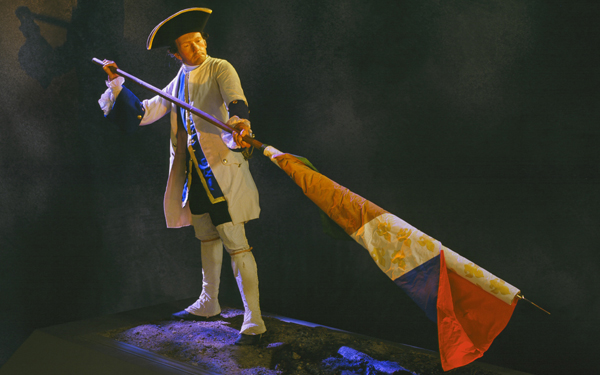
In an earlier posting, in fact, we mentioned that that rank of 2nd Lieutenant was a replacement for the earlier rank of “ensign”.  “Lieutenant” is just the English version of a French compound for “place-holder” (lieu + tenant), in this case meaning the person who will step into the captain’s shoes if necessary.  Instead of a compound with its implication of replacement, “ensign” is actually a job description.  An “ensign” is a flag (a “color”, if infantry, “standard”, if cavalry) and an “ensign” is also the person who carried it.

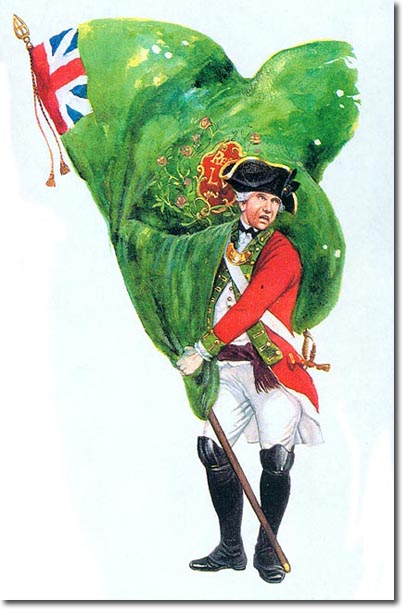
By 1916, when Tolkien became a 2nd Lieutenant, colors were no longer carried in battle, but only on parade, as this early-20th-century illustration demonstrates—

image2parade.jpg

and is still the case for the famous “Trooping of the Colour” for the Queen of England’s birthday parade, where her splendid footguards march with one of their colo(u)rs.

image3trooping.jpg

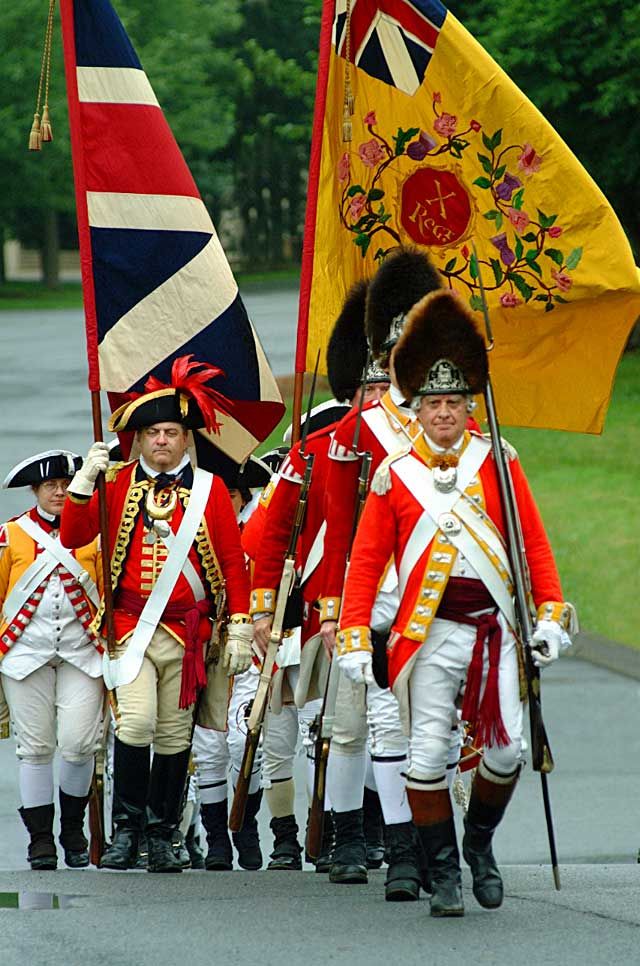
This is clearly all about show, now, but, once upon a time, colors—and their ensigns—had an important role in warfare.  Earlier colors were much bigger—in the 18th century, they were 6 feet by 6 feet square (1.82 metres by 1.82).

image4color.jpg

And here are some modern reenactors to help you to see just how big that really is.

image5color.jpg

The reasons for such a size (on a 9-foot pole, or “pike”—that’s 2.74m) are:

  1. units in earlier times (pre-late-19th-century, more or less) fought in long lines and, if you put the colors in the middle, everyone in a unit had a kind of fixed point to help them know where they—and their unit—were

image6nap.jpg

  1. as well, earlier firearms, which used black powder, put out enormous clouds of (white) smoke—

image7smoke.jpg

image8smoke.jpg

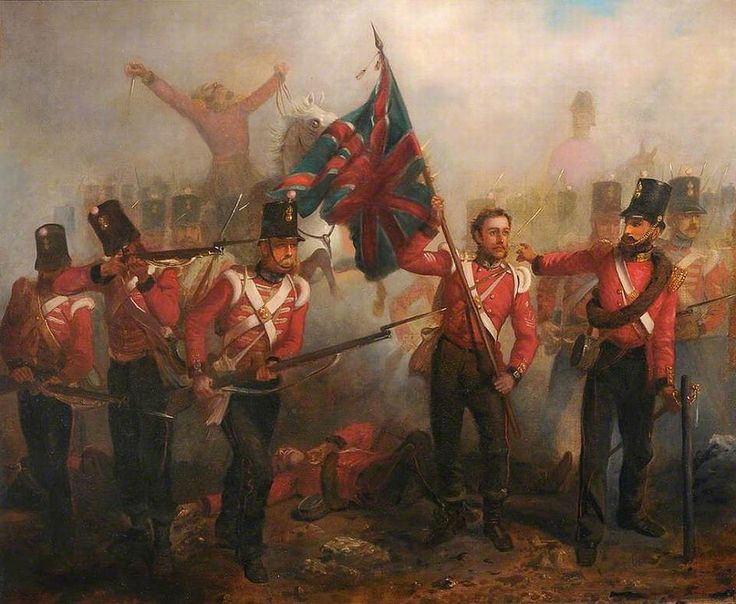
If colors were big and tall, they could still be made out in the midst of those clouds.

image9oconnor.jpg

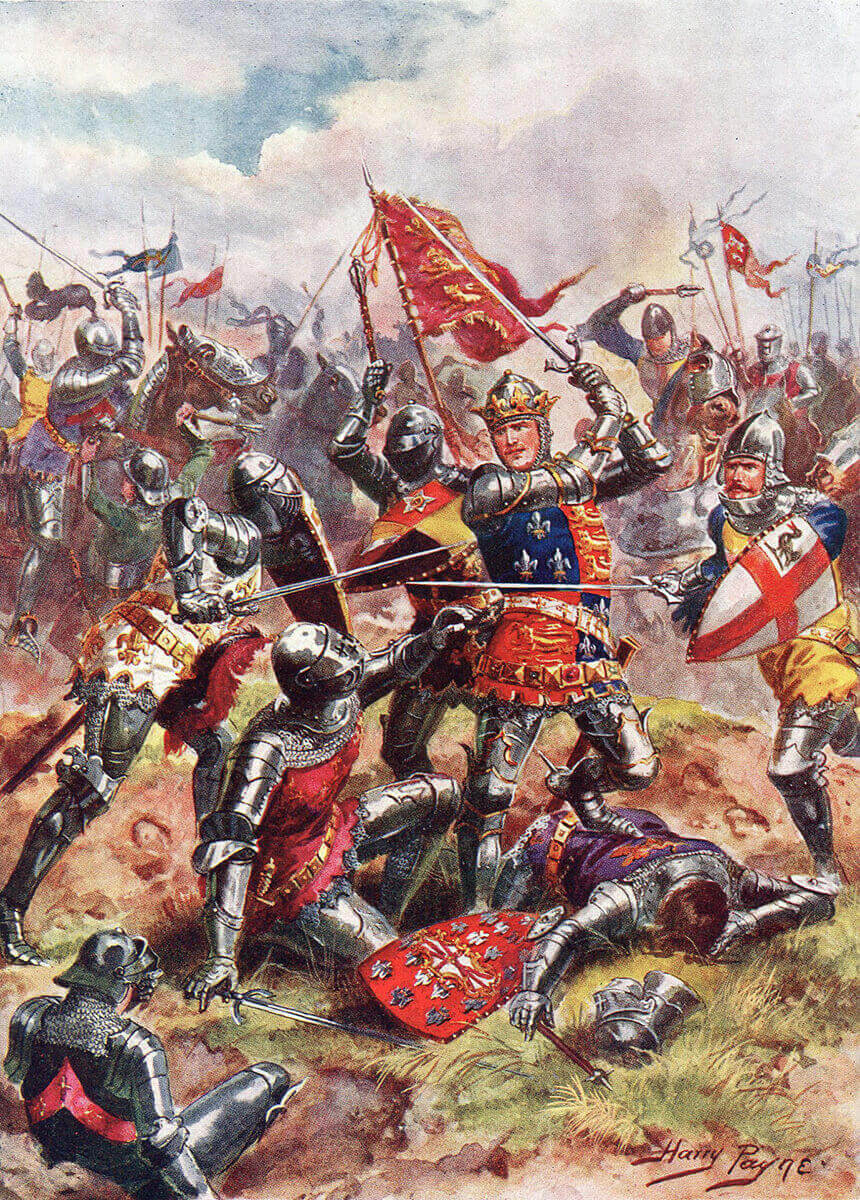
They could also act as a rallying point.  When lines came apart and the order was Charge!  (Or when things were falling apart and the call was for Retreat!)

image10rally.jpg

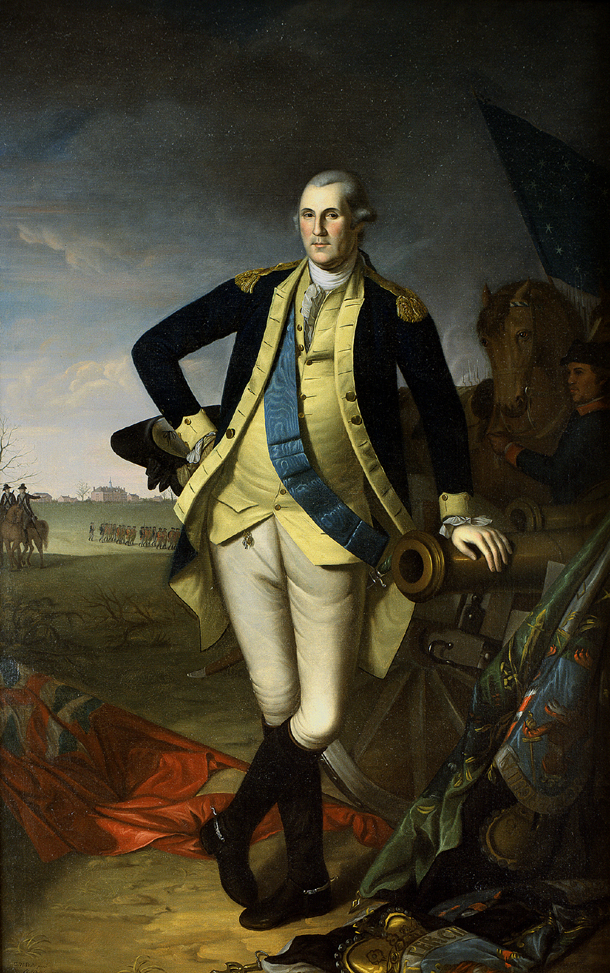
In time, colors came to be thought of as almost the physical representative of the spirit of a unit and being called upon to surrender them was looked upon as the worst disgrace.  This portrait of George Washington would have been thought particularly nasty by his British and German enemies because all around him are their colors, captured in two battles, Trenton and Princeton.  (His own headquarters flag—13 stars in a circle on a blue background—is in the upper right of the picture.)

image11gw.jpg

To escape surrendering their colors, soldiers would strip them from the poles/pikes and hide them in their clothes or, in real desperation, burn them, as the French did in 1760 when forced to surrender to the British at Montreal, in Canada (then New France).

image12burning.jpg

In earlier centuries, before gunpowder came to dominate battlefields, colors were already used as rallying points,

image13rally.jpg

but also, in the days before uniforms, colors—big or little—indicated who was fighting.  If you saw a figure bearing a flag with a white, angled cross (a “saltire” in heraldic terms) on a blue field (background), for example, you knew that the King of Scotland was on the battlefield.

image14bruce.jpg

Thus, although 2nd Lieutenant Tolkien would no longer carry one of his unit’s colors into battle, as previous ensigns had, he would have known the importance of their role—and especially of the role of what they carried, which is why, for example, we see that, when it comes to battle in Middie-earth, nearly everyone seems to have a distinctive flag:

  1. the Rohirrim have their running horse

image15ro.jpg

(which we think JRRT may have borrowed either from the chalk cutting known as the “White Horse of Uffington”

image16uff.jpg

or possibly from an emblem long-related to the British monarchy, the white horse of Hannover—as we can see on this 18th-century grenadier cap).

image17gren.jpg

  1. Gondor has its tree and stars

image18gon.jpg

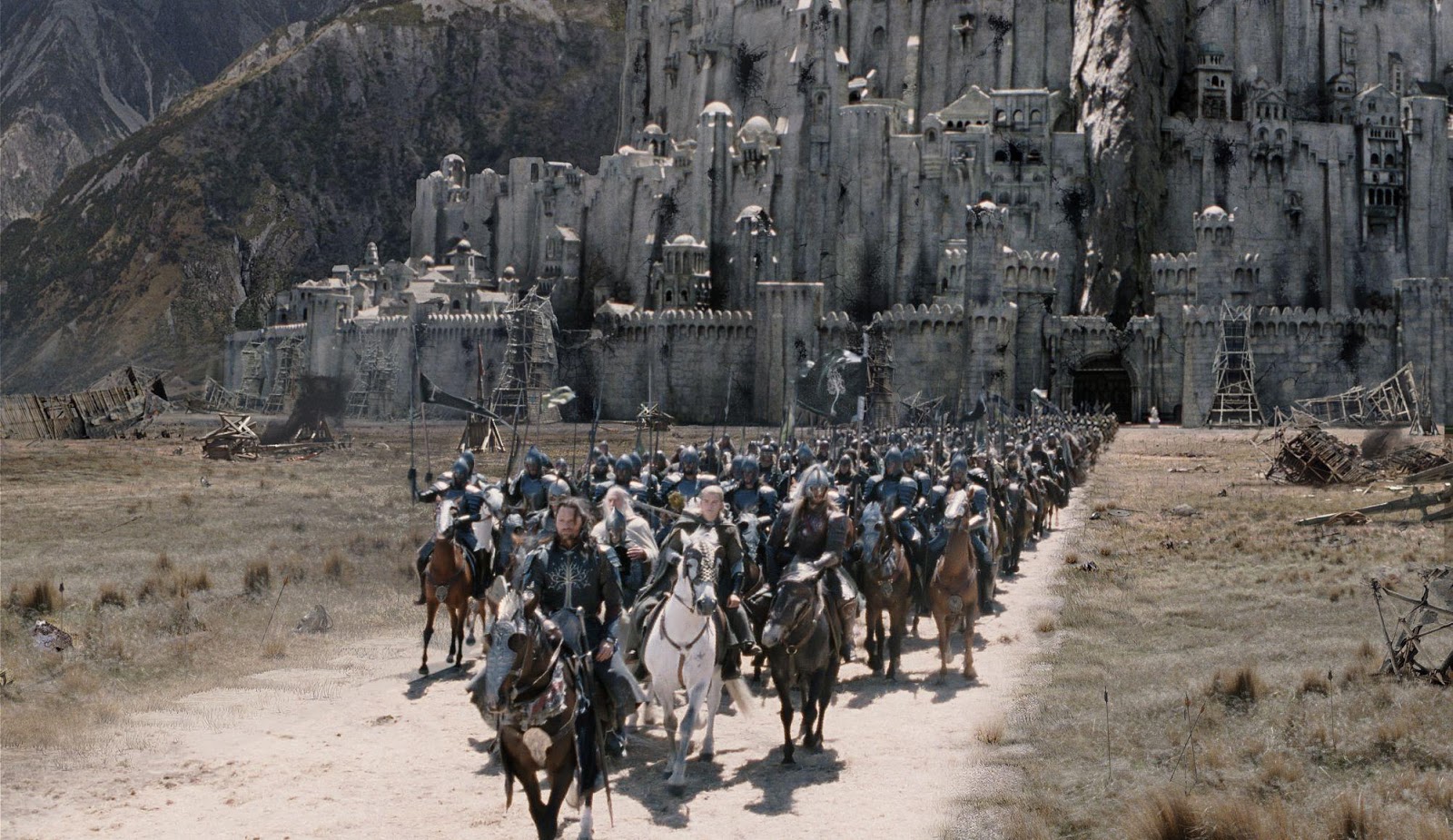
  1. and, when Aragorn marches out of Minas Tirith,


image19ara

it’s under his version of that banner–

image20a.png

which also boldly states his claim to be the rightful king—without actually coming out and saying it—compare the two banners–

  1. and the Prince of Dol Amroth has his flag, with “his token of the Ship and the Silver Swan” (The Return of the King, Book Five, Chapter 1, “Minas Tirith”).

image21dol.png

As for their opponents, we see Saruman’s white hand on armor,

image22arm.jpg

so we can presume, we think, that any banners carried would bear the same insignia and the same is true for Sauron’s orcs, which would have borne the lidless eye.

image23orc.gif

(We might also note that Southrons in the service of Mordor appear to carry red banners—as Gollum reports to Frodo and Sam in The Two Towers, Book Four, Chapter 3, “The Black Gate is Closed”.)

All of which made us wonder if Solomon would have been so eager to describe his beloved as he did if the army he saw looked like this?

image24orcs.png


As ever, thanks for reading and

MTCIDC


CD


ps

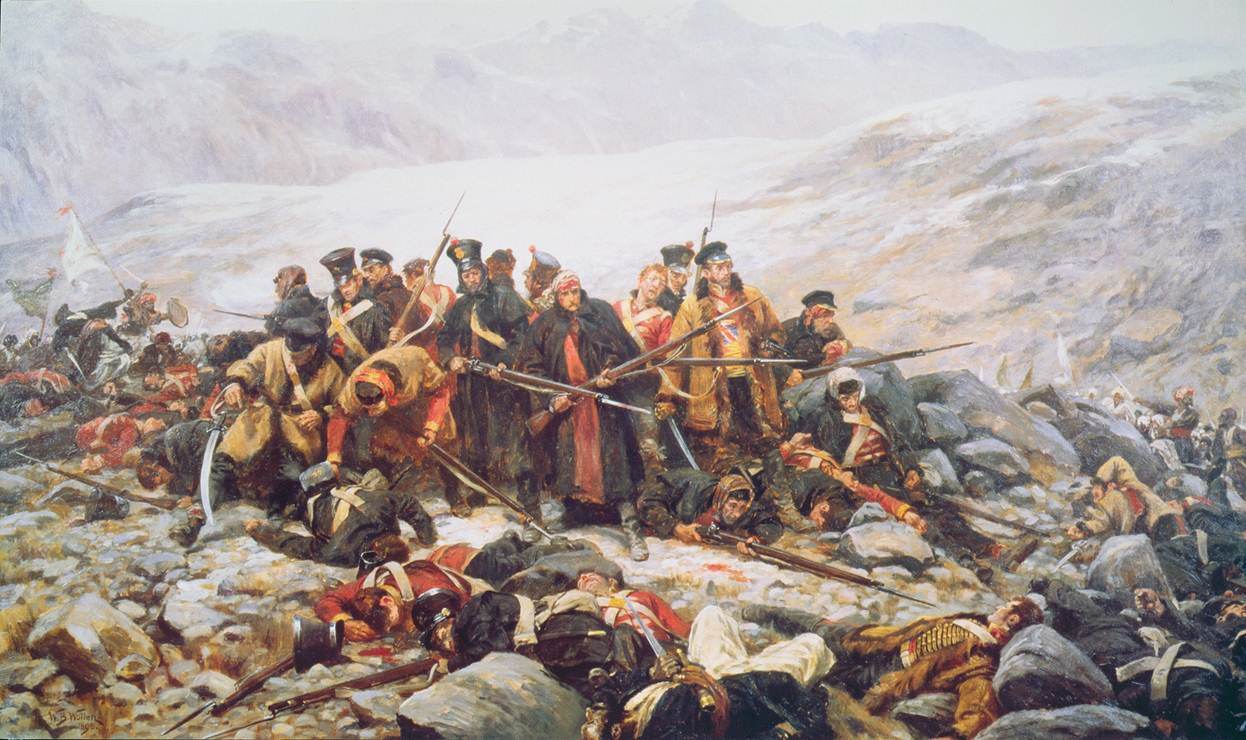
In an odd but fortunate use of a color, in 1842, during the First Afghan War, a Captain Souter was saved because he had hidden one of his regiment’s colors by wrapping it around his waist.  As the last members of his unit fell around him, his Afghan opponents saw what they believed to be a fancy waistcoat/vest and took him prisoner, hoping for a rich ransom.

image26gandamak.jpg

Spare Change?

19 Wednesday Apr 2017

Posted by Ollamh in Economics in Middle-earth, J.R.R. Tolkien, Literary History, Narrative Methods

≈ Leave a comment

Tags

1909 penny, Abraham Lincoln, Alexander the Great, Aragorn, Asia Minor, Augustus, bartering, Bilbo's birthday, British Royal Government, Brutus, Charlemagne, Classical Greek coins, Cleopatra VII, Coinage, daggers, Denethor, Domitian, Egypt, federal law, Frankish king, freedman, George Washington, Gondor, Greek Kings, Hanoverian kings, Hellenistic Greeks, Holy Roman Emperor, Ides of March, Julio-Claudian dynasty, Julius Caesar, libertus, Lucius Plaetorius Cestianus, Lydia, manumission, Middle-earth, Pennies, pilleum, Plebeians, portrait, Prince Charles, Ptolemy I, Queen Elizabeth II, Roman Empire, Romans, Seleucus, Senatus Consulto, The Lord of the Rings, Tolkien

Welcome, dear readers, as always.

We are veering a little to the left in this posting inspired by a comment on “Shire Portrait (2)” from our good friend, EMH. It was about currency and coins in Middle-earth and we were a little vague, but E pointed out:

  1. Bilbo giving “a few pennies away” before the party
  2. the price of Bill, the pony: “twelve silver pennies”
  3. Gandalf praising Barliman and saying his news was “worth a gold piece at the least.”

With E in mind, we decided to do another posting on M-e money. Long ago, we did a posting on imagined currency in Middle-earth, but, since then, we’ve thought a bit more about the subject, and, right now, dear readers, we ask you to produce a coin, any coin. As we live in the US, here’s a US coin, a fourth of a dollar, hence, a “quarter”.

image1quarterobverse.jpg

This is the front, or “obverse” in coin speech, and we’re going to focus on that and not on the back (the “reverse”).  We use coins all day long every day, so we probably don’t look at them more than to note value when we pay for something or receive change, but let’s look at this one a bit more closely.

It seems pretty simple:

  1. at the top a single word, “Liberty”
  2. then a low relief (that is, cut very shallowly) portrait of the first president, General George Washington
  3. then, to the left, a slogan, “In God We Trust”
  4. at the bottom, the date, 1993

Let’s start with that date—1993. In 1993, the president was Bill Clinton.

image2clinton.jpg

Federal law, however, prevents coins—with very special and rare exceptions—to bear the portraits of living people. The first president on a coin was Abraham Lincoln, on a penny first minted to commemorate his 100th birthday, in 1909.

image31909penny.jpg

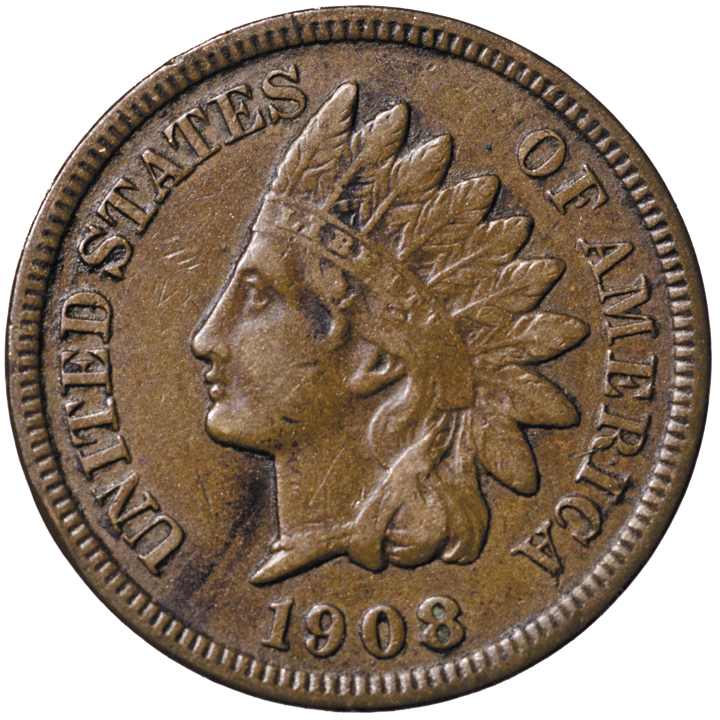
The previous coin, up to 1909, had the idealized head of a Native American,

image41908indianhead.JPG

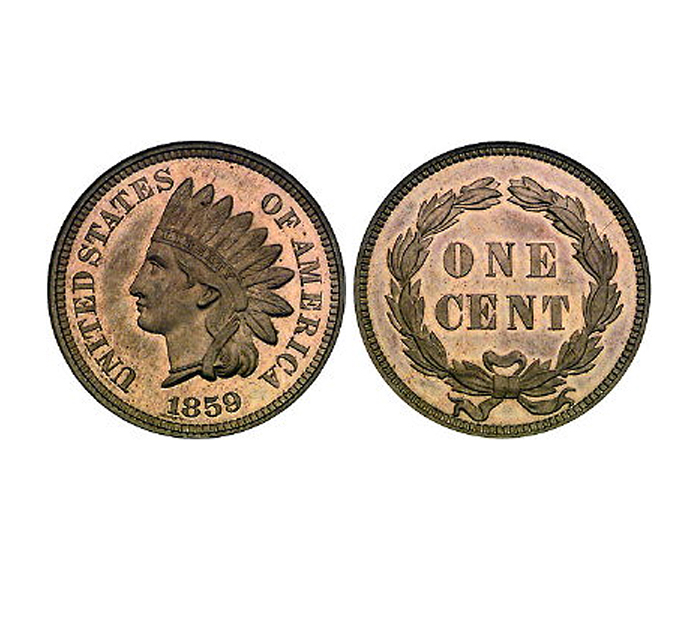
the pattern for which was first introduced in 1859.

image51859indianhead.jpg

The first coin in western European history is from the late 8th century BC, and comes from Lydia, in Asia Minor.

image6lydiancoin.jpg

Classical Greek coins seem to model themselves on Lydian coins like this, having badges–city emblems and religious tokens, like the famous Athenian owl, rather than portraits of humans, like that quarter with George Washington on it.

image7owlcoin.jpg

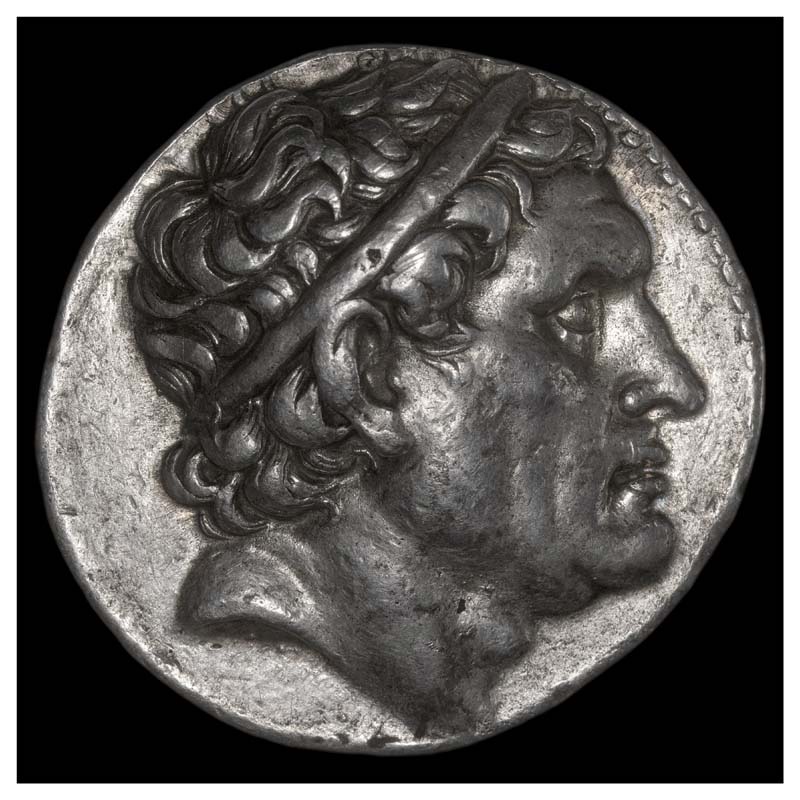
During the Hellenistic Period (post about 300bc and on), however, the Greek kings, from Greece to Asia Minor to Egypt, all began to issue coins with portraits of themselves. These were, initially, the generals of Alexander the Great, who, at Alexander’s death, had grabbed portions of his empire for themselves. We think of Seleucus, who controlled much of Asia Minor

image8seleucus.jpg

Or of Ptolemy I,

image9ptolemy1.JPG

the founder of a dynasty which ruled Egypt for nearly 300 years until their final descendant, Cleopatra VII, was defeated by the Romans.

image10cleopatravii.jpg

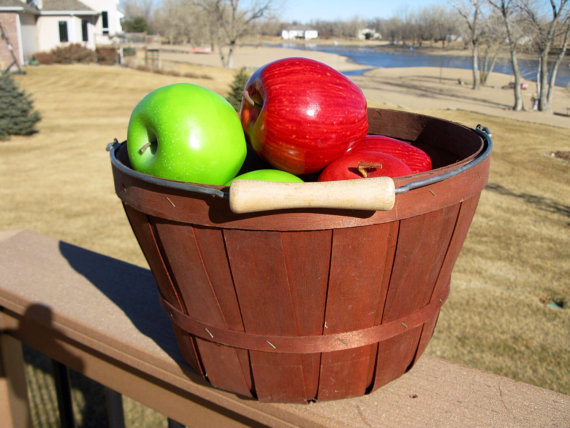
Those Romans, we imagine inspired by the Hellenistic Greeks, produced coins by the bushel .(this is an obsolete dry measurement, based upon what you can put into a basket like this:

image11bushelbasket.jpg

which was, in fact, made up of four pecks

image12peck.jpg

which could also be divided into two kennings of two pecks apiece.)

Considering that Rome produced coins from the late 4th century bc to late in the 5th century ad, it’s not surprising that there would be so many—and considering the size of the Roman empire, as well.

image13coins.jpg

Earlier Roman coins had been unlike Hellenistic coins, however, in not depicting living people—that is, until Julius Caesar gained power.

image14jc.jpg

This opened the floodgates and it’s easy to see why.

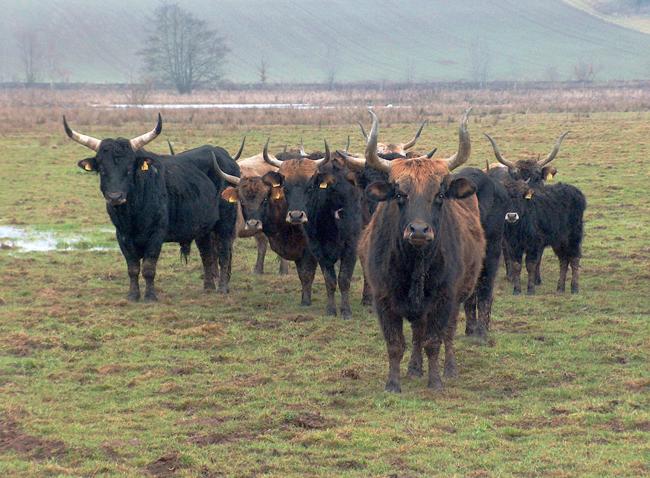
Coins are short-hand wealth, originally standing in for earlier barter items, like flocks and herds.

image15cattle.jpg

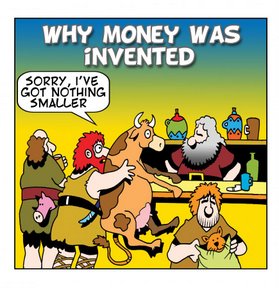
As Romans spread out beyond farms and local markets, the wealth in animals and agricultural produce, as well as raw materials, was simply not portable enough, as this cartoon shows.

image16barter.jpg

By making tokens which were accepted as a stand- in for that wealth, the agency which did so was asserting its claim to have a strong hand in, if not control of, the economy.

Julius Caesar, who had already forced the Senate to make him “Dictator for Life” (that “S…C” on both sides of his profile stands for “Senatus Consulto”—“by a decree of the Senate”), by putting his face on the currency is implying that he now is the state—and therefore possesses a power which extends to regulating the money economy by which people live and survive or prosper. (There may be a quiet joke here, as well. “SC” was stamped on bronze coins to guarantee their worth—on the back side—to have those letters surrounding Caesar on the front side, the obverse, may suggest a double meaning: he is dictator by Senatorial decree, but his worth is also being guaranteed by that decree.)

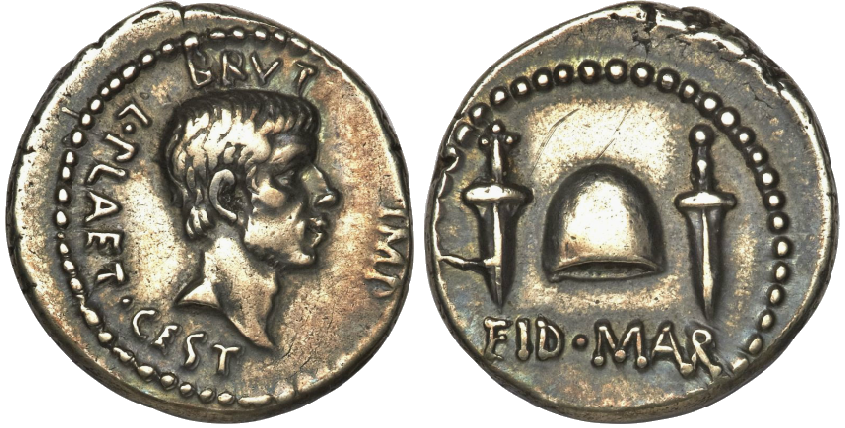
It is no surprise, then, that Brutus, one of those who murdered Caesar, would, in turn, issue his own coins—and these are even more heavily symbolic.

image17brutuscoin.png

On the obverse, there is Brutus, his name above, to our right his title “imp[erator]”—a title given to a general by his soldiers with the implication “You rule!” To our left is an abbreviated form of the name of the moneyer, the man who directed the mint, L[ucius] Plaet[orius] Cest[ianus]. Although we said that we would only examine obverses, we can’t resist the reverse here. At the bottom is the inscription, “eid mar”, standing for “eides Martis”, the “Ides of March”, the 15th of March, the day Caesar was murdered. Above that is a “pilleum”, the kind of cap worn by a slave during the ceremony called “manumission”, in which a he was turned into a “libertus”, or “freedman”.

image18manumission.jpg

To both sides of the cap are daggers.

image19pugio.jpg

Put all of this together and we see Brutus’ claim: on the 15th of March, we murdered Caesar and, as a consequence, we freed Rome from its slavery.

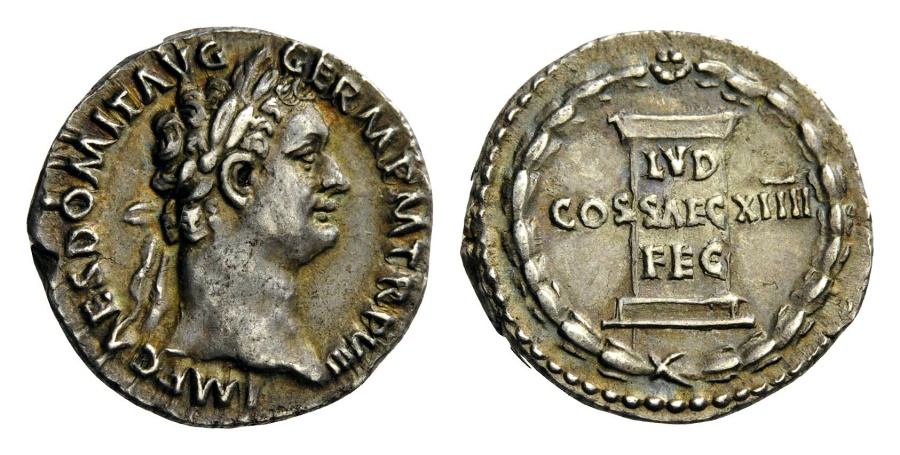
Coins like Caesar’s and Brutus’ are simple in their claims. Later emperors were less so. Look at this coin of Domitian (81-96ad).

image20domitian.jpg

On the rim of the obverse is a pile of information:

Imp[erator] Caes[ar] Domit[ianus] Aug[ustus] Germ[anicus] P[ontifex] M[aximus] Tr[ibunicia P[otestas] VIII

“Emperor Caesar Domitianus Augustus Germanicus, Chief Priest of Rome, Holding the Power of the Representative of the People 8 Times”

In fact, Domitian was sailing under false colors—Caesar, Augustus, and Germanicus all belong to the earlier Julio-Claudian dynasty, of which his family was not a part. As for “Holding the Power of the Representative of the People”, this was an ancient elective office, which allowed a member of the lower class, the Plebeians, special powers in the legislative process. As emperor and son of an emperor most of a century after elections had been abolished, this looked like an honor, but was just an empty title. “Chief Priest” had once been an extremely important position in the state, but, from the time of the first emperor, Augustus, it had simply become another title emperors claimed.

Later European rulers, eager to suggest that they were as powerful as the ancient Romans, used Roman coins as a model. Here’s one from Charlemagne, Frankish king and first Holy Roman Emperor (768-814).

image21charlemagne.jpg

Returning to our George Washington quarter,

image22gw.jpg

let’s look at the comparatively meager inscriptional material. If the coin of Domitian had so much to tell us about how important he was, the inscription on the quarter has a very different message, its focus being upon cultural values: 1.freedom; 2. religion. In our culture, probably everyone would agree with 1, but our ancestor/founders were very adamant on the subject of keeping church and state completely apart, with no influence of either upon the either, so that that 2, “In God We Trust”, shows that there is some confusion about those values. In any case, the plainness might remind us of Caesar’s coin more than Domitian’s, but, in both cases, the point of the artwork and labeling is to put the government’s stamp, whether republic or empire, upon the everyday life of everyone who buys and sells.

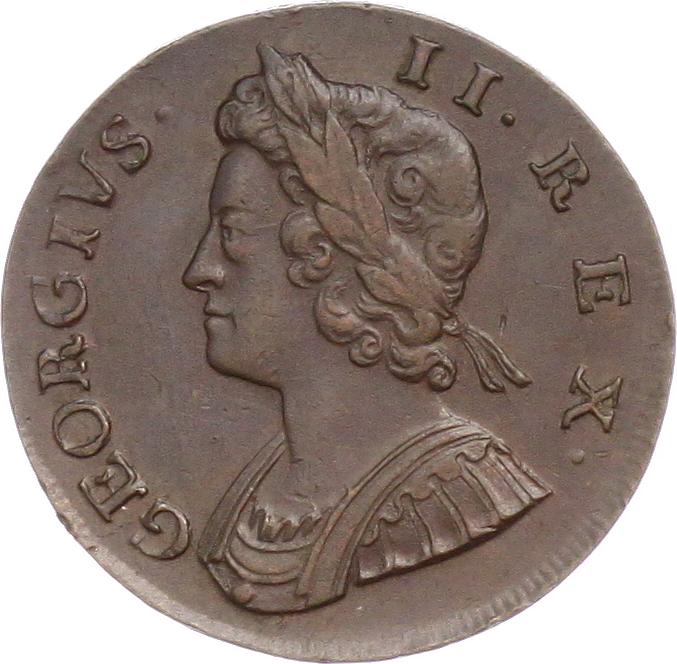
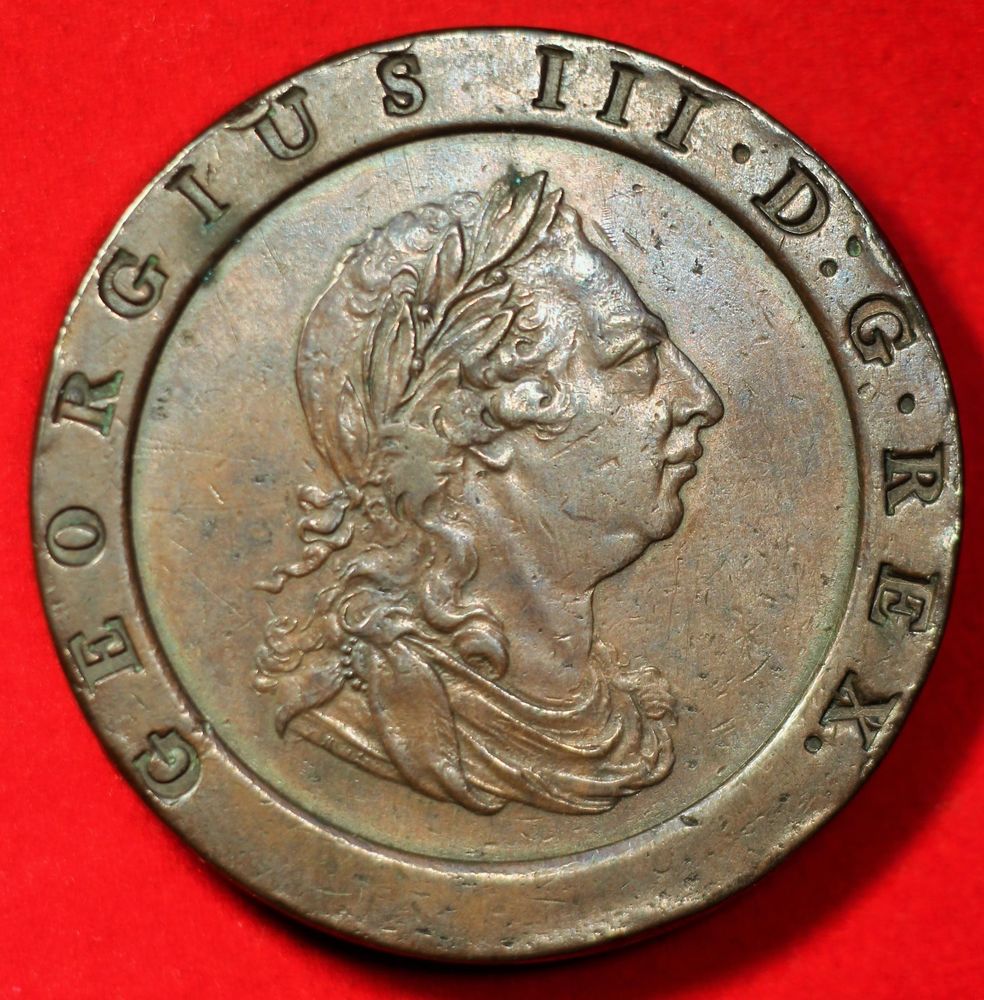
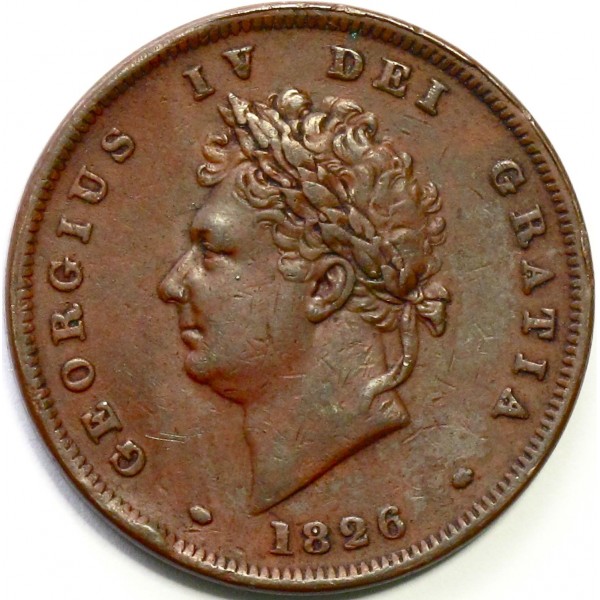
There is another message to be read here, as well. The George Washington quarter was first issued on Washington’s 200th birthday, in 1932, and is still on the obverse of the quarter, suggesting the continuity of what he stood for. In the case of monarchs, however, each new emperor/king/queen demands the issuing of new coinage, with the new ruler’s portrait, suggesting not only royal government continuity, but also, in some cases royal family continuity. Here are the first four Hanoverian kings of England, for example, all sons or grandsons, from 1714 to 1830.

image23geo1.jpg

image24geo2.jpg


image25geo3.jpg

image26geo4.jpgSo, When Prince Charles succeeds his mother, Elizabeth II,
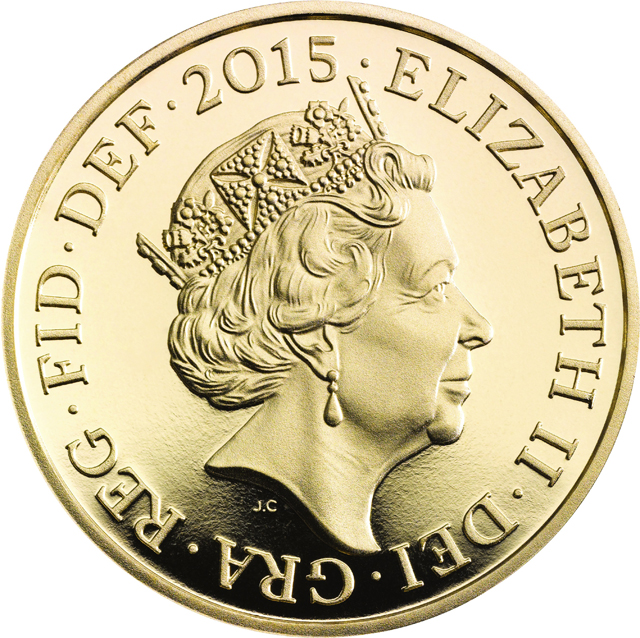
image27liz2.jpg

new coins will have to be minted.

And this brings us back to Middle-earth and to a puzzle about Gondor. There are certainly coins, as our good friend has thoughtfully pointed out. There has been no king on the throne of Gondor for many centuries, however. If Denethor’s behavior is anything to go by, the Stewards have become kings in everything but title, even though Denethor avoids the royal throne. If everyone from the Hellenistic kings to Elizabeth II has his/her portrait on the coinage, are the Stewards on Gondor’s? And what happens when Aragorn becomes King Aragorn II Elessar?

MTCIDC

CD

The Doubtful Sea Series Facebook Page

The Doubtful Sea Series Facebook Page

  • Ollamh

Categories

  • Artists and Illustrators
  • Economics in Middle-earth
  • Fairy Tales and Myths
  • Films and Music
  • Games
  • Heroes
  • Imaginary History
  • J.R.R. Tolkien
  • Language
  • Literary History
  • Maps
  • Medieval Russia
  • Military History
  • Military History of Middle-earth
  • Narnia
  • Narrative Methods
  • Poetry
  • Research
  • Star Wars
  • Terra Australis
  • The Rohirrim
  • Theatre and Performance
  • Tolkien
  • Uncategorized
  • Villains
  • Writing as Collaborators
Follow doubtfulsea on WordPress.com

Across the Doubtful Sea

Recent Postings

  • Through a glass… January 7, 2026
  • Heffalumps? December 31, 2025
  • We Three Kings December 24, 2025
  • A Moon disfigured December 17, 2025
  • On the Roads Again—Once More December 10, 2025
  • (Not) Crossing Bridges December 3, 2025
  • On the Road(s) Again—Again November 26, 2025
  • On the Road(s) Again November 19, 2025
  • To Bree (Part 2) November 12, 2025

Blog Statistics

  • 104,109 Views

Posting Archive

  • January 2026 (1)
  • December 2025 (5)
  • November 2025 (4)
  • October 2025 (5)
  • September 2025 (4)
  • August 2025 (4)
  • July 2025 (5)
  • June 2025 (4)
  • May 2025 (4)
  • April 2025 (5)
  • March 2025 (4)
  • February 2025 (4)
  • January 2025 (5)
  • December 2024 (4)
  • November 2024 (4)
  • October 2024 (5)
  • September 2024 (4)
  • August 2024 (4)
  • July 2024 (5)
  • June 2024 (4)
  • May 2024 (5)
  • April 2024 (4)
  • March 2024 (4)
  • February 2024 (4)
  • January 2024 (5)
  • December 2023 (4)
  • November 2023 (5)
  • October 2023 (4)
  • September 2023 (4)
  • August 2023 (5)
  • July 2023 (4)
  • June 2023 (4)
  • May 2023 (5)
  • April 2023 (4)
  • March 2023 (5)
  • February 2023 (4)
  • January 2023 (4)
  • December 2022 (4)
  • November 2022 (5)
  • October 2022 (4)
  • September 2022 (4)
  • August 2022 (5)
  • July 2022 (4)
  • June 2022 (5)
  • May 2022 (4)
  • April 2022 (4)
  • March 2022 (5)
  • February 2022 (4)
  • January 2022 (4)
  • December 2021 (5)
  • November 2021 (4)
  • October 2021 (4)
  • September 2021 (5)
  • August 2021 (4)
  • July 2021 (4)
  • June 2021 (5)
  • May 2021 (4)
  • April 2021 (4)
  • March 2021 (5)
  • February 2021 (4)
  • January 2021 (4)
  • December 2020 (5)
  • November 2020 (4)
  • October 2020 (4)
  • September 2020 (5)
  • August 2020 (4)
  • July 2020 (5)
  • June 2020 (4)
  • May 2020 (4)
  • April 2020 (5)
  • March 2020 (4)
  • February 2020 (4)
  • January 2020 (6)
  • December 2019 (4)
  • November 2019 (4)
  • October 2019 (5)
  • September 2019 (4)
  • August 2019 (4)
  • July 2019 (5)
  • June 2019 (4)
  • May 2019 (5)
  • April 2019 (4)
  • March 2019 (4)
  • February 2019 (4)
  • January 2019 (5)
  • December 2018 (4)
  • November 2018 (4)
  • October 2018 (5)
  • September 2018 (4)
  • August 2018 (5)
  • July 2018 (4)
  • June 2018 (4)
  • May 2018 (5)
  • April 2018 (4)
  • March 2018 (4)
  • February 2018 (4)
  • January 2018 (5)
  • December 2017 (4)
  • November 2017 (4)
  • October 2017 (4)
  • September 2017 (4)
  • August 2017 (5)
  • July 2017 (4)
  • June 2017 (4)
  • May 2017 (5)
  • April 2017 (4)
  • March 2017 (5)
  • February 2017 (4)
  • January 2017 (4)
  • December 2016 (4)
  • November 2016 (5)
  • October 2016 (6)
  • September 2016 (5)
  • August 2016 (5)
  • July 2016 (5)
  • June 2016 (5)
  • May 2016 (4)
  • April 2016 (4)
  • March 2016 (5)
  • February 2016 (4)
  • January 2016 (4)
  • December 2015 (5)
  • November 2015 (5)
  • October 2015 (4)
  • September 2015 (5)
  • August 2015 (4)
  • July 2015 (5)
  • June 2015 (5)
  • May 2015 (4)
  • April 2015 (3)
  • March 2015 (4)
  • February 2015 (4)
  • January 2015 (4)
  • December 2014 (5)
  • November 2014 (4)
  • October 2014 (6)
  • September 2014 (1)

Blog at WordPress.com.

  • Subscribe Subscribed
    • doubtfulsea
    • Join 78 other subscribers
    • Already have a WordPress.com account? Log in now.
    • doubtfulsea
    • Subscribe Subscribed
    • Sign up
    • Log in
    • Report this content
    • View site in Reader
    • Manage subscriptions
    • Collapse this bar
 

Loading Comments...