• About

doubtfulsea

~ adventure fantasy

Tag Archives: future

See-r (1)

10 Wednesday Apr 2019

Posted by Ollamh in J.R.R. Tolkien, Literary History, Narrative Methods

≈ Leave a comment

Tags

Achillea, Babylonians, Cleromancy, Drafts, dream interpretation, Dream manual, Egypt, future, Galadriel, Galdaran, haruspicy, I Ching, Lothlorien, Mirror of Galadriel, Oneiromancy, plastrons, Ramesses II, ritual, Shang Dynasty, spiritual, tarot, The Lord of the Rings, Tolkien, Zhou

Welcome, as always, dear readers.

You’ll notice our odd title.  Which came from a puzzle.  We had been thinking about Galadriel and her mirror:  when did it enter the story and, more important for the narrative, why was the episode there?
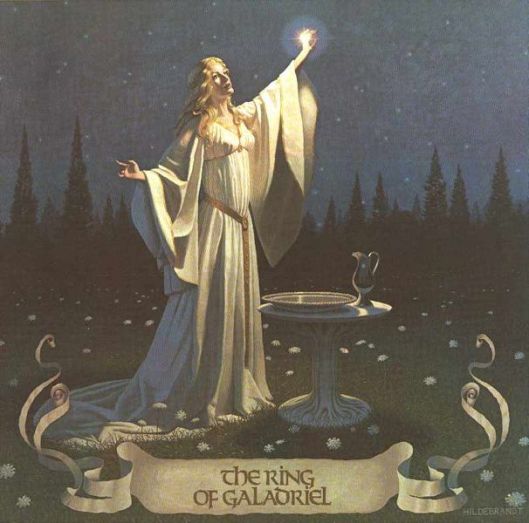
image1galad.jpg

In an earlier sketch for the text, JRRT had written:

“King Galdaran’s mirror shown to Frodo.  Mirror is of silver filled with fountain water in sun.

Sees Shire far away.  Trees being felled and a tall building being made where the old mill was.  Gaffer Gamgree turned out.  Open trouble, almost war, between Marish and Buckland on one hand—and the West.  Cosimo Sackville-Baggins very rich, buying up land.  (All/Some of this in future.)  King Galdaran says the mirror shows past, present, and future, and skill needed to decide which.  Sees a grey figure like Gandalf [?going along] in twilight but it seems to be clad in white.  Perhaps it is Saruman.

Sees a mountain spouting flame  Sees Gollum?”  (The Treason of Isengard, 249-250)

Interesting to see that the scene we know from The Fellowship of the Ring, Book Two, Chapter 7, was once very different, beginning with the fact that Galadriel’s mirror had no Galadriel—and Sam’s nightmare vision of the Shire was, originally, Frodo’s.  (There was once more potentially more of that nightmare—on a surviving scrap of paper is:  “Cosimo has industrialized it.  Factories and smoke.  The Sandymans have a biscuit factory.  Iron is found.”  Treason, 216.  We wonder, by the way, if, since he lived and worked in Oxford, JRRT’s choice of a biscuit (US:  cookie) factory might have been influenced by the Oxford Biscuits company, founded in Denmark in 1922.)

Galadriel was in the narrative at this time, and she even performs her emotional x-ray on the company (Treason, 248), but it’s in the main draft that she gains the mirror (although her name is “Galadrien” at this stage—reading the various manuscripts, we often see many characters have everything from complete name-changes—the Aragorn-as-ranger figure was once called “Trotter”—to slight adjustments). And, as Christopher Tolkien writes,

“It is seen that it was while my father was writing the ‘Lothlorien’ story ab initio [“from the beginning”] that the Lady of Lothlorien emerged…and it is also seen that the figure of Galadriel (Rhien, Galadrien) as a great power in Middle-earth was deepened and extended as he wrote.”  (Treason, 250)

All of which is true, but doesn’t help us with the second part of our question:  why is the episode there?

Seeking for clues, we looked at that early sketch, in which “King Galdaran says the mirror shows past, present, and future, and the skill needed to decide which…” which then made us think about that skill.  At first, we considered that deciding that an event was in the past would be rather easy—after all, events which had happened leave a history, and often consequences.  Suppose, however, that that history came from another place, or was never written down—after all, this is medieval Middle-earth, not our 21st-century world.  In our own western Middle Ages, literacy was limited, there was almost no long-distance communication, and people lived on rumors.  Would Middle-earth be any different?  The same would be true for the present in Middle-earth:  what would someone in the Shire know of someone in Rohan?

This brought us to the future and, speaking of history, the attempt to understand the future spreads far back into recorded time and perhaps beyond.

Shang Dynasty China (c.1600-1046BC) has provided us with an extensive archaeological record for this in the form of a vast archive of rather unusual objects, the two main ones being bundles of these

image2plastron.jpg

and piles of these.

image2shoulder.JPG

The first of these is the plastron or breastplate of a turtle.

image4plastron.jpg

The second is the shoulder blade of a cow.

image5shoulderblade.JPG

These were used for a number of spiritual contact purposes, including finding out about the future, but the method was always the same:

  1. once the surface was cleaned, a series of shallow holes was carved or drilled into the surface
  2. blood was applied to the surface (for purification? Or perhaps to attract a spirit?)
  3. questions were written to one side of each hole
  4. a hot iron was applied to the hole
  5. the surface would then crack under the heat
  6. the officiator would interpret the crack, then write his interpretation on the surface, as well

During the next dynasty, the Zhou (1000-221BC), another method was added and, in time, this became more popular.  This used the stalks of a plant of the family Achillea
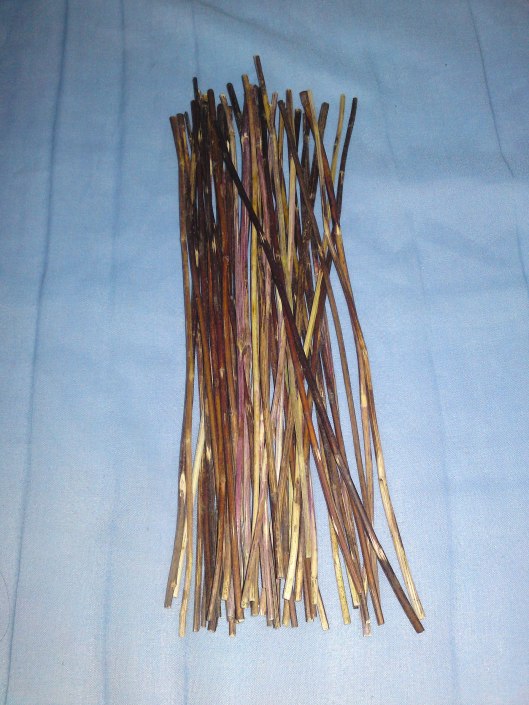
image6stalks.JPG

for the practice of cleromancy, which, basically, means using a series of random numbers to try to understand something about the spiritual world.  This is a very complicated process, as far as we can see, including not only the stalks, but a book called the I Ching.
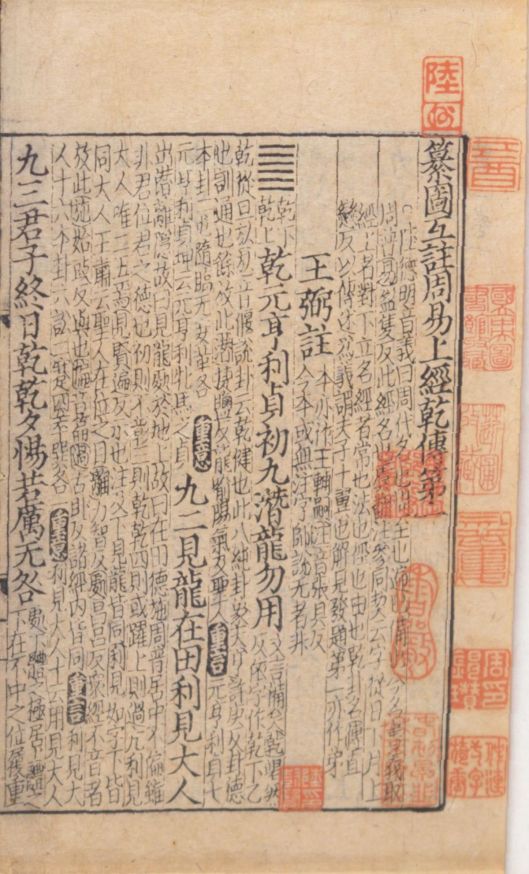
image7iching.jpg

If you would like to know more, here’s a LINK which explains the practice in 12 steps.

A method of telling the future in ancient Egypt was by interpreting dreams (oneiromancy) and we have a dream manual dated to the time of Ramesses II (1279-1213BC).
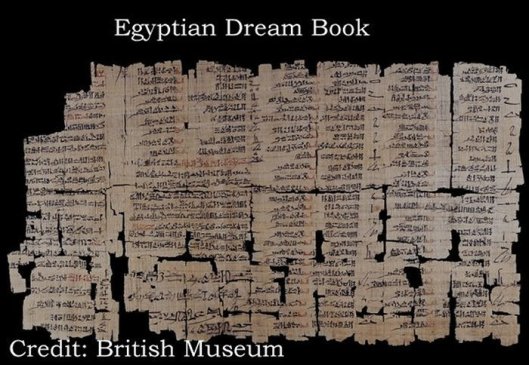
image8dreammanual.jpg

This lists common patterns in dreams, identifies whether they are bad or good, then goes on to interpret them.  Because dreams are universal, this is a world-wide method and all one has to do is to google “dream interpretation book” to see just how much is available in English alone.
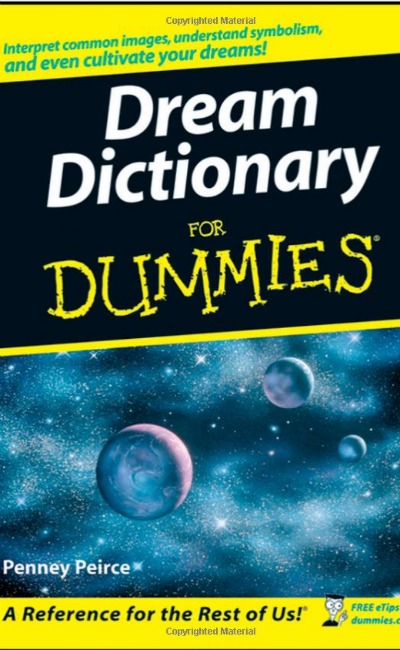
image9dreams.jpg

Babylonians used dreams, among other methods, as well as haruspicy, in which a specially-trained priest examined the entrails of certain animals, birds and sheep being especially useful.  Here’s a model of a sheep’s liver (2050-1750BC) used to help in the process.

image10liver.jpg

The holes were for pegs, to help the priest makes comparisons between the actual liver and the model.

In our next, we’ll discuss a few other early methods of attempting to see the future and, if we play our cards right,
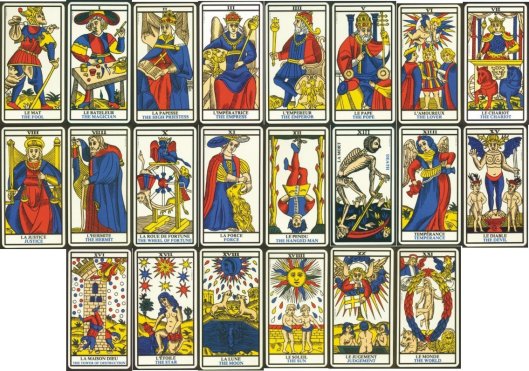
image11tarot.jpg

we’ll circle back to Galadriel’s mirror and its place in The Lord of the Rings.

image12galad.jpg

Thanks, as ever, for reading and—this part of the future we can read—

MTCIDC

CD
And Whither Then?

25 Wednesday Nov 2015

Posted by Ollamh in Artists and Illustrators, Fairy Tales and Myths, J.R.R. Tolkien, Narrative Methods

≈ 1 Comment

Tags

Adrien Guignet, Aeneid, art, bibliomancy, Bilbo, Birth of Venus, Bouguereau, chimp painting, Chinese, critics, Cumae, Delphi, Etruscans, Frodo, future, Genesis, Greeks, Homer, Impressionism, It's a dangerous business going out your door, Joseph, Kansas City Royals, Monet, New York Mets, Oedipus, plastrons, prophetic, prophetic books, Pythia, Romans, Scapula, Sibyls, Sortes Tolkienses, Sortes Vergilianae, the Bible, The Lord of the Rings, The New Testament, Tolkien, Vergil, World Series, Zhang Dynasty

“It’s a dangerous business, Frodo, going out your front door. You step onto the Road, and if you don’t keep your feet, there’s no knowing where you might be swept off to.” (The Fellowship of the Ring, Book 1, Chapter 3)

Dear Readers,

Welcome, as always. In this posting, we want to propose an aid for that dangerous business to which Frodo is referring when he quotes Bilbo.

The desire to know what will happen next makes for good novel readers—and writers—but it’s also an ancient human desire.

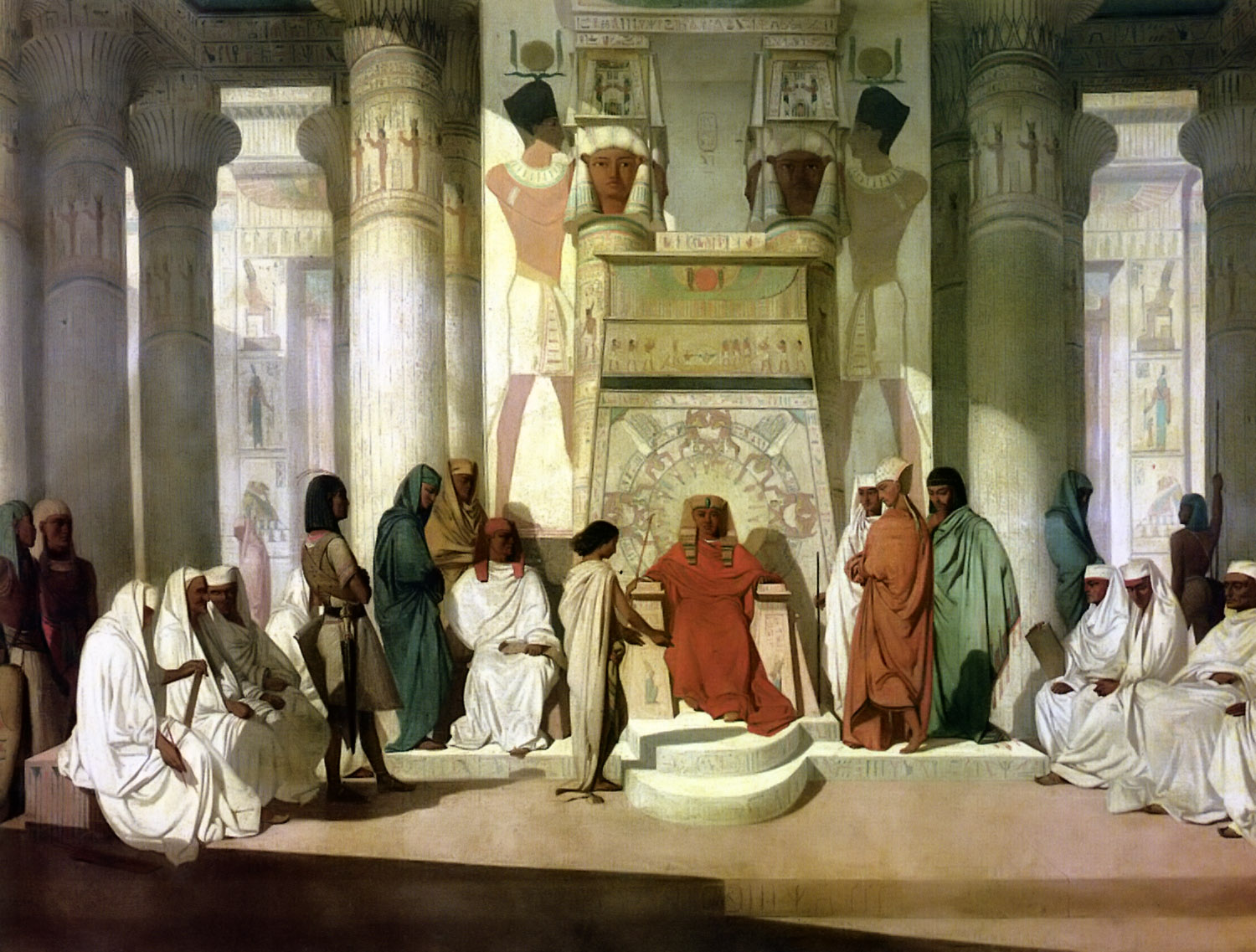
The Old Testament gives us a pharaoh with dreams, which Joseph interprets (Genesis 41-44) and which provides us with this splendid picture by Adrien Guignet (1816-1854).

Joseph Explaining the Dream to Pharoah, Jean Adrien Guignet

(This is an example of a whole world of painting which was devalued and declared stuffy and old-fashioned and pompous once Impressionism—which was originally mocked as just that, “impressions” rather than paintings—gained a foothold among art-buyers and the more progressive art critics. To us, although it may not have the wonderful fragmentations and color-freshness of those later painters, such older works have great importance historically—it’s the yin to the Impressionists’ yang, after all—and the over-the-top quality of some things—like this “Birth of Venus” by Bouguereau—1825-1905—has, we think, its own loopy charm.

The_Birth_of_Venus_by_William-Adolphe_Bouguereau_(1879)

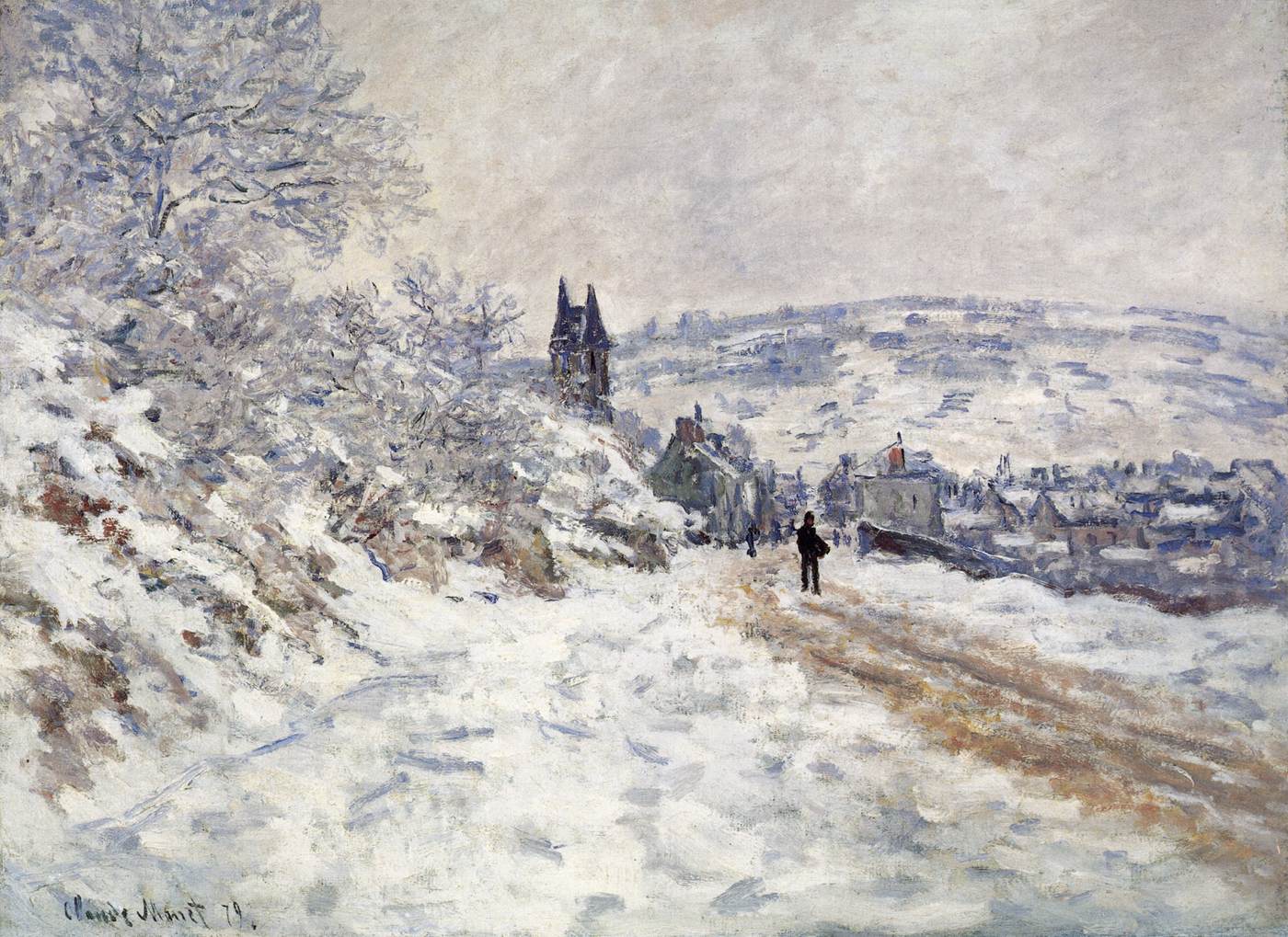
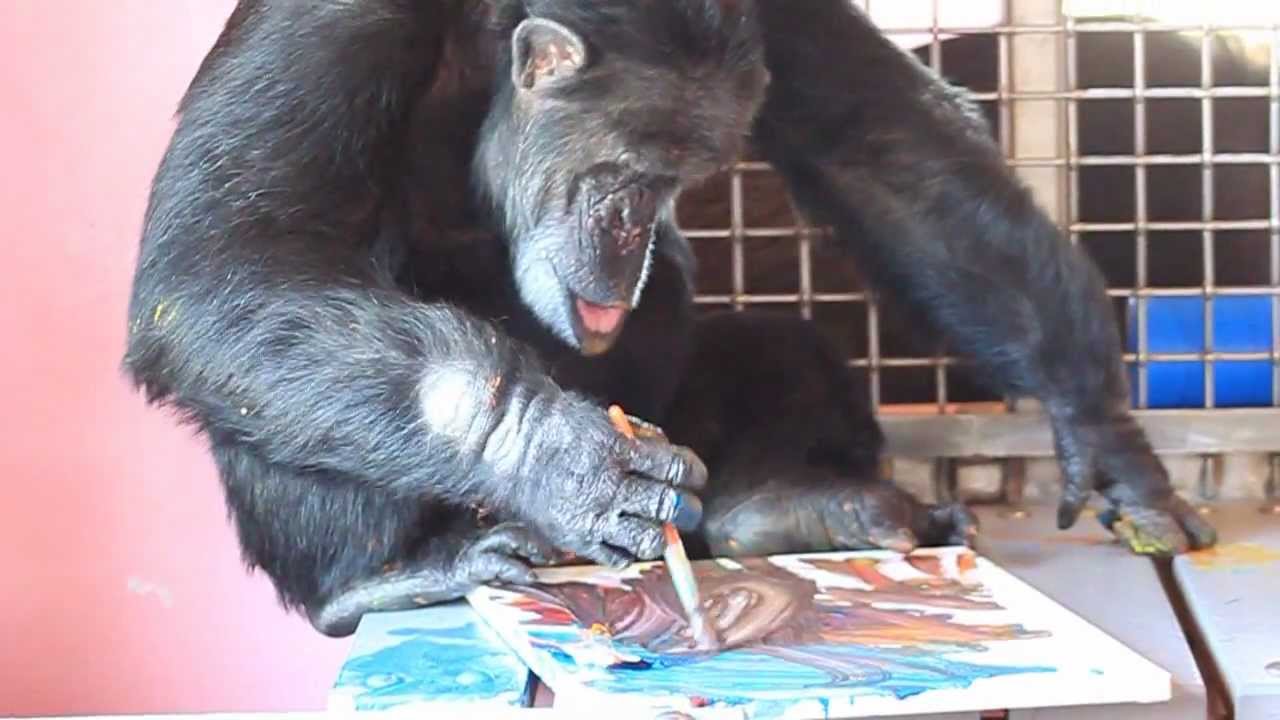
You see what we mean about yin/yang, however, when we compare it with this Monet, painted in the same year—1879. If you were brought up on academic painters like Bouguereau, Monet’s work must have looked like chimp paintings!

1vethe2

maxresdefault)

The Chinese of the Zhang Dynasty (1500-1000BC) used turtle plastrons and cow shoulder blades to consult about the future.

Shang_dynasty_inscribed_tortoise_plastron

Shang_dynasty_inscribed_scapula

The Greeks had a number of prophetic sites, like Delphi, with its Pythia.

Pythia

And the Romans had several methods, beginning with what they inherited from their big brothers to the north, the Etruscans.

liver

And, yes, this is a sheep’s liver, done in bronze. What does it do? Lots of discussion about that! It appears to have gods and perhaps constellations, or at least the sky, involved. (For more and some useful references, google “liver of Piacenza”)

The Romans consulted the insides of selected animals

haruspex

and the flying patterns of birds

romrem

although this could lead to the occasional argument

romrem1

as well as their own counterpart to people like the Pythia at Delphi, the Sibyls. One Sibyl, who was reputed to live at Cumae, even had a collection of prophetic books which talked about the future.

CumaeanSibyl

Later Romans also consulted a particular book, Vergil’s Aeneid, the idea being that you would open the book (a scroll, early on, a book—a codex—in later imperial times), close your eyes, run your finger along the lines and stop—and the line your finger was on would tell you something about the future. This is a form of bibliomancy, or telling the future by using a book. Ancients might choose Homer, or, in this case, Vergil (the Aeneid) or, for the Judeo-Christian tradition, the Bible. If you use Vergil, the practice is called Sortes Vergilianae (“Vergilian lots”—that is to say, not building sites—although one could build an interpretation upon one—but things used to determine the fate of something).

Today, we, as Tolkien fans, propose to add another text, suggesting Sortes Tolkienses (SOR-tes tol-kee-EN-ses). Pick up your copy of The Lord of the Rings, and ask it a question. Then close your eyes, open the book (make sure that it is rightsideup before you do this—although perhaps upsidedown would provide a greater-yet feel of randomness), run your index finger down the page, stop, open eyes, and read.

For our first try, we asked it who would win this year’s World Series, the New York Mets or the Kansas City Royals.

Hmm. Page 351 of the 2004 HarperCollins edition.

“…Frodo felt that he was in a timeless land that did not fade or change or fall into forgetfulness.”

Well, this is the 111th World Series—that would certainly suggest a kind of timelessness, we supposed. Then there was that business about not fading or changing—which team had won the Series last? A quick flick through statistics gave us the Royals in 1985 and the Mets in 1986. Okay. Does that mean that, since the Mets won more recently, that wouldn’t change?

Should we try again? Influenced by the rash Oedipus, asking the Pythia only one question and not pausing for clarification, we decided that it meant the Mets.

But then the Royals won.

So, we leave it to you, dear readers. You consult the Sortes Tolkienses—just make sure that the course of your life—or your team—doesn’t depend upon it!

Thanks, as always, for reading.

MTCIDC

CD

PS

There is a very entertaining experiment with the more established Sortes Vergilianae to be found by googling timesonline.typepad.com/dons_life/2012/03/sortes-virgilianae.html—an essay by the ever-lively Mary Beard.

The Doubtful Sea Series Facebook Page

The Doubtful Sea Series Facebook Page

  • Ollamh

Categories

  • Artists and Illustrators
  • Economics in Middle-earth
  • Fairy Tales and Myths
  • Films and Music
  • Games
  • Heroes
  • Imaginary History
  • J.R.R. Tolkien
  • Language
  • Literary History
  • Maps
  • Medieval Russia
  • Military History
  • Military History of Middle-earth
  • Narnia
  • Narrative Methods
  • Poetry
  • Research
  • Star Wars
  • Terra Australis
  • The Rohirrim
  • Theatre and Performance
  • Tolkien
  • Uncategorized
  • Villains
  • Writing as Collaborators
Follow doubtfulsea on WordPress.com

Across the Doubtful Sea

Recent Postings

  • A Moon disfigured December 17, 2025
  • On the Roads Again—Once More December 10, 2025
  • (Not) Crossing Bridges December 3, 2025
  • On the Road(s) Again—Again November 26, 2025
  • On the Road(s) Again November 19, 2025
  • To Bree (Part 2) November 12, 2025
  • To Bree (Part 1) November 5, 2025
  • A Plague o’ Both—No, o’ All Your Houses! October 29, 2025
  • It’s in Writing (2:  I’st a Prologue, or a Poesie for a Ring?) October 22, 2025

Blog Statistics

  • 103,220 Views

Posting Archive

  • December 2025 (3)
  • November 2025 (4)
  • October 2025 (5)
  • September 2025 (4)
  • August 2025 (4)
  • July 2025 (5)
  • June 2025 (4)
  • May 2025 (4)
  • April 2025 (5)
  • March 2025 (4)
  • February 2025 (4)
  • January 2025 (5)
  • December 2024 (4)
  • November 2024 (4)
  • October 2024 (5)
  • September 2024 (4)
  • August 2024 (4)
  • July 2024 (5)
  • June 2024 (4)
  • May 2024 (5)
  • April 2024 (4)
  • March 2024 (4)
  • February 2024 (4)
  • January 2024 (5)
  • December 2023 (4)
  • November 2023 (5)
  • October 2023 (4)
  • September 2023 (4)
  • August 2023 (5)
  • July 2023 (4)
  • June 2023 (4)
  • May 2023 (5)
  • April 2023 (4)
  • March 2023 (5)
  • February 2023 (4)
  • January 2023 (4)
  • December 2022 (4)
  • November 2022 (5)
  • October 2022 (4)
  • September 2022 (4)
  • August 2022 (5)
  • July 2022 (4)
  • June 2022 (5)
  • May 2022 (4)
  • April 2022 (4)
  • March 2022 (5)
  • February 2022 (4)
  • January 2022 (4)
  • December 2021 (5)
  • November 2021 (4)
  • October 2021 (4)
  • September 2021 (5)
  • August 2021 (4)
  • July 2021 (4)
  • June 2021 (5)
  • May 2021 (4)
  • April 2021 (4)
  • March 2021 (5)
  • February 2021 (4)
  • January 2021 (4)
  • December 2020 (5)
  • November 2020 (4)
  • October 2020 (4)
  • September 2020 (5)
  • August 2020 (4)
  • July 2020 (5)
  • June 2020 (4)
  • May 2020 (4)
  • April 2020 (5)
  • March 2020 (4)
  • February 2020 (4)
  • January 2020 (6)
  • December 2019 (4)
  • November 2019 (4)
  • October 2019 (5)
  • September 2019 (4)
  • August 2019 (4)
  • July 2019 (5)
  • June 2019 (4)
  • May 2019 (5)
  • April 2019 (4)
  • March 2019 (4)
  • February 2019 (4)
  • January 2019 (5)
  • December 2018 (4)
  • November 2018 (4)
  • October 2018 (5)
  • September 2018 (4)
  • August 2018 (5)
  • July 2018 (4)
  • June 2018 (4)
  • May 2018 (5)
  • April 2018 (4)
  • March 2018 (4)
  • February 2018 (4)
  • January 2018 (5)
  • December 2017 (4)
  • November 2017 (4)
  • October 2017 (4)
  • September 2017 (4)
  • August 2017 (5)
  • July 2017 (4)
  • June 2017 (4)
  • May 2017 (5)
  • April 2017 (4)
  • March 2017 (5)
  • February 2017 (4)
  • January 2017 (4)
  • December 2016 (4)
  • November 2016 (5)
  • October 2016 (6)
  • September 2016 (5)
  • August 2016 (5)
  • July 2016 (5)
  • June 2016 (5)
  • May 2016 (4)
  • April 2016 (4)
  • March 2016 (5)
  • February 2016 (4)
  • January 2016 (4)
  • December 2015 (5)
  • November 2015 (5)
  • October 2015 (4)
  • September 2015 (5)
  • August 2015 (4)
  • July 2015 (5)
  • June 2015 (5)
  • May 2015 (4)
  • April 2015 (3)
  • March 2015 (4)
  • February 2015 (4)
  • January 2015 (4)
  • December 2014 (5)
  • November 2014 (4)
  • October 2014 (6)
  • September 2014 (1)

Blog at WordPress.com.

  • Subscribe Subscribed
    • doubtfulsea
    • Join 78 other subscribers
    • Already have a WordPress.com account? Log in now.
    • doubtfulsea
    • Subscribe Subscribed
    • Sign up
    • Log in
    • Report this content
    • View site in Reader
    • Manage subscriptions
    • Collapse this bar
 

Loading Comments...