• About

doubtfulsea

~ adventure fantasy

Tag Archives: anglo-saxons

Doom

19 Wednesday Mar 2025

Posted by Ollamh in Uncategorized

≈ Leave a comment

Tags

anglo-saxons, Dialogus, Domesday Book, Errantry, Gothic, History, janissaries, Janissary, literature, lotr, Mazarbul, Normans, Tolkien, William Duke of Normandy

As ever, dear readers, welcome.

If nothing else would tell us that Tolkien had a fine ear for rhythm and rhyme, just take this stanza from “Errantry”, first published in The Oxford Magazine, Vol.52, No.5–

“Of crystal was his habergeon,
His scabbard of chalcedony;
With silver tipped at plenilune
His spear was hewn of ebony.
His javelins were of malachite
And stalactite – he brandished them
And went and fought the dragon flies
Of Paradise, and vanquished them.”

In his rhyming, JRRT has used some rather specialized words:

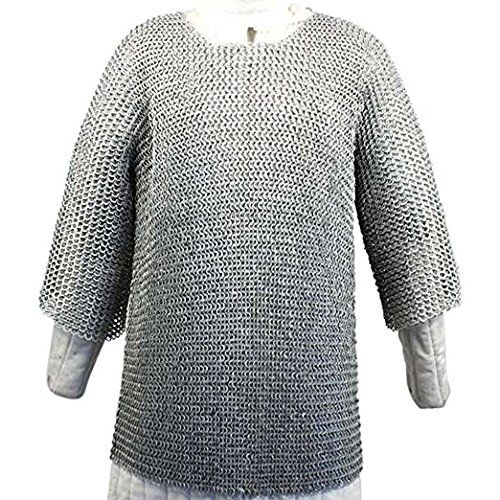
habergeon  an (often-half-sleeved) chain mail shirt—usually made of steel, not something as fragile as crystal might be
chalcedony   a kind of silica which comes in a number of varieties and colors—here’s one—

plenilune    full moon—the idea being that his spear was given its tip/blade at the full moon, suggesting perhaps a magical making? 

ebony      a dark hardwood which can be turned into a glossy black
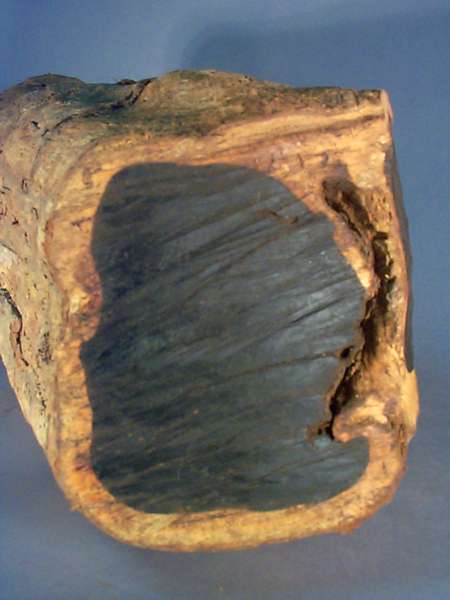
malachite   another stone, which is copper-bearing

stalactite   this isn’t a stone, but a stone deposit which hangs down in caves

and is probably there for the internal rhyme with malachite, although malachite can be discovered in stalactites, so possibly JRRT is using two different possibilities at once

brandish     to wave—something heroic warriors sometimes do with their weapons, in a boasting or threatening manner

(I haven’t been able to find an artist for this one, alas.)

For the “dragon flies of Paradise”, you’re on your own—although–

So, when it came to the soundscape of The Lord of the Rings (a subject which could use a lot of exploring—there are cues everywhere), I wasn’t surprised to see him play a little game with an unlikely toy, a drum.

(a traditional Turkish drum—with two sticks, the larger for the top, the smaller for the underside, which gives it a distinctive double sound—you can hear—and see—some here:  https://www.youtube.com/watch?v=2eaxzv6obf8  These musicians are dressed as Janissaries, members of the Sultan’s elite troops

 and you can see why such bands then influenced later 18th-century-early-19th-century composers like Mozart and Beethoven—and frightened defenders when they heard this music coming.  Here’s Beethoven’s impression:     https://www.youtube.com/watch?v=Nd0OjCO9x5Y   )

Here’s a passage of that scape which recently caught my eye:

“Gandalf had hardly spoken these words, when there came a great noise:  a rolling Boom that seemed to come from depths far below, and to tremble in the stone at their feet.  They sprang towards the door in alarm.  Doom, doom it rolled again, as if huge hands were turning the very caverns of Moria into a vast drum.  Then there came an echoing blast:  a great horn was blown in the hall, and answering horns and harsh cries were heard further off.  There was a hurrying sound of many feet.”  (The Fellowship of the Ring, Book Two, Chapter 5, “The Bridge of Khazad-dum”)

You see what I mean about soundscape:  everything described, except the movement of the Fellowship, is a sound—and notice that even the place name in the chapter title, which has, in the original, a circumflex over the –u- in “dum” , lengthening  the sound of the word, echoes  that drum and its message:  doom!

And “doom”  is an interesting word. 

A quick look at its past can take us as far back as Gothic, the ancestral cousin of the Germanic languages and our oldest surviving sample of such ancestors.  Etymonline has “Gothic doms, ‘discernment, distinction’”– https://www.etymonline.com/word/doom  but, using my on-line Gothic dictionary, we find domjan and afdomjan, where the basic sense seems to be “to establish”, from which comes the meaning “to judge” and possibly even “to condemn”.  (Here’s the page:  http://www.wulfila.be/gothic/browse/search/?find=domjan&mode=1  at the very helpful  “Wulfila” site—Wulfila was the 4th-century AD translator of the Judeo-Christian Bible from Greek into Gothic.  It’s interesting that, often the original Greek word is a form of krino, which probably original meant to “separate”, but came, in time to be used to mean “to judge, decide”, and even “to condemn”—see the Perseus page here:  https://www.perseus.tufts.edu/hopper/morph?l=kri%2Fnw&la=greek&can=kri%2Fnw0#lexicon )

This brings us to what, I imagine, was a strong influence on Tolkien whenever he wrote that word:  that oppressor of the conquered Anglo-Saxons, the so-called “Domesday Book”.
After the defeat of Harold Godwinson and his army at Hastings, in October, 1066,

Duke William of Normandy drove a ruthless campaign of conquest throughout England, giving out land to his chief followers, who then built early castles, which we call “motte and bailey”, to protect themselves and to dominate the landscape.

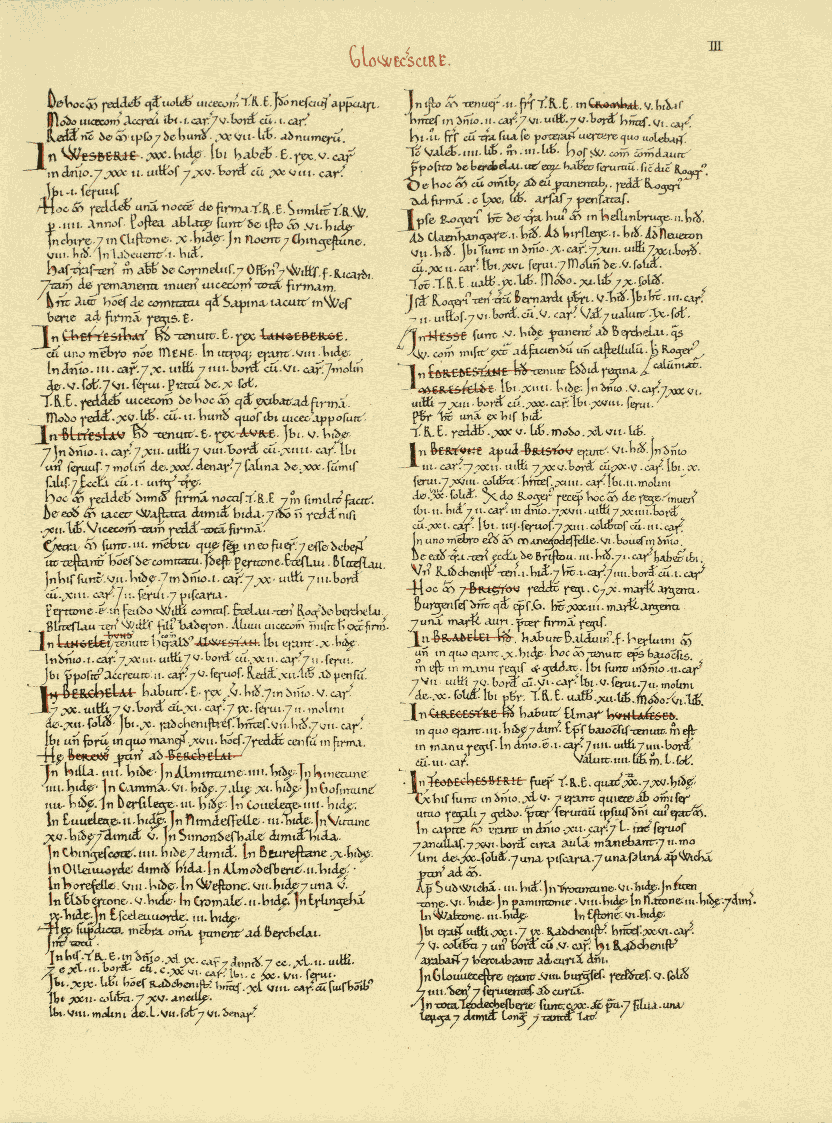
As well, perhaps helped by previous Anglo-Saxon tax records (easily accessible to the Norman officials because both they and their predecessors would have written in Latin), the Normans created a massive census, both of people and places, detailed practically down to the last chicken, asking, basically, “who is the owner? what does he own?  what’s it worth?  how much tax does he pay?”  It had no name, originally, as such, being called Liber de Wintonia—“the Winchester Book”—because that’s where the manuscript was originally stored.  (There were originally two volumes and you can read much more about them here:  https://en.wikipedia.org/wiki/Domesday_Book   And you can see the work itself here:  https://opendomesday.org/

The name by which we know it seems to have been a grim local joke, first known reference being in the 12th-century Dialogus de Scaccario, “Dialogue Concerning the Exchequer” (“scaccarium” being  a chess board, because the table used for accounting was gridded like one—it’s explained, in fact, in the “Dialogue”, but you can read about it here:  https://en.wikipedia.org/wiki/Exchequer ). 

In the text, the author (thought to have been Richard FitzNeal, the bishop of Ely, c.1130-1198), wrote:

“Hic liber ab indigenis ‘Domesdei’ nuncupatur id est dies iudicii per metaphoram.”

“This book is called by the locals ‘Doomsday’” : that is, as a metaphor, the Day of Judgment.”

(Dialogus de Scaccario, Book 1, Section 16B, which you can read here:  https://archive.org/details/cu31924021674365/page/n119/mode/2up in Latin, or here, in English:  https://avalon.law.yale.edu/medieval/excheq.asp#b1p16   This is a wonderfully practical text, explaining in enormous detail things like the vocabulary of the exchequer.  As is so often the case with medieval Latin, it’s a very pleasant read, written in plain, straightforward language and being just what it says it is, a dialogue between a “magister” and a “discipulus” .) 

Considering the choice of phrase, it isn’t surprising that that it was the choice of the “indigeni” .  One part of William’s master plan of conquest was to take the land away from its original Anglo-Saxon (indigenous) land-holders
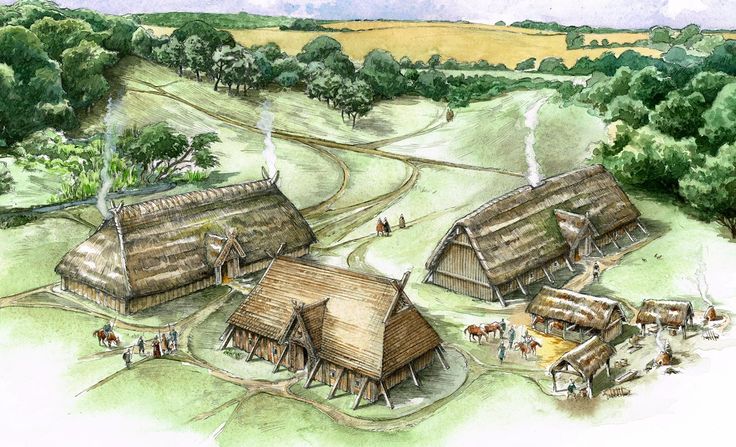
and hand it over to his own followers, thus dispossessing most of the former—and, because those owners had no recourse, it must have seemed very like the Last Judgment—the original Doomsday.

Thus, when the members of the Fellowship hear “boom” turn into “doom”, it can suggest not only a play with sound, but the same kind of catastrophic event, trapped, as they seem to be, in the record room of Mazarbul—

(Angus McBride)

And we can take this one step farther.   As Tolkien’s income grew from the sale of his books, his frustration at the amount which disappeared into tax-paying grew, as he writes:

“A Socialist government will pretty well reduce me to penury on retirement!  As it is socialist legislation is robbing me of probably ¾ of the fruits of my labors, and my ‘royalties’ are merely waiting in the bank until  the Tax Collectors walk in and bag them.  Do you wonder that anyone who can gets out of this island?  Though soon there will be nowhere to go to escape the rising tide of ‘orquerie’.”  (letter to Michael Tolkien, 6 November, 1956, Letters, 367) 

So, when JRRT thought of “doom”, as a medievalist, might he also have been equating himself with those Anglo-Saxons, not only losing their homes, but forced to hand over their hard-earned cash
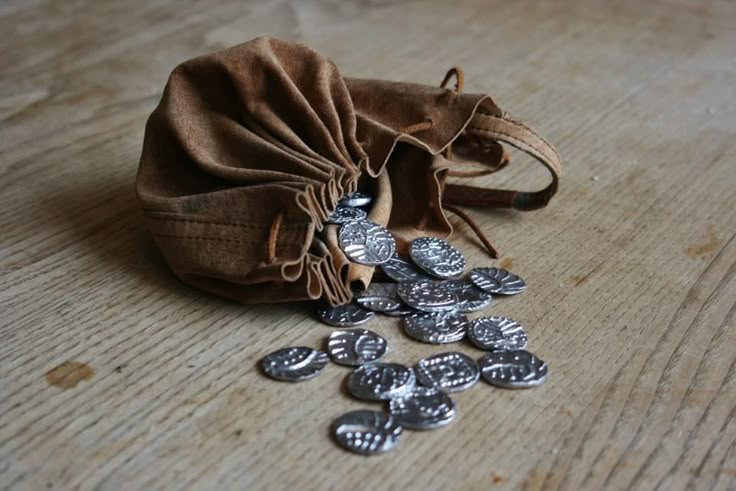
to those grim Normans, as well?

Thanks for reading, as always.

Stay well,

We’re only a month away, here in the US, from 15 April, our own “Domesday” for taxes owed,

And remember that, as ever, there’s

MTCIDC

O

Hybrids

01 Wednesday Jan 2025

Posted by Ollamh in Uncategorized

≈ Leave a comment

Tags

anglo-saxons, Boudica, chariots, eurasian-steppe, Huns, hybrds, Hybrids, Jacksons The Lord of the Rings, jacksons-lord-of-the-rings, Julius Caesar, Mongols, Normans, Rohirrim, Sarmatians, Scythians, Tacitus, Tolkien, Wainriders

As always, dear readers, welcome.

The title of this piece might suggest electric cars, and it definitely will mention several different wheeled vehicles, but it is actually what I hope is a little study in something Tolkien does wonderfully well:  taking different elements from different times and cultures and so blending them that they become believable new wholes.

Although I don’t always agree with elements in Jackson’s The Lord of the Rings, one thing has always given me pleasure:  the Rohirrim, whether en masse

or a small grouping.

And this is true for Edoras

as well as for Meduseld.

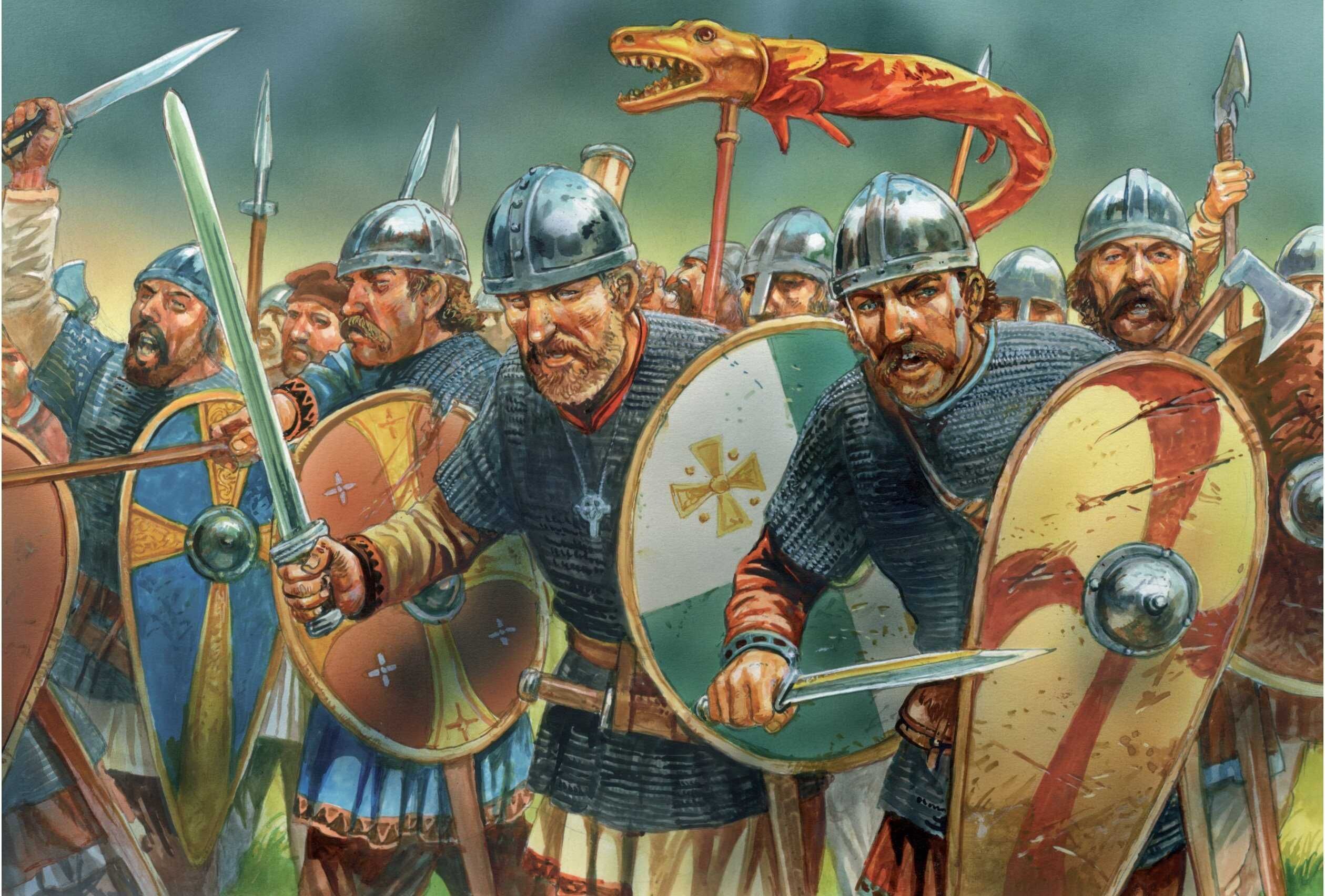
And yet they appear to be a kind of combination of peoples:  on the one hand, Tolkien imagined them to be Anglo-Saxons,

(Peter Dennis)

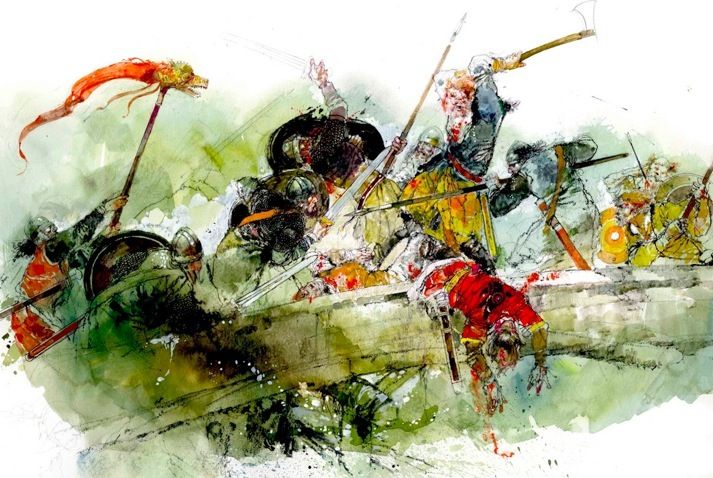
a people who primarily fought on foot, as at their last two major battles, Stamford Bridge,

(Victor Ambrus—who worked for years with the popular British archeology series, Time Team—which is available on YouTube and much recommended)

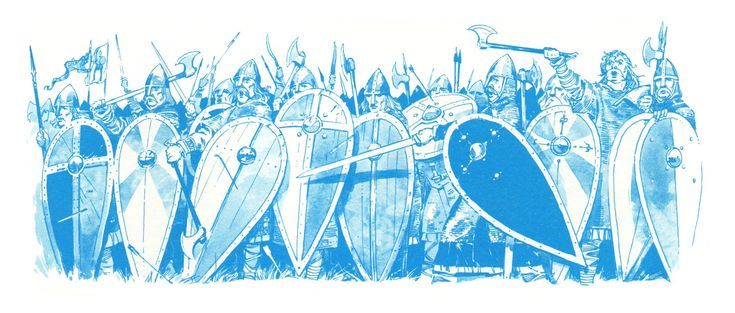
where they defeated another infantry force, the Vikings, and Hastings,

(Artist?)

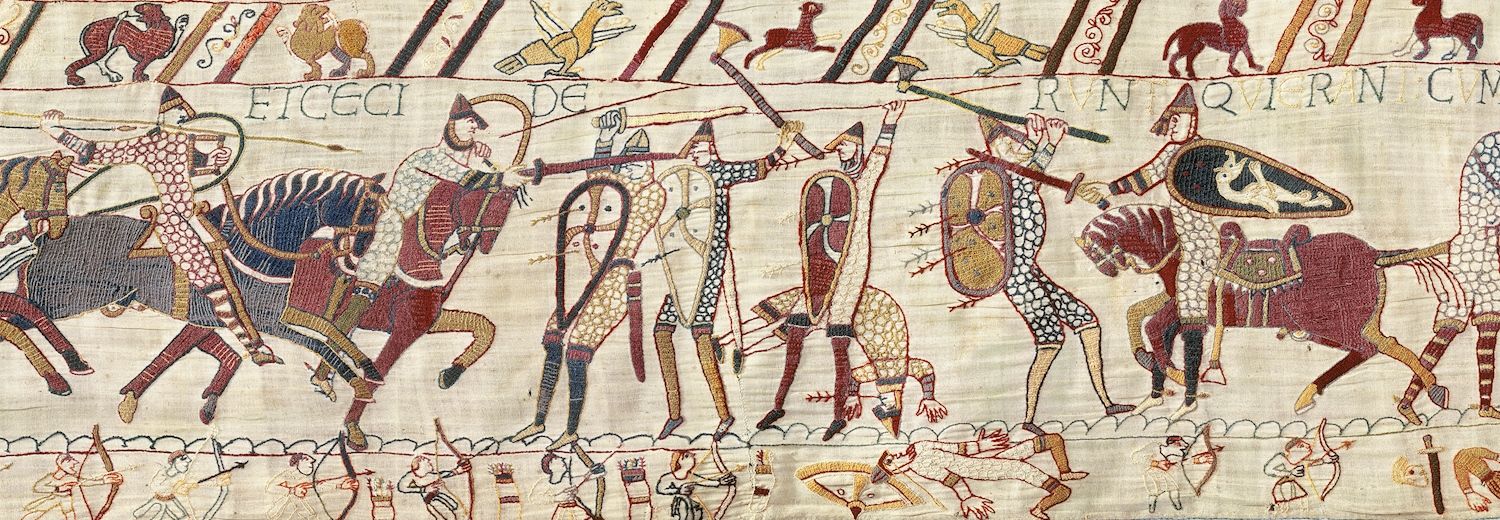
in which they were overwhelmed at the battle’s conclusion by Norman cavalry.

(From the wonderful “Bayeux Tapestry”—actually the “Bayeux Embroidery”—if you’d like to see the whole thing, look here:  https://www.bayeuxmuseum.com/en/the-bayeux-tapestry/discover-the-bayeux-tapestry/explore-online/  To my knowledge, there’s nothing like it from the Middle Ages for depicting a specific series of events in the medieval world.)

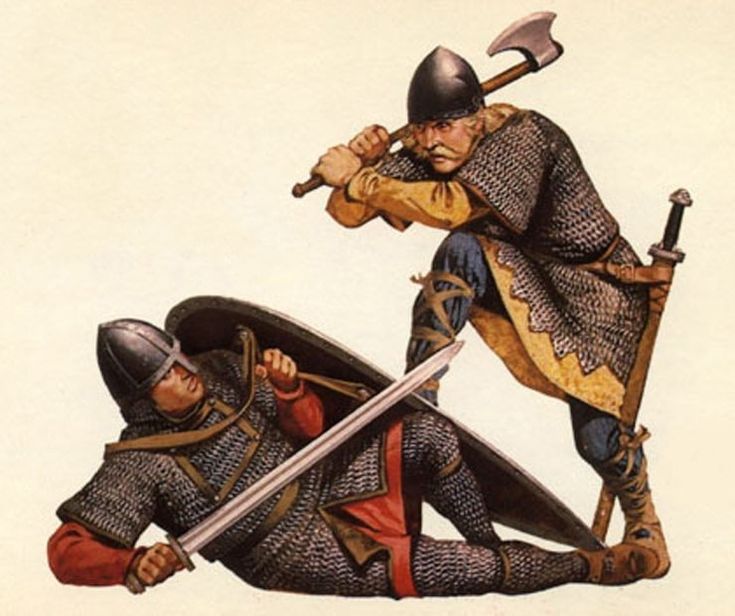
On the other hand, the Rohirrim were mounted, more like those Normans who defeated the Anglo-Saxons,

although the language they speak is, basically, a form of Old English, the language of the Anglo-Saxons.  Tolkien imagined them, in fact, as looking like the Normans, as well, describing them in a letter to Rhona Beare:

“The styles of the Bayeux Tapestry (made in England) fit them well enough, if one remembers that the kind of tennis-nets [the] soldiers seem to have on are only a clumsy conventional sign for chain-mail of small rings.”  (letter to Rhona Beare, 14 October, 1958, Letters, 401)

That is, their armor actually can look like this—

(By Angus McBride—and ironic, as, for all that McBride must have painted dozens of figures in chain mail, he once confessed in an interview that it was his least favorite part of illustrating, as the mail took so long to do.)

It’s also interesting to think about them as a people.  Anglo-Saxons were descended from a combination of locals (Romano-British) and various groups of west-Germanic tribesmen who had either been early post-Roman invaders of Britain or Germanic tribesmen brought to Britain to protect the locals from those invaders and who had become colonizers in turn.

But who were the Rohirrim and where did they come from?

“Eorl the Young was lord of the Men of Eotheod.  That land lay near the sources of Anduin, between the furthest ranges of the Misty Mountains and the northernmost parts of Mirkwood.”

(JRRT)

They had not always lived there, however:

“The Eotheod [from Old English, “Horsefolk”] had moved to those regions in the days of King Earnil II [TA 1945-2043] from lands in the vales of Anduin between the Carrock and the Gladden, and they were in origin close akin to the Beornings and the men of the west-eaves of the forest.  The forefathers of Eorl claimed descent from kings in Rhovanion, whose realm lay beyond Mirkwood before the invasions of the Wainriders…They loved best the plains and delighted in horses and in all feats of horsemanship…” (The Lord of the Rings, Appendix A II “The House of Eorl”)

The combination of “They loved best the plains and delighted in horses” makes perfect sense when one thinks about comparative history in our Middle-earth.  Consider the Eurasian Steppe, stretching from western China all the way to the Hungarian puszta.

This is an immense belt of grassland,

some 5000 miles (8000km) wide,

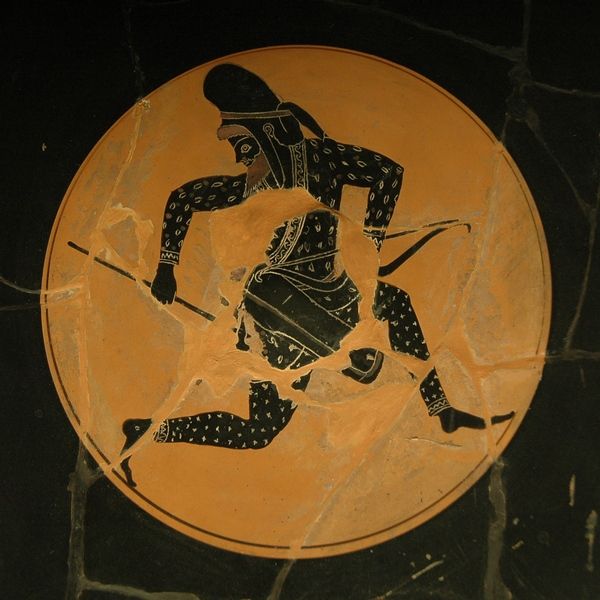
and has been the homeland of numerous horsefolk throughout history, from the Scythians

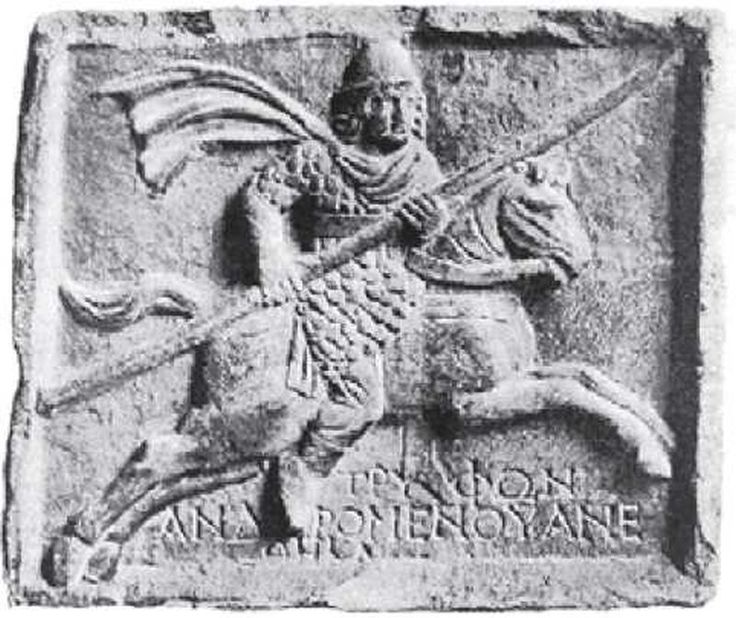
to the Sarmatians

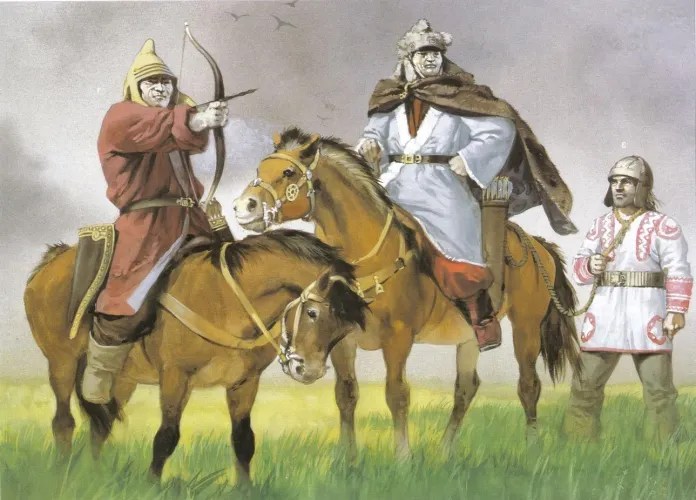
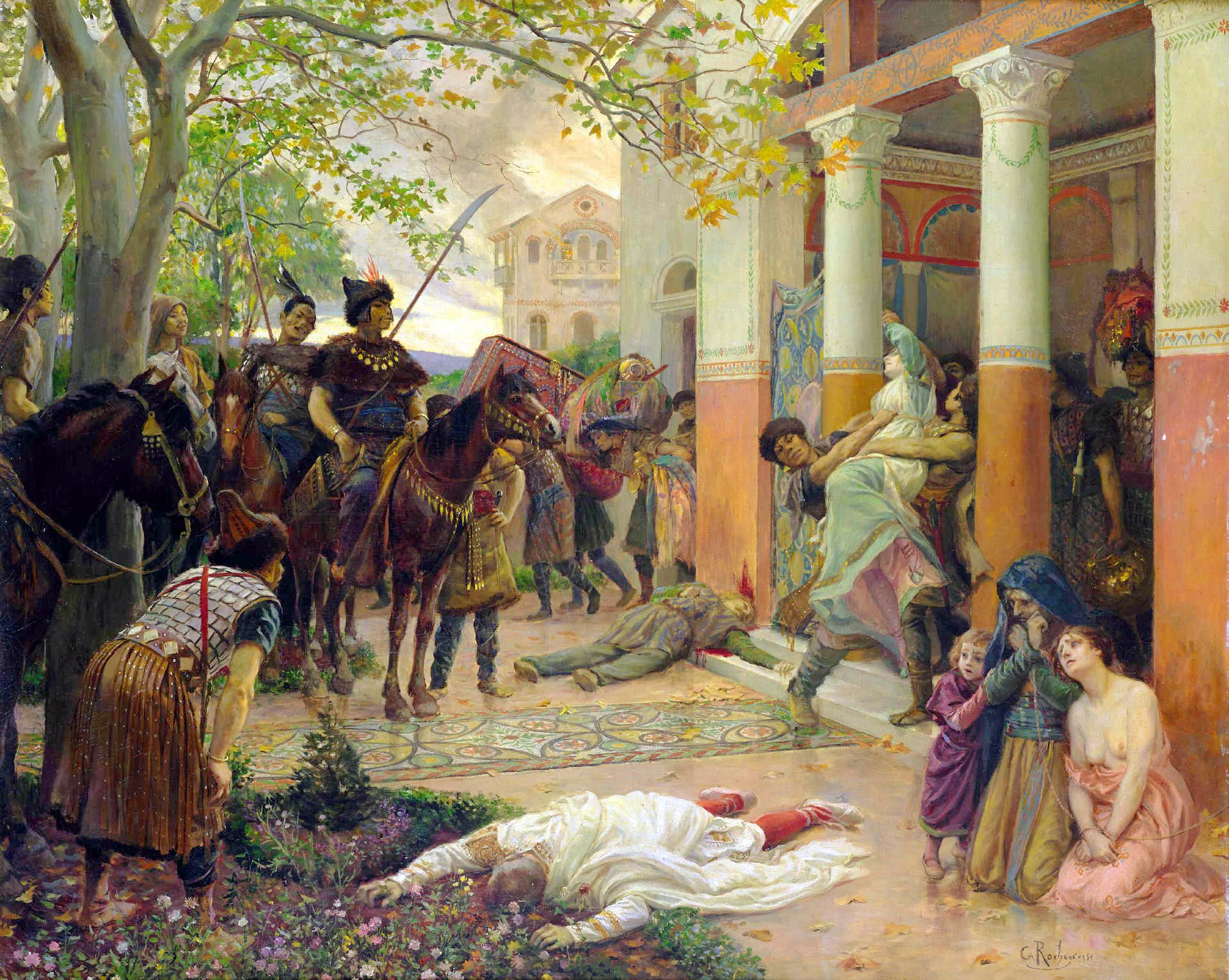
to the Huns

(Angus McBride)

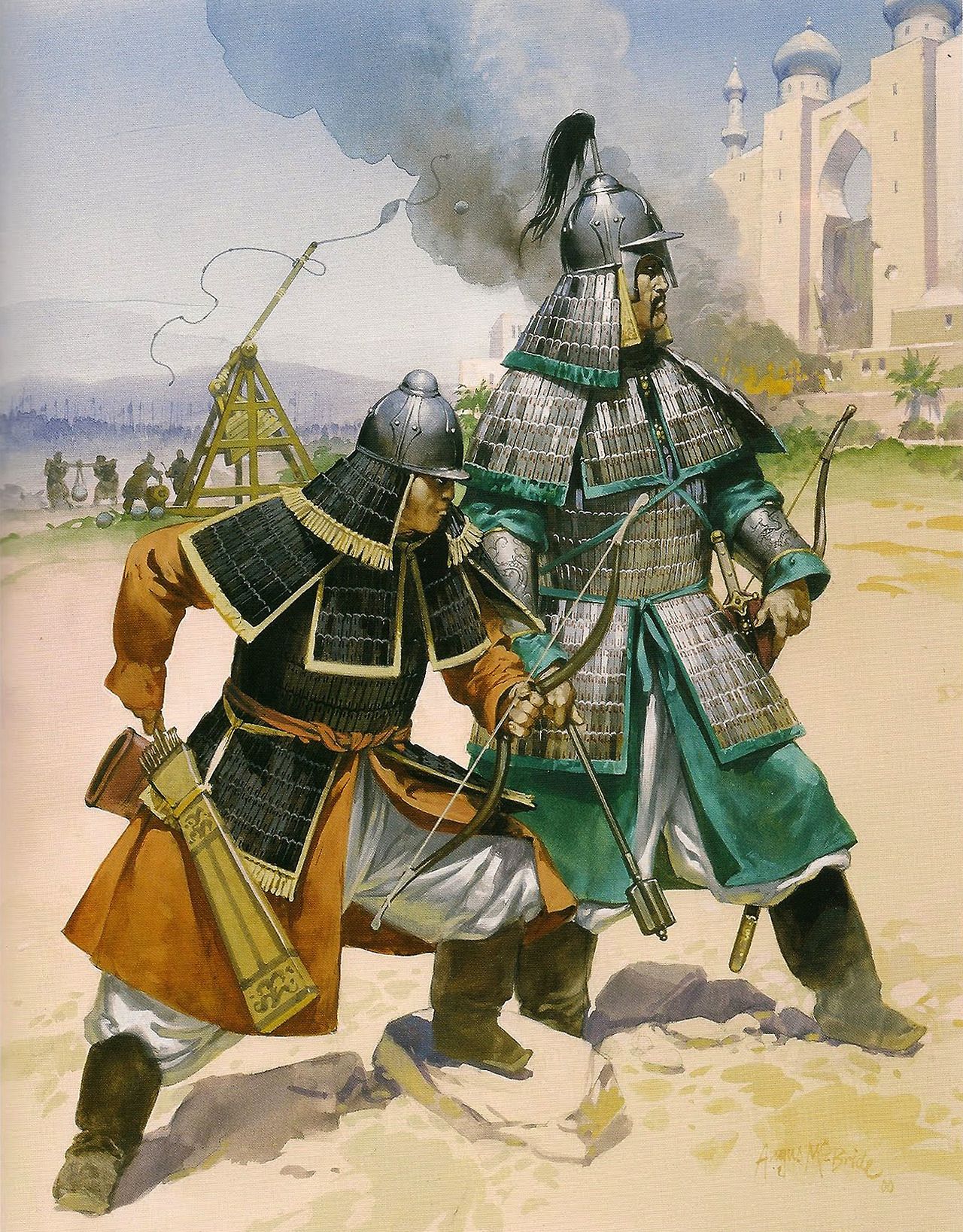
to the Mongols.

(another McBride)

All of these peoples have used the Steppe to graze their herds of horses, sometimes moving west for grazing, sometimes moving west when pressured by others further east, and sometimes as predators, like the Huns, moving west to seek new plunder.

(I haven’t been able to identify an artist for this–it has the look of late-Victorian.)

In two of these cases, whole peoples might be on the move and this is perhaps where Tolkien has gotten part of his description of those Wainriders he mentions:

“The Wainriders were a people, or a confederacy of many peoples, that came from the East; but they were stronger and better armed than any that had appeared before.  They journeyed in great wains, and their chieftains fought in chariots…” 

So, we can imagine that the Eotheod, pressured by the Wainriders, were forced west, as one steppe people is pushed westward by another to the east. 

But Tolkien gives us another—or perhaps additional–possibility:

“Stirred up, as was afterwards seen, by the emissaries of Sauron, they made a sudden assault on Gondor…The people of eastern and southern Rhovanion were enslaved; and the frontiers of Gondor were for that time withdrawn to the Anduin and the Emyn Muil.” (The Lord of the Rings, Appendix A, IV “Gondor and the Heirs of Anarion”)

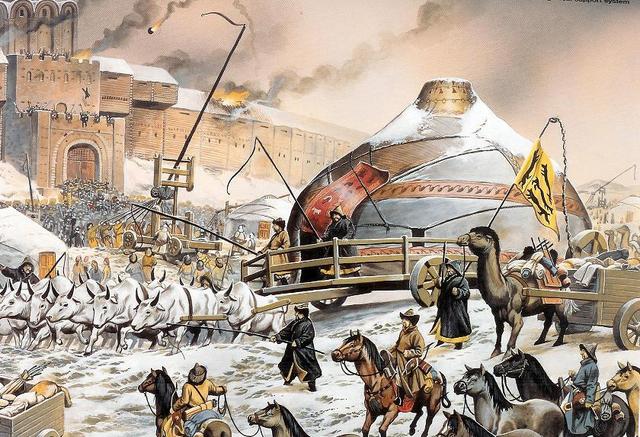
The Wainriders, then, might be both steppe peoples moving westwards, but also predators, like the Huns, or like the Mongols, who were both predators and empire-builders, and here we might see Mongols with their characteristic ger (a large round tent)—on a wagon—perhaps like the Wainriders?

(Wayne Reynolds)

Although there is no mention in our text of the Rohirrim migrating with wagons, it’s clear from parallels in our world that the peoples who crossed the Eurasian Steppe appear to have used them regularly.  But here, like the Rohirrim, we have another odd juxtaposition.  The Rohirrim are Anglo-Saxons on horseback:  cavalry, which was true for all of those migrants across the Steppe in our world.  Chariots, however, although Tolkien says that the Wainrider chiefs fought in them (of which fact this is the only mention) were not part of those other horsefolks’ arsenals.  Where did they come from?

The answer, I think, lies in the period of British history before the Anglo-Saxons and almost before the Romans, among the earlier Celtic settlers of England.  Julius Caesar encountered chariots there and described their use:

Genus hoc est ex essedis pugnae. Primo per omnes partes perequitant et tela coiciunt atque ipso terrore equorum et strepitu rotarum ordines plerumque perturbant, et cum se inter equitum turmas insinuaverunt, ex essedis desiliunt et pedibus proeliantur. 2 Aurigae interim paulatim ex proelio excedunt atque ita currus conlocant ut, si illi a multitudine hostium premantur, expeditum ad quos receptum habeant. 3 Ita mobilitatem equitum, stabilitatem peditum in proeliis praestant, ac tantum usu cotidiano et exercitatione efficiunt uti in declivi ac praecipiti loco incitatos equos sustinere et brevi moderari ac flectere et per temonem percurrere et in iugo insistere et se inde in currus citissime recipere consuerint.

“This is the kind of fighting from chariots.  At first, they ride around in all directions and throw spears and often, by the very frightfulness of the horses and the roar of the wheels, they shake the ranks [of the enemy] and, when they have slipped themselves among the troops of [enemy] cavalry, they leap from the chariots and fight on foot.  Meanwhile, the charioteers move out a little way from the fighting and so place their vehicles that, if they [the dismounted fighters] should be pressed by a large number of the enemy, they may have an easy retreat to them.  Thus, they provide the mobility of cavalry [as well as] the steadiness of infantry in [their] battles and they accomplish so much by daily practice and exercise that they are accustomed to control their stirred-up horses on a sloping and steep place and rein [them] in quickly and to turn [them] and to run along the yoke pole and to stand on the yoke and from there to take themselves back into the vehicles extremely speedily.”  (Caesar, De Bello Gallico, Book IV, Chapter 33—my translation)

(Angus McBride)

Tolkien may have remembered this from his schooldays, when he would first have encountered the text—and he might have found those wagons there, too, although slightly later.  When, in 60-61AD, the Iceni queen, Boudica, led a revolt against Roman rule,

(Peter Dennis)

in the final battle, when the tribesmen advanced towards the Roman formation, as Tacitus (c.56-c.120AD) tells us, their families watched from their wagons, placed behind the battle line (De Vita et Moribus Iulii Agricolae, Chapter 34).  And, as a prelude to the battle, Boudica had ridden among the ranks in a chariot (Chapter 35).

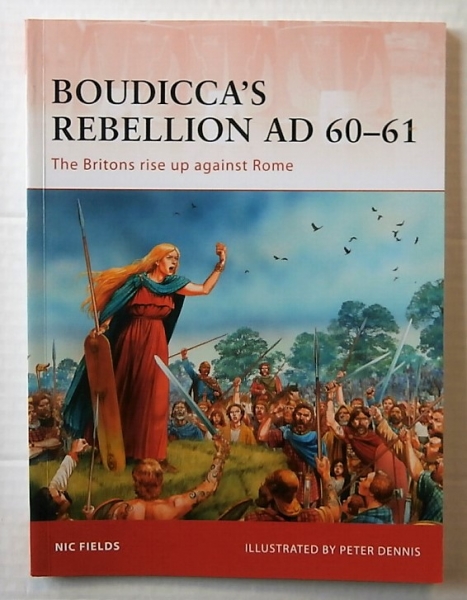
(another Peter Dennis—in fact, if you’d like to know more about this amazing woman, who, for a brief time, had been a real threat to the Romans, you might invest in: 

And so, as in combining Anglo-Saxon and Norman to create the Rohirrim, Tolkien may have taken Steppe people, added Celtic Britons, and produced the Wainriders. 

Thanks, as always for reading.

Stay well,

Remember that a horse will drink, on average, between 5 and 10 gallons (19-38 litres) of water a day,

And remember, as well, that there’s always

MTCIDC

O

Feudal

03 Wednesday Jul 2024

Posted by Ollamh in Uncategorized

≈ Leave a comment

Tags

anglo-saxons, Fantasy, History, literature, lord-of-the-rings

As always, dear readers, welcome.

As Gondor prepares to meet Sauron’s massive assault, it calls in troops from the south:

“And so the companies came and were hailed and cheered through the Gate, men of the Outlands marching to defend the City of Gondor in a dark hour…The men of Ringlo Vale behind the son of their lord, Dervorin striding on foot:  three hundreds…From the Anfalas, the Langstrand far away, a long line of men of many sorts…scantily equipped save for the household of Golasgil their lord…” (The Return of the King, Book Five, Chapter 1, “Minas Tirith”)

When the text repeatedly says, “their lord”, what, precisely, does that mean?

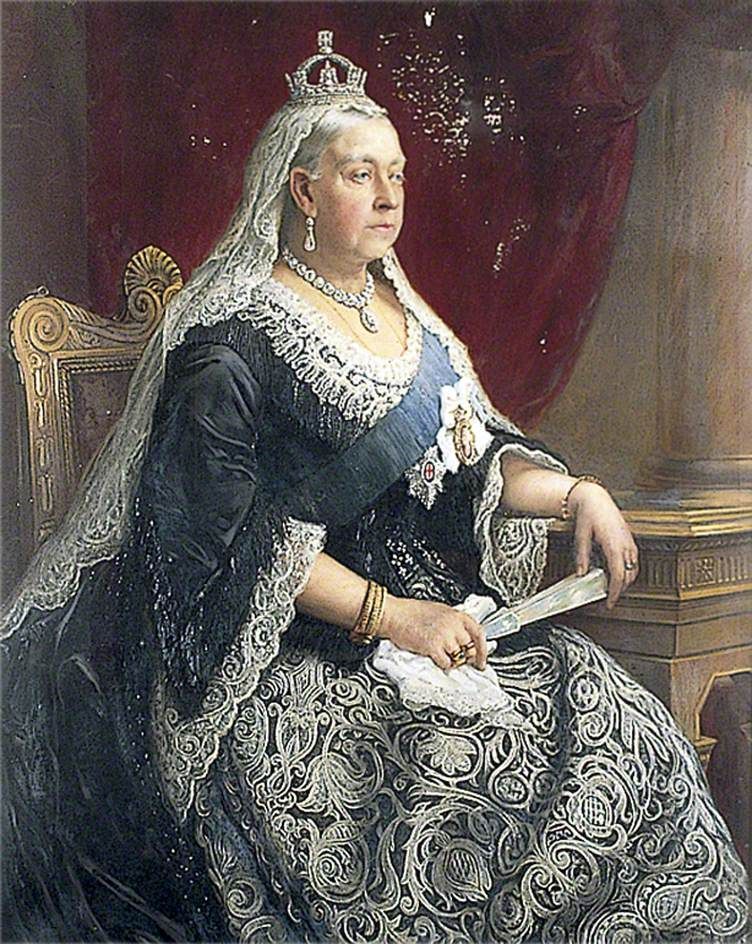
Although born in 1892, during the last years of the reign of Victoria (1819-1901),

Tolkien was not a convinced monarchist, writing to his son, Christopher:

“Give me a king whose chief interest in life is stamps, railways, or race-horses; and who has the power to sack his Vizier (or whatever you care to call him) if he does not like the cut of his trousers.”  (letter to Christopher Tolkien, 29 November, 1943, Letters, 90)

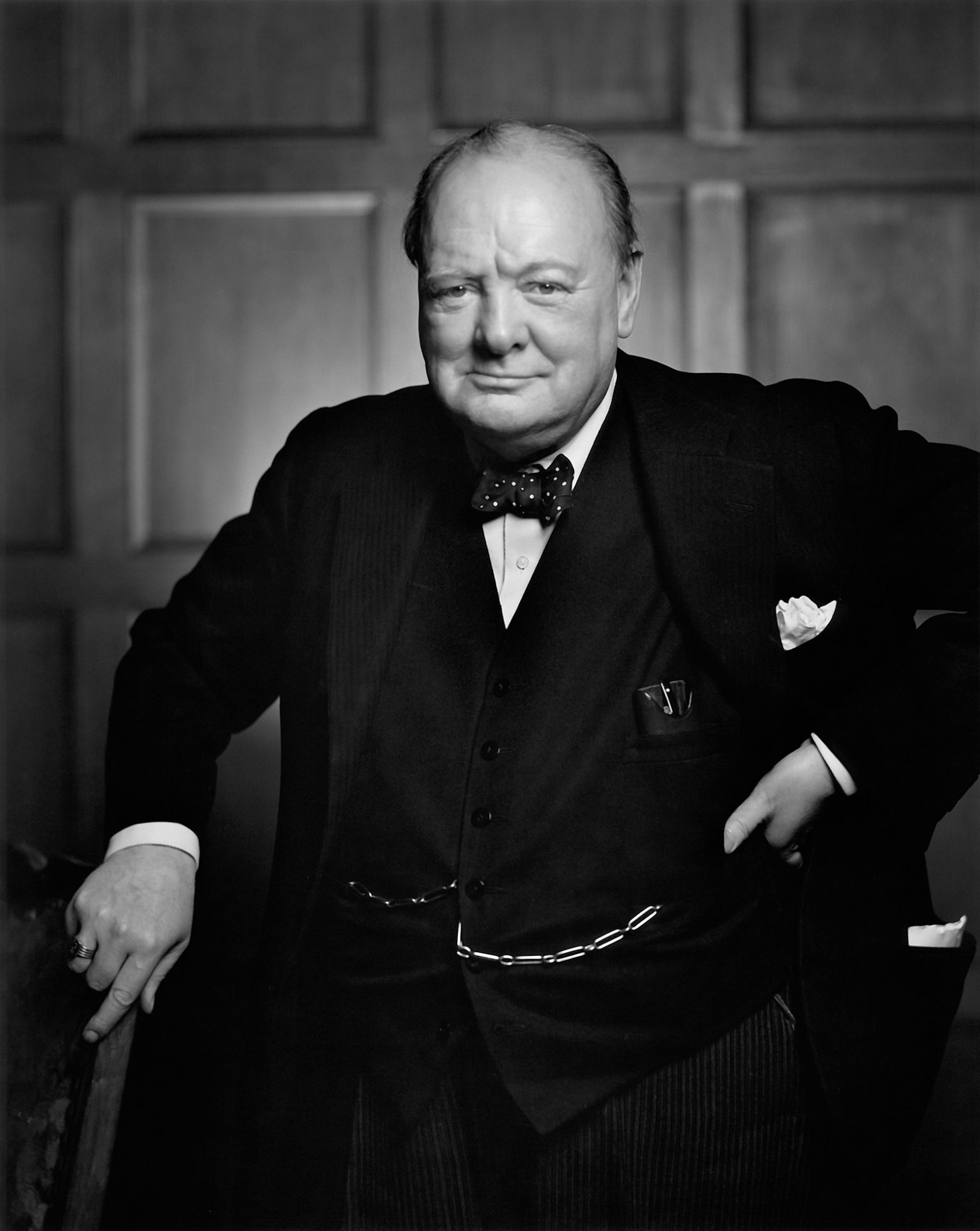
At the same time, he was not a passionate democrat, either, referring to the Prime Minister, Winston Churchill (1874-1965),

in the same letter as ‘Winston and his gang’,

having said that his own “…political opinions lean more and more to Anarchy (philosophically understood, meaning abolition of control not whiskered men with bombs)”.

And yet, in creating Middle-earth, he shows a preference for a medieval world, and, for his homeland, England, this means the form of government from which the Victorian government descended, feudalism.

Feudalism comes from Anglo-Norman French fe, which, at base, means “trust/faith”, and, in a secondary meaning, is the basis for “fief”—that is, an estate, a parcel of land given in trust.  (For more on meanings and forms, see the extremely useful Anglo-Norman French dictionary here:  https://anglo-norman.net/entry/fe ) 

It comes from Anglo-Norman because it was the Normans under Duke William of Normandy (c.1028-1087)

who introduced the concept to their newly-conquered country after 1066AD. 

The foundation of the concept is that:

1. all the land in a kingdom belongs to the king—who has received it from God

2. he then parcels the land out to his chief followers, who then

3. parcel it out to their main followers

In return, all the followers in #3 owe military service to those in #2, who, in turn, owe military service to #1.  This creates a kind of pyramid, like this–

(correct the spelling of “fife” to “fief”)

Those in #3 would then collect those below them to form the units they would bring with them when their overlords, at the king’s demand, would gather forces for whatever the king had in mind.

(by Eugene Leliepvre, one of my favorite 20th century French military illustrators)

You’ll notice, of course, that those at the bottom of the pyramid—the 99% in modern terms—had no say in any of this:  when called, they were forced to go.

This was because they were the conquered.  When the Normans invaded and defeated the previous government, in the form of the death of the Anglo-Saxon king, Harold Godwinson,

they then spread out across the landscape, ousting the previous Anglo-Saxon owners and setting up forts, called “motte and baileys”,

to control the land and the locals, who, at first at least, were simply possessions.  (Feudalism became much more complicated over time, including grades of the 99%, who could be freemen, but who still had feudal obligations.)

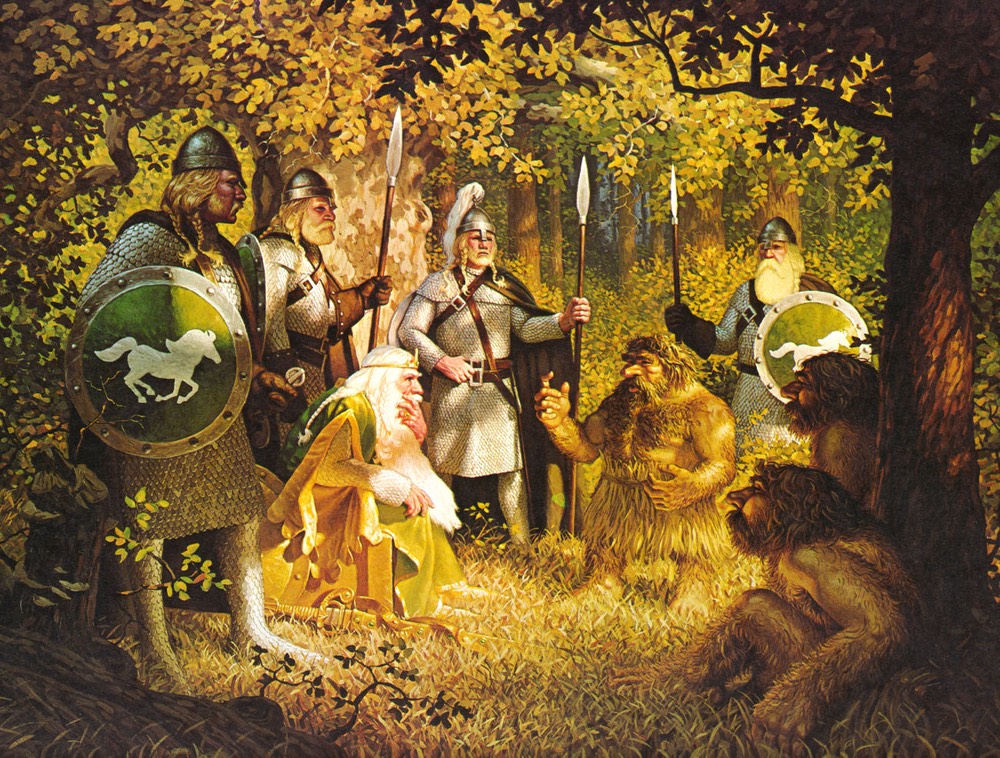
The same idea of conquest, in some sense, must have been true of the ancestors of the men of Gondor, who were not indigenous to Middle-earth, but had come from the wreckage of Numenor and who gradually came to dominate the western lands, driving the older peoples—the Dunlendings and the Woses–

(the Hildebrandts)

into exile in mountain and forest, rather than enslaving them, as the Normans did the Anglo-Saxons.

From those words “their lord”, however, it’s clear that lesser Gondorians had become part of a similar socio-economic system.

In a letter to Naomi Mitchison, JRRT has this to say about such:

“I am not incapable of or unaware of economic thought; and I think as far as the ‘mortals’ go, Men, Hobbits, and Dwarfs, that the situations are so devised that economic likelihood is there and could be worked out:  Gondor has sufficient ‘townlands’ and fiefs with a good water and road approach to provide for its population…”  (letter to Naomi Mitchison, 25 September, 1954, Letters, 292)

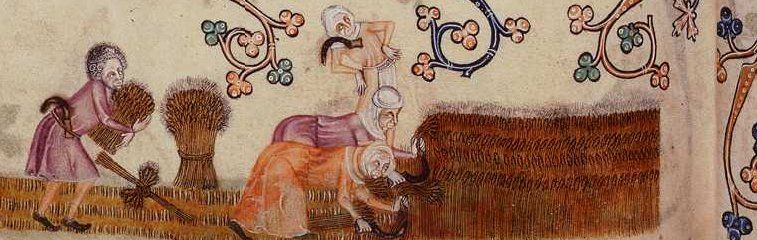
And there’s that word “fief”and all that it implies about rulers and ruled, both in Norman England and Gondor:  a comfortable life for those at the top,

but endless hard work, taxes, and military service for those—the great majority—at the bottom.

The British troops who surrounded Tolkien in the trenches in 1916

were, in a sense, the descendants of that feudal 99% and, although, when called upon, could be fearsomely brave, they were also well aware that they were still peasants to many of those in charge and so had songs with lyrics like:

“If you want to find the colonel,

I know where he is.

If you want to find the colonel,

I know where he is.

He’s sitting in comfort, stuffing his bloody gut.

I saw him.  I saw him,

Sitting in comfort, stuffing his bloody gut.”

(from “Hanging on the Old Barbed Wire”—you can hear a recording of some of the many mocking verses to this by the English group “Chumbawamba” here:  https://www.youtube.com/watch?v=zZhzV68U48w )

So, although Tolkien describes

“…Imrahil, Prince of Dol Amroth…and a company of knights in full harness riding grey horses; and behind them seven hundreds of men at arms, tall as lords, grey-eyed, dark-haired, singing as they came.”

we might wonder if JRRT, self-described as leaning “more and more to Anarchy”, could still hear the privates of 1916, and, if so, just what those men slogging along on foot behind “knights in full harness riding grey horses”  might actually have been singing?  Could it have been something as subversive as “Hanging on the Old Barbed Wire”, or maybe this couplet from an actual English peasant revolt in 1381:

“When Adam delved [dug]

And Eve span [spun],

Who was then

The gentleman?” 

Thanks, as ever, for reading.

Stay well,

Remember the Golden Rule,

(from the comic strip “The Wizard of Id”)

And remember, as well, that there’s

MTCIDC

O

The Doubtful Sea Series Facebook Page

The Doubtful Sea Series Facebook Page

  • Ollamh

Categories

  • Artists and Illustrators
  • Economics in Middle-earth
  • Fairy Tales and Myths
  • Films and Music
  • Games
  • Heroes
  • Imaginary History
  • J.R.R. Tolkien
  • Language
  • Literary History
  • Maps
  • Medieval Russia
  • Military History
  • Military History of Middle-earth
  • Narnia
  • Narrative Methods
  • Poetry
  • Research
  • Star Wars
  • Terra Australis
  • The Rohirrim
  • Theatre and Performance
  • Tolkien
  • Uncategorized
  • Villains
  • Writing as Collaborators
Follow doubtfulsea on WordPress.com

Across the Doubtful Sea

Recent Postings

  • On the Road(s) Again—Again November 26, 2025
  • On the Road(s) Again November 19, 2025
  • To Bree (Part 2) November 12, 2025
  • To Bree (Part 1) November 5, 2025
  • A Plague o’ Both—No, o’ All Your Houses! October 29, 2025
  • It’s in Writing (2:  I’st a Prologue, or a Poesie for a Ring?) October 22, 2025
  • It’s in Writing (1) October 15, 2025
  • King Trotter? October 8, 2025
  • The Voices in His Head  October 2, 2025

Blog Statistics

  • 102,010 Views

Posting Archive

  • November 2025 (4)
  • October 2025 (5)
  • September 2025 (4)
  • August 2025 (4)
  • July 2025 (5)
  • June 2025 (4)
  • May 2025 (4)
  • April 2025 (5)
  • March 2025 (4)
  • February 2025 (4)
  • January 2025 (5)
  • December 2024 (4)
  • November 2024 (4)
  • October 2024 (5)
  • September 2024 (4)
  • August 2024 (4)
  • July 2024 (5)
  • June 2024 (4)
  • May 2024 (5)
  • April 2024 (4)
  • March 2024 (4)
  • February 2024 (4)
  • January 2024 (5)
  • December 2023 (4)
  • November 2023 (5)
  • October 2023 (4)
  • September 2023 (4)
  • August 2023 (5)
  • July 2023 (4)
  • June 2023 (4)
  • May 2023 (5)
  • April 2023 (4)
  • March 2023 (5)
  • February 2023 (4)
  • January 2023 (4)
  • December 2022 (4)
  • November 2022 (5)
  • October 2022 (4)
  • September 2022 (4)
  • August 2022 (5)
  • July 2022 (4)
  • June 2022 (5)
  • May 2022 (4)
  • April 2022 (4)
  • March 2022 (5)
  • February 2022 (4)
  • January 2022 (4)
  • December 2021 (5)
  • November 2021 (4)
  • October 2021 (4)
  • September 2021 (5)
  • August 2021 (4)
  • July 2021 (4)
  • June 2021 (5)
  • May 2021 (4)
  • April 2021 (4)
  • March 2021 (5)
  • February 2021 (4)
  • January 2021 (4)
  • December 2020 (5)
  • November 2020 (4)
  • October 2020 (4)
  • September 2020 (5)
  • August 2020 (4)
  • July 2020 (5)
  • June 2020 (4)
  • May 2020 (4)
  • April 2020 (5)
  • March 2020 (4)
  • February 2020 (4)
  • January 2020 (6)
  • December 2019 (4)
  • November 2019 (4)
  • October 2019 (5)
  • September 2019 (4)
  • August 2019 (4)
  • July 2019 (5)
  • June 2019 (4)
  • May 2019 (5)
  • April 2019 (4)
  • March 2019 (4)
  • February 2019 (4)
  • January 2019 (5)
  • December 2018 (4)
  • November 2018 (4)
  • October 2018 (5)
  • September 2018 (4)
  • August 2018 (5)
  • July 2018 (4)
  • June 2018 (4)
  • May 2018 (5)
  • April 2018 (4)
  • March 2018 (4)
  • February 2018 (4)
  • January 2018 (5)
  • December 2017 (4)
  • November 2017 (4)
  • October 2017 (4)
  • September 2017 (4)
  • August 2017 (5)
  • July 2017 (4)
  • June 2017 (4)
  • May 2017 (5)
  • April 2017 (4)
  • March 2017 (5)
  • February 2017 (4)
  • January 2017 (4)
  • December 2016 (4)
  • November 2016 (5)
  • October 2016 (6)
  • September 2016 (5)
  • August 2016 (5)
  • July 2016 (5)
  • June 2016 (5)
  • May 2016 (4)
  • April 2016 (4)
  • March 2016 (5)
  • February 2016 (4)
  • January 2016 (4)
  • December 2015 (5)
  • November 2015 (5)
  • October 2015 (4)
  • September 2015 (5)
  • August 2015 (4)
  • July 2015 (5)
  • June 2015 (5)
  • May 2015 (4)
  • April 2015 (3)
  • March 2015 (4)
  • February 2015 (4)
  • January 2015 (4)
  • December 2014 (5)
  • November 2014 (4)
  • October 2014 (6)
  • September 2014 (1)

Blog at WordPress.com.

  • Subscribe Subscribed
    • doubtfulsea
    • Join 78 other subscribers
    • Already have a WordPress.com account? Log in now.
    • doubtfulsea
    • Subscribe Subscribed
    • Sign up
    • Log in
    • Report this content
    • View site in Reader
    • Manage subscriptions
    • Collapse this bar
 

Loading Comments...