Tags
As ever, welcome, dear readers.
“In another moment down went Alice after it, never once considering how in the world she was to get out again.
The rabbit-hole went straight on like a tunnel for some way, and then dipped suddenly down, so suddenly that Alice had not a moment to think about stopping herself before she found herself falling down what seemed to be a very deep well.” (Alice’s Adventures in Wonderland, Chapter One, “Down the Rabbit-hole” and you can have your own copy of the second version of the first—1865-66 edition here: https://ia600505.us.archive.org/27/items/alicesadventur00carr/alicesadventur00carr.pdf and read about why I wrote “1865-66 edition” and much more here: https://en.wikipedia.org/wiki/Alice%27s_Adventures_in_Wonderland )

(I discovered this image on two different pinterest sites, one in Korean, the other under the name “Ree Smith”, but with no artist identified, alas. I love all puppets and shadow puppets in particular and this so reminded me of the work of Lotte Reiniger (1899-1981) and her “Adventures of Prince Achmed”, 1926,

that it made me wish that she had made an “Alice”. To learn more about Reiniger and her work, see: https://silentfilm.org/the-adventures-of-prince-achmed-1/ The original film hasn’t survived as such, but to see a reconstruction by a passionate amateur—and it’s a remarkable work—look here: https://archive.org/details/prince-achmed-english-subtitles )
As you can see from where I’ve just gone, English has adopted “down the rabbit hole” to mean “digressive”, which, in turn, comes from the Latin verb, digredior, “to go away from”, (literally, “to walk away from”, being a combination of dis, “apart/away from” plus gradus, “a step”)—and look, have I just begun to do a mini-rabbit hole again?
I, myself, in writing nearly 500 postings, have happily fallen down almost innumerable such holes, and this posting began with a tumble down another.
I was delighted to learn, last autumn, that there was to be a new edition of Carpenter/Tolkien’s 1981 The Letters of J.R.R. Tolkien, a mainstay for anyone with a strong interest, not only in Tolkien and his work, but in the writing of fantasy in general.
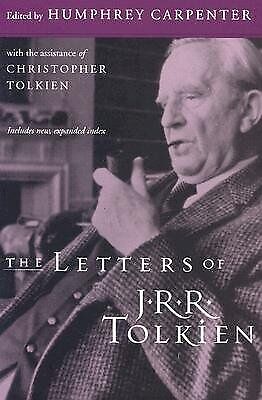
Humphrey Carpenter (1946-2005), with the aid of Christopher Tolkien, had done—as in his biography of Tolkien, 1977—an amazing job of collecting the materials (for a brief, affectionate obituary of Carpenter, see: https://www.theguardian.com/news/2005/jan/05/guardianobituaries.booksobituaries ), but as we learn, he had done almost too good a job and the publisher was forced to have rather significant cuts made. This new edition includes both material cut from letters and a series of letters cut from that original addition, as well.

Needless to say, it arrived and I was paging through it when I came across this rather mystifying reference in a letter to Christopher from 29 November, 1944:
“Very trying having your chief audience Ten Thousand Miles away, on or off The Walloping Window-blind.” (to Christopher Tolkien, 29 November, 1944, Letters, 147)
Unusually for Carpenter, there was no endnote as to what this was a reference, so—oh yes, yet again, a rabbit hole plunge, which revealed this:
“A capital ship for an ocean trip
Was “The Walloping Window-blind;”
No gale that blew dismayed her crew
Or troubled the captain’s mind.
The man at the wheel was taught to feel
Contempt for the wildest blow,
And it often appeared, when the weather had cleared,
That he’d been in his bunk below.
The boatswain’s mate was very sedate,
Yet fond of amusement, too;
And he played hop-scotch with the starboard watch
While the captain tickled the crew.
And the gunner we had was apparently mad,
For he sat on the after-rail,
And fired salutes with the captain’s boots,
In the teeth of the booming gale.
The captain sat in a commodore’s hat,
And dined, in a royal way,
On toasted pigs and pickles and Jigs
And gummery bread, each day.
But the cook was Dutch, and behaved as such;
For the food .that he gave the crew
Was a number of tons of hot-cross buns,
Chopped up with sugar and glue.
And we all felt ill as mariners will,
On a diet that’s cheap and rude;
And we shivered and shook as we dipped the cook
In a tub of his gluesome food.
Then nautical pride we laid aside,
And we cast the vessel ashore
On the Gulliby Isles, where the Poohpooh smiles,
And the Anagazanders roar.
Composed of sand was that favored land,
And trimmed with cinnamon straws;
And pink and blue was the pleasing hue
Of the Tickletoeteaser’s claws.
And we sat on the edge of a sandy ledge
And shot at the whistling bee;
And the Binnacle-bats wore water-proof hats
As they danced in the sounding sea.
On rubagub bark, from dawn to dark,
We fed, till we all had grown
Uncommonly shrunk, when a Chinese junk
Came by from the torriby zone.
She was stubby and square, but we didn’t much care,
And we cheerily put to sea;
And we left the crew of the junk to chew
The bark of the rubagub tree.”
This is quoted from Davy and the Goblin, 1884-5,
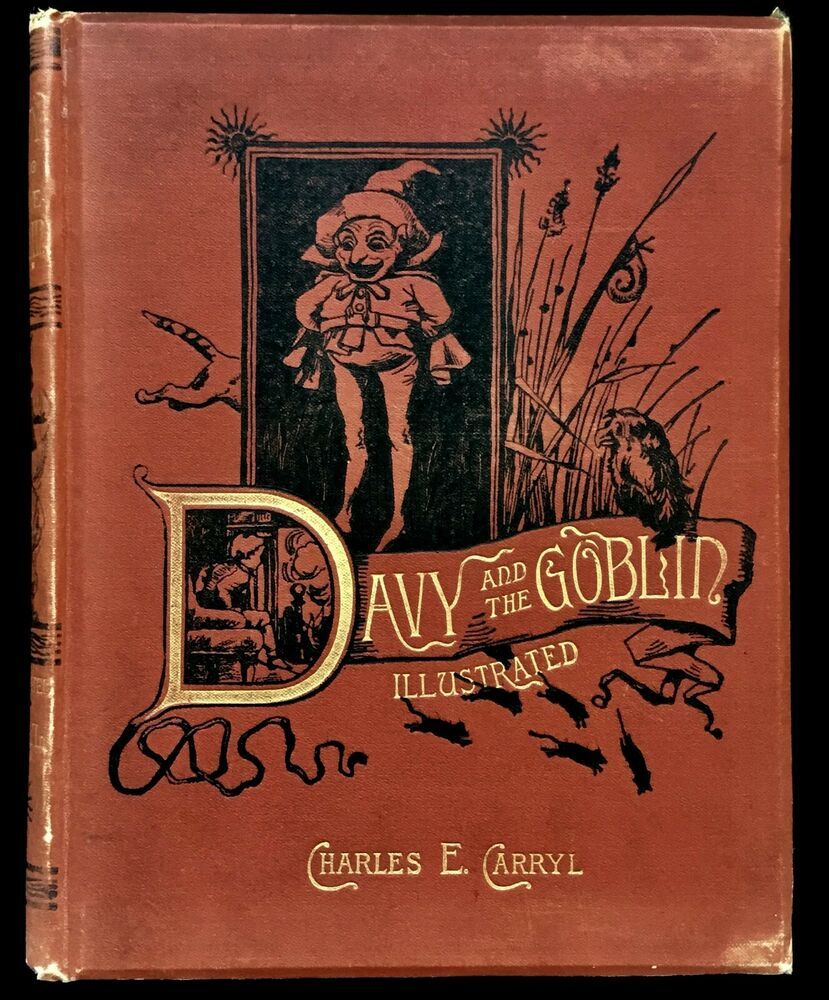
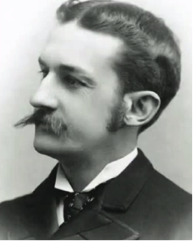
by Charles E. Carryl (1841-1920), a later-Victorian/Edwardian American children’s author.
(You can read your own copy here: https://archive.org/details/davythegoblinorw00carriala , finding the poem on pages 89-90. There are free-floating copies of this poem at various sites, but often oddly adulterated, so, if you wish to read what Carryl wrote, here it is.)
Carryl subtitled this, “or, What Followed Reading ‘Alice’s Adventures in Wonderland’ “ and the text consists of the Goblin of the title leading the Davy of the title on a “Believing Voyage”. This is stocked with a series of characters, some from children’s literature like Sinbad and Robinson Crusoe, some fantastical creatures, including a Whale in a Waistcoat and talking waves, and the perhaps inevitable fairies, although their queen is rather more like the Queen of Hearts in Alice than something dreamlike.
The Goblin’s goal is to persuade Davy, who has apparently maintained that he “doesn’t believe in fairies, nor in giants, nor in goblins, nor in anything the story-books tell you.” to change his mind on the subject. Perhaps I’m an inattentive reader, but I’m not sure that, when Davy awakes at the end of Chapter XIV (another inevitability, at least given Alice as an influence), he’s any more a believer than he was in Chapter I, but the whimsy involved has a certain charm and Carryl can get a catchy prosodic pattern going, as in “The Walloping Window-blind”. Although that subtitle suggests not only Carroll’s episodic—perhaps even picaresque—narrative and certainly there’s something Carrollish about the poems scattered throughout, I would suggest two other influences upon the verses: Edward Lear (1812-1888) and W.S. Gilbert (1836-1911), in such items as Gilbert’s “The Yarn of the Nancy Bell” (see: https://allpoetry.com/The-Yarn-of-the-Nancy-Bell )–but I sense another rabbit hole dead ahead!
As always, thanks for reading,
Stay well,
Resist puns, when possible—Carryl can’t,
And remember that, as always there’s
MTCIDC
O
 doubtfulsea