• About

doubtfulsea

~ adventure fantasy

Tag Archives: Abraham Lincoln

Finding a Voice

10 Wednesday May 2017

Posted by Ollamh in Heroes, J.R.R. Tolkien, Literary History, Military History, Narrative Methods

≈ Leave a comment

Tags

Abraham Lincoln, Abraham Lincoln Vampire Slayer, American Civil War, Daniel Day Lewis, early photography, Edward Everett, Gettysburg, Gettysburg Address, National Cemetery, Saruman, Smaug, spell-casting, Steven Spielberg Lincoln, The Battle Cry of Peace, The Blue and the Gray, The Hobbit, The Lord of the Rings, The Voice of Saruman, Tolkien, voices

Welcome, dear readers, as always.

Recently, it has been thought that a new picture of Abraham Lincoln

Lincoln-CGerman-1861.jpg

at Gettysburg, on November 19, 1863 has been discovered. Lincoln had been invited as one of the speakers for the dedication of a new National Cemetery to honor the Union dead from the battle fought at Gettysburg on 1-3 July, 1863.

Battle of Gettysburg - Cyclorama - Paul Philippoteaux SAM_1322.JPG

The main speaker, and the one everyone was waiting for, was the famous orator, Edward Everett,
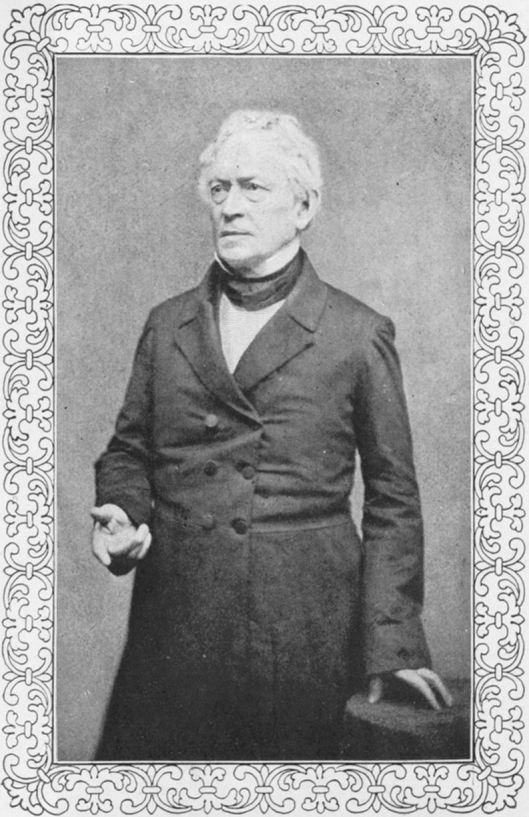
Edward_Everett.jpg

whose speech is now totally forgotten (here’s a link to it—it’s worth reading as a specimen of mid-19th-century American oratory—something Everett was famous for), but, to say that Lincoln’s speech has survived is, for Americans—and for anyone who loves good rhetoric, for that matter–an understatement.

nicolaycopy.jpg

Up until recently, there was one definite photograph of Lincoln on the occasion.
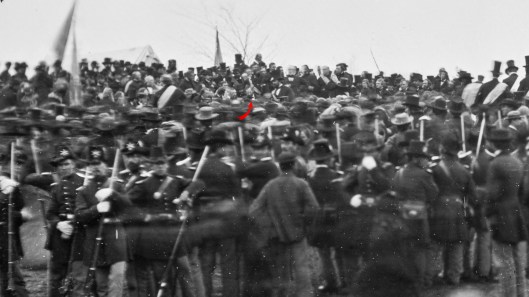
Crowd_of_citizens,_soldiers,_and_etc._with_Lincoln_at_Gettysburg._-_NARA_-_529085_-crop.jpg

(There is a second picture, supposedly of Lincoln on horseback, but it’s been pointed out that the figure appears to be wearing epaulettes,
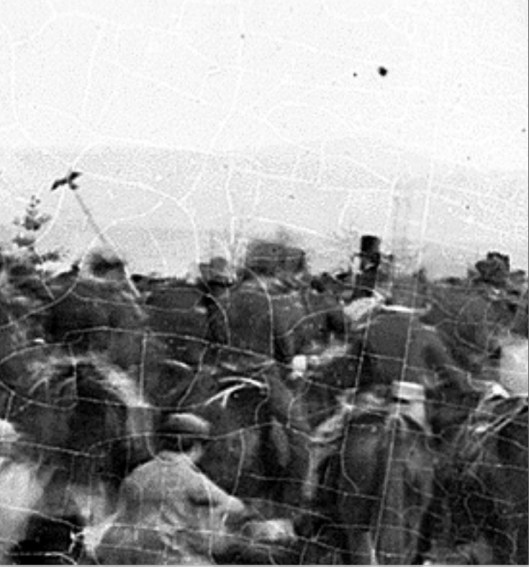
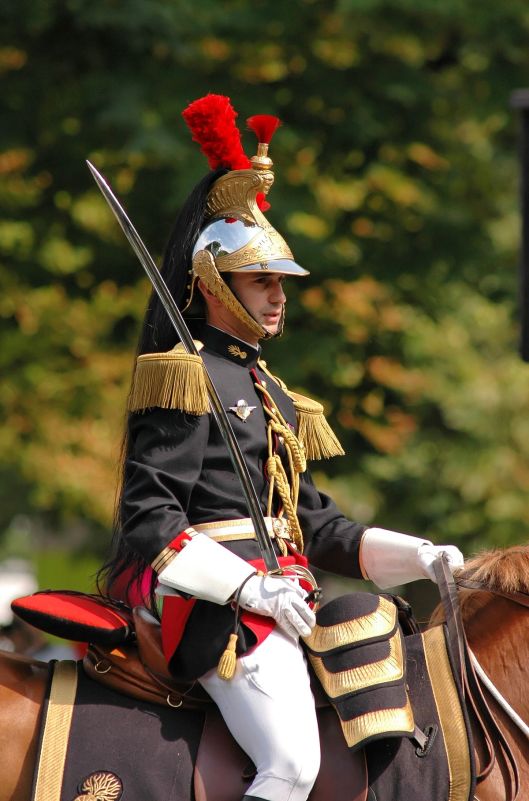
image5a1notabe.jpg

image5aepaulettes.jpg

And, if so, is therefore more likely to be one of the military dignitaries at the ceremony.)

This new photo, which seems pretty convincing to us, now gives us two illustrations of one of the most famous moments of Lincoln’s presidency.

o-LINCOLN-570.jpg

There are a number of films about Lincoln, at least since the 1915 The Battle Cry of Peace, with Lincoln portrayed by numerous American actors, some of them famous, such as Gregory Peck, from the television series The Blue and the Gray (1982)
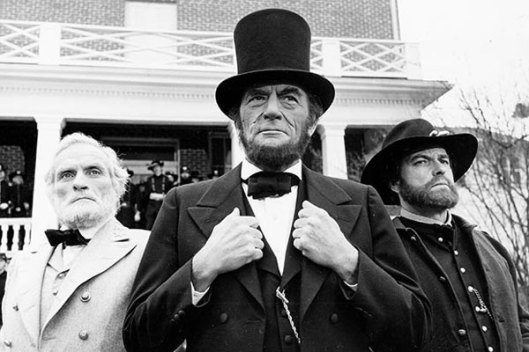
Gregory-Peck-Lincoln.jpg

with the most recent being two films from 2012, the improbable Abraham Lincoln Vampire Hunter

abraham_lincoln_vampire_hunter_ver3.jpg

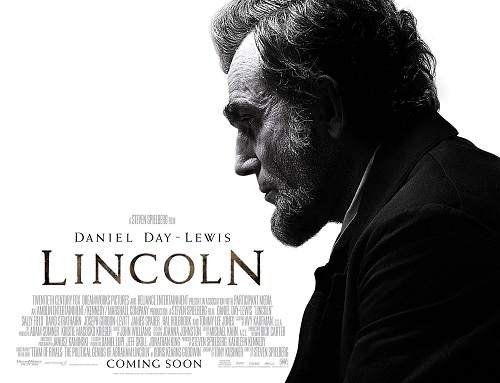
and Steven Spielberg’s Lincoln

LINCOLN-landscape-poster.jpg

starring Daniel Day Lewis.

Lewis, an actor famous for his strenuous preparations for every role he’s ever played, was sometimes criticized in reviews for his light voice, the impression being that such a deep, thoughtful man should have had a voice to match. In fact, contemporary accounts of Lincoln tell us that his voice was higher—a tenor rather than a baritone—and that his accent was a rural one, mirroring his boyhood years on the Indiana/Kentucky border (his sometimes somewhat phonetic spelling helps here to reconstruct this).

Thus, though his self-presentation—especially his voice–might have seemed to some (especially those who hated him—one of his main generals even referring to him as “the original gorilla”) less than impressive, his words, at least in written form, have endured.

This made us think of the opposite, from JRRT, characters whose words might not matter much, but the way in which they were delivered was persuasive—or almost.

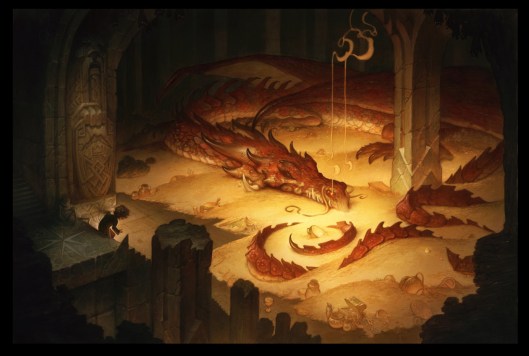
We began with Smaug.
bilbo and smaug.jpg

As we said in our last, Smaug’s voice has a danger for Bilbo in it:

“Whenever Smaug’s roving eye, seeking for him in the shadows, flashed across him, he trembled, and an unaccountable desire seized hold of him to rush out and reveal himself and tell all the truth to Smaug. In fact he was in grievous danger of coming under the dragon-spell.” (The Hobbit, Chapter 12, “Inside Information”)

This dragon-spell has a persuasive power to it.   It’s never explained, but it seems to embody the idea that the tone can bring out the worst in someone:

“Now a nasty suspicion began to grow in his mind—had the dwarves forgotten this important point too, or were they laughing in their sleeves at him all the time? That is the effect that dragon-talk has on the inexperienced. Bilbo of course ought to have been on his guard; but Smaug had rather an overwhelming personality.”

Perhaps this is what gives the “dragon-spell” its power: that it somehow embodies the personality of the spell-caster. As Smaug is evil and corrupt and suspicious, so his spell can cause others to have corrupt and suspicious thoughts, as Bilbo does.

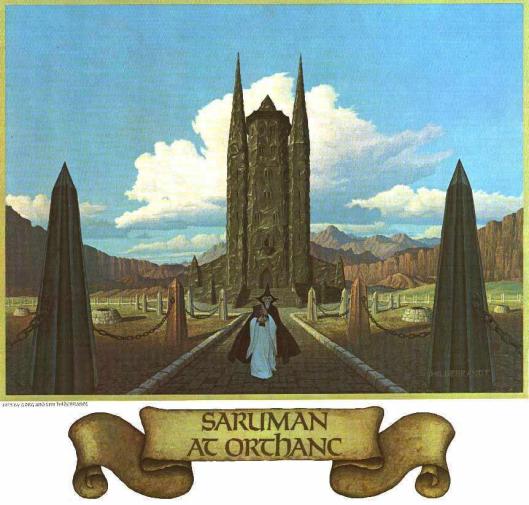
We see this same effect on the inexperienced when Gandalf, the companions, and Theoden visit the defeated Saruman at Orthanc
obra-tolkien-mano-hildebrandt-ilustradores-fa-L-q4g6J8.jpeg

in the chapter named, appropriately, “The Voice of Saruman”:

“Suddenly another voice spoke, low and melodious, its very sound an enchantment. Those who listened unwarily to that voice could seldom report the words that they heard; and if they did, they wondered, for little power remained in them. Mostly they remembered only that it was a delight to hear the voice speaking, all that it said seemed wise and reasonable, and desire awoke in them by swift agreement to seem wise themselves. When others spoke they seemed harsh and uncouth by contrast; and if they gainsaid the voice, anger was kindled in the hearts of those under the spell.” (The Two Towers, Book Three, Chapter 10, “The Voice of Saruman”)

When Gandalf first meets Saruman in Orthanc, Saruman’s “robes, which had seemed white, were not so, but were woven of all colours, and if he moved they shimmered and changed hue so that the eye was bewildered.” (The Fellowship of the Ring, Book Two, Chapter 2, “The Council of Elrond”)

It may be, then, that the power of Saruman’s voice is in the same shimmer—he appears to be not just one, but many and therefore both momentarily persuasive, as well as ultimately insubstantial, since “those who listened unwarily to that voice could seldom report the words that they heard”. It’s clear, however, that, like the voice of Smaug, the spell within the voice was, potentially, horribly persuasive:

“For some the spell lasted only while the voice spoke to them, and when it spoke to another they smiled, as men do who see through a juggler’s trick while others gape at it. For many the sound of the voice alone was enough to hold them enthralled; but for those whom it conquered the spell endured when they were far away, and ever they heard that soft voice whispering and urging them.”

And yet—although

“..none were unmoved; none rejected its pleas and its commands without an effort of mind and will, so long as its master had control of it.”

There are those of the party on this visit to Orthanc who are not taken in at all. Gimli appears to be unaffected, saying, “The words of this wizard stand on their heads”, and Eomer calls Saruman “an old liar with honey on his forked tongue”. Theoden even breaks the spell, although he is said to speak “thickly and with effort.” At such resistance, Saruman shows both a degree of control and a losing of it, cajoling and calling names alternately, until “Gandalf laughed.” And “The fantasy vanished like a puff of smoke.”

Knowing Saruman’s eventual end, murdered by another whose tongue was persuasive enough to keep Theoden a prisoner once upon a time,

leegrima.jpg

can we see the beginning of that end here? Once the “fantasy” created by Saruman’s voice is broken by Gandalf’s gentle mockery, what is left for him after his grand plans to be (at least) Sauron’s ally but “some mischief still in a small mean way”? (The Return of the King, Book Six, Chapter 6, “Many Partings”)

And, at the end of that mischief, Grima only escapes Saruman and his voice through murder—and his own quick death, following.

Gandalf’s laughter suggests that the source of escape from Saruman’s voice may be detachment: if one can step away from the sound, that sound loses its (literal) charm. It may take effort—as it does for Theoden—but, once away, whatever magic was in the voice vanishes into the smoke it really was.   As well, obvious resistance seems always to shake Saruman’s control and that flattering tongue, which can say, on the one hand,

“Theoden Lord of the Mark of Rohan..declared by your noble devices, and still more by the fair countenance of the House of Eorl. O worthy son of Thengel the Thrice-renowned!”

But, when thwarted, can cry:

“Dotard! What is the house of Eorl but a thatched barn where brigands drink in the reek, and their brats roll on the floor among the dogs?” (The Two Towers, Book Three, Chapter 10, “The Voice of Saruman”)

It is striking that, in neither case, are his words to be trusted, any more than his voice—and here we can return to Abraham Lincoln, whose voice may not have impressed, but whose words continue to be remembered.

z235445.jpg

Thanks, as always, for reading.

MTCIDC

CD
Spare Change?

19 Wednesday Apr 2017

Posted by Ollamh in Economics in Middle-earth, J.R.R. Tolkien, Literary History, Narrative Methods

≈ Leave a comment

Tags

1909 penny, Abraham Lincoln, Alexander the Great, Aragorn, Asia Minor, Augustus, bartering, Bilbo's birthday, British Royal Government, Brutus, Charlemagne, Classical Greek coins, Cleopatra VII, Coinage, daggers, Denethor, Domitian, Egypt, federal law, Frankish king, freedman, George Washington, Gondor, Greek Kings, Hanoverian kings, Hellenistic Greeks, Holy Roman Emperor, Ides of March, Julio-Claudian dynasty, Julius Caesar, libertus, Lucius Plaetorius Cestianus, Lydia, manumission, Middle-earth, Pennies, pilleum, Plebeians, portrait, Prince Charles, Ptolemy I, Queen Elizabeth II, Roman Empire, Romans, Seleucus, Senatus Consulto, The Lord of the Rings, Tolkien

Welcome, dear readers, as always.

We are veering a little to the left in this posting inspired by a comment on “Shire Portrait (2)” from our good friend, EMH. It was about currency and coins in Middle-earth and we were a little vague, but E pointed out:

  1. Bilbo giving “a few pennies away” before the party
  2. the price of Bill, the pony: “twelve silver pennies”
  3. Gandalf praising Barliman and saying his news was “worth a gold piece at the least.”

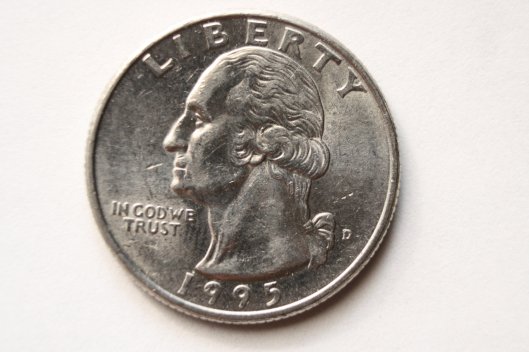
With E in mind, we decided to do another posting on M-e money. Long ago, we did a posting on imagined currency in Middle-earth, but, since then, we’ve thought a bit more about the subject, and, right now, dear readers, we ask you to produce a coin, any coin. As we live in the US, here’s a US coin, a fourth of a dollar, hence, a “quarter”.

image1quarterobverse.jpg

This is the front, or “obverse” in coin speech, and we’re going to focus on that and not on the back (the “reverse”).  We use coins all day long every day, so we probably don’t look at them more than to note value when we pay for something or receive change, but let’s look at this one a bit more closely.

It seems pretty simple:

  1. at the top a single word, “Liberty”
  2. then a low relief (that is, cut very shallowly) portrait of the first president, General George Washington
  3. then, to the left, a slogan, “In God We Trust”
  4. at the bottom, the date, 1993

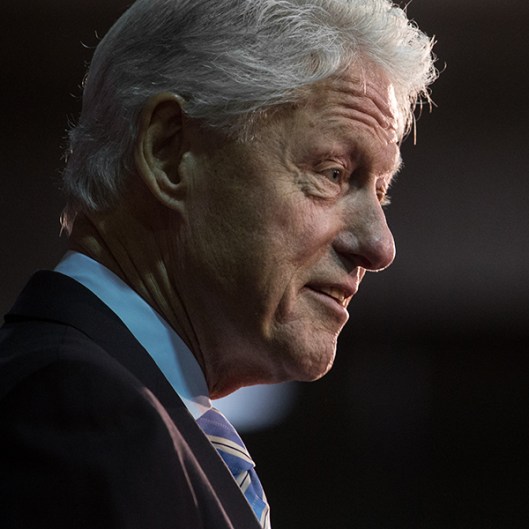
Let’s start with that date—1993. In 1993, the president was Bill Clinton.

image2clinton.jpg

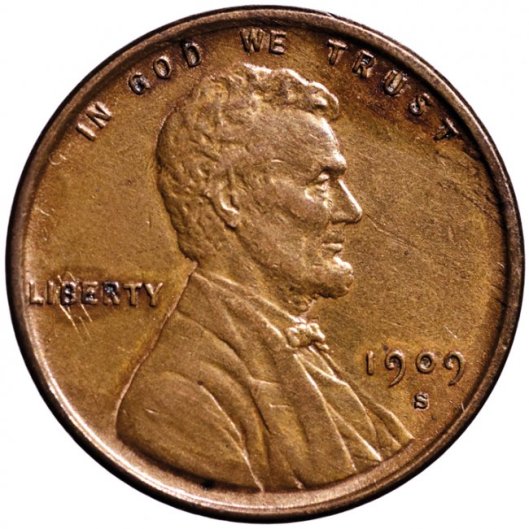
Federal law, however, prevents coins—with very special and rare exceptions—to bear the portraits of living people. The first president on a coin was Abraham Lincoln, on a penny first minted to commemorate his 100th birthday, in 1909.

image31909penny.jpg

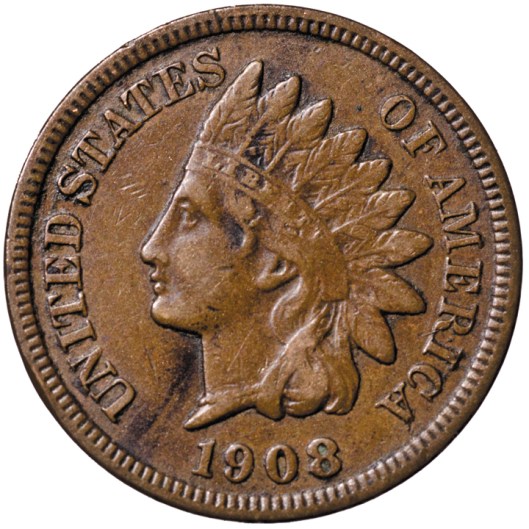
The previous coin, up to 1909, had the idealized head of a Native American,

image41908indianhead.JPG

the pattern for which was first introduced in 1859.

image51859indianhead.jpg

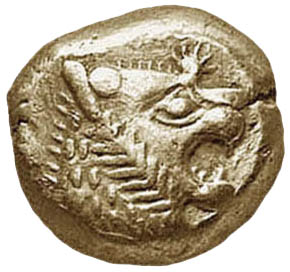
The first coin in western European history is from the late 8th century BC, and comes from Lydia, in Asia Minor.

image6lydiancoin.jpg

Classical Greek coins seem to model themselves on Lydian coins like this, having badges–city emblems and religious tokens, like the famous Athenian owl, rather than portraits of humans, like that quarter with George Washington on it.

image7owlcoin.jpg

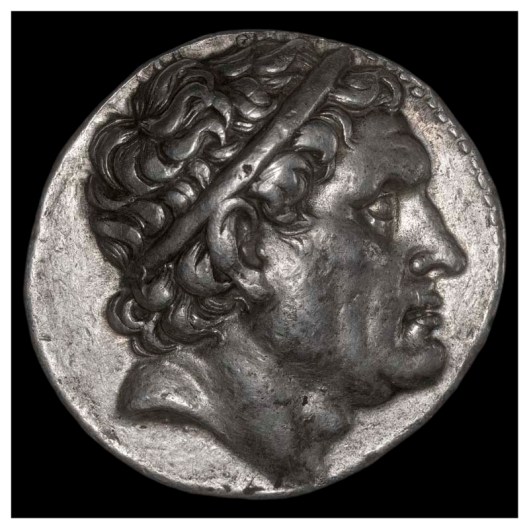
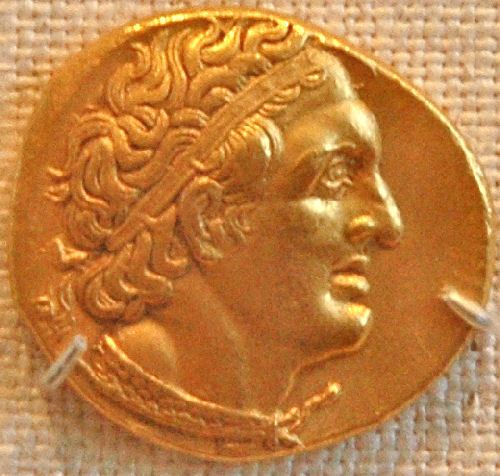
During the Hellenistic Period (post about 300bc and on), however, the Greek kings, from Greece to Asia Minor to Egypt, all began to issue coins with portraits of themselves. These were, initially, the generals of Alexander the Great, who, at Alexander’s death, had grabbed portions of his empire for themselves. We think of Seleucus, who controlled much of Asia Minor

image8seleucus.jpg

Or of Ptolemy I,

image9ptolemy1.JPG

the founder of a dynasty which ruled Egypt for nearly 300 years until their final descendant, Cleopatra VII, was defeated by the Romans.

image10cleopatravii.jpg

Those Romans, we imagine inspired by the Hellenistic Greeks, produced coins by the bushel .(this is an obsolete dry measurement, based upon what you can put into a basket like this:

image11bushelbasket.jpg

which was, in fact, made up of four pecks

image12peck.jpg

which could also be divided into two kennings of two pecks apiece.)

Considering that Rome produced coins from the late 4th century bc to late in the 5th century ad, it’s not surprising that there would be so many—and considering the size of the Roman empire, as well.

image13coins.jpg

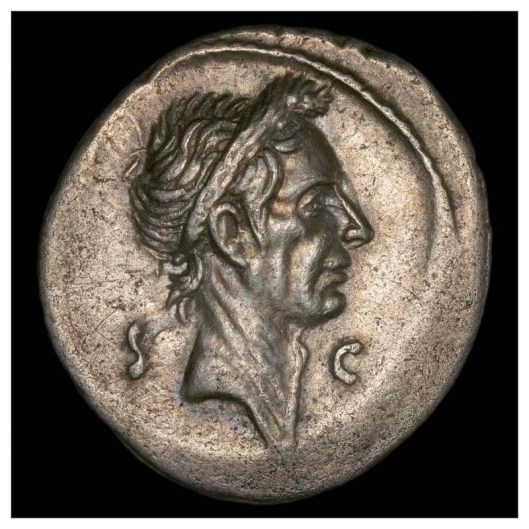
Earlier Roman coins had been unlike Hellenistic coins, however, in not depicting living people—that is, until Julius Caesar gained power.

image14jc.jpg

This opened the floodgates and it’s easy to see why.

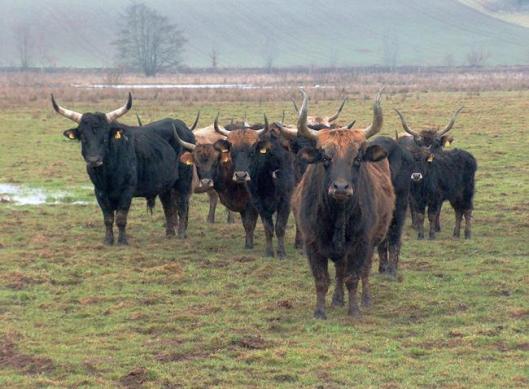
Coins are short-hand wealth, originally standing in for earlier barter items, like flocks and herds.

image15cattle.jpg

As Romans spread out beyond farms and local markets, the wealth in animals and agricultural produce, as well as raw materials, was simply not portable enough, as this cartoon shows.

image16barter.jpg

By making tokens which were accepted as a stand- in for that wealth, the agency which did so was asserting its claim to have a strong hand in, if not control of, the economy.

Julius Caesar, who had already forced the Senate to make him “Dictator for Life” (that “S…C” on both sides of his profile stands for “Senatus Consulto”—“by a decree of the Senate”), by putting his face on the currency is implying that he now is the state—and therefore possesses a power which extends to regulating the money economy by which people live and survive or prosper. (There may be a quiet joke here, as well. “SC” was stamped on bronze coins to guarantee their worth—on the back side—to have those letters surrounding Caesar on the front side, the obverse, may suggest a double meaning: he is dictator by Senatorial decree, but his worth is also being guaranteed by that decree.)

It is no surprise, then, that Brutus, one of those who murdered Caesar, would, in turn, issue his own coins—and these are even more heavily symbolic.

image17brutuscoin.png

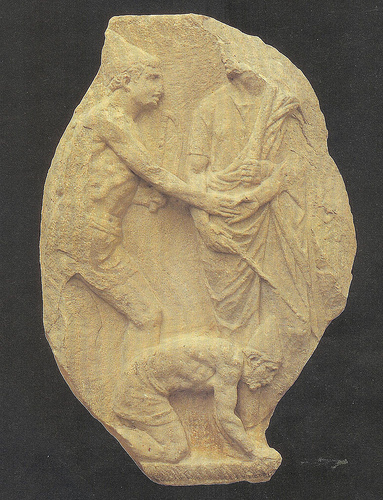
On the obverse, there is Brutus, his name above, to our right his title “imp[erator]”—a title given to a general by his soldiers with the implication “You rule!” To our left is an abbreviated form of the name of the moneyer, the man who directed the mint, L[ucius] Plaet[orius] Cest[ianus]. Although we said that we would only examine obverses, we can’t resist the reverse here. At the bottom is the inscription, “eid mar”, standing for “eides Martis”, the “Ides of March”, the 15th of March, the day Caesar was murdered. Above that is a “pilleum”, the kind of cap worn by a slave during the ceremony called “manumission”, in which a he was turned into a “libertus”, or “freedman”.

image18manumission.jpg

To both sides of the cap are daggers.

image19pugio.jpg

Put all of this together and we see Brutus’ claim: on the 15th of March, we murdered Caesar and, as a consequence, we freed Rome from its slavery.

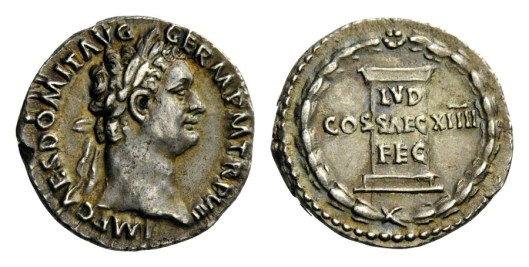
Coins like Caesar’s and Brutus’ are simple in their claims. Later emperors were less so. Look at this coin of Domitian (81-96ad).

image20domitian.jpg

On the rim of the obverse is a pile of information:

Imp[erator] Caes[ar] Domit[ianus] Aug[ustus] Germ[anicus] P[ontifex] M[aximus] Tr[ibunicia P[otestas] VIII

“Emperor Caesar Domitianus Augustus Germanicus, Chief Priest of Rome, Holding the Power of the Representative of the People 8 Times”

In fact, Domitian was sailing under false colors—Caesar, Augustus, and Germanicus all belong to the earlier Julio-Claudian dynasty, of which his family was not a part. As for “Holding the Power of the Representative of the People”, this was an ancient elective office, which allowed a member of the lower class, the Plebeians, special powers in the legislative process. As emperor and son of an emperor most of a century after elections had been abolished, this looked like an honor, but was just an empty title. “Chief Priest” had once been an extremely important position in the state, but, from the time of the first emperor, Augustus, it had simply become another title emperors claimed.

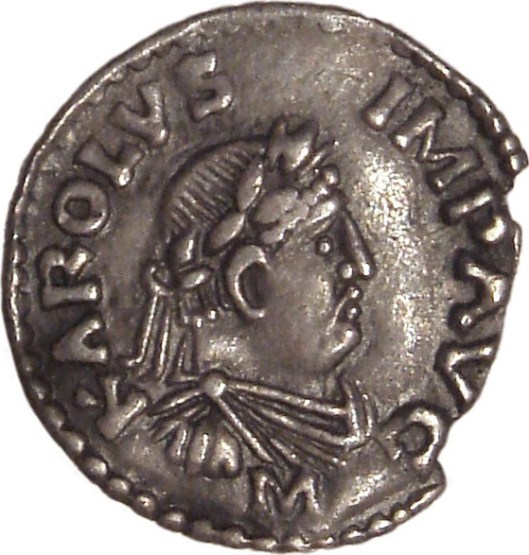
Later European rulers, eager to suggest that they were as powerful as the ancient Romans, used Roman coins as a model. Here’s one from Charlemagne, Frankish king and first Holy Roman Emperor (768-814).

image21charlemagne.jpg

Returning to our George Washington quarter,

image22gw.jpg

let’s look at the comparatively meager inscriptional material. If the coin of Domitian had so much to tell us about how important he was, the inscription on the quarter has a very different message, its focus being upon cultural values: 1.freedom; 2. religion. In our culture, probably everyone would agree with 1, but our ancestor/founders were very adamant on the subject of keeping church and state completely apart, with no influence of either upon the either, so that that 2, “In God We Trust”, shows that there is some confusion about those values. In any case, the plainness might remind us of Caesar’s coin more than Domitian’s, but, in both cases, the point of the artwork and labeling is to put the government’s stamp, whether republic or empire, upon the everyday life of everyone who buys and sells.

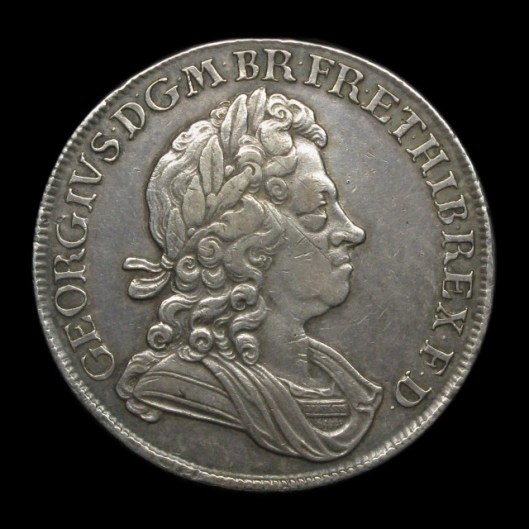
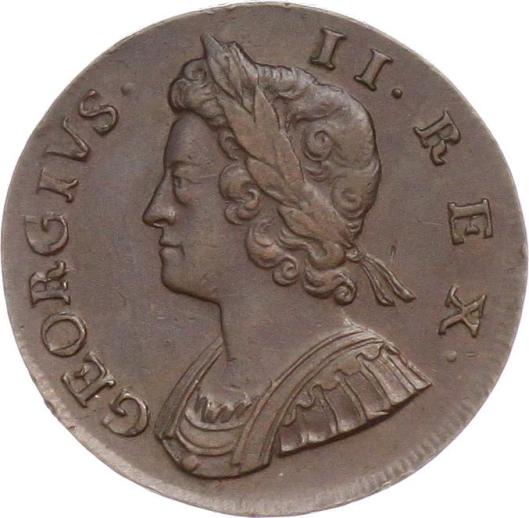
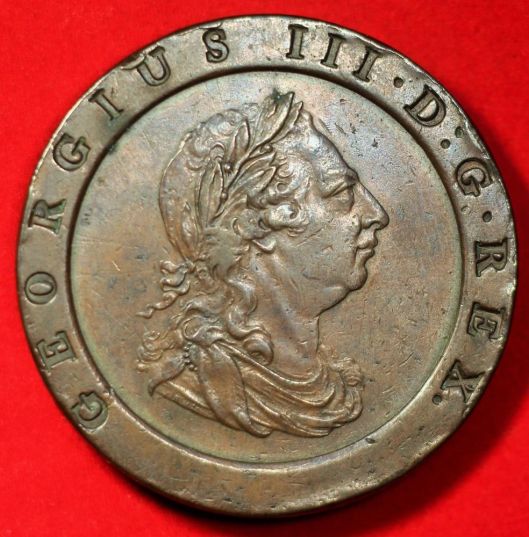
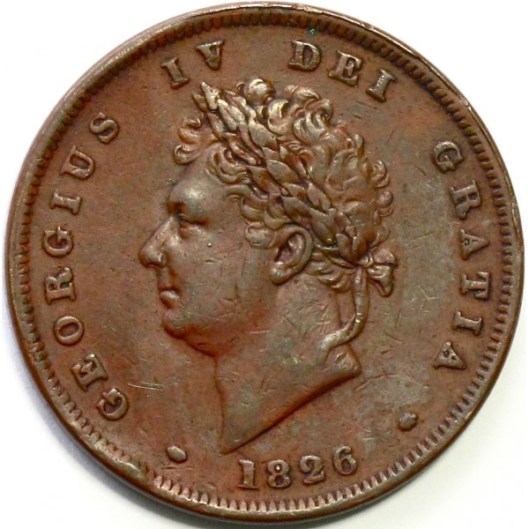
There is another message to be read here, as well. The George Washington quarter was first issued on Washington’s 200th birthday, in 1932, and is still on the obverse of the quarter, suggesting the continuity of what he stood for. In the case of monarchs, however, each new emperor/king/queen demands the issuing of new coinage, with the new ruler’s portrait, suggesting not only royal government continuity, but also, in some cases royal family continuity. Here are the first four Hanoverian kings of England, for example, all sons or grandsons, from 1714 to 1830.

image23geo1.jpg

image24geo2.jpg


image25geo3.jpg

image26geo4.jpgSo, When Prince Charles succeeds his mother, Elizabeth II,
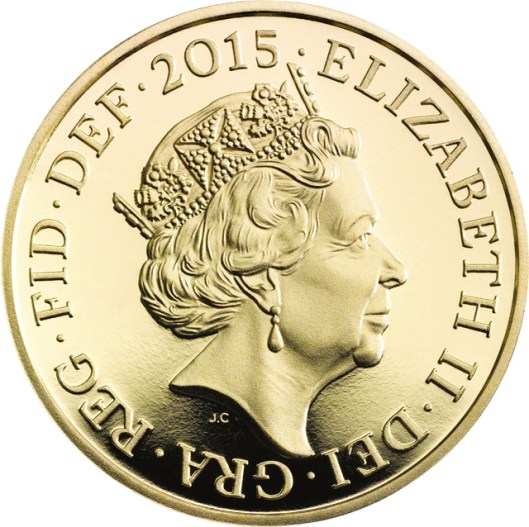
image27liz2.jpg

new coins will have to be minted.

And this brings us back to Middle-earth and to a puzzle about Gondor. There are certainly coins, as our good friend has thoughtfully pointed out. There has been no king on the throne of Gondor for many centuries, however. If Denethor’s behavior is anything to go by, the Stewards have become kings in everything but title, even though Denethor avoids the royal throne. If everyone from the Hellenistic kings to Elizabeth II has his/her portrait on the coinage, are the Stewards on Gondor’s? And what happens when Aragorn becomes King Aragorn II Elessar?

MTCIDC

CD

The Doubtful Sea Series Facebook Page

The Doubtful Sea Series Facebook Page

  • Ollamh

Categories

  • Artists and Illustrators
  • Economics in Middle-earth
  • Fairy Tales and Myths
  • Films and Music
  • Games
  • Heroes
  • Imaginary History
  • J.R.R. Tolkien
  • Language
  • Literary History
  • Maps
  • Medieval Russia
  • Military History
  • Military History of Middle-earth
  • Narnia
  • Narrative Methods
  • Poetry
  • Research
  • Star Wars
  • Terra Australis
  • The Rohirrim
  • Theatre and Performance
  • Tolkien
  • Uncategorized
  • Villains
  • Writing as Collaborators
Follow doubtfulsea on WordPress.com

Across the Doubtful Sea

Recent Postings

  • A Moon disfigured December 17, 2025
  • On the Roads Again—Once More December 10, 2025
  • (Not) Crossing Bridges December 3, 2025
  • On the Road(s) Again—Again November 26, 2025
  • On the Road(s) Again November 19, 2025
  • To Bree (Part 2) November 12, 2025
  • To Bree (Part 1) November 5, 2025
  • A Plague o’ Both—No, o’ All Your Houses! October 29, 2025
  • It’s in Writing (2:  I’st a Prologue, or a Poesie for a Ring?) October 22, 2025

Blog Statistics

  • 103,226 Views

Posting Archive

  • December 2025 (3)
  • November 2025 (4)
  • October 2025 (5)
  • September 2025 (4)
  • August 2025 (4)
  • July 2025 (5)
  • June 2025 (4)
  • May 2025 (4)
  • April 2025 (5)
  • March 2025 (4)
  • February 2025 (4)
  • January 2025 (5)
  • December 2024 (4)
  • November 2024 (4)
  • October 2024 (5)
  • September 2024 (4)
  • August 2024 (4)
  • July 2024 (5)
  • June 2024 (4)
  • May 2024 (5)
  • April 2024 (4)
  • March 2024 (4)
  • February 2024 (4)
  • January 2024 (5)
  • December 2023 (4)
  • November 2023 (5)
  • October 2023 (4)
  • September 2023 (4)
  • August 2023 (5)
  • July 2023 (4)
  • June 2023 (4)
  • May 2023 (5)
  • April 2023 (4)
  • March 2023 (5)
  • February 2023 (4)
  • January 2023 (4)
  • December 2022 (4)
  • November 2022 (5)
  • October 2022 (4)
  • September 2022 (4)
  • August 2022 (5)
  • July 2022 (4)
  • June 2022 (5)
  • May 2022 (4)
  • April 2022 (4)
  • March 2022 (5)
  • February 2022 (4)
  • January 2022 (4)
  • December 2021 (5)
  • November 2021 (4)
  • October 2021 (4)
  • September 2021 (5)
  • August 2021 (4)
  • July 2021 (4)
  • June 2021 (5)
  • May 2021 (4)
  • April 2021 (4)
  • March 2021 (5)
  • February 2021 (4)
  • January 2021 (4)
  • December 2020 (5)
  • November 2020 (4)
  • October 2020 (4)
  • September 2020 (5)
  • August 2020 (4)
  • July 2020 (5)
  • June 2020 (4)
  • May 2020 (4)
  • April 2020 (5)
  • March 2020 (4)
  • February 2020 (4)
  • January 2020 (6)
  • December 2019 (4)
  • November 2019 (4)
  • October 2019 (5)
  • September 2019 (4)
  • August 2019 (4)
  • July 2019 (5)
  • June 2019 (4)
  • May 2019 (5)
  • April 2019 (4)
  • March 2019 (4)
  • February 2019 (4)
  • January 2019 (5)
  • December 2018 (4)
  • November 2018 (4)
  • October 2018 (5)
  • September 2018 (4)
  • August 2018 (5)
  • July 2018 (4)
  • June 2018 (4)
  • May 2018 (5)
  • April 2018 (4)
  • March 2018 (4)
  • February 2018 (4)
  • January 2018 (5)
  • December 2017 (4)
  • November 2017 (4)
  • October 2017 (4)
  • September 2017 (4)
  • August 2017 (5)
  • July 2017 (4)
  • June 2017 (4)
  • May 2017 (5)
  • April 2017 (4)
  • March 2017 (5)
  • February 2017 (4)
  • January 2017 (4)
  • December 2016 (4)
  • November 2016 (5)
  • October 2016 (6)
  • September 2016 (5)
  • August 2016 (5)
  • July 2016 (5)
  • June 2016 (5)
  • May 2016 (4)
  • April 2016 (4)
  • March 2016 (5)
  • February 2016 (4)
  • January 2016 (4)
  • December 2015 (5)
  • November 2015 (5)
  • October 2015 (4)
  • September 2015 (5)
  • August 2015 (4)
  • July 2015 (5)
  • June 2015 (5)
  • May 2015 (4)
  • April 2015 (3)
  • March 2015 (4)
  • February 2015 (4)
  • January 2015 (4)
  • December 2014 (5)
  • November 2014 (4)
  • October 2014 (6)
  • September 2014 (1)

Blog at WordPress.com.

  • Subscribe Subscribed
    • doubtfulsea
    • Join 78 other subscribers
    • Already have a WordPress.com account? Log in now.
    • doubtfulsea
    • Subscribe Subscribed
    • Sign up
    • Log in
    • Report this content
    • View site in Reader
    • Manage subscriptions
    • Collapse this bar
 

Loading Comments...