Loathing, If No Fear

Dear readers, welcome, as always.

There is an odd little anecdote in the essay  “On Science Fiction” in the posthumous collection of C.S. Lewis’ (1898-1963)

essays and short fiction, Of Other Worlds

“A lady…had been talking about a dreariness which seemed to be creeping over her life, the drying up in her of the power to feel pleasure, the aridity of her mental landscape.  Drawing a bow at a venture, I asked, ‘Have you any taste for fantasies and fairy tales?’ I shall never forget how her muscles tightened, her hands clenched themselves, her eyes started as with horror, and her voice changed, as she hissed out, ‘I loathe them.’ “

Lewis then goes on to suggest that “we here have to do not with a critical opinion but with something like a phobia” and such a violent reaction certainly suggests to me that there is something in the woman’s reaction which goes beyond a simple polite reply, like “They’ve never interested me.”

Lewis himself had a very different reaction to fairy tales, as expressed in “On Three Ways of Writing for Children” in the same volume and his view is involved with what I feel is a wonderful way to think about growing up :

“When I was ten, I read fairy tales in secret and would have been ashamed if I had been found doing so.  Now that I am fifty I read them openly.  When I became a man I put away childish things, including the fear of childishness and the desire to be very grown up.

The modern view seems to me to involve a false conception of growth.  They accuse us of arrested development because we have not lost a taste we had in childhood.  But surely arrested development consists not in refusing to lose old things but in failing to add new things?  I now like hock, [an old term for German white wine] which I am sure I should not have liked as a child.  But I still like lemon-squash. [a kind of lemonade-ish thing—here’s a recipe:  https://pennysrecipes.com/3528/fresh-lemon-squash ]  I call this growth or development because I have been enriched:  where I formerly had only one pleasure, I now have two.  But if I had to lose the taste for lemon-squash before I acquired the taste for hock, that would not be growth but simple change.  I now enjoy Tolstoy and Jane Austen and Trollope as well as fairy tales and I call that growth:  if I had had to lose the fairy tales in order to acquire the novelists, I would not say that I had grown but only that I had changed.  A tree grows because it adds rings:  a train doesn’t grow by leaving one station behind and puffing on to the next.  In reality, the case is stronger and more complicated than this.  I think my growth is just as apparent when I now read the fairy tales as when I read the novelists , for I now enjoy the fairy tales better than I did in childhood:  being now able to put more in, of course I get more out.”  (This is a very rich essay and, if you’d like to read it in full, see:  https://www.catholicculture.org/culture/library/view.cfm?recnum=9117 )

For the very beginning of this blog, back in 2014, a goal for it was always that it would not be like so much of the material to be found on the internet:  harsh, even negative to the point of gushing hatred.  And we all see the effects of that sort of material all too often.  Over almost eight years, the blog has offered positive views and praise and, on only a handful of occasions, has it taken a negative turn, in part, I would say, because it has always tried to be based upon something which Lewis said in another essay, “On Science Fiction”, discussing negative reviews of early 20th-century science fiction:

“…many were by people who clearly hated the kind they wrote about.  It is very dangerous to write about a kind you hate.  Hatred obscures all distinctions.  I don’t like detective stories and therefore all detective stories look much alike to me:  if I wrote about them I should therefore infallibly write drivel.”

I enjoy detective stories myself, having grown up on Sherlock Holmes, but Lewis’ point has been a guide:  don’t write about things you don’t enjoy.

Fairy tales, whether of the Western or Eastern varieties (and they often blend) were some of the very first stories which caught my attention as a child, really memorable ones being those from “The Arabian Nights” of Aladdin and Ali Baba, as well as those familiar from the Grimms, Perrault, Mesdames D’Aulnoy and Leprince de Beaumont, and Andersen.  In my current project of reading all twelve of Andrew Lang’s fairy books,

I have rediscovered many old friends and some new ones, but then there was “The Master-Maid” in The Blue Fairy Book (1889)

and, in this story, I found something which, for me, could explain that seemingly-disturbed woman’s reaction to such tales—and here bear with me while I make a brief descent into the negative.

The story originally comes from a collection entitled, Norske folkeeventyr (“Norwegian Folktales”), first published in 1841, with subsequent editions through 1852,

(a much later edition—1914—but, at the moment, I’m having trouble finding a first edition)

by Asbjornsen and Moe (Peter Christen Asbjornsen, 1812-1885; Jorgen Engebretsen Moe, 1813-1882), two folktale collectors who became the Grimm brothers of Norway.

But if I’ve loved fairy tales since childhood, what is there about this one which—momentarily, I hasten to add—alienated my affection?

In the words of a modern fairy tale character, however, I would have to say:

The story begins with the youngest son of a king, who sets off to make his fortune in the world.  He gains employment with a giant:

1. who sets him tasks, but tells him not to look into any rooms except the one in which he slept

2. of course, he looks into 3 rooms, each with a boiling cauldron, the contents of which cover anything dipped into them with copper, silver, or gold, in succession (never mentioned again)

3. in room number 4 is a beautiful young woman (the title’s “Master-Maid”) with a never-explained knowledge of how to fulfill all of the giant’s obviously impossible tasks:

  a. a stable which can’t be cleaned unless you use the other end of the dung fork

  b. a fire-breathing horse, who can only be tamed with a certain bridle

  c. some sort of troll who has to pay the giant’s tax (the prince needs a special club to knock on the troll’s cave door)

4. the giant then decides to kill the prince and orders the young woman to make him into soup

5. Instead:

   a. the young woman takes all sorts of household waste and plops that into the pot

   b. she draws three drops of the prince’s blood to fall upon a stool

  c. then she gathers up:

   1. a chest of gold dust

   2. a lump of salt

   3. a water flask

   4. a golden apple

   5. two golden chickens

 d. and escapes with the prince

6. they somehow obtain a ship—and even the story says, “but where they got the ship

from I have never been able to learn” and sail off, the giant soon in hot pursuit (he’s been delayed because, having napped while the prince soup was cooking, he would wake briefly to ask if it were ready, only to be told–by talking blood drops–that it was still in the process—and when he finally fully awakes, he quickly discovers that the soup was definitely not worth waiting for)

7.  arriving at the sea, the giant produces

   a.  a “river-sucker” to lower the sea so that he can spot the escaping couple, but he is foiled when the young woman uses the lump of salt to swell up to such size that “river-sucker” can’t lower the sea any further and the giant can no longer spot them or approach them—the text is a little foggy here

   b. a “hill-borer” to put a hole in the salt barrier so that the “river-sucker” can go back to work, but the young woman then tips out a couple of drops from the water flask (remember that?) and suddenly the sea is so full that the “river-sucker” doesn’t have another chance to slurp before the couple has finally reached dry land

And that’s only the first half of the story.  To sum up even farther, the prince abandons the young woman at the seashore, promising to return, but is tricked into forgetting her (a magic apple—one bite and…), she then lives briefly with a crone/troll, escapes three suitors, sees elements in the crone’s hut employed to repair the coach in which the forgetful prince is traveling to his wedding, finally gets to the palace, and uses that golden apple and the gilded chickens (you’d almost forgotten those in all the excitement, hadn’t you?)  to bring back the prince’s memory and they live happily ever after (although the person who supplied that apple of memory lapse is torn apart by horses, so probably doesn’t enjoy the ending as much as the others).

C.S. Lewis is once quoted as saying, “You can’t get a cup of tea large enough or a book long enough to suit me.”  (from a transcript of a lecture given by Lewis’ sometime editor and biographer, Walter Hooper—here’s the whole piece:  https://www.historyspage.com/post/cs-lewis-inklings-memories-walter-hooper )

That this seems rather a long story for a fairy tale—pages 120-135 in The Blue Fairy Book—is hardly a drawback.  “The Yellow Dwarf”, of which I’ve written in an earlier posting, and which is in the same volume, is even longer (30-51), and I’ve certainly read things infinitely longer and more than once—

And it’s not that some things, like the young woman’s knowledge of the solutions to the giant’s tests, are unexplained—part, I would say, of what makes a fairy tale a fairy tale is that some things will simply be…inexplicable.

Rather, I think it’s that, as with Inigo Montoya’s attempt to explain past events to Westley, there is simply too much:  too many boiling cauldrons, too many ready solutions to tricky problems, too many magic objects, too many suitors, all in one story.  It’s as if the teller were trying to cram 20 stories into one, which, for me, perhaps paradoxically thins the telling and I find myself wearily trudging from one incident to the next, which is, I think, hardly what Lewis would have wanted his enormous cup of tea for,

and makes me wonder just what books of fairy tales that angry woman had read?

Thanks, as ever, for reading.

Stay well,

Consider the dangers of an overflowing cup,

And remember that there’s always

MTCIDC

O

ps

The translator of “Master-Maid” was said by Andrew Lang to be “Mrs Alfred Hunt”, a very interesting woman in her own right.  The author of “Lang’s Fairy Blog”, who seems to have done a good deal of research on the series, suggests that, although she was proficient in German (consult this page to see why he/she says so:  https://langsfairyblog.wordpress.com/2017/12/26/mrs-alfred-hunt/ ), she probably translated it from a German source.  If you’d like to have a look at the German text she may have used, see:  http://www.zeno.org/M%C3%A4rchen/M/Norwegen/P.+%5BC.%5D+Asbj%C3%B8rnsen+und+J%C3%B6rgen+Moe%3A+Norwegische+Volksm%C3%A4rchen/Die+Meisterjungfer  –this is from volume 2 of Friedrich Bresemann’s Norwegische Volksmaerchen, 1847.  The first English translation of Asbjornsen and Moe’s collection was by Sir George Dasent, as Popular Tales from the Norse, in 1858.  Comparing the Hunt with Dasent and the German translation, it seems to me that Hunt may first have read the Dasent, but used the German as the basis of her version.  Here’s the Dasent, if you’d like to compare:  https://archive.org/details/populartalesfrom00daseuoft –this is a later edition, from 1904.  For a very early review of Dasent’s work, see this, from The Atlantic for September, 1859:  https://cdn.theatlantic.com/media/archives/1859/09/4-23/131866450.pdf   (A brief comparison of the opening of the original Norwegian version of the story with Dasent’s translation, by the way, suggests that Dasent was rather a casual translator, aiming less for perfect accuracy than for the general feel of the story.)

Black and Ominous?

Welcome, as ever, dear readers.

Unlike The Hobbit’s narrator’s description of the mouth of the River Running with its “every now and then a black and ominous crow”, I like crows. Perhaps it’s because of their elegant, almost regal, look–

and recent scientific studies have turned the crow from one of a noisy gang of scavengers

to something more than a birdbrain. 

(This is a late rag—1959—by Joseph Lamb—1887-1960

and here’s a recording so that you can hear how Lamb conveyed the idea:   https://www.youtube.com/watch?v=hYlPM0TJ9XY    For me, Lamb is one of the best among the many ragtime composers and “Nightingale Rag”, 1915, performed here by William Oegmundson, is perhaps my favorite of his rags:   https://www.youtube.com/watch?v=xnzoBXDL0Qw  –just to keep the bird theme which is developing here. )

Instead, crows are extremely intelligent.  Just look at this from the BBC series “Inside the Animal Mind”:  https://www.youtube.com/watch?v=cbSu2PXOTOc

For Tolkien—at least for Tolkien’s dwarves in The Hobbit—even if crows showed avian genius, however, they were not the preferred bird:

“ ‘I only wish he was a raven!’ said Balin.

‘I thought that you did not like them!  You seemed very shy of them, when we came this way before.’

‘Those were crows!  And nasty suspicious-looking creatures at that, and rude as well.  You must have heard the ugly names they were calling after us.  But the ravens are different.’ “ (The Hobbit, Chapter 15, “The Gathering of the Clouds”)

Ravens are physically different to some degree from crows (size, feathering, calls, flying methods, basically),

but there is also one strong similarity:  they both talk, as do birds throughout The Hobbit.

In succession, there are the Lord of the Eagles,

(one of my favorite Michael Hague illustrations)

and the eagle who carries Bilbo to the Carrock,

(a Ted Nasmith)

the thrush who not only signals the moment when the keyhole to the backdoor of Erebor will appear, but

(an Alan Lee)

who also told the archer, Bard, about Smaug’s weak spot,

(one version of Tolkien’s well-known drawing)

the ancient raven Roac, the son of Carc,

(another Alan Lee)

and, finally, the unnamed ravens who provide information on affairs outside the Lonely Mountain to the dwarves.

All of these feathery folk speak the Common Speech but one, the Thrush, and here it’s interesting to see that there is a linguistic tie between thrushes and the men of the now long-ruined Dale, as Bard discovers:

“Suddenly out of the dark something fluttered to his shoulder.  He started—but it was only an old thrush.  Unafraid it perched by his ear and it brought him news.  Marveling he found he could understand his tongue, for he was of the race of Dale.”  (The Hobbit, Chapter 14, “Fire and Water”)

If you read this blog with any regularity, you know that I’m always interested in where JRRT’s ideas come from.  Sometimes, as in the theft of the cup from Smaug in The Hobbit, it’s obvious:  Beowulf, 2278-2306.  (If you’d like to see this in the original Old English, along with a more literal translation, visit:  https://heorot.dk/beo-intro-rede.html   For another very interesting translation into modern English, see:  https://oldenglishpoetry.camden.rutgers.edu/beowulf/  This is an excellent site for reading Old English texts in translation, of which the site has a wide selection.)

In Bard’s understanding of the Thrush’s speech, I’m immediately reminded of something from Andrew Lang’s (1844-1912) The Red Fairy Book (1890).

(If you don’t own a copy, here it is:  https://www.gutenberg.org/files/540/540-h/540-h.htm )

From the title of a story early in the volume, “Soria Moria Castle”, some have believed—and I’m among them—that JRRT had either read this book or had it read to him as a child, but it seems that there’s much more evidence from “The Story of Sigurd” for both The Hobbit and The Lord of the Rings, including a broken sword whose pieces, collected, can be reforged (although it’s not called “Narsil”, “Firey Flame”, or “Anduril”, “Flame of the West”, but Gram, “grief/sorrow”), a sensitive ring  (it changes temperature with dawn), as well as a ring with a curse on it, a horse “swift as the wind” (descended from Sleipnir, Odin’s horse, as Shadowfax was one of the chiefs of the Mearas, horses brought to Middle-earth by Orome, a Vala), a warrior maiden, and a human, who gaining the speech of birds, is then given a warning.

Even The Red Fairy Book might remind us of The Red Book of Westmarch, from which The Hobbit and The Lord of the Rings are supposedly translated, but I want to go back to the human, the hero of the story, Sigurd, and his acquired ability to understand birds.  He does so inadvertently, having sucked on a finger burnt while roasting the heart of Fafnir, a dragon he has killed.  (This is, in fact, cousin to an Old Irish story, in which Fionn Mac Cumhaill—that’s “FEEN mac COO-vuhl” in Old Irish—after burning his thumb while cooking a salmon, sucks it and begins to gain all of the knowledge in the world.  Here’s a quick reference for that story– https://en.wikipedia.org/wiki/Salmon_of_Knowledge  and some other parallels, as well.)

As Sigurd has gained his comprehension through his burned fingers, Bard has his understanding  of the Thrush because , as Thorin tells Bilbo:

“The thrushes are good and friendly…They were a long-lived and magical race…The Men of Dale used to have the trick of understanding their language, and used them for messengers to fly to the Men of the Lake and elsewhere.”  (The Hobbit, Chapter 12, “Inside Information”)

In an earlier posting, I’ve suggested that Tolkien had been influenced not only by The Red Fairy Book, but also by its predecessor, The Blue Fairy Book (1889),

(Find your copy at:  https://www.gutenberg.org/files/503/503-h/503-h.htm#link2H_4_0017 )

citing, for example, the story of Ali Baba and the Forty Thieves (called only “The Forty Thieves” here) and the fact that it requires a worded command to open a thieves’ cave, just as it requires the word “Mellon”, “Friend”, to enter the west gate to the Mines of Moria.

(a lovely Ted Nasmith)

On the subject of bird speech, as well, there are two main examples.  In both cases, as with many of the birds in The Hobbit, the birds in these two stories can be understood and prove helpful to a major character.

In “Trusty John”, the John of the title saves the king and his queen three times, after he overhears three passing ravens discussing magic snares laid for them.  In a second story, “The Water Lily” (also called “The Gold-Spinners”) the heroine, the third of three enchanted princesses,  is able to employ a raven to help her to escape because “as a child she had learned to understand the speech of birds”.  The raven, in turn, flies to a palace where the prince, her would-be rescuer, lives, and there finds “a wind wizard’s son in the palace garden, who understood the speech of birds”.  Later in the story, it seems that, either some birds have acquired human speech, or the prince has somehow gained knowledge of theirs as he now understands and converses with a thrush, a magpie, a swallow, an eagle, and a crow, the latter reminding the prince that, having rescued the third princess, he must also rescue the other two princesses, whom he appears to have forgotten.

One hopes from this that at least one fairy tale figure admires crows as much as I do and does not regard them as Balin does, as “nasty, suspicious-looking creatures”.

Thanks, as ever, for reading.

Stay well,

Think about holding a conversation with that interesting bird outside your window,

And remember that, as always, there’s

MTCIDC

O

 ps

In case you’re still confused between crows and ravens, have a look at this:  https://www.youtube.com/watch?v=k9-wTnqIidY

pps

“Trusty John” comes to Lang from the Grimms, but “The Water Lily” is derived from a somewhat obscure source, an Estonian story, which you can read in English here:  https://www.gutenberg.org/files/503/503-h/503-h.htm#link2H_4_0017  It’s in a two-volume collection called The Hero of Esthonia, published by W.F. Kirby in 1895, where it appears in Vol. 1, pages 208-236, under its alternate title, “The Gold-Spinners”.  My reference for this comes from a very helpful site on the Lang fairy books:  https://langsfairyblog.wordpress.com/  which annotates many of the stories from the various volumes.

ppps

That last bird image is from Ukiyo-e, the world of Japanese block prints.   If you love them as much as I do, and you don’t know this site, I recommend:  https://ukiyo-e.org/

(Un)happily Ever After ?

Welcome, as ever, dear readers.

I might blame this posting on Madame D’Aulnoy (1650-1705).

After all, she wrote “Le Nain Jaune” (“The Yellow Dwarf”) and included it in her 1697/8 collection, Les Contes des Fees, (Stories of the Fairies—from which our expression “fairy tales” appears to come—oh, and Fees, although it looks like English“fees”, is actually French “FAY”).

Of course, I’m to blame, too, as I’ve launched into this long-term project of reading all twelve of Andrew Lang’s fairy books in more-or-less chronological order.

(I say more or less because I had already read the Red Fairy Book for an earlier posting—and I’ll be writing about it again soon.)

Madame D’Aulnoy appeared through the translation of the aforementioned “The Yellow Dwarf” in Lang’s first volume, The Blue Fairy Book (1889).

(Here’s a copy for you:  https://archive.org/details/bluefairybook00langiala )

This was a fairy tale I wasn’t familiar with, but seemed at first like something which I’d read before:  princess raised to be spoiled by over-doting mother rejects all suitors.   Then, however, it involved an unusual turn.  That mother, attempting to consult a fairy in an effort to un-spoil the princess, falls into the hands of a loathsome dwarf,

and, in turn, so does her daughter, the mother, to save her own life, promising her daughter to the dwarf, and the daughter, in turn, swearing that she’ll marry the dwarf.  In the midst of all of this is the dwarf’s powerful friend, the Fairy of the Desert.

(These two illustrations are from Walter Crane’s  (1845-1915) The Yellow Dwarf , 1875, which you can have your own copy of here:  https://ia801205.us.archive.org/5/items/yellowdwarf00Cran/yellowdwarf00Cran.pdf )

A king (the King of the Gold Mines) is involved, who attempts to rescue the princess, and here there is an even darker turn:  he doesn’t.  Instead, there’s this:

“ ‘ Now,’ said the Dwarf, ‘ I am master of my rival’s fate, but I

will give him his life and permission to depart unharmed if you,

Princess, will consent to marry me.’

‘ Let me die a thousand times rather,’ cried the unhappy

King.

‘ Alas !

‘ cried the Princess, ‘ must you die ? Could anything be

more terrible ‘?

‘ That you should marry that little wretch would be far more

terrible,’ answered the King.

‘ At least,’ continued she, ‘ let us die together.’

‘ Let rne have the satisfaction of dying for you, my Princess,’

said he.

‘ Oh, no, no!’ she cried, turning to the Dwarf; ‘rather than

that I will do as you wish.’

‘ Cruel Princess !

‘ said the King, ‘ would you make my life

horrible to me by marrying another before my eyes ? ‘

‘ Not so,’ replied the Yellow Dwarf; ‘ you are a rival of whom I

am too much afraid : you shall not see our marriage.’ So saying,

in spite of Bellissima’s tears and cries, he stabbed the King to the

heart with the diamond sword.

The poor Princess, seeing her lover lying dead at her feet, could

no longer live without him ; she sank down by him and died of a

broken heart.”  (“The Yellow Dwarf” from The Blue Fairy Book, 49)

In Crane’s version, this has been changed to a happy ending (although the princess has her original D’Aulnoy name, “Toute-Belle”, literally “Completely Beautiful”, returned to her):

“The Princess uttered a loud shriek, which luckily caused

the King to turn suddenly round, just in time to snatch up the sword.

With one blow he slew the wicked Dwarf, and then conducted the

Princess to the sea-shore, where the friendly Syren was waiting to convey them to the Queen. On their arrival at the palace, the wedding took place, and Toutebelle, cured of her vanity, lived happily

with the King of the Gold Mines.”  (Crane, The Yellow Dwarf, 6)

(If you’d like to see the original French—although in an edition from 1878, which also includes the stories of Perrault and others—see https://ia600901.us.archive.org/32/items/bnf-bpt6k65671811/bnf-bpt6k65671811.pdf  pages 277-296 )

I can see why Crane changed the story—the evil Dwarf won?  Even though I’ve long been aware of the darkness possible in older collections like the original Kinder- und Haus-Maerchen (“Children’s and Domestic Wonder Tales”) of the Grimm brothers  (Jacob 1785-1863, Wilhelm 1786-1859),

(first edition, 1812, but ballooning in size in subsequent editions)

it was still disturbing.  

From childhood, I had lived with all of those Disney versions, after all, where wicked witches and their ilk were suitably punished

and heroine and prince rode happily off.

This ideal was crystallized for me in a lament from one of my favorite musicals, Once Upon a Mattress (1959).

This is based (somewhat loosely) upon Hans Christian Andersen’s (1805-1875)

“Prinsessen paa Aerten” (“The Princess Upon the Pea”) from his 1835 collection Eventyr, fortalte for Born (“Fairy Tales Told for Children”).

(a slightly later printing)

In this retelling, Princess Winnifred the Woebegone

 has come to the castle of King Sextimus and Queen Aggravain in search of a prince, but, worried that things don’t seem to be going as she hoped, she sings this (after finishing reading aloud a fairy tale in which the usual happens):

“They all live happily, happily, happily ever after.
The couple is happily leaving the chapel eternally tied.
As the curtain descends, there is nothing but loving and laughter.
When the fairy tale ends the heroine’s always a bride.
Ella, the girl of the cinders did the wash and the walls and the winders.
But she landed a prince who was brawny and blue-eyed and blond.
Still, I honestly doubt that she could ever have done it
without that crazy lady with the wand.
Cinderella had outside help!
I have no one but me? Fairy godmother, godmother, godmother!
Where can you be? I haven’t got a fairy godmother.
I haven’t got a godmother. I have a mother?
a plain, ordinary woman!
Snow white was so pretty they tell us
that the queen was insulted and jealous
when the mirror declared that snow white was the fairest of all.
She was dumped on the border but was saved by some men who adored ‘er;
Oh, I grant you, they were small.
But there were seven of them!
Practically a regiment!
I’m alone in the night.
By myself, not a dwarf, not an elf, not a goblin in sight!
That girl had seven determined little men working day and night just for her!
Oh sure! The queen gave her a poisoned apple.
Even so she lived happily, happily, happily every after!
A magical kiss counteracted the apple eventually?
Though I know I’m not clever I’ll do what they tell me I hafta!
I want some happily ever after to happen to me!
Winnifred maid of the mire, has one simple human desire
Oh, I ask for no more than two shoes on the floor next to mine.
Oh? Someone to fly and to float with
to swim in the marsh and the moat with as for this one?
Well, he’d be fine.
But now it’s all up to me?
And I’m burning to bring it about.
If I don’t I’ll be stuck with goodbye and good luck and get out!
But I don’t wanna get out! I wanna get in!
I want to get into some happily, happily ever after.
I want to walk happily out of the chapel eternally tied.
For I know that I’ll never live happily ever after ’til after I’m a bride!
And then I’ll be happily happy,
Yes, Happily happy!
And thoroughly satisfied!
Satisfied! Satisfied!
Oh Yeah!”

(Here’s the original Winnifred, Carol Burnett, singing a slightly different version:   https://www.youtube.com/watch?v=S7q_wgLa2AQ  

Trained by Disney, as well as by all of the Bowdlerized fairy tales read to me before I could read them for myself, could an ending like that  of  “The Yellow Dwarf”  ever be as satisfying for me as being married would be for Princess Winnifred?

This brings me back to remembering finishing The Lord of the Rings for the first time. 

If you’re a Tolkien reader—and I imagine that most, if not all of those who regularly visit this blog are—perhaps this was your experience, as well.  Bilbo, at the end of The Hobbit, is able to return home, continue to have adventures (stuff for fan fiction here), but to lead a comfortable domestic life for many years.

(an illustration by Alan Lee)

Frodo, however, comes home and never settles, is ill and haunted, and finally, joining elves and Gandalf to sail west from the Grey Havens,

says, in reply to Sam’s:

“ ‘I thought you were going to enjoy the Shire, too, for years and years, after all you have done.’

‘So I thought too, once.  But I have been too deeply hurt, Sam.  I tried to save the Shire, and it has been saved, but not for me.  It must often be so, Sam, when things are in danger:  some one has to give them up, lose them, so that others may keep them.’ “ (The Return of the King, Book Six, Chapter 9, “The Grey Havens”)

And so I was as shocked as Sam.  As he says to Frodo, to leave so soon “after all you have done”, which includes everything from narrowly escaping a Nazgul in Book One to nearly being consumed by Mt Doom in Book Six, was, well, disturbing, like the death of the King of the Gold Mines at the hands of the Yellow Dwarf. 

I suppose that part of that disquiet comes from the fact that, at the conclusion of The Return of the King, there is no human—or dwarf—to remove Frodo with a stab as happened to the King of the Gold Mines.

He was once stabbed, by a Nazgul, on Weathertop, of course.

(An interesting image, suggesting not only hobbit versus human scale, but also perhaps the larger-than-life feel confronting such a figure must have had for Frodo.)

And this stabbing, although saved from its consequences by Elrond, does seem to have had some later effect upon Frodo:

“One evening Sam came into the study and found his master looking very strange.  He was very pale and his eyes seemed to see things far away.

‘What’s the matter, Mr. Frodo?’ said Sam.

‘I am wounded,’ he answered, ‘wounded; it will never really heal.’

But then he got up, and the turn seemed to pass, and he was quite himself the next day.  It was not until afterwards that Sam recalled that the date was October the sixth.  Two years before on that day it was dark in the dell under Weathertop.”

And yet Frodo did get up and was “quite himself the next day”.

Could it be that, in a sense, Frodo is the last victim of the Ring?  After all,

“On the thirteenth of that month [in 1420] Farmer Cotton found Frodo lying on his bed; he was clutching a white gem that hung on a chain about his neck and he seemed half in a dream.

‘It is gone for ever,’ he said, ‘and now all is dark and empty.’ “

When Frodo tries to explain to Sam about sacrifice for others, however, I just didn’t find that especially convincing.  Elrond had healed Frodo and the Ring was an ancient evil and its disposal was the salvation of all of Middle-earth from the potential tyranny of Sauron.  Frodo had certainly felt the terrible effect of it, to the point where he refused to destroy it, requiring the mad and vengeful Gollum to  bring about its end,

but he had survived, even if maimed in a echo of what Isildur had done to Sauron many centuries before.  And he had come home, just as Bilbo had, many years before, although to the mischievous destruction of the Shire brought about by Saruman,

which must have been even more traumatic than Bilbo finding himself declared legally dead and his house and possessions being auctioned off, but the Shire was being healed, much of it thanks to the work of Sam, much changed from the timid assistant gardener of only a year or two before.

My initial reaction to the conclusion of The Lord of the Rings, although revived for a recent moment by a sinister Yellow Dwarf, was some time ago:  just today I reread “The Grey Havens” once more:  am I still uneasy?

Since that first reading, much more information has come to us about the author, and here I’m thinking especially of John Garth’s Tolkien and the Great War.

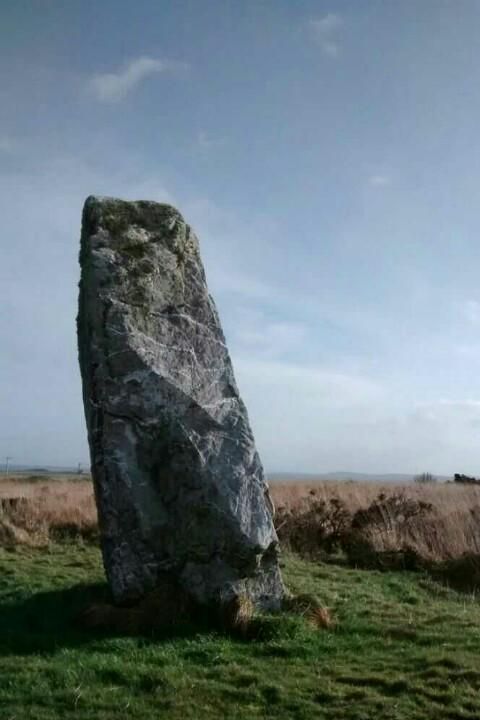
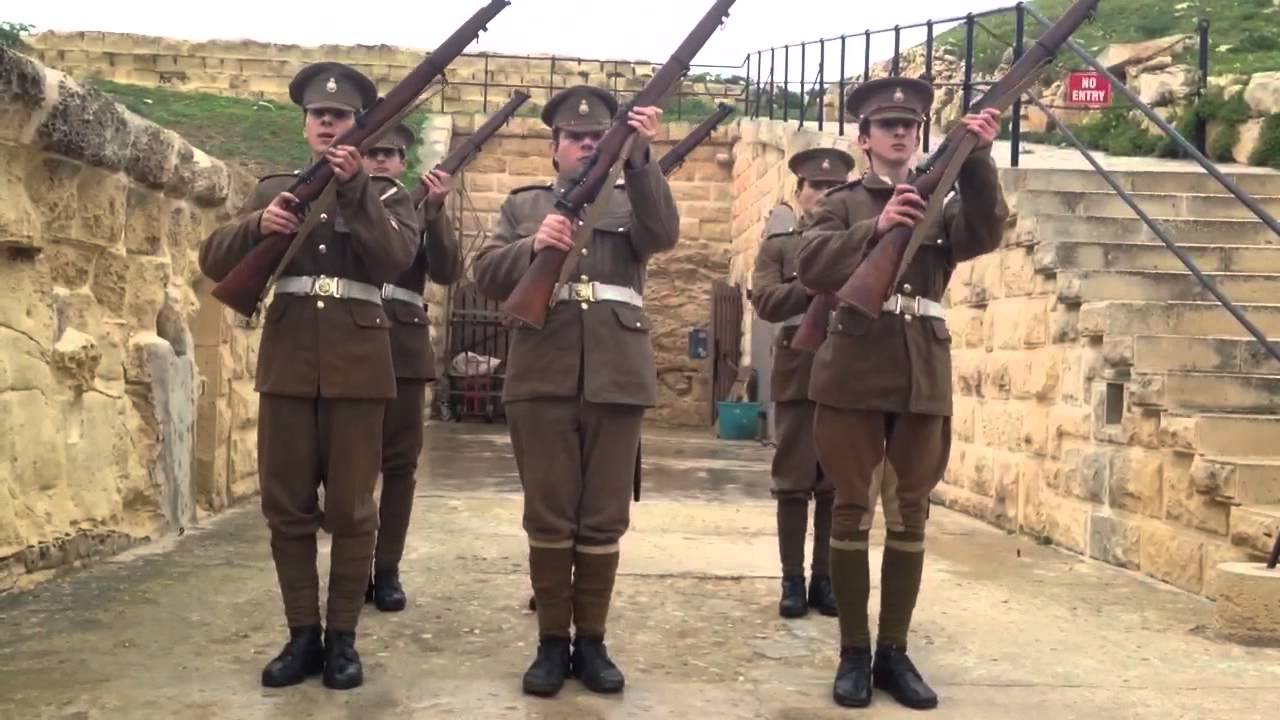
After that war, the UK was seemingly filled with monuments commemorating the dead

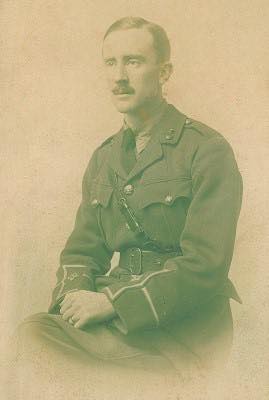
and Tolkien

himself had lost two of his three dearest school friends,

 Gilson and Smith, in the fighting.  Gilson was killed on the first day of the vast and terrible Battle of the Somme, 1 July, 1916, a battle in which JRRT’s unit was also involved.  Smith died from a wound in early December, 1916, and, since my original reading of The Lord of the Rings, I’ve come to wonder whether, when Tolkien had Frodo say

“It must often be so, Sam, when things are in danger:  some one has to give them up, lose them, so that others may keep them.”

it was his way of trying to explain his own understanding of what had happened to those friends and maybe why.  “Survivor’s guilt” is a common term these days, and, though I’ve seen no evidence in what we have in the way of Tolkien autobiographical material so far, I also wonder whether he bore his own scars from the War and, although a devout Christian, part of him hoped, with the fatally-wounded Frodo, to experience

“…a sweet fragrance on the air and…the sound of singing that came over the water.  And then it seemed to him that…the grey rain-curtain turned all to silver glass and was rolled back, and he beheld white shores and beyond them a far green country under a swift sunrise.”

Departure at the Grey Havens, by Ted Nasmith

If that were so, I could live with Frodo’s end, even if the Yellow Dwarf has still spoiled the ending for Toute-Belle and the King.

Thanks, as ever, for reading.

Stay well,

Be aware that all dwarves are not like Gimli,

And know that, as always, there’s

MTCIDC

O

ps

Here’s a LINK to the second edition of J.R. Planche’s version of Mme D’Aulnoy’s fairy tales (1856):   https://en.wikisource.org/wiki/Fairy_Tales_by_the_Countess_d%27Aulnoy   This includes not only those stories in Les Contes des Fees, but also those from her second collection, Contes Nouveaux ou Les Fees a la Mode (“New Fairy Tales or The Fairies in Fashion”) of 1698.  Planche himself is worth knowing more about.  To get a start, see:  https://en.wikipedia.org/wiki/James_Planch%C3%A9

pps

If you’re not familiar with that adjective “Bowdlerized”, it refers to Dr Thomas Bowdler (1754-1825), who, with his sisters, produced in 1807 (with several subsequent editions) The Family Shakspeare [sic].

This removed or changed anything which they thought might offend female and child readers (basically, for them, both in the same category), so that the works might be read aloud at family gatherings.  From this initial work, the term came to mean any tampering with or censoring of a text. 

Riddles in the (Not So) Dark

As ever, dear readers, welcome.

We all know just how perilous that Ring of Power is—

Gandalf

won’t take it:

“Do not tempt me!  For I do not wish to become like the Dark Lord himself…Do not tempt me!  I dare not take it, not even to keep it safe, unused.”  (The Fellowship of the Ring, Book One, Chapter 2, “The Shadow of the Past”)

Galadriel,

offered it, like Gandalf, is aware of its seductive strength, regretfully declines it–

“I pass the test…I will diminish, and go into the West, and remain Galadriel.”  (The Fellowship of the Ring, Book Two, Chapter 7, “The Mirror of Galadriel”)

Faramir,

who only has a dim understanding of it, won’t touch it:

Not if I found it on the highway would I take it I said.  Even if I were such a man as to desire this thing, and even though I knew not clearly what this thing was when I spoke, still I should take those words as a vow, and be held by them.”  (The Two Towers, Book Four, Chapter 5, “The Window on the West”)

There are others, however, with a different view—and it corrupts them:

“ ‘And why not, Gandalf?’ he whispered. ‘Why not?  The Ruling Ring?  If we could command that, then the Power would pass to us.”  (The Fellowship of the Ring, Book Two, Chapter 2, “The Council of Elrond”)

And that power has its effect, as well, on the author himself.

I don’t mean, of course, that Tolkien turned into Saruman or even Gollum,

(by Alan Lee)

but the Ring had its influence over him, as I discovered when reading, for the first time, the 1937 Hobbit.

and, in particular, the original Chapter 5, “Riddles in the Dark”.  I had read the sections quoted in the margins of Douglas Anderson’s The Annotated Hobbit,

which I can’t recommend highly enough, if you’re interested in more than just Tolkien’s story, but it was only in reading the whole chapter in the reprinted facsimile edition that I was struck by what a different book, potentially, it was.

It’s not that the Ring is different—it’s still just the little circle of gold with the power to make one disappear which Bilbo picks up and puts into his pocket at the beginning of the chapter—it’s that Gollum is different. 

So much is just the same, riddles and all, but note the initial conditions of the contest:

“ ‘Does it guess easy?  It must have a competition with us, my preciouss!  If precious asks, and it doesn’t answer, we eats it, my preciousss.  If it asks us, and we doesn’t answer, we gives it a present, gollum!’ ”  (“Riddles in the Dark”, 1937, 85)

Then the contest proceeds, including “What have I got in my pocket?” and Gollum’s attempt to cheat with two guesses, but then things go in a completely different direction:

“ ‘Both wrong,’ cried Bilbo very much relieved; and he jumped at once to his feet, put his back to the nearest wall, and held out his little sword.  But funnily enough he need not have been alarmed.  For one thing Gollum had learned long long ago was never, never, to cheat at the riddle-game, which is a sacred one and of immense antiquity.  Also there was the sword.  He simply sat and whispered.” (91)

In the later, 1951, edition, the condition if Gollum lost was that he was then obliged to guide Bilbo out of the goblin tunnels and, while actually thinking to use the Ring to come back, avoid that sword, and kill and presumably then eat Bilbo, he says that he has to go to his island “…[to] go and get some things first, yes, things to help us.”

In 1937, Gollum has, surprisingly, a fragment of a conscience, saying to himself:

“ ‘Must we give it the thing, preciouss?  Yess, we must!  We must fetch it, preciouss, and give it the present we promised.’ ” (91)

He finds the Ring gone, of course, and he is upset, but it seems that his emotional disturbance is more about not being able to fulfill the conditions of the contest than the loss of the Ring itself:

“I don’t know how many times Gollum begged Bilbo’s pardon.  He kept on saying:  ‘We are ssorry; we didn’t mean to cheat, we meant to give it our only only present, if it won the competition.’  He even offered to catch Bilbo some nice juicy fish to eat as a consolation.” (92)

Bilbo declines the fish, and, instead, requests that Gollum guide him out of the tunnels—but that tone of abject apology now has an undertone which reminds us of the later Gollum:

“Now Gollum had to agree to this, if he was not to cheat.  He still very much wanted just to try what the stranger tasted like; but now he had to give up all idea of it.  Still there was that little sword; and the stranger was wide awake and on the look out, not unsuspecting as Gollum like to have the things which he attacked.  So perhaps it was best after all.” (93)

Gollum then leads him through a complex pattern of lefts and rights until:

“So Bilbo slipped under the arch, and said good-bye to the nasty miserable creature; and very glad he was.  He did not feel comfortable until he felt quite sure it was gone, and he kept his head out in the main tunnel listening until the flip-flap of Gollum going back to the boat died away in the darkness.” (94)

This is a far cry, of course, from that moment in the later version, when the frightened Bilbo, invisible and sword in hand, thinks:

“He must get away, out of this horrible darkness, while he had any strength left.  He must fight.  He must stab the foul thing, put its eyes out, kill it.” (1951)

We know that Tolkien rewrote whole sections of this chapter as early as 1944 and “sent [them] to Allen & Unwin in 1947 as a way to bring the earlier book into harmony with its sequel…” (Rateliff, The History of the Hobbit, “The 1947 Hobbit”, 731—this whole section of Rateliffe’s book, 731-762, is worth careful study to understand how, as he was deep in The Lord of the Rings, JRRT was thinking how to create a greater whole, using the earlier work.)  And, if you grew up reading the later version of the story (as well as Bilbo’s falsifications as noted in “The Shadow of the Past”), it’s a shock to see Tolkien’s original version, but it’s a good shock, as it shows so clearly not only the growth of the story, but JRRT’s growth as a writer, as well.  The Gollum of 1937 is small and spiteful and, for one chapter, dangerous, but, aside from providing the Ring which Bilbo uses again and again in his role as “burglar”, he is more the agent for providing that Ring than a major character.  In the revised version, perhaps his most important role is to provoke the inherent—and saving—humanity first of Bilbo and then, in turn, of Frodo.  When, wearing the Ring, Bilbo fleeing Gollum, has the opportunity to do away with his pursuer, this comes into Bilbo’s mind:

“No, not a fair fight.  He was invisible now.  Gollum had no sword.  Gollum had not actually threatened to kill him, or tried to yet.  And he was miserable, alone, lost.  A sudden understanding, a pity mixed with horror, welled up in Bilbo’s heart:  a glimpse of endless unmarked days without light or hope of betterment, hard stone, cold fish, sneaking and whispering.  All of these thoughts passed in a flash of a second.  He trembled.”  (1951)

And, instead, he leaps over Gollum’s head and is on his way to escape—perhaps in more ways than one.

 As Gandalf replies when Frodo says “…I do not feel any pity for Gollum” and that “He deserves death.”—

“ ‘Deserves it!  I daresay he does.  Many that live deserve death.  And some that die deserve life.  Can you give it to them?  Then do not be too eager to deal out death in judgement.  For even the very wise cannot see all ends.   I have not much hope that Gollum can be cured before he dies, but there is a chance of it.  And he is bound up with the fate of the Ring.  My heart tells me that he has some part to play yet, for good or ill, before the end; and when that comes, the pity of Bilbo may rule the fate of many—yours not least.”  (The Fellowship of the Ring, Book One, Chapter 2, “The Shadow of the Past”)

Besides that humanity, what would have happened if Gollum had remained that small agent when  Frodo, in the depths of Mount Doom, had been allowed to go through with his terrible statement:

“  I have come…But I do not choose now to do what I came to do.  I will not do this deed.  The Ring is mine!” ?  (The Return of the King, Book 6, Chapter 3, “Mount Doom”)

At the Cracks of Doom, by Ted Nasmith

Thanks, as always, for reading,

Stay well,

Look –and think—before you leap,

And know that there’s always

MTCIDC

O

ps

For a very useful side-by-side comparison of 1937 and 1951 , see:  https://www.ringgame.net/riddles.html

Feeling Blue (II)

Welcome, dear readers, as always.

In my last, I had noticed that Bram Stoker (1847-1912)

appeared to have been influenced by the fairy tale of Blue Beard in certain details of his novel, Dracula (1897).

In that fairy tale, a young woman, newly married to a very odd man, is given a key she’s not supposed to use for a room she’s not supposed to enter. 

She does use it and almost loses her life because of it.

In Stoker’s novel, a young man, staying as a guest in a ruined castle is cautioned about doors and even more about sleeping in strange rooms:

“ ‘Let me advise you, my dear young friend—nay, let me warn you with all seriousness, that should you leave these rooms you will not by any chance go to sleep in any other part of the castle. It is old, and has many memories, and there are bad dreams for those who sleep unwisely. Be warned! Should sleep now or ever overcome you, or be like to do, then haste to your own chamber or to these rooms, for your rest will then be safe. But if you be not careful in this respect, then’—He finished his speech in a gruesome way, for he motioned with his hands as if he were washing them.” (Dracula, Chapter III)

Like the young woman, the young man disobeys, falls asleep in a room he should never have entered, and is nearly attacked by three voluptuous female vampires.

From these details, I would suggest that Stoker knew the story, but, remembering Stoker’s background, it may not have been that he had read either the original source—Charles Perrault’s  (1628-1703)

Histoires ou Contes du Temps Passe avec des Moralites (“Stories or Fairy Tales of Time Past with Some Moral Lessons”) of 1697,

or its first appearance in English, in 1719,

or its many later publications or republications, including one Tolkien might have read, in Andrew Lang’s The Blue Fairy Book (1889).

(It’s clear, from certain references, that, as a boy, JRRT had read, or had  had read to him, The Red Fairy Book, its sequel,

and, in a previous posting—“Roll Out the Barrel”, Wednesday, 13 April, 2022—I suggested a possible link between his work and the earlier Lang volume.)

Stoker had been interested in the theatre from his student days in Dublin and later became  the business manager of Sir Henry Irving, one of the most distinguished English actors,

at his theatre, the Lyceum.

There had been theatrical productions of the Blue Beard story from at least 1789, when Andre Gretry (1741-1813)

presented his opera, Raoul Barbe Bleue in Paris, just on the eve of the Revolution.  Gretry billed it as a comedy, and, though later successful, initially it appears that critics had had a very mixed view, at least one suggesting that such a story was hardly a subject for joking.  (For an interesting, but not always quite accurate, essay on the subject, see:  https://repertoire-explorer.musikmph.de/prefaces/2116.html  And you can hear the overture with its what I think rather creepy opening, here:  https://repertoire-explorer.musikmph.de/prefaces/2116.html  

In England, it was a subject for joking, in the form of pantomime, a traditional entertainment often based upon popular fairy tales.  As early as 1791—just 2 years after Gretry’s comedy—Karl Friedrich Baumgarten  (c.1740-1824) premiered Bluebeard, or The Flight of Harlequin at Covent Garden.

(For more on pantomime, see:   https://sites.google.com/site/ibworldtheatreresearch/english-pantomime )

And, throughout the 19th century, Bluebeard became a common subject for such entertainment.

The French, in the form of Jacques Offenbach (1819-1880),

even returned to the comic side of Bluebeard with Barbe-bleue in 1866. 

This is my favorite of the various treatments, in part because Bluebeard is, for all that he’s a bloodthirsty serial killer (or so he thinks), such a cheerful fellow, as one can see in the first verse of his introductory song.  Here’s that verse in French and then my prose translation, which gives no sense of the merriment in the song, although  Bluebeard’s carefree attitude about the disappearance of those to whom he was presumably attached comes through—I hope!

Bluebeard enters with some of his troops and addresses them in a kind of lament–

Encore une, soldats, belle parmi les belles !
Pourquoi donc le destin les mets-il sur mes
pas,
Ces femmes qu’aussitôt des morts accidentel-

les
Arrachent de mes bras !

but then breaks into a very cheerful tune.

              Ma première femme est morte,

Et que le diable m’emporte,

Si j’ai jamais su comment !

La deuxième et la troisième,

Ainsi que la quatrième,

Je les pleure également.

La cinquième m’était chère,

Mais, la semaine dernière,

À mon grand étonnement,

Sans aucun motif plausible,

Les trois Parques, c’est horrible !

L’ont cueillie en un moment…

Je suis Barbe-Bleue, ô gué !

Jamais veuf ne fut plus gai !

Once again, soldiers, a beauty among the beauties!

Why then does Destiny put them in my way,

These women whom soon some accidental deaths

Tear from my arms!

My first wife is dead

And devil take me

If  I’ve ever known how!

The second and the third

As well as the fourth

I wept for equally.

The fifth was dear to me

But, last week,

To my great astonishment,

Without any plausible cause,

The three Fates—it’s horrible!—

Have plucked her in a moment…

I’m Blue Beard, hooray!

Never was a widower more merry!

Here’s my second translation which tries to stick to the French rhythm, if not to every French word:

My first wife was quickly hist’ry,

But how she died’s a myst’ry—

Devil take me if I see!

Then the second and the third one

And  then the fourth was soon done–

I mourned them equally!

The fifth to me was just as charming,

But, just last week there came alarming

News—no cause at all to see–

That the Fates—it’s horrifying—

In a moment she was dying—

Had plucked that wife from me!

I am that Blue Beard—hooray!

No widower more merry today!

And here’s a performance, so that you can hear both the French and the jolly tune to which it’s set.

Offenbach’s operetta was first performed in England within the same year as its premiere in Paris, and, as pantomimes and that 19th-century English dramatic art form called the “burlesque”—here’s F.C. Burnand’s 1883 “Blue Beard or the Hazard of the Dye”—

continued to employ the Blue Beard plot throughout the later 19th century,  I think that it can be easily seen that, surrounded as he was by so many theatrical treatments, even if he had never read a page of the French or an English translation, the story, in some form, must have been readily available to Stoker. 

(For more on 19th-century English burlesque, see:  https://en.wikipedia.org/wiki/Victorian_burlesque    W.S. Gilbert got his start writing such things, the first being Dulcamara, or the Little Duck and the Great Quack, 1866.  In one of those odd coincidences which sometimes turn up in these postings, Henry Irving, Bram Stoker’s boss at the Lyceum, was the stage director for this early Gilbert effort.)

Blue Beard as a subject lived beyond its possible influence upon Stoker’s novel and even beyond pantomime and burlesque, moving into the 20th century and film, his first appearance  being in a short film by the Lumiere Brothers in 1897-8.

I can’t give you a link to that, but here’s Georges Melies’ (1861-1938)

nearly 11-minute-long version from 1901: https://www.youtube.com/watch?v=6uMctQFV3JI ,t

just over 20 years before the first Dracula film, F.W. Murnau’s (1888-1931)

wonderfully creepy Nosferatu of 1922.

(And here’s a LINK to it:  https://archive.org/details/Nosferatu1922 )

And there are more films, including Charlie Chaplin’s 1947 Monsieur Verdoux,

as well as more operas beyond Gretry’s—Paul Dukas’ Ariane et Barbe-bleue (1907)

and Bela Bartok’s Blue Beard’s Castle (1918),

but, it appears that I could talk till I’m blue in the face on the subject, doesn’t it?

DocuImage 620s

(This is from Gustave Dore’s 1862 illustrated edition of Perrault.  So far, I’ve only been able to locate a 1921 German translation with Dore’s pictures, but, even if you can’t read German, the stories are so familiar that you can simply follow the illustrations:  https://www.gutenberg.org/files/42900/42900-h/42900-h.htm )

Stay well,

Avoid locked room mysteries,

And know that, as ever, there’s

MTCIDC

O

Feeling  Blue (I)

Welcome, as always, dear readers.

I’m teaching Dracula again,

Bram  Stoker’s  (1847 -1912)

wonderfully-imagined novel of 1897,  and, as always when I teach a work more than once, something new pops out at me.   This time it was a passage from Chapter II.  Jonathan Harker, clerk for Peter Hawkins, a solicitor, who has an office in Exeter, in southwest England, has been sent by his employer  across Europe to Transylvania (now part of Romania), to help  the new owner of an English estate with the necessary paperwork.  This owner is a nobleman of the region and lives in a semi-ruined castle.  At first, he seems a charming host, saying to Jonathan:

“You may go anywhere you wish in the castle, except where the doors are locked, where of course you will not wish to go. There is reason that all things are as they are, and did you see with my eyes and know with my knowledge, you would perhaps better understand.”

And this is what caught my attention.  Where had I read something like this before?  And then Andrew Lang’s The Blue Fairy Book (1889)

fell off the shelf, opening to this:

“Here,” said he, “are the keys of the two great wardrobes, wherein I have my best furniture; these are of my silver and gold plate, which is not every day in use; these open my strong boxes, which hold my money, both gold and silver; these my caskets of jewels; and this is the master-key to all my apartments. But for this little one here, it is the key of the closet at the end of the great gallery on the ground floor. Open them all; go into all and every one of them, except that little closet, which I forbid you, and forbid it in such a manner that, if you happen to open it, there’s nothing but what you may expect from my just anger and resentment.” 

The speaker here is rather unusual in appearance, in regard to his facial hair.

Portrait of a Blue Beard, a colour illustration. Bluebeard a French literary folktale written by Charles Perrault. The tale tells the story of a nobleman who murders his wives.’ Author Charles Perrault, Illustrated by John Orlando Parry.

So—Stoker also knew Blue Beard

Although the story has earlier antecedents, including folktales, the modern form first appears in Charles Perrault’s (1628-1703)

Histoires ou Contes de Temps Passe avec des Moralites (“Stories or Fairy Tales of Time Past with Some  Moral Lessons”) with a subtitle:  Les Contes de ma Mere L’Oye (“The Fairy Tales of My Mother Goose”)

If you’re unfamiliar with the story, the main points are:

1. a wealthy nobleman tries to marry one of two sisters, who are put off by his beard and by the fact that, although the nobleman is known to have been married before—and more than once–no one seems to know what happened to those former wives.

2. eventually, the younger of the two, having seen the nobleman’s lavish life style, is persuaded to accept him.

3. after the wedding, he tells her that he must leave for a time, on business, entrusting her with a set of keys for various rooms in his castle.

4. he tells her that she may use any key to enter any room but one—and then sets off on his trip.

5. she invites female relatives, including her sister, Anne, to visit and see what luxury she now commands—but can’t stop thinking about that one room.

6. she slips away from her relatives, key in hand, opens the door, and steps into a room the floor of which is covered in congealed blood and at the walls are the bodies of those previous wives.

7. In her surprise and terror, she drops the key and it’s immediately coated with blood.  She desperately tries to clean it, but it’s a magic key and, when the nobleman returns and demands his keys, he discovers the blood and says that she must now join the other wives.

8. she begs for a few moments of prayer with her sister, which he reluctantly grants, and is rescued at the very last moment by the arrival of her two brothers,

who kill the nobleman, leaving her a widow with a large fortune—and a back room in need of a drastic cleaning.

It’s interesting that Stoker, having, it seems, made use of the idea of locked rooms in Chapter II, continues the idea of danger in forbidden rooms in Chapter III, where he warns Jonathan:

“ ‘Let me advise you, my dear young friend—nay, let me warn you with all seriousness, that should you leave these rooms you will not by any chance go to sleep in any other part of the castle. It is old, and has many memories, and there are bad dreams for those who sleep unwisely. Be warned! Should sleep now or ever overcome you, or be like to do, then haste to your own chamber or to these rooms, for your rest will then be safe. But if you be not careful in this respect, then’—He finished his speech in a gruesome way, for he motioned with his hands as if he were washing them.”

Needless to say, Jonathan goes exploring, forces a door which is not actually locked, spends time in the room within, and—but perhaps, like Stoker, I should maintain the suspense and we’ll continue this in our next post…

Thanks, as always, for reading,

Stay well,

Avoid temptation, when possible,

And know that, as ever, there’s

MTCIDC

O

PS

(If you’d like to see Perrault’s original French text, here it is:  https://fr.m.wikisource.org/wiki/Histoires_ou_Contes_du_temps_pass%C3%A9_(1697)/Original/La_Barbe_bleue    Here’s the Blue Fairy Book, as well:   https://www.gutenberg.org/ebooks/503    )

Not In Fane(s)

Welcome, dear readers, as always.

Although Tolkien maintained that there was religion—and monotheistic religion—under the surface of The Lord of the Rings, saying to one correspondent:

The Lord of the Rings is of course a fundamentally religious and Catholic work; unconsciously so at first, but consciously in the revision.”

yet he added:

“That is why I have not put in, or have cut out, practically all references to anything like ‘religion’, to cults or practices, in the imaginary world.”

Those “practically all references” usually pointed to are:

1. when attacked by a mumak, Damrod the ranger of South Ithilien calls upon the Valar (The Two Towers, Book Four, Chapter 4, “Of Herbs and Stewed Rabbit”)

(by Alan Lee)

2. when Faramir and his men, before eating, face west in silence (The Two Towers, Book Four, Chapter 5, “The Window on the West”)

(a Ted Nasmith)

3. mentions of the Vala Varda (Elbereth), to whom the Elves seem to feel especially devoted, and to whom Sam almost instinctively appeals when he battles Shelob (The Two Towers, Book Four, Chapter 10, “The Choices of Master Samwise”)

(the Hildebrandts)

Tolkien goes on to explain:

“For the religious element is absorbed into the story and the symbolism.” (letter to Robert Murray, SJ, 2 December, 1955, Letters 172)

Because this is what the author tells us, we must, of course, accept it and, although he claims that “that is very clumsily put”, behind that explanation is JRRT’s wariness of overt religion appearing in stories like The Lord of the Rings, as he writes:

“For reasons which I will not elaborate, that seems to me fatal.  Myth and fairy-story must, as all art, reflect and contain in solution elements of moral and religious truth (or error), but not explicit, not in the known form of the primary “real” world.”  (The Silmarillion, xii)

To emphasize this “in solution” method of setting religion into Middle-earth, as Tolkien explained in a footnote to a draft of a letter to Peter Hastings from 1954:

“There are thus no temples or ‘churches’ or fanes in this ‘world’ among ‘good’ people.” (draft of letter to Peter Hastings, September, 1954, Letters, 193)

Again, the author makes his intentions clear—and yet I am always haunted by the remains of previous ages still apparent on the surface in the Third Age.  There are the East Road and its bridge over the Brandywine, which the King of Arnor has charged the hobbits to maintain (The Lord of the Rings, Prologue, I, Concerning Hobbits),

(This is the Pont Julien, a surviving Roman bridge in France—I always imagine that Numenorean structures in Middle-earth had an imperial look to them),

there’s the Greenway,

(a bit of Roman road)

and Weathertop,

(an Alan Lee)

and Amon Hen,

(not sure of the artist here—Scott Peery?)

and, grandest of all, the Argonath.

(the Hildebrandts—although I could easily have picked others, this being a subject which has inspired a good number of excellent artists)

So, if for a moment we might put aside JRRT’s remarks, why might we not see at least the remains of temples or fanes (another word for “temple” or “shrine” from Latin fanum) in Middle-earth?

In our world, Greco-Roman temples survive, either as now remote ruins, like the temple of Apollo at Bassae, in Greece,

or as a fragment, like this corner of  the “ temple of Iupiter Tonans” (actually the one surviving piece of a temple dedicated to the emperor Vespasian and his older son, Titus) in the Roman Forum.

(Abandoned for centuries, the Forum had gradually become so silted up and overgrown that it had become known as the “cow pasture” (Campo Vaccino ).  This is how the temple looked in the 18th century, long before the beginnings of the official excavation of the Forum in 1898.  Here’s what it looks like today–)

Other shrines had been repurposed as Christian churches, like this temple originally dedicated to the Roman emperor Antoninus Pius and his wife, Faustina, but now the Chiesa di San Lorenzo in Miranda, also in the Forum,

or the temple at the edge of the Agora in Athens, originally a temple of Hephaistos, but, in later times, dedicated to Saint George, which is why it has survived so beautifully.

After the Ottoman conquest in 1453, most Christian churches in Constantinople were converted to mosques, like that dedicated originally to Saints Sergius and Bacchus,

or the grand Church of Holy Wisdom (Hagia Sophia).

It’s a nice fantasy, then, and would go very well with the genuine fallen monuments of Middle-earth,

(a favorite Ted Nasmith)

but, realistically, we have to accept the author at his word, when he talks about the later peoples of Middle-earth:

“They had little or no ‘religion’ in the sense of worship.  For help they may call upon a Vala (as Elbereth), as a Catholic might on a Saint, though no doubt knowing in theory as well as he that the power of the Vala was limited and derivative.  But this is a ‘primitive age’ and these folk may be said to view the Valar as children view their parents or immediate adult superiors, and though they know they are subjects of the King he does not live in their country nor have there any dwelling.”  (draft of letter to Peter Hastings, September, 1954, Letters, 193)

As ever, thanks for reading.

Stay well,

Revere the Valar,

And remember that there’s always

MTCIDC

O

PS

That image of the temple of Vespasian and Titus is by Giovanni Battista Piranesi (1720-1778) and one of a long series of striking engravings of Rome which he made through his later creative years.  If you would like to see more of them, here’s a LINK to a useful collection from 1779:   https://ia803406.us.archive.org/7/items/piranesi-vedvte-di-roma-t.-1-2-1779/Piranesi%2C%20Vedvte%20di%20Roma%2C%20t.1-2%2C%201779%2B.pdf   

 A mild warning:   Piranesi often does things like distort perspective, shrinking people and swelling buildings in order to make his depictions more dramatic.  In fact, they could be so dramatic that 18th-century tourists, having first seen his engravings, sometimes found themselves a little disappointed that the real sites weren’t quite so impressive as Piranesi’s views of them! 

Roll Out the Barrel

“Roll out the barrel, we'll have a barrel of fun.
Roll out the barrel, we've got the blues on the run.
Zing boom tararrel, ring out a song of good cheer.
Now's the time to roll the barrel, for the gang's all here.”

(Melody:  Jaromir Vejvoda; English lyrics:  Lew Brown, Vladimir Timm—perhaps the first famous US performance was by the Andrews Sisters 
in 1939—here’s a recording:  https://www.youtube.com/watch?v=7KRc-ceWE2E )
As ever, welcome, dear readers.

This is the 400th posting of doubtfulsea.com and perhaps a small rolling out of barrels is due, but “barrels” has immediately made me think of another kind of barrel rolling—
and, as always, I wonder about sources:  where might the idea of escape by barrel have come from?
It seems certain that Tolkien had had read to him or had read to himself Andrew Lang’s Red Fairy Book (1890),
which has in it “Storia Moria Castle” and the dragon which was probably the one which sparked his imagination as he recounted in his long, rich letter to W. H. Auden of 7 June, 1955 (see Letters, 214).  Had he also encountered the first book in Lang’s long series of colored fairy books,
 the Blue Fairy Book (1889),
he would have heard the story “The Forty Thieves”, probably known to you as to me as “Ali Baba and the Forty Thieves”.
 If you’re unfamiliar with this story, in brief (very brief—the story is a bit more complicated than this) it goes like this:
1. Ali Baba works as a wood cutter for a living.
2. one day, he hears horsemen approaching where he’s working and he climbs into a tree to watch.
3. they approach and he watches one, seemingly the chief, dismount, step to a cliff face, and murmur “Open Sesame!”
4. a door opens and the chief goes inside, followed by his other—39—Ali Baba counts them—men.
And yes, this does have the echo of something else, doesn’t it?  (See The Fellowship of the Ring, Book Two, Chapter 4, “A Journey in the Dark”)  Perhaps this might be evidence that JRRT did know Lang’s volume?
 
5. after the 40 leave, Ali Baba slips down, tries the password, and finds himself in a cave stuffed with riches.
6. loading up his mules with treasure, he takes home a selection of what he found in the cave.
7.  in time, the chief realizes that the cave has been looted and that Ali Baba did it and, disguised as an oil merchant, he gains access to Ali Baba’s house, his men concealed in a cargo of oil jars.
 8. unfortunately for his men, Ali Baba has a clever slave named Morgiana, who discovers what’s in the jars and fills them with burning oil, thereby removing the chief’s band.
And so we see that those jars might someday turn into barrels.
(an Alan Lee illustration)
As I’ve written before, Tolkien began his academic life intending to become a Classicist, and so another rather unusual escape story might also have been in the back of his mind.
Odysseus and his men are in terrible trouble, trapped in a cave with a one-eyed giant, a Cyclops, who, over about two days, has eaten six of those men.
They can’t kill him and escape because the Cyclops seals the door with an enormous boulder, which only he can push out of the way.  In a flash of the genius which makes him “polymetis”, “manyplans”, as he’s called in the Odyssey, Odysseus gets the Cyclops drunk, and, when he collapses in a stupor, blinds him.
The Cyclops is a herder of sheep and goats and, in the morning, he is due to let them out out of his cave so that they can proceed to graze.  Odysseus realizes this and binds his men under six of the biggest sheep (figuring that, if the Cyclops searches for escaping men, he’ll pass his hands across the sheeps’ backs), then clings to the underside of a big ram and follows them out (after a hairy moment when the Cyclops stops the ram—his favorite, it turns out—and has a brief chat with it). 
Although using neither pots nor barrels, might we see a familiar pattern here, rescuer sending the rescued ahead, then, clinging to something, tagging behind? 
Thanks, for reading, as ever, and
Stay well,
Have an escape route,
And remember that there’s always
MTCIDC
O
ps
Here’s your copy of the first edition of the Blue Fairy Book: https://archive.org/details/bluefairybook00langiala/mode/2up  “The Forty Thieves” is on pages 242-250. 

pps
My apologies for the weird typeface and the spacing.  As I move on to #401, I assure you that I'm not making a change!  I have no idea what's happened--perhaps it's that mention of the Andrews sisters?  Certainly, this type makes the posting look like it dates from 1939.

Flooded Out

Dear readers, welcome, as ever.

You probably recognize the illustration above, Hokusai’s (1760-1849)

“Great Wave Off Kanagawa” from “Thirty-Six Views of Mt Fuji”, (c.1830-1833).  It seemed a very appropriate illustration for this posting, which is about very high tides and worse.  The posting itself began when I reread this:

“At length Ar-Pharazon listened to this counsel, for he felt the waning of his days and was besotted by the fear of Death.  He prepared then the greatest armament that the world had seen, and when all was ready he sounded his trumpets and set sail; and he broke the Ban of the Valar, going up with war to wrest everlasting life from the Lords of the West.  But when Ar-Pharazon set foot upon the shores of Aman the Blessed, the Valar laid down their Guardianship and called upon the One, and the world was changed.  Numenor

was thrown down and swallowed in the Sea,

and the Undying Lands were removed for ever from the circles of the world.  So ended the glory of Numenor.”  (The Lord of the Rings, Appendix A, I “The Numenorean Kings”)

I’m always interested in where Tolkien’s ideas come from and, although he himself related this to the myth of Atlantis (see the letter to Naomi Mitchison, 25 September, 1954, Letters (197-198), If you’ve grown up in the sort of culture, both religious and general, in which Tolkien grew up (and so did I, for that matter) probably your first thought is:  “Hey—it’s Genesis, Chapters 6-8!  The story of Noah’s Ark and the flood!”

(a Victorian children’s toy—pious people thought that somehow play was like work and so children were not allowed to play with their usual toys on Sunday—instead, this toy was brought out)

which is wonderfully illustrated in a series of mosaics in the late 12th-century cathedral of Monreale in Palermo, Sicily.  Here’s Noah and family building the Ark

and Noah gathering the animals

and, hoping that the flood is finally over, Noah is sending out a dove as a scout—and the dove returns.  The Latin text, expanded, reads:  “Noah sent a dove and it returned with the branch of an olive.”  (This is actually rushing things a bit—Noah sent the dove out twice and it was only on the second trip that it came back with the twig.)

The Dove Returns to the Ark

(We can also note the gross realism of including several drowned people in the scene.)

I think, however, that we can see two more potential influences upon JRRT which might lie behind this story of a flooded world. 

First, JRRT began his academic life as an aspiring Classicist, which means that, probably fairly early on in his training, he had encountered Ovid’s (43BC-17AD) story of the only survivors of a Greco-Roman flood, to be found in Book I, lines 163-415 of Ovid’s Metamorphoses.

(This is Arthur Golding’s translation of 1567, which was the one which Shakespeare must have thumbed through, looking for usable poetic material.)

 Jupiter, disgusted with the Age of Bronze (and with the particularly loathsome Lycaon—for more on him see:  https://en.wikipedia.org/wiki/Lycaon_(king_of_Arcadia) ),

floods the earth, leaving only two humans, Pyrrha and Deucalion. 

(Noah and family’s repopulating the now-drying earth is well-known, being done by more or less human—and animal—means, but what happened to recreate the people of Ovid’s world is so surprising that it seemed to me worth a little detour here.

Despairing that they will be the last of their race, Pyrrha and Deucalion consult the goddess Themis (whose temple has survived, although more than a little worse for wear) and she tells them (381-382):

 “discedite templo
et velate caput cinctasque resolvite vestes
ossaque post tergum magnae iactate parentis!”

“Leave the temple

And cover your heads and loose your bound robes

And throw behind you the bones of your great mother!”

(Parens can be masculine or feminine, but the adjective modifying it is feminine, so clearly the goddess here means “mother”.)

Or, if you’d prefer Arthur Golding’s version:

“Depart you hence: Go hide your heads, and let your garmentes slake,
And both of you your Graundames bones behind your shoulders cast.”

(If you’d like your own copy of Golding, here’s W.H.D. Rouse’s 1904 facsimile for you:  https://sourcetext.files.wordpress.com/2018/01/golding_ovid.pdf )

At first, the two are stumped:  disturbing a parent’s bones is a form of sacrilege and these are pious people (which is why they’ve survived).  Then it occurs to Deucalion that Themis is speaking in metaphors (393-394): 

“magna parens terra est: lapides in corpore terrae
ossa reor dici; iacere hos post terga iubemur.”

“Our great mother is the earth:  I think that the stones of the earth

Are meant to be [her] bones; we are bid to throw those behind us.”

Or

“I take our Graundame for the earth, the stones within hir hid
I take for bones, these are the bones the which are meaned heere.”

They begin picking up stones and tossing them and, very soon, humans are back. 

Probably this is understood as a form of religious magic and Pyrrha and Deucalion are not supposed to see it at work, which is why:

1. they cover their heads, which is what Romans do at religious ceremonies

2. they throw the stones over their shoulders, rather than toss them in front of them.  In a way, it reminds me both of the story of Cadmus and the dragon’s teeth, by which he acquired help in founding Thebes, and Aeetes’ challenge to Jason to sow dragon’s teeth which turned into warriors which Jason was then supposed to fight, both stories appearing, among other places, in the latter part of Apollonius’ Argonautica, Book 3.

(This is a 1908 illustration by Maxfield Parrish, 1870-1966, and depicts Cadmus at work.)

As for loosing their garments, perhaps it is related to birthing customs?  When Hera wants to delay the birth of Herakles, Lucina, a childbirth goddess, sits with her legs and fingers crossed to stop the process (Ovid, Metamorphoses, Book 9, lines297-300).  So might loosing what was bound on Pyrrha and Deucalion allow for the free “birth” of people from the stones?)

Beyond Classics, and back to our main topic, we know that Tolkien had an abiding affection for Welsh (“I did not learn any Welsh till I was an undergraduate, and found in it an abiding linguistic-aesthetic satisfaction…” he wrote to W. H. Auden in June, 1955—Letters, 213) and there’s a medieval Welsh legend, involving two characters, named Dwyfan and Dwyfach, who survive their own flood, when a lake monster, the Afanc, inundates the world and the two, along with two of each species of animal which they’ve loaded into a boat (the boat being called Nefyd Naf Neifion—“Celestial Lord Neptune”?), are the only survivors.  The story appears in a medieval collection called Trioedd Ynys Prydain, “The Triads of the Island of Britain”, printed and translated by William Probert as an appendix to his The Ancient Laws of Cambria, 1823.

“13.  There were three awful events in the Isle of Britain.  The first was the bursting of the Lake of Floods, and the rushing of an inundation over all the lands, until all persons were destroyed except Dwyvan and Dwyvach who escaped in an open vessel; and from them the Isle of Britain was re-peopled.” (The Ancient Laws of Cambria, page 379)

This should be read in conjunction with part of Number 97:

“the ship of Nwydd Nav Neivion, which brought in it a male and a female of all living things when the lake of floods burst forth…” (page 466)

(For your own copy of the text:  https://archive.org/details/ancientlawscamb01probgoog )

Latin or Welsh were two languages with which Tolkien had significant experience, but is there yet another possible influence?  In 1873, the Assyriologist George Smith (1840-1876)

published an essay in Transactions of the Society of Biblical Archaeology (here it is:  https://sacred-texts.com/ane/chad/chad.htm ) which later formed part of book  which caused a great deal of controversy at the time.  Entitled “The Chaldean Account of the Deluge”, it included a translation of this cuneiform tablet–

The tablet was dated to the 7th century BC  and formed part of the story of the ancient Mesopotamian  hero, Gilgamesh.  This particular tablet carried a text which described a Noah-like figure, the boat he built, his collecting of animals to stock the boat, and the flood which that boat then survived. 

(Here’s a copy of the very book for you:  https://ia800900.us.archive.org/27/items/chaldeanaccounto00smit/chaldeanaccounto00smit.pdf  If you want to look at the translation of material relevant to the flood, see pages 263- 273.   The tablet itself is in the British Museum and you can read more about it at:  https://www.britishmuseum.org/collection/object/W_K-3375 )

That controversy was in the Victorian world, almost 20 years before Tolkien’s birth, but as an active scholar—and active Bible-reader (there are 19 references to it in Letters and JRRT was even once involved in the production of the Jerusalem Bible—see his self-deprecating comment to Charlotte and Denis Plimmer, February, 1967, Letters, 378), perhaps it wouldn’t seem surprising if he were aware of an ancient Near Eastern parallel to the familiar story of Noah—although from his reactions in his correspondence, which ranged from the frustrated to the downright hostile, to some of the parallels readers and critics attempted to draw between his work and other matters, I will not suggest that there might be any connection between the questing hero of a Sumerian text and certain hobbits…

Thanks, as ever, for reading.

Stay well,

Consider what creatures you might leave off your ark,

And remember that there’s always

MTCIDC

O

ps

If you enjoy the Hokusai, you might also enjoy Henri Riviere’s (1864-1951) turn-of-the-century “36 Views of the Eiffel Tower” which was obviously influenced by the earlier Japanese work.  A useful website is:  https://armstrongfineart.com/blogs/news/henri-riviere-the-thirty-six-views-of-the-eiffel-tower  And here is one of the set—

Weeping—no, Eating?—Willow

Des. The poore Soule sat singing, by a Sicamour tree.

Sing all a greene Willough:

Her hand on her bosome her head on her knee,

Sing Willough, Willough, Wtllough.

(Shakespeare, Othello, Act 4, Scene 3, from the First Folio, 1623—here’s a LINK to the Folio:  https://internetshakespeare.uvic.ca/doc/Oth_F1/complete/index.html  You can also see, from that last line, that printers weren’t always so accurate as they might be! )

 As always, dear readers, welcome.

Old Man Willow,

for all that he obeys Tom Bombadil

(a lovely piece by Roger Garland)

to free Merry and Pippin:

“You let them out again, Old Man Willow!…What be you a-thinking of?  You should not be waking.  Eat earth!  Dig deep!  Drink water!  Go to sleep!  Bombadil is talking!”  (The Fellowship of the Ring, Book One, Chapter 6, “The Old Forest”)

seems, like the Watcher in the Water, in the pool to the east of the Mines of Moria,

to remain a kind of brooding menace.   As the author describes him:

“But none were more dangerous than the Great Willow:  his heart was rotten, but his strength was green; and he was cunning, and a master of winds, and his song and thought ran through the woods on both sides of the river.  His grey thirsty spirit drew power out of the earth and spread in fine root-threads in the ground, and invisible twig-fingers in the air, till it had under its dominion nearly all of the trees of the Forest from the Hedge to the Downs.”  (The Fellowship of the Ring, Book One, Chapter 7, “In the House of Tom Bombadil”)

(JRRT’s drawing, which seems remarkably peaceful for such a threatening creature.  Perhaps  he is striving to suggest that the surface was that of a willow, but within was that rotten heart?  Or did his love of trees prevent him from depicting the real OMW?)

As well, like Tom and like Treebeard and the Ents (and Entwives), he is, for me, one of the ancient mysteries of Middle-earth.   What is he really?  Where does he come from?  Why is he there?

Two earlier postings (“Never a Willow”, 8/7/19 and “Never That Willow”, 8/14/19) had much to say about Old Man Willow in particular and about willows in general, including their use, for centuries, as a symbol of mourning—

(An especially beautifully-carved example)

Old Man Willow’s behavior, however, suggests  that, rather than being a symbol for mourning, he can become a source of mourning and, as such, he falls into a category of deadly plants like the once ill-famed upas tree.

This is a widespread variety of tree, Antiaris toxicaria, which can be found from Africa all the way across to the western Pacific.

(This illustration is from a highly-informative and surprisingly jolly website, considering its subject matter, entitled “Nature’s Poisons”:   https://naturespoisons.com/ )

Travelers’ tales reported that the plant gave off a kind of noxious fume which poisoned the landscape for 10 miles around, leaving the vicinity empty save for the bones of unwary animals and people.  Although this was proven to be more than an exaggeration in the early 19th century, a deadly poison can be extracted from the tree and was used by various indigenous peoples to tip their darts and arrows.

(For more on this, see the article at “Nature’s Poisons”:   https://naturespoisons.com/2019/07/17/antiarin-upas-tree-antiaris-toxicaria/ )

An even more spectacular tree—if possible—was the so-called “Man-eating tree of Madagascar”.

This was actually a hoax, first perpetrated, it seems, in an article by someone called Edmund Spencer for The New York World, first published on April 26th, 1874.  As was the custom in the 18th and 19th centuries, the story was reprinted in other newspapers, including this description, which I have from The South Australian Register from later the same year.  Here, the (now known to be imaginary) Mkodo tribe made the sacrifice of a woman to the tree–

“The slender delicate palpi, with the fury of starved serpents, quivered a moment over her head, then as if instinct with demoniac intelligence fastened upon her in sudden coils round and round her neck and arms; then while her awful screams and yet more awful laughter rose wildly to be instantly strangled down again into a gurgling moan, the tendrils one after another, like great green serpents, with brutal energy and infernal rapidity, rose, retracted themselves, and wrapped her about in fold after fold, ever tightening with cruel swiftness and savage tenacity of anacondas fastening upon their prey.”

(quotation from The South Australian Register  as found on the Nova  Online Adventure website in part 2 of an article on “A Forest Full of Frights”:   https://www.pbs.org/wgbh/nova/madagascar/surviving/frights2.html   Warning:  if things which threaten your eyes disturb you, DO NOT READ THE SECTION ENTITLED “EYE SORE”!)

This sounds rather like an acrobatic variety of Venus flytrap, a predator plant I was surprised to learn was not a jungle plant, but grows in subtropical areas of the US, in North and South Carolina.

An insect victim walks across its sensitive pad centers and it instantly closes around it, then beginning the digestive process.

This makes me wonder what would have happened to Merry and Pippin, had there been no Tom Bombadil…

As ever, thanks for reading.

Stay well,

Never drowse near a carnivorous willow,

And remember that, as always, there’s

MTCIDC

O
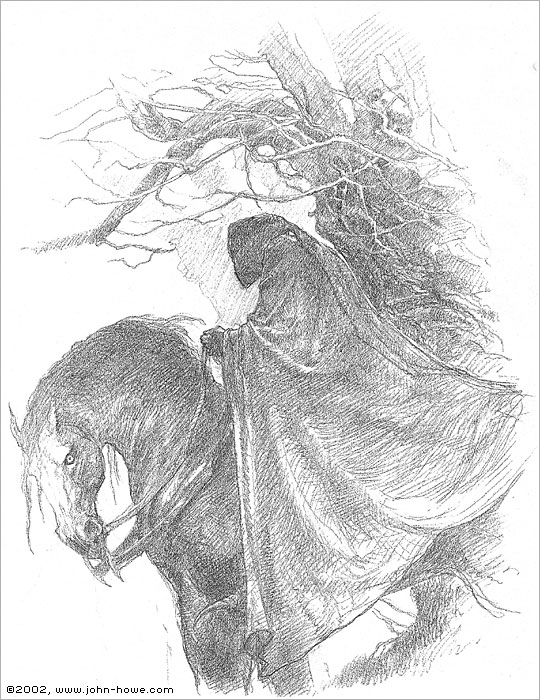
PS

For an especially disturbing short story about such things, read Algernon Blackwood’s “The Willows”  (from his 1907collection, The Listener and Other Stories here:  http://algernonblackwood.org/Z-files/Willows.pdf  )

PPS

And a friend reminds me that there’s another very destructive, if not carnivorous, willow I should mention.

PPPS

For more on poisonous plants, see:  https://www.learnaboutnature.com/plants/carnivorous/