The War(s) of the Worlds

As always, dear readers, welcome.

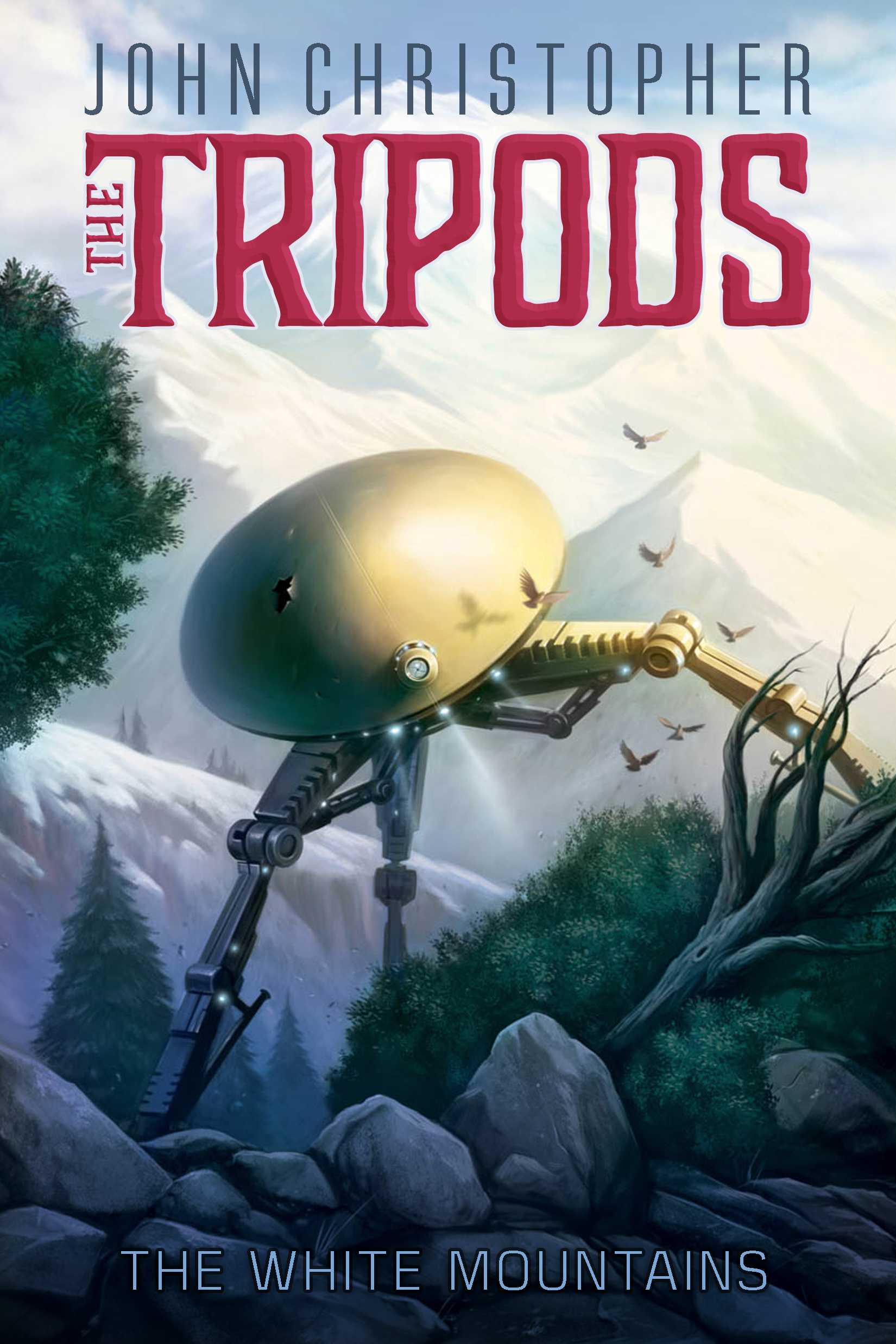
   I have just finished John Christopher’s (one of a number of pen names for Samuel Youd, 1922-2012)

1960s tetrology about the tripods,

originally a trilogy, to which the author added a fourth volume as a “prequel”.

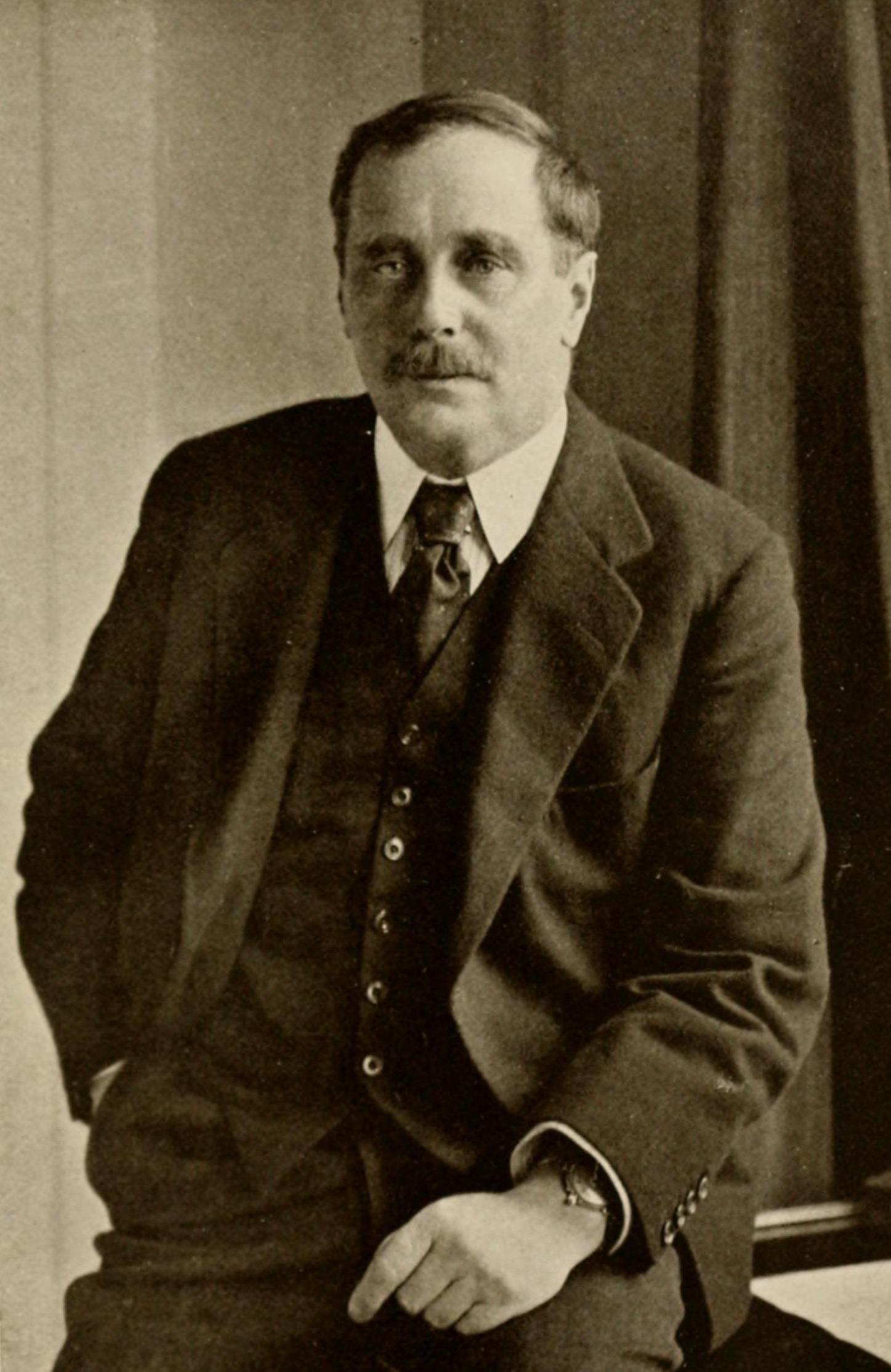
  The tripods are the vehicles—and emblems—of an alien race , which at an earlier time, had invaded the earth.  If you know H.G. Wells’ work, and, if you read this blog, that’s probably a sure bet, you’ll recognize where Christopher got the idea, both for the invasion and the tripods—

   Europe, in the late 19th century, when Wells came up with his idea, was an increasingly large armed camp.  Industrialization had promoted more and bigger armaments and larger populations had encouraged national conscription (except for Britain, which maintained only a small—especially in comparison–volunteer army).

With heightened awareness of the possibilities of imminent war somewhere, and perhaps soon, British fiction writers began to turn out books like William Le Queux’ (1864-1927) 

1894 what-if novel, The Great War in England 1897,

(Here’s your copy:  https://archive.org/details/greatwarinengla00queugoog/page/n8/mode/2up

in which French and Russian forces combine to invade Britain.

Invasions don’t have to come from the continent, however, and, in 1897, Wells (1866-1946), began

publishing a serial in Pearson’s Magazine entitled  The War of the Worlds,

following that with the story in book form in 1898.

(If you’d like to see it in its original magazine form, here it is, beginning with this:  Pearson’s Magazine, Vol.III, April, 1897, No.16

For the complete text, look here: https://archive.org/details/h-g-wells_the-war-of-the-worlds  )

   In Wells’ narrative, Earth is attacked by a series of cylinders, fired like giant bullets, from Mars, which oddly presages Georges Melies’  (1861-1938) 1902 comic silent film Le Voyage dans la Lune (The Trip to the Moon), in which a group of Earthmen are shot to the moon by a giant cannon.

(And you can see it here:  https://archive.org/details/VoyageDansLaLune  The Internet Archive has over 200 silent films and is a wonderful resource for enjoying an art form which precedes later film, but has its own life and isn’t simply black and white movies without sound.)

   Inside the cylinders are the Martians, few in number, but equipped with weapons far beyond anything available on earth.  And so Wells’ story is the very opposite of a comedy, the Martians being so advanced that, even with a few losses, they, with their superior technology, quickly devastate not only the area around London, but the people around London as well with a combination of what Wells’ calls a “heat ray” and this:

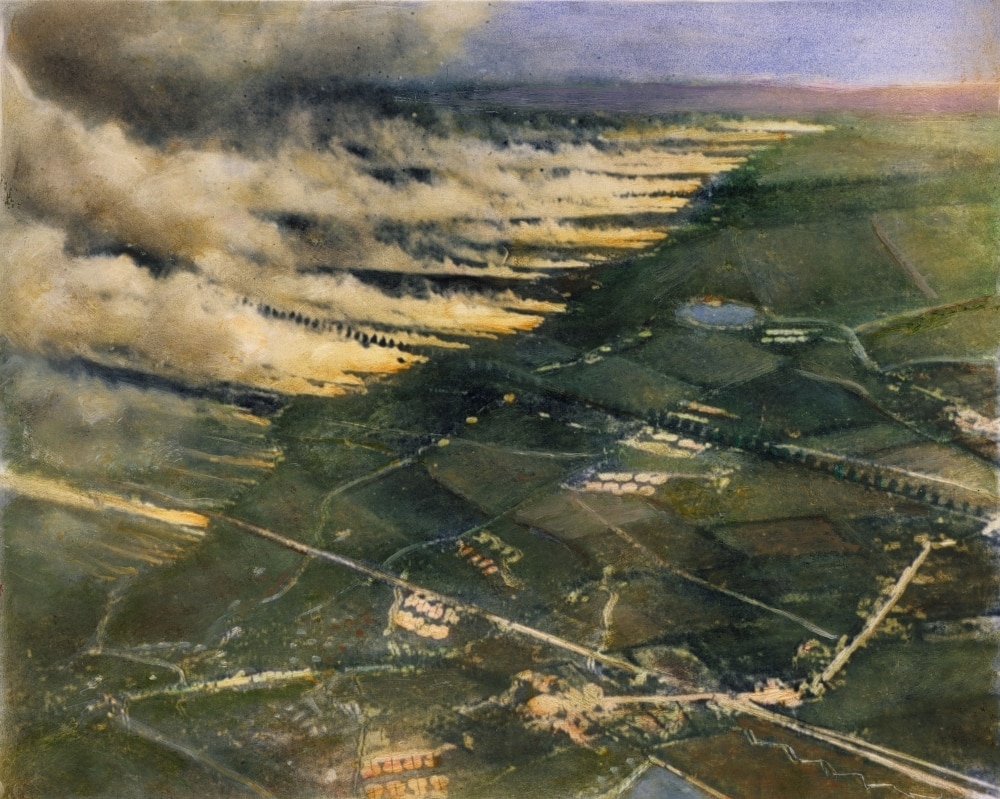
“Each of the Martians, standing in the great crescent I have described, had discharged, by means of the gunlike tube he carried, a huge canister over whatever hill, copse, cluster of houses, or other possible cover for guns, chanced to be in front of him. Some fired only one of these, some two—as in the case of the one we had seen; the one at Ripley is said to have discharged no fewer than five at that time. These canisters smashed on striking the ground—they did not explode—and incontinently disengaged an enormous volume of heavy, inky vapour, coiling and pouring upward in a huge and ebony cumulus cloud, a gaseous hill that sank and spread itself slowly over the surrounding country. And the touch of that vapour, the inhaling of its pungent wisps, was death to all that breathes.”  (The War of the Worlds, Book 1, Chapter XV)

which horribly prefigures this, which appeared only a few years later on the battlefields of the Great War—

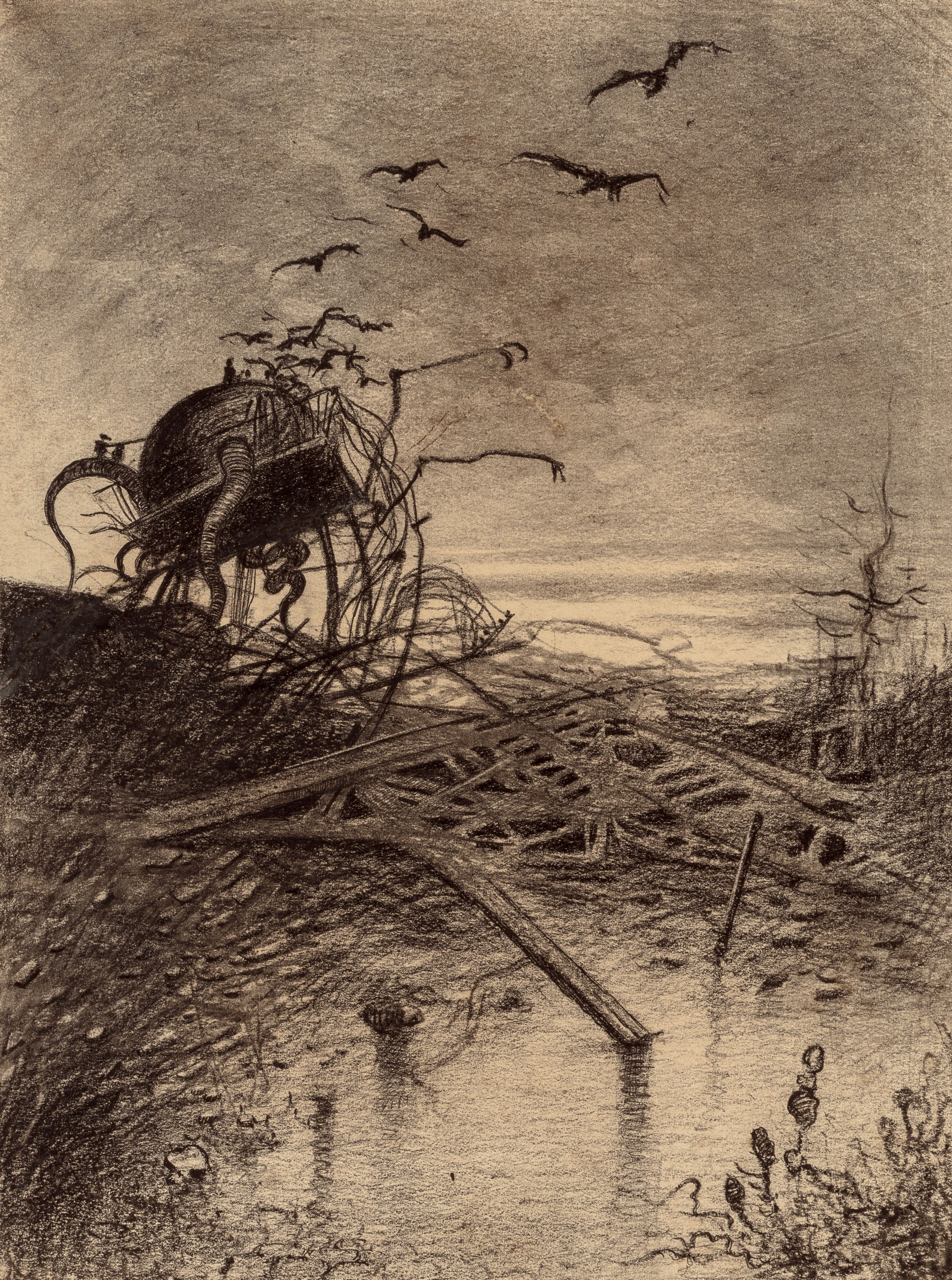
The Martians were mostly represented by their “war machines”, huge metal monsters with three legs,

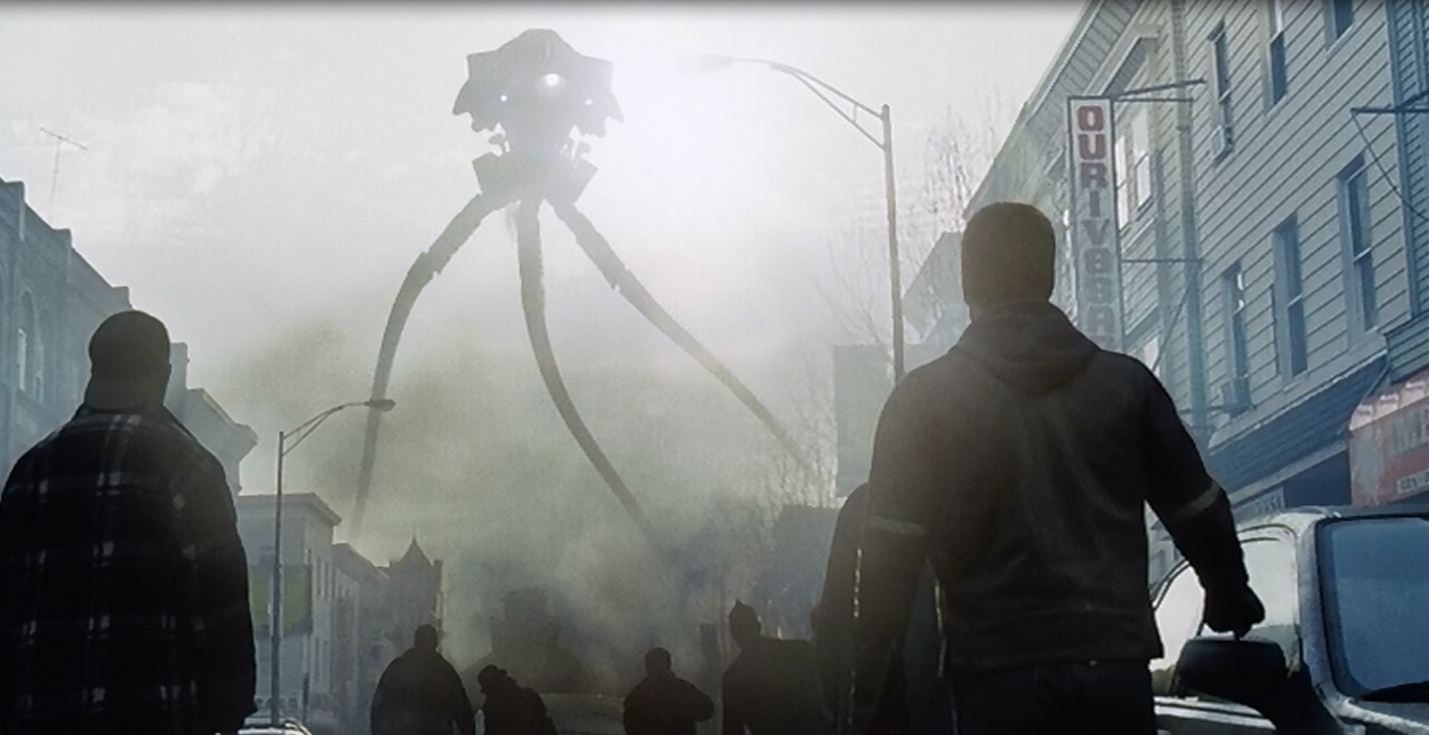
(There are many images of these things on-line, but this seems to me to come closest to Wells’ original description, although this, from the 2005 Tom Cruise film doesn’t seem so far off. )

but the anonymous main character manages to see some Martians outside their machines and here’s his description:

“They were, I now saw, the most unearthly creatures it is possible to conceive. They were huge round bodies—or, rather, heads—about four feet in diameter, each body having in front of it a face. This face had no nostrils—indeed, the Martians do not seem to have had any sense of smell, but it had a pair of very large dark-coloured eyes, and just beneath this a kind of fleshy beak. In the back of this head or body—I scarcely know how to speak of it—was the single tight tympanic surface, since known to be anatomically an ear, though it must have been almost useless in our dense air. In a group round the mouth were sixteen slender, almost whiplike tentacles, arranged in two bunches of eight each. These bunches have since been named rather aptly, by that distinguished anatomist, Professor Howes, the hands. Even as I saw these Martians for the first time they seemed to be endeavouring to raise themselves on these hands, but of course, with the increased weight of terrestrial conditions, this was impossible. There is reason to suppose that on Mars they may have progressed upon them with some facility.

The internal anatomy, I may remark here, as dissection has since shown, was almost equally simple. The greater part of the structure was the brain, sending enormous nerves to the eyes, ear, and tactile tentacles. Besides this were the bulky lungs, into which the mouth opened, and the heart and its vessels. The pulmonary distress caused by the denser atmosphere and greater gravitational attraction was only too evident in the convulsive movements of the outer skin.

And this was the sum of the Martian organs. Strange as it may seem to a human being, all the complex apparatus of digestion, which makes up the bulk of our bodies, did not exist in the Martians. They were heads—merely heads. Entrails they had none. They did not eat, much less digest. Instead, they took the fresh, living blood of other creatures, and injected it into their own veins. I have myself seen this being done, as I shall mention in its place. But, squeamish as I may seem, I cannot bring myself to describe what I could not endure even to continue watching. Let it suffice to say, blood obtained from a still living animal, in most cases from a human being, was run directly by means of a little pipette into the recipient canal. . . “(War, Book 2, Chapter II)

Probably the end of this story is familiar to you:  although the Martians have advanced technology, they lack immune systems which will fight off terrestrial diseases and, just when it looks like they are about to march on the rest of the UK, they quickly succumb to infections.

Over the years, there have been a number of attempts to dramatize Wells’ story, from the famous Orson Welles (no relation, as far as I know) radio adaptation of 1938,

which caused a certain amount of panic among listeners in the US,

(You can read about it here: 

https://en.wikipedia.org/wiki/The_War_of_the_Worlds_(1938_radio_drama)

and listen to it here:  https://www.youtube.com/watch?v=9q7tN7MhQ4I )

to the perhaps equally well-known George Pal film from 1953,

in which the story is moved to the early 1950s and southern California and the Martians’ war machines become sleek aircraft,

(for more, see a very interesting and thorough article here: 

https://en.wikipedia.org/wiki/The_War_of_the_Worlds_(1953_film) )

to the Tom Cruise/Steven Spielberg movie of 2005, in which events take place in the present, on the east coast of the US. 

(about which you can read more here:  https://en.wikipedia.org/wiki/War_of_the_Worlds_(2005_film) and for more adaptations of the Wells’ story, see:   https://www.imdb.com/list/ls058900268/ )

Unlike those who have written scripts which follow, sometimes more, sometimes less, closely Wells’ text, Christopher takes a completely different approach.  To begin, the aliens are not Martians, but come from a distant galaxy and successfully conquer the majority of Earth.  Although their tripods have the destructive power of Wells’ war machines, they conquer in a completely different manner:  through brainwashing.  They take over television and use it to convince most Earthlings that they are not hostile invaders, but beneficent beings and Earth would be far better off with them in control.  This we learn in the first book, or “prequel”, When the Tripods Came.

Once they had achieved their conquest, they erect three huge dome-cities across the northern hemispheres and maintain control by placing a kind of webbing, called “the cap” on the heads of all humans past puberty.  This mesh is dug into the skull and transmits electronic waves which convey the orders of the aliens.  In the subsequent books, which take place some time later, we follow Will, an English boy who, with his difficult cousin, Henry, escapes England ahead of capping and manages to reach what has become a center of resistance to the aliens in The White Mountains.

In the third volume, Will and another boy, to gain intelligence, penetrate one of the three dome cities of the aliens in The City of Gold and Lead,

and, in the fourth and final book, The Pool of Fire, Will and others finally defeat the aliens by breaking open the domes of all three cities, allowing Earth’s atmosphere in, which then poisons all of the aliens.

One might see this as fairly standard science fiction of a certain sort, all about a willful but intelligent boy who has to learn first how to survive and then to take action in a hostile world.  It moves along at a good pace and there is a certain amount of friction and character development, but, for me, the most interesting parts are about the aliens, beginning with Christopher’s description of them:

“…They stood much taller than a man, nearly twice as tall, and were broad in proportion.   Their bodies were wider at the bottom than at the top, four or five feet around I thought, but tapered upward to something like a foot in circumference at the head.  If it was the head, for there was no break in the continuity, no sign of a neck.  The next thing I noticed was that their bodies were supported not on two legs but three, these being thick but short.  They had, matching them, three arms, or rather tentacles, issuing from a point about halfway up their bodies.  And their eyes—I saw that there were three of those, too, set in a flattened triangle, one above and between the other two, and a foot or so below the crown.  In color the creatures were green, though I saw that the shades differed, some being dark, the green tinged with brown, and others quite pallid.  That, and the fact that their heights varied to some extent, appeared to be the only means of telling one from another… (The City of Gold and Lead, 125-126)

It’s no wonder, then, that the aliens use tripod vehicles—they are tripods themselves.

The dome city is, in fact, a kind of eco-dome, which replicates not only their home world’s atmosphere, but also its heat and heavy gravity.  They use young human males as slaves and so wearing is life in such a different climate, even when wearing an oxygen mask, which is a necessity, that it seems that 6 months are the usual life expectancy.  The humans are so conditioned, however, that, when they feel too worn out, they willingly betake themselves to “the Place of Happy Release” to be exterminated.

A striking fact about the aliens is that they seem almost solitary, perhaps because reproduction is by budding and therefore there is little need for the kind of socializing which goes on in human society.  As well, they are aesthetes, seeking or making what they believe to be beautiful—including preserving what they consider fine specimens of young female humans in collections which echo rows on butterflies on pins.  Altogether, I feel that Christopher has produced a distinct race, intelligent, capable, but ultimately alien in every sense.

The idea of the Martian invasion first caught my attention when I read it in comic book form in childhood,

and I’ve read and reread the novel more than once—and even once wrote a blog posting about it (One World, Two Wars, 19 February, 2020), but, reading it this time for this posting, I found a connection—perhaps only the suggestion of a connection—with Tolkien.

   This appears in a footnote by JRRT in one of his letters.  A couple, Charlotte and Denis Plimmer, had interviewed him for The Daily Telegraph Magazine in the later 1960s and though seemingly kind and well-meaning, had either misunderstood or simply recreated parts of the interview, a draft of which they then sent to JRRT.  Tolkien then, very patiently, wrote to correct a number of points and, in the process, added:

“I was greatly taken by the book that was (I believe) the runner-up when The L.R.was given the Fantasy Award:  [The] Death of Grass.  (letter to Mr. and Mrs. Plimmer, 8 February, 1967, Letters, 377)

The Death of Grass is a 1956 science fiction novel by John Christopher. 

If Tolkien knew and enjoyed that earlier novel by Christopher, perhaps he had read about tripods, too?

Thanks, as ever, for reading.

Stay well,

Avoid hair nets,

And know that, as always, there’s

MTCIDC

O

PS

If you would like to know more about the tripods and their world, have a look at:  

https://thetripods.fandom.com/wiki/The_Tripods_Wiki

PPS

There is a very interesting 2013 pseudo-documentary about a Martian invasion called The Great Martian War, 1913-1917, in which the Great War of 1914-1918 is replaced with an alternative:  the great powers of Europe and North America, instead of fighting each other during this period, are allied in a war against exterrestrial invaders.  You can read about it here: 

https://en.wikipedia.org/wiki/The_Great_Martian_War_1913%E2%80%931917

and see it here:  https://archive.org/details/TheGreatMartianWar19131917.Mister.X   It cleverly mixes real period film with altered or imitation film, giving it a surprisingly authentic look. 

Of Snergs

Welcome, dear readers, as always.

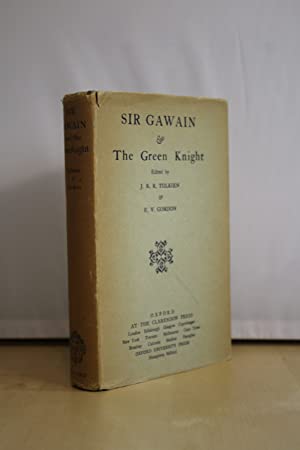
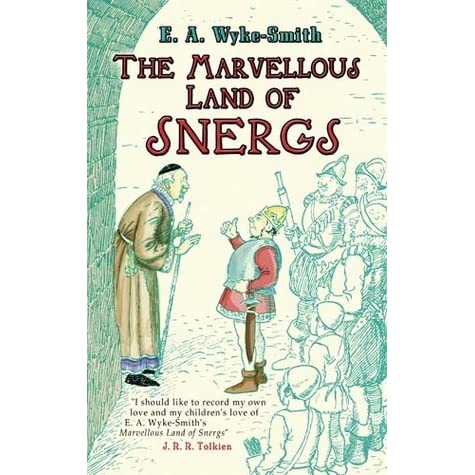
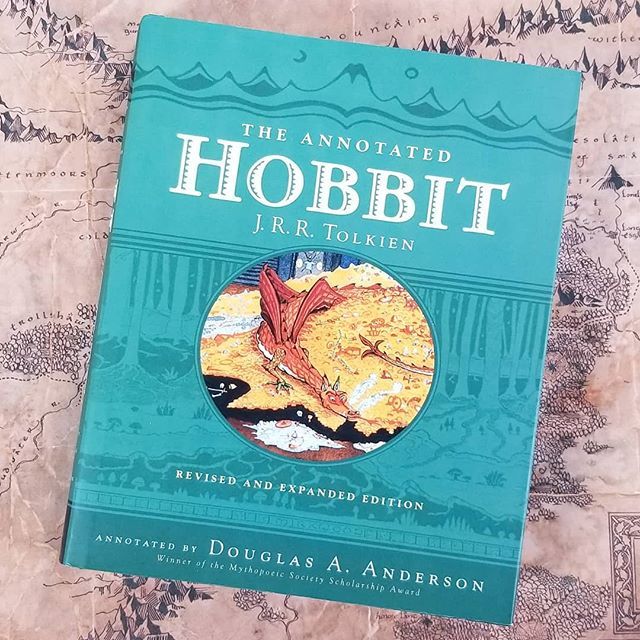
I have, more than once, in reading about Tolkien, seen a reference to a book with a rather odd title:  The Marvellous Land of Snergs.  I confess that I don’t find the word “Snergs” at all inviting, but I have been intrigued:  what’s so marvelous about this land and why is it associated with JRRT to the point where Douglas Anderson, in his The Annotated Hobbit, calls it an ”obscure influence” upon The Hobbit?

I had a copy of the 2008 Dover reprint of the 1928 US edition on my bookshelf,

and, when I took it down, I noticed this quotation at the bottom of the cover:

“I should like to record my own love and my children’s love of E.A. Wyke-Smith’s Marvellous Land of Snergs.  J.R.R. Tolkien”

Hmm.  So this was a favorite book of JRRT.  But where had this quotation—perfect for a book blurb– come from?

Although I often write about some aspect of Tolkien and his work, I would never claim to be a Tolkien scholar.  Fortunately, there are now numerous members of that community, from Tom Shippey

whose book, The Road to Middle Earth, should be on the bookshelf of everyone interested in JRRT,

to John Garth

to Dimitra Fimi

to Verlyn Flieger,

and far beyond.

Among the works of these excellent students of Tolkien, one book has now carried me through teaching The Hobbit half-a-dozen times in the last few years:  Anderson’s

The Annotated Hobbit.

It’s rare that, when I have a question about The Hobbit, a quick thumb-through doesn’t answer it (although I wish that some enterprising person would make an index for it, thus speeding up my thumb) and so I flipped to his introduction and there it was.

And, in a draft to “On Fairy-Stories”, a lecture given at the University of St Andrews in 1939, Anderson reports that Tolkien wrote:

“I should like to record my own love and my children’s love of E.A. Wyke-Smith’s [The] Marvelous Land of Snergs, at any rate of the snerg-element of that tale, and of Gorbo the gem of dunderheads, jewel of a companion in an escapade.” (Anderson, The Annotated Hobbit, 7).

That Tolkien had read the work to his children, who had enjoyed it, we know from Humphrey Carpenter, as he writes:

“…the nursery housed more recent additions to children’s literature, among them E.A Wyke-Smith’s The Marvelous Land of Snergs…Tolkien noted that his sons were highly amused by the Snergs…” (Carpenter, Tolkien, 184)

So, what and where is this land and what has it got to do with Hobbits?

 E.A. Wyke-Smith (1871-1935),

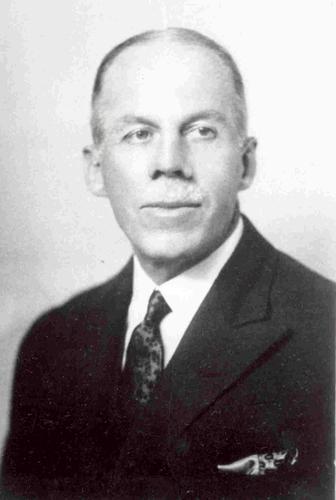
 was, among other things, the author of 8 novels, four for children, of which the last was The Marvellous Land of Snergs, published in Britain in 1927 and the US in 1928.

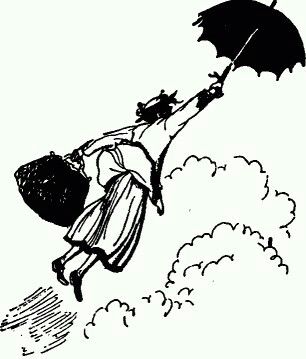
As I read it, it seemed to me actually to be several different novels at the same time.  It begins somewhere on the coast of South Africa, at an imaginary place called “Watkyns Bay”, which is, in fact, the base for something called the “S.R.S.C.”, which stands for “The Society for the Removal of Superfluous Children”.  This sounds like a Victorian goblin association, poorly concealed behind the respectable words “The Society for…”, but is, in fact, a kind of fantasy orphanage.  A group of rather severe English  ladies  have the ability to observe neglected or mistreated children and carry them away, seemingly on the wind, like Mary Poppins,

(don’t try this at home)

to this mysterious spot, where they appear to be frozen in time, which is, I suspect, why the original US publisher added his blurb:

“All who love Peter Pan will also love this story for children of every age and kind.”

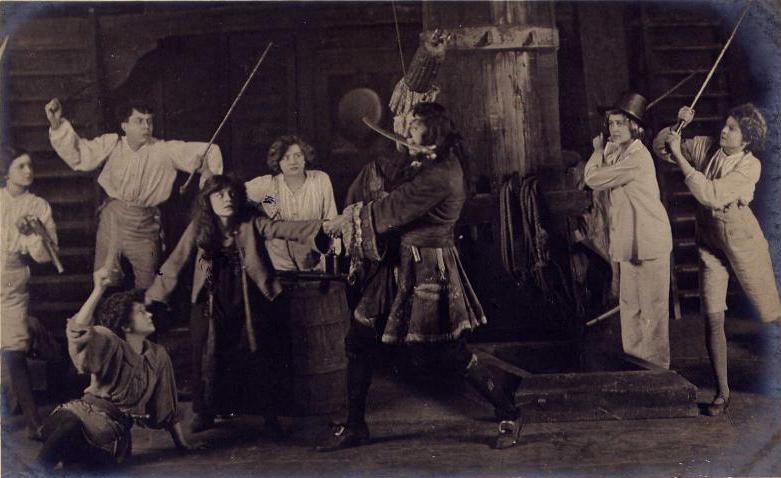
After all, the original J.M.Barrie play of 1904

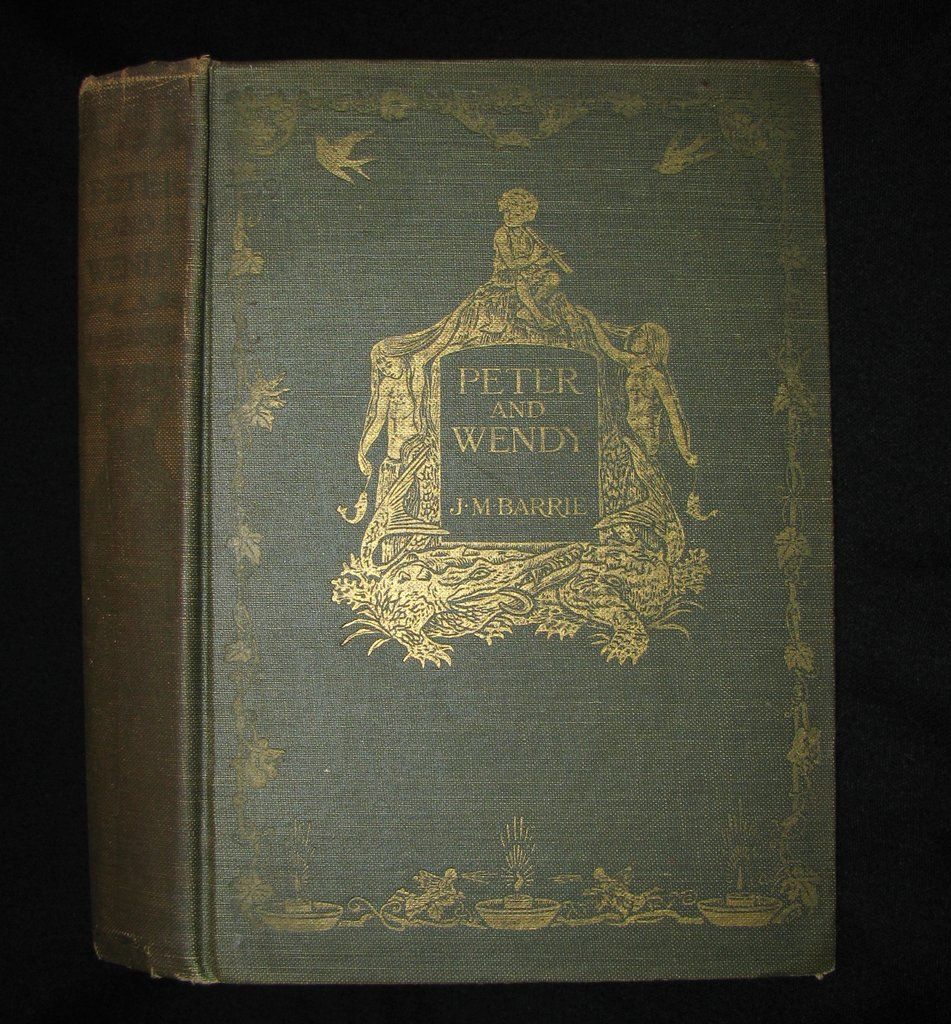
and Barrie’s subsequent novel of 1911

both begin in England, then move—by flying–to an island in a place called “Neverland”, where children remain children, presumably forever. 

(Although it is suggested that a few children may be returned to better homes in England, Snergs, 2-3).  Thus, we begin with a sort of mild social satire on children’s welfare in Britain.  This is then briefly interrupted by the mention that, although Watkyns Bay, is protected by its position, someone named “Vanderdecken” has landed a ship just north of it and is encamped there with his men.  Although he is not identified directly, there is a clue to who he is in the following:

“Owing to his rash oath that he would beat round the Cape of Good Hope if he beat round it till Doomsday he found himself doing so…” (Snergs, 2)

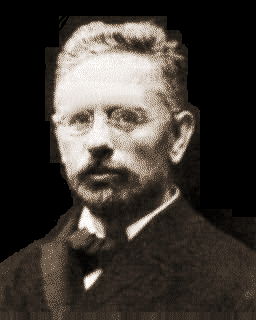
And, with this, we have moved from social satire to legend, as this “Vanderdecken” is actually the folk character called “the Flying Dutchman”, condemned to sail the seas forever because of a vow he had foolishly made—although, in one version of the story, he is allowed, every seven years, to come ashore and, if he finds a woman brave (or mad) enough to love him, he can be redeemed.  This forms the basis of Richard Wagner’s (1813-1883)

German composer Richard Wagner is shown in an undated file photo. Credit; The Bettman Archive

1843 opera Der Fliegende Hollaender (“The Flying Dutchman”).

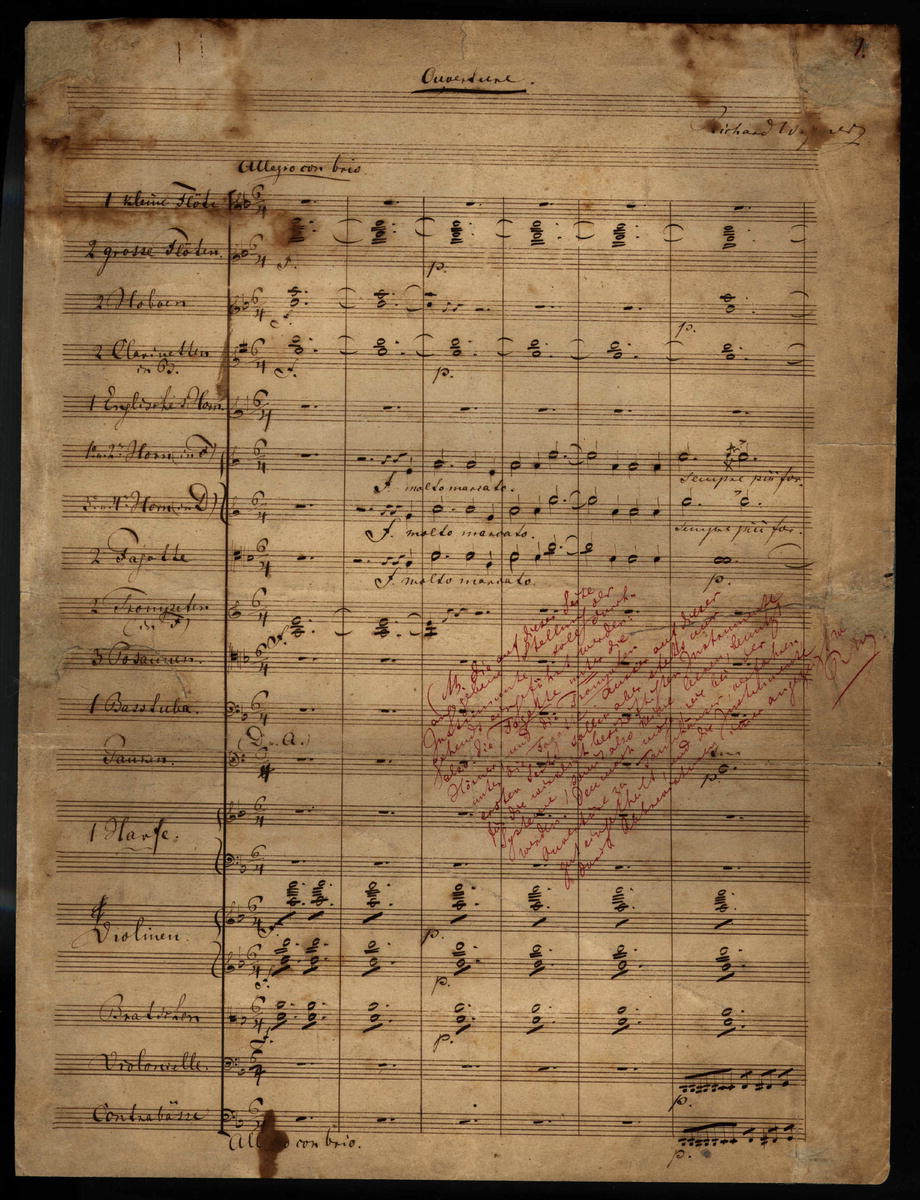
(This is the first page of the overture.  It’s quite a piece of music, full of Wagner’s characteristic leitmotifs, little themes tied to characters and emotions.  If you don’t know it, here’s a LINK to a recording of that overture with its ferocious opening here:  https://www.youtube.com/watch?v=nEcyCEAm1Mg  From the details Wyke-Smith offers us about Vanderdecken, I suspect that he had read this early account in Blackwood’s Magazine for May, 1821:  https://books.google.co.uk/books?id=KPUAAAAAYAAJ&pg=PA127&focus=viewport&output=html  )

So far, with the exception of the linking of the S.R.S.C. and the Dutchman to South Africa, there seems to be little connection between two seemingly disparate stories—then enter the Snergs. 

We are told, at the beginning of Part I, Chapter 4 (if the chapters had numbers) that :

“Probably they are some offshoots of the pixies who once inhabited the hills and forests of England, and who finally disappeared about the reign of Henry VIII.” (Snergs,7)

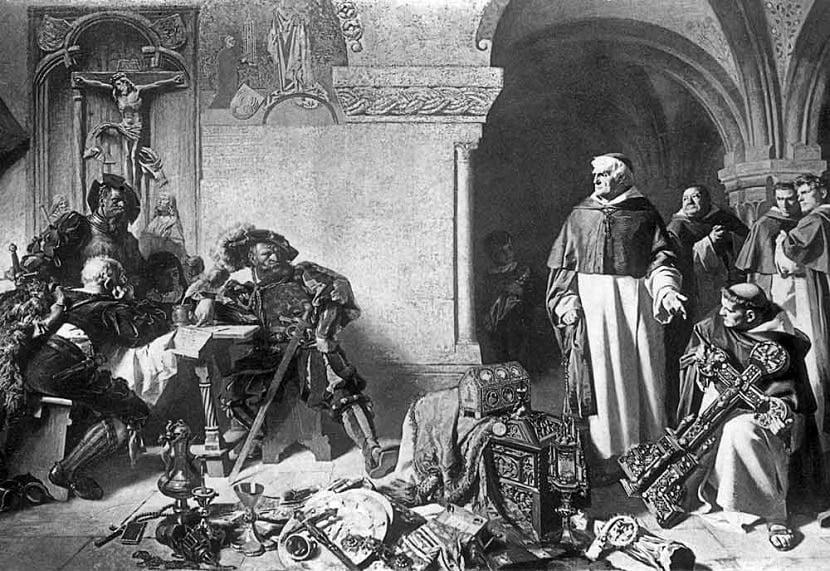
To me, this is an echo of the tradition that the English Reformation (1532-34) and the subsequent  Dissolution of the Monasteries (1536-1541)

saw the migration of the supernatural (with one notable exception) from England.  This would have been relatively recently expressed in Rudyard Kipling’s Puck of Pook’s Hill (1906) and Rewards and Fairies (1910), the title of the latter being based upon Richard Corbet’s 17th-century poem “The Fairies’ Farewell” which laments the disappearance of England’s “other” world because of the change of religion in Henry’s time.  (For more on this, see the posting for 22 June, 2022,  “(Failed) Rewards and (No More) Fairies”).

The Snergs act as general dogsbodies to the ladies of Watkyns Bay, building houses, providing game, even acting as lifeguards for the children, and are described in ways that might suggest something hobbitlike about them:

“The Snergs are a race of people only slightly taller than the average table but broad in the shoulders and of great strength…They are great on feasts, which they have in the open air at long tables…”  (Snergs, 7, 10)

After a certain amount of description of said Snergs, we are introduced to the two main human characters, Sylvia and Joe, children of a neglectful or abusive parent, respectively, and, with them, the main narrative begins.  Soon, they run away from Watkyns Bay, are lost in a dense forest on the way to the Snergs’ town, meet a local, Gorbo, who seems less-than-brilliant, 

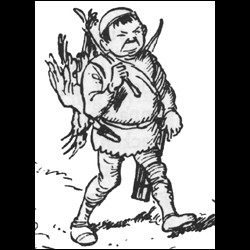
and stumble through a complex tunnel network which lands them on the other side of a difficult river.  In this part of the story, then, we’ve moved from social satire and legend into what appears to be a standard fairy tale:  a journey by children attempting to return home—with a dubious guide.

Thereupon, they meet a shakily-vegetarian ogre, a timid knight, an obnoxious (and very unfunny) jester, a witch out for revenge, a king said to be a monster (but who turns out to be quite genial, if touchy), before finally being rescued and sent home.  With the story ended, there is, as far as I can tell, no more possible influence upon The Hobbit than a kind of general sense that the Snergs are vaguely suggestive of Hobbits (and why their land is “marvellous” is difficult to tell, as most of the story occurs to the east of that land and, in itself, isn’t marvellous, just home to some odd characters).

What about that blurb, then, and its source, with what sounds like unbridled enthusiasm? 

I think that we can begin with an interesting fact about the source of that blurb, which Anderson tells us was taken from a draft of a talk—those words only appear in the draft and don’t appear in the published version of the lecture (see Tolkien, The Monsters and the Critics, edited by Christopher Tolkien, 109-161, for the actual text).  Did Tolkien have second thoughts about Snergs as early as 1939?

Certainly , upon rereading George MacDonald’s The Golden Key, for a proposed introduction to a reprinting in 1965, he found the work “illwritten, incoherent, and bad, in spite of a few memorable passages”, Carpenter, Tolkien, 274) and abandoned the project.  And, in 1955, he certainly appears less enamored of Snergs in writing to W.H. Auden of the history of The Hobbit:

“But it became The Hobbit in the 1930s, and was eventually published not because of my own children’s enthusiasm (though they liked it well enough)…not any better I think than The Marvellous Land of Snergs, Wyke-Smith, Ernest Benn 1927.  Seeing the date, I should say that this was probably an unconscious source-book! for the Hobbits, not of anything else.” (letter to W.H. Auden, 7 June, 1955, Carpenter, Letters, 215)

As Tolkien could be rather touchy about sources and influences, it’s interesting that he would suggest that the volume had had some sort of effect—on the Hobbits—but, he’s quick to add, “not [on] anything else”, which, for me, underlines one part of Anderson’s description of The Marvellous Land of Snergs—although, as JRRT writes, it might have had some “influence”, that influence was certainly “obscure”, even to Tolkien.

Thanks, as ever, for reading,

Stay well,

Avoid ogres with a professed desire for cabbages,

And remember that there’s

MTCIDC

O

Keeping Your Balance

As always, dear readers, welcome.

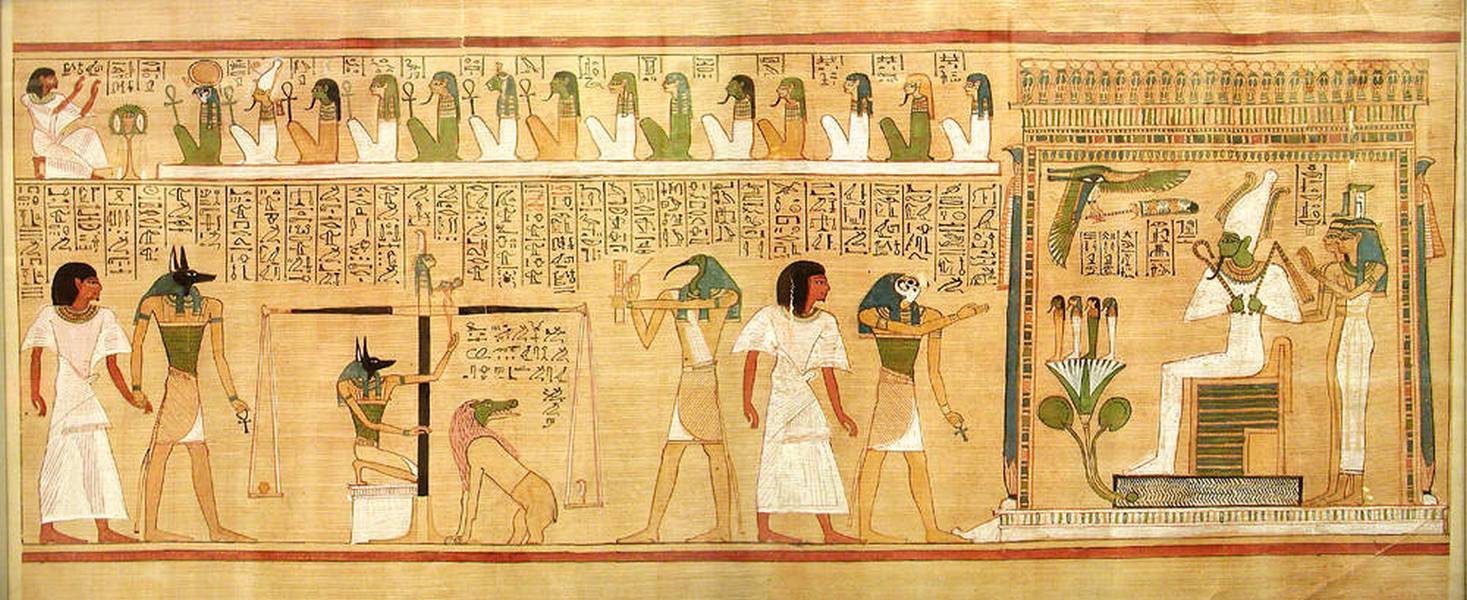
Since I began teaching World Civilizations, a number of years ago, this image, which I’ve used in discussing the elaborate nature of Egyptian funerary beliefs and practices, has always struck me, both for its sheer beauty and for its complex meaning.

It comes from a kind of instruction manual, a so-called “Book of the Dead”, the goal of which was to aid the deceased through the process of judgment and (with luck) into the afterlife.  This version dates from about 1300BC, at the time of the 19th Dynasty (one of two methods for laying out ancient Egyptian history is by ruling family, the other being by Kingdoms and Intermediate Periods) and is in the British Museum.

The figure to the far left is Hunefer, an important court official for a very important pharaoh, Seti I.

Important as he is, Hunefer still must face the Judgment to determine whether he is worthy of passing to the afterlife.  The main focus of the judgment is the weighing of Hunefer’s heart on the scales of the goddess Ma’at, who is the patroness of justice, which, to Egyptians, meant attaining a proper behavioral balance.

(She is sometimes represented as having wings

which I would guess suggests that she is omnipresent.) 

Hunefer is being led to the judgment by Anubis, who acts as the overseer, as well as administrator of the weighing.  Hunefer’s heart is represented by the jar on the left pan of the scales.  On the other pan stands the feather of Ma’at (who is also represented in miniature on top of the center of the scales).  The point of the weighing is to see if Hunefer’s behavior, represented by the heart, in life has been just—in Egyptian belief, in balance—and the feather (from an ostrich), which is not so light as it seems, is the symbol of the goddess.

 If the pans are equal, Hunefer will progress beyond the weighing.  If the heart sinks, it is then consumed by that very sinister creature just under the right-hand pan, Ammit, who has the head of a crocodile, the front legs of (here) a lion (other legs are possible), and the rear legs of a hippopotamus.  The judgment is then recorded by Thoth, the god of, among other things, literacy, who is standing to the right of the scales (and is Ma’at’s partner among the gods).  If the heart is devoured, all chance for a life beyond the grave is gone and the soul is lost.  Fortunately for Hunefer, his heart and the feather have the same weight and we can see him further on being conducted by Horus (who is the pharaoh himself in divine form) to an audience with the ruler of the Underworld, Horus’ father, Osiris, mother, Isis, and Isis’ sister, Nephthys. 

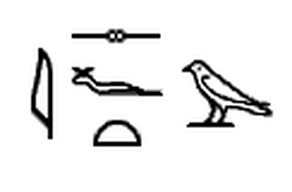
Just as there is a goddess of balance among the ancient Egyptians, there is also a divinity for its opposite, chaos, called Isfet/Asfet.  So far, I haven’t found an ancient image of her, but here’s her name in hieroglyphs.

Thus, with the potential for Isfet, Ma’at’s scales represent a safe middle ground, where justice is achieved by a careful balance and which is then a defense against the chaos which would come if people not properly monitored could behave in any way which they wished, to the harm of others.

When I see justice as balance, and injustice as chaos, I’m immediately reminded of the Greek concept of dike (DEE-kay), as we see it first appearing in Aeschylus’ (EH-skih-lus c.525-455BC)

 trilogy, the Oresteia (or-es-TYE-uh 458BC).

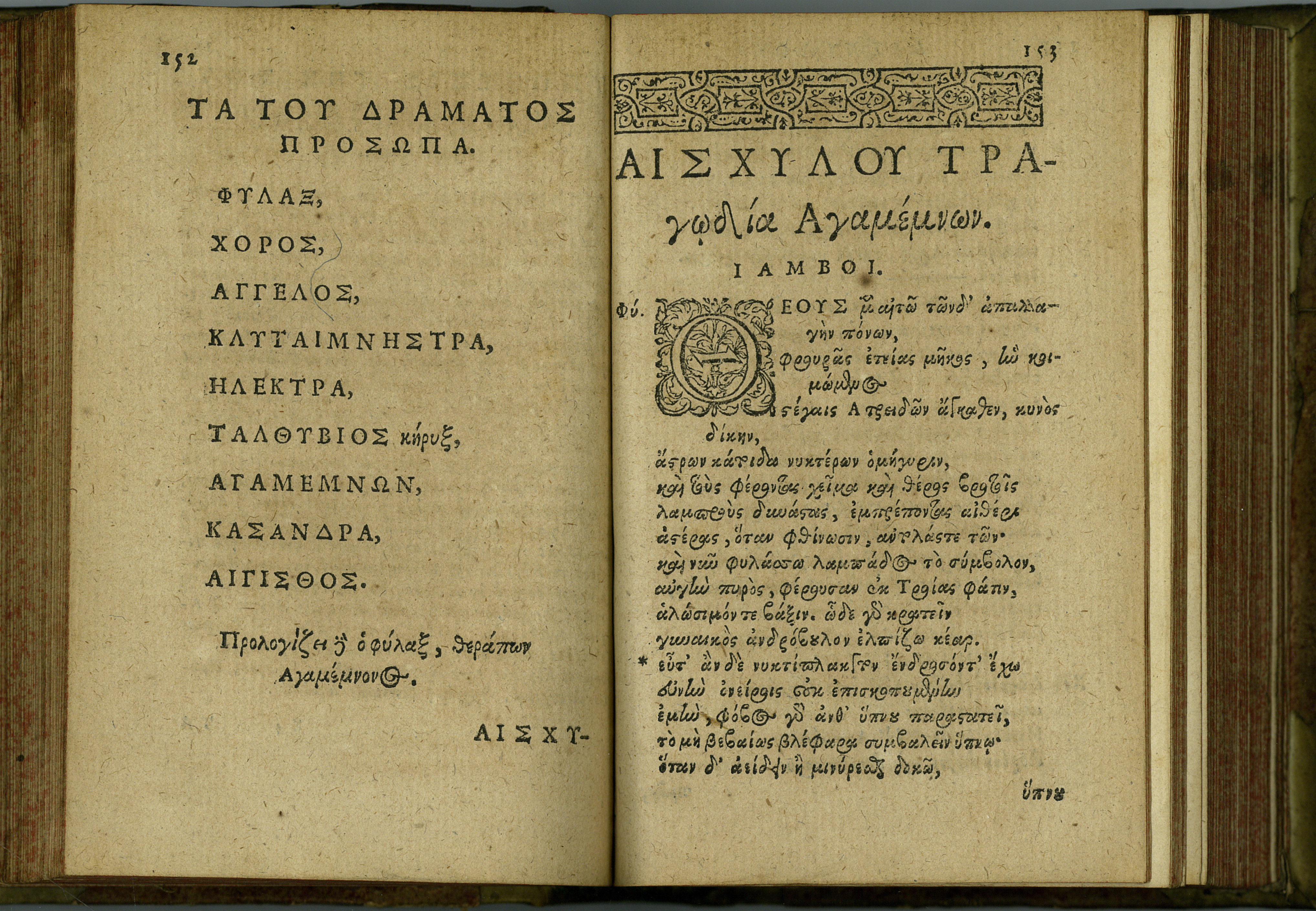
(an early printed edition from Antwerp, 1580)

Initially, dike clearly implies eye-for-eye revenge, but, as we’ll be shown through three plays in succession, this leads to a kind of societal imbalance—a bloody chaos:  where will vengeance ever stop?

If you don’t know the plays, they are Agamemnon, The Libation Bearers, and The Eumenides (a nice name for The Furies, as we’ll see).  The basic plot which runs through these dramas is the following:

1. while Agamemnon, high king of the Greeks, has been off fighting at Troy, his wife, Clytemnestra, remaining in Argos, has been having a long-time affair (7 years) with Aegisthus, Agamemnon’s cousin, as well as grieving for her daughter, Iphigenia (or so she claims), ruthlessly sacrificed by her husband to obtain the wind he needs to sail to Troy. (He had offended Artemis, who withheld the wind until he offered his daughter as recompense for his behavior.)

(In case you’re worried, this wall painting from Pompeii offers an ancient alternative, where, at the last minute, Artemis substitutes a stag for Iphigenia, carrying her off to become her priestess in far away Taurus, where she becomes the subject of Gluck’s (1714-1787) beautiful and striking 1779 opera Iphigenie en Tauride—which you can hear here:  https://www.youtube.com/watch?v=QTgmncbsqzg )

2. when Agamemnon comes home to Argos, Clytemnestra and Aegisthus kill not only Agamemnon, but his Trojan captive, Cassandra,

and the surviving men from his Trojan expedition (which, after being away for ten years in Agamemnon’s service, must have seemed like a particularly rotten end).  This brings us to the conclusion of Agamemnon.

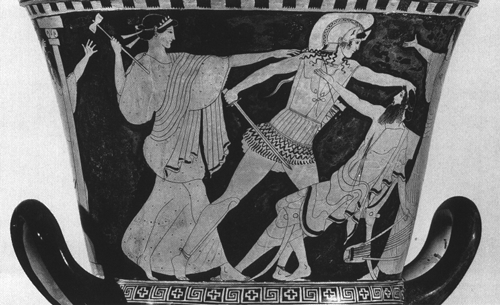
(The play’s description of the murder, as more or less depicted here, differs from that in Book 4 of the Odyssey, where the killing happens at a feast, instead of by a bathtub.)

3. in The Libation Bearers,  some years later, Agamemnon’s son, instructed by Apollo, returns to Argos and, with the aid of his cousin, Pylades, kills both Aegisthus

and his mother, Clytemnestra.

This act of revenge, however, doesn’t end the play as the Furies, spirits who hunt down those guilty of kin-murder, now appear to Orestes and it’s clear that, though no human may attack him for the murder of his mother, there are otherworldly beings who will.

4. with the opening of the third play, The Eumenides, we see Orestes having taken refuge at Apollo’s shrine at Delphi (after all, it was Apollo who encouraged him to seek revenge), but surrounded by the Furies.

 With Apollo’s help, he escapes to Athens, where, when he appeals to Athena, she sets up the first trial:  12 unbiased (she must hope) Athenian citizens as a jury to try Orestes for murder.  Considering the complicated circumstances, it’s not surprising that it’s a hung jury:  6 to 6.  Athena then adds her vote for acquittal and Orestes is free—but the Furies are outraged:  they are the spirits of vengeance—what will happen to them—and worse, to revenge, at least for kin-slaying—if they are replaced by this new system?  Athena then tells them that they will now have a new job description:  overseers of justice, with a new name:  Eumenides, “the Kindly Ones”.

And, with this, we see a new definition of dike:  not the chaos of endless vengeance, but civil justice, which brings a new balance to the world. (I almost wrote “to the Force”—but, certainly, Darth Sidious, as the Emperor Palpatine, has seriously brought the entire galaxy into an unbalanced condition, beginning with the murder of most of the Jedi, who are the traditional guardians of order—that is, balance–the overthrow of the Senate, and his new brutal police state.)

Using this idea of balance versus chaos, I approached the final episodes of A Game of Thrones.  If you read this blog with any regularity, you know that my approach to such complex visual narratives as this or the whole 9 Star Wars films (minus Rogue One and Solo) is not to praise or condemn (although I’ll definitely praise what I believe to be good work), but rather to try to understand what the creators wanted to present and how successful I thought they were (see two postings on the Obi-Wan miniseries:  “Obi Won? (One)”, 6 July, 2022, and “Obi Won? (Two), 13 July, 2022, for an example of this method).  I usually avoid reading negative criticism, as well, because, commonly, it’s mostly invective, and therefore not really helpful to anyone.

In the case of Thrones, its eighth and final season attracted a great deal of such invective and I admit that, the first time I saw the series, I began that last season, then stopped, as I knew just enough to dread what might be coming next.  In a second viewing, this summer, however, I watched it all the way through–with the concept of balance in mind.  (I’m assuming by the way, that, by now, there’s no reason for a “spoiler alert”here.)  As I did so, I tried to imagine what it was that the creators had intended for the conclusion.

From the beginning, Daenerys Targaryen,

along with Jon Snow,

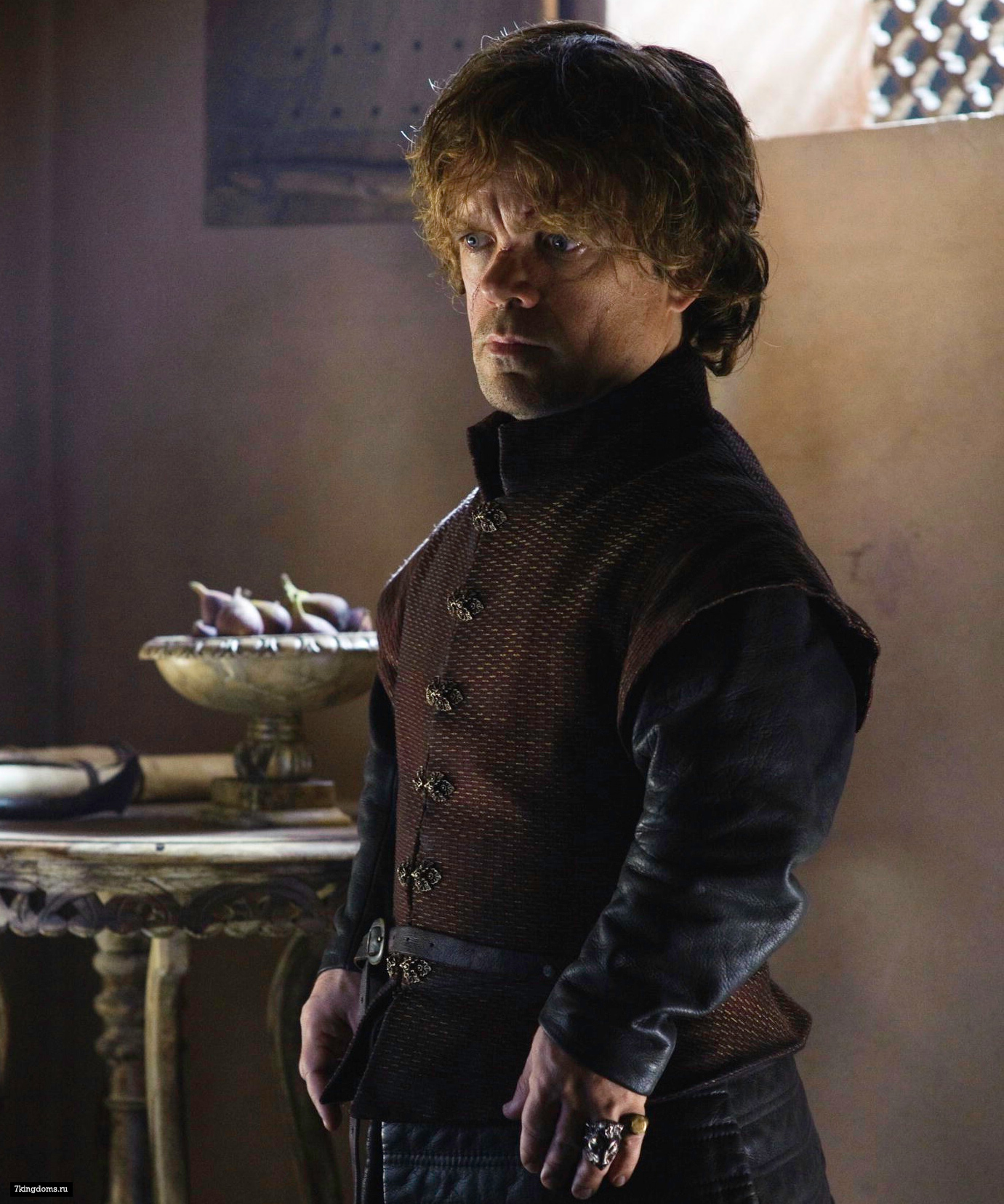
and Tyrion Lannister,

seemed to me the characters I most wanted to know more about.  In their various ways, they were the underdogs:  Daenerys, sold by her brother to a barbarian horse lord in order to gain an army; Jon Snow, the bastard of a major nobleman condemned to a celibate life at what was termed “the end of the world”; Tyrion, always condemned simply because he was a dwarf.

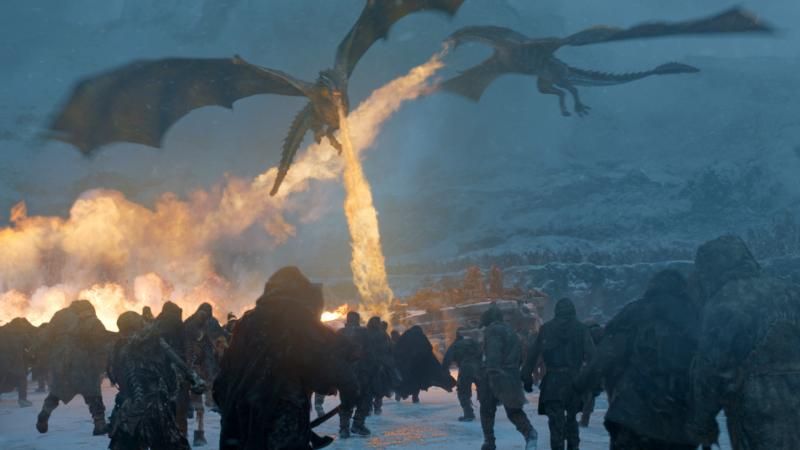
As the series progressed, we saw Daenerys grow and gradually become a powerful figure, not only because she had three dragons at her back,

but also because she was eternally resilient—no setback ever really set her back, beginning with her survival as the widow of the horse lord  and progressing to her massing an army to free the thousands of slaves in cities along her route west towards the Narrow Sea.  There were, at the same time, some disturbing moments:  although she was adamant about ending slavery, she was equally so about becoming the queen of all seven kingdoms of Westeros and, when she finally managed to reach that island, her behavior seemed to become increasingly over-focused upon that ambition.  In a word, she was gradually becoming unbalanced—and this is what I believe the creators intended us to see.  From the pawn of the opening of the series to Series 8, Daenerys had grown, certainly, but there was always that disturbing undercurrent, much of it based upon her increasing insistence that she be obeyed unquestioningly.

(I’m reminded here of Alexander the Great, who began by treating his men as comrades, but, after he had mastered the Persian empire, began to demand that, when people came into his presence, they should throw themselves to the floor in the gesture called proskynesis, which we can see here being performed before one of Alexander’s Mesopotamian predecessors.)

This reached the point where, even though she knew that all of Westeros was threatened by the coming of the White Walkers over the Wall to the north, and that their victory meant a kind of living death for every human,

she would only ally herself with the forces in the North, led by Jon Snow, another underdog who had done very well for himself, if he acknowledged her position as his queen.

This obsession then progressed to the point that, with the White Walkers defeated, Daenerys demanded that all would now march to the south to take the throne of the Seven Kingdoms for her, beginning with the capital, King’s Landing.

When this did not go quite as planned and Daenerys was forced to witness the murder of her closest friend and confidante, Missandei,

she uses her remaining dragon to destroy the capital city and most of its inhabitants, something which Tyrion, now one of her counselors, had begged her not to do.

Tyrion himself has gone the opposite route.  Initially, he had begun the series as a drunken, womanizing loser, bitterly hating himself.

By Season 8, he had, after several years of horrific events (including strangling  the woman he had loved, but who had betrayed him, and killing his own father), gained some balance, so that his obvious intelligence was matched by a sort of calm, thoughtful decency, encouraged by another calm, decent character, Lord Varys.

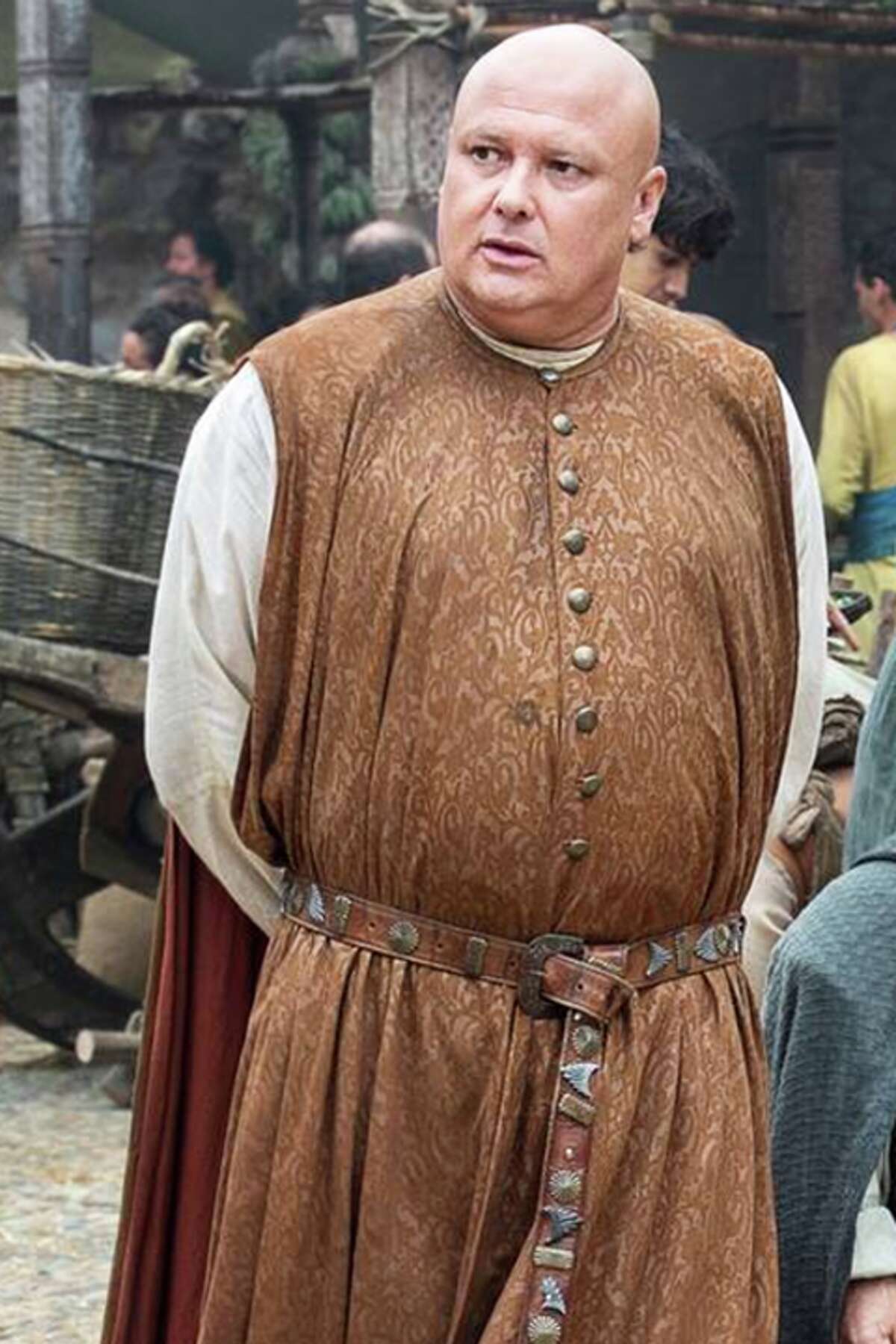
Varys had begun under a cloud, being spymaster to a succession of kings, but he, too, has progressed towards balance.  Unfortunately for him, this balance has led him to see what Daenerys was becoming in her all-consuming ambition, which brings him to plotting to overthrow her and to his death by dragon, leaving Tyrion alone to watch Daenerys gradually fall into the same kind of tyrannical mindset as the Emperor Palpatine, obsessed with control.  (In fact, at this point, she admits that, as she will never be loved, as sovereign, she will rule by fear—another step towards the Dark Side.)

Ma’at and her feather signify balance in ancient Egypt and dike comes to mean balance in the Greek world, so what can bring balance to the world of Westeros?  Once King’s Landing is in ruins and Daenerys’ chief enemy, Queen Cersei, has been destroyed,

it seems Daenerys will only go on, terrorizing with her dragon, until the whole world, of which Westeros is only a part, will be subjected to her increasingly brutal approach to monarchy.  Tyrion sees this, as Lord Varys had before him,

and he now takes action, but, being Tyrion, it is indirect action.  He prompts Jon Snow, who has not only become Daenerys’ vassal, but her lover, pointing out the danger of a queen so obsessed with domination, and pushing him to draw the only possible conclusion—balance can only be restored if she is removed, permanently.

As I tend to avoid invective, I can only guess that this was a major feature of the wave of criticism which washed over Season 8, and, having found her initially such a sympathetic character, I can understand such a reaction:  did this have to be the end for her? 

As I wrote earlier, however, I try always to understand what it is that the creators are aiming for and, after seeing Daenerys’ vengeful swoops over King’s Landing,

and remembering her expressing her belief that she would have to rule by fear, what would the world be like if she were allowed to do so?  The very chaos in the world which was the opposite of the rule of Ma’at, certainly.

 In the ancient Egyptian world, everyone’s behavior in life was literally weighed,

and the consequences for a life which didn’t balance were extreme, but unbalanced people, in the Egyptians’ view, would be wicked people and would deserve what happened to them after death, as they would have caused so much harm in this world.

In ancient Greece, the dramatist Aeschylus elaborated upon the myth of how old dike, vengeance which brought only brief balance before the cycle began again, was replaced by a new definition, in which the cycle could be stopped by a new dike, law in an impartial court, whose judgment would replace vengeance with justice and there would be no return to the cycle and its potential endless damage.

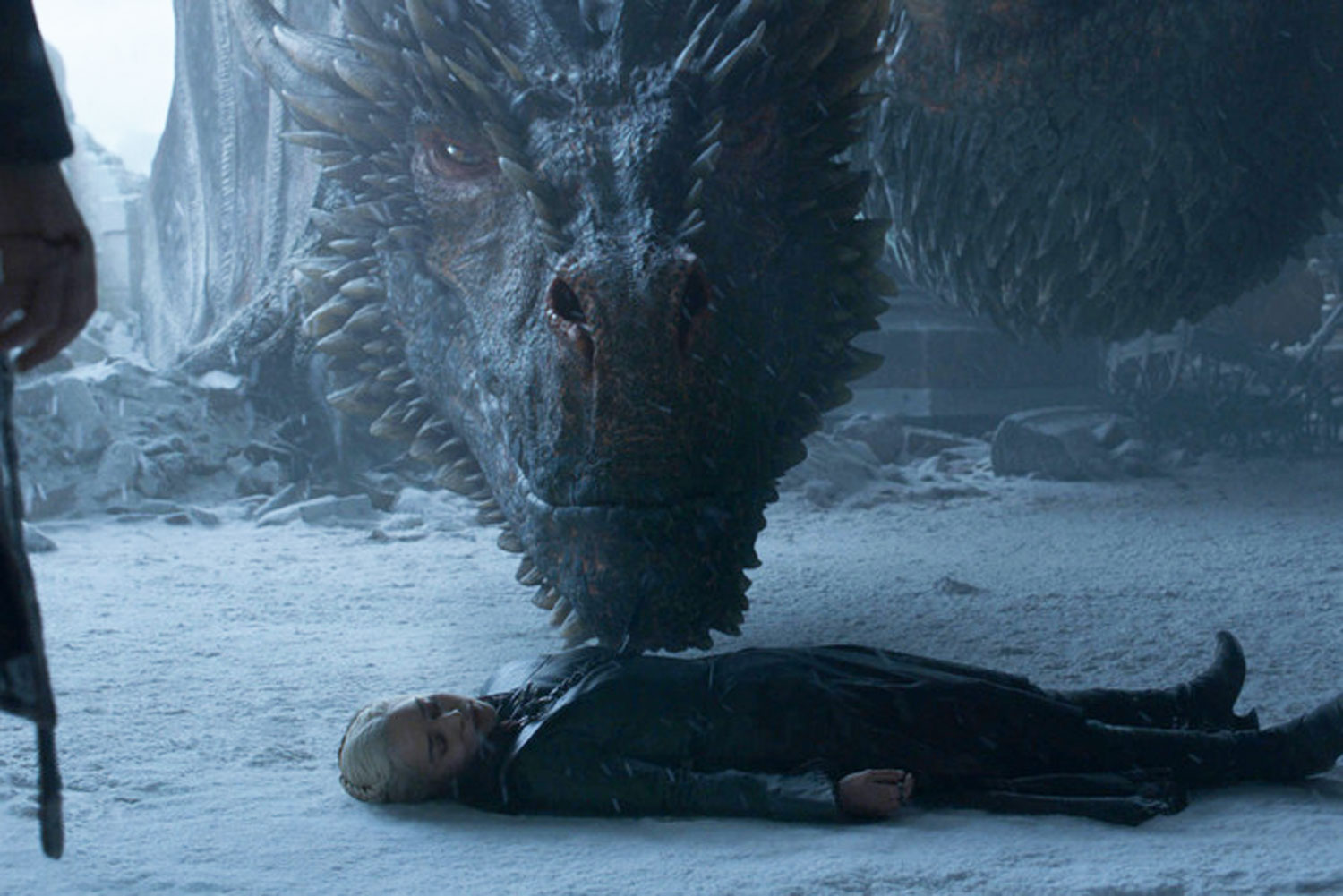
In the case of Daenerys, who, dead, is carried off by her remaining dragon,

she undergoes no trial in this world and we have no idea of what judgment she may then have undergone in any world beyond, but her end brings order once more to war-torn Westeros and perhaps that’s reason enough to justify what the creators of A Game of Thrones decided upon for a conclusion.

Thanks, as ever, for reading.

Stay well,

Avoid Ammit,

And know that, as always, there’s

MTCIDC

O

Heads Up

As ever, dear readers, welcome.

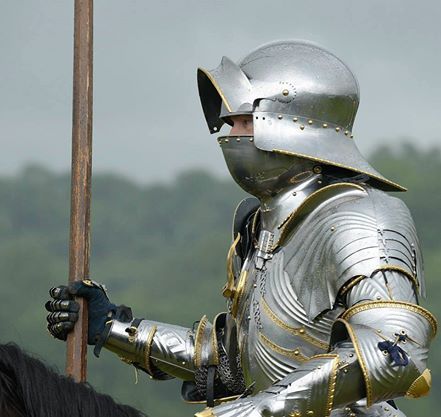
People wearing impressionistic medieval armor turn up all over the internet these days.

When it comes to combat, however, something always seems to be missing

and this is where an attachment to the real medieval world and internet productions comes loose.  In the real medieval world, not protecting your head could lead to unfortunate consequences…

The week of 21 August, 1485, for instance, was a very bad one for Richard III, (1452-1485), briefly King of England (1483-1485).

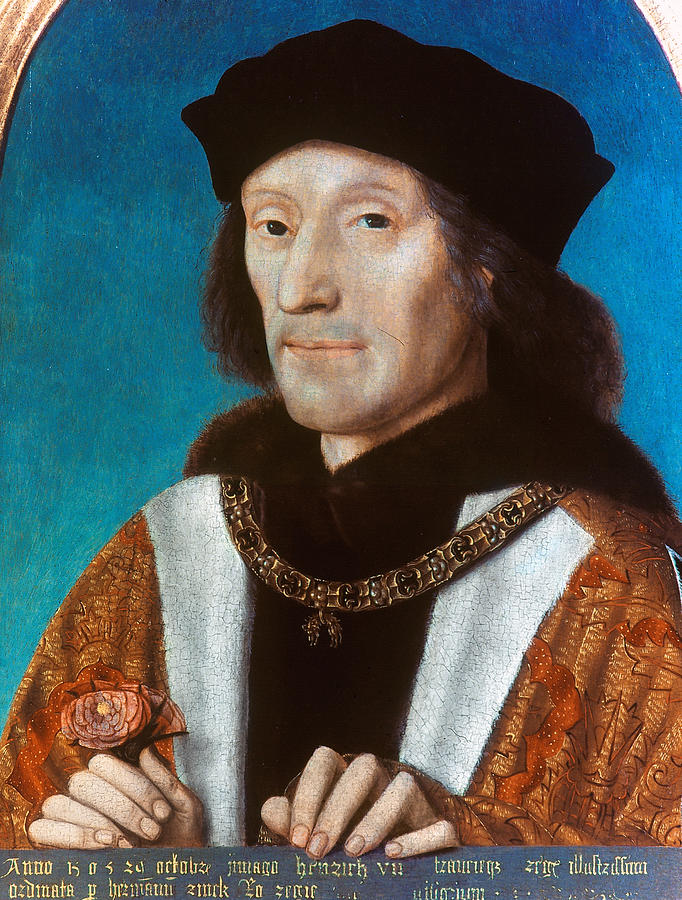
Challenged for his claim to the throne by Henry Tudor (1457-1509),

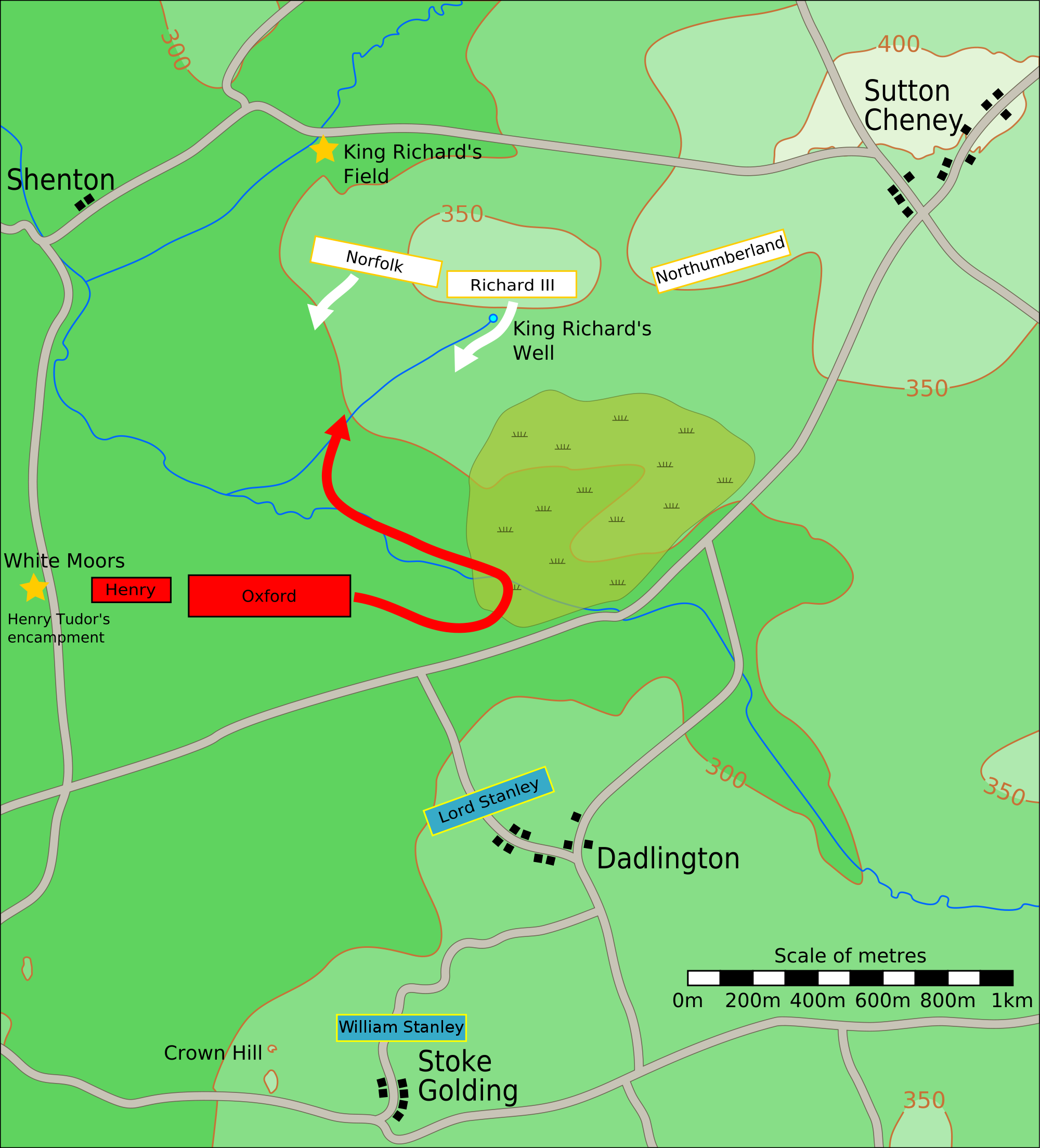
he faced his opponent at Bosworth Field

only to find that the Stanley family, supposedly allies, first hung back—and then, much to what I imagine was Richard’s horror, joined forces with Henry Tudor.

(a Graham Turner, capturing Richard’s dawning awareness of what was going wrong)

Richard was then killed in the fighting which followed—and that wasn’t the end of his bad week.

(another Graham Turner)

Henry ordered that his body be publically displayed so that everyone would know who was the king and who was dead, then the body was hastily dumped, probably naked, into a hole dug in the grounds of the Priory of the Grey Friars in Leicester.  (For more on the priory, see:  https://storyofleicester.info/faith-belief/grey-friars/ )

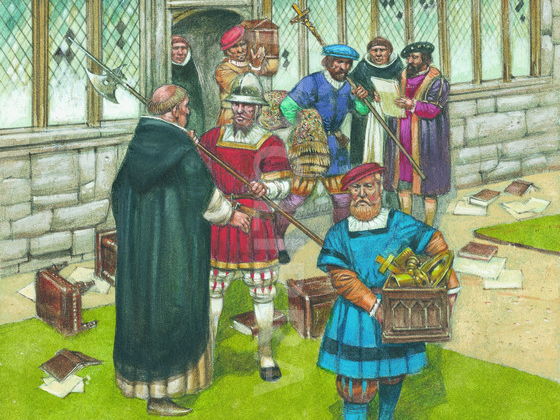
When Henry VIII (1491-1547) began the process of restructuring the English branch of the Church by emptying monasteries, nunneries, and other Church properties, then selling them off,

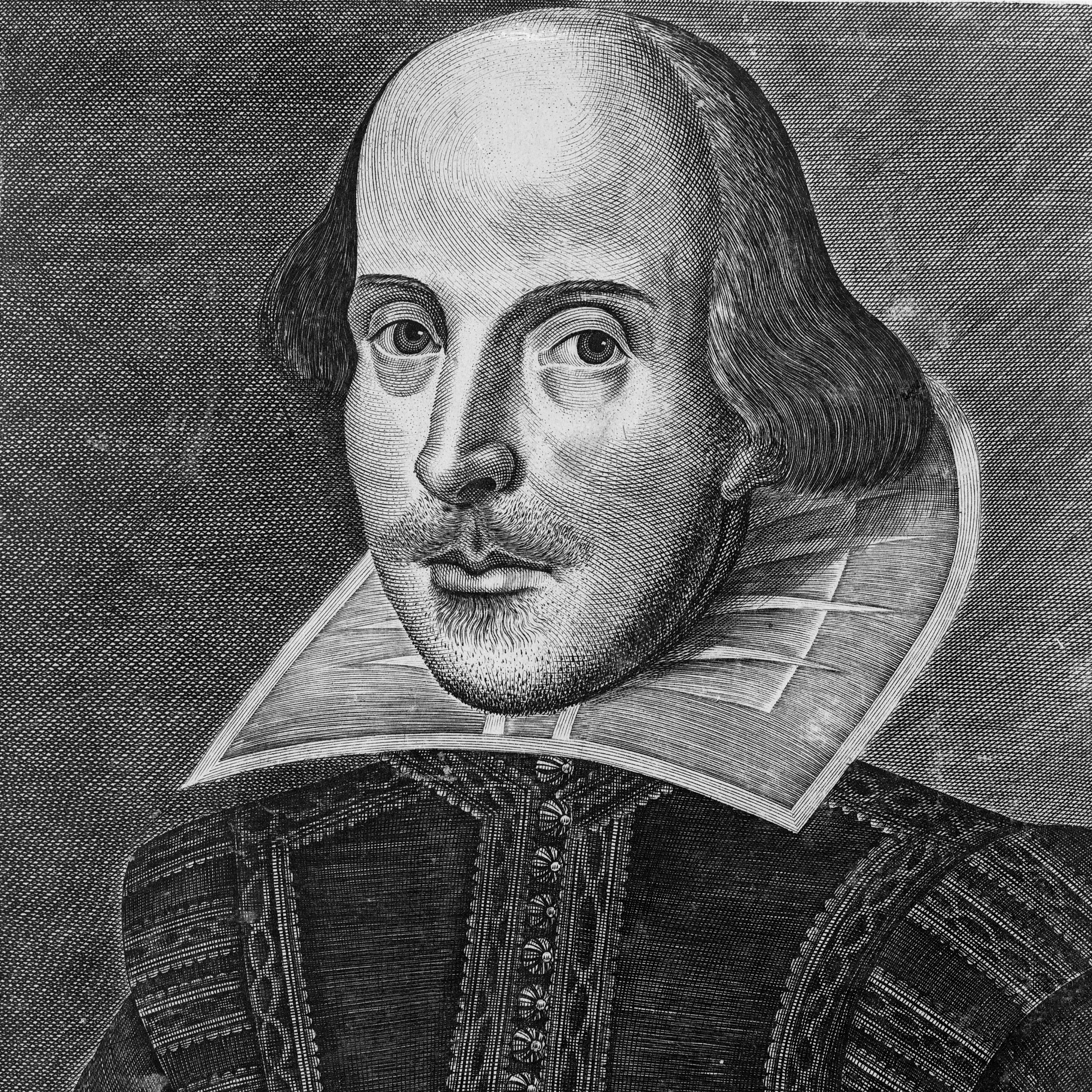
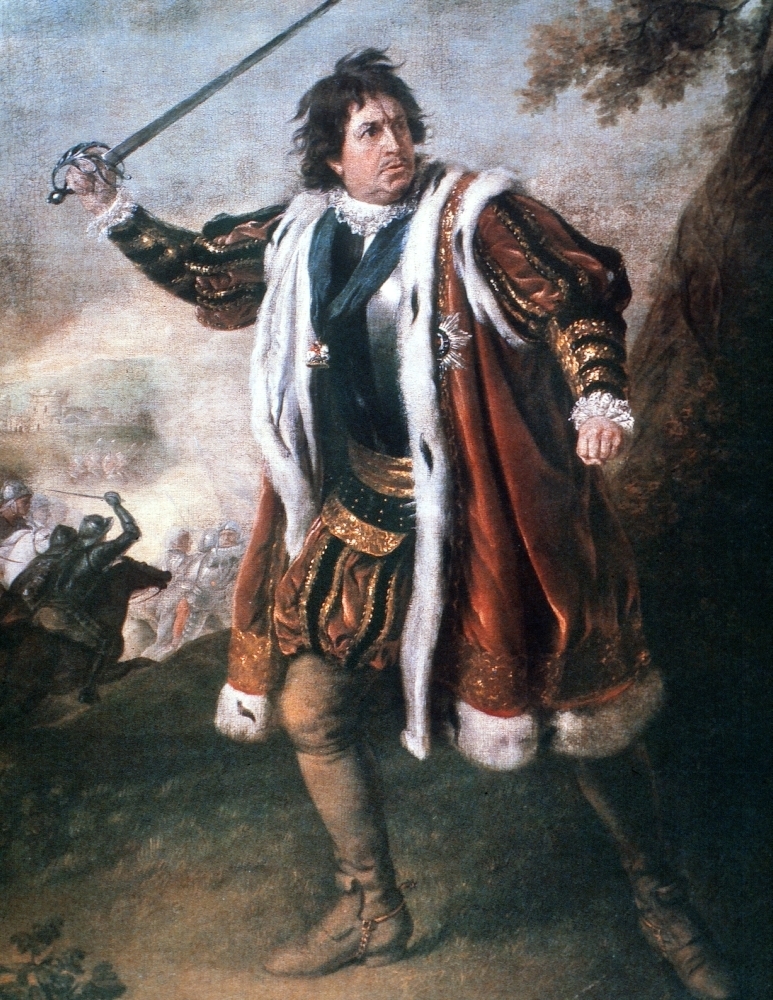
the Priory was knocked down and disappeared for nearly 500 years, leaving Richard to be the subject of one of Shakespeare’s first hits,

which depicted a twisted monster, juicily played by everyone from the original Richard, Richard Burbage (c.1567-1619),

to David Garrick (1717-1779),

to Laurence Olivier (1907-1989).

By 2012, the site of the Priory had been covered by a car park,

In which, upon excavation, was found what was first posited to be Richard’s grave, and then confirmed when DNA from the bones was matched with those of living descendants.

When those bones were examined, it appeared that Richard had received a number of wounds to his torso, most of them posthumous and slight, but what probably killed him were two to the head,

one, perhaps with a sword,

the other with a polearm, like one of these.

Such a wound in such a place suggests that, surprisingly, for a man with the ability to afford the finest Italian or German armor,

Richard wasn’t wearing a helmet when he was fatally attacked.  (For more on Richard’s wounds, see this excellent piece at the University of Leicester website:  https://le.ac.uk/richard-iii/identification/osteology/injuries/how-richard-iii-died )

I doubt that this was carelessness—Richard was an experienced warrior in his early 30s.  When it was rumored, during the Battle of Hastings in 1066, that Duke William had been killed, he unstrapped his helmet in mid-battle and rode among his men to prove that he was still alive,

but, over 400 years later, bright-patterned and easily recognized heraldry, on shields, banners, and horse trappers, had made such potentially dangerous self-identification unnecessary. 

Thus, Richard would have had no need to doff his helmet to make himself known to his faltering followers.

Might we presume, then, that perhaps earlier blows had so damaged his helmet that he’d been forced to discard it?

This, or some other plausible explanation might tell us why Richard had lost his helmet at Bosworth, but what can we say about certain medieval-ish warriors in a number of popular films and television productions who always seem to appear totally fearless—and helmet-less–in battle? 

Aragorn, for example, faces an army of orcs like this–

And there’s a whole list of characters from A Game of Thrones—

Robb Stark,

Jaime Lannister,

Brienne of Tarth,

and Jon Snow.

This strikes me as especially odd when people in that series seem always to be talking about “sigils” which identify “houses”,

which is just like the heraldry which we see in the time of Richard III.

We even see Robb with such a sigil on his shield (but still no helmet)—

And I sense that this will also hold true for the latest series, “Rings of Power”, with its Galadriel looking more like Brienne of Tarth of A Game of Thrones

than the Lady of Lorien.

(the Hildebrandts)

This is not to criticize the new series—I have only seen a trailer or two and some stills—but the consequences in the real medieval world without a helmet could be deadly, as in the case of Richard III, or nearly so in the case of the young Prince Henry (1386-1422), son of Henry IV and, after his father’s death in 1413, Henry V.

Henry was with his father at the Battle of Shrewsbury, 21 July, 1403, when he was hit in the face by an arrow.  It’s highly doubtful that he was helmetless—at 16, he was seasoned enough that Henry IV had trusted him with command of part of the royal army—but perhaps had raised his visor

at what he had thought was a safe moment.  (This is a slightly later helmet, but it gives you the idea.  By the way, if you read that saluting is derived from this, just shake your head:  the gesture actually comes from the move to take off your hat and bow to a superior officer.)

The arrow sank deep in and it was only the genius of the surgeon/goldsmith, John Bradmore, who, with a combination of early antisepsis—the use of wine to wash out the wound and honey to prevent infection—along with an extractor of his own invention—

which saved the life of the prince.  (For more on Prince Hal and his terrible wound, see “Too Narrow Escapes”—a Doubtfulsea posting from 5 July, 2017.)

In his days in A Game of Thrones, Jon Snow suffers enough wounds to kill at least three people—and, in fact, is once actually killed, but brought back to life—

and yet, true to television and film, his head is always bare. 

I wonder what, seeing that, and even admiring his seemingly endless luck, Richard III might have told him?

Thanks for reading, as ever.

Stay well,

Keep your visor down,

And know that, as always, there’s

MTCIDC

O

ps

Perhaps Galadriel has overheard me and is choosing a better helmet?

Lettered

As ever, welcome, dear readers.

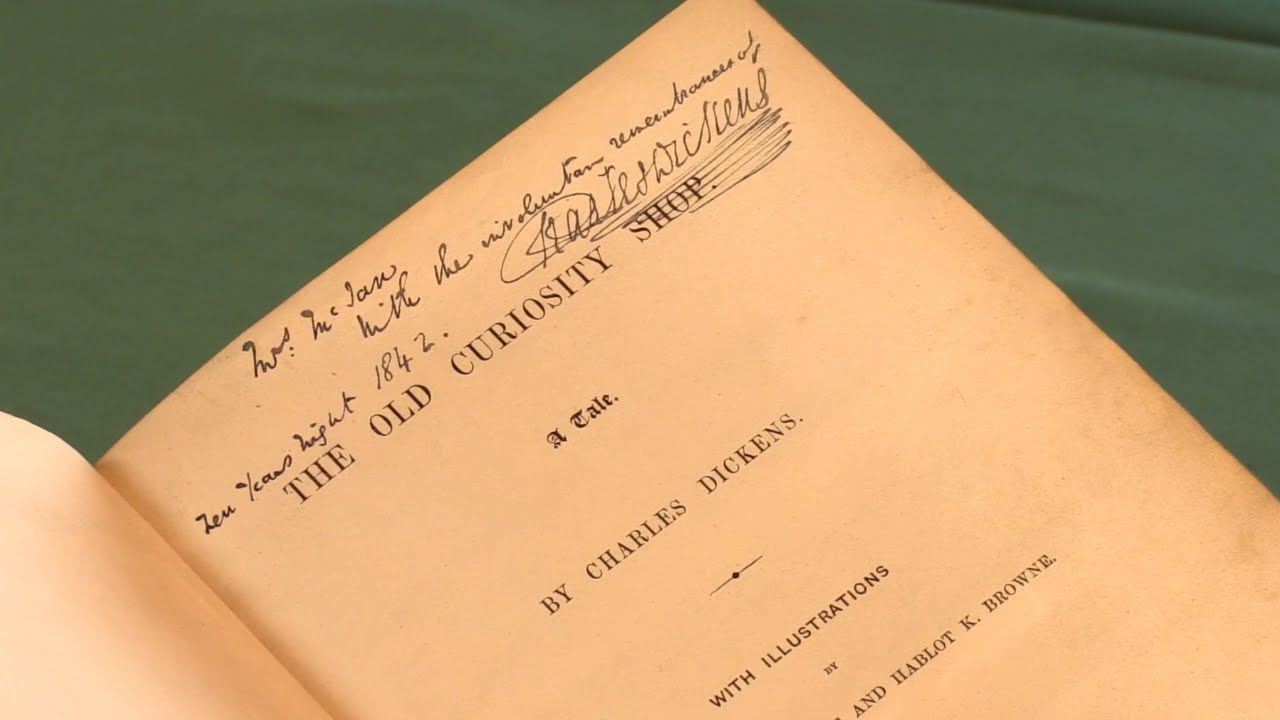
I’ve just finished watching an ancient TV production

of Charles Dickens’ (1812-1870)

 The Old Curiosity Shop (first published 1841—although printed serially slightly earlier)

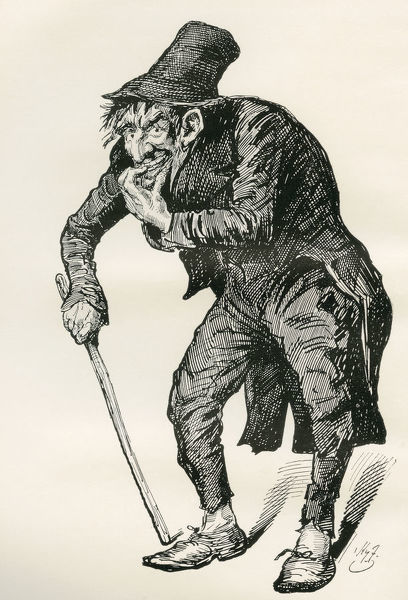
This is, in my view, one of Dickens’ gloomiest novels, mostly about a sadistic and physically-twisted character named Quilp,

who pursues a rather mentally-unstable elderly man with a gambling addiction and his granddaughter, called “Little Nell”.

There are a number of literary anecdotes related to this book, including one which says that people supposedly mobbed the wharf in New York when it was reported that the last installment, in which we find Nell succumbing to what appears to be a combination of exhaustion and perhaps tuberculosis, had just arrived by ship from London.  This reinforces the usual stereotype of the overly-sentimental Victorians, but there is another side to this, a later Victorian’s opinion, which may have been said or written by Oscar Wilde (1854-1900):  “One must have a heart of stone to read the death of Little Nell without laughing.” (For more on this quotation, see:  https://quoteinvestigator.com/2021/02/21/heart-stone/#more-439260 )

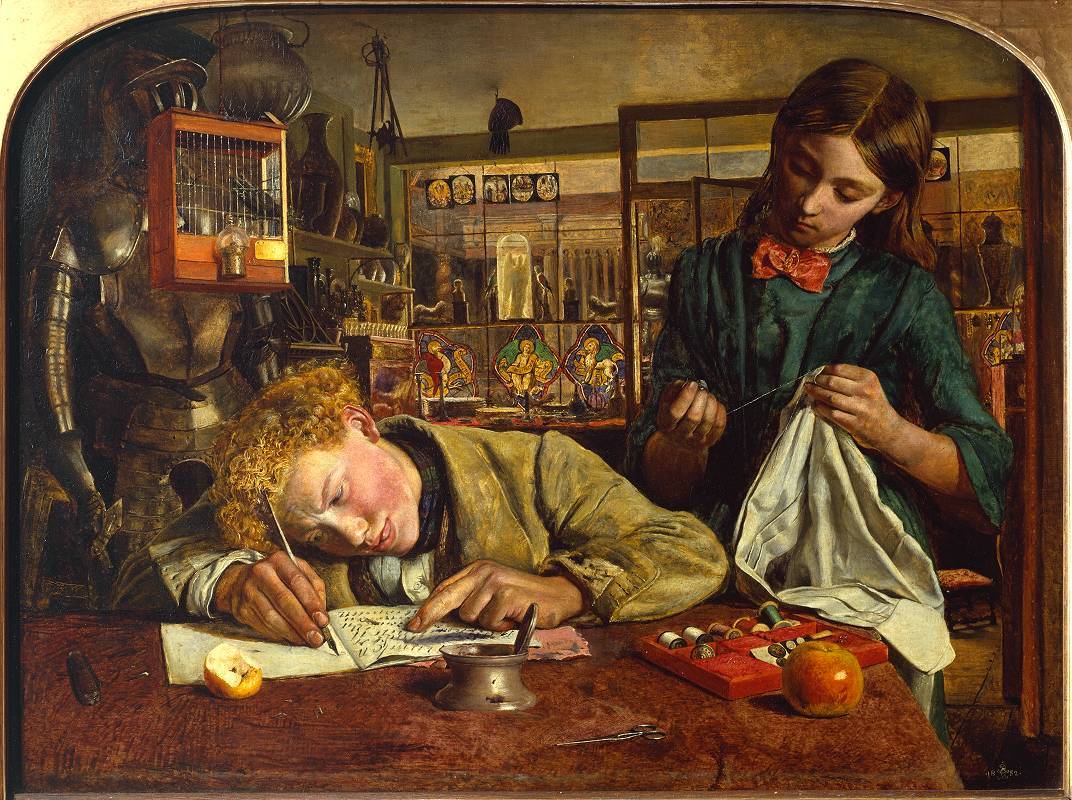
It is not my favorite Dickens (Oliver Twist, Nicholas Nickleby, Dombey and Son, David Copperfield, and Bleak House being those which I reread) but there is a scene here which recently caught my attention because of another work entirely.  Kit (surnamed “Nubbles”, a typical Dickensian last name, but hardly up there with “Mr Pumblechook” from Great Expectations) works as a kind of assistant in Little Nell’s grandfather’s antique store (or junk shop—it’s a little hard to tell).

Several times a week, he is instructed in writing by Nell, which affords much merriment all around, it seems, but perhaps not much actual learning–

“…when he did sit down, he tucked up his sleeves and squared

his elbows and put his face close to the copy-book and squinted

horribly at the lines how, from the very first moment of having the

pen in his hand, he began to wallow in blots, and to daub himself

with ink up to the very roots of his hair how, if he did by accident

form a letter properly, he immediately smeared it out again with his

arm in his preparations to make another how, at every fresh mistake,

there was a fresh burst of merriment from the child and a louder and

not less hearty laugh from poor Kit himself…” (The Old Curiosity Shop, Chapter 3)

(This is a well-known painting by Victorian painter by Robert Braithwaite Martineau, 1826-1869,

entitled “Kit’s Writing Lesson”, 1852.)

Just before I finished the Dickens, I had also viewed the finale of the last season of A Game of Thrones.  As I’ve written previously I did this reluctantly because I was aware that some of my favorite characters would not survive.  One of these was “Lord Varys”, the spy master for several Westeros kings in succession,

who, for all that he was an agent for espionage and potential assassination, was, in fact, one of the most humane of characters.

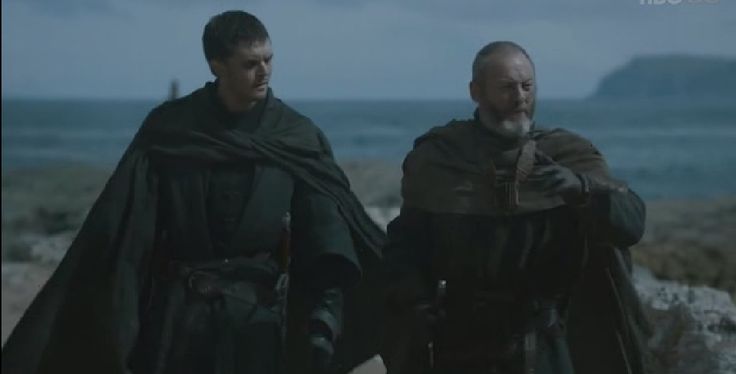
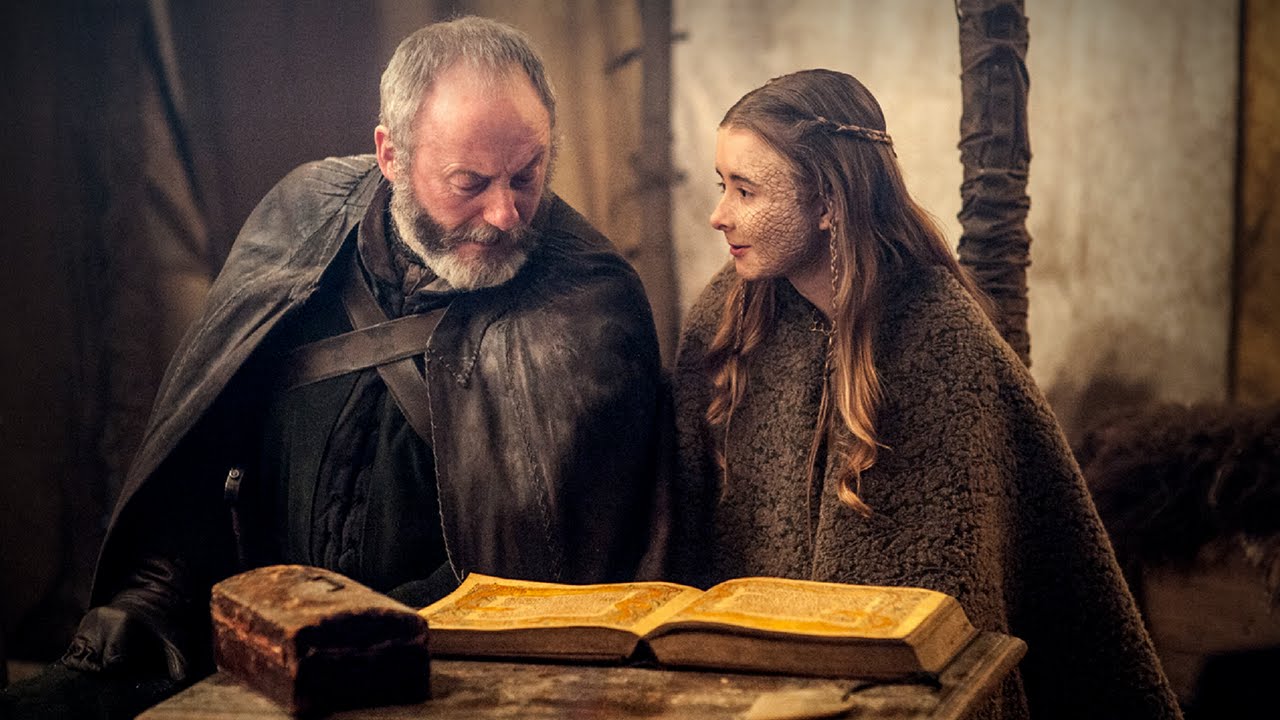
Another, who, fortunately, did survive, was Sir Davos Seaworth,

whose past career as a smuggler had lost him the fingers of his right hand and whose loyalty to the would-be king Stannis Baratheon,

 who had punished him, would lose him his son.

Seemingly always on the edge of execution, he is befriended by Stannis’ only child, Princess Shireen, who, when he is imprisoned, tries to cheer him by bringing him some of her books, only to have him admit that he can’t read.  She begins to teach him (he’s clearly a very rapid learner), moving from letters to words (ironically, he has trouble with “knights”, even though he is one) and here I saw reappear that same image:  the child helping someone older to become literate.

That Kit can’t read or write might not be surprising when The Old Curiosity Shop is supposed to take place, in the 1820s, but literacy grew rapidly throughout the 19th century in Dickens’ England, pushed by the Industrial Revolution and helped in the latter part of the century by the government’s Taunton Report (1868) and the Elementary Education Act (1870).  (For a quick look at the history of British education, see:  https://www.schoolsmith.co.uk/history-of-education/ )

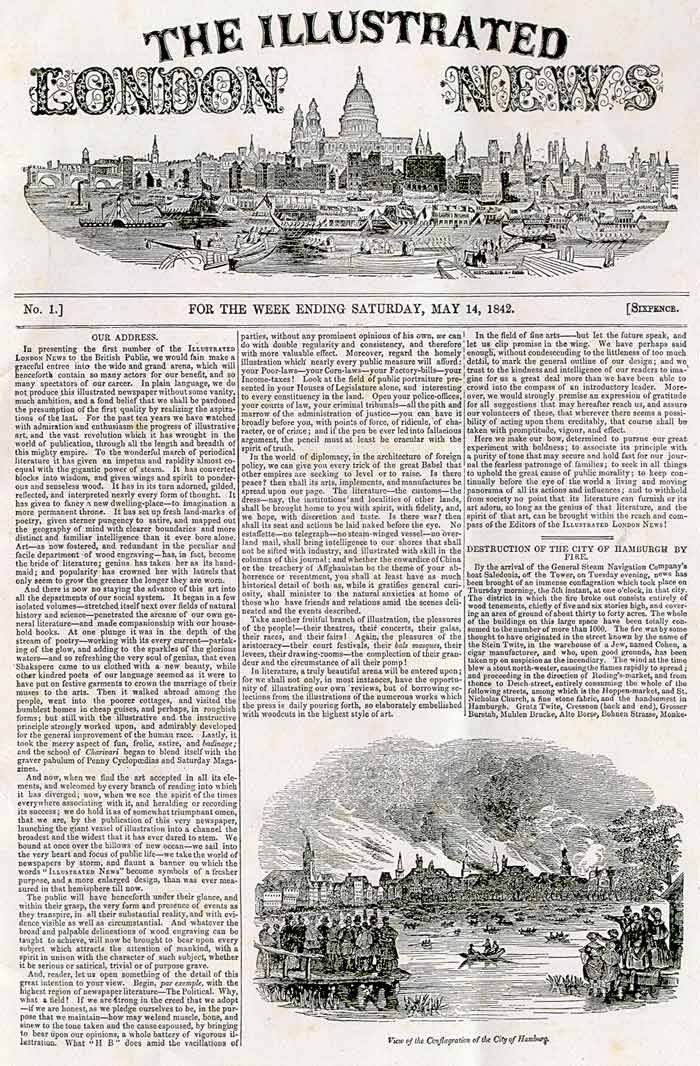
And, in real terms, that literacy can be seen in the amazing spread of newspapers and magazines throughout the century.  Just a rough count using the listing in the WIKI article “List of English 19th Century Periodicals (https://en.wikipedia.org/wiki/List_of_19th-century_British_periodicals ) and starting the count in the 1830s (Victoria became queen in 1837), we can see just for the 1830s-40s, 78 publications, some of them, like the Illustrated London News (begun in 1842) surviving as late as 1971.

Westeros, in contrast, and true to its medieval roots, appears to have very limited literacy, restricted to the upper classes—Sir Davos originally came from the lowest slum in the capital city, Flea Bottom—and specialists, the “maesters”.  Messenger ravens travel from maester to maester for long-distance communication,

and there are a number of libraries stashed around the island under the control of the maesters, including this rather dazzling one at Oldtown.

This semester, I’m once more teaching a fun course about monsters and, in it, we read, among other things, The Odyssey, and The Hobbit, the one depicting an ancient world and the other a sort of medieval world a bit like that in A Game of Thrones and it’s interesting to see that one of the differences between these two is the appearance—or lack—of literacy. 

No one in The Odyssey ever reads or writes anything.  Information is conveyed entirely by word of mouth.  That news is highly valued when it comes is emphasized in Book 1, where, when Penelope complains that the aoidos (ah-oy-DAWS), Phemios, is singing about the (relatively) recent war at Troy—in the story, obviously treated as a real event–and its aftermath, her son, Telemakhos, replies:

“My mother, why, then, do you begrudge the distinguished singer

To sing in whatever way the spirit moves him?…

For men applaud more a song

[which is] the newest which floats around those listening.” (1.346-352)

These are not readers, then, but those who use their ears to gain knowledge (the Greek word I translated as “listening” is the present active participle akouontessi from the verb akouo, “to hear”).

In the opening chapter of The Hobbit, although Tolkien tells us that “By no means all Hobbits were lettered” (The Lord of the Rings, Prologue, 3 “Of the Ordering of the Shire”), what do we see Bilbo doing (besides smoking an enormous pipe and trying to fend off Gandalf)?

“Then he took out his morning letters, and began to read, pretending to take no more notice of the old man.” (The Hobbit, Chapter One, “An Unexpected Party”)

(Perhaps my favorite Hildebrandt Bros illustration)

The Prologue to The Lord of the Rings, gives us a bit more about the Shire’s postal system (see 3 “Of the Ordering of the Shire”, as well as does an earlier posting from this blog, “His Letters”, 25 May, 2016), and the very idea of such a system suggests a level of literacy far beyond that of the occasional raven.  As well, there are other references to the ability to read, such as the inscriptions, visible and invisible, on Thror’s map,

and even the written announcement of the auction of the (officially assumed deceased) Bilbo’s house and possessions in Chapter 19:

“There was a large notice in black and red hung on the gate, stating that on June the Twenty-second Messrs Grubb, Grubbe, and Burrowes would sell by auction the effects of the late Bilbo Baggins Esquire…” (The Hobbit, Chapter 19, “The Last Stage”)

Kit is laboriously acquiring literacy, as is Sir Davos, each being instructed by someone younger than himself.  That makes me wonder who taught Bilbo, let alone anyone else in the Shire—and beyond—to read and how?

As there are no schools in the Shire, we can only presume that it was done in an informal setting, as in the case of Kit and Sir Davos.  Beyond that, we can only guess, but we do have a hint in something which the Gaffer says in Chapter One of The Lord of the Rings about Bilbo himself:

“But my lad Sam will know more about that.  He’s in and out of Bag End.  Crazy about stories of the old days he is, and he listens to all Mr. Bilbo’s tales.  Mr Bilbo has learned him his letters—meaning no harm, mark you, and I hope no harm will come of it.” (The Fellowship of the Ring, Book One, Chapter 1, “A Long-expected Party”)

So, in the case of Sam, at least, we see the same instruction as that received by Kit and Sir Davos—one on one teaching.  For more on this, please see “Learned Him His Letters”, a posting here, from 4 November, 2020.

Thanks, as ever, for reading—and how wonderful it is that we all can do what I still find such a magical act:  stepping into other times and other worlds at the turn of a page.

Stay well,

Turn that page,

And remember that there’s always

MTCIDC

O

PS

File under “odd coincidence”–

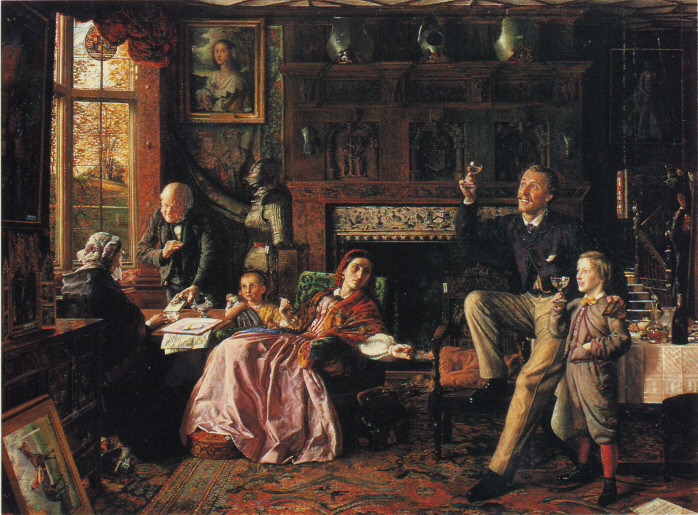
Martineau’s best known work is this, entitled “Last Day in the Old Home”, painted in 1862.

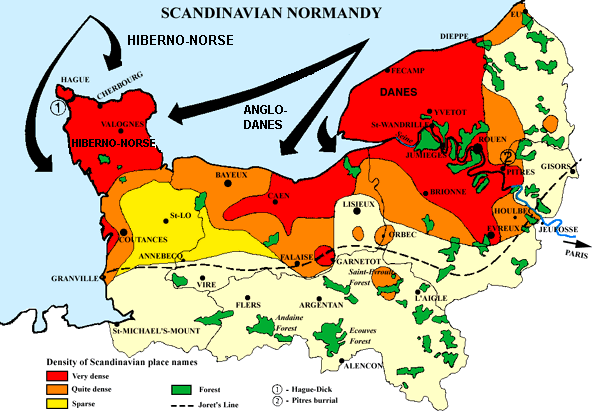
 It is actually a portrait of a friend of the artist, John Leslie Toke, whose most distant ancestor came to England in 1066 with Duke William.  That ancestor came from Touques in Normandy and so the spelling and the pronunciation differ, as so often in English.  That being the case, the name should be said “Toook”.  Although Tolkien goes into a bit of detail about various Tooks in Letters (especially about “Lalia the Great”—see 294-5) and we are given tantalizing hints about Took propensities in Chapter One of The Hobbit, I have yet to see any information about the Tolkienian inspiration for the name, but perhaps the original Baron Touque was a forebear?  (For more on the historical family, see:  https://www.houseofnames.com/toke-family-crest )

Wyrmy

This summer, I’ve been re-watching A Game of Thrones—to the end in Season 8, which I simply couldn’t bear to do last time, knowing, from spoilers of various sorts, that a number of my favorite characters wouldn’t survive through the last episode.  As I’ve watched, I’ve been intrigued by this—

For Daenerys and her forces, this is the equivalent of a modern attack aircraft, like these Fairchild Republic Thunderbolt IIs—

using fire in place of bombs and strafing.

I’ve wondered about that fire, however:  where did it come from?

If we look at dragons when we first see them in Western literature in the Greco-Roman world, their danger seems to come not from flaming gasses, but from size and teeth and maybe just plain dragonicity.

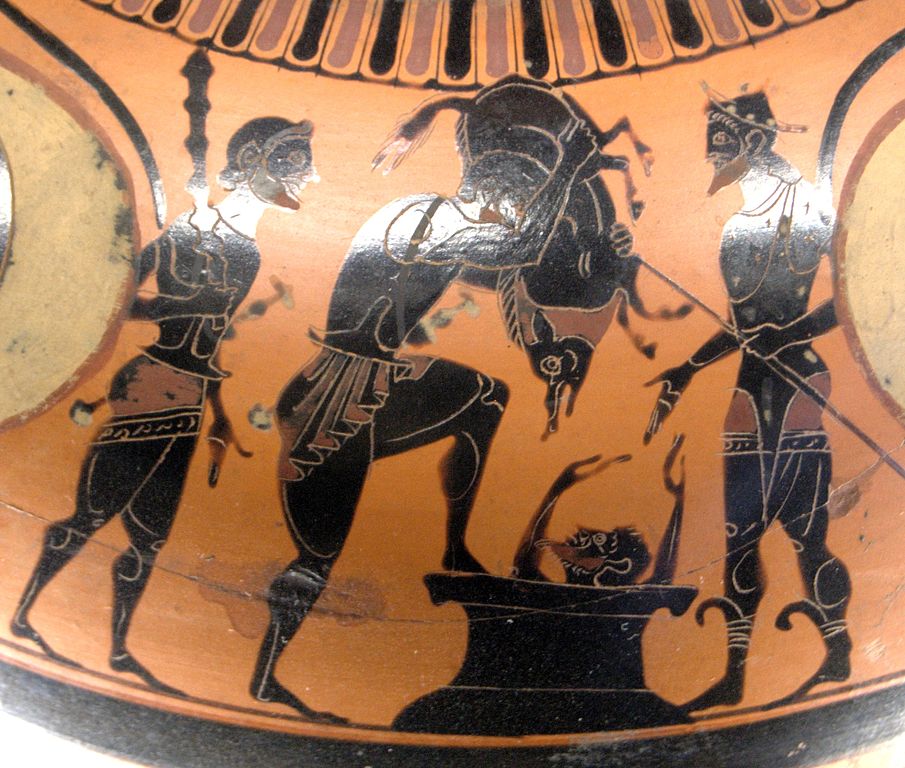
[A footnote:  the word dracon, in Greek, and draco, in Latin, are very vague terms, referring to scaly things from perhaps water snakes or whatever Herakles’ hydra is supposed to be

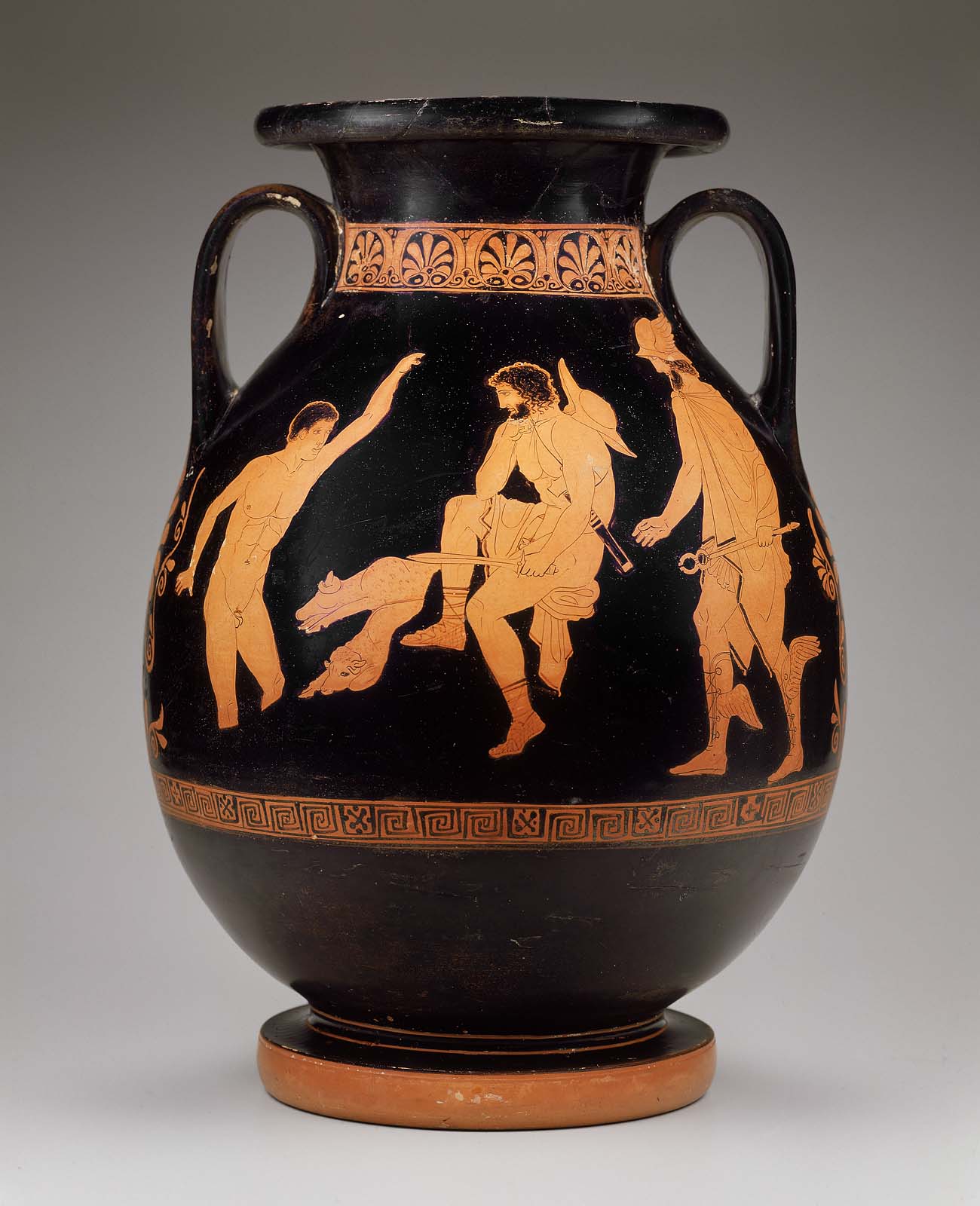
to beasts we might think of as dragons.  For the purposes of thinking out loud about the subject, I’m going to assume that the creatures in these stories are all forms of what we would call dragons.]

A  main source for early stories is the Library of the rather mysterious “Apollodorus”—so mysterious, in fact, that he’s now often called “Pseudo-Apollodorus”, although that seems a little unfair—who may have lived in the 1st or 2nd century AD.  This is a huge collection of myth which records that the first human who appears to have encountered dragons in a hostile situation (at least for the human) was Minos (the Minotaur man).

 Minos has his adventure in 3.3.1, where, in a complicated story of death and rebirth, Minos kills one dragon with a stone, only to have another dragon appear, who heals the first, whereupon they disappear from the story.  The dragons, in fact, seem to have no interest in Minos and all that’s said of them suggests nothing of the fearsome, but rather of the magical.

Cadmus, the founder of Thebes, is the second to be involved with dragons, having dealt with one who had killed most of his men who had gone to a spring for water, in the Library, Book 3.4.1.

Cadmus kills the dragon, the text doesn’t say how, but there’s no more detail about the dragon than that it was a dragon and that it had slain Cadmus’ men.

Perhaps Apollodorus had left something out?  There is a late commentary on the story in the so-called “Chiliades” (“Thousands”) of John Tzetzes (c1110-1180AD), a Byzantine literary man, which adds the details that there were two men sent, Deioleon and Seriphos, and that:

“….the dragon, the guardian of the spring, killed them both,

but Cadmus, with the throwing of stones, killed the dragon…”

(Chiliades, X.406-407)

But that’s all the description we get—just a dracon, albeit, in the Cadmus story, given to homicide.

When Eurystheus

(he’s the one cowering in the big jar)

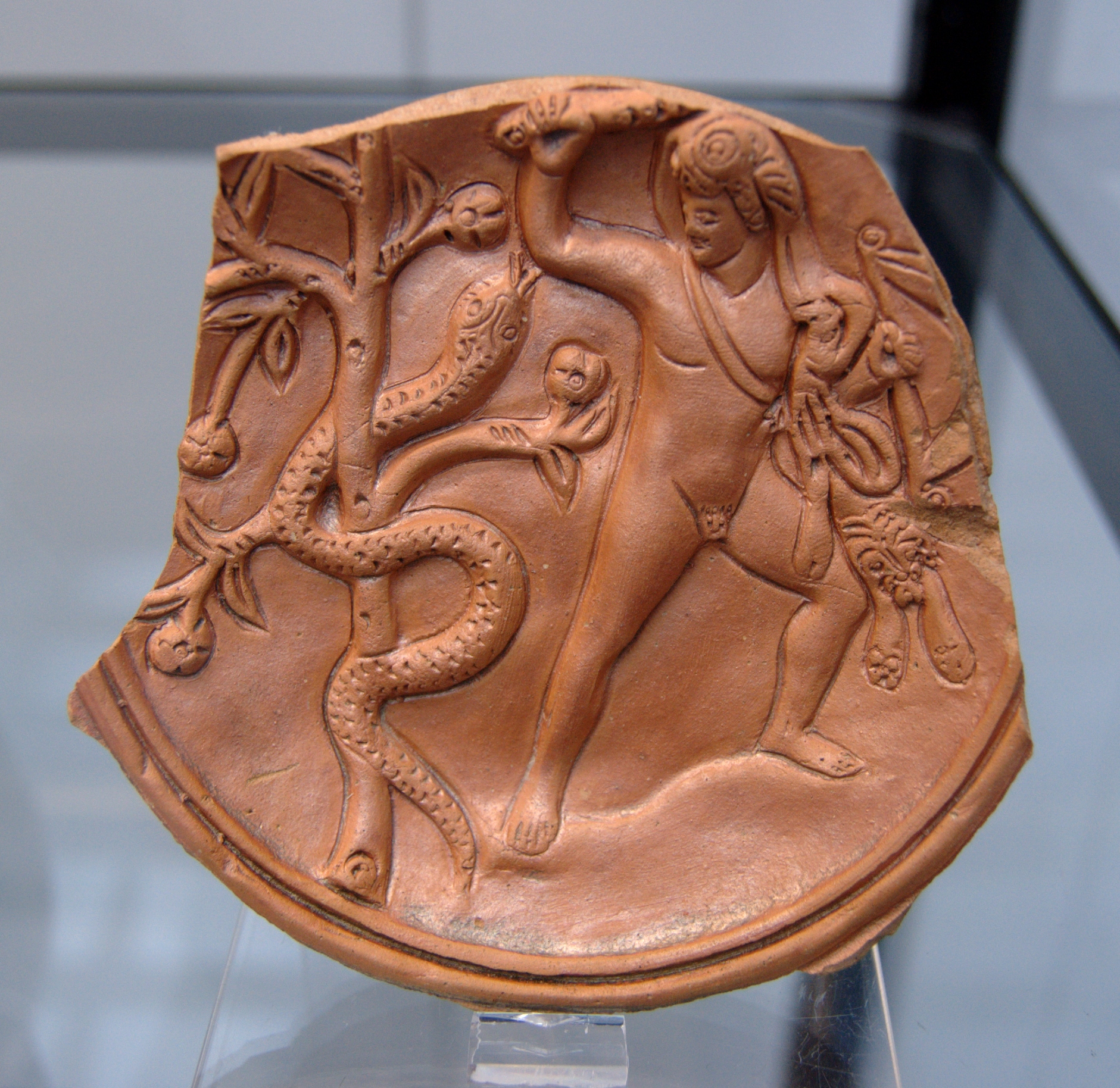
demands that Herakles do two more labors, the first of the two is to fetch the Golden Apples of the Hesperides,

(by the Pre-Raphaelite painter Edward Burne-Jones, 1833-1898, the besty of William Morris),

which were guarded, in one version of the story ,by a deathless, hundred-headed dragon (Apollodorus, the Library, 2.5.11).  Herakles kills the dragon (Apollodorus doesn’t say how, any more than he provides any details about the dragon).

Continuing through mythical history, we now arrive at Jason, who, in his quest to obtain the Golden Fleece, finds that the fleece is guarded, like the Golden Apples, by a dragon—this one both immortal (Apollodorus, The Library 1.9.16)  and sleepless ( Apollonius, Argonautica 2.1209-10).  When, in Apollonius’ (3rd century BC)  Argonautica, Book 4, Jason actually confronts the dragon, it has an amazingly loud hiss (4.130-131 ) and huge jaws (4. 154-56 ), but is quickly subdued by the enchantress Medea, with a sung charm and a drug for his (now very sleepy) eyes (4.156-58) and, as ever, no fire.

Even in Ovid’s (43BC-17AD) retelling of the Jason story, in Book 7 of the Metamorphoses, the dragon is only described:

…linguis…tribus… et uncis

dentibus…

“with triple tongue and with curved teeth” (Ovid, Metamorphoses 7.150-151)

It’s interesting, however, that, in the Jason story, there is fire-breathing, just not reptilian.  Before the King of Colchis, Aeetes, will deal with Jason’s request for the Fleece, he sets him a task:

1. he must yoke bronze-hoofed bulls

2. he must plow a field with them

3. he must sow dragon’s teeth

and then fight the warriors who spring up from the teeth.

As if all of this weren’t difficult enough, the bulls breathed fire.  As Apollonius describes it:

“And they up to that time were raging exceedingly,

The pair of them breathing out turbulent flame of fire…” (Argonautica 3.326-7)

Bovine fireworks, but nothing from dragons—and yet, somewhere along the way between these early dragons and Beowulf,

something set off the reptiles and, from that moment on, dragons were flaming.

(from Peraldus’ Theological Miscellany—1st half 13th century—this image is from one of the medievalist Hana Videen’s websites and I recommend all of them.  Start with:  https://oldenglishwordhord.com/ which is ongoing, but there are also https://medievalandmodernbestiary.com/about/ and  https://medievalcomicsblog.wordpress.com/  )

I have two suggestions for possible models for this change—and I’ll put “possible” in quotation marks to show just how tentative I think these are.

First, as early as Aristotle (384-322BC), there was the belief that salamanders could live in fire (Historia Animalium 5.19),

a fact repeated by Augustine (354-430AD), in Book XXI of his De Civitate Dei Contra Paganos, where he cites the example of a salamander’s survival in fire to suggest that the damned could burn for eternity and not be consumed:

“ut scripserunt qui naturas animalium curiosius indagarunt, salamandra in ignibus uiuit…”

“…as they have written who, curious, have investigated the qualities of animals:  the salamander lives in fires…”  (XXI.iv) 

Imagine, then, a lizard-like creature, as we see in medieval illustrations—

associated with fire from as far back as the Greco-Roman world…

Second, there is a fire-spouting weapon which could also have served as a model/inspiration:  Greek fire.

As early as the late 7th century AD, the Byzantines had not only invented a new and terrifying weapon, the compounding of which is still unknown, but guessed at,

but also a way to project that fire over a distance—almost as if were being breathed out.

(Here’s a short film clip which demonstrates just how frightening this weapon could be:  https://www.youtube.com/watch?v=lPUgvYZ5UDk )

Think of it flying–certainly not something you could, like Cadmus, knock over with a stone.

Thanks, as ever, for reading.

Stay well,

Never say “Dracarys” unless you mean it,

And know that there’s always

MTCIDC

O

PS

Although I love science—especially the natural sciences—I’m certainly not a scientist, but does the explanation below seems oddly plausible to you?

“One possible way: Their metabolism is capable of creating a low-boiling flammable liquid (such as diethyl ether or pentane) and this substance is stored in sacs somewhere in the head. The dragon also has an enzyme that acts to ignite the stuff when in contact with air.

To breathe fire, the dragon pumps (by muscle action) some of this liquid out of its mouth; its own body heat evaporates it and the enzyme, sprayed out at the same time, sets it off.”

(Ian Campbell, BA in Natural Sciences, Cambridge, 1979—from Quora at:  https://www.quora.com/When-did-people-start-to-depict-dragons-as-firebreathing-in-mythology-What-was-the-first-ever-fire-breathing-dragon-myth-in-history?share=1 )

Waining

Welcome, as always, dear readers.

Here’s an interesting passage from Appendix A of The Lord of the Rings:

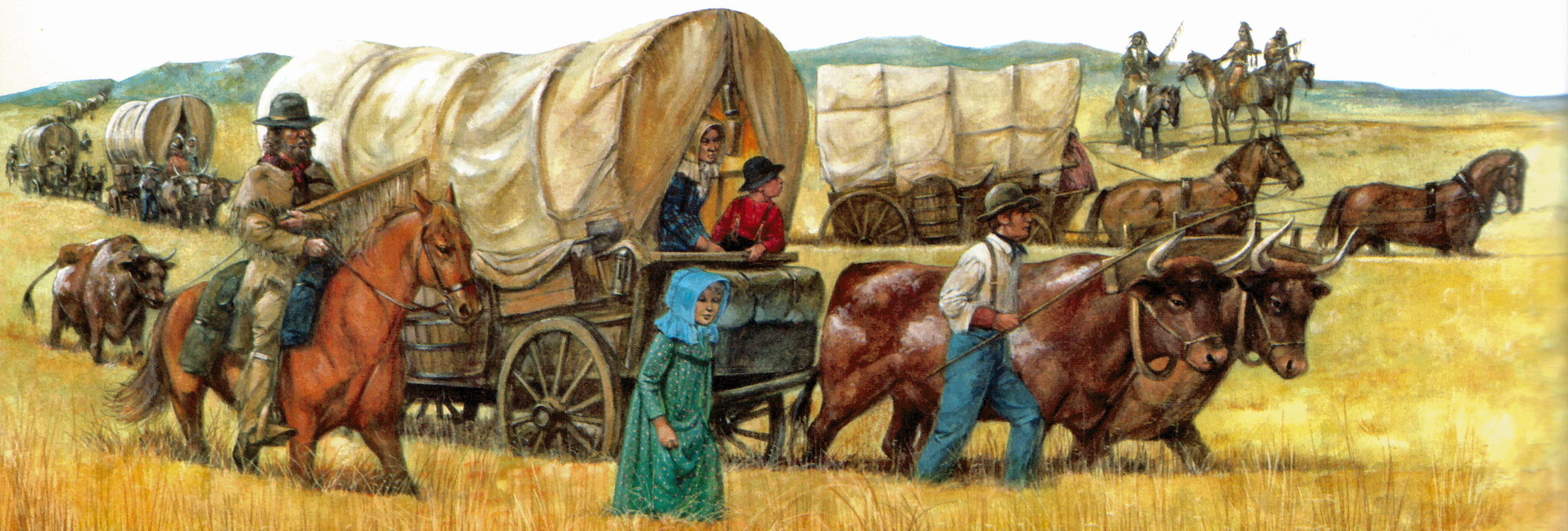
“The third evil was the invasion of the Wainriders, which sapped the waning strength of Gondor in wars that lasted for almost a hundred years.  The Wainriders were a people, or a confederacy of many peoples, that came from the East; but they were stronger and better armed than any that had appeared before.  They journeyed in great wains, and their chieftains fought in chariots.” (iv:  “Gondor and the Heirs of Anarion”)

Even if you didn’t know that a “wain” is a kind of wagon,

the context would probably provide you with an image of one—although probably the best-known wain now would be the one in John Constable’s (1776-1837) famous 1821 painting, “The Hay Wain”.

(If you’d like to see more of Constable’s work, with those amazing skies, see: https://www.wikiart.org/en/john-constable/ )

Such wagons as these (and “wain” and “wagon” come from the same Old English word, waegn), however, seem a little small for a wandering people, and I imagine that Tolkien saw them as more like a Boer trekwagen (also called a “Cape wagon”)

which he might have seen in South Africa as a small child, or at least had noticed in some of the numerous images of the Boer War of 1899-1902 available in magazines of that period,

like this issue of The Sphere from March, 1900–

Another possibility is that he had seen so-called Conestoga wagons

either in illustrations or even in films of the American West,

(from The Big Trail, 1930)

where they were shown being employed in ferrying families onto the Great Plains or beyond.

This might explain the wain—but what about the riders?

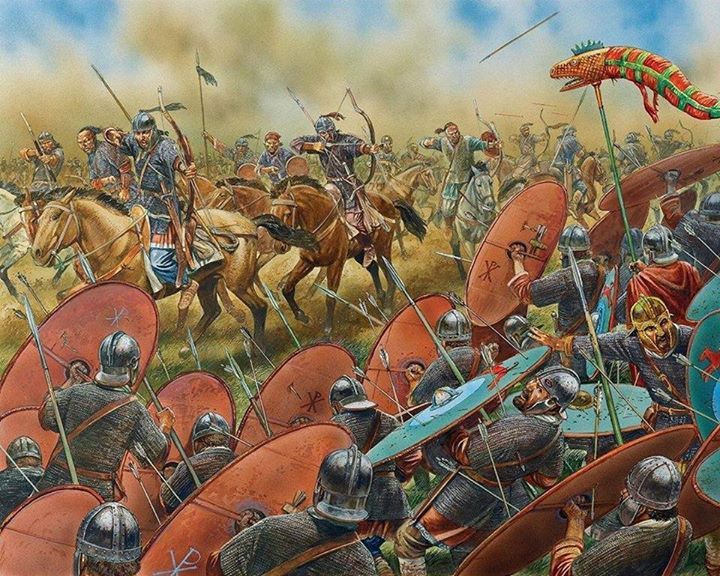
Invasions from the East were a common feature in the late Roman era, when the Western Empire was gradually turning into a Germanicized world, with various Gothic tribes pushing into what were once Roman provinces and even into Italy itself.

And behind the Goths came the Huns, a nomadic steppe people,

who were stopped at the Battle of the Catalaunian Fields (also called the Battle of Chalons) in 451AD by a combination of Romans and Germanic allies.

Even before this, there had been Celtic movement along the borders of the growing Roman world in the last century BC.  A major trek was that of the Helvetii, who attempted to move from what is now western Switzerland, but were stopped and pushed back in 58BC by Julius Caesar (100-44BC).

As a medievalist, JRRT would certainly have known about the Goths and Huns, and, as a schoolboy, he would have read (or suffered through) Book One of Caesar’s De Bello Gallico, with its well-known opening, “Gallia est omnis divisa in partes tres”—“All of Gaul has been divided into three parts”.   There, in Section 3, he would have read that, prior to their invasion, the Helvetii

“constituerunt ea quae ad proficiscendum pertinerent comparare, iumentorum et carrorum quam maximum numerum coemere…” (De Bello Gallico, 1.3)

“decided to collect those things which would be suitable for their setting off—to buy up the greatest number possible of beasts of burden and of wagons…”

Carrorum—the nominative singular is carrus–is itself a Celtic word and Aulus Hirtius, Caesar’s lieutenant, who continued Caesar’s account of campaigns against the Gauls, says of them:

“magna enim multitudo carrorum etiam expeditos sequi Gallos consuevit…”  (De Bello Gallico, 8.14)

“for a great number of wagons was accustomed to follow the Gauls, even [when]traveling lightly” (expeditus, often means “lightly-armed”, but can also mean “without baggage”, hence my less formal translation)

It’s unclear what such vehicles looked like.  If they were carts—that is, two-wheeled vehicles—they might have appeared like this simple Roman one—

If a 4-wheeled vehicle, perhaps something like this—

Here, then, might be sources for Tolkien’s invaders, both wains and riders, but what about those leaders and their chariots?

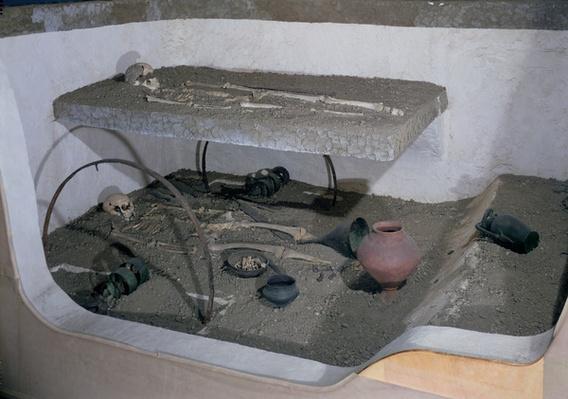
Although there are a number of chariot burials found in France (more or less modern Gaul),

Caesar never encountered chariot fighters in his conquest—of Gaul.  In his two brief visits to England, it was a different matter, however.

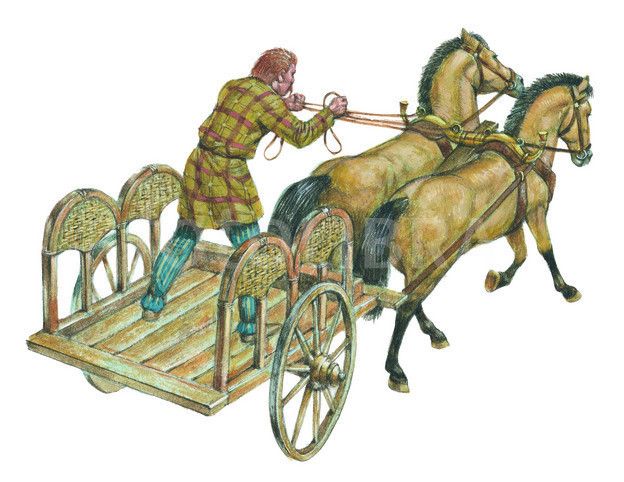
As he describes them:

“Genus hoc est ex essedis pugnae. Primo per omnes partes perequitant et tela coiciunt atque ipso terrore equorum et strepitu rotarum ordines plerumque perturbant, et cum se inter equitum turmas insinuaverunt, ex essedis desiliunt et pedibus proeliantur. Aurigae interim paulatim ex proelio excedunt atque ita currus conlocant ut, si illi a multitudine hostium premantur, expeditum ad quos receptum habeant. Ita mobilitatem equitum, stabilitatem peditum in proeliis praestant, ac tantum usu cotidiano et exercitatione efficiunt uti in declivi ac praecipiti loco incitatos equos sustinere et brevi moderari ac flectere et per temonem percurrere et in iugo insistere et se inde in currus citissime recipere consuerint.” (De Bello Gallico, 4.33)

“This is the method of fighting from chariots.  First, they ride around in every direction and hurl javelins and shake the ranks in general with the terror of [their] horses and the noise of [their] wheels, and, when they have worked themselves in among the troops of cavalry, they leap down from [their] chariots and fight on foot.  Meanwhile, [their] charioteers gradually retreat from the battle and so place [their] chariots that, if those [chariot warriors] may be pressed back by a large number of enemies, they may have an unimpeded mode of retreat for them.  In this way, they display in battle the mobility of cavalry, the steadiness of infantry, and they accomplish so much by daily use and practice that they have become accustomed to control [their] stirred up horses in sloping and steep places and to direct and turn [them] quickly and [they have also become accustomed] to run along the chariot pole and to stand on the yoke and to take themselves back from there into [their] chariots.”

In a letter to his son, Christopher (28 December, 1944, Letters, 107), JRRT mentions another figure connected with these ancient Britons, Julius Agricola (40-93AD), who was involved in several stages of the Roman conquest of Britain in the 1st century AD.  What we know about him comes almost entirely from the biography of him written by his son-in-law, Publius Cornelius Tacitus (c.56-120AD).  In Book XIV of his Annals, Tacitus describes a revolt of some of the British tribes against Roman rule, those tribes being led by a haunting figure in early British history, Boudicca, queen of the Iceni.

(This is a famous statuary group, by Thomas Thorneycroft (1815-1885), erected on the Thames Embankment, basically across the street from Parliament, in 1902.)

And in Tacitus’ description of the moments before the final battle of the revolt, we might see one more possible inspiration for those Wainriders and leaders in chariots:

“at Britannorum copiae passim per catervas et turmas exultabant, quanta non alias multitudo, et animo adeo fero[ci], ut coniuges quoque testes victoriae secum traherent plaustrisque imponerent, quae super extremum ambitum campi posuerant.

Boudicca curru filias prae se vehens, ut quamque nationem accesserat, solitum quidem Britannis feminarum ductu bellare testabatur…” (Annales, 14.34-35)

“…and the forces of the Britons were rejoicing everywhere in their companies and troops, how much more numerous than other [such forces], and with such a fierce spirit that they were bringing with them their wives, as well, as witnesses of their victory, and were settling them in wagons, which they had drawn up at the extreme edge of the field.

Boudicca, riding in a chariot, with her daughters in front of her, as she had reached each tribe, was swearing that it was indeed the custom for Britons to fight under the direction of women…”

Gothic invasions turned France, Italy, and Spain, at least briefly, into Germanic-speaking worlds, muscling in on the local Romans.  The Helvetii needed serious fighting to be driven back to their original homeland.  And those chariots initially made Roman infantry very nervous (Caesar himself says that they were “pertubati novitate pugnae”—“shaken by the novelty of the [manner] of fighting”—De Bello Gallico, 4.34).  Perhaps, with such models behind them, it’s no wonder that it took nearly a hundred years to defeat those Wainriders.

As ever, thanks for reading.

Stay well,

When driving your chariot towards the enemy, always circle them counterclockwise (a huge insult in Old Irish stories),

(A totally overthetop Angus McBride of Cu Chulainn–but fun–and the Cu himself was more than a little overthetop when he would produce the gae bolga.)

And know that, as always, there’s

MTCIDC

O

Roots—and a Branch

Welcome, dear readers, as always.

My last posting employed a quotation from Tolkien, to be found in a letter to Prof. L.W. Forster from 31 December, 1960:

“The Dead Marshes and the approaches to the Morannon owe something to Northern France after the Battle of the Somme.  They owe more to William Morris and his Huns and Romans, as in The House of the Wolfings and The Roots of the Mountains. “  (Letters, 303)

And, in that previous posting, I had discussed what seemed to me to be some influences direct and indirect upon Tolkien’s work from the first of those two works, William Morris’ (1834-1896) 1889

The House of the Wolfings.

(And, as ever, here’s a copy for you:  https://archive.org/details/cu31924013528124/page/n7/mode/2up This is an American reprint from 1892.)

In this posting, I want to examine that second book, also published in 1889, The Roots of the Mountains Wherein Is Told Somewhat of the Lives of the Men of Burg-dale Their Friends Their Neighbours Their Foemen and Their Fellows in Arms

(Here’s your copy:  https://www.gutenberg.org/files/6050/6050-h/6050-h.htm –an 1896 reprint of the second edition )

After reading both this and Wolfings, I found myself a bit puzzled.  Certainly I saw things which might have been influences, but really nothing struck me as related to the Dead Marshes and the Morannon.  Instead, in Wolfings, there were names like “the Mark” and “Mirkwood” and some suggestions of Eowyn and Arwen and Galadriel to come, and this is the sort of thing which I discovered, as well, in Roots.

Here, we had “(the) Dale” (Chapter I) as well as:

“This was well-nigh encompassed by a wall of sheer cliffs; toward the East and the great mountains they drew together till they went near to meet, and left but a narrow path on either side of a stony stream that came rattling down into the Dale: toward the river at that end the hills lowered somewhat, though they still ended in sheer rocks; but up from it, and more especially on the north side, they swelled into great shoulders of land, then dipped a little, and rose again into the sides of huge fells clad with pine-woods, and cleft here and there by deep ghylls: thence again they rose higher and steeper, and ever higher till they drew dark and naked out of the woods to meet the snow-fields and ice-rivers of the high mountains.  But that was far away from the pass by the little river into the valley; and the said river was no drain from the snow-fields white and thick with the grinding of the ice, but clear and bright were its waters that came from wells amidst the bare rocky heaths.

The upper end of the valley, where it first began to open out from the pass, was rugged and broken by rocks and ridges of water-borne stones, but presently it smoothed itself into mere grassy swellings and knolls, and at last into a fair and fertile plain swelling up into a green wave, as it were, against the rock-wall which encompassed it on all sides save where the river came gushing out of the strait pass at the east end, and where at the west end it poured itself out of the Dale toward the lowlands and the plain of the great river.” (Chapter I)

All of which reminded me of Rivendell—

And this, which seemed even closer to the description of that body of water which lay in front of the eastern gate of Moria:

Besides the river afore-mentioned, which men called the Weltering Water, there were other waters in the Dale.  Near the eastern pass, entangled in the rocky ground was a deep tarn full of cold springs and about two acres in measure, and therefrom ran a stream which fell into the Weltering Water amidst the grassy knolls.  Black seemed the waters of that tarn which on one side washed the rocks-wall of the Dale; ugly and aweful it seemed to men, and none knew what lay beneath its waters save black mis-shapen trouts that few cared to bring to net or angle: and it was called the Death-Tarn.  (Chapter I)

There were details, too:

1. a reminiscence of The Hobbit, Chapter 18, “The Return Journey”, when Gandalf and Bilbo spent “Yule-tide” with Beorn:

“Natheless at Yule-tide also they feasted from house to house to be glad with the rest of Midwinter, and many a cup drank at those feasts to the memory of the fathers, and the days when the world was wider to them, and their banners fared far afield.” (Chapter I)

2. lots of grey-eyed people, like a major character “the Friend” (aka “Sun-beam”—Chapter VII)

3. a woman-warrior, “the Bride”, who seems, at first, reminiscent of Eowyn:

“But just as the Alderman was on the point of rising to declare the breaking-up of the Thing, there came a stir in the throng and it opened, and a warrior came forth into the innermost of the ring of men, arrayed in goodly glittering War-gear; clad in such wise that a tunicle of precious gold-wrought web covered the hauberk all but the sleeves thereof, and the hem of it beset with blue mountain-stones smote against the ankles and well-nigh touched the feet, shod with sandals gold-embroidered and gemmed.  This warrior bore a goodly gilded helm on the head, and held in hand a spear with gold-garlanded shaft, and was girt with a sword whose hilts and scabbard both were adorned with gold and gems: beardless, smooth-cheeked, exceeding fair of face was the warrior, but pale and somewhat haggard-eyed: and those who were nearby beheld and wondered; for they saw that there was come the Bride arrayed for war and battle, as if she were a messenger from the House of the Gods, and the Burg that endureth for ever.”  (Chapter XXVI)

She becomes more so when, cast off by the protagonist, “Gold-mane”, she fights, is wounded, and eventually marries a secondary protagonist, “Folk-might”, after a lingering and tentative courtship (Chapters XXXVI, XL, and L), like Eowyn and Faramir.

4. The image of a revealed banner appears:

“But before the hedge of steel stood the two tall men who held in their hands the war-tokens of the Battle-shaft and the War-spear, and betwixt them stood one who was indeed the tallest man of the whole assembly, who held the great staff of the hidden banner.  And now he reached up his hand, and plucked at the yarn that bound it, which of set purpose was but feeble, and tore it off, and then shook the staff aloft with both hands, and shouted, and lo! the Banner of the Wolf with the Sun-burst behind him, glittering-bright, new-woven by the women of the kindred, ran out in the fresh wind, and flapped and rippled before His warriors there assembled.”

And this could be a foreshadowing of the banner which Arwen has woven for Aragorn:

“…For he saw that instead of a spear he bore a tall staff, as it were a standard, but it was close-furled in a black cloth bound about with many thongs…And with that he bade Halbarad unfurl the great standard which he had brought; and behold!  It was black, and if there was any device upon it, it was hidden in the darkness.”  (The Return of the King, Book Five, Chapter 2, “The Passing of the Grey Company)

5. But, for me, the most striking single description was this:

“It was a bright spring afternoon in that clearing of the Wood, and they looked at the two dead men closely; and Gold-mane, who had been somewhat silent and moody till then, became merry and wordy; for he beheld the men and saw that they were utterly strange to him: they were short of stature, crooked-legged, long-armed, very strong for their size: with small blue eyes, snubbed-nosed, wide-mouthed, thin-lipped, very swarthy of skin, exceeding foul of favour.” (Chapter XV)

“In the twilight he saw a large black Orc, probably Ugluk, standing facing Grishnakh, a short crook-legged creature, very broad and with long arms that hung almost to the ground.”   (The Two Towers, Book Three, Chapter 3, “The Uruk-hai”)

(A favorite Alan Lee)

So much for “Roots”, but I would also include a “Branch”.

Tolkien was very sensitive on the subject of language choice in The Lord of the Rings, defending himself at some length in the draft of an unsent letter to Hugh Brogan, September, 1955, when Brogan had apparently suggested in an earlier letter that the occasional archaizing seemed artificial to him:

“Of course, not being specially well read in modern English, and far more familiar with works in the ancient and ‘middle’ idioms, my own ear is to some extent affected; so that though I could easily recollect how a modern would put this or that, what comes easiest to mind or pen is not quite that.  But take an example from that chapter that you specially singled out (and called terrible):  Book iii, ‘The King of the Golden Hall’.  ‘Nay, Gandalf!’ said the King.  ‘You do not know your own skill in healing.  It shall not be so.  I myself will go to war, to fall in the front of the battle, if it must be.  Thus shall I sleep better.’…  For a king who spoke in a modern style would not really think in such terms at all, and any reference to sleeping quietly in the grave would be a deliberate archaism of expression on his part (however worded) far more bogus than the actual ‘archaic’ English that I have used.  (Letters, 225-6)

This has always struck me as a very reasonable defense, but I would add something more from Tolkien’s—and my—reading of Morris.  As early as 1914, JRRT wrote to Edith Bratt:

“”Amongst other work I am trying to turn one of the stories [from the Finnish folk-collection of Elias Loennrot, the Kalevala]—which is a very great story and most tragic—into a short story somewhat on the lines of Morris’ romances with chunks of poetry in between…” (letter to Edith Bratt, October, 1914, Letters, 7)

These ‘Morris romances’ — novels like Wolfings and Roots, as well as his earlier work, like his translation of the Odyssey (1887)had come in for serious criticism for their language choices.  In fact, a expression which was used into the 20th century for such archaizing, “Wardour Street”, was invented specifically for criticizing Morris’ prose:

“This is not literary English of any date; this is Wardour-Street Early English—a perfectly modern article with a sham appearance of the real antique about it. There is a trade in early furniture as well as in Early English, and one of the well-known tricks of that trade is the production of artificial worm-holes in articles of modern manufacture.”

(Archibald Ballantyne   “Wardour-Street English”  Longman’s Magazine, LXXVII, Oct.1888, 585-594)

In the 19th century, Wardour Street, London, was the center of the used and antique furniture trade and so this term, in 1888, had punch:  fake “Olde Englishe” language in a text was the equivalent of faking antique furniture:  both created for the purpose of deceiving readers/buyers into believing that they were receiving something authentic (“authentick”).

Morris, just from the two novels I’ve cited in these postings, has had, perhaps, a stronger influence upon Tolkien than has been previously understood, but, for myself, I agree with this reviewer of The Roots of the Mountains about Morris and, with some adjustment in terms of his criticism of Morris’ prose for Tolkien’s , maybe it will serve for Tolkien, as well:

“Much dust has been raised, and it was practically impossible that some should not be raised, about the ‘Wardour Street’ style of The Roots of the Mountains…Now, Mr. William Morris’ Wardour Street is on the whole a very superior specimen of the article…There is less narrative verse (though there are songs, &c, and good ones), and since, good as Mr. Morris’ prose always is, it is less good than his verse, we lose something…The old merit of Mr. Morris’ work, both in prose and verse, its adjustment of literary and pictorial merit, appears throughout the book…”

( Unsigned,  The Saturday Review, 12/14/89, 688)

Thanks, as ever, for reading,

Stay well,

Check your furniture for worm-holes,

And know that, as always, there’s

MTCIDC

O

PS

Ballantyne’s 1888 review disappeared into the back pages of literary history, but the term he had invented was carried into the 20th century by the once-commanding figure of H.W. Fowler, whose books on the English language were once gospel for correctness.   Here’s where “Wardour Street” was kept alive:

“As Wardour Street itself offers to those who live in modern houses the opportunity of picking up an antique or two that will be conspicuous for good or ill among their surroundings, so this article offers to those who write modern English a selection of oddments calculated to establish (in the eyes of some readers) their claims to be persons of taste & writers of beautiful English.” (700)

H.W. Fowler, A Dictionary of Modern English Usage, 1926

(We should note, by the way, that the actual inventor isn’t mentioned here—I wonder what Fowler might have to say about “lack of proper citation”?)

In Bocca al Lupo

As always, dear readers, welcome.

The title of this posting is a kind of wish in Italian.  It means literally, “in/into the mouth of the wolf”.

It doesn’t sound like a good wish—until you think about the English parallel usually suggested for this expression, the theatrical, “Break a leg”, in which the point has the opposite meaning, “Be a huge success”, because, by a strange magical law, reverses prevent evil. 

In this case, the evil was said originally to endanger a hunter, but, in the case of William Morris’ (1834-1896)

 1889 novel, A Tale of the House of the Wolfings and All the Kindreds of the Mark Written in Prose and in Verse (now usually called The House of the Wolfings ,for short),

 the wolf brought good luck, as reviews, like Oscar Wilde’s (1854-1900) in The Pall Mall Gazette (2 March, 1889—which you can find here:   https://victorianweb.org/authors/wilde/essays/1.html )

in which he calls the book, “a piece of pure art workmanship from beginning to end”

or Henry Hewlitt’s in The Nineteenth Century (August, 1889, xxvi, 337-341), where the reviewer says “None of his [Morris’] writings will generally be read, I think, with more unqualified pleasure”. (337—the full review may be found here:   https://morrisarchive.lib.uiowa.edu/items/show/972  ), suggest.

Hewlitt goes on to say of Morris that:

“His genius has always seemed to breathe most freely in the atmosphere of prehistoric or semi-historic mythology, whether Gothic or Greek…” (337)

and, looking at Morris’ list of publications, from The Hollow Land (1856—you can read it here:   https://www.sacred-texts.com/neu/morris/thol/index.htm ) to The Life and Death of Jason (1867—you can find it here:  https://archive.org/details/lifedeathofjason00morrrich ) to The Sundering Flood  (published posthumously in 1897—and here it is:  https://archive.org/details/sunderingflood00morrrich ), one can see that Morris created worlds based, just as Hewlitt says, on medieval or classical themes, with, as Wilde noted of Wolfings,  a “very remoteness of its style from the common language and ordinary interests of our day which gives to the whole story a strange beauty and an unfamiliar charm”.  This style often mixes poetry and prose, something which Morris did more than once in his literary works, as Wilde points out “like the medieval ‘cante-fable’ “, and The House of the Wolfings is a perfect example of this, the plot sometimes being advanced in prose, sometimes in verse.

(A “chante-fable”, as it’s now ordinarily spelled, was a medieval creation, being, as Wilde says, a story in a combination of media.  Only one known medieval example survives (“Aucassin et Nicolette”) and I imagine that Wilde had read it in Andrew Lang’s 1887 translation:  https://archive.org/details/aucassinnicolete00languoft –this is a 1909 American republication.  For a  modern, more literal translation of what is really a parody of all sorts of medieval genres—with its music transposed into modern notation, see:  http://www.umilta.net/aucassin.html )

In brief, the story concerns an early Germanic land (“the Mark”—which in our world once meant “a border”—as in Denmark, “the frontier/border of the Danes”) of villages settled by clans with names like “Wolfing” (“children/family of the wolf”), with the image of a wolf as their badge—which might remind you of the Starks in A Game of Thrones–


or “Bearing”—and you can guess what their image would be.

A major figure among the Wolfings is Thiodolf (a Germanic compound name—“Thiod-“ from a root like “teut-“= “people/of the people” and “-olf” = “wolf”, so something like “Wolf of/for the People”).  He has had an alliance with a figure called (the) Wood-Sun, who is somewhere between the gods and men, which produces a daughter, (the) Hall-Sun, named after a glass lamp which hangs in the main hall of the Wolfings and is a sacred emblem, always kept alight, like the fire in the temple of Vesta in Rome.

This land is then invaded by the Romans and a series of battles ensues.

(This is Paja Jovanovic’ 1899 painting of the ambush of three Roman legions in the Teutoburg Forest in 9AD and probably more or less how Morris would have imagined such combat.)

Wood-Sun is conflicted when it comes to Thiodolf’s involvement in this war, in which he is a leader of the Wolfings, and eventually gives him a “hauberk”—that is, a ring mail shirt–which was made long ago by dwarves, and which will protect him from harm, probably looking something like this—

although Thiodolf remains helmet-less, like most of the major characters in A Game of Thrones, making them easy targets for head blows in real combat.

There is a catch to this, however, in that, through some terrible dwarvish magic, it also takes the wearer out of this world and, after putting it on and advancing into battle, Thiodolf collapses, insensible, leaving the battle to those around him and thus endangering them and the Mark itself.  Eventually, Thiodolf understands the consequences, and, to the grief of Wood-Sun, goes out to the final battle without it, saving his people, but dying, as Wood-Sun had foreseen he would.

In a letter to Professor L. W. Forster of 31 December, 1960, Tolkien has this to say of Morris:

“The Dead Marshes and the approaches of the Morannon owe something to Northern France after the Battle of the Somme.  They owe more to William Morris and his Huns and Romans, as in The House of the Wolfings or The Roots of the Mountains.”  (Letters, 303)

Knowing this quotation, I have often seen others cite it, but without more detail than, at best a brief summary of the plot of Wolfings.  Curious about what JRRT might really have meant by what looks like a kind of off-hand remark, I decided that it was time to read more of Morris than his early The Defence of Guenevere and Other Poems (1858) with its daring view of a feisty Guenevere, far from the groveling and repentant heroine of Tennyson’s “Guinevere”  (1859).   (And here’s your copy of the Morris:   https://d.lib.rochester.edu/camelot/text/morris-defence-of-guenevere This is from the University of Rochester’s wonderful “The Camelot Project”.) 

While reading, I kept a running list of what in Wolfings struck me as a potential influence on Tolkien and found, to my surprise, that it was something other than Dead Marshes and Morannon.

Rather than go through the thirty-one chapters one by one, here’s a brief thematic summary:

1. familiar names (both in Chapter I)—and this is what other commentators have picked up on:

 a.  the Mark (which is then divided into geographic sub-regions)

 b. Mirkwood

2. familiar architecture:

a. the main hall of the Wolfings:

 ”As to the house within, two rows of pillars went down it endlong, fashioned of the mightiest trees that might be found, and each one fairly wrought with base and chapiter, and wreaths and knots, and fighting men and dragons; so that it was like a church of later days that has a nave and aisles: windows there were above the aisles, and a passage underneath the said windows in their roofs.  In the aisles were the sleeping-places of the Folk, and down the nave under the crown of the roof were three hearths for the fires…”  (Chapter I) 

Compare this with the bits of description of Beorn’s hall, with its pillars and central fires, in Chapter 7, “Queer Lodgings” of The Hobbit.

b.decoration of the hall:

“round about the dais, along the gable-wall, and hung from pillar to pillar were woven cloths pictured with images of ancient tales and the deeds of the Wolfings, and the deeds of the Gods from whence they came.” (Chapter I)

Compare that with this from the description of Meduseld:

“Many woven cloths were hung upon the walls, and over their wide spaces marched figures of ancient legend, some dim with years, some darkling in the shade.” (The Two Towers, Book Three, Chapter 6, “The King of the Golden Hall”)

(There are more architectural details in Chapter I, including a raised dais at one end of the hall, just as in Meduseld.)

c. as in front of Edoras are the grave mounds of former kings, including, in time, that of Theoden,

so the hero of the story, is given his own mound near the main hall of the Wolfings:

“But on the morrow the kindreds laid their dead men in mound betwixt the Great Roof and the Wild-wood.  In one mound they laid them with the War-dukes in their midst, and Arinbiorn by Otter’s right side; and Thiodolf bore Throng-plough to mound with him.” (Chapter XXXI—“Throng-plough” was Thiodolf’s sword, just as swords in Tolkien have names like “Orcrist”.)

3. familiar look:

“Tall and for the most part comely were both men and women; the most of them light-haired and grey-eyed, with cheek-bones somewhat high…” (Chapter I)

More than once, Tolkien gives a similar appearance to his heroic characters, as in his description of the troops of the Prince of Dol Amroth:

“…a company of knights in full harness, riding grey horses; and behind them seven hundreds of men at arms, tall as lords, grey-eyed…” (The Return of the King, Book Five, Chapter 1, “Minas Tirith”)—and we note that even their horses are grey.

4. interesting armor

As noted above, one focus of the latter part of the story is the hauberk which Wood-Sun gives to Thiodolf and which causes him so much grief.  Thiodolf addresses it, saying:

“Strange are the hands that have passed over thee, sword-rampart, and in strange places of the earth have they dwelt!  For no smith of the kindreds hath fashioned thee, unless he had for his friend either a God or a foe of the Gods.”  (Chapter XVI)

Although it was made by Elves, not dwarves, could there be a certain similarity here between this and Bilbo/Frodo’s mithril shirt?

(Alan Lee)

5. characters—this is more suggestion, I admit, than hard fact, but

 a. at times, Hall-Sun, Thiodolf’s daughter, reminds me of Eowyn—a highly-respected member of her clan, but left behind to organize the defense of the Wolfings’ hall when the warriors go off to fight the Romans (Chapters V and XIV)

 b. Wood-Sun, the semi-divine figure, strikes me as having both elements of Galadriel—in her position of human, but not quite:

““Nay, nay; I began, I was born; although it may be indeed
That not on the hills of the earth I sprang from the godhead’s seed.
And e’en as my birth and my waxing shall be my waning and end.” (Chapter III)

and of Arwen, in that, when she knows that Thiodolf will die, she says to him:

“But I thy thrall shall follow, I shall come where thou seemest to lie,
I shall sit on the howe that hides thee, and thou so dear and nigh!
A few bones white in their war-gear that have no help or thought,
Shall be Thiodolf the Mighty, so nigh, so dear—and nought.” (Chapter XVII)

which sounds very much like Arwen’s choice in remaining in Middle-earth with the mortal Aragorn and fading after his death.  (See The Lord of the Rings, Appendix A, (V), “Here Follows a Part of the Tale of Aragorn and Arwen”)

There are more details here and there, like Hall-Sun being called a “Vala” (Chapter VII), but perhaps the last big point worth considering is that mixture of poetry and prose, which Oscar Wilde mentioned in his review, the ‘cante-fable’ effect.  Although not so prominent in The Lord of the Rings as it is in Wulfings, at moments of high emotion, characters tend to break into verse—think , for example, of the lament for Boromir in “The Departure of Boromir” in Book Three, Chapter 1, or even Sam singing to bolster his courage in The Return of the King, Book Six, Chapter 1, “The Tower of Cirith Ungol”.

And there may be more possibilities yet—here’s the text for you so that you can see what you may find which I may have missed:  https://www.gutenberg.org/files/2885/2885-h/2885-h.htm .   As you read, you’ll certainly see why Tolkien mentioned Morris’ influence.

Thanks, as ever, for reading.

Stay well,

Be wary of approaching Romans,

And know that, as always, there’s

MTCIDC

O

PS

William Morris was a creative dynamo and well worth learning more about, as part of later 19th-century literary and artistic history, but also for the pure pleasure of watching him at work—and he can tell a good story.  If you find Morris as irresistible as I do—although in small doses!—have a look at:  https://morrisarchive.lib.uiowa.edu/

PPS

Is there something similar between this map, from Morris’ posthumous The Sundering Flood, and another long-worked-over map we know?

PPPS

This is Morris’ first purpose-built residence, called “the Red House” because of its brick and tile.

Do those windows remind you of anything?

PPPPS

The traditional reply to “In bocca al lupo” is “crepi il lupo!” which means, literally, “May the wolf burst!”

Authentic Fiction

Welcome, dear readers, as ever.

Imagine that you are writing a novel about an infantryman in World War II.  What could you use for resources to help you to make your story as vivid and authentic as possible?

You might locate some soldiers’ diaries—although keeping such diaries was forbidden by US Army regulations, so they are not available in large numbers.

You might read collections of  letters sent home, saved by loved ones, although these may have been heavily censored (a job which company officers often had to do—and mostly hated).

Beyond that, you could try to talk to veterans themselves, now a difficult task as so few are left and those surviving are very elderly.

And, beyond that, there would be newspapers and magazines

and lots of images—photos and movie film, some of it even in color,

as well as audio recordings of speeches and popular radio programs, to give you the feel of the period.

(This is a popular comedy group of the period, “Spike Jones and His City Slickers”, known for complete wackiness.)

You could also draw upon official accounts

and, in time, the books published by veterans themselves, as well as by scholars of the period.

Go back a century and imagine that your protagonist fought in the US Civil War.

No one told soldiers that they couldn’t keep a diary,

and there are thousands of surviving letters from the period.

Unfortunately, the last veterans had died by the early 1950s, although, had you been able to travel back in time, even only a century, you could have interviewed hundreds of veterans both North and South who had formed veterans’ associations after the war and came to reunions  into the 20th century to relive the past with friends—and even former enemies.

(This is at Gettysburg in 1938—the last big reunion of the two sides.)

There were certainly newspapers and illustrated magazines, although their illustrations were woodcuts, not photographs,

since the technology available at the time was too clumsy for the battlefield and any motion became blur.

(A photo of one element of the parade of the victorious Union armies through Washington, DC, May 23-24, 1865)

There were also plenty of books written by veterans beginning soon after the war and into the 20th century

(This is one of my favorites, by Union veteran, Josh Billings and illustrated by Charles Reed, another veteran—you can read it for yourself here:   https://archive.org/details/hardtackcoffee00bill/page/n5/mode/2up   If you’d like a view from the other side, here’s Sam Watkins’ classic:  https://archive.org/details/coaytch00watk/page/n5/mode/2up 

I’m not going to add a warning here:  people in the 19th century who published books about their experiences were just that:  people of the 19th century, with all the prejudices of people in those times.  We live in a different and, generally, more tolerant world, but, if we want to know about the past, we have to be willing to understand that people in that past could be unlike us, sometimes in ways with which we would disagree or even find just plain wrong.)

And, by the end of the century, there were official records to consult.

And since the war, there have been thousands of books published on every aspect of it.

(This is one of my favorites.  Stephen Sears has authored  a number of books on the subject, all well-researched and engagingly written and worth reading—more than once.)

Things begin to change rather quickly as we go farther back, however.  If you wanted to create a character from the American Revolution, there are few diaries,

and, because there was no regular postal service, although letters do survive, often from people at the top, like George Washington,

(who, to my mind, was a very good letter-writer, revealing, underneath that cool exterior, a very passionate man), ordinary people have left much less of a trace, although some veterans wrote memoirs, like Henry Lee, the father of Robert E. Lee.

There were almost no magazines

and virtually no newspapers,

and images, both of people and events, were scarce, most portraits being only of people who could afford such an extravagance, and, for period illustrations, the best one could do would be post-war pictures, often grand and more full of drama than detailed accuracy.

(Trumbull’s “Bunker Hill”, painted in 1786.)

And, of course, the farther back one goes, the fewer the sources:  if you wanted to create a hoplite who fought at Marathon in 490BC, for example,

the only period account we have is that of Herodotus, a near-contemporary.

Suppose, instead , that you decide to chronicle one or more veterans of  an imaginary war, in another time and (possibly) another place, what might you employ for resources—besides your vivid imagination, of course?

To begin, because you’re not a professional novelist, but a medievalist, you pick a time and place which are medieval, so no electronic possibilities, as well as no newspapers or magazines.  You don’t really like the contemporary world much any way and you also really enjoy modern stories set in medieval or even Dark Ages worlds,

so they will be an influence, whether you want them to or not

Literacy in our own medieval world was a specialized skill, which, if you model your world on this one, will at least cut down on things like letters (although medieval letters survive, the most famous in English being those written by and to members of the Paston family mainly in the 15th century).

As well, diaries are very rare, perhaps the best-known being the so-called “Journal of a Bourgeois of Paris”, written in the period 1405-1445.  (There doesn’t appear to be a complete English translation of this, but here’s Alexandre Tuetey’s 1881 French edition:  https://www.gutenberg.org/files/54182/54182-h/54182-h.htm  )

As for illustrations, from our medieval world, there are thousands of wonderful images, in manuscripts

(This is from Chroniques de France ou de Saint Denis, written 1332-1350 and depicts the fighting around the castle of Gisors in Normandy in 1198.)

and on tombs,

(This is the tomb of the Black Prince, post-1376.)

and in churches, among other places.

(So far, I’ve been unable to identify this one—but I’m glad not to be in his position!)

Although, as you’re an enthusiast for modern versions of the past, perhaps you’d be drawn to things like this—

(from Howard Pyle’s 1903 The Story of King Arthur and His Knights—here’s a LINK to your copy:  https://ia802705.us.archive.org/30/items/storyofkingarthu00pylerich/storyofkingarthu00pylerich.pdf )

Few letters or diaries, then, in which your protagonist/s, can write down their thoughts and happenings, but there was, in our world,  a written model which might be useful:  complicated medieval manuscripts with titles like The Yellow Book of Lecan, composed about 1400,

and The Black Book of Carmarthen, written pre-1250.

Unlike modern works, these are actually compendia, containing everything from poetry to epic to historical chronicles to practical things like finding the right date for Easter.  Perhaps your protagonist/s could use one of these to set down the events which would, in turn, form the plot of your novel?

Above, I suggested that, if you wrote about WW2 or even the Civil War, there were lots of accounts by veterans of their experiences, and even a few autobiographies from the American Revolutionary period.  By employing these, if you wrote about actual historical periods, you could add a level of convincing detail.  As well, they could help you to flesh out your protagonist/s’ viewpoint, providing other experiences to make the story not only fuller, but also to give it greater depth.

For your imaginary war, then, you might give your imaginary heroes comrades during the struggle, who then would  be able to provide your heroes with insights about places and people and events they themselves might not experience.

So what would all of this look like, put together?  Perhaps something like this:

“THE DOWNFALL

OF THE

LORD OF THE RINGS

AND THE

RETURN OF THE KING

(as seen by the Little People; being the memoirs of Bilbo and Frodo of the Shire, supplemented by the accounts of their friends and the learning of the Wise)

Together with extracts from Books of Lore translated by Bilbo in Rivendell.”

Imagine it at the beginning of “a big book with plain red leather covers; its tall pages…now almost filled.”

Now you only have to wait for Sam to fill in those last pages.

Thanks for reading, as ever,

Stay well,

Orcs are believed to hate sunlight—but watch out for those with a white hand on their shields,

And know that there’s always

MTCIDC

O

PS

This, Posting Number 416, ends Year Eight and, with this PS, I want to express my gratitude to those who follow and those who pop in for an occasional read.  Next week, we’ll launch into Year Nine, where we’ll have a look at a work by an author who actually did influence JRRT, as you’ll see…