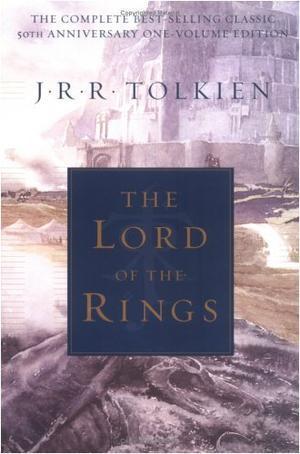
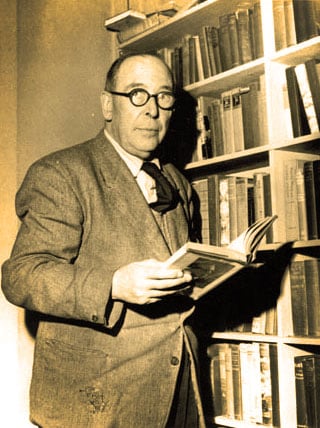
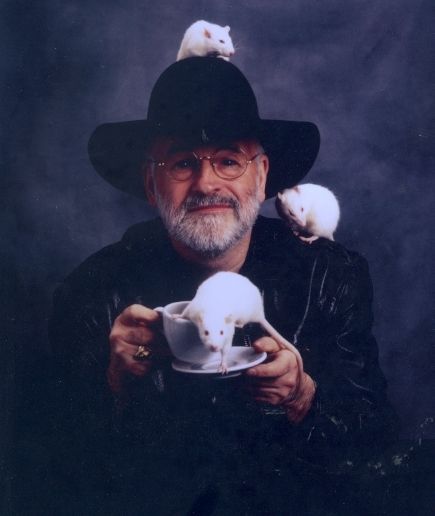
C.S. Lewis once remarked that, “You can’t get a cup of tea large enough or a book long enough to suit me.” (from a transcript of a lecture given by Lewis’ sometime editor and biographer, Walter Hooper—here’s the whole piece: https://www.historyspage.com/post/cs-lewis-inklings-memories-walter-hooper )
Considering my affection, not only for
but
and such works as these,
as well as a life-long love of
(but such a small cup!),
it’s clear that I’m in whole-hearted agreement with “Jack”, as his brother, “Warnie”, had named him in childhood.
In this spirit, during the early fall, I embarked upon a project I’ve long told myself I would do: read the whole of The Thousand Nights and One Night—in translation, unfortunately.
I began with this introduction—
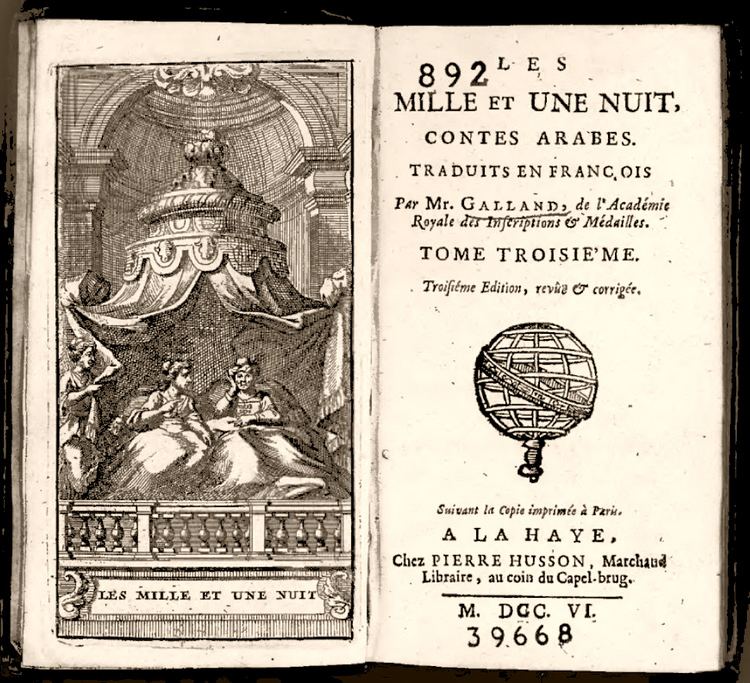
From earlier work (and postings) on the origins of “contes des fees”, as early French authors—the creators of our literary stories, like “La Belle et La Bete”, originally written by Gabrielle-Suzanne Barbot de Villeneuve in 1740, but better known by the revised 1756 version of Jeanne-Marie Leprince de Beaumont–called them—I knew something of the story of how English-speakers first encountered The Arabian Nights in the so-called “Grub Street” edition of 1706, itself an anonymous translation of Antoine Galland’s (1646-1715)
Les Mille et Une Nuits of 1704-1717.
I soon discovered, however, just how much more there was to know. In chapters with intriguing titles like “Beautiful Infidels” and “Oceans of Story”, the author, Robert Irwin, laid out the complex history of this vast collection, which most of us know from tales which aren’t even in the main collection, “orphan stories” like “Aladdin”
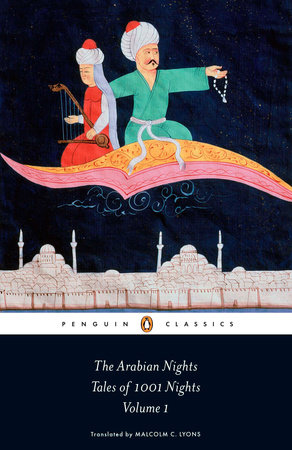
Armed with the knowledge Irwin provided, it was time to begin reading. I chose what seemed the best translation in English, by Malcolm C. Lyons, in a set of four Penguin volumes and launched into the first.
I imagine that you know the general frame: King Shahryar learns that his wife is unfaithful. To keep himself from being cuckolded again, he marries a new bride every night and has her beheaded the next morning. His Vizier’s daughter Shahrazad, decides to stop this by marrying the Sultan but then, telling one story after another, to keep him so interested night after night by stopping a story at the night’s end without finishing, to force him to suspend his murderous habit to find out what happened next.
Finally, after 1001 stories (or perhaps a few more), he decides not to continue murdering brides, Shahrazad is saved, and, presumably, lives happily ever after (really? Could you ever trust this man not to change his mind?).
I’ve just finished Volume 1 and set off into Volume 2
and it’s been an extremely interesting experience. Unlike a long novel, like War and Peace, where we follow the adventures of a few main characters—Natasha, Pierre, and Andrei—even when surrounded by a host of other characters (and Tolstoy’s book has a flood of them), in The Arabian Nights, except for the shell characters—the king, the story-teller, and the story-teller’s sister, who can act as a prompter–the main characters can change often, sometimes making it difficult to remember who is doing what with or to whom. More than once, I had to turn back a page, scan paragraphs, asking myself, “Who is Ali ibn Ishaq again?” or “Is this the brother—or is it brother-in-law? And is this the same slave who…?” As well, this unexpurgated text is filled with poetry, some of which is reflective of something going on in the story, some—maybe more than some—is simply poetry which has been inserted into the text. Because it might be part of the story, I continued to read it, but often it was just what it appeared to be: poetry inserted for some reason I didn’t understand into the text.
At the same time, as story spawned story, stories were interwoven, stories linked themselves here and there into complex narratives, there was a certain hypnotic quality to it which kept me reading, not so much because the characters had looped me in as that the method of telling itself had. I might not care about why X was beheaded, but I was certainly interested to understand how the story had turned in that direction and he was. In other words, just as Shahrazad had seduced the king with her telling into wanting more and more, so she had seduced me into reading on, always wondering, “Where is this going and how will it end?” And—just as interesting—“How will we move to the next story?”
At over 950 pages on average for each of 4 volumes, each of these would surely have (at least temporarily) satisfied C.S. Lewis—but where would we ever find a tea cup large enough to keep him—and me—going?
Thanks, as ever, for reading.
Stay well,
Uncork no bottle unless you’ve already planned how to deal with the djinn inside,
“In another moment down went Alice after it, never once considering how in the world she was to get out again.
The rabbit-hole went straight on like a tunnel for some way, and then dipped suddenly down, so suddenly that Alice had not a moment to think about stopping herself before she found herself falling down what seemed to be a very deep well.” (Alice’s Adventures in Wonderland, Chapter One, “Down the Rabbit-hole” and you can have your own copy of the second version of the first—1865-66 edition here: https://ia600505.us.archive.org/27/items/alicesadventur00carr/alicesadventur00carr.pdf and read about why I wrote “1865-66 edition” and much more here: https://en.wikipedia.org/wiki/Alice%27s_Adventures_in_Wonderland )
(I discovered this image on two different pinterest sites, one in Korean, the other under the name “Ree Smith”, but with no artist identified, alas. I love all puppets and shadow puppets in particular and this so reminded me of the work of Lotte Reiniger (1899-1981) and her “Adventures of Prince Achmed”, 1926,
As you can see from where I’ve just gone, English has adopted “down the rabbit hole” to mean “digressive”, which, in turn, comes from the Latin verb, digredior, “to go away from”, (literally, “to walk away from”, being a combination of dis, “apart/away from” plus gradus, “a step”)—and look, have I just begun to do a mini-rabbit hole again?
I, myself, in writing nearly 500 postings, have happily fallen down almost innumerable such holes, and this posting began with a tumble down another.
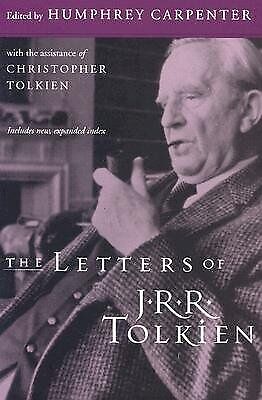
I was delighted to learn, last autumn, that there was to be a new edition of Carpenter/Tolkien’s 1981 The Letters of J.R.R. Tolkien, a mainstay for anyone with a strong interest, not only in Tolkien and his work, but in the writing of fantasy in general.
Humphrey Carpenter (1946-2005), with the aid of Christopher Tolkien, had done—as in his biography of Tolkien, 1977—an amazing job of collecting the materials (for a brief, affectionate obituary of Carpenter, see: https://www.theguardian.com/news/2005/jan/05/guardianobituaries.booksobituaries ), but as we learn, he had done almost too good a job and the publisher was forced to have rather significant cuts made. This new edition includes both material cut from letters and a series of letters cut from that original addition, as well.
Needless to say, it arrived and I was paging through it when I came across this rather mystifying reference in a letter to Christopher from 29 November, 1944:
“Very trying having your chief audience Ten Thousand Miles away, on or off The Walloping Window-blind.” (to Christopher Tolkien, 29 November, 1944, Letters, 147)
Unusually for Carpenter, there was no endnote as to what this was a reference, so—oh yes, yet again, a rabbit hole plunge, which revealed this:
“A capital ship for an ocean trip
Was “The Walloping Window-blind;”
No gale that blew dismayed her crew
Or troubled the captain’s mind.
The man at the wheel was taught to feel
Contempt for the wildest blow,
And it often appeared, when the weather had cleared,
That he’d been in his bunk below.
The boatswain’s mate was very sedate,
Yet fond of amusement, too;
And he played hop-scotch with the starboard watch
While the captain tickled the crew.
And the gunner we had was apparently mad,
For he sat on the after-rail,
And fired salutes with the captain’s boots,
In the teeth of the booming gale.
The captain sat in a commodore’s hat,
And dined, in a royal way,
On toasted pigs and pickles and Jigs
And gummery bread, each day.
But the cook was Dutch, and behaved as such;
For the food .that he gave the crew
Was a number of tons of hot-cross buns,
Chopped up with sugar and glue.
And we all felt ill as mariners will,
On a diet that’s cheap and rude;
And we shivered and shook as we dipped the cook
In a tub of his gluesome food.
Then nautical pride we laid aside,
And we cast the vessel ashore
On the Gulliby Isles, where the Poohpooh smiles,
And the Anagazanders roar.
Composed of sand was that favored land,
And trimmed with cinnamon straws;
And pink and blue was the pleasing hue
Of the Tickletoeteaser’s claws.
And we sat on the edge of a sandy ledge
And shot at the whistling bee;
And the Binnacle-bats wore water-proof hats
As they danced in the sounding sea.
On rubagub bark, from dawn to dark,
We fed, till we all had grown
Uncommonly shrunk, when a Chinese junk
Came by from the torriby zone.
She was stubby and square, but we didn’t much care,
And we cheerily put to sea;
And we left the crew of the junk to chew
The bark of the rubagub tree.”
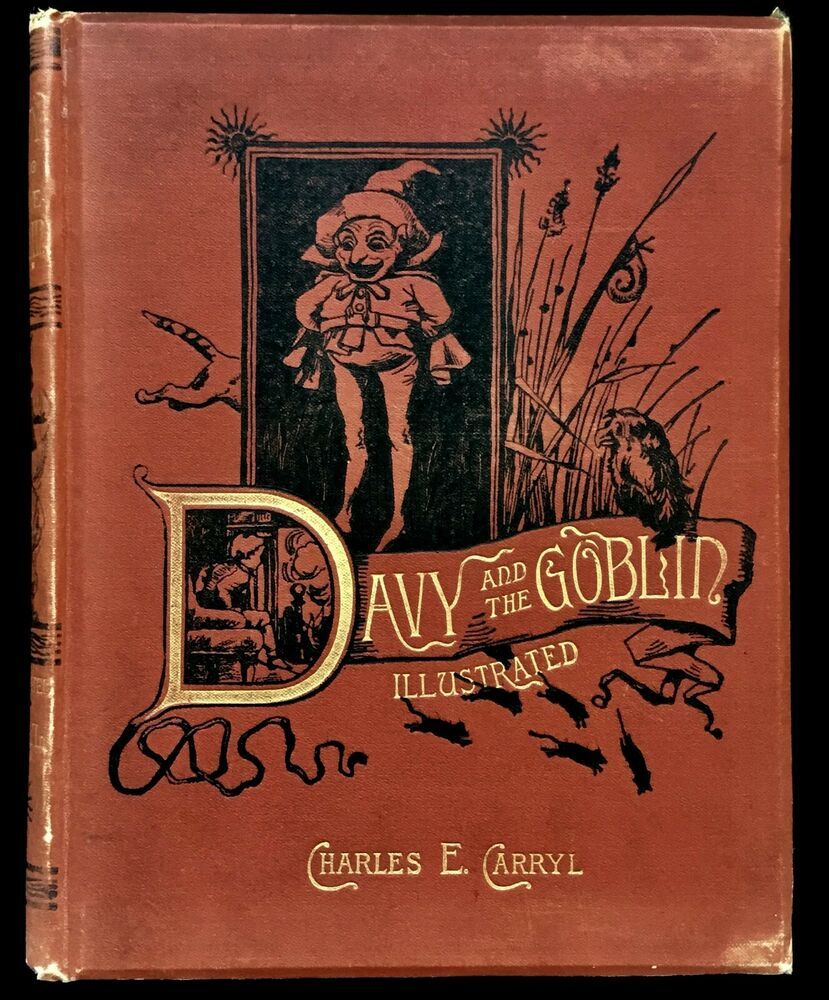
This is quoted from Davy and the Goblin, 1884-5,
by Charles E. Carryl (1841-1920), a later-Victorian/Edwardian American children’s author.
(You can read your own copy here: https://archive.org/details/davythegoblinorw00carriala , finding the poem on pages 89-90. There are free-floating copies of this poem at various sites, but often oddly adulterated, so, if you wish to read what Carryl wrote, here it is.)
Carryl subtitled this, “or, What Followed Reading ‘Alice’s Adventures in Wonderland’ “ and the text consists of the Goblin of the title leading the Davy of the title on a “Believing Voyage”. This is stocked with a series of characters, some from children’s literature like Sinbad and Robinson Crusoe, some fantastical creatures, including a Whale in a Waistcoat and talking waves, and the perhaps inevitable fairies, although their queen is rather more like the Queen of Hearts in Alice than something dreamlike.
The Goblin’s goal is to persuade Davy, who has apparently maintained that he “doesn’t believe in fairies, nor in giants, nor in goblins, nor in anything the story-books tell you.” to change his mind on the subject. Perhaps I’m an inattentive reader, but I’m not sure that, when Davy awakes at the end of Chapter XIV (another inevitability, at least given Alice as an influence), he’s any more a believer than he was in Chapter I, but the whimsy involved has a certain charm and Carryl can get a catchy prosodic pattern going, as in “The Walloping Window-blind”. Although that subtitle suggests not only Carroll’s episodic—perhaps even picaresque—narrative and certainly there’s something Carrollish about the poems scattered throughout, I would suggest two other influences upon the verses: Edward Lear (1812-1888) and W.S. Gilbert (1836-1911), in such items as Gilbert’s “The Yarn of the Nancy Bell” (see: https://allpoetry.com/The-Yarn-of-the-Nancy-Bell )–but I sense another rabbit hole dead ahead!
It was that sad moment: I’d come to the last page of an enjoyable book: Terry Pratchett’s Feet of Clay, 1996.
But there was a sadder moment: I’d finally read the entire “Disc World” series, all 41 novels.
I came late to the work of (Sir) Terry Pratchett (1948-2015)
and Disc World, which he came clearly on time to, in 1983, with the first in the long series, The Colour of Magic.
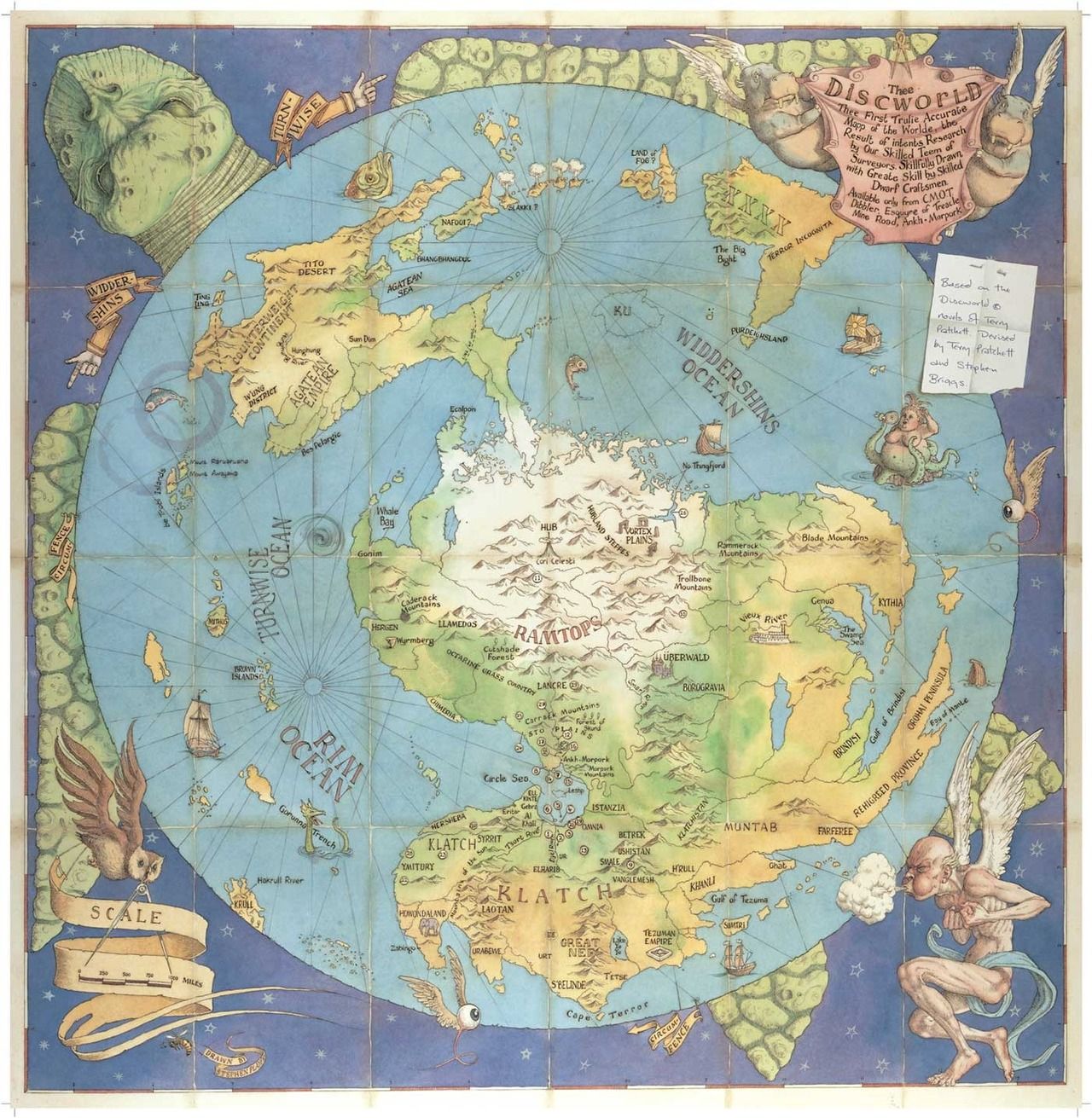
It has been through numerous reprintings since, with all sorts of covers, but this is the first edition and the cover is significant, being a depiction of just what Disc World looks like:
1. at base, a monstrous turtle, Great A’Tuin, who is swimming through space
2. mounted on Great A’Tuin are four elephants—Berilia, Tubul, Great T’Phon, and Jerakeen
3. and, placed atop the pachyderms is Disc World itself, which is a couple of continents, a scattering of islands, and seas, always with the danger of being swept off at the edge
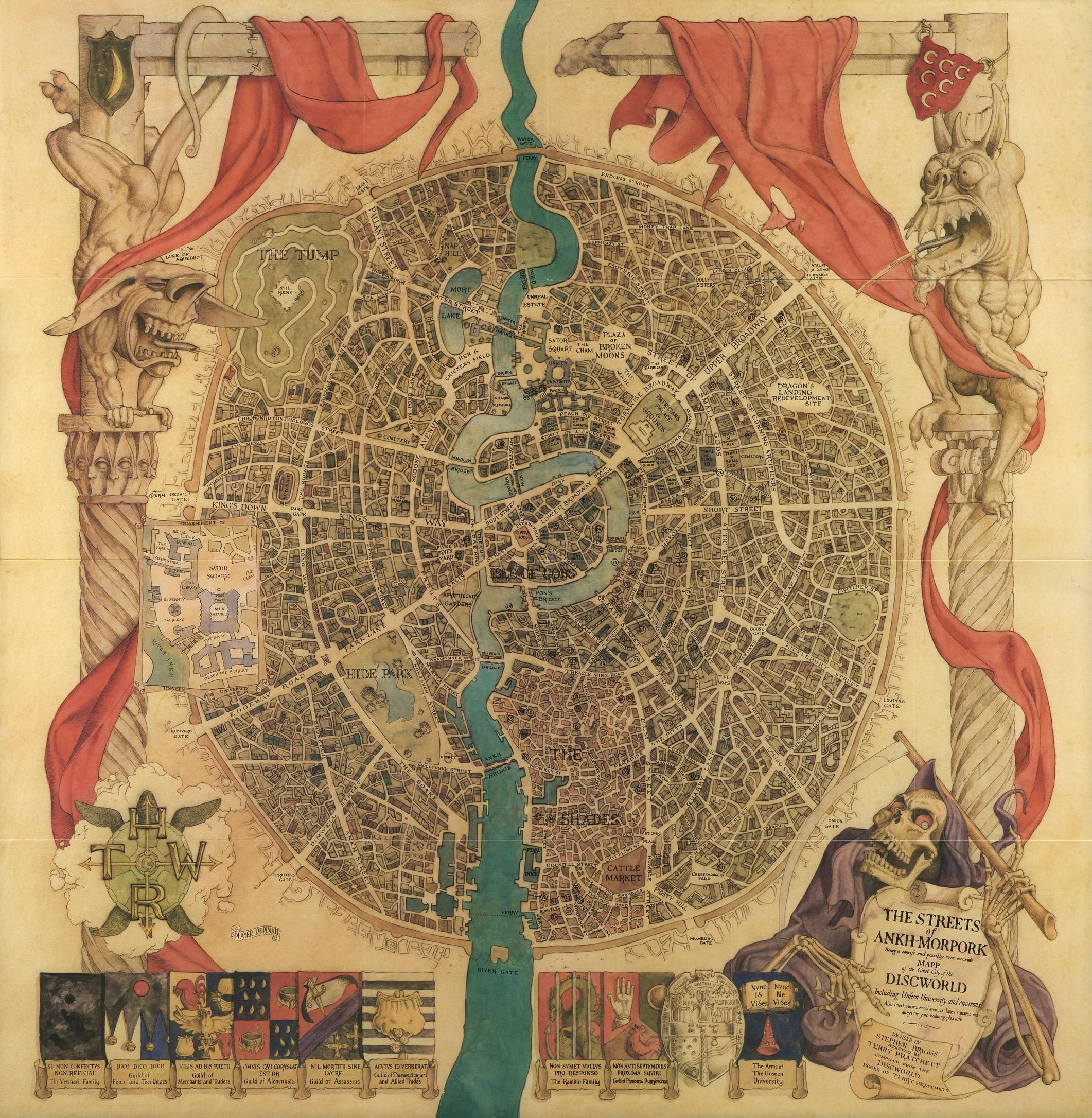
And on the surface lie the towns and cities, a major one being Ankh-Morpork, the scene of numerous volumes in the series,
an ancient conurbation dissected by a river, the Ankh, which is, at best, mostly slow-flowing sludge. On one bank lie the affluent, on the other, the effluent, as Pratchett might say, all under the direction of the Patrician, an unelected replacement for a line of increasingly difficult kings and his modest force of peace-keepers, the Watch, directed, in time, by Samuel Vimes, who not only becomes Sir in the course of the books, but is also discovered to be directly descended from the reason Ankh-Morpork no longer suffers under difficult kings—oh, and he marries a duchess, who, among other things, is involved in a dragon-adoption charity.
(Which painting bears a faint resemblance to a certain lesser-known work by the obscure Dutch painter, Rembrandt)
As you can see from the chart above, there is a certain method in what could easily appear to be madness: a series of series-within-series, based upon sets of characters: wizards, witches, Tiffany Aching (and her sometime-allies the Nac Mac Feegle), Death, the City Watch, and Moist von Lipwig. Wizards, the City Watch, and Moist Von Lipwig are all associated (sometimes rather loosely) with Ankh-Morpork. Witches andTiffany are more or less country people and Death (who ALWAYS SPEAKS IN CAPITAL LETTERS) is, as in real life, alas, everywhere.
As you can tell, Pratchett is given to rather bizarre names, and it was with one of these, Moist Von Lipwig, that I began my Pratchettry in the first novel in which he appears, Going Postal, 2004.
You can also see that book titles can vary from the mystical I Shall Wear Midnight to suggestive plays on words, like Equal Rites and the present Going Postal, which, although it doesn’t include homicidal mail workers, does have to do with Ankh-Morpork’s postal system and how the ingenious conman, Moist Von Lipwig, saves it with the help of everyone from another charity worker (and chain-smoker) Adora Belle to a Golem, Mr. Pump.
(Footnote on “golem”: if you’re not acquainted with this term, it comes from Jewish religious and folklore: a creature made, commonly, from earth (clay, mud) and given animation, if not life, often for a specific task. For more—lots more—see: https://en.wikipedia.org/wiki/Golem . I first met a golem in a still from the 1915 horror film, Der Golem, which, unfortunately, doesn’t survive complete.
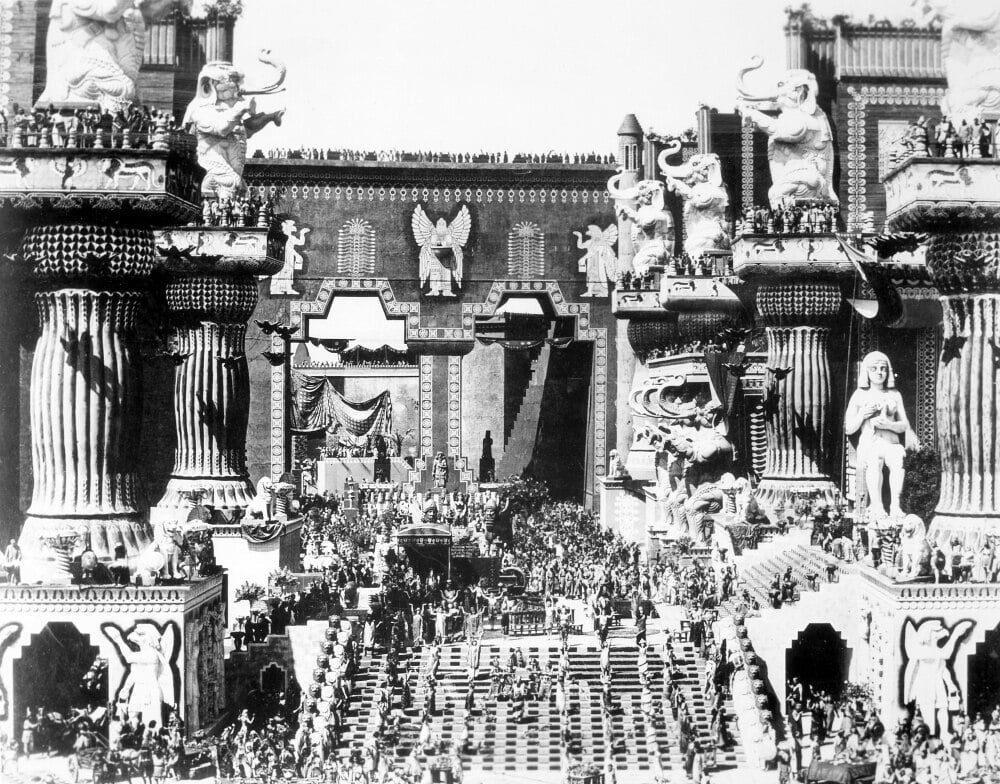
You can see a fragment here: https://archive.org/details/silent-der-golem-aka-the-golem This was actually eventually a trilogy, along with The Golem and the Dancing Girl, 1917, which is lost, and the 1920 The Golem and How He Came Into the World which you can see complete here: https://www.youtube.com/watch?v=vmSoAq80HcM If you’re not familiar with silent film, dialogue is conveyed by printed cards and by (for us) rather exaggerated acting, and there was music commonly played—just like a modern soundtrack—during the film. This music was live, from an improviser at piano or organ to, in the case of rather grand films, a score especially written for the film and played by an orchestra, like that for D.W. Griffith’s 1916 Intolerance.
And you can see Griffith’s film here: https://www.youtube.com/watch?v=lv6u3d99SKk Again, if you’re not used to silent film, it might take a while to get used to, often being sentimental to the point of being soppy, by our standards, but it’s a wonderful art form, coming directly from the late Victorian stage, and certainly worth your time. )
Golems are only one form of supernatural to appear regularly in Pratchett’s work. There are also vampires (many who have taken “the pledge” and no longer drink human blood) and werewolves and entire complex communities of dwarves, as well.
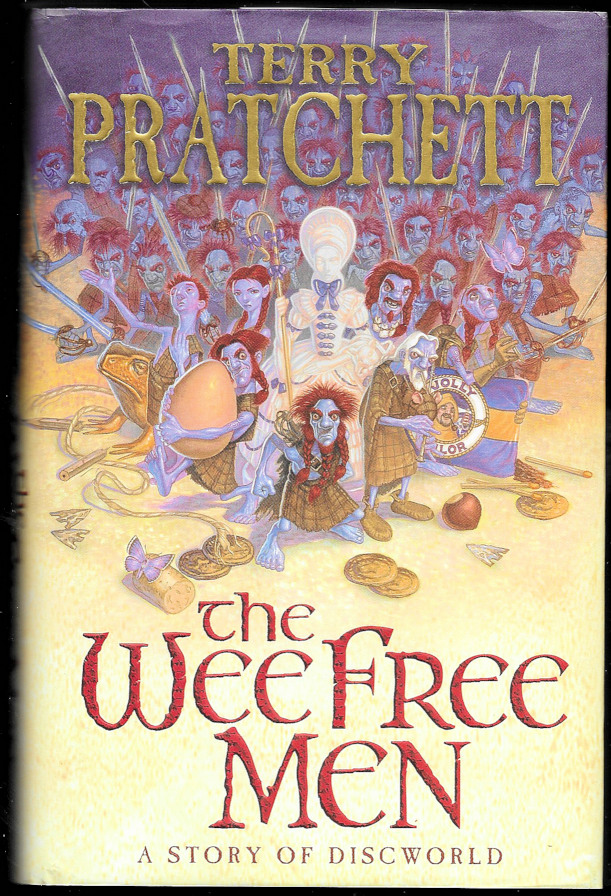
What I especially have enjoyed in these novels, besides the very thoughtful way in which Pratchett constructs characters—often people—even vampires—with worries and doubts, is the humor—much of it appearing in footnotes—and the occasional philosophic moments. Tiffany Aching’s Nac Mac Feegle—first seen in The Wee Free Men, 2003, for example,
tiny, feisty creatures who speak a kind of Lallans—that is, Scots English—and are fantastically brave, primarily because they have made the decision to believe, unlike people in this world in general, that, rather than being alive and fearing death, they are already dead and that, consequently, anything goes (and usually does).
Summarizing a Pratchett novel is possible—see, for example: https://en.wikipedia.org/wiki/Going_Postal –but, to me, this seems like the sort of thing he would mock—probably in a footnote, and it’s better to try one out for yourself. I have a number of favorites I would recommend, starting with Going Postal, to which I would add Interesting Times, The Wee Free Men, and Small Gods. There is a very good film adaptation of Going Postal, which I would also recommend.
But—in very much a Pratchetty situation—I’ve just looked back at that chart and realized that—I’ve somehow miscounted. Where did The Amazing Maurice and His Educated Rodents, 2001, come from?
Somehow, I’ve managed to miss this and so have only read 40 of 41 novels. I suppose that this is what Tolkien calls a “eucatastrophe”—that is, a situation in which things look glum, but then suddenly turn out for the best, something which I think Pratchett would approve of (with an ironic footnote, however).
Thanks, as ever, for reading,
Stay well,
Consider adopting the philosophic position of the Nac Mac Feegle,
Looking back on nearly 500 postings, I see that names have popped up as a subject more than once. As far back as 26 August, 2015, there was “What’s In a Name?”, a title which turned up again on 27 July, 2016. Then there was “In a Name”, 2 March, 2022, and “Name of the Game, Game of the Name”, 10 May 2023.
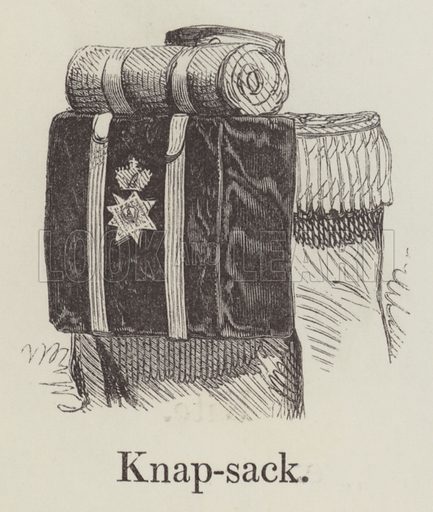
And here is that theme again, the title coming from an old British Army expression, “No Names No Pack Drill”. A pack drill was a fairly mild form of punishment, in which the offender was assigned a certain number of hours of sentry-go while wearing a pack which had been especially heavily-weighted (bricks being one possibility).
(Imagine wearing this, loaded with bricks, and marching back and forth with it on your back for hours)
Thus, if the sergeant in charge of discipline had no name reported to him, the offender escaped.
It’s clear, however, that I can’t escape names, something which I find students struggling with when we read the Odyssey and suddenly they’re confronted with Agamemnon
(about to become “the late Agamemnon”, murdered by his wife and her BF)
and the suitors of Penelope, with names like Antinoos (an-TI-noe-os) and Eurymachos (eh-oo-RUH-mahk-os—that is, an-TIH-noe-os and eu-RIH-makh-os, in English),
(and more mayhem—about to become “former suitors” thanks to Odysseus and his son, Telemachos—teh-LEH-makh-os)
or Beowulf, with names which look quite unpronounceable, like that of Beowulf’s father, Ecgtheow (EDGE-theh-oh).
(Not Ecgtheow, but Beowulf himself, when he first encounters a Danish coast guard—this is from the era of illustration when anyone vaguely Norse was required to wear a helmet decorated with wings or horns)
Tolkien had become accustomed to those Greek names when still a school boy, writing to Robert Murray, SJ, in a letter of 2 December, 1953: “I was brought up in the Classics, and first discovered the sensation of literary pleasure in Homer.” (Letters, 258)
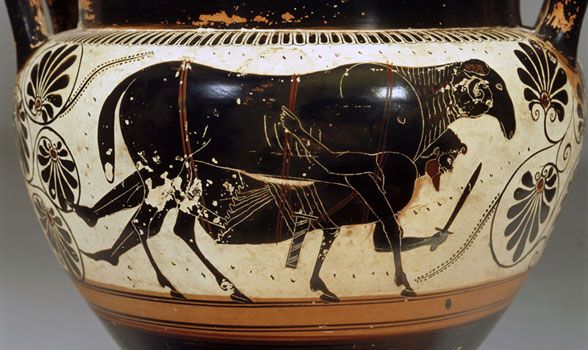
Names in Homer can sometimes seem very appropriate—Antinoos, one of the leaders of Penelope’s suitors and a definite villain, has one that can mean “he who sets his mind in opposition” and the ocean-going magical people who finally send Odysseus back home, the Phaiakians, often have names like Pontonoos, “he whose mind is on the sea” or Nausithoos, “Swift-ship”. Sometimes they seem puzzling: why is the other leader of the suitors called Eurymachos, “he who fights broadly/widely” when he has, as far as we know, never done any fighting at all? And why is that Cyclops called Polyphemos, “the very-well known”? If he were, why would Odysseus have visited him, lost six of his crew to the Cyclops’ voracious appetite, and barely escaped by hiding under a sheep?
Although Tolkien, as an undergraduate at Oxford, was seduced away from Classics, as he tells us in a letter to W.H. Auden of 7 June, 1955 (see Letters, 312-313) by other languages (Welsh, Finnish), a process begun even earlier with Anglo-Saxon and Gothic, I would suggest that his early association with Homer and the possibilities which names might present, both as to character and to language, endured. As he says in the same letter:
“All this only as background to the stories, though languages and names are for me inextricable from the stories. They are and were so to speak an attempt to give a background or a world in which my expressions of linguistic taste could have a function. The stories were comparatively late in coming.”
(This interest in naming could also lead him to be critical of another fantasy writer, E.R. Eddison, 1882-1945,
of whom he wrote “I read his works with great enjoyment for their sheer literary merit…Incidentally, I though his nomenclature slipshod and often inept.” From a letter to Caroline Everett, 24 June, 1957, Letters, 372. You can see what you think about Eddison’s way with names by reading The Worm Ouroboros, 1922, here: https://ia801304.us.archive.org/10/items/1924EddisonTheWormOuroborus/1924__eddison___the_worm_ouroborus.pdf )
For JRRT, then, names were as crucial to the text as the plot and, as a long-time reader of his work and as someone who has spent an equally long time studying and teaching languages, I find that my admiration for his care and patience in developing them has grown with my reading. It’s no wonder, for example, that he is so up in arms at the Dutch translator of The Lord of the Rings, who thought not only to translate the text, but the toponyms (place names) as well:
“In principal I object as strongly as is possible to the ‘translation’ of the nomenclature at all (even by a competent person). I wonder why a translator should think himself called on or entitled to do any such thing. That this is an ‘imaginary’ world does not give him any right to remodel it according to his fancy, even if he could in a few months create a new coherent structure which it took me years to work out.” (letter to Rayner Unwin, 3 July, 1956, Letters, 359)
And there, in that phrase, “coherent structure”, you see what Tolkien was always aiming for: his names, both of places and people, had to be consistent not only with the language they spoke, but also with the culture in which they lived—horse people like the Rohirrim can have names like Eowyn, perhaps ”delight in horses” and Eomer, “famous for horses”—and the history in which they lived. (And, as JRRT pretended that his Middle-earth work was translated, he then had the added fun of turning original names he had invented, like those of Banazir and Ranugad, into what he said were their English equivalents, “Samwise” and “Hamfast”—Sam and the Gaffer. See “Banazir and Ranugad”, 11 November, 2020 for more.)
If you’re a regular reader of this blog, you probably will remember that, some time last spring, I decided that my knowledge of the history of science fiction was not what I would like it to be, and so I began a long-term project of going at least back to Jules Verne (1828-1905)
and reading—or rereading—as widely as I could, including translations from other languages, to give myself as wide an experience as I could. So far, I’ve added about three dozen books and a number of short stories to my ongoing bibliography with an uncounted number to go, but I admit that I’m not systematically chronological and recently, I decided to reread Frank Herbert’s (1920-1986)
original Dune trilogy (1965-1976).
I’ve only begun, and I’m finding it as complex and interesting as I remembered it, but, trained by JRRT, I was struck by what seemed like a very odd soup of names—Bene Gesserit, Muad’Dib, Shaddam IV, Atreides, Paul, Duke Leto, Jessica, Mother Gaius Helen, Thufir Hawat, and, strangest-sounding to me of all, Duncan Idaho—all within the first 30 or so pages. Some of the names were very familiar—Atreides is “the family of Atreus”, which includes the ill-fated Agamemnon and his less-than-distinguished younger brother, Menelaus. Leto, to me, isn’t a duke, but the mother of Apollo and his twin sister, Artemis. Gaius (also spelled Caius) is a common male Roman praenomen, that is, first name, as in Caius Iulius Caesar, or the emperor we commonly call by his childhood nickname, Caligula, who was another C/Gaius. Muad’Dib, with its glottal stop marker, suggests Arabic and Shaddam makes me think Persian (especially as he’s called Padishah, Persian “master king” so “king of kings”). Duncan Idaho? Duncan is an Anglicized version of Irish/Gaelic Donnchadh, about which there is scholarly disagreement (see: https://en.wikipedia.org/wiki/Duncan_(given_name) ) Idaho—well, see this: https://en.wikipedia.org/wiki/Idaho And then there’s Bene Gesserit. Bene is a Latin adverb, “well”. Gesserit is either the 3rd person singular, future perfect active indicative, or third person singular, perfect active subjunctive of the verb gero, with a variety of meanings around the idea of managing something, as in the standard phrase bellum gerere, “to wage war”. Thus, as a phrase, it should mean either “he/she/it will have managed well” or “she/he/it would have managed well”.
Tolkien was a science fiction reader himself (see Letters, 530 and “Sci-Fi”, 22 September, 2021), so I wonder, knowing how he felt about a certain creative lack in Eddison, what he would have said about this soup?
As much as Tolkien, with justification, I think, denied external, historical influences on his work (and especially so, when, for example, it was suggested to him that the Ring was a stand-in for the atomic bomb—although he makes a grim reference to that possibility in a letter of 24 October, 1952, to Rayner Unwin—see Letters, 239), still, he was a highly intelligent, thoughtful, and sensitive man in a very complex era, one haunted, in part, by the disaster of 1914-1918, with its approximate 30,000,000 casualties,
(Tyne Cot Cemetery in southern Belgium, a heart-breaking place with 11,965 graves, of which 8,369 are of soldiers never identified)
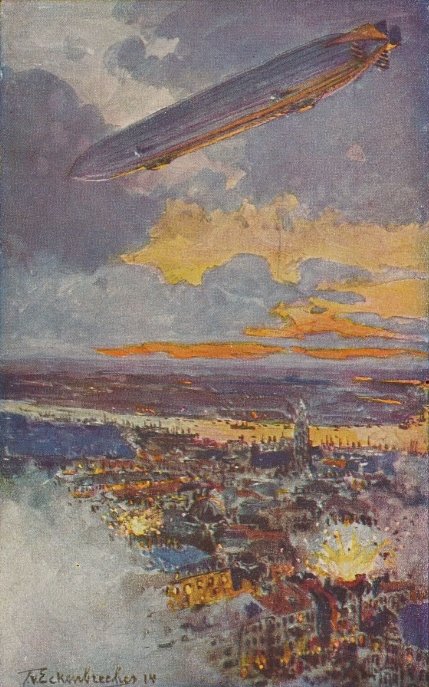
and the understandable fear of another such which would bring as much, if not more, ruin, as that war had brought about even more destructive weapons than the later-19th-century machine gun—war in the air, including the first hint of terror bombing
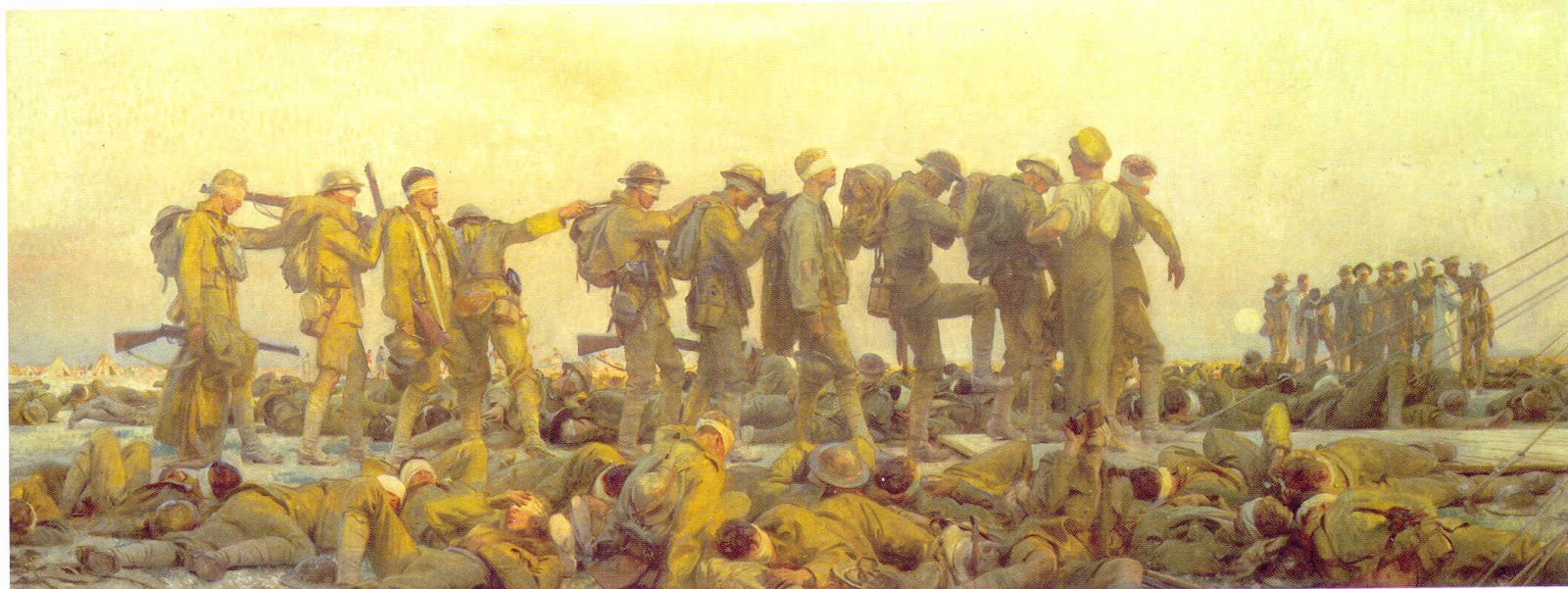
(The brilliant society and landscape painter, John Singer Sargent’s“Gassed”, 1919)
Thus, when I recently re-read this passage, it set me to thinking:
“The Rabble of Gondor and its deluded allies shall withdraw at once beyond the Anduin, first taking oaths never again to assail Sauron the Great in arms, open or secret. All lands east of the Anduin shall be Sauron’s for ever, solely. West of the Anduin as far as the Misty Mountains and the Gap of Rohan shall be tributary to Mordor, and men there shall bear no weapons, but shall have leave to govern their own affairs. But they shall help to rebuild Isengard which they have wantonly destroyed, and that shall be Sauron’s, and there his lieutenant shall dwell: not Saruman, but one more worthy of trust.” (The Return of the King, Book Five, Chapter 10, “The Black Gate Opens”)
The seemingly-doomed expedition to confront Sauron has marched out of the ruined Minas Tirith
and north, to the Morannon, the Black Gate,
(the Hildebrandts)
where it meets an emissary, the Mouth of Sauron.
(by Douglas Beekman. This scene is badly mismanaged in the Jackson film, with the emissary being struck down, which is a gross violation of the chivalry which stated that such emissaries were protected by custom—of which the Mouth of Sauron, flinching, reminds Aragorn–and is far from what JRRT wrote.)
The Mouth of Sauron believes he has shaken Gandalf and his allies when he has presented them with what appears to be Frodo’s “Dwarf-coat, elf-cloak, blade of the downfallen West” and he suggests that the owner will be in torment for years unless they yield to Sauron’s terms—which Gandalf, after seeming to waver, then rejects, saying to Sauron’s emissary, “Get you gone, for your embassy is over and death is near to you.”
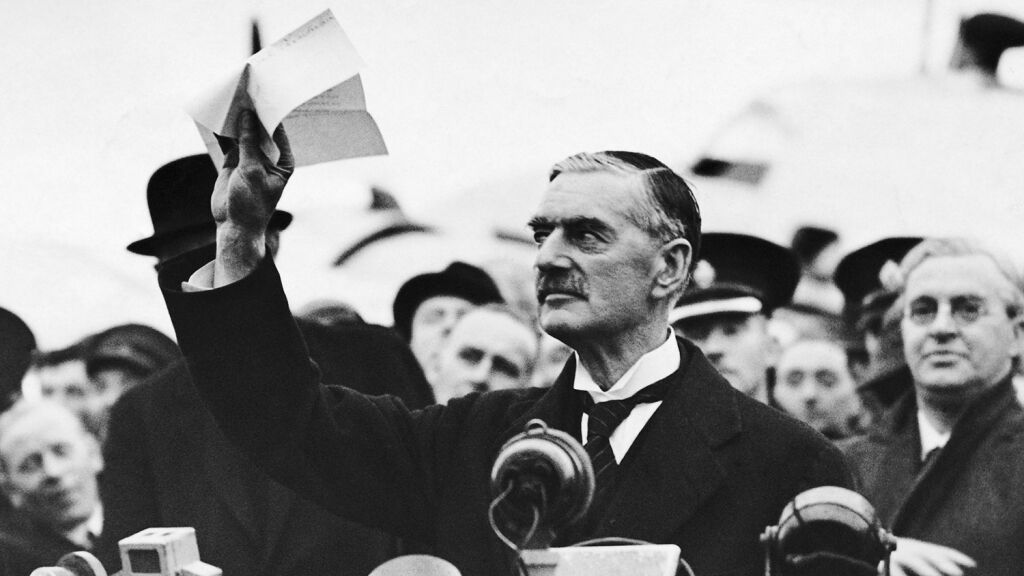
In the course of their brief dialogue, however, Gandalf has raised a point which made me think of an historical bargaining session, something Tolkien would have read about in the newspapers and seen in newsreels in the cinema, a meeting in late September, 1938, in Munich, Germany, among Adolf Hitler, Benito Mussolini, Edouard Daladier, and Neville Chamberlain.
Hitler had already assimilated Austria in March, 1938, during the event called the Anschluss (AHN-shluss, literally, in German, a “connection”)
and was now aiming to do the same to the young state of Czechoslovakia. That lurking fear of another war was behind the West’s scramble to do something to stop a new conflict brought about that meeting, as well as the so-called “Munich Agreement”, then signed by the four representatives, which, basically, handed Hitler much of Czechoslovakia, while signaling that the Western allies weren’t willing to fight to keep him from grabbing the rest.
And here we see a difference between Sauron and Hitler. When Gandalf says to the Mouth of Sauron:
“And if indeed we rated the prisoner so high, what surety have we that Sauron, the Base Master of Treachery, will keep his part?”
The reply is:
“Do not bandy words in your insolence with the Mouth of Sauron!…Surety you crave! Sauron gives none. If you sue for clemency you must first do his bidding. These are his terms. Take them or leave them.”
Hitler had said that he would be satisfied and even signed an agreement, separate from the Munich Agreement, with Chamberlain, the British Prime Minister, which included these words:
“” … We regard the agreement signed last night and the Anglo-German Naval Agreement as symbolic of the desire of our two peoples never to go to war with one another again”.
And Chamberlain took this back to London, waving it over his head at the airport in a famous gesture as he addressed a crowd.
The worth of Hitler’s words came quickly: in March, 1939, he invaded the remaining portion of Czechoslovakia.
In September, 1939, he invaded Poland and World War II, which the West had compromised itself to avoid, would begin.
Looking at the map of Middle-earth,
we can see that Sauron’s terms would have:
1. reduced Rohan and Gondor to puppet states, to be ruled over by Sauron’s viceroy
2. stripped them of all future power to resist whatever that viceroy (meaning Sauron, of course) would have demanded, for all that the terms said that they could rule themselves.
What happened in Munich in September, 1938, rather than stopping a coming war, simply told the one who would pursue that war that the West was willing to sacrifice a great deal—even another country—to keep the peace. Was Tolkien at least marginally influenced by all of this? And, in a terrible “What If?” can we imagine a West had Gandalf and his allies given in to Sauron’s terms? Would Sauron have been content?
Thanks, as ever, for reading.
Stay well,
Beware the promises of dictators,
And know that, as always, there’s
MTCIDC
O
PS
As this is the first posting of the new year, as gloomy as this is, I don’t want it to suggest an omen. I’ve written that John Singer Sargent was, along with being a society painter, a landscape painter, usually in water colors, so here’s one of my favorites as, I hope, a more cheerful theme for the year to come—“Palms”, 1917
In Narnia, when does The Lion, the Witch and the Wardrobe actually take place? In the outside, historical world of England, all we’re told is that the children who are the main characters, Peter, Edmond, Susan, and Lucy, are sent into the country “because of the air-raids”. (The Lion, the Witch and the Wardrobe, I, “Lucy Looks into a Wardrobe”), which could have been any time between September, 1940 and May, 1941. I would suggest that C.S. Lewis has quietly offered us an answer to my question– in the season we’re currently in.
At least two members of the Inklings, the informal Oxford literary group which met regularly at various places in town and the university in the 1930s and 1940s, mention Christmas in their fiction. One, Tolkien, following, perhaps, his later plan to keep overt religion out of his work, calls it “Yule” in The Hobbit, the other, C.S. Lewis, mentions it boldly and in a very interesting way which combines his Christianity with a very different set of beliefs, of which I’m sure he was aware, in The Lion, The Witch, and the Wardrobe (1950).
Narnia is ruled by Jadis, the White Witch (and remember that name—Jadis is French jadis, “formerly”)
(Pauline Baynes)
and, to keep it under her sway, it is (literally) frozen in time—and this is where that mention comes in, as Mister Tumnus, a faun,
(another Baynes)
explains to Lucy, who has accidentally strayed into Narnia:
“Why, it is she that has got all Narnia under her thumb. It’s she that makes it always winter. Always winter and never Christmas; think of that!” (The Lion, the Witch and the Wardrobe, II, “What Lucy Found There”)
As Jadis’ power wanes, with the resurrection of Aslan, the great lion,
(and a third Baynes)
this is embodied in two events:
1. the world begins to thaw
2. Father Christmas appears at last (and, significantly, brings tools for the fight against Jadis and her allies)
(and a final Baynes)
With Father Christmas appears Christmas and time, which has seemingly come to a halt, can begin to function again, as winter once more has its Christmas in its proper place, which would signal, along with the thaw, that the year was no longer blocked by Jadis.
For Christians, of course, the coming of Christmas means the coming of Jesus, when time begins all over again—hence the older “B.C/” (“Before Christ”) and “A.D.” (Anno Domini, “In the Year of the Master/Lord”) used in Western countries to mark the centuries of earthly existence—for much more on this see: https://en.wikipedia.org/wiki/Anno_Domini . For early Christians, then, Jesus’ birthday should happen at a moment which signals a major change in the year, just as the coming of Aslan means a major change both in the season and the governing of Narnia. The date ultimately selected by early Christians first appears in The Chronograph of 354, a collection of late-Roman calendar information. In Part 8, there is an extensive list of the original chief officers of the Roman state, the consuls (who were elected in pairs), by whose 1-year term in office Romans commonly dated events during the Republic. Here, under the consulship of “Caesar” and “Paulus” it reads:
Hoc cons. dominus Iesus Christus natus est VIII kal. Ian…
“At this time/date, [these being] the consuls, the lord Jesus Christ was born 8 days before the kalends of January…” (that is, 25 December—the consuls for that year—which would become 1AD—were Gaius Caesar, the Emperor Augustus’ grandson, 20BC-4AD, and Lucius Aemilius Paullus, before 29BC-14AD, married to the Emperor Augustus’ granddaughter, Julia—my translation)
In Part 6 of this same Chronograph, which is a general yearly calendar, we find, for the 25th of December, a day devoted to “Invicti”–“of the Unconquered”–and here may lie an explanation as to why this day in particular was chosen.
I’m writing this on the day of the Winter Solstice, which gives the title to this posting in a translation of an Old English term for this time of year, sunstede, linguistic cousin to the Latin term, solstitium, from sol, “sun” and the verb sisto, “come to a stand, make to stand”. Today is the shortest day of the year and perhaps, because night seems to stay forever and day seems so short, the name was originally based upon a lingering fear that the sun would freeze in place, having come to a permanent standstill.
(Traditional people around the world once imagined that something like that might have happened to the sun during solar eclipses and performed all sorts of rituals to make the sun continue to perform as it should. See: https://blogs.loc.gov/folklife/2017/08/solar-eclipse-awe-wonder-and-belief/ for an interesting article on folk beliefs and practices around eclipses.)
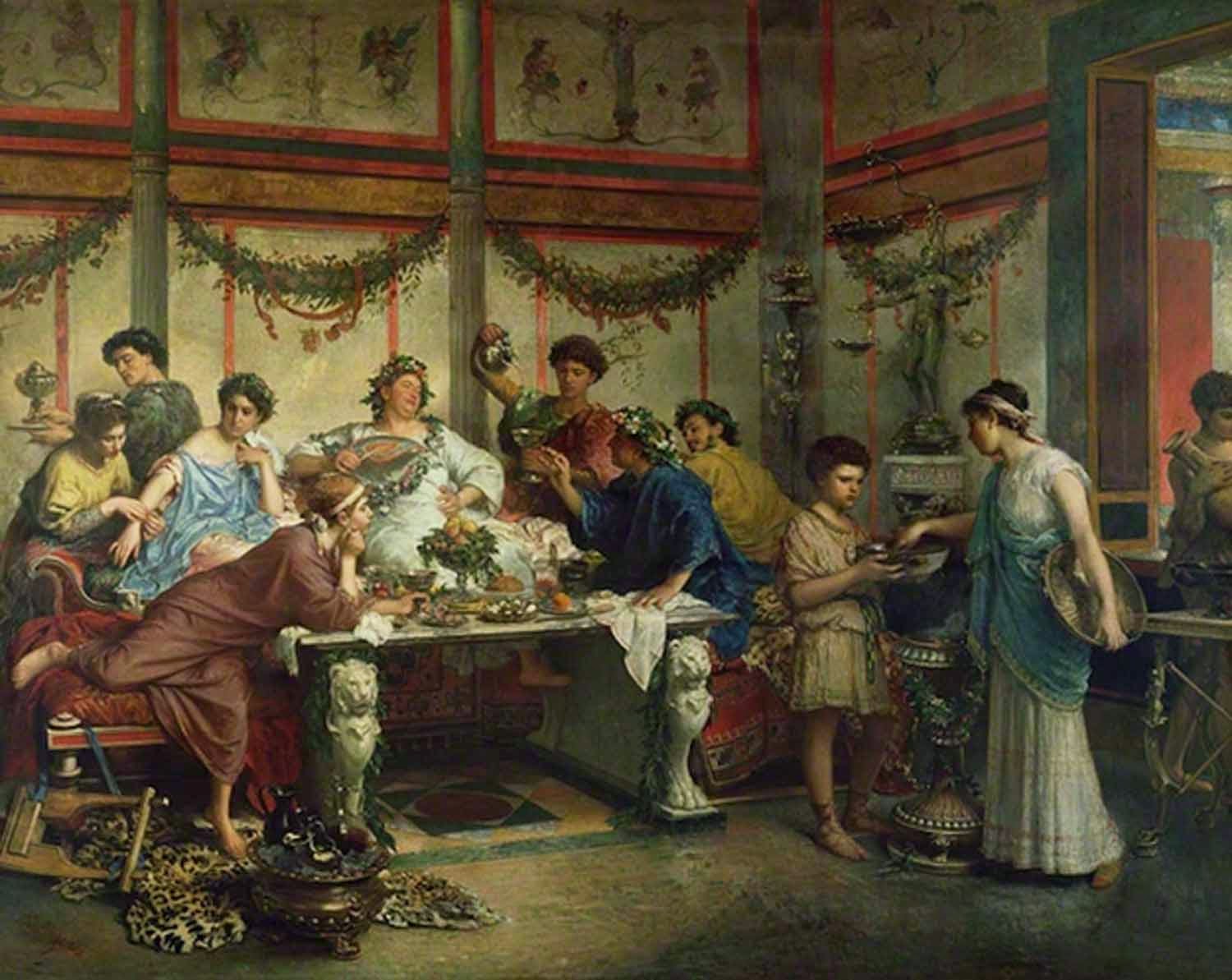
For the Romans, the Solstice appeared in the midst of a major holiday, the Saturnalia, celebrated from the 17th to the 23rd of December (although the number of days varied in different periods of the Roman empire),
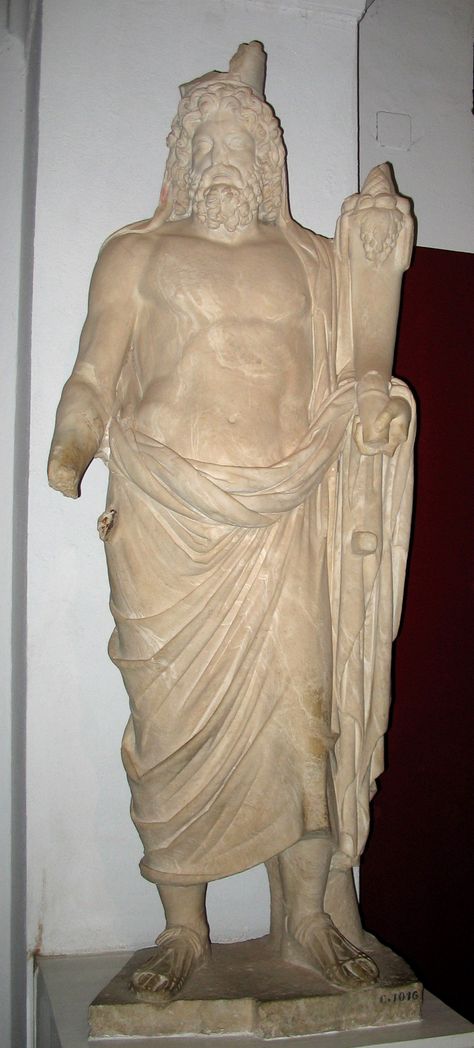
a festival in honor of the ancient god, Saturn.
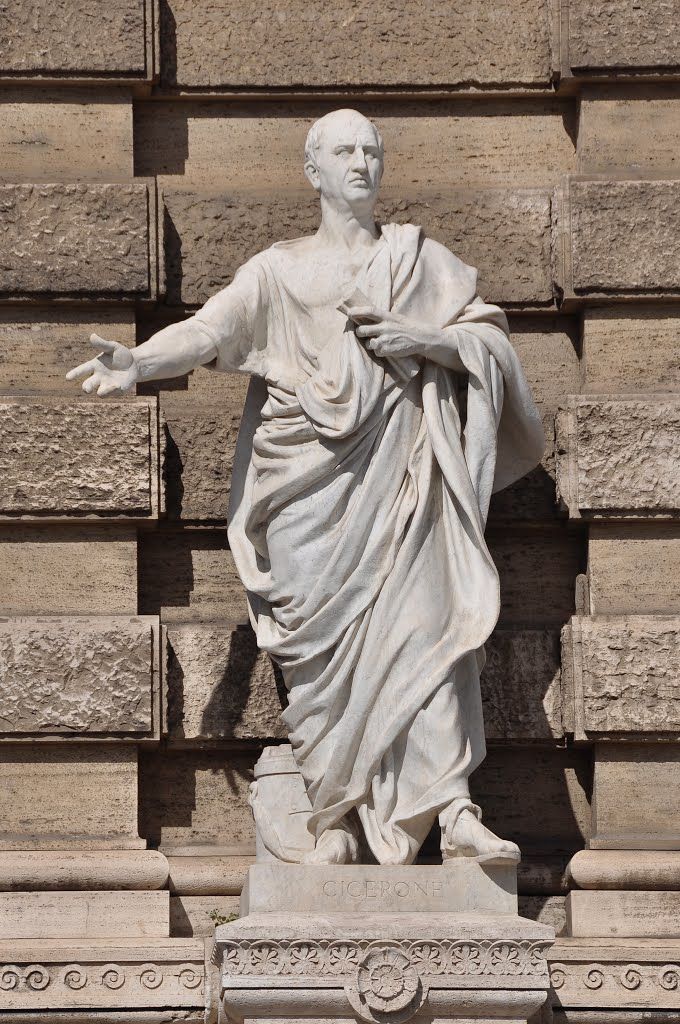
Because he was so ancient, the Romans had all sort of ideas about him and his history and even what his name was derived from. One definition comes from Cicero’s (106-43BC) De Natura Deorum, linking Saturn with the Latin word satis, meaning “enough”, implying that Saturn, being somehow the consumer of time, was its controller,and that seems to fit him and his holiday very nicely in with the Solstice:
Saturnum autem eum esse voluerunt qui cursum et conversionem spatiorum ac temporum contineret…
The Saturnalia, then, was a celebration of the shift from one season to another as the sun, rather than stopping, would continue to move towards spring.
In 274AD, the late Roman emperor, Aurelian (c.214-275AD),
attempted to refocus polytheistic Romans upon a single god, Sol Invictus, “the Unconquerable Sun”.
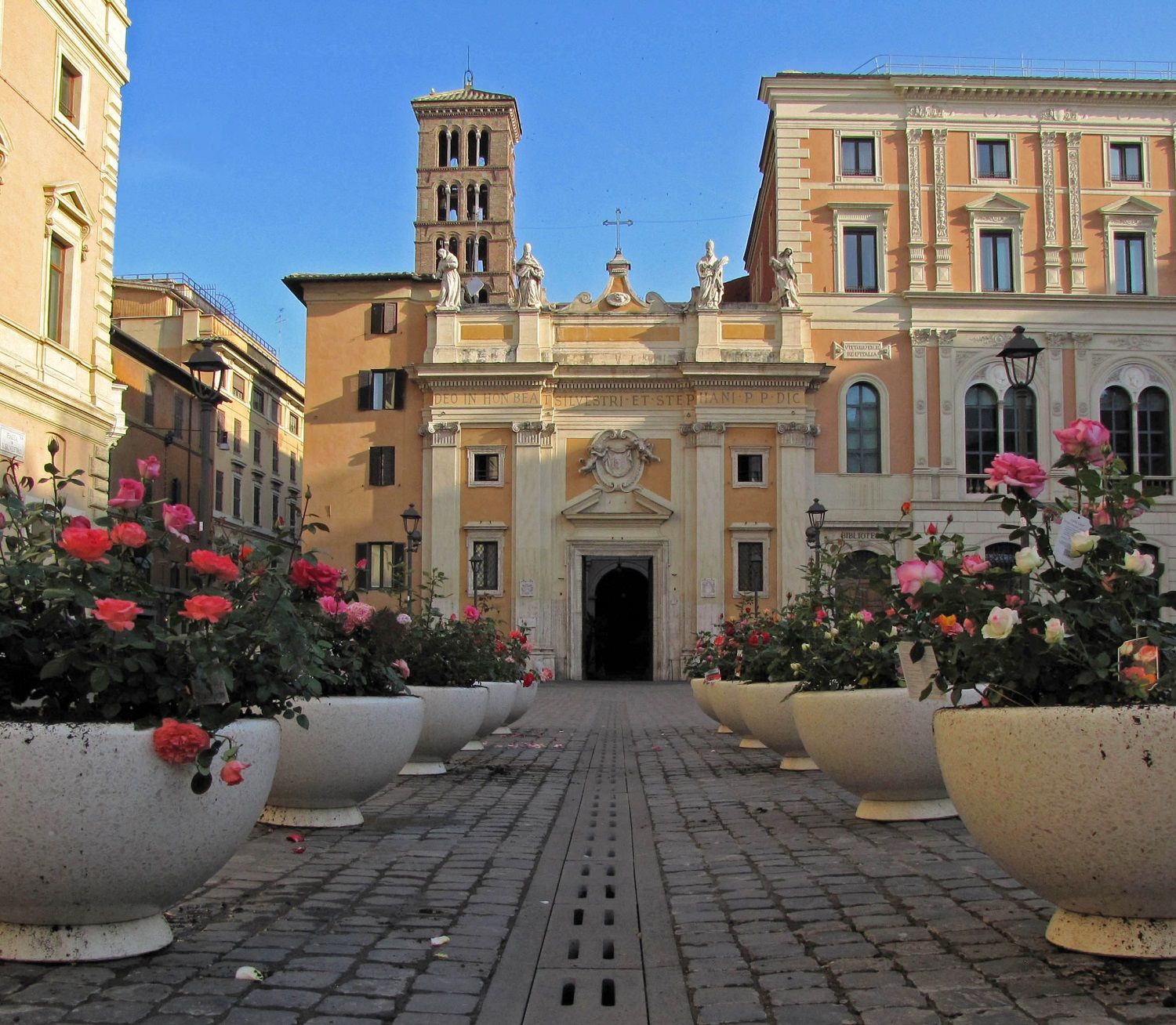
He built an immense elaborate temple, perhaps a little bit of which survives in the crypt of the Church of San Silvestro
in the heart of Rome, and declared that 25 December was the god’s official birthday—a convenient day as it was just at the end of that big winter festival, the Saturnalia, in which a god of change and, at that time of year, seasonal change, were celebrated, Aurelian placing the sun he wanted Romans to focus upon in their worship right at the end of that festival and just after the beginning of that change (the actual solstice is on or about 21 December). For early Christians, then, what better day to pick for their special birthday?
C.S. Lewis, then, thinking in Christian terms (he once suggested that stories like the Narnia books might be a way to present Christianity to children—see his essay: “Sometimes Fairy Stories May Say Best What’s to be Said” , to be found in the collection Of Other Worlds ), brought together winter, Jadis, (and remember that her name means “formerly/in the past”, indicating her soon-to-be position in time), Father Christmas, and Aslan to rewrite, in his fairy tale, the celebration of an seasonal event by the Romans in a festival in the time of the solstice, as well as a late (soon, to Christians and to Rome in general, jadis) Roman deity’s birthday and perhaps to answer my initial question, as well: in Narnia, it may be Christmas.
As I’ve written before, one reason why I return to Tolkien again and again is that his richness provides so many subjects to write about. Often they are episodes or characters, but, occasionally, they are simply phrases and, in teaching The Hobbit this time, one phrase I’d never thought about before suddenly stood out and puzzled me with its odd, rather over-the-top exclamation.
When I was growing up, I lived in a valley which was shaped rather like an elongated bowl. It had that shape because it was the bed of an ancient lake, whose legacy to farmers and gardeners who lived and worked there was, below a thin layer of soil, a much deeper layer of sheets of petrified mud—shale.
There are places where shale contains oil, which would make it of some value in this fossil-fuel world (which JRRT so disliked) in which we live.
Ours, fortunately or unfortunately, was just very old, very hard, mud and a curse to dig through.
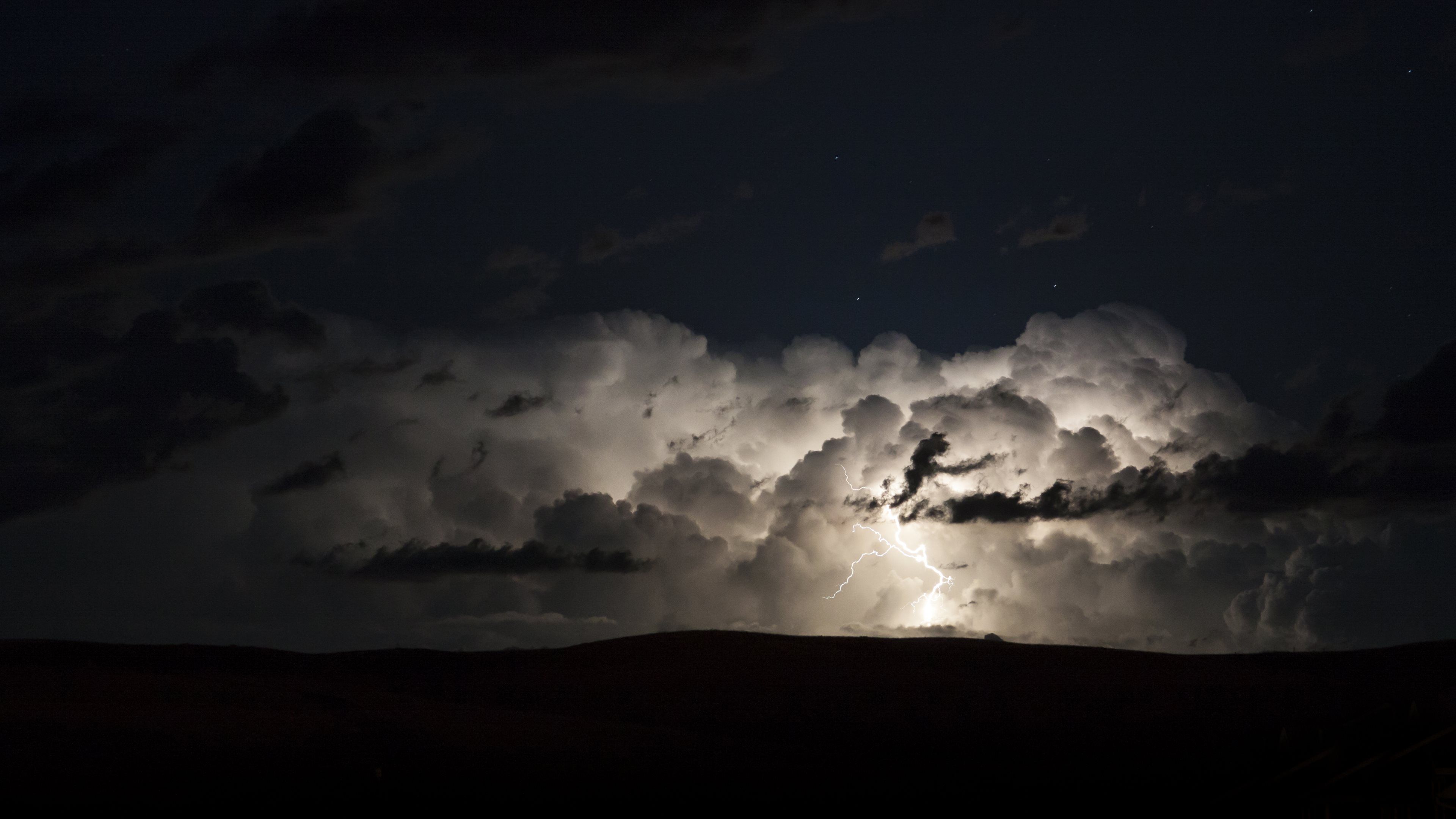
Because of the shape of the valley, it was also an attracter of lingering thunderstorms,
which, especially in midsummer, could sit over the valley for hours. We, therefore, had a lightning rod attached to our chimney,
which was actually once struck, when there was a tremendous BANG! but the rod did its job, guiding the lightning to the ground and our house didn’t burst into flame.
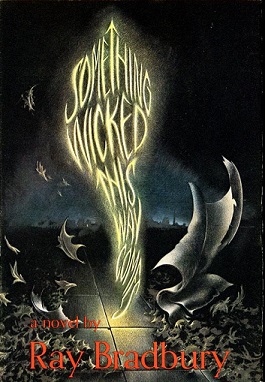
(This reminds me of Ray Bradbury’s wonderful novel, Something Wicked This Way Comes, 1962,
Having had some real-life experience, then, of lightning, it’s not surprising that, in school, I was struck (pun intended) by this image in an old school book–
It was identified as Benjamin Franklin, and he seemed to be out of his mind—flying a kite in an electrical storm?
It turns out, of course, that this was part of a science project, by which Franklin wanted to prove that what shot out of the clouds was, in fact, electricity. You can read more about his experimentation and theories here: https://en.wikipedia.org/wiki/Kite_experiment And you can read Franklin’s first report of this particular—and ground-breaking—experiment from Franklin’s own The Pennsylvania Gazette for 19 October, 1752, here: http://www.benjamin-franklin-history.org/kite-experiment/ . His personal experience with lightning also made Franklin perhaps the first to suggest, in 1753, that one might, using an iron rod and a wire, divert lightning from buildings and even ships. Franklin’s suggestion is quoted in this same article as that which quotes his report of his experiment. (You’ll note, by the way, that the artist for that school book image doesn’t seem to have read the 1752 article, as Franklin stresses that the holder of the kite string needs to be indoors and Franklin himself was standing in a barn when he performed this experiment.)
Franklin’s experiment was part of a trend, beginning in the 1740s, towards better understanding lightning, as part of the general strong interest in science which was part of the Enlightenment. Earlier people in the West had a very different view, however, which often tied thunder and lightning to divinities. Ancient Greek stories include that of Asclepius, the son of Apollo and a brilliant physician,
who, when he began to restore the dead, was struck down by a “thunderbolt”,
the weapon of choice of his own grandfather, Zeus.
This belief in Zeus’ electric power was shared by the Romans, in their version of Zeus, Jupiter,
as we can see in Ovid’s (43bc-17/18ad) treatment of the story of Semele, in Book 3 of his Metamorphoses, where he repeats the Greek myth of Semele, a sometime-gf of Jupiter, who was tricked by Juno into asking him to show her his real form,
with its drastic consequences:
est aliud levius fulmen, cui dextra cyclopum 305 saevitiae flammaeque minus, minus addidit irae: tela secunda vocant superi; capit illa domumque intrat Agenoream. corpus mortale tumultus non tulit aetherios donisque iugalibus arsit.
“There is another, lighter thunderbolt, to which the right hand of the Cyclopses
Has added less of ferocity and flame, less of fury:
They call these the secondary weapons of the god. Those he takes and enters
The Agenorean house. The human body did not endure
The divine tumult and blazed with the husbandly gifts.”
(Ovid, Metamorphoses, Book 3, lines 305-309, my translation—Agenor was Semele’s grandfather)
(There is a very lush opera on the subject by George Frederick Haendel (1685-1759) from 1744 which goes into extended detail about events. There’s a summary of the plot here: https://en.wikipedia.org/wiki/Semele_(Handel) and a performance here: https://www.youtube.com/watch?v=FibDMWk0i5k , and, as well, you can hear probably the most famous aria from this opera, “Where E’er You Walk” (sung by Jupiter to Semele in Act 2, Scene 2) sung by one of my favorite tenors, John Mark Ainsley, here: https://www.youtube.com/watch?v=BYOZnwQQV18 )
All of this brings me back to the what seemed an odd turn of phrase in Chapter 1, “An Unexpected Party” of The Hobbit. After much food and some moody music,
Thorin has been talking quite frankly about the expedition to the Lonely Mountain, but the real gravity has only struck Bilbo—
“Poor Bilbo couldn’t bear it any longer. At may never return he began to feel a shriek coming up inside, and very soon it burst out like the whistle of an engine coming out of a tunnel. All the dwarves sprang up, knocking over the table. Gandalf struck a blue light on the end of his magic staff, and in its firework glare the poor little hobbit could be seen kneeling on the hearth-rug, shaking like a jelly that was melting. Then he fell flat on the floor, and kept on calling out ‘struck by lightning, struck by lightning!’ over and over again; and that was all they could get out of him for a long time.” (The Hobbit, Chapter 1, “An Unexpected Party”)
What is going on here? Why such an extreme reaction? Bilbo’s attitude towards the dwarves and their plan has fluctuated during their stay: he has been appalled by their aggressive behavior as guests and seduced by their haunting song, but, when Thorin has begun to unroll the actual facts of their scheme, he has been moved to a new level of resistance as the truth of what they’re planning comes clearer—
“Gandalf, dwarves and Mr. Baggins! We are met together in the house of our friend and fellow conspirator, this most excellent and audacious hobbit—‘…He paused for breath and for a polite remark from the hobbit, but the compliments were quite lost on poor Bilbo Baggins, who was wagging his mouth in protest at being called audacious and worst of all fellow conspirator, though no noise came out, he was so flummoxed.”
Is what Bilbo actually experiencing and expressing, an English expression, “a bolt out of the blue”? A useful website, “The Phrase Finder”, says that this expression appears to be rather comparatively recent, first traced to Thomas Carlyle’s (1795-1881) The French Revolution, 1837, (oddly exactly a century before the initial publication of The Hobbit) where there is found:
“Arrestment, sudden really as a bolt out of the Blue, has hit strange victims.”
The meaning is “a sudden unexpected event” and the website then takes it back I think quite believably to Horace (65-8bc) and an ode, Number 34 in Book 1. This begins with the idea that the speaker has been lax in his religious observances, but, thanks to a sudden meteorological occurrence, he is changing his ways:
Generally splitting the clouds with flashing fire,
Drove his thundering horses and his winged chariot
Through [a] clear sky…”
(Horace, Odes, Book 1, Number 34, lines 5-8, my translation)
As Horace has been unpleasantly surprised by Jupiter, might we then imagine Bilbo, coming close to being brought into the dwarves’ plan, then suddenly caught by Thorin’s grim “may never return” have suffered a similar epiphany, almost as if he, too, had almost been “Struck by lightning, struck by lightning!”? Considering all that is about to happen to him in the course of The Hobbit, perhaps Bilbo’s outburst isn’t so over-the-top after all.
One of the reasons I so often write about the work of Tolkien is that it is just so full of things to write about. Sometimes these are moments or people in texts to comment upon, sometimes they are things to be inspired by. From the title, this posting might appear to be sparked by Smeagol/Gollum who, in a brilliant piece of psychology on the author’s part, refers to the Ring, which he actually acquired on a long-ago birthday, as “his birthday present”, when, in fact, he gained it by murdering Deagol, his friend, the discoverer of the long-lost creation of Sauron, as we learn from Gandalf:
“ ‘Give us that, Deagol, my love,’ said Smeagol, over his friend’s shoulder.
‘Why?’ said Deagol.
‘Because it’s my birthday, my love, and I wants it,’ said Smeagol.
‘I don’t care,’ said Deagol. ‘I have given you a present already, more than I could afford. I found this, and I’m going to keep it.’
‘Oh, are you indeed, my love,’ said Smeagol; and he caught Deagol by the throat and strangled him, because the gold looked so bright and beautiful. Then he put the ring on his finger.” (The Fellowship of the Ring, Book One, Chapter 2, “The Shadow of the Past”)
(I don’t have an artist for this, unfortunately.)
This posting isn’t about Gollum and his birthday, however, and it was inspired by another moment in The Lord of the Rings altogether.
I’m rewatching the Jackson LotR for the first time in some years and I’ve come to the moment in The Fellowship of the Ring where the Fellowship is blocked from crossing the Misty Mountains at the Redhorn Gate—
“They went on. But before long the snow was falling fast, filling all the air, and swirling into Frodo’s eyes. The dark bent shapes of Gandalf and Aragorn only a pace or two ahead could hardly be seen.” (The Fellowship of the Ring, Book Two, Chapter 3, “The Ring Goes South”)
It’s very convincingly done in the film, the snow thick, the mountains menacing, and, as this is December, as in the book, and we’ve just had our first snowfall, I was reminded of this wonderful and playful poem–
“It sifts from Leaden Sieves — It powders all the Wood. It fills with Alabaster Wool The Wrinkles of the Road —
It makes an Even Face Of Mountain, and of Plain — Unbroken Forehead from the East Unto the East again —
It reaches to the Fence — It wraps it Rail by Rail Till it is lost in Fleeces — It deals Celestial Vail
To Stump, and Stack — and Stem — A Summer’s empty Room — Acres of Joints, where Harvests were, Recordless, but for them–
It Ruffles Wrists of Posts As Ankles of a Queen — Then stills its Artisans — like Ghosts — Denying they have been —“
(Amherst College MS 78)
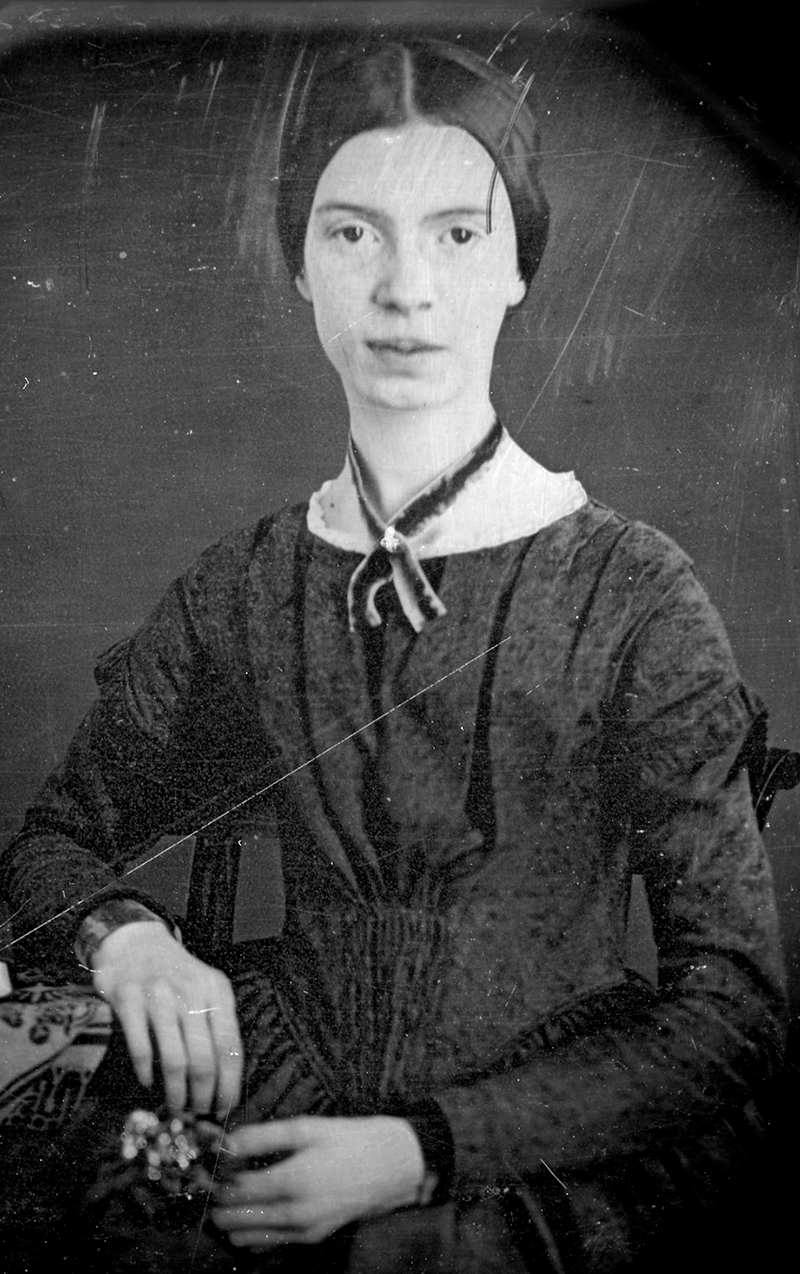
It was written by Emily Dickinson (1830-1885)
and, as I write this, it’s her 193rd birthday—10 December, 2023.
Her imagery and its links are always surprising, sometimes domestic, sometimes almost surreal, and always thought—and imagination—provoking.
This poem begins with an image taken from something the poet herself did a great deal of in the Dickinson household: baking.
The one doing the sieving isn’t the baker, however, but the dull-grey snowclouds overhead.
Alabaster is a soft, white stone, often used for carving,
but there’s an interesting contrast here between the heaviness of stone and the lightness of wool, and where that stone/wool has fallen reminds us that Dickinson lived in a country town, where the roads would not have been paved—and very rutted, especially in winter.
Those wrinkles covered in snow lead us to the next image: the landscape whose face has had its cracks and ruts smoothed out by the blanket of white. And then we’re taken from the kitchen and a mirror to the fields which stretched beyond her town of Amherst (and still do, mainly to the south) to clear-cut (“stumps”) and hay (“stacks”) and harvested plants (“stems”) and the remains of corn fields (“acres of joints”, where the bottoms of the corn stalks resemble the points between bones).
Snow covered field in winter
From the fields, we’re suddenly whisked away to a palace and the boudoir of a queen, where we see the ruffles at the bottom of an intimate garment—
and the poem ends when “It”—the subject of all of the poem’s verbs—sifts, powders, fills, makes, reaches, wraps, is lost, ruffles—“stills its Artisans”—that is, its craftsmen—those who have done everything from powdering to wrapping—and they disappear—presumably as the clouds pass, leaving a world transformed from roads and mountains and fields with their fences into snowy sculpture.
Tolkien has informed us on the subject of hobbits and birthdays:
“Hobbits give presents to other people on their own birthdays. Not very expensive ones, as a rule, and not so lavishly as on this occasion; but it was not a bad system. Actually in Hobbiton and Bywater every day in the year was somebody’s birthday, so that every hobbit in those parts had a fair chance of at least one present at least once a week. But they never got tired of them.” (The Fellowship of the Ring, Book One, Chapter 1, “A Long-expected Party”)
And so, on Emily Dickinson’s birthday, I make a present of this lovely poem to you.
Stay well,
Don’t worry about sending her a card,
And remember that, as always, there’s
MTCIDC
O
PS
As you might know or imagine, Dickinson was a constant and voracious reader, and it’s clear that, for this poem, she was influenced by another poet, Ralph Waldo Emerson (1803-1882), who published, in his 1847 volume, Poems, of which she owned a copy, his own beautiful poem, “The Snow -Storm”. Read it on page 65 here: https://archive.org/details/poems1847emer/page/4/mode/2up
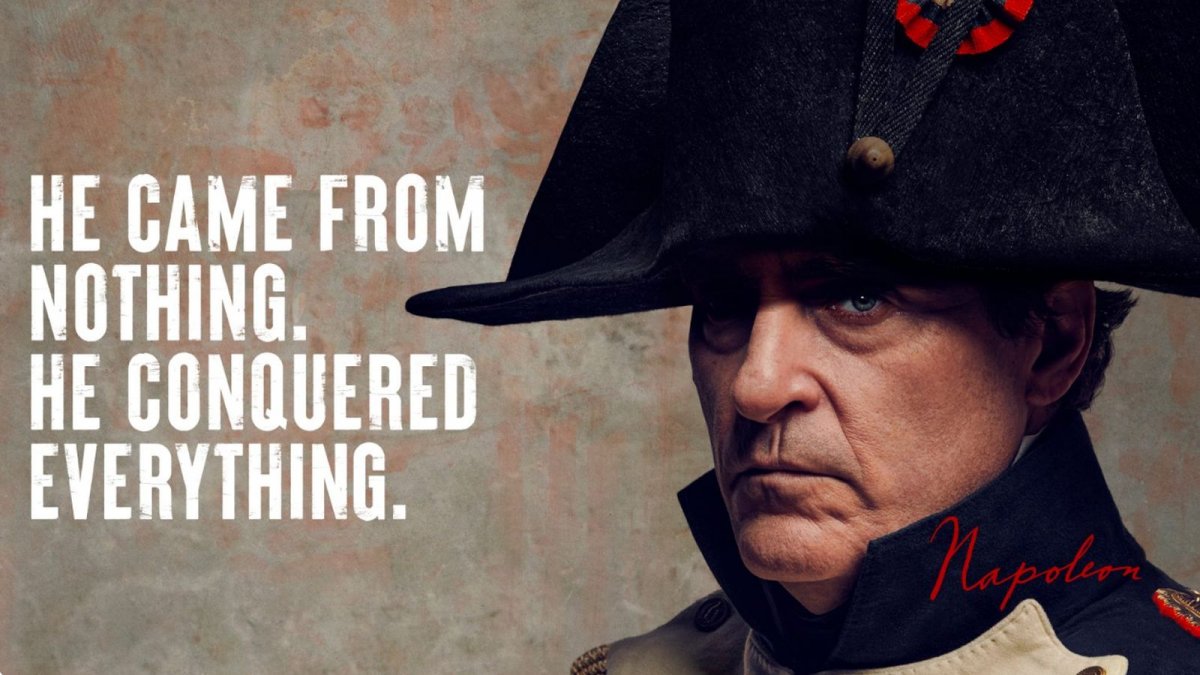
Occasionally, I’ve done a film review, but they’ve commonly been of Star Wars or Tolkien-themed shows. Yesterday, however, I went to see the new Napoleon film and I want to think aloud a bit about it.
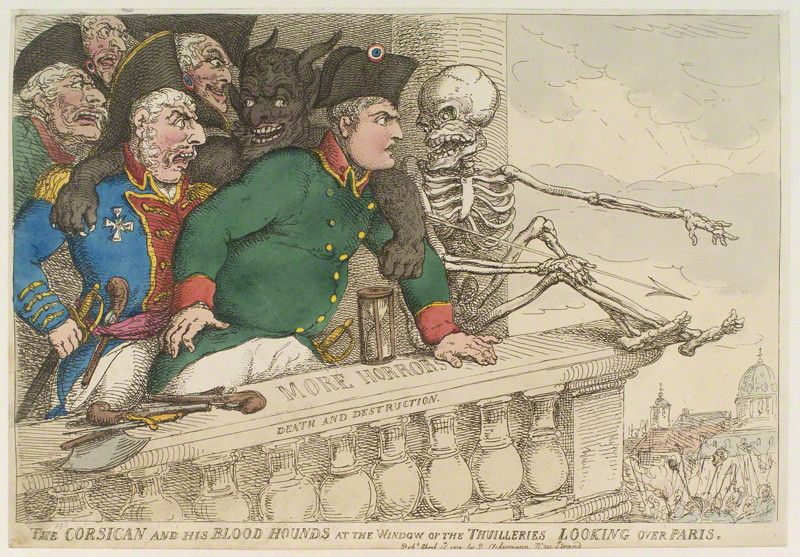
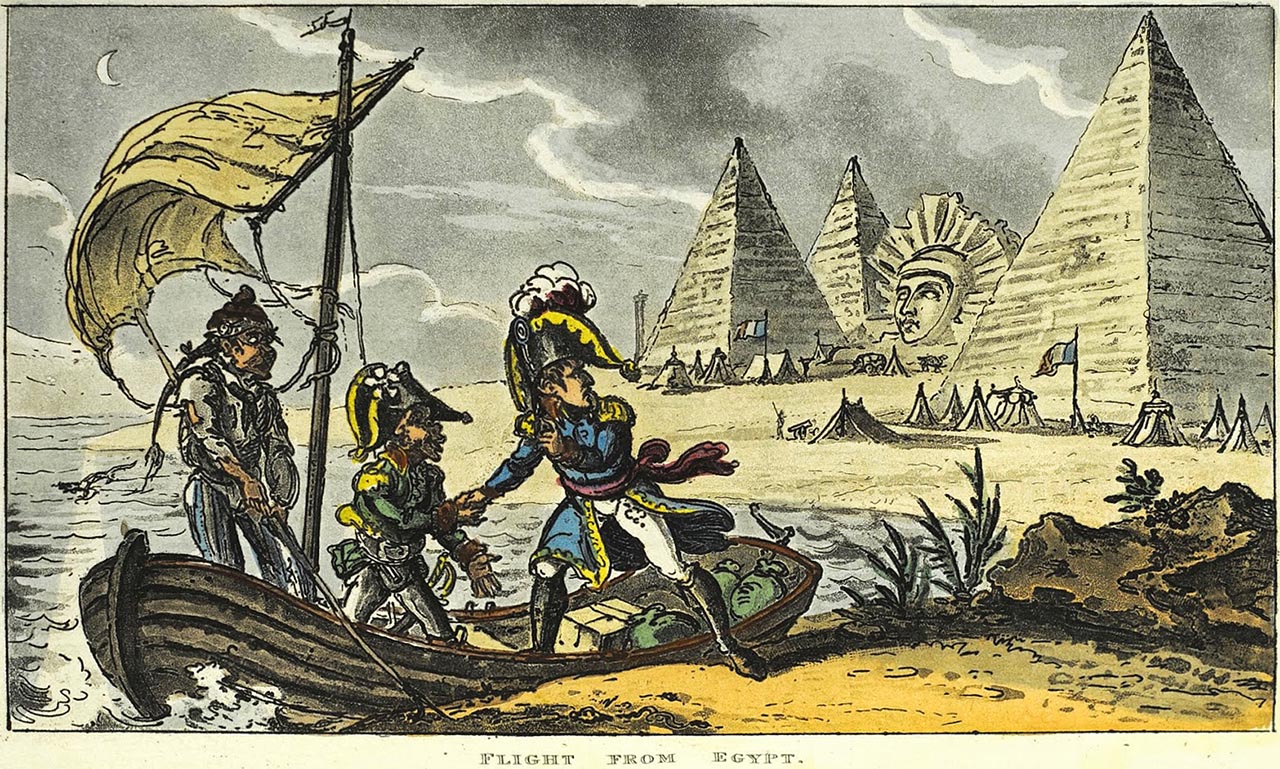
If you read this blog regularly, you know that I really dislike the levels of hatred and abuse which can be found on every level of the internet and, when such is applied to film, a review which employs them is, to me, useless. It might tell me what the reviewer didn’t enjoy, but it doesn’t really enlighten me as to the film itself. In my reviews, I try to understand what the creators were attempting to do and, in my opinion, whether they succeeded. In the case of this new film, much of the anger, etc., has been directed at its lack of historical accuracy and that’s true. The four battle scenes: Toulon (1793), Austerlitz (1805), Borodino (1812), and Waterloo (1815), although given the correct date on the screen, have virtually nothing to do with the actual events. Instead, they seem like fables about the brutal violence behind Napoleon’s “glory” and, though this isn’t underlined in the film, it’s clear that Napoleon’s rise is just as this period caricature shows it to be—
Still, in a film which goes to such lengths to look like the time in which it takes place (the costume designers should definitely be handed awards, and the sets are impressive), history does have a place. Napoleon’s self-coronation, for instance, really captures something of the grandeur which David created in his depiction of it.
(Napoleon, instead of being crowned by Pope Pius VII, crowned himself, then turned and crowned Josephine, as in the painting. What wasn’t in David’s original sketches was the Pope raising his hand in a traditional blessing. Napoleon, as usual, micromanaging, saw that the Pope’s right hand was in his lap and told David to redraw it.)
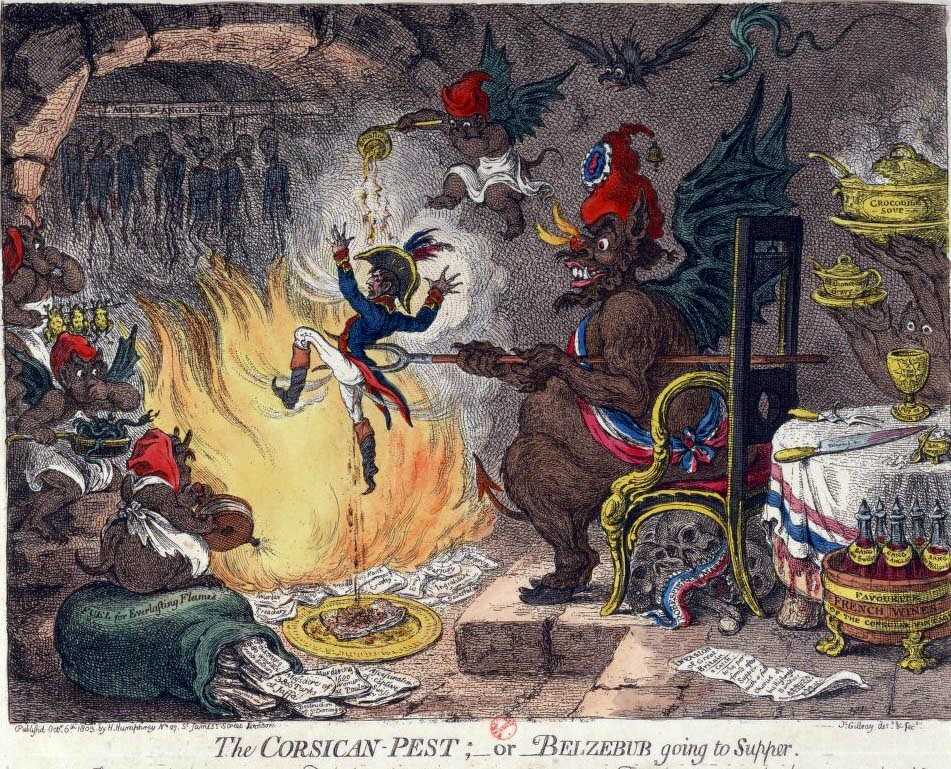
But, for me, the real problem lies in the title of this posting, which is a term by which the English, who feared and hated Napoleon at the same time, sometimes referred to him.
(There are dozens and dozens of different English caricatures of Napoleon throughout his entire life and career, depicting him as everything from a dwarfish sword-waver to a crocodile. Here’s an illustrated article on the subject—with a mild parental guidance warning: https://www.danceshistoricalmiscellany.com/corsican-monster-british-caricature/ )
By “monster”, the British meant a kind of demonic figure, sometimes, in caricatures, linked with Satan,
but, when it has come to film-making, it seems that his active career, which we might see as from his victory at Toulon in 1793
(by Edouard Detaille—one of my favorite late 19th-early-20th century military artists)
to his second and final exile on St. Helena, where he died in 1821,
was so full of events, that the Monster was, in fact, a monstrosity, an almost impossible thing to capture on film—although not for want of trying. An incomplete list of films—fictional, not including things like documentaries—set in, or about, the Napoleonic era in general on WIKI runs from 1912 to 2018 and has several hundred (I stopped counting in 1950, when there are already over one hundred) entries. (Here’s the link—see how far you get: https://en.wikipedia.org/wiki/List_of_Napoleonic_Wars_films )
As for films about Napoleon himself, this is a complex picture, part of it covered by this article: https://www.vulture.com/article/napoleon-movies-history.html , but just a quick pass through the material underlines my point: the difficulty of somehow compressing a life full of events into something which won’t give an audience what Ridley Scott, in an interview, called “bum ache”.
The first known film in which Napoleon appears certainly wouldn’t have afflicted anyone, being a short, by Louis Lumiere, in 1897 (42 seconds). After that there followed, in 1908-9, two films from the same studio, Vitagraph, “Napoleon, the Man of Destiny” and “The Life Drama of Napoleon Bonaparte and Empress Josephine of France”, which appear to have been combined into one, “Incidents in the Life of Napoleon and Josephine”—here’s the YouTube version: https://www.youtube.com/watch?v=zmnHQbrh3KY (This is from the site of the very knowledgeable Clark Holloway.) “Incidents” it is, being only about 25 minutes long.
After this comes Abel Gance’s (1889-1981) Napoleon, 1927, whose production history illustrates my point.
Gance intended a full-scale film biography in 6 parts. The director’s definitive cut of the first part lasted for 9 hours and 40 minutes. No other parts were ever made and the film languished mostly in notoriety until the product of a process of reconstruction in 1979 produced a 4-hour version, then a 5-hour version. (You can read the fascinating history of the whole project, from Gance’s original, here: https://www.bfi.org.uk/sight-and-sound/features/monumental-reckoning-how-abel-gances-napoleon-was-restored-full-glory ) And Gance’s first part went no further than Napoleon’s first reaching Italy, in 1796.
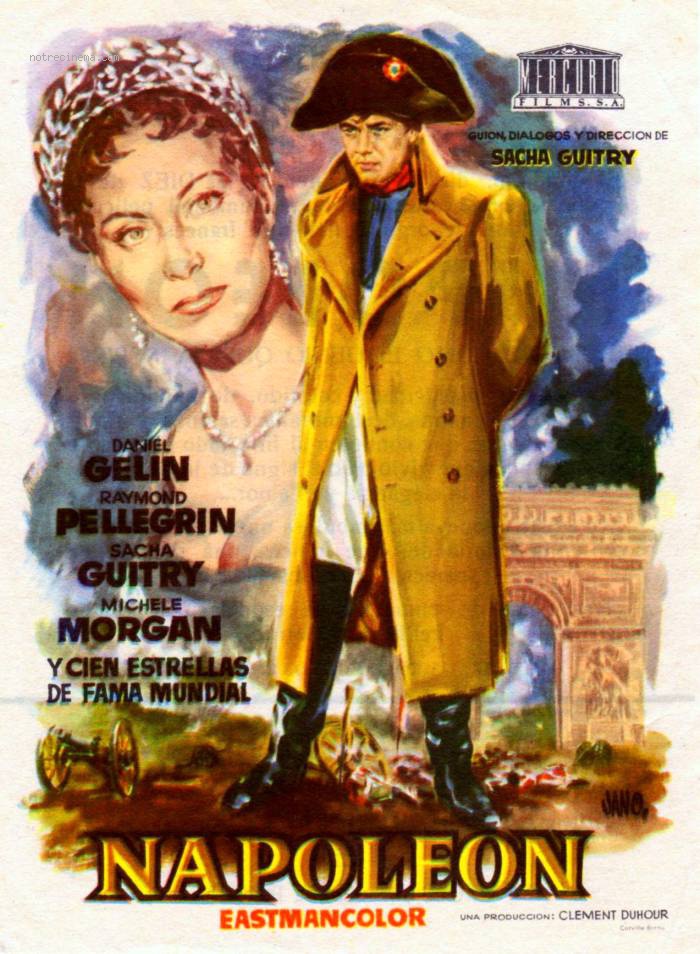
Although there were further attempts at the big picture, like Sasha Guitry’s Napoleon, 1955, (you can see it here in the US dubbed version: https://archive.org/details/Napoleon_ )–at two hours, you can imagine how little that big picture was—
film-makers also tried other approaches, much smaller and more domestic, such as the 1937 Conquest, about Napoleon’s affair with the Polish countess and nationalist, Maria Walewska (1786-1817).
And here we see the idea of Napoleon the romantic (if not womanizer, which was probably closer to the truth), which forms one half of the plot of Scott’s Napoleon. As the screenwriter, David Scarpa, explains:
“So [Ridley] wants to know what you’re going to bring to it, what your point of view on it is. It was an almost impossible story to tell just in terms of the sheer sprawl of what Napoleon had done and his influence on European history and 45 battles fought and essentially writing the Code Napoleon, which is the basis of much of continental European society. So it would be almost impossible to tell the definitive version of that story within two and a half hours. And what I found myself most intrigued by was this little vignette in the book about his relationship with Josephine, his wife.” (You can read the whole interview here: https://www.msn.com/en-us/movies/news/ridley-scotts-napoleon-writer-david-scarpa-explains-whats-true-and-false/ar-AA1kTqd1 )
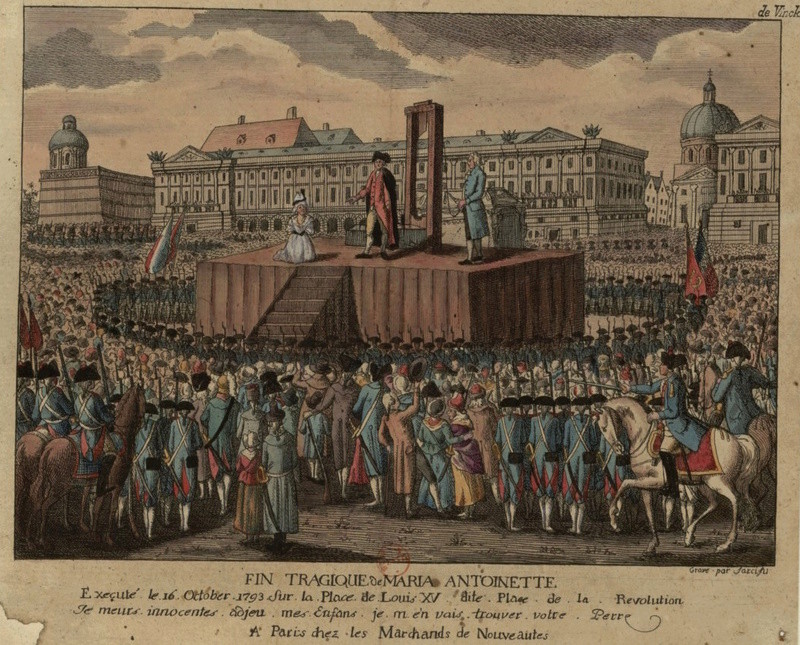
So, in two-and-a-half hours, we’re shown, in very brief form, Napoleon’s life, from 1793 (although the first date shown is 1789, along with the execution of Marie Antoinette, which actually took place on the 16th of October, 1793),
to his death on St. Helena in 1821, intertwined with his complex relationship with Josephine. He first meets Josephine at a party, after his success at Toulon, in 1793, where he stares at her until she comes up and inquires as to why he’s staring, which he fumblingly first denies, then admits. And the story goes on from there. It seems to me that there are two big dangers here:
1. the relationship story will overwhelm the biography and the real title of the film should be “Josephine—and Napoleon”
2. the appeal of this relationship relies upon the two principal characters—are they at least believable, if not likeable?
To the first, I would say that this was more-or-less successful, in my opinion. There was a balance between the two and I rarely felt that Napoleon’s private life was overwhelming his public life—although the idea that Napoleon abandoned his 1798 Egyptian campaign to return to France just because it was rumored that Josephine was having an affair is stretching things a bit.
To the second, I admit that I wasn’t convinced.
Part of the problem, for me, was that Joaquin Phoenix, Napoleon, seemed to me to be miscast, playing the role as if he were a sometimes rather pathetic middle-aged Mafia boss (it didn’t help that his flat American accent and delivery were surrounded mostly by British actors, including the woman who played Josephine—and there was a laugh in the theatre when he turned on the British ambassador and shouted in that flat accent, “You think you’re so great, ‘cause you got boats!”). As well, for much of the movie, he was simply physically too old, Napoleon at the time of his success at Toulon in 1793 was in his early 20s, having been born in 1769. One has only to see David’s unfinished portrait of him from about 1797 to see what he must really have looked like at the time.
versus
Phoenix never seems to be young and as daring and lively as the real man must have been in his first years, but is already simply stodgy, even at times with Josephine. It’s no wonder that, initially, she seems to be thinking about him as a kind of social investment, rather than as a potential BF and, in their physical encounters, she continues to be detached, even when we’re being told that this has become a powerful, if complex relationship. I’m aware that the script writer wanted to show what might be a paradox: the active, intense general/statesman, on the one hand, but the clumsy and mostly unromantic husband on the other:
“the idea of a man who is profoundly capable and competent in the realm of battle, and yet profoundly incapable and incompetent in the realm of love, in the realm of human relationships, and how those two things play off of one another.”
The difficulty for me is that we seem to be told, at the same time, that there was passion at the base of this, but, apart from a couple of tearful moments, I don’t feel that I was ever shown that in a meaningful way. She seemed too passive and he too bullish.
So, would I recommend this film? Without hedging, I guess that I would say the following:
1. if you’re a military history buff and know something about this period, you probably will spend a certain amount of time shaking your head (wondering, for instance, why the British and French are fighting from entrenchments at Waterloo and why the Prussians appear on the battlefield from the wrong direction)
2. if you want to see another side of a World Conqueror, this is definitely a start, but don’t expect too much—behind this film are letters exchanged between Napoleon and Josephine and they have their passionate moments, but, as read in a flat voice by an off-screen Phoenix, I kept wishing that this is what the writer and director would have shown me, rather than narrated at me.
At the same time, as always, I would say that viewers, like reviewers, often have very different opinions and, if anything I’ve written sparks your interest, go see it for yourself.
Thanks, as ever, for reading.
Stay well,
Avoid Waterloo at all costs,
And know that, as always, there’s
MTCIDC
O
PS
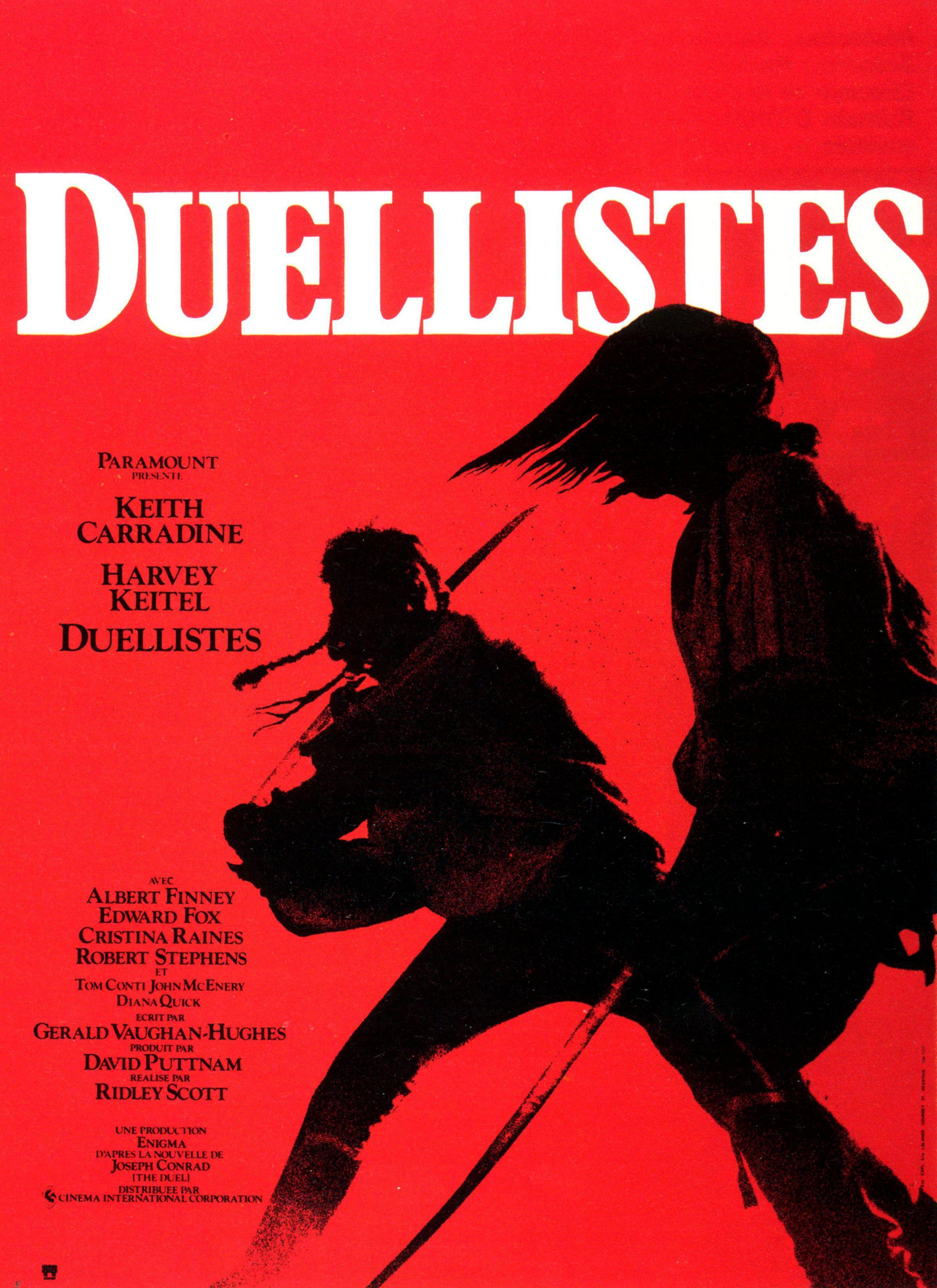
While I might have mixed reactions to this film, I whole-heartedly recommend Ridley Scott’s much earlier (1977) Napoleonic film, The Duellists, which is a little jewel.
Aquila muscas non capit, una hirundo ver non facit, ignis aurum probat, festina lente!
Or, “an eagle doesn’t catch flies, one swallow doesn’t make spring, fire tests [the] gold, make haste—slowly!”
It might be easy to wonder whether this was going to be a posting on riddles, but, in fact, as the title suggests, it’s about much knowledge packed into a few words—which is, in fact, like Bilbo’s riddle:
“A box without hinges, key, or lid,
Yet golden treasure inside is hid.”
(The Hobbit, Chapter Five, “Riddles in the Dark”)
and which appears to be a bit of a poser for his sinister fellow player–
(Alan Lee)
“This [Bilbo] thought a dreadfully easy chestnut, though he had not asked it in the usual words. But it proved a nasty poser for Gollum. He hissed to himself, and still he did not answer; he whispered and spluttered.”
Gollum was, in fact, only saved by Tolkien’s joking allusion to a proverb which Douglas Anderson in The Annotated Hobbit quotes from Francis Grose’s (1731-1791) A Classical Dictionary of the Vulgar Tongue, 1785, as, “Go teach your granny to suck eggs; said to such as would instruct anyone in a matter he knows better than themselves.”
(You can read it for yourself here: https://archive.org/details/aclassicaldicti01grosgoog/page/n114/mode/2up in the 3rd, 1796, edition. If you’re a dictionary reader, this is simply a fun book, “learned”—hence “A Classical Dictionary”—and occasionally witty—see “Grave Digger” just below. The advertisements at the front are also very tempting, being things like The Scoundrel’s Dictionary. Grose’s A Provincial Glossary, 1787, available in the 1790 edition here: https://archive.org/details/provincialglossa00gros/page/n5/mode/2up is subtitled, with a COLLECTION of LOCAL PROVERBS and POPULAR SUPERSTITIONS and is full of interesting bits and pieces on language and belief. Grose himself is a wonderful example of the 18th-century English Antiquarian and you can read something about his adventures and collecting here, including his friendship with Robert Burns: https://en.wikipedia.org/wiki/Francis_Grose Much of Grose’s antiquarian work is available at the Internet Archive—an institution of which Grose himself would have been fascinated, I think. Charles Dickens’ had his own opinion of such early sometime-archeologists/scholars of the past, which you can read here in Chapter XI of the 1868 edition of The Posthumous Papers of the Pickwick Club, 1836-37: https://archive.org/details/pickwickpapers02dickgoog/page/n216/mode/2up )
Tolkien was having fun with that proverbial expression (like his explanation of the creation of the game of golf in Chapter One), yet it gave Gollum the answer:
“But suddenly Gollum remembered thieving from nests long ago, and sitting under the river bank teaching his grandmother, teaching his grandmother to suck—‘Eggses!’ he hissed. ‘Eggses it is.’ “
The subject of proverbs is enormous–the Latin proverbs (even the word is Latin, through Old French—pro—“before/in front/forward” and verbium—“speech act”, so “a speech put forth”, to use another old word) at the beginning of this posting are just a tiny fraction of such verbal wisdom preserved from all over the world, in the West surviving first in The Maxims of Ptahhotep
of the 12th Dynasty (basically 2000 to 1800BC—you can read about them here: https://en.wikipedia.org/wiki/The_Maxims_of_Ptahhotep ) and passing through the book of Proverbs in the Hebrew/Christian Bible (much scholarly argument about dating—900-300BC?) through lines in Greek tragedies, often as end-tags like “Look upon no man as fortunate until his life has come to its full circle” (Sophocles, Oidipous, 1528-30—my—very loose—translation), up to Old English works which Tolkien would have known well, like the 11th-century Durham Proverbs and the 12th-century Dicts of Cato, and it’s clear that his creation, Bilbo, has a knowledge of such things, seeming to apply them commonly when something unpleasant is to be done, and often attributing them to his father.
As Thorin attempts to push Bilbo into exploring down the tunnel from the back door towards Sauron’s lair, Bilbo replies:
“ ‘If you mean you think it is my job to go into the secret passage first…say so at once and have done! I might refuse. I have got you out of two messes already, which hardly were in the original bargain, so that I am, I think, already owed some reward. But ‘third time pays for all’ as my father used to say…” (The Hobbit, Chapter 12, “Inside Information”)
and he repeats this in the next chapter, prefacing it with a second proverb:
“ ‘Come, come!’ he said. While there’s life there’s hope!’ as my father used to say, and ‘Third time pays for all.’ “ (The Hobbit, Chapter 13, “Not At Home”)
To which he has already added a third:
“ ‘Every worm has his weak spot,’ as my father used to say, although I am sure it was not from personal experience.’ “ (The Hobbit, Chapter 12, “Inside Information”)
Not only does Bilbo know a proverb or two, however, but he even, inadvertently, creates two.
In Chapter Five (with its own proverbial title, “Out of the Frying-pan Into the Fire”), we find Gandalf, the dwarves, and Bilbo trapped in trees with Wargs about to keep them there and Bilbo shouts:
“ ‘What shall we do, what shall we do!’ he cried. ‘Escaping goblins to be caught by wolves!’ he said—“
to which the narrator adds:
“…and it became a proverb, though we now say ‘out of the frying-pan into the fire’ in the same sort of uncomfortable situations. “ (The Hobbit, Chapter Five, “Out of the Frying-pan Into the Fire”)
In Chapter 13, Bilbo, barely escaping from Smaug’s flames, says to himself:
“ ‘Never laugh at live dragons, Bilbo you fool!’ he said to himself…”
and the narrator, commenting, says:
“…and it became a favorite saying of his later, and passed into a proverb.”
(The Hobbit, Chapter 12, “Inside Information”)
To which we might imagine the hint of two more, both within a sentence of each other in the last chapter of the book. Gandalf and Bilbo have left Rivendell, their faces to the west:
“Even as they left the valley the sky darkened in the West before them, and wind and rain came upon them.
‘Merry is May-time!’ said Bilbo, as the rain beat into his face, ‘But our back is to legends and we are coming home.” (The Hobbit, Chapter 19, “The Last Stage”)
Many proverbs rhyme, as does Bilbo, in fact, surprising Gandalf, so could that first remark become something like,
“Even when sky is nothing but grey,
Still we may say, merry is May”?
and the second,
“Legends and heroes go and may come,
But now at the end, nothing’s better than home.”
Thanks, as always, for reading.
Stay well,
Strive to become legendary,
And remember that there’s always
MTCIDC
O
ps
For a quick history of collections of English proverbial literature, see: W. Carew Hazlitt, English Proverbs and Proverbial Phrases, 1882, at https://archive.org/details/englishproverbs00hazlgoog/page/400/mode/2up (this is the 1907 edition) and, on the page at the link—400—you’ll also find:
“Teach your grandame to grope her ducks/to spin/to suck eggs/or to sup sour milk” as well as a Latin equivalent, Aquilam volare, delphinum notare doce—“teach [the] eagle to fly, [the] dolphin to swim”